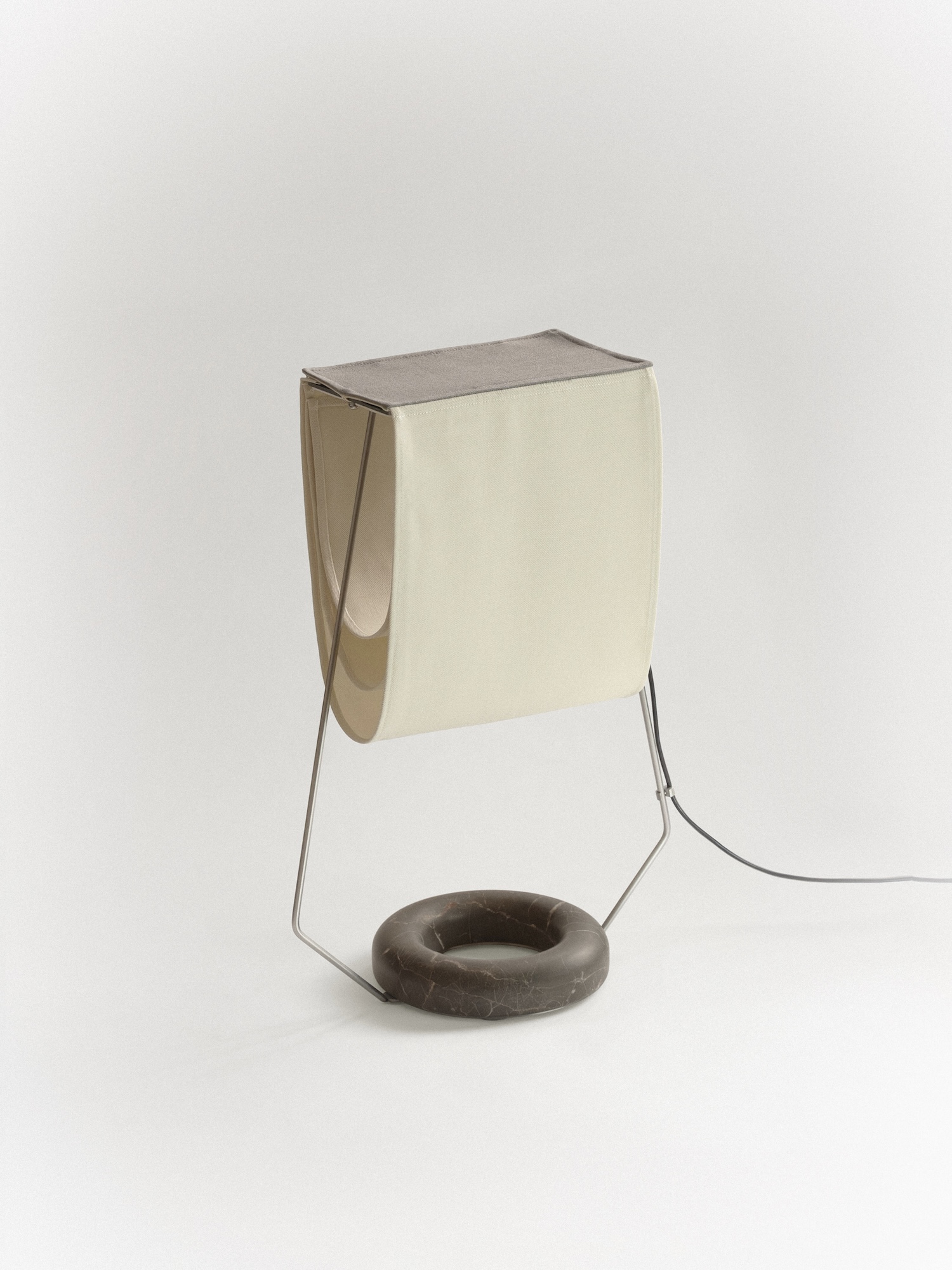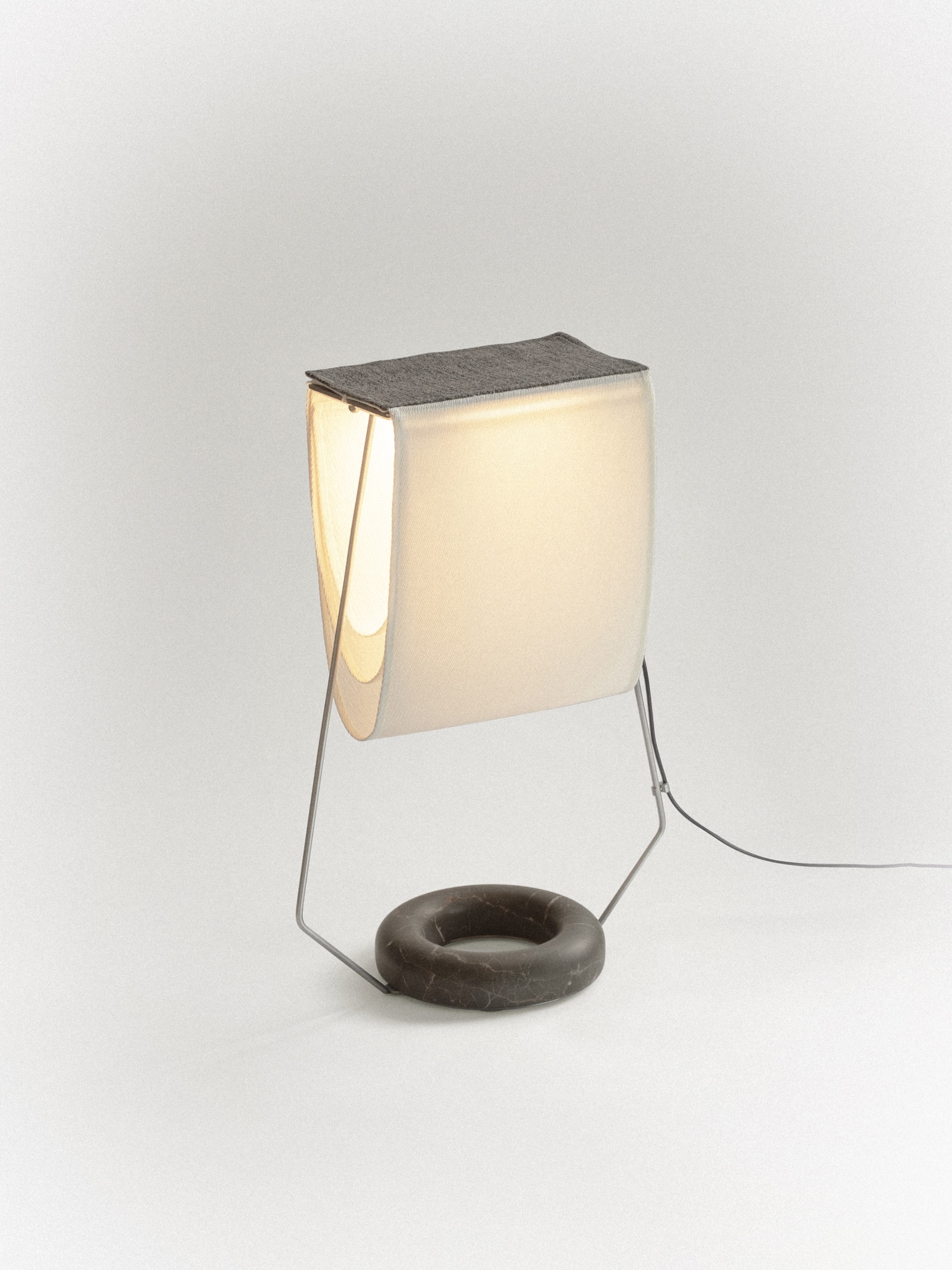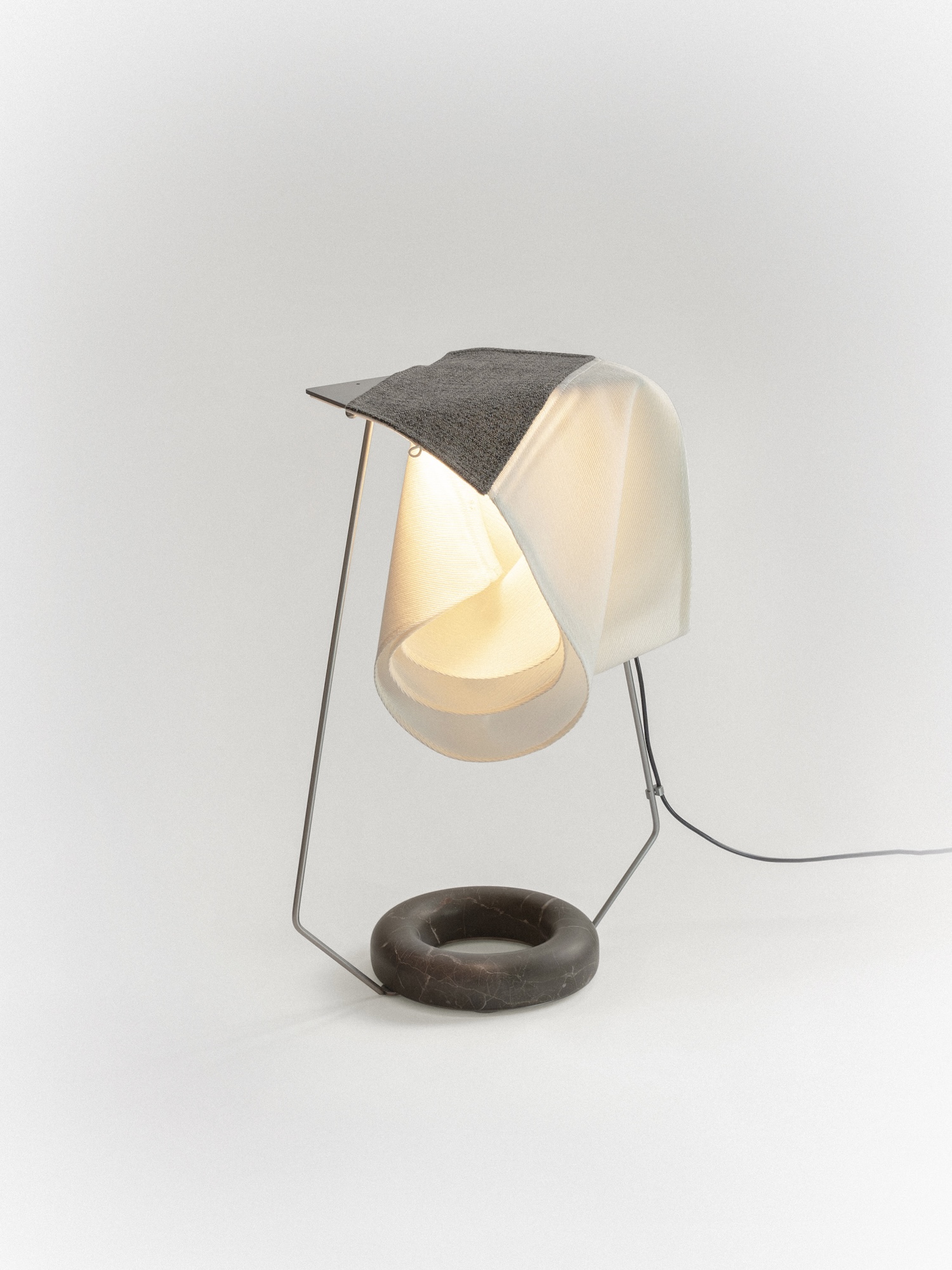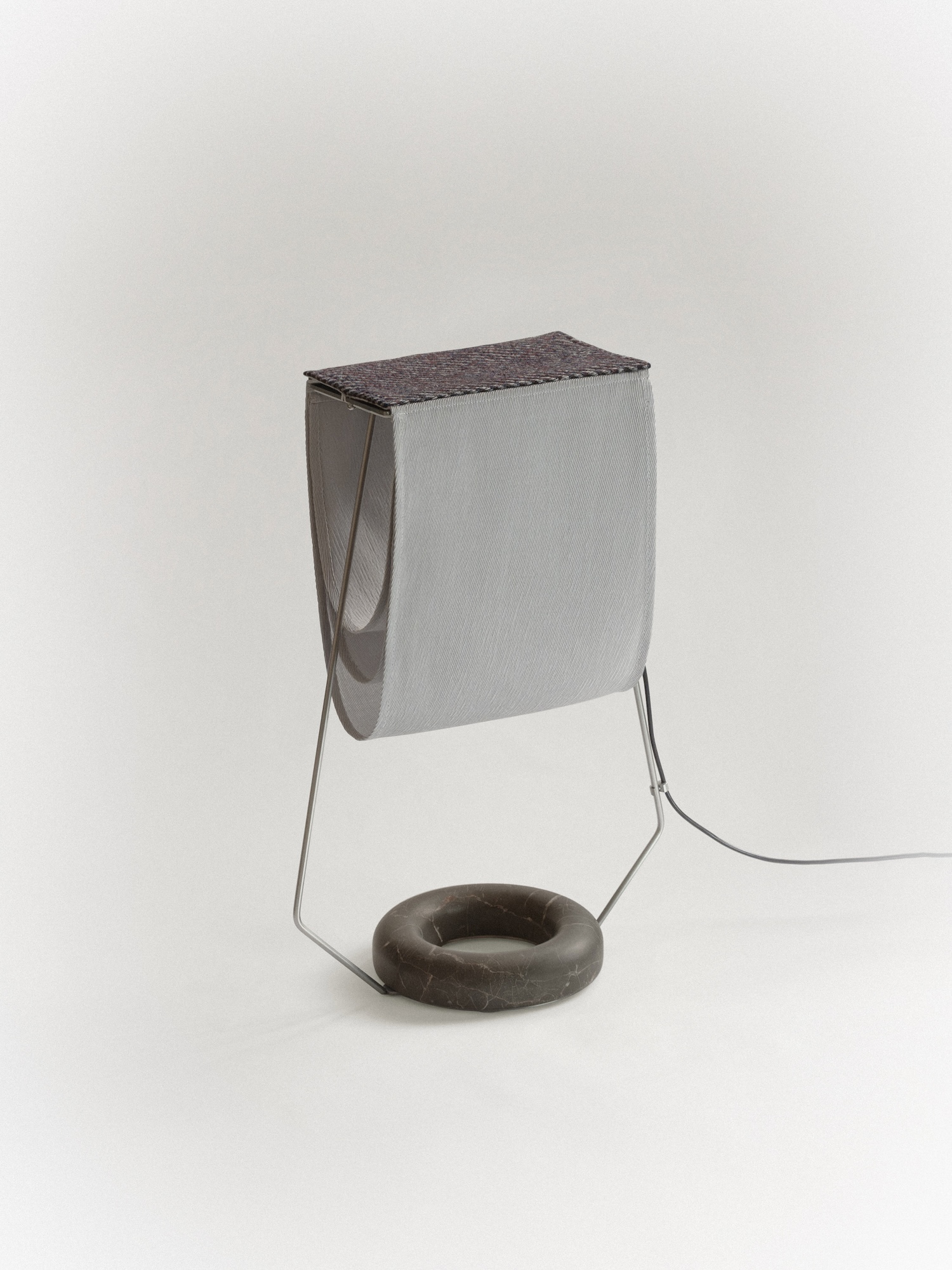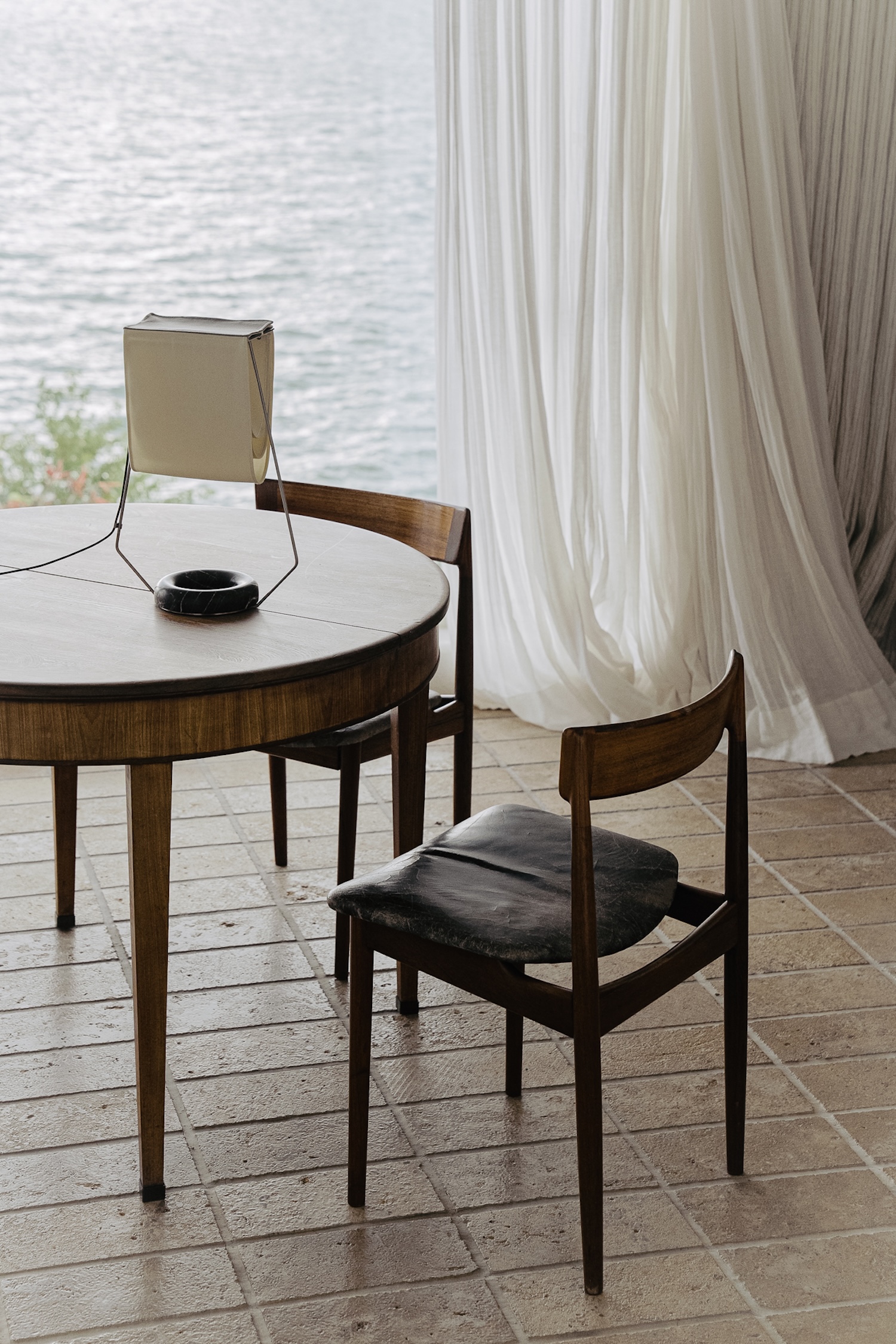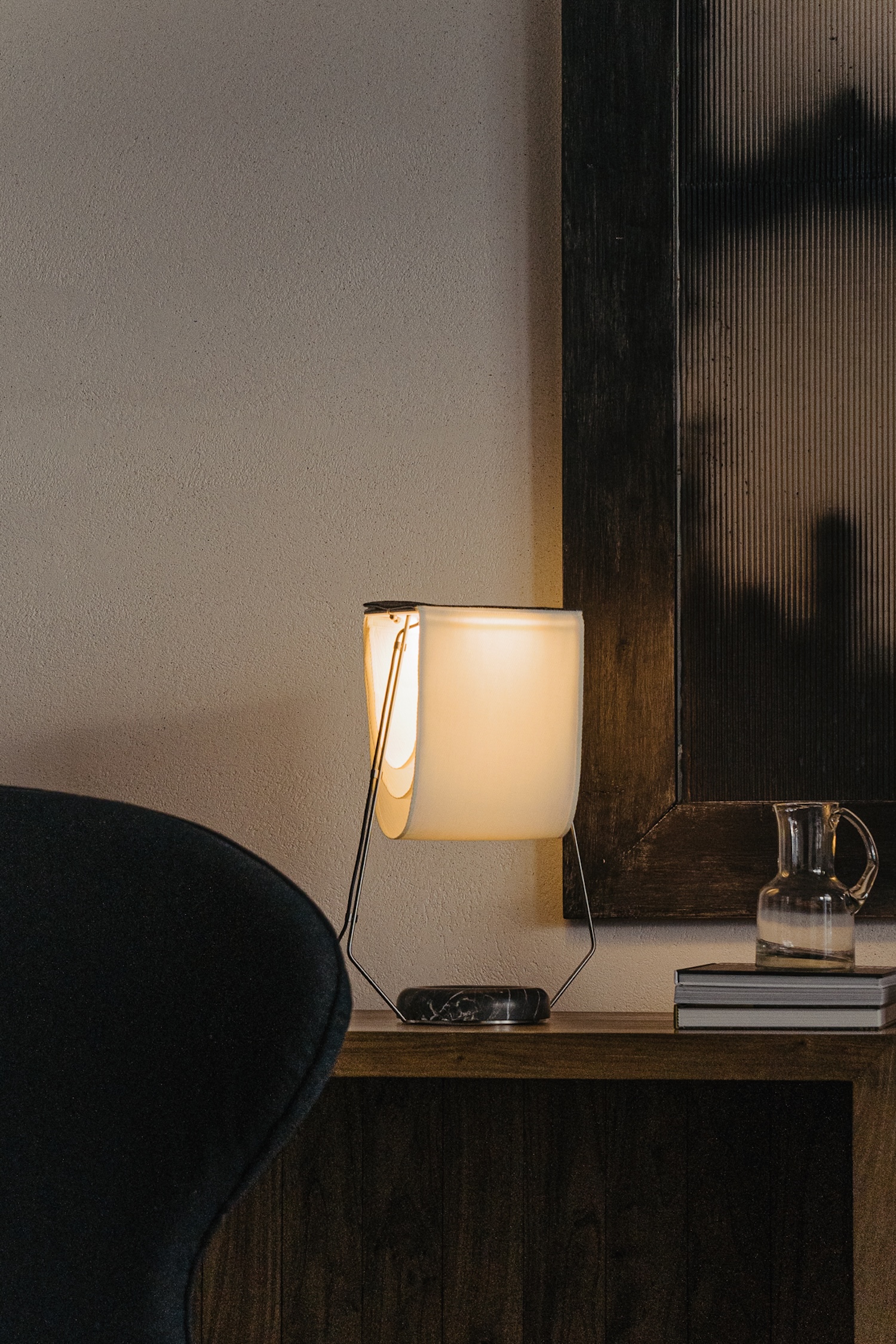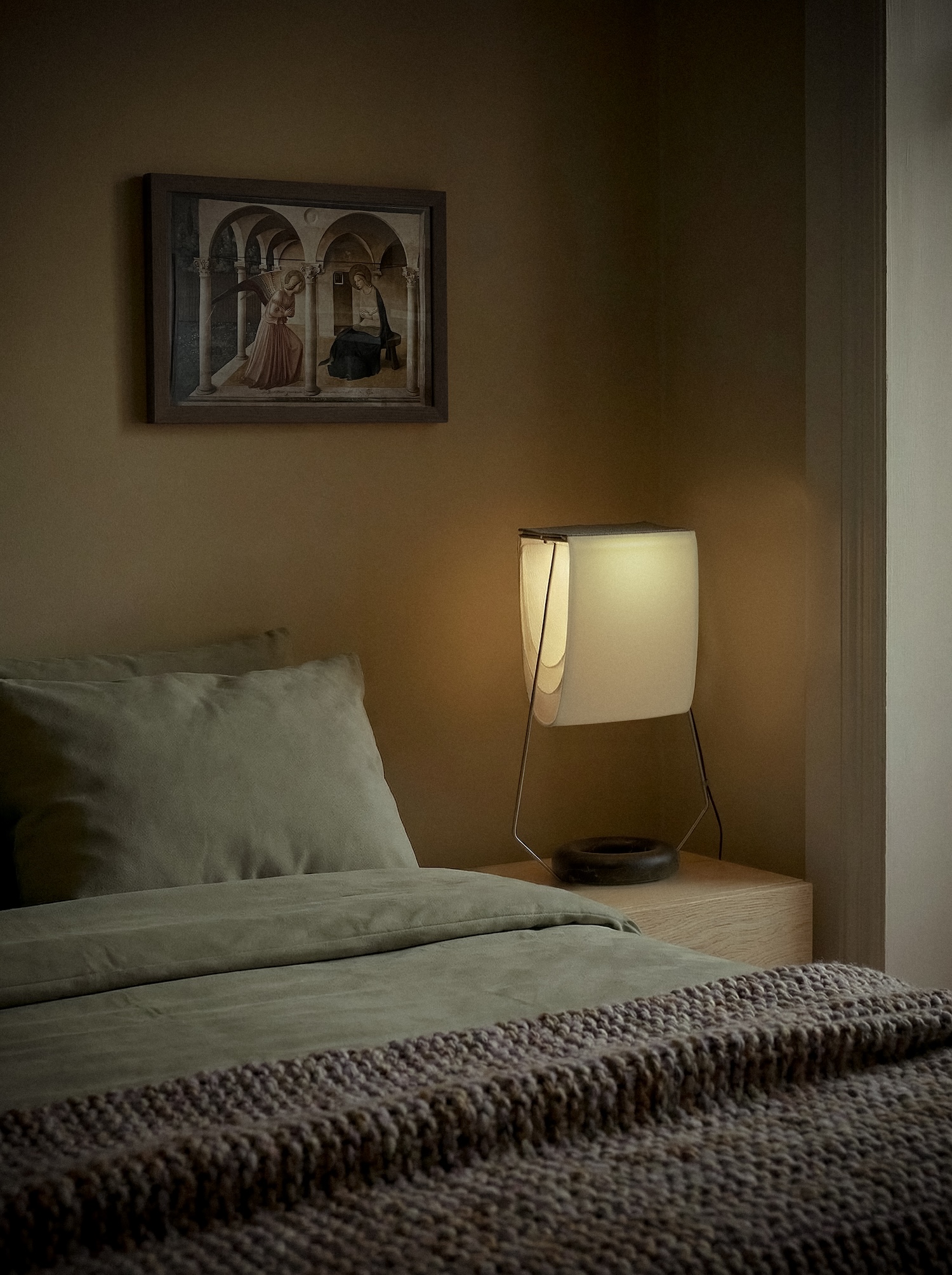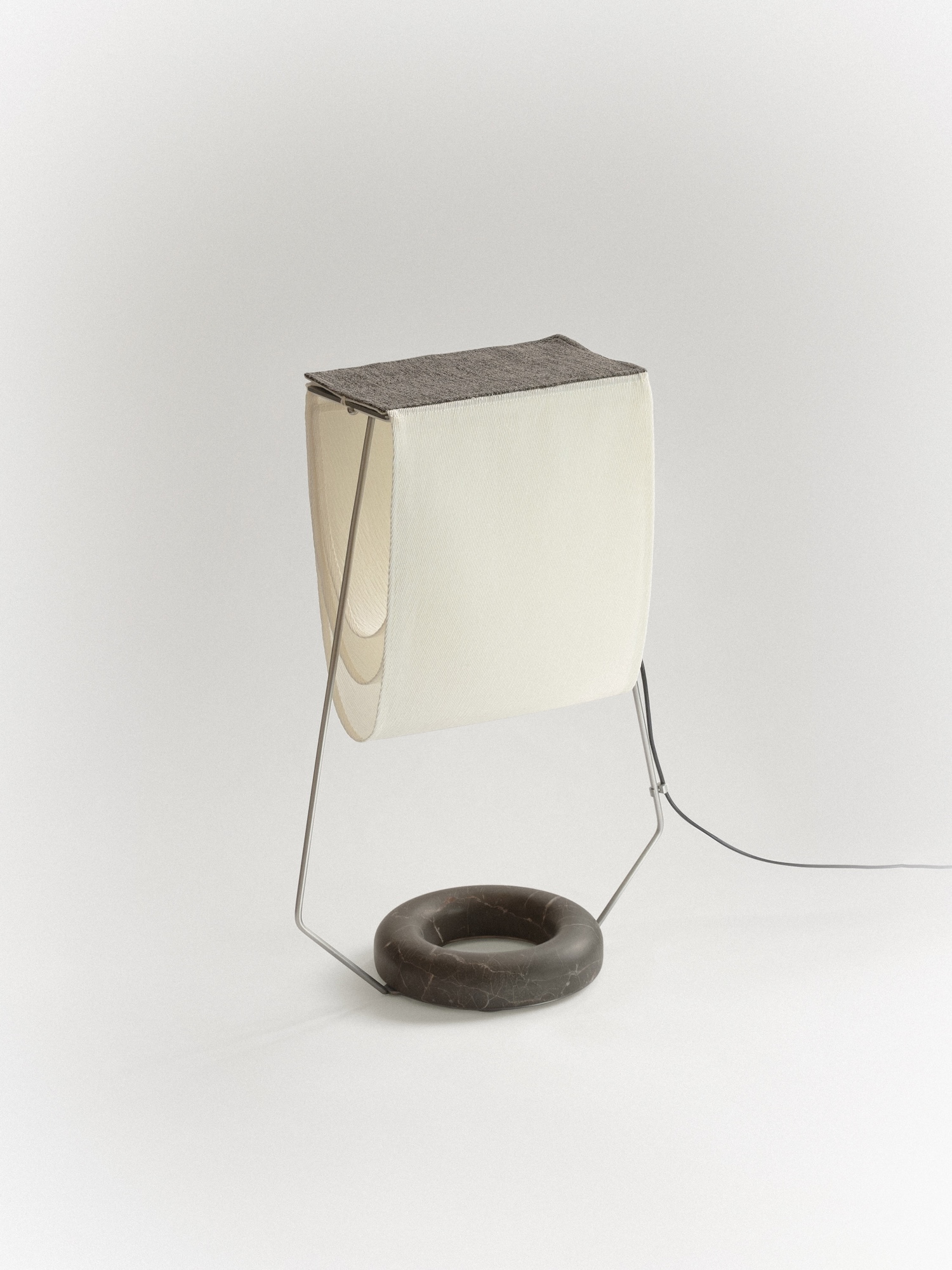
Rock Paper Scissors is a minimalist table lamp created by Xiamen-based studio Agar Archive. The lamp takes its cue from a hand game whose entire appeal rests on the absence of a winner at the top of the hierarchy: each gesture defeats one and loses to another, forever. That non-transitive loop is a genuinely unusual structure to hand to an object designer, because most product hierarchies are transitive. Frame supports diffuser, base supports frame, and everything terminates in the floor. Agar Archive instead builds a lamp where the three materials hold one another in a circuit of mutual obligation.
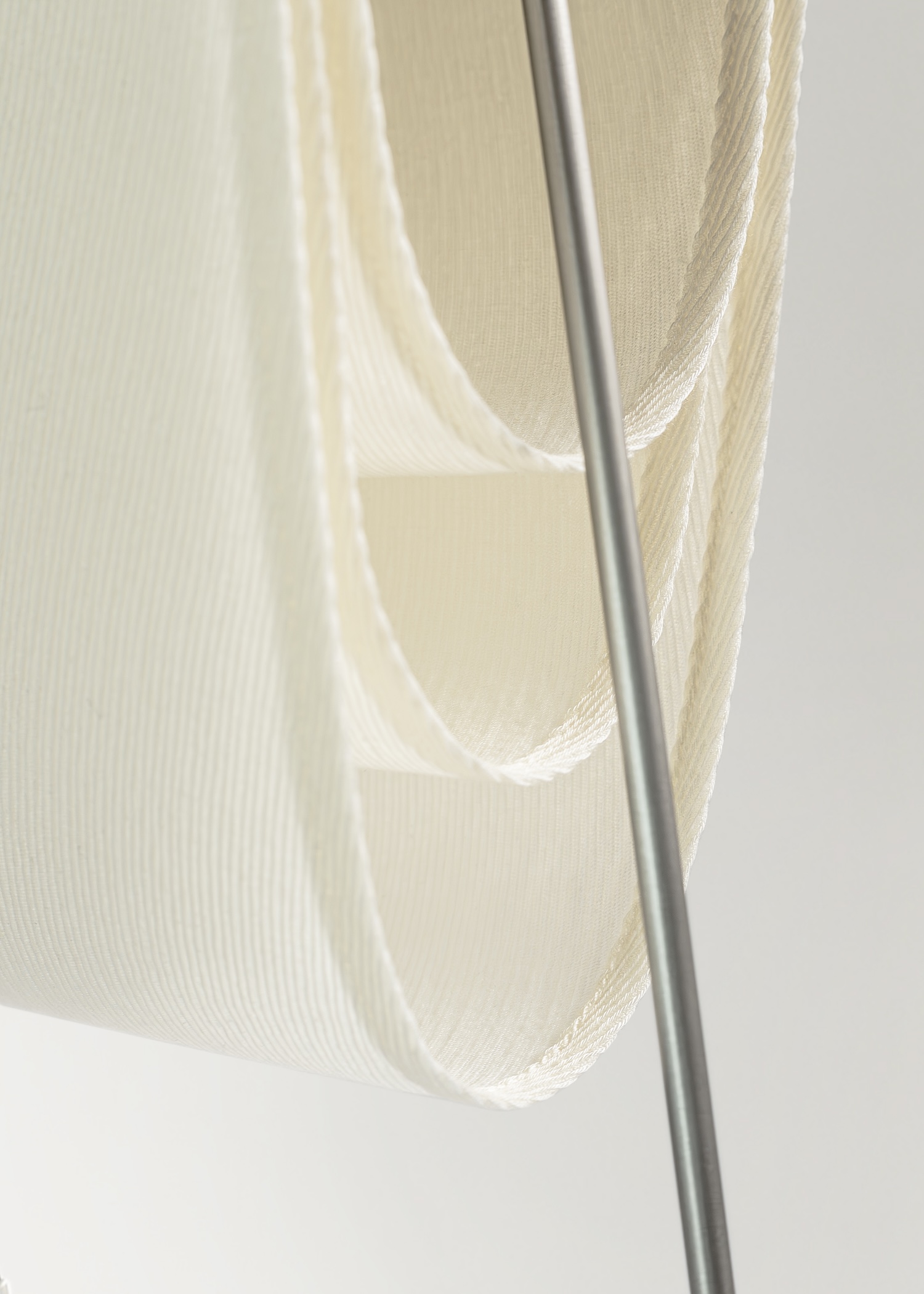
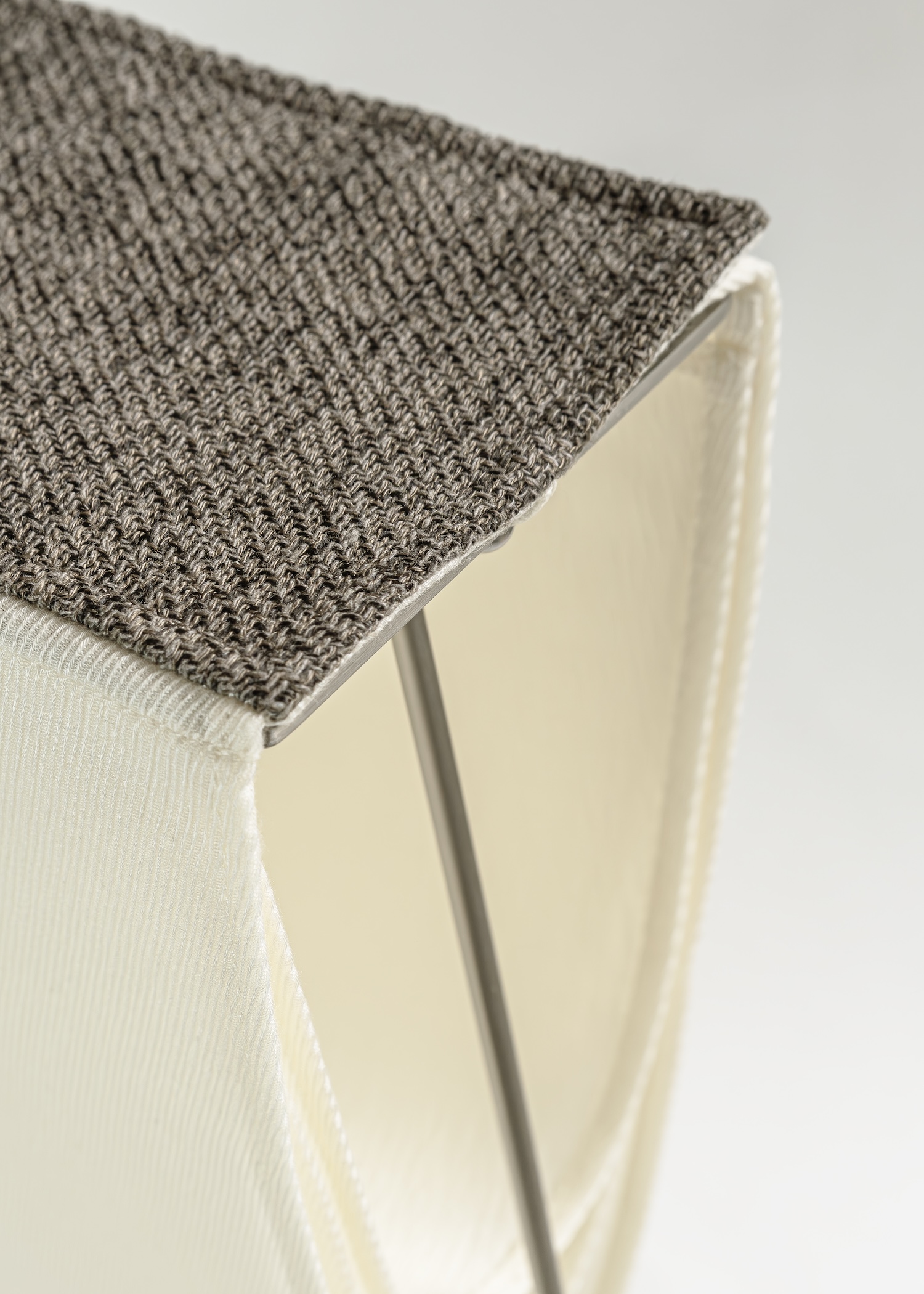
The cast is fabric, stainless steel, and marble, and the studio refuses to let any of them retreat into a familiar role. Fabric is the interesting move. In lighting, textile almost always arrives late in the process, stretched over a wire frame that has already decided the shape, which is why shades are usually described as coverings. Here the drape does structural work. The cloth falls under its own weight and that fall determines the silhouette, so the form is negotiated between the textile and gravity rather than dictated by an armature. The result is a lamp that reads as slightly provisional, as if it settled into position moments ago and might shift again.
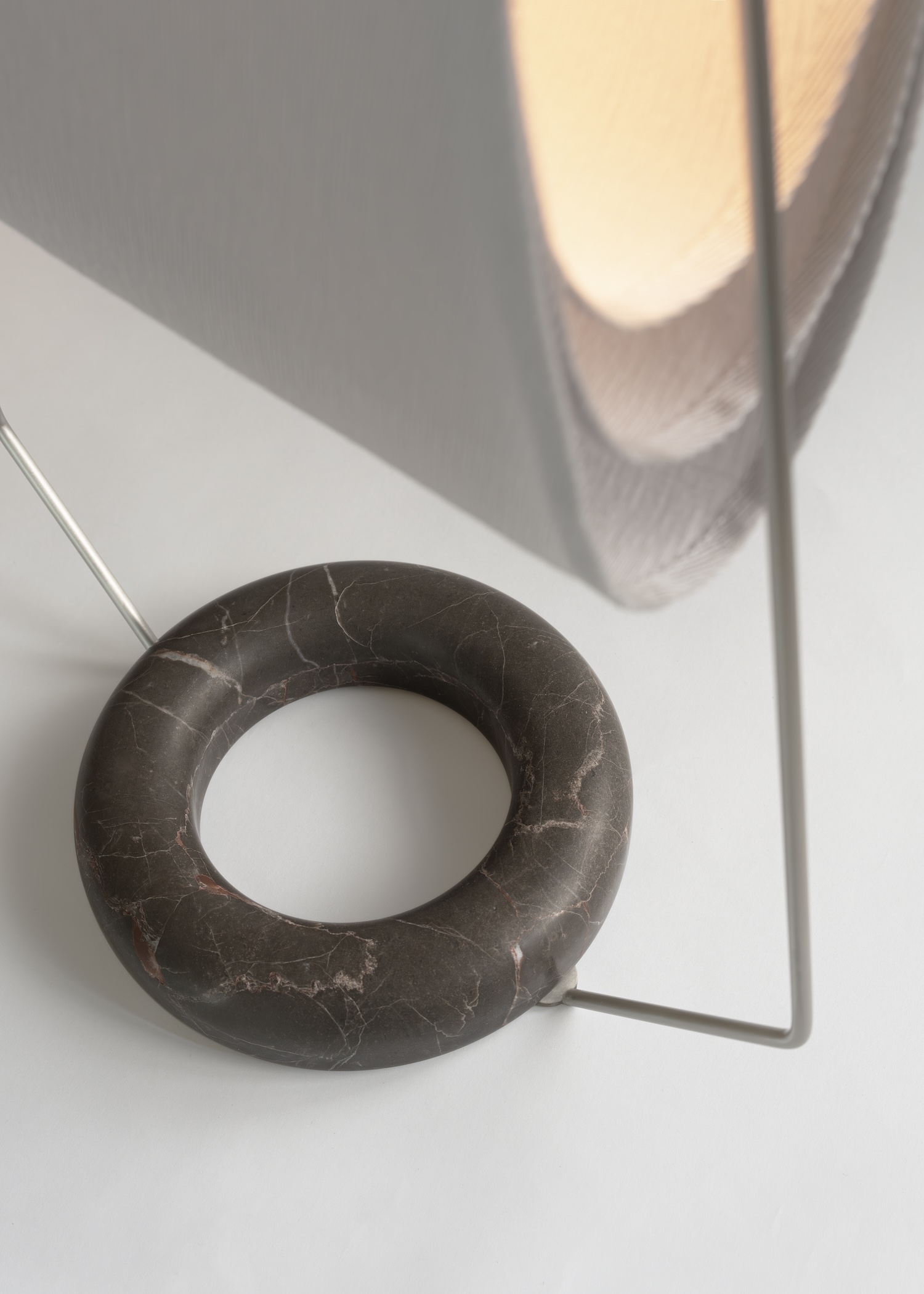
Marble provides the counter-argument. At W31 x D16 x H42.5 cm the piece is small enough that mass matters disproportionately, and stone at that scale becomes the anchor that permits the fabric its looseness. There is a lineage here running through Achille Castiglioni, whose Arco used a marble block not as a plinth but as the structural fact that made the cantilever possible, and whose Cocoon lamps for Flos treated a sprayed polymer membrane as skin and structure at once. Noguchi’s Akari belongs to the same conversation, where washi over bamboo ribs turned a diffusing surface into the body of the lamp itself.
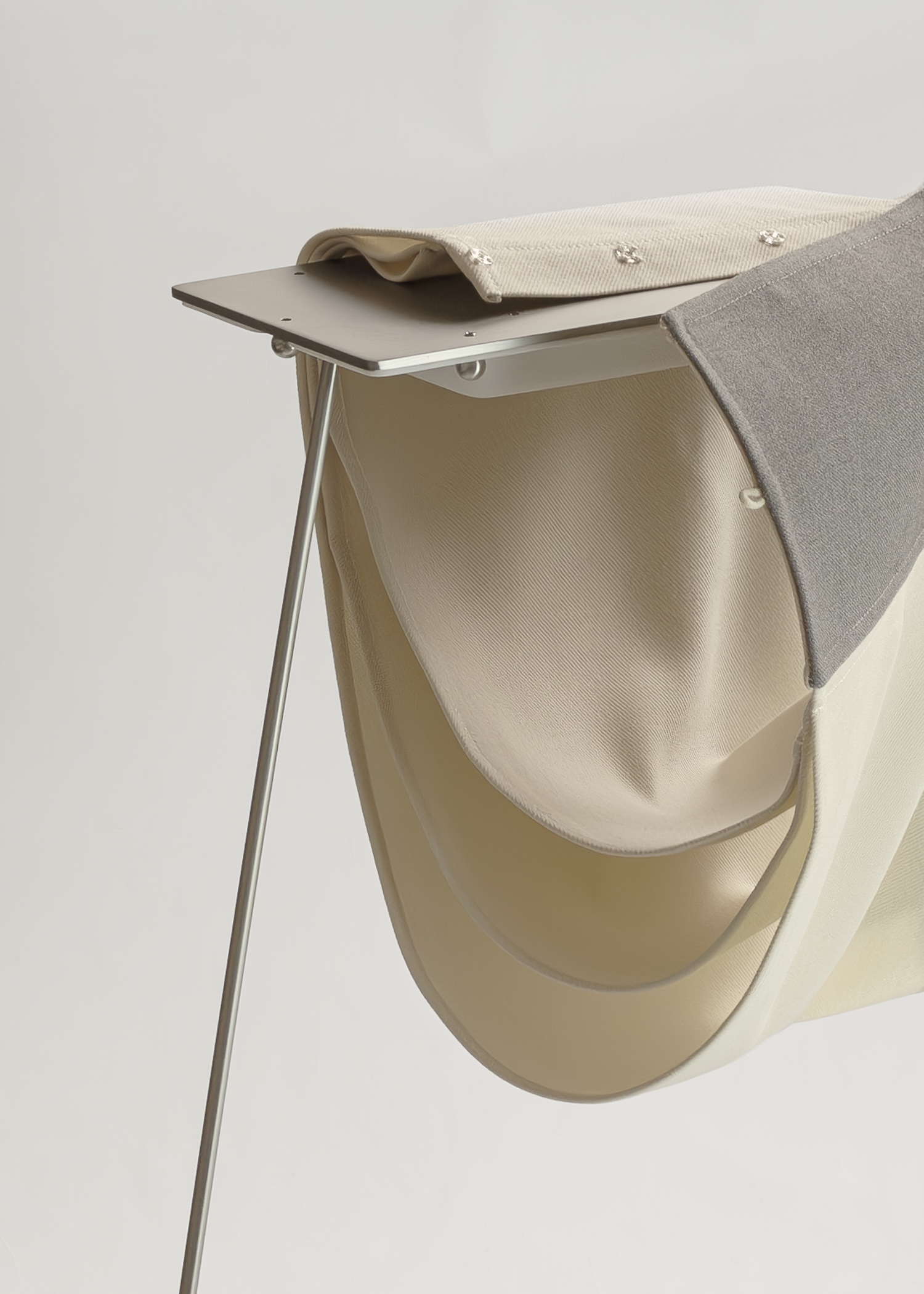
The fastenings are where the object turns domestic. Frog closures, the knotted loop-and-toggle buttons of Chinese garment tradition, carry a specificity that a hidden fixing never could. They are hand-tied, slightly irregular, and legible to anyone who has fastened a jacket. Metal bead detailing pushes the same direction, borrowing from dressmaking rather than from lighting hardware. Assembly becomes something you can see and, in principle, undo. That reversibility matters to how the lamp behaves over time, since a garment-logic object invites adjustment in a way a welded one does not.