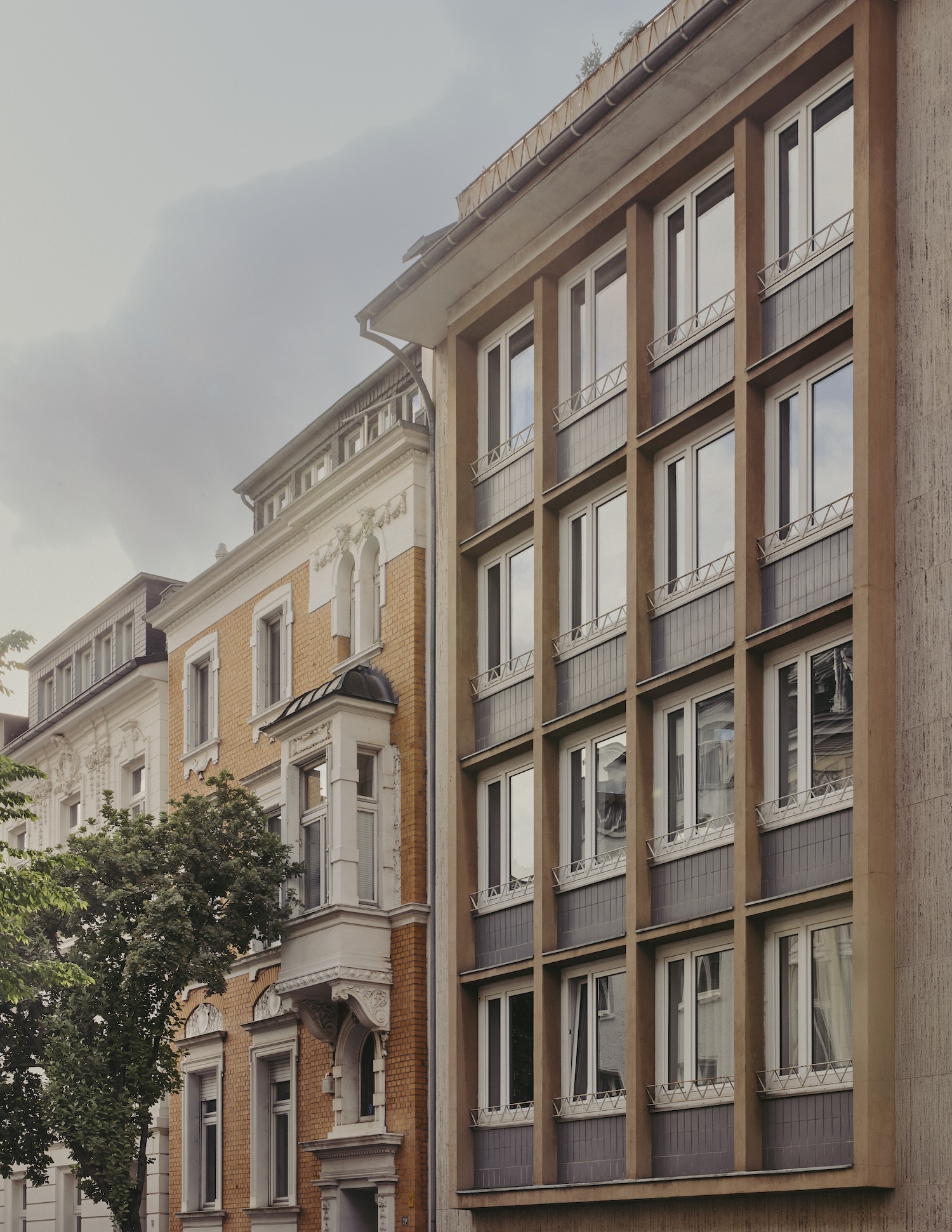
For its first exhibition, Sehnsucht Stadt, in 2017, Nidus built a scale model of a 1956 apartment building on Arnoldstraße in Düsseldorf, Germany. The show examined the housing of the city’s postwar reconstruction years, and the model recorded what drew the studio to this example – the depth of its façade, its vertical pilasters, and the delicate balustrades beneath each window. Eight years later, a client asked Nidus to redesign his apartment, which happened to sit inside the same building. The result is Apartment 1956, a 1600 sqft residence reorganized as one continuous sequence of rooms.
The brief was to translate the attitude of the building into a present-day interior without reconstructing its decade. Nidus limited the palette almost entirely to oak, adding stainless steel in the kitchen and linen and pale surfaces elsewhere.
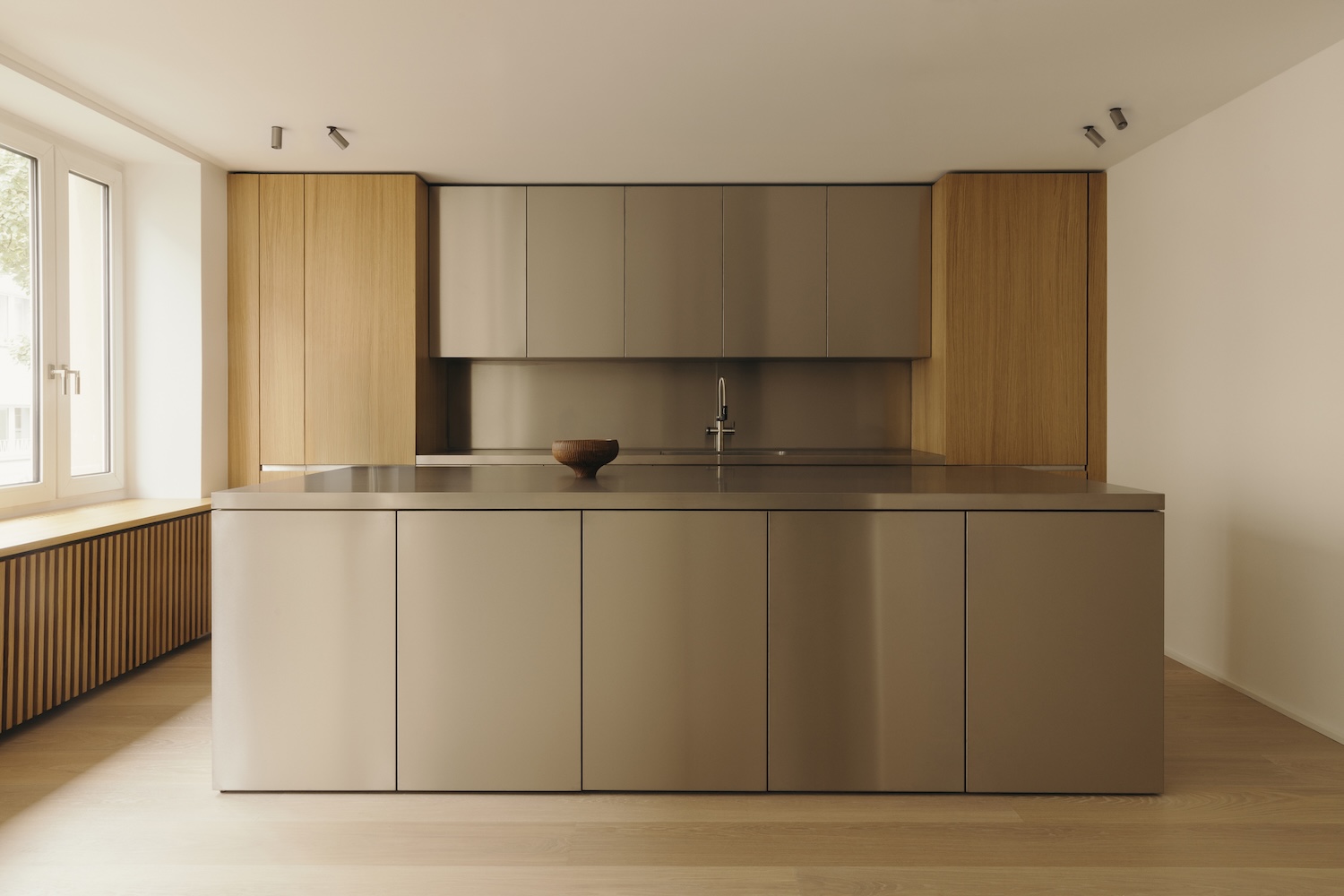
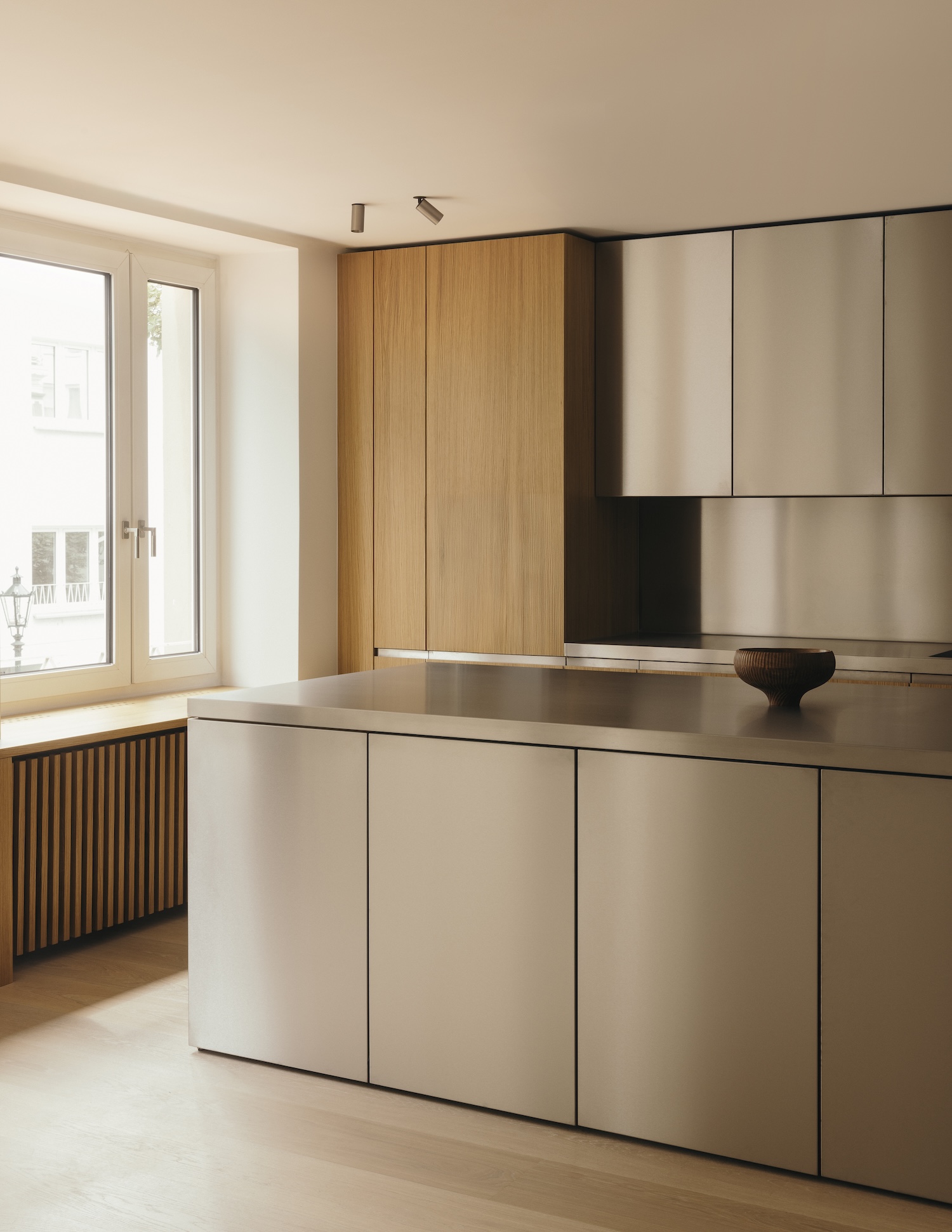
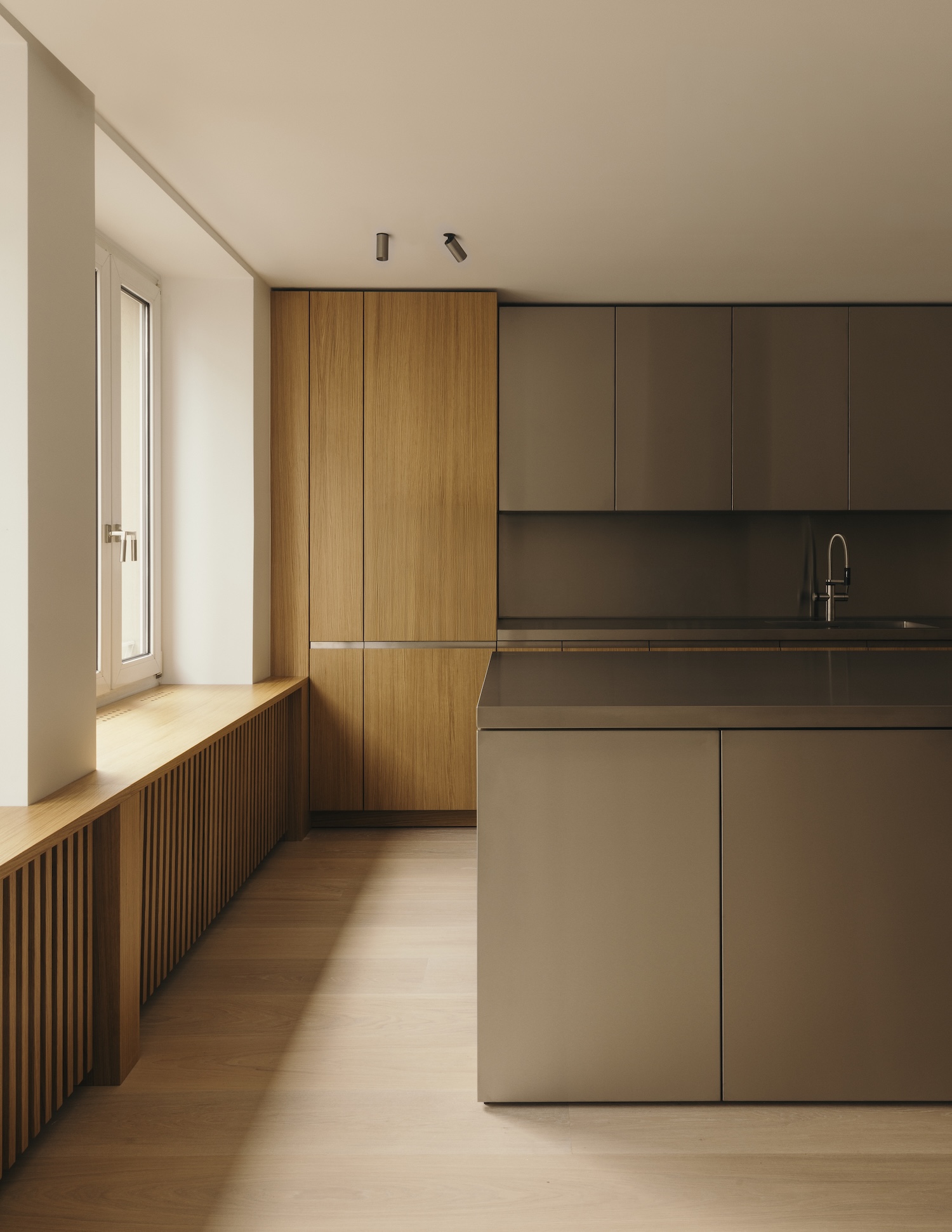
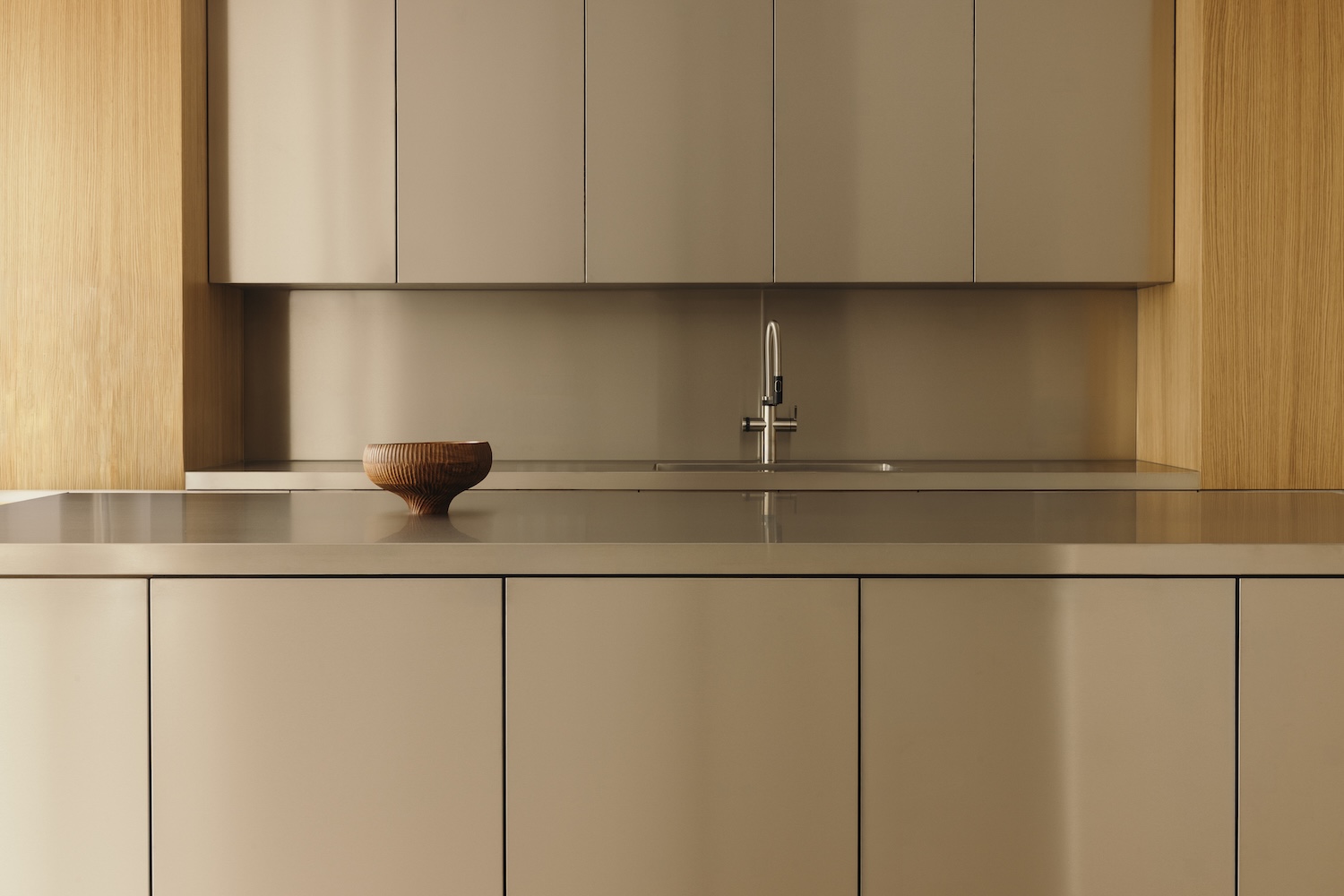
The kitchen sets the two main materials against each other. Full-height oak cabinetry frames the room, while the island, worktops, fronts, and backsplash are clad in a single run of stainless steel. The steel reflects daylight from the adjacent windows and carries no grain, which makes the vertical figure of the oak veneer beside it more legible.
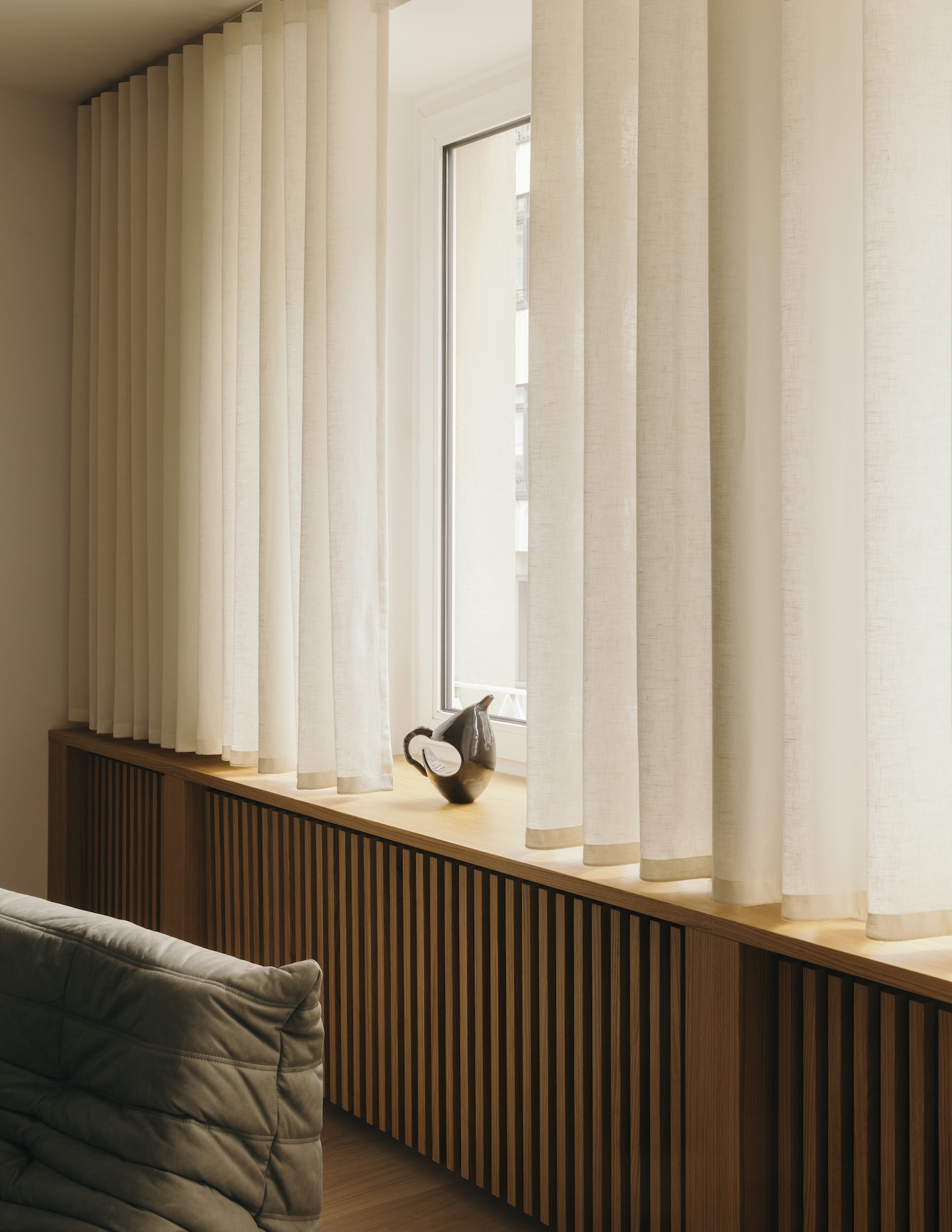
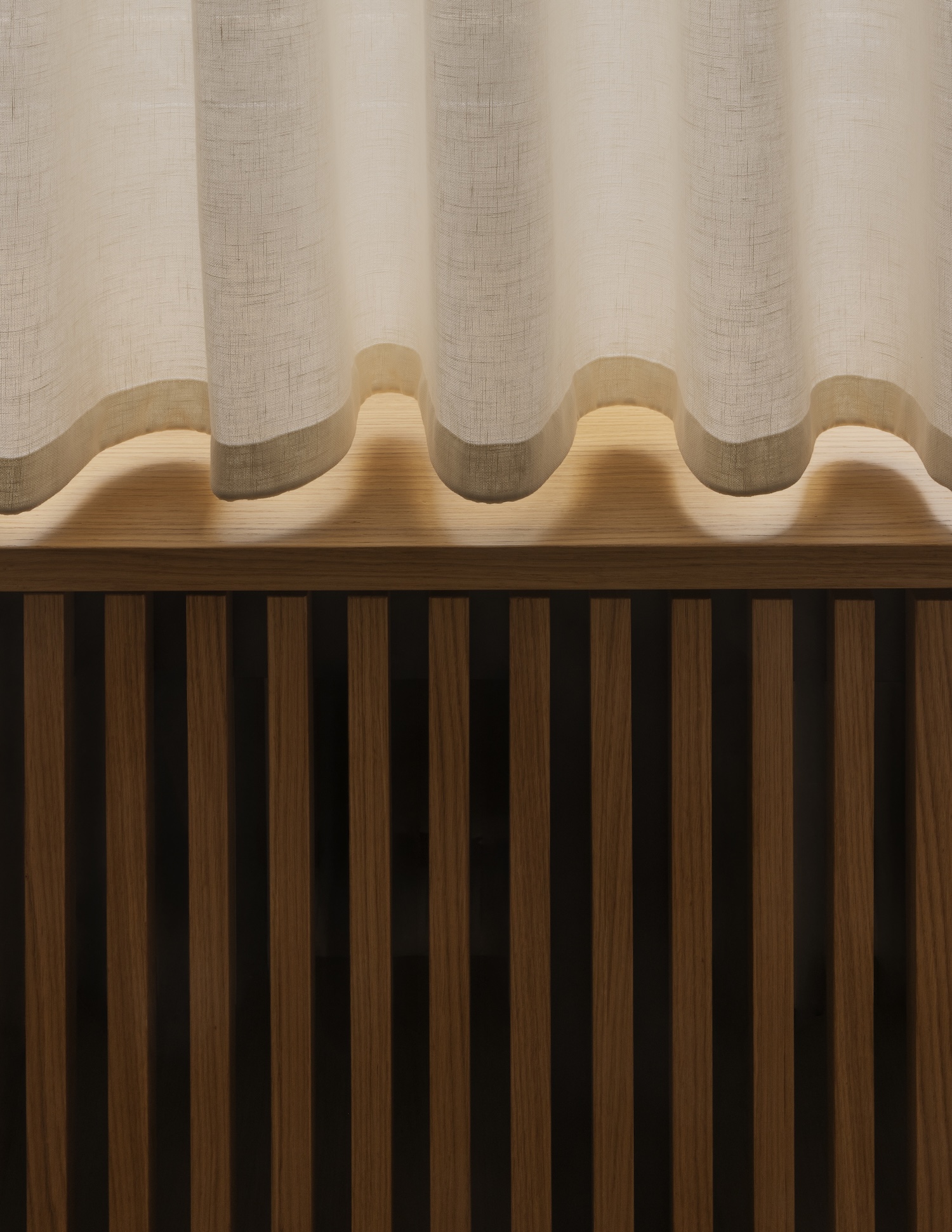
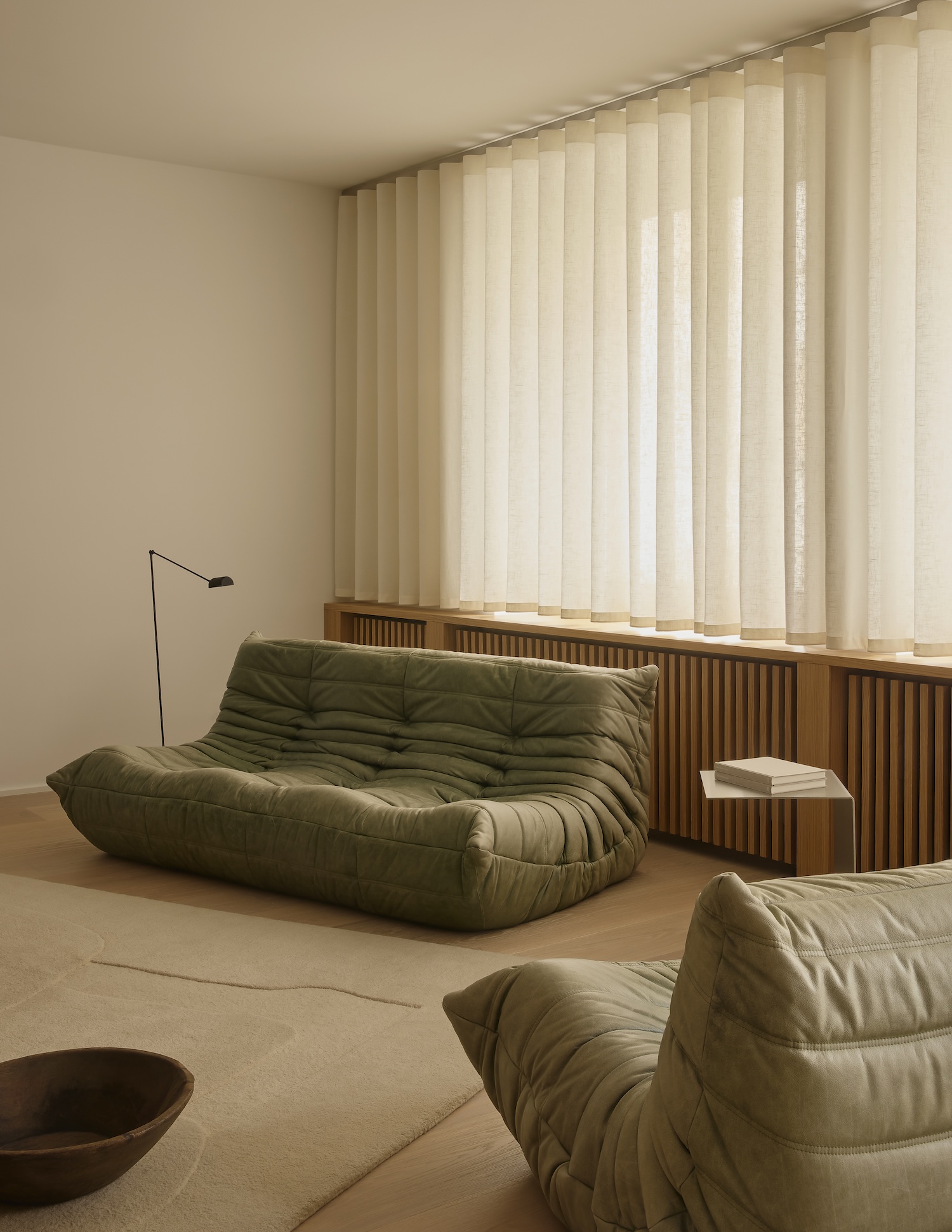
Along the façade, a bespoke oak enclosure with vertical slats conceals the radiators and joins the separate window openings into one horizontal band, its flat oak top working as a deep sill. In the living room, linen curtains hang from the ceiling to the top of this band and filter the daylight across the full width of the wall.
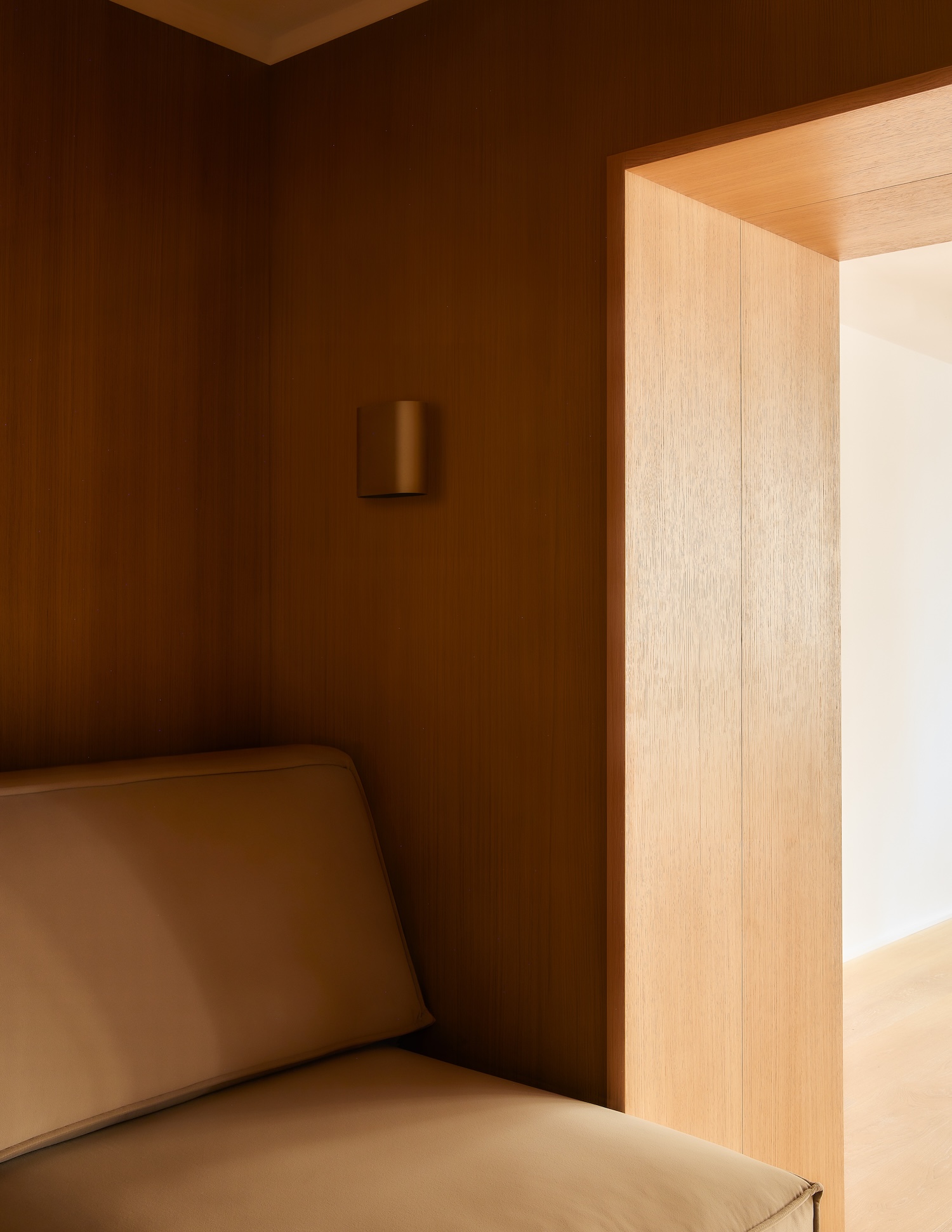
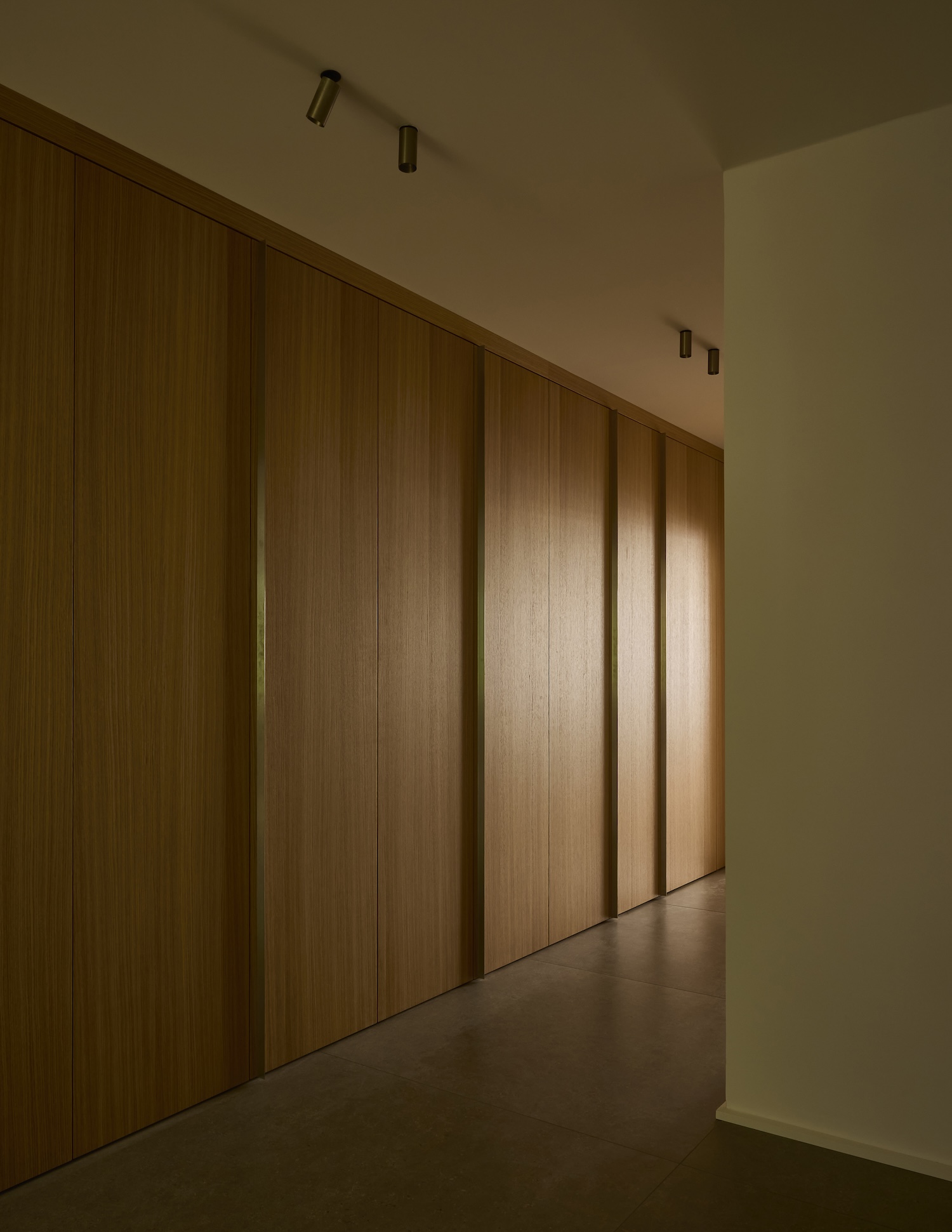
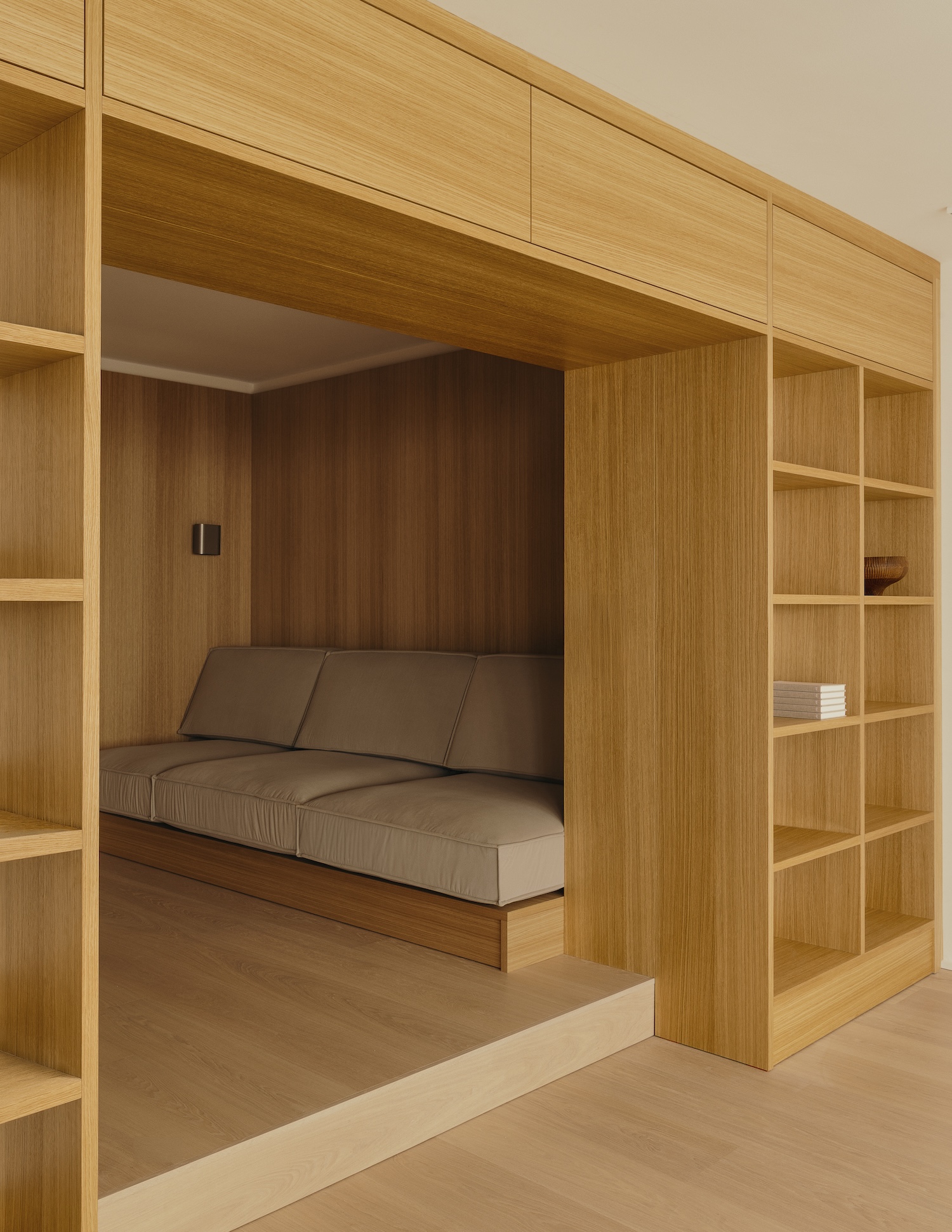
The same logic runs through the rest of the joinery. A full-height oak wall in the living area combines storage, open shelving, and an upholstered seating niche raised on a plinth, lined in oak and lit by a single wall sconce. In the private wing, a long oak wall absorbs doors and storage so that they read as one surface, divided only by its joints and washed by ceiling spotlights.
Against this fixed backdrop, the furnishings mix vintage seating, contemporary pieces, art, and objects designed by Nidus. The period detail of the building survives elsewhere, in the original door handle, which carries a relief of abstract geometric forms.