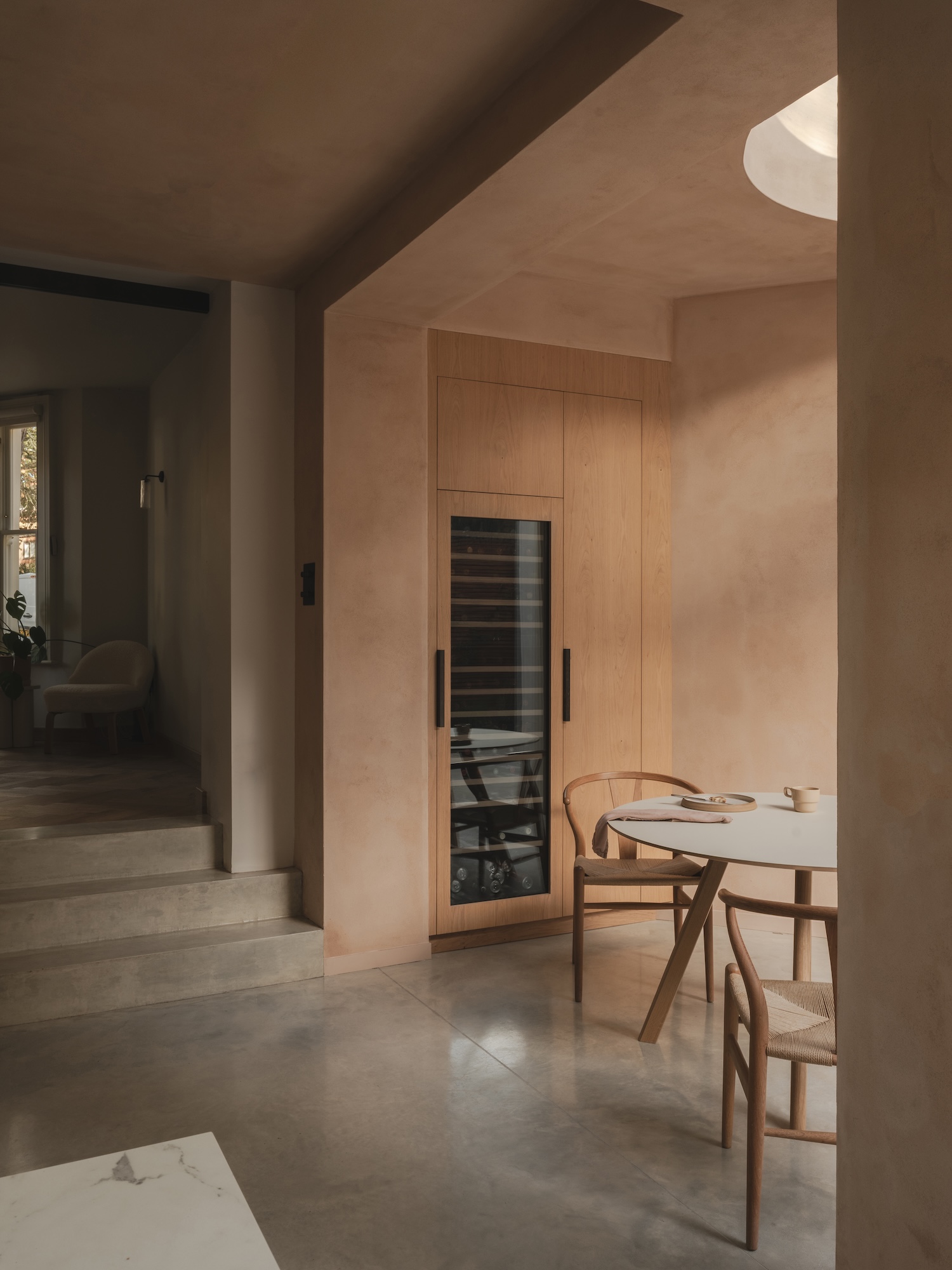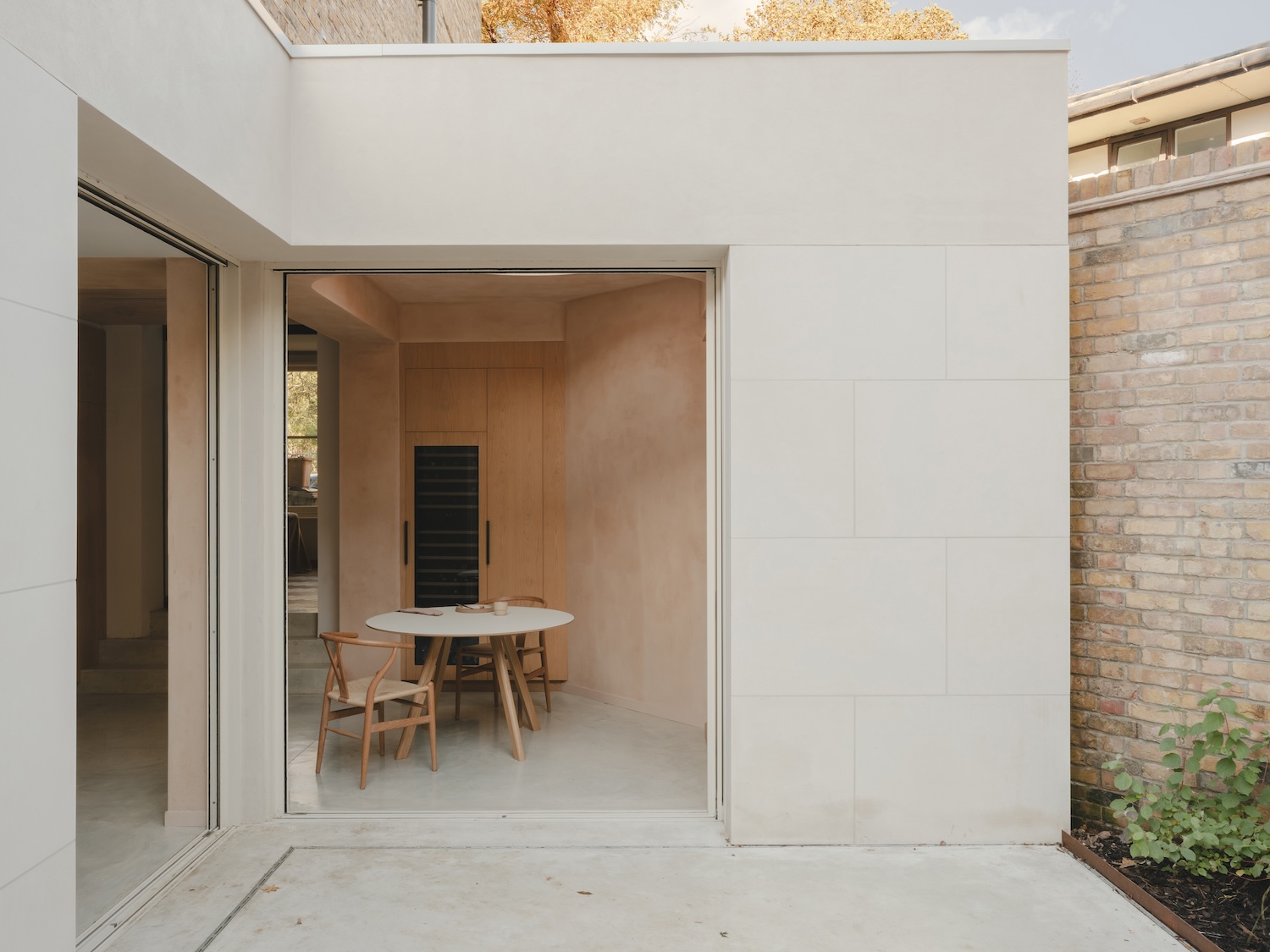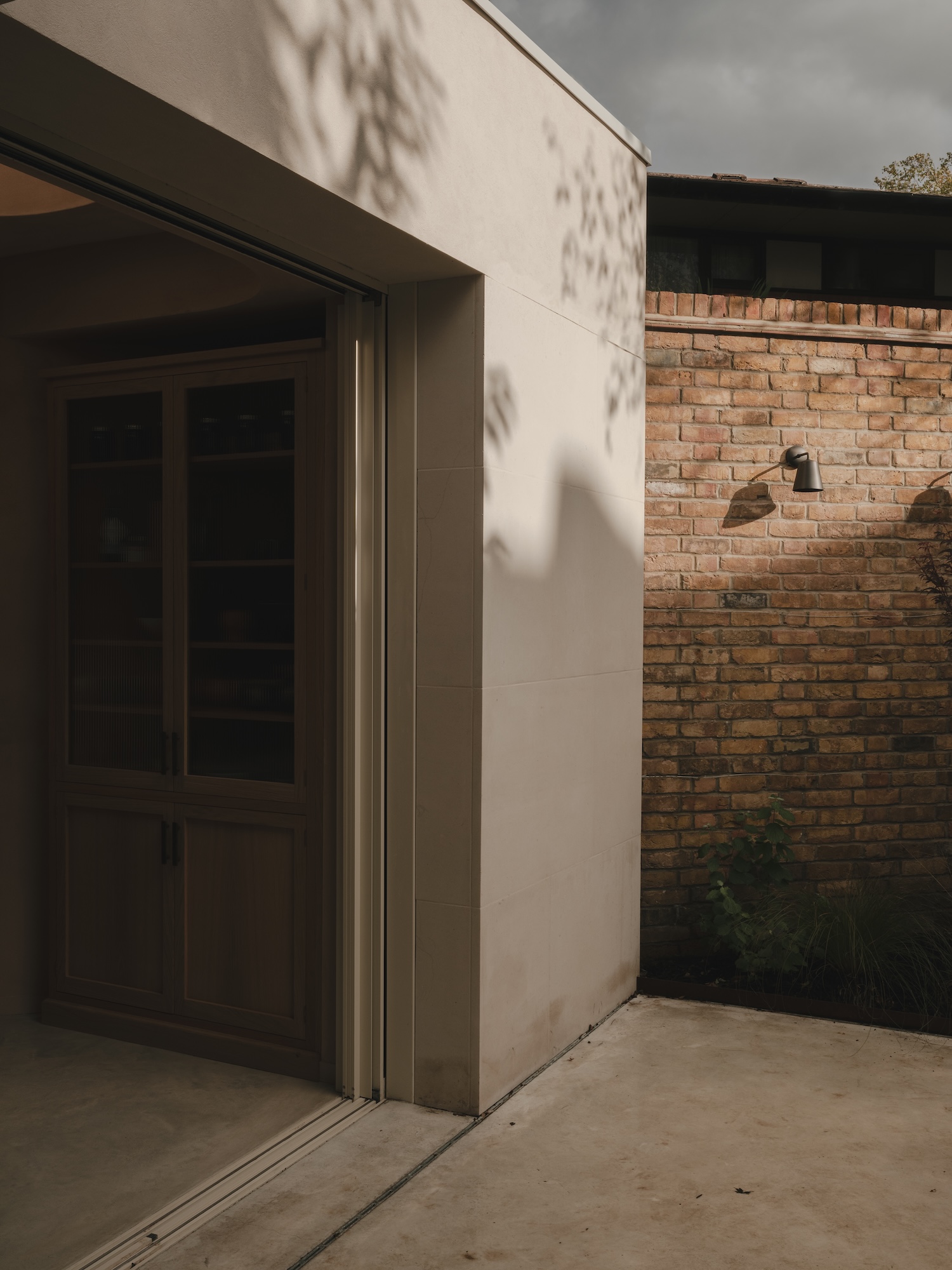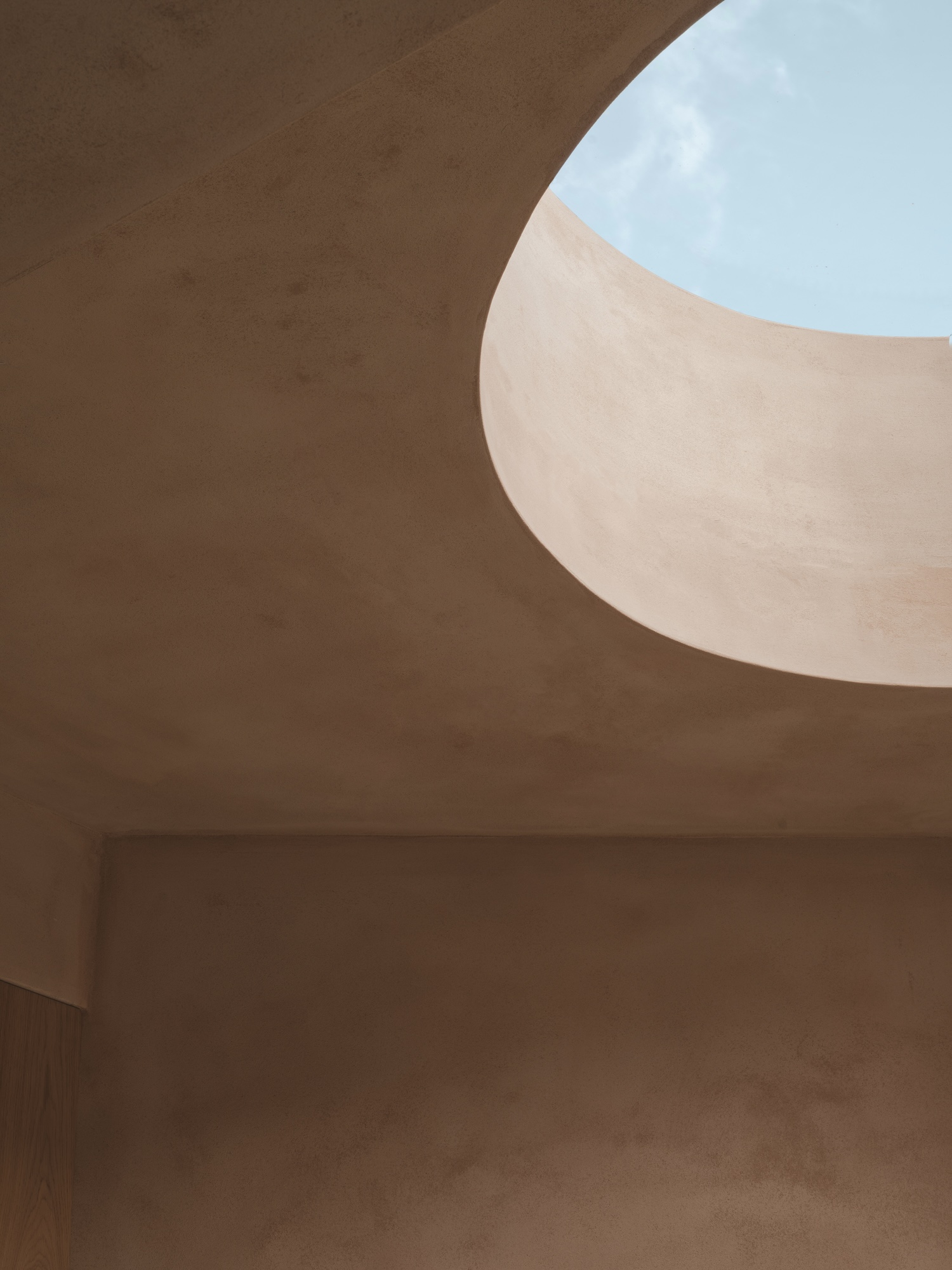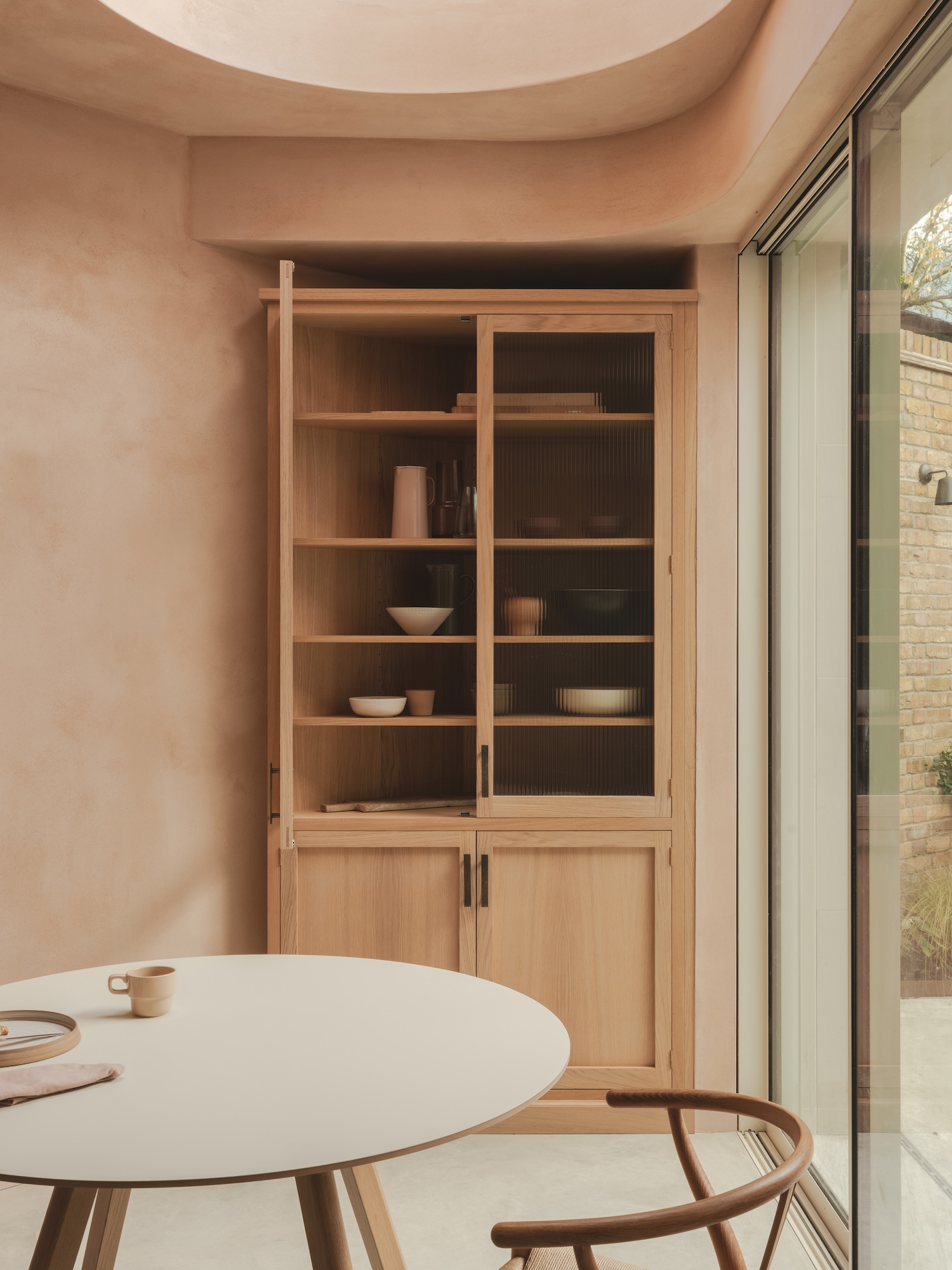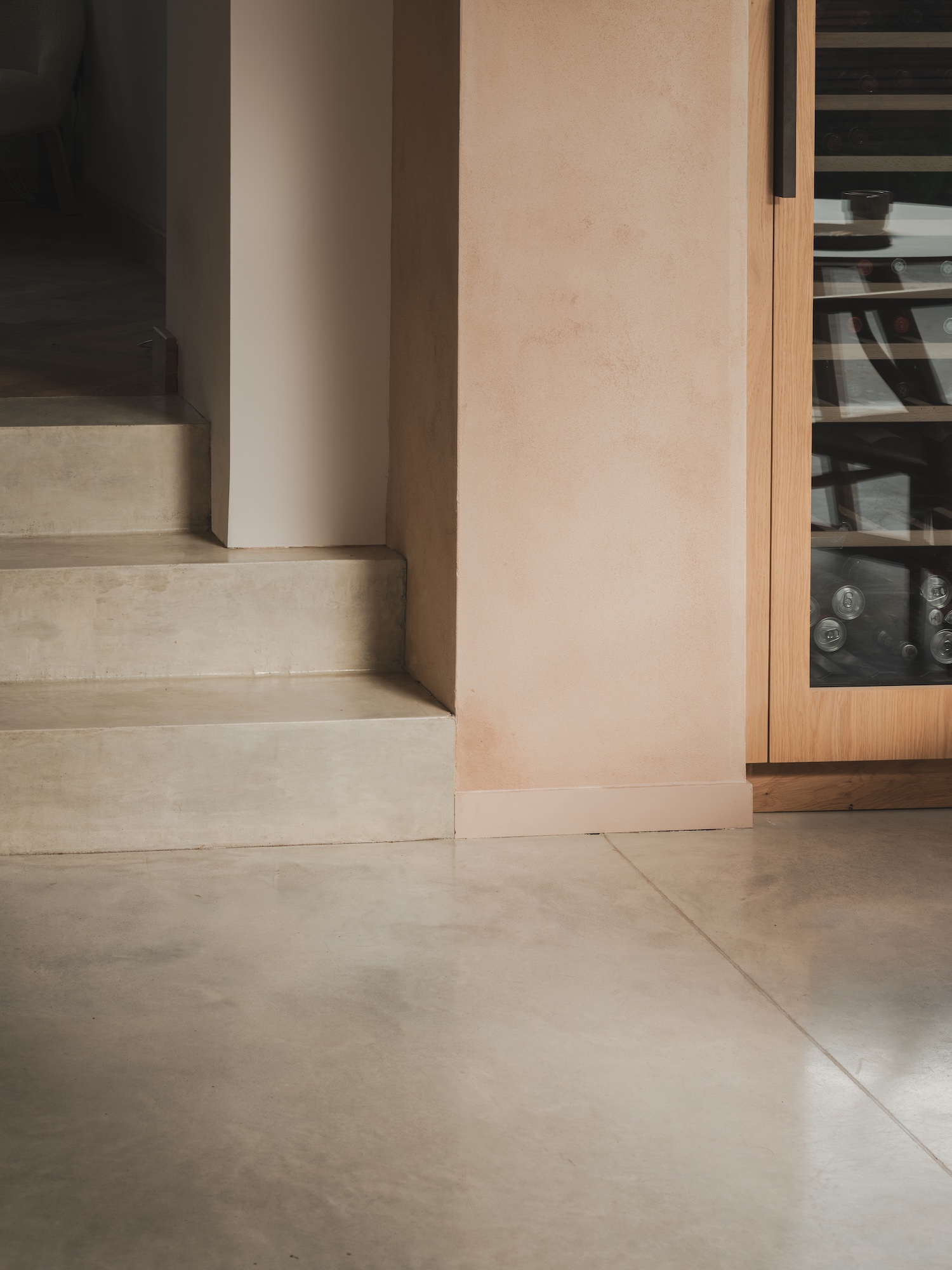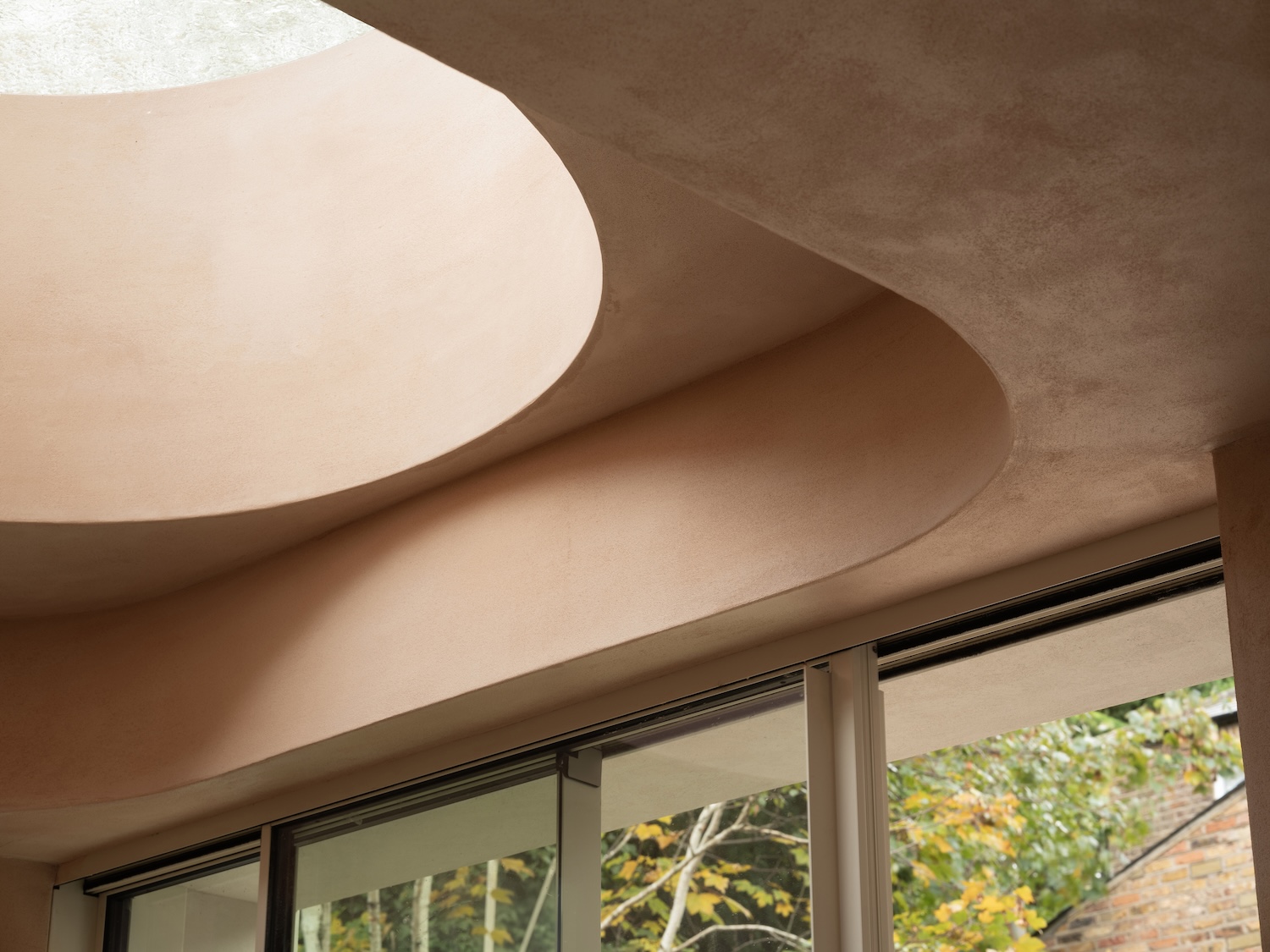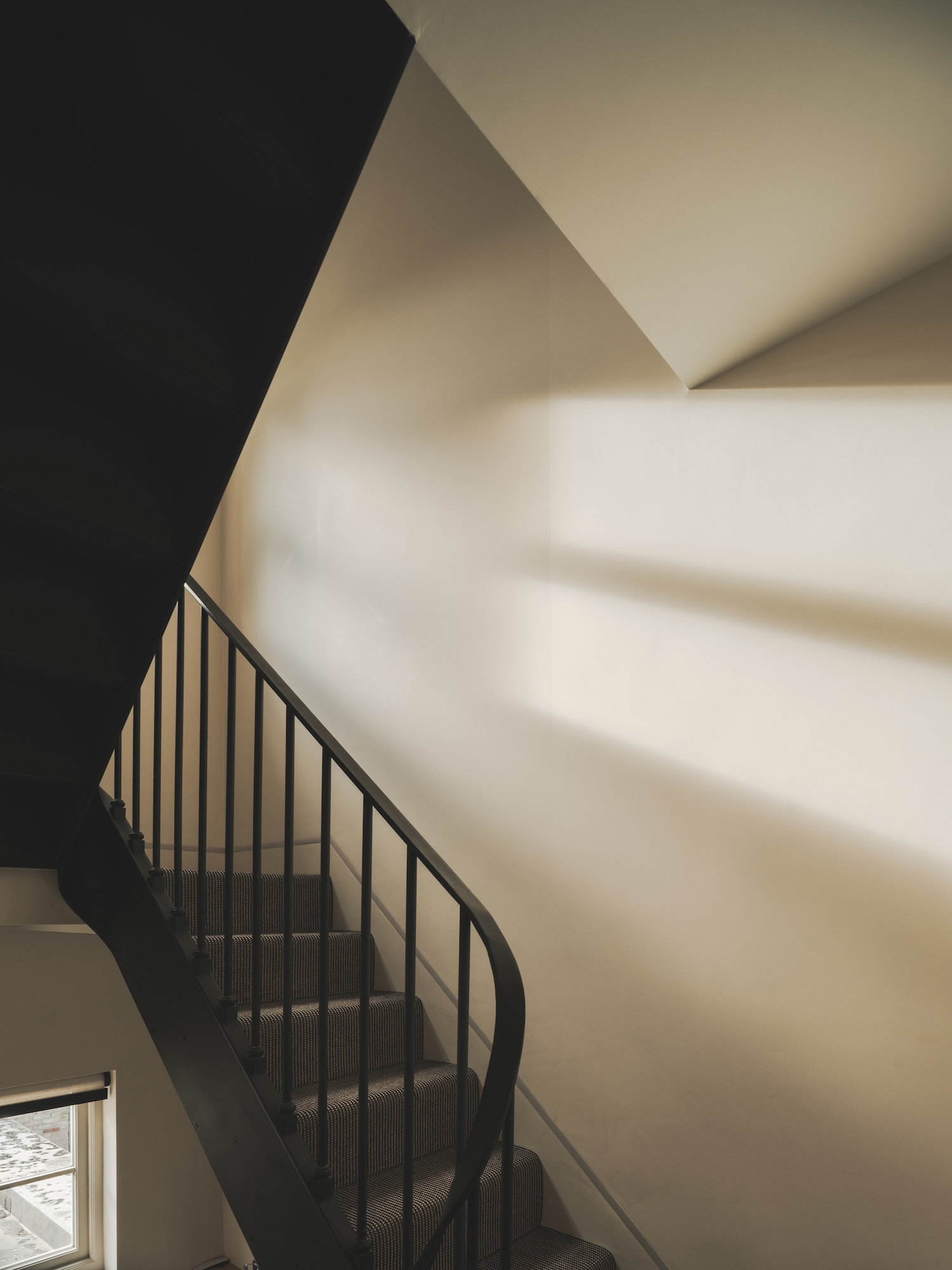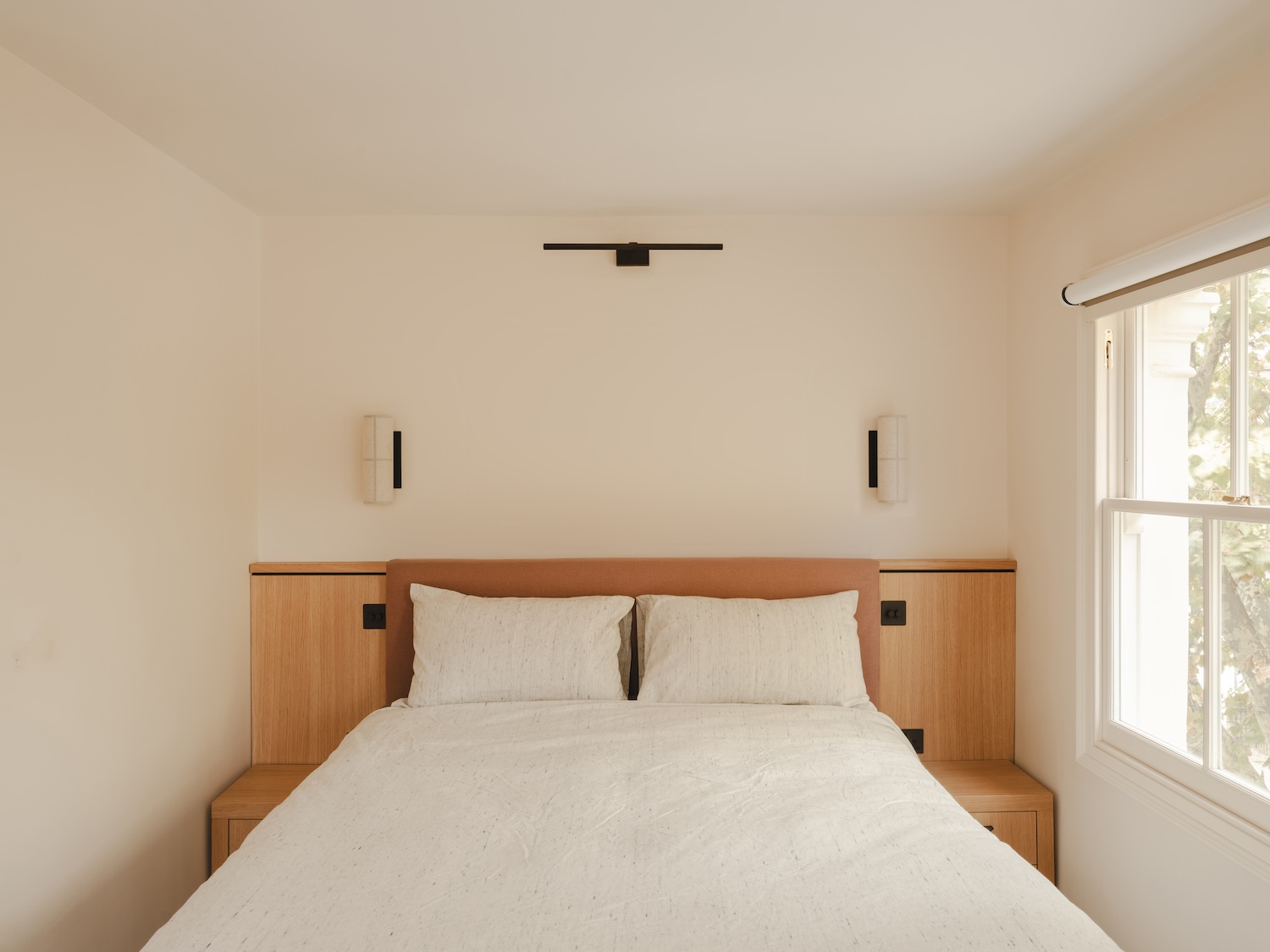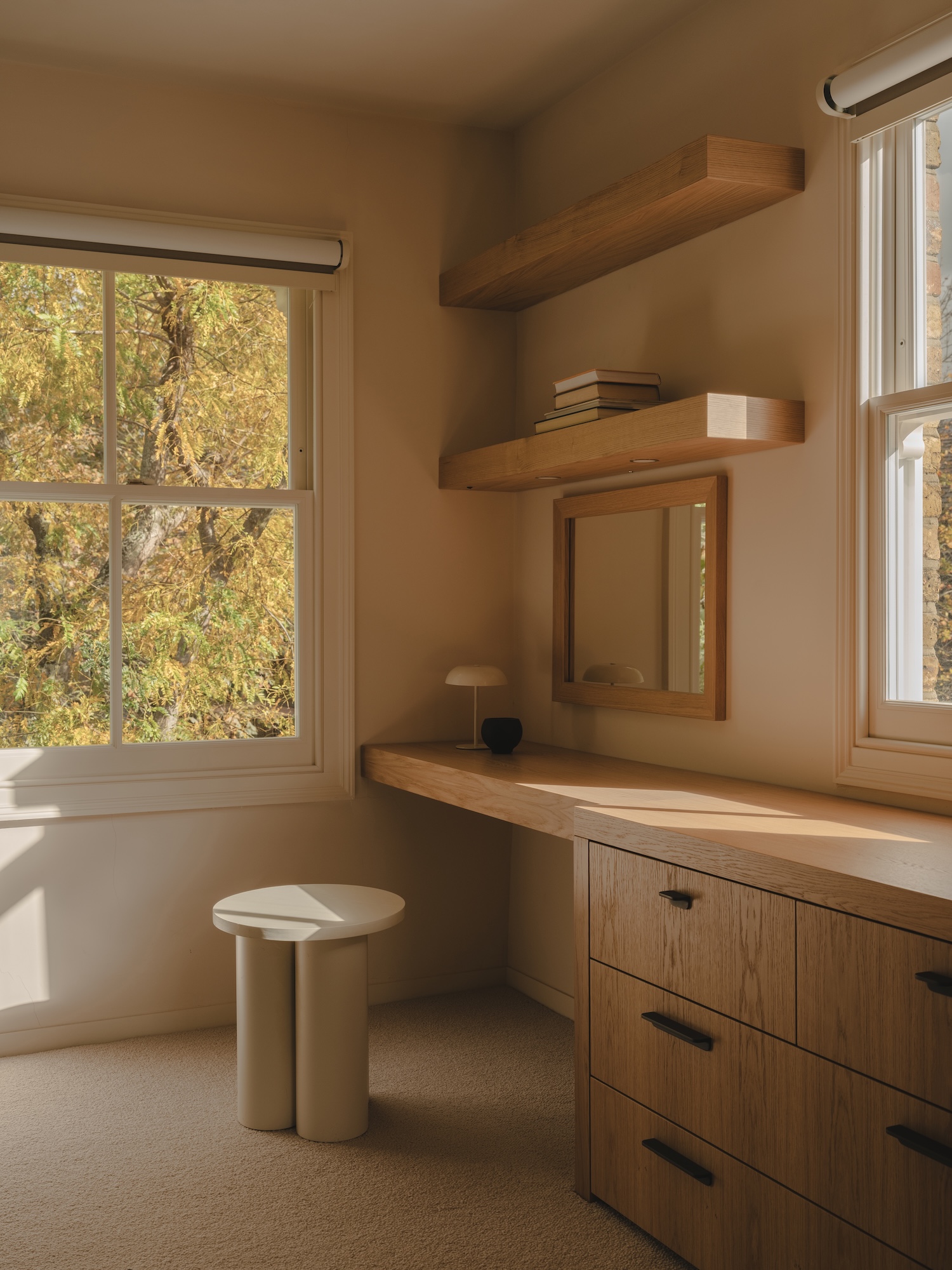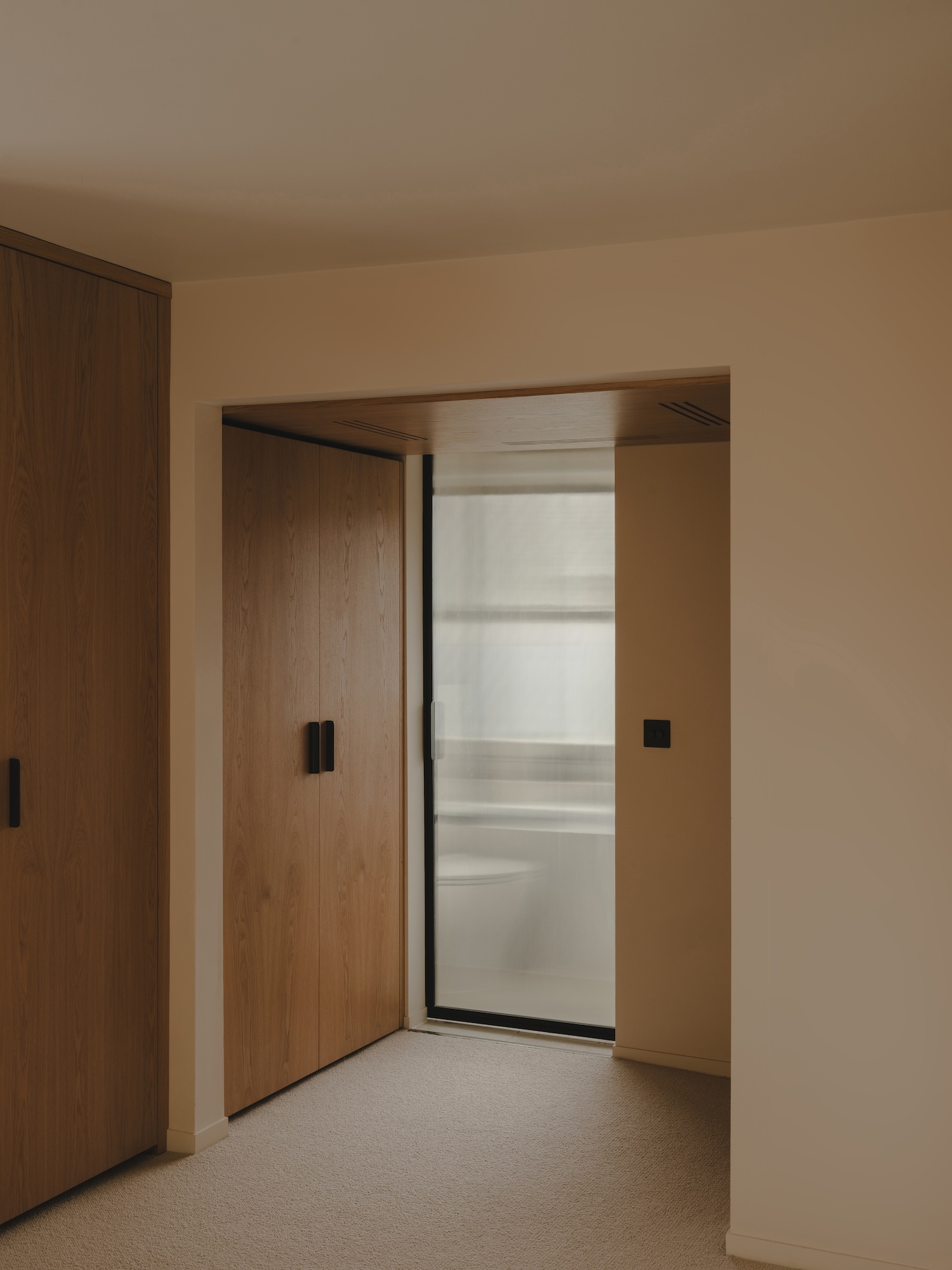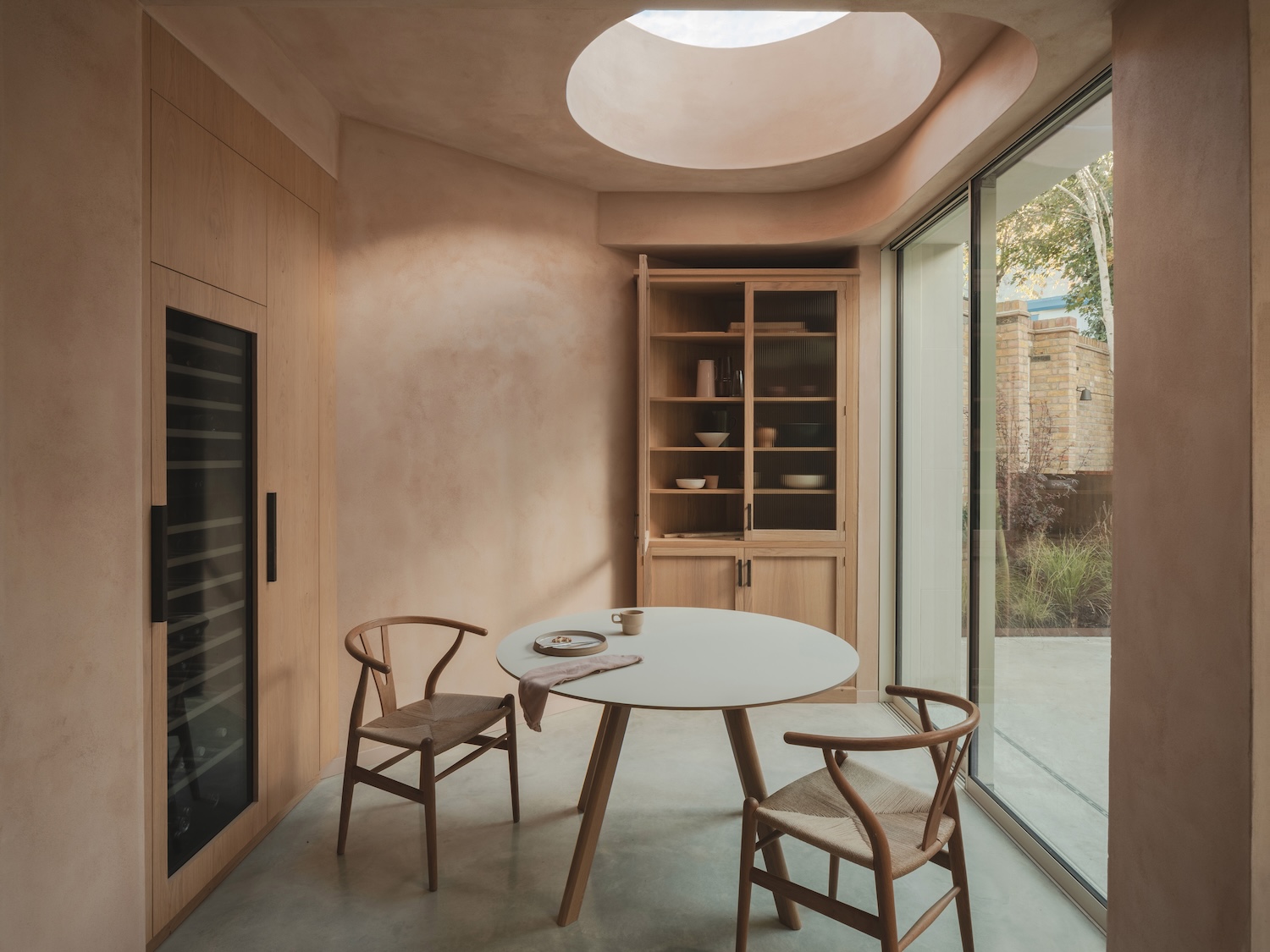
Balmore House is a minimalist residential renovation located in Highgate, London, designed by Studio 163. Triangular urban plots are among the most stubborn problems in domestic architecture – the geometry resists standard room configurations, creates awkward junctions, and tends to produce either wasted space or compromised privacy. At Balmore House, an end-of-terrace property abutting a public footpath on the edge of Highgate and Hampstead Heath, Studio 163 treated the site’s irregular footprint not as a liability but as a prompt for a more considered spatial logic.
Ground-floor extensions to the rear and side expand the home’s footprint while addressing the tension between openness and enclosure that a footpath-adjacent site demands. Portland Stone clads these new elements – a material choice that carries both pragmatic and symbolic weight. Quarried in Dorset, Portland Stone carries low embodied carbon relative to many cladding alternatives, but its value here is also tectonic: the stone’s pale, close-grained surface absorbs light without glare, lending the additions a monumental calm that reads as settled rather than imposed. It is a material with deep roots in British civic architecture, from Wren’s London churches to the Portland vase tradition, and its use at residential scale brings that accumulated gravitas to bear on a quiet residential edge condition.
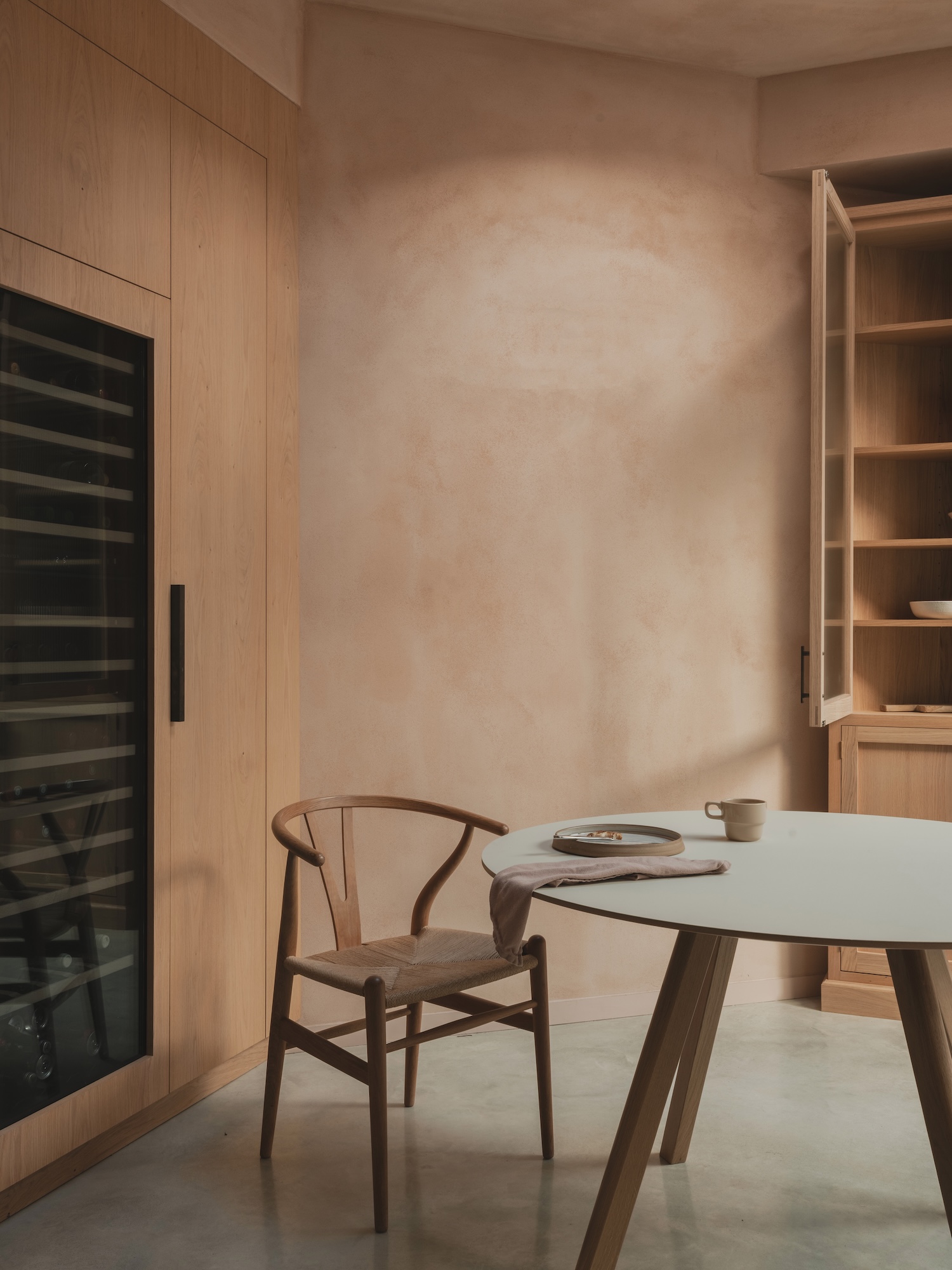
Inside, the project pursues a similar restraint through technical means. The retrofit integrates an air source heat pump providing both heating and cooling across the house, eliminating radiators from all newly configured spaces. The decision is consequential for the interior: without radiators occupying wall surfaces, rooms gain a spatial continuity that conventional heating systems tend to interrupt. Furniture placement, joinery runs, and the flow between spaces all benefit from walls treated as fully available planes rather than broken-up surfaces.