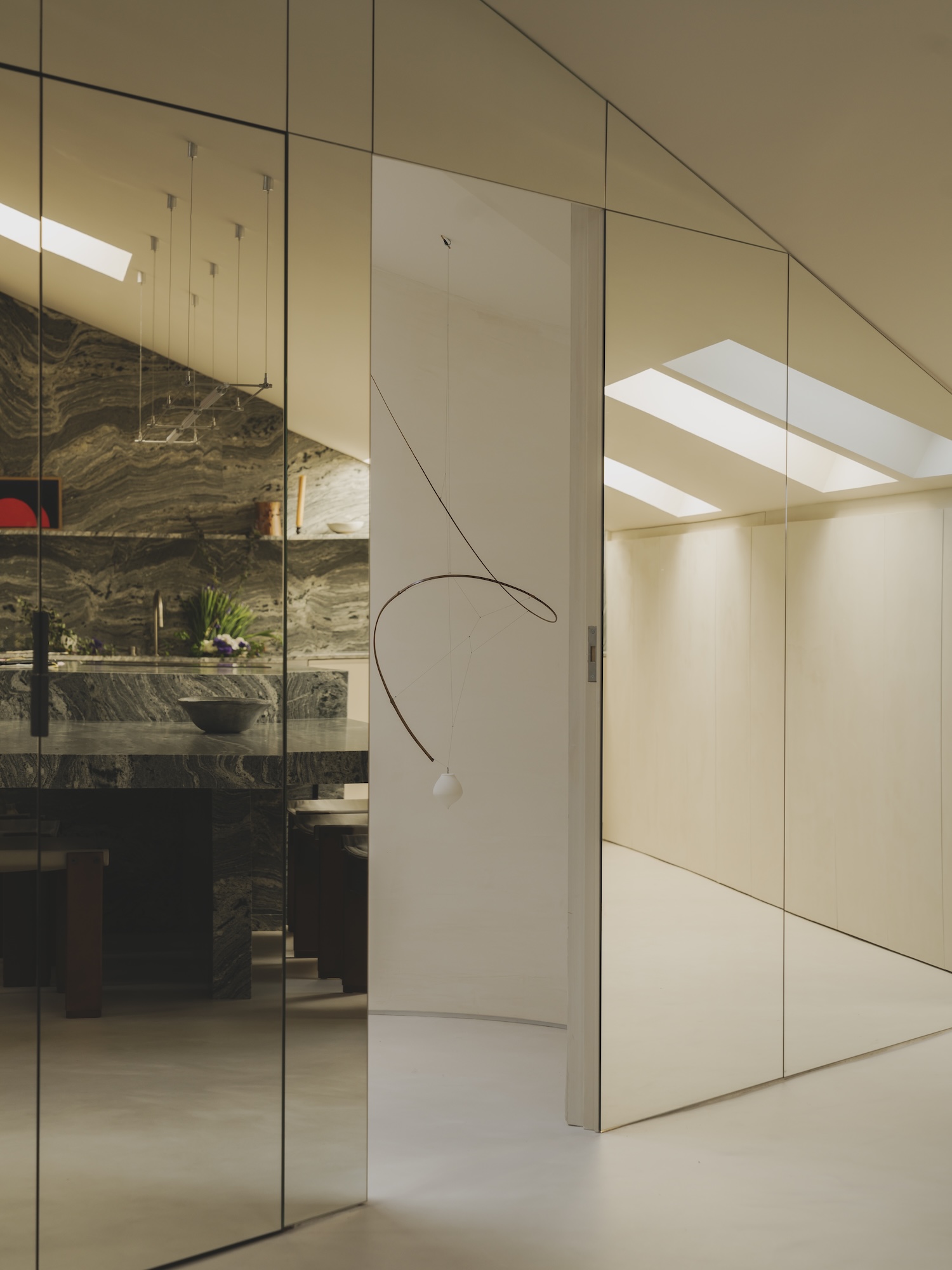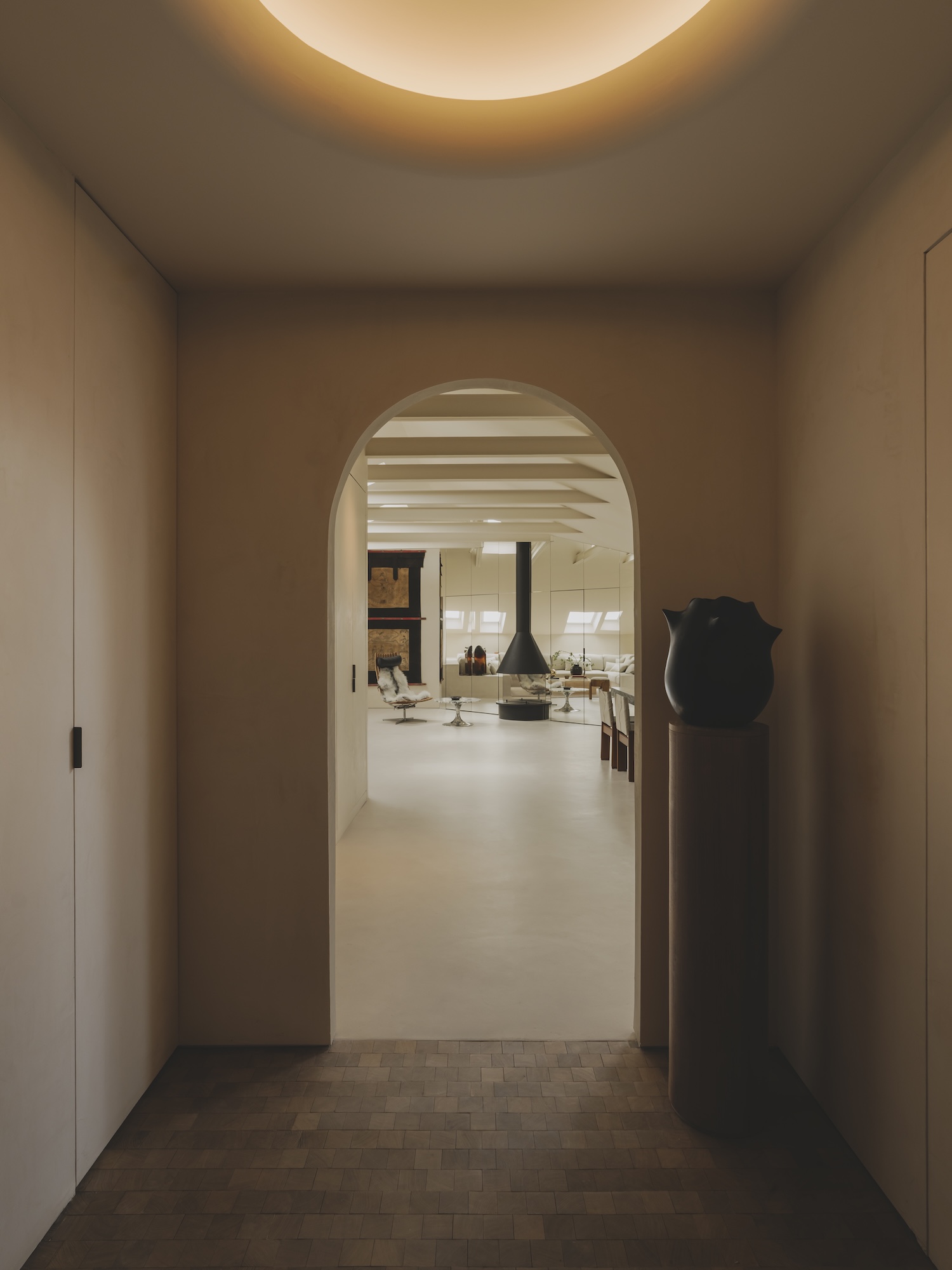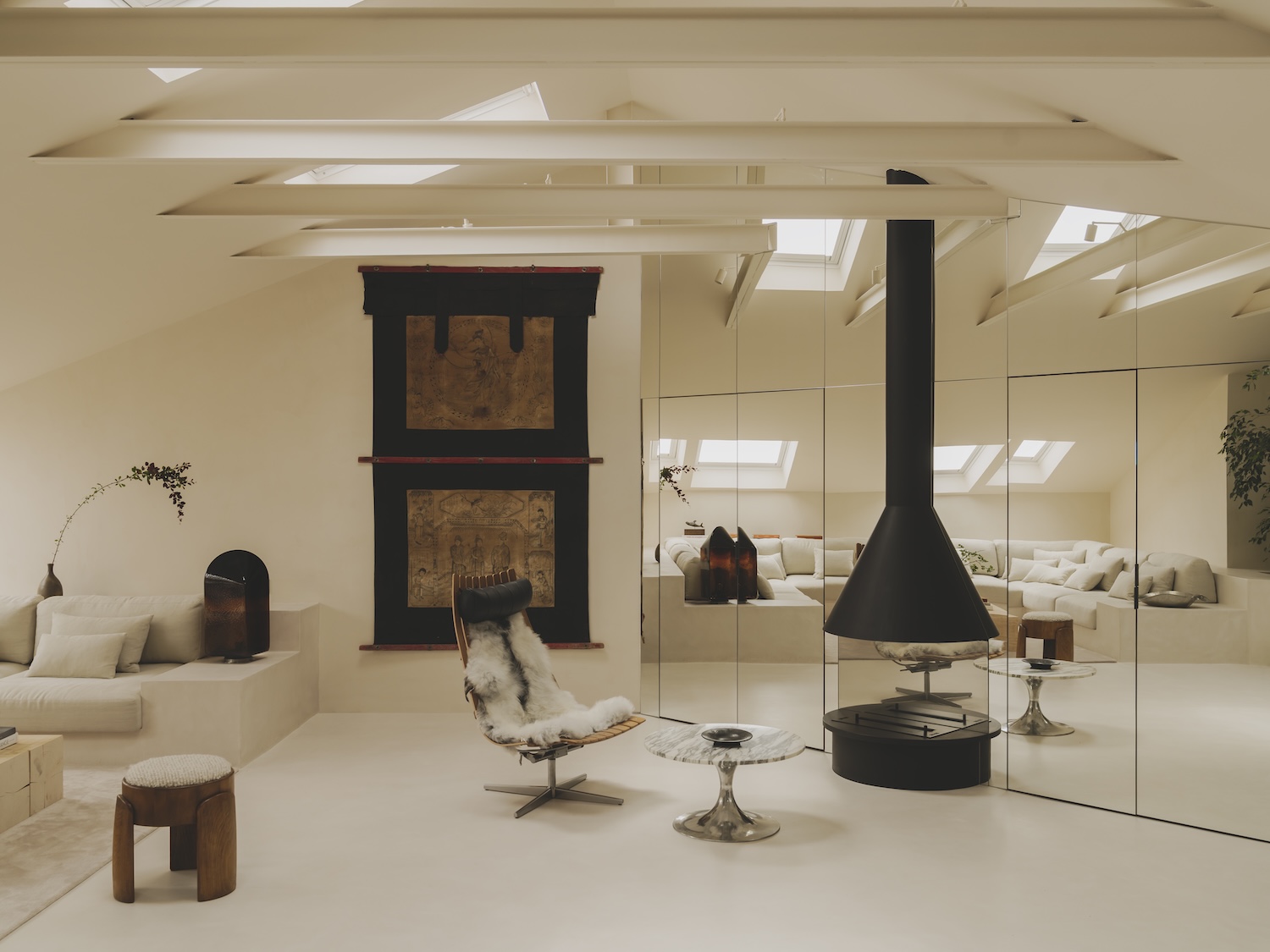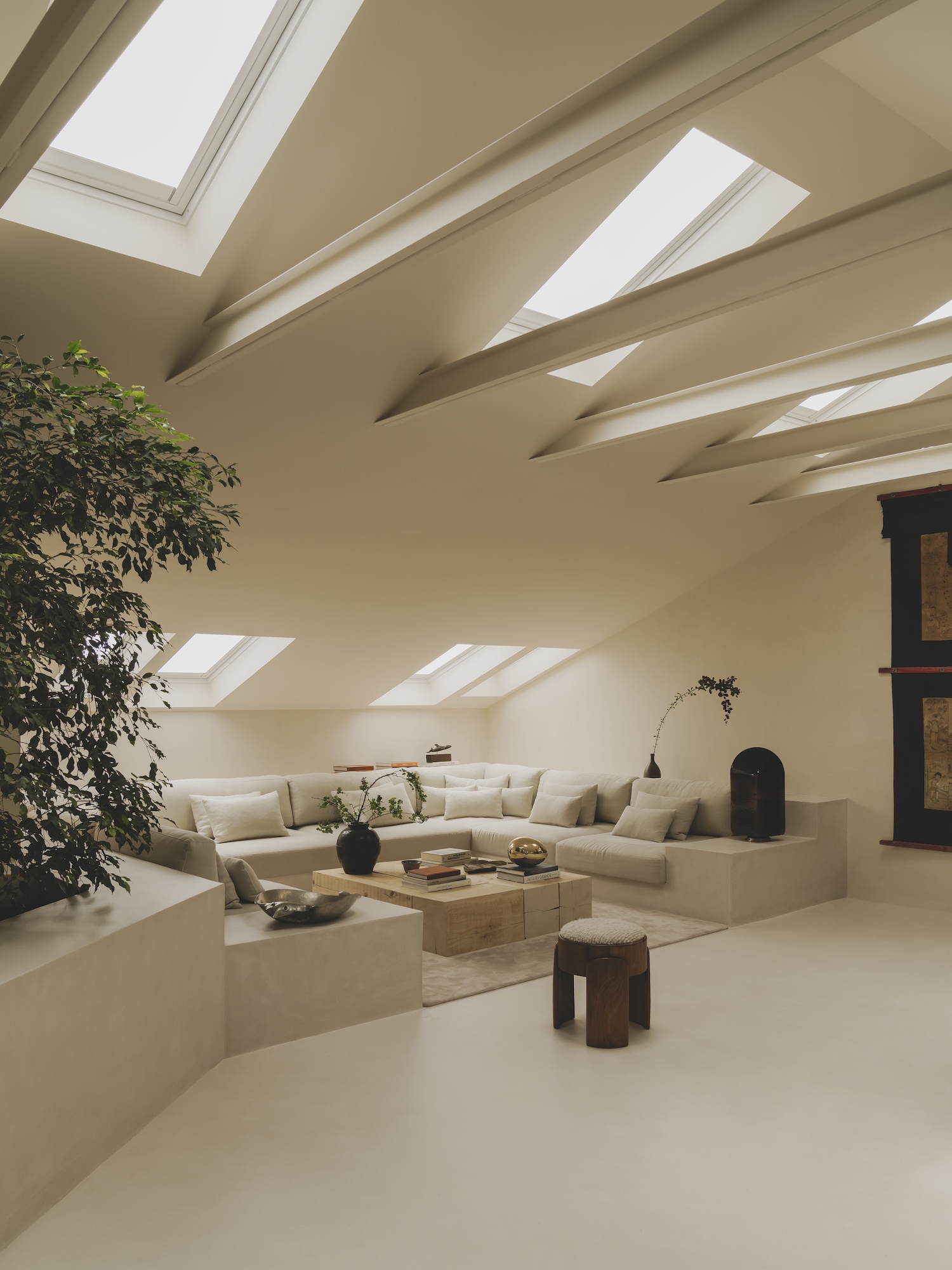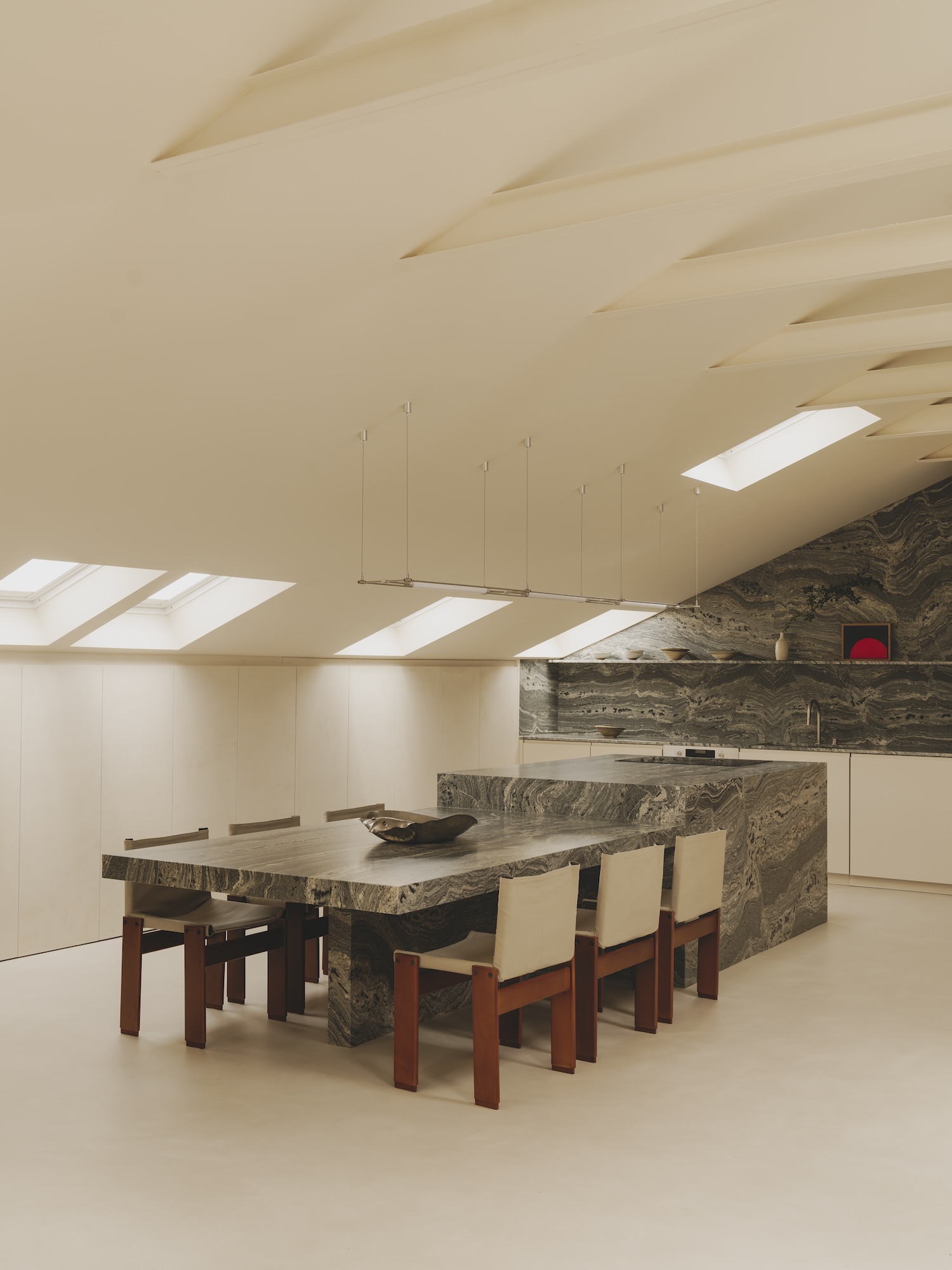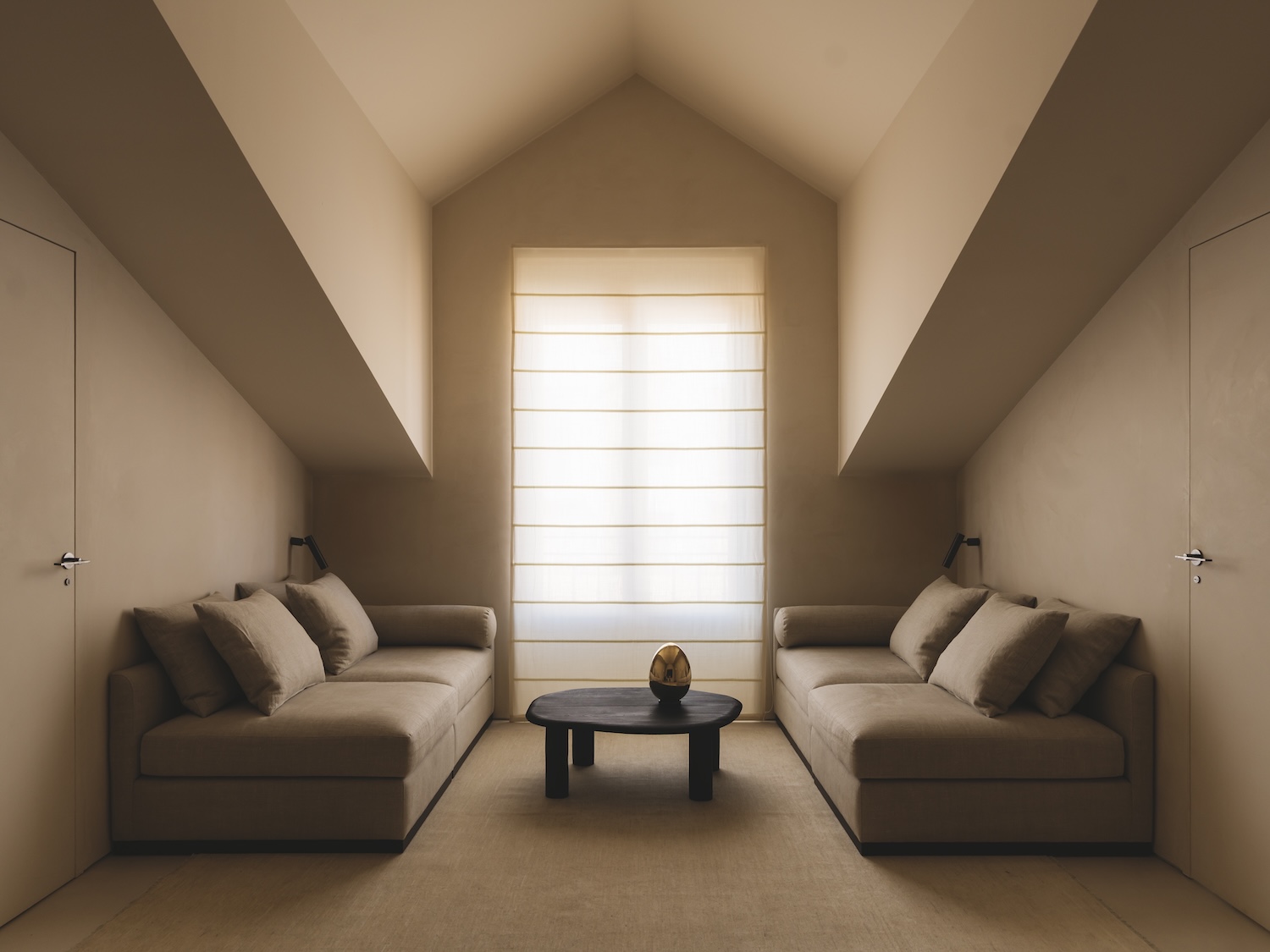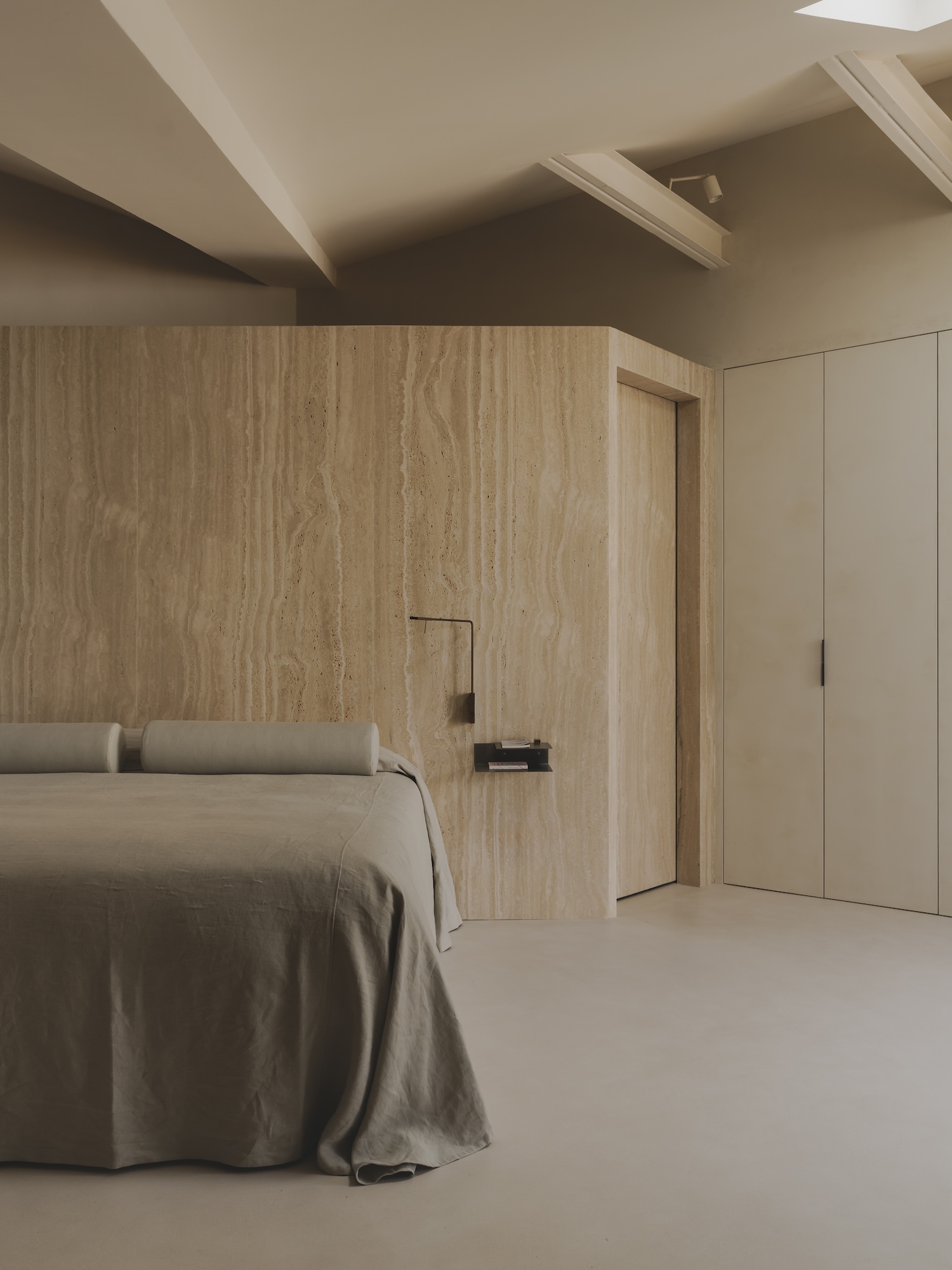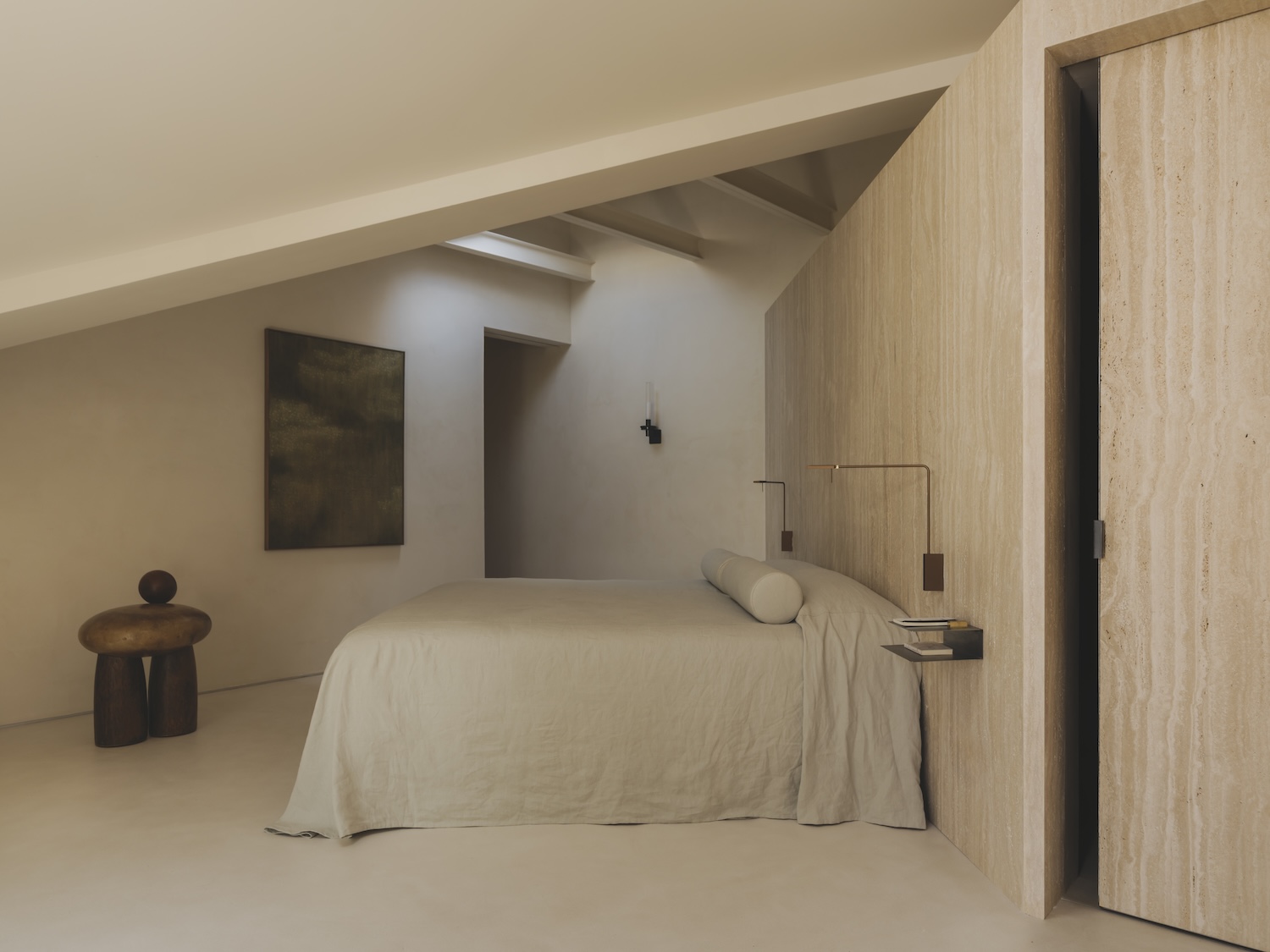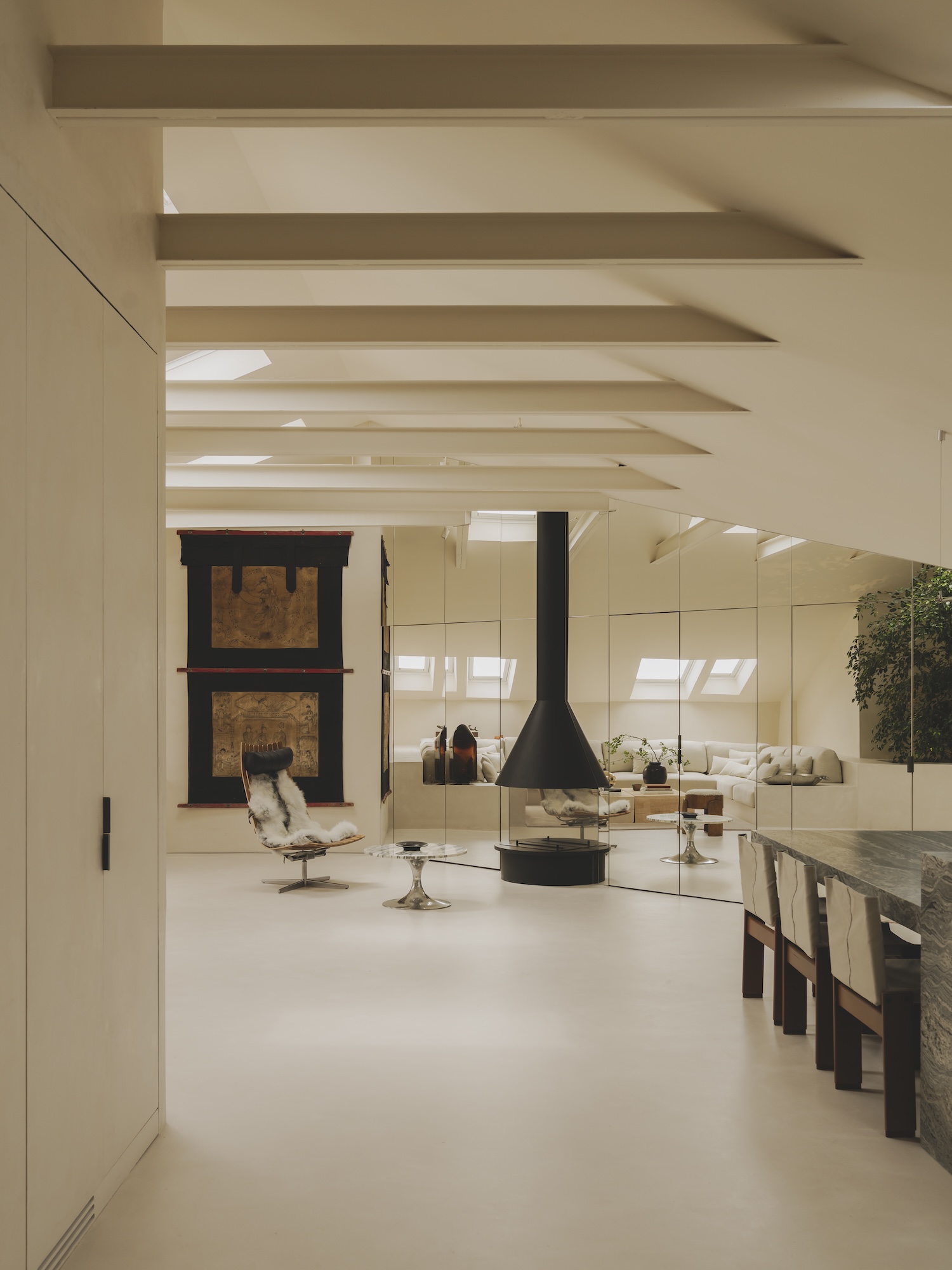
Campomanes is a minimalist penthouse located in Madrid, Spain, designed by S+DLH. Few typologies in historic European cities test an architect’s restraint quite like the under-roof apartment. The pitched ceilings, irregular geometries, and often compromised floor plates of these top-floor dwellings demand a kind of spatial thinking closer to furniture-making than conventional planning – every centimeter negotiated, every angle accounted for. At Campomanes, set within an 1890 palace house steps from the Teatro Real, S+DLH confronted these constraints by stripping the existing apartment back to its structural skeleton and allowing two elements to organize everything that followed: the inclined roofline and the zenithal light that penetrates it.
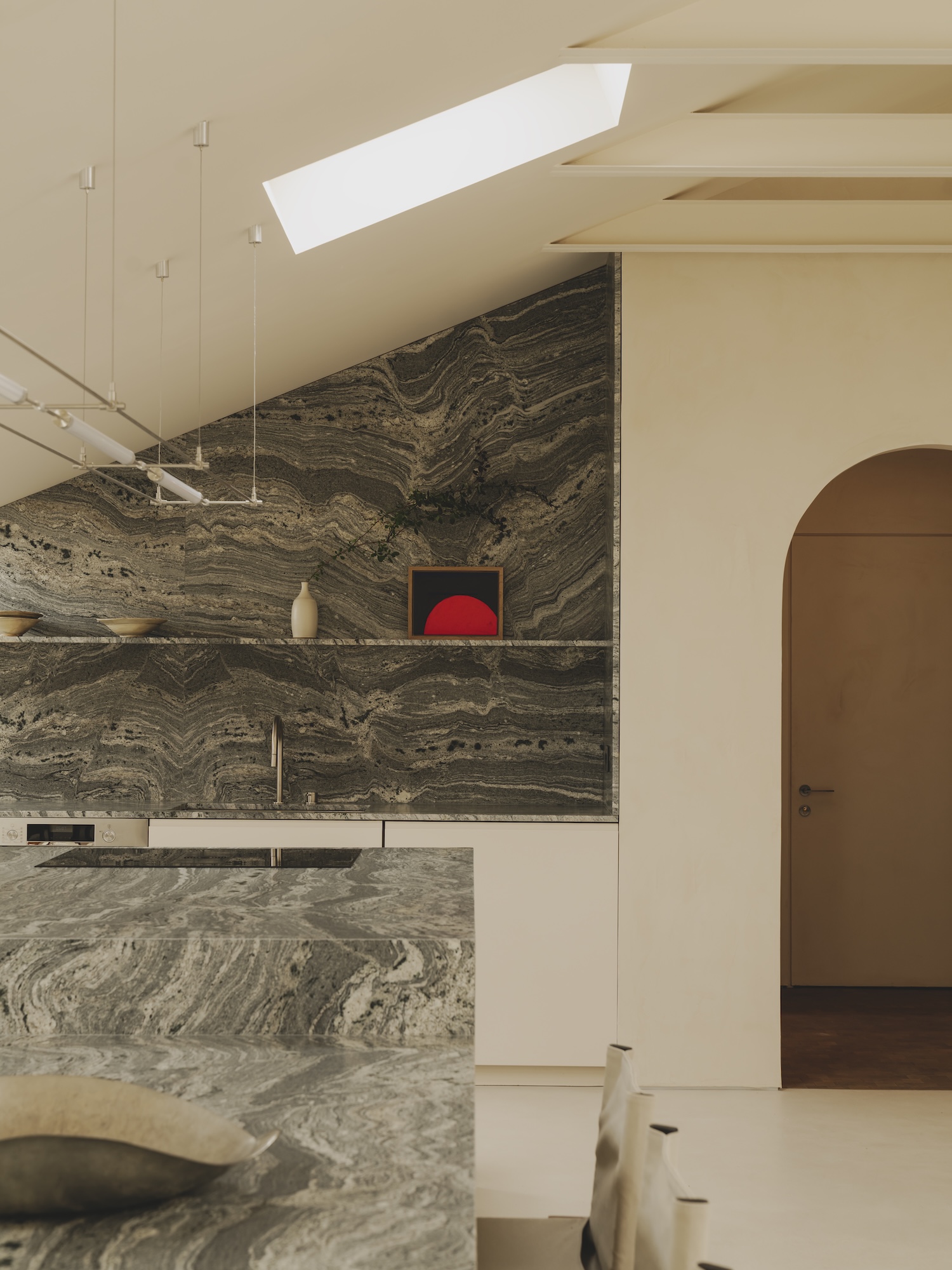
The full demolition of the previous interior was a precondition, not a stylistic choice. Recovering the original structure exposed the true volumetric potential hidden beneath decades of accumulated partition walls and dropped ceilings. What emerged was a legible framework of slopes and angles that the architects chose to celebrate rather than conceal. Overhead windows – the defining spatial device of the project – channel daylight deep into the plan, producing a shifting, atmospheric quality that moves through the apartment over the course of a day. This approach owes something to the Scandinavian tradition of treating roof apertures as primary architectural elements, recalling the controlled luminosity of Sverre Fehn’s Nordic Pavilion, though here transposed into the dense urban grain of central Madrid.
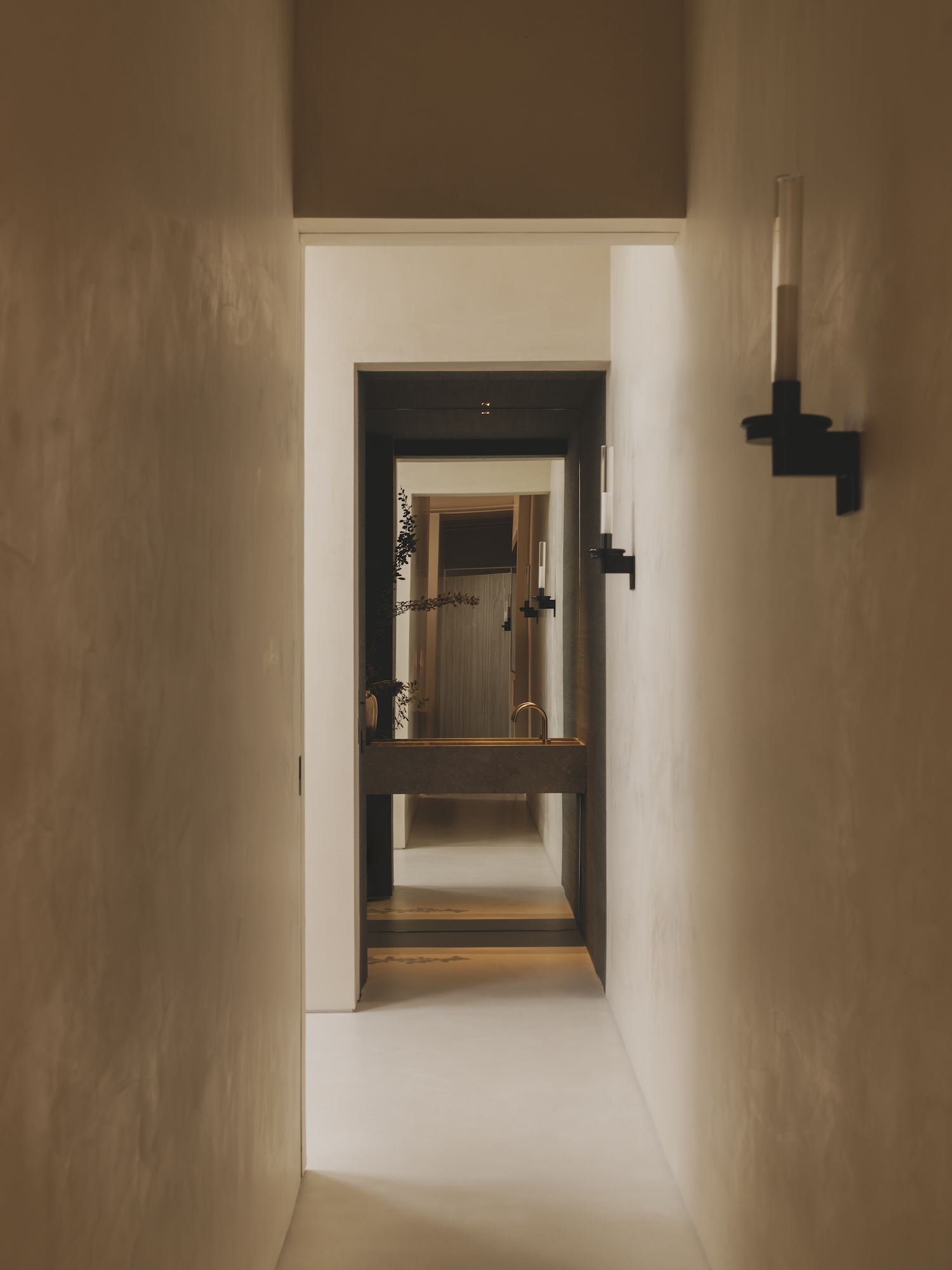
The U-shaped plan generates a continuous domestic circuit. Daytime functions – living room, dining area, and kitchen – share a single open volume where spatial boundaries dissolve into one another. The nighttime zone sits more protected along the opposite arm of the U, with direct access to a terrace that acts as a decompression chamber between the interiority of the bedrooms and the rooftop panorama of the Palacio neighborhood. Movement between these two registers feels intuitive, guided by sightlines rather than corridors.
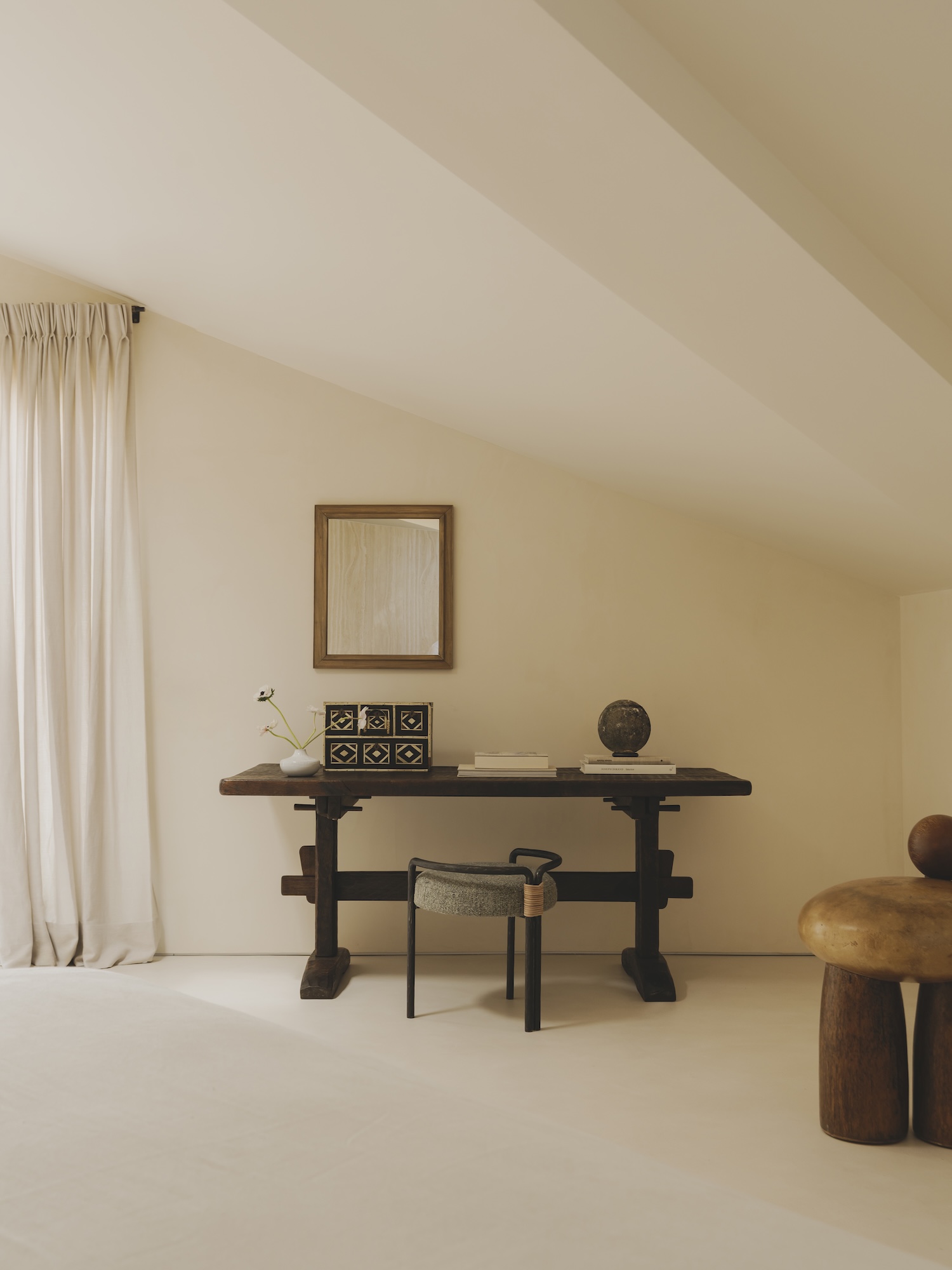
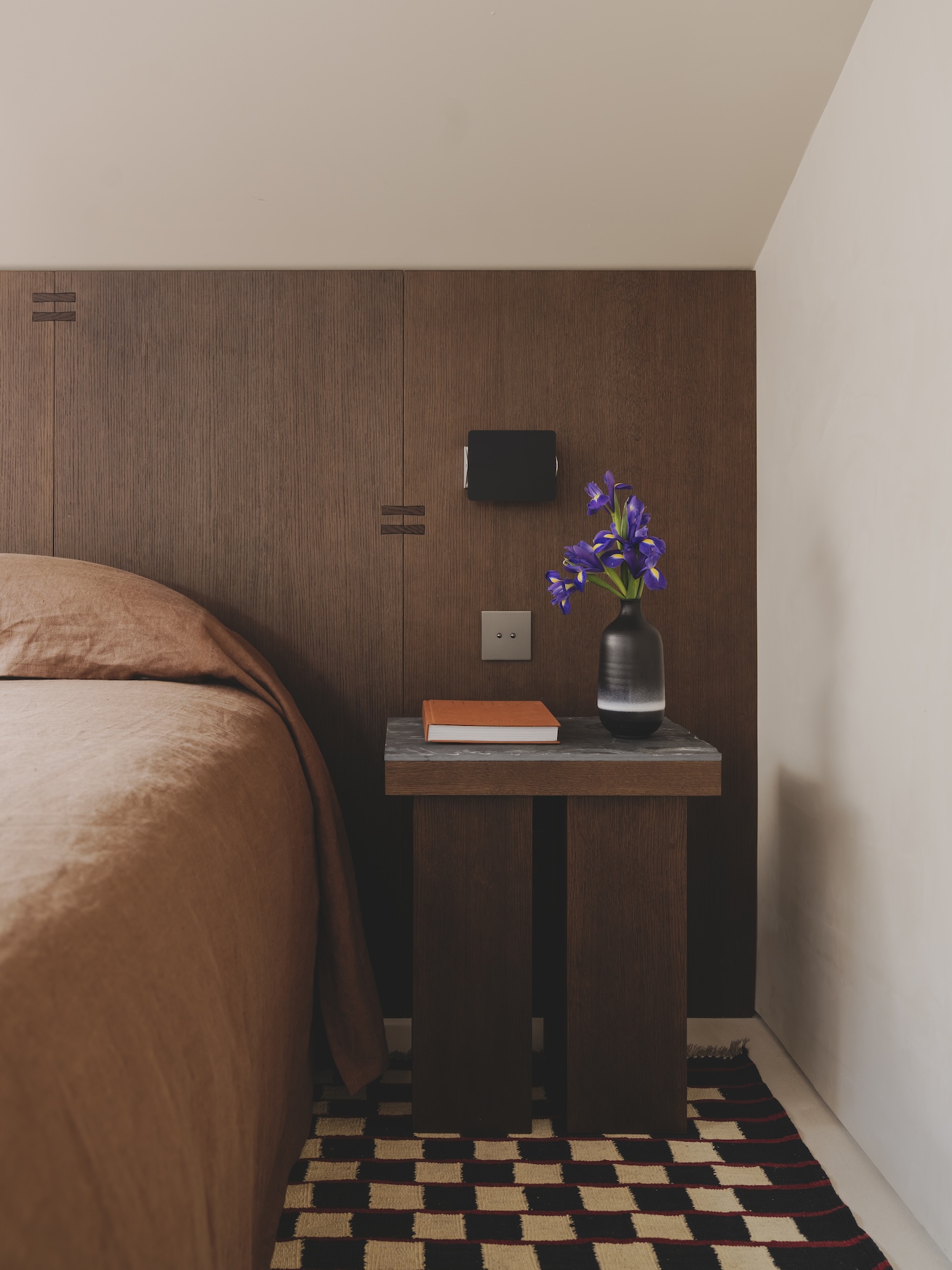
A deliberately neutral material base unifies the entire envelope. Light-toned micro-concrete floors run continuously underfoot, eliminating threshold transitions that might fragment the spatial reading. Stucco wall surfaces absorb and redistribute the overhead light, creating a soft, even luminance that amplifies the sense of openness beyond the apartment’s actual dimensions. Against this restrained backdrop, custom-designed furniture pieces and noble materials – likely stone, brass, or hardwood given the project’s vocabulary – introduce moments of tactile specificity. These elements read as objects placed within the space rather than extensions of the architecture itself, a strategy that keeps the envelope legible while allowing individual rooms to develop their own material character.