BENEATER/MANNER&DAPPER Flagship is a minimalist retail space located in Seoul, South Korea, designed by Kiyo Workshop. Sinsa-dong has evolved into a district where luxury announces itself through restraint rather than spectacle. The Beneater & Manner&Dapper Showroom operates within this context, housing two fashion labels – Beneater’s refined etiquette-focused collections and Manner & Dapper’s classically grounded menswear – under a single architectural language. Kiyo Workshop approached the project not as a conventional retail layout but as a spatial interpretation of shared values, where materials and form communicate brand philosophy before any garment does.
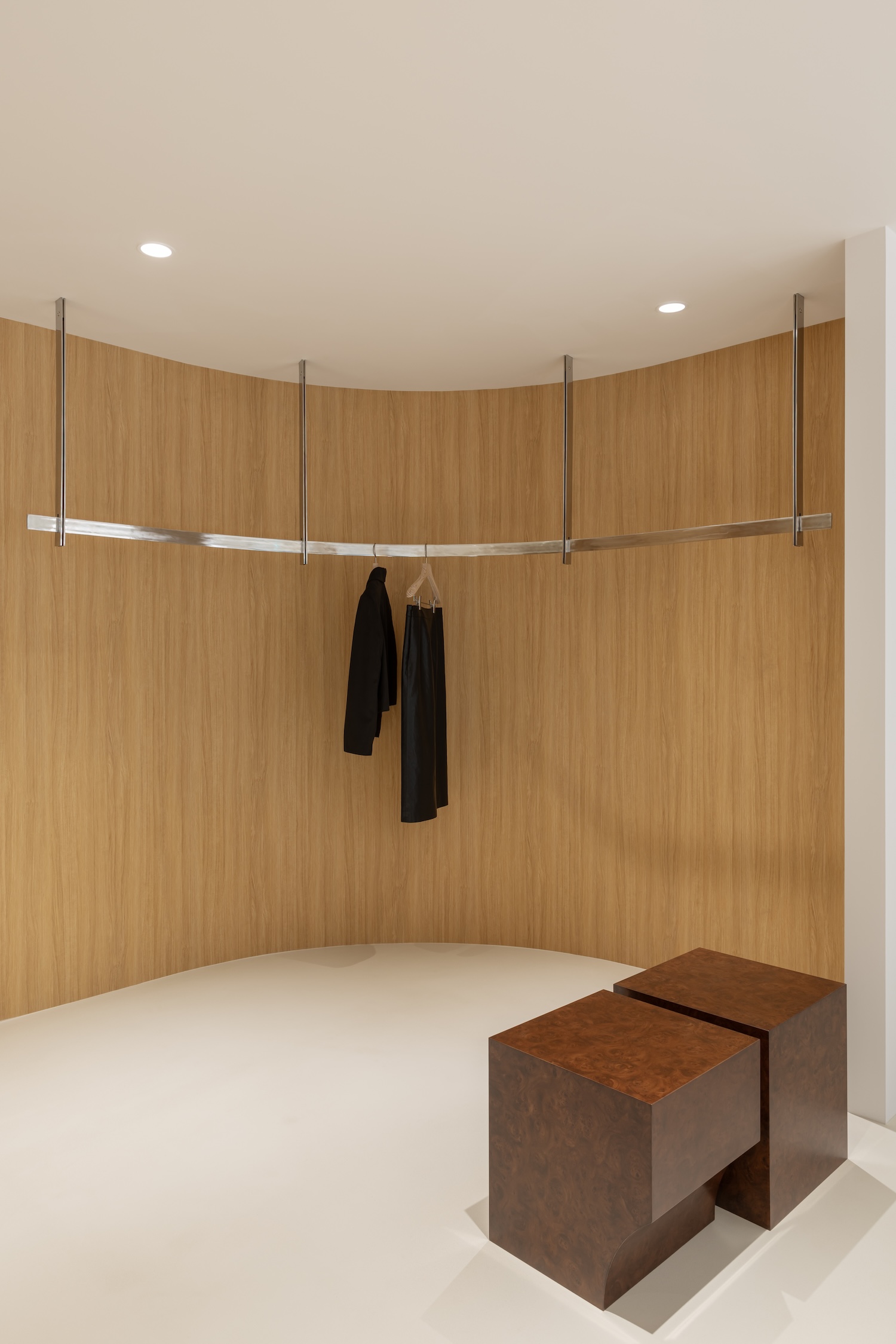
Mid-tone wood establishes the primary material vocabulary, chosen for its tactile affinity with fabric and its ability to project warmth without nostalgic connotation. The wood reads as foundational rather than decorative, offering a neutral ground that supports both feminine and masculine collections without defaulting to either. Raw concrete surfaces interrupt this warmth with deliberate contrast, introducing an industrial texture that balances the wood’s organic character. This pairing creates a gender-neutral atmosphere through material opposition rather than through bland uniformity – the space acknowledges difference while establishing common ground.
At the center stands a low display table in dark, patterned wood. The table’s restrained geometry and horizontal emphasis draw focus without imposing hierarchy, functioning as a site where both brands converge spatially. Its surface becomes a stage for merchandise while its form remains deliberately unadorned, allowing the clothing to maintain visual primacy. The patterning in the wood adds depth without fussiness, a subtle detail that rewards closer inspection rather than demanding immediate attention.
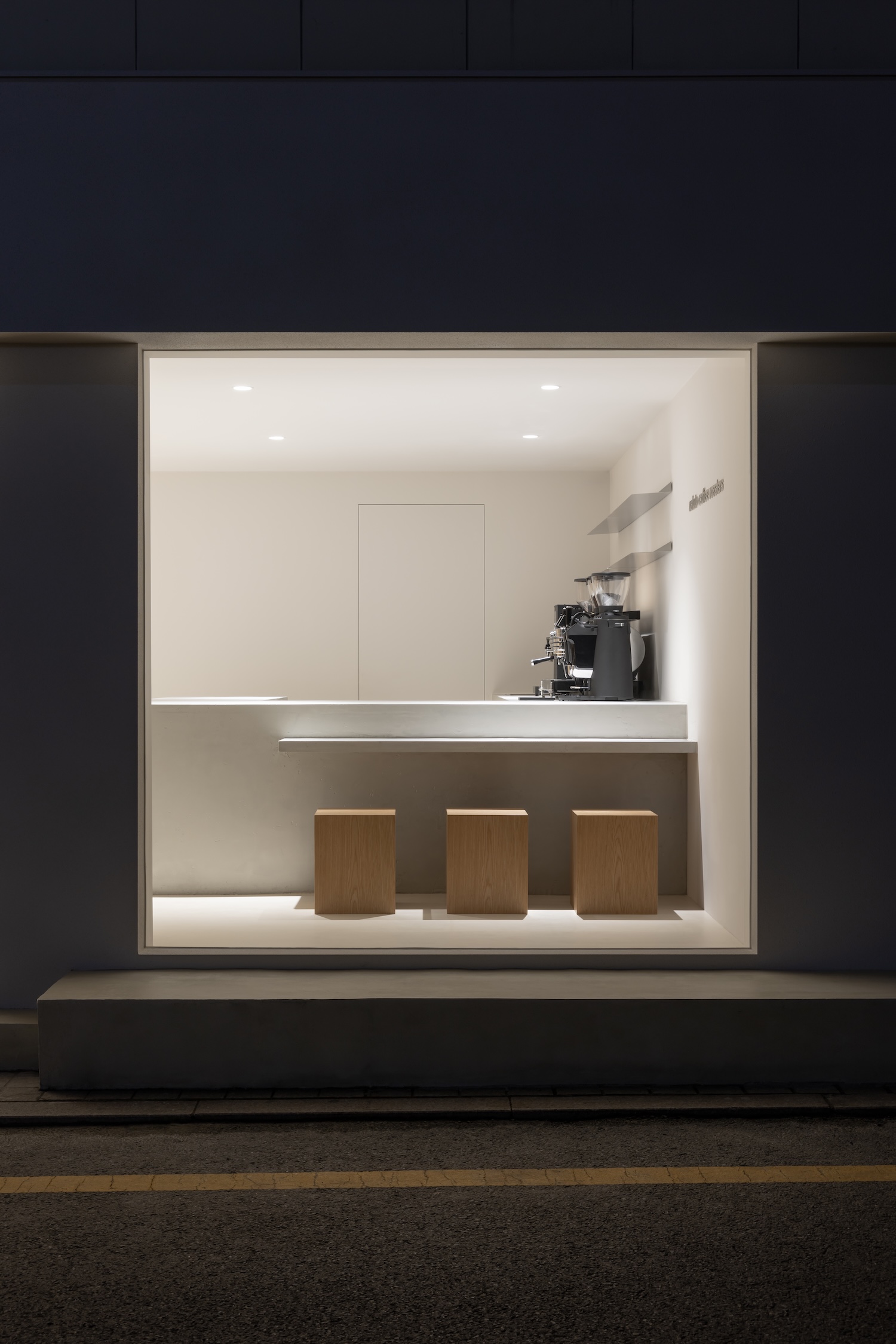
The showroom shares its footprint with an independently operated café, a programmatic overlap that could easily fragment the space into competing retail and hospitality zones. Kiyo Workshop addressed this by extending the showroom’s flooring material across both areas, creating continuity that reads as intentional adjacency rather than awkward compromise. The café distinguishes itself through clean white walls and a concrete bar counter, materials that reference the showroom’s palette while shifting the tonal register. The counter operates as a minimal object – functional infrastructure stripped of decorative impulse. Its presence registers as background rather than focal point, ensuring the café supports rather than competes with the fashion display.