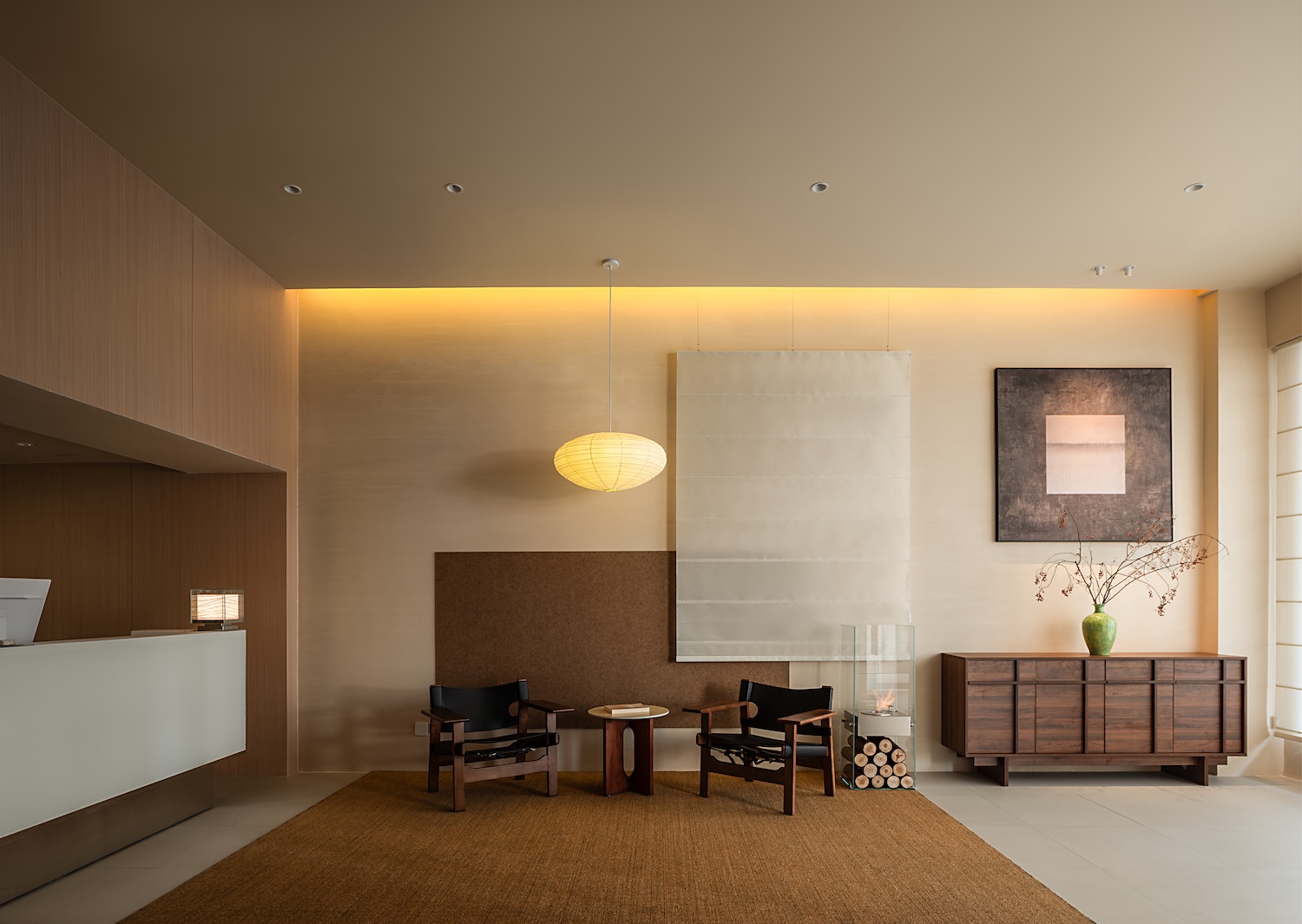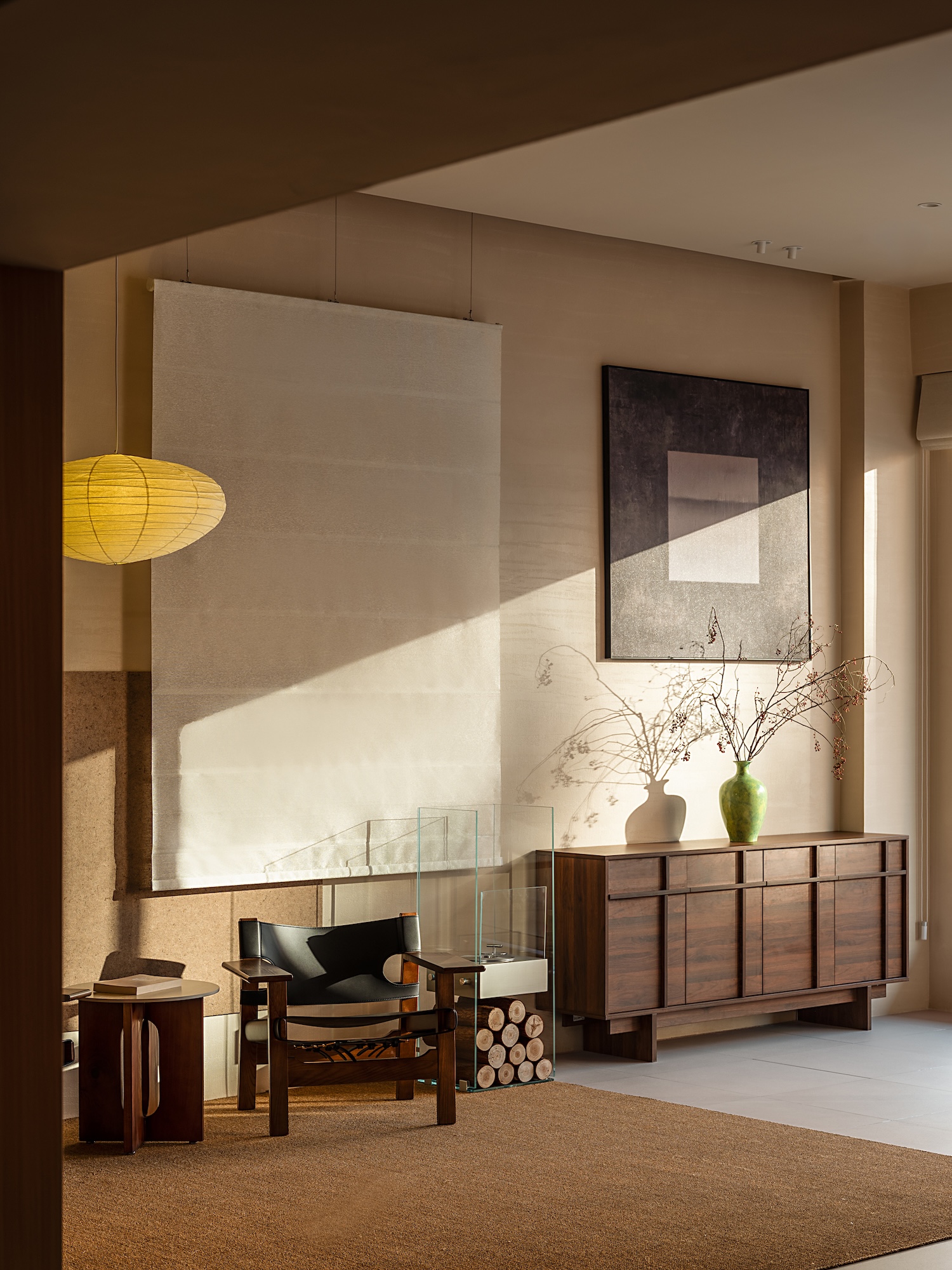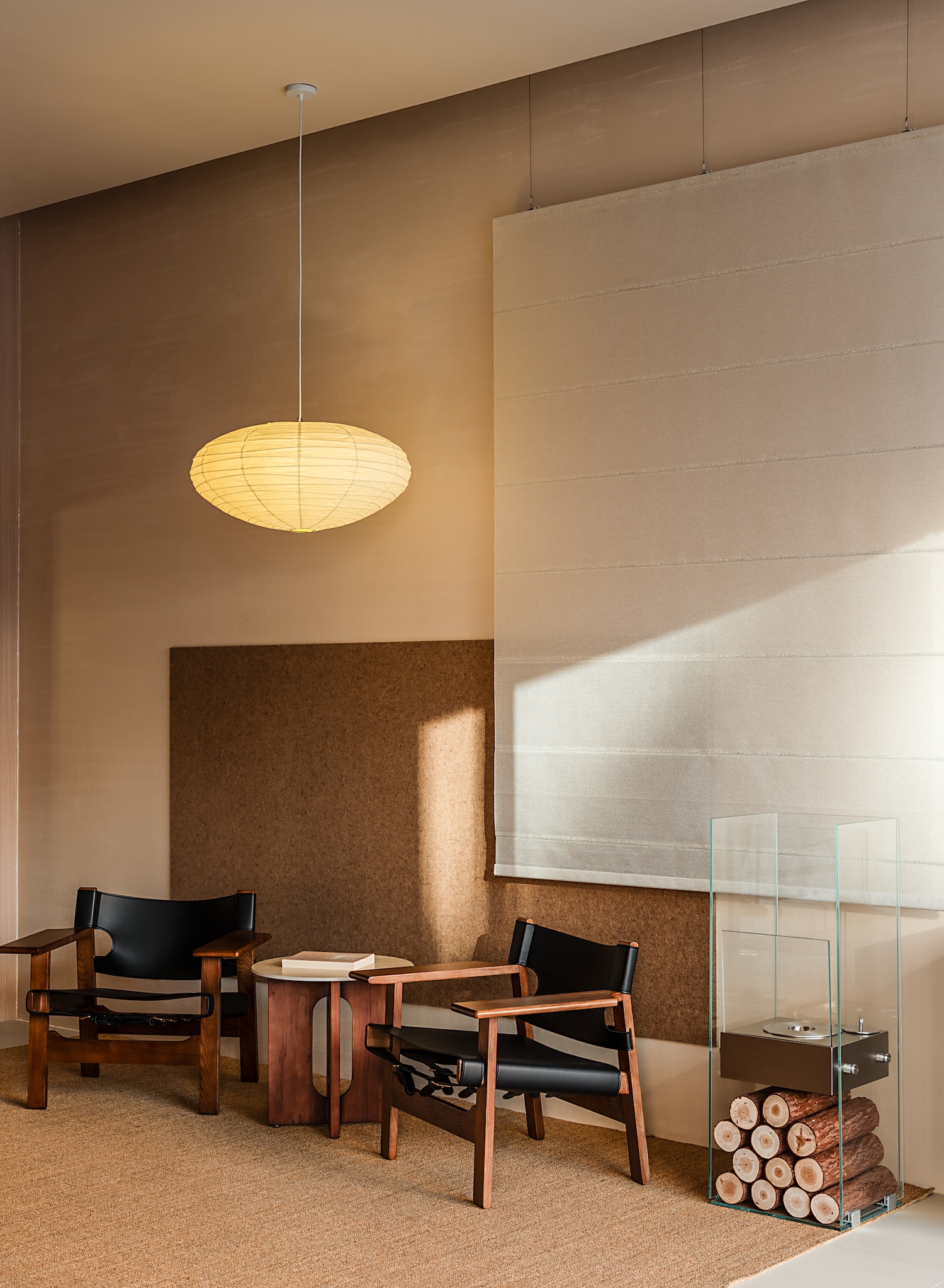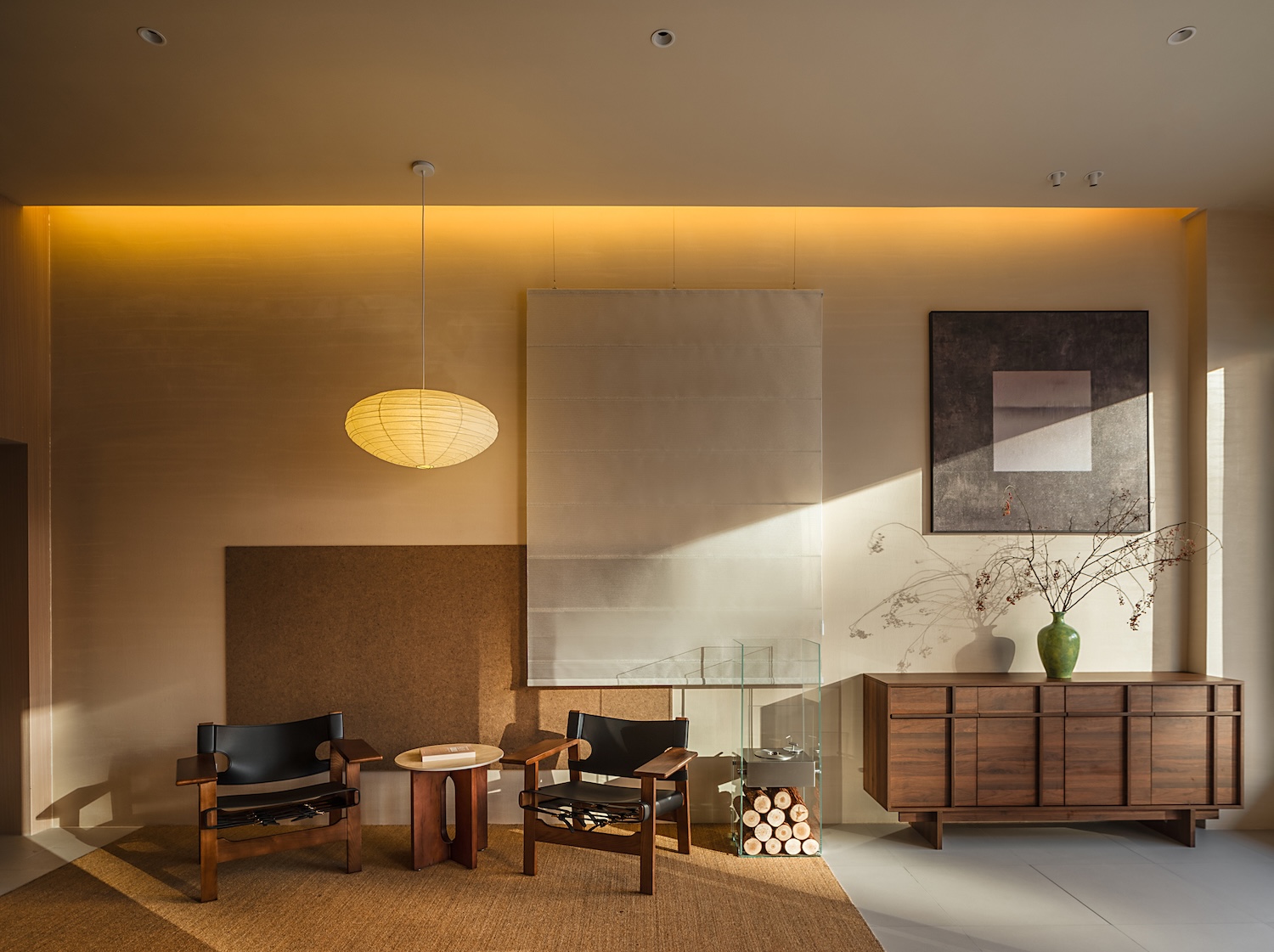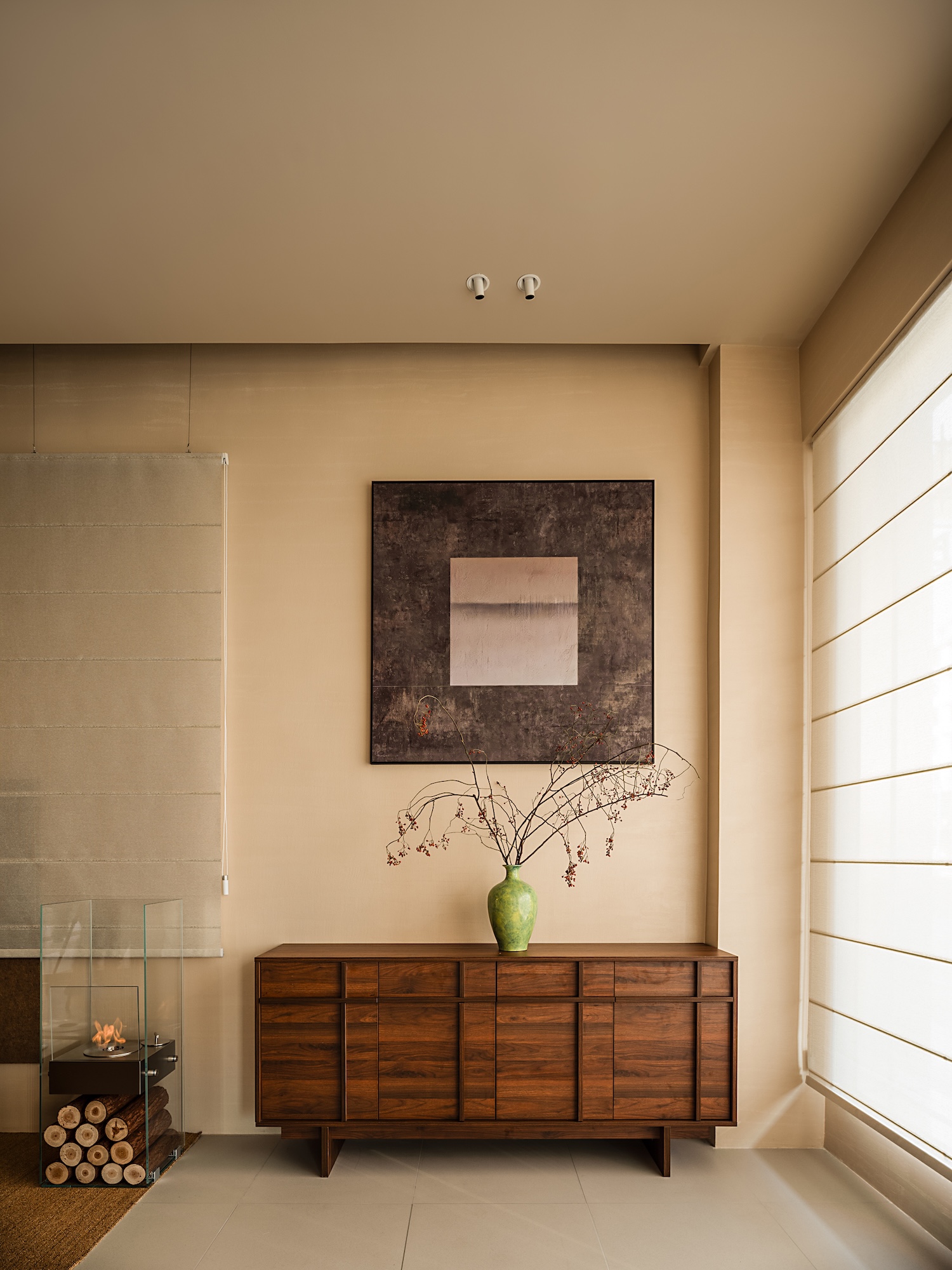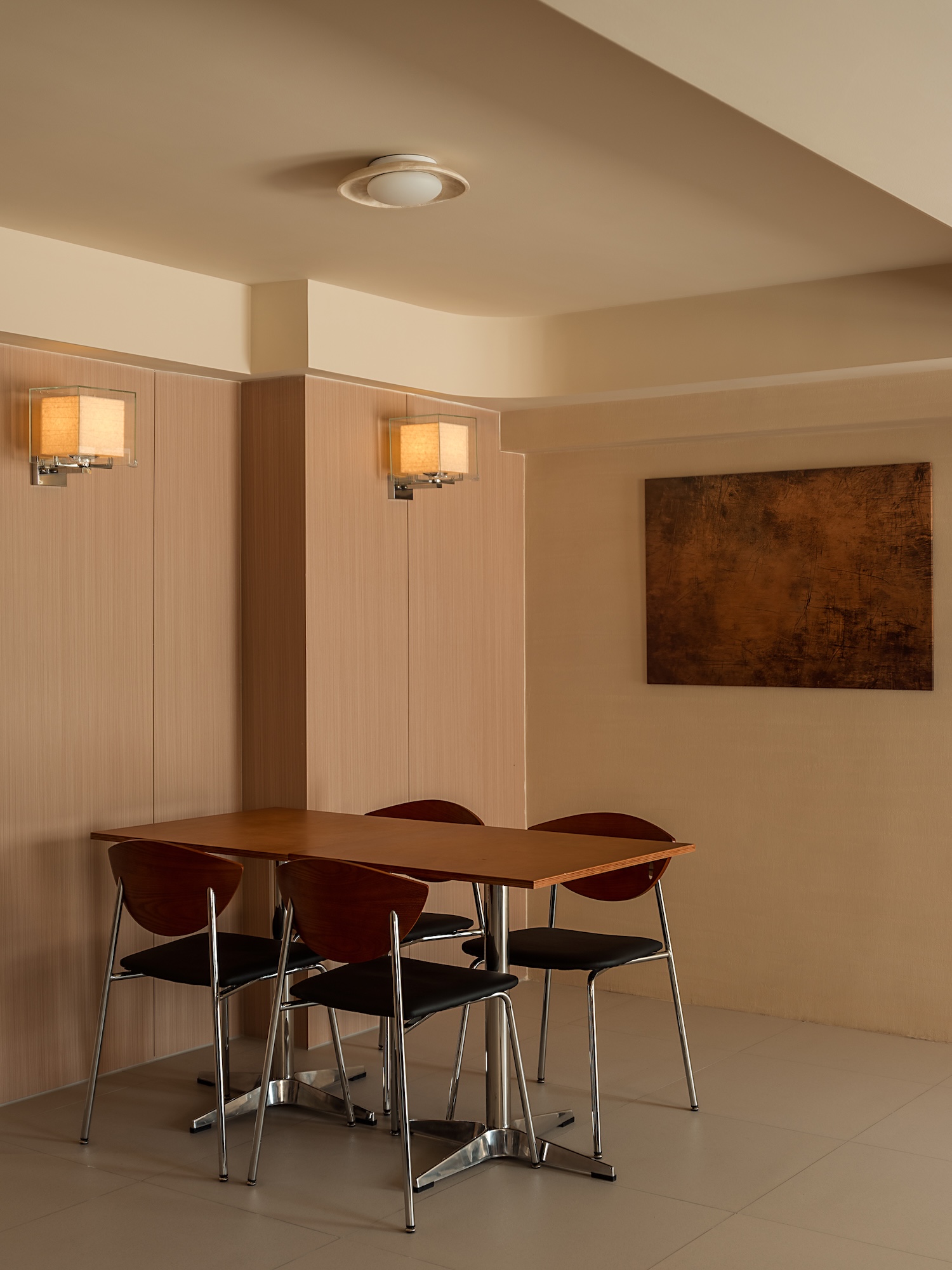
Elongme a minimalist boutique hotel located in Panyu District, Guangzhou, China, designed by Liminal Lab. In dense urban environments where street presence often dictates architectural expression, the decision to recede rather than project becomes a statement of compositional confidence. This lobby challenges the convention of visibility, treating its unfavorable street-facing orientation not as a deficit to overcome but as an opportunity to redefine arrival. The entrance pulls back from the road, establishing an interstitial zone that filters noise and visual clutter before guests cross the threshold. This measured withdrawal echoes the spatial logic of traditional Chinese courtyard architecture, where progression through layered thresholds generates psychological transition, yet here the gesture is pared to its essential function – creating distance and composure within a constrained footprint.
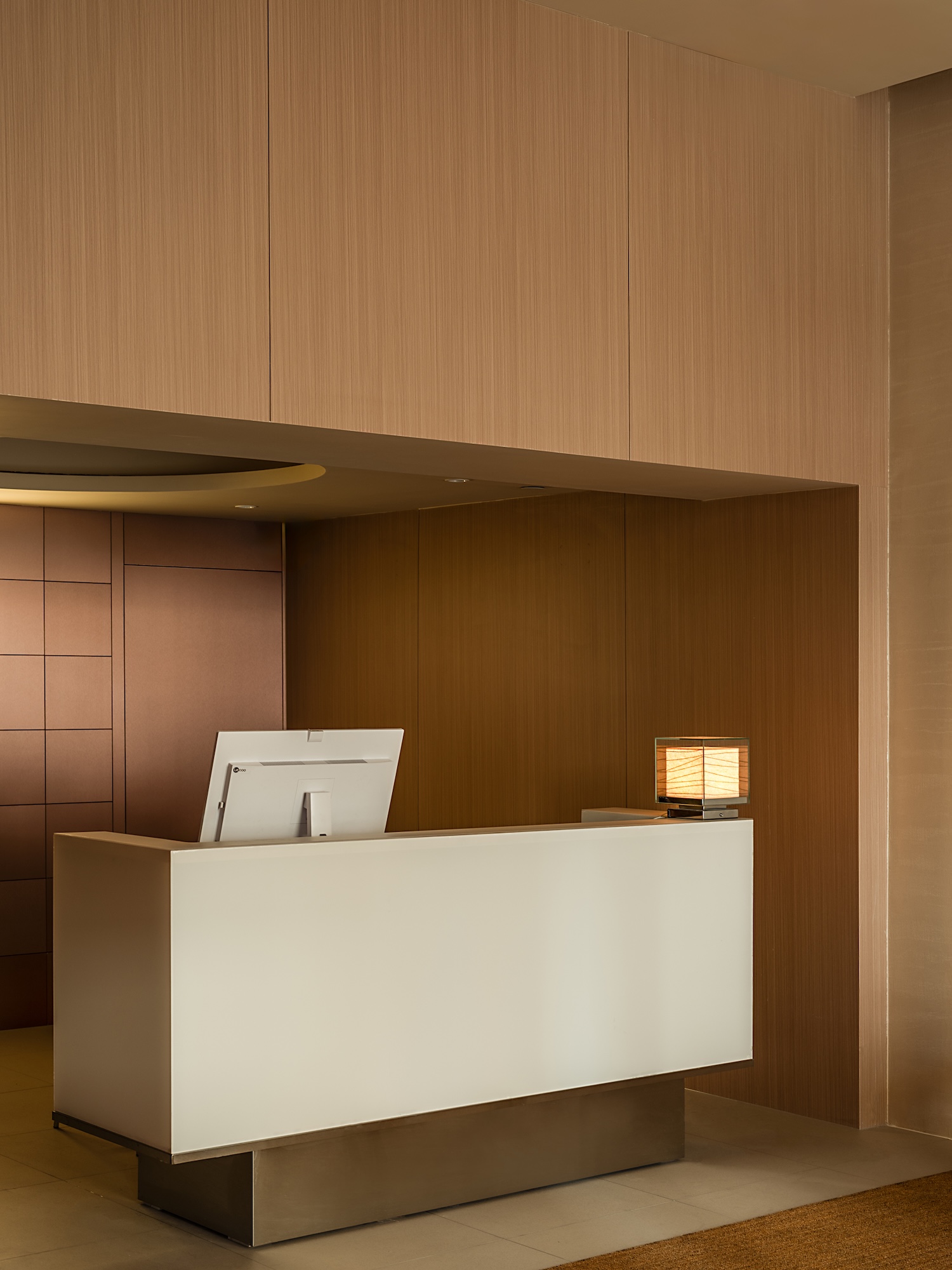
The reception area confronts two structural realities that would typically demand concealment: a compressed ceiling plane and a prominently positioned column interrupting the visual field. A custom timber frame transforms these obstacles into organizing elements. Rather than fighting the low ceiling, the frame articulates it, subdividing the horizontal expanse into legible zones while directing attention toward the reception counter itself. The frame reads as furniture-scaled architecture, intimate enough to feel approachable yet substantial enough to command spatial hierarchy. Timber brings inherent warmth, its grain and tactility offsetting the coolness of polished surfaces elsewhere in the lobby, but more significantly, it provides visual rhythm – vertical members establish cadence, horizontal spans create containment, and the interplay between solid and void generates depth where physical dimension is limited.
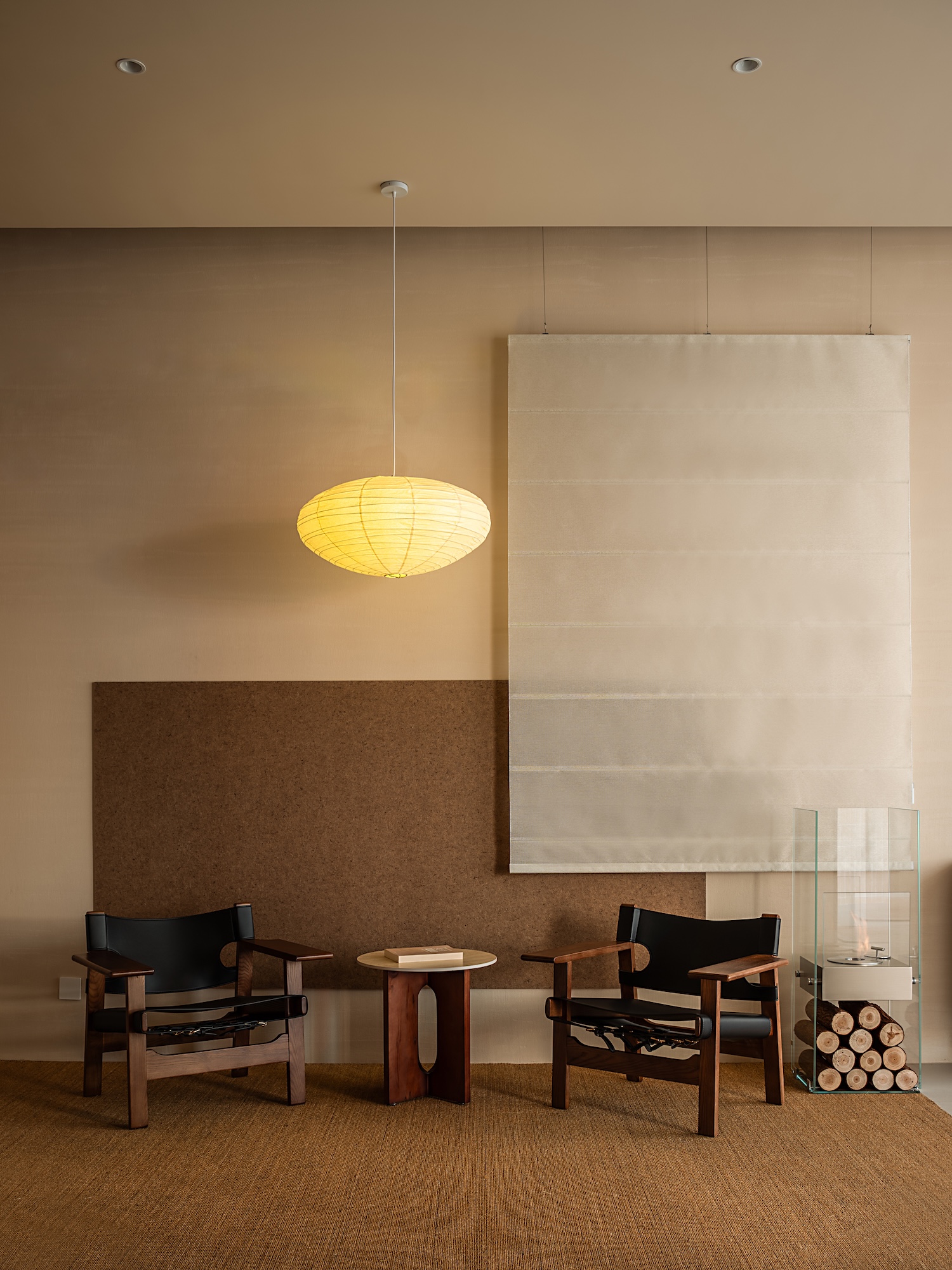
Behind the seating area, a gradient light installation reinterprets atmospheric phenomena through controlled illumination. Mimicking the tonal shifts of sunset – the progression from warm amber to cooler twilight hues – the light box functions as both decorative element and spatial strategy. It draws the eye inward, away from the exterior’s visual chaos, while introducing temporal suggestion to an otherwise static interior. The gradient operates psychologically, evoking natural cycles within an artificial environment and lending the space a quality of transience that hospitality design often seeks but rarely achieves with subtlety.