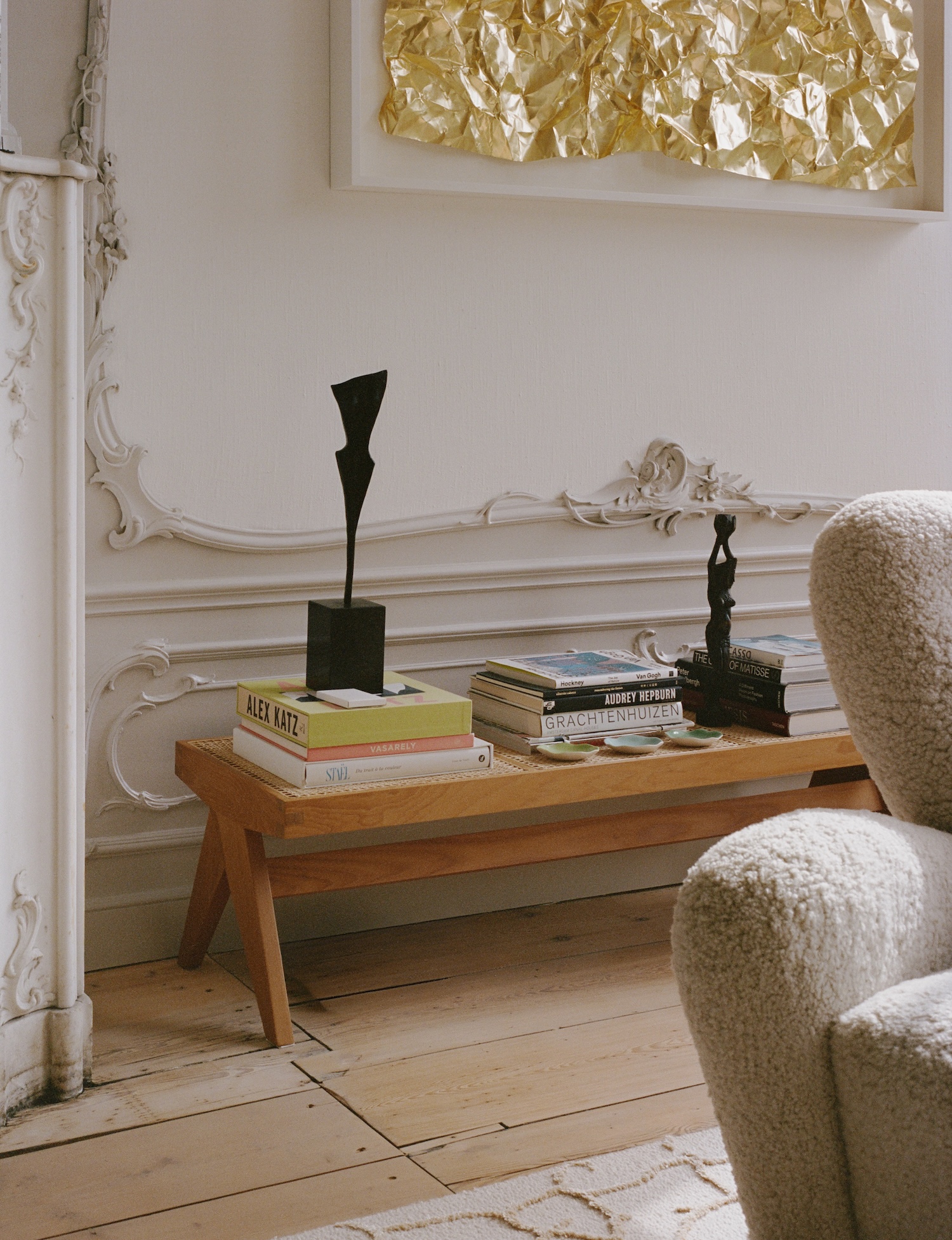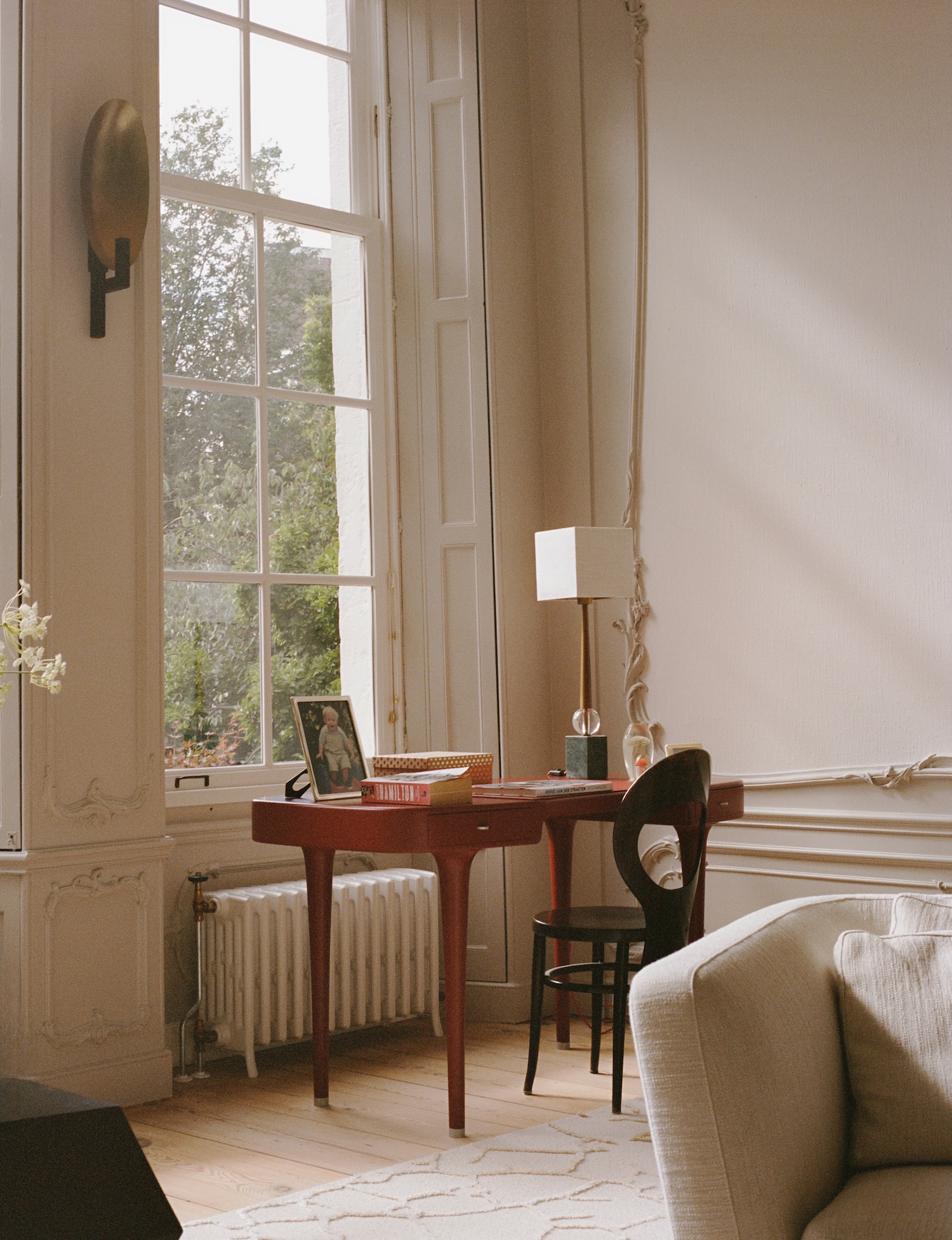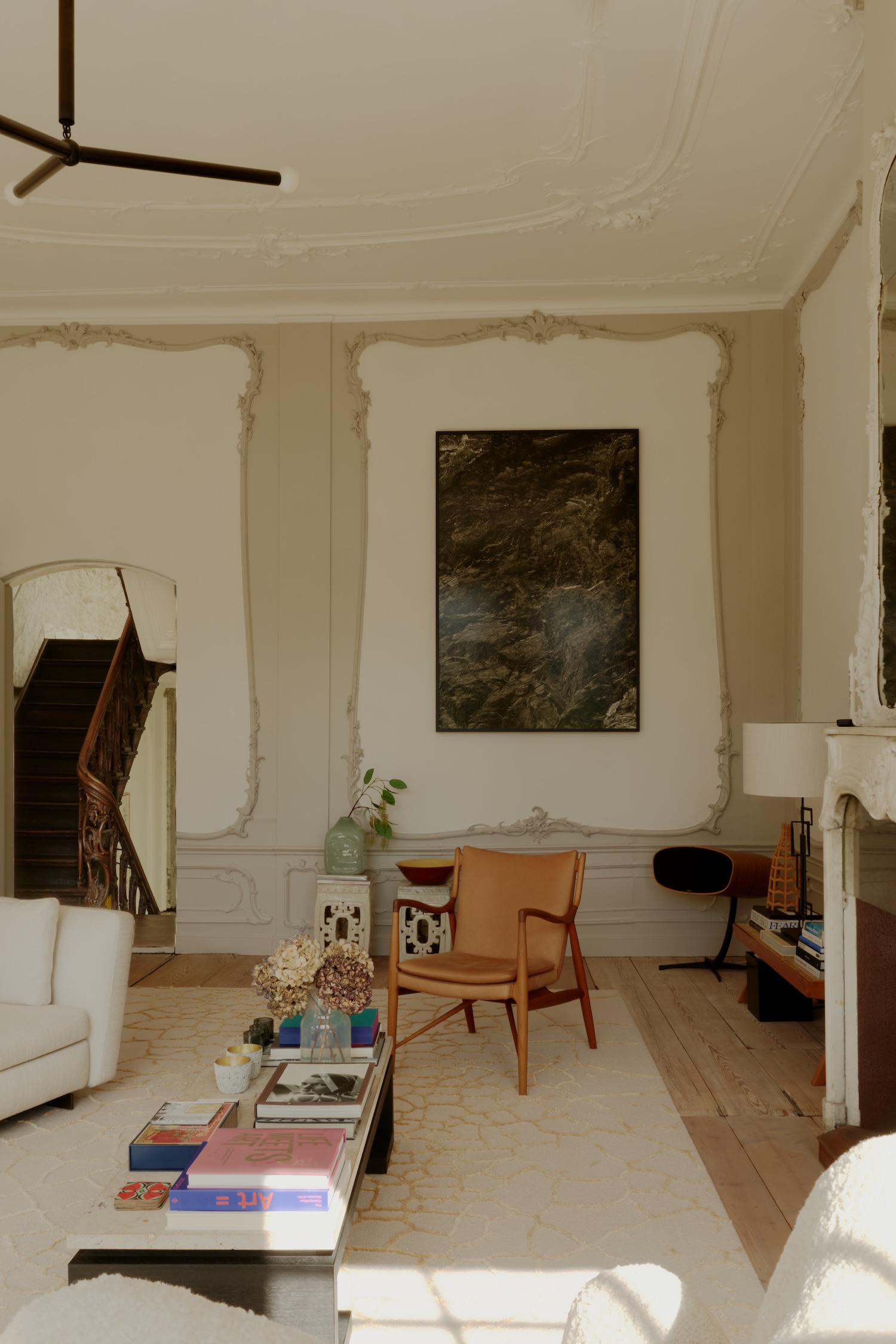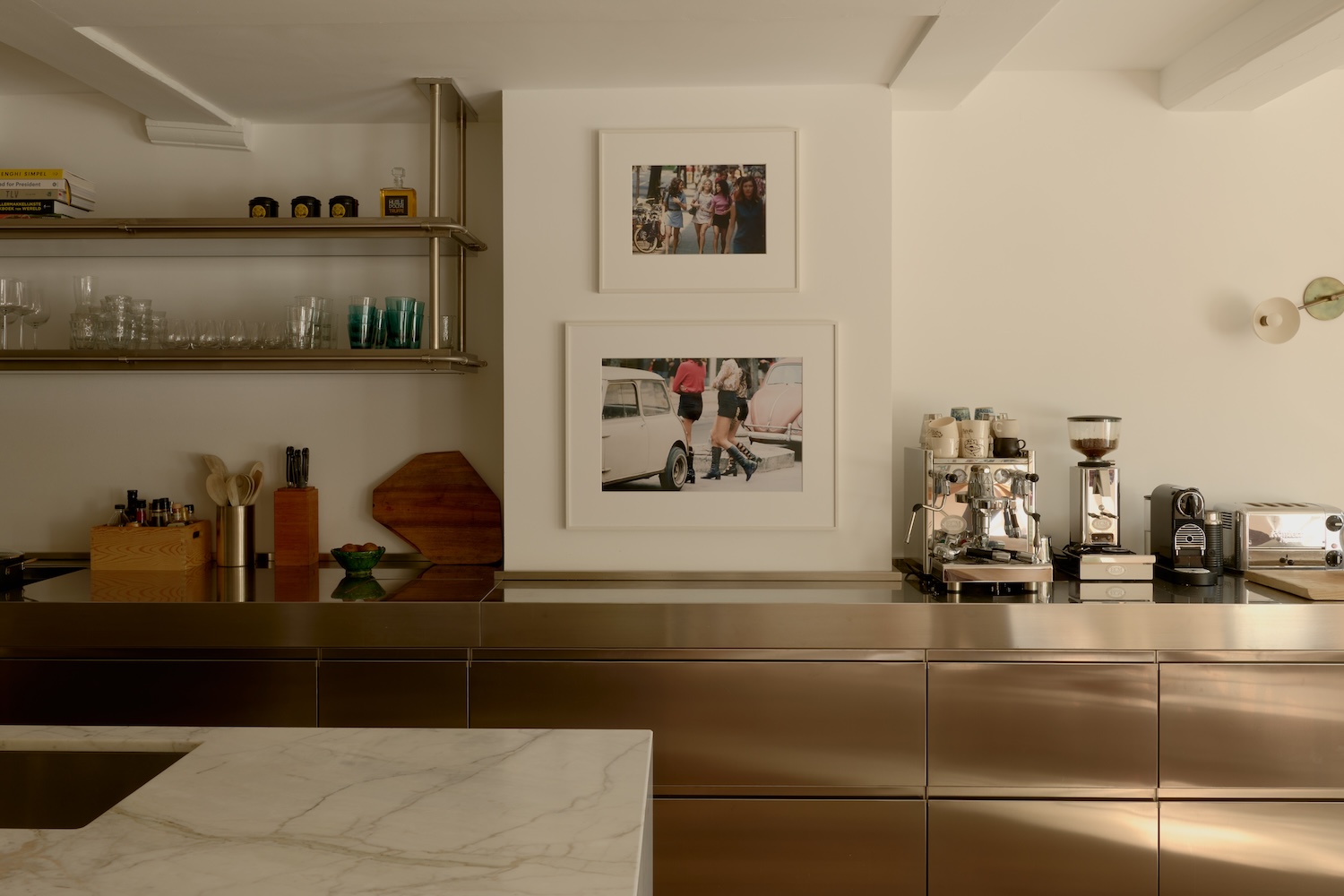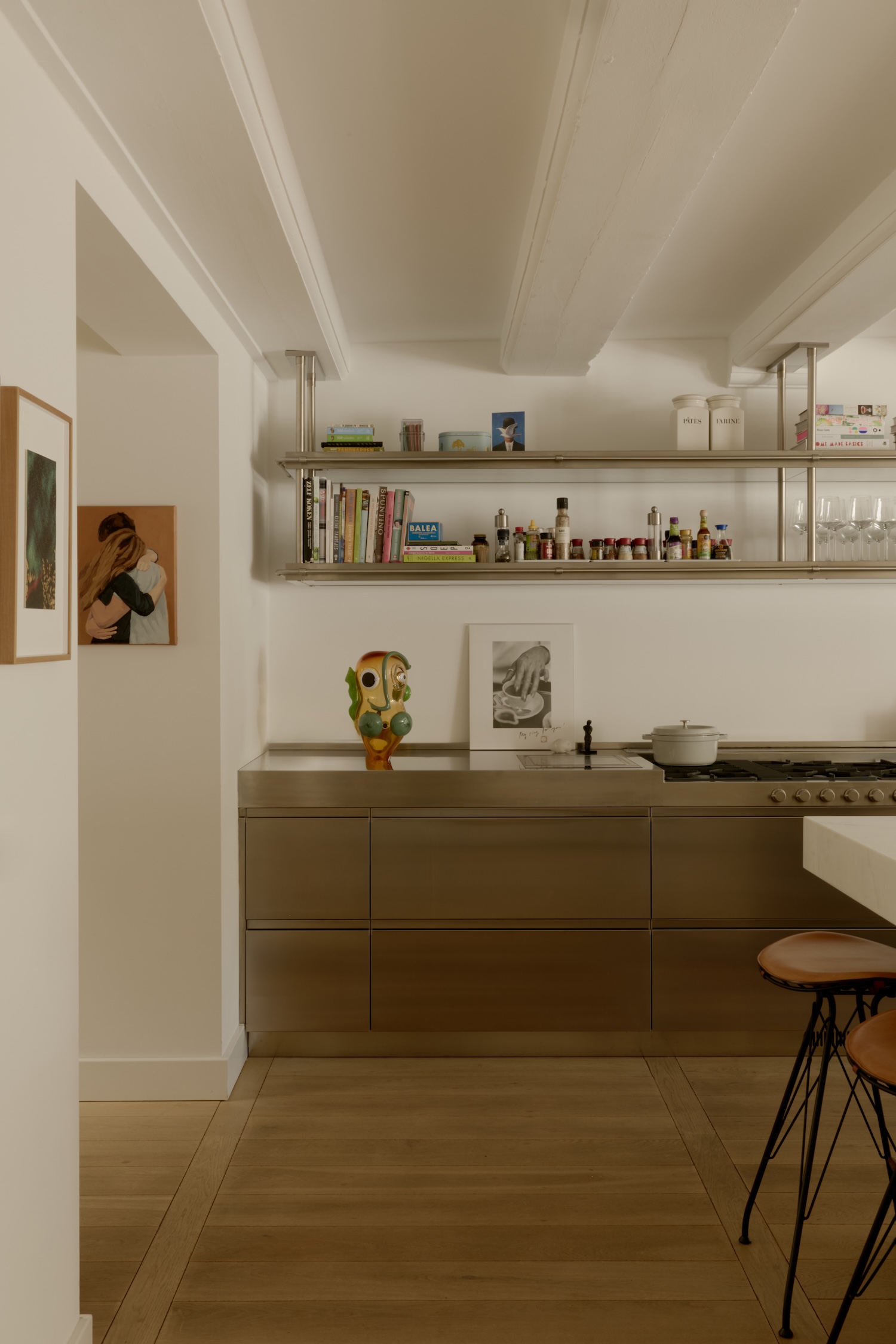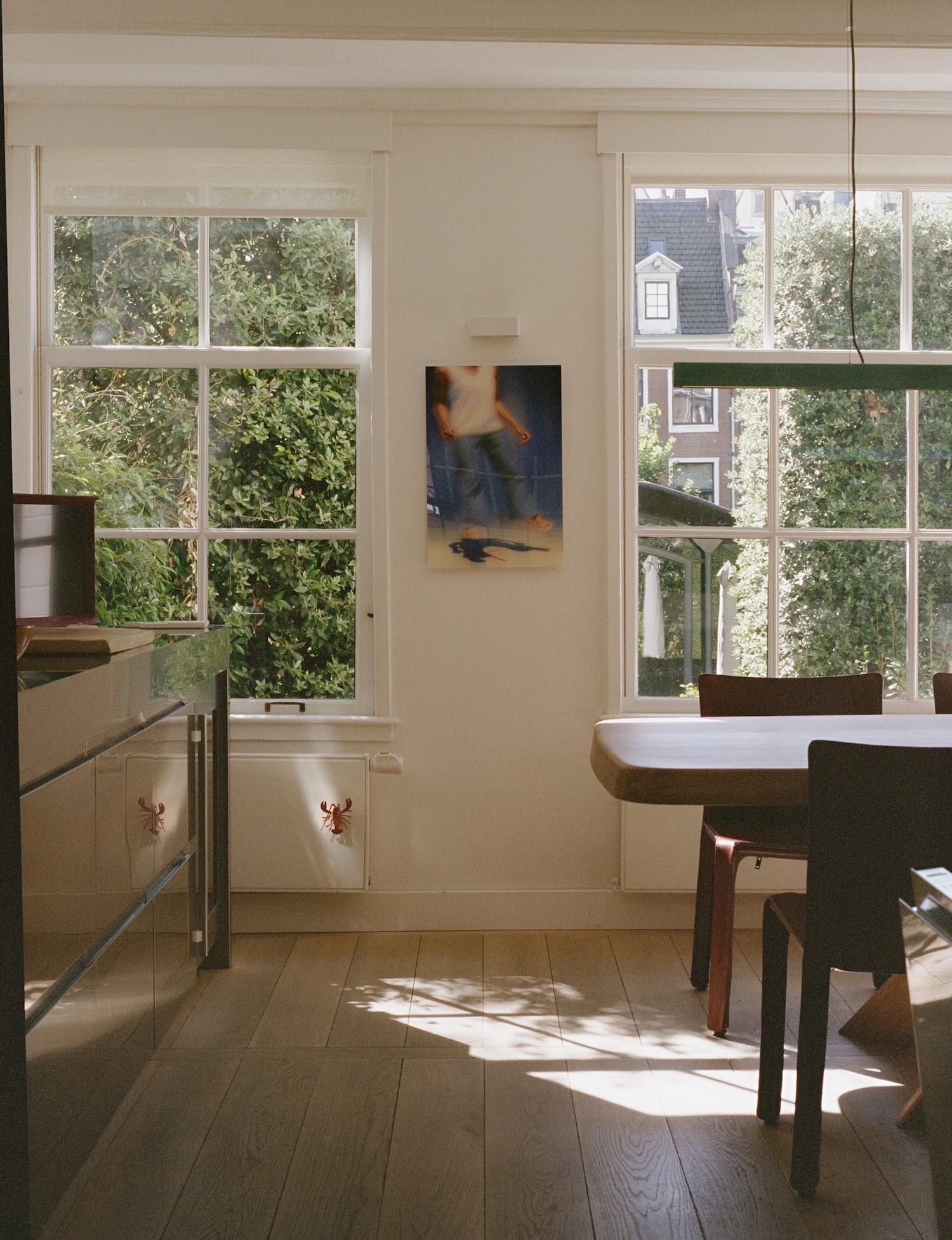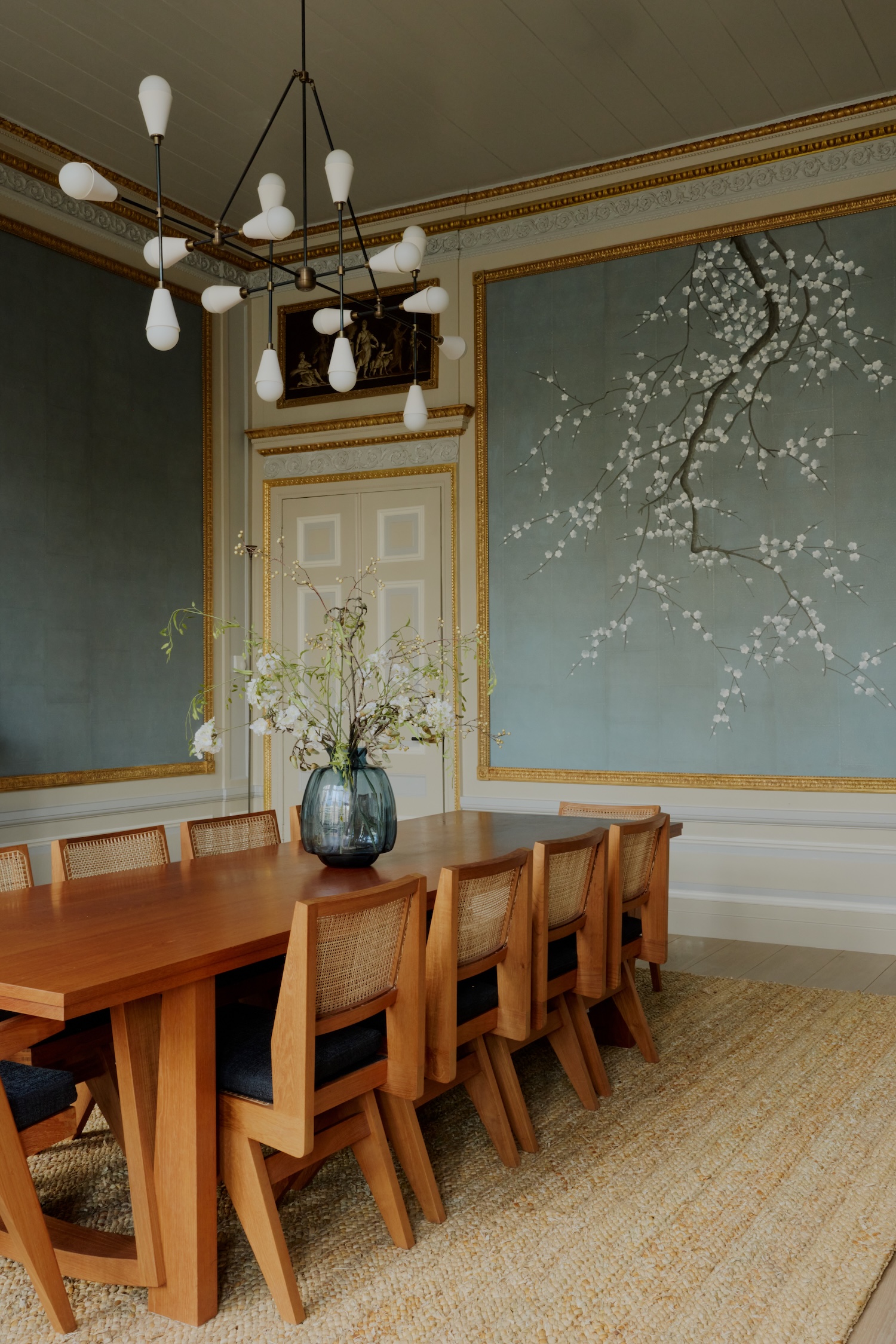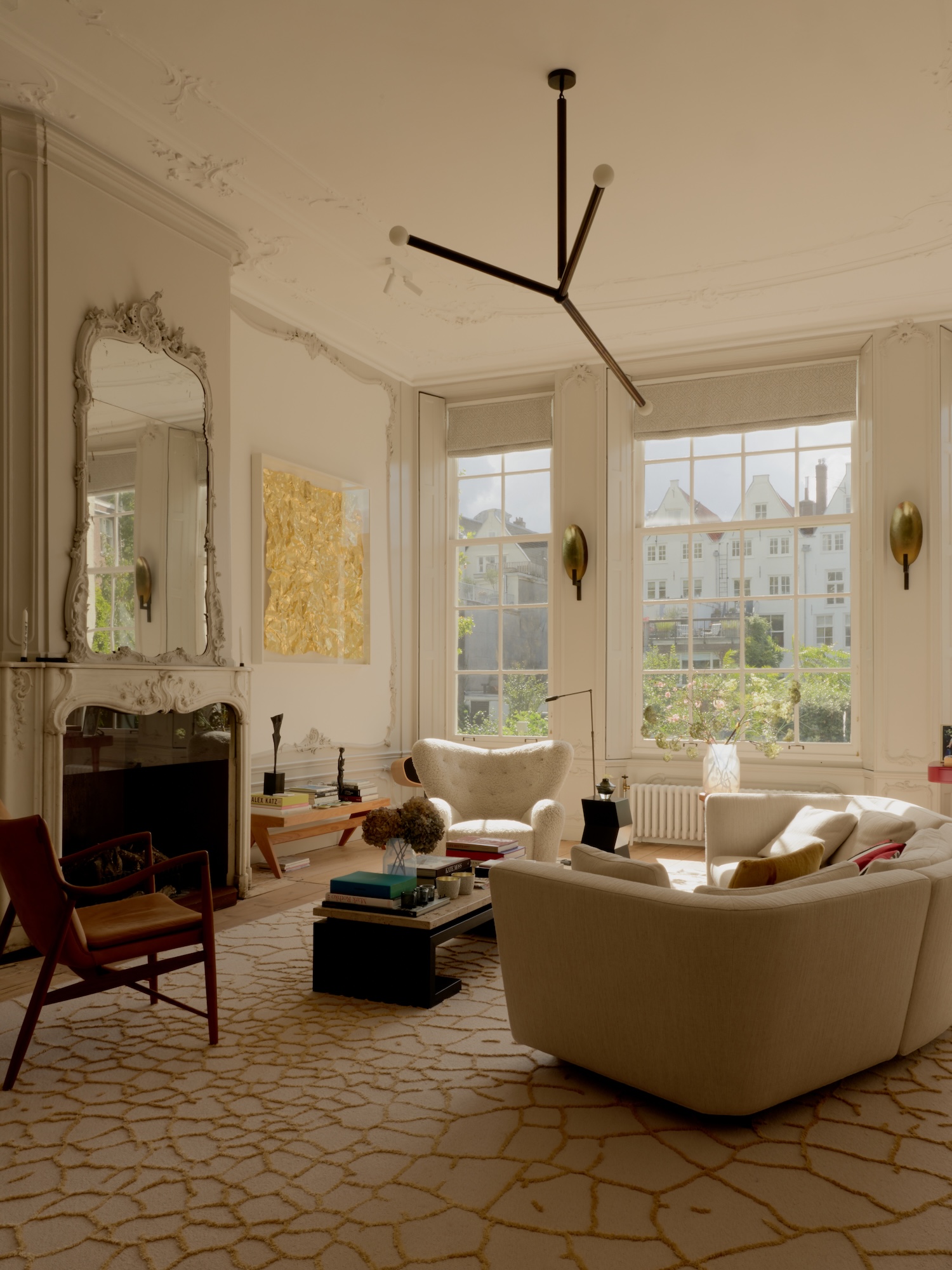
Canal House is a minimalist home located in Amsterdam, Netherlands, designed by Sylvia de Bok in collaboration with Kodde Architecten. Buying a listed building from 1665 is less a property transaction than an inheritance, and what the sculptor and her husband inherited was 700 square metres of a house that had spent its recent life as an architectural firm’s office, its condition poor enough that the foundation itself had to be rebuilt. In Amsterdam this is not a metaphor. The city sits on peat and clay, and the seventeenth-century houses along its canals stand on timber piles driven down to a sand layer, piles that rot when groundwater levels drop and expose them to air. Replacing them means going underneath a structure that legally cannot be altered above ground. The house has to be held still while everything beneath it is taken away.
That inversion sets the tone for the whole project. A canal house of this period follows a strict logic, a narrow street frontage taxed by width, a long deep plan running back from the water, a voorhuis at the front for receiving and an achterhuis behind, connected by a stair hall that doubles as the building’s only reliable source of light. Later occupants tend to fight this arrangement. Office conversions in particular tend to flatten it, subdividing the depth into cellular rooms and sealing the vertical shaft that once let daylight fall from a skylight down through several floors. Returning a building like this to domestic use means recovering a section that was never really lost, only obscured.
De Bok took the interiors on herself, and the decision reads as continuous with her practice rather than adjacent to it. Sculpture is an argument about mass and void conducted at full scale, and a canal house is essentially the same argument arrested in brick. Working the interior as a sculptor works a block means subtracting until the proportions of the original volumes become legible again, then leaving them alone. The restraint required is considerable. Rooms of this height and age carry an ornamental vocabulary that invites either reverent restoration or wholesale erasure, and both are easier than the third option, which is to let the historic fabric register as one material among others rather than as a subject.