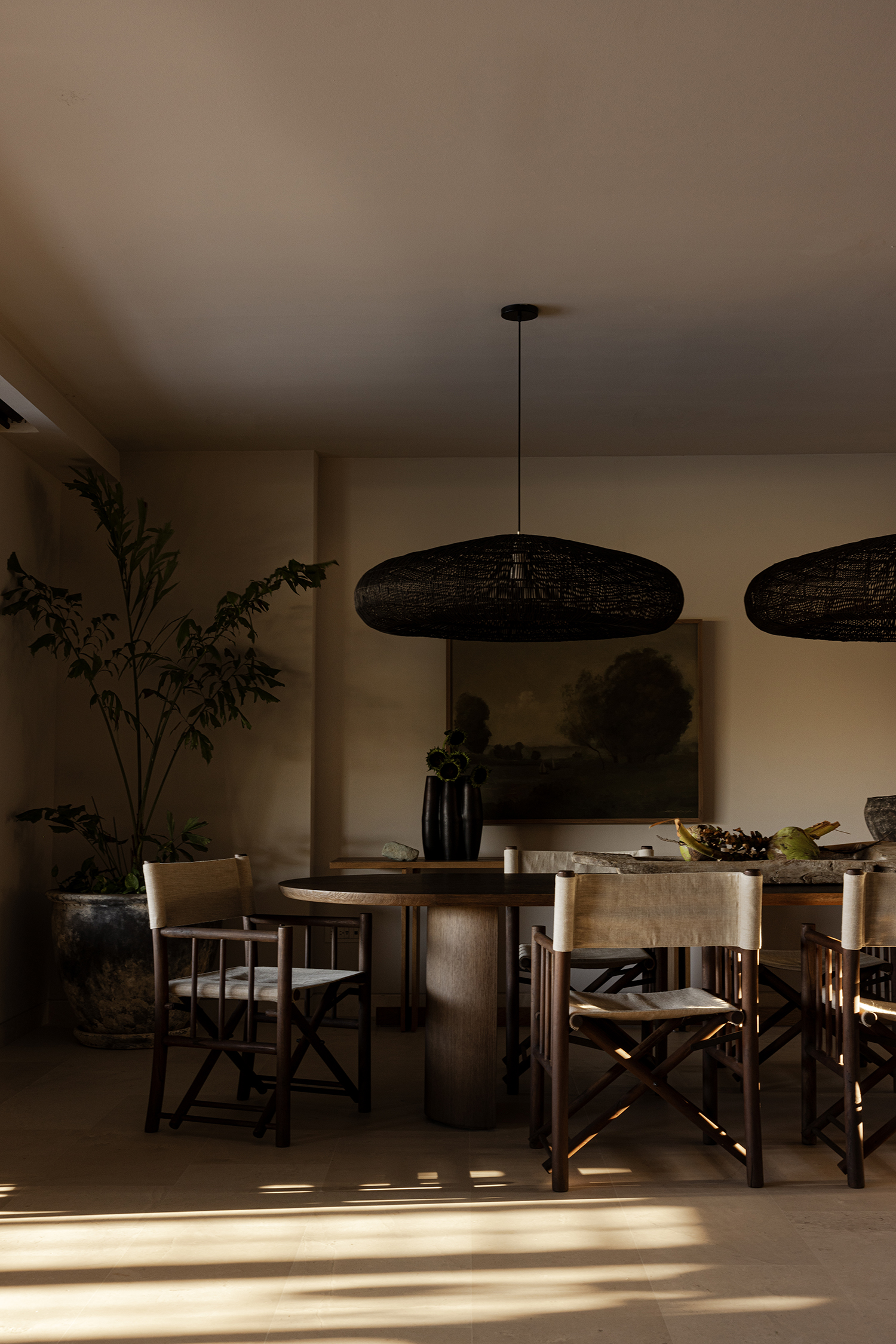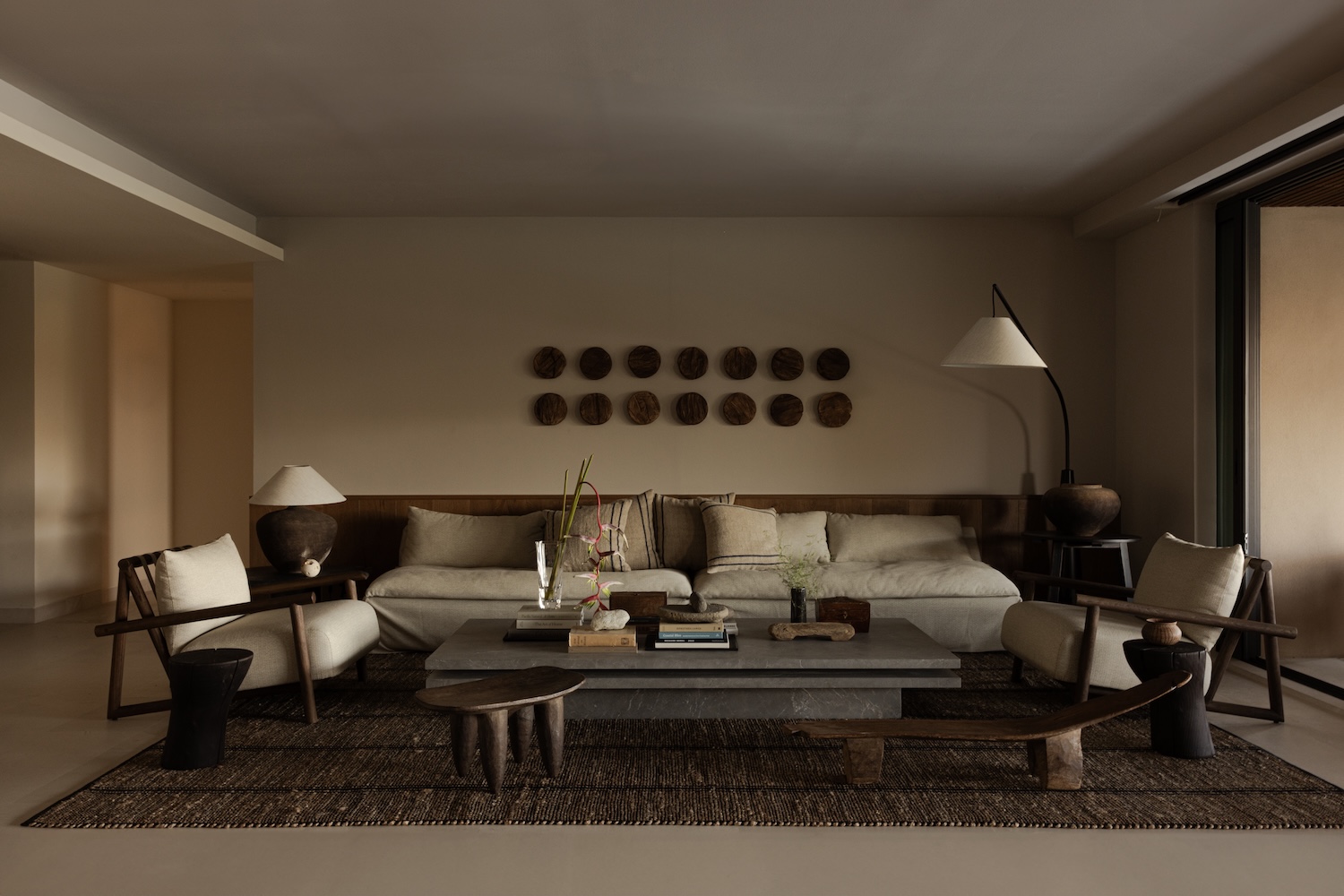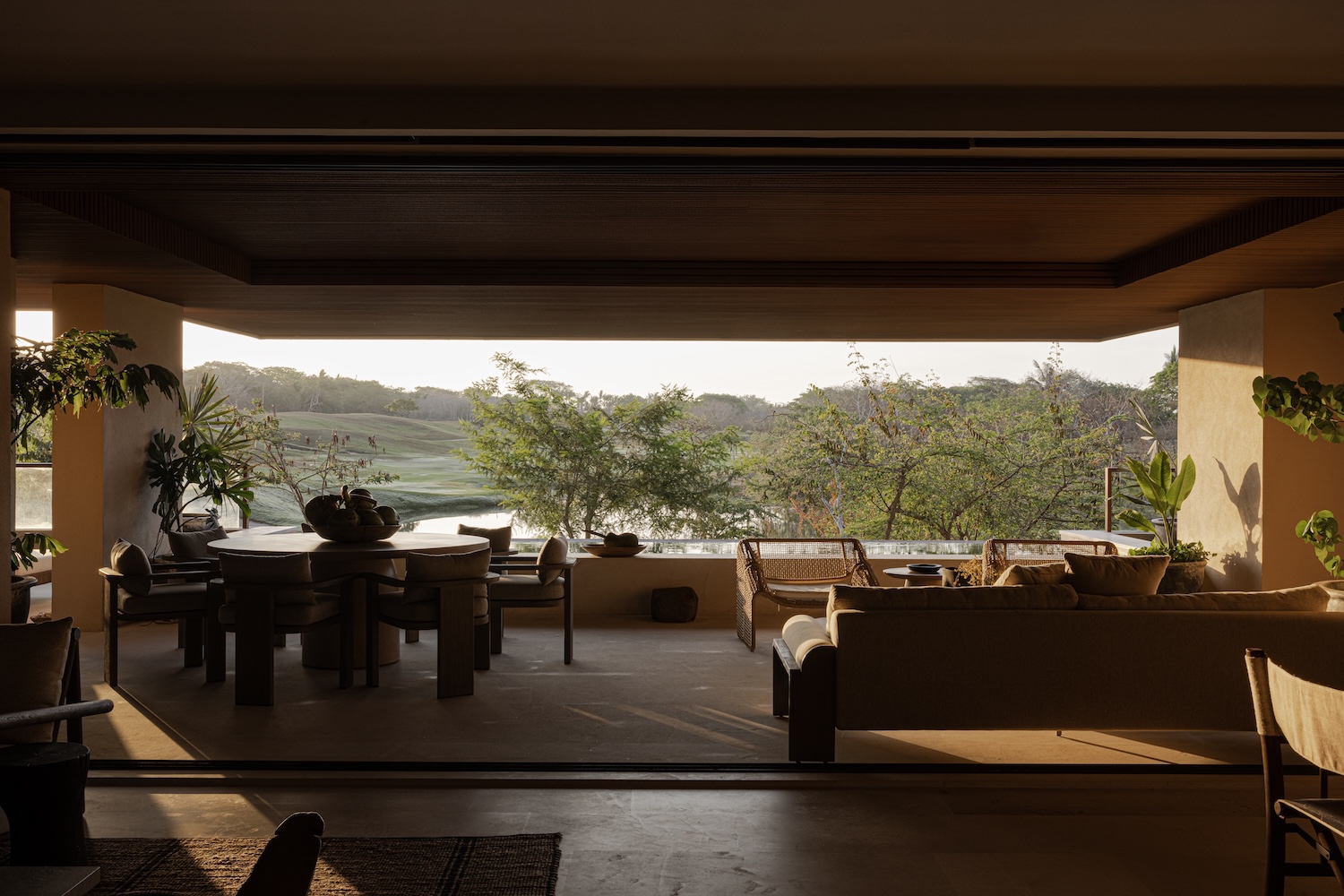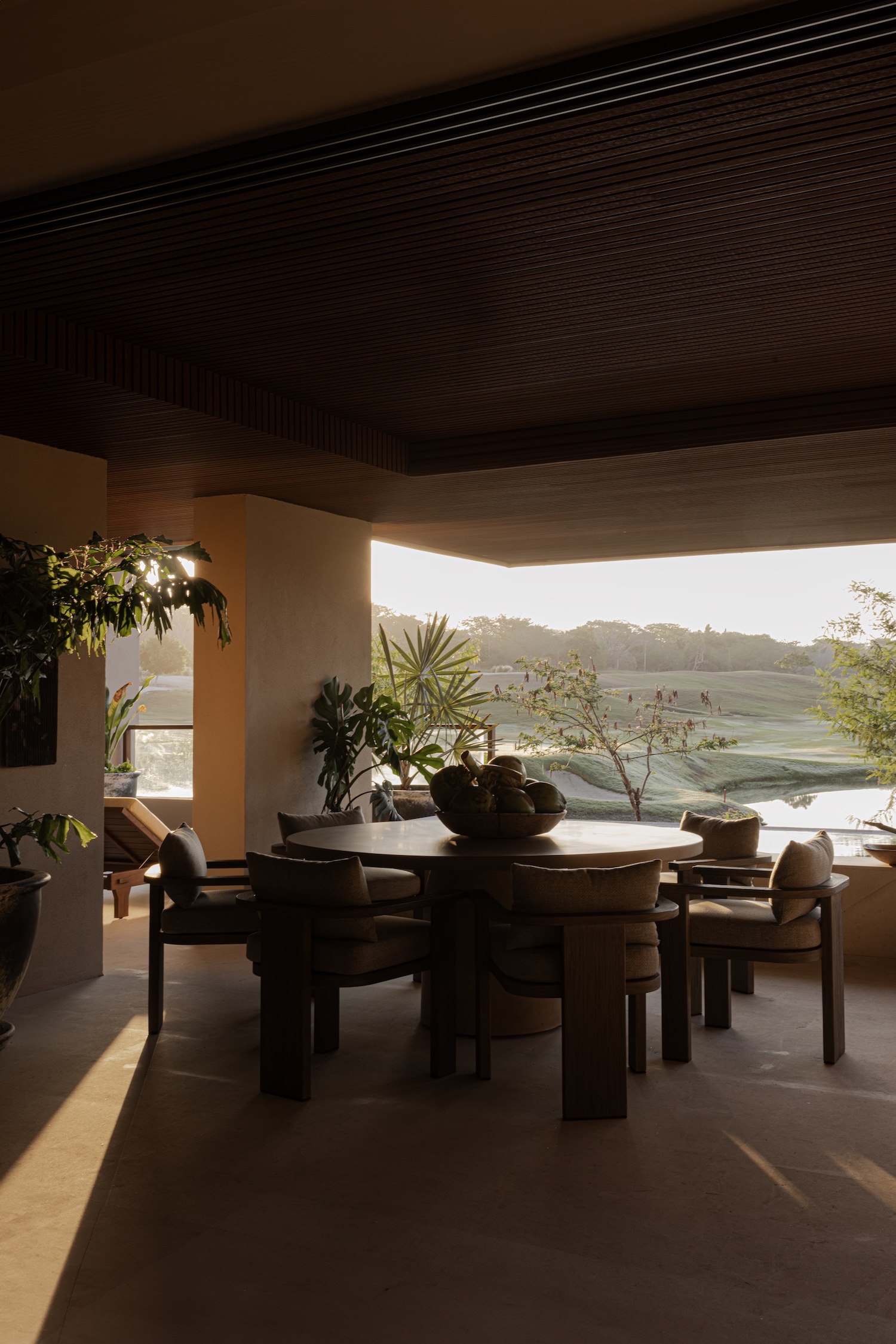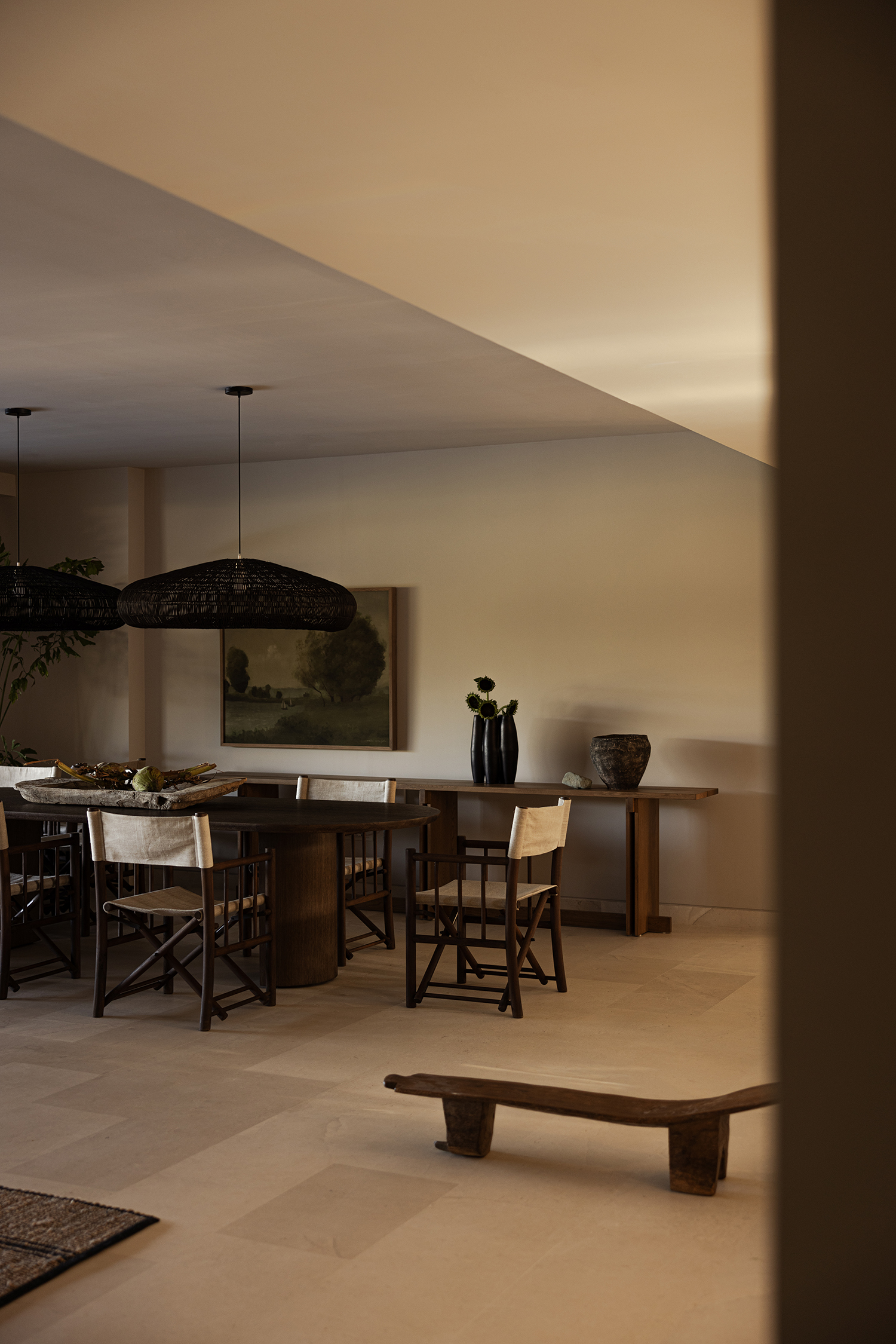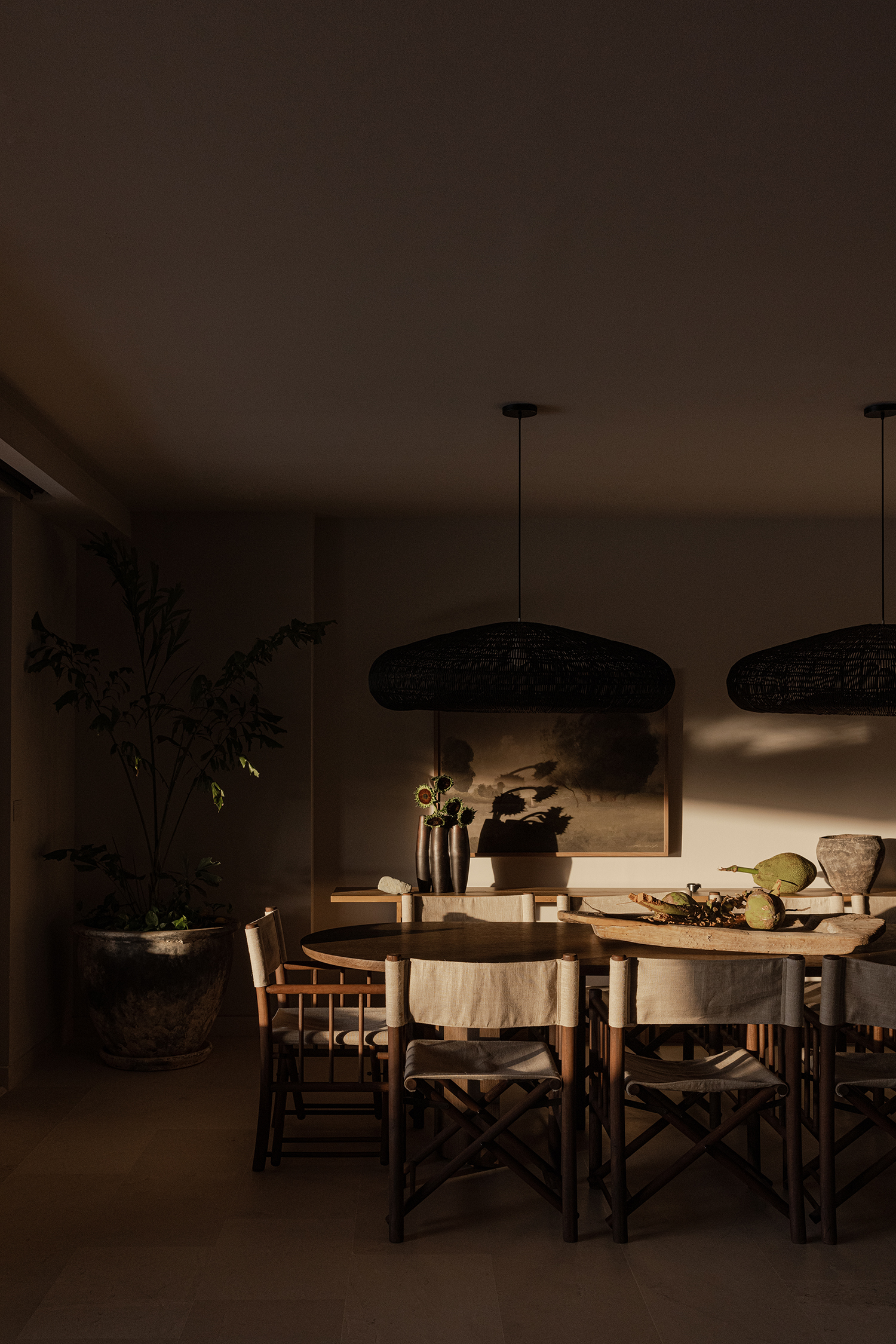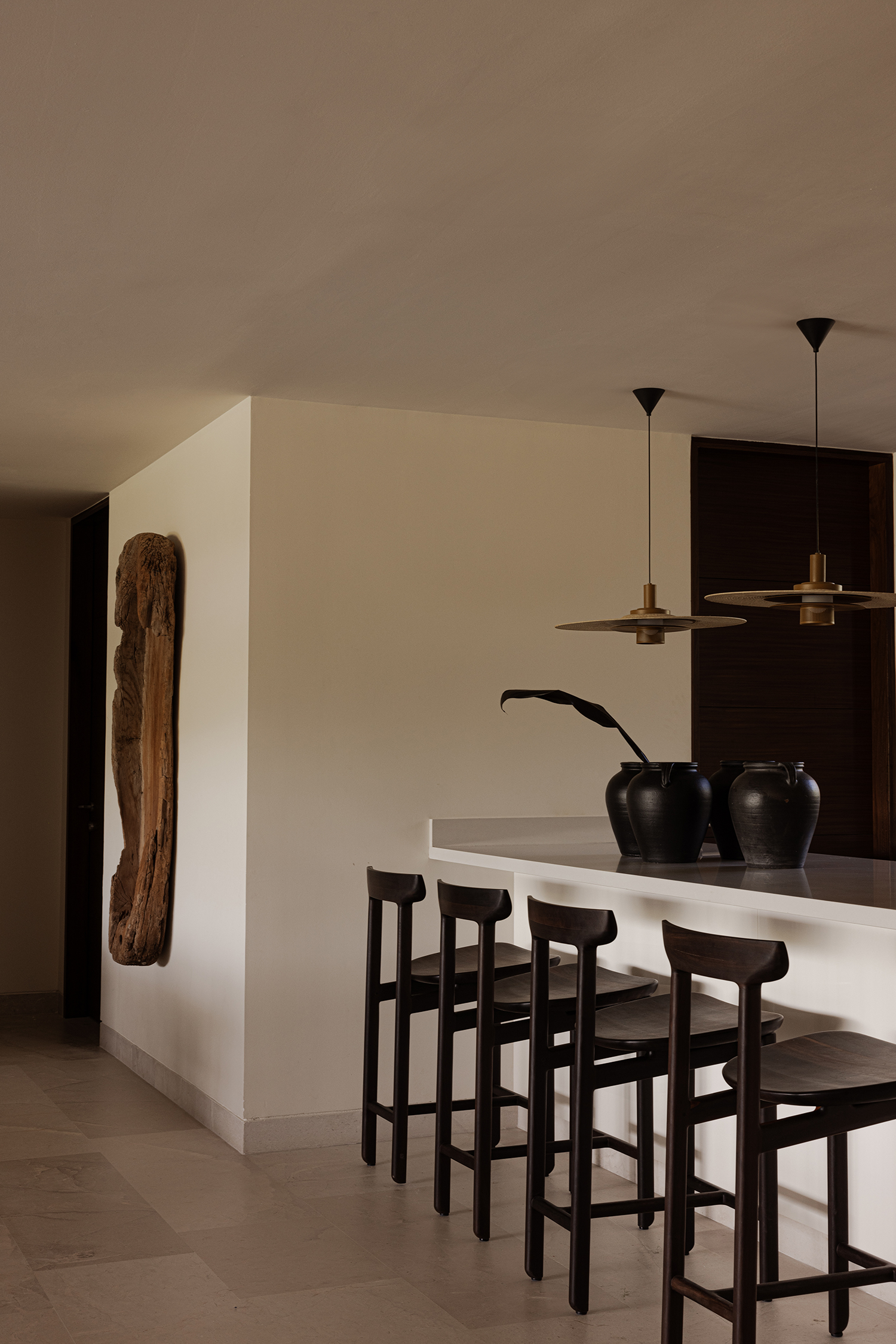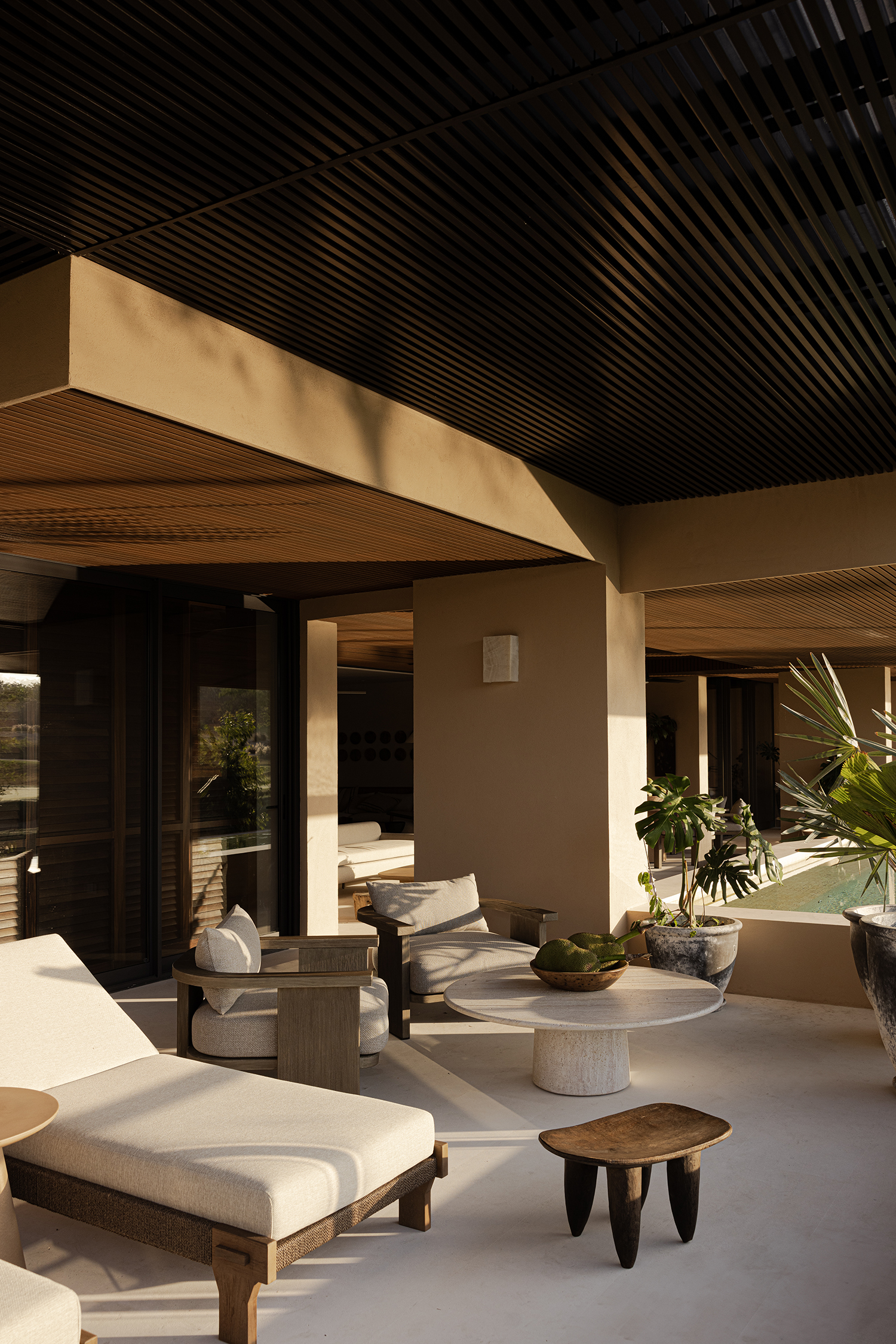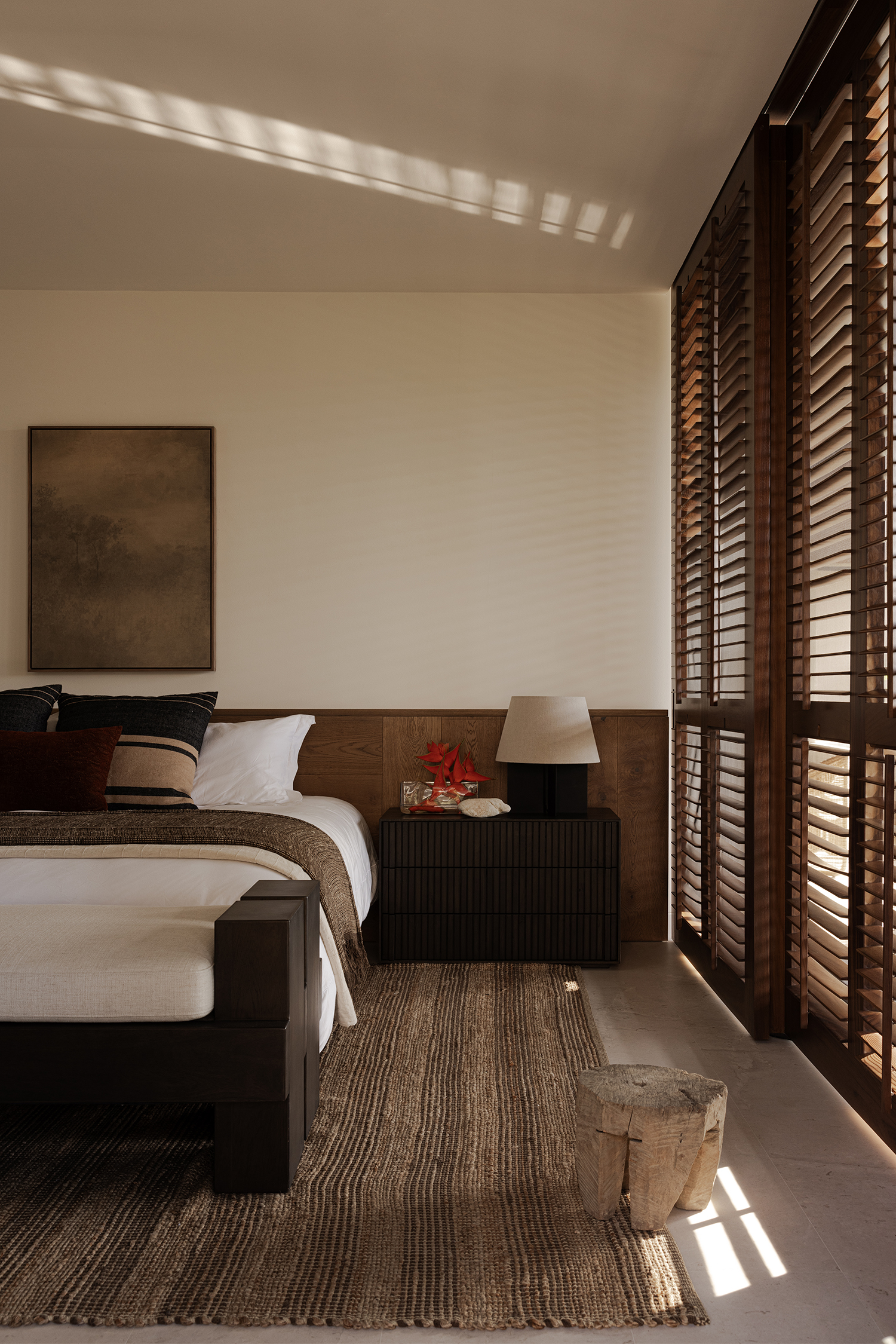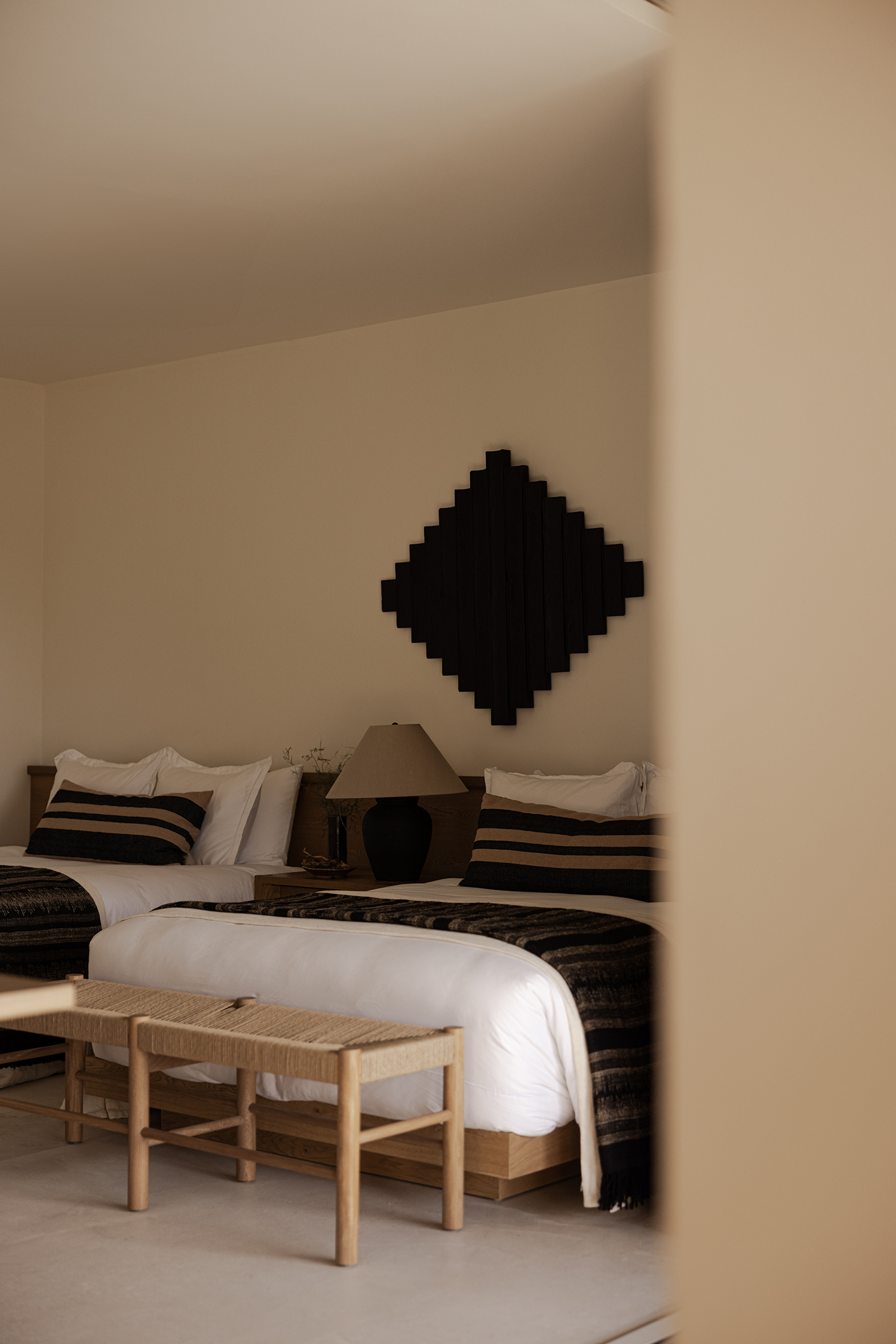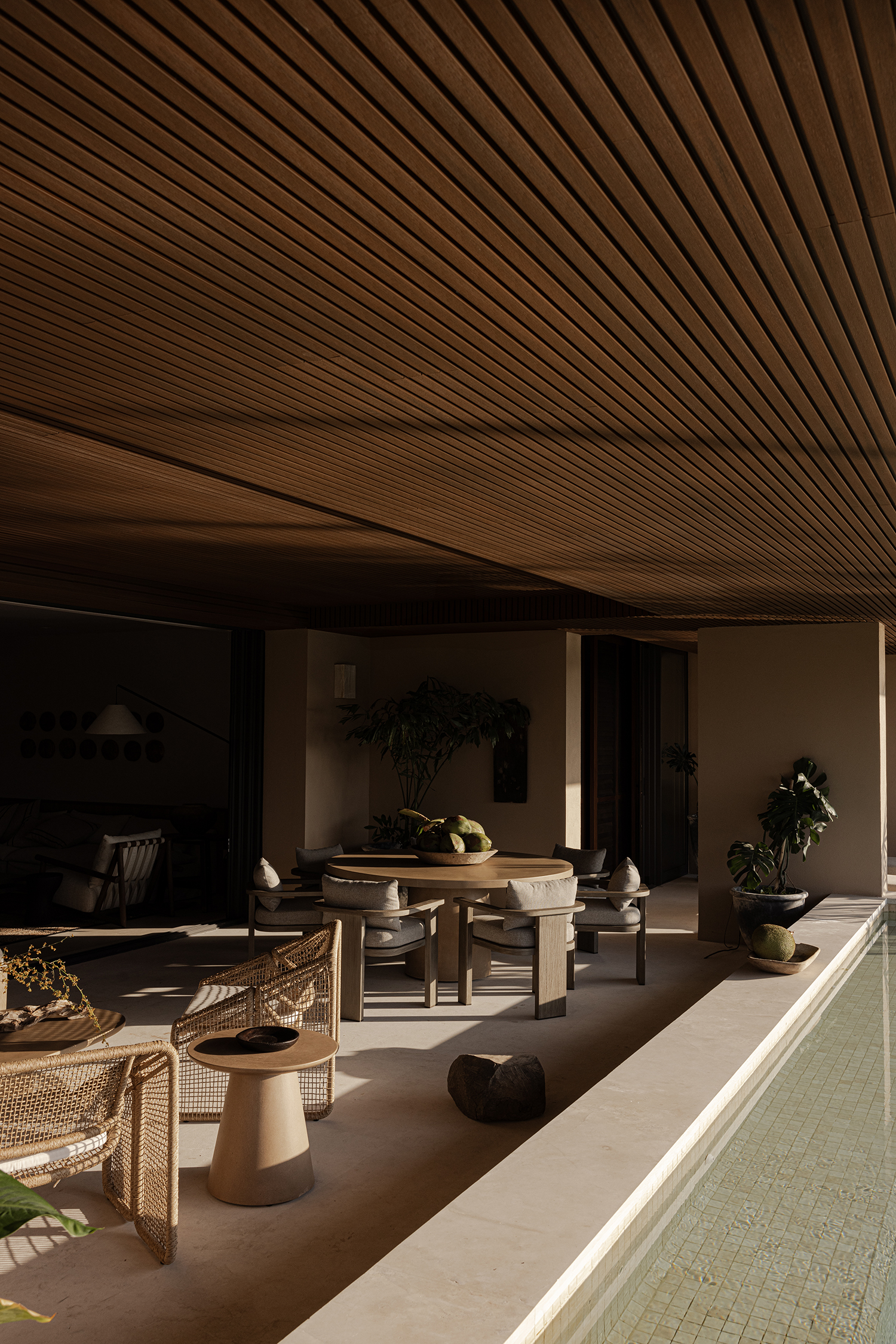
7-EIGHT is a minimalist apartment located in Punta Mita, Mexico, designed by Aagnes. Sited on a peninsula where the Pacific meets an expanse of manicured golf courses, the project sets itself against the reflexive maximalism of most resort real estate, arguing that luxury reads more convincingly through restraint than through accumulation. The apartment treats its coastal setting not as a view to be framed but as a material condition to be absorbed, and that distinction shapes nearly every decision inside.
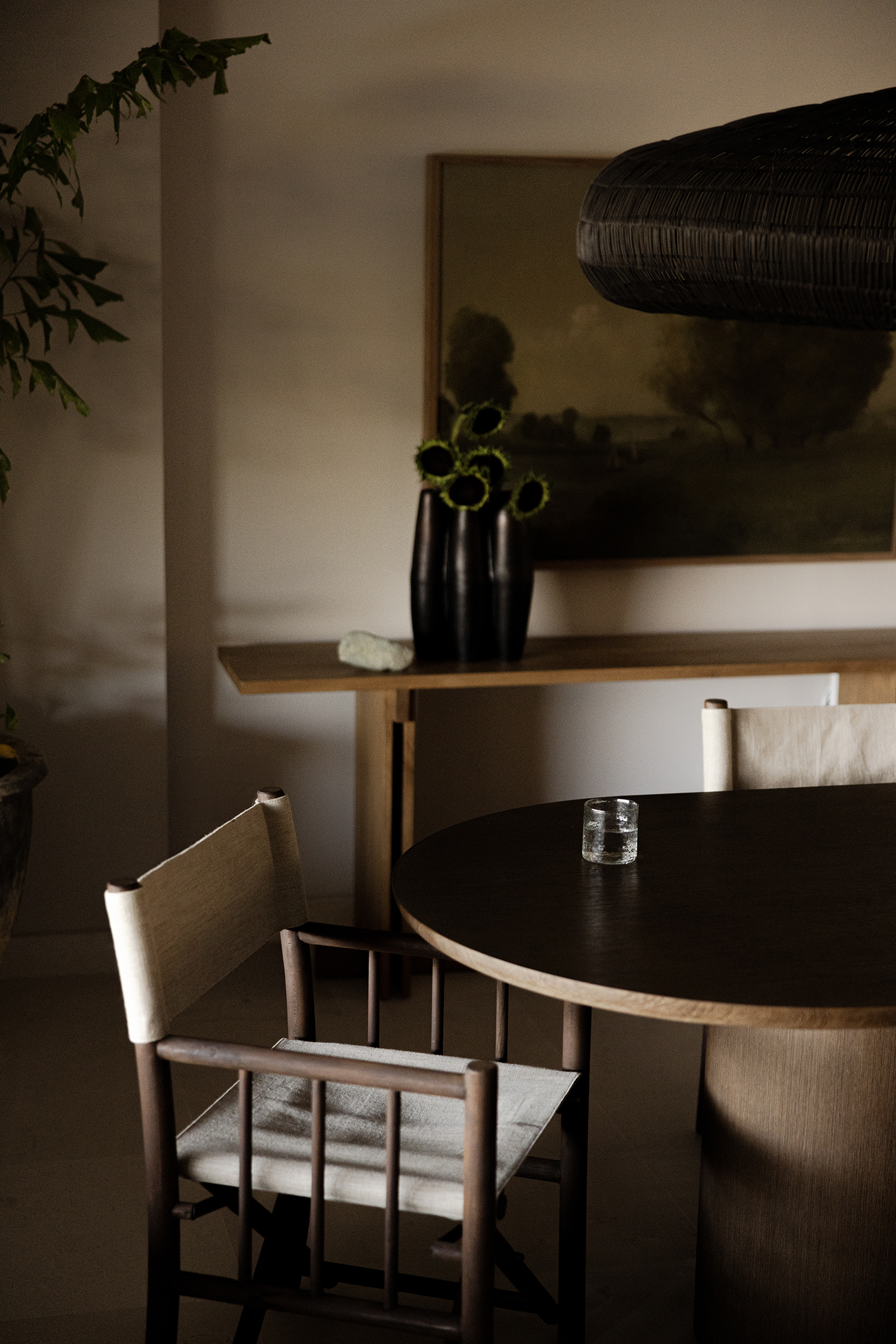
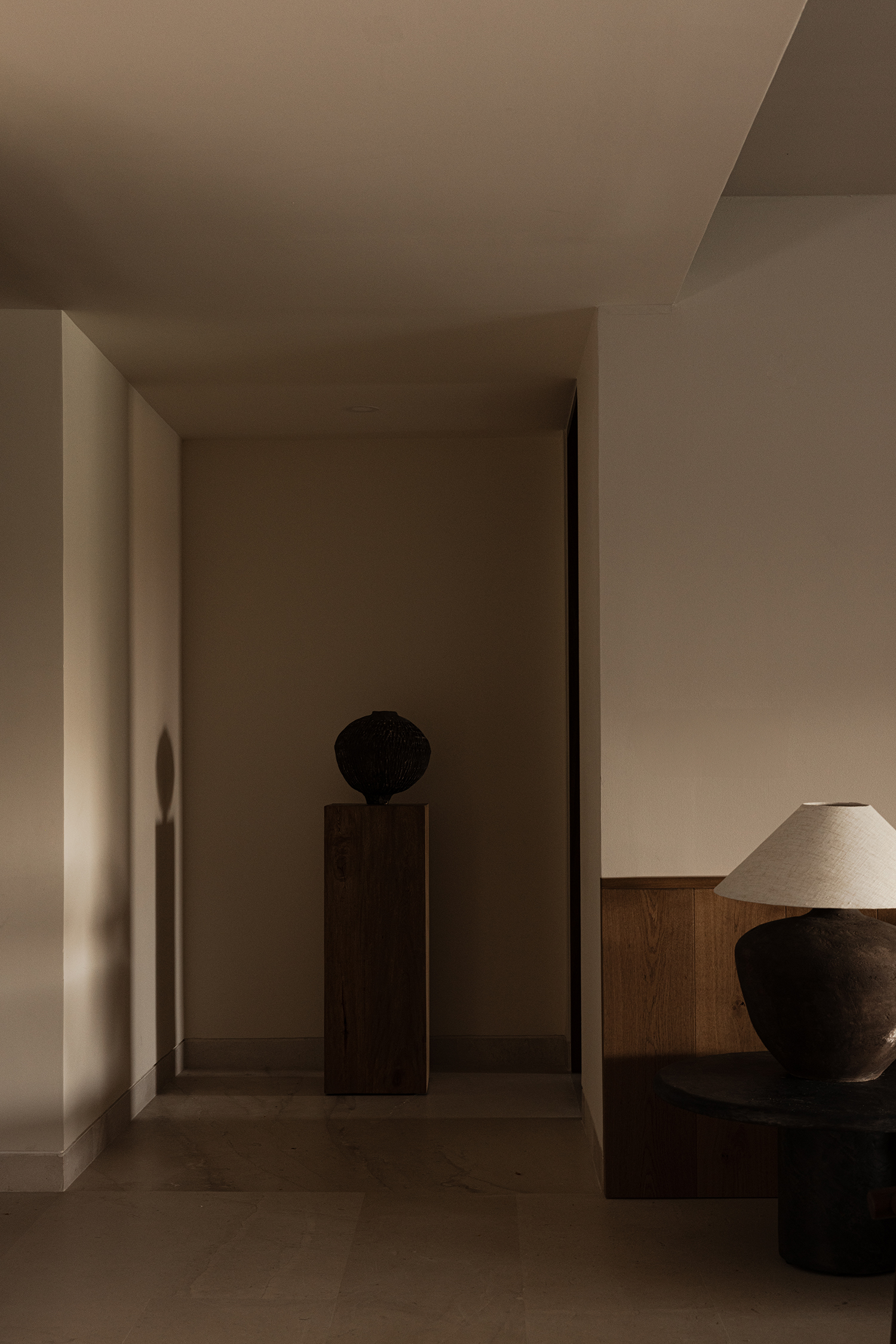
The interior operates on a narrow tonal band of sand, stone, and unbleached neutrals, a palette that withholds color so that texture can carry the room. Surfaces are asked to do the expressive work here, and they do it through contrast of finish rather than contrast of hue. Rough against smooth, matte against a low sheen, the eye moves across the space registering tactility before it registers form. This is a strategy with deep roots in Mexican modernism, where Luis Barragán proved that a limited palette of earthen surfaces could produce rooms of enormous emotional density, and where later practitioners folded that lesson into a vernacular of lime plaster, local stone, and warm shadow.
Organic forms carved from wood and handcrafted ceramics anchor the furnishing, and their presence signals a specific value system. These are pieces that show the hand, that carry the slight irregularities of things made rather than manufactured. Placing artisanal objects inside an otherwise disciplined shell creates a productive tension between the precision of the architecture and the looseness of the craft, each making the other more legible. The ceramics in particular tie the apartment to a living regional tradition, connecting a contemporary resort interior to workshops that have shaped clay along this coast for generations.
The architecture is organized around the passage between inside and out. Expansive terraces function as a structural continuation of the living area, dissolving the usual boundary between conditioned interior and open air. Late in the day the setting sun throws light across the pool, and that reflected plane pulls the golf courses beyond into the composition, so the room appears to extend well past its actual walls. This is an old device handled with unusual care, the terrace acting less as an outdoor room than as a threshold that keeps the horizon in constant negotiation with the interior.