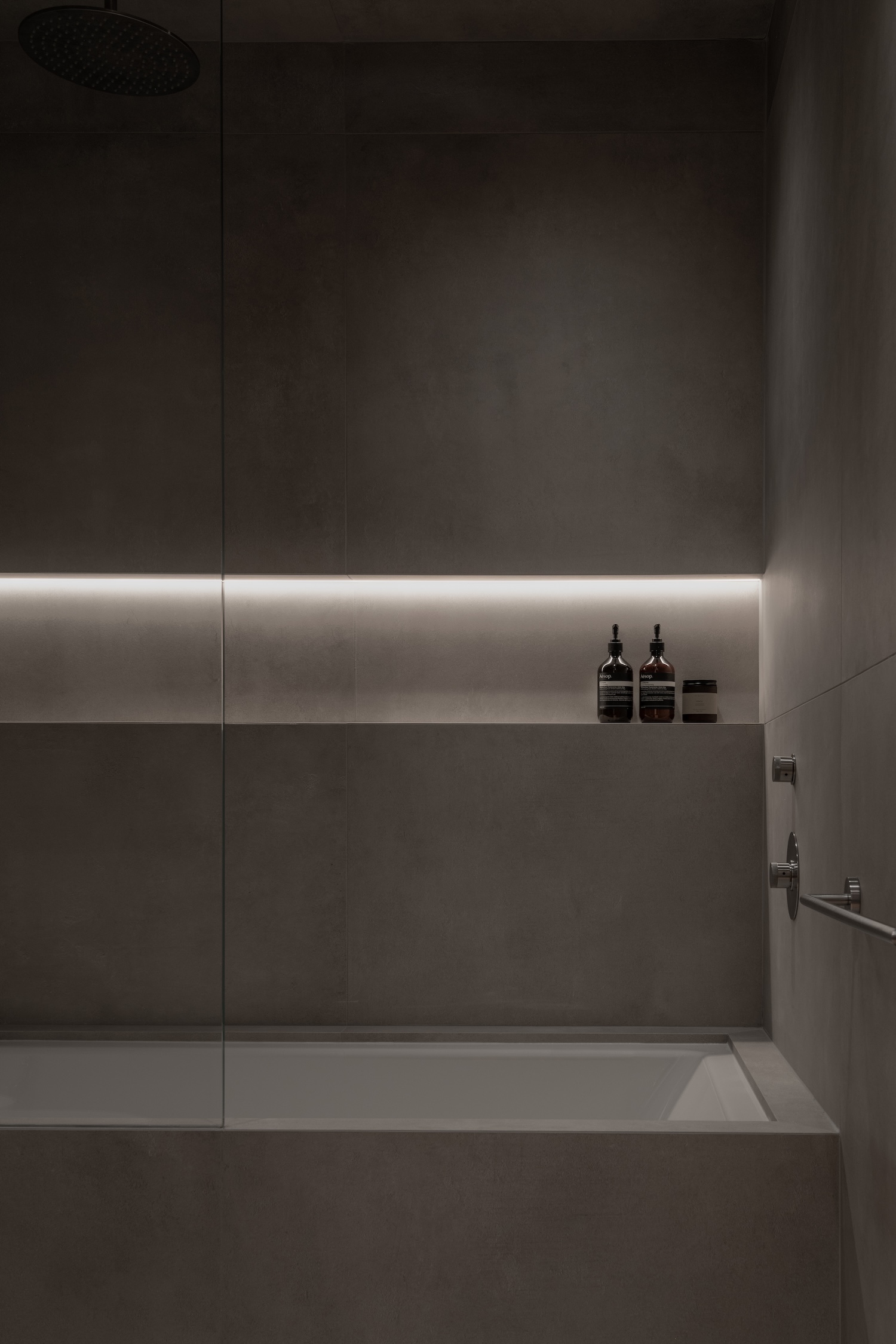
Candy Factory Lofts PH is a minimalist penthouse located in Toronto, Canada, designed by Kyra Clarkson Architects. A deep industrial floorplate rarely wants to become a home. Its proportions pull toward warehouse, not warmth, and the standard move is to fight that volume with partitions. This penthouse does the opposite, treating the depth of the plan as a problem of choreography rather than subdivision. Light, material, and movement are arranged so that a cavernous shell reads as a warm and highly social residence, with the historic fabric of the building left legible throughout.
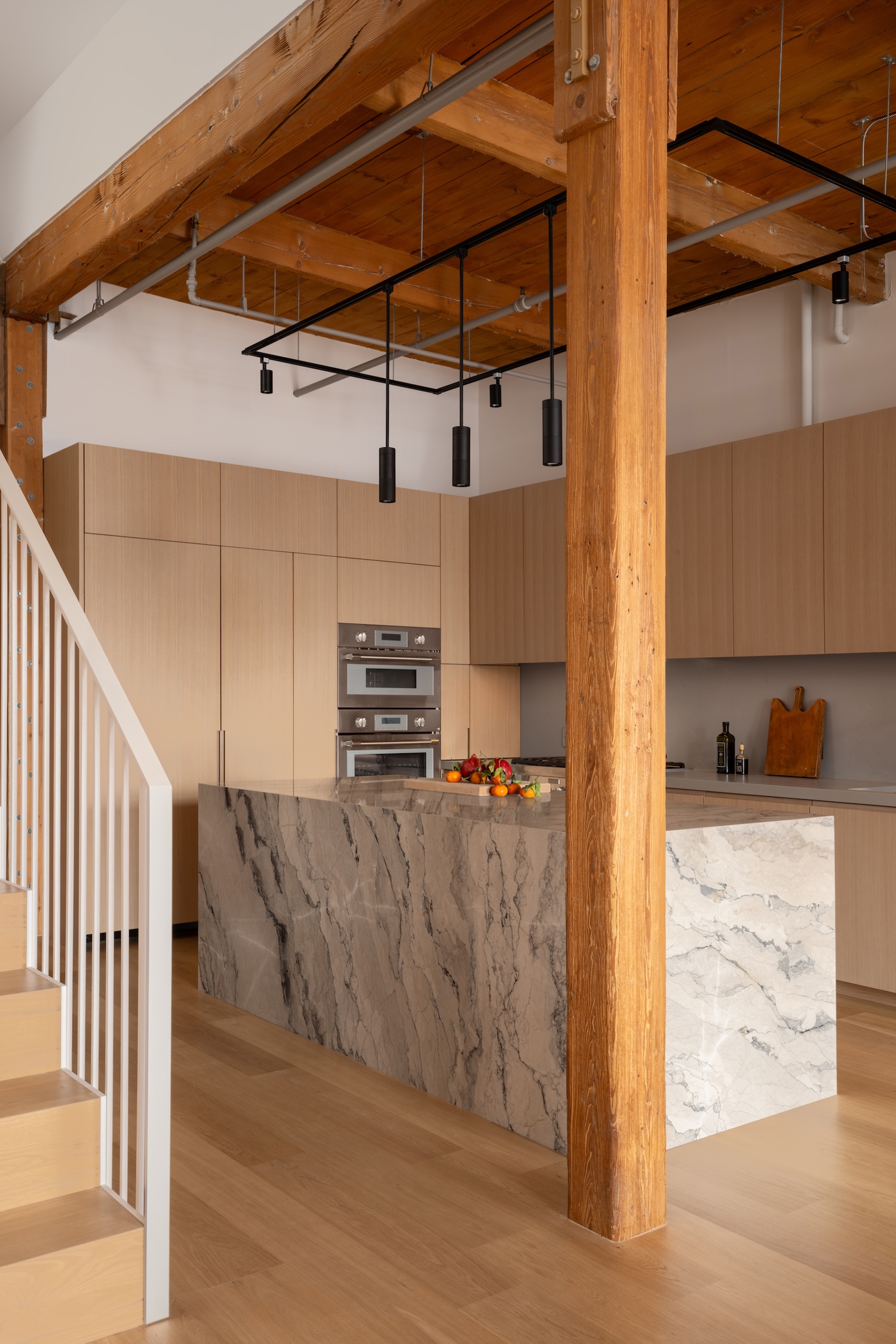
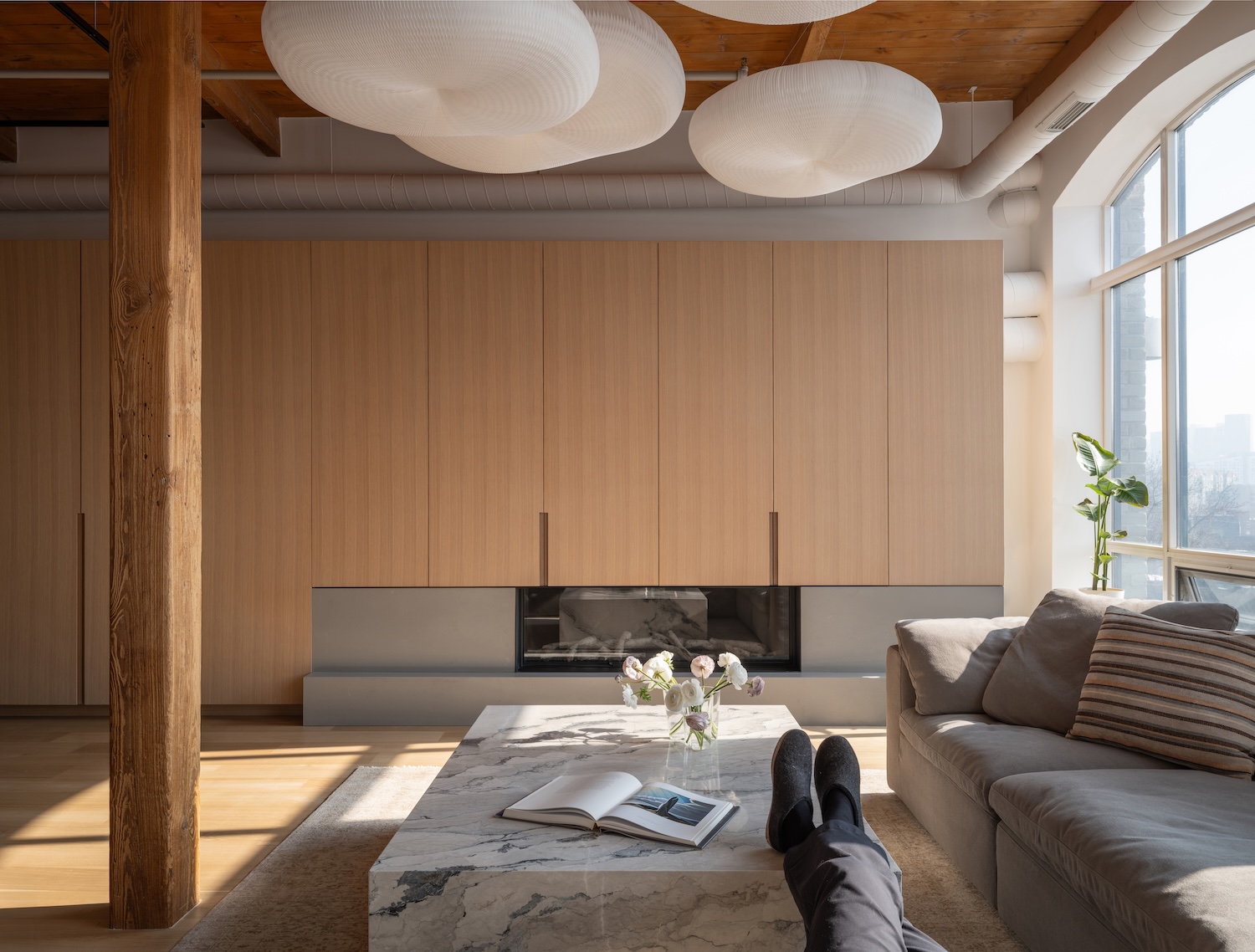
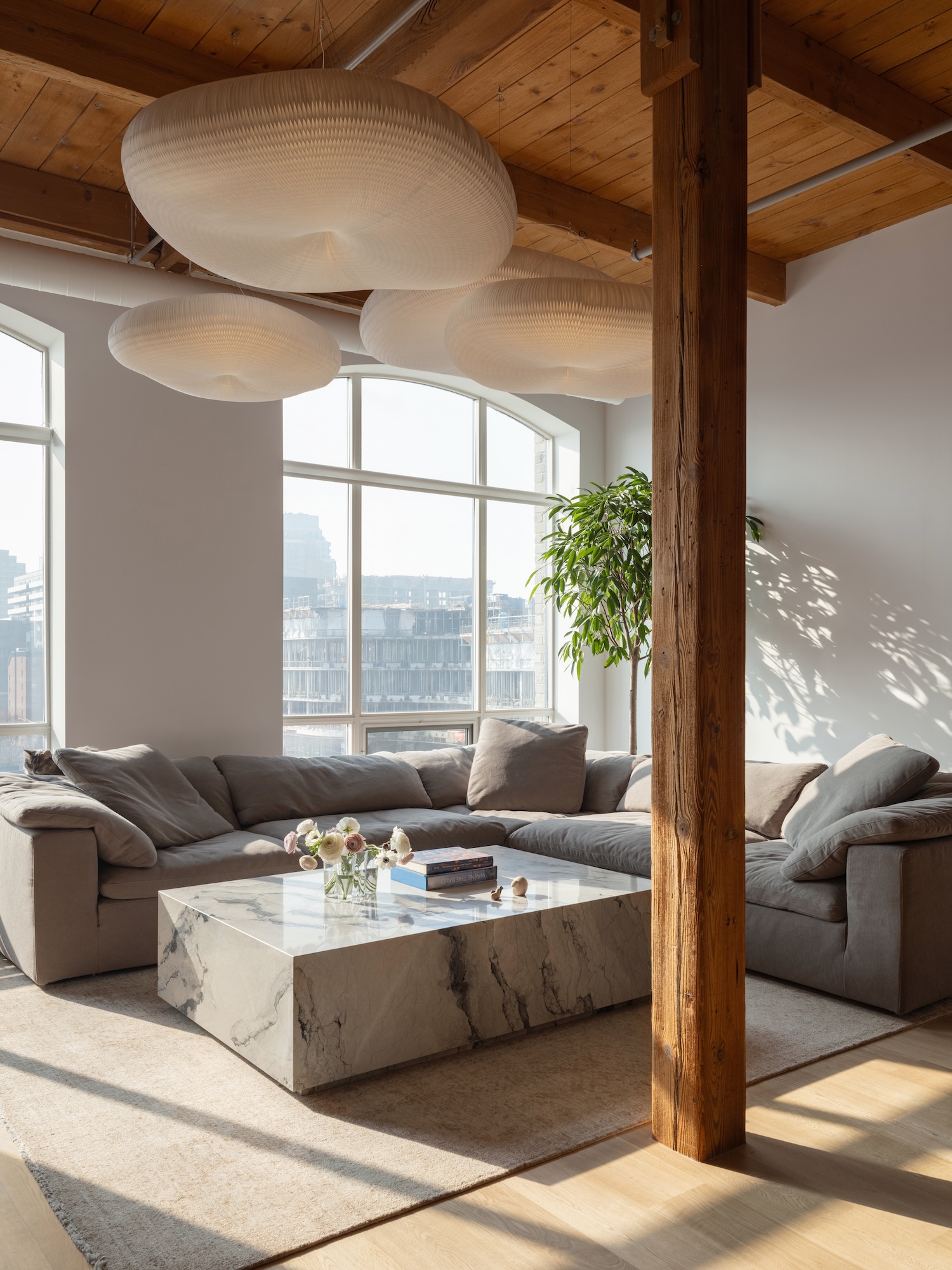
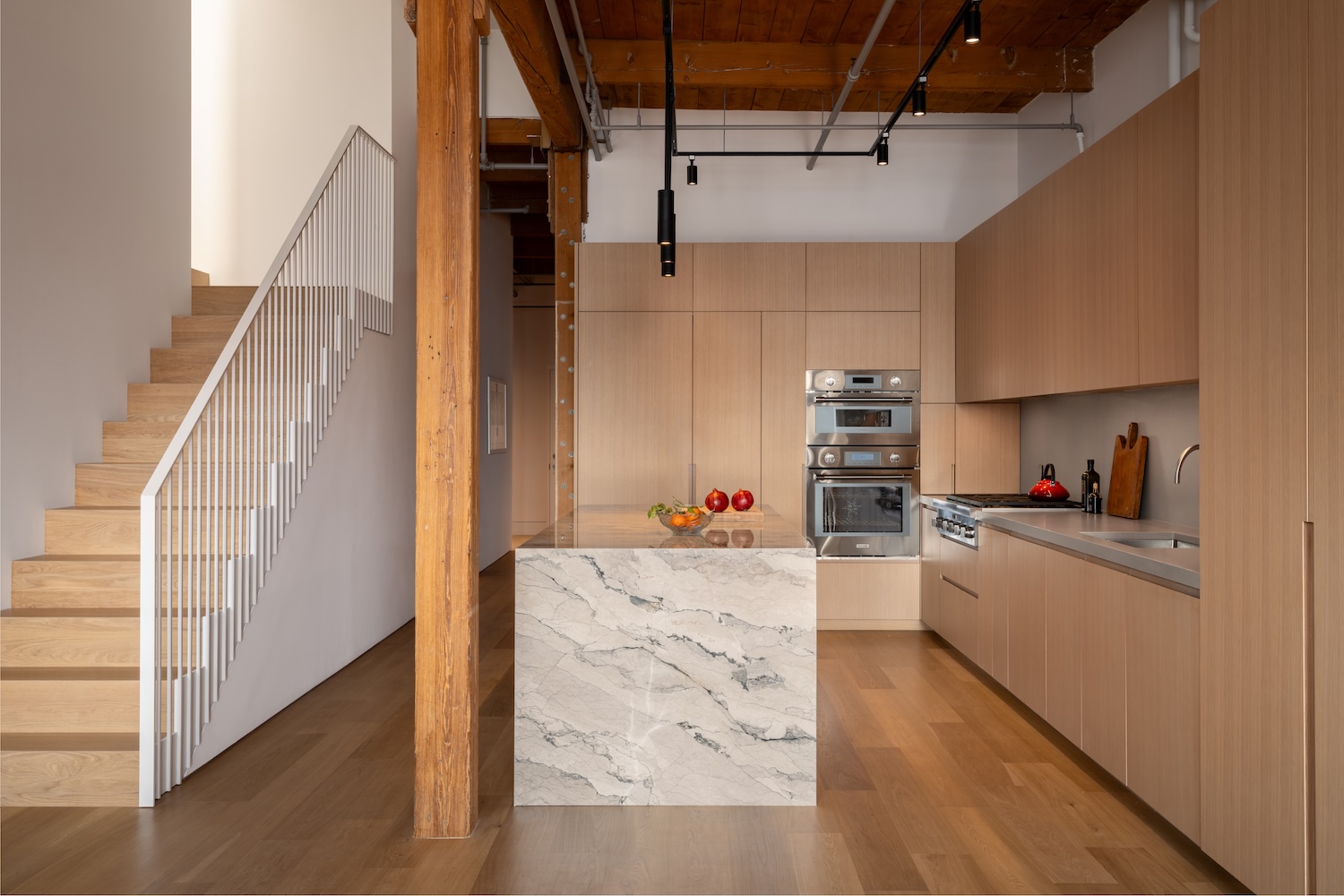
The structure dates to 1907, when it operated as a garment factory, and that origin remains the organizing logic of the interior. Douglas fir beams and columns, tall ceilings, and a south-facing window wall are treated as inheritance rather than obstacle. New interventions are calibrated to clarify the existing frame, giving cohesion to the two-storey residence without flattening the texture of the early industrial construction.
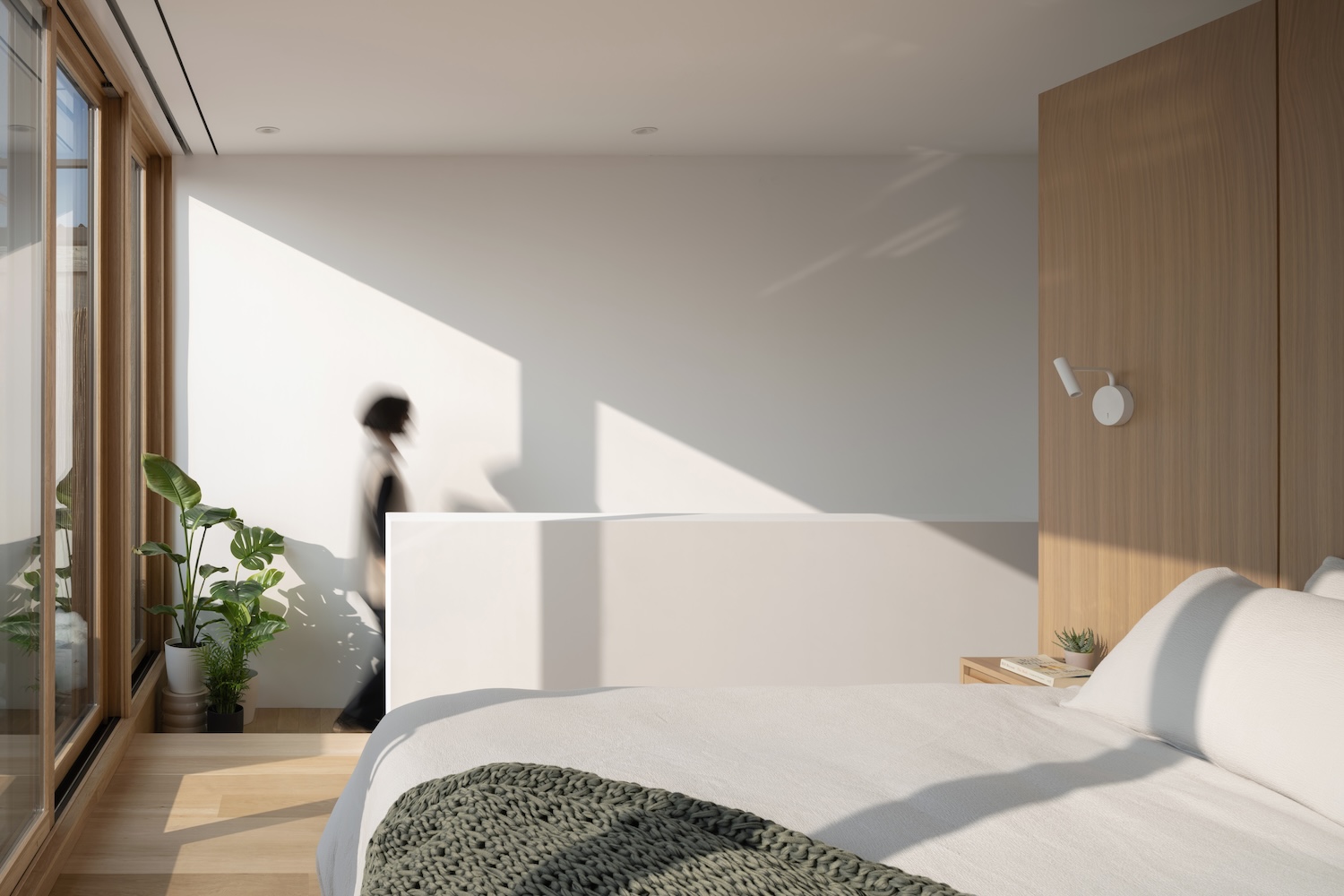
A raised white oak platform borrows the logic of the Japanese genkan, marking the threshold between arrival and living space. The gesture does double duty, separating public and private zones while burying new mechanical and plumbing runs in the void beneath it, so that infrastructure disappears into a change of level. Beyond the platform, etched glass partitions and sliding white oak panels delineate the office, gym, and service rooms, screening function while letting daylight travel deep into the floorplate.
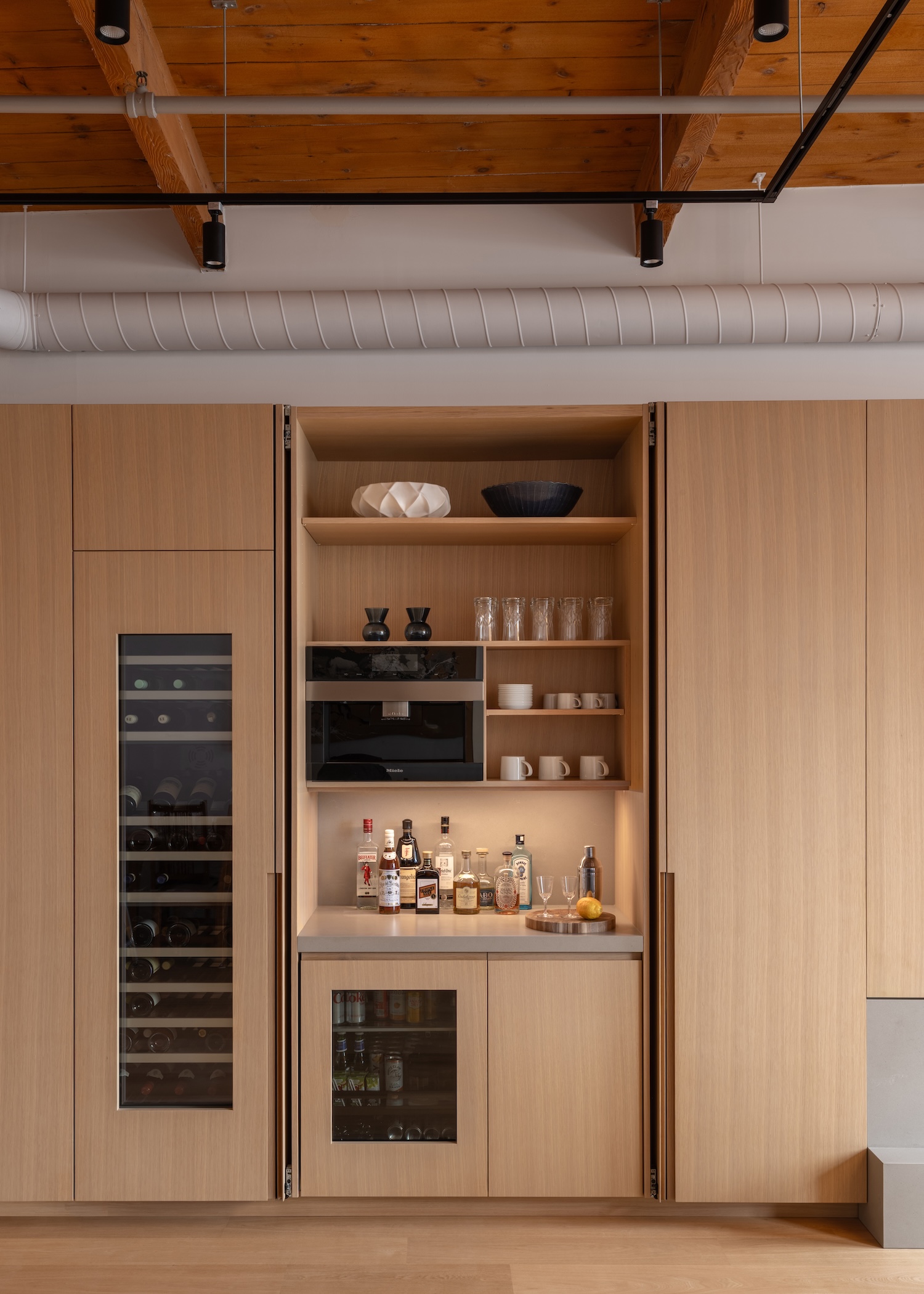
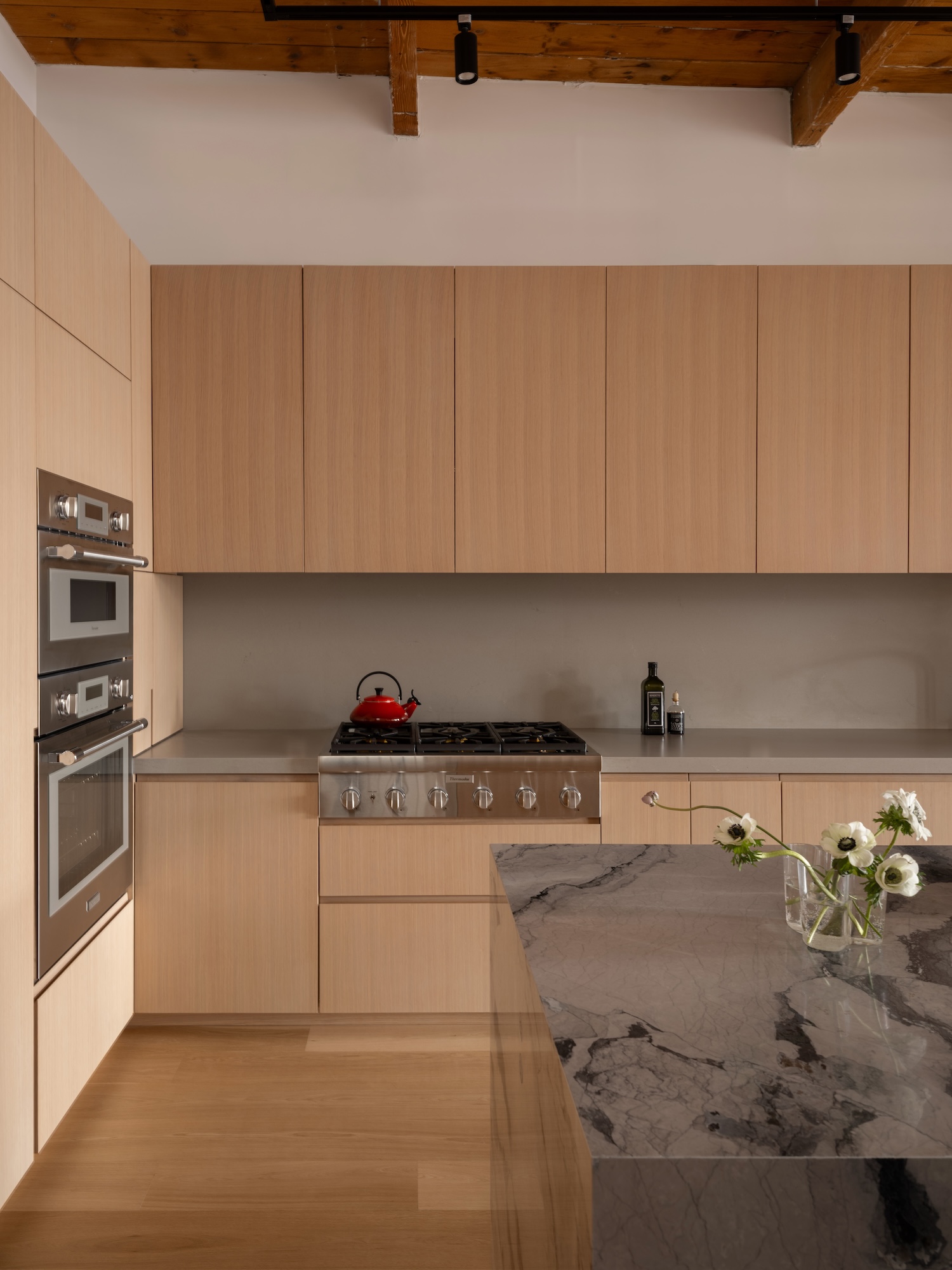
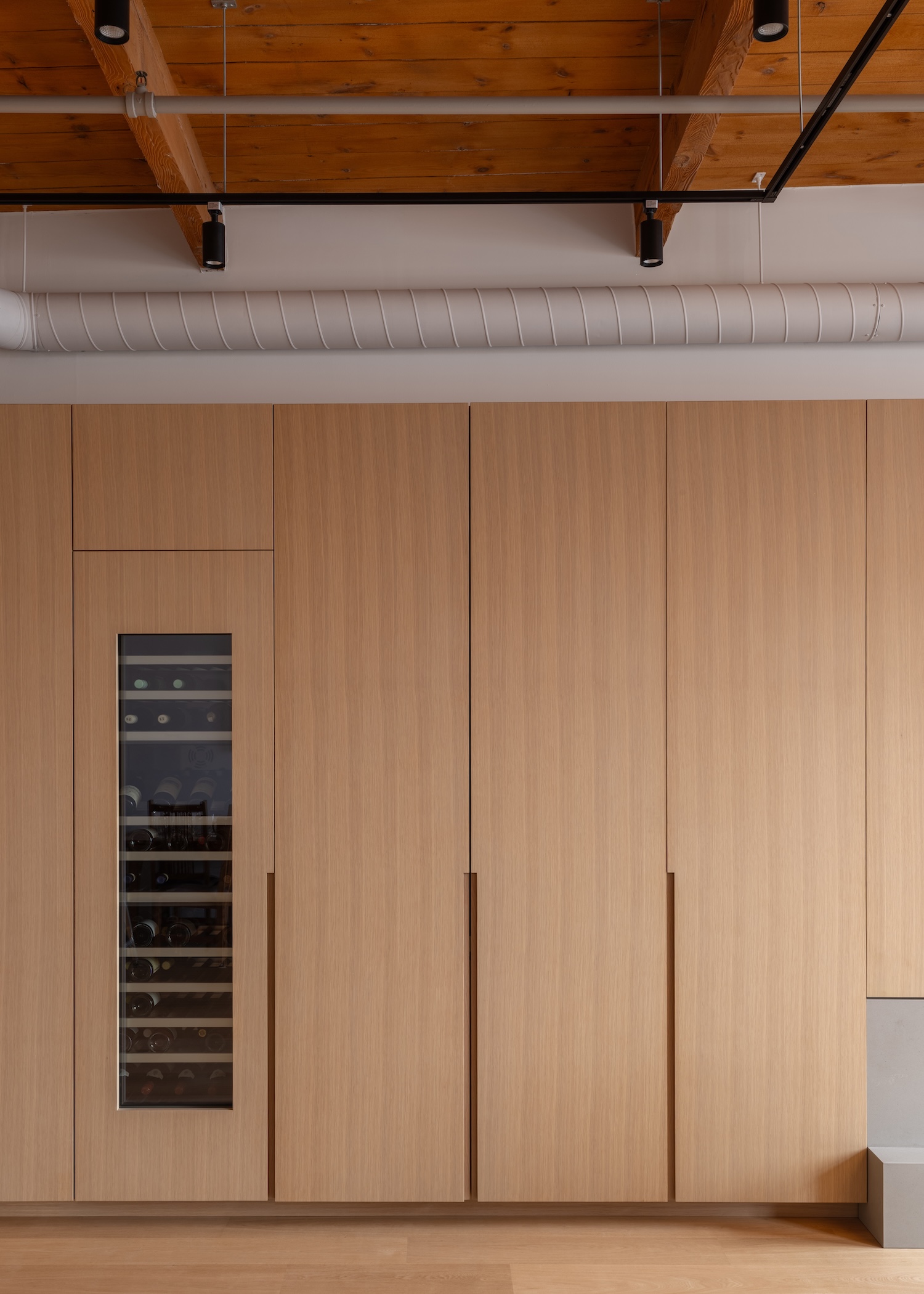
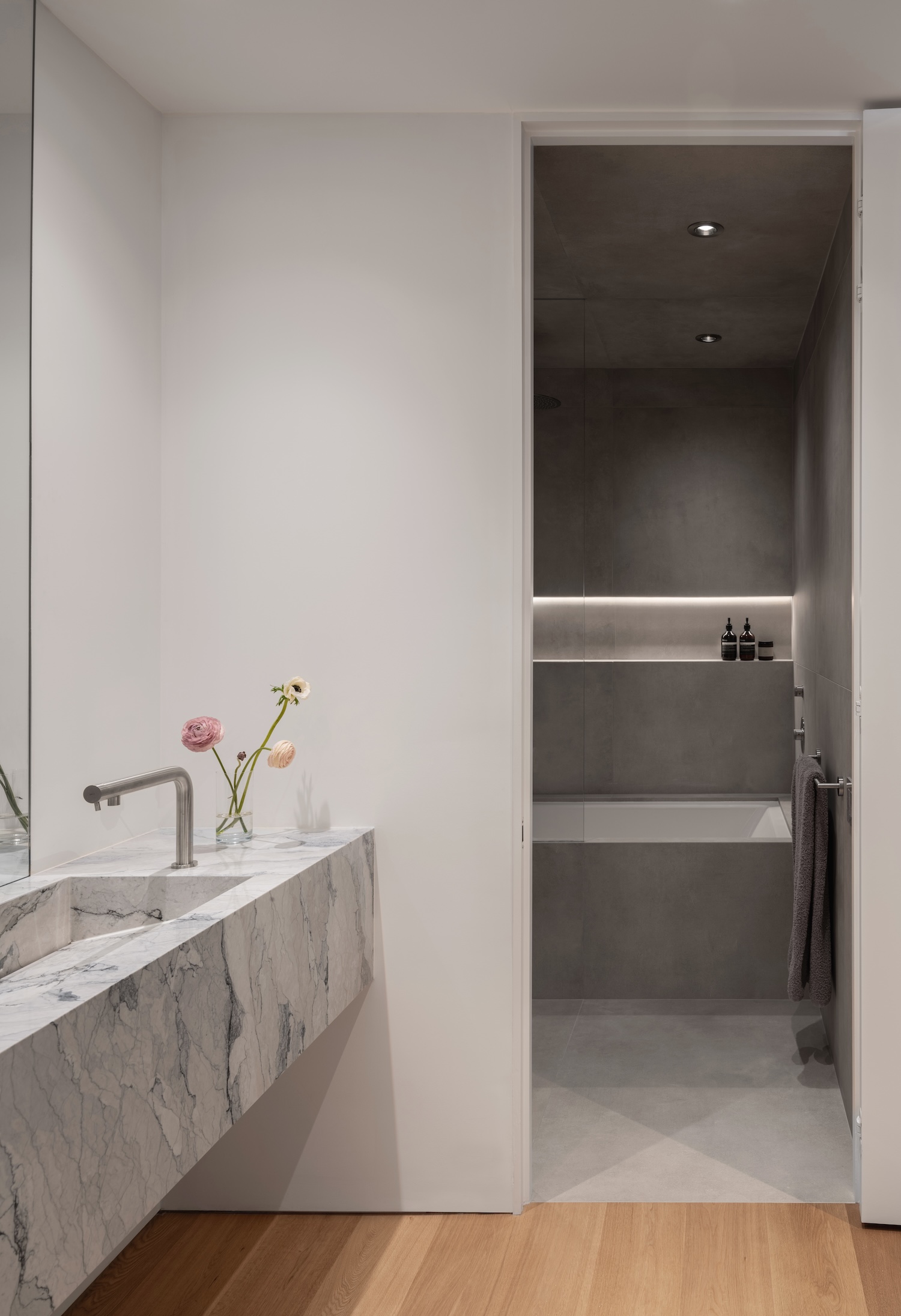
At the core, a single run of cabinetry threads continuously through kitchen, dining, and living areas, absorbing storage, appliances, and concealed entertainment into one quiet plane. Against that restraint, monolithic breccia marble supplies the weight, appearing as a sculptural kitchen island, a carved vanity sink, and a generous coffee table. The stone is used architecturally, as mass rather than surface, which is what gives each piece the sense of having been excavated rather than installed.