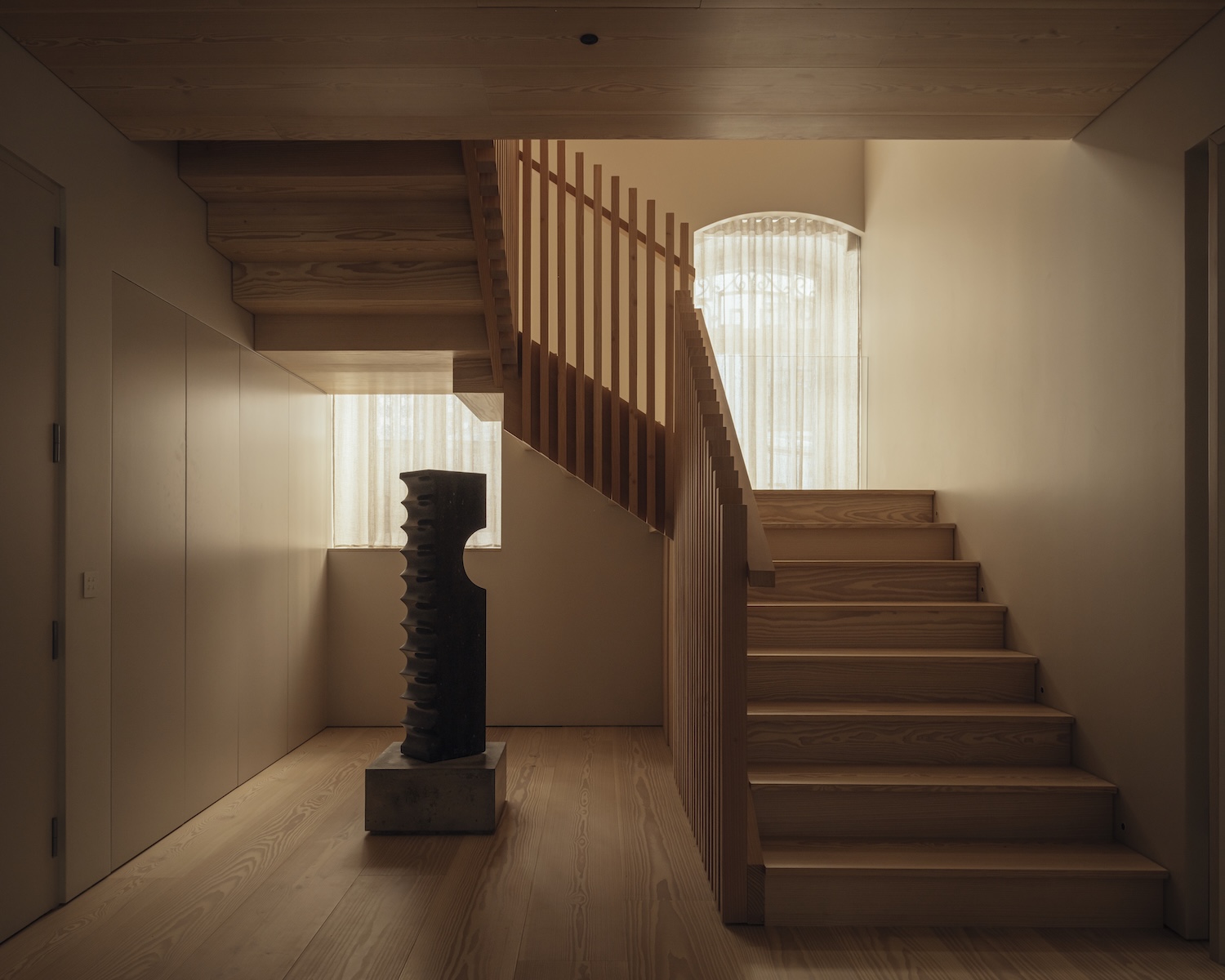
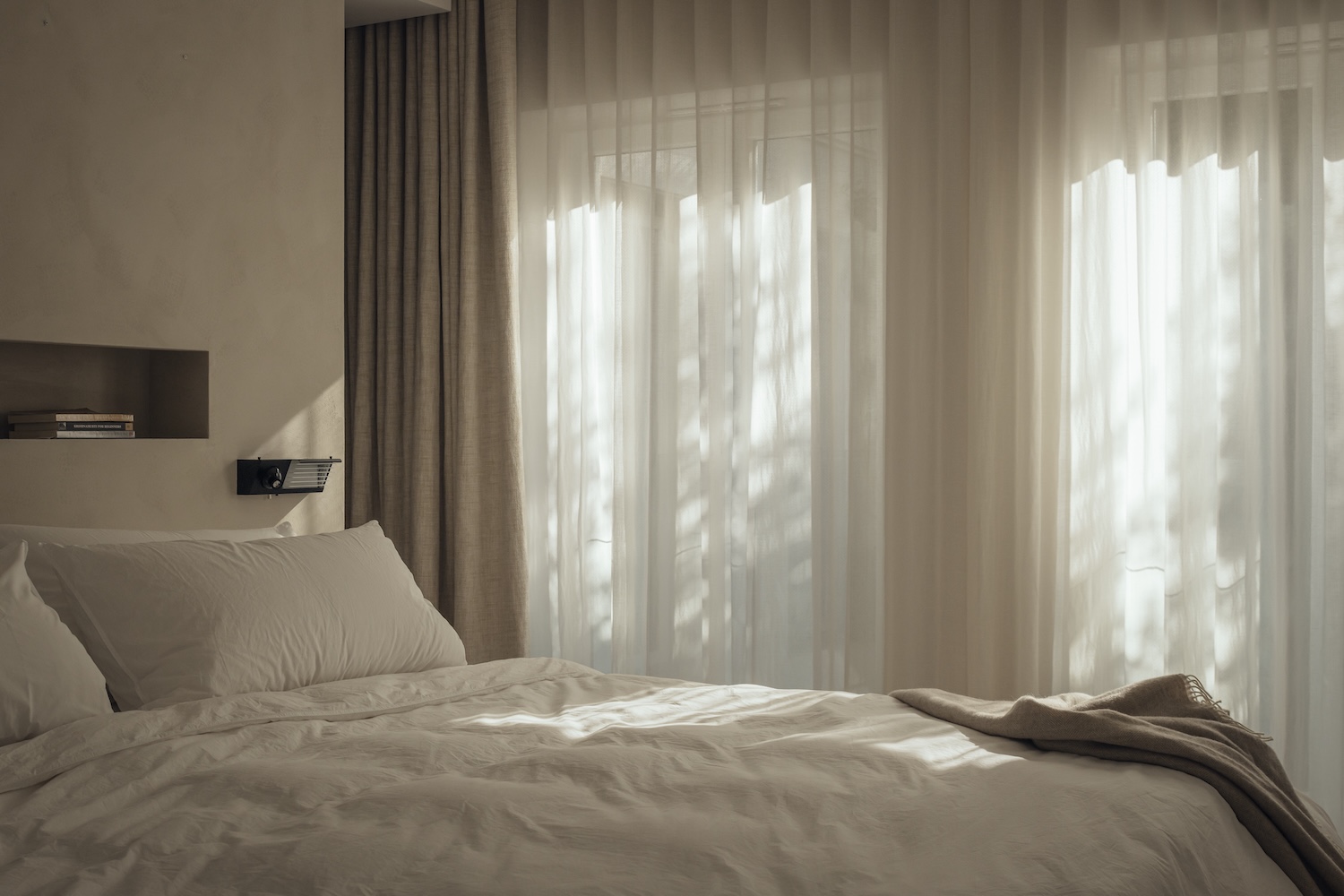
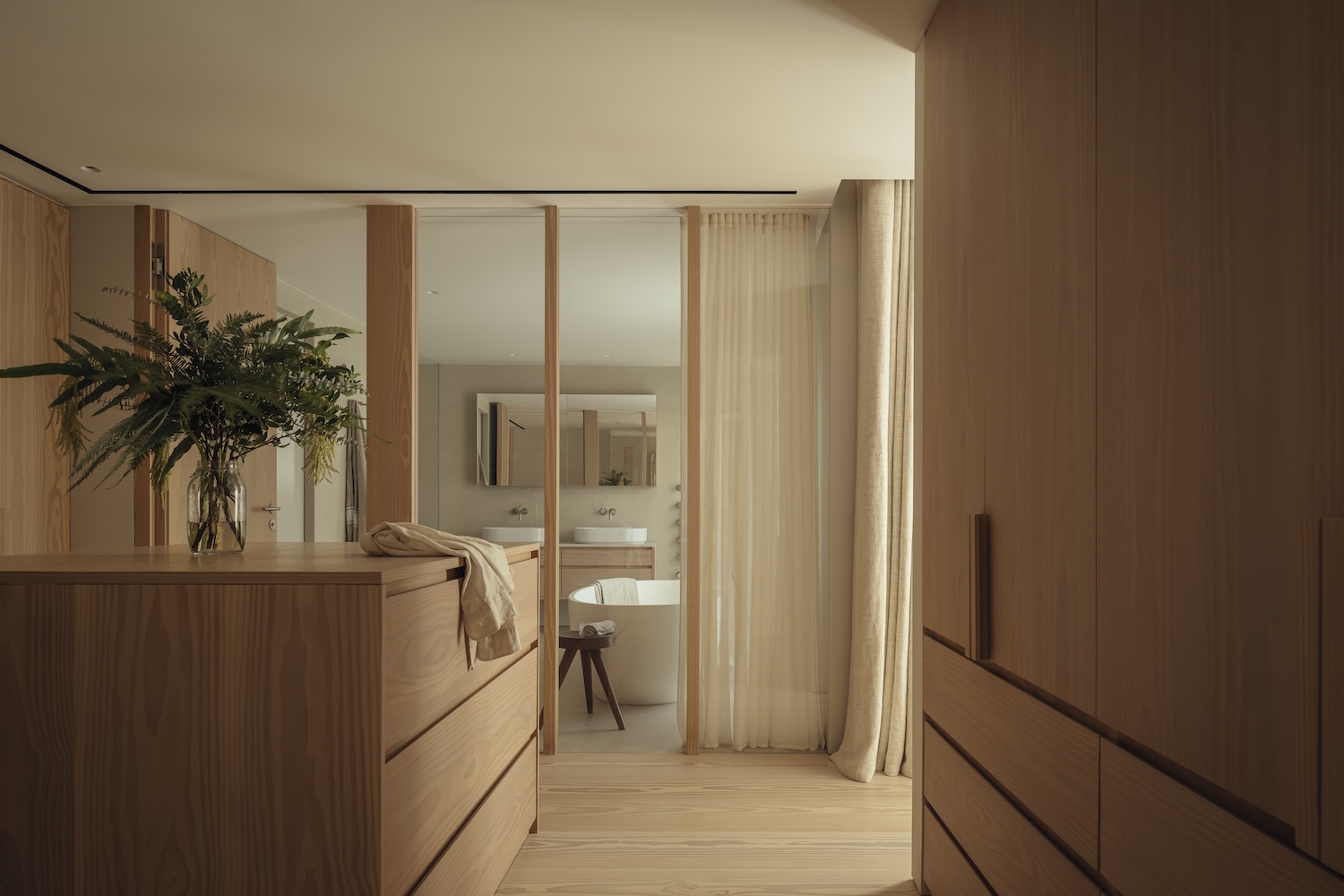
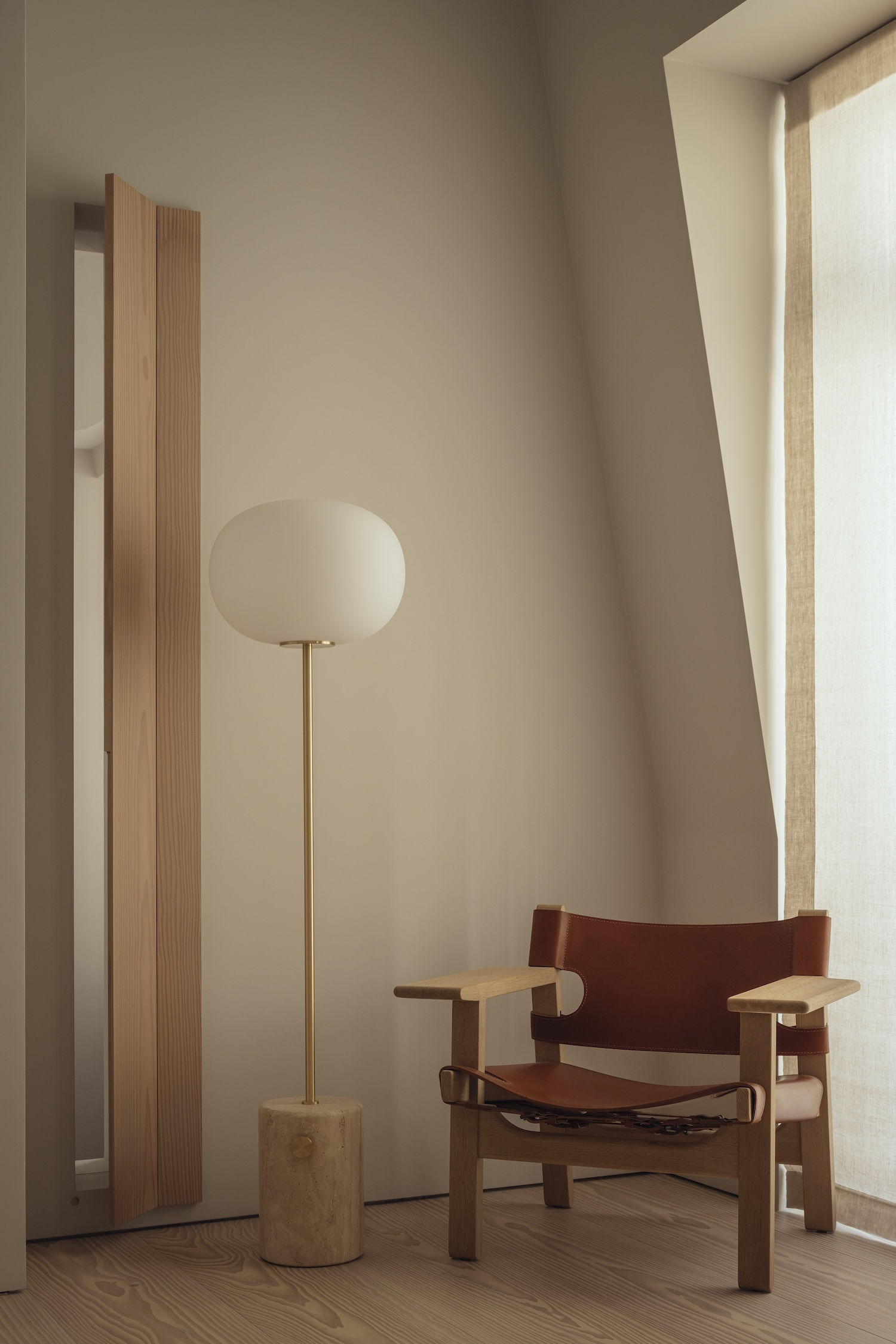
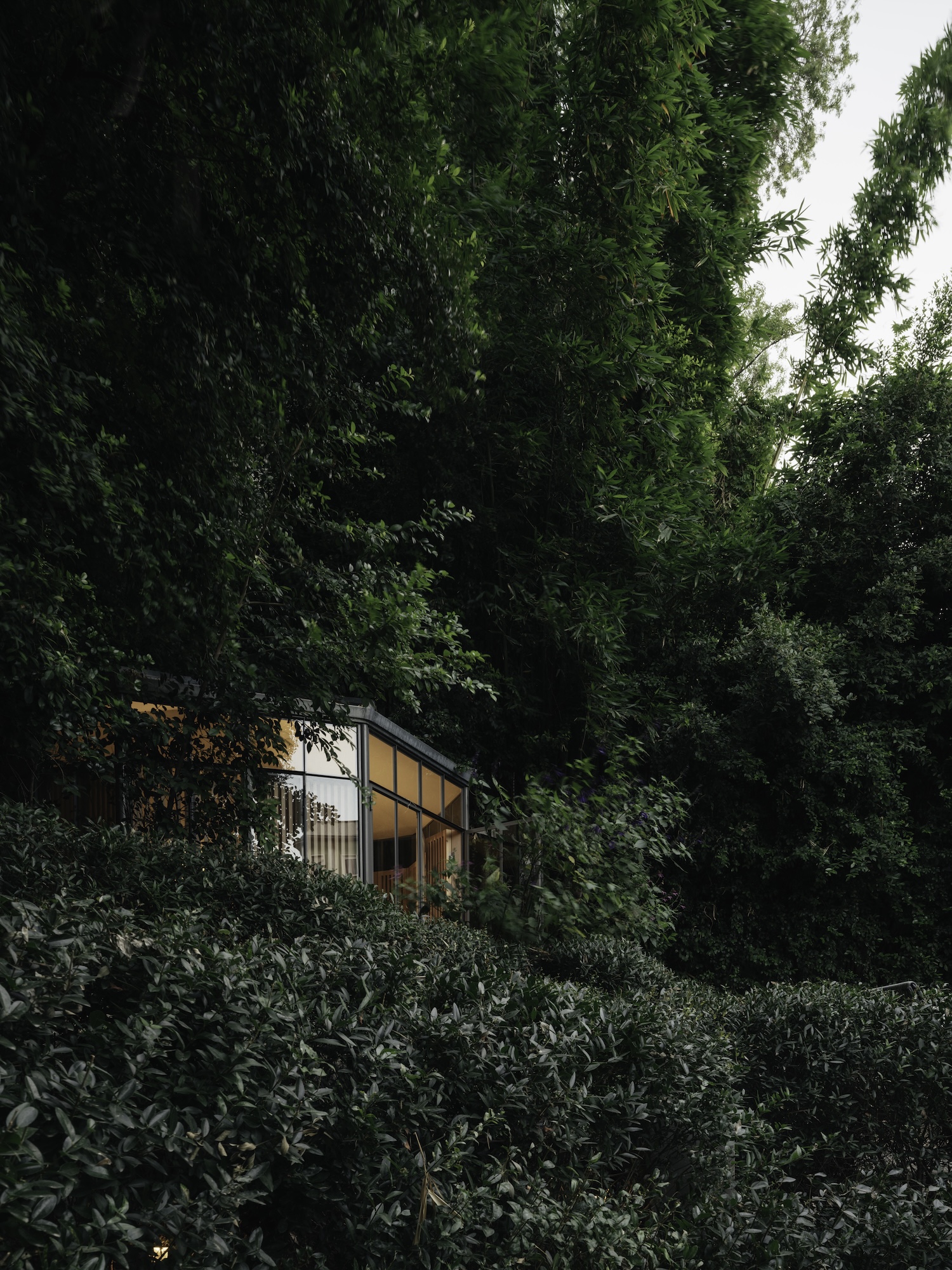
Lisbon Townhouse is a minimalist residence located in Lisbon, Portugal, designed by McLean Quinlan. Wellness operates here not as a feature but as the organizing logic of the entire home, the principle that dictates how rooms are sequenced, how light enters, and which materials touch the body. The starting point was unpromising: a cluster of houses crudely joined together in the 1990s, left with split-level floors, mismatched detailing, and acoustics that echoed. For a couple with young children, one of them a co-founder of a wellness company, the brief asked for warmth and intentional family space, with a stipulation that the street-facing facade remain untouched. Every move had to happen inward, toward the garden and within the existing shell.
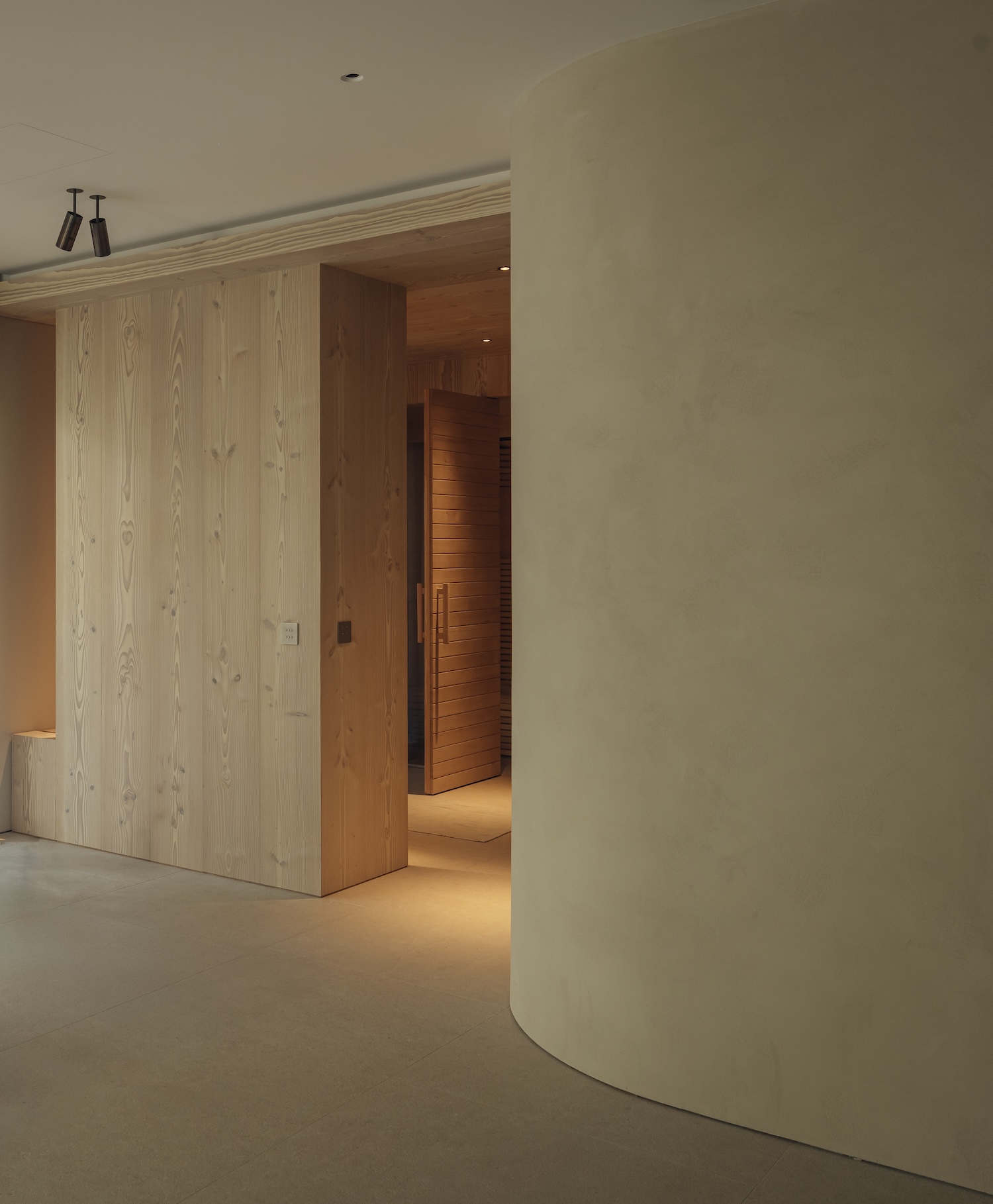
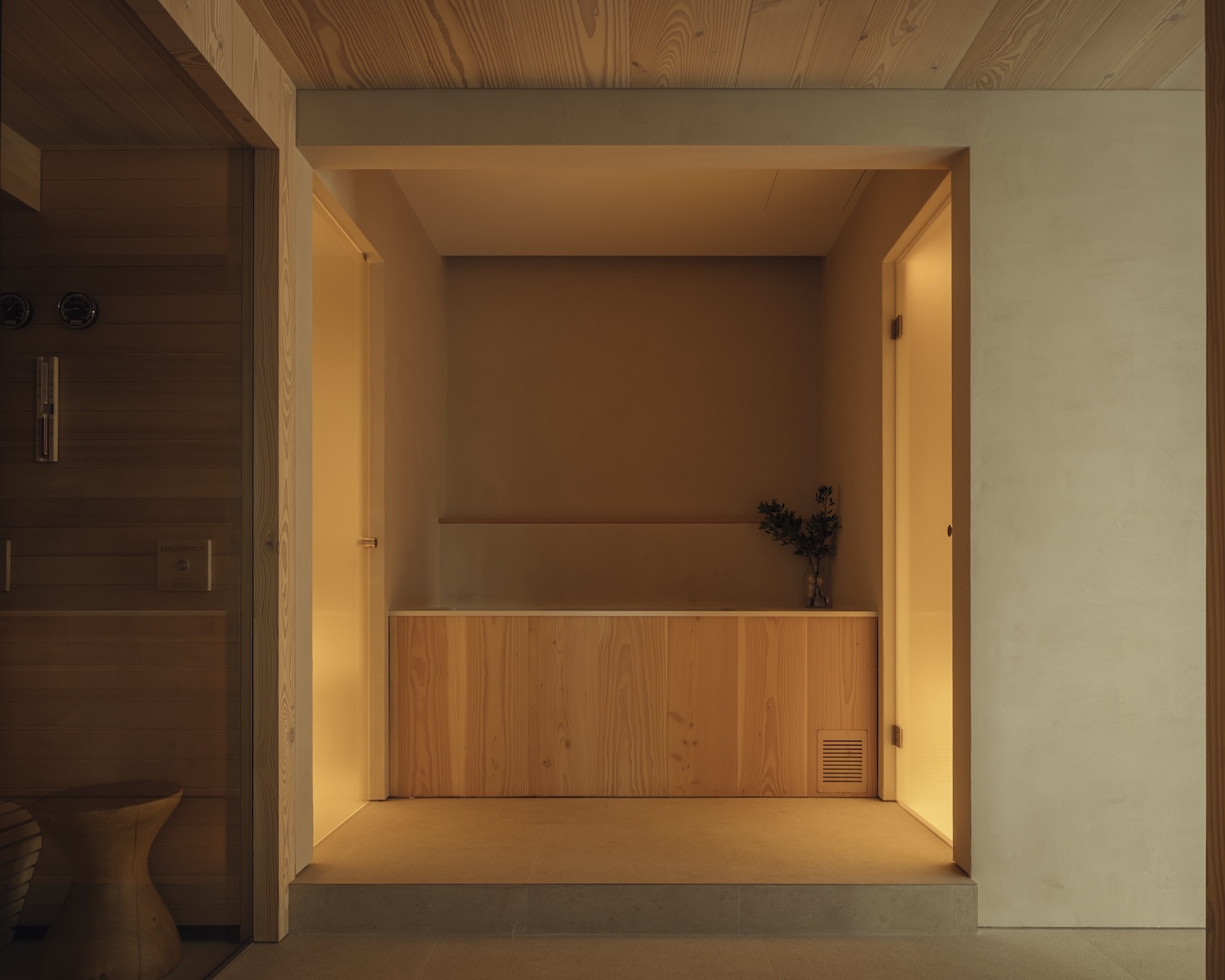
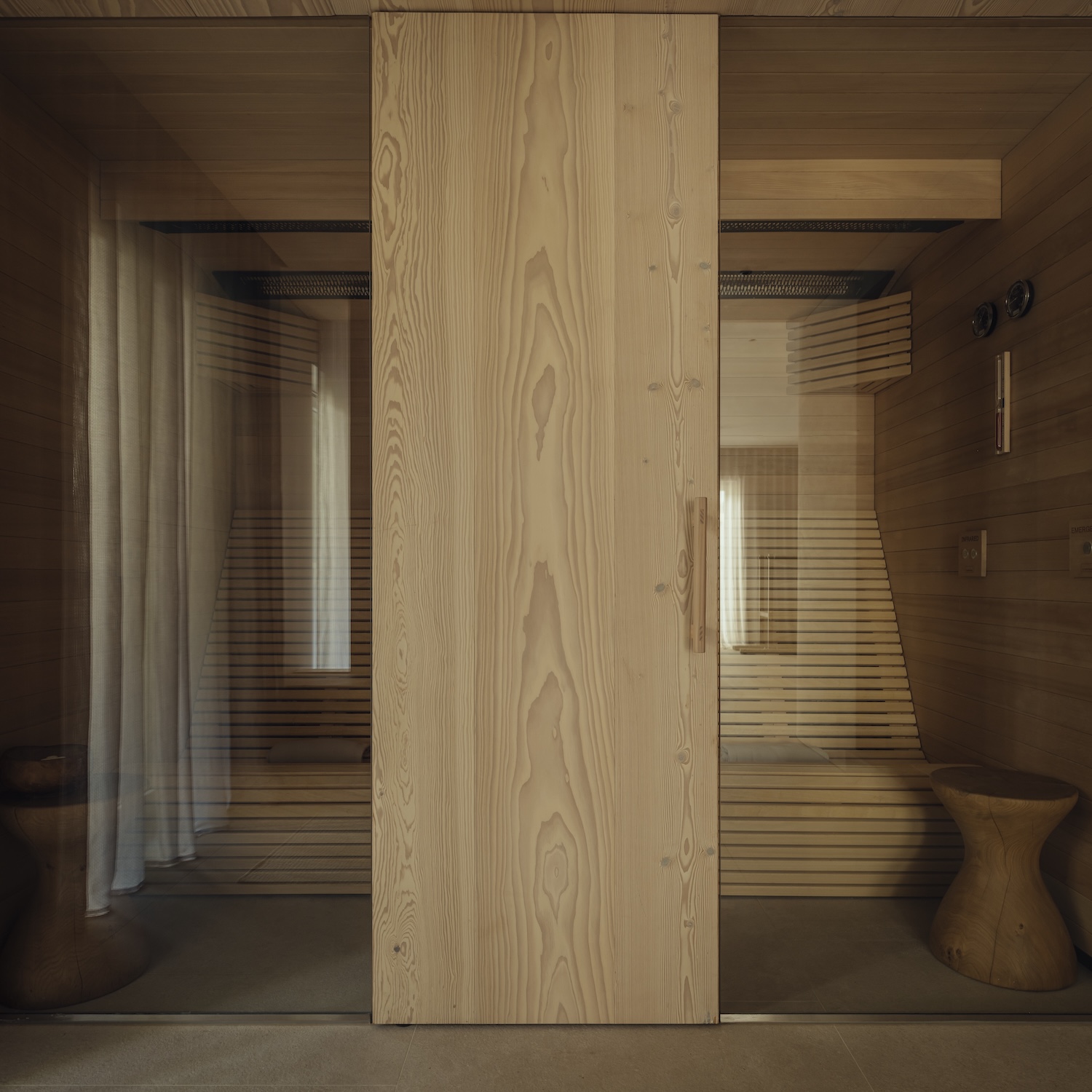
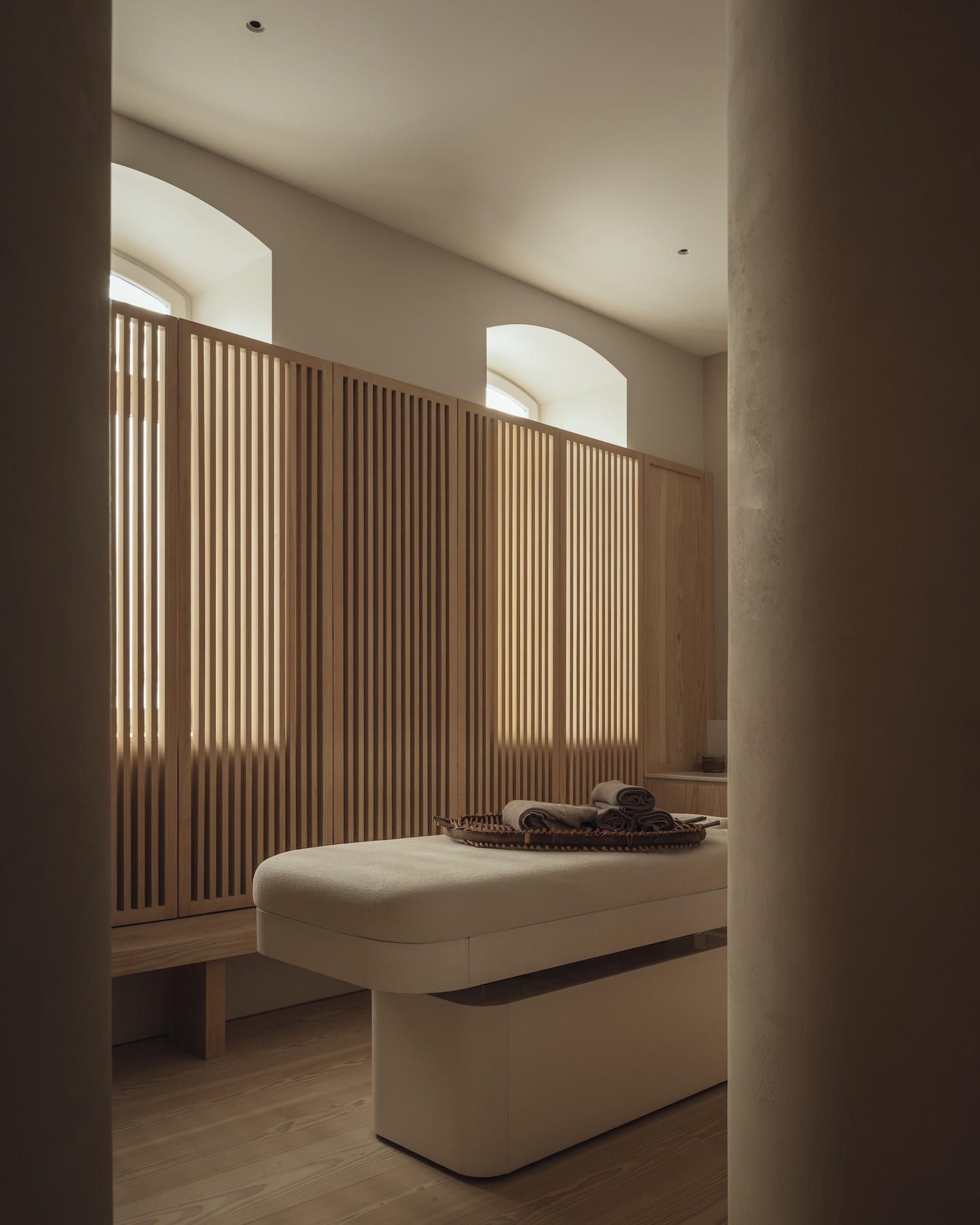
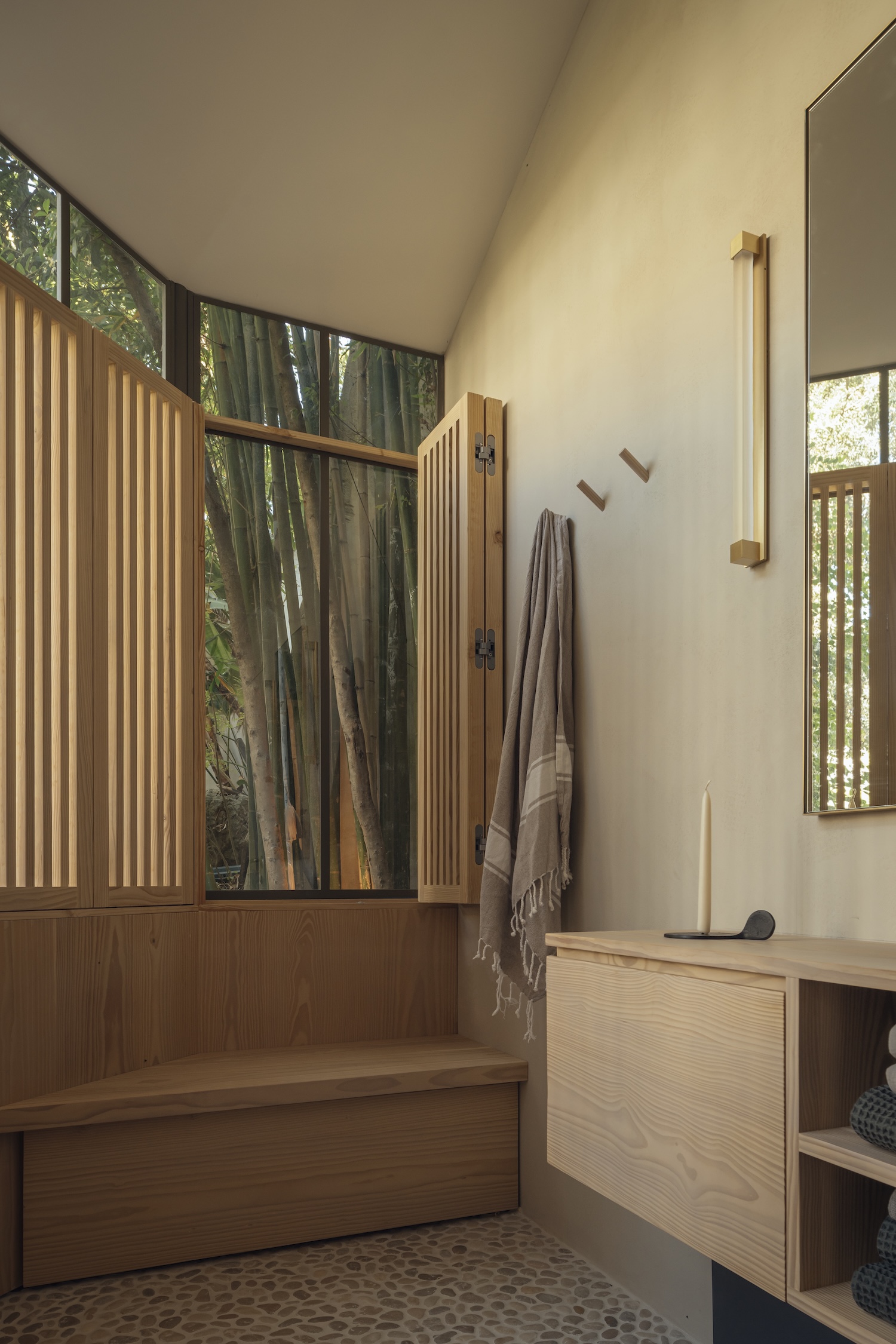
The ground floor is the clearest statement of intent. A single vast room has been carved into a sequence of purposeful zones: a massage room, a yoga space, a gym softened with curtains and warm spotlighting so it reads as domestic rather than clinical, and a tucked-away wet zone holding a steam shower lined in micro-cement, a Douglas fir cold plunge, and an infrared sauna in pale hemlock. The sauna’s glazed front lets the bather look out to the garden, dissolving the boundary between recovery and landscape. A dropped Douglas fir ceiling sets the wet zone apart and gives it a Scandinavian cabin quality, while warm lighting holds the whole floor in an amber calm. Shutters filter the street, allowing the family to inhabit the space without feeling watched.
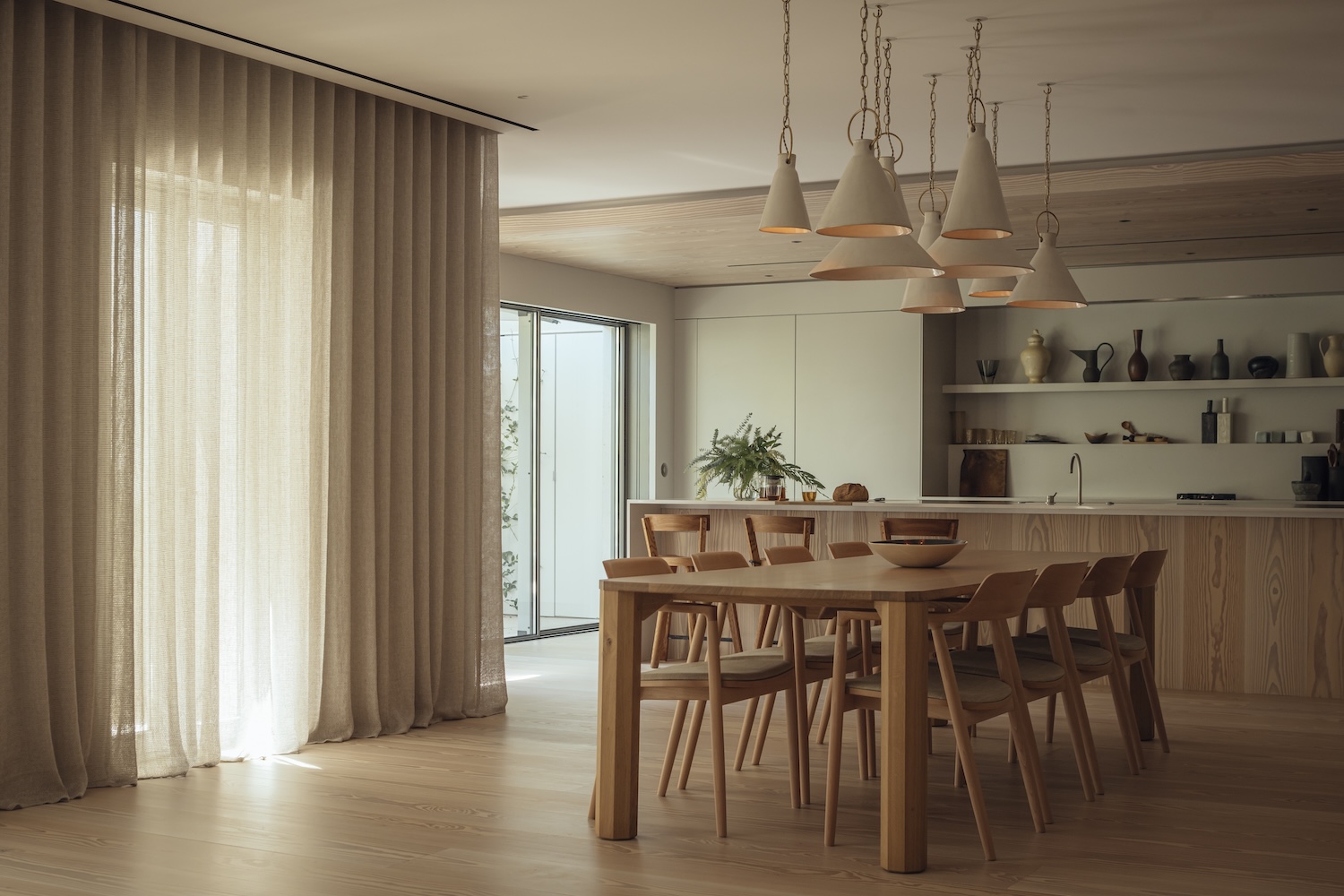
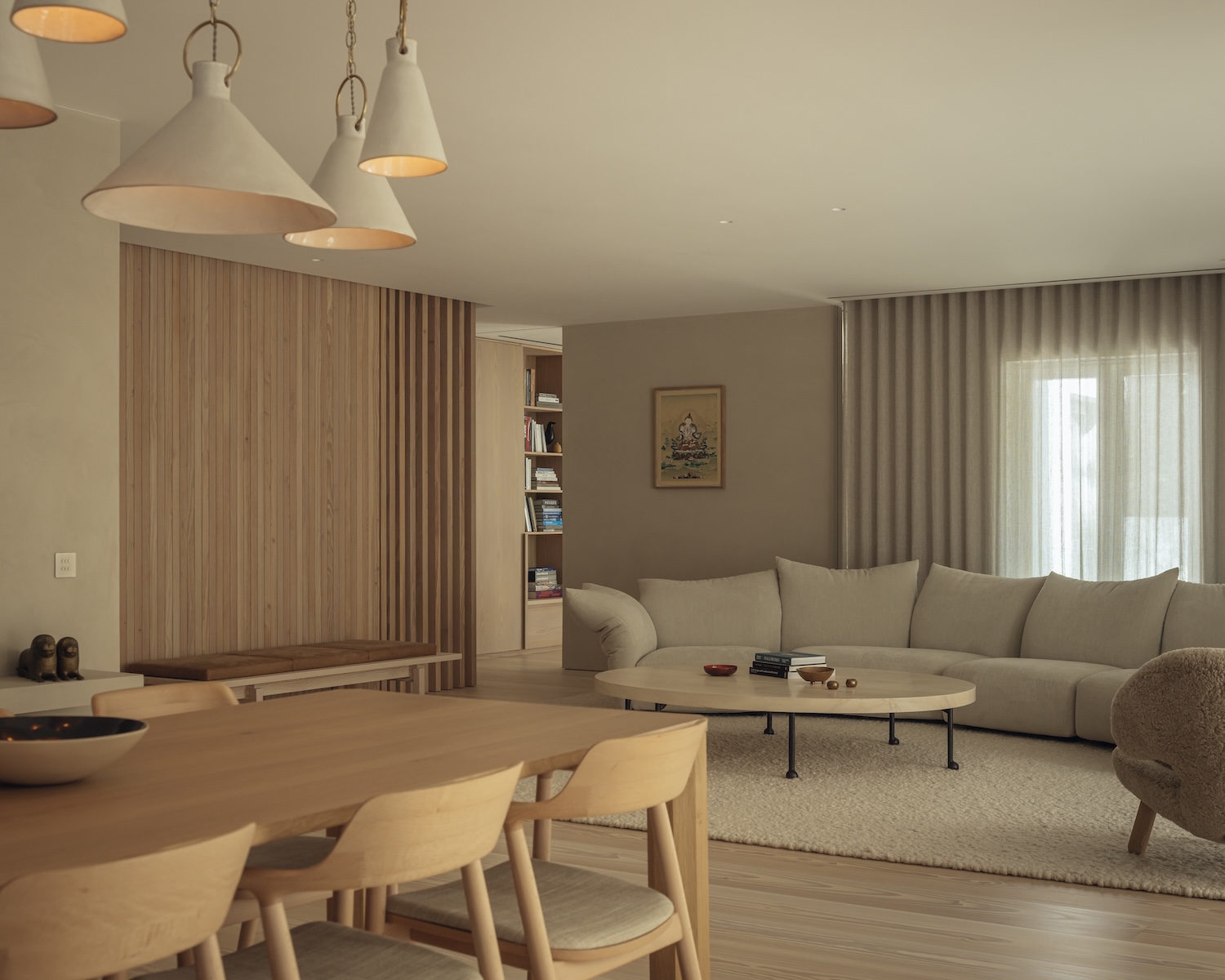
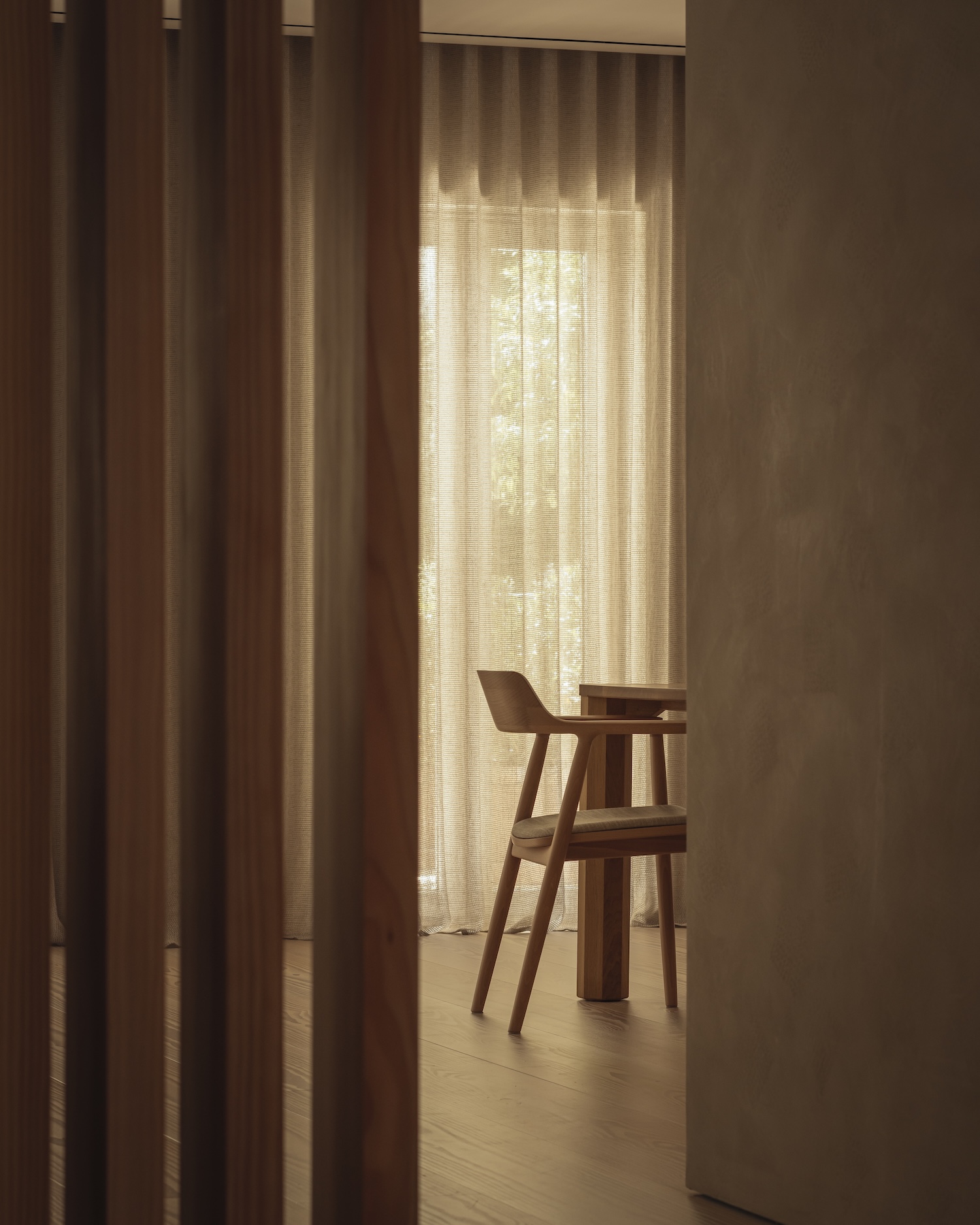
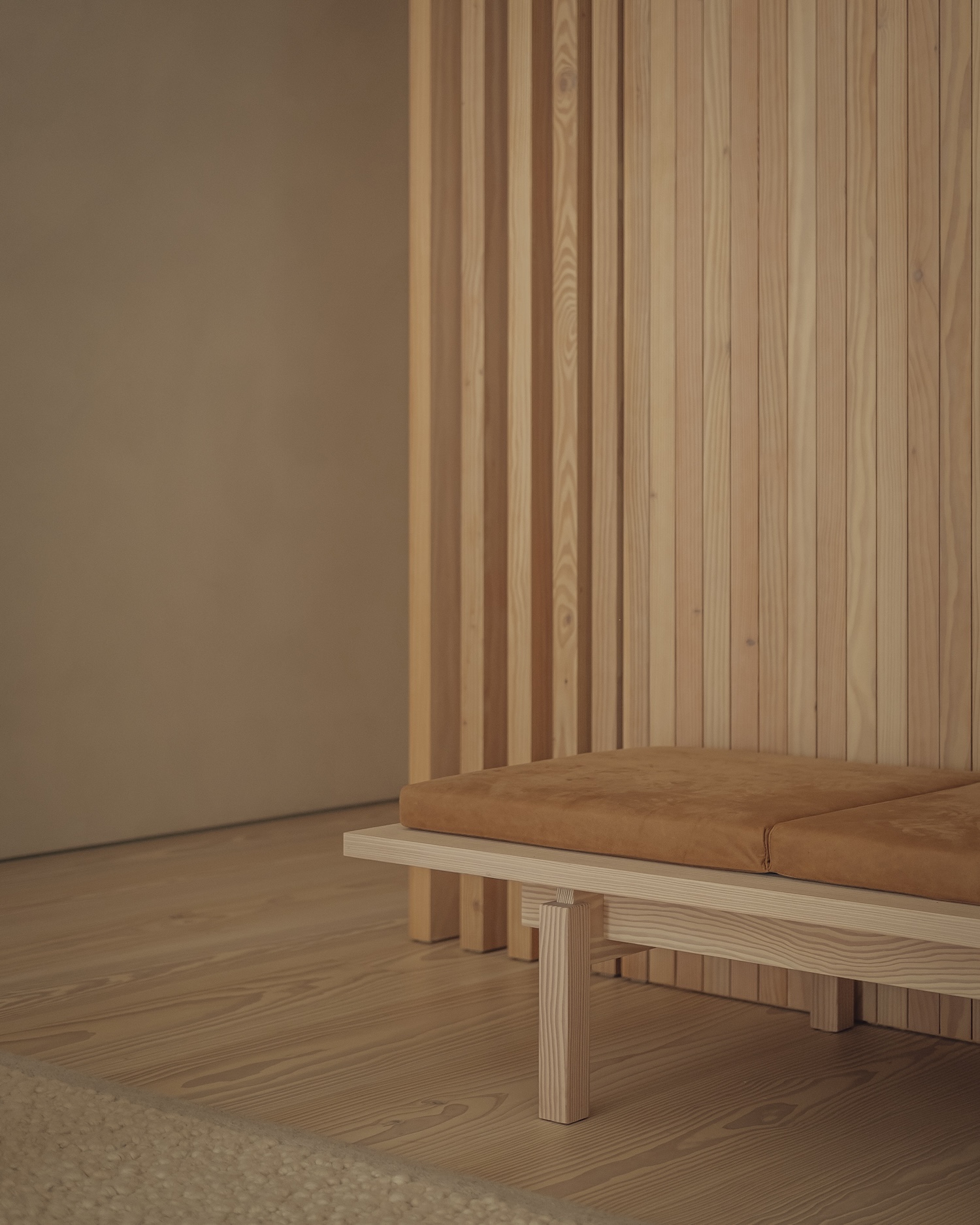
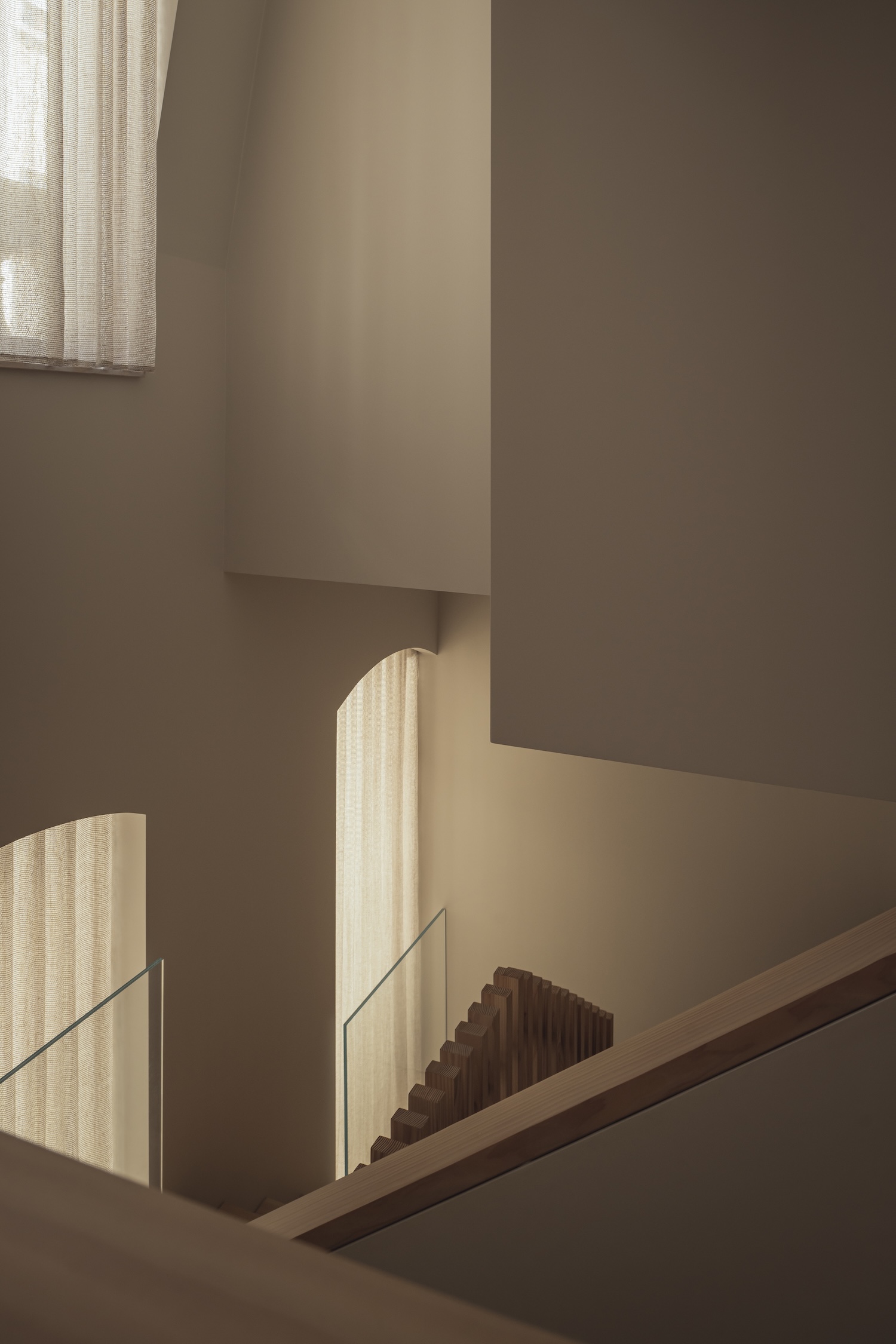
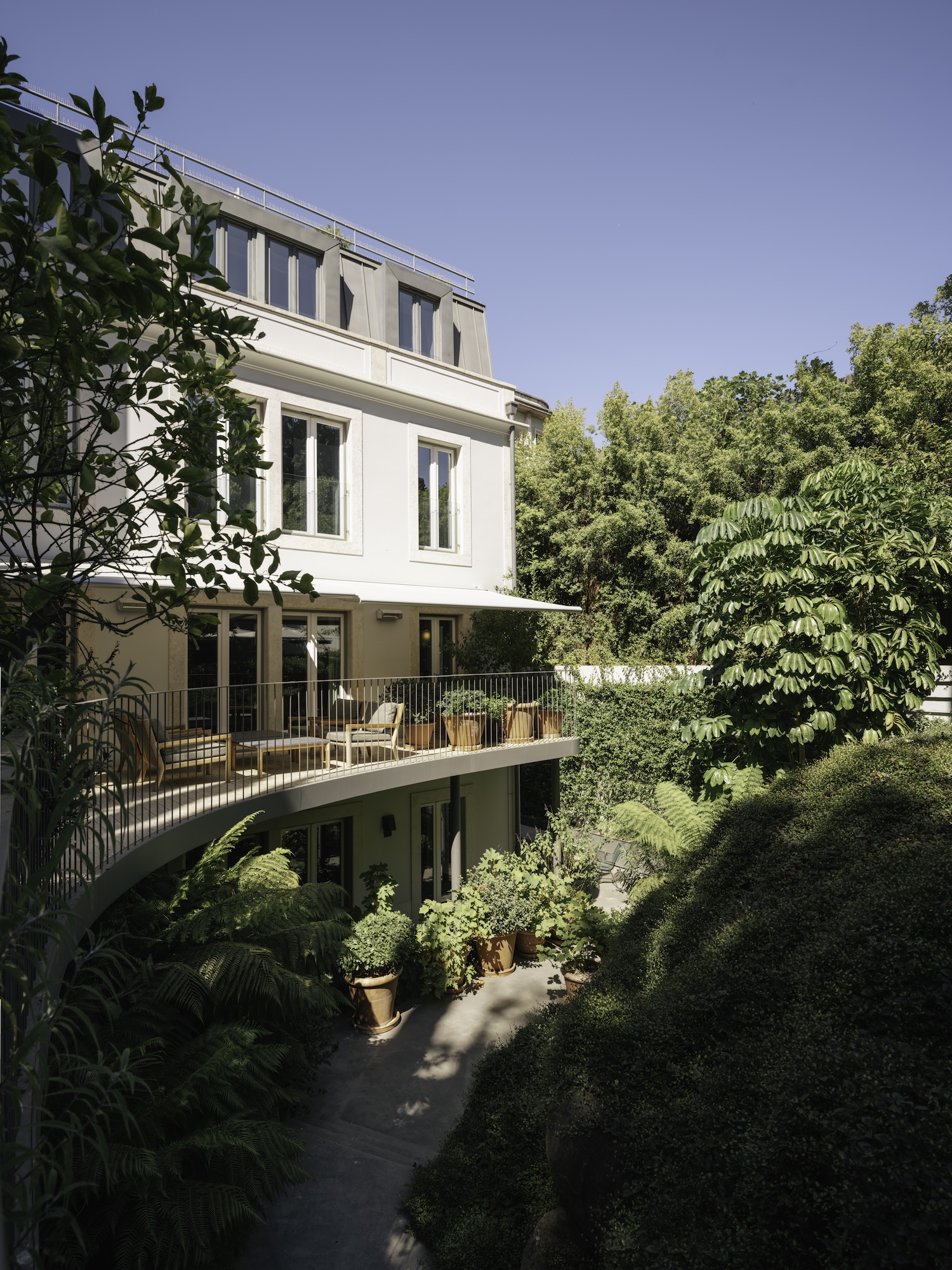
Above, the first floor handles the daily choreography of family life. The original layout felt office-like and disconnected, so freestanding walls and timber screens, part solid and part open slat, break the open plan into zones without blocking light. The kitchen now faces the garden directly, defined by a dropped timber ceiling, with a concealed joinery door leading to a pantry where the debris of a dinner party can disappear behind a closed door. Panoramic aluminium doors replace the original UPVC units and fold fully back, and a curved deck bridges the house to the raised garden beyond.
Limewashed walls, timber flooring, and flush painted doors maintain cohesion and reduce visual noise. The principal bathroom in matte micro-cement reads as spa-like, while the secondary bathrooms use white glazed tiles in three sizes, their gently undulating surface catching light in deliberate homage to the tiled facades of the surrounding city. This is the project’s most precise gesture, a way of rooting the interior in Lisbon without resorting to pastiche.