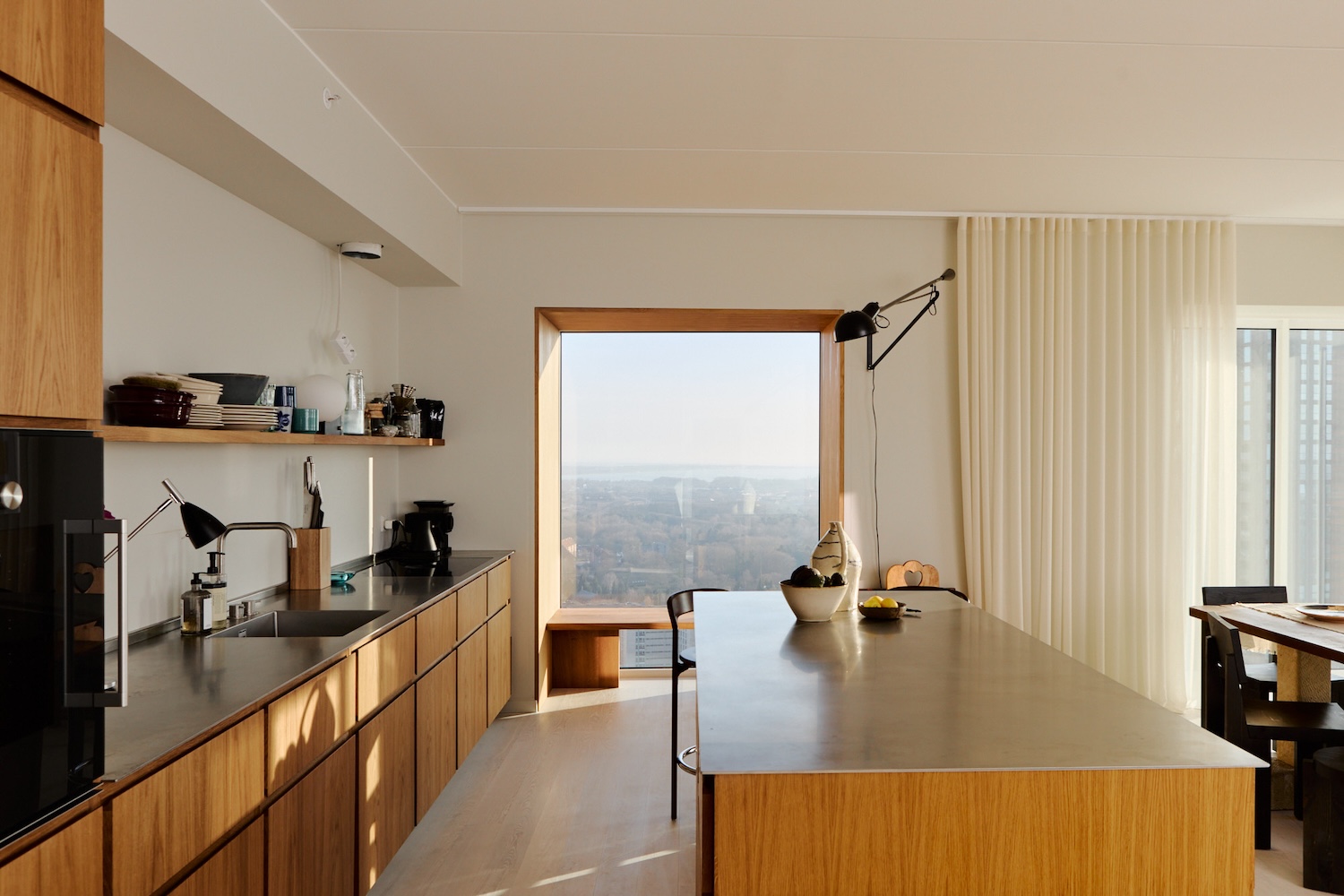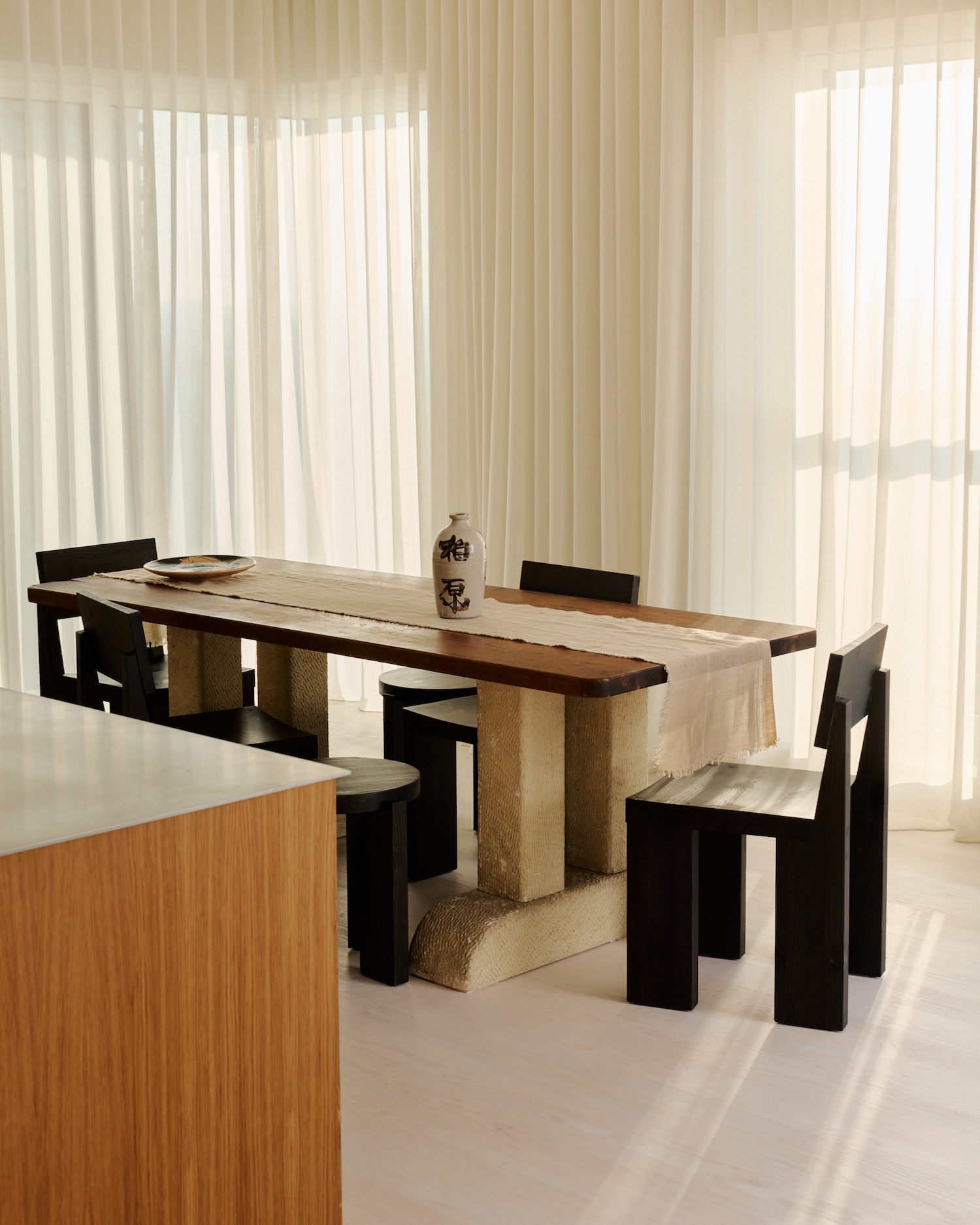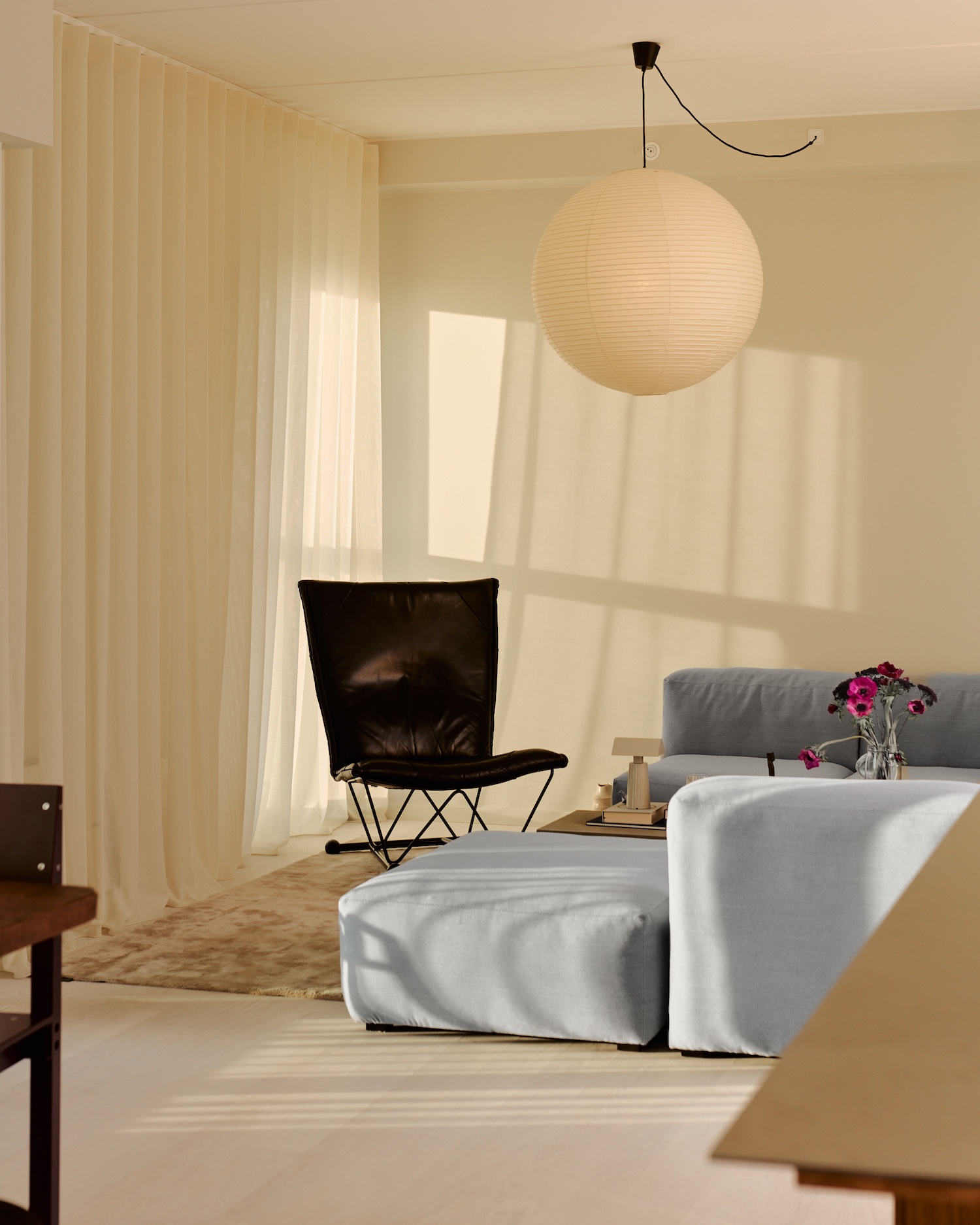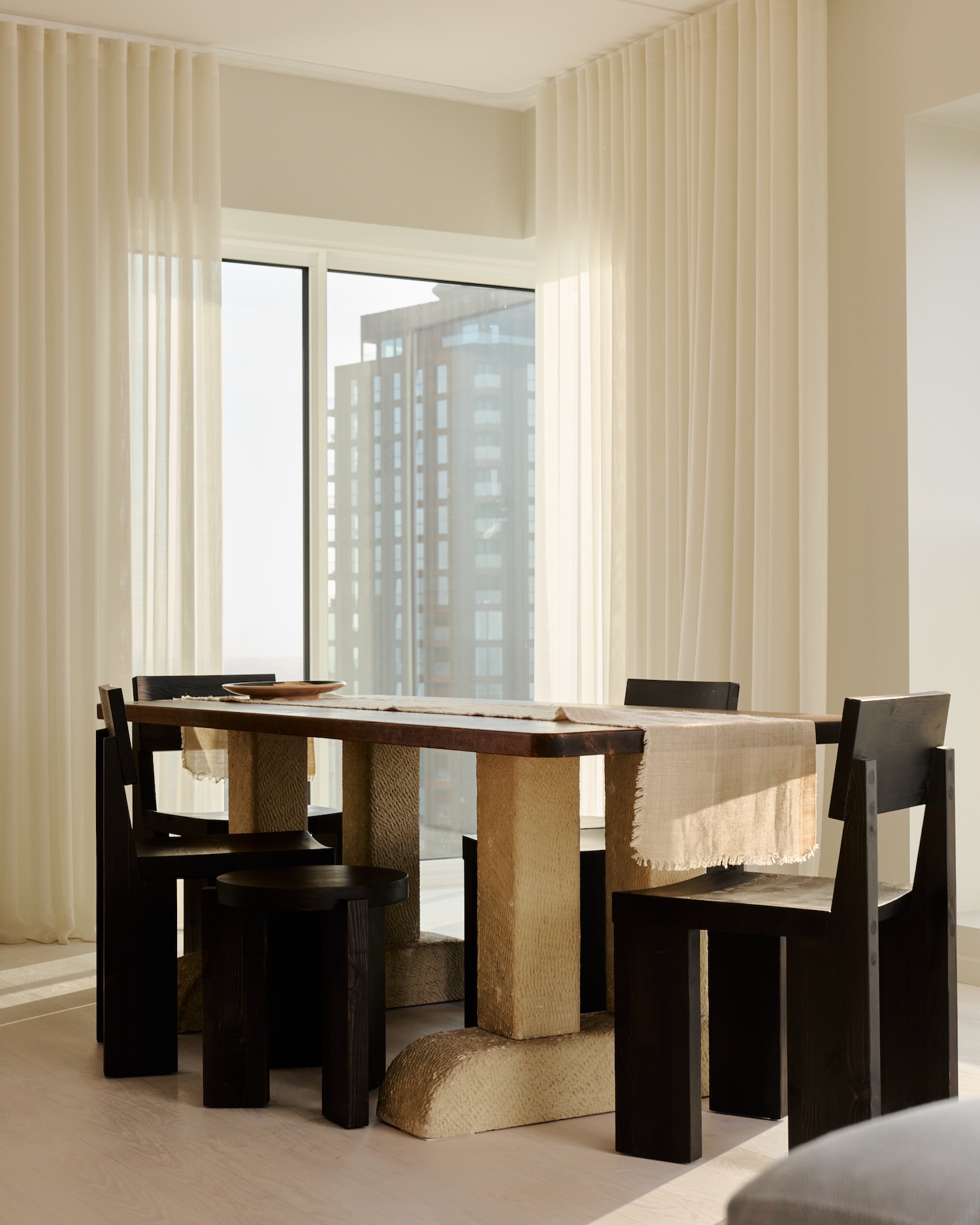
Carlsberg Byen Apartment is a minimalist apartment located in Copenhagen, Denmark, designed by Copenhagen Works. The 120 square meter residence arrived as a new-build with standard construction finishes, the kind of blank envelope that offers no history to work with and no character to uncover. Where renovation allows a designer to reveal what already exists, a new-build demands the opposite operation: warmth introduced through additive layers rather than subtraction. Copenhagen Works approached the project through its Tasteprint methodology, a structured preference-mapping process conducted before design begins, which surfaced the clients’ affinity for natural materials, Japanese omakase typology, and mid century pieces. That diagnostic became the framework for everything that followed.
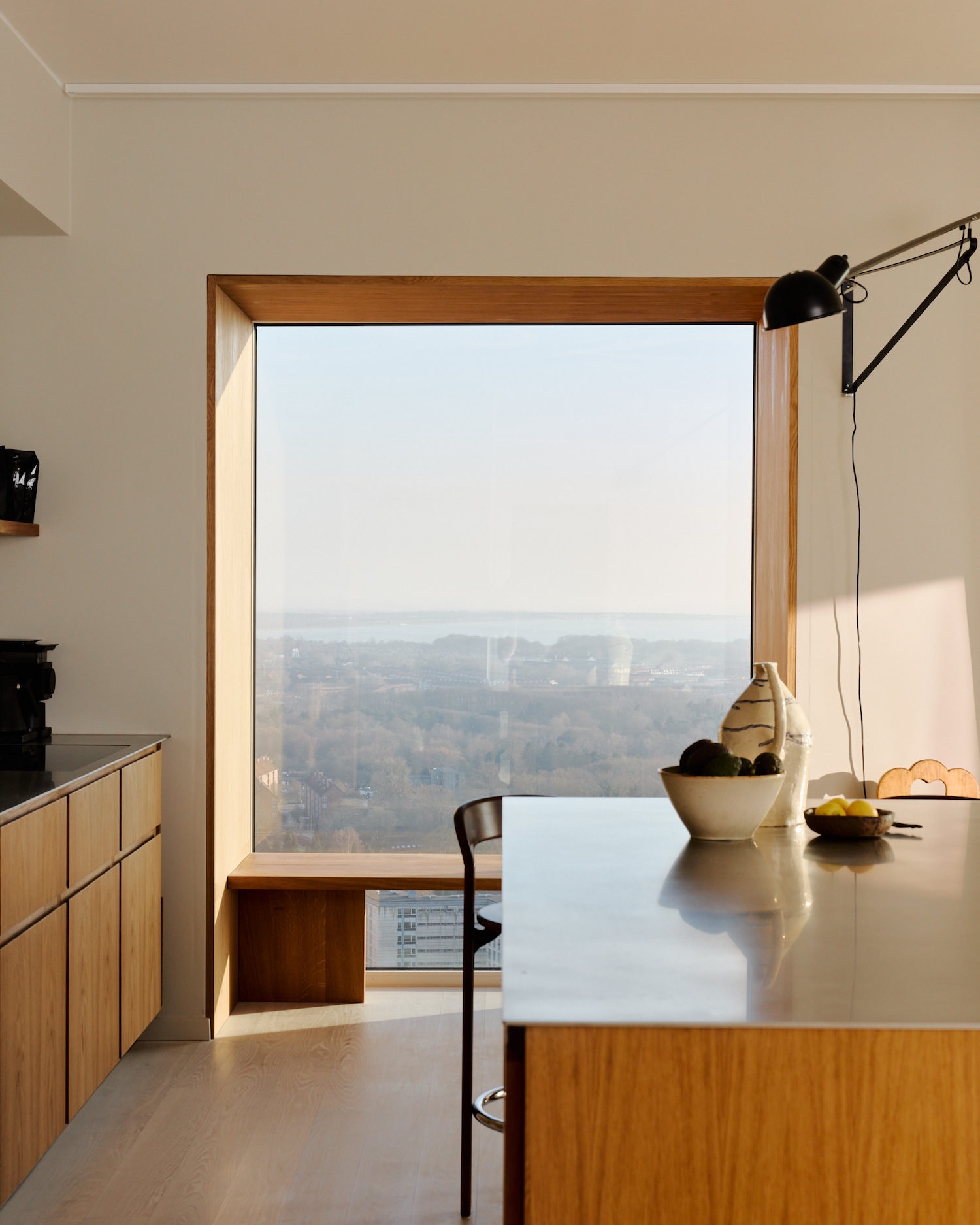
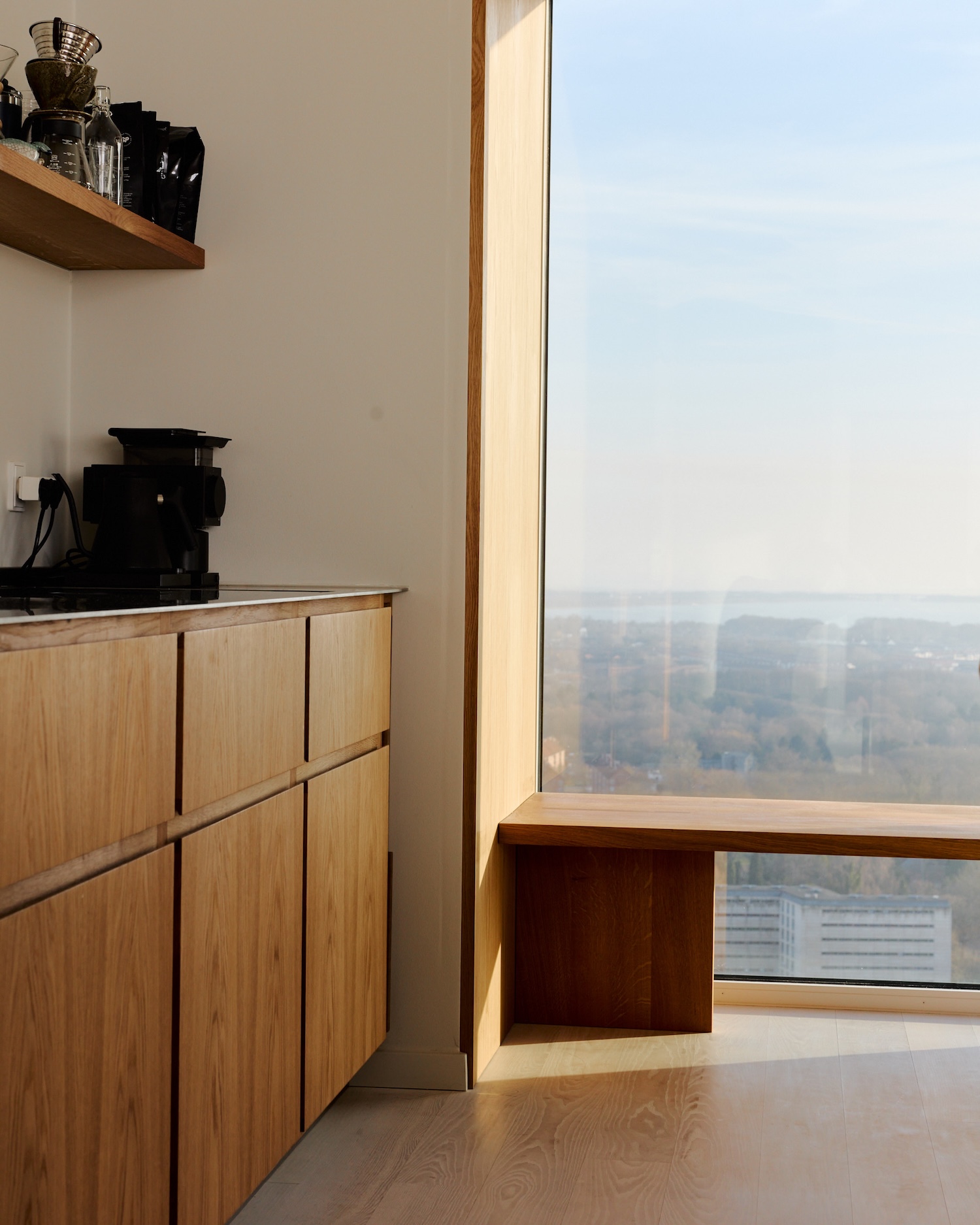
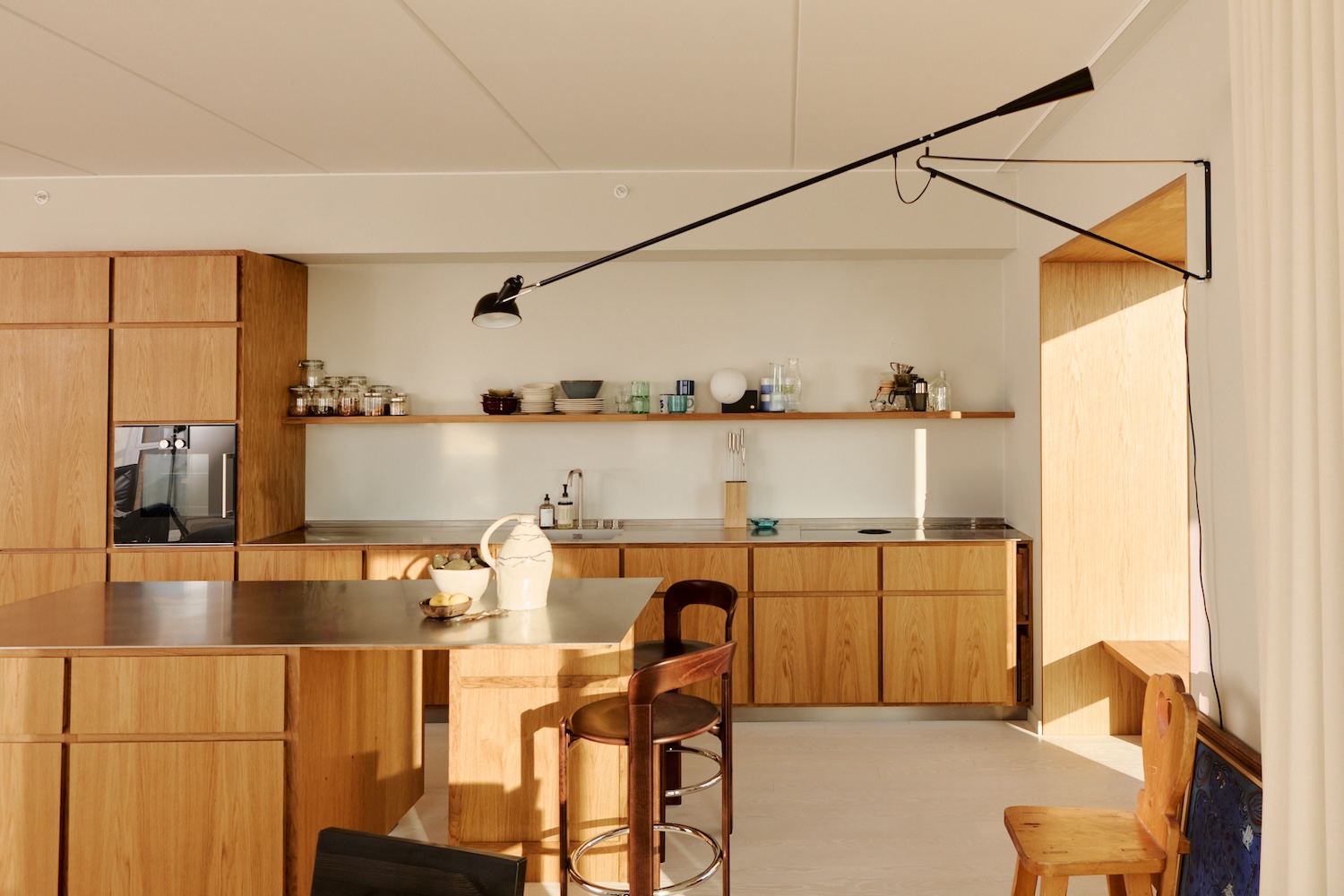
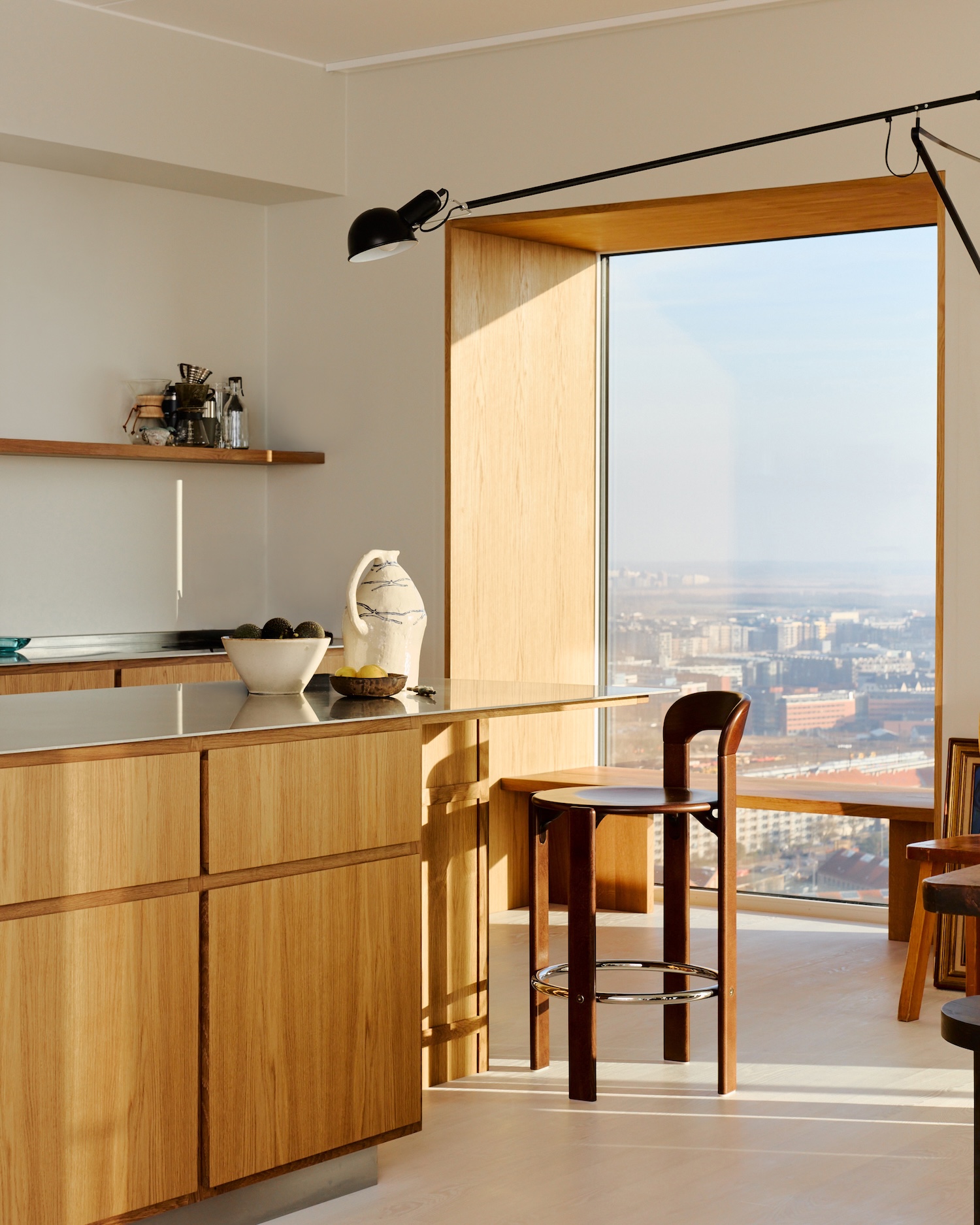
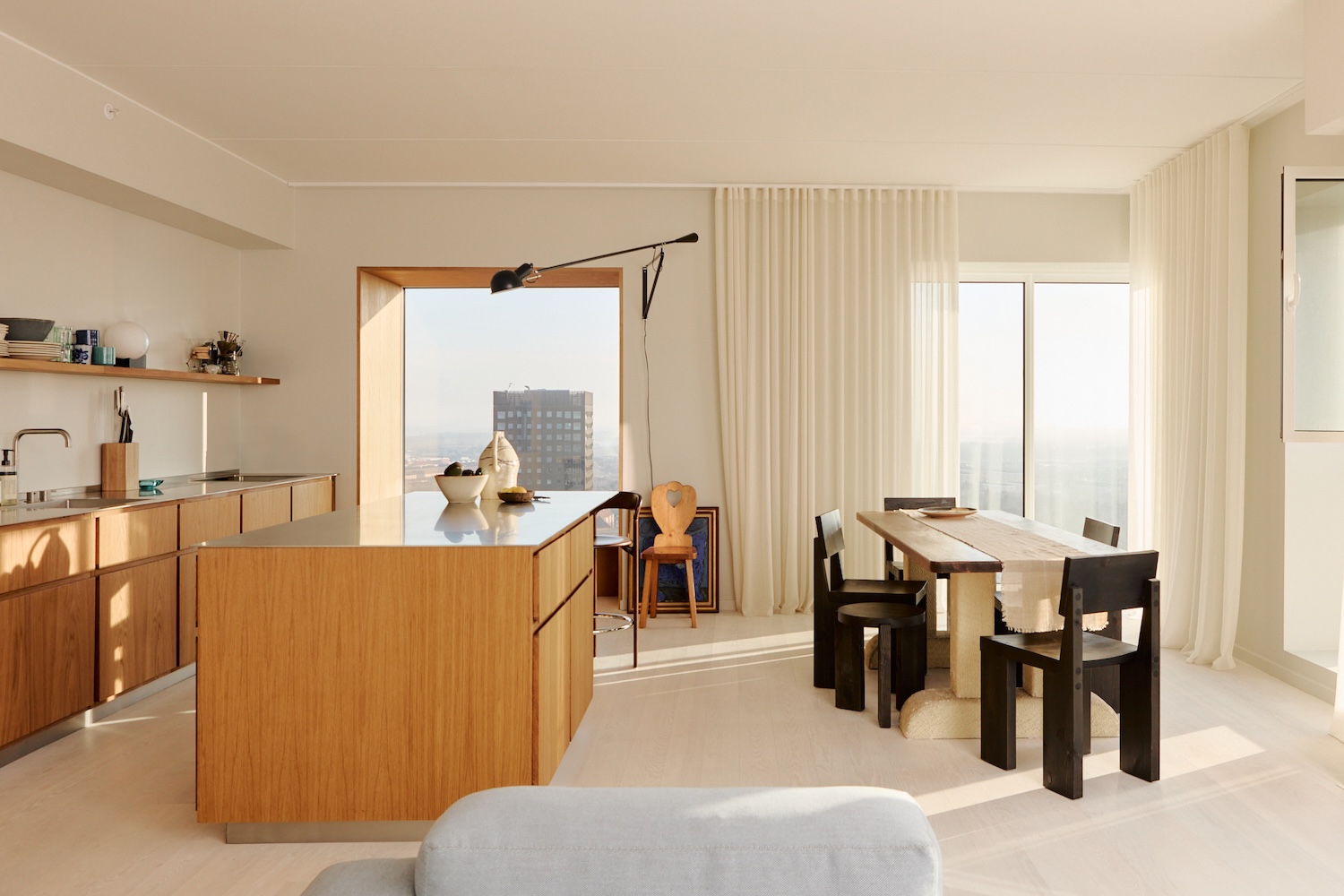
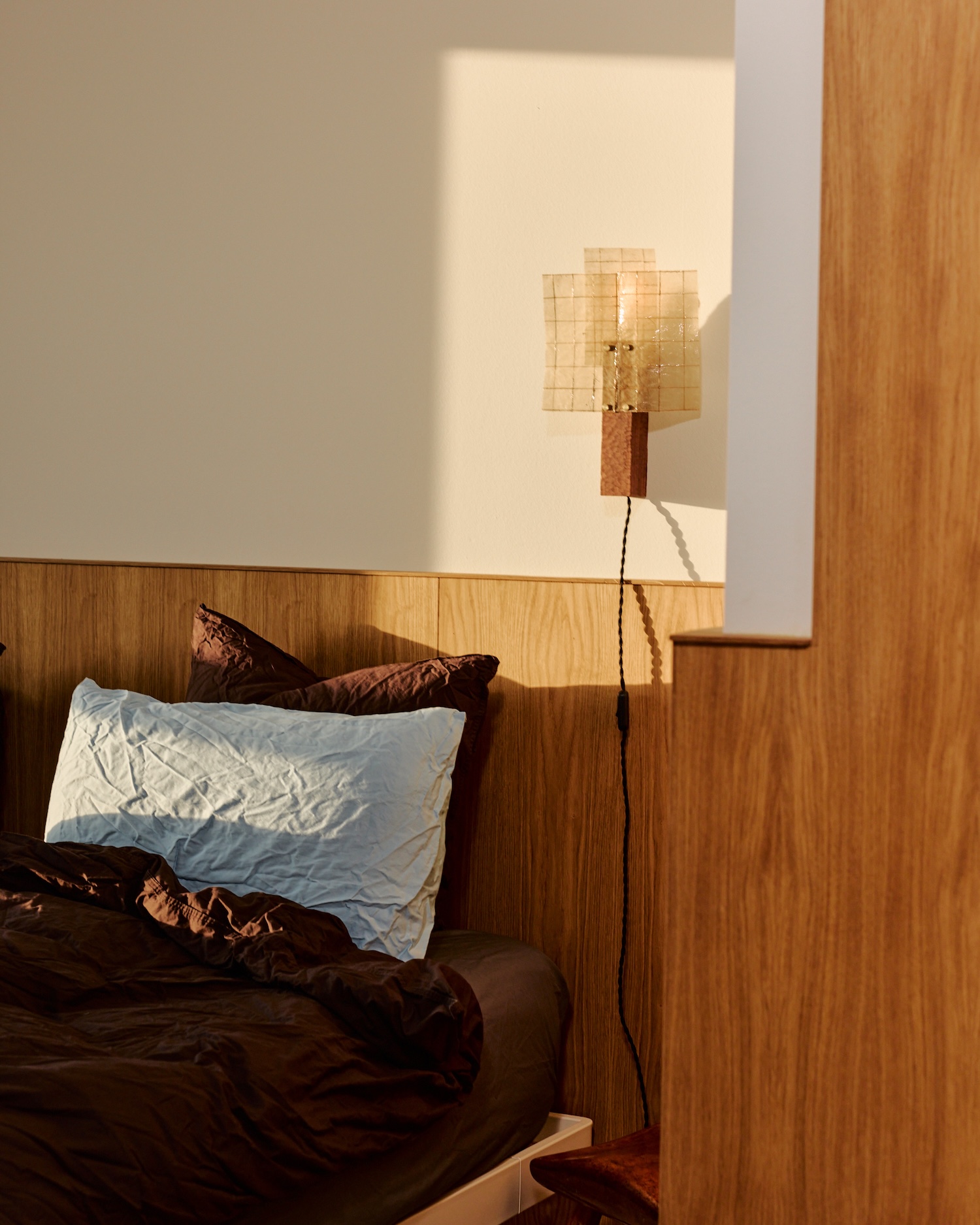
The most direct translation of the omakase reference sits at the center of the plan. A kitchen island in oiled oak carries an overhanging stainless steel plate, borrowing the spatial logic of the Japanese counter where preparation and gathering share a single surface. The pairing is precise: oak that deepens and warms with use against steel that stays cool and exact, the same tension that gives omakase bars their quiet theatricality. The island’s language extends into a built-in window nook along one wall, framing the apartment’s primary window and establishing it as a focal point rather than an incidental opening. Carpenter Lillepind executed the central millwork throughout, including a custom bench and panelling that wraps the bed as a headboard before continuing into a built-in closet behind it, a move that dissolves furniture into architecture in the manner of Scandinavian built-in traditions stretching back to Kaare Klint’s cabinet logic.
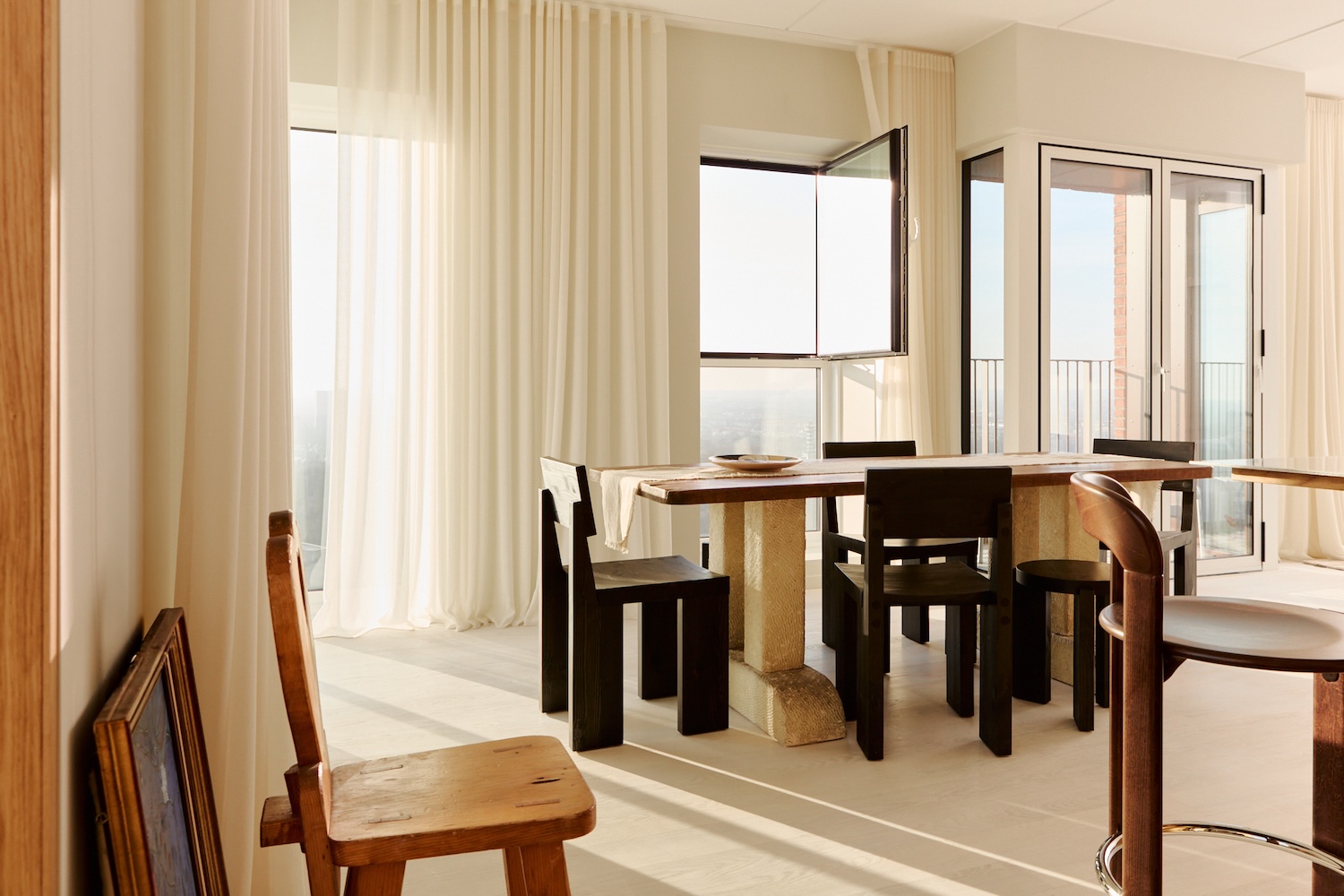
The floors register the project’s lightest but most consequential intervention. Rather than replacing the delivered lacquered pine, the studio sanded the boards back and soap-treated them, a Danish finishing technique that leaves the wood pale, matte, and open to gradual patina. It is a gesture of softening rather than substitution, and it sets the tonal register for the whole apartment. Curtains run throughout, absorbing sound and diffusing light, addressing the acoustic hardness that new construction typically carries.