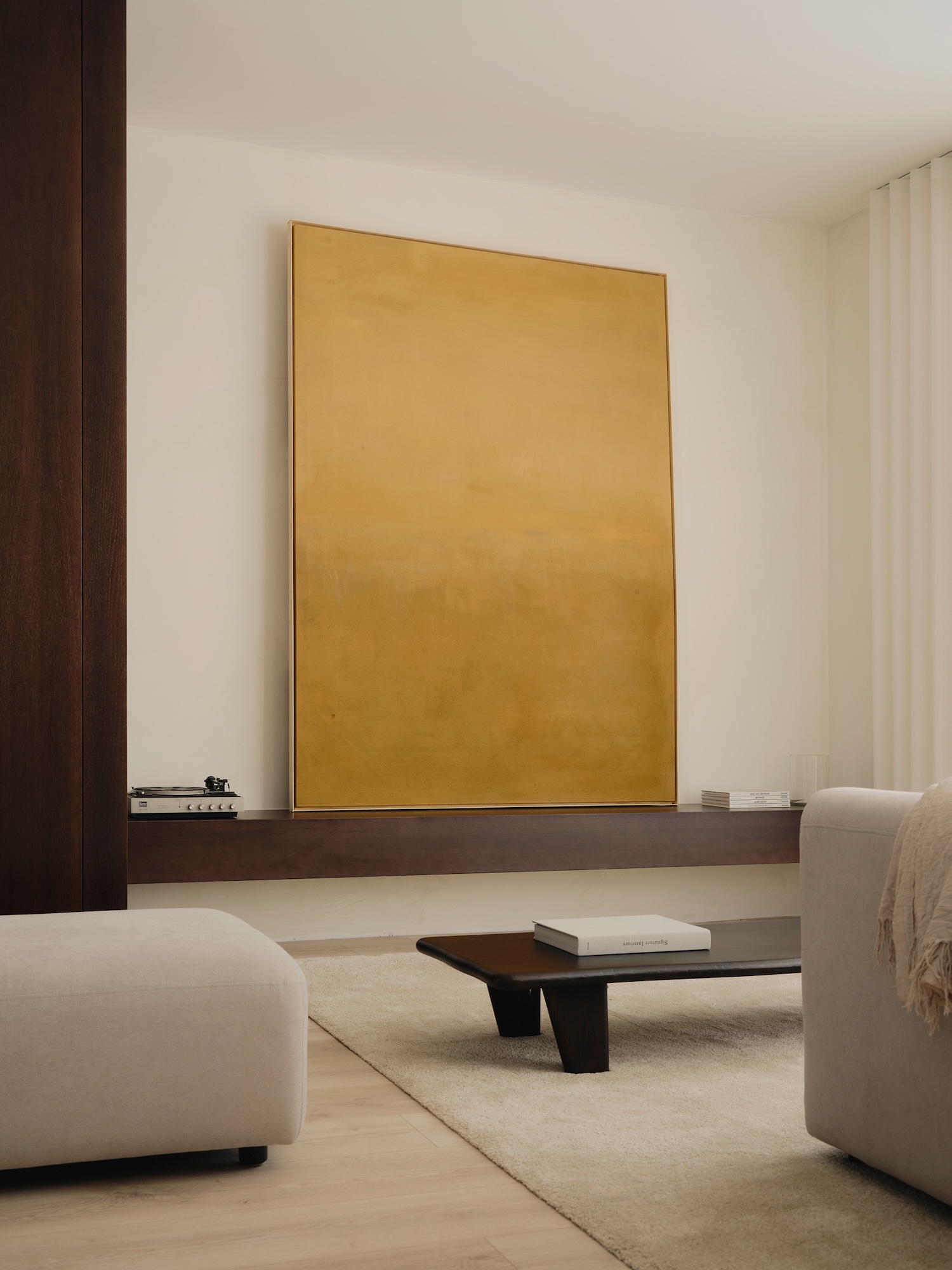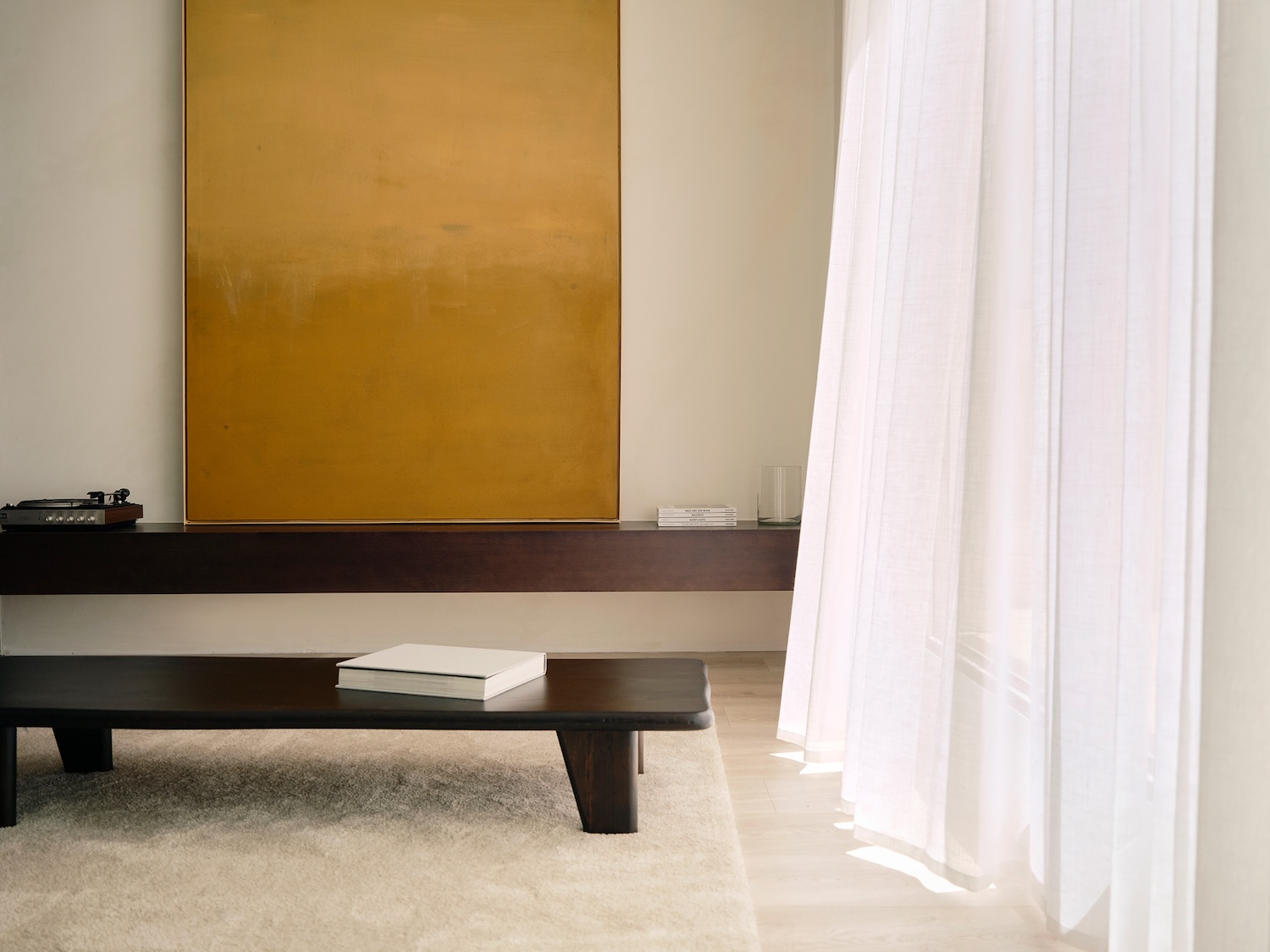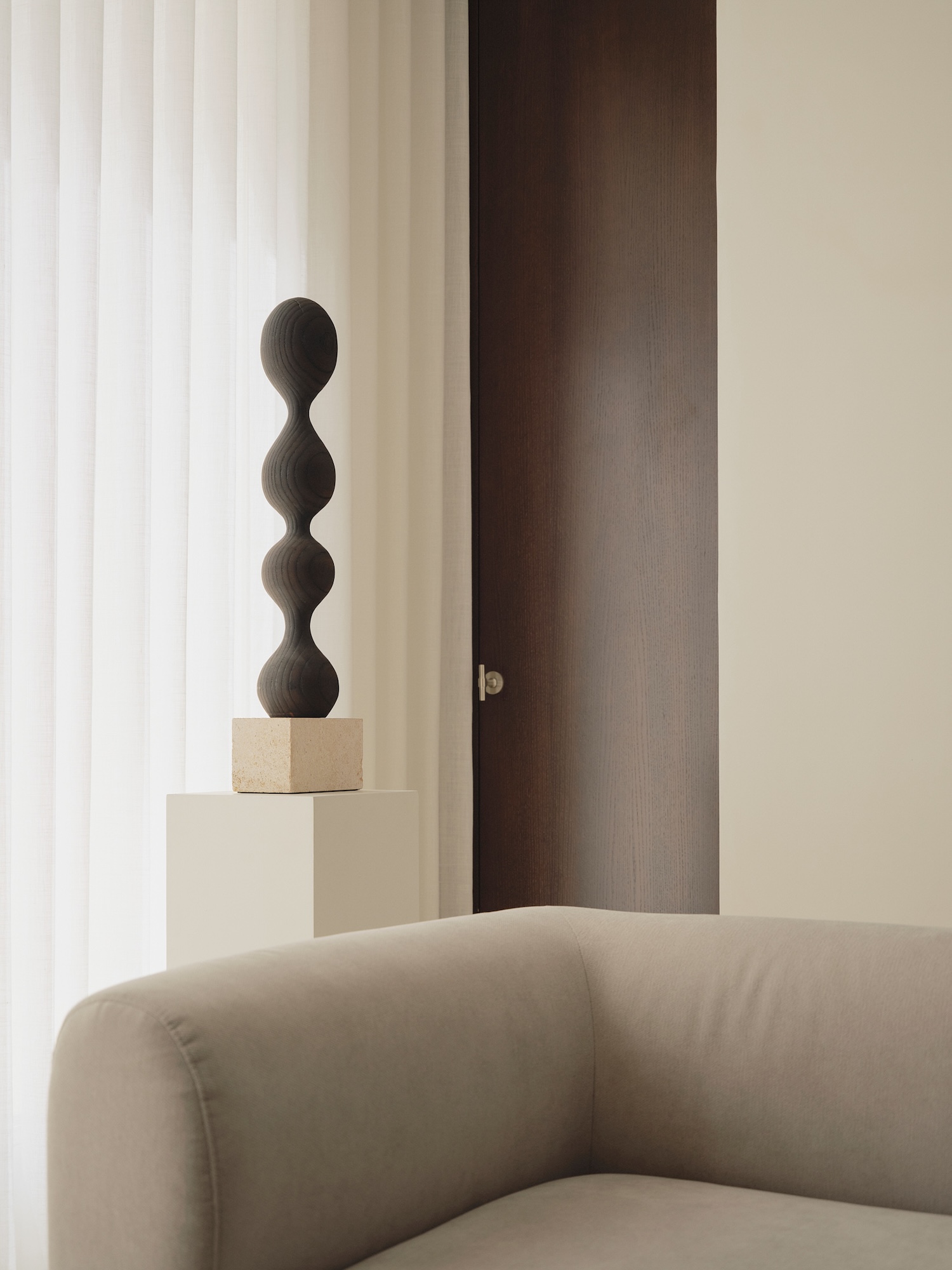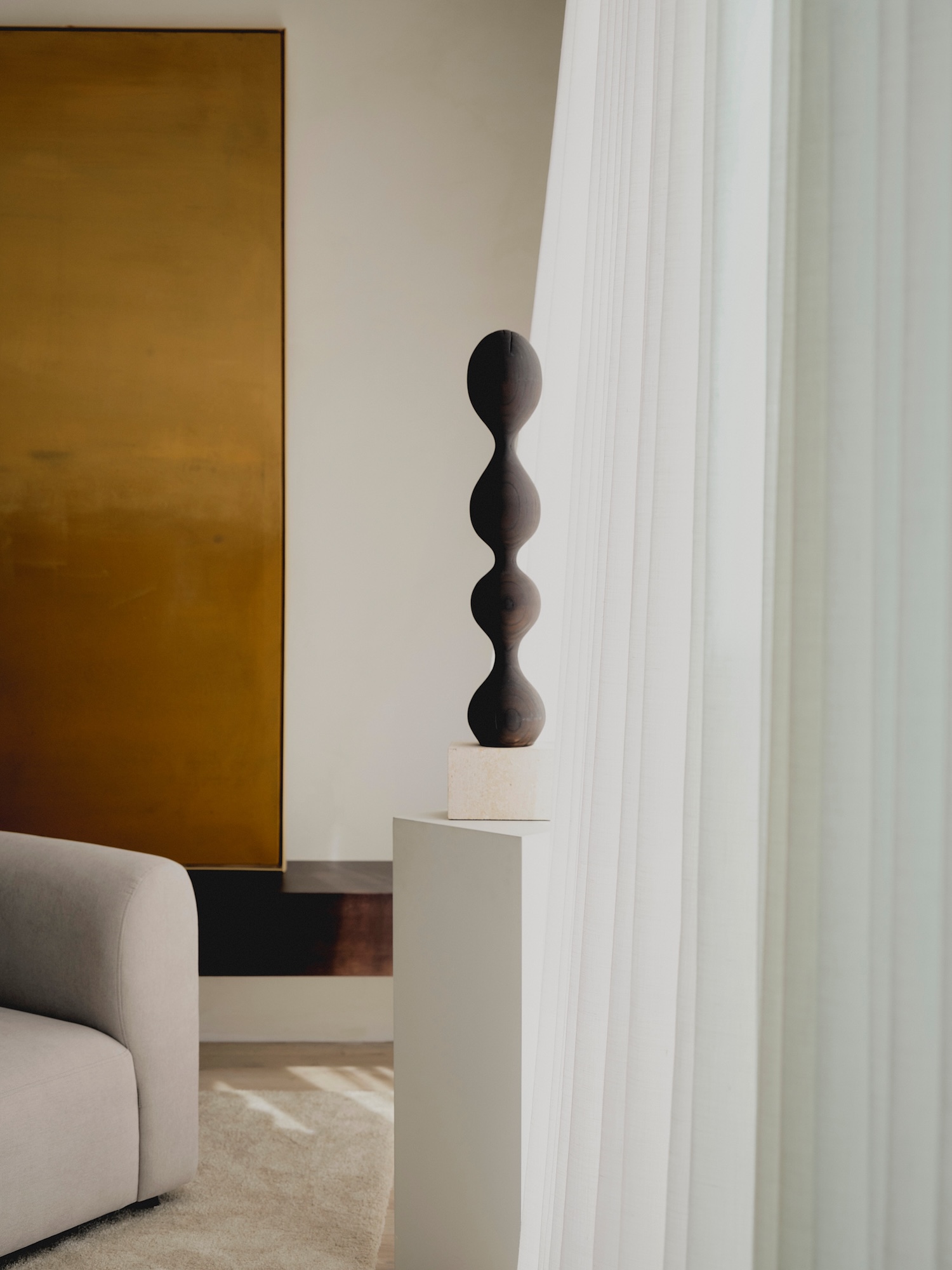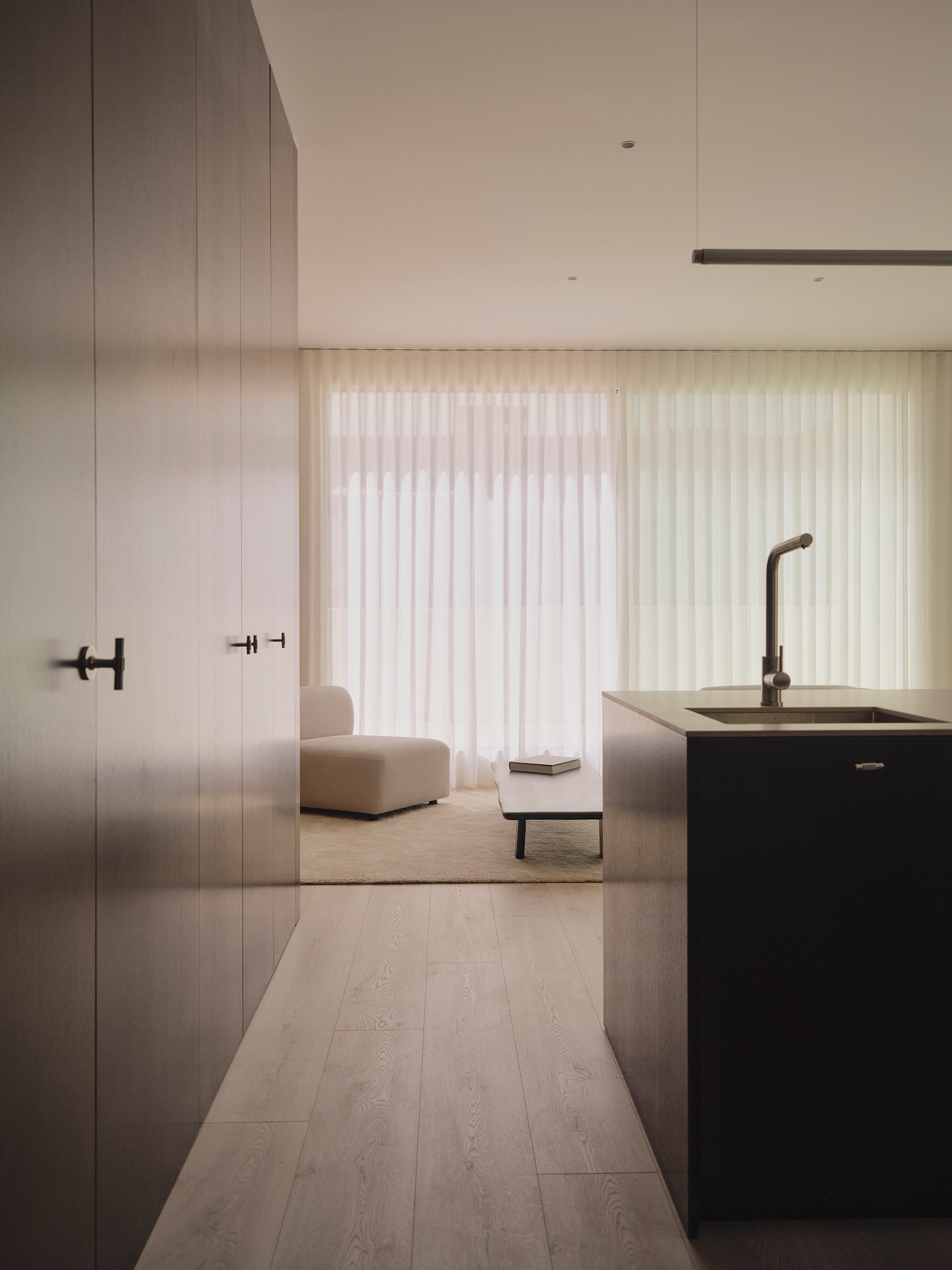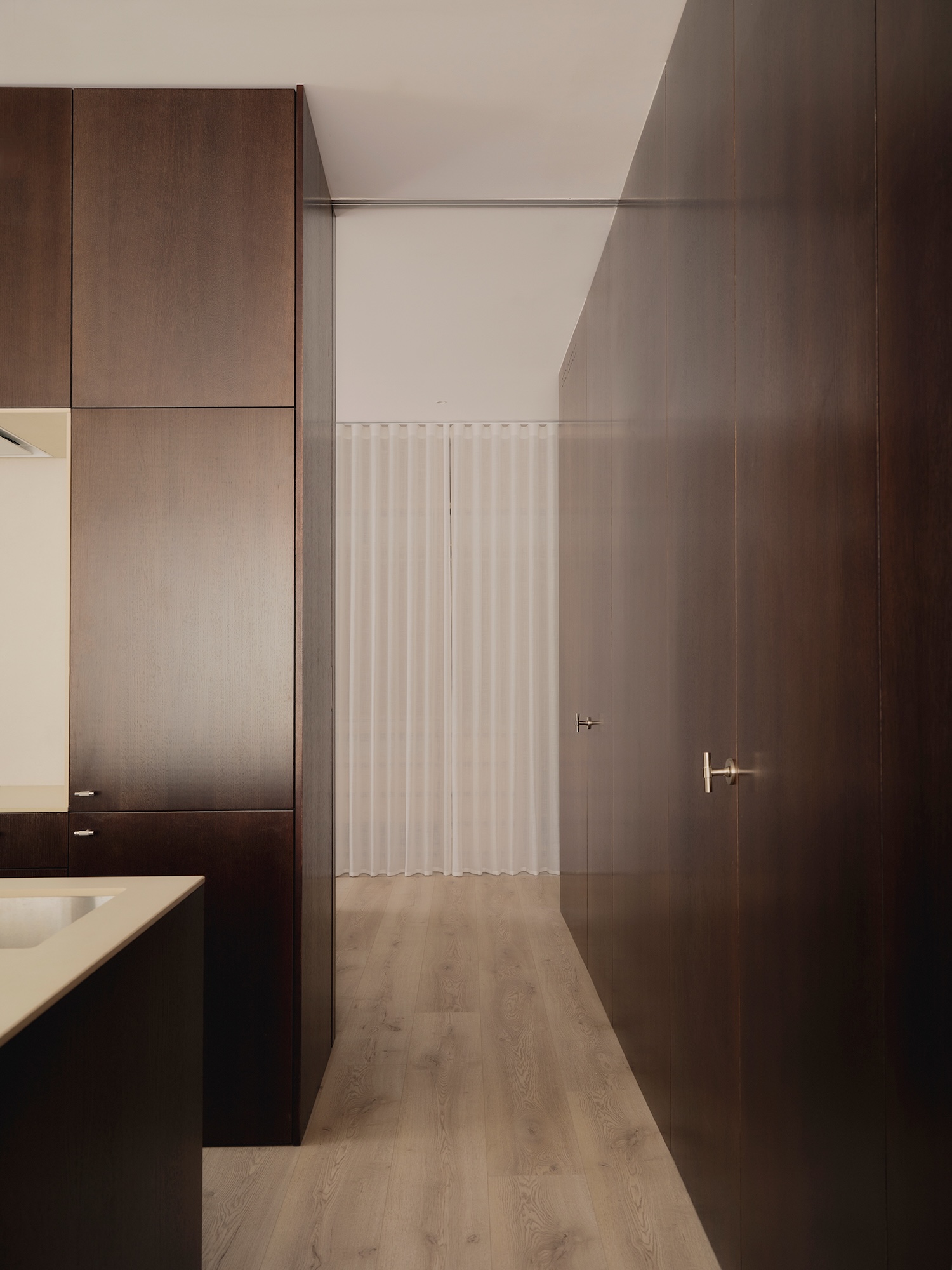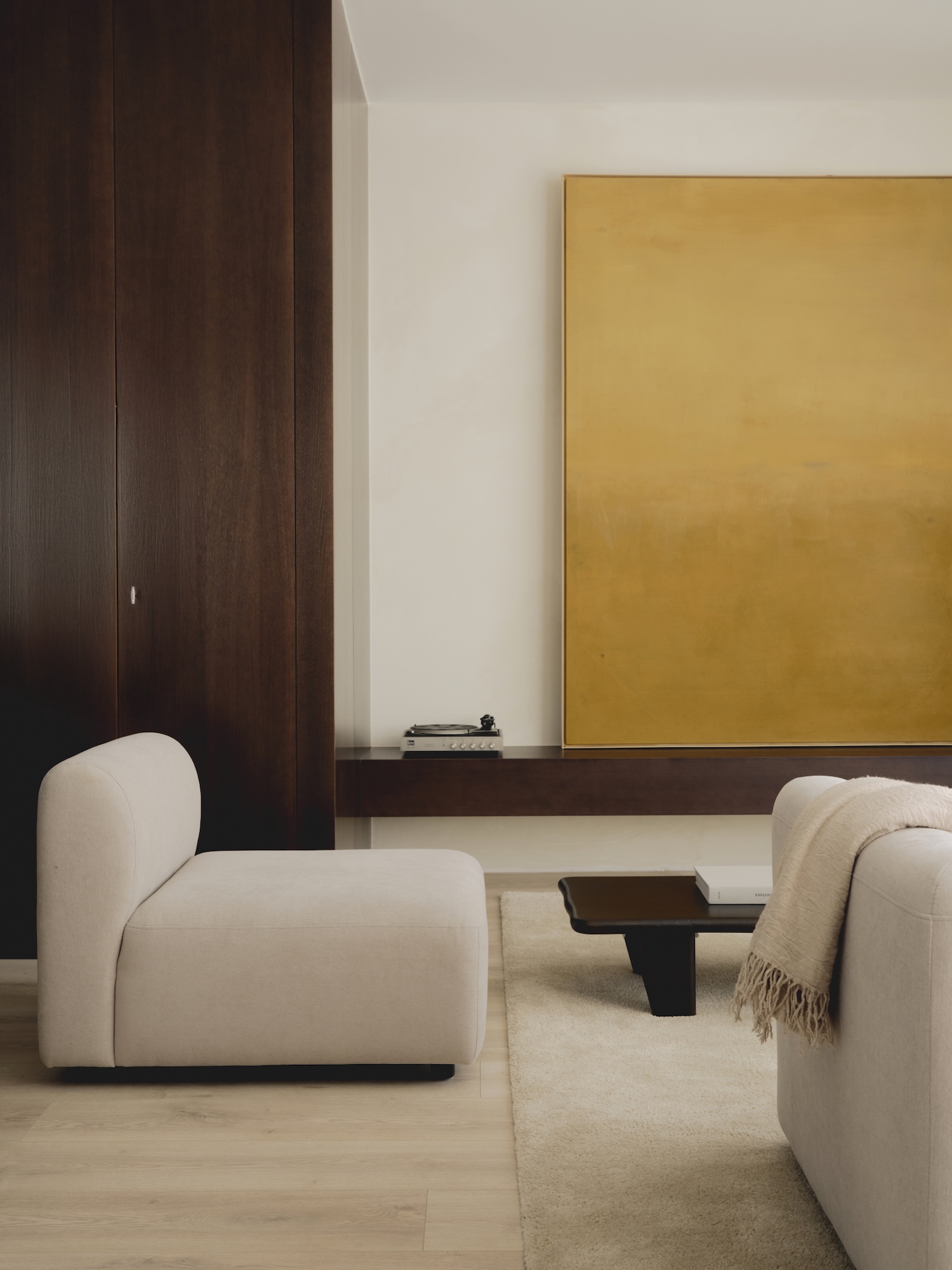
Casa JML is a minimalist residence located in Madrid, Spain, designed by Maximale. A continuous envelope of darkened oak runs through the apartment as a single constructed gesture, absorbing storage, circulation, and service into one thickened body so that the rooms around it are left uncommitted. What reads at first as a finish is closer to structure in the organizational sense, the element that decides where the house is dense and where it opens.
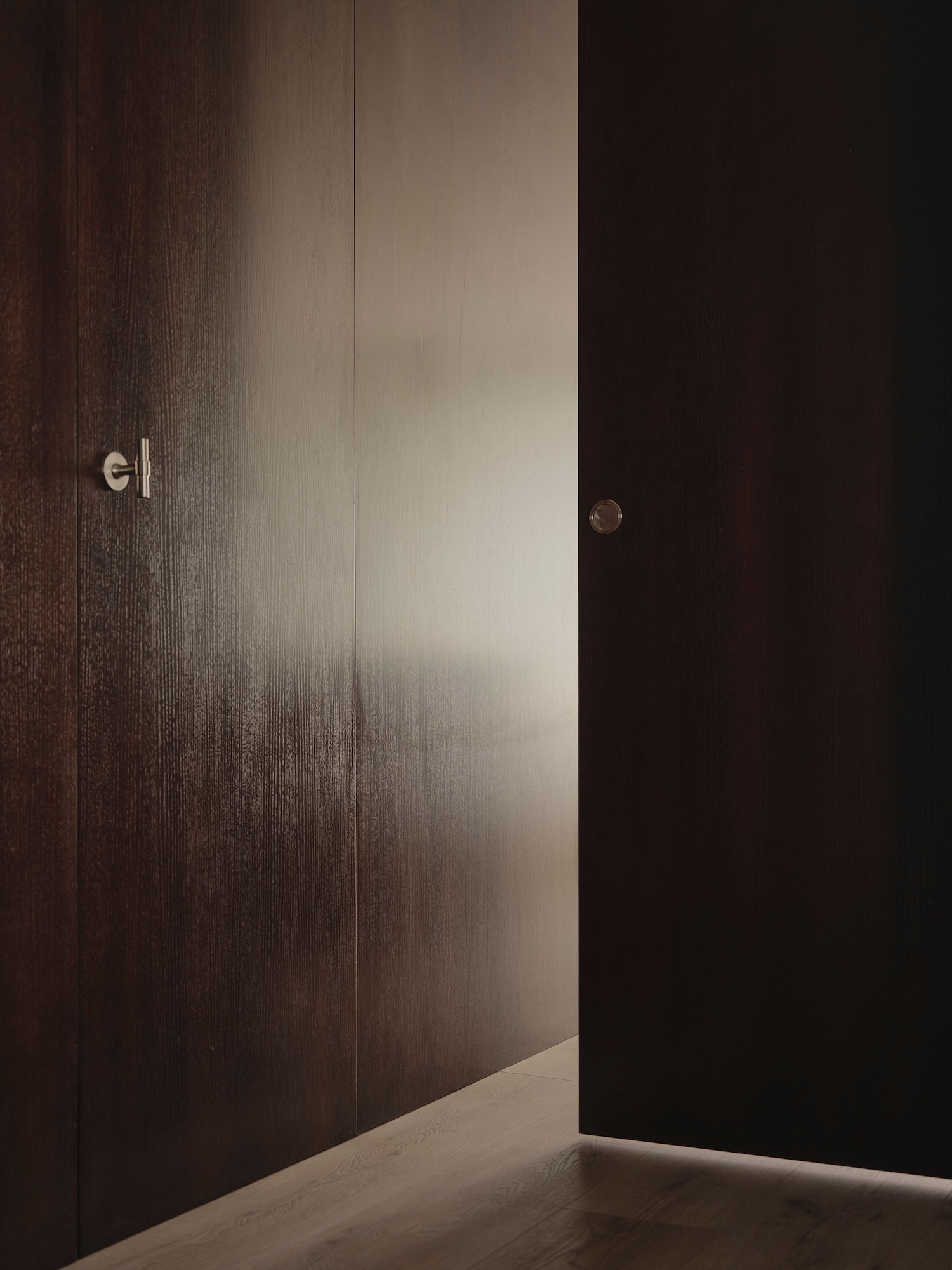
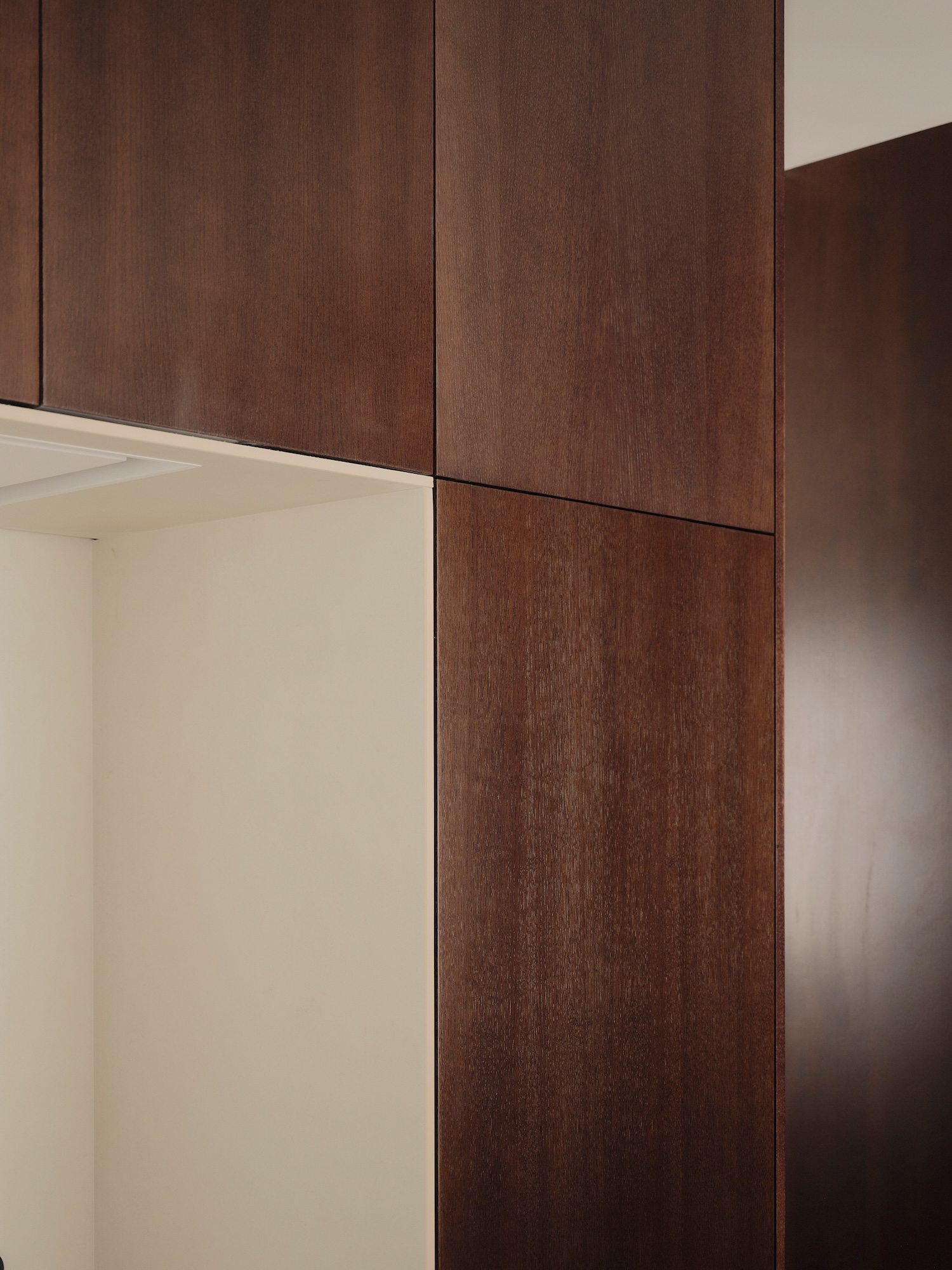
Darkening oak has a specific technical lineage. Ammonia fuming, the process Gustav Stickley industrialized for Craftsman furniture, reacts with tannins in the wood to deepen color from within rather than sitting on the surface as stain does, and the contemporary equivalents used in high-end joinery follow the same logic of pulling tone out of the grain instead of coating over it. The result matters here because the envelope depends on reading as solid. A film-forming pigment would flatten the oak into sheet material and expose every panel joint. Reactive darkening keeps the figure legible under low reflectance, so the volume holds its mass while still showing that it is timber.
The lighter base beneath the vertical planes performs the same function a plinth performs in classical construction, separating the dark body from the floor and giving it a visible datum to sit on. Without that horizontal break the oak would run to the ground and turn the space into a box. With it, the envelope becomes an object placed in a room, and the eye registers the room as continuing behind and around it.
Louis Kahn’s distinction between servant and served spaces is the closest structural precedent, though Kahn expressed it in poured concrete shafts and this project compresses the same idea into cabinetry depth. Everything the household needs to function mechanically gets pushed into the dark spine. What remains is undesignated floor area, which is why the plan feels generous without being large. There is also an argument here that goes back to Loos and the principle of cladding, where the surface carries the spatial responsibility and the wall behind it becomes irrelevant to how the room is understood.