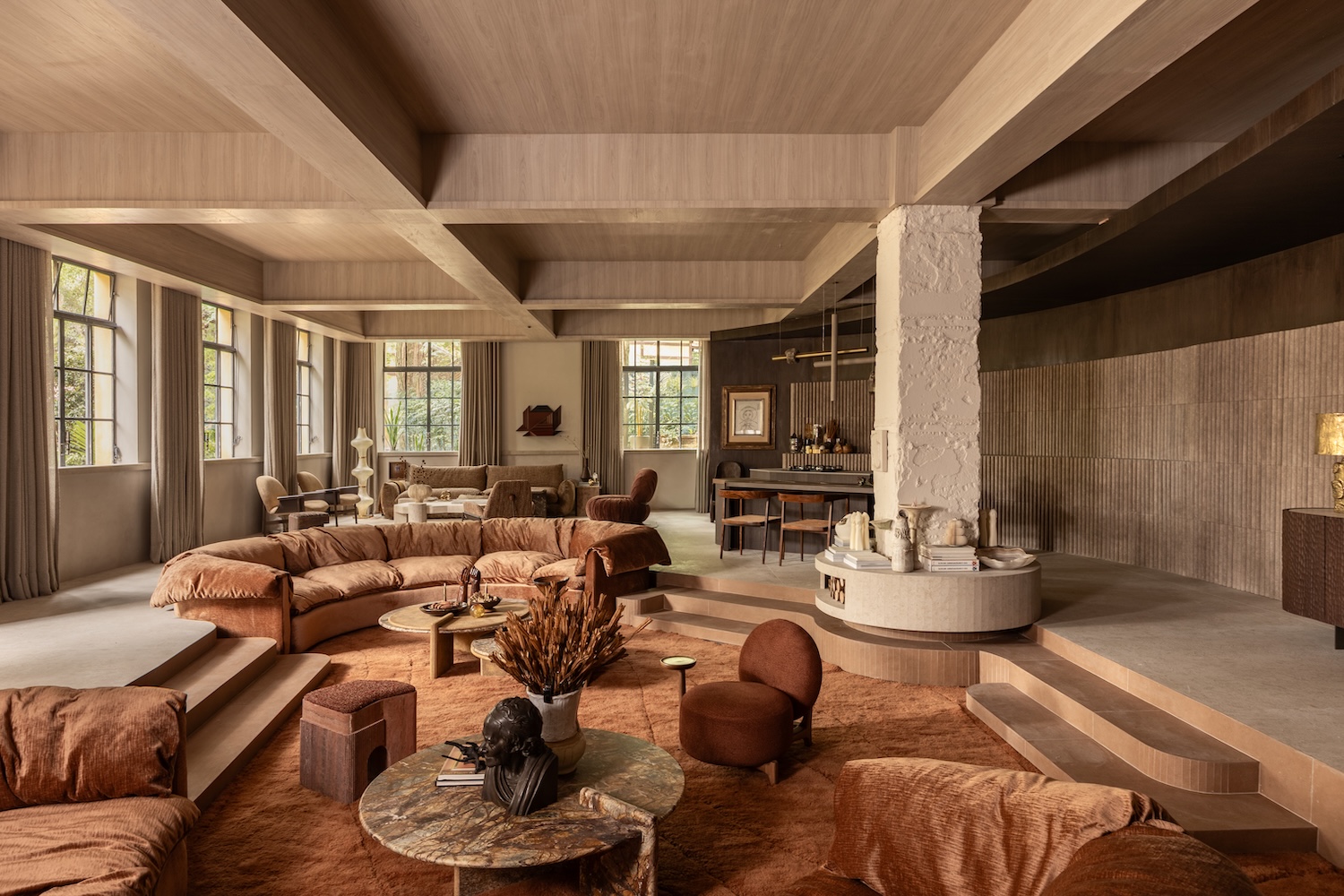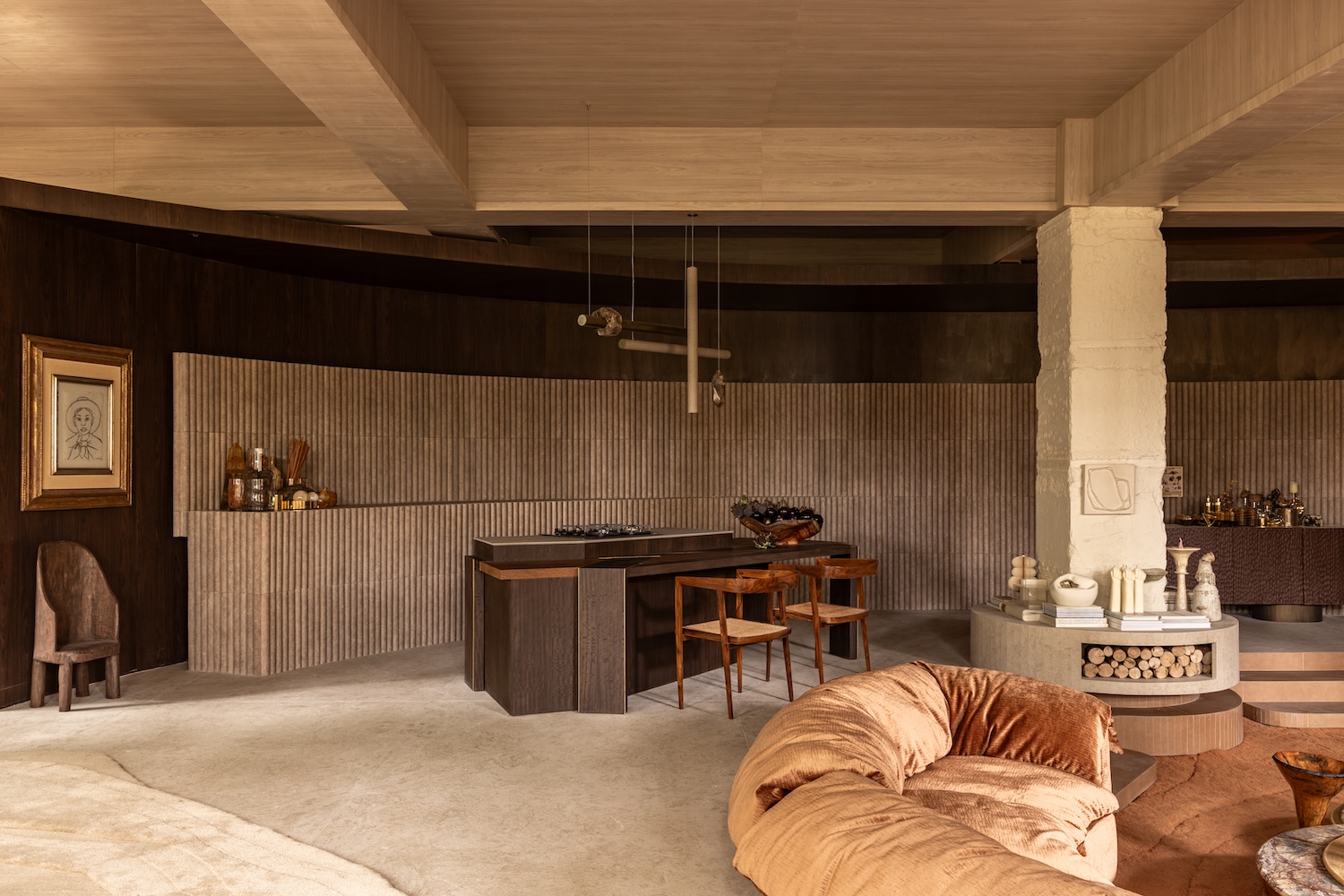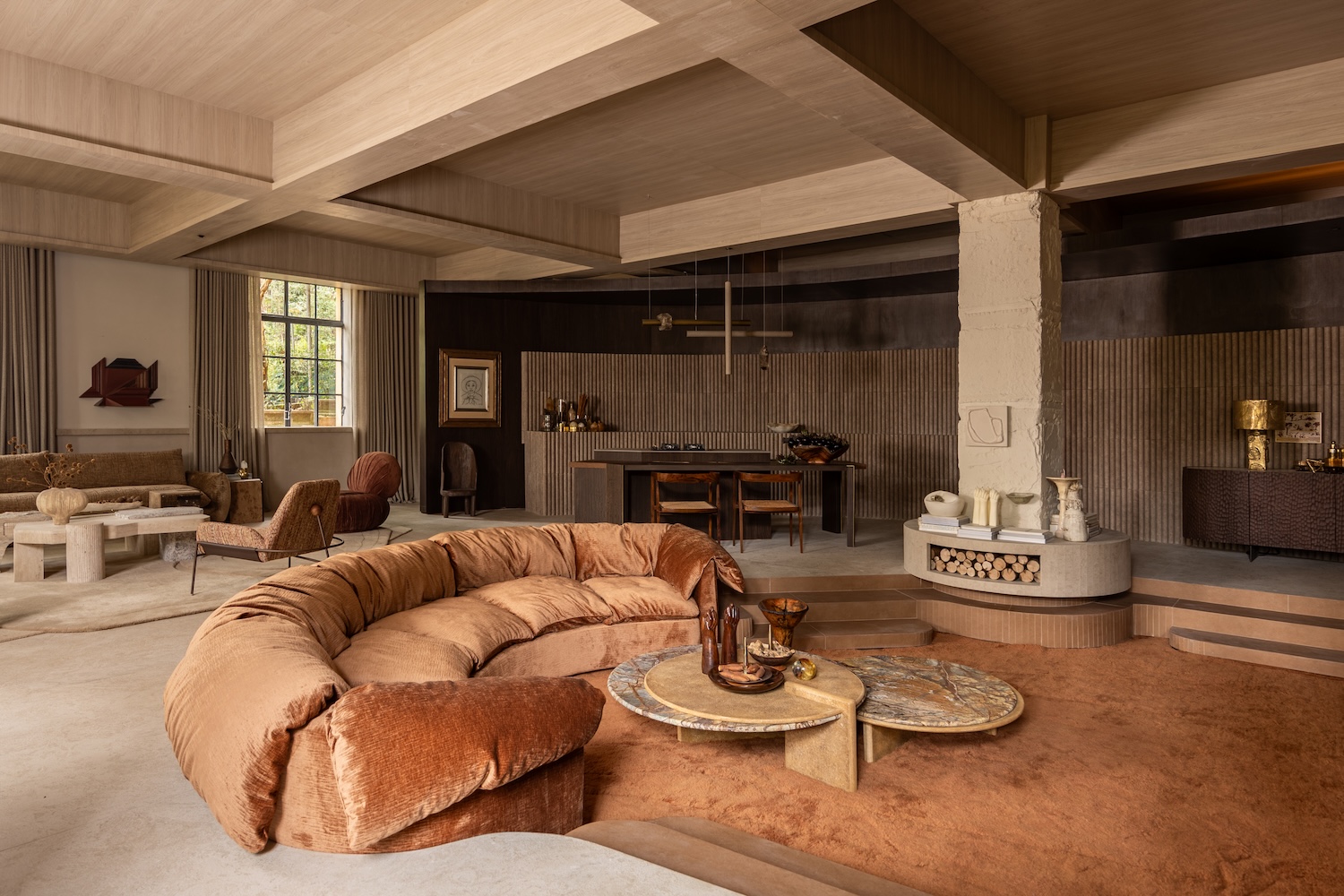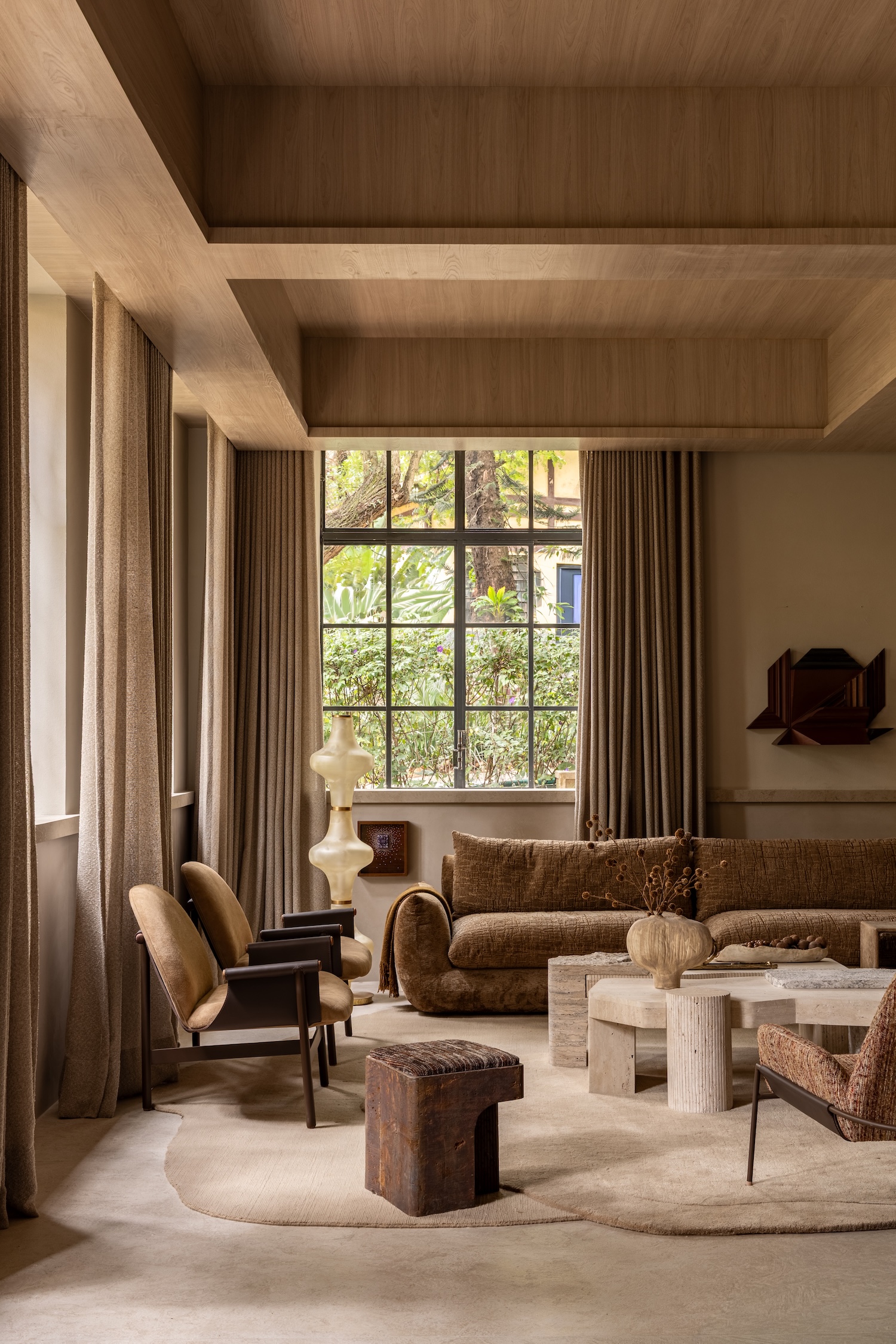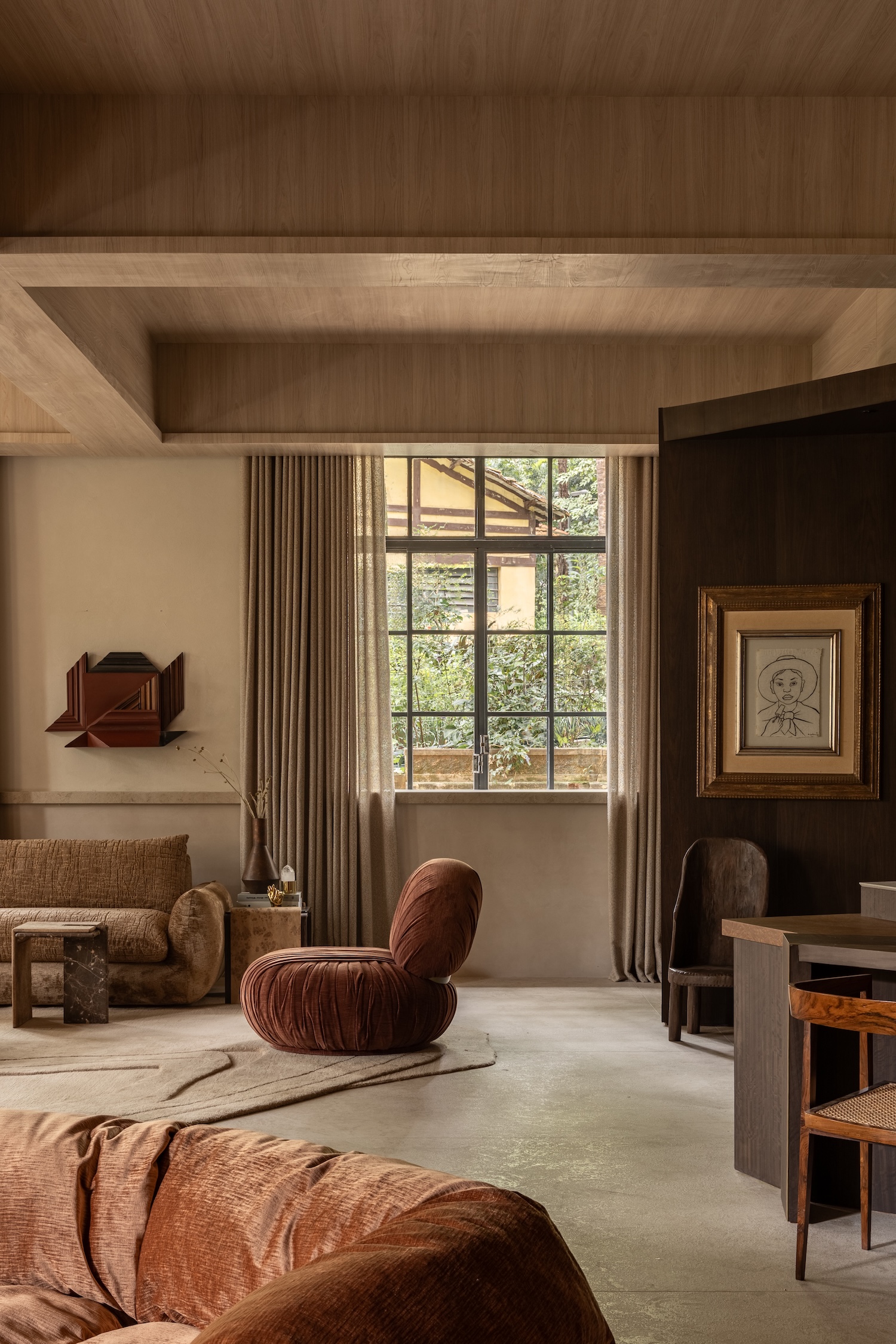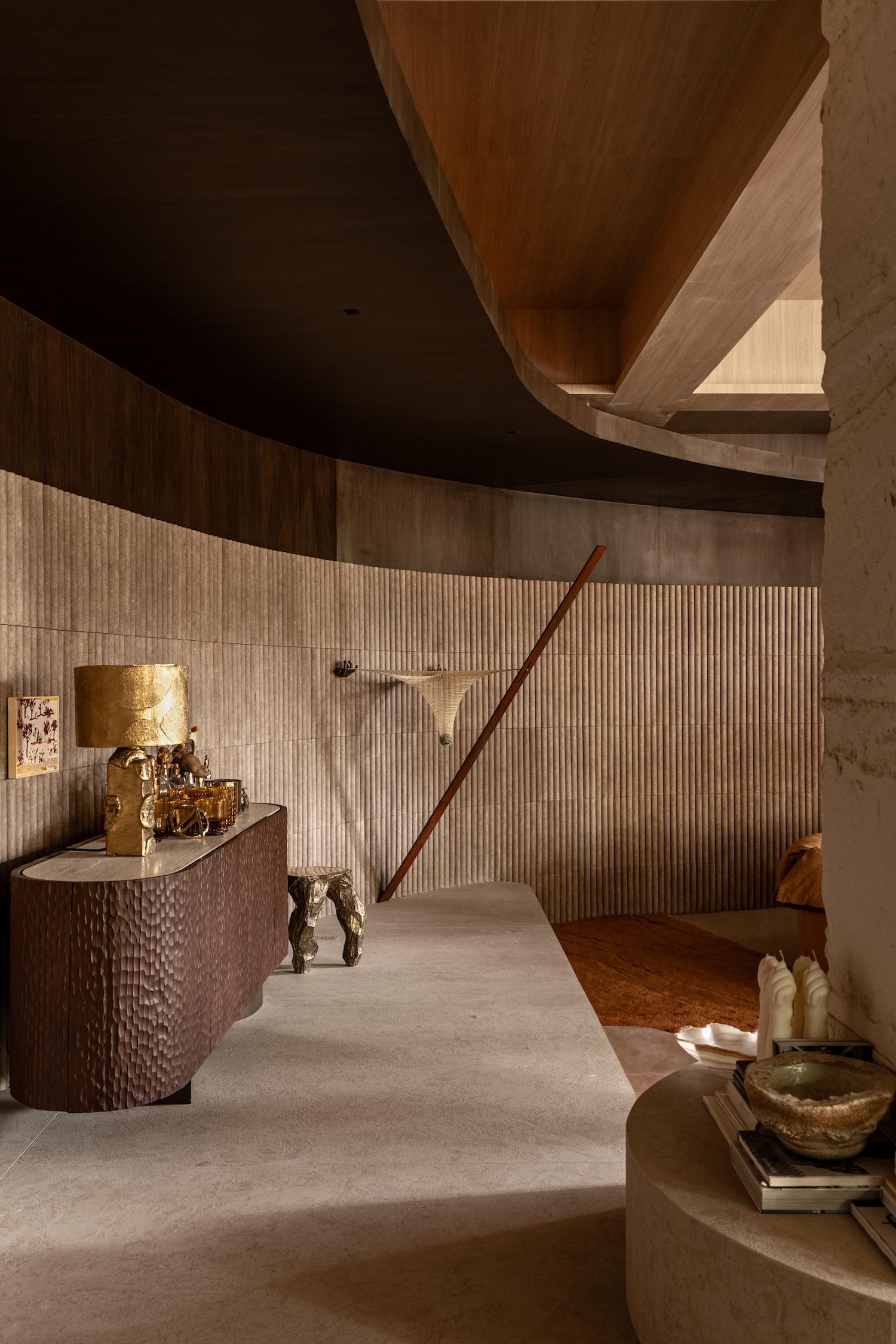
Casa Magma is a minimalist installation located in São Paulo, Brazil, designed by Suite Arquitetos. The space, presented by Portinari at CASACOR São Paulo 2026, was created by the four-person firm of Carolina Mauro, Daniela Frugiuele, Luiza Monari, and Filipe Troncon. At its core, Casa MAGMA operates as a study in geological time – materials shaped over millennia translated into domestic space. The reference is not decorative. The large curved wall that anchors the main room is clad in Vestígios Decor Mix, produced in architectural concrete, its surface following the arc of the structure with a three-dimensionality drawn from sedimentary layering. It is a formal language borrowed directly from the earth.
The plan organizes a living room, dining room, master suite, tea bar, and bathroom around a central core, with sculptural volumes, recessed ceilings, and curved surfaces eliminating hard transitions between spaces. The spatial logic recalls the Brutalist interiors of Paulo Mendes da Rocha, where concrete stops being infrastructure and becomes atmosphere – though SUITE Arquitetos warm the register considerably through material selection. The Argilas collection porcelain tile runs along the floor of the central zone, its tonal range drawn from the Brazilian coast, forest, and cerrado. This is not regionalism as signifier but as chromatic calibration, each tone chosen for how it holds light across the day.
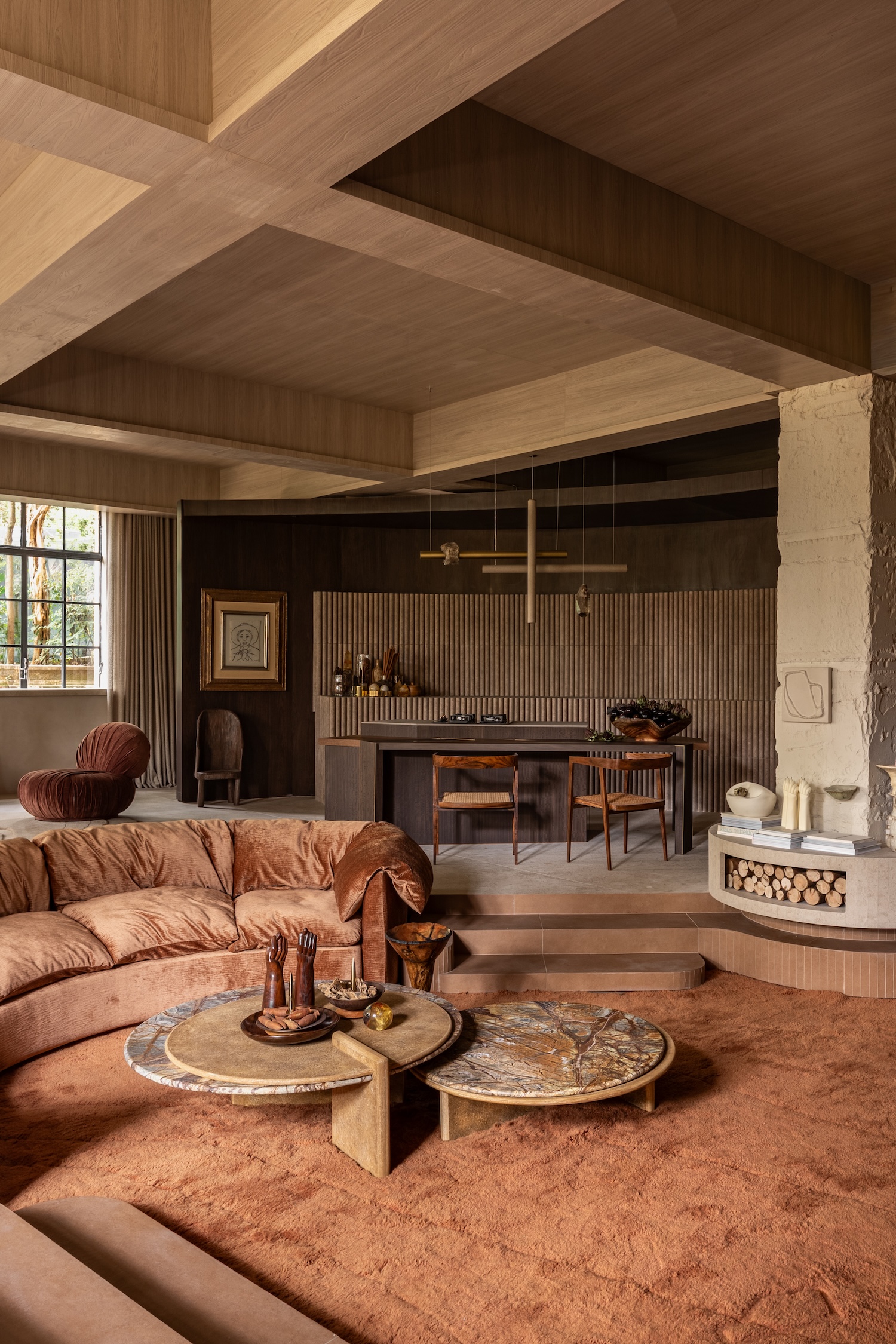
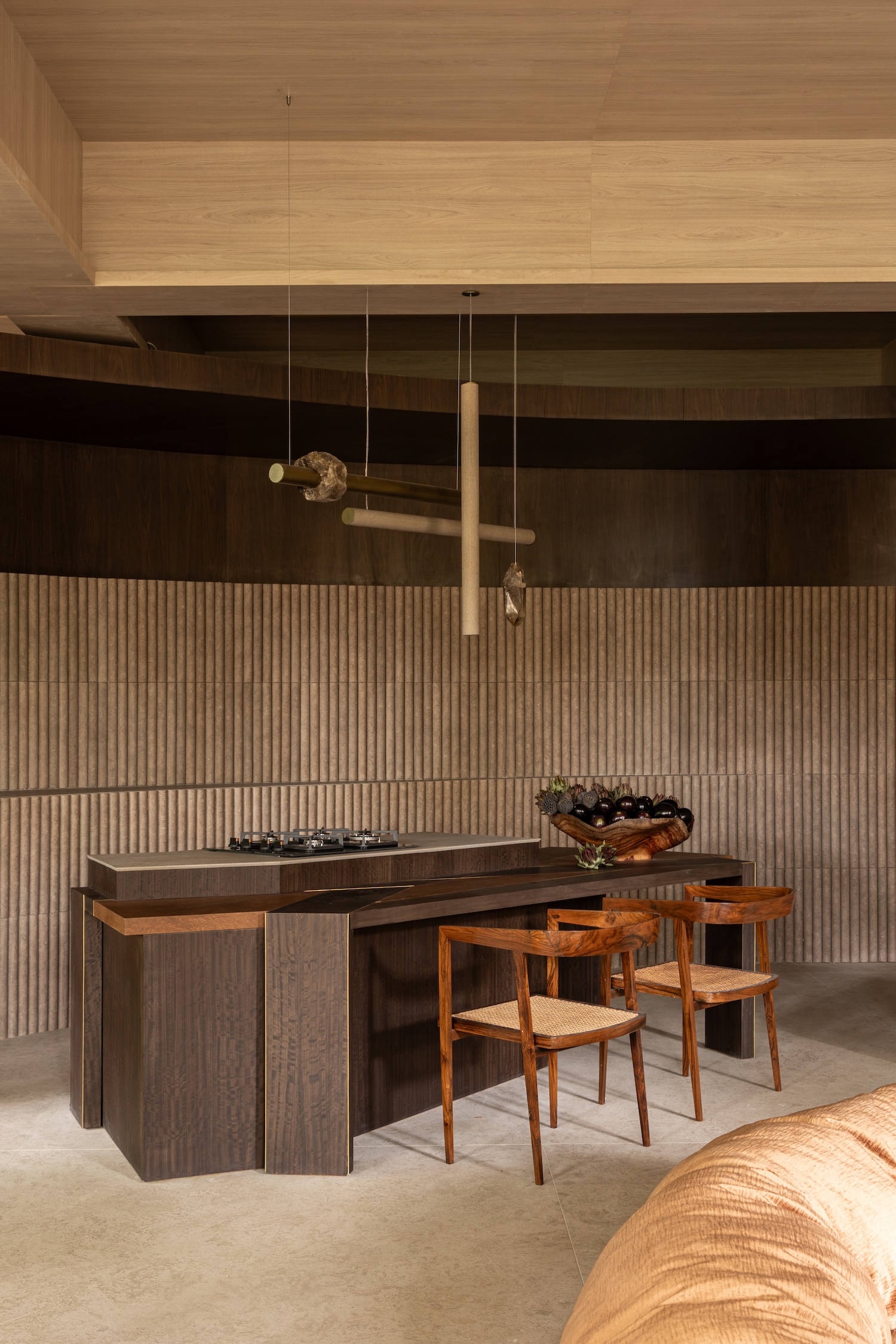
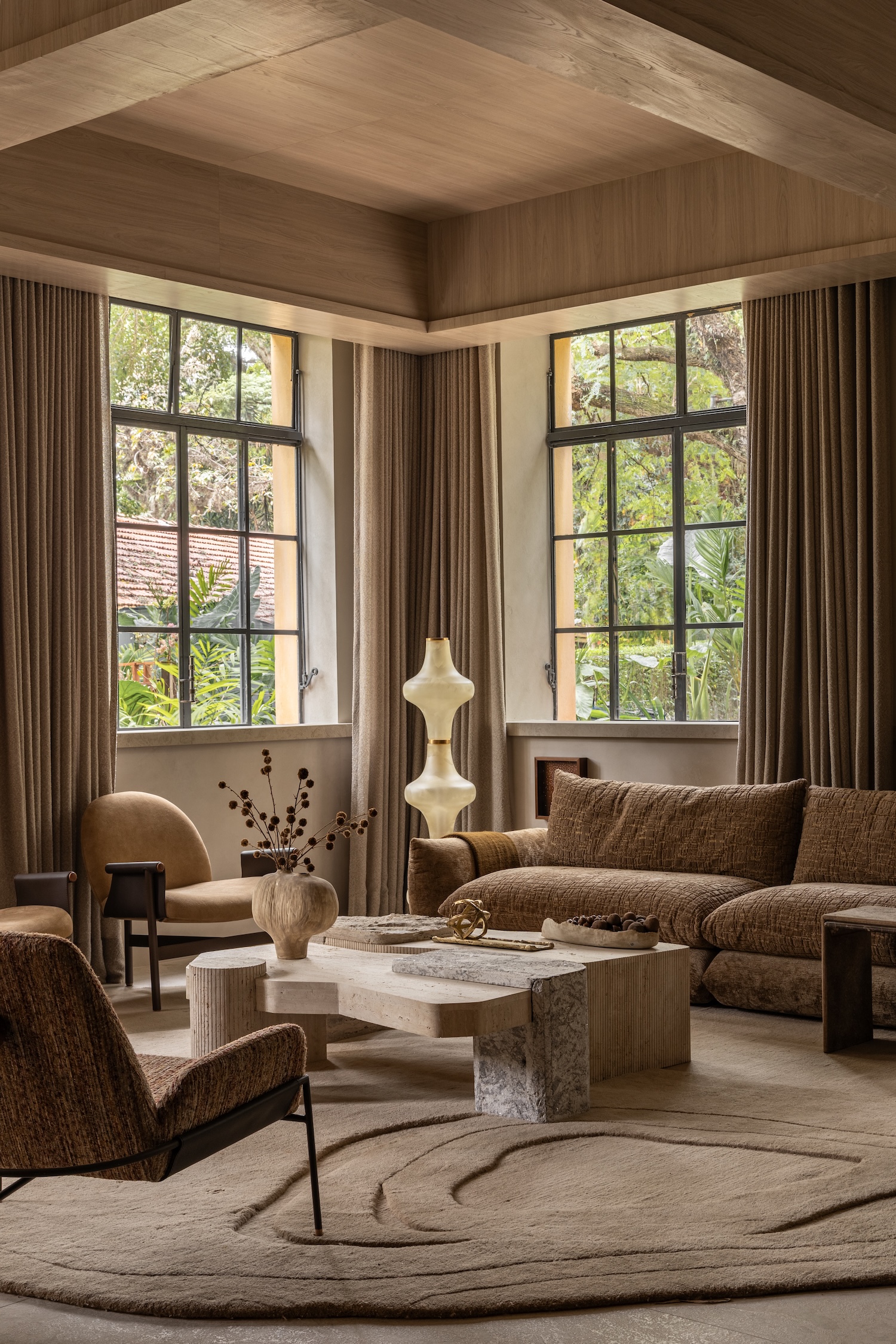
The living room sits at a slightly recessed level, with rounded sofas, dense rugs, and wholly original furniture composing an atmosphere that negotiates comfort and introspection. At the center, the fireplace clad in Petra Fóssil anchors the composition while demonstrating sintered stone’s heat resistance as functional property, not afterthought. The material runs further through the project in less expected configurations. Above the kitchen island, a sculptural pendant light revises SUITE Arquitetos’ earlier Hydria piece, here realized with natural crystals and tubes formed in Portinari Petra – sintered stone applied as a lighting component rather than surface cladding. It points toward a broader argument about material versatility that runs across the whole project.