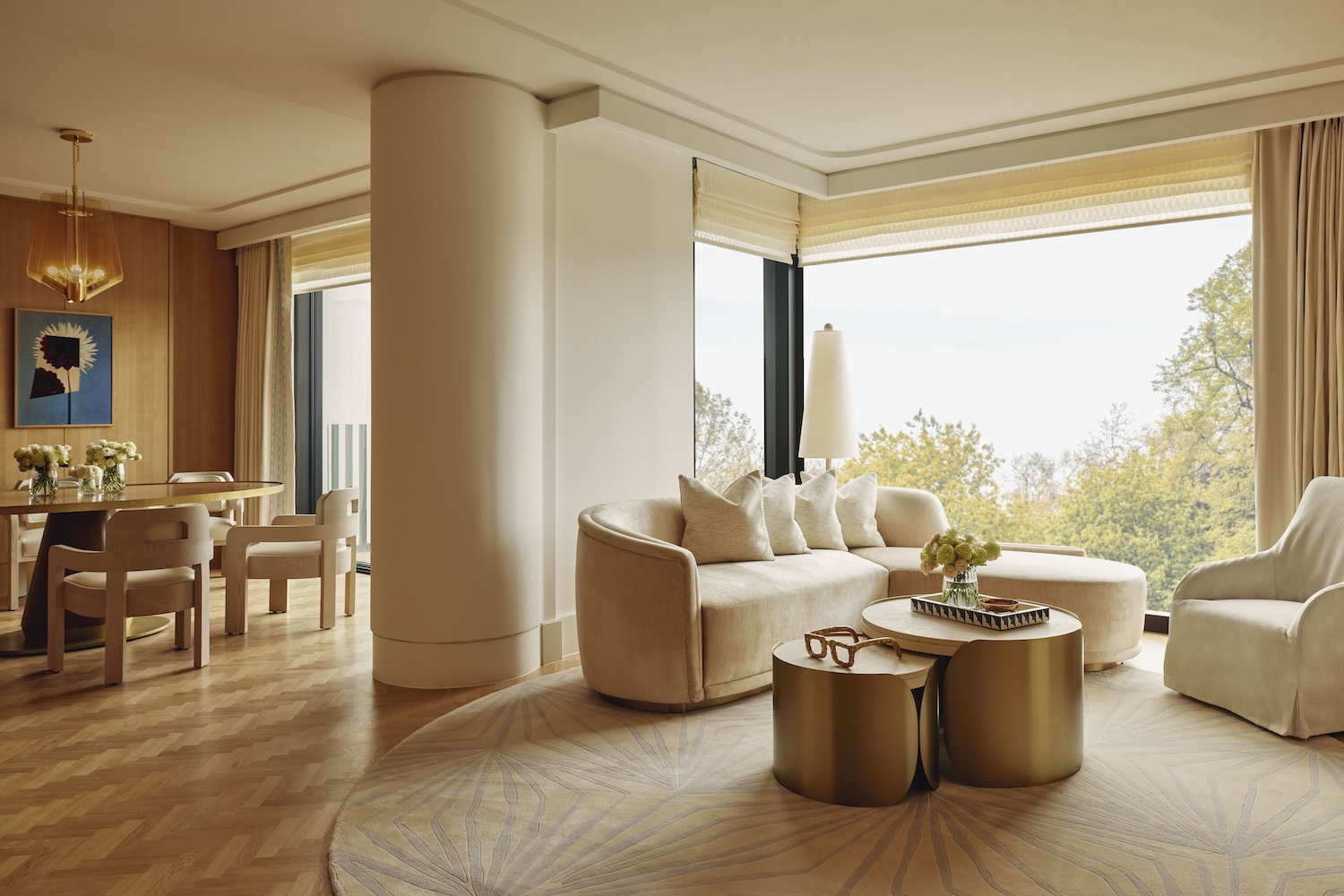
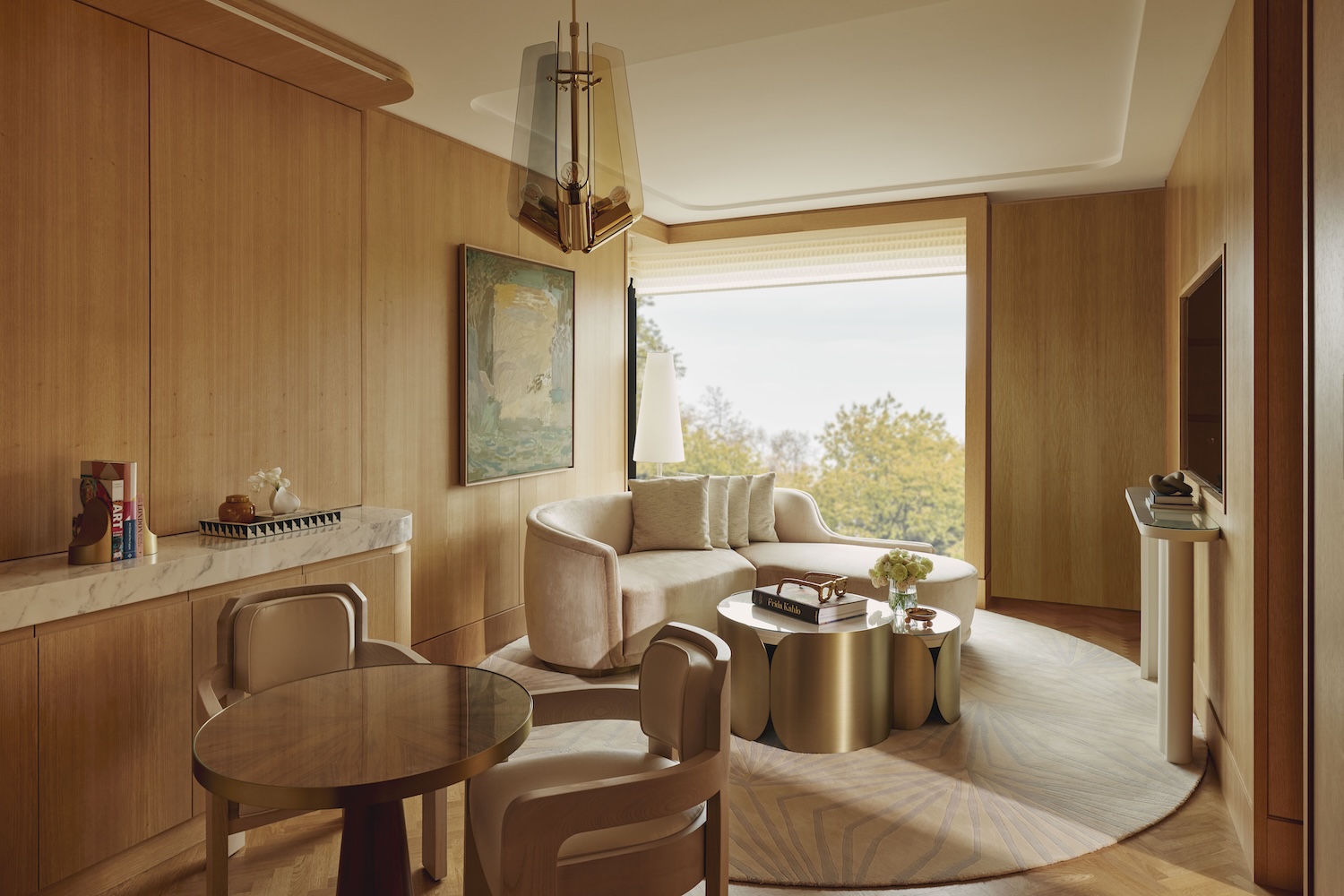
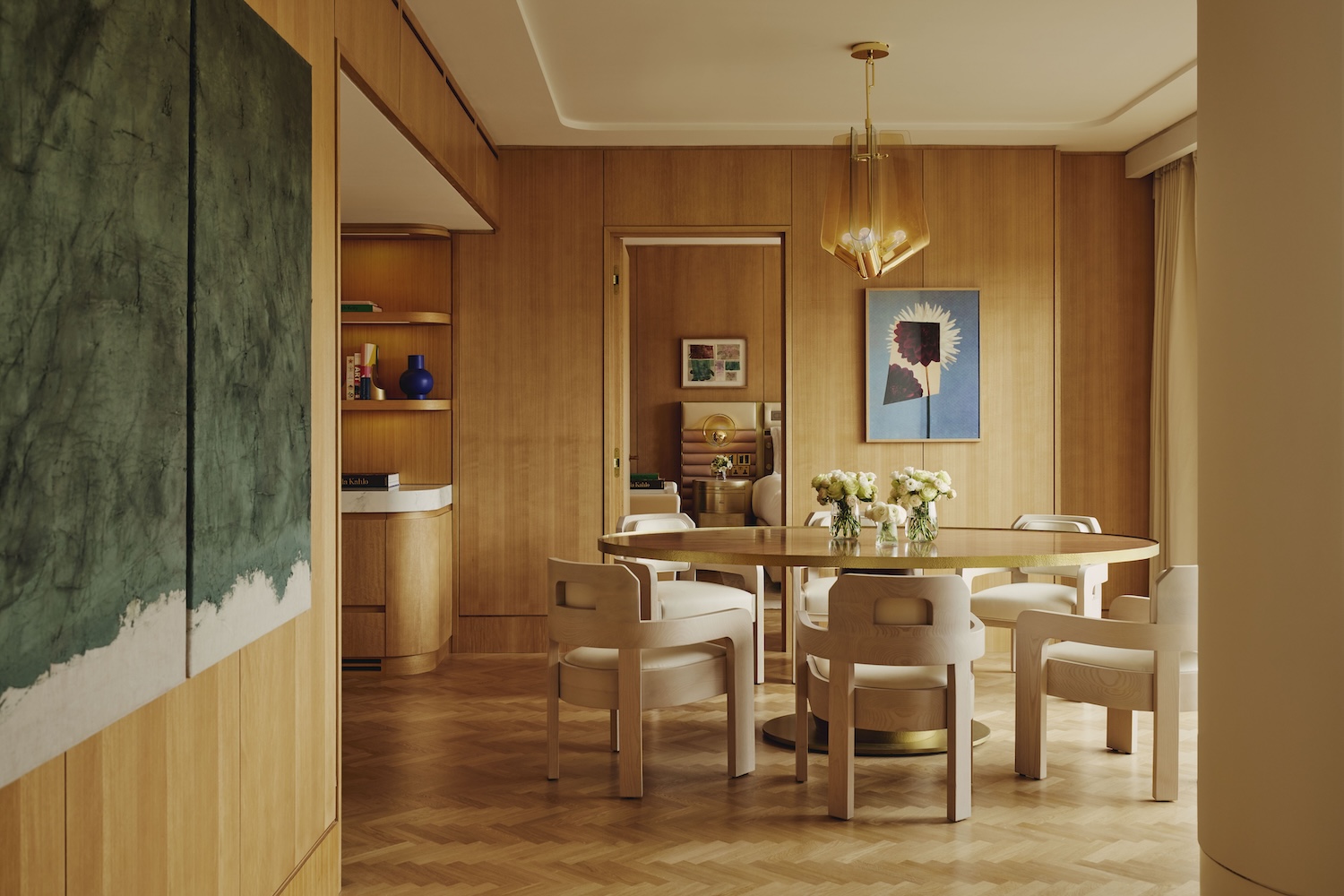
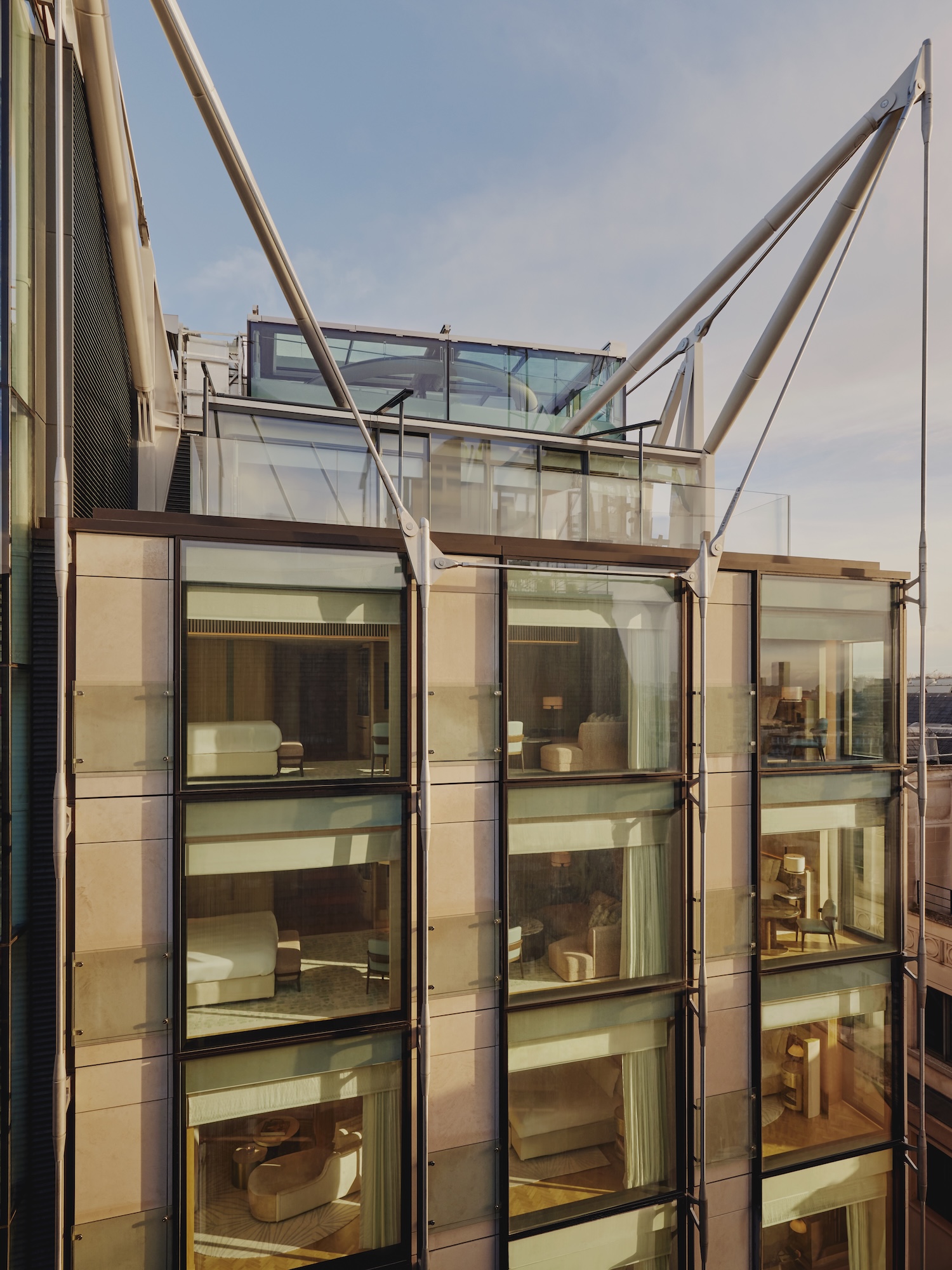
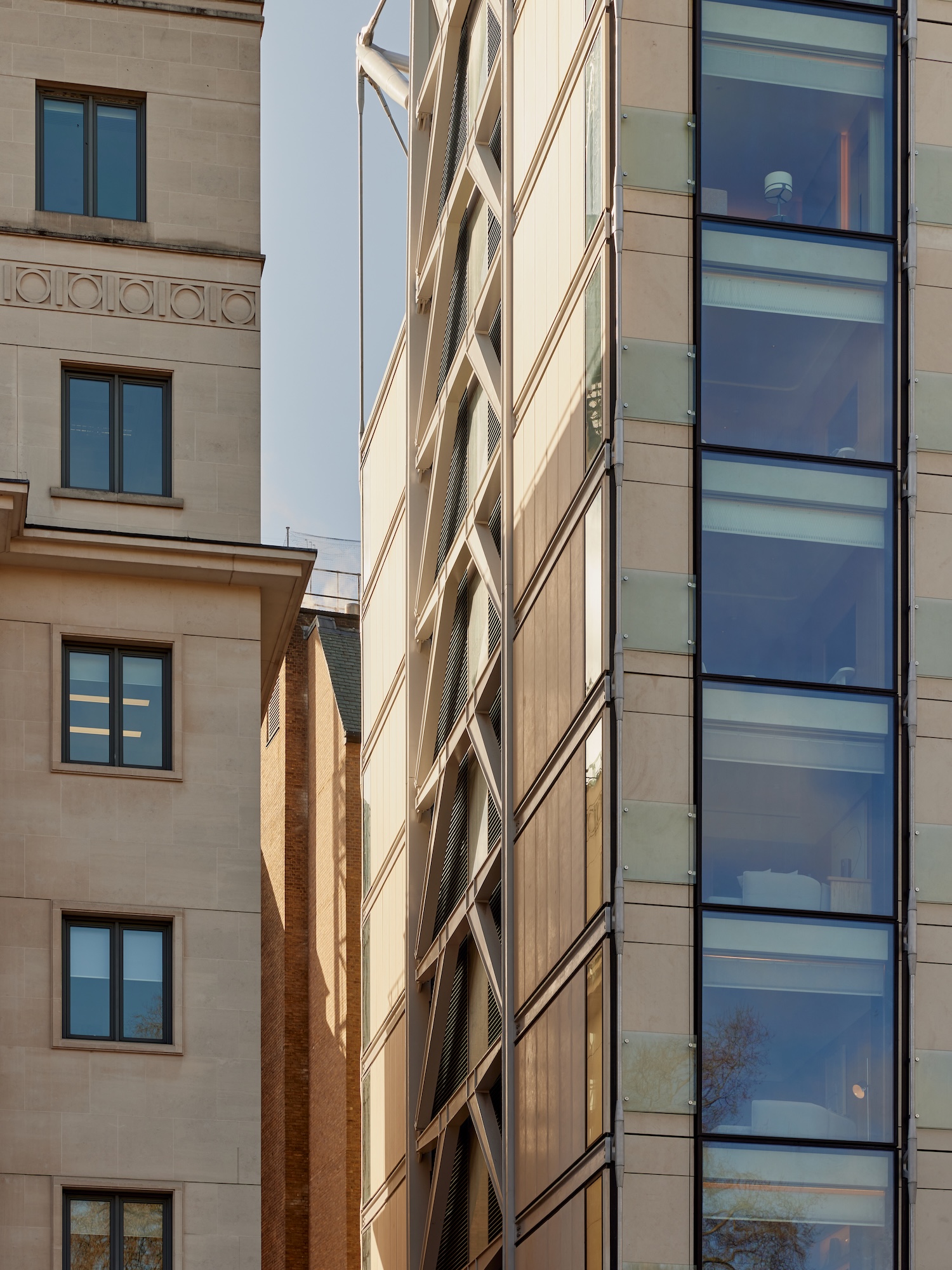
The Emory is a minimalist luxury hotel located in Belgravia, London, with a number of suites designed by Champalimaud Design. Few hospitality projects in recent memory have posed the spatial challenge that The Emory confronts at every level: how to distribute creative authority across five distinct design voices without producing a hotel that reads as a collection of rooms rather than a coherent whole. The answer Maybourne arrived at for its first new-build London property in over half a century was structural rather than stylistic – assign each designer two floors, let the building’s Richard Rogers-designed envelope hold everything together, and trust each practice to resolve the tension between urbanity and sanctuary on its own terms.
The project occupies a modernist glass tower envisioned by the late Richard Rogers and Ivan Harbour of RSHP, its floor-to-ceiling glazing and exposed structural steel giving the building a legibility that is characteristically High-Tech. London’s first all-suite hotel, The Emory joins the Maybourne Group’s portfolio – Claridge’s, The Connaught, and The Berkeley – as its most forward-thinking property. The roster of interior designers brought in to furnish its 61 suites spanning nine floors reads like a survey of contemporary luxury hospitality: André Fu, Pierre-Yves Rochon, Patricia Urquiola, Rigby & Rigby for the penthouse, and Champalimaud Design for a dedicated floor grouping.
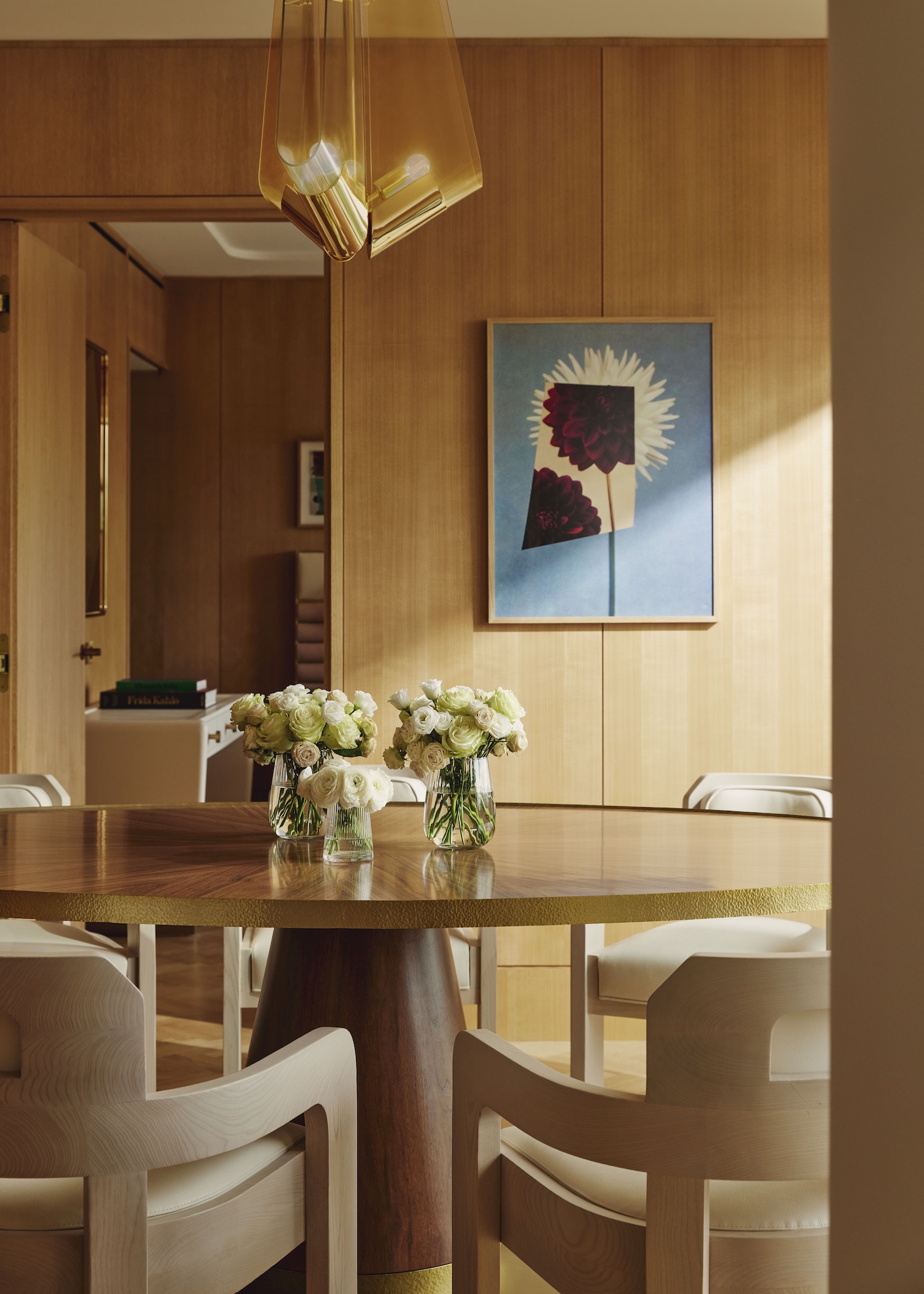
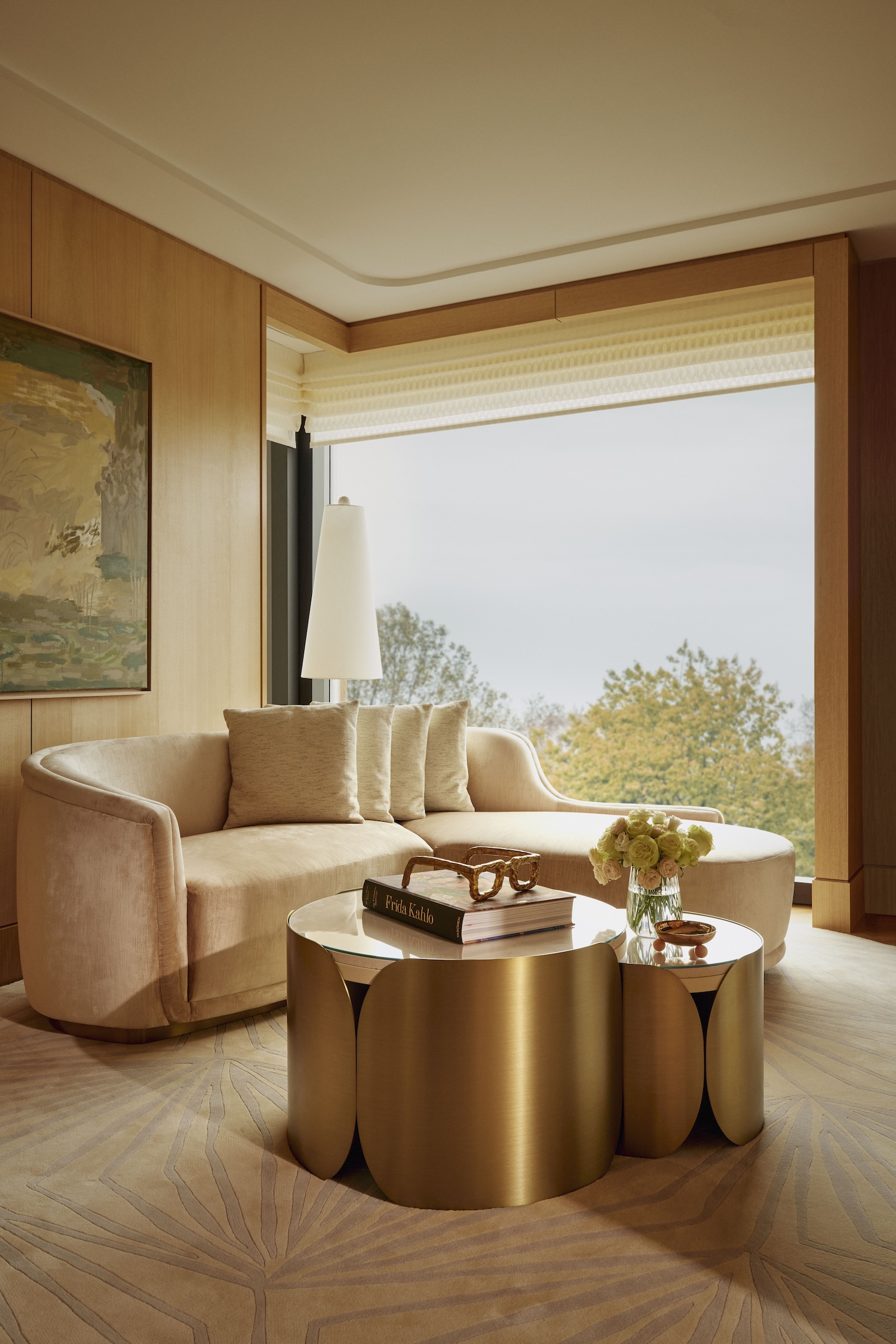
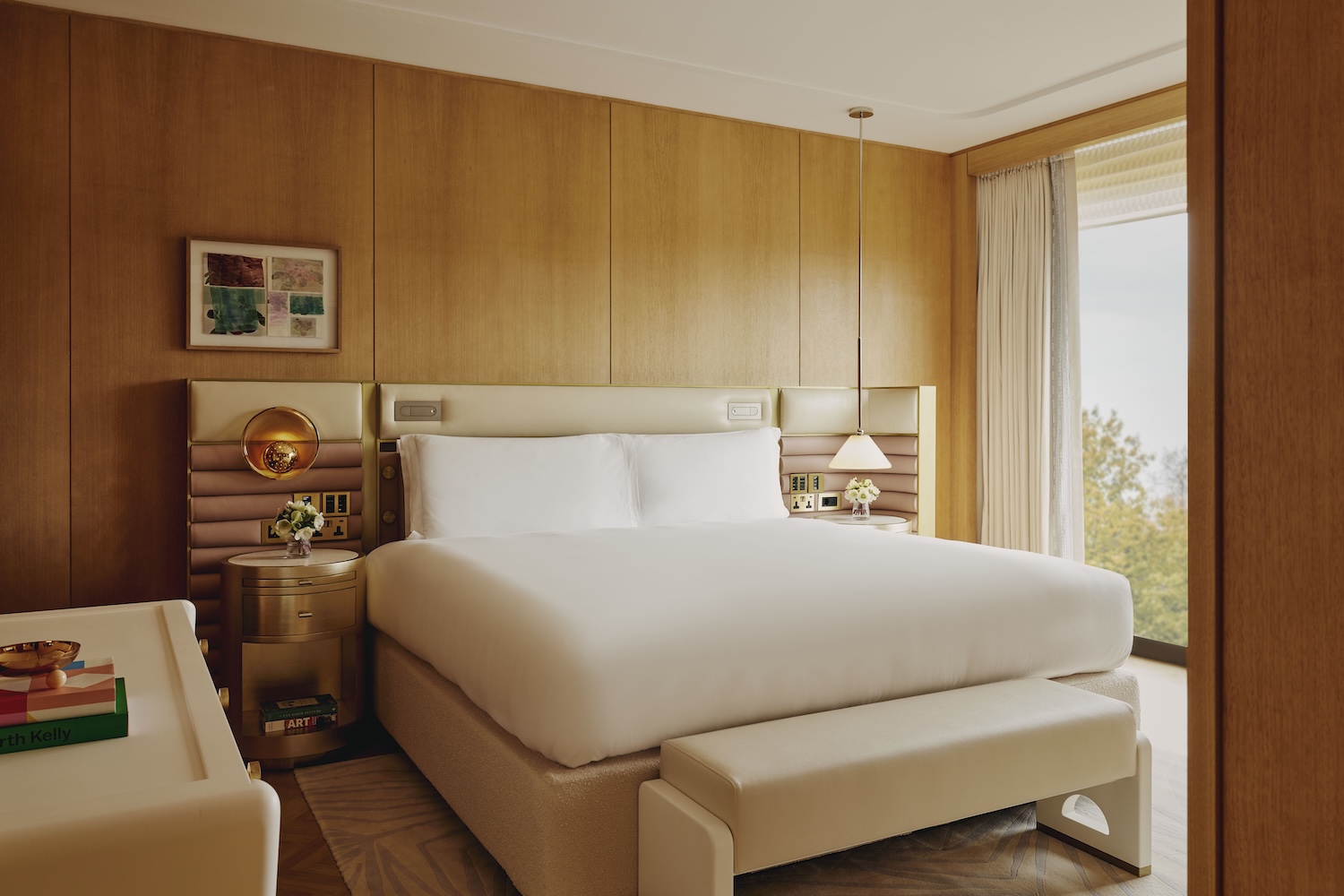
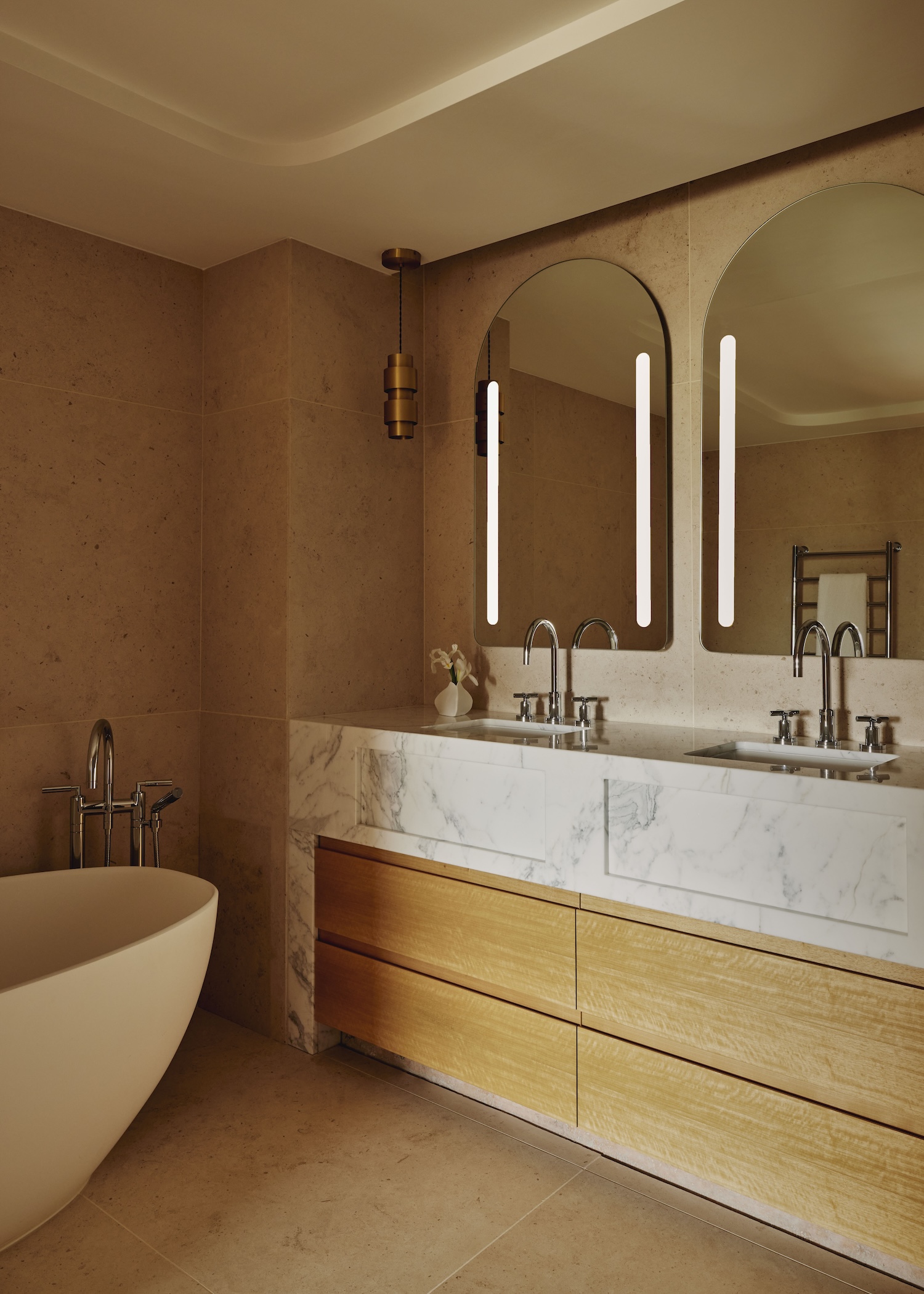
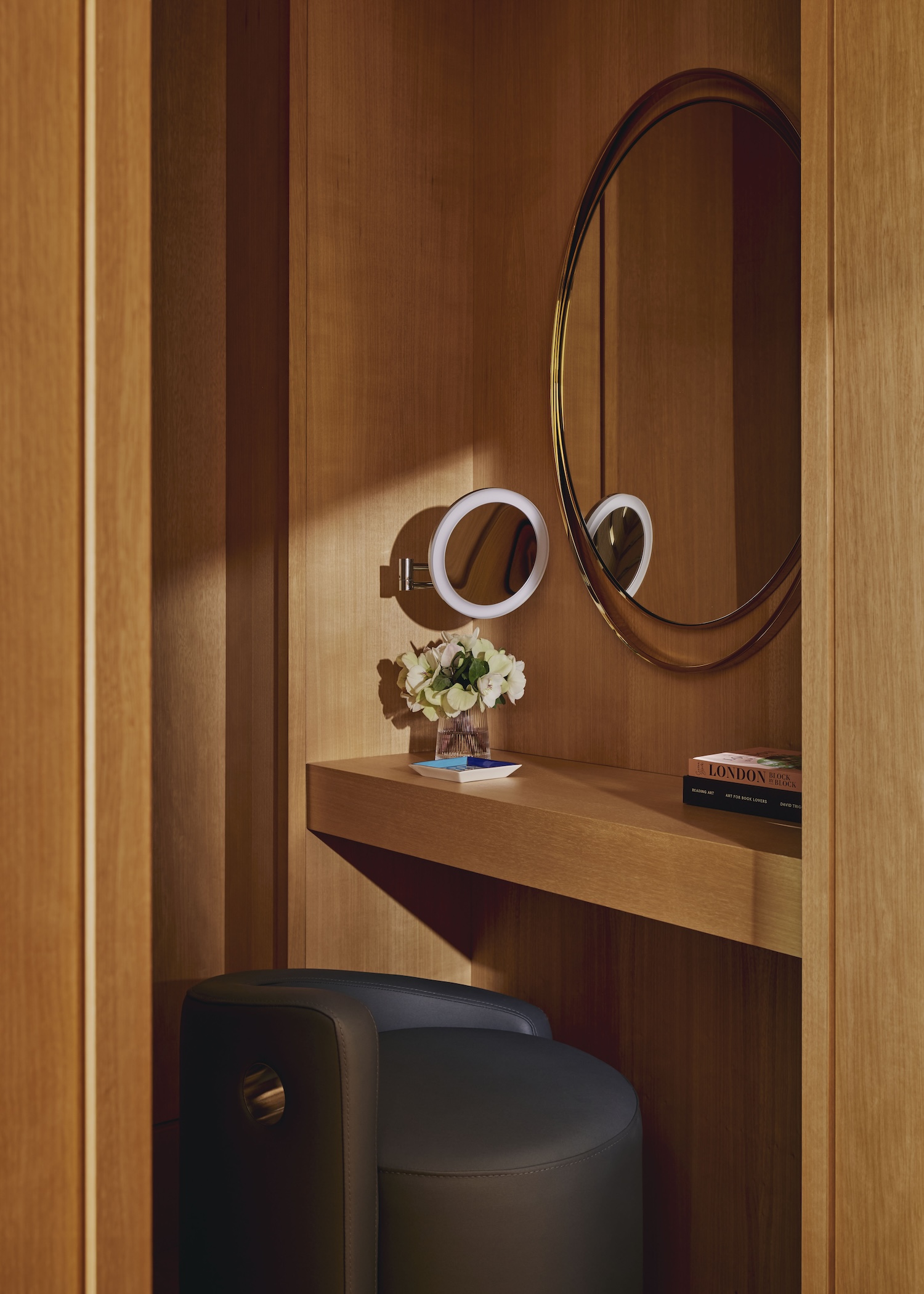
New York-based Champalimaud Design, led by Alexandra Champalimaud, approached the commission as a study in contrasts – not against the building’s taut modernism, but against the city itself. The suites were inspired by London’s forward-thinking urbanism and the premise that elevated design can coexist with a streamlined aesthetic. The resolution they found is warm without being historicist, contemporary without the cold palette that often accompanies it. The serene rooms are quietly elevated by a cladding of wood panels in bleached black limba and a herringbone wood floor – a pairing that works because bleached black limba occupies a chromatic middle ground, its pale, grey-washed grain neither the blonde warmth of white oak nor the severity of dark walnut. The material carries light without emitting it.