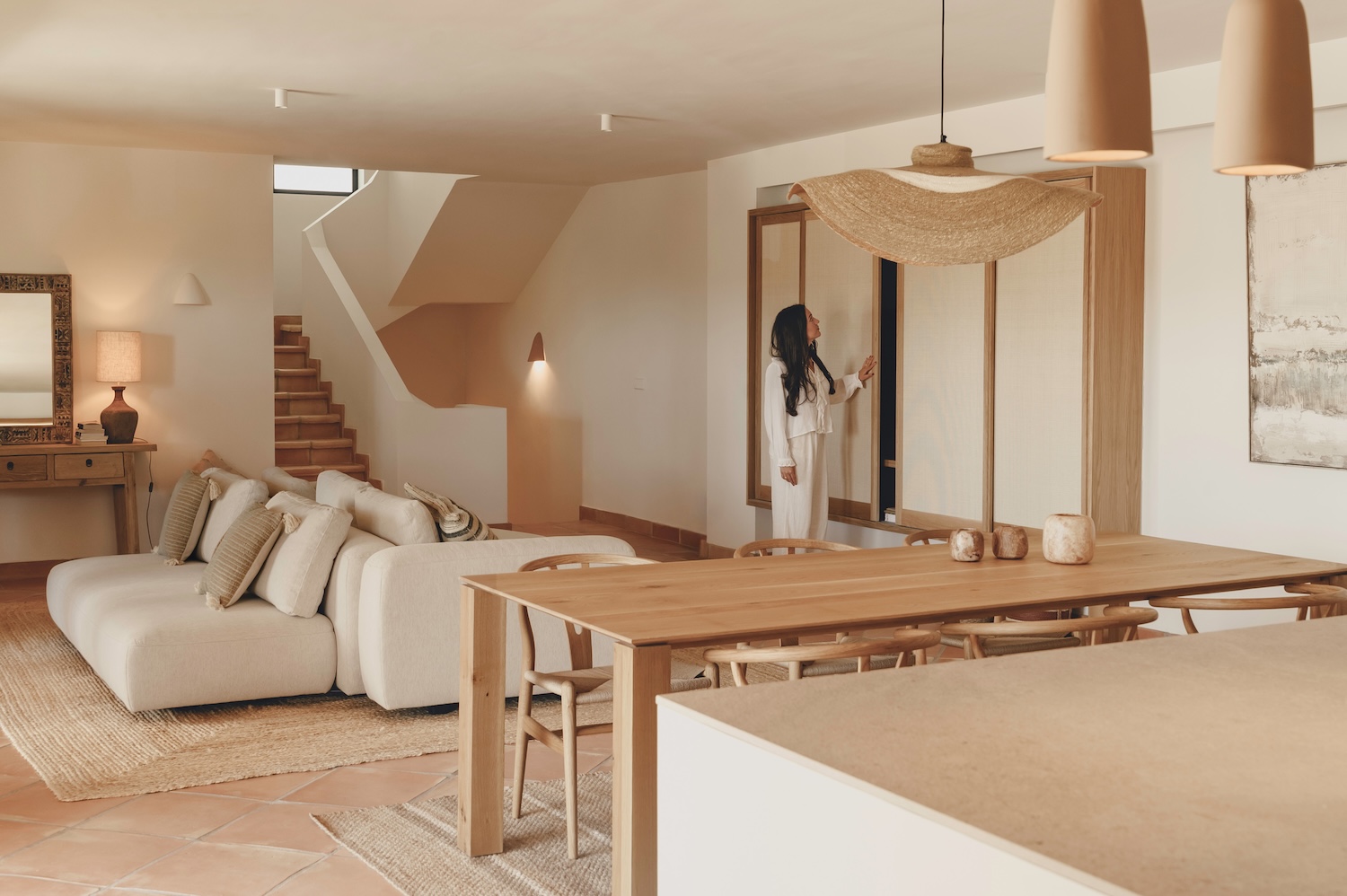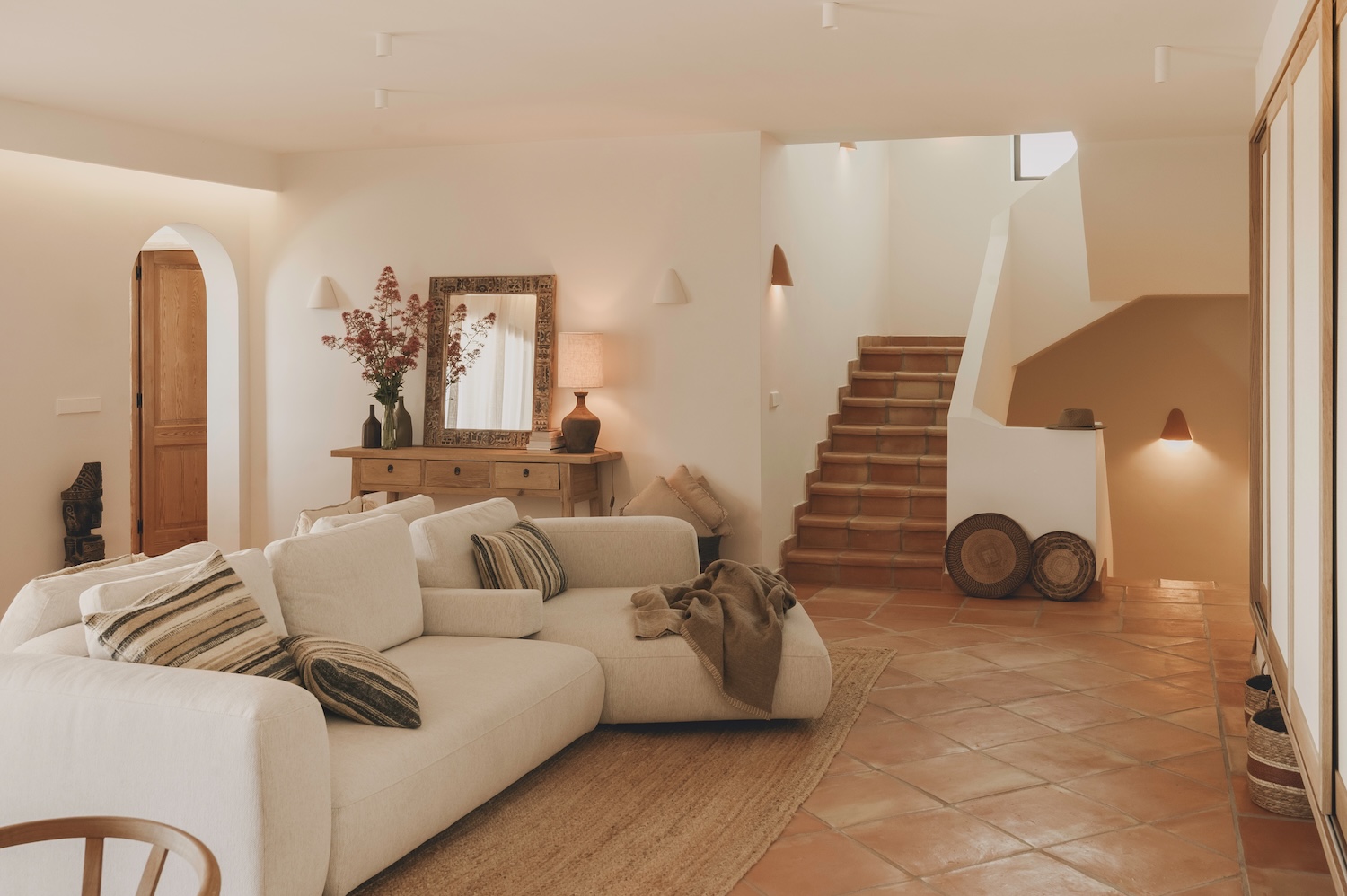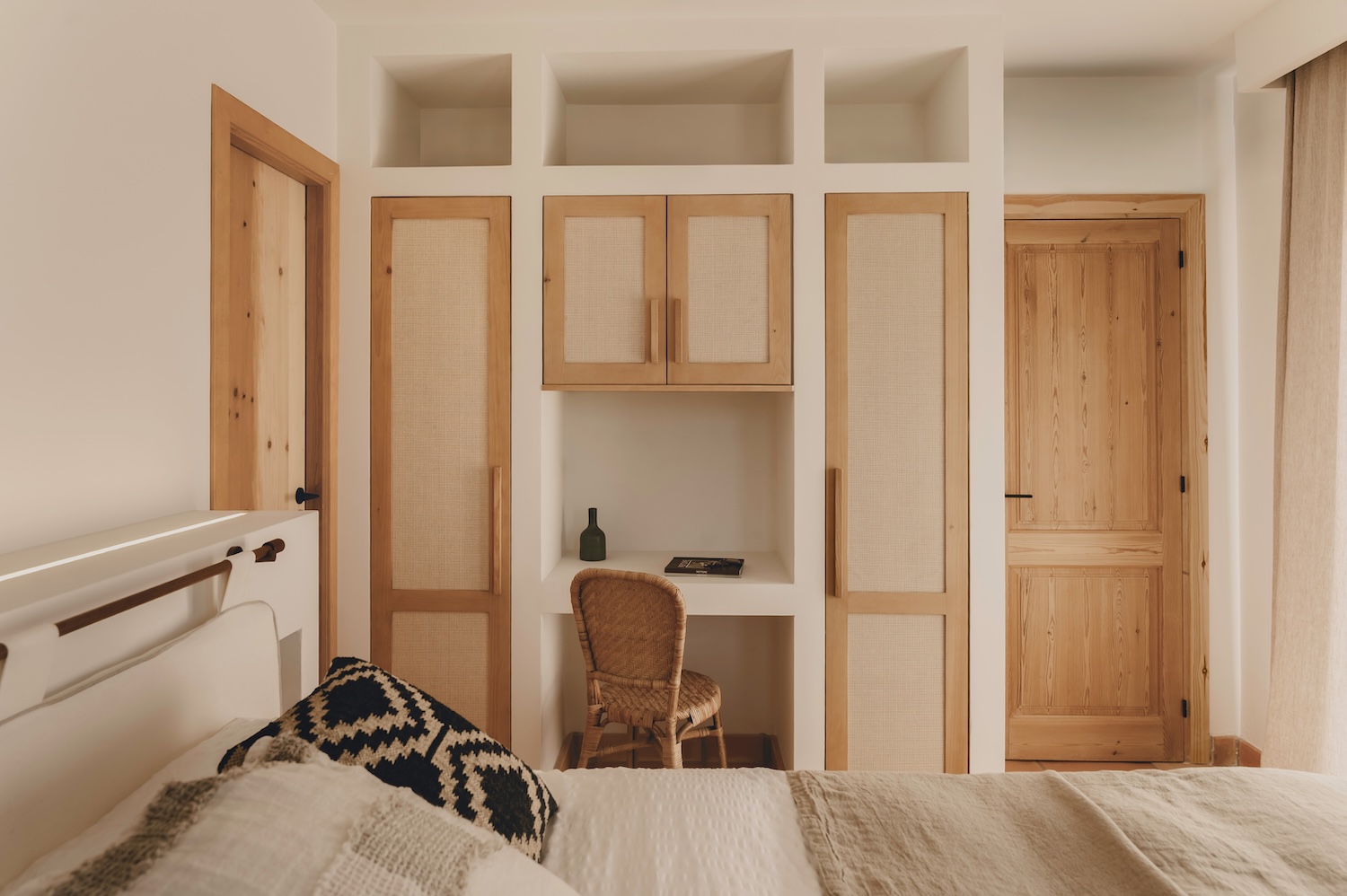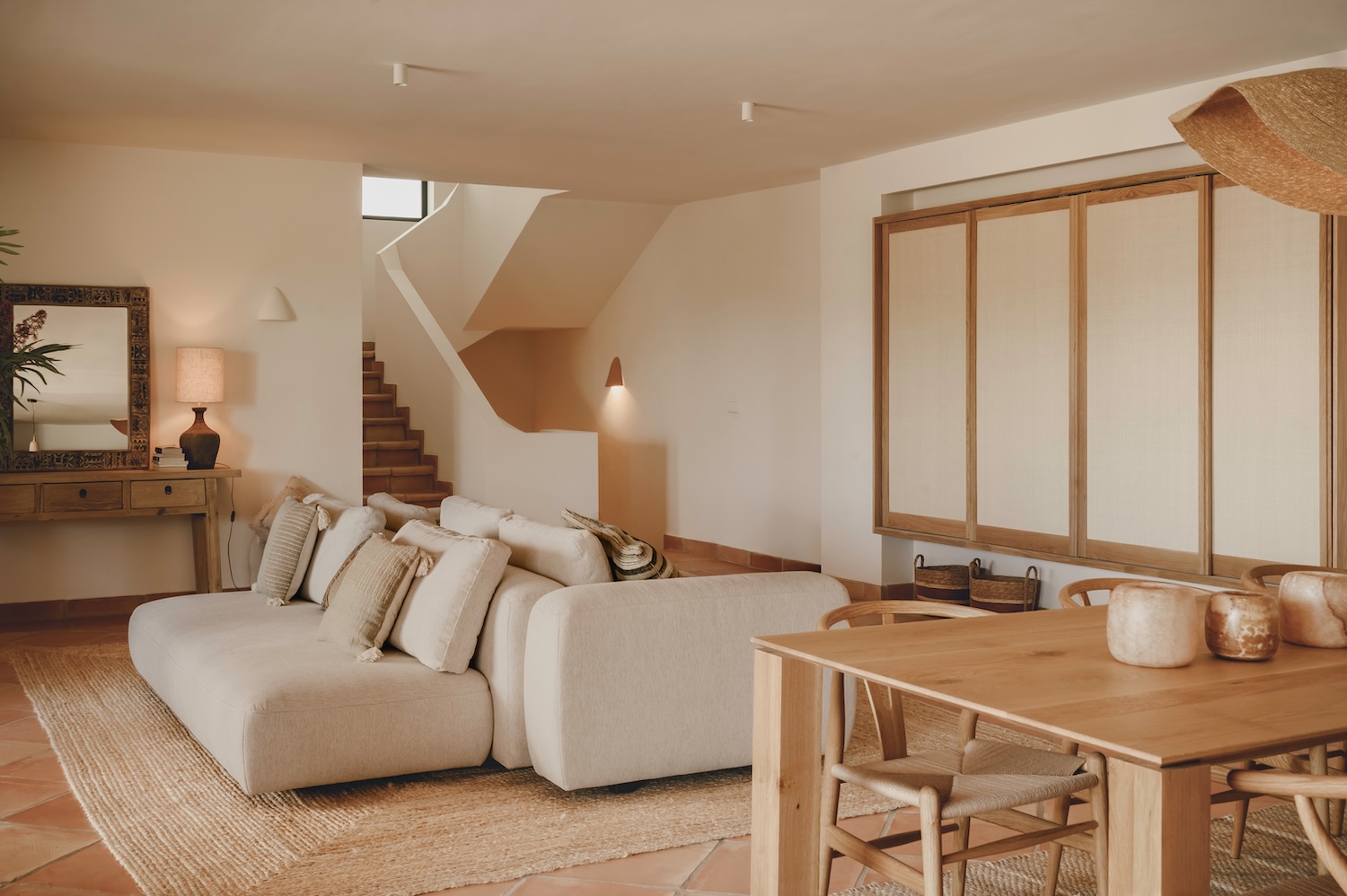
Casa Montis is a minimalist home located in Costa Blanca, Spain, designed by Auñón Cabrera. The coastline between Alicante and Denia has been built out since the 1970s largely for northern European buyers, producing a hybrid housing stock in which Mediterranean massing wraps interiors of dark stained pine, heavy ceiling beams, and small punched openings that belong more to Bavaria than to Valencia. This 234-square-meter house was one of those, and the brief for its full renovation was to undo the inheritance without erasing it.
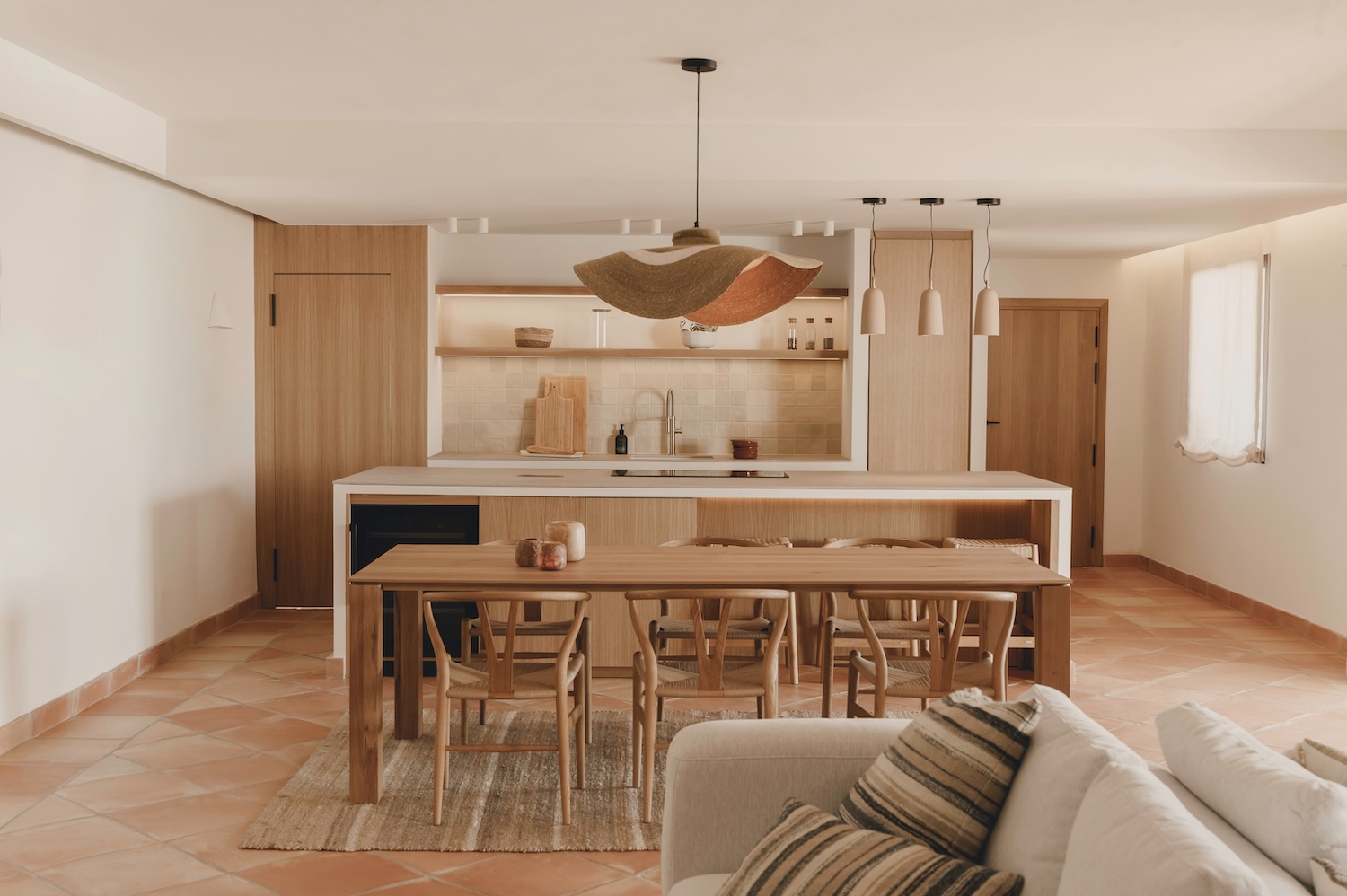
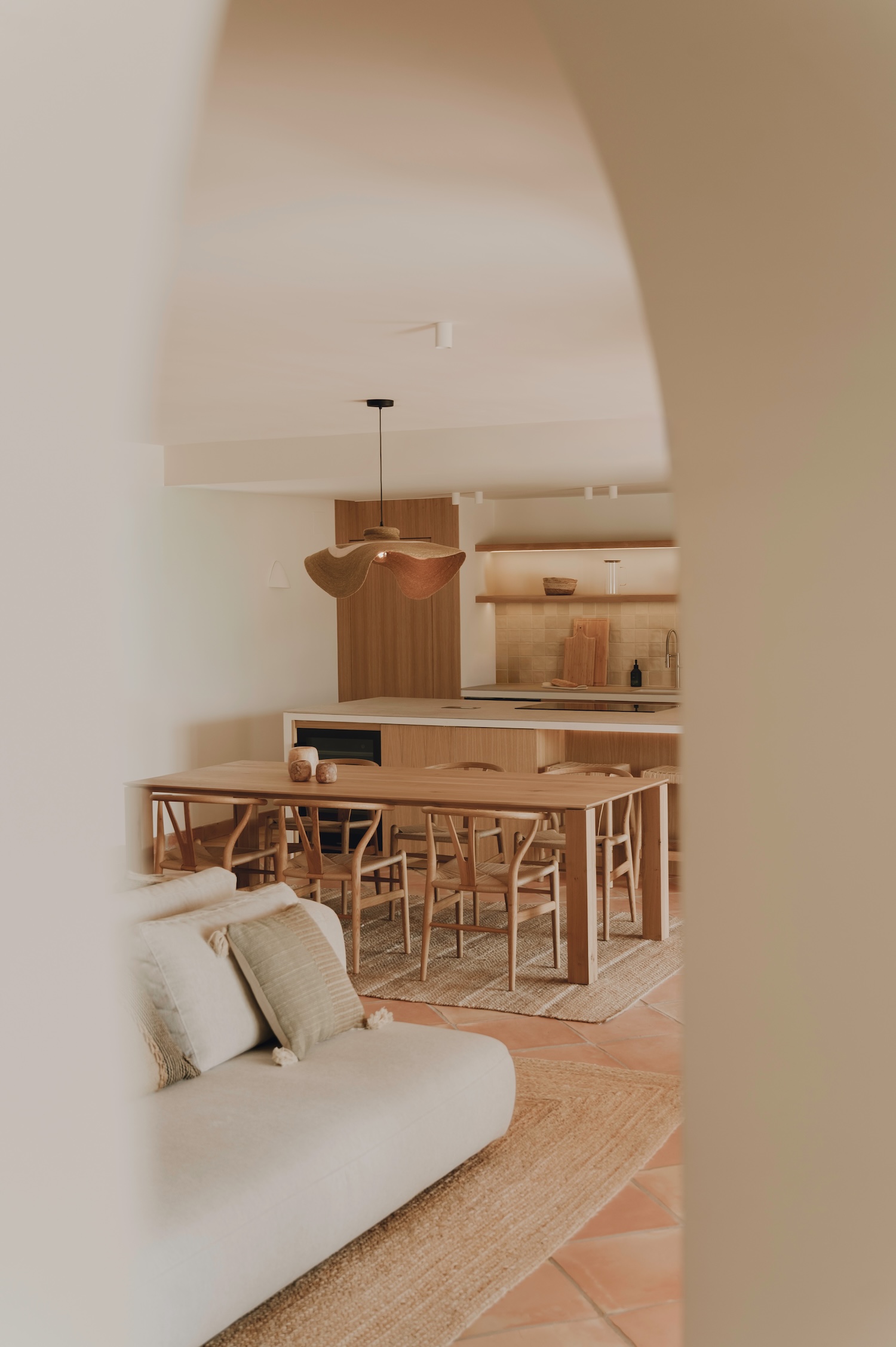
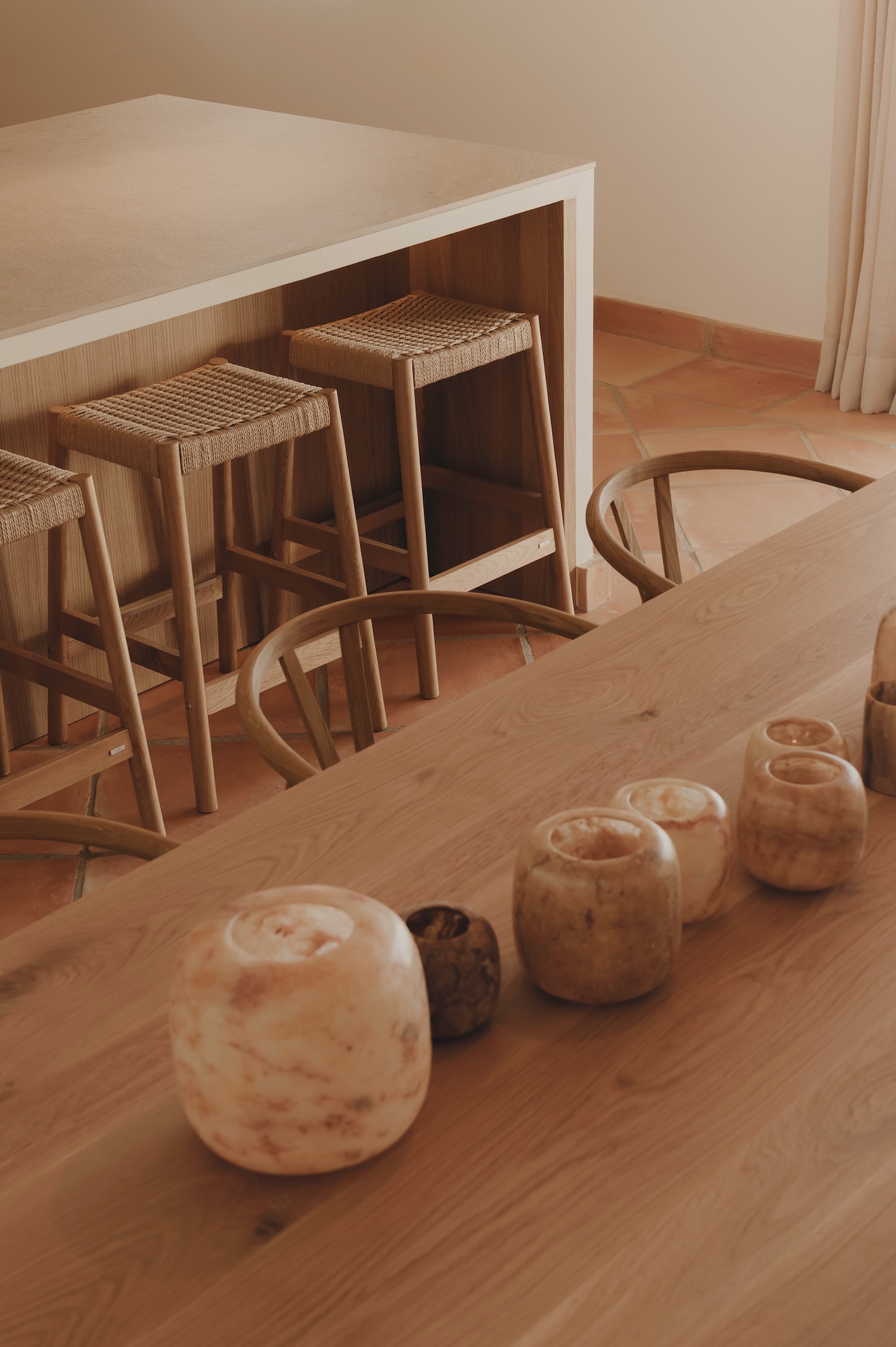
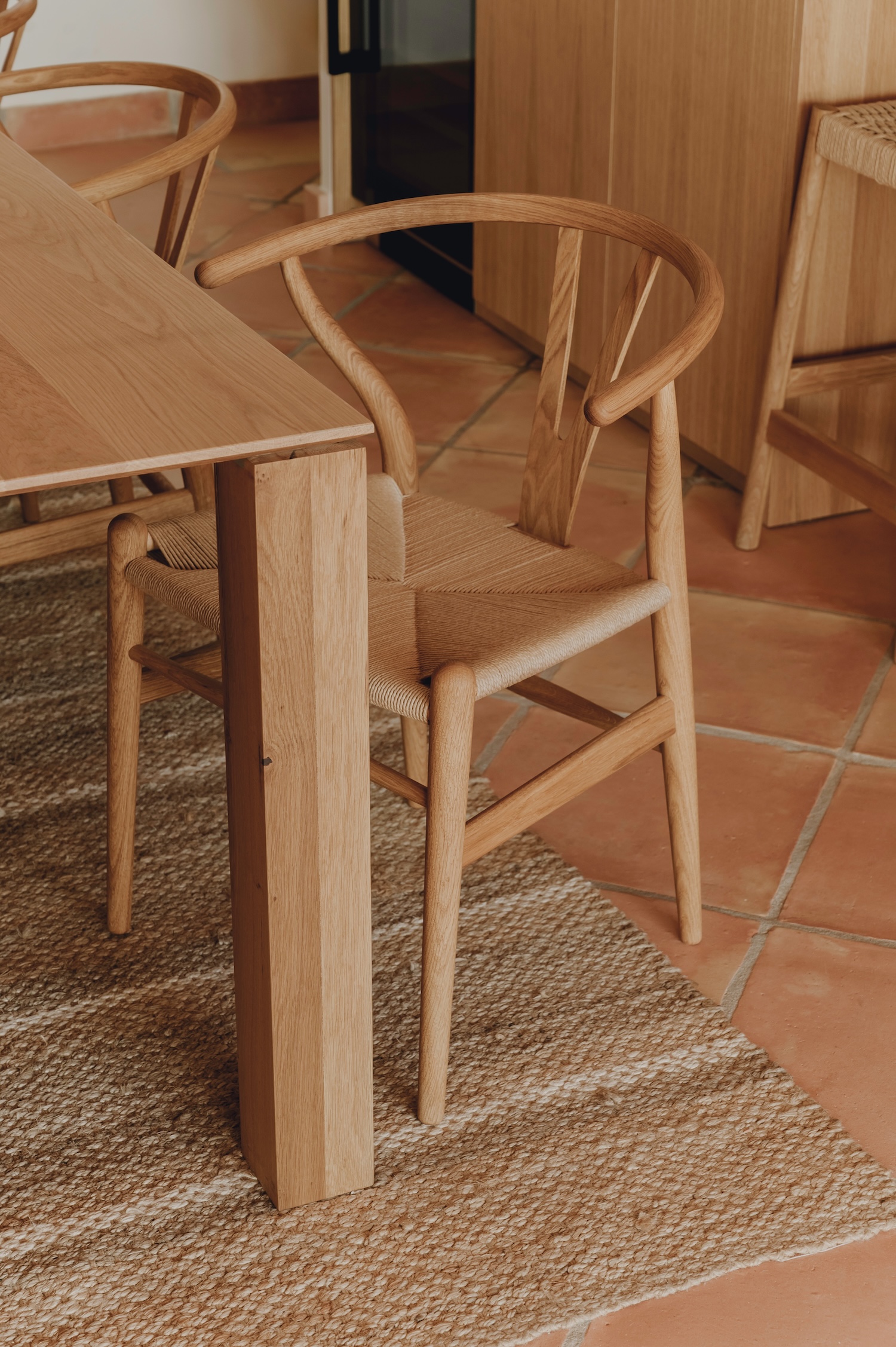
The original terracotta floor had to stay, and that single condition governed every decision downstream. Barro cocido, fired at low temperature and left unglazed, stays porous enough to take up oil, wax, and foot traffic, which is why an old floor carries a tonal range across warm reds and dusty oranges that no newly extruded tile reproduces. Rather than working around it, the studio treated the floor as the source of the palette. Off-whites, naturally lacquered oak, plant fiber, and linen all sit in the same low-chroma warm register, so nothing in the room competes with the ground plane for attention.
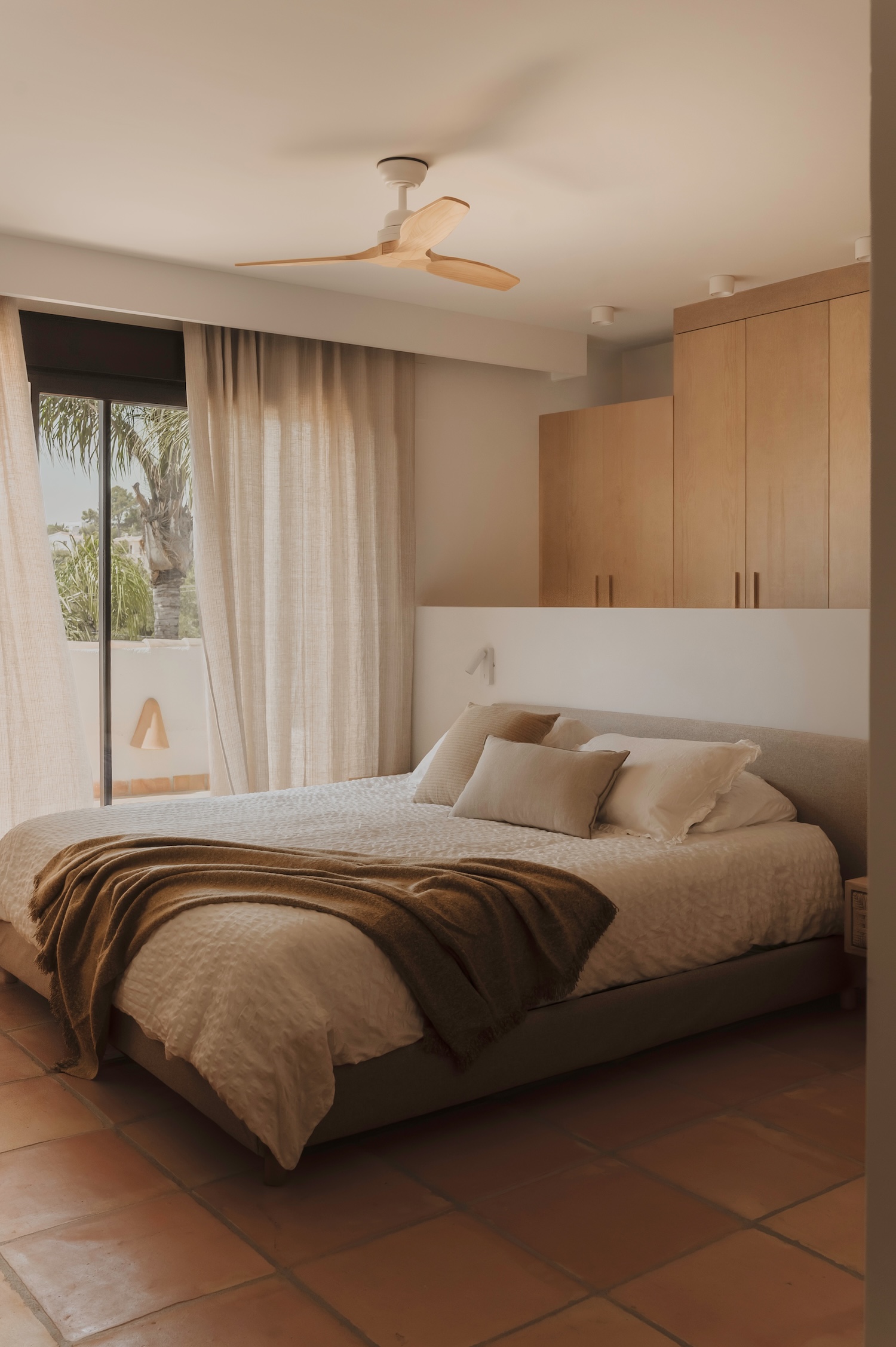
Kitchen, wardrobes, TV unit, and dining table were all drawn for the house, which places them closer to the Spanish alacena tradition of built-in cupboard volumes than to freestanding furniture. The wardrobes carry the idea furthest, built as oak frames infilled with natural-fiber mesh. Cane webbing entered Mediterranean carpentry as a climatic device, since a woven front vents enclosed storage and keeps stored linen from mildewing in humid coastal air. The visual lightness it gives these volumes is a secondary effect of a functional logic, and the panels break up what would otherwise read as several meters of solid wall.