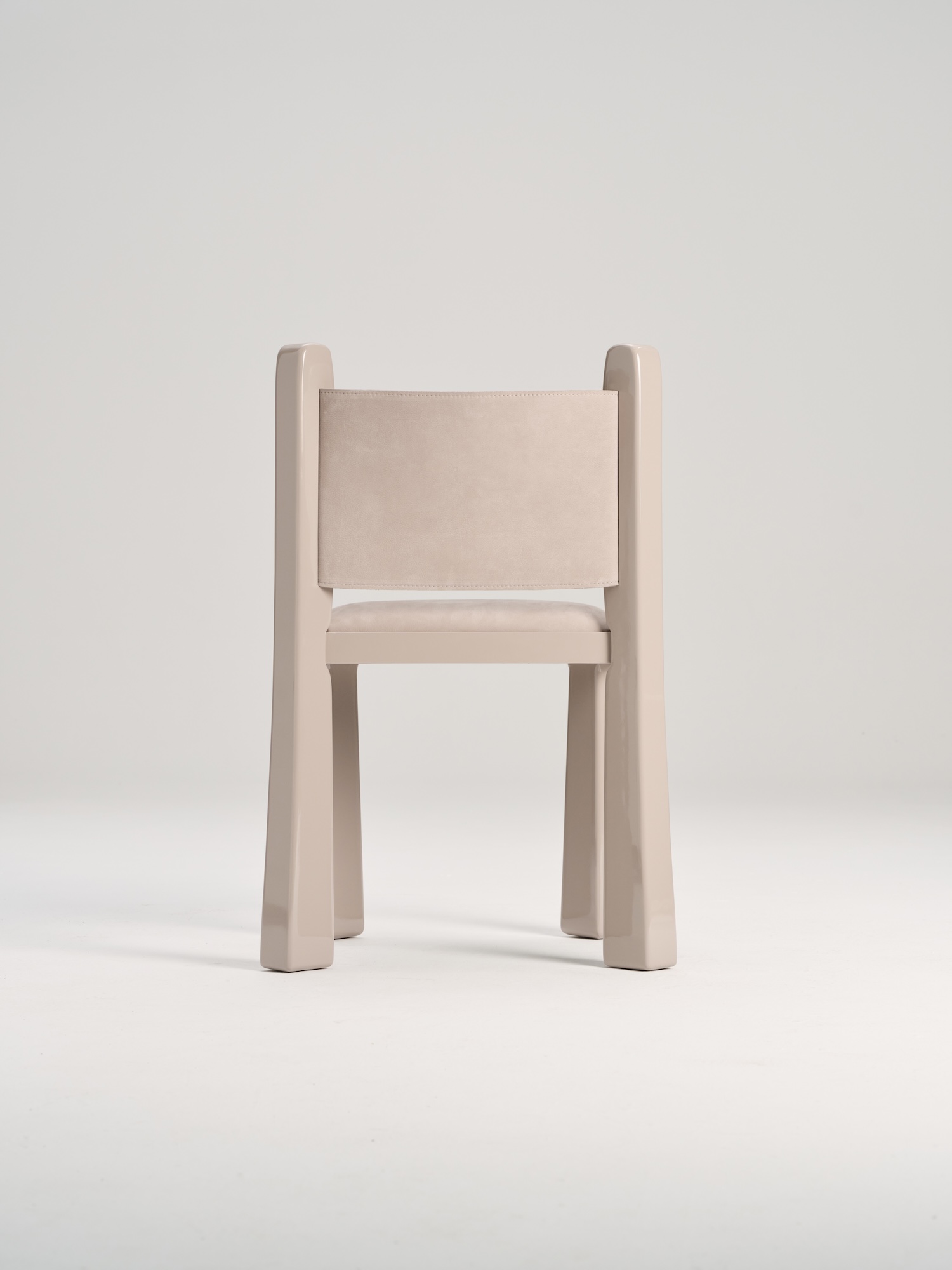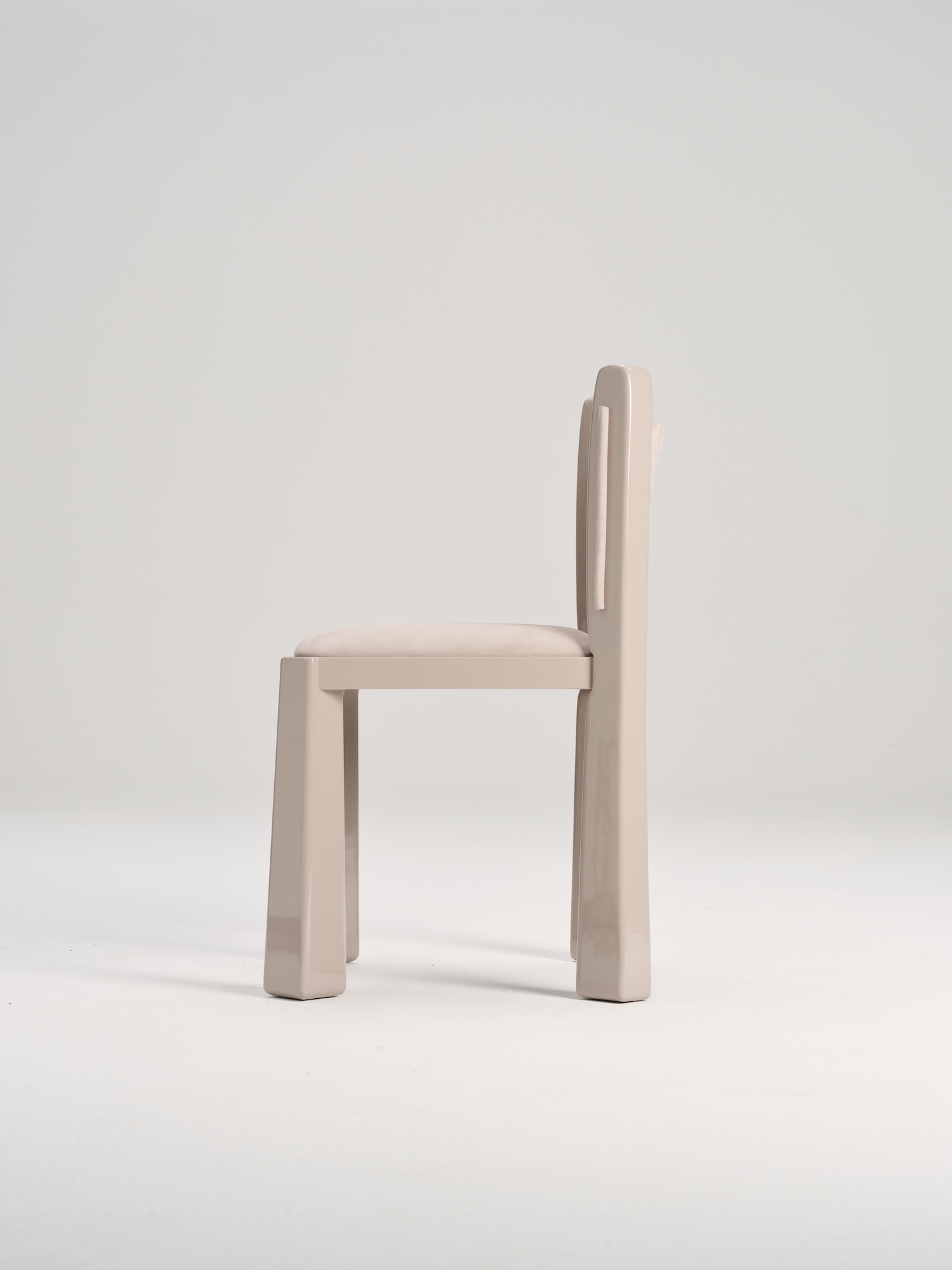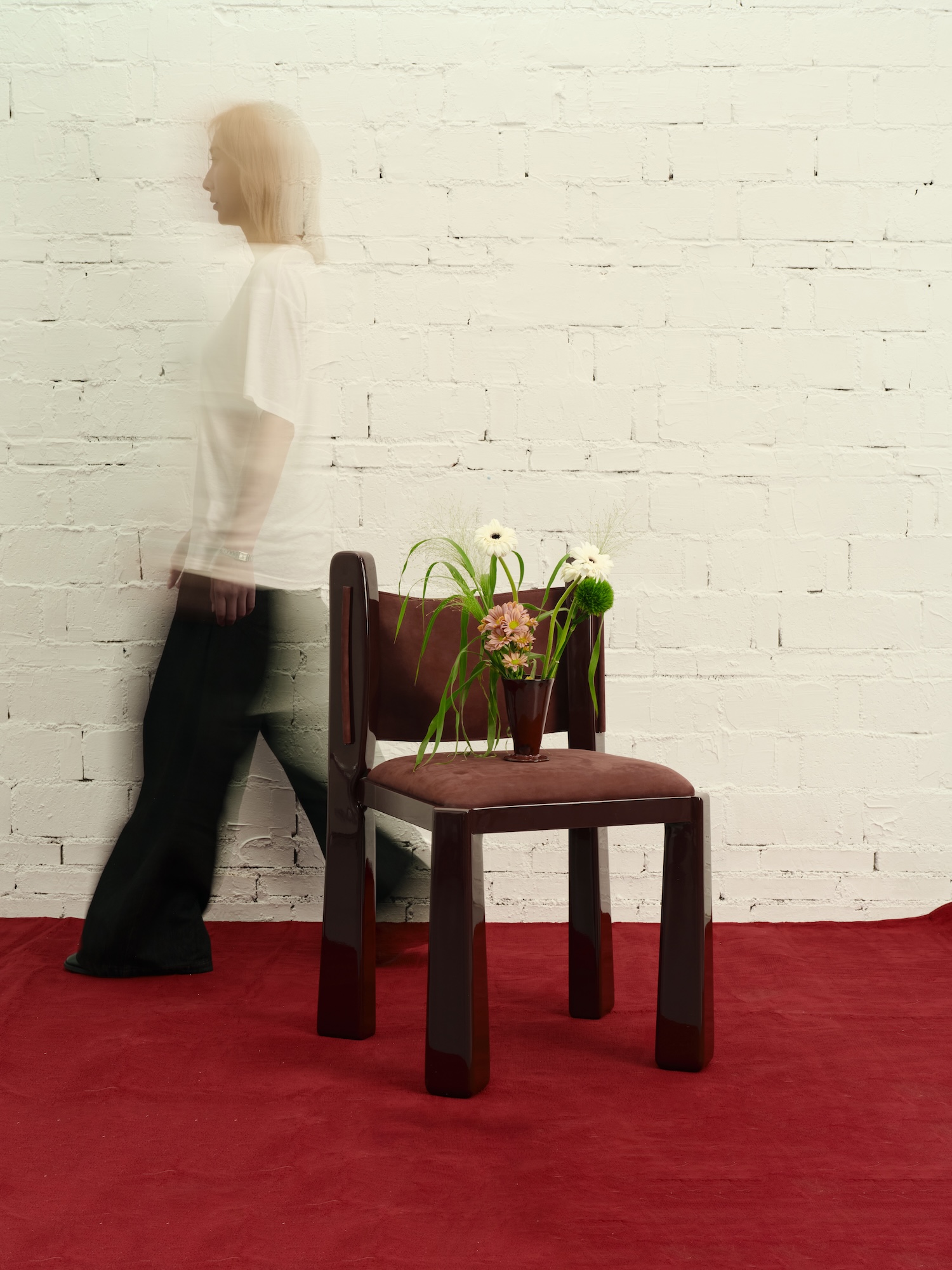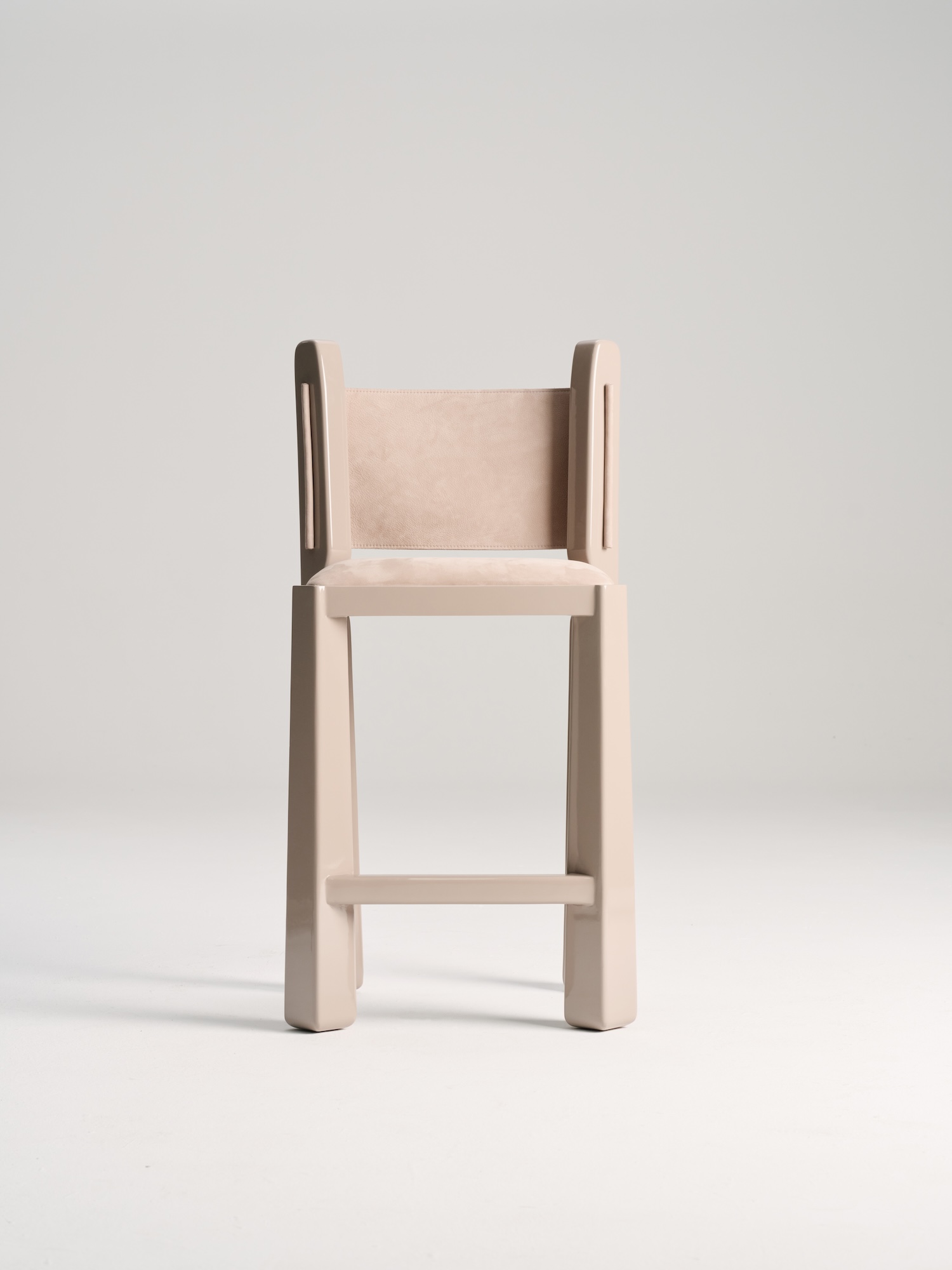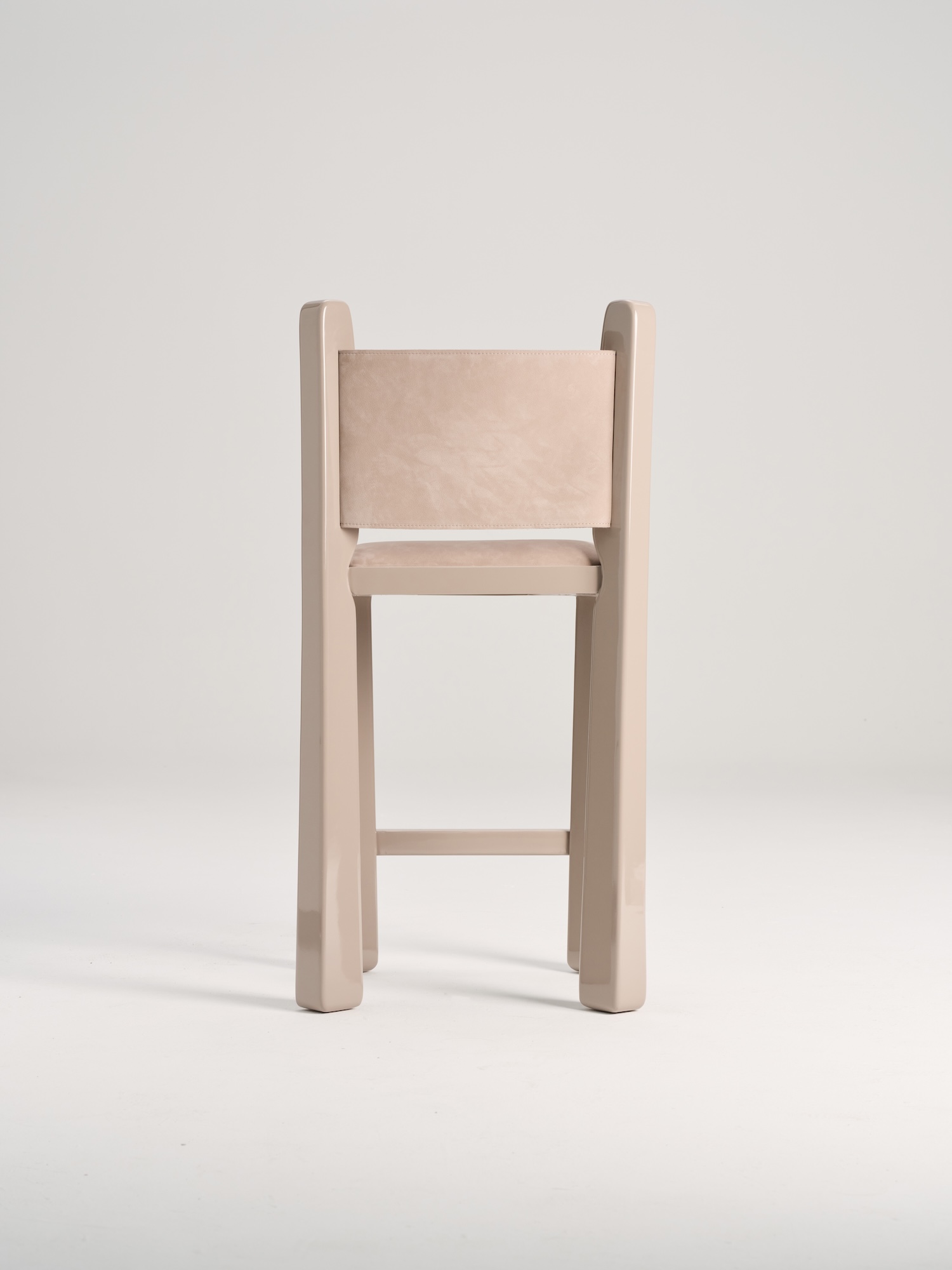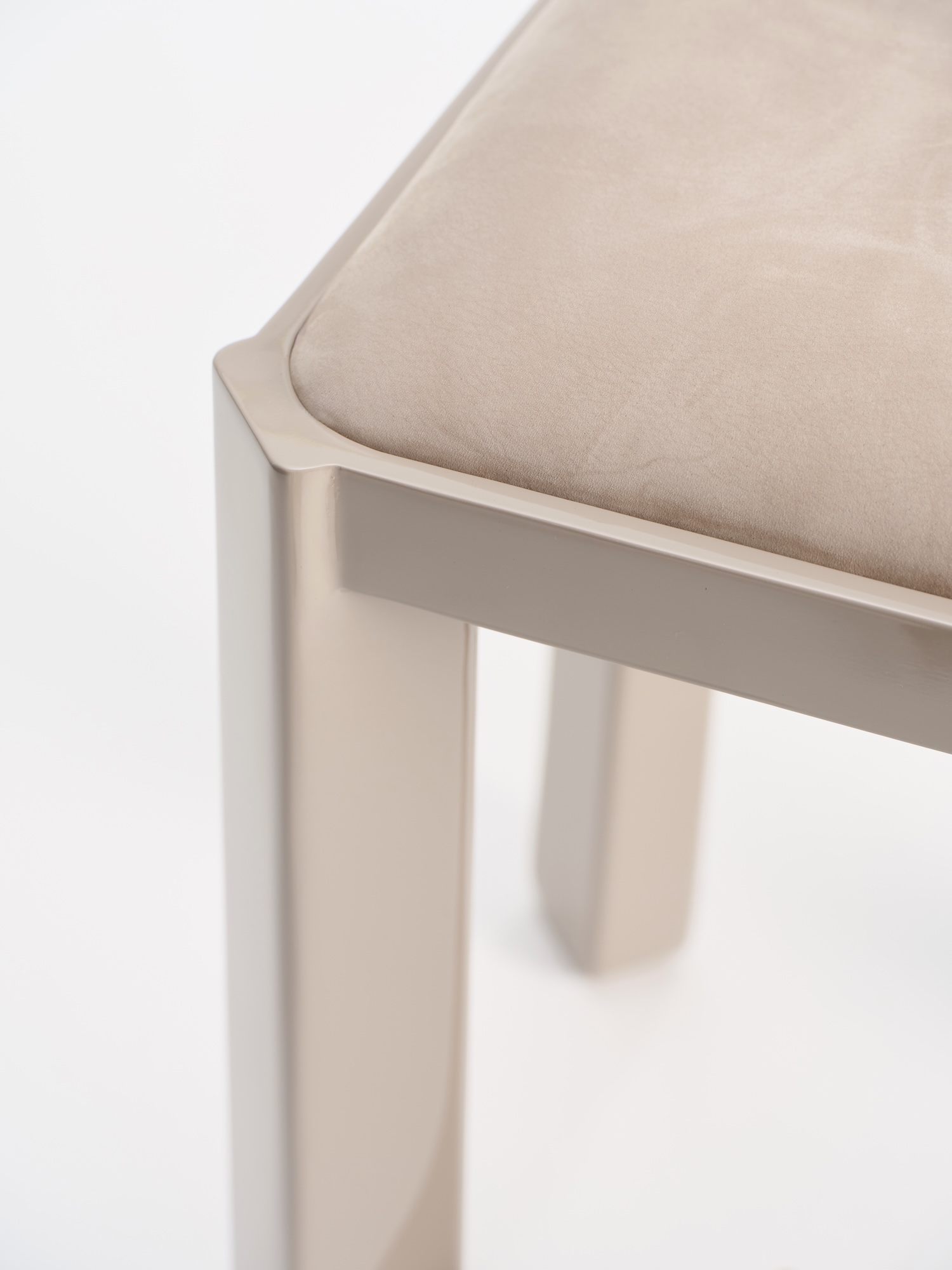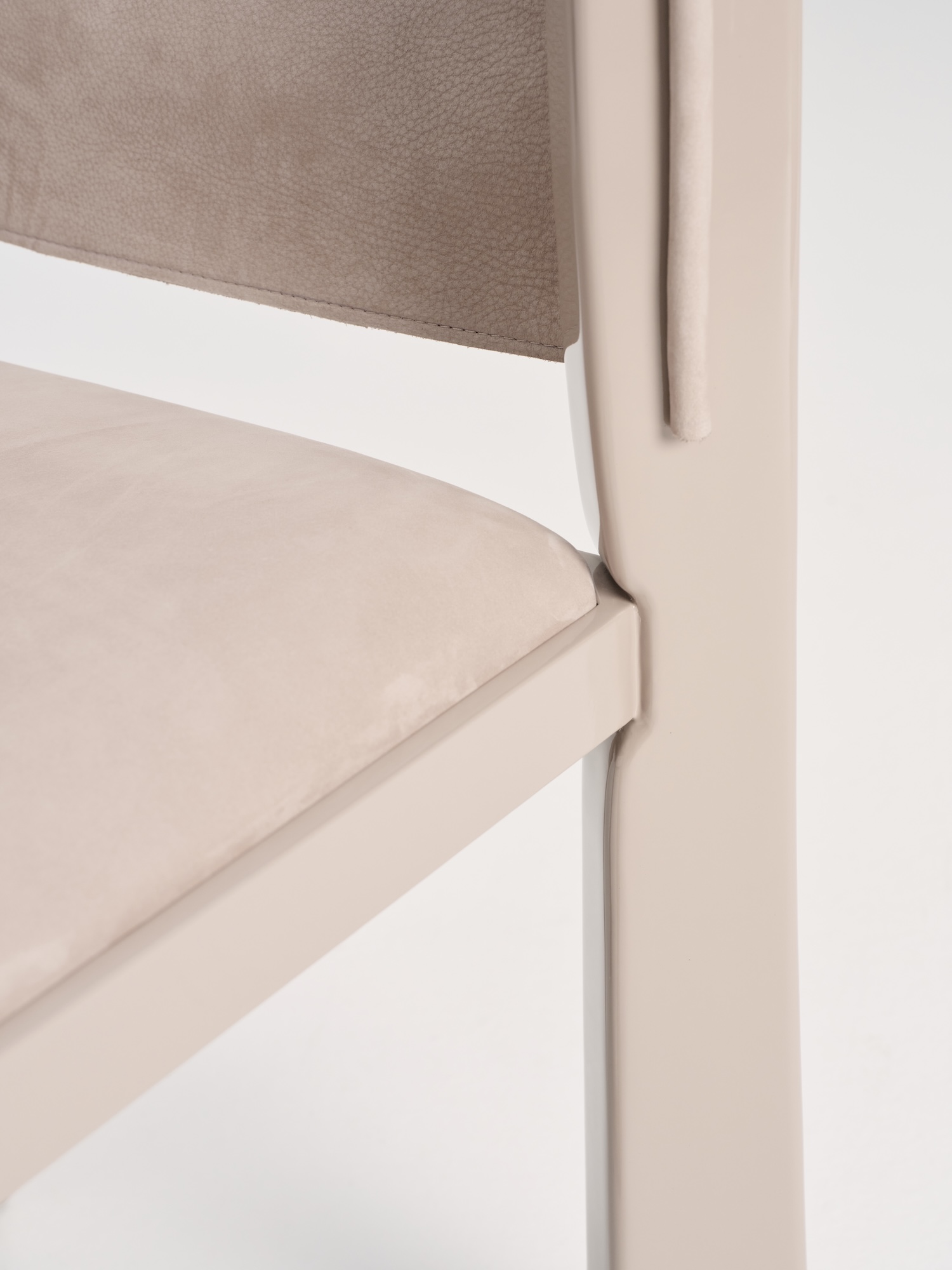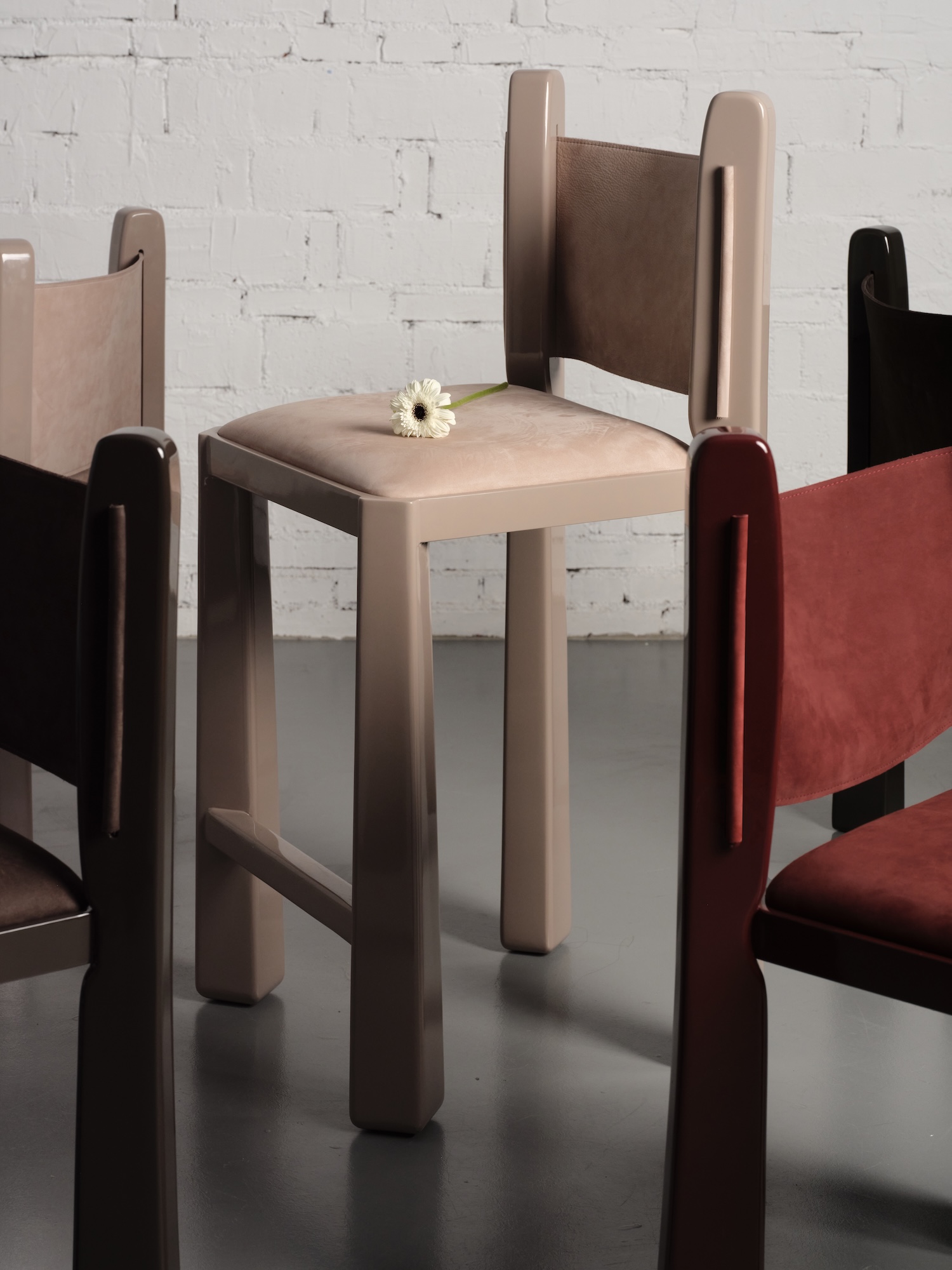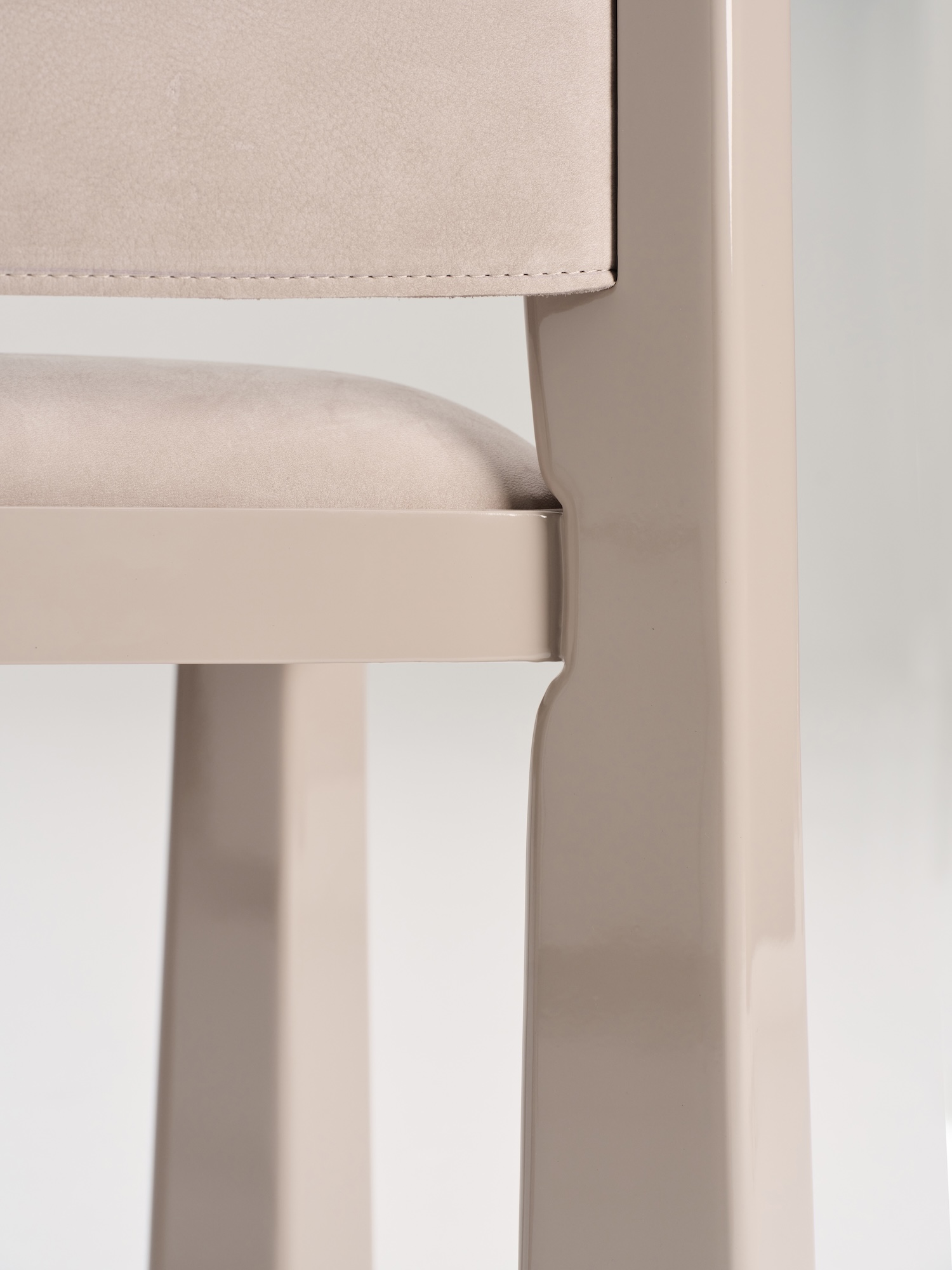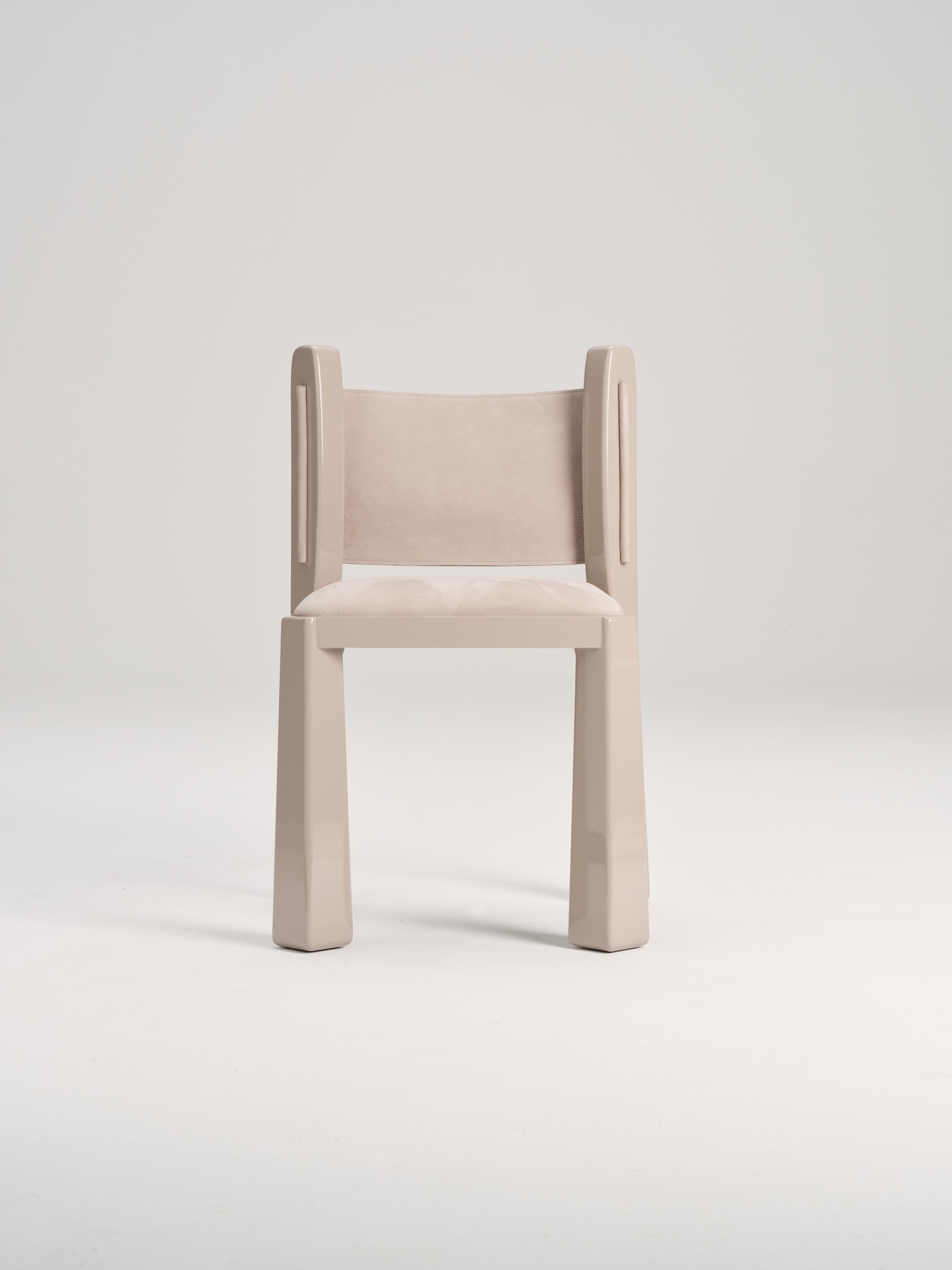
Ruby Chair is a minimalist chair created by Toronto-based design studio NOVSEP. Mirror-gloss lacquer is one of the least forgiving finishes in furniture production, magnifying every ripple in whatever sits beneath it, and the chair carries that finish across four tapered legs and a pair of back stiles whose faceted edges break the reflection into distinct planes rather than letting it pool across a single continuous surface.
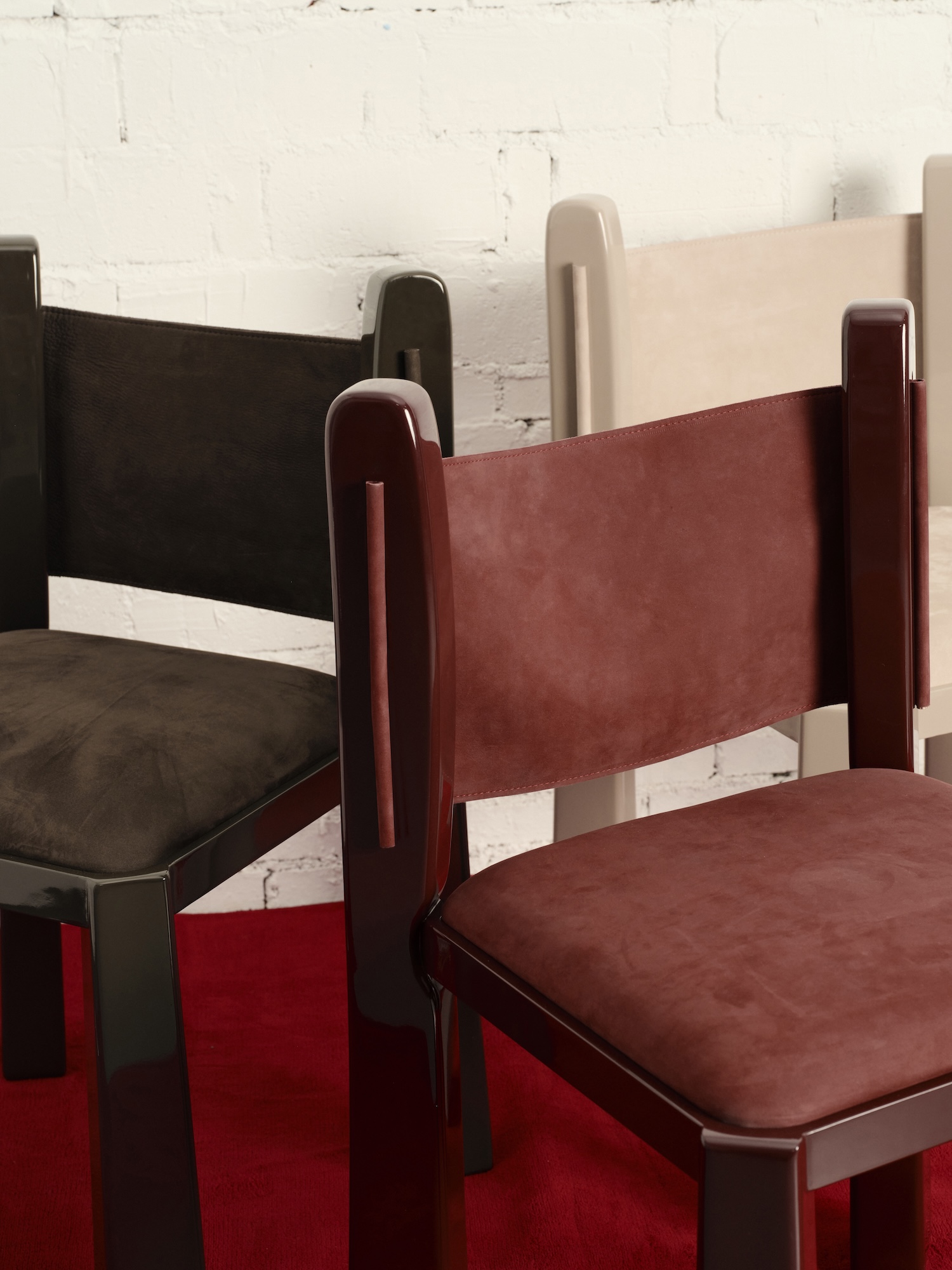
Getting there requires grain filling, sealing, and repeated cycles of spraying, wet-sanding, and polishing, a sequence borrowed more from coachbuilding than from cabinetmaking. Solid wood expands and contracts with humidity, which is why so much high-gloss furniture defaults to MDF, where the substrate stays inert and the coating stays flat. NOVSEP keeps the solid wood and absorbs the risk, producing each piece to order in Shanghai, a city whose workshops sit downstream of a lacquer tradition measured in millennia. The material has changed, polyurethane rather than sap tapped from the lacquer tree, but the logic of building depth through many thin layers has not.
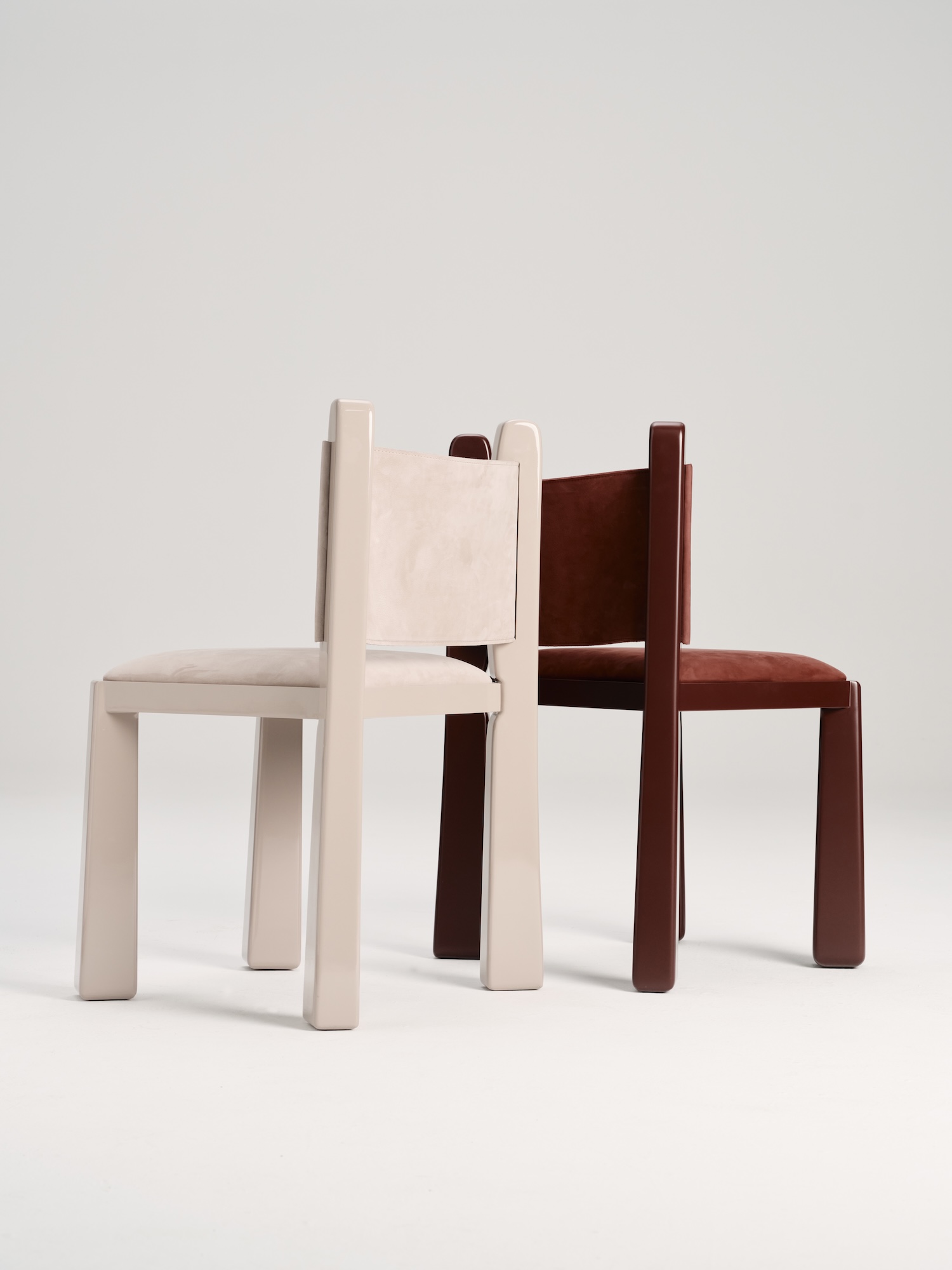
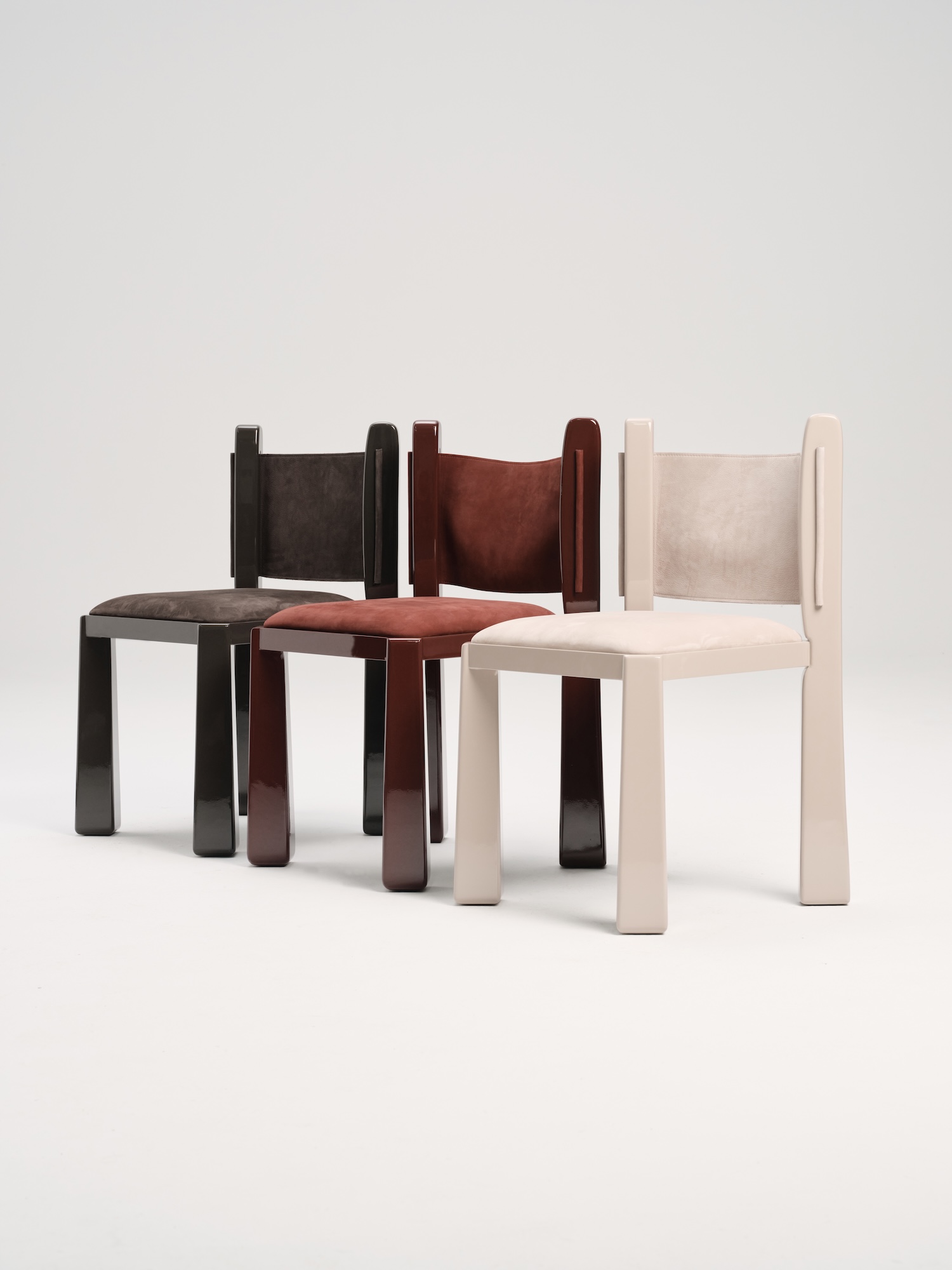
Suede does the opposite work of the lacquer. Nap scatters light where the frame returns it, and the two finishes meet without transition at the seat rail, matte set directly against mirror. Jean-Michel Frank built entire interiors on that opposition in 1930s Paris, placing parchment, shagreen, and suede beside lacquered surfaces so each material read more clearly for the company it kept. The three standard colors follow the same restraint, a pale greige, an oxblood that gives the chair its name, and a brown deep enough to approach black, each applied to frame and upholstery together so the piece arrives as a single tonal object rather than a composition of parts.