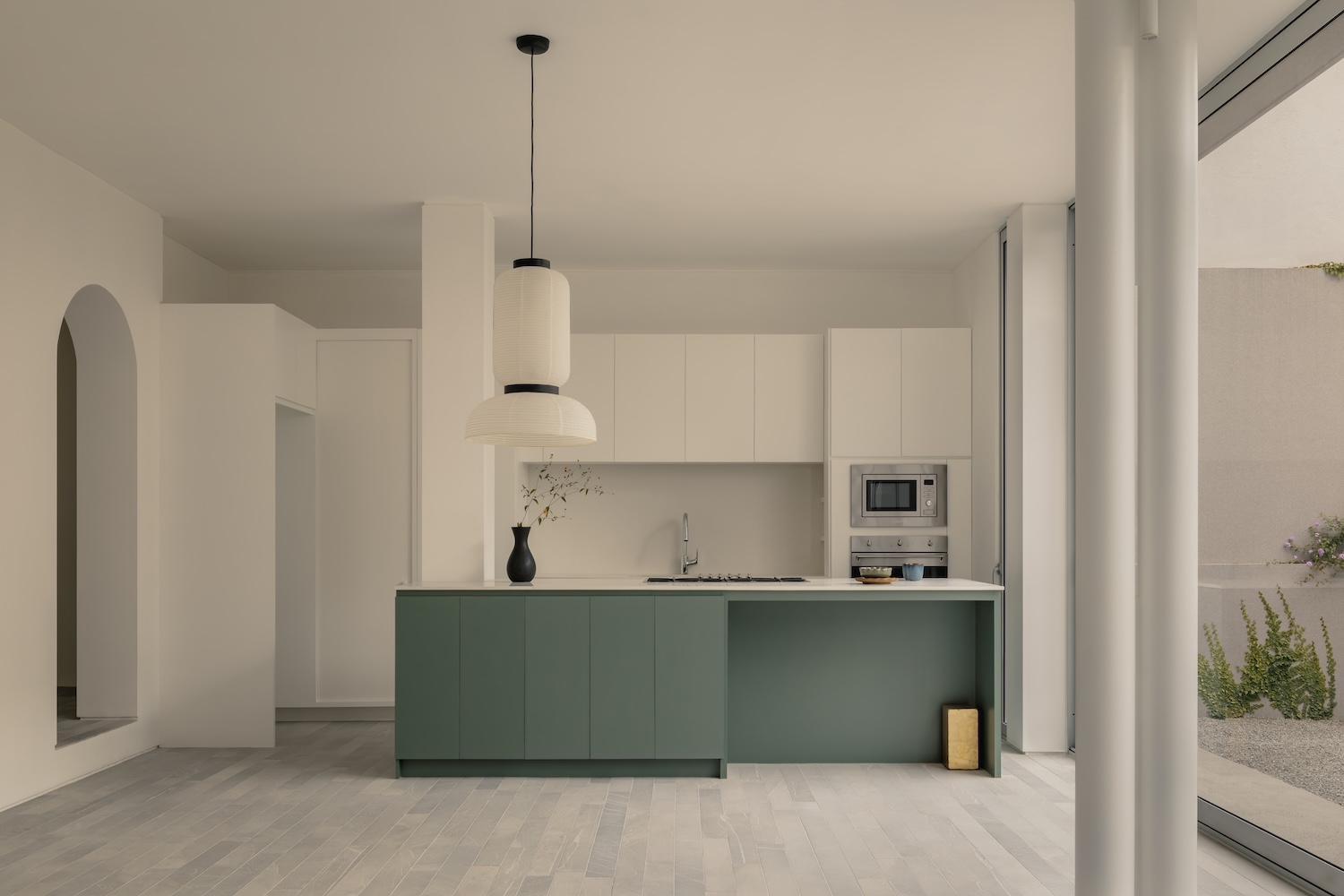
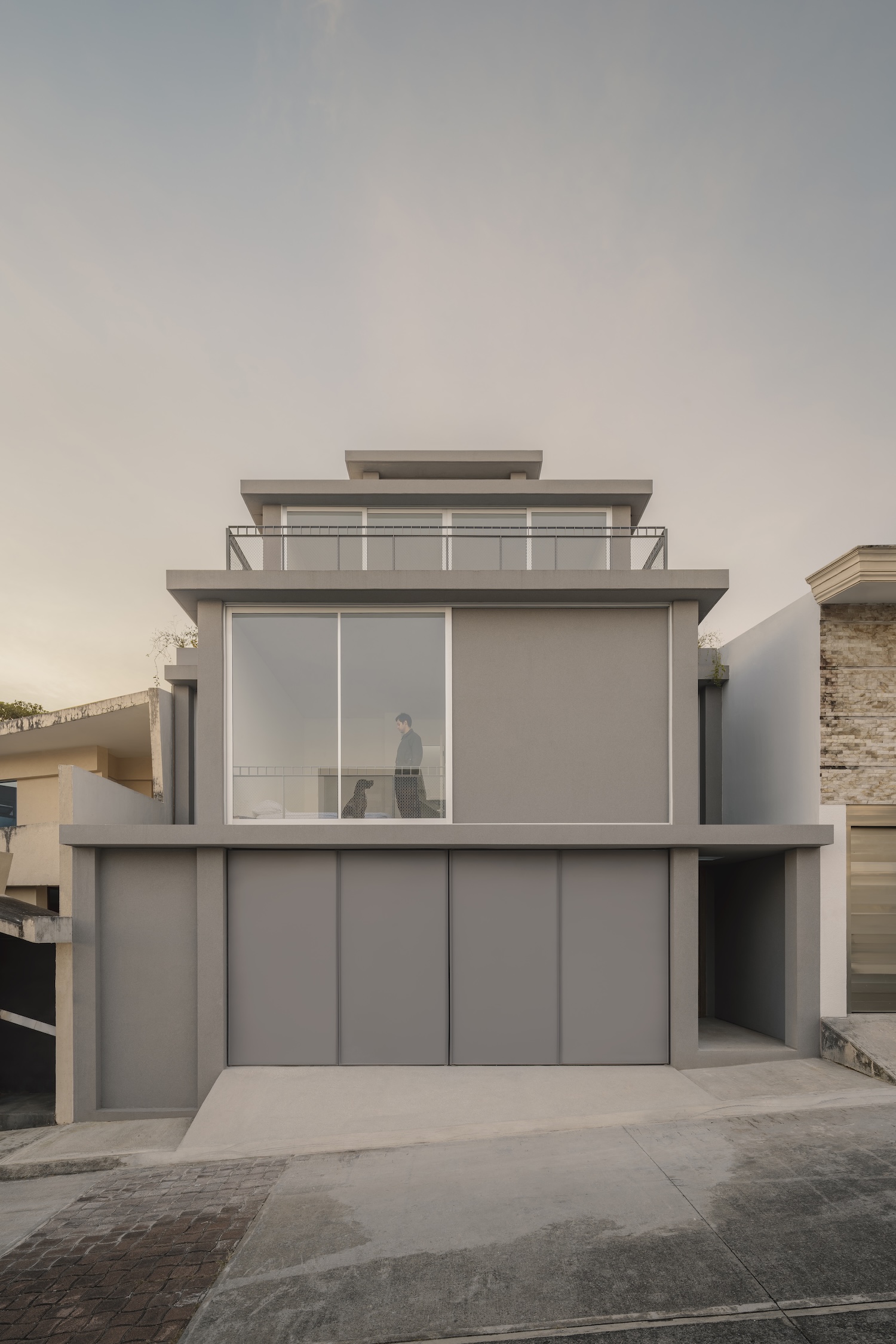
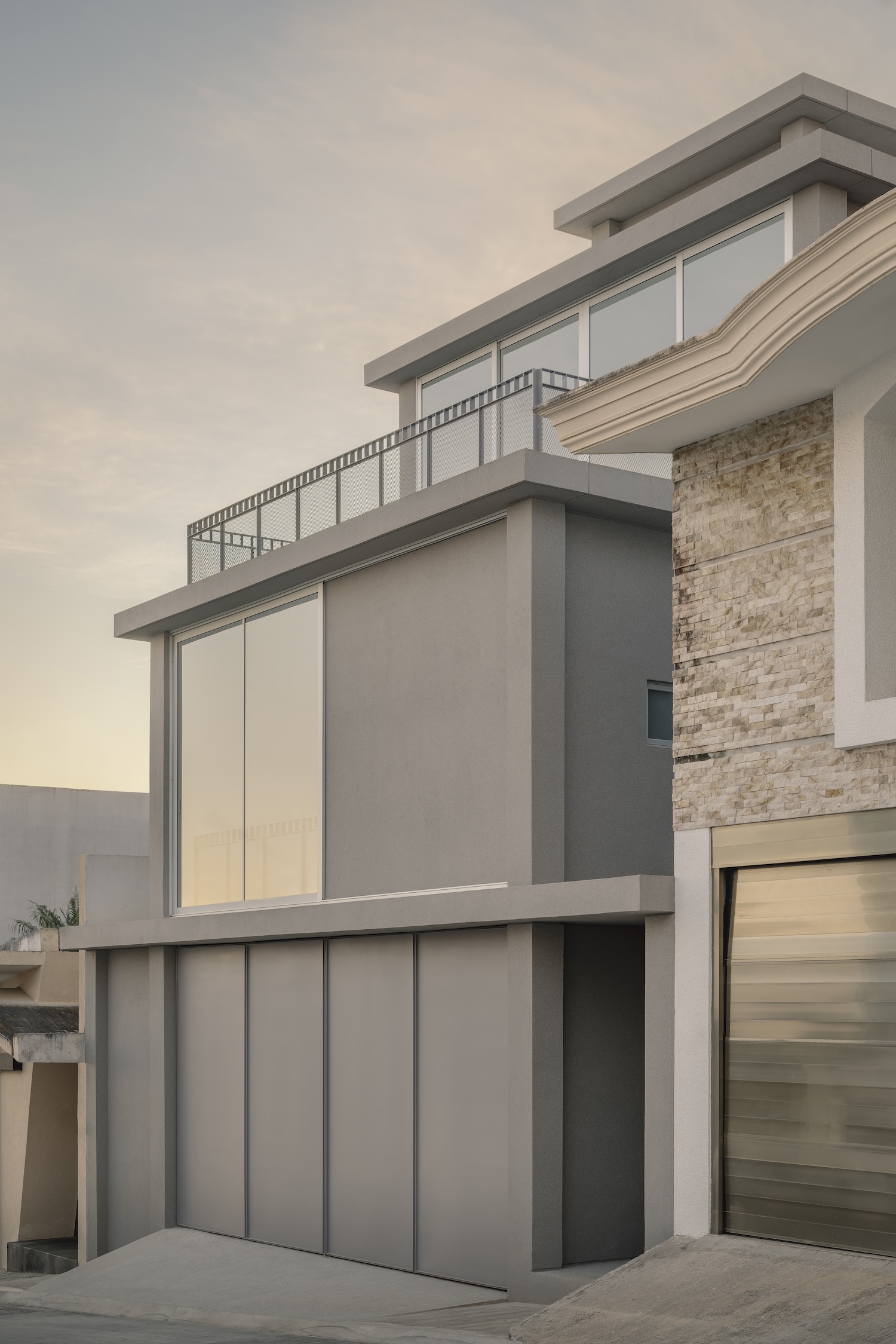
Casa Tlaloc is a minimalist residence located in Xalapa, México, designed by López González. Xalapa sits at an elevation where the Gulf Coast humidity meets the cool air descending from Cofre de Perote, a climate that demands architecture be as much environmental instrument as shelter. López González – the practice of brotheres Jesús Arturo and José Pedro – responds to this condition not through passive accommodation but through a disciplined structural logic that makes every element earn its place through performance.
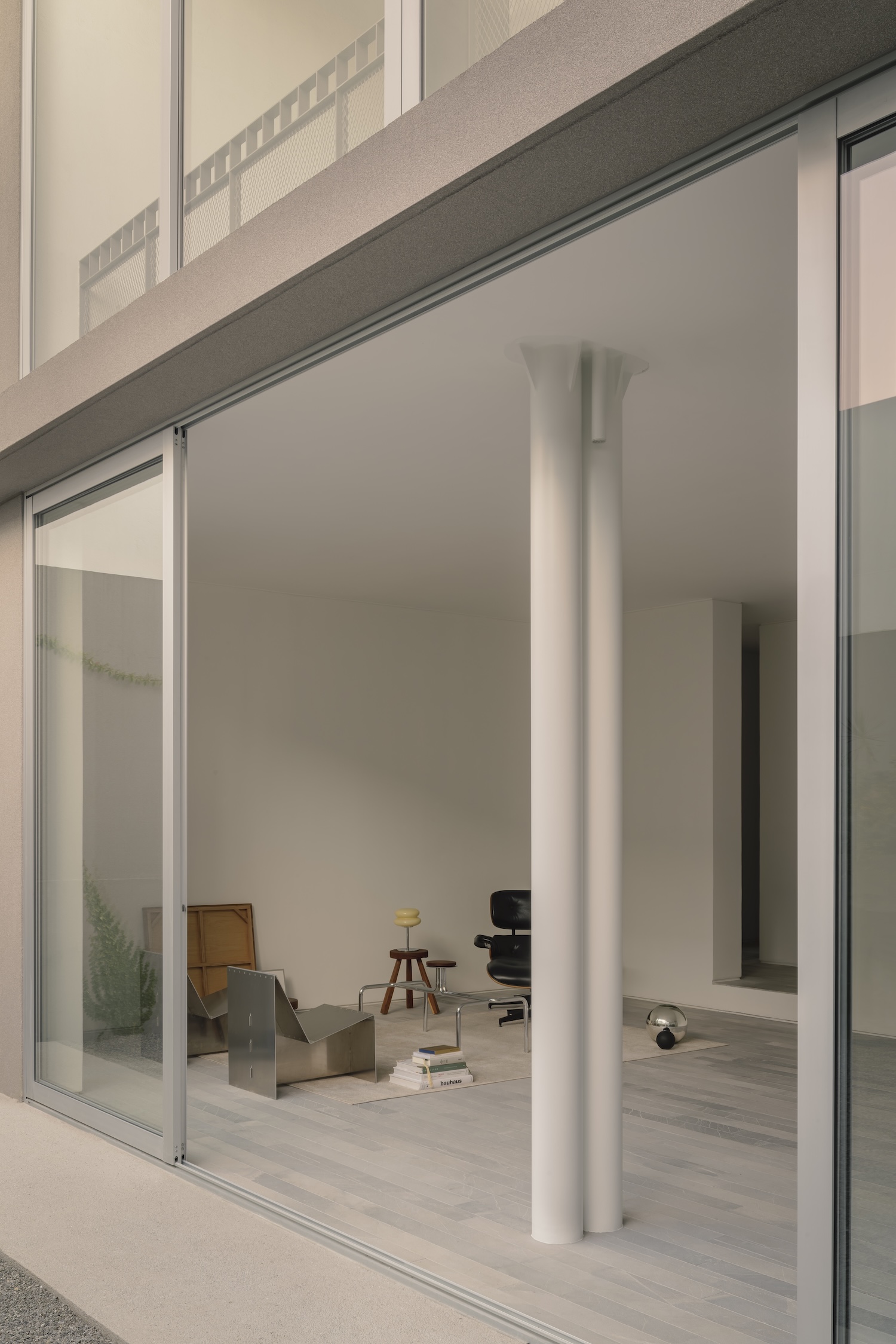
The organizational principle is deceptively simple: a grid of four bidirectional axes anchored by square columns, with three pairs of double metallic supports freeing specific spans from obstruction. From this armature, the house rises in stacked horizontal planes, each floor supporting the next with the legibility of load-path exposed. The cantilevered slabs that extend beyond the building envelope are not decorative overhangs – they calibrate solar penetration by season while channeling rainwater into a harvesting system that closes the hydrological loop the site itself presents. The structure becomes climate apparatus, and the architecture finds its character through that honesty rather than despite it.
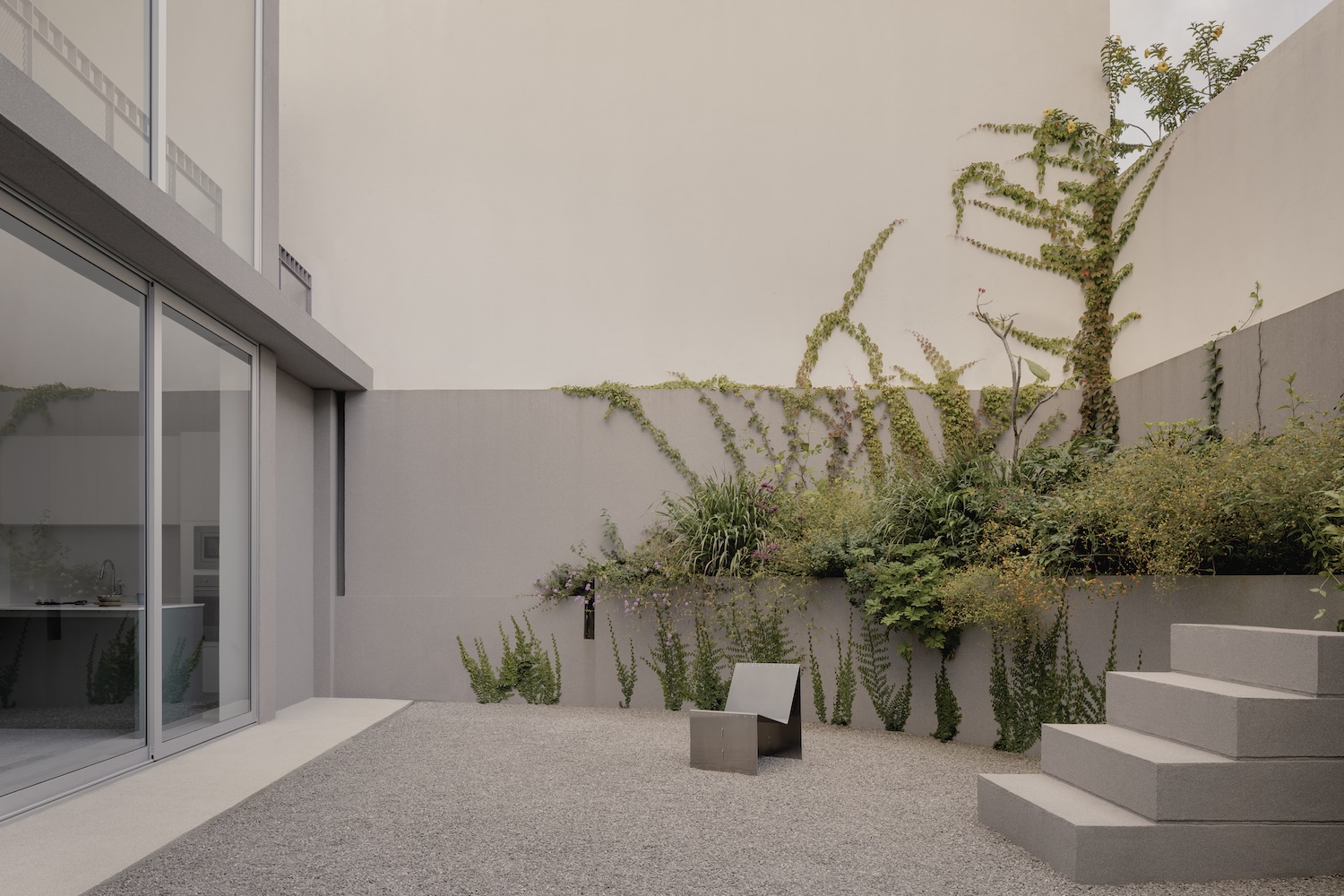
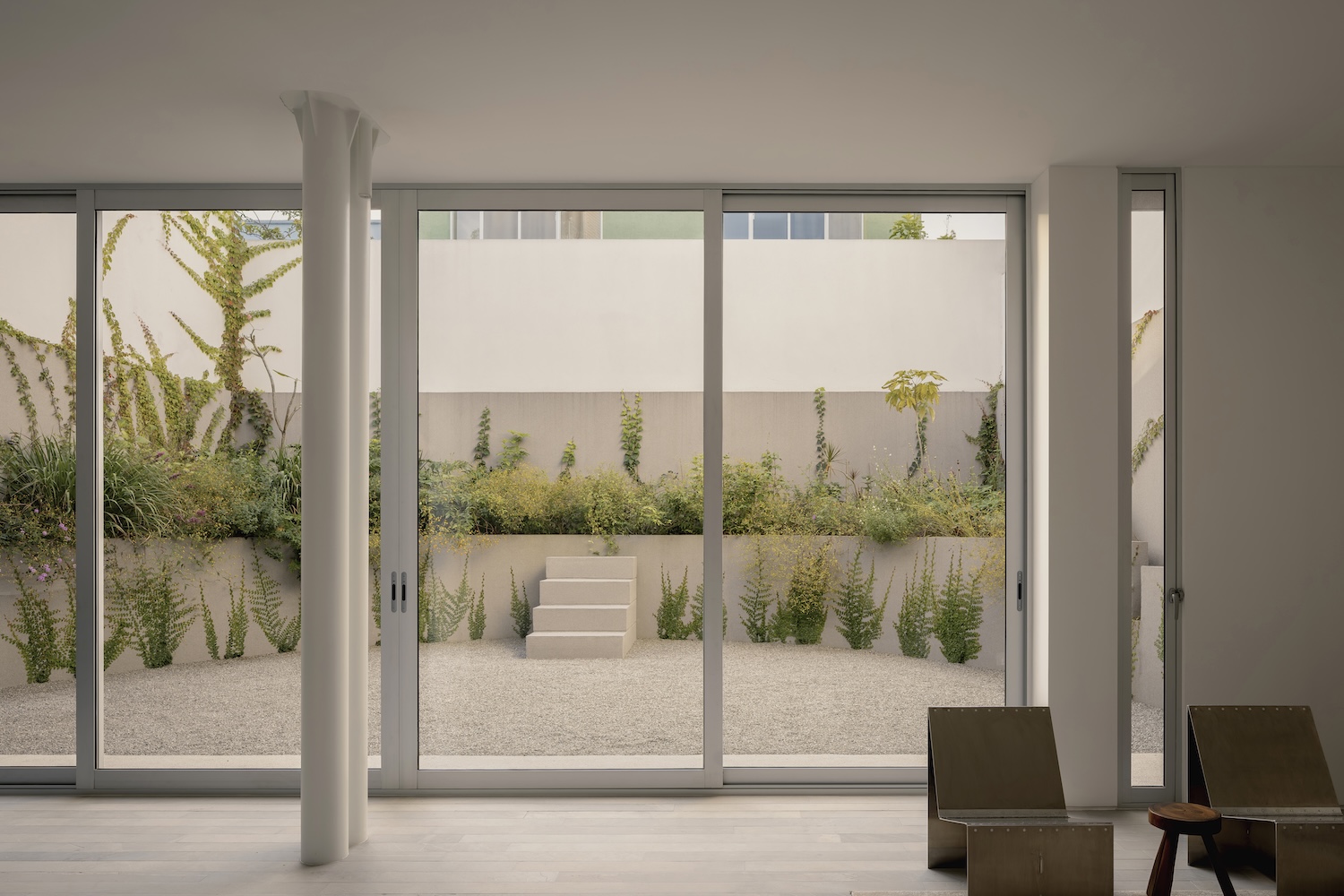
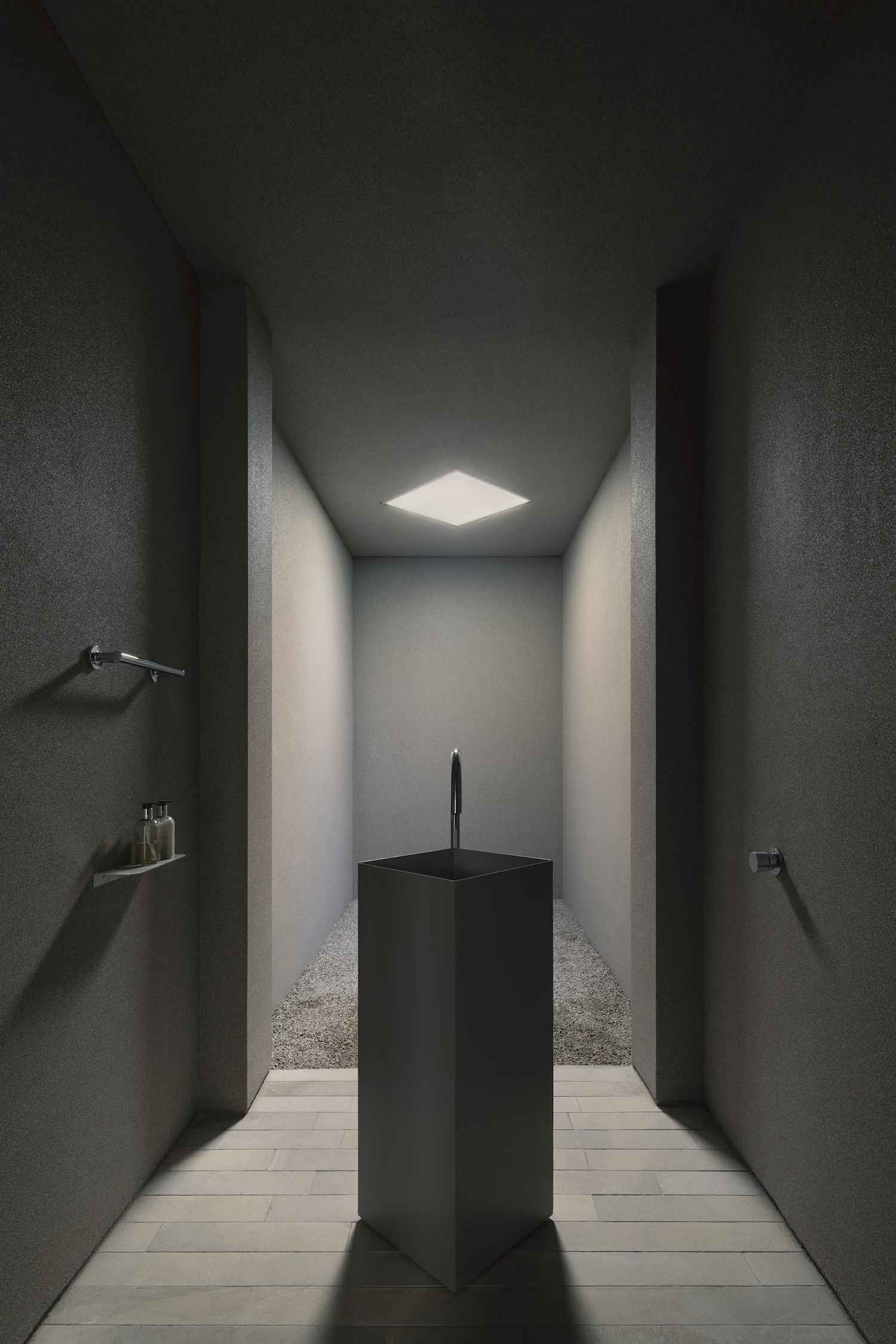
At ground level, the social program unfolds around a semi-circle of mineral gravel containing a guayacán tree – a species whose flowering cycle operates as a living calendar. This is landscape design in the tradition of Luis Barragán’s courtyards, where the non-human occupant organizes human time. The gravel field controls drainage while suppressing ground-level heat gain, collapsing ornament and infrastructure into a single gesture. At the rear of the plan, a freestanding metal plate sink stands in deep shadow as a kind of secular altar, elevating the act of washing hands to something approaching ritual – a deliberate echo of Mexican vernacular architecture’s understanding of water as both resource and ceremony.
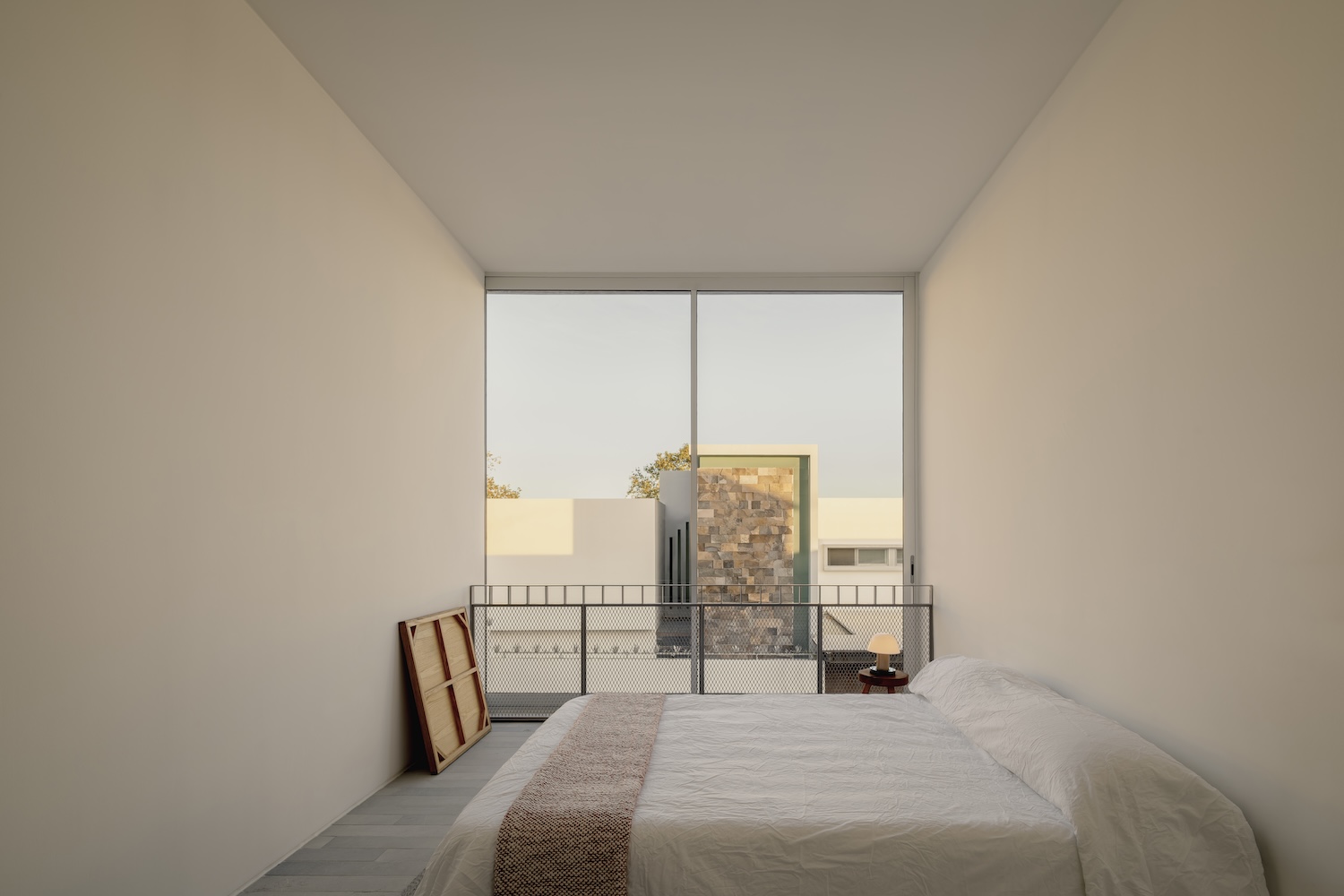
The cruciform plan of the first level is perhaps the most formally decisive move in the project. Three chambers radiate from a vertical axis – master bedroom facing the urban panorama, secondary rooms extending laterally toward garden – achieving maximum privacy within minimum footprint. It is a geometry that recalls the clarity of Carlo Scarpa’s organizational thinking, where spatial hierarchy is expressed through plan rather than decoration. The interiors read in absolute white, a chromatic choice that does not so much neutralize the space as amplify the specificity of what enters it: the quality of afternoon light, the texture of the forest canopy beyond the glass.