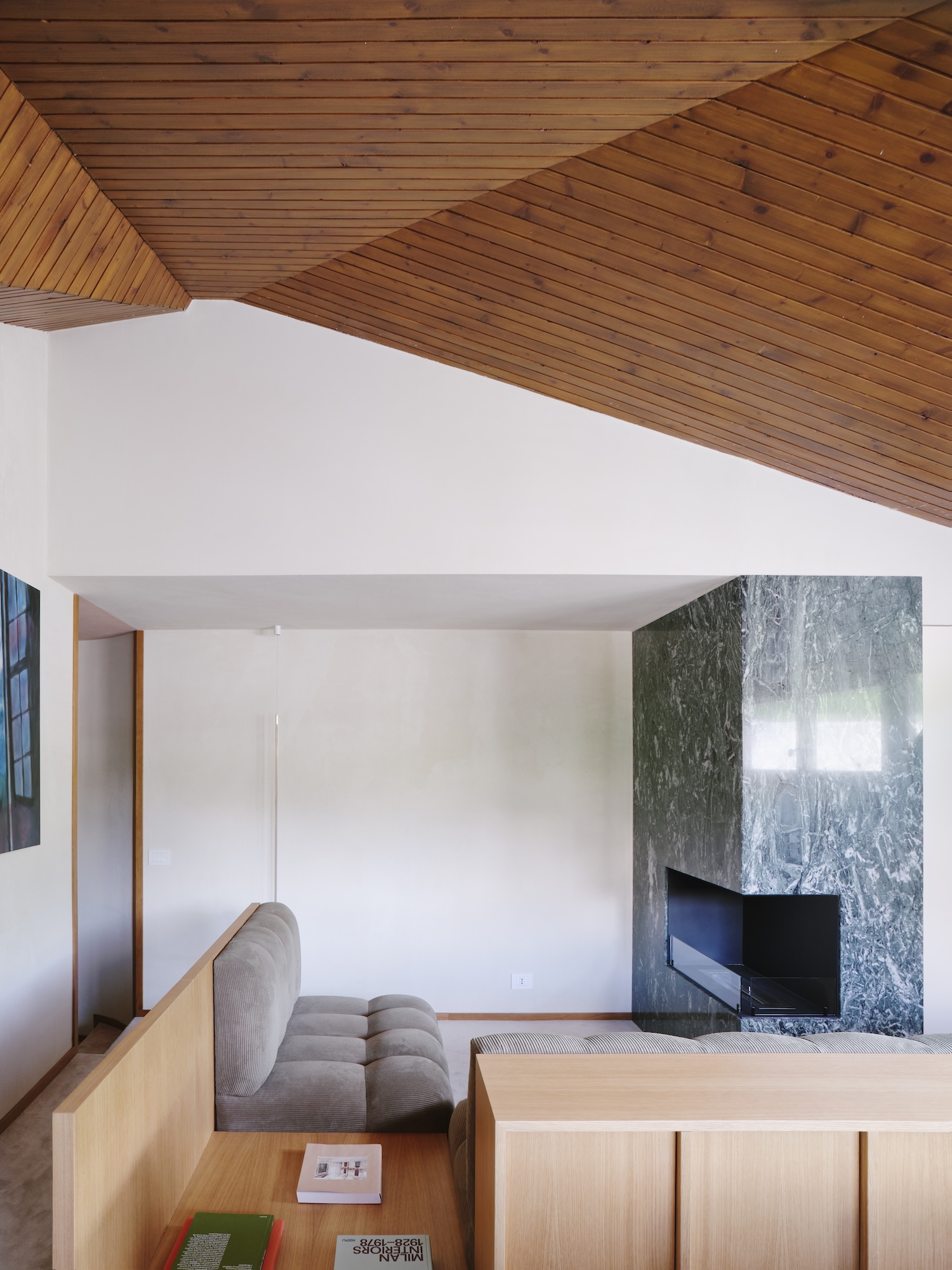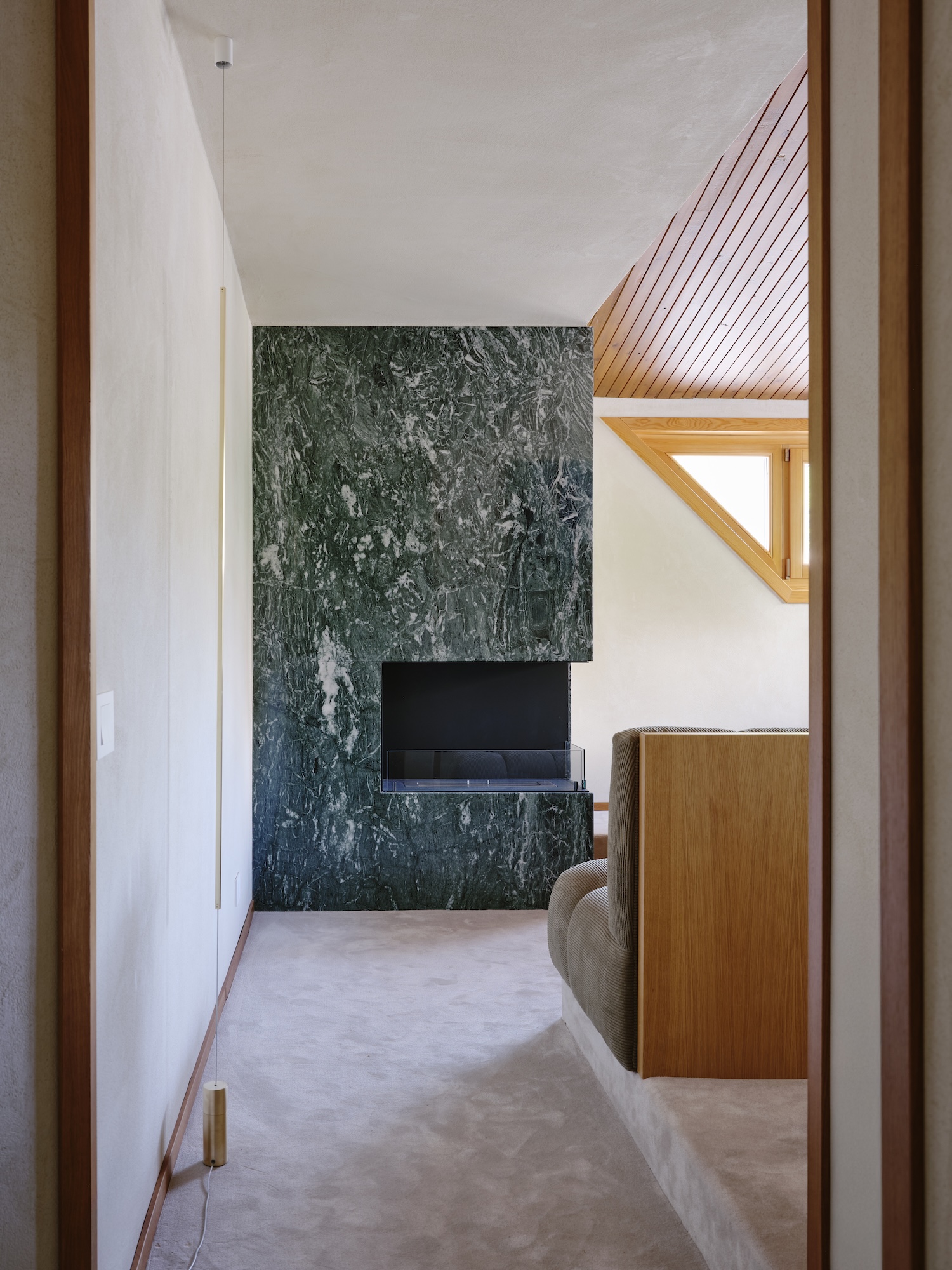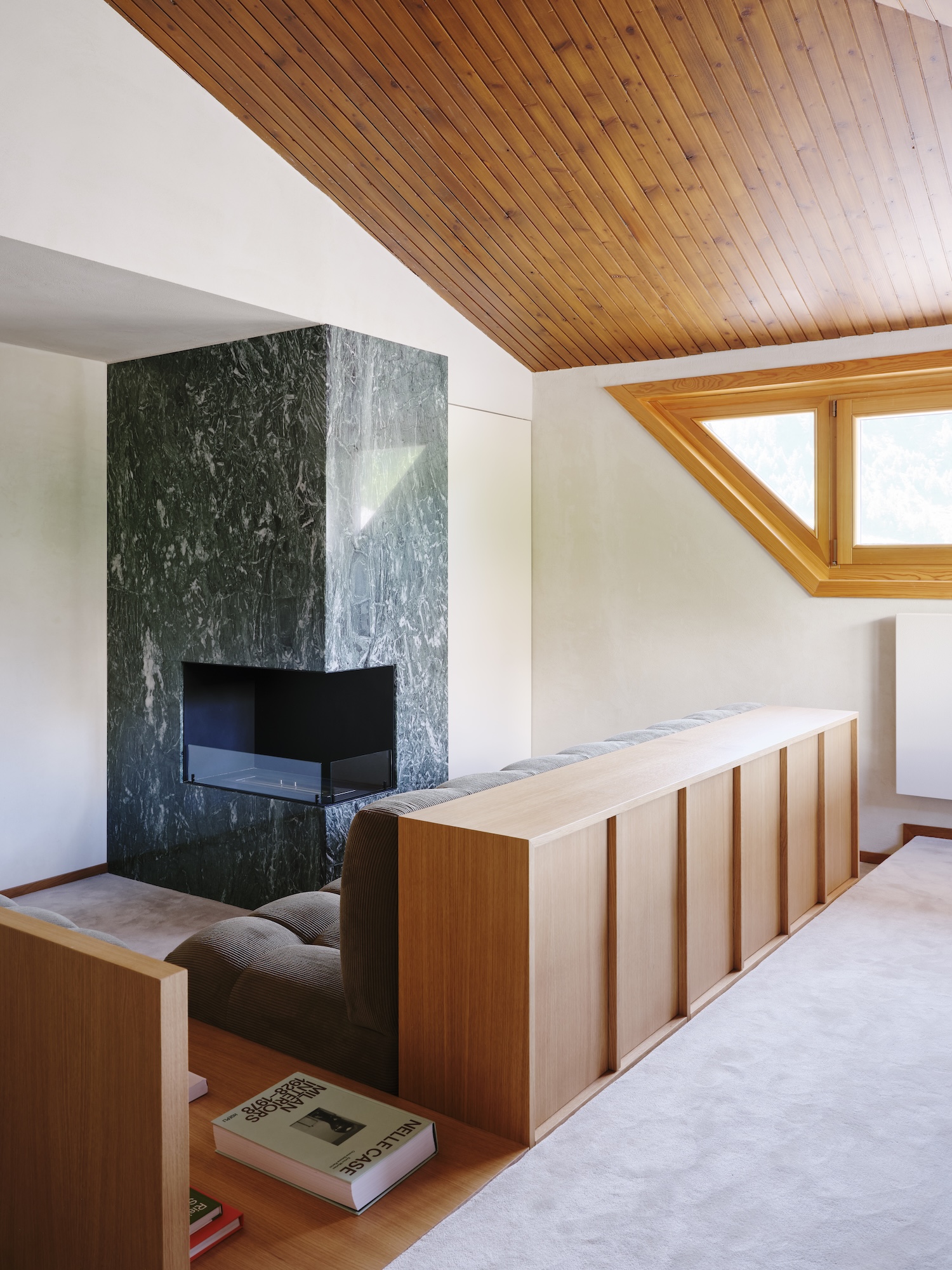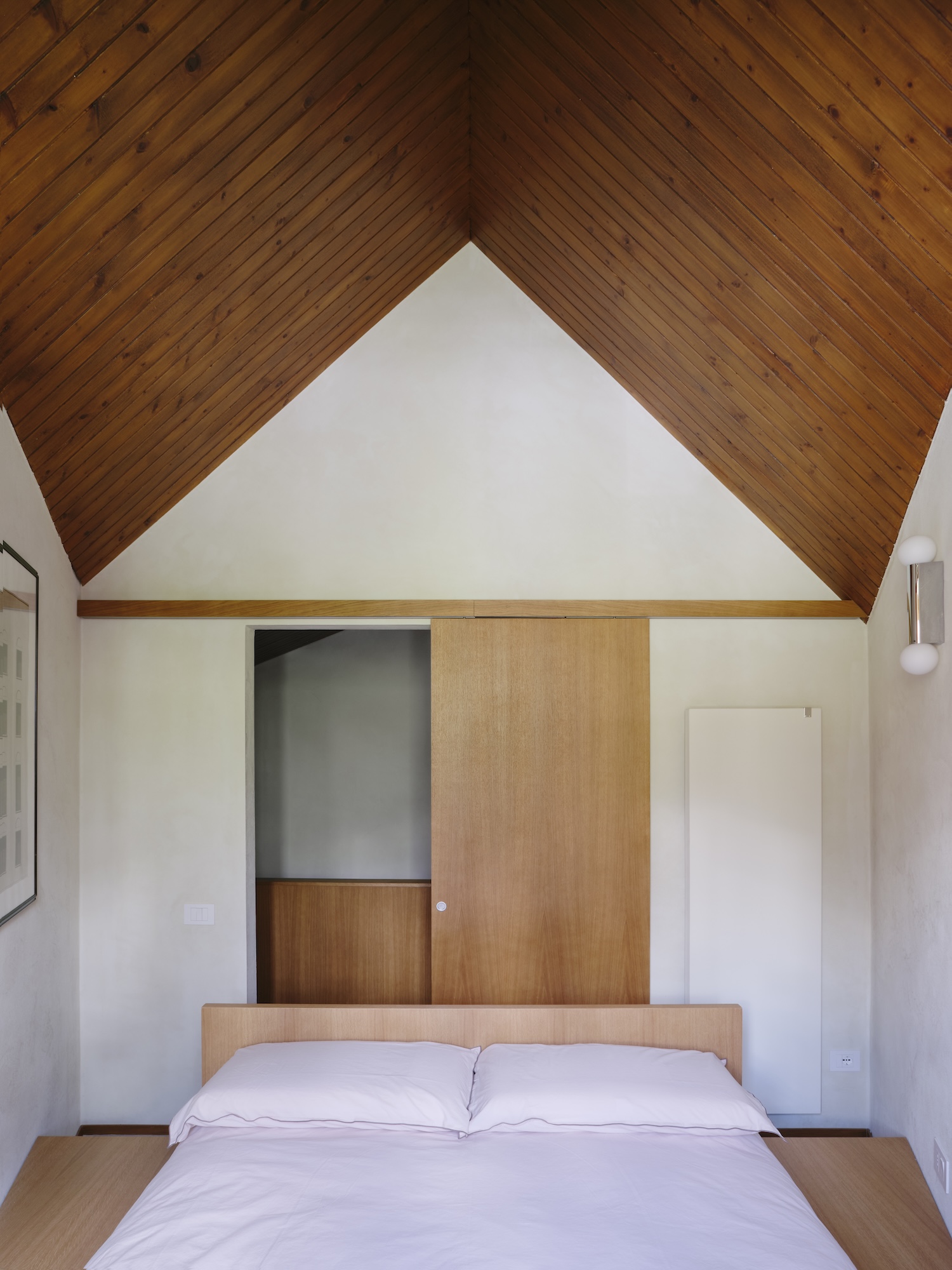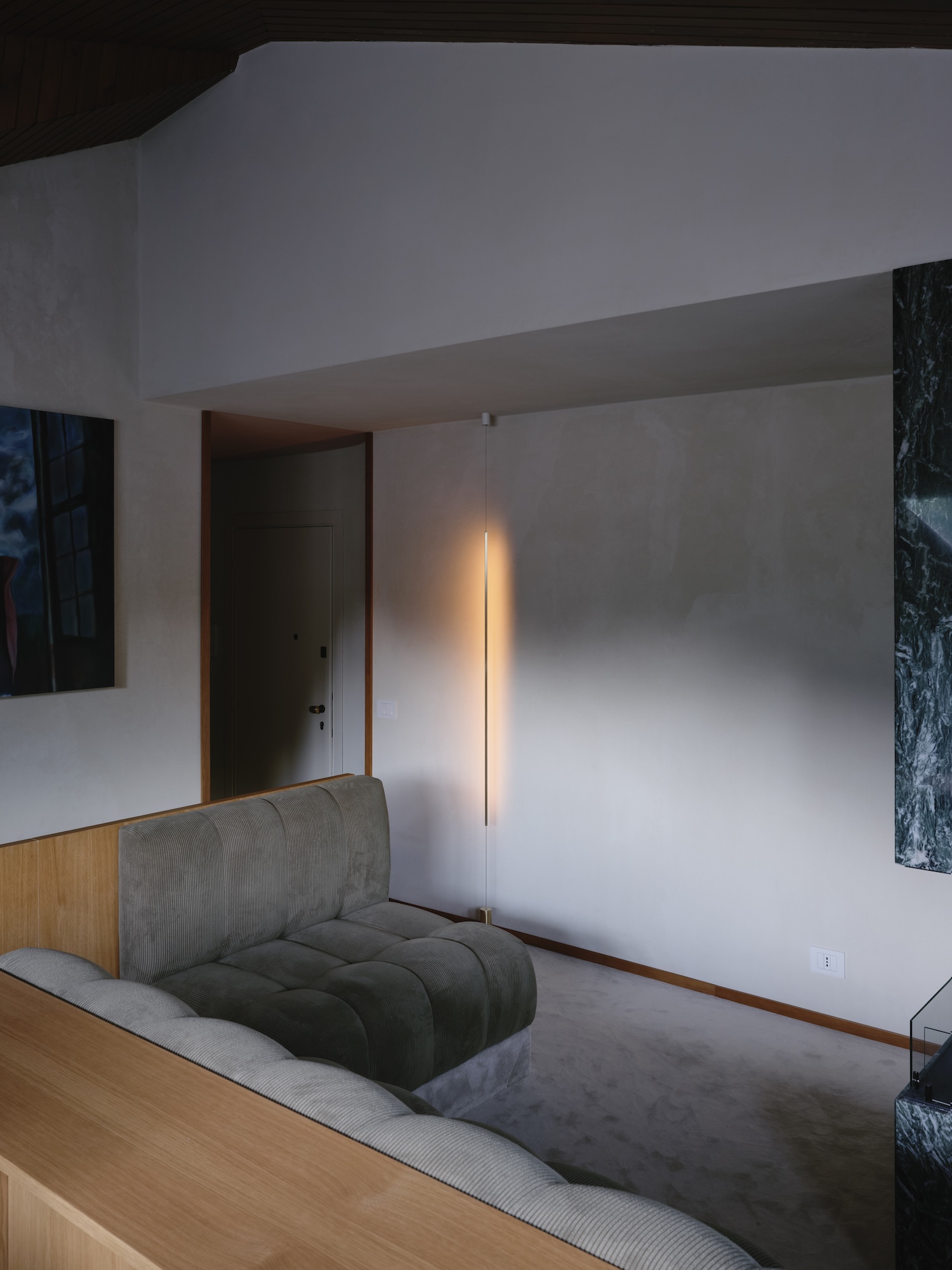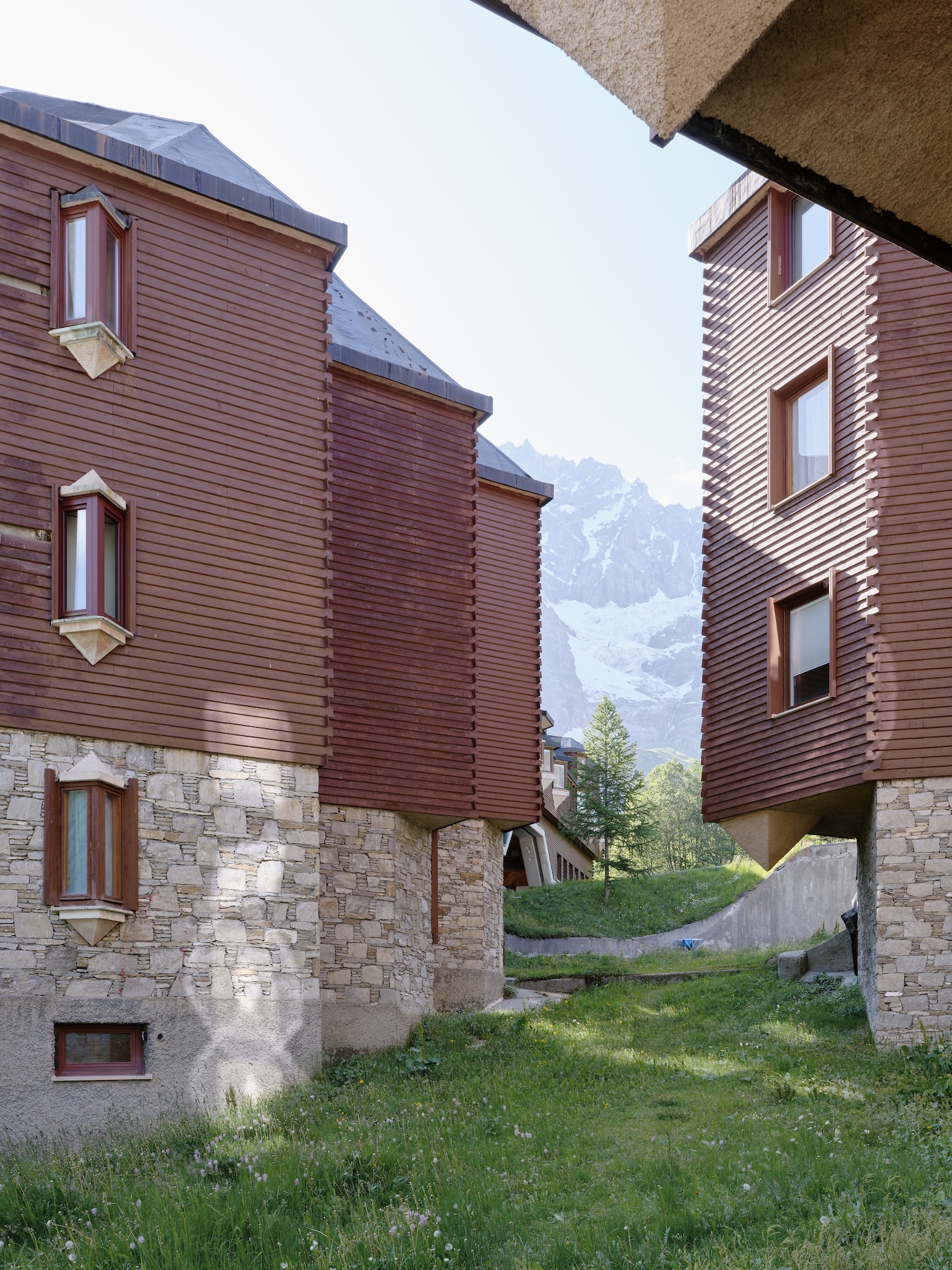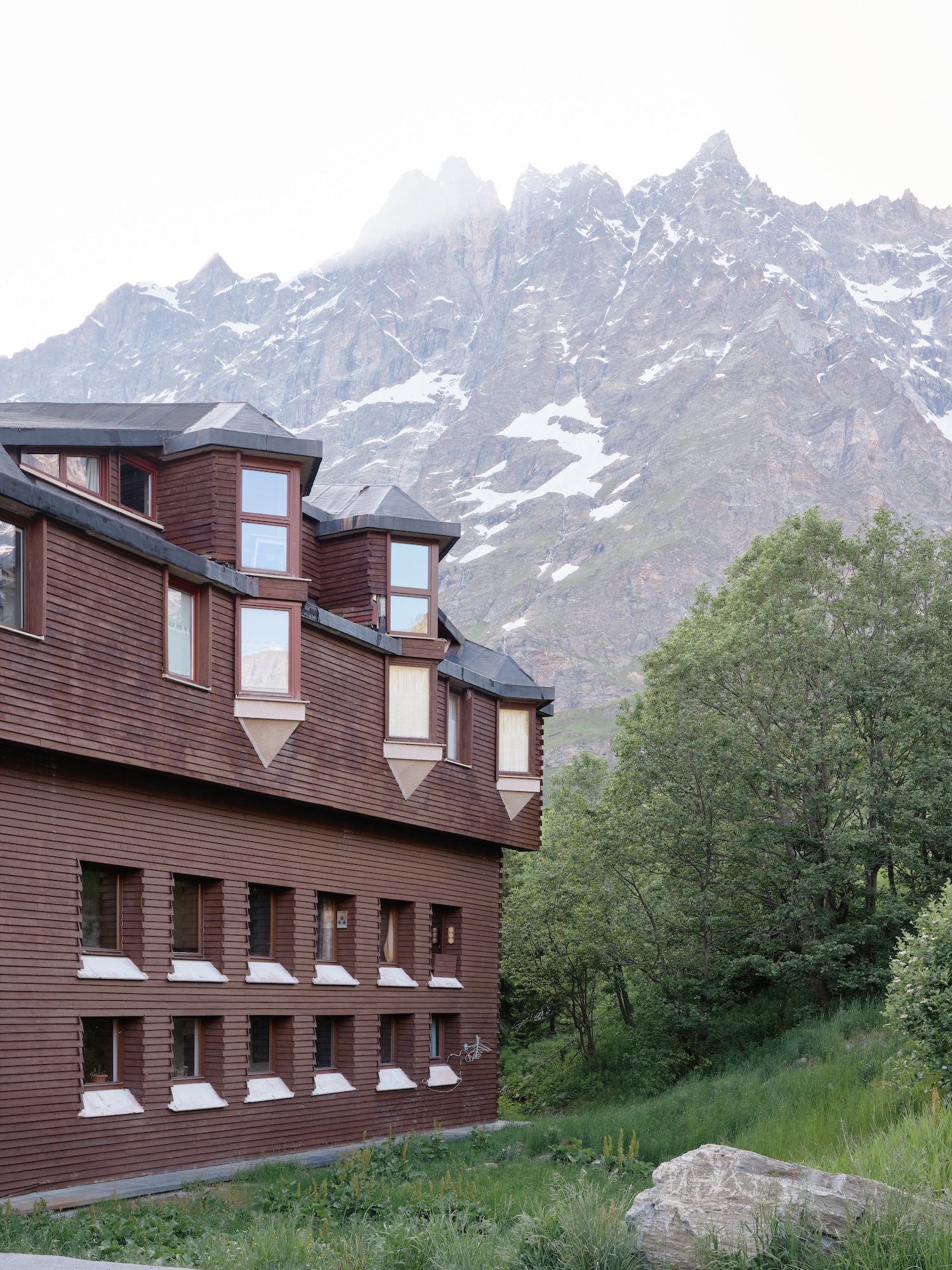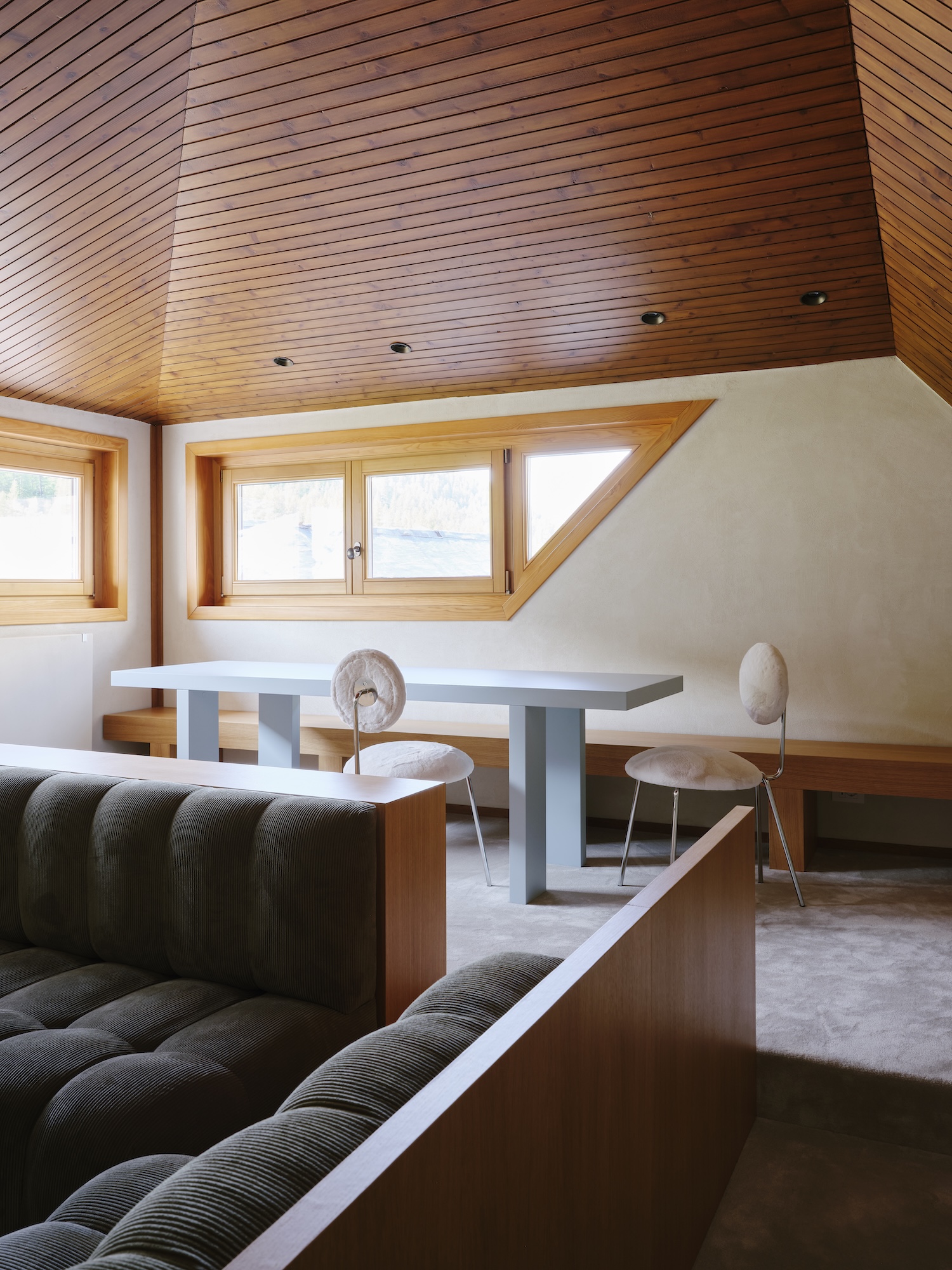
Un Interno al Giomein is a minimalist apartment located in Cervinia, Italy, designed by co.arch. When Mario Galvagni completed the Giomein complex in 1972, he was working within an Alpine context that demanded architecture think beyond scenic framing. The Breuil basin, dominated by the profile of the Cervino, represents not backdrop but morphological system—a landscape whose perceptual intensity shapes the very logic of inhabitation. co.arch’s intervention into a fourth and fifth floor apartment within this building addresses a fundamental question: how does one honor spatial memory without preserving decorative language that time has rendered fragile?
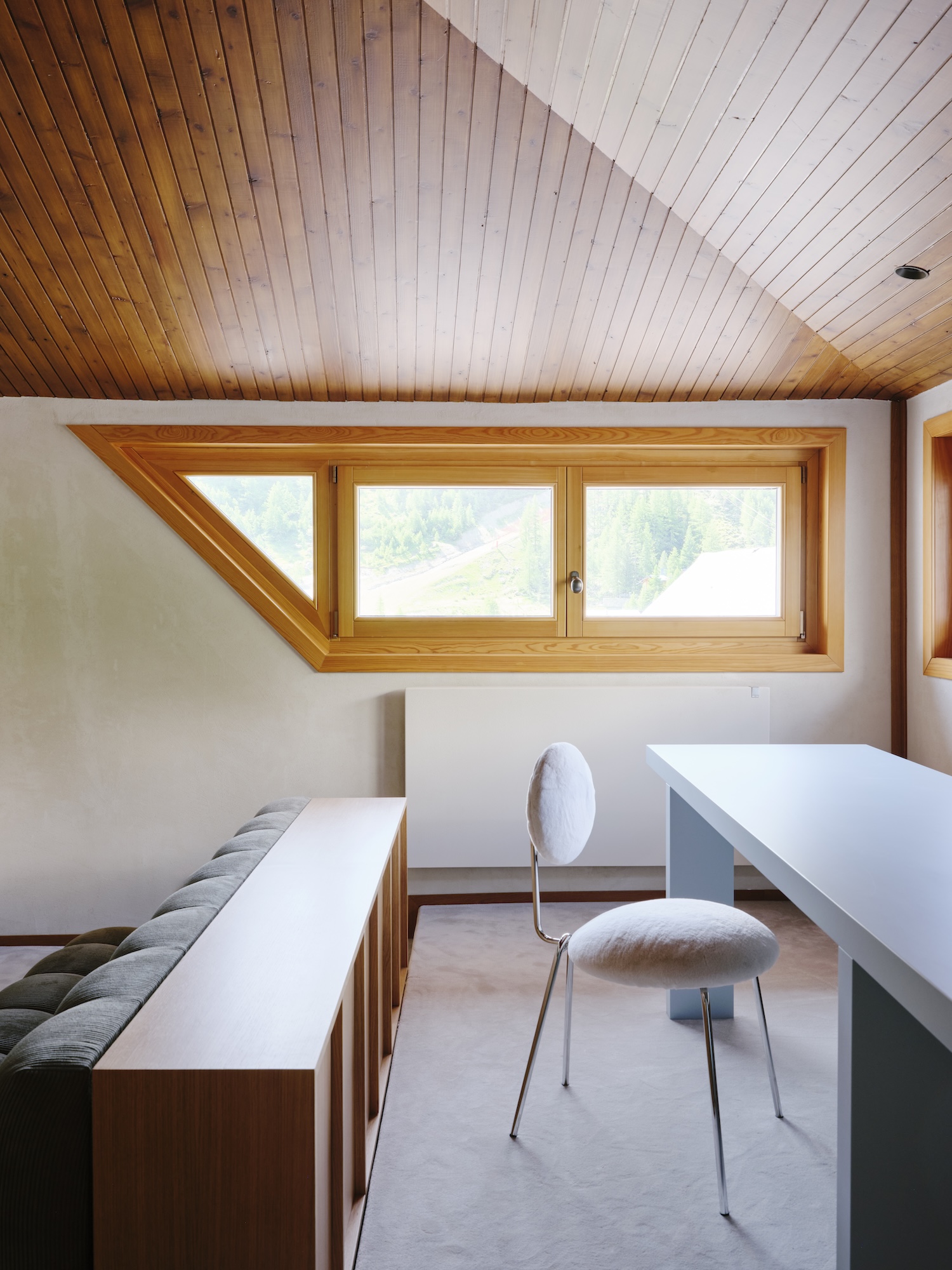
The original interior presented a complete stylistic universe: jacquard fabrics fixed with passementerie, wall-to-wall carpeting extending into bathrooms, continuous mirror surfaces, gridded ceilings. This coherence, intensely personal and resolved, made clear that additional layering would strain rather than enrich. The apartment’s geometry already held inherent drama—broken roof planes with shifting pitches, varied floor levels, curved walls, triangular windows and projecting bays created an interior architecturally in tension before any surface treatment.
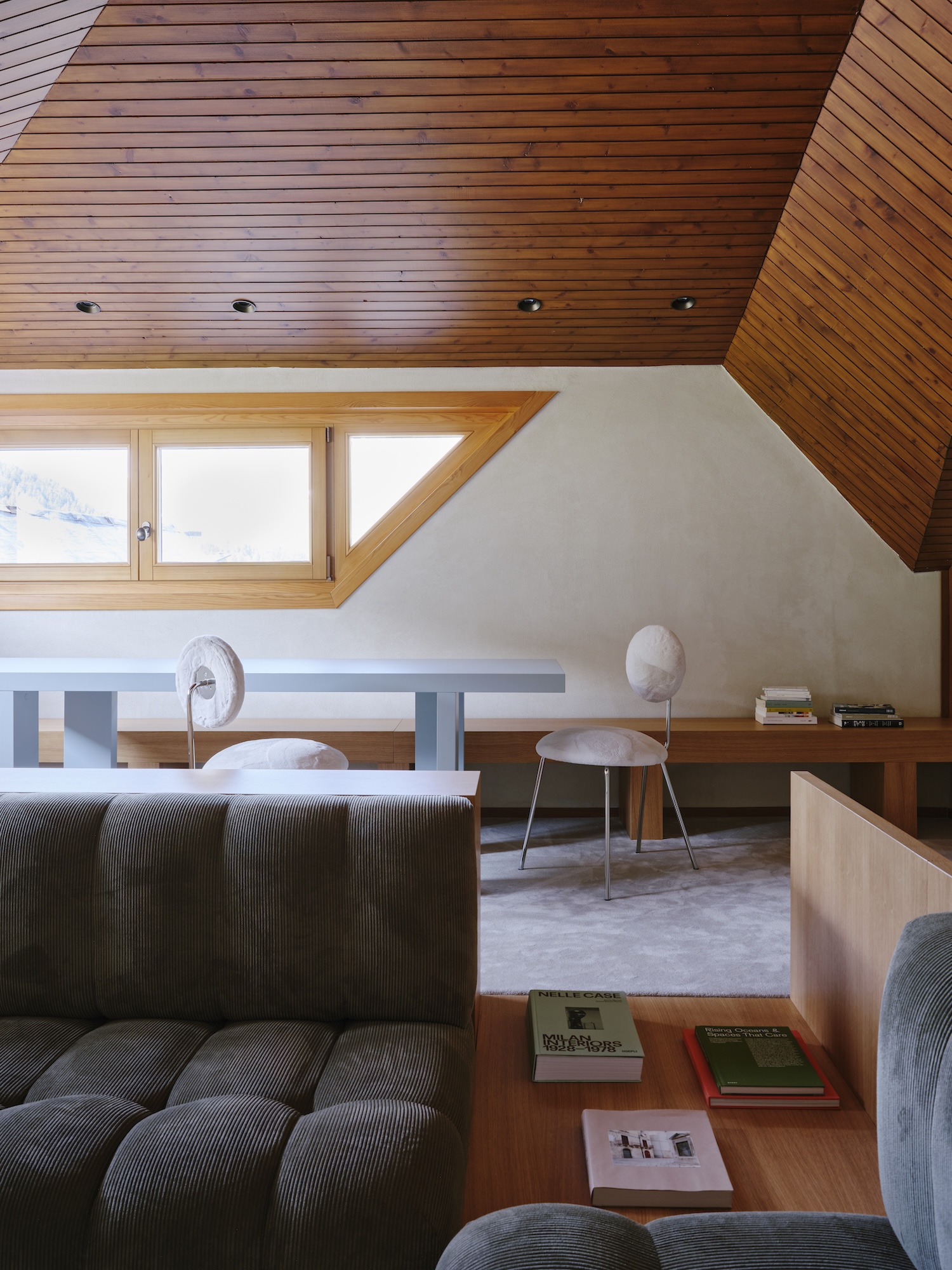
Stratigraphic investigation revealed that wall coverings and carpeting could not be preserved. Their removal became an act of clarification, exposing Galvagni’s essential spatial structure: the copper-clad roof reading internally through larch boards, its variable heights echoing mountain ridgelines through acute volumes. The bow windows emerged as optical devices regulating the relationship between inhabitant and terrain—what Galvagni termed an analogon, a mechanism amplifying mountain perception by translating geological harshness into domestic grammar.
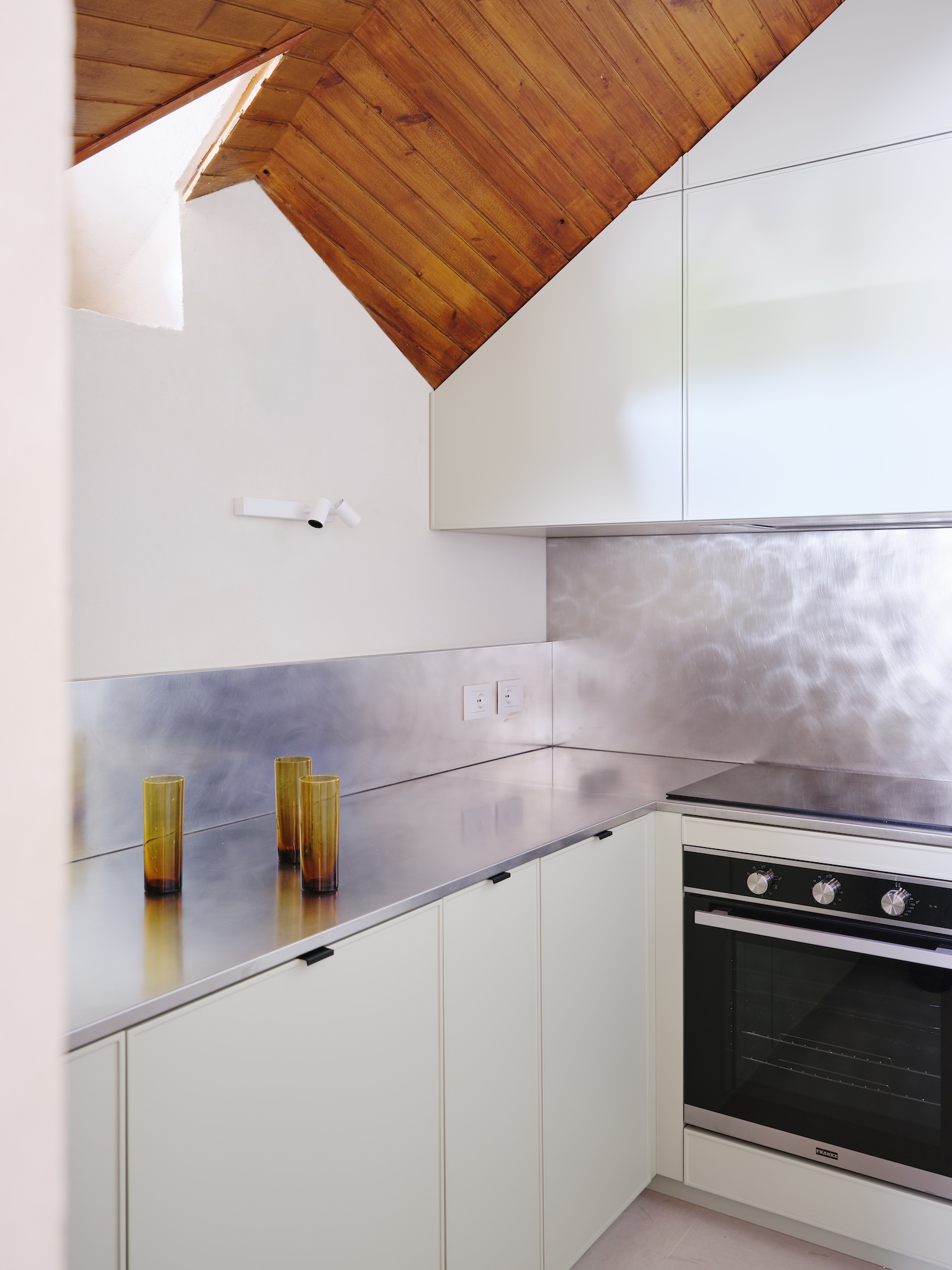
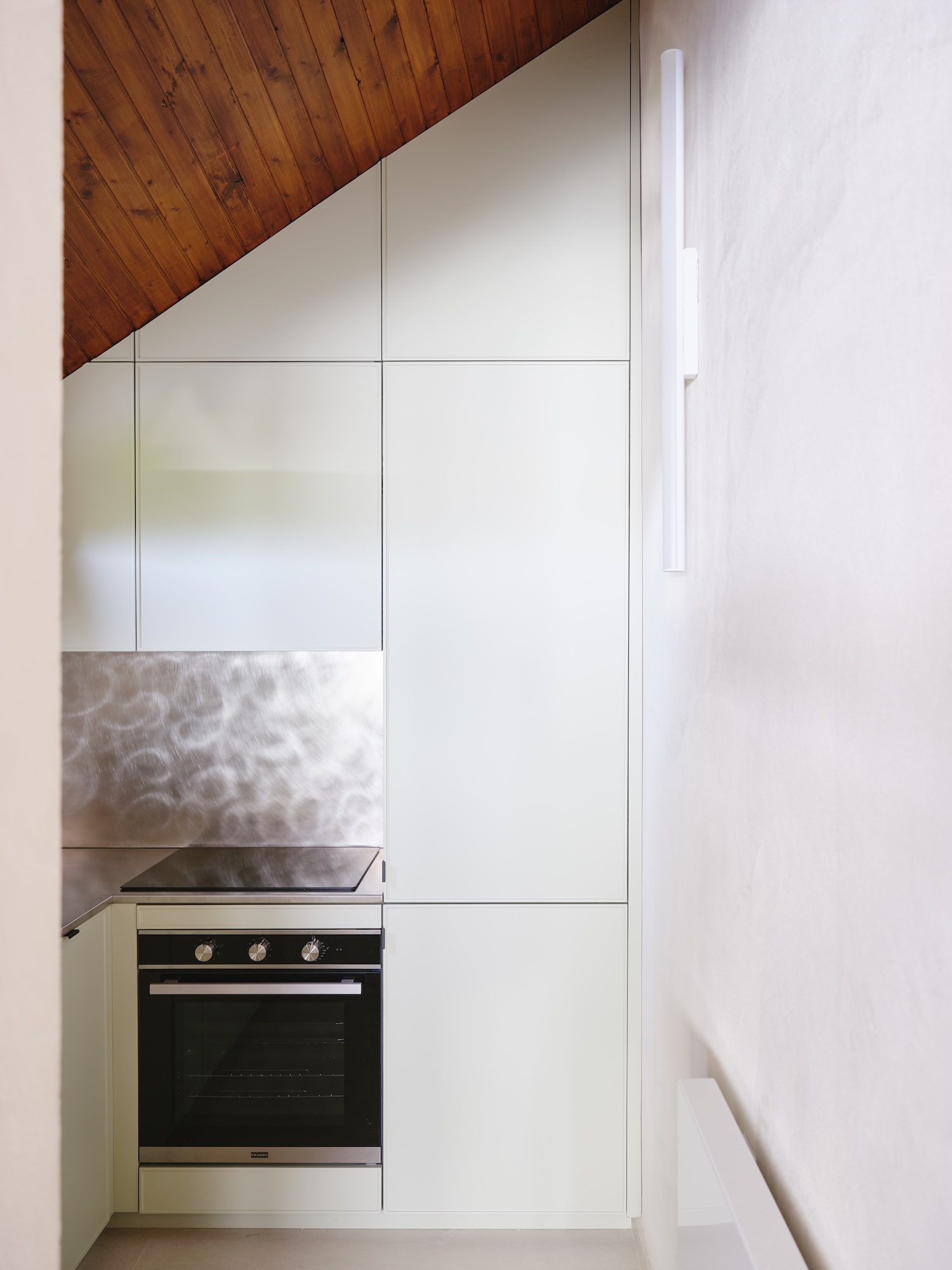
co.arch’s material strategy maintains the apartment’s soft, lived-in character through Besana carpeting that shifts chromatically between living areas, circulation, and sleeping quarters. Bathrooms and kitchen receive beige-toned limestone, cooling the palette without disrupting continuity. Calce del Brenta unifies walls with measured texture, a reference to Carlo Scarpa’s Casa Tabarelli particularly in the use of contrangoli for spatial definition and in the search for wall surfaces simultaneously alive and controlled.