The two main floors of Chalet Moraine, a lakeside vacation home in the Laurentians of Quebec, Canada, contain no load-bearing walls. Montreal studio Appareil Architecture designed the house for a couple who had lived on the site for several decades, replacing a 1960s chalet converted from an outbuilding whose foundations had begun to fail.
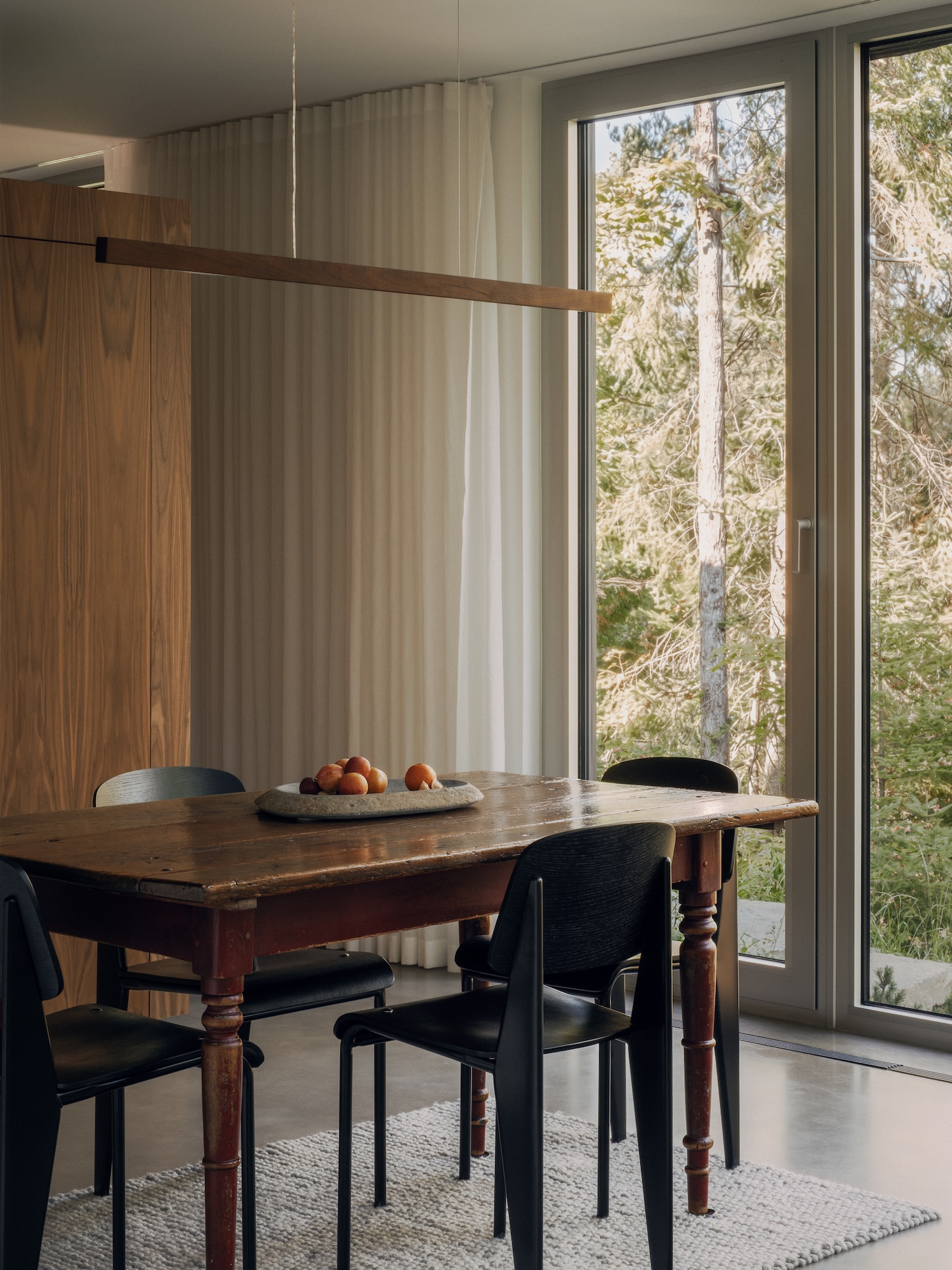
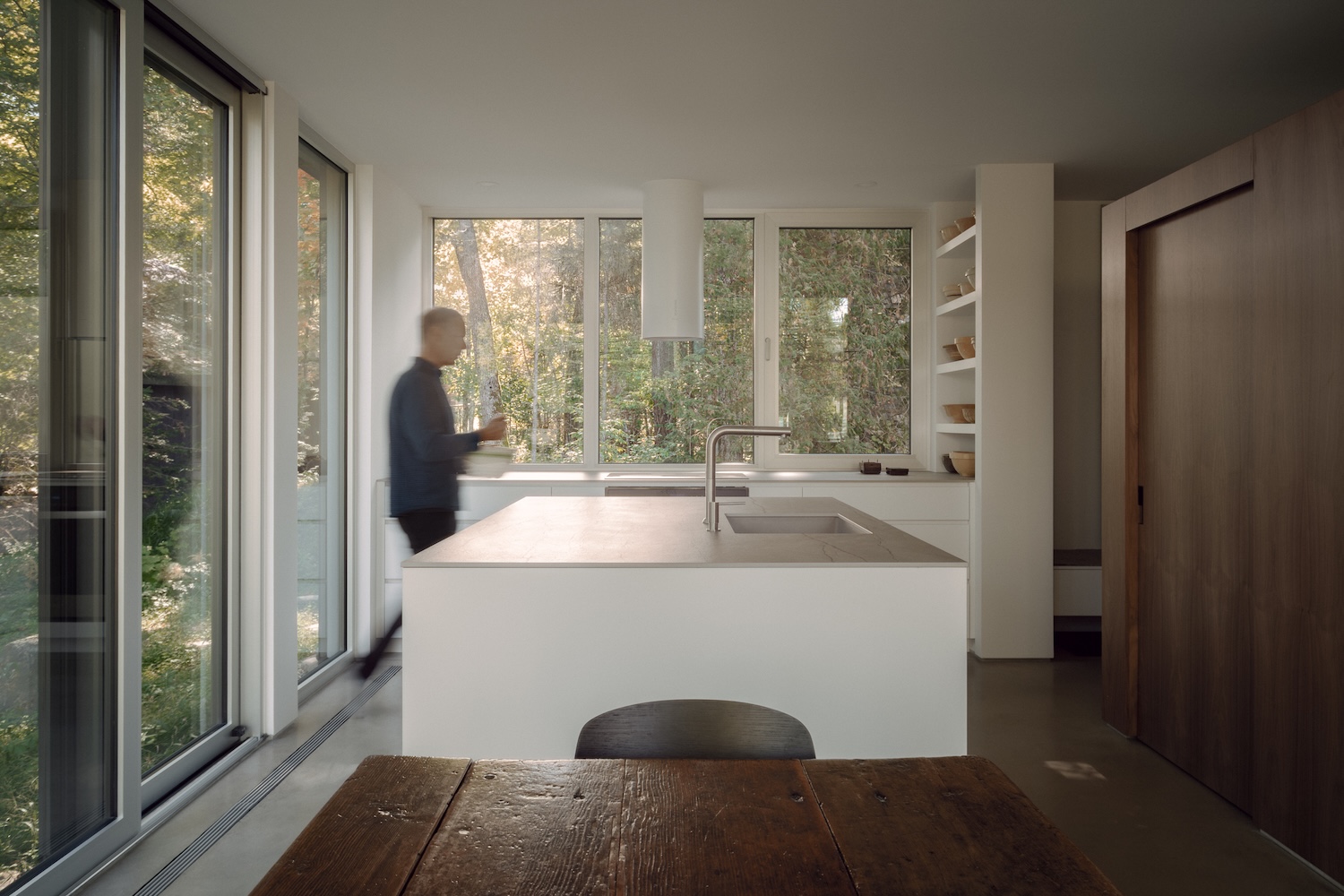
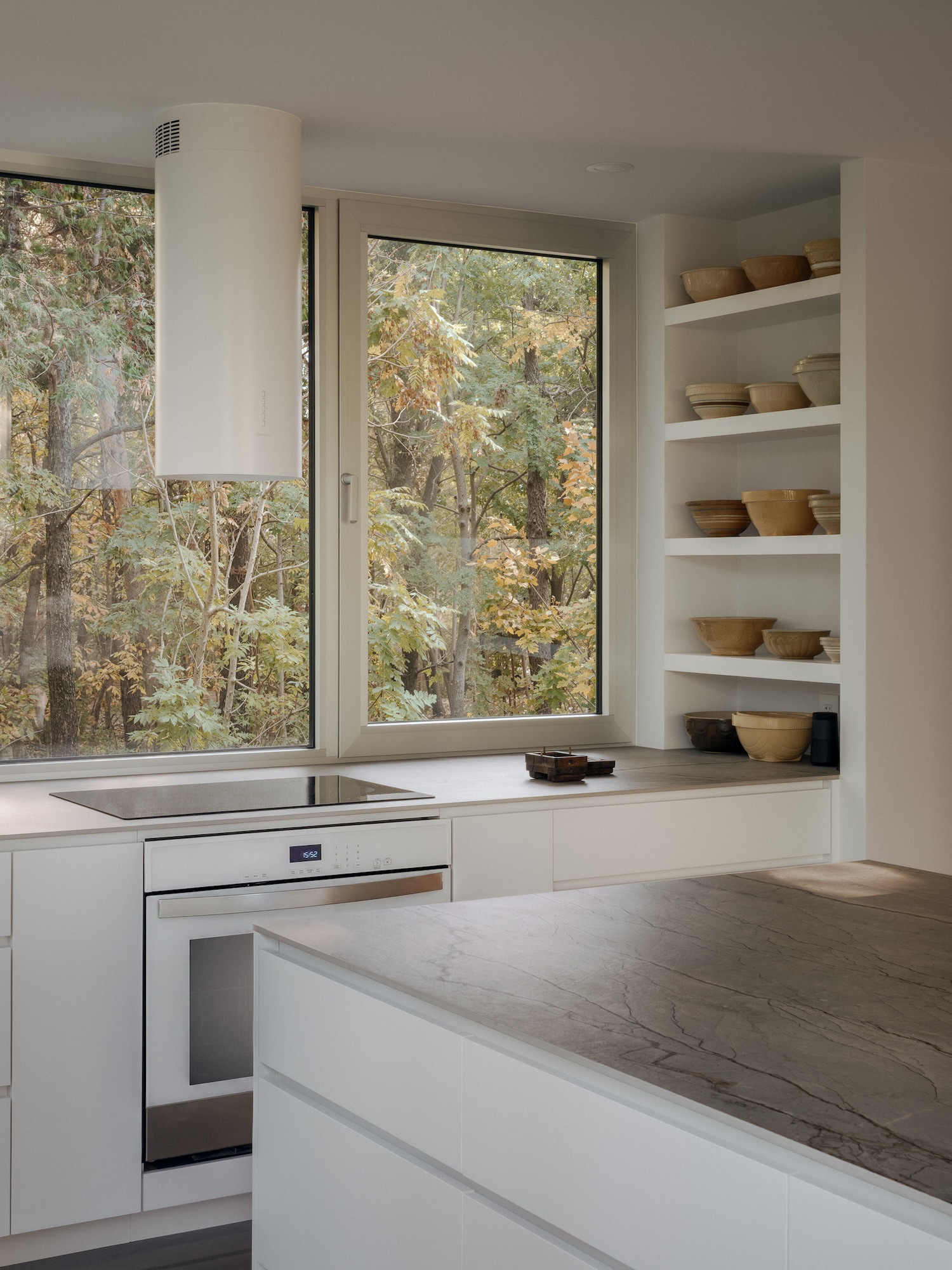
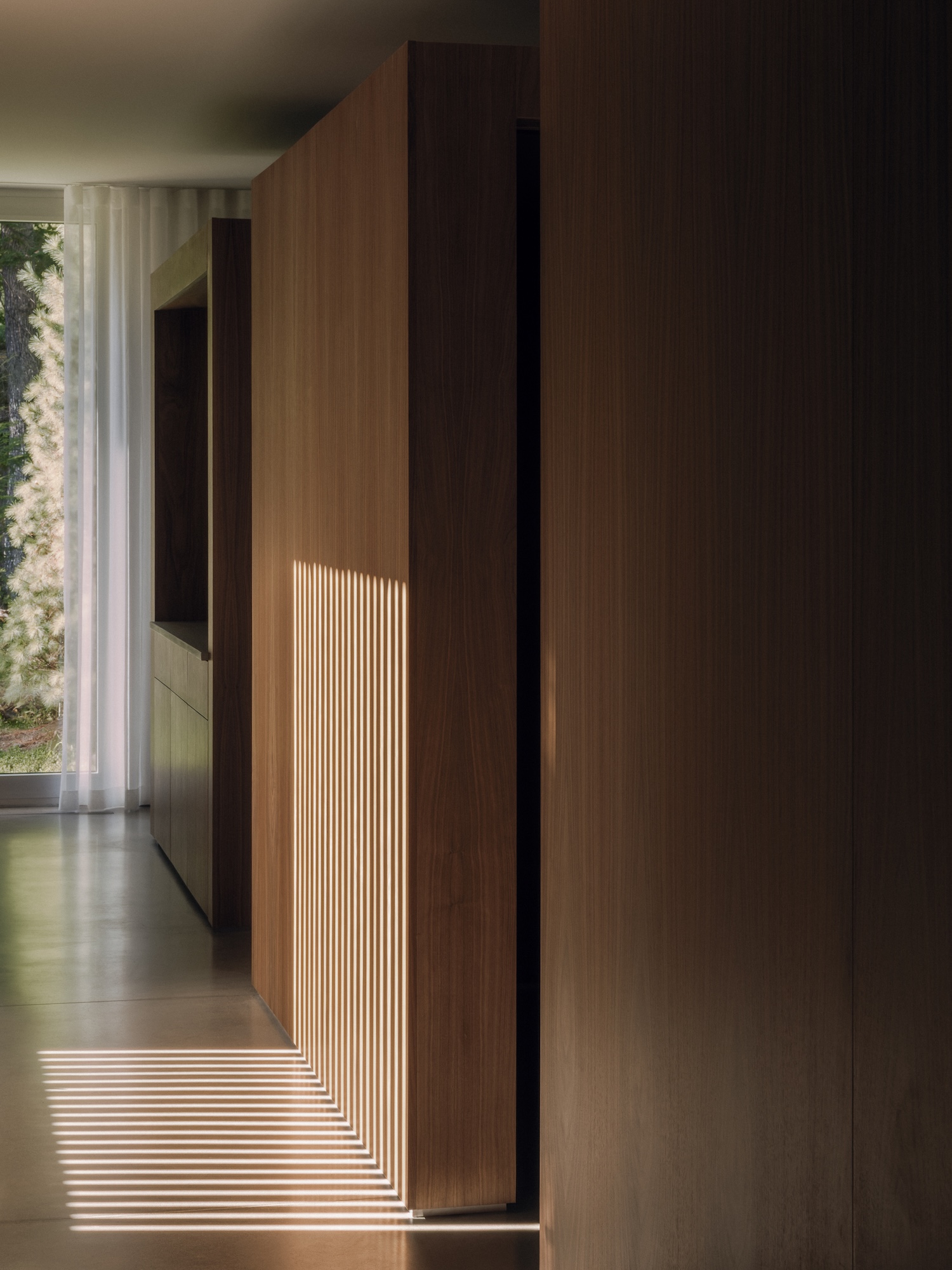
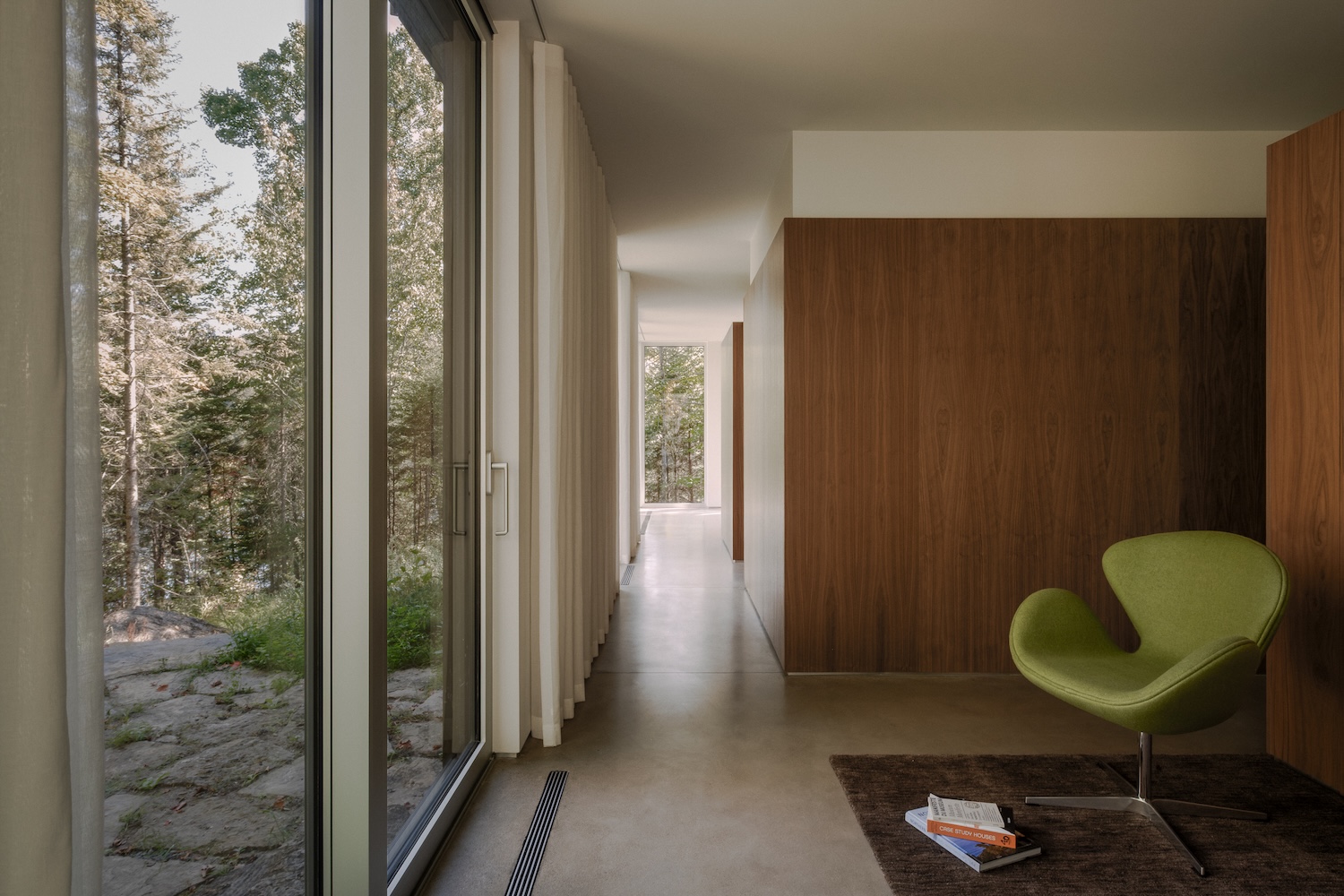
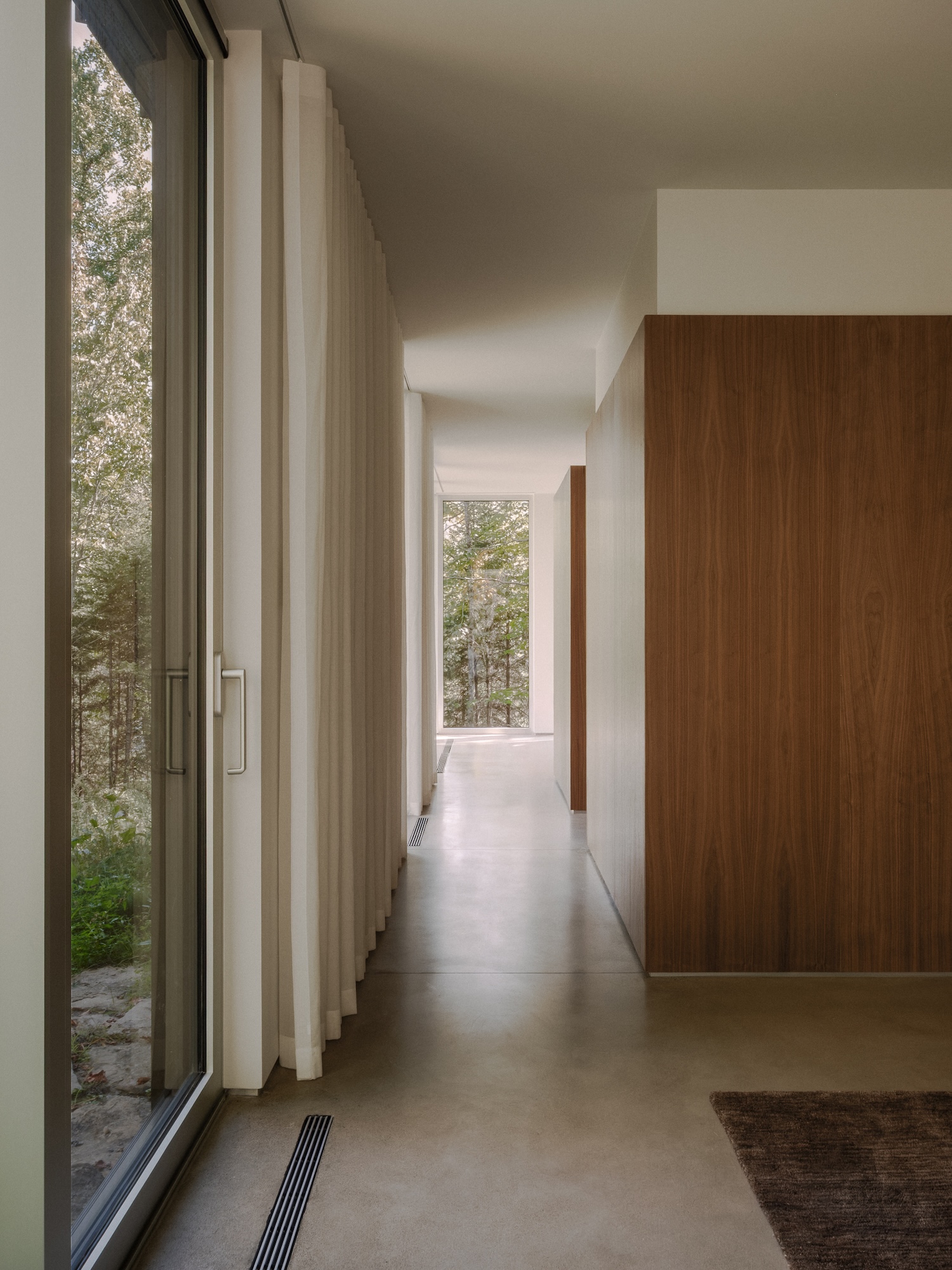
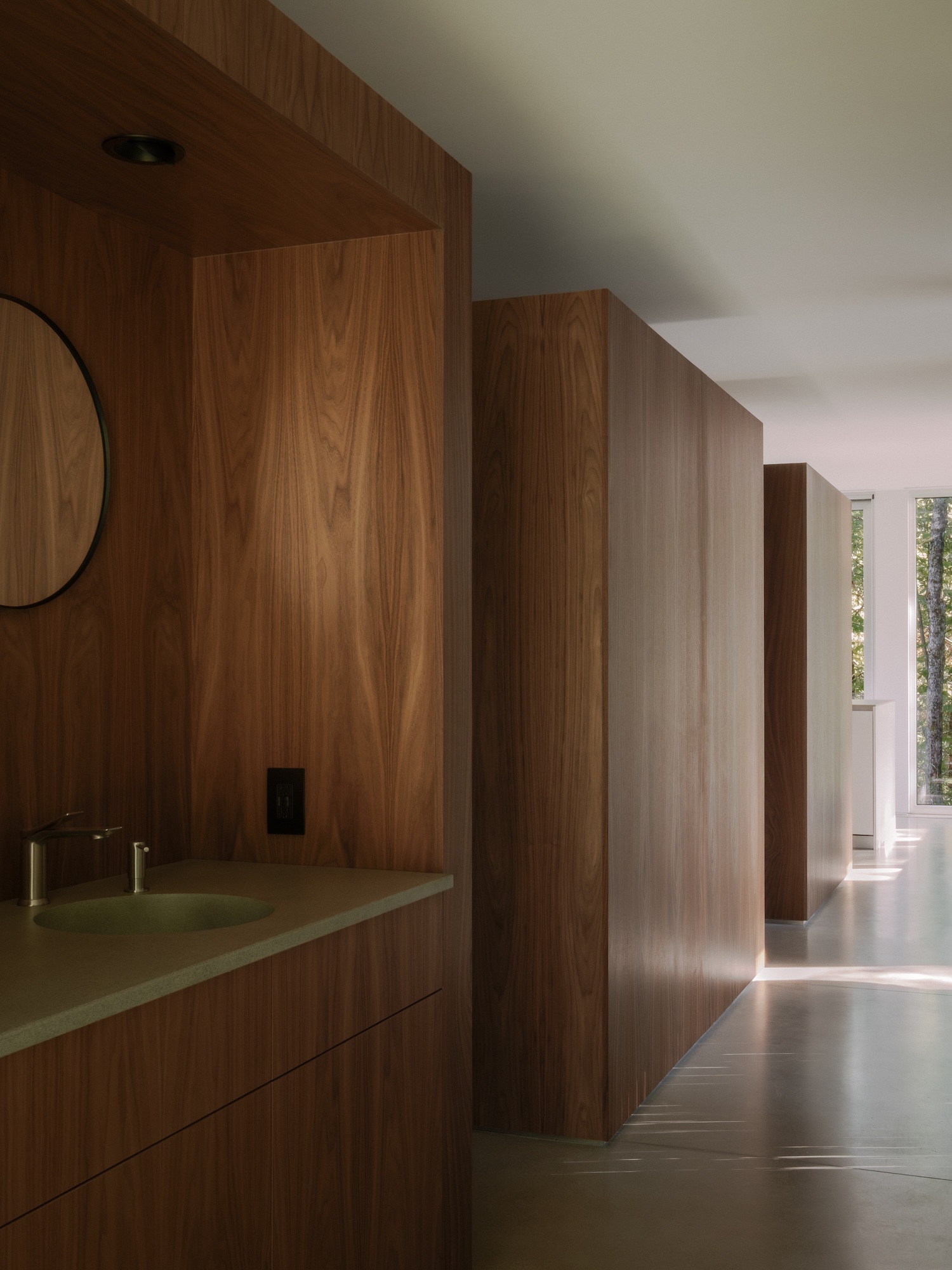
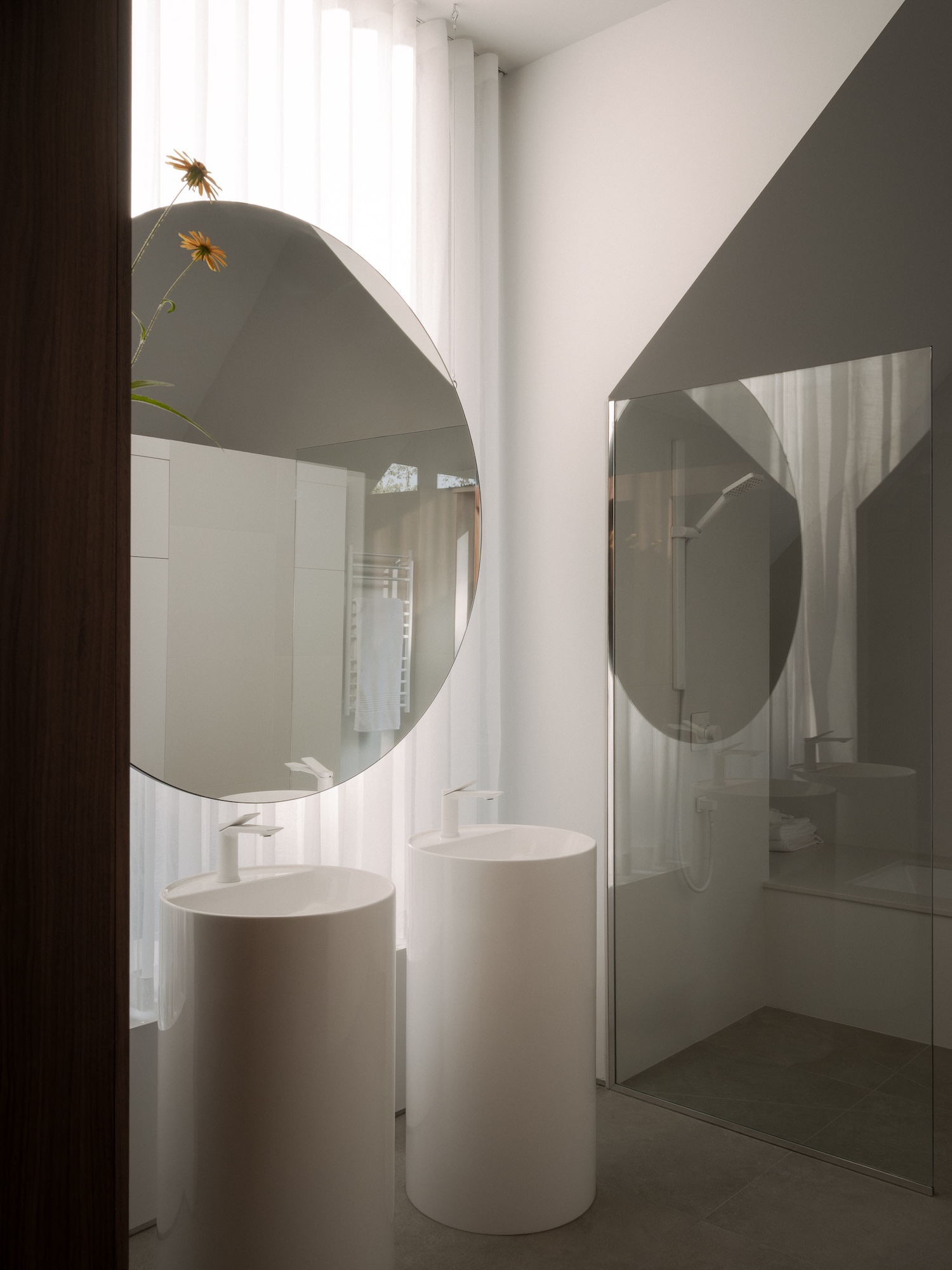
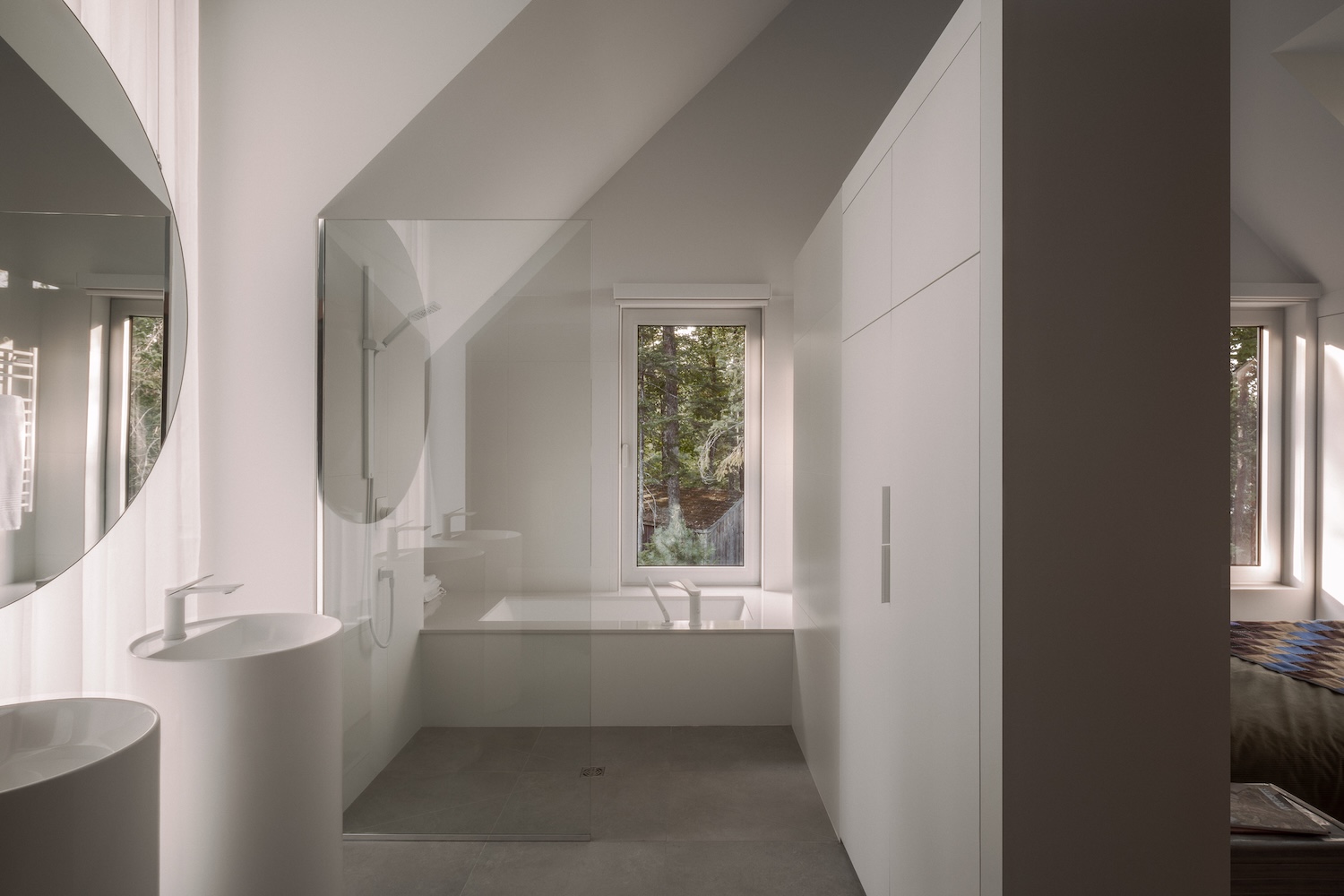
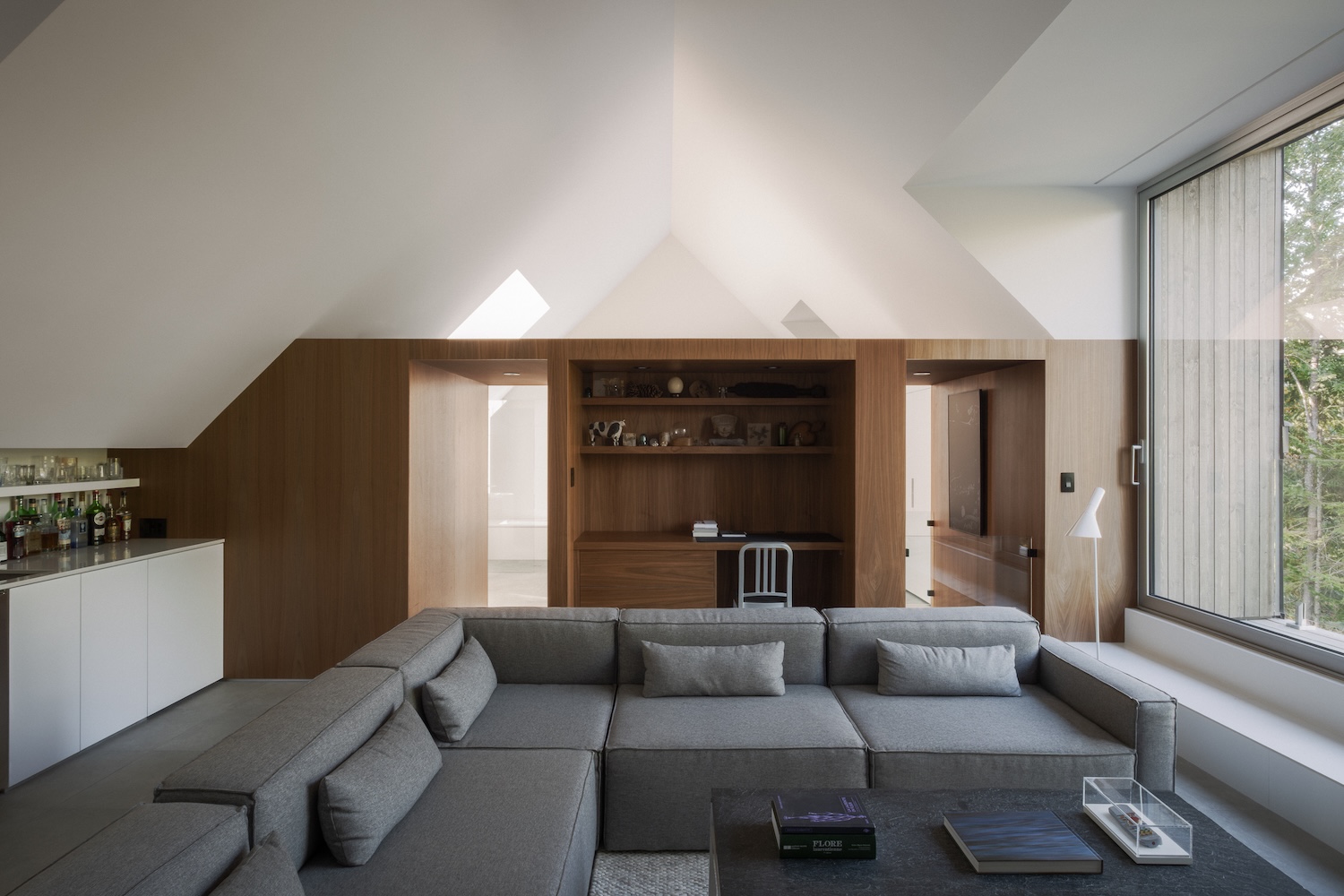
That open structure made the project’s central move possible. The architects placed the service functions inside freestanding volumes detached from the frame, modeled on the glacial erratics scattered through the surrounding forest. Circulation runs between these volumes the way a walk runs between trees and boulders, alternating tighter passages with open rooms facing the lake and woods. Every route is turned outward, so moving through the house produces a sequence of framed views. The living room extends directly from the primary suite, and a set of multipurpose rooms takes in visiting family and guests.
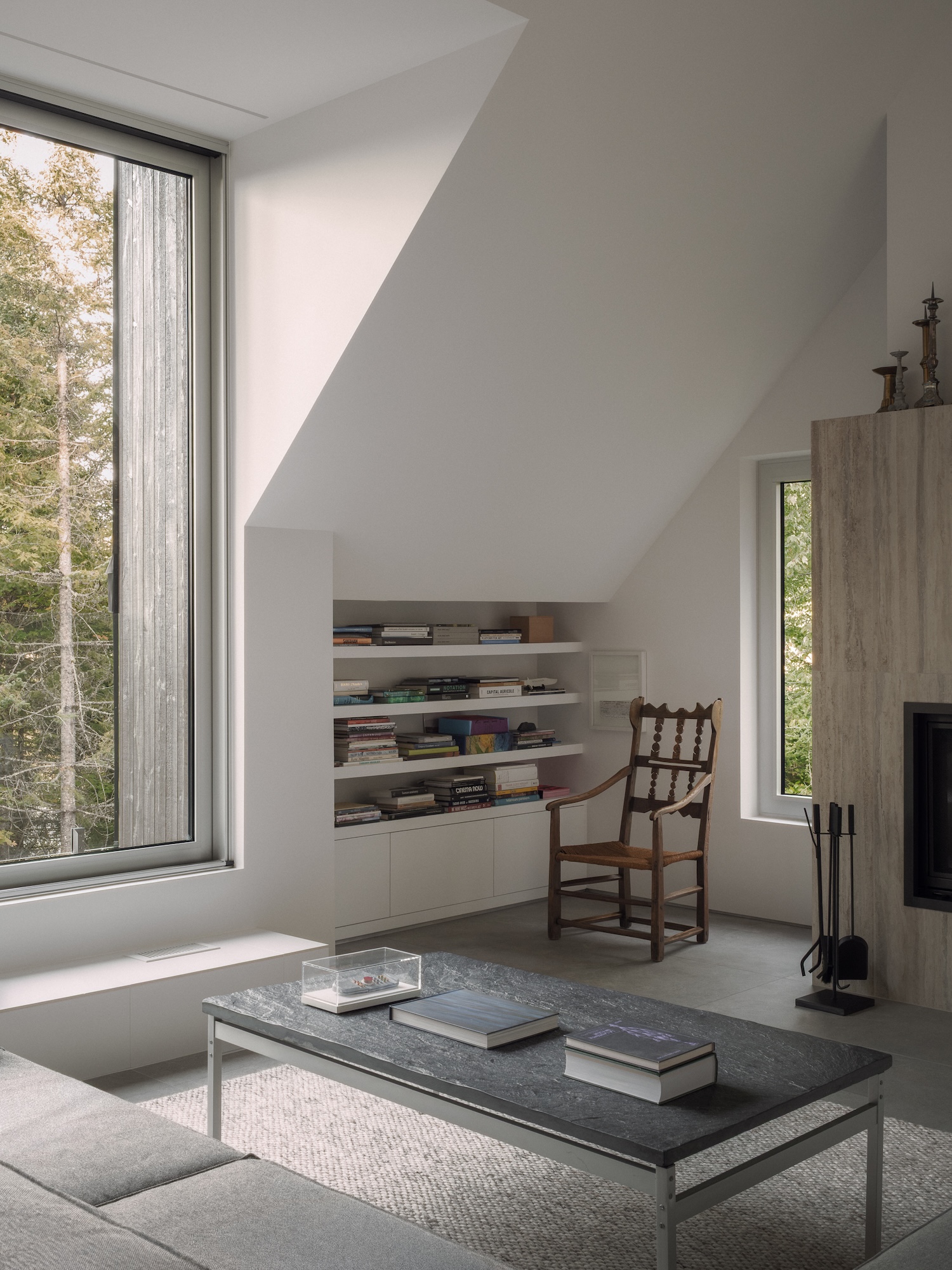
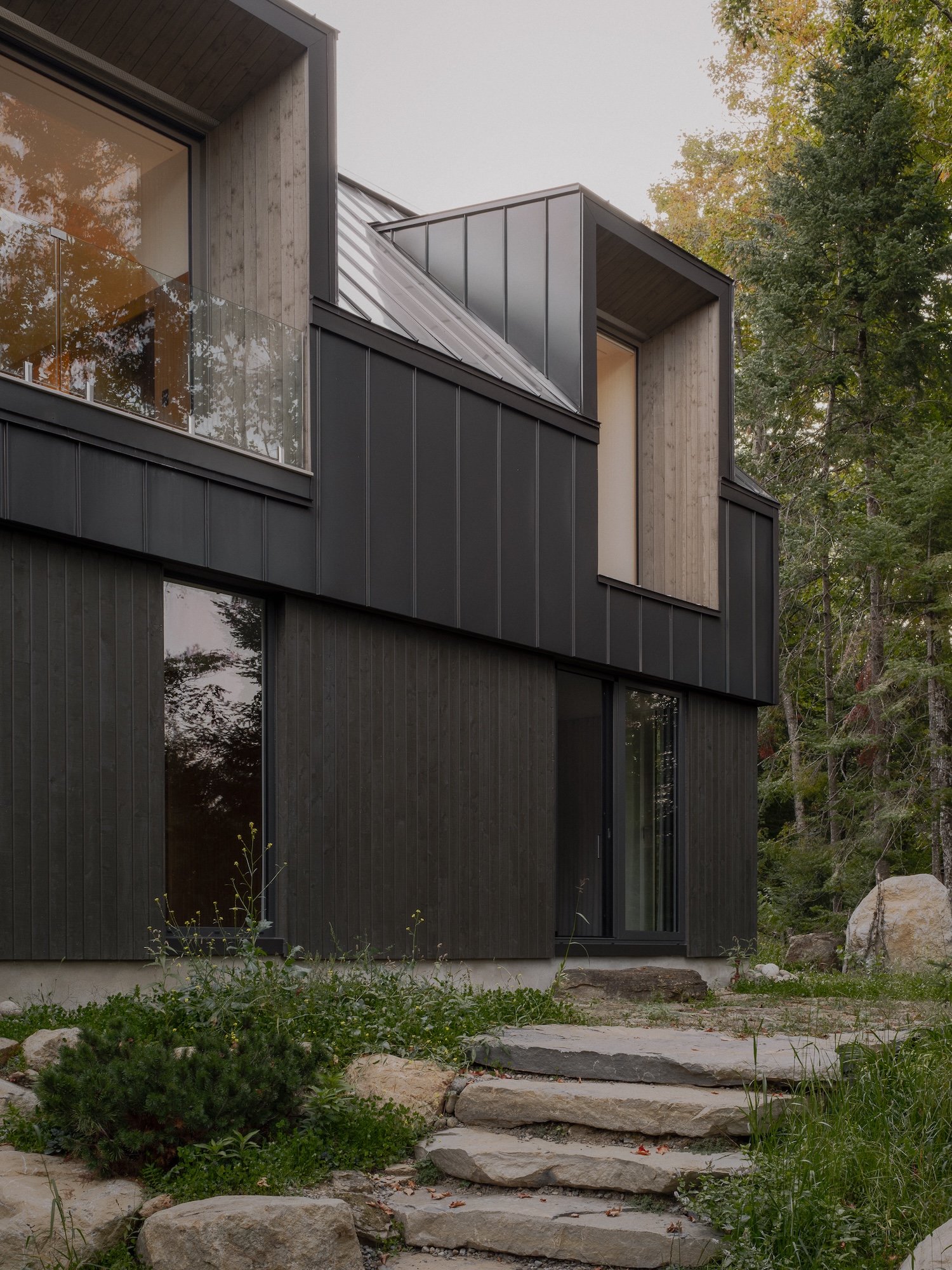
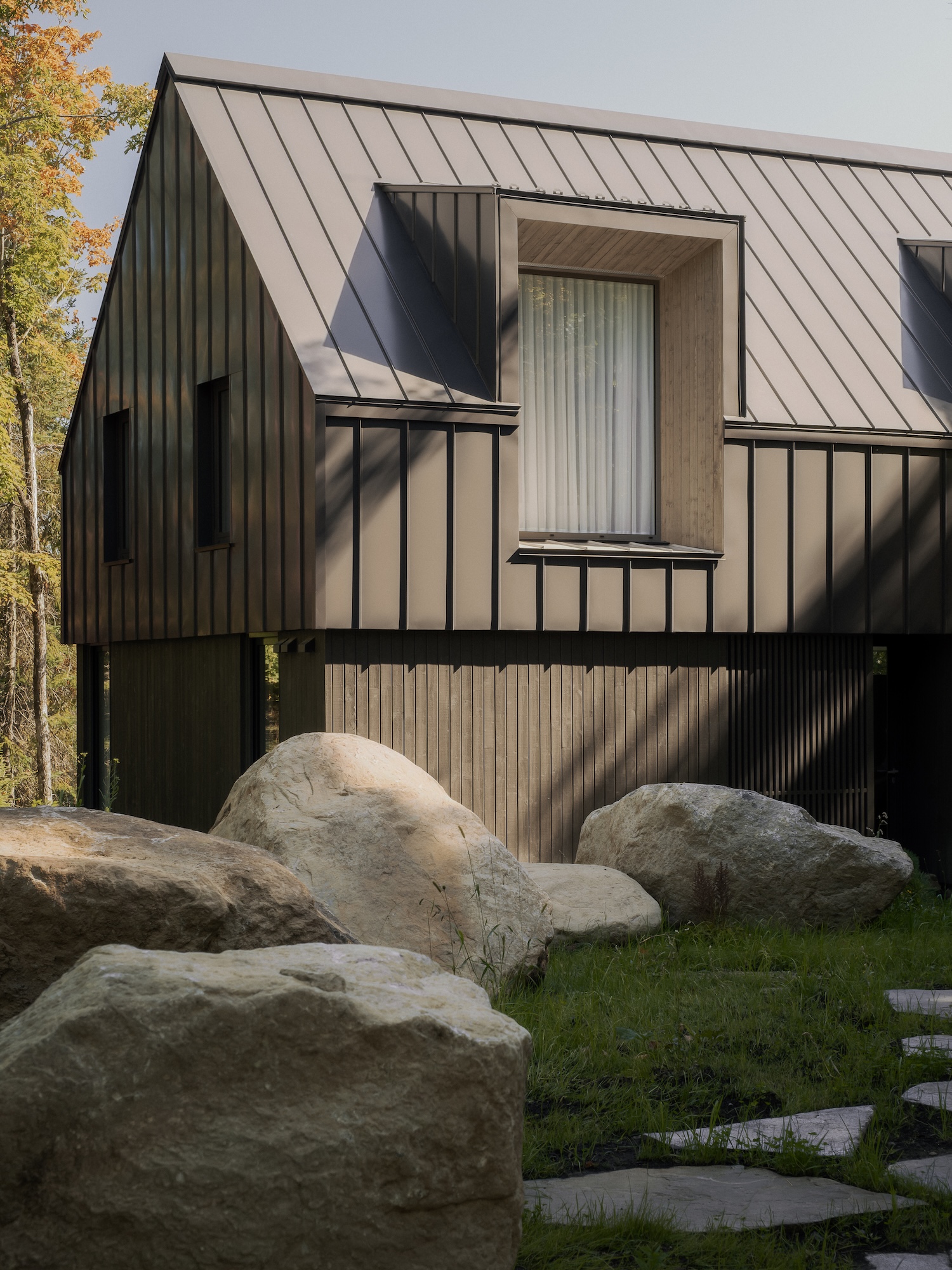
Outside, the house keeps the most familiar form in the region, a rectangular volume under a gabled roof that recalls the first cottages built there more than a century ago. The changes are concentrated in the dormers, a feature brought to Canada by early French settlers. Appareil enlarged them and set the glazing deep inside, creating recessed outdoor rooms lined in a wood cladding that differs from the main facade. The whole volume sits back from the shoreline, which keeps it largely out of view from the water.
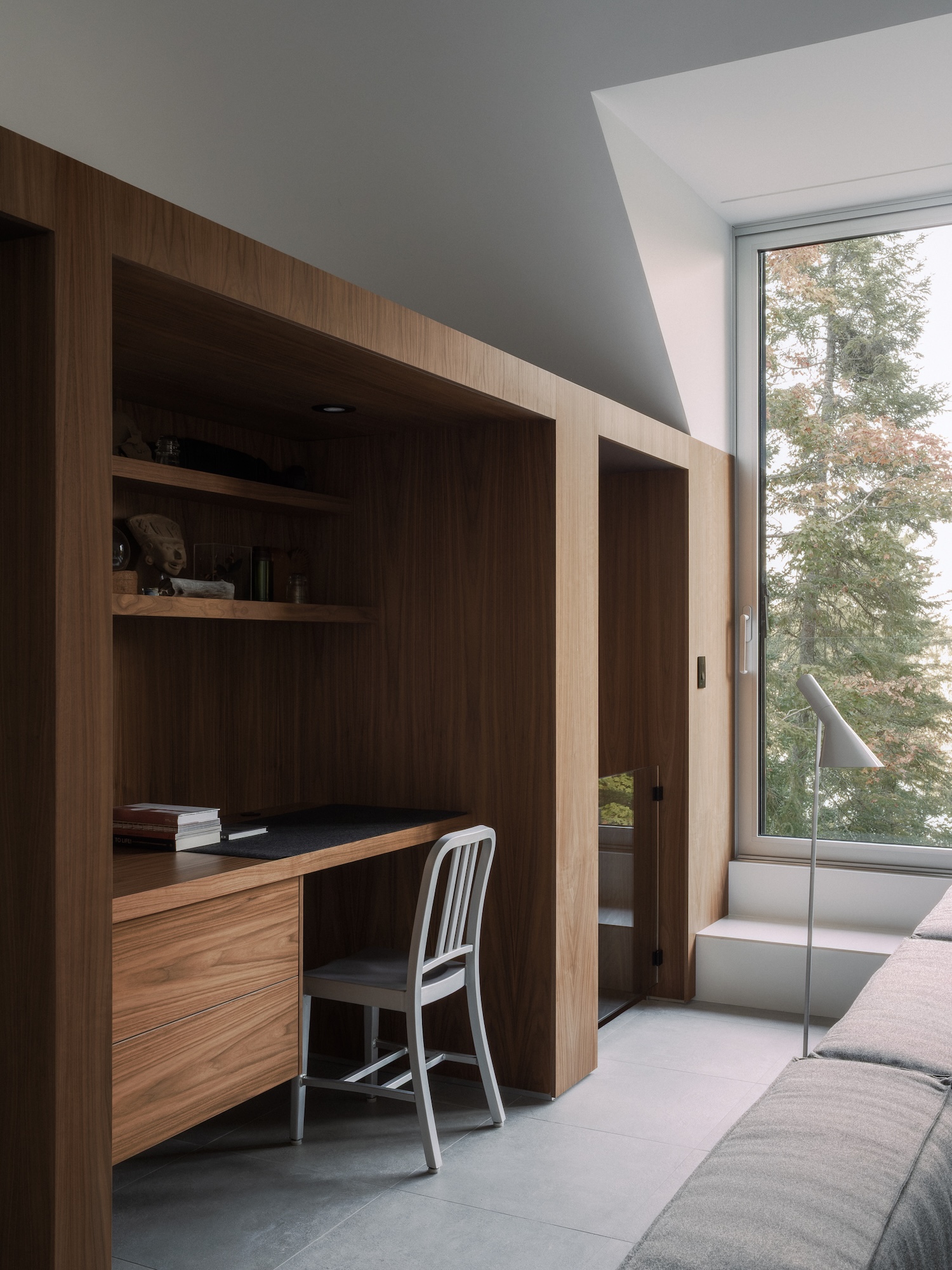
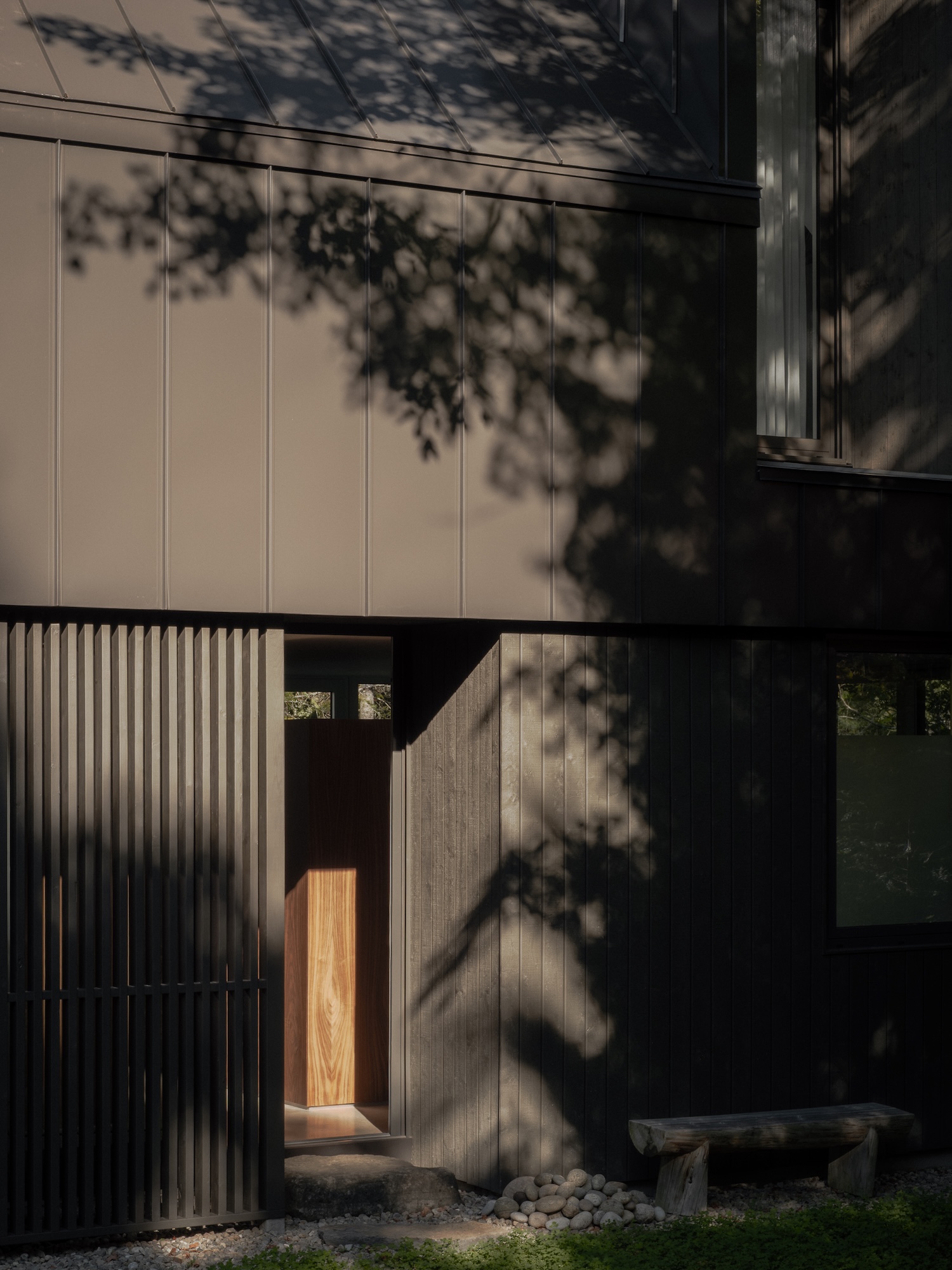
Several details were developed with the owners to reference local history, including the loggies that architectural historian Jacques Robert identifies as one of the region’s distinctive heritage elements. A slatted screen wall carries a red accent that refers to the painted ends of traditional log timbers, and built-in window seats repeat a fixture common in older Laurentian chalets. Contractor Gestion Séquence worked through extensive structural calculations to keep both floors free of bearing walls, with cabinetry by Créations De La Sablonnière. One of the owners notes that changing sunlight, and moonlight after dark, alters how the rooms read from one day to the next.