Church Cottage is a minimalist residence located in Eye, United Kingdom, designed by James Grayley Architects. This eighteenth-century farmworker’s house transformation demonstrates how contemporary agricultural-inspired extensions can engage historic cottage typologies through material references and formal departures that respect original structures while introducing generous spatial volumes. The project addresses limitations of two conjoined laborers’ dwellings characterized by tiny cellular rooms, eccentric circulation, and minute windows failing to connect with picturesque grounds – significant shortcomings for gardener and landscape printmaker clients.
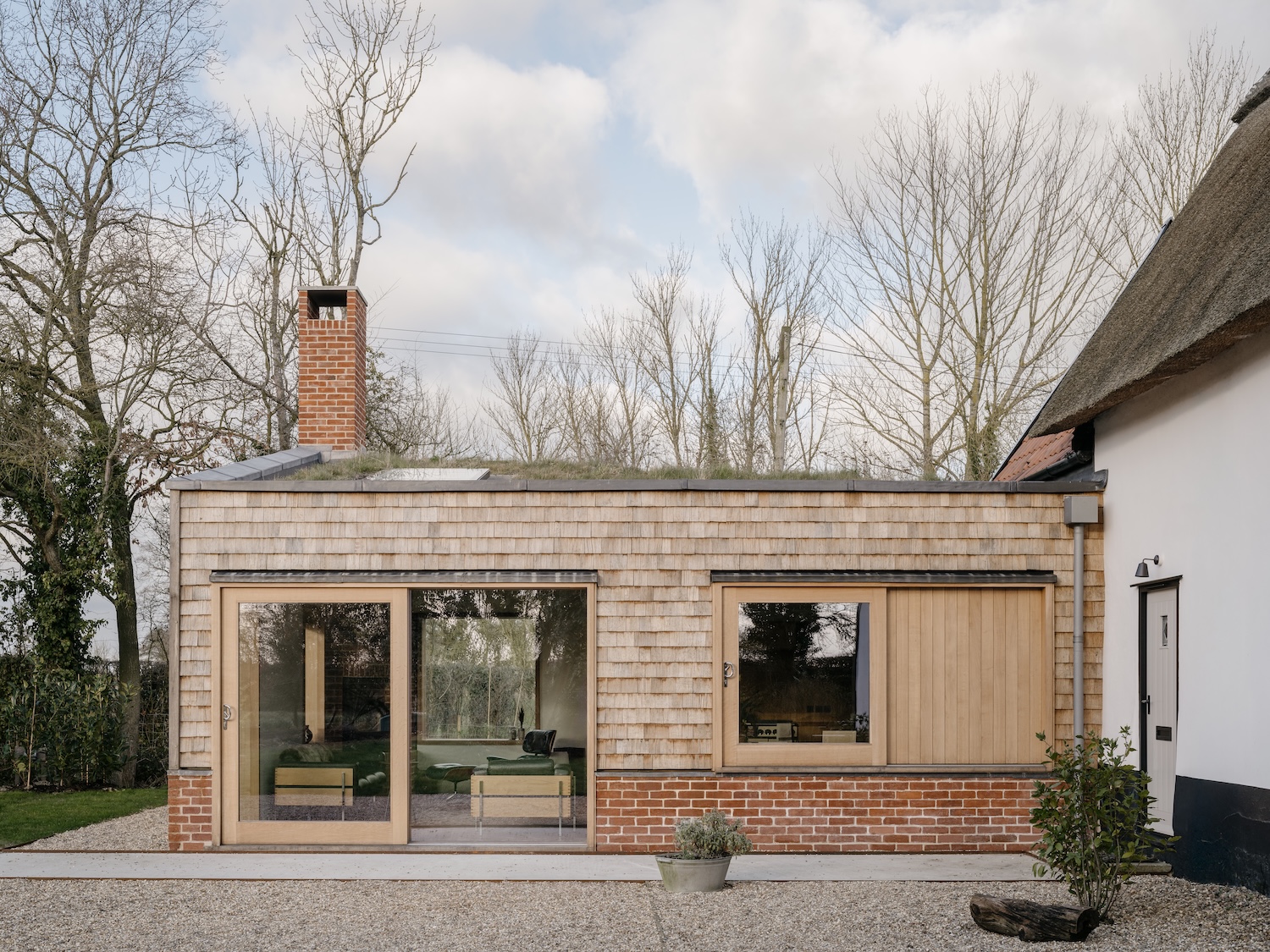
The new south-facing wing represents deliberate departure from linear Suffolk cottage forms through agricultural building references including wildflower meadow roof pitching toward towering brick chimney stack. Hand-cleft English oak shakes wrapping elevations above red brick plinth create textured exterior that settles into the landscape while acknowledging the main house’s precise natural reed and straw thatch roof. This material dialogue between extension and existing structure creates visual conversation without attempting stylistic matching.
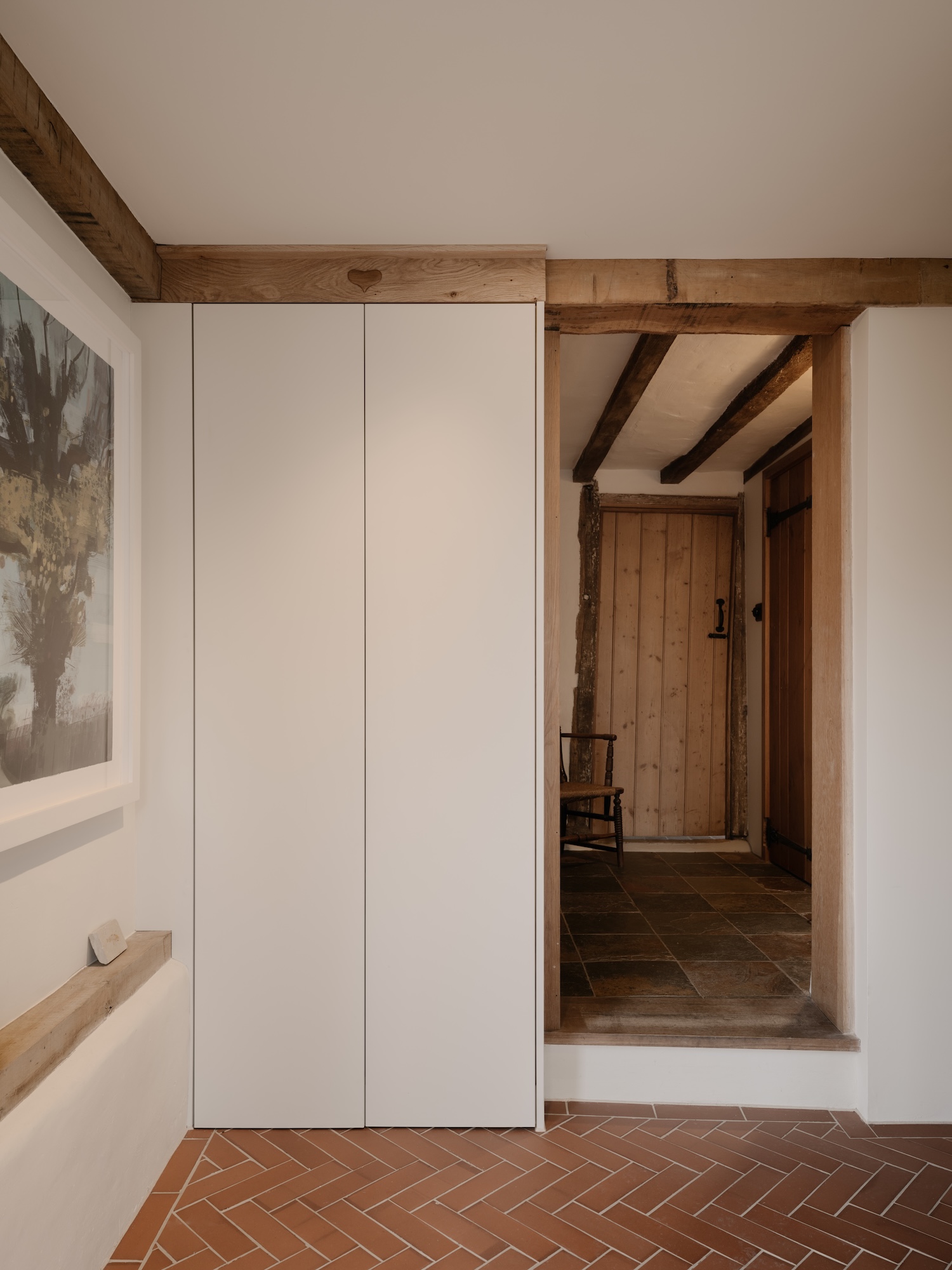
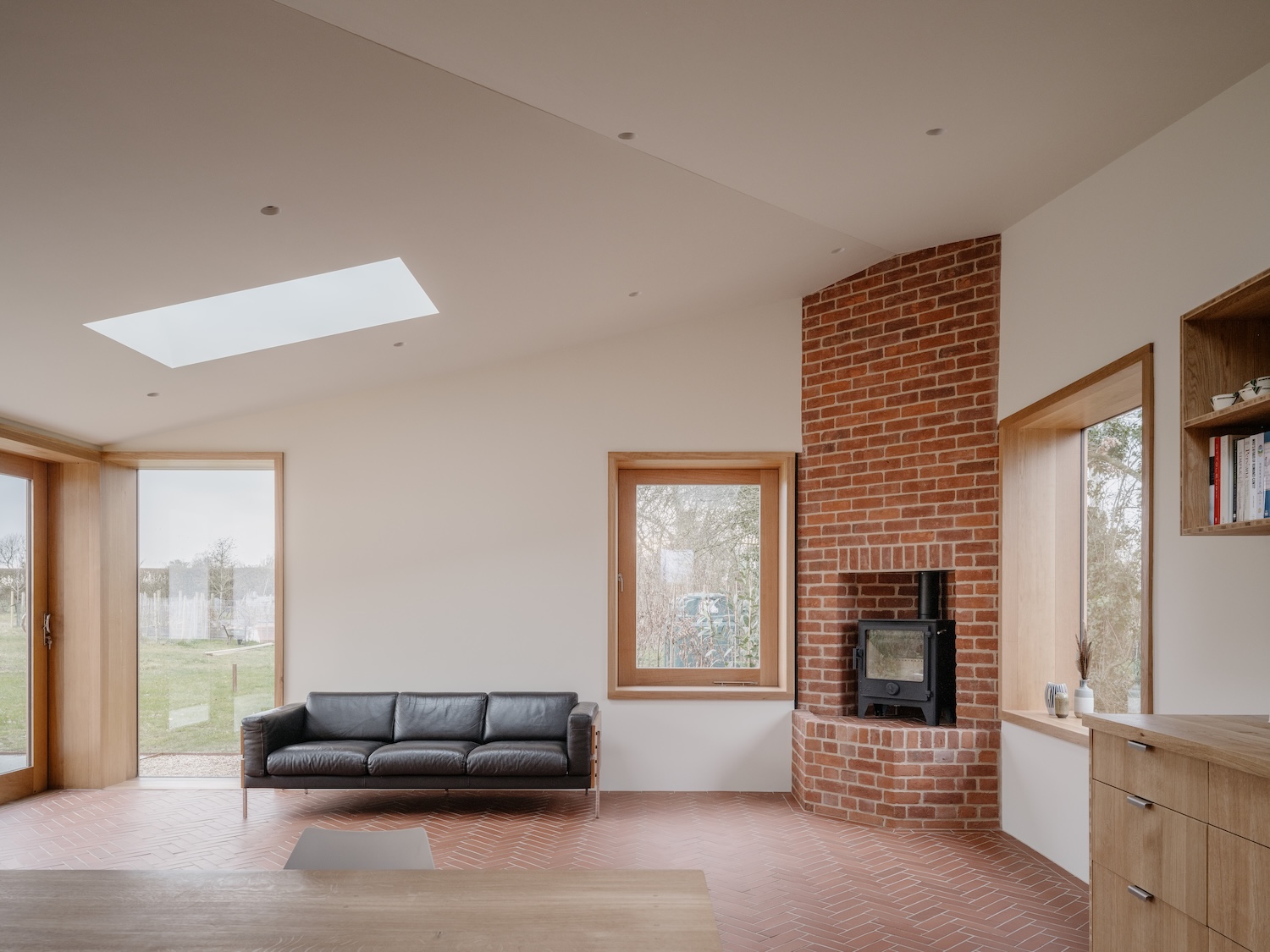
The bold vaulted volume provides generous kitchen, dining, and living space counterpointing the snug rooms arranged around the existing house’s vast central fireplace. Carefully positioned timber windows frame verdant landscape views while rooflights pour light deep into the square plan, addressing the original cottage’s darkness and limited visual connection to grounds. The 2011 extension receives complete rearrangement providing pantry, utility, and WC while a mud-boot room insertion into the previously minute kitchen creates valuable transition space for gardening activities.
Local contractor Robert Farrow’s construction with his sons ensures traditional detailing references throughout the distinctively contemporary extension. Suffolk Red imperial brick plinth supports the traditional bakehouse chimney while robust oak-framed picture windows and doors by local joiner maintain regional craft traditions. The hand-split oak shake cladding and wildflower roof demonstrate contemporary interpretations of vernacular materials that weather naturally while supporting ecological functions.