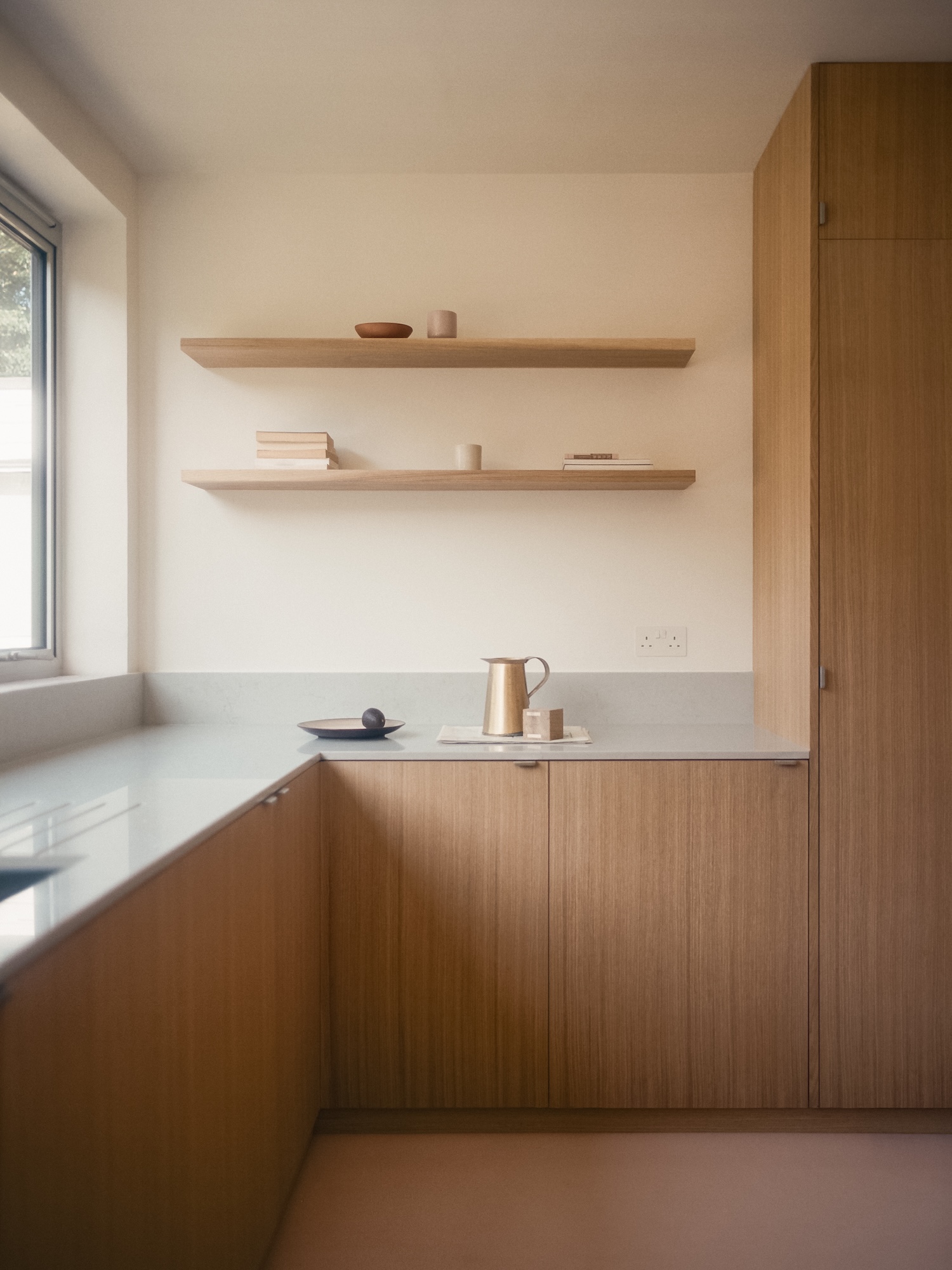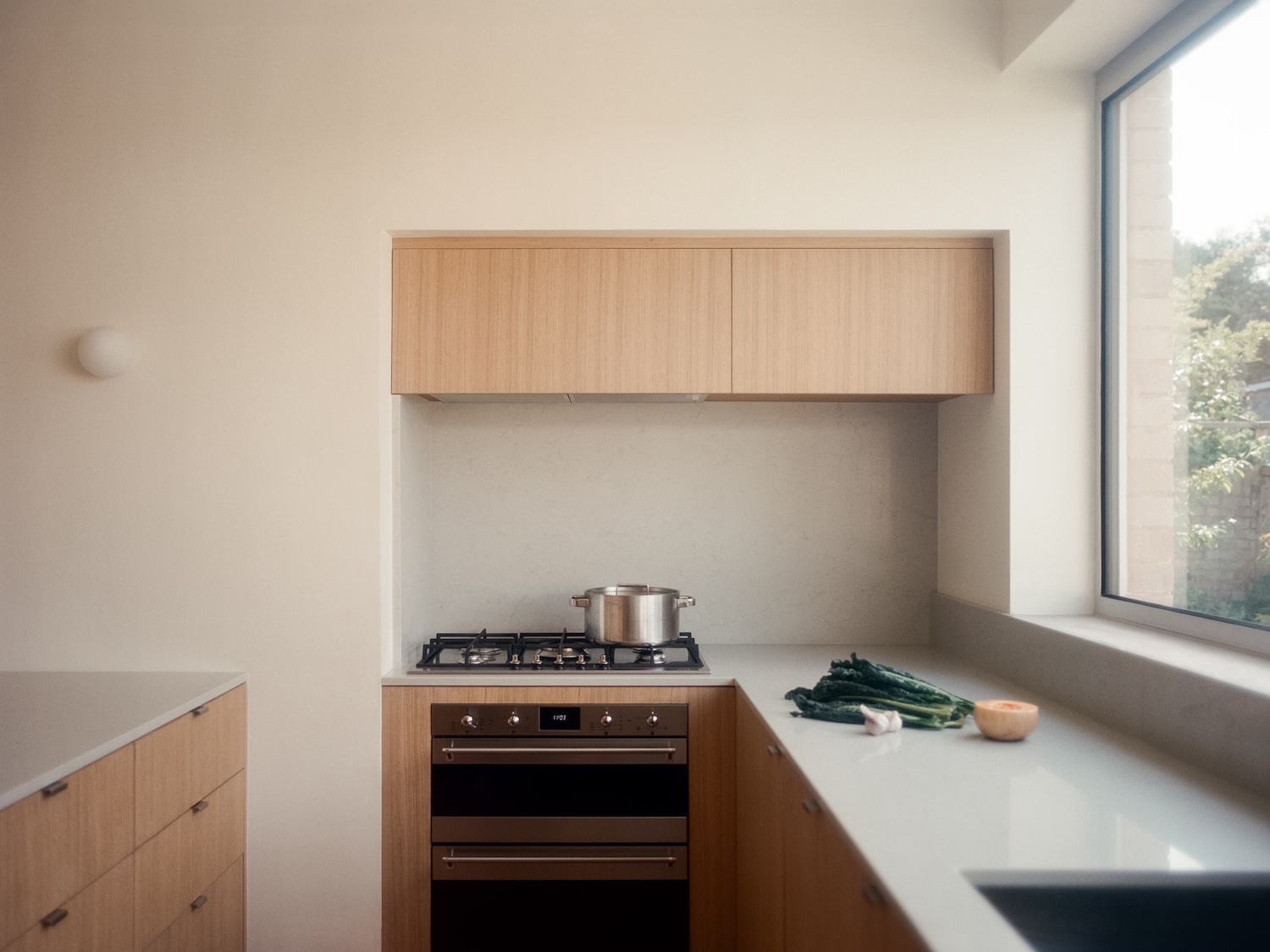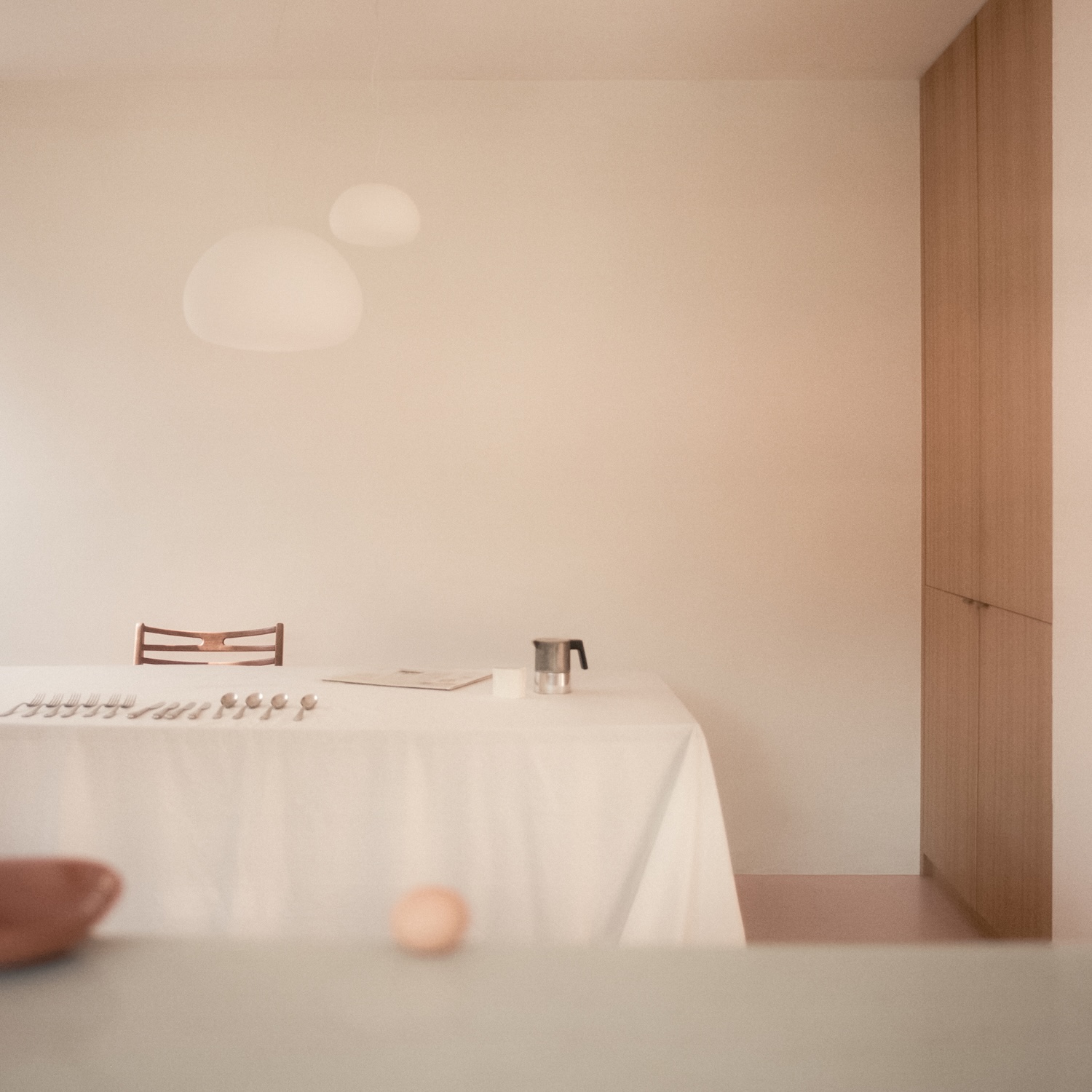
Fairmead House is a minimalist bungalow renovation located in St Albans, United Kingdom, designed by Apricot Square. The renovation addresses a particular strain of postwar British modernism – the low-slung suburban bungalow, a typology often dismissed yet quietly prevalent across the Home Counties. Built in the 1970s during the twilight of modernist optimism, these structures occupy liminal territory between city and countryside, embodying aspirations that have aged unevenly. Rather than demolition or extensive addition, the project operates through strategic erasure and material precision, interrogating what latent potential remains within constrained footprints.
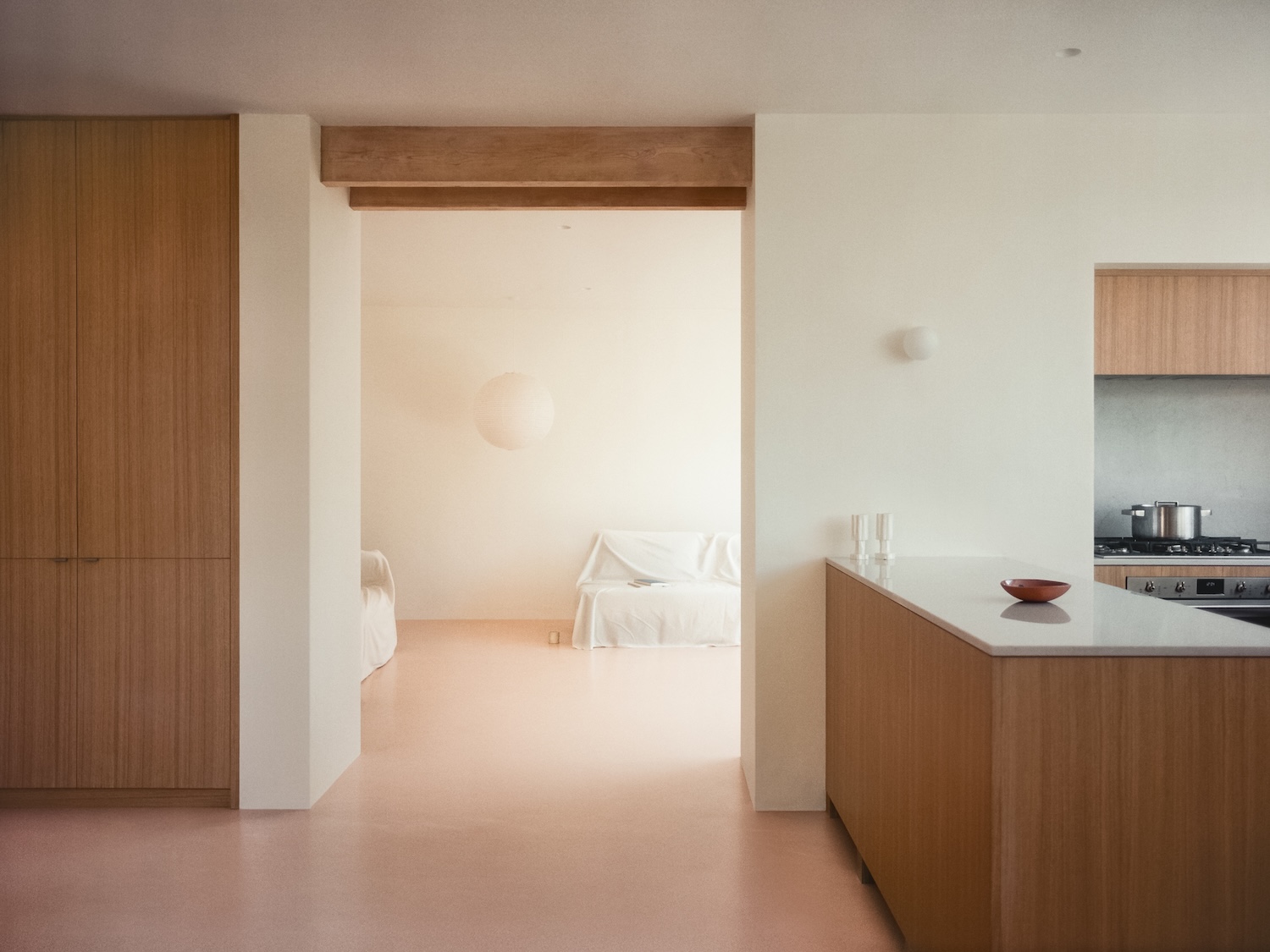
The most decisive move involves removing select partitions to establish visual continuity between kitchen, dining, and living zones. This horizontal sweep recalls the flowing plans of postwar Californian case study houses, yet here the gesture responds specifically to English landscape conditions – the ever-changing light across meadows, the horizontal emphasis of wetland topography. Without expanding outward, the intervention expands perception, allowing the dwelling to breathe within its original boundaries.
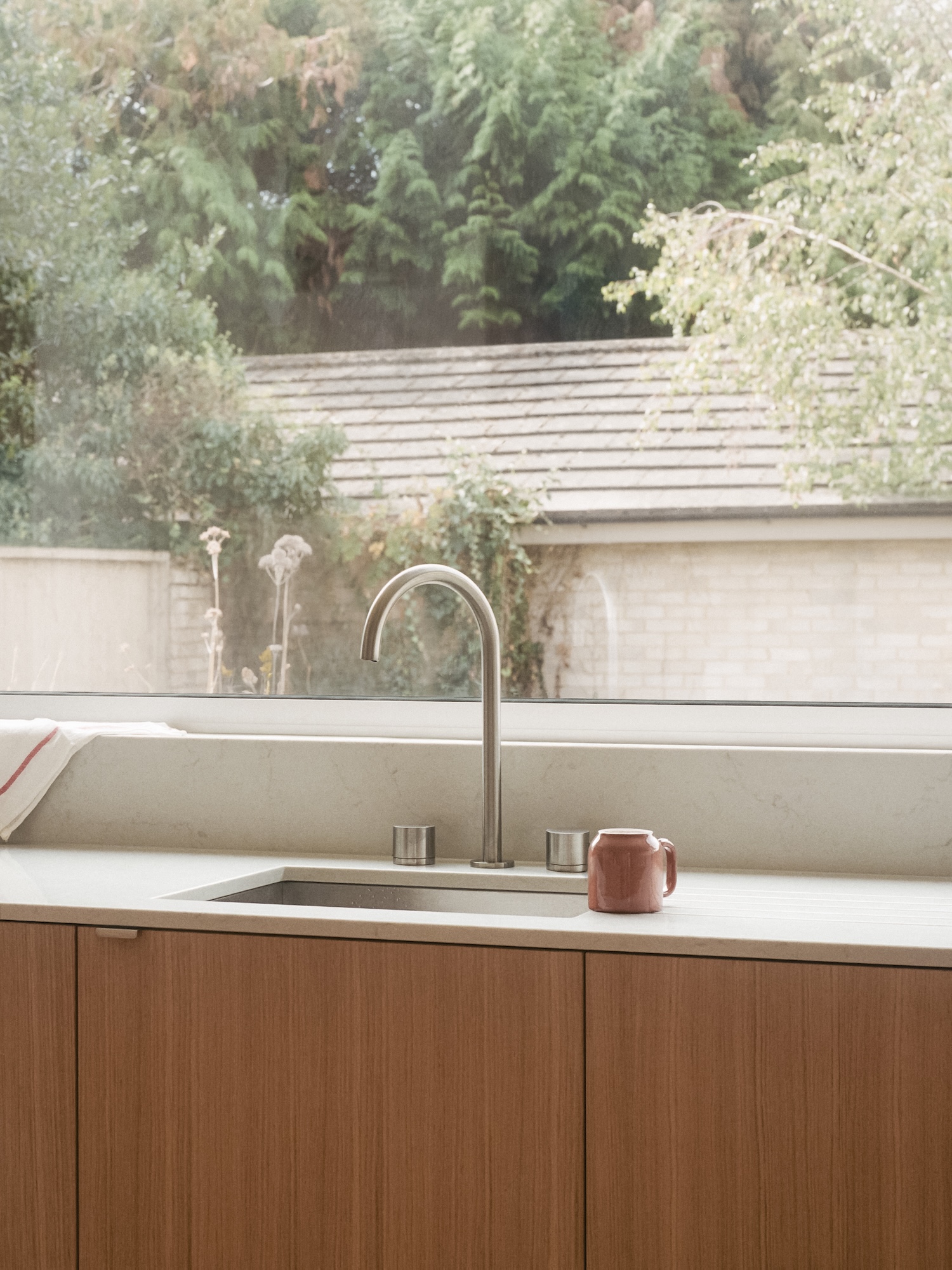
New single-pane aluminium windows operate as carefully calibrated framing devices. The slim profiles read almost as picture planes, transforming adjacent meadows into a sequence of composed views that shift as one moves through the interior. This approach echoes the fenestration strategies of Japanese engawa spaces, where openings mediate between built and natural realms through deliberate framing rather than maximum transparency. Each window presents the landscape as a dynamic still life, acknowledging seasonal flux and weather conditions as integral to domestic experience.
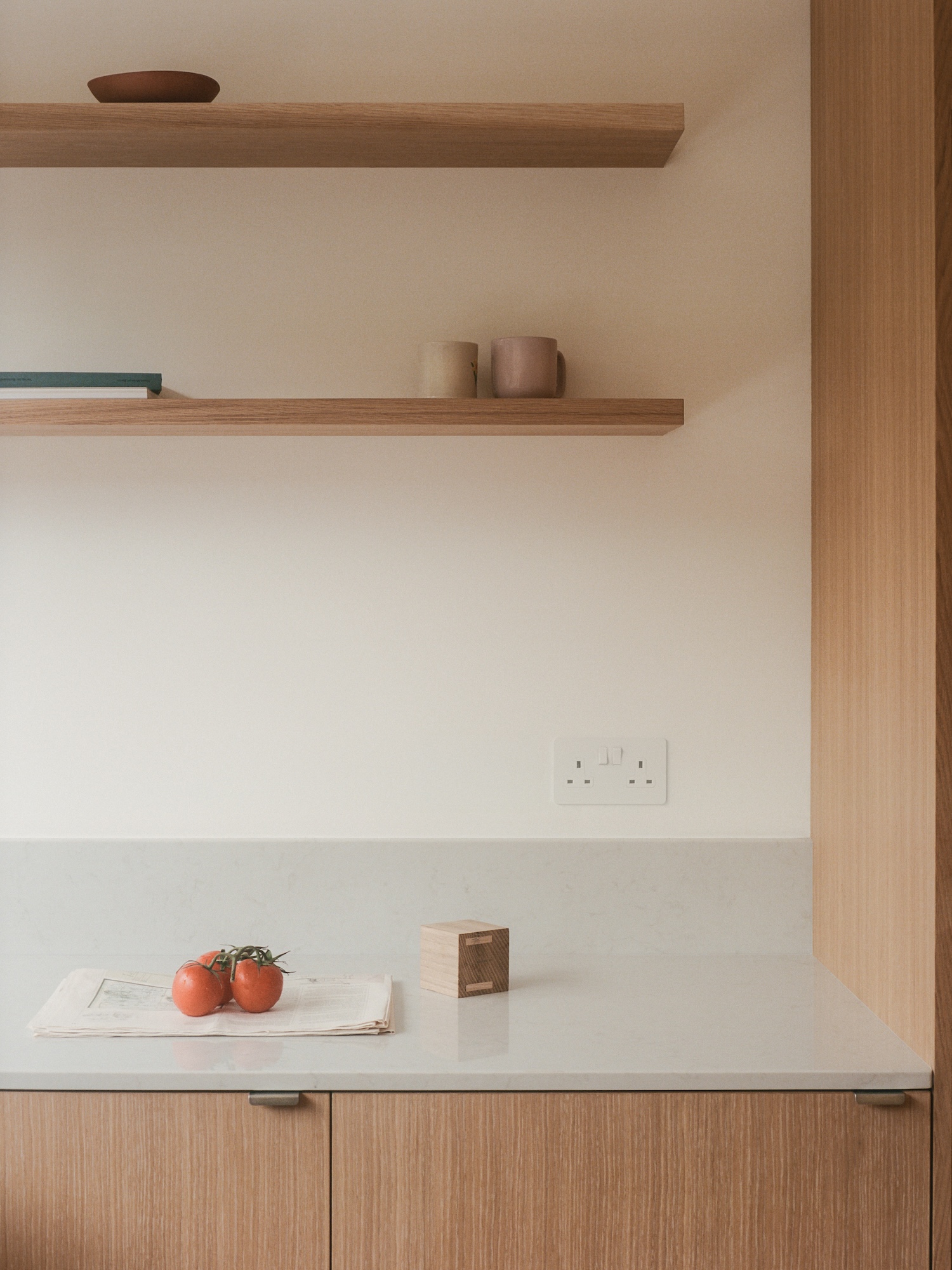
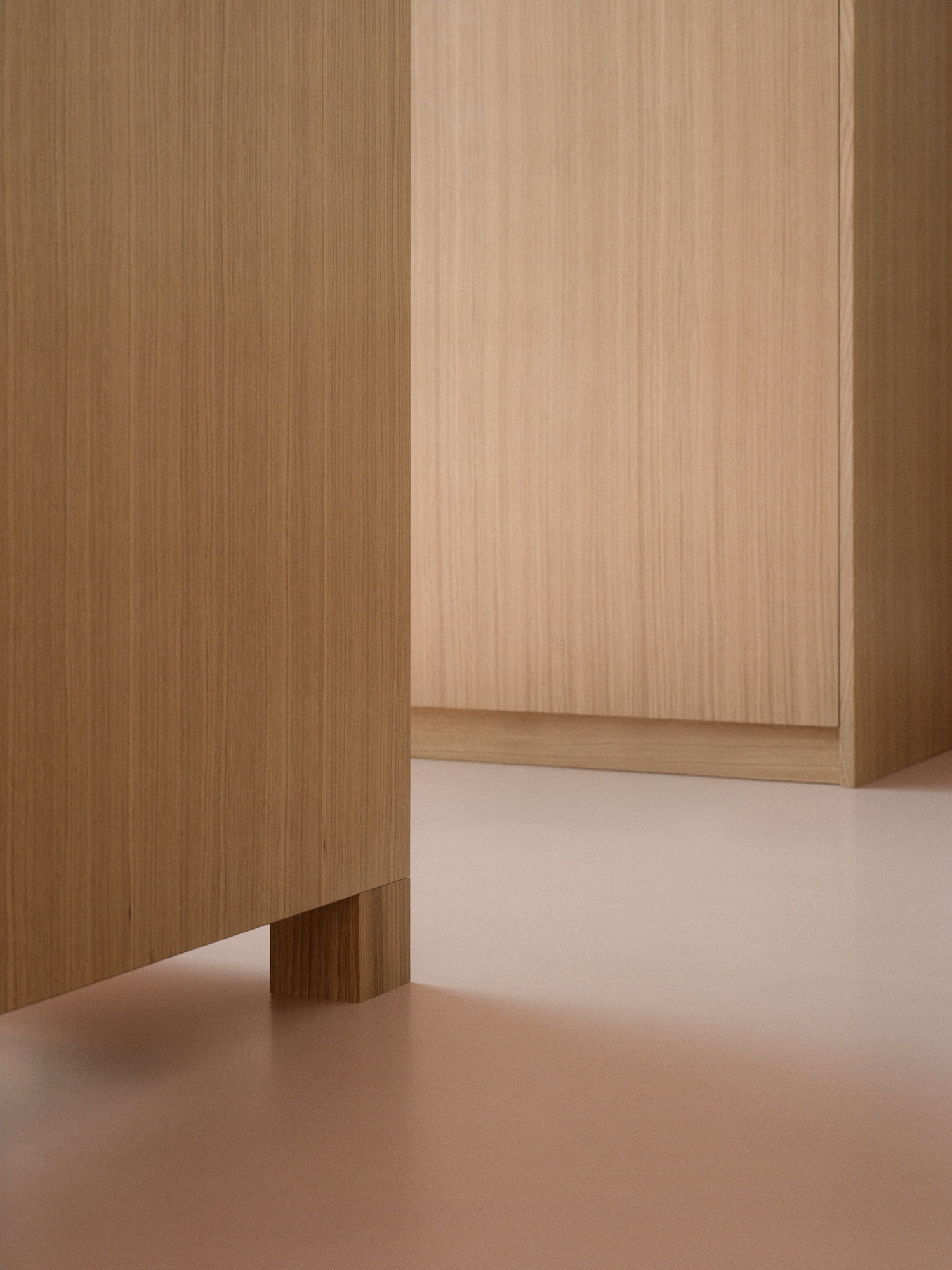
Material choices establish thermal and tonal counterpoints. Oak cabinetry and exposed timber beams provide haptic warmth and visual continuity with the surrounding meadows, their grain patterns introducing organic irregularity. Against this, pale-pink biopolymer resin flooring introduces an unexpected chromatic note – neither purely natural nor overtly synthetic, the material occupies ambiguous territory. Its slight sheen catches changing daylight, creating subtle tonal shifts across the open plan while offering durability suited to family life.