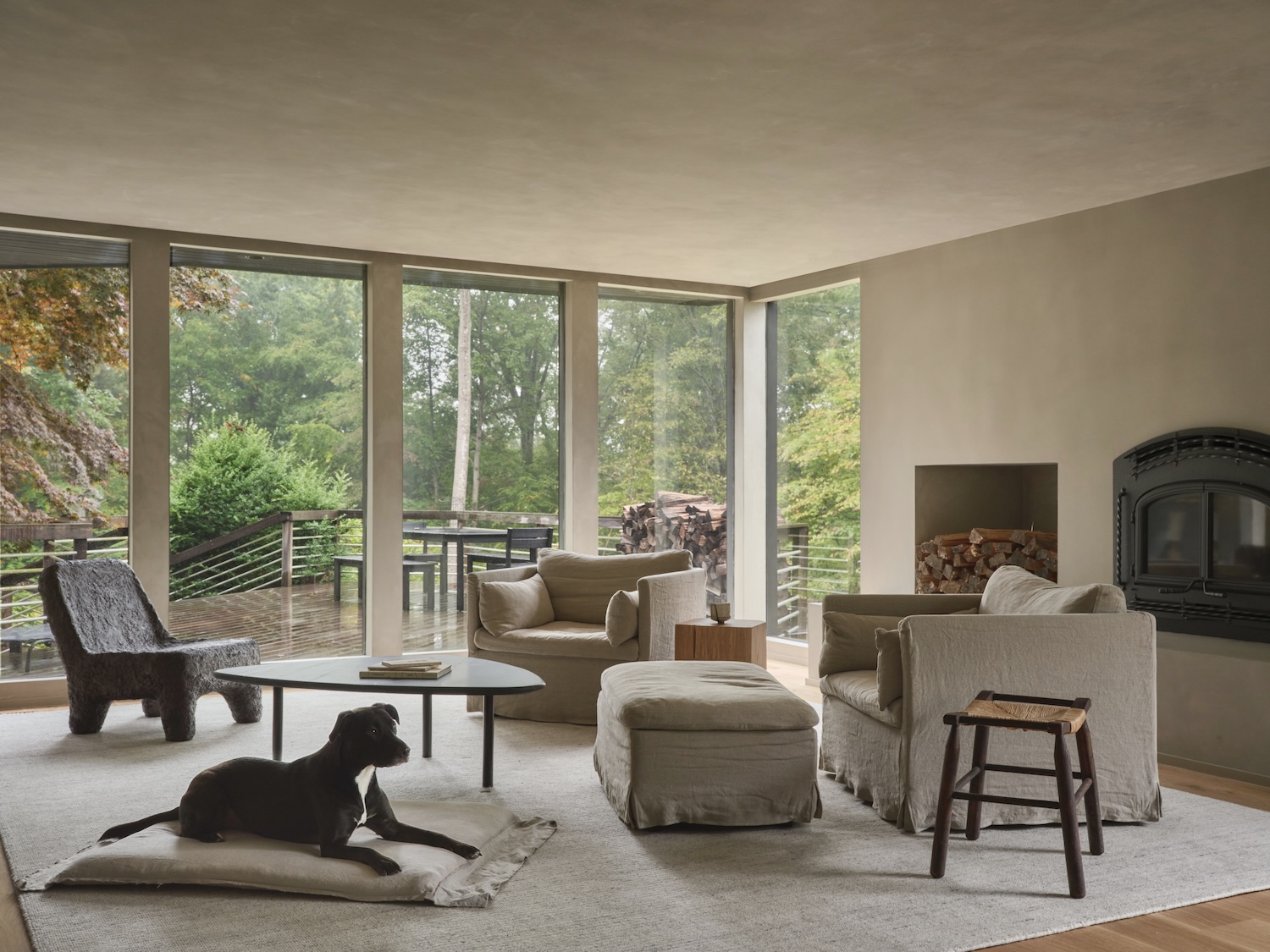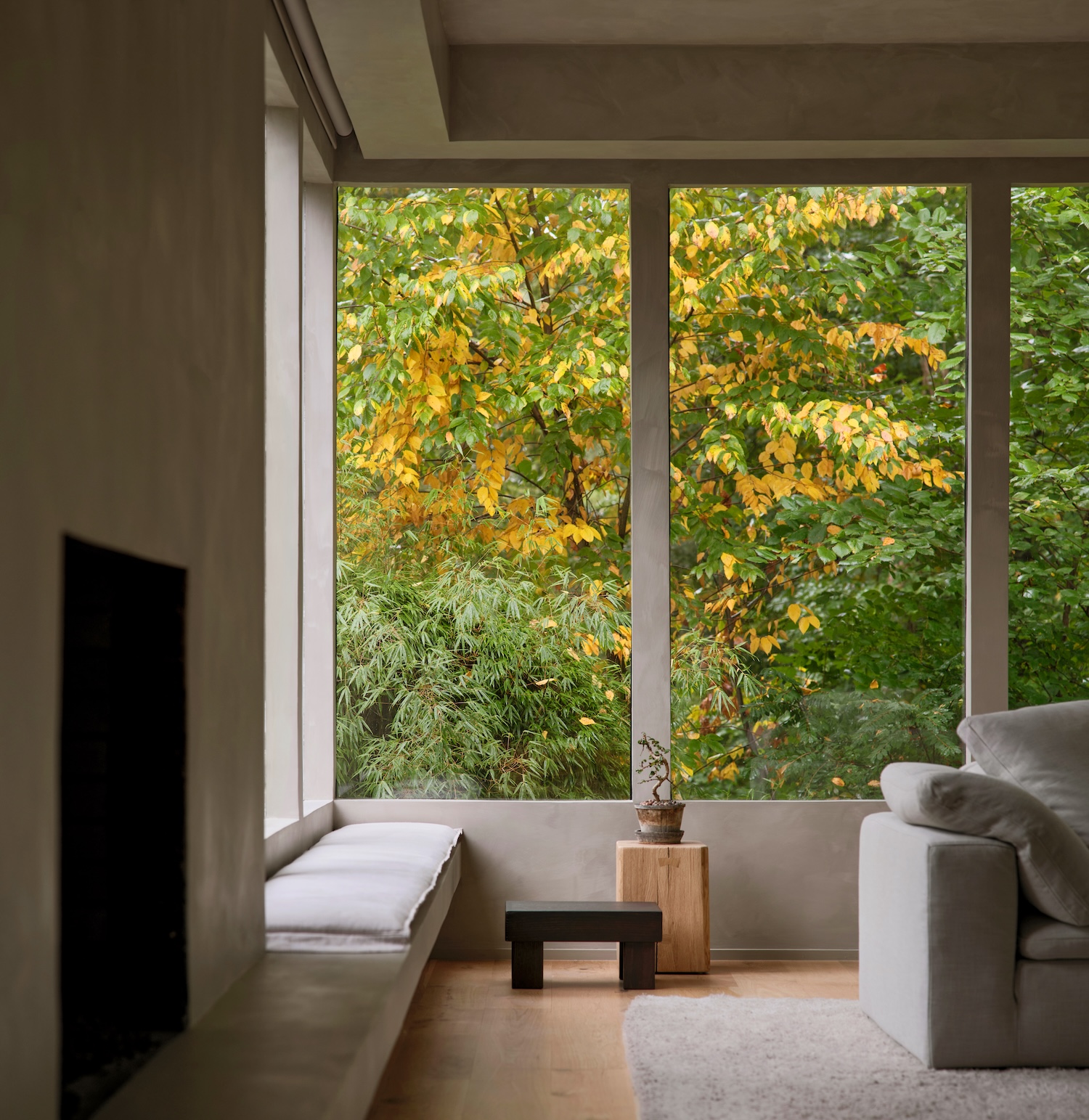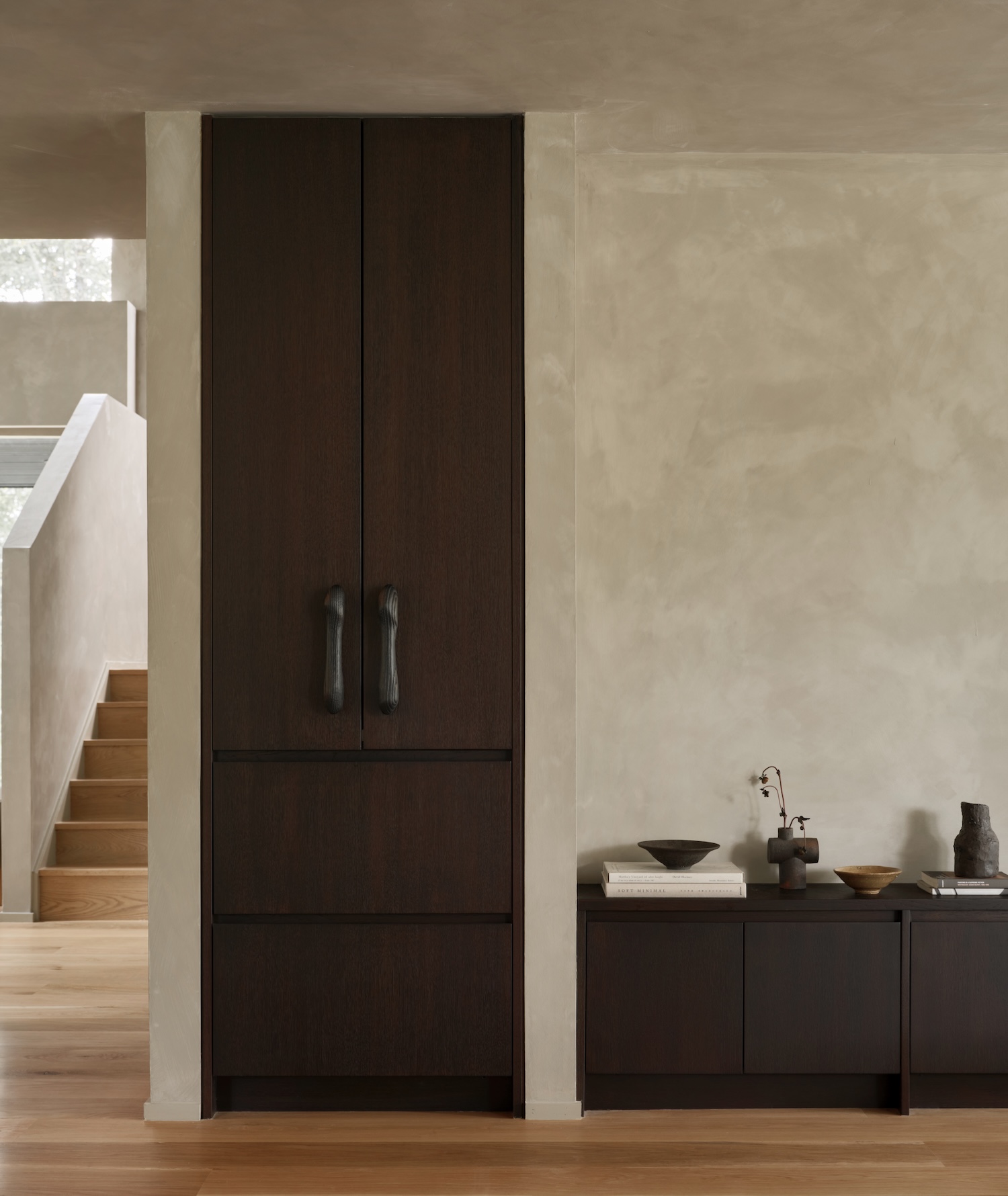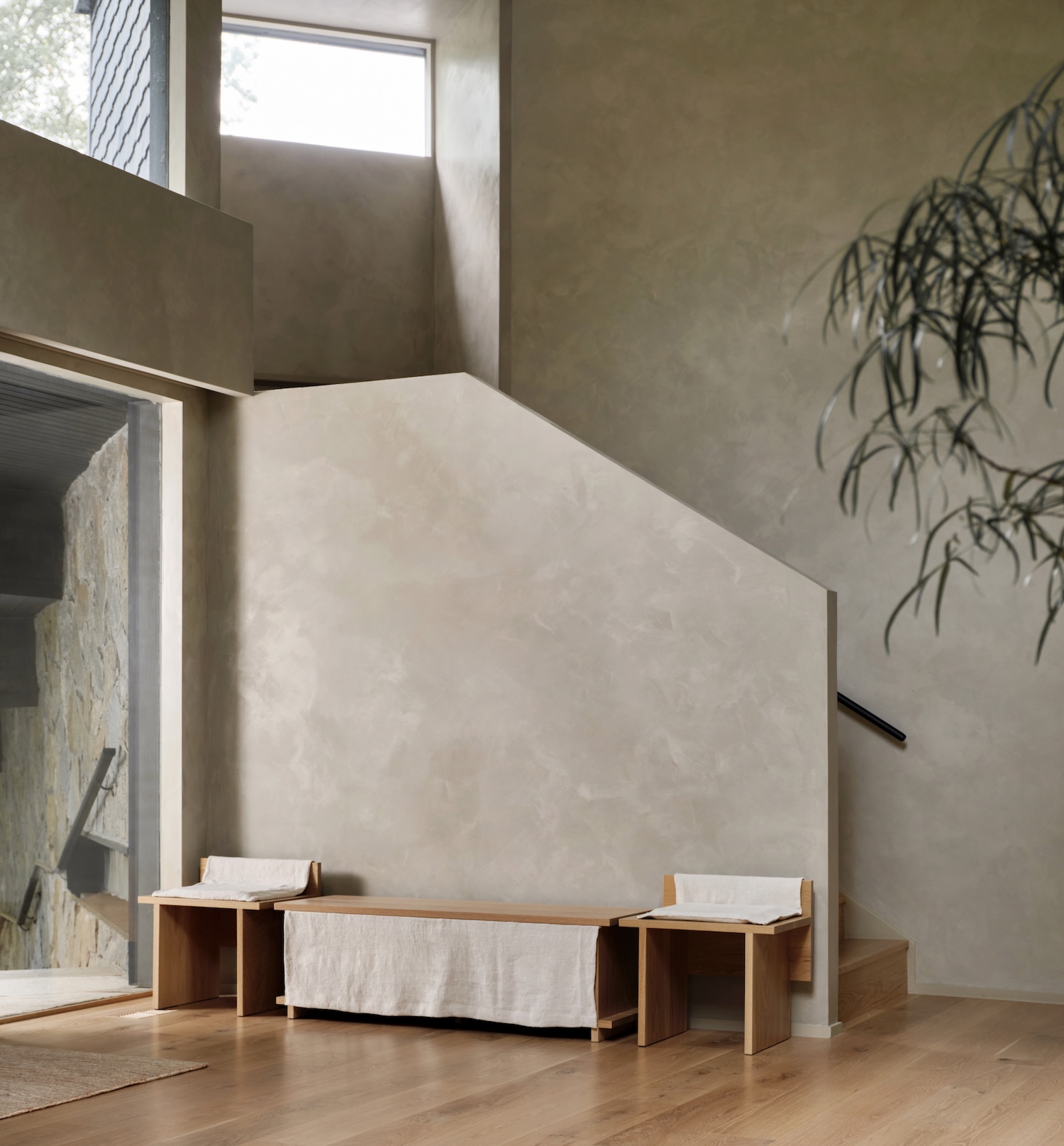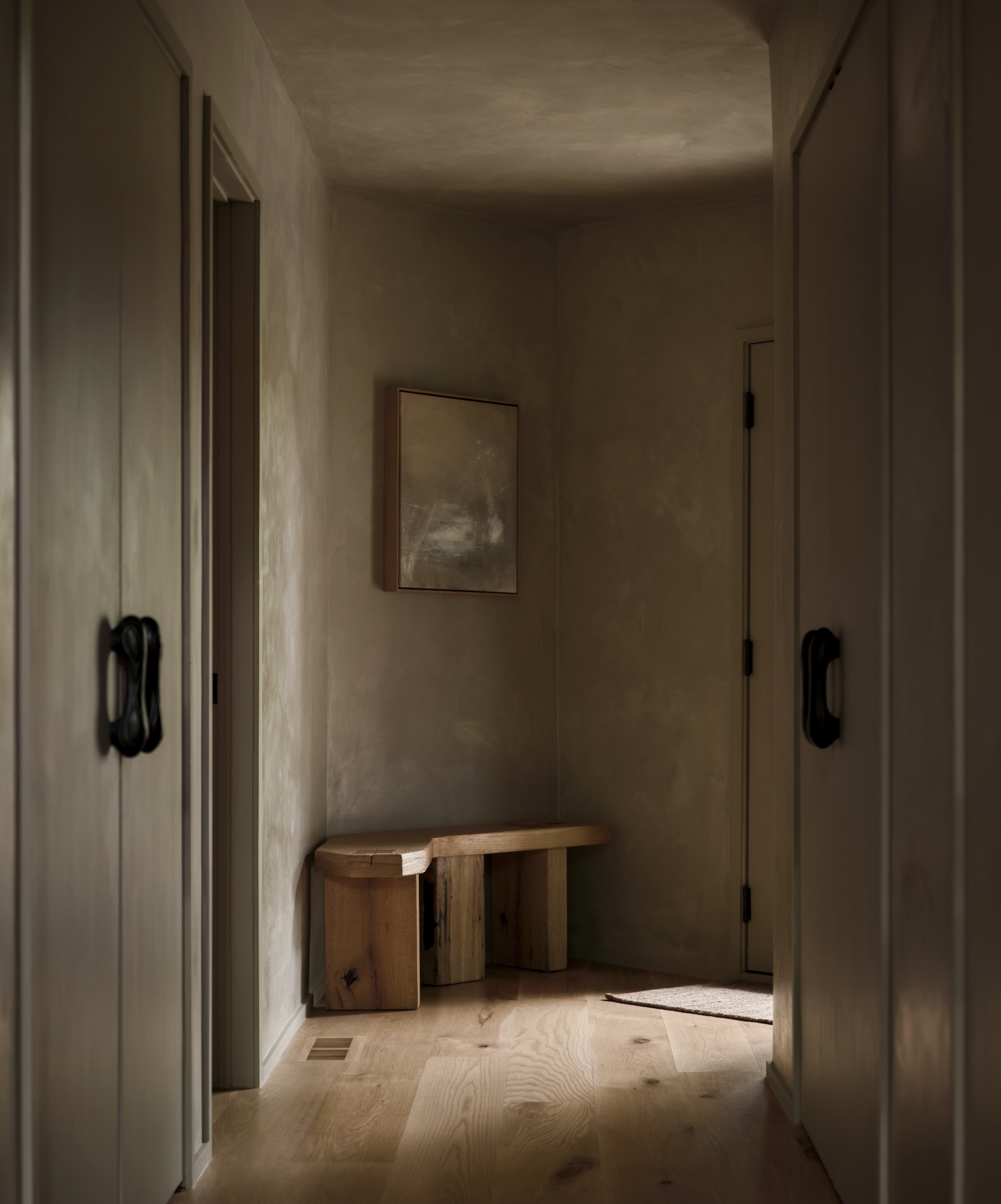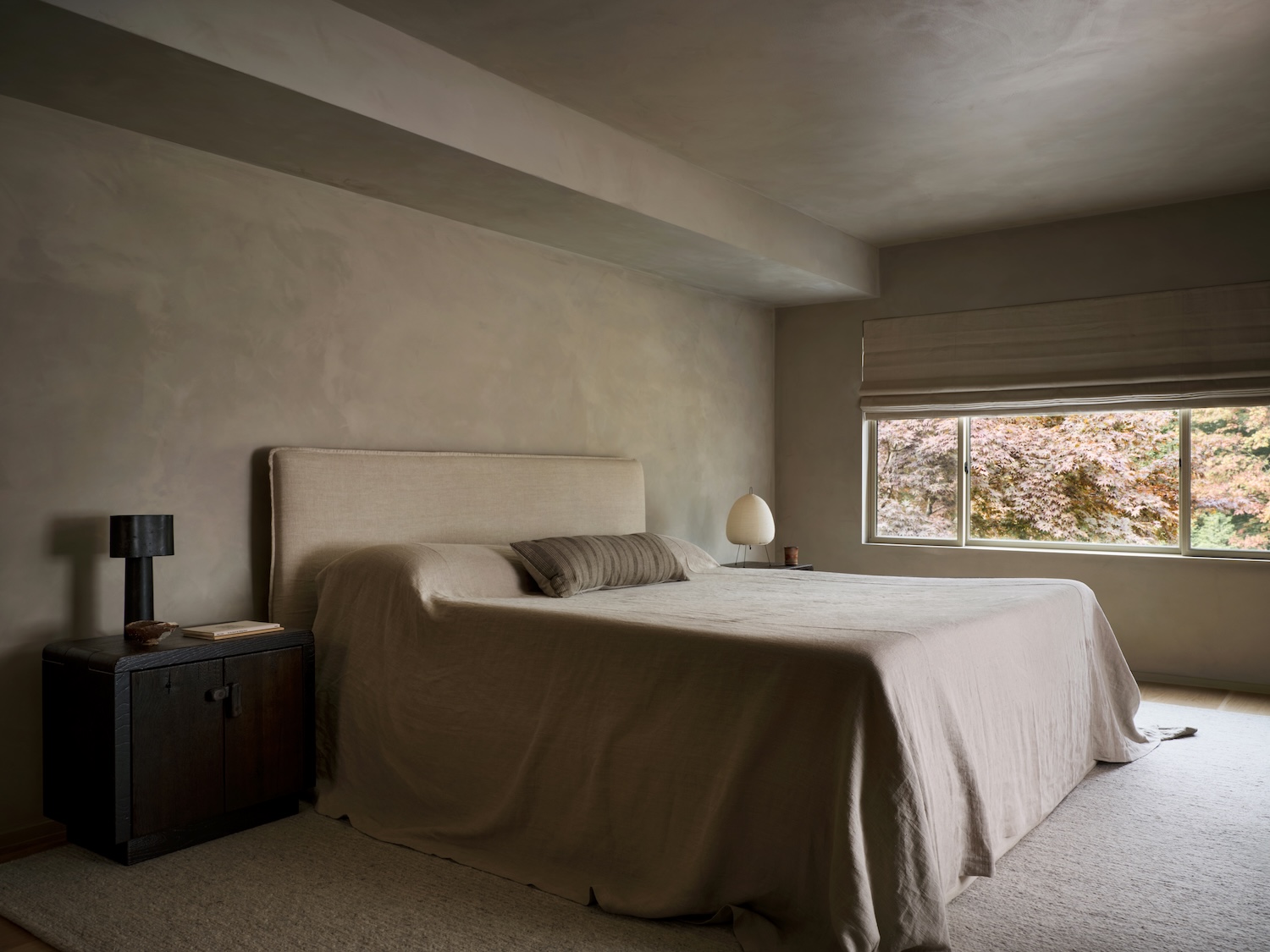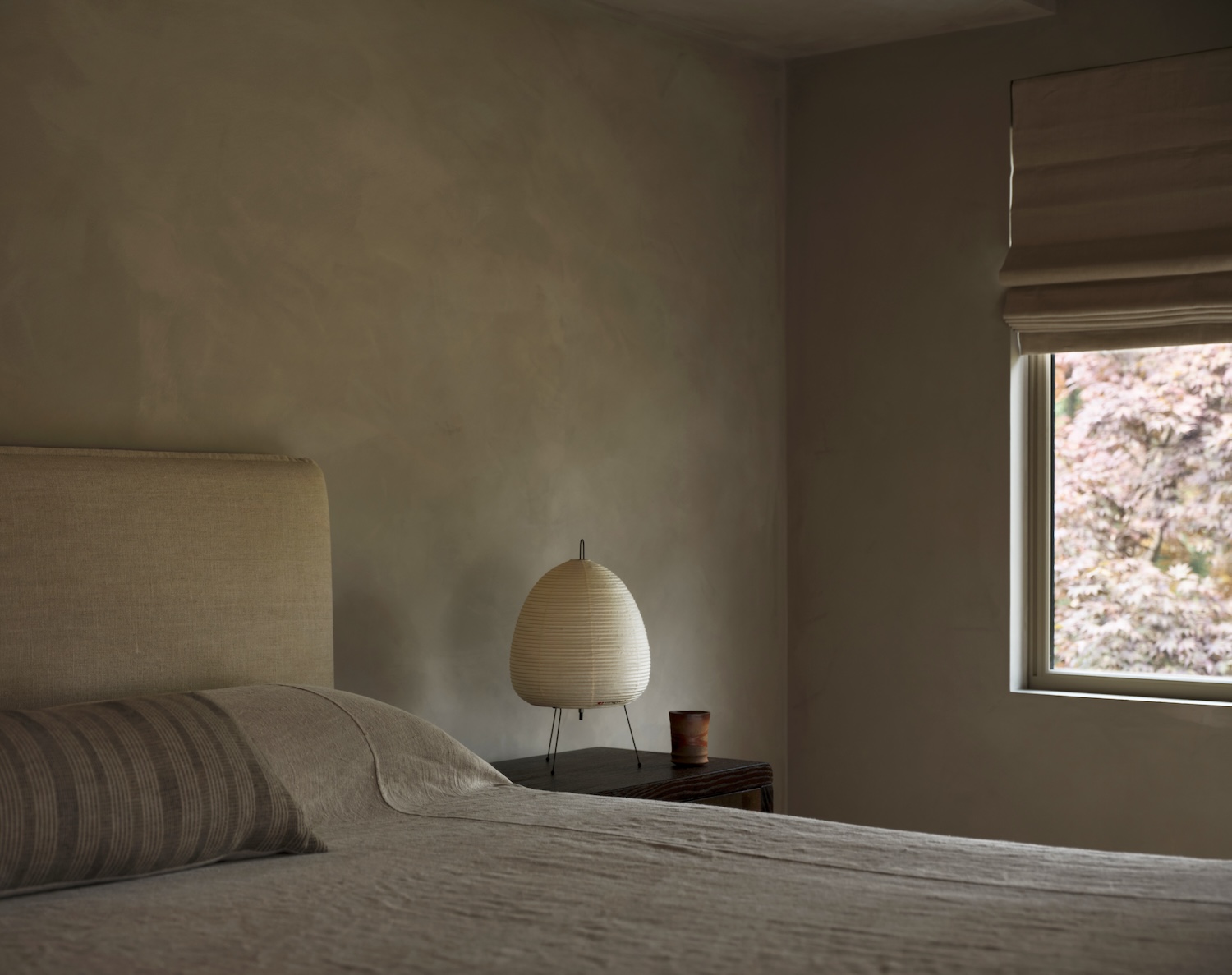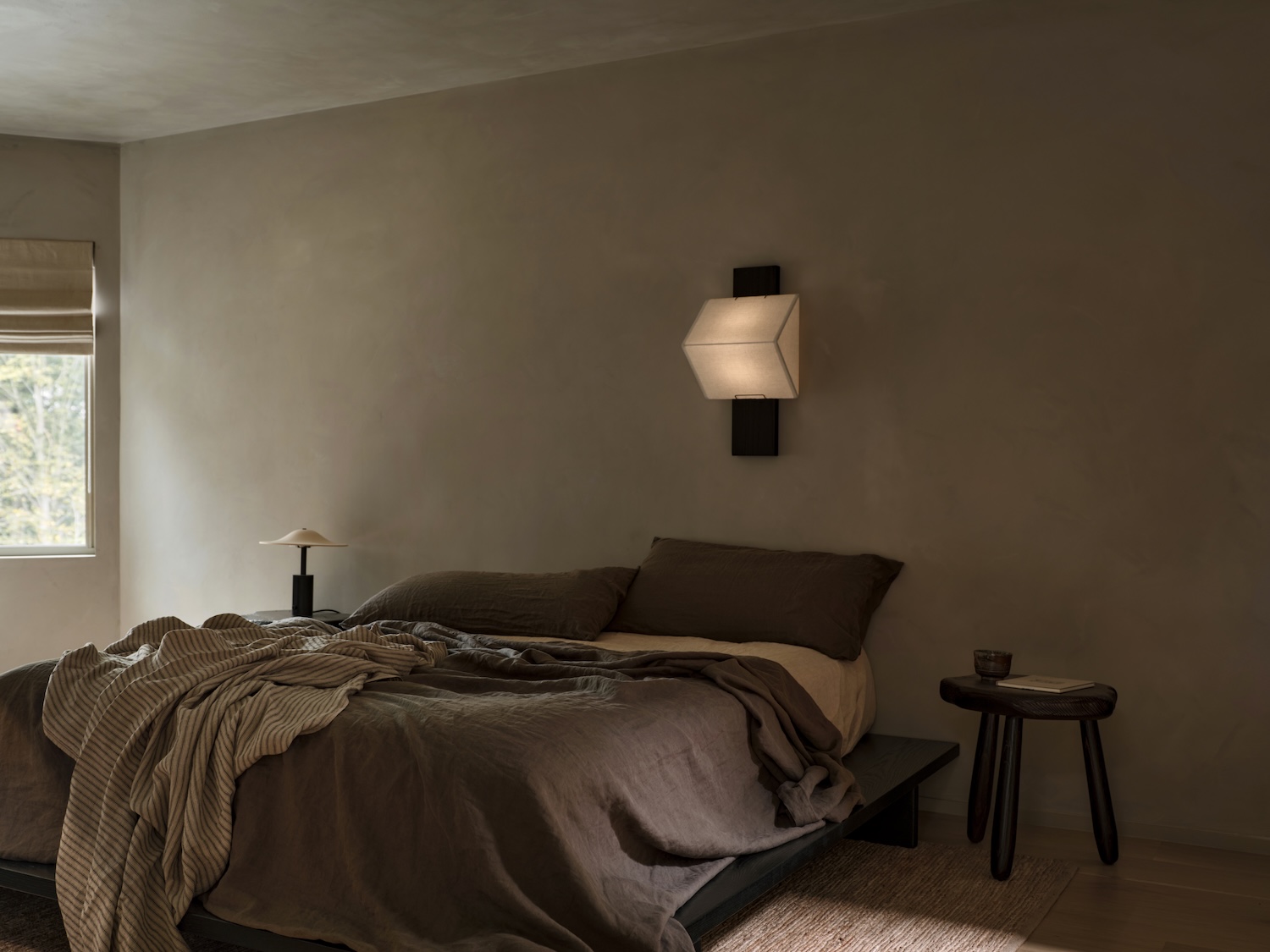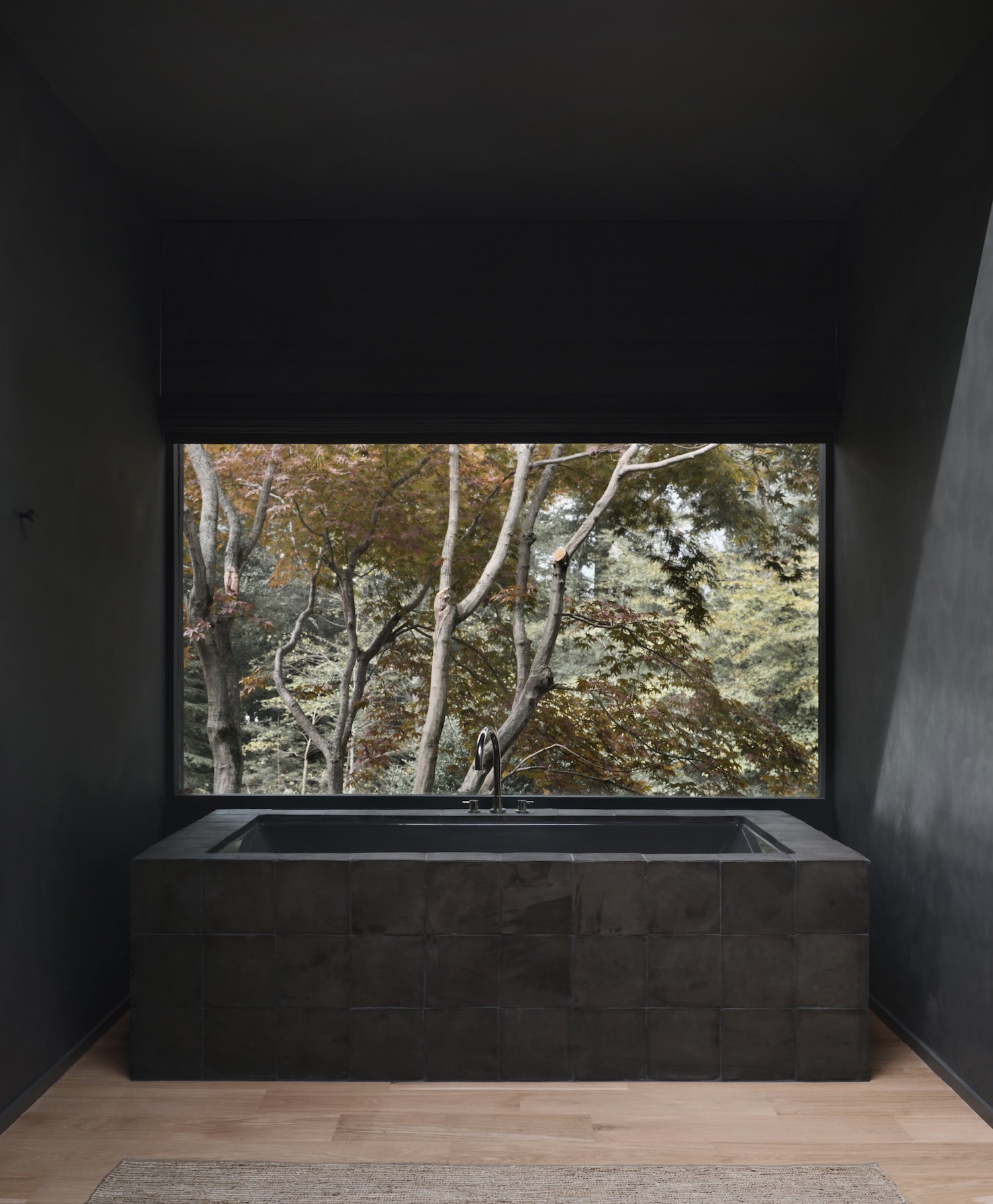
Greenwich Modern is a minimalist house located in Greenwich, Connecticut, designed by Tina Rich. Rich’s approach to this Greenwich residence demonstrates a sophisticated understanding of how Eastern and Western making traditions can inform contemporary living. Her choice to infuse the 1984 structure with Japanese-inspired aesthetics was not mere stylistic borrowing but a fundamental rethinking of how materials and objects might create spatial poetry. The decision to employ Soft Taupe lime wash from Coloratelier throughout the home reveals Rich’s intuitive grasp of how surface treatment can become spatial strategy – the ancient European technique creates walls that breathe and respond to light with the sensitivity that defines the best Japanese interiors.
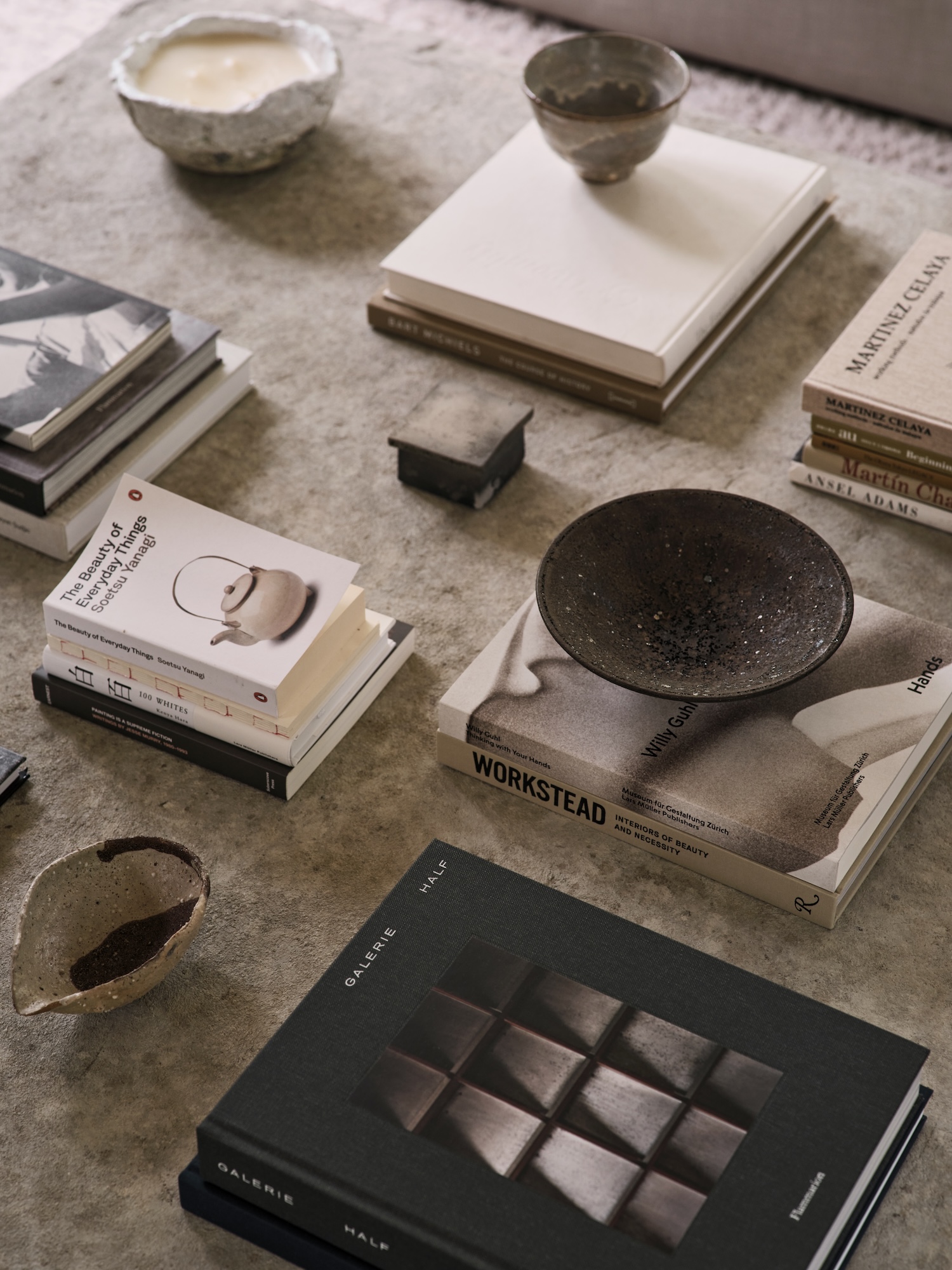
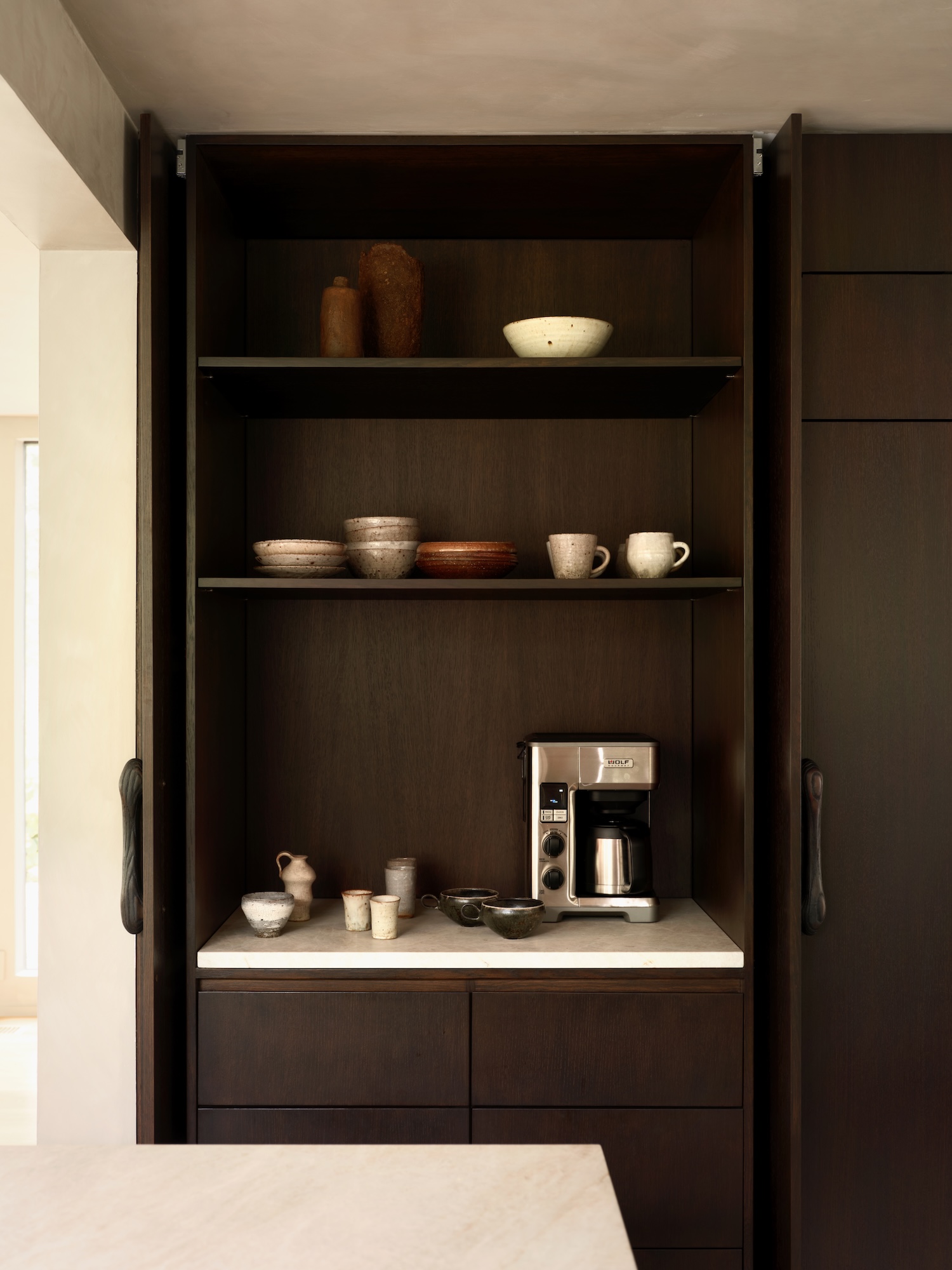
This material sensitivity extends to Rich’s curation of handcrafted ceramics scattered throughout the home. Many of these vessels, created in Japanese workshops where techniques stretch back centuries, were selected not for their provenance but for their ability to hold space in dialogue with the lime-washed walls. Rich understands that both pottery and wall surface embody craft process – the subtle variations in the lime wash echo the slight irregularities in thrown ceramics, creating a visual conversation that celebrates the human hand in an age of mechanical precision.
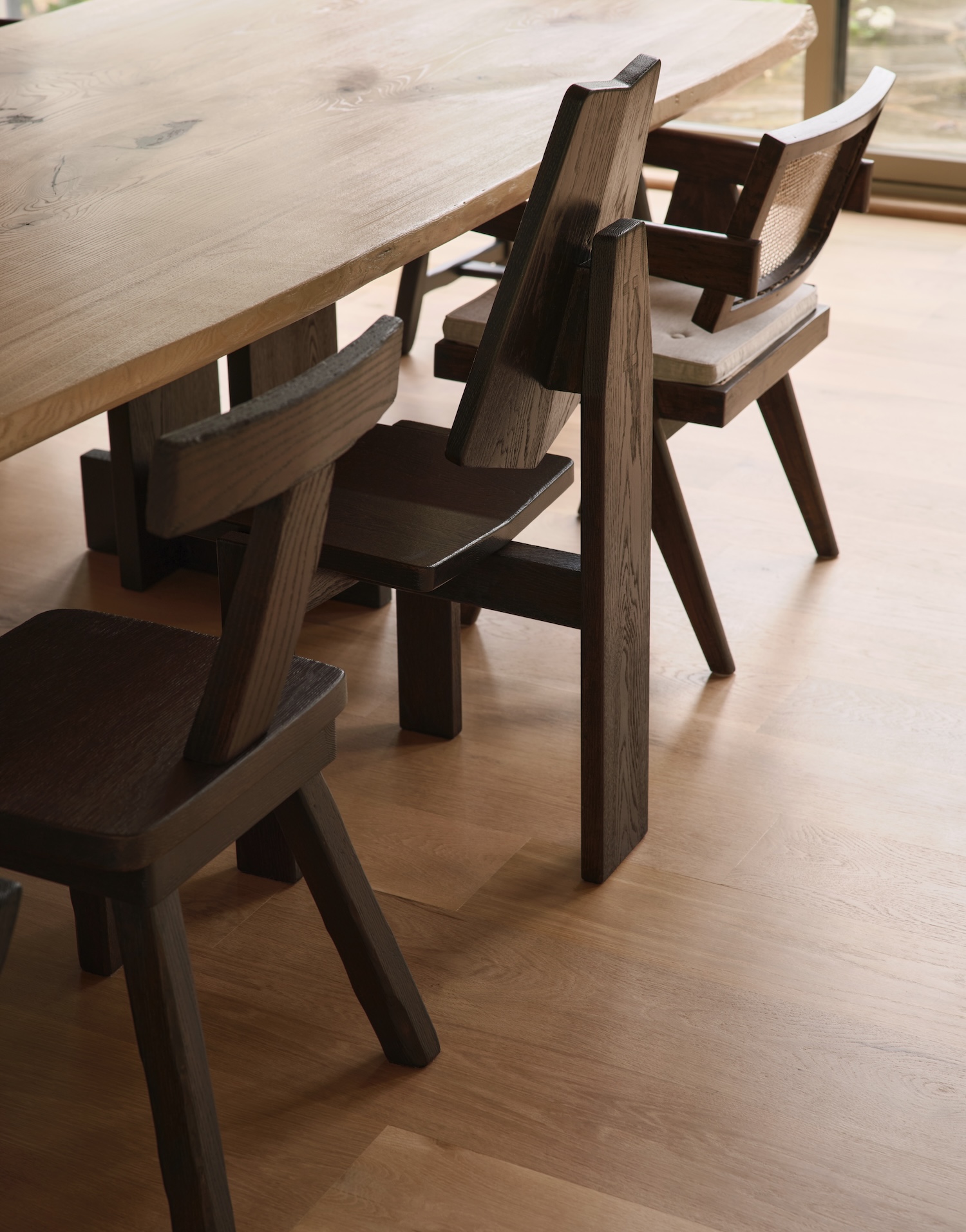
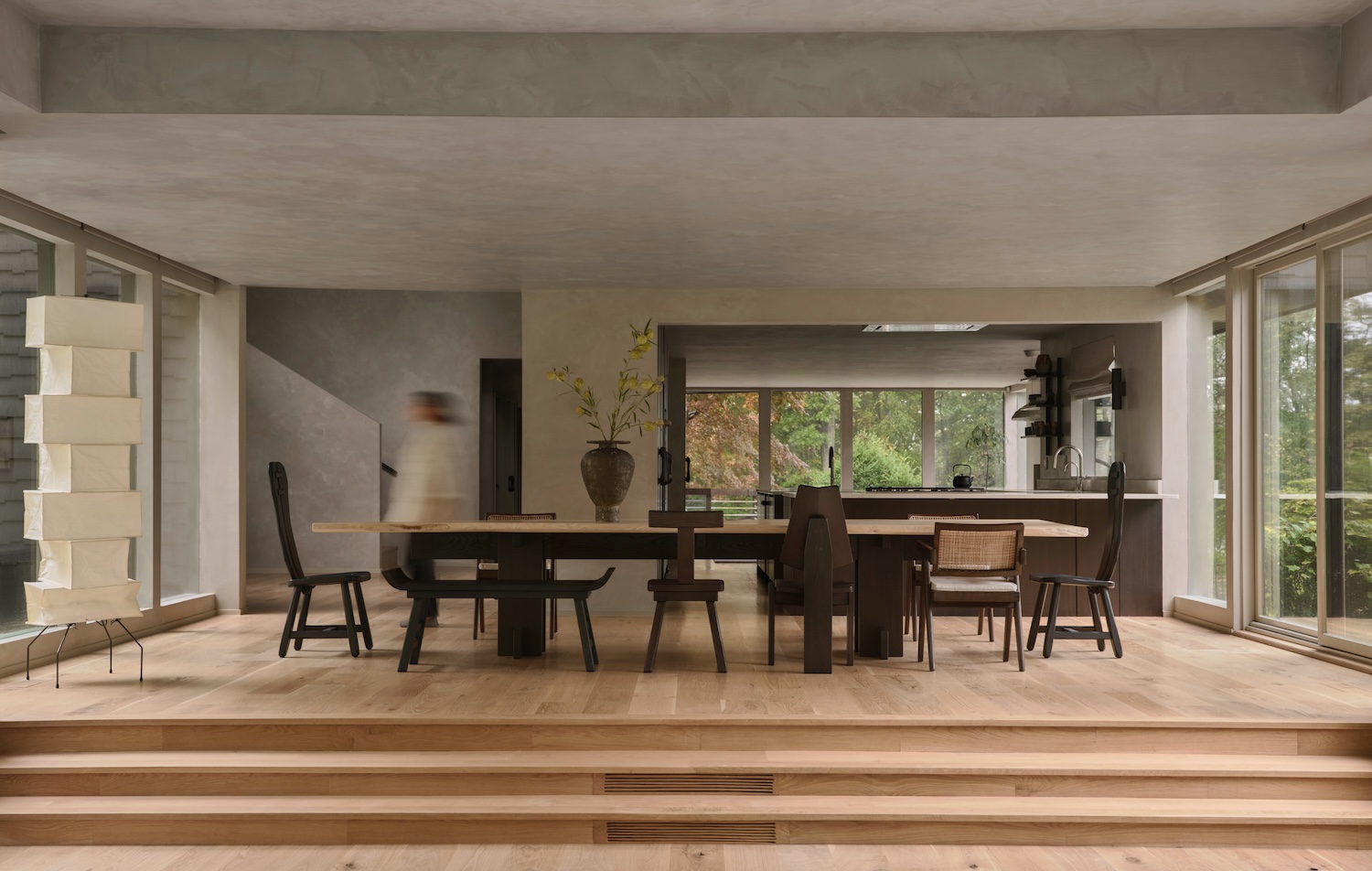
The dining room reveals perhaps Rich’s most ambitious spatial thinking. Her custom-designed live-edge oak table, surrounded by a carefully curated collection of vintage and custom chairs, creates what might be called a democracy of objects. This approach reflects Rich’s belief that good design emerges not from matching sets but from thoughtful relationships between pieces that share commitment to craft excellence, regardless of their origins. The live-edge form, with its celebration of natural grain and edge, connects to both Japanese principles of honoring material essence and the contemporary maker movement’s emphasis on revealing process.
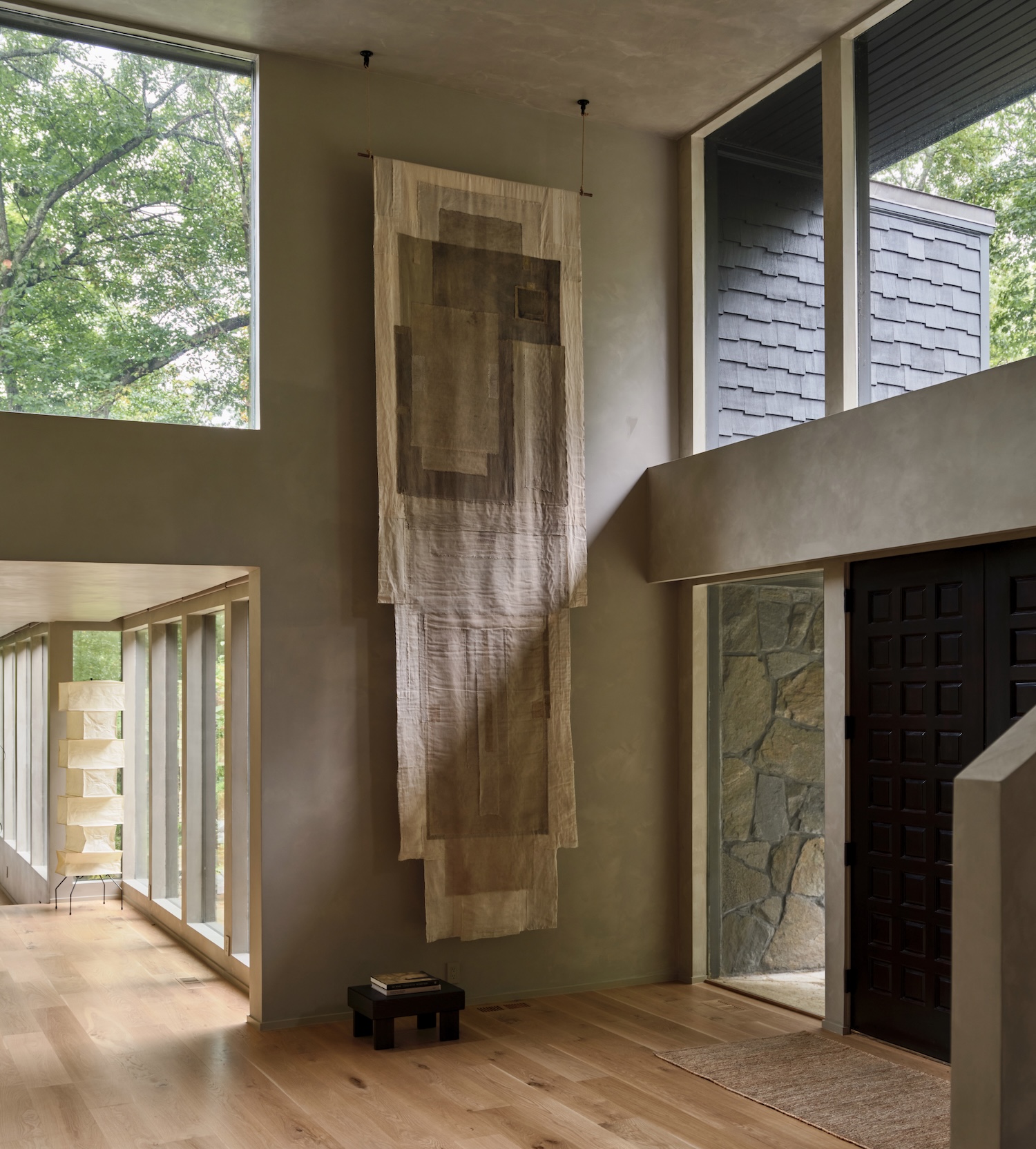
Rich’s specification of Armadillo rugs to anchor key rooms demonstrates her understanding of how textiles can ground space both literally and conceptually. These pieces, with their emphasis on natural fibers and traditional weaving techniques, create foundations that support her broader vision of craft as resistance to disposability. The rugs work in concert with Gonou’s wall hanging to establish a textile vocabulary that speaks across scales, from intimate floor covering to monumental wall treatment.