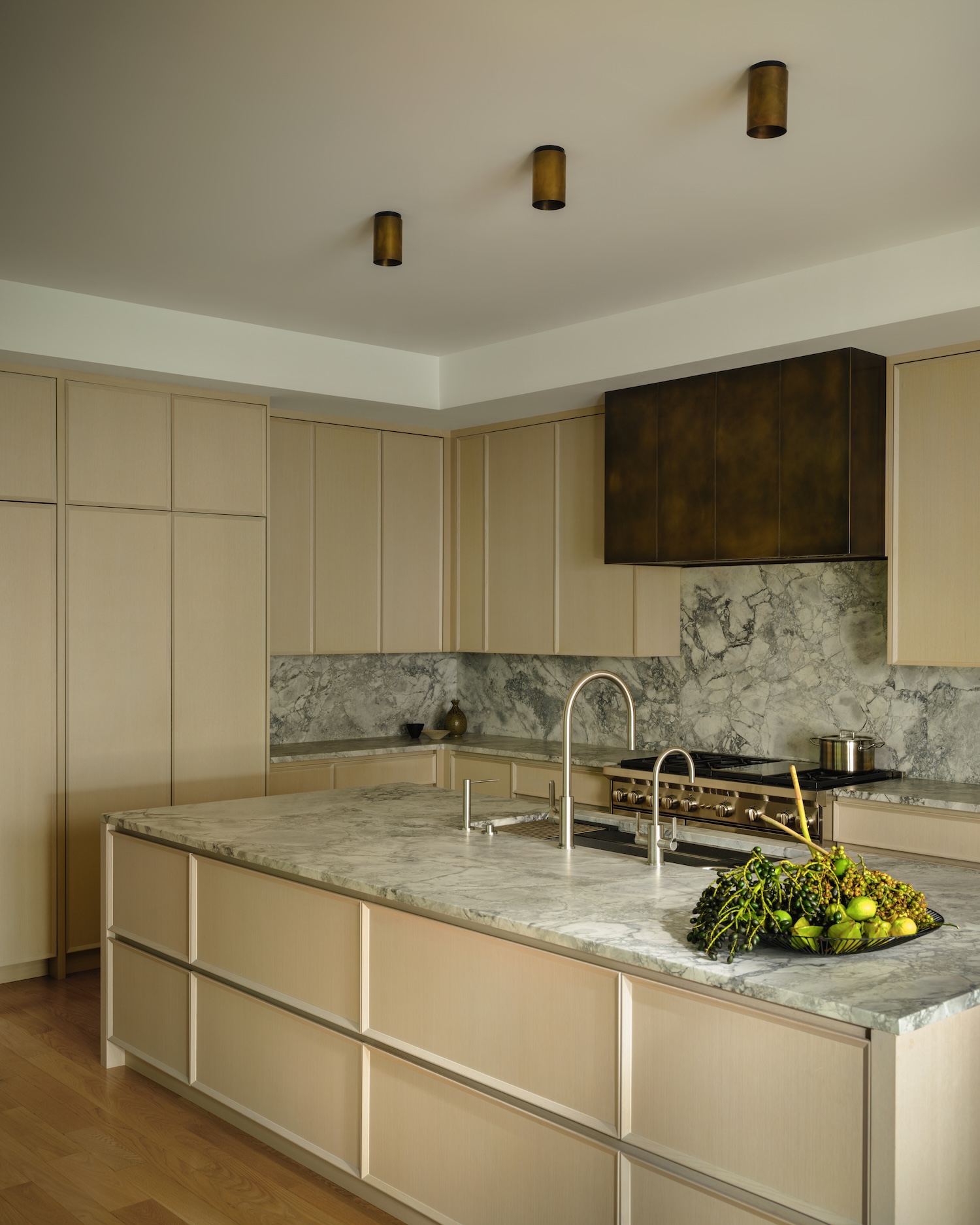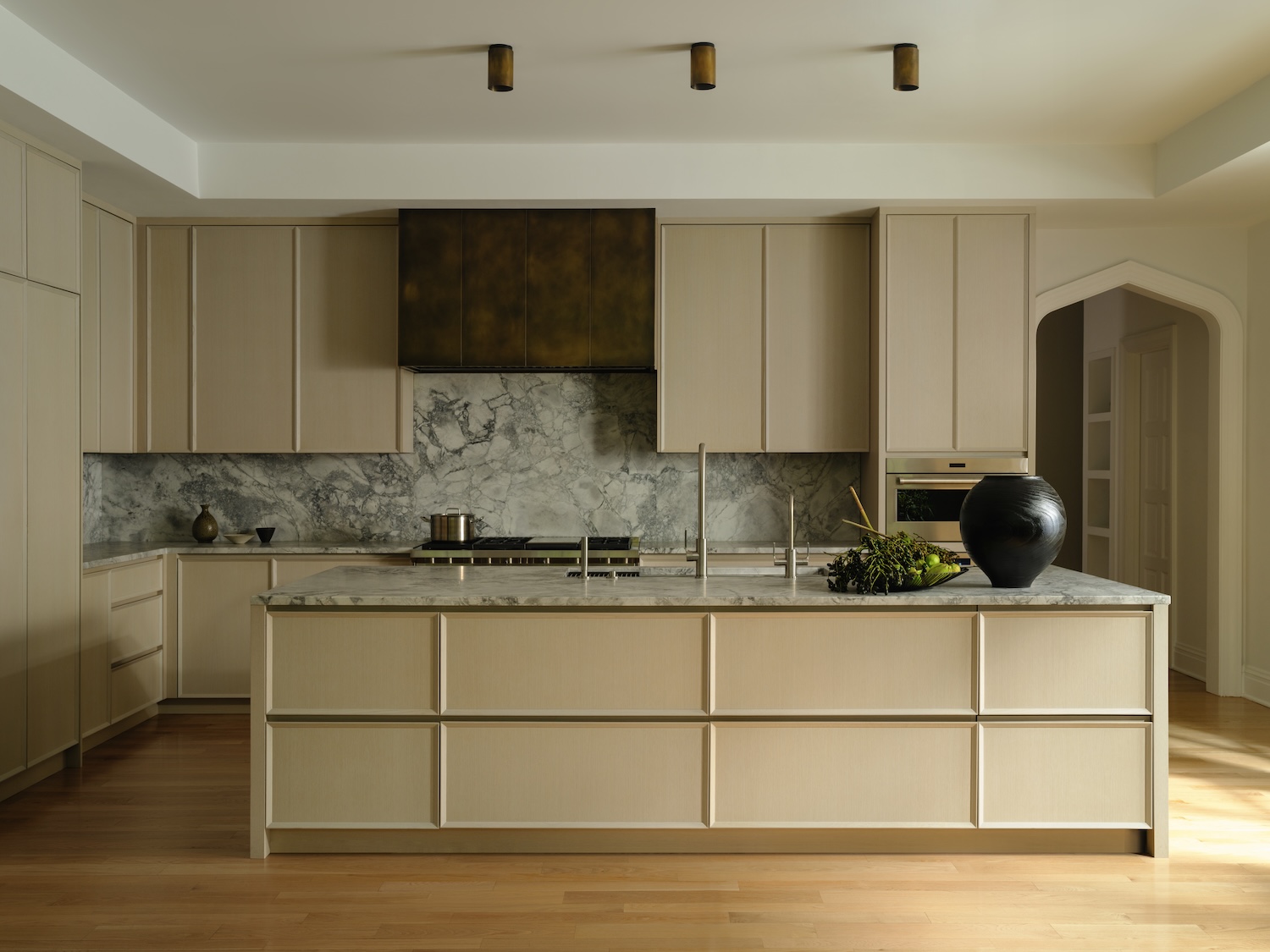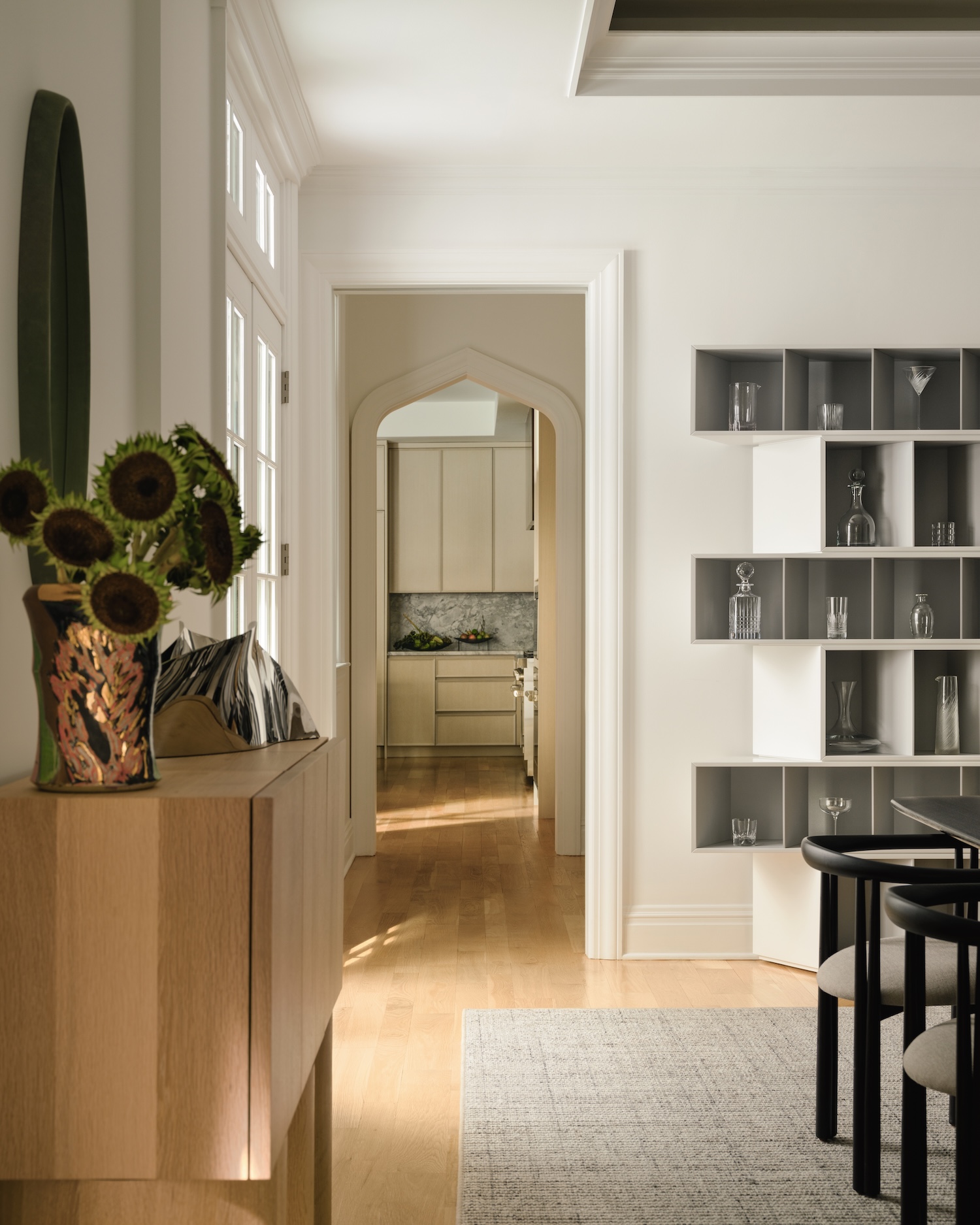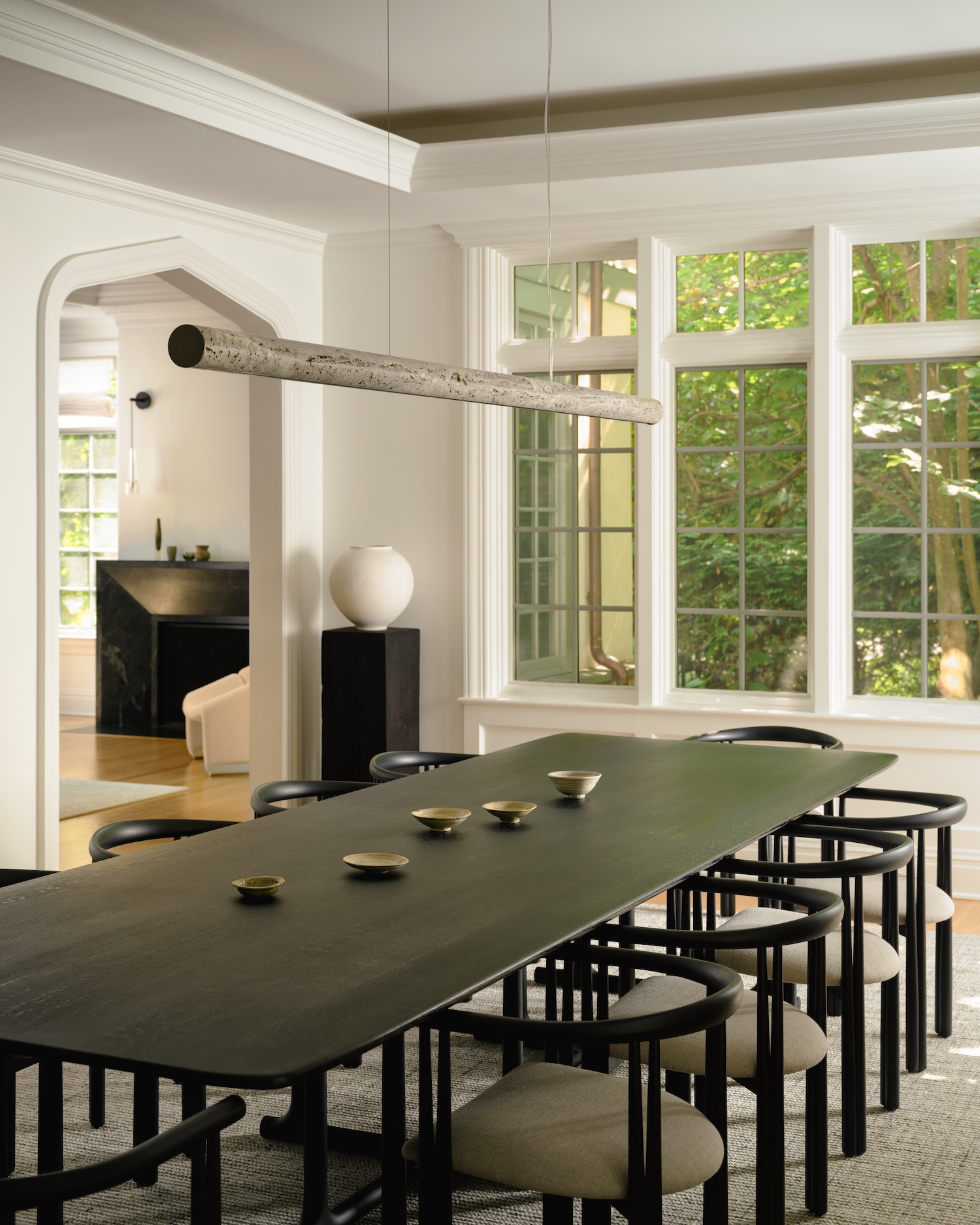
Greenwich Residence is a minimalist home located in Greenwich, Connecticut, designed by Decollab Studio, and its organizing rule is one anchoring work of Korean craft or art per room. That constraint goes beyond evenly distributing cultural references. It prevents the Korean pieces from reading as mere accents or accessories within a traditional Connecticut framework, because each object enters with enough presence to command a room on its own terms.
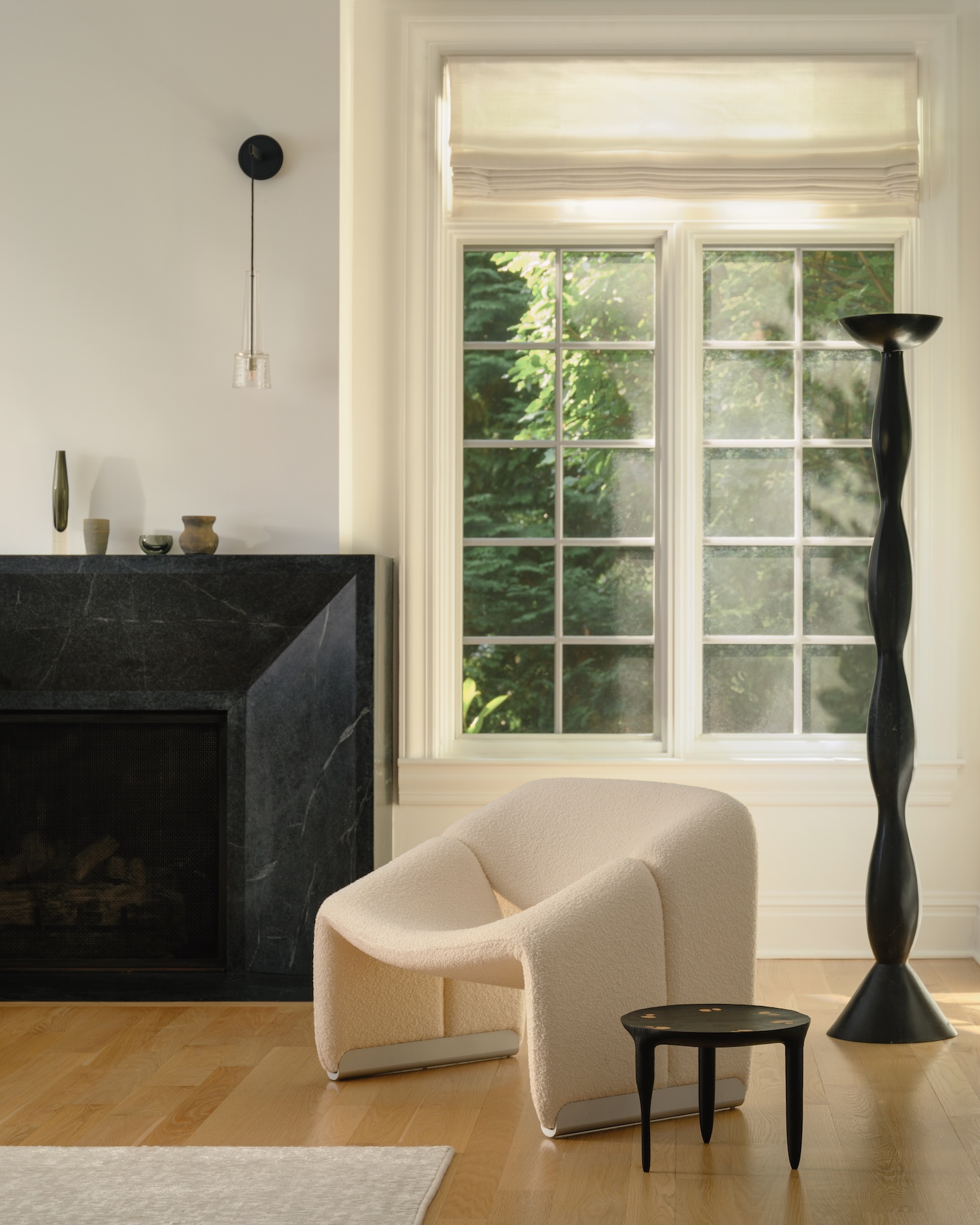
Honggu Park’s charred-wood side table rests in the living room next to Pierre Paulin’s Groovy Chair, a 1972 design whose upholstered curves register as pure volume. The table’s carbonized surface absorbs rather than reflects light, and the burning seals the grain into a matte black skin that lends the piece the weight of stone at a fraction of the mass. Above it hangs a Kalmar Werkstätten Keule sconce, carrying Viennese mid-century restraint. A soapstone mantel grounds the fireplace—a talc-rich stone soft enough to carve by hand yet dense enough to retain heat long after the fire has gone out. Nearby sits Gaya earthenware from the third to sixth century, left unglazed and gray, fired to the point of vitrification without any surface treatment at all.
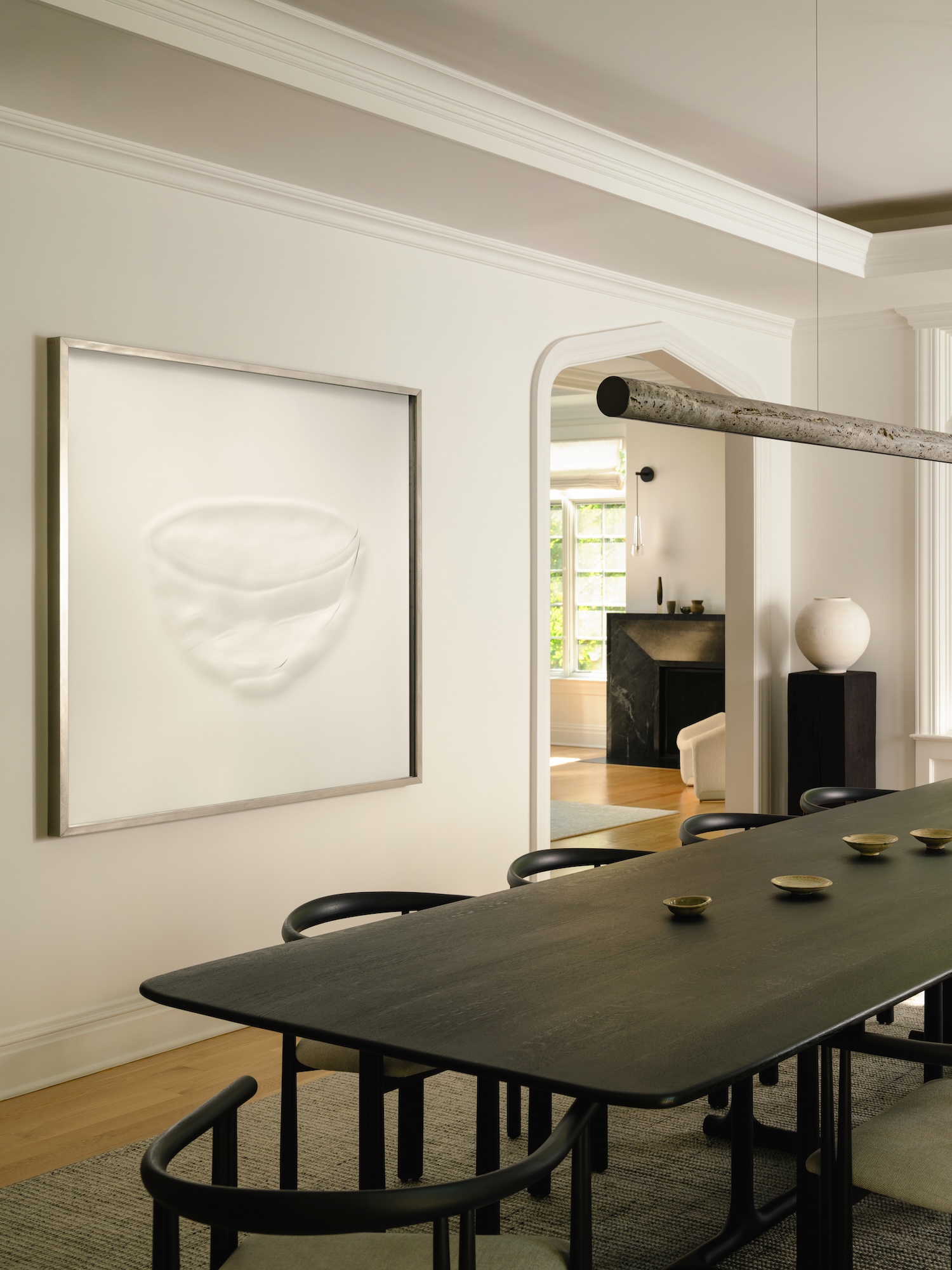
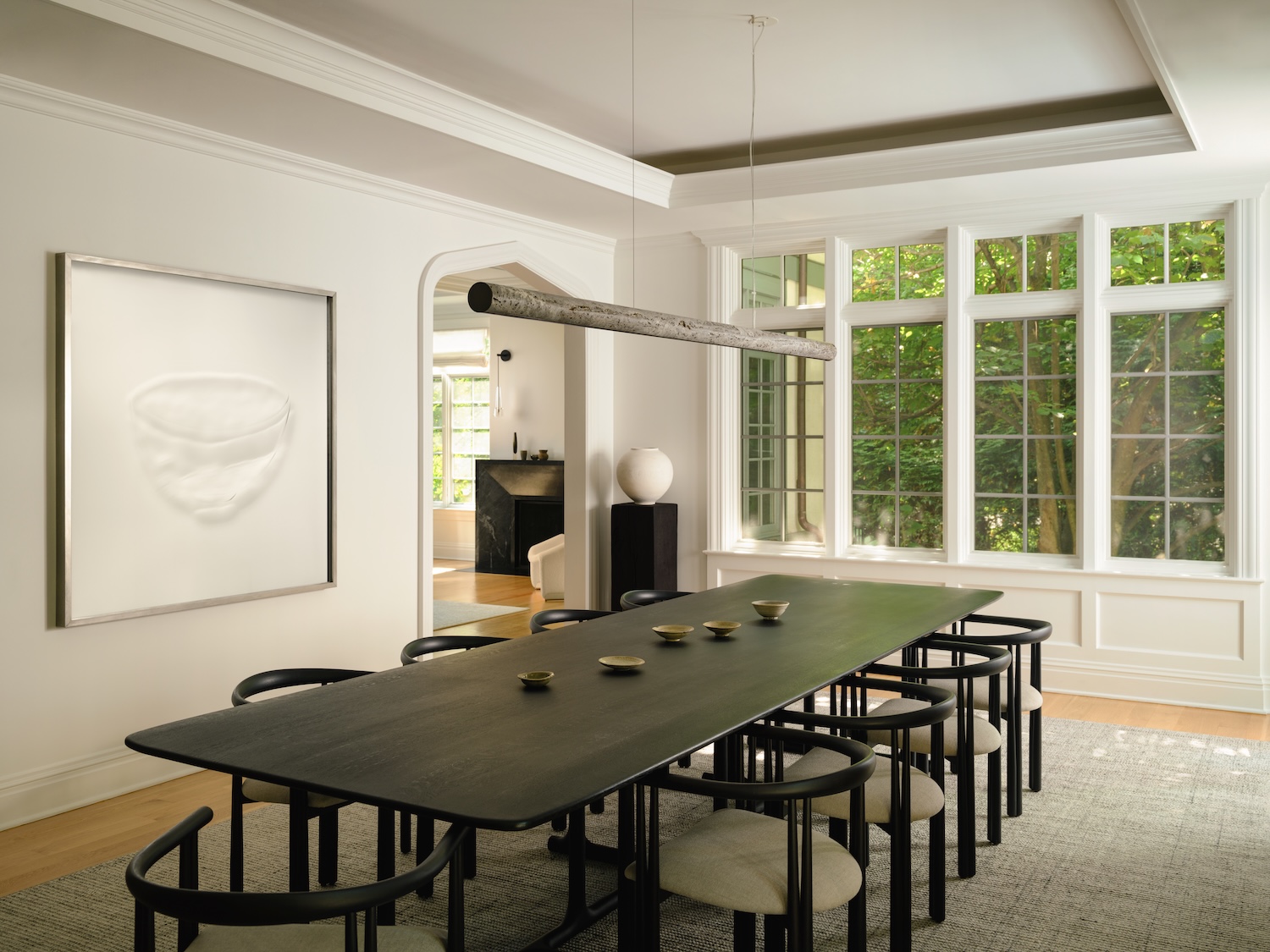
In the dining room, Sangmin Lee’s engraved glass hamji accompanies Christophe Delcourt’s TYE table. Engraving works by removing material to create an image, so the vessel emerges as absence within the glass—fitting for a form defined by what it contains. Gyu Kim’s wooden moon jar completes the statement. The Joseon-period dalhangari was thrown as two porcelain hemispheres joined at the waist, and rendering that silhouette in wood reverses the original method while keeping its gently imperfect roundness. Garnier and Linker’s Lipari fixture and a custom Stark wool rug keep the surrounding surfaces subdued.
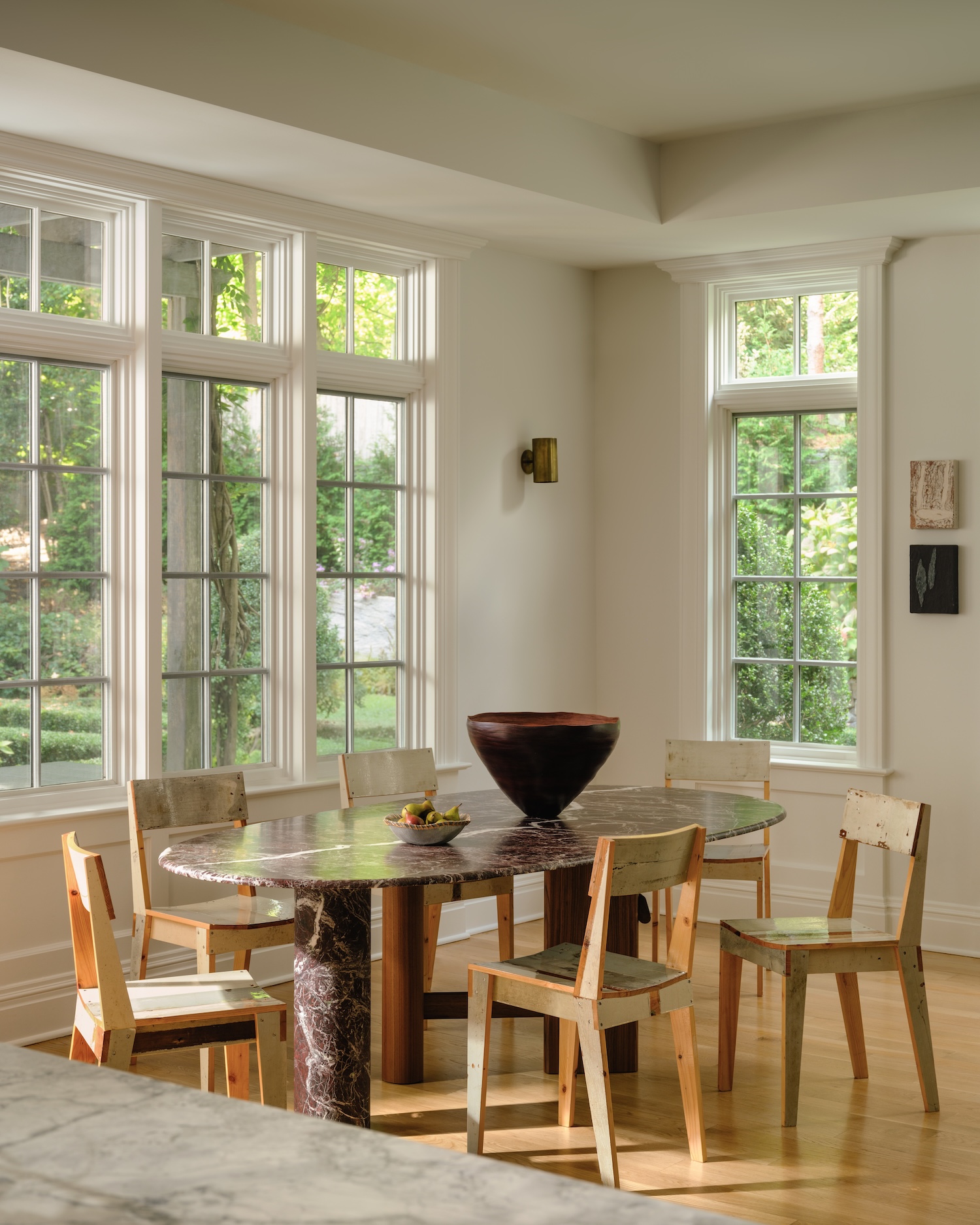
Junsu Kim’s lacquered leather vessel in the breakfast area operates within ottchil, the Korean lacquer tradition drawn from Rhus verniciflua sap, applied in thin layers that cure into a hard, faintly warm shell. It shares the space with Kengo Kuma’s Sengu table for Cassina, named for the ritual rebuilding of Ise Shrine and expressing that logic through exposed joinery. Piet Hein Eek’s Scrapwood chairs bring salvaged timber to the same table—three distinct material philosophies concerning reuse, ritual, and accumulation coexisting without friction.