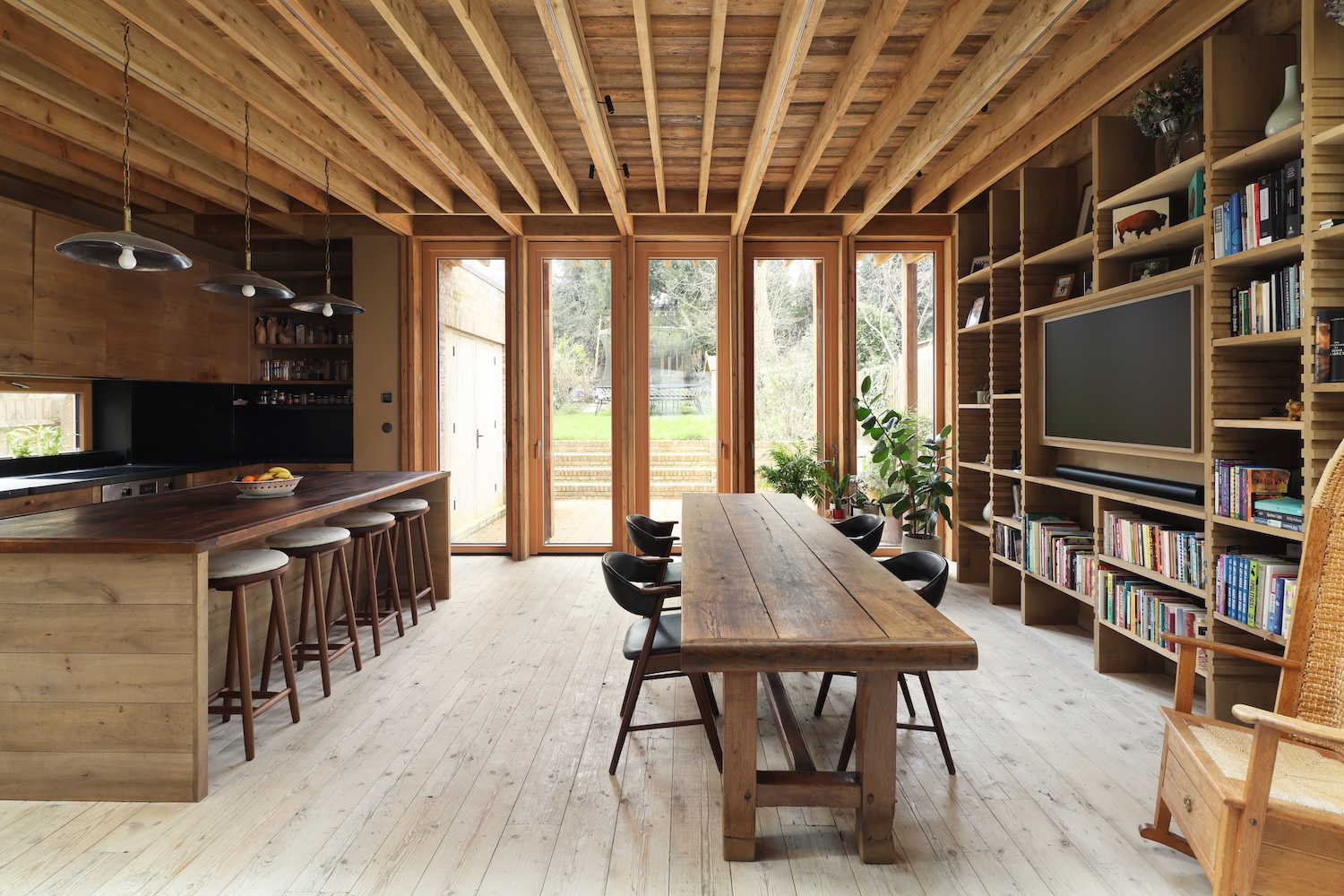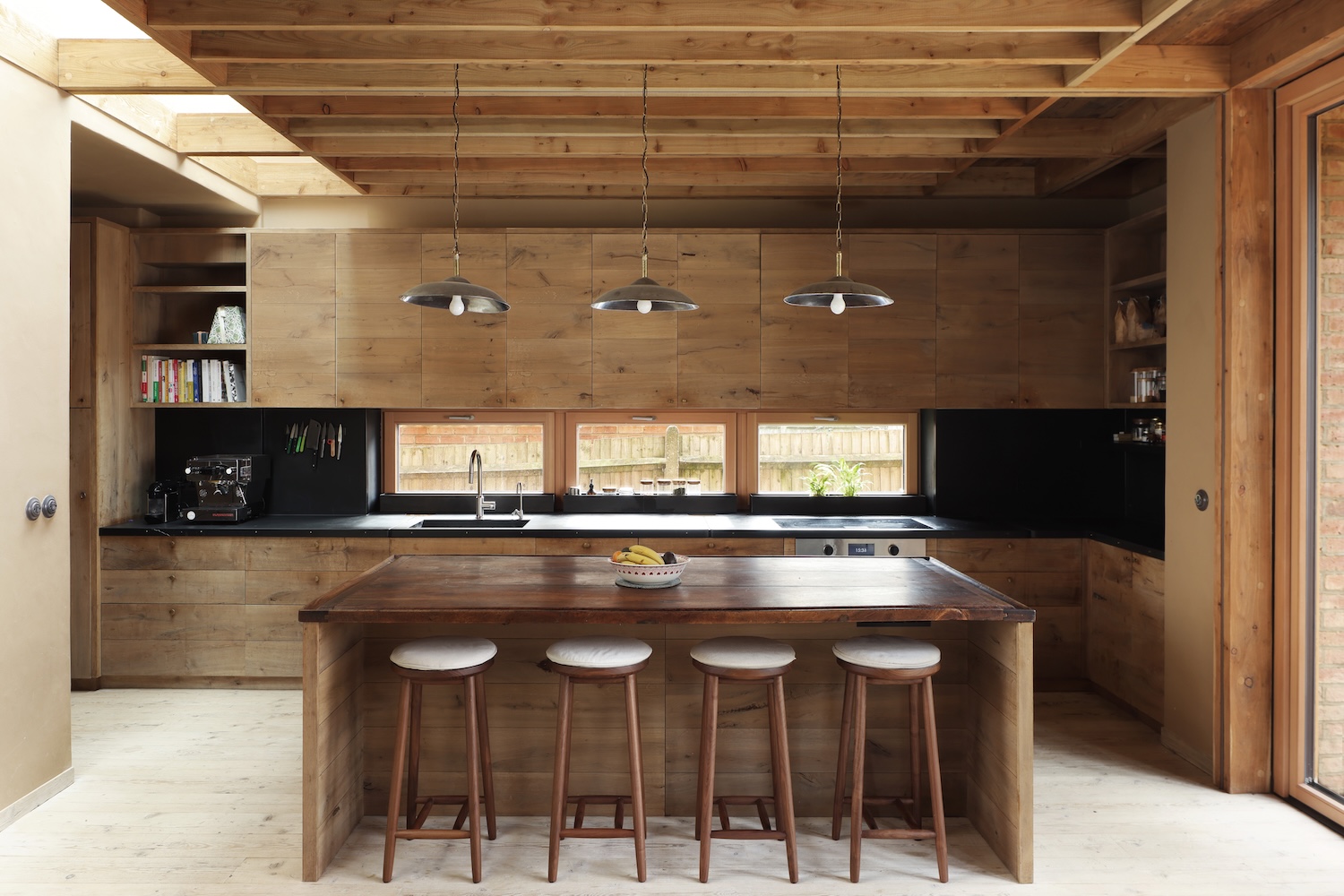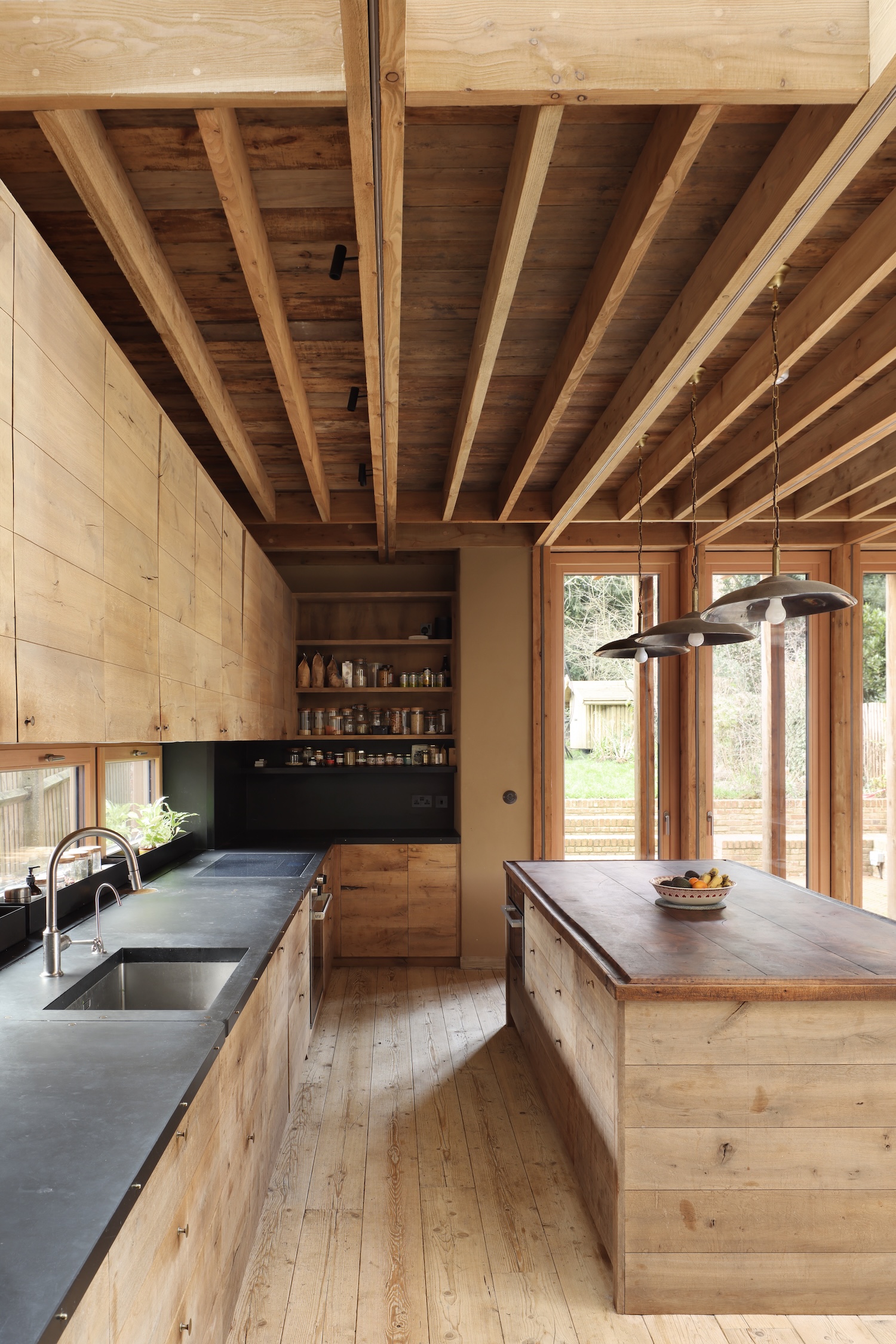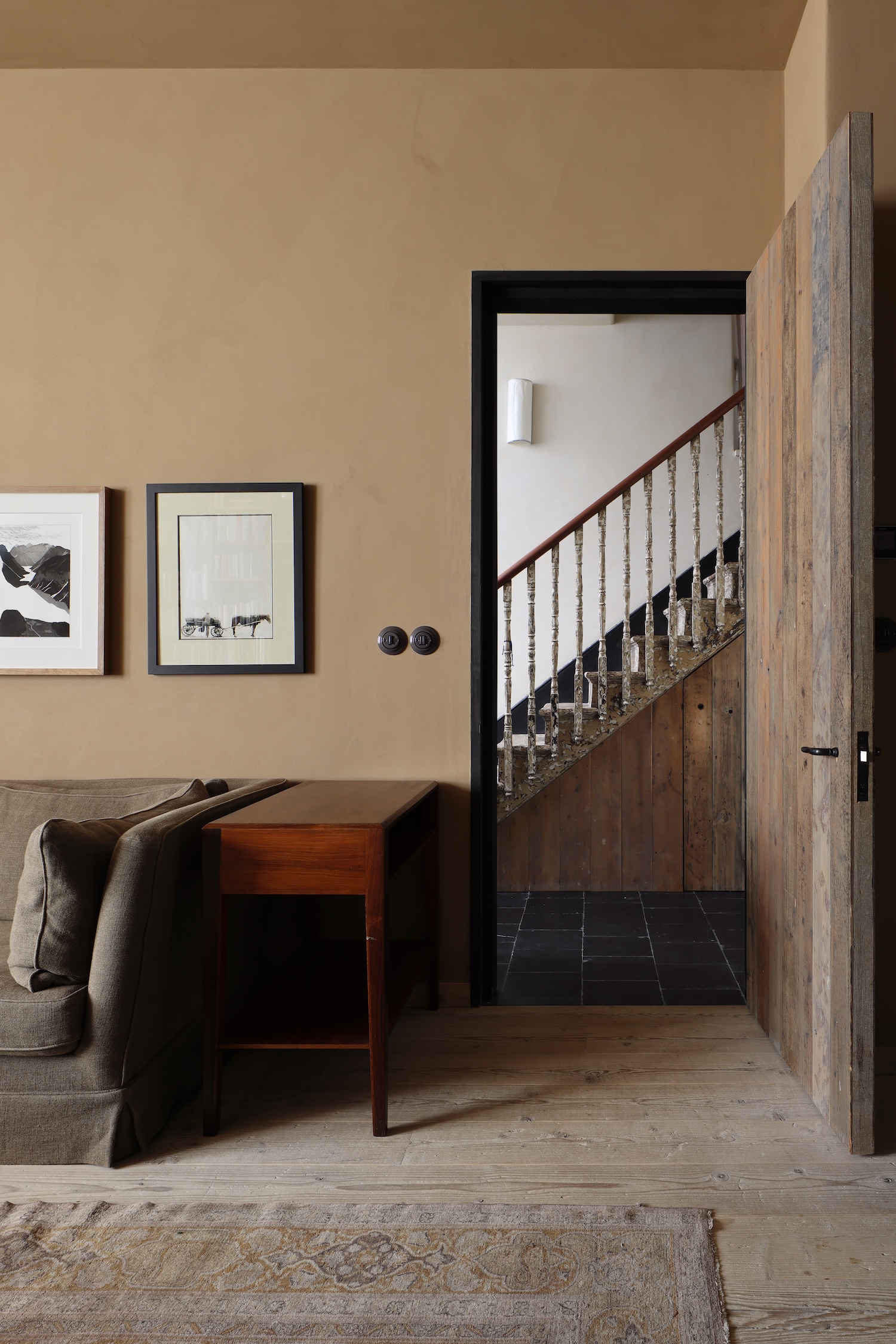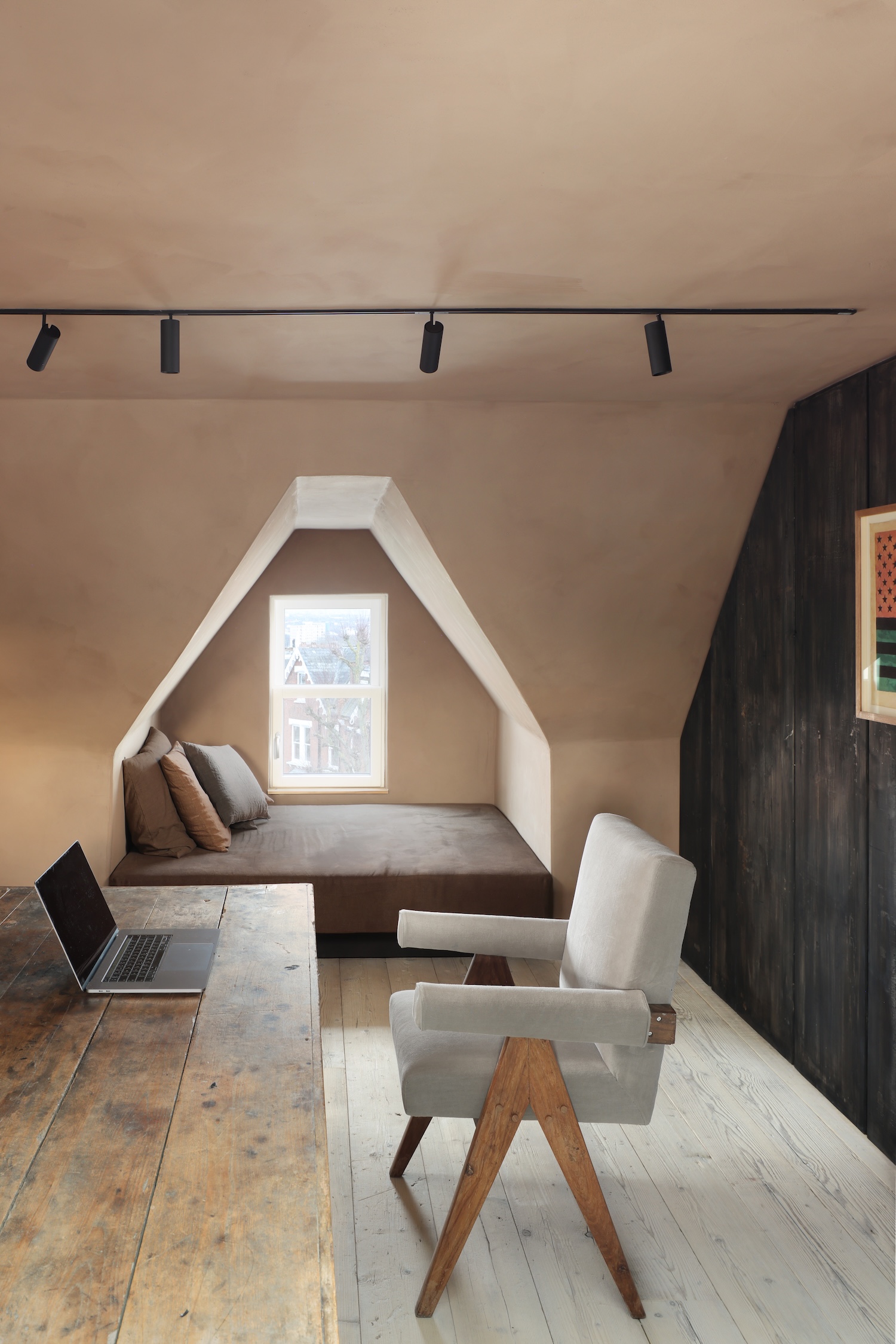
Hampstead Passivhaus is a minimal home located in London, United Kingdom, designed by GS Architecture. The architects approached this Victorian semi-detached home like master craftspeople working within the grain of the wood rather than against it. Where contemporary practice often favors wholesale replacement, here preservation and innovation dance in careful balance. The existing building fabric was treated as precious material, its thermal envelope enhanced to meet the exacting Passivhaus EnerPHit standard while honoring the structure’s historical DNA.
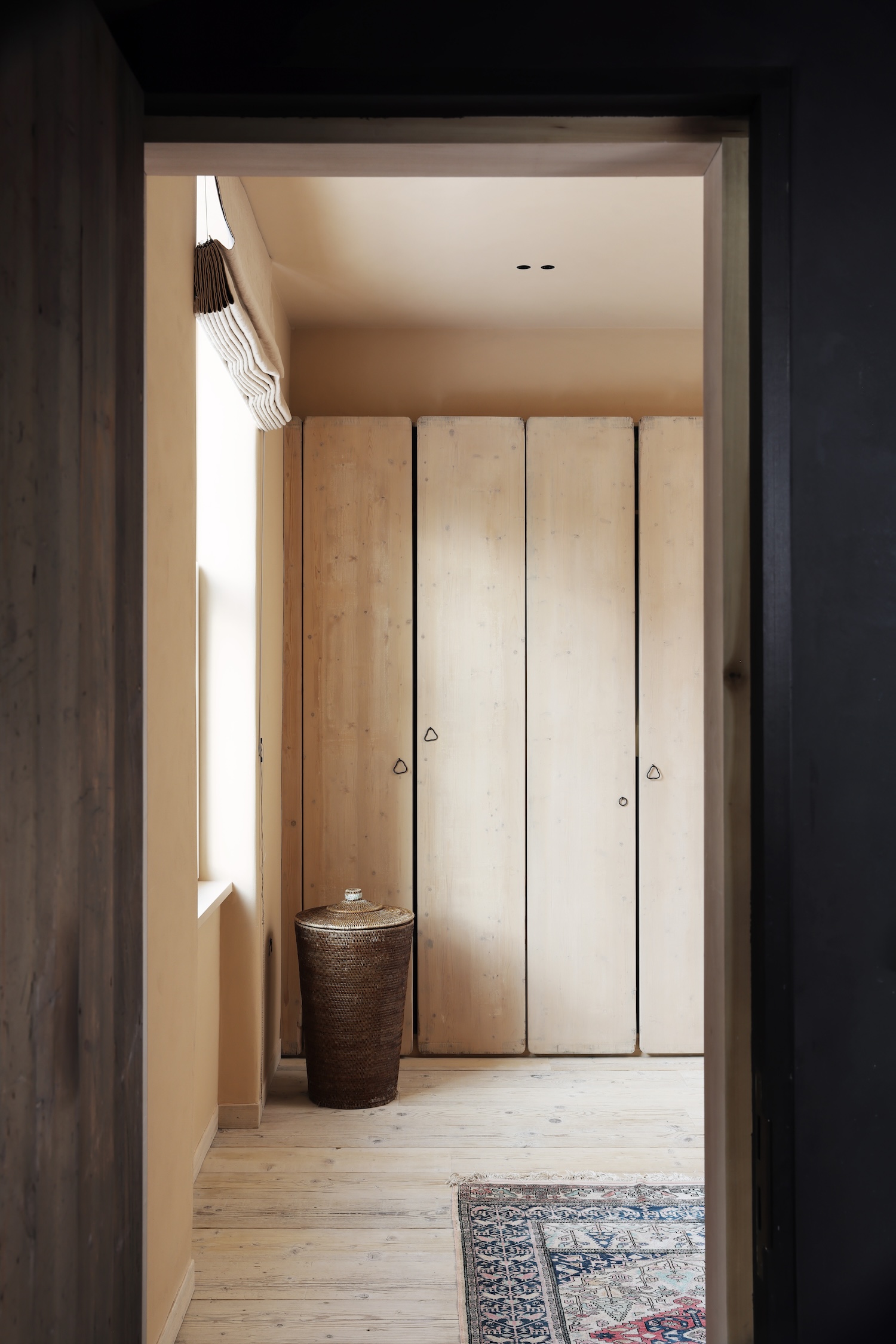
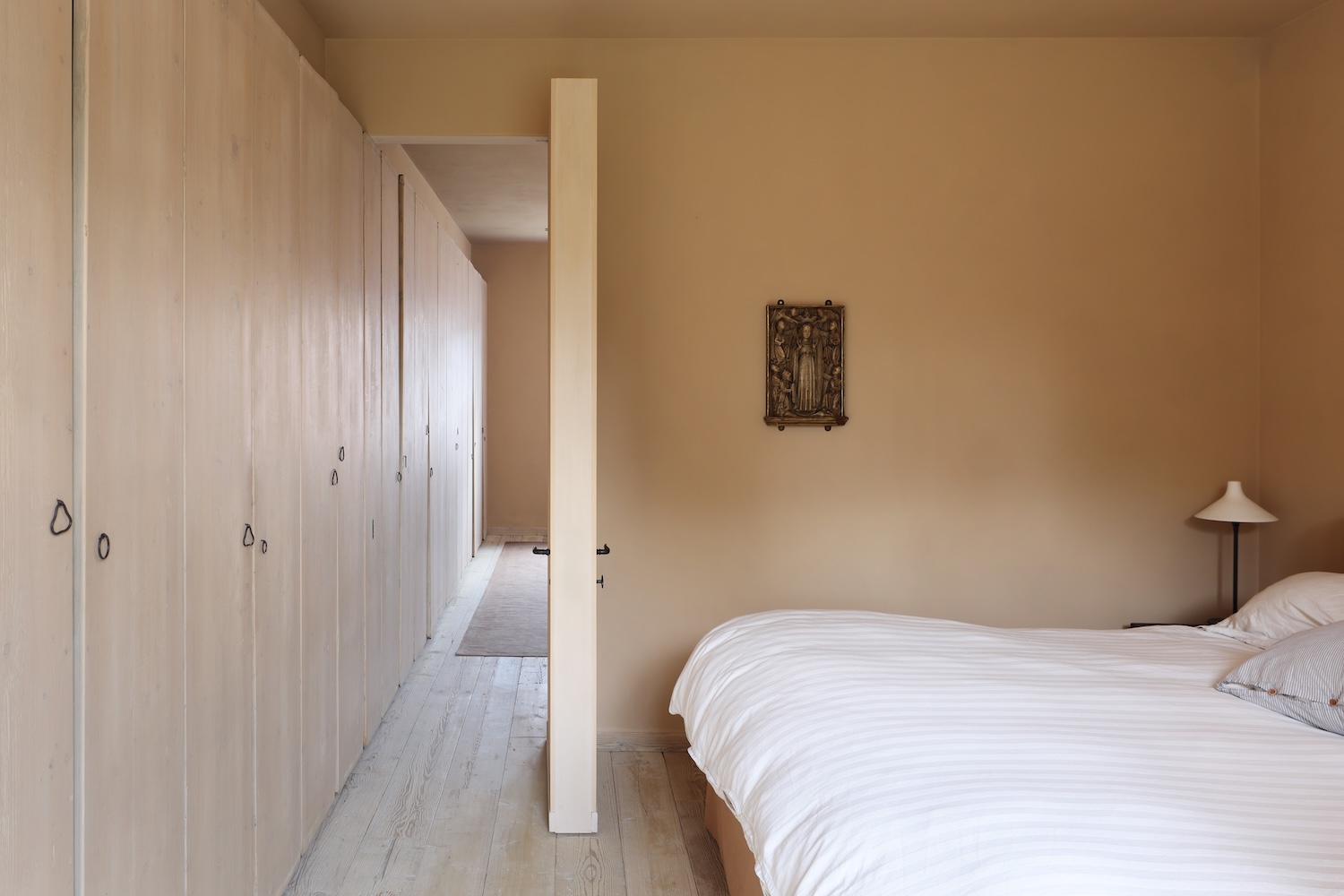
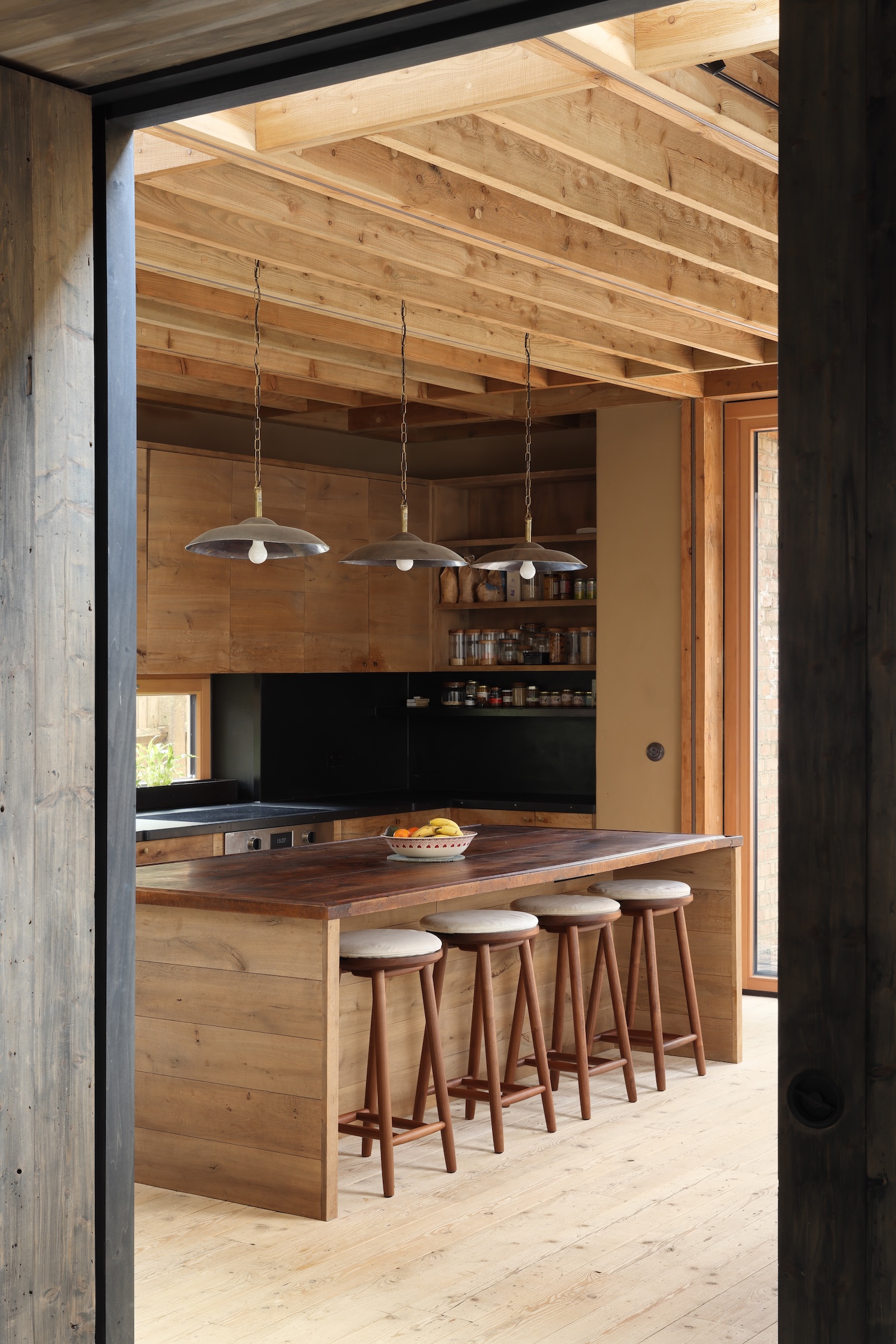
The material palette reads like a manifesto for circular design thinking. Boards that once lined cheese manufacturing facilities found new purpose as cabinet doors, their patina speaking to generations of use. Most remarkably, clay soil excavated from the rear garden was transformed into hand-crafted paint – earth literally becoming shelter’s skin. These choices echo the Arts and Crafts movement’s reverence for honest materials while embracing radical sustainability principles that William Morris could never have imagined.
The timber-framed rear addition demonstrates how contemporary craft can honor historical precedent. Rather than mimicking Victorian detailing, the new structure speaks in a complementary language – clean lines and generous glazing that frame views of the wildflower green roof. This living surface serves multiple masters: biodiversity, thermal performance, and the psychological connection between interior and landscape that Scandinavian design has long championed.
The integration of photovoltaic panels and mechanical ventilation systems represents craft at the scale of infrastructure. These technologies, invisible to daily experience yet fundamental to the home’s performance, embody what we might call “quiet innovation” – solutions that work not through spectacle but through seamless integration.