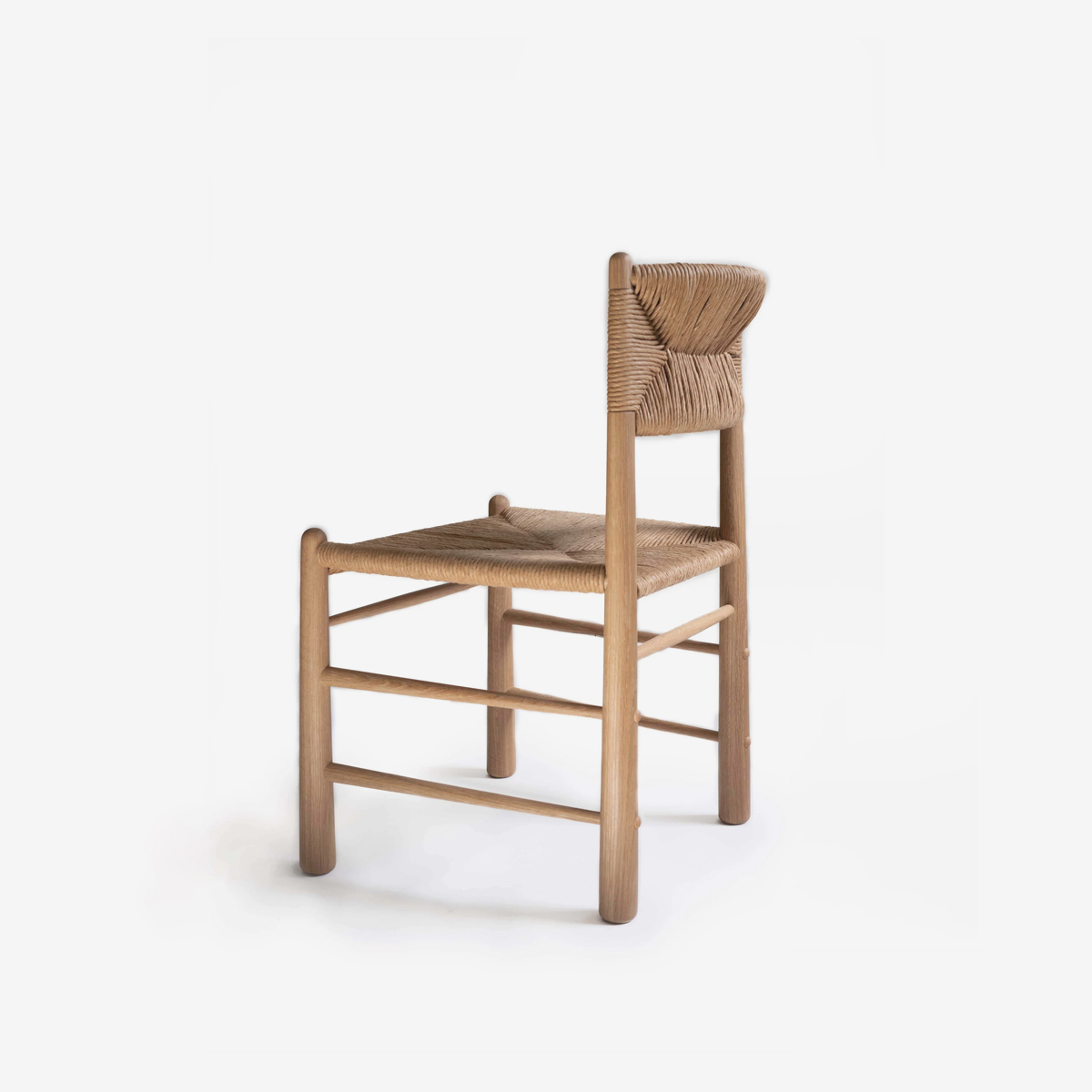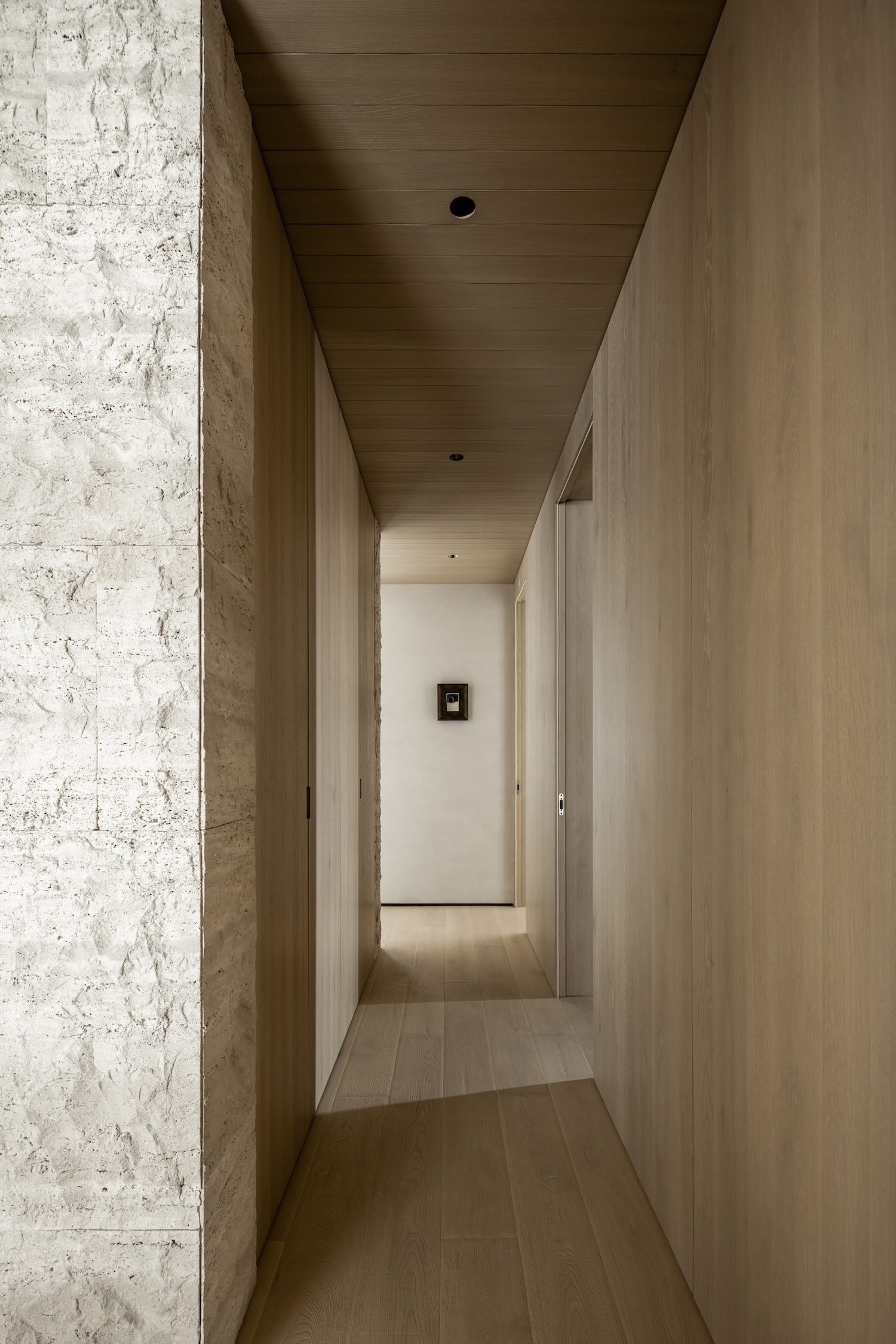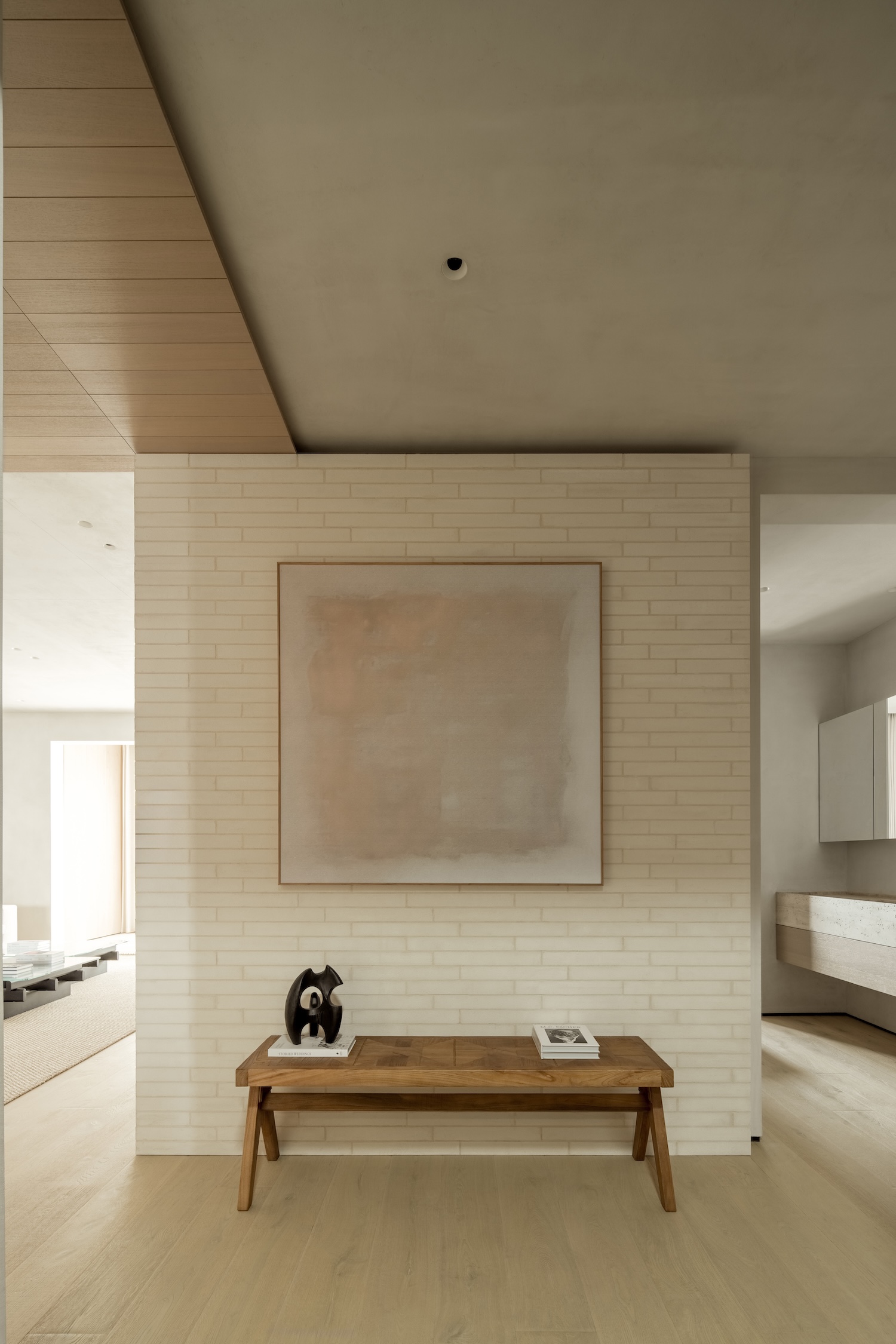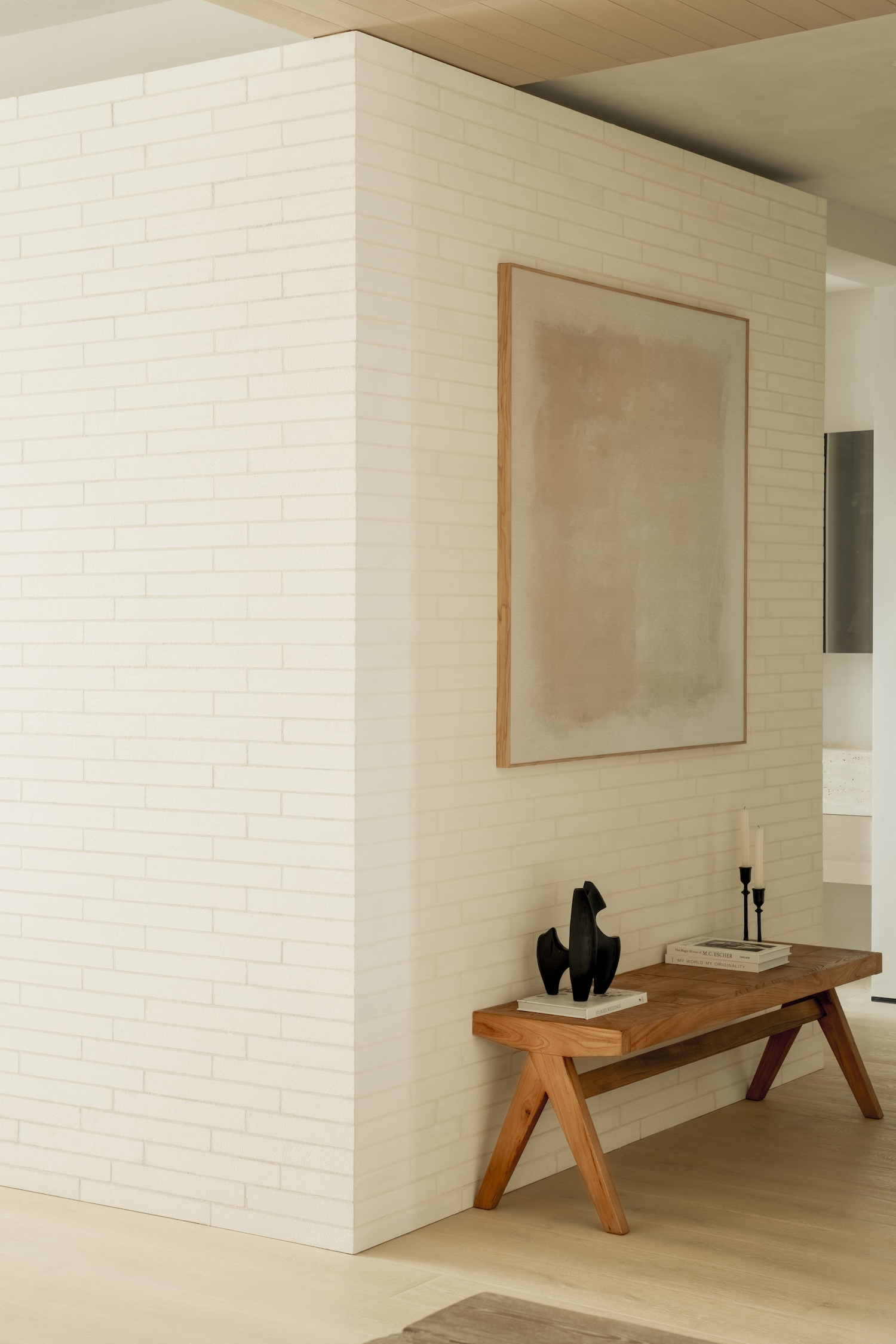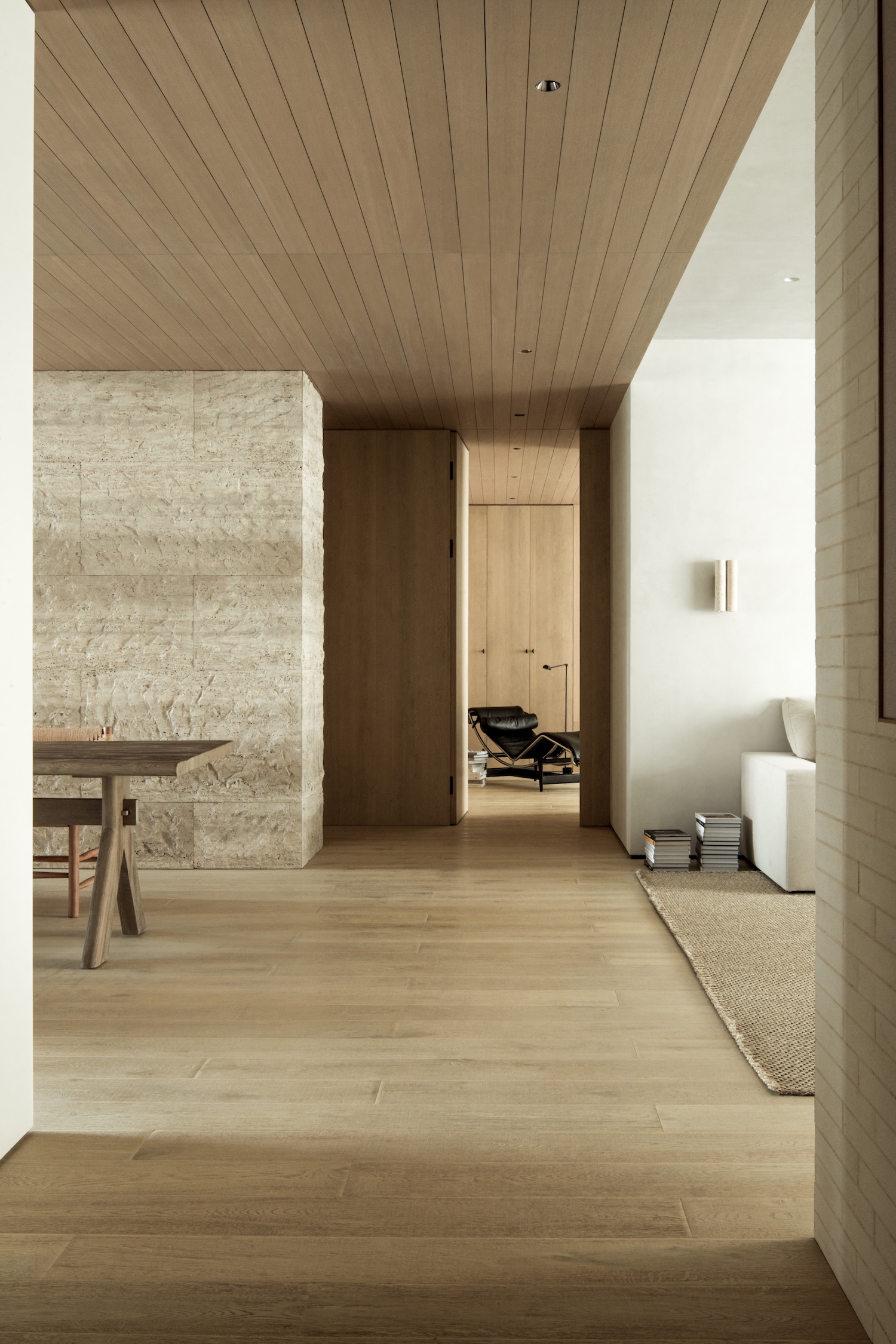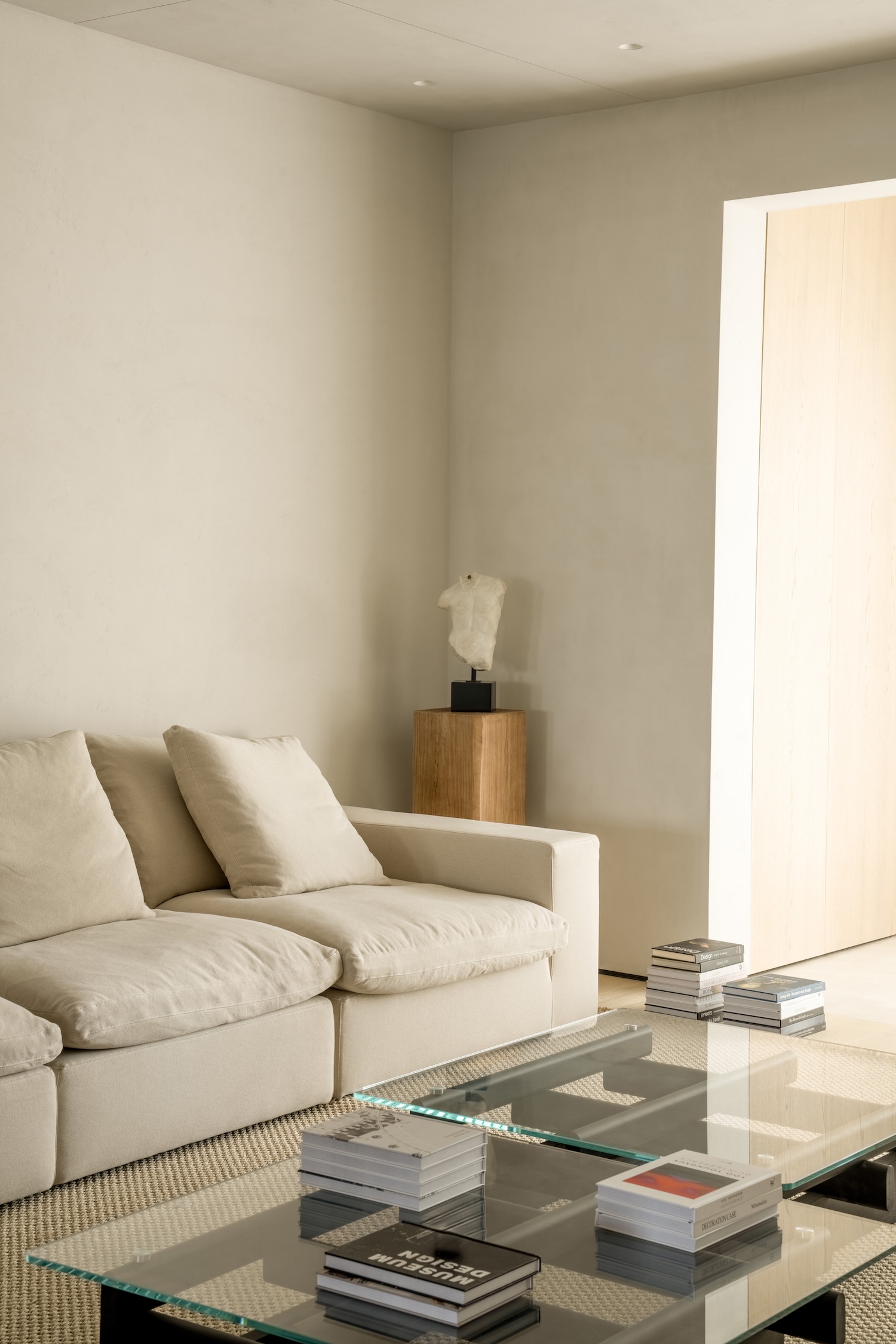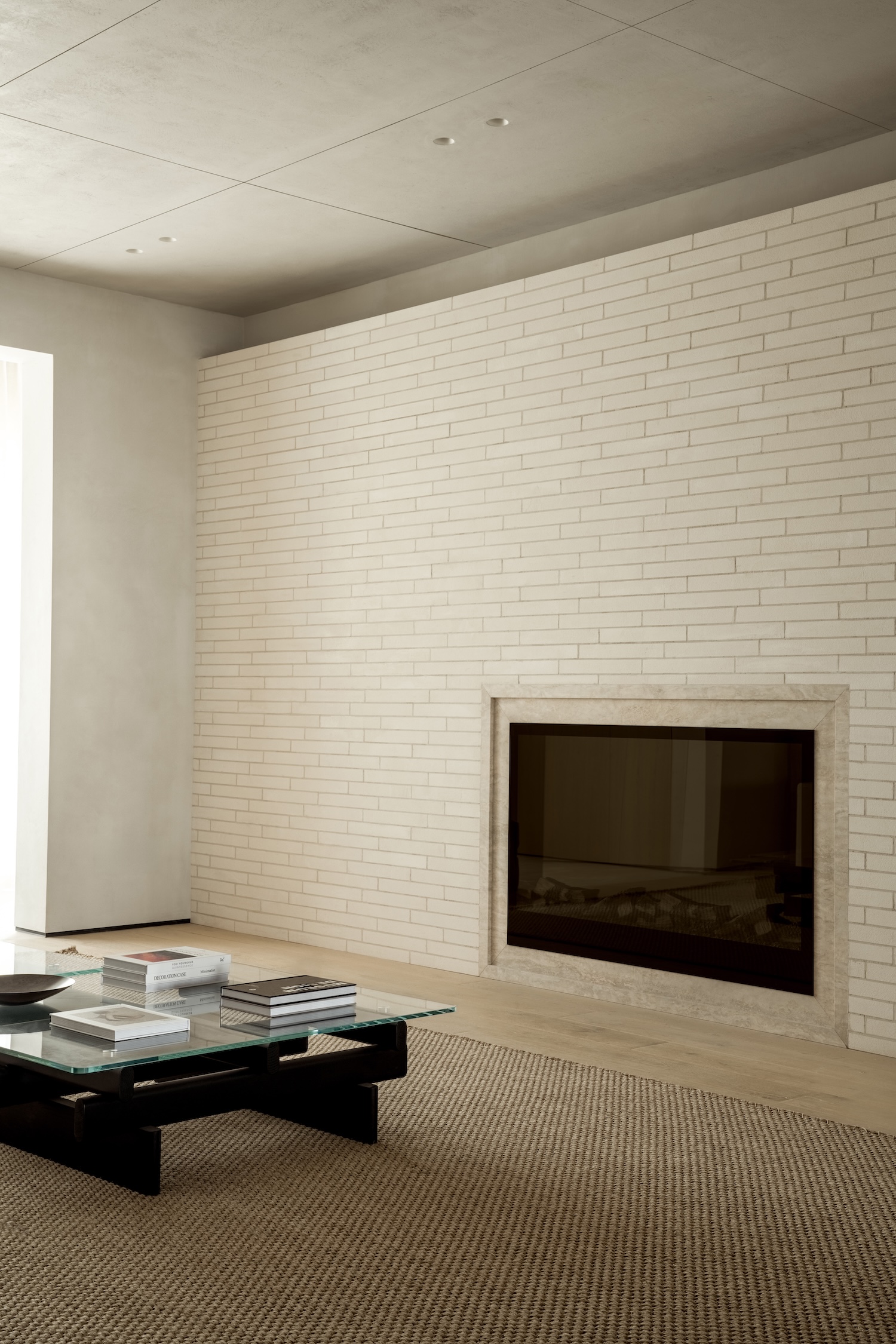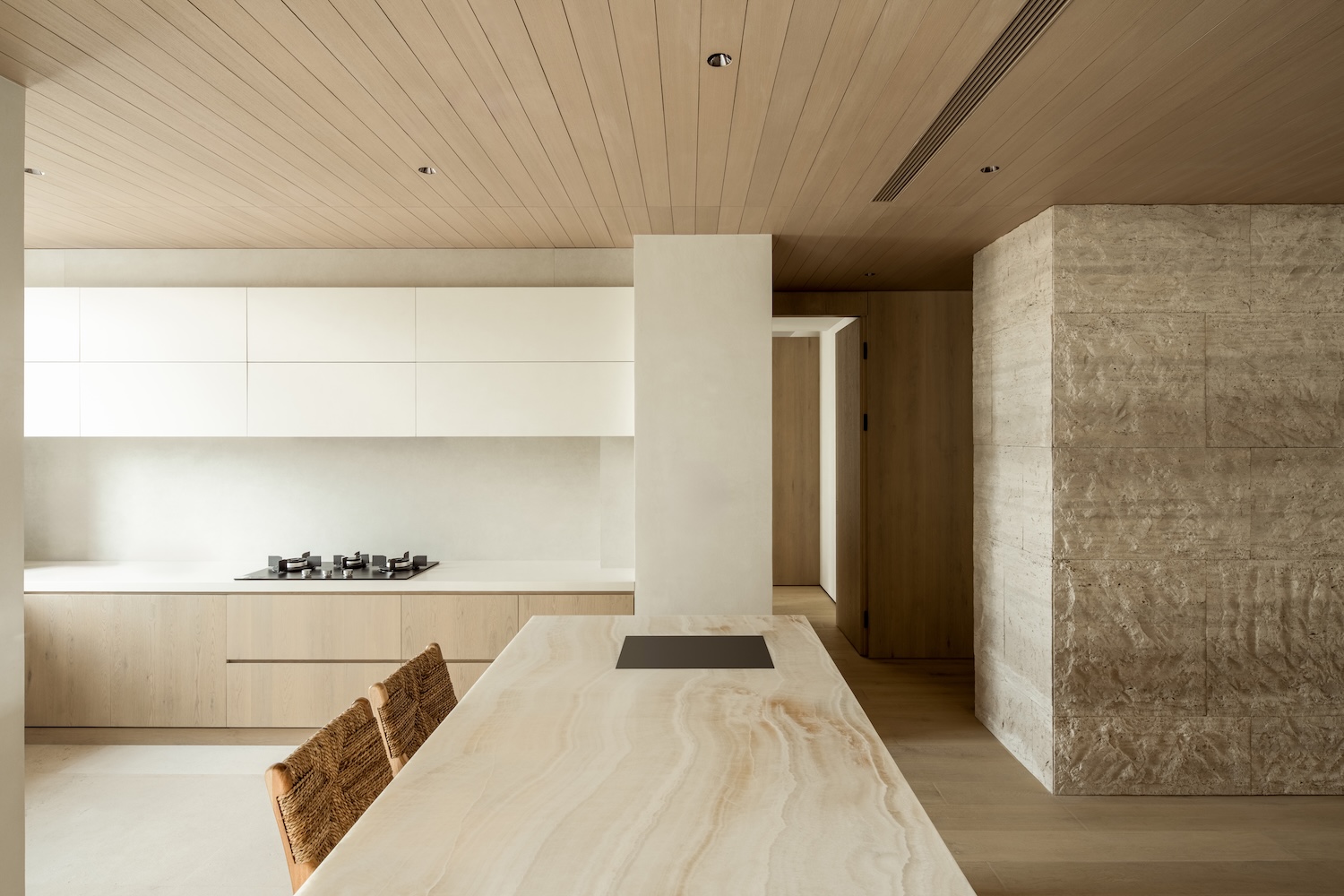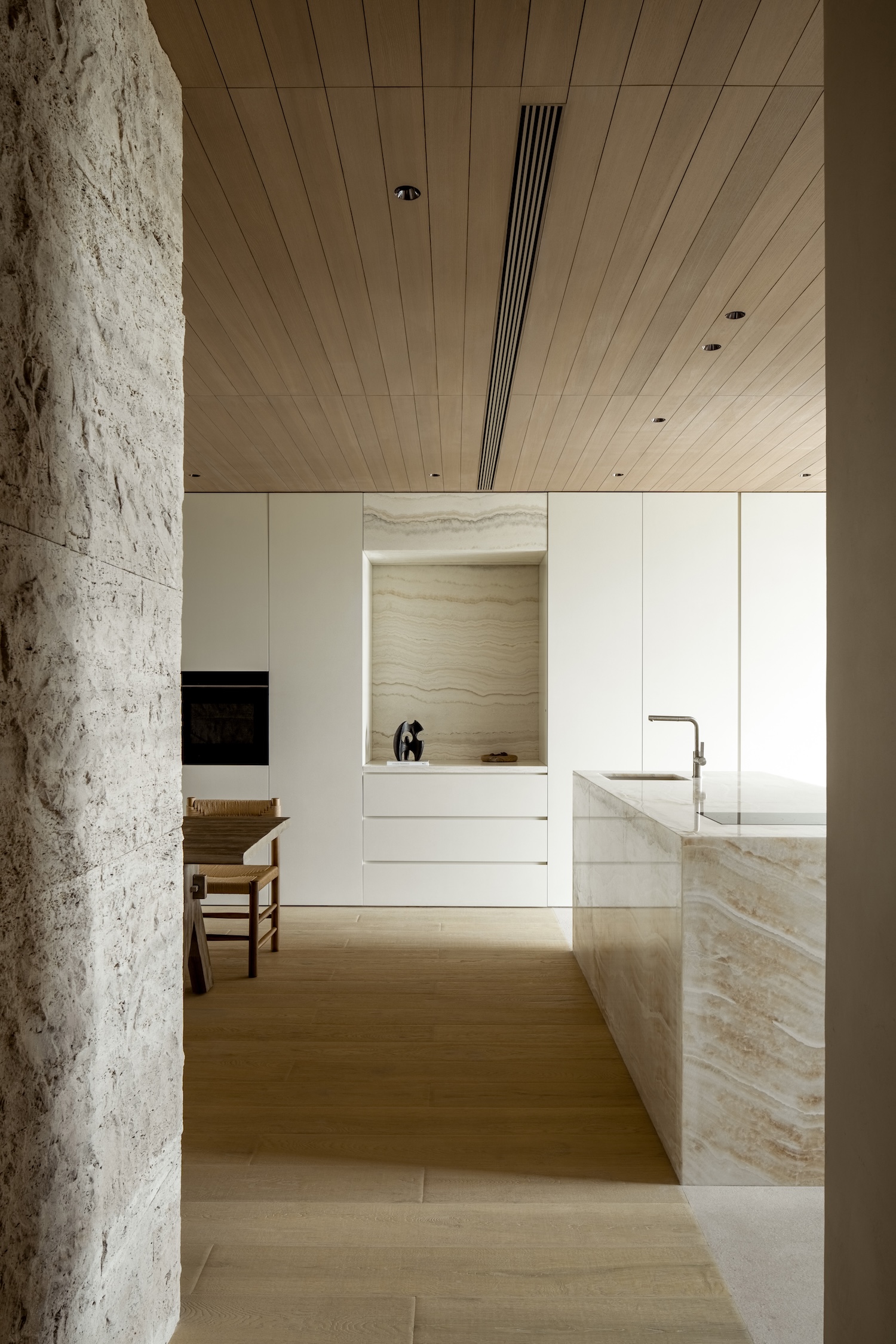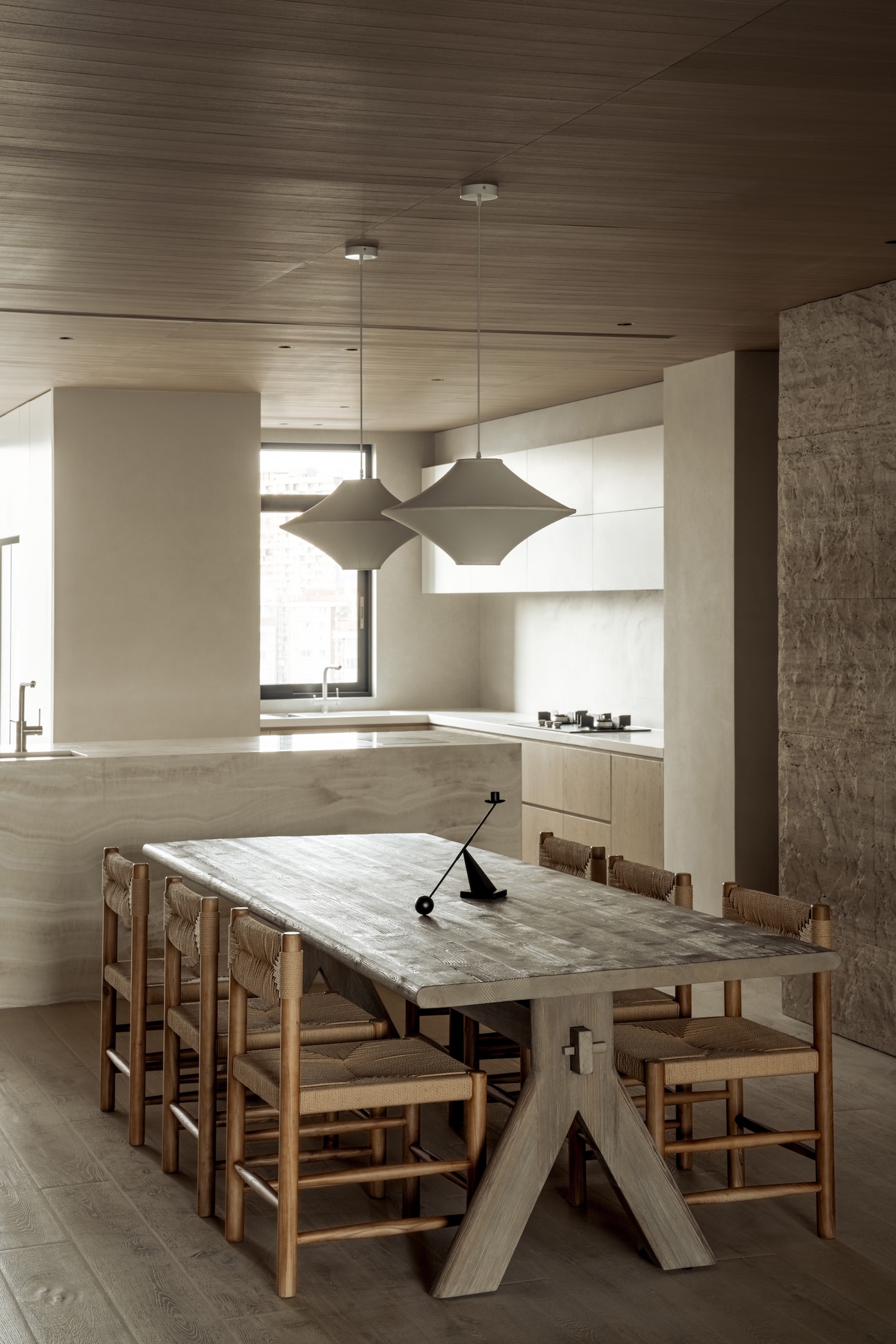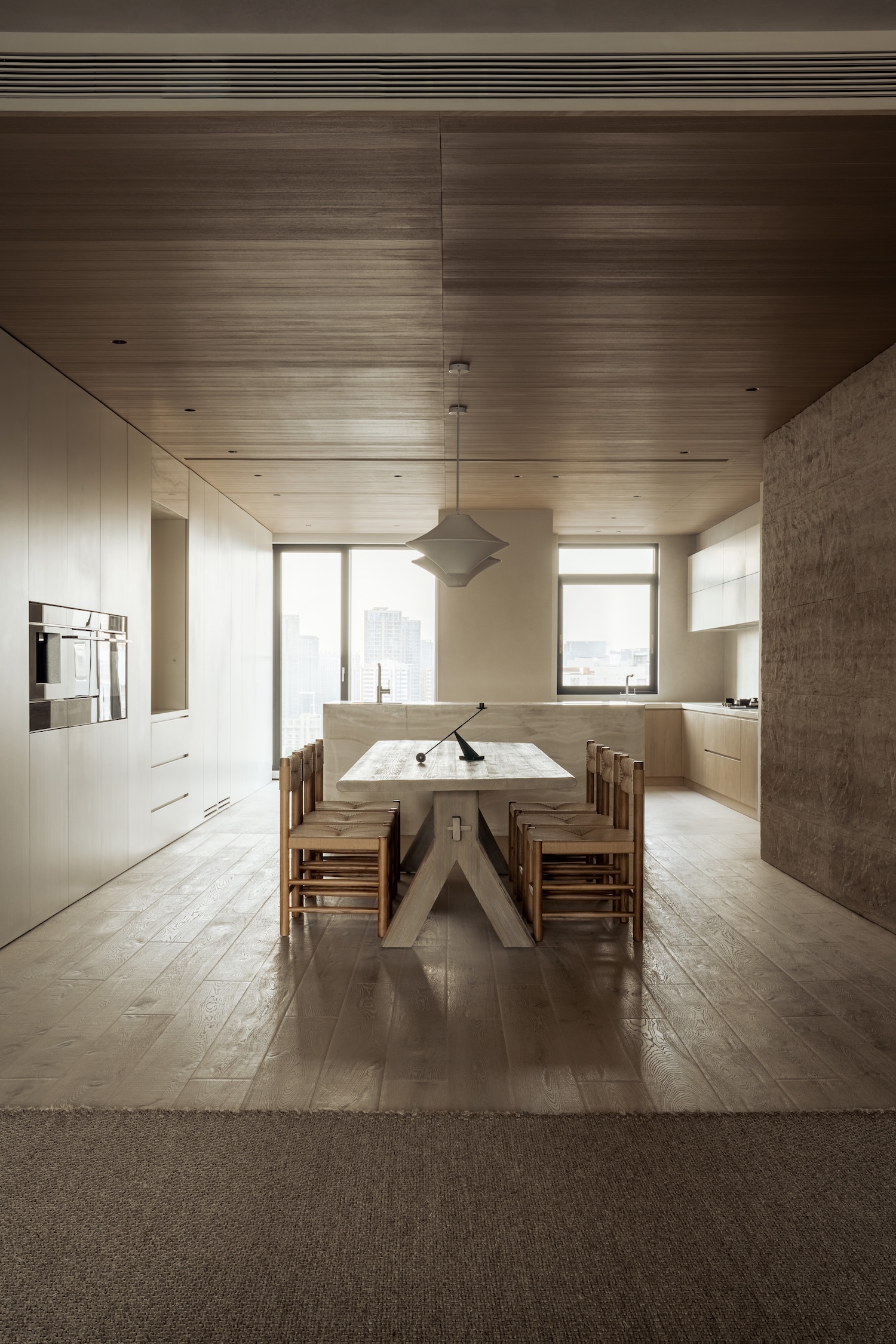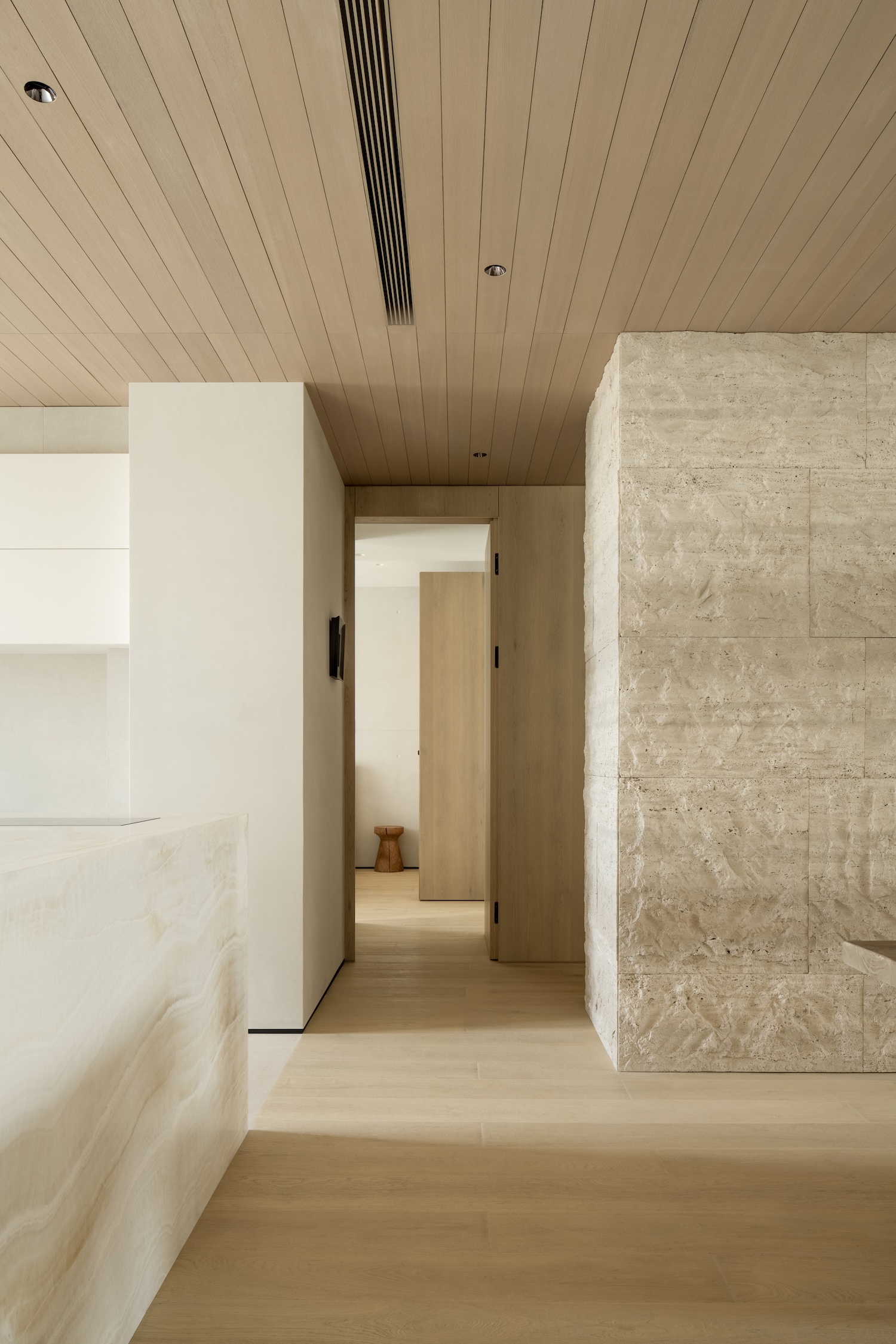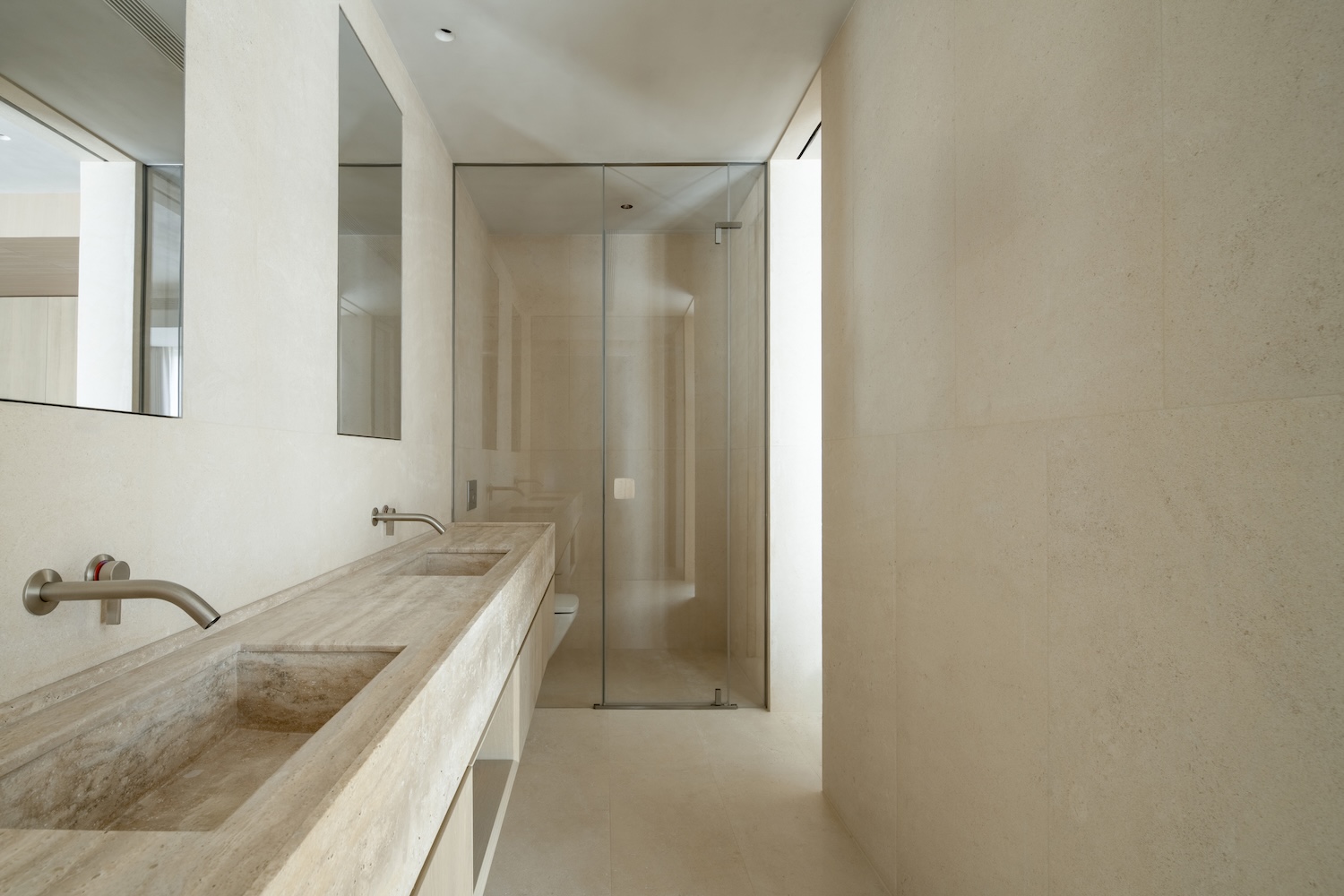
Haven of Nature is a minimalist residence located in Hefei, China, designed by ERMU Studio. Wabi-sabi has come a long way from the Japanese tea ceremony to the Chinese apartment market, where it now defines a full commercial aesthetic—often reduced to beige paint, microcement, and a single dried branch in a tall vase. ERMU Studio, however, places the emphasis on elements less easily captured in photographs: joint widths, stone finishes, and the placement of light sources.
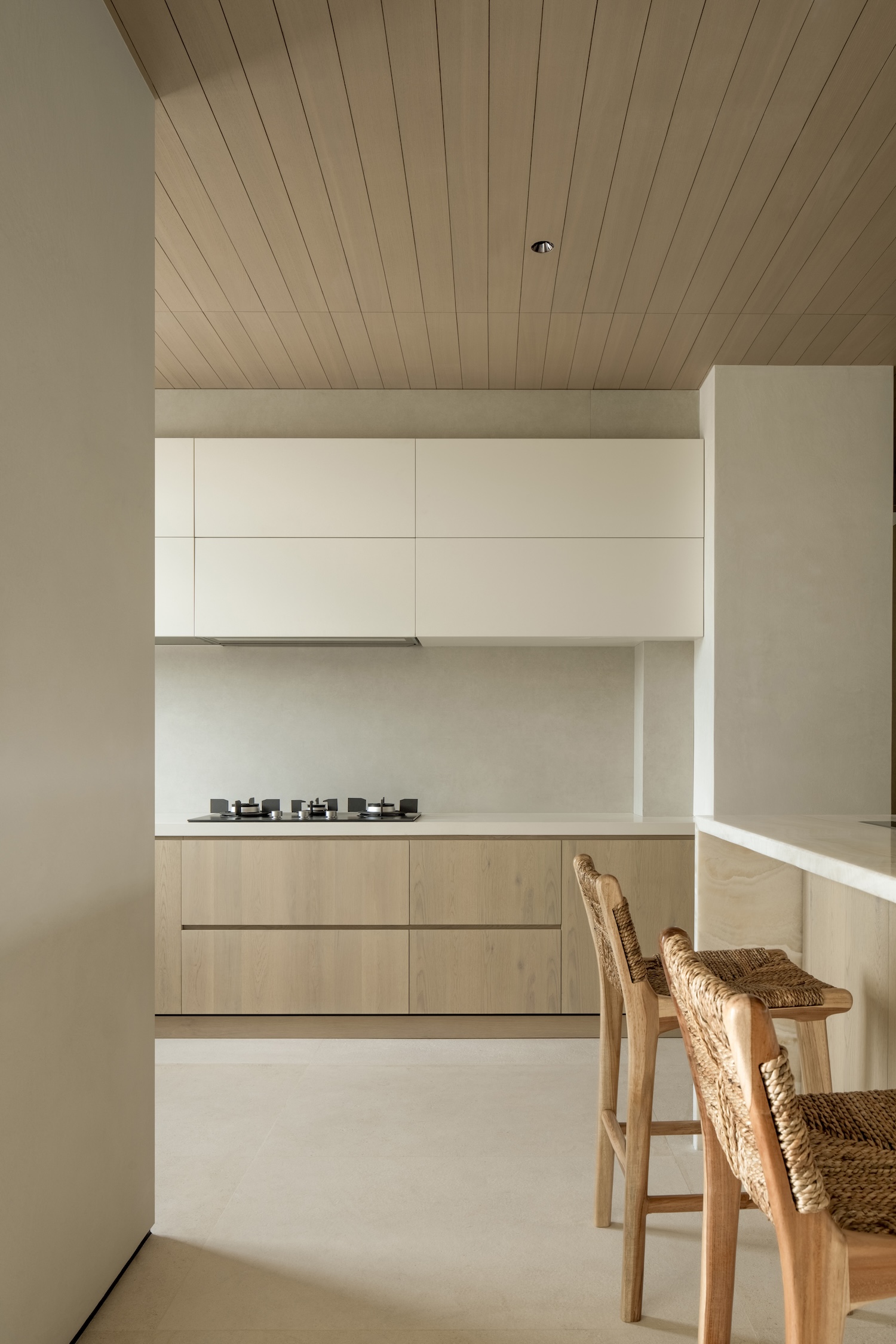
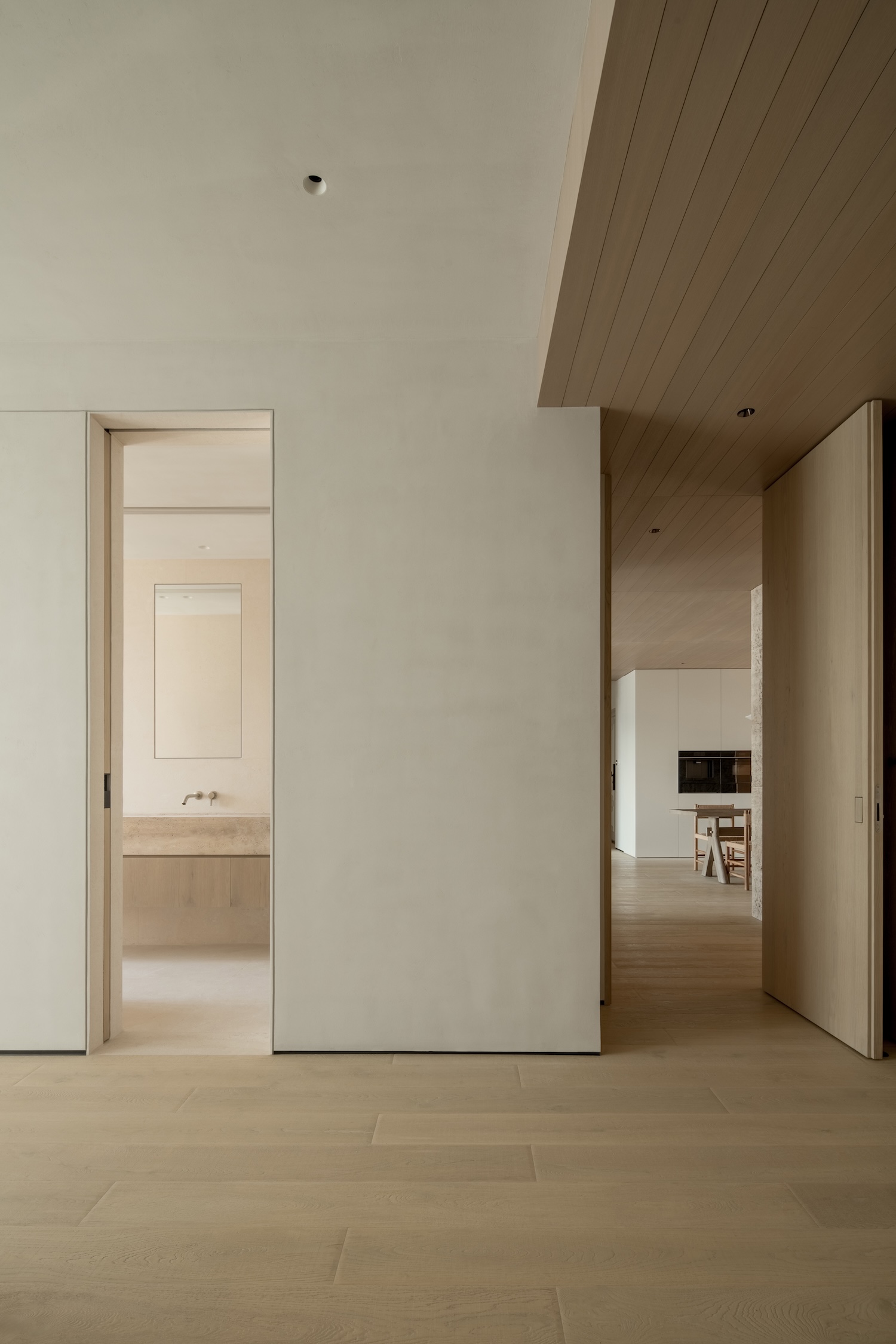
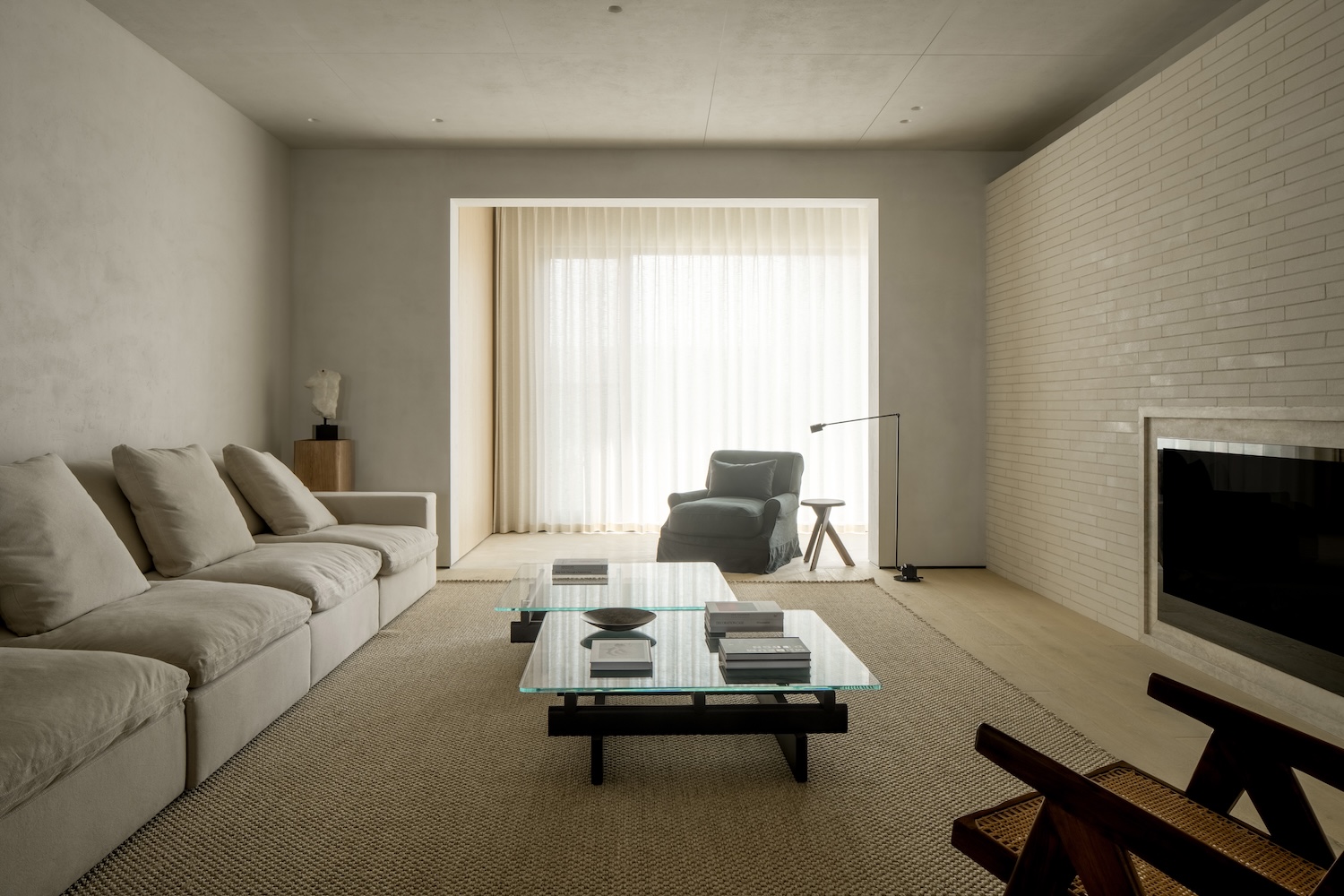
The layout merges the living room, dining area, western kitchen, and hallway into a single continuous space. This is uncommon in Chinese apartments, where wok cooking typically coats open-plan interiors with oil and smoke within weeks. The solution is a familiar one: a separate, enclosed kitchen for high-heat cooking, while the western kitchen remains open for preparation and cold dishes. With the cooking contained behind a door, the rest of the floor can flow freely, allowing the material palette to carry across thresholds rather than stopping at them.
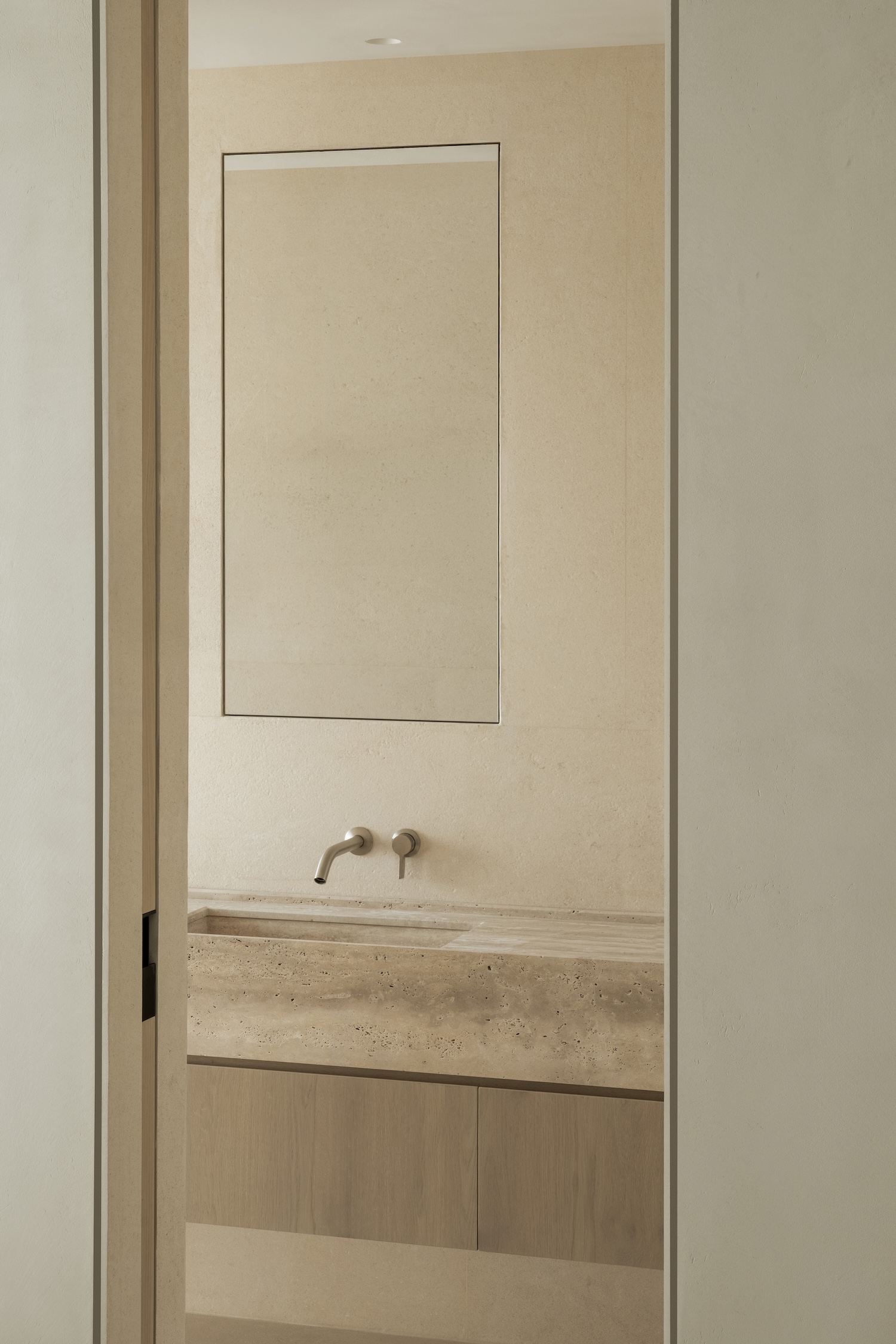
Most of the budget goes into concealed door frames and full-height handleless cabinets—not for the materials themselves, but for the precision they demand. A hidden frame requires the door to sit flush with the finished plaster within a millimeter or two. Handleless cabinets rely on push-to-open hardware and a gap fine enough to read as a shadow line. A deviation of just three millimeters across a six-meter stretch turns calm design into an apparent construction flaw.
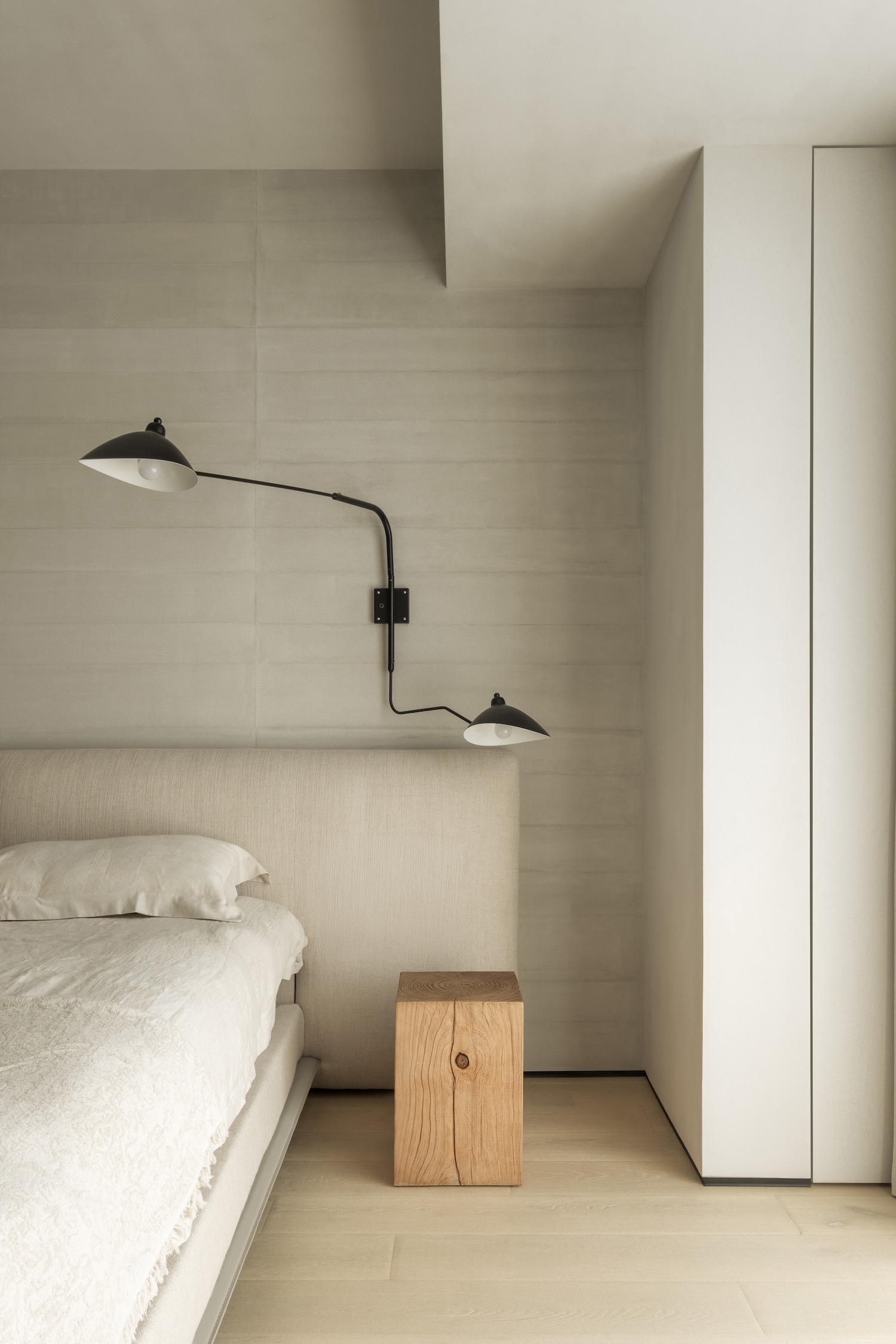
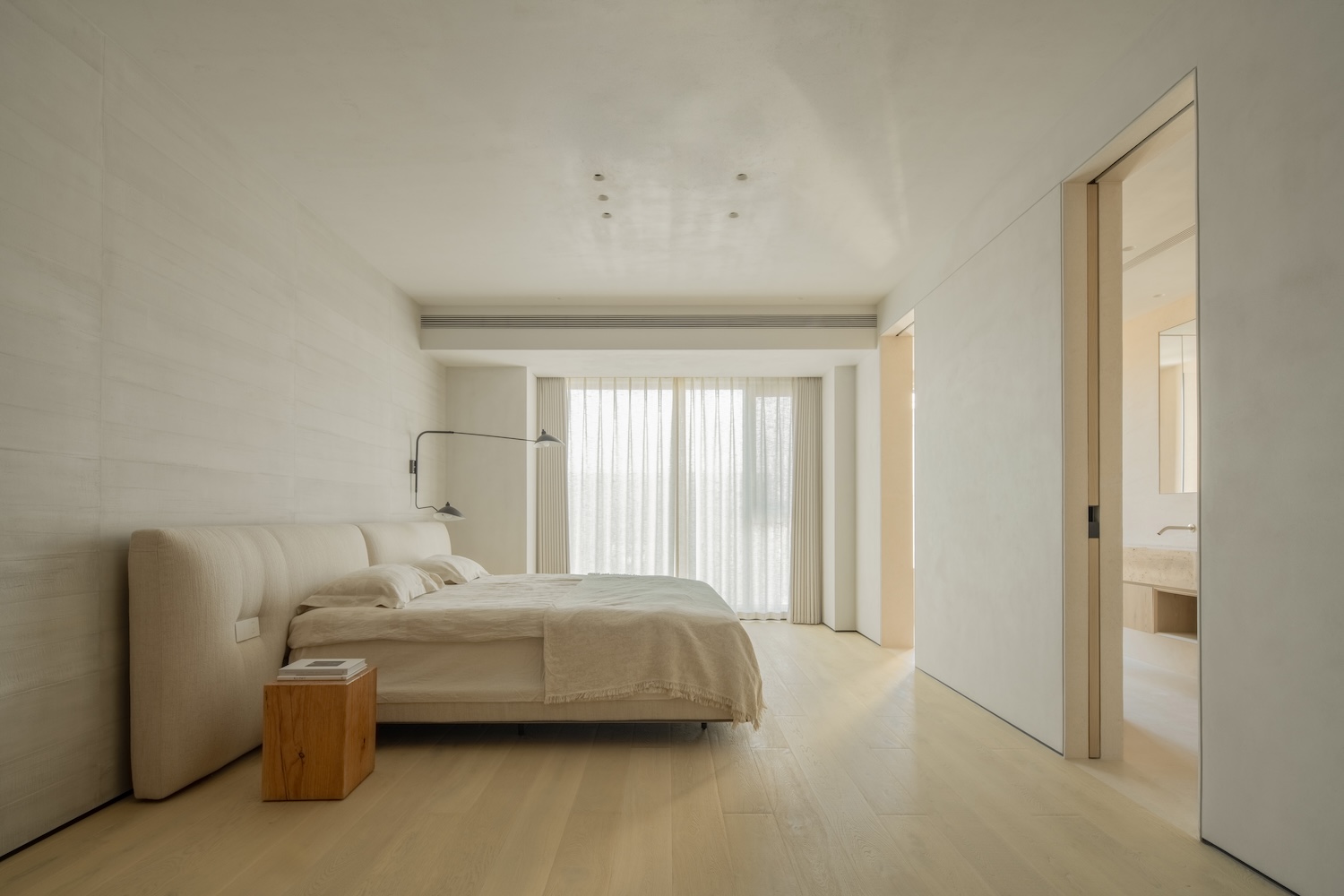
The lighting adopts the no-main-light strategy that has become prevalent in Chinese residential design over the past decade: recessed magnetic track lighting in ceiling slots, trimless downlights, and linear wall washers replace the central pendant. This approach suits the buildings it emerged from. With slab-to-slab heights in most new apartments at roughly 2.8 meters before finishing, a hanging fixture would consume too much of that vertical space. Sheer curtains diffuse daylight before it reaches the stone and oak, casting soft gradients rather than harsh edges. The layered lighting system allows a room to shift in mood from afternoon to evening without any change in furniture.