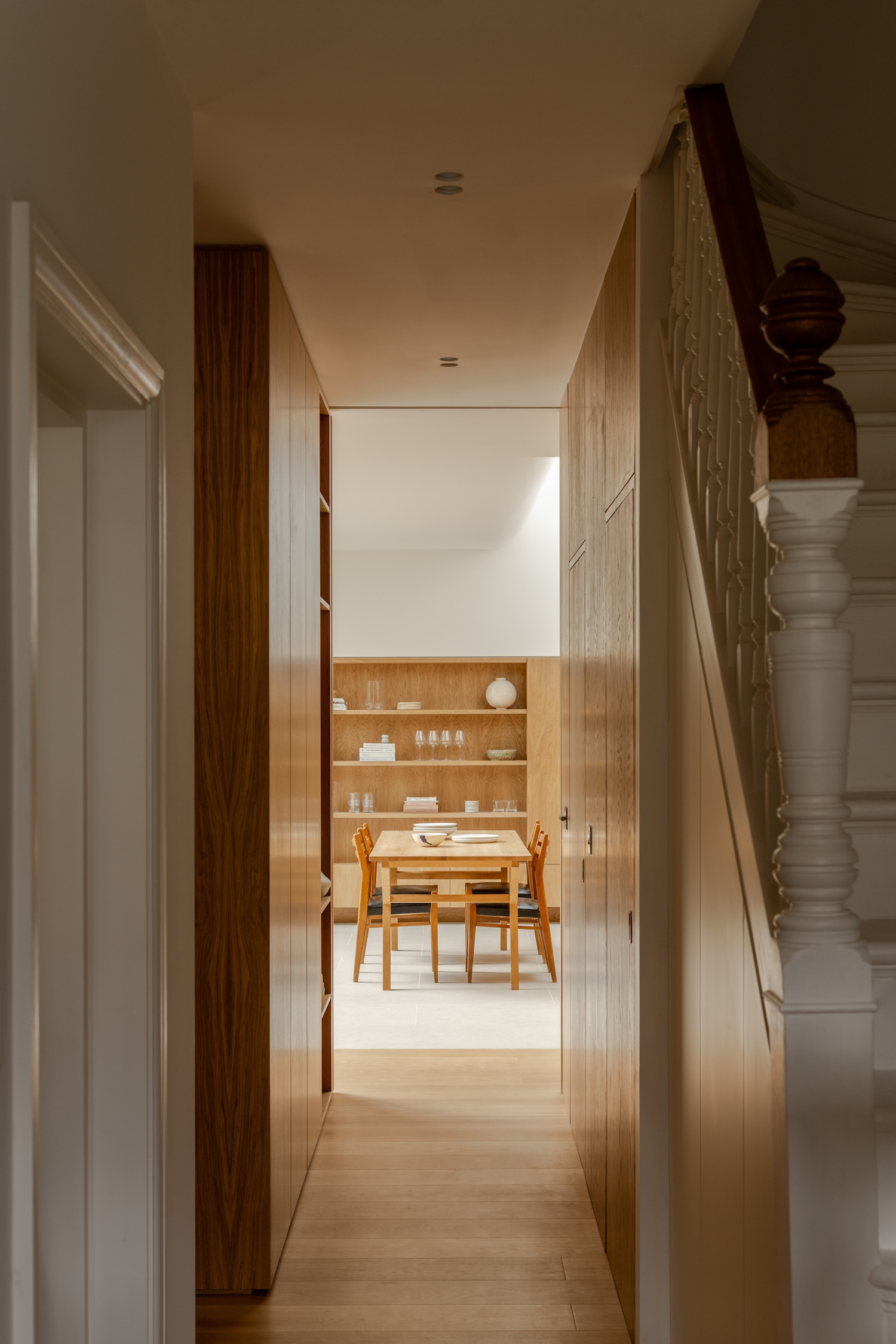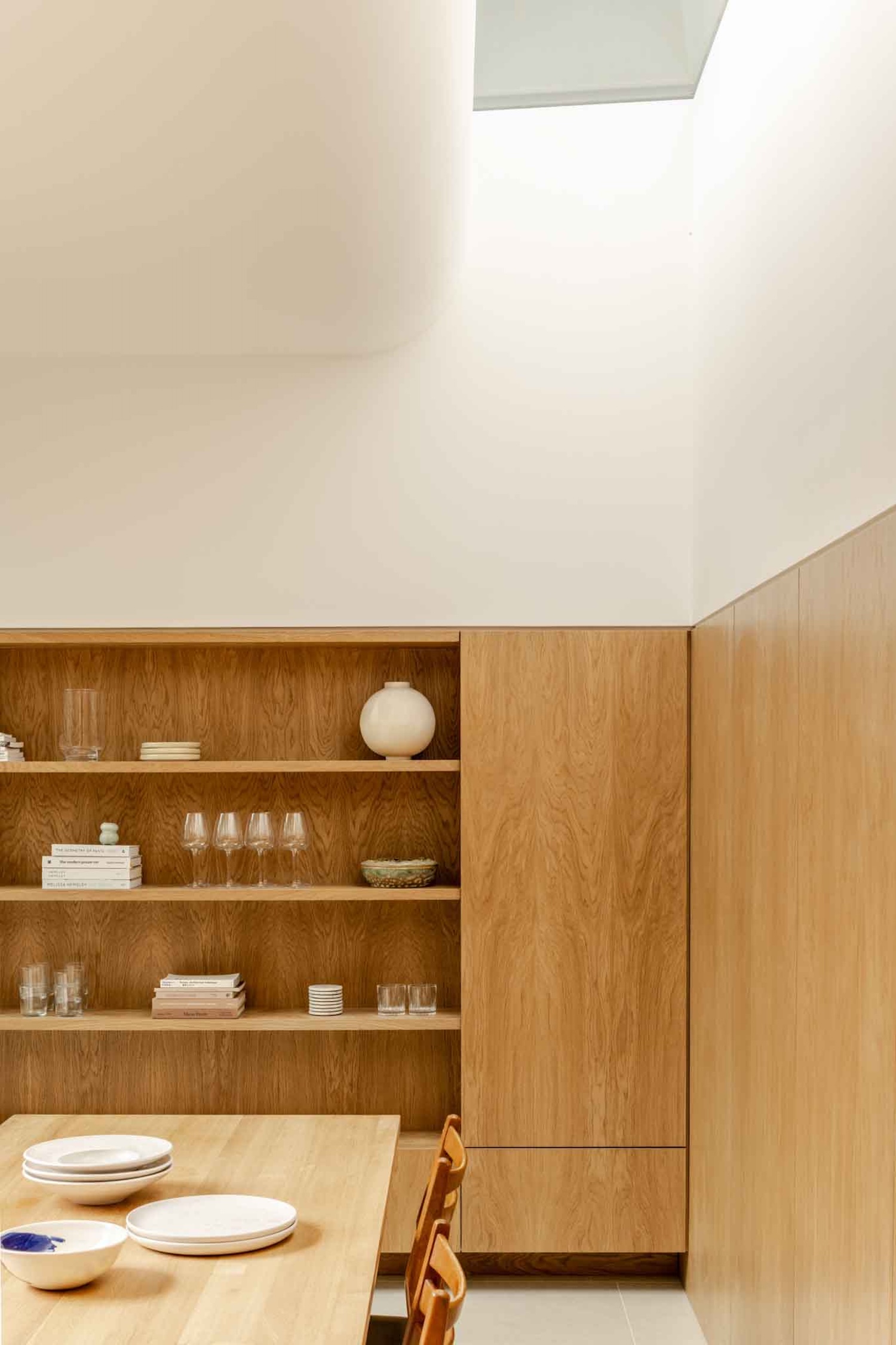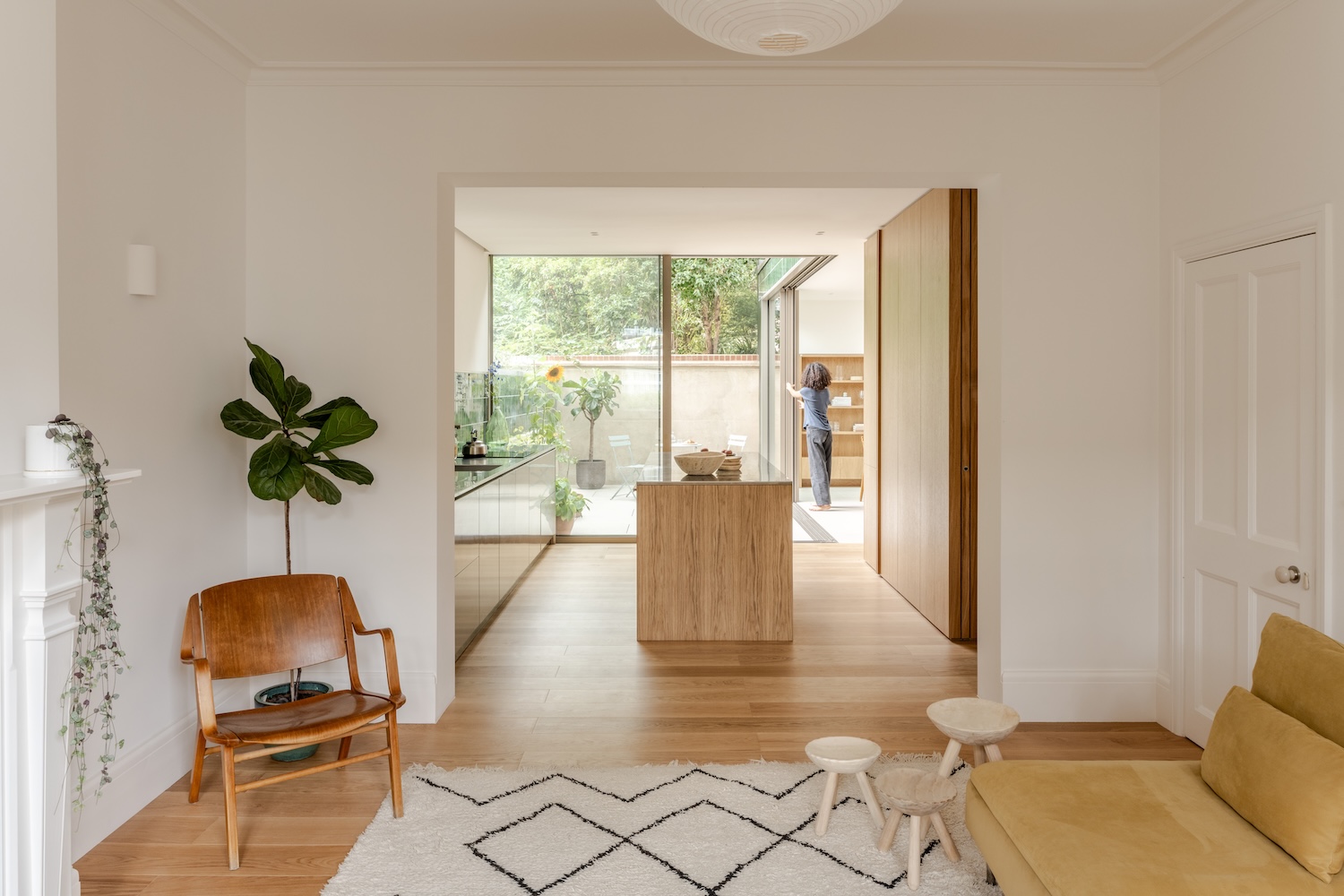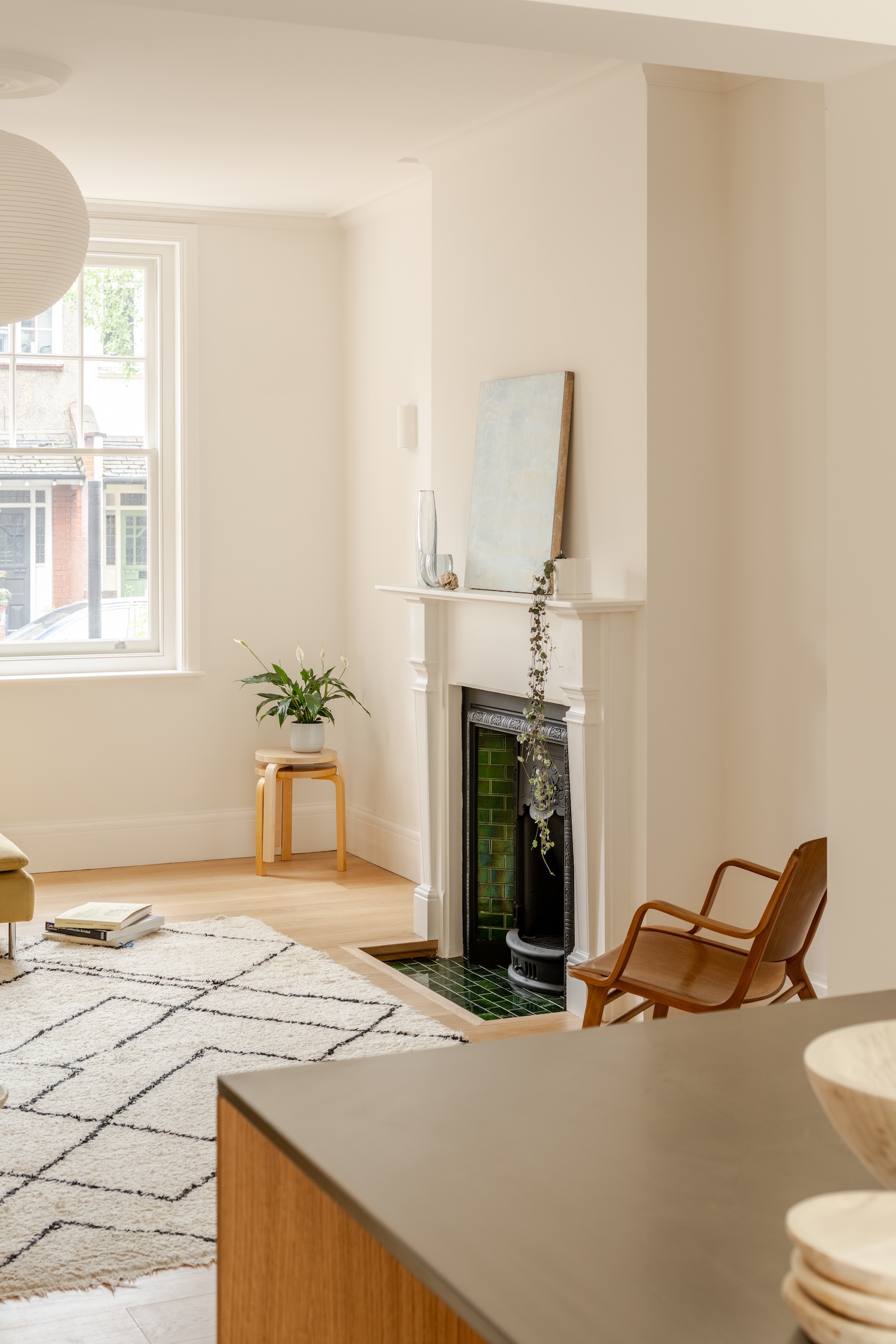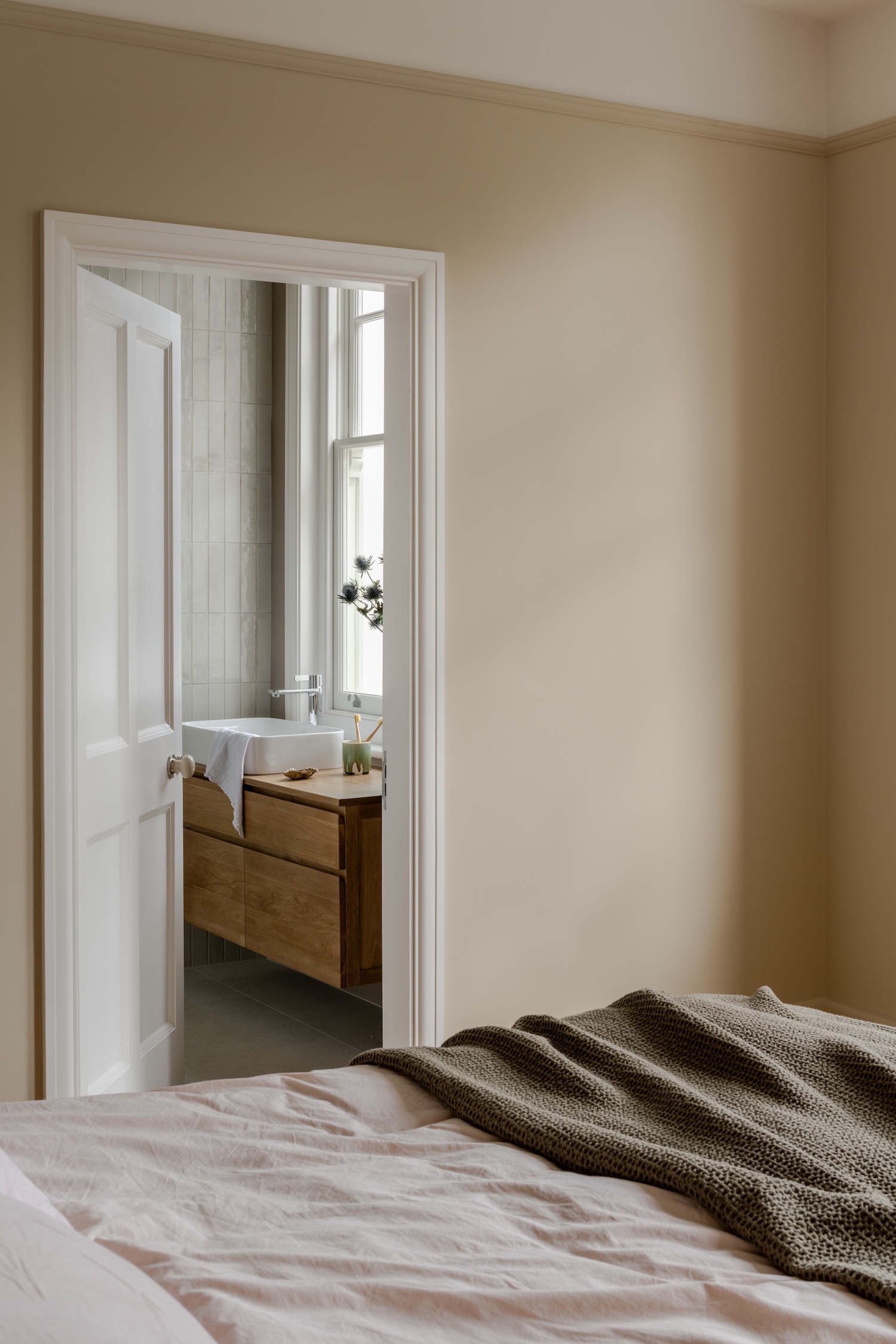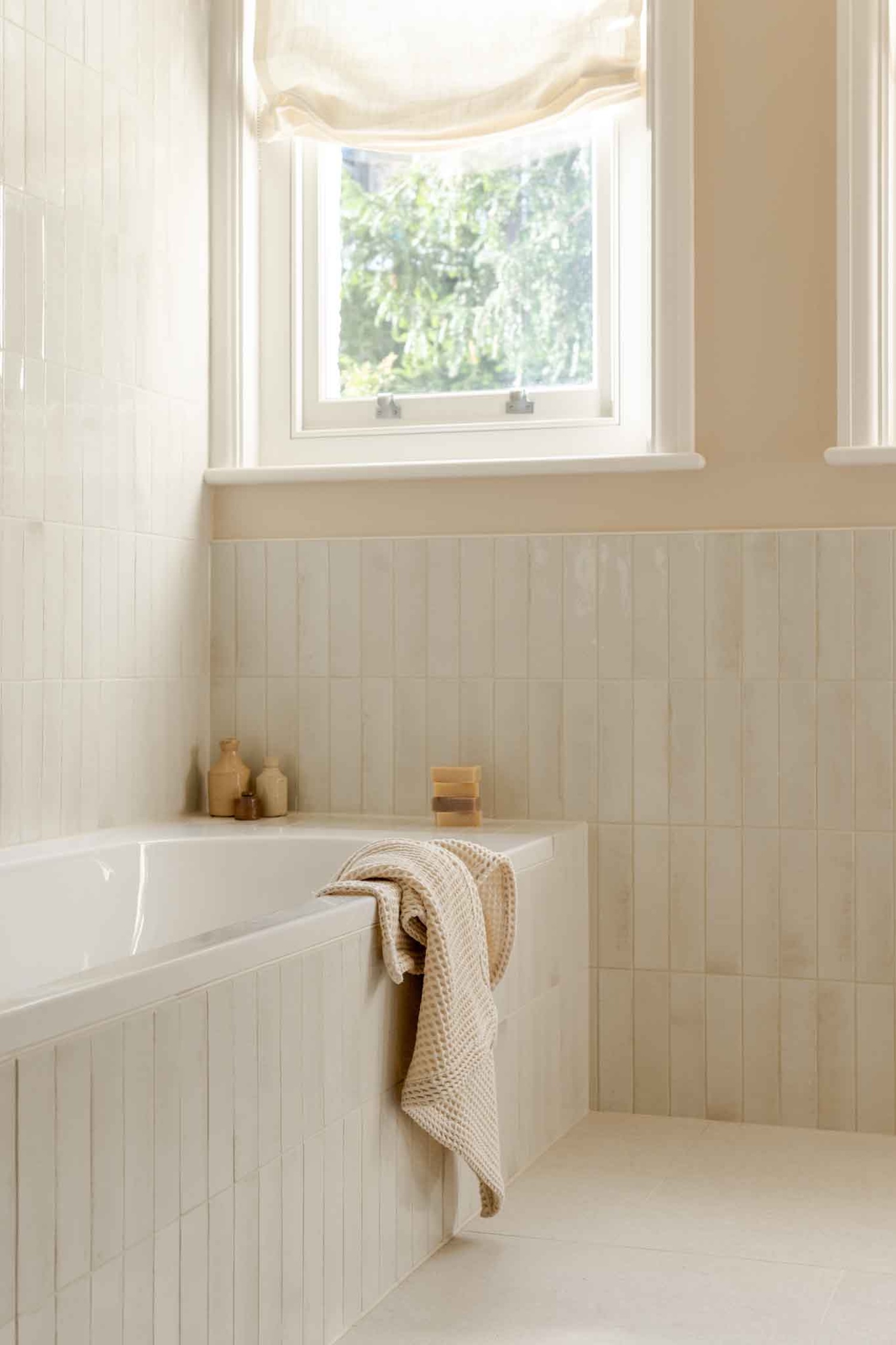
Heathside House is a minimalist residence located in London, United Kingdom, designed by Manea Kella. A conservation area asks a house to keep two faces. Toward the street it must behave, holding the line of its neighbours; behind, away from the planners and the passing eye, it can speak more freely. Manea Kella has built the entire logic of this Edwardian terrace around that division, restoring a front that had drifted into disrepair while releasing the rear into something more open. The house had been carved into two flats during the 1970s and left to decline for decades, so the first act was repair, salvaging fireplaces, leaded glass, and picture rails, and tightening the building envelope for warmth without erasing the record of the original fabric.
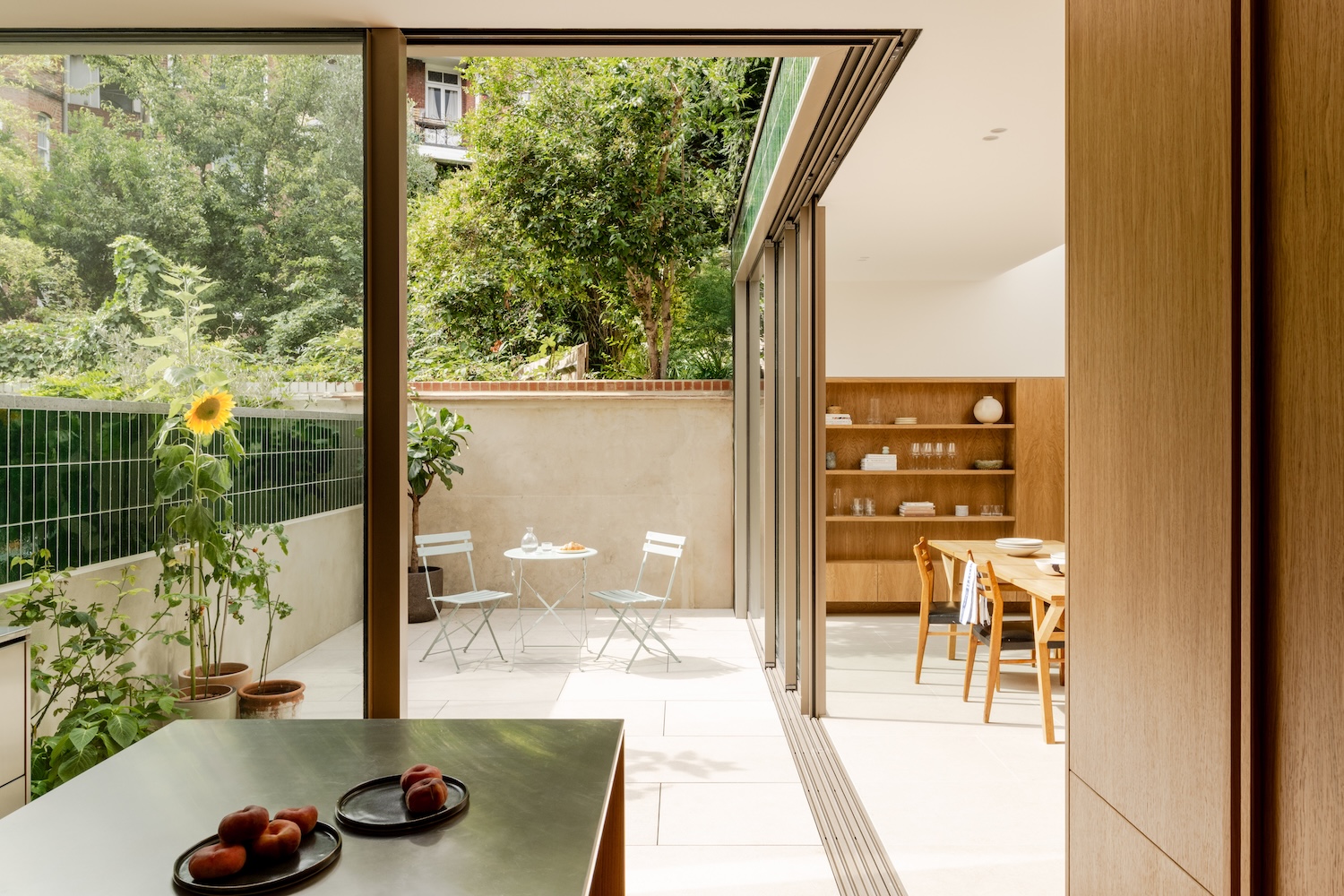
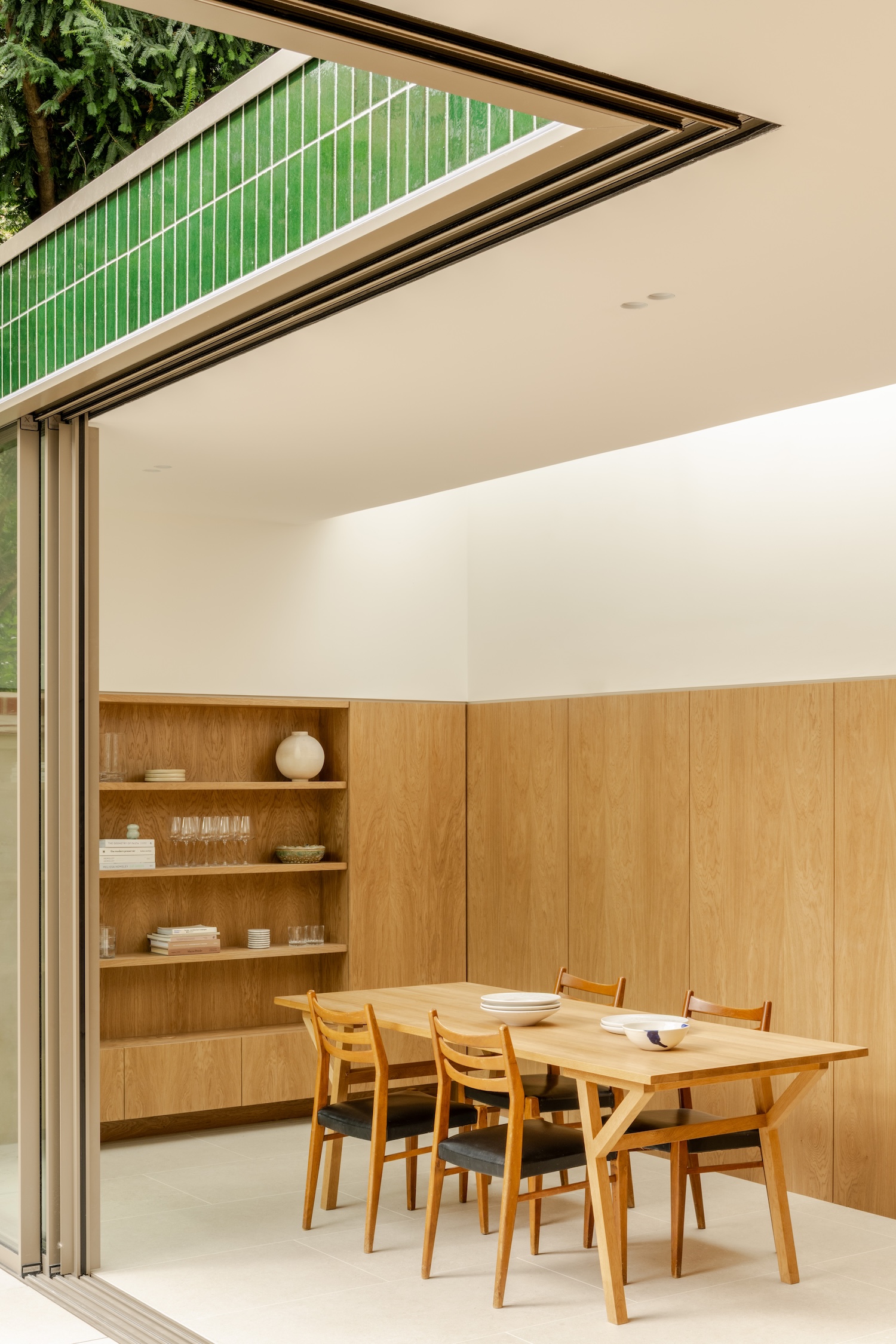
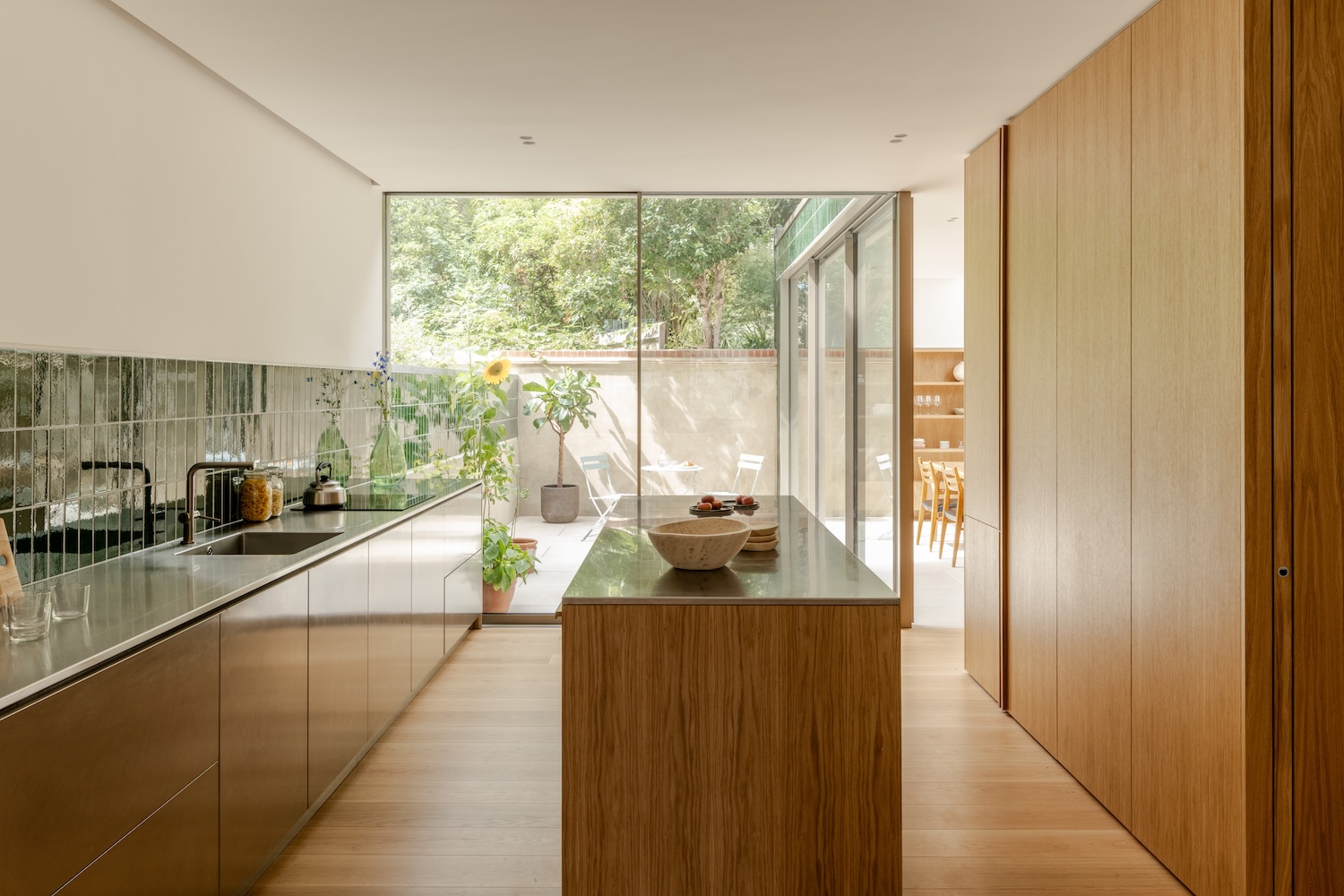
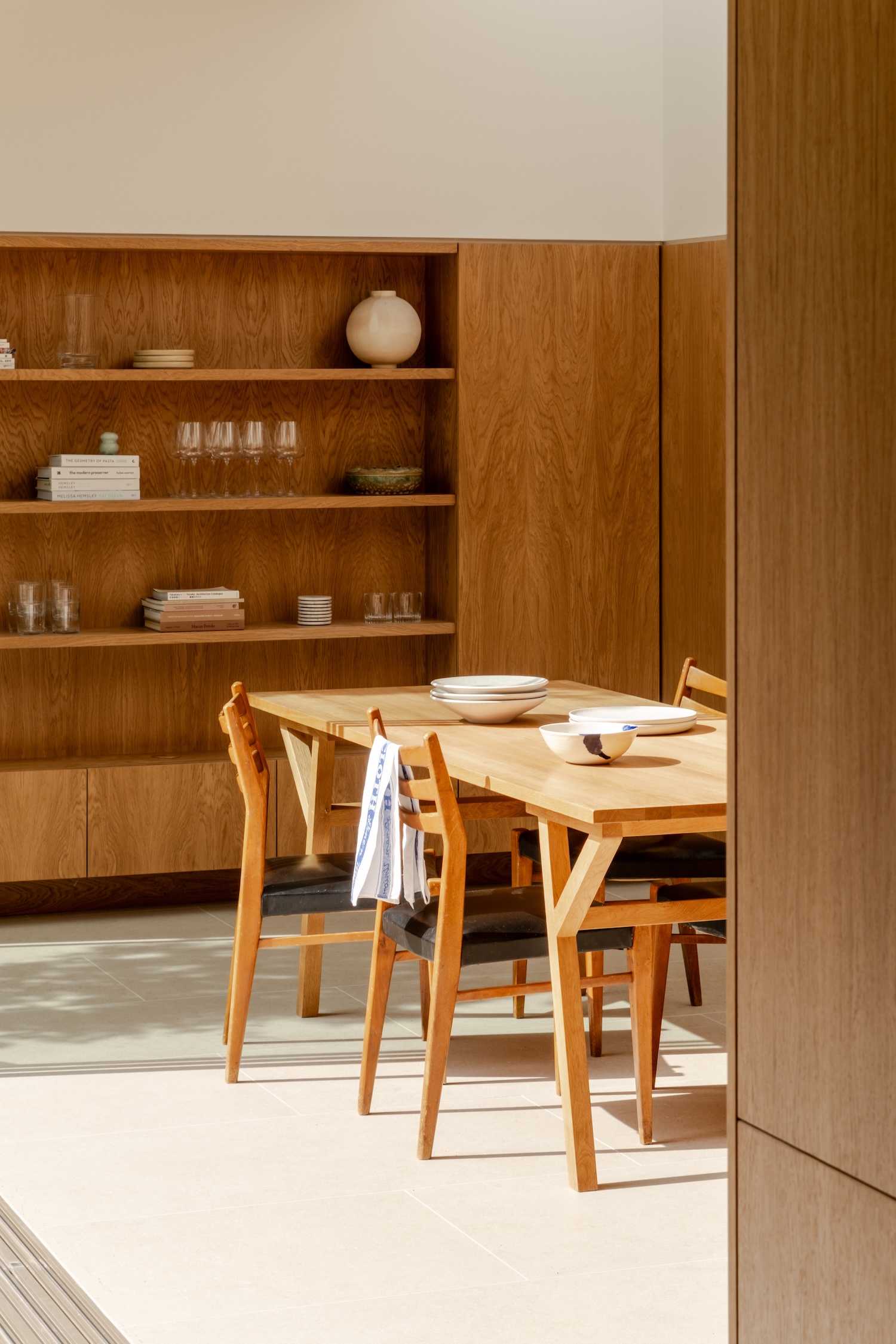
The rear is where the project sheds its restraint. A failing extension has been replaced within the same footprint by a glazed volume that folds kitchen, dining, and living into one continuous plan wrapped around a small courtyard. The decision that carries the most weight sits underfoot: a single run of limestone travels from the interior out onto the patio, so the floor refuses to register the boundary that the glazing would otherwise announce. This is an old modernist ambition, the dissolving of inside and out, achieved here through material continuity rather than sheet glass alone. The modest courtyard reads as an extension of the room because the ground never changes beneath your feet.
The palette anchors the new work to its setting. Glazed green tiles, lime render, and stained timber give the extension a tactile surface that draws on the local vernacular while introducing colour the terrace never had. The green glaze is a knowing choice. London holds a long ceramic tradition in exactly this register, from the bottle-green faience of Edwardian pubs to the glazed brick of butchers’ shops and Underground stations, surfaces that were practical and luminous at once. Manea Kella borrows that lineage and turns it toward the garden, where the tiles catch light and read almost as foliage against the render. The result is craft that complements rather than competes, new fabric that feels settled into place from the start.