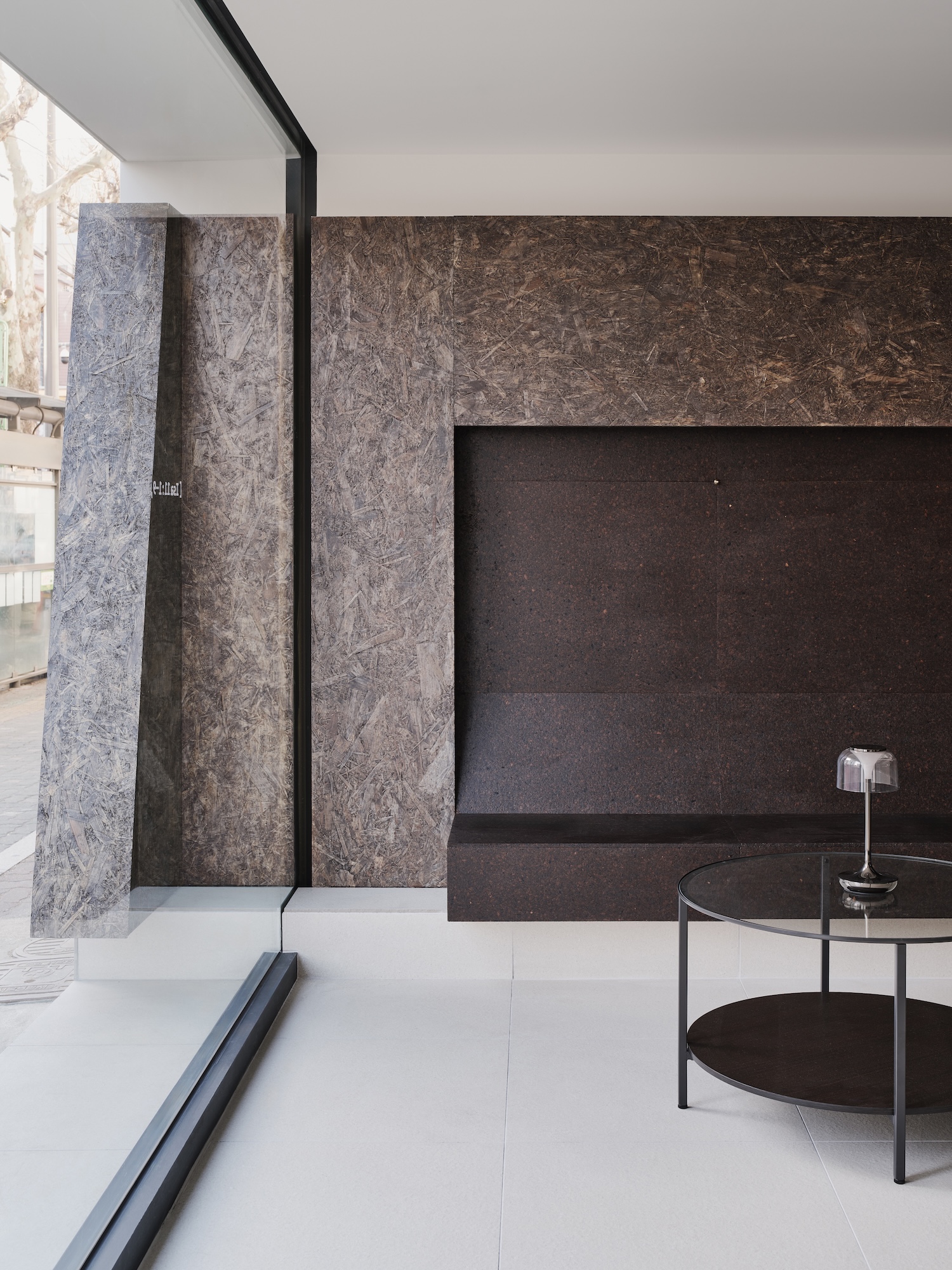
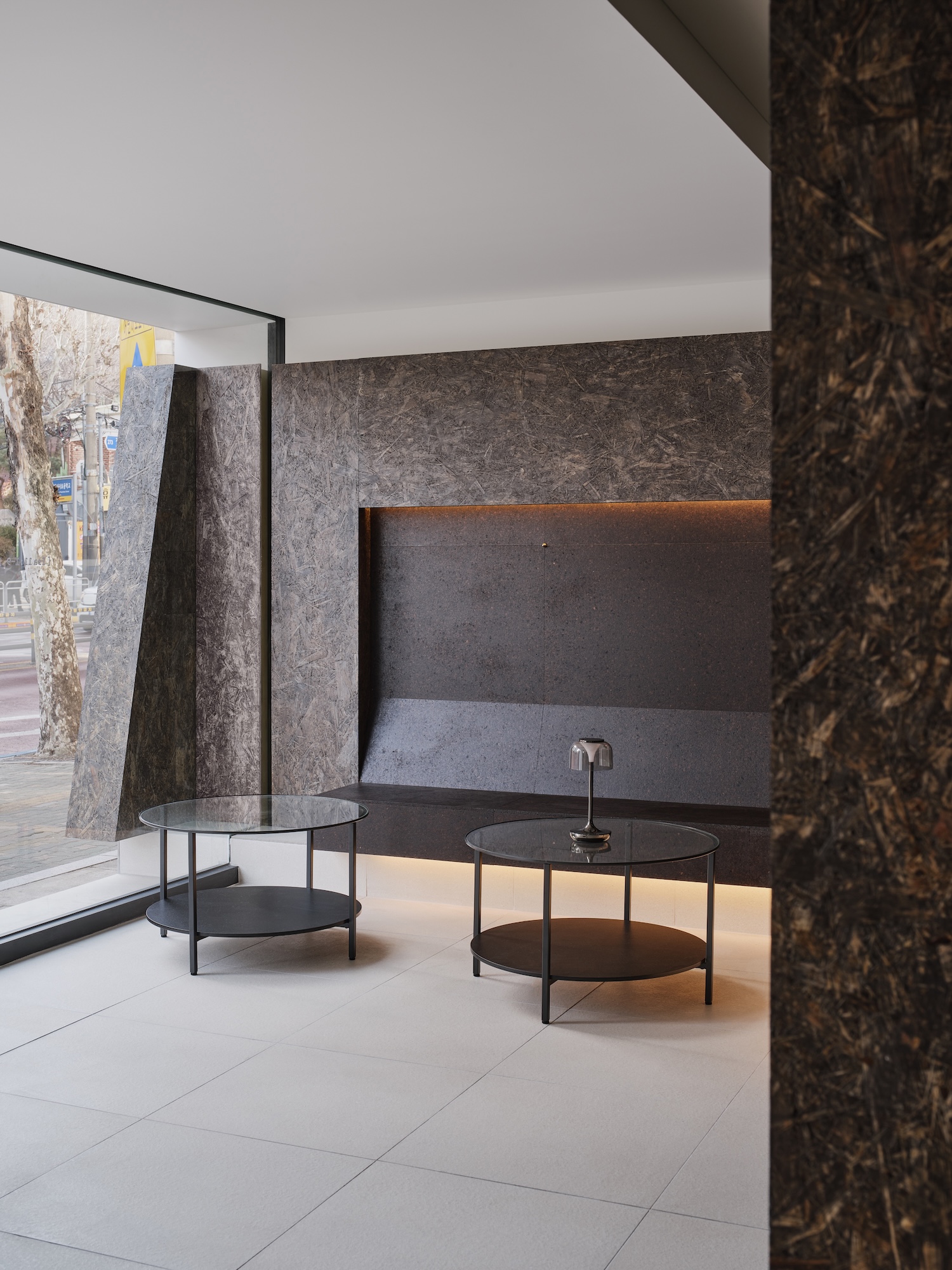
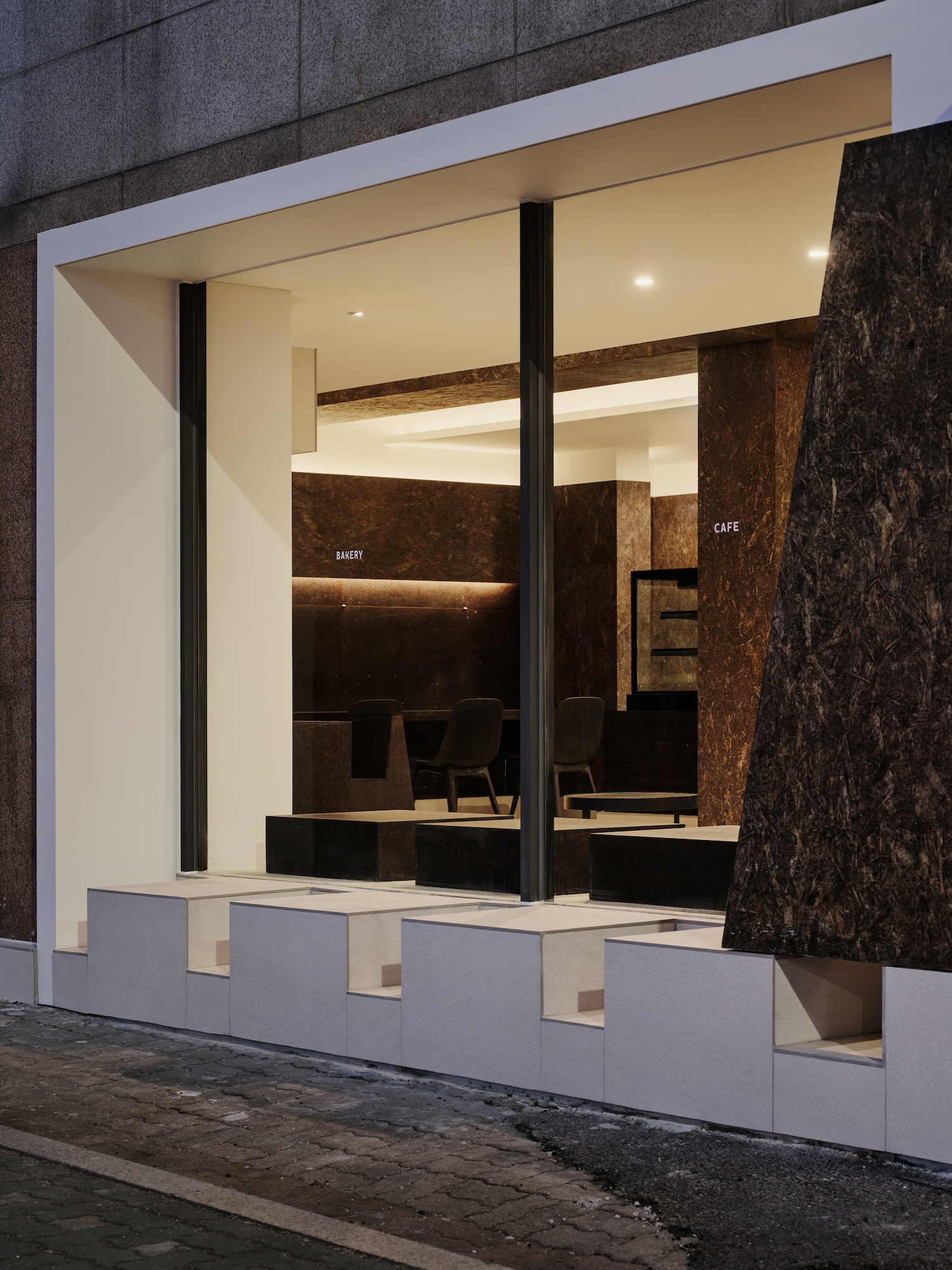
Land of Peace is a minimalist café located in Seoul, South Korea, designed by Design Chou. The site offers no buffer between the commercial and the civic. It sits on the bank of Bulgwangcheon, directly beside a bus stop, on a stretch of pavement that never quite empties. Most cafés in this position respond by sealing themselves off, treating the glass line as a hard boundary between commerce and street. Design Chou does the opposite, converting the boundary into a sequence of small elevations that let the transition happen in stages.
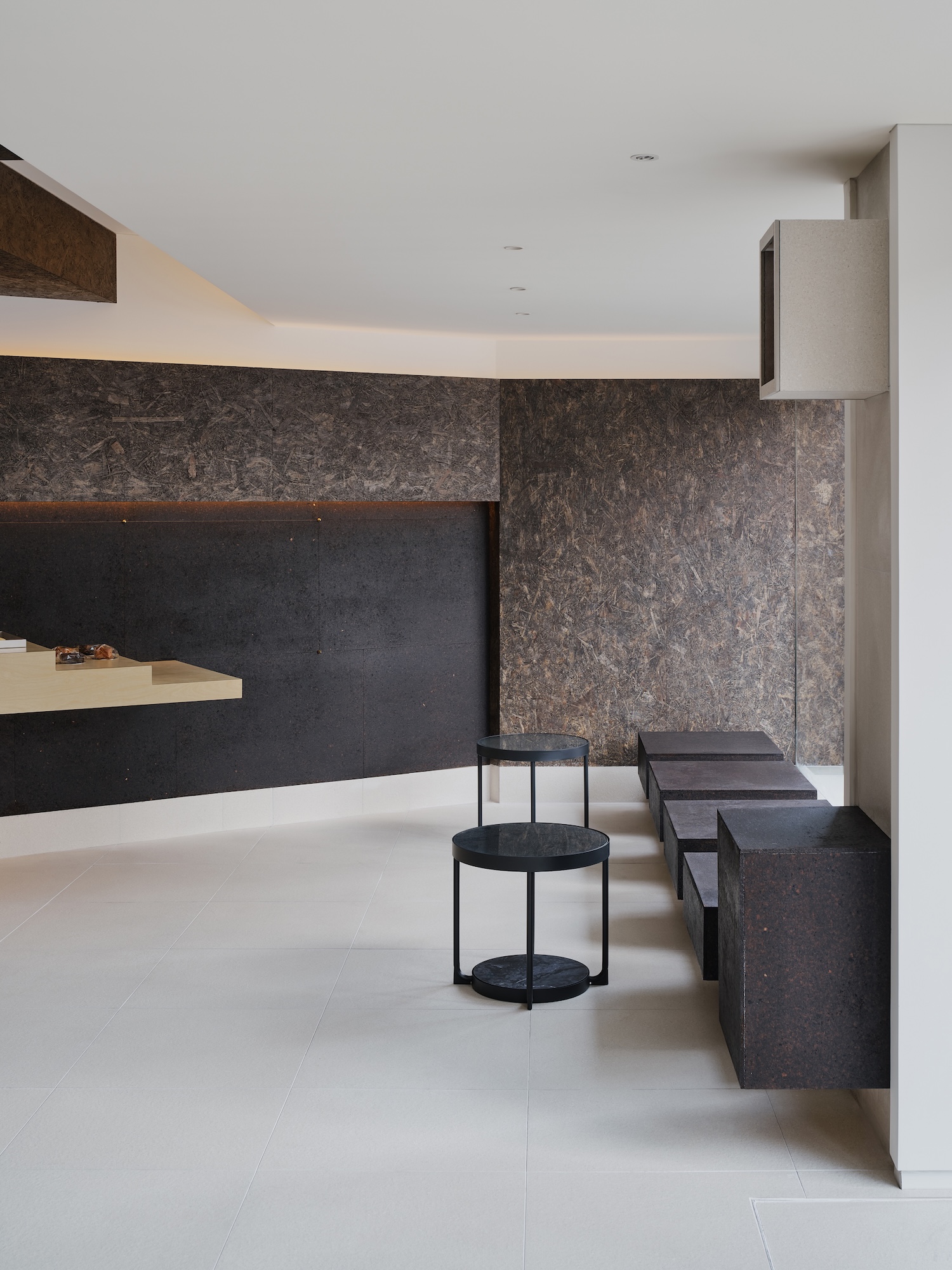
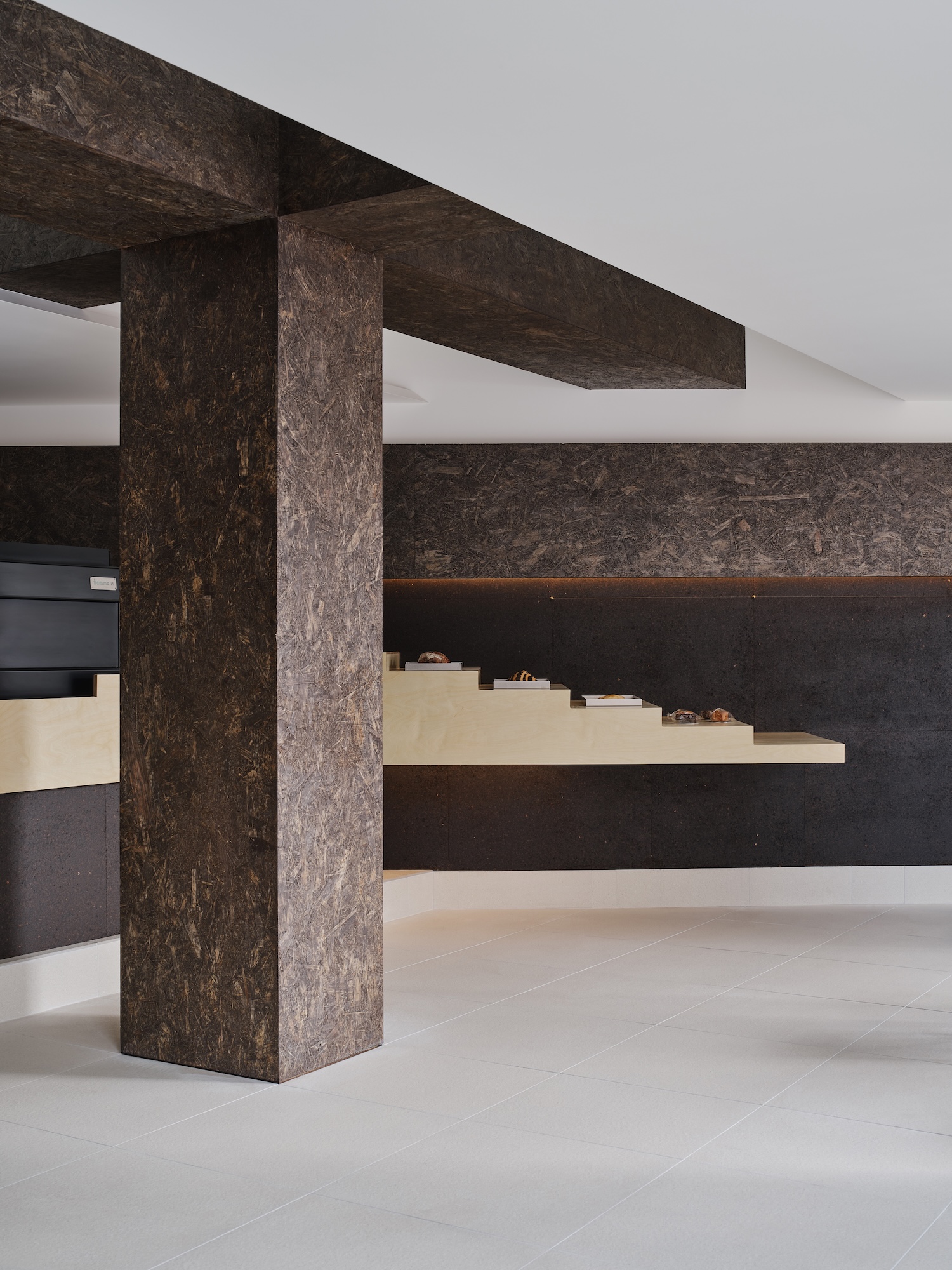
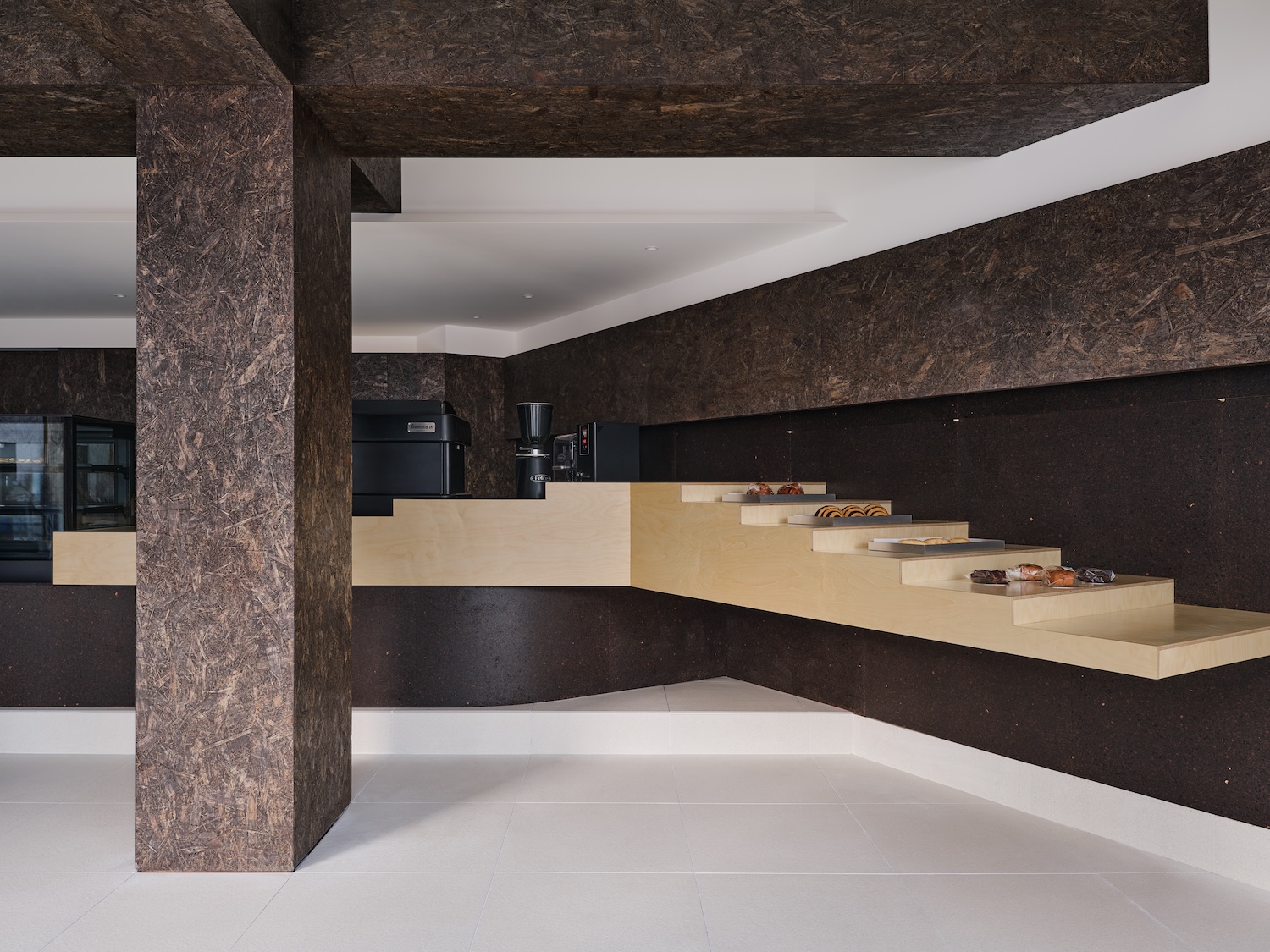
The floor sits one step above the pavement. From there an external bench, an internal bench, and a display unit each rise in turn, terracing the 62-square-metre plan upward. The effect is closer to a genkan than to a threshold, a graduated decompression rather than a door. Ascend and the traffic noise falls off by increments. Through the glass, the eye climbs the same terraces until it arrives at the bread, which sits at the top of the sequence like the object of a small pilgrimage. Boot Bread is a vegan bakery, and the arrangement performs a quiet argument about what deserves elevation.
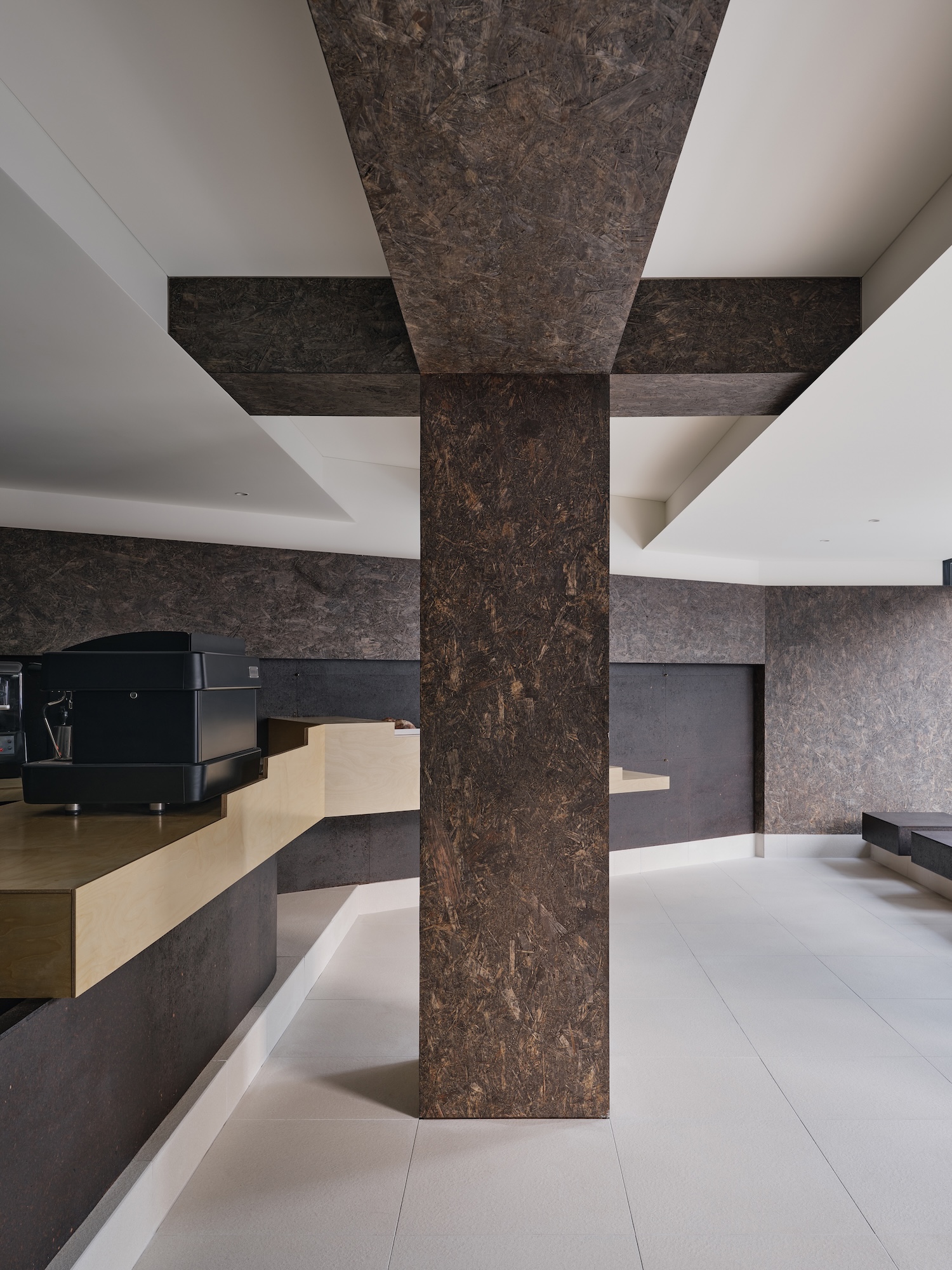
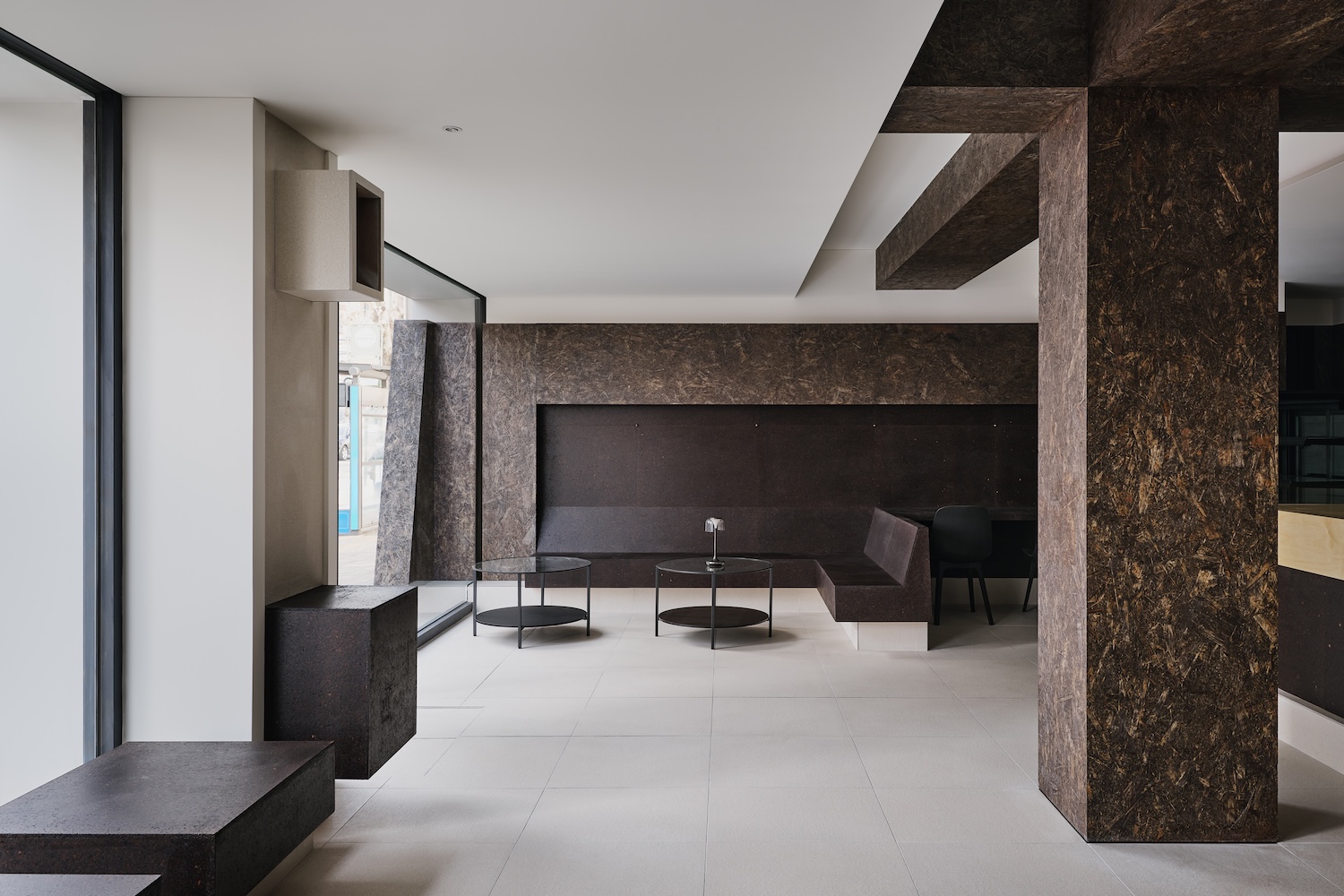
A single column runs floor to ceiling at the centre of the plan. Circulation, seating, and display all organise around it, which gives the compact interior a legibility it would otherwise lack. The column meets a beam that vanishes into the ceiling and reappears as a long horizontal light box. Structure declares itself and then withdraws, closer in spirit to the exposed frame logic of postwar Korean modernism than to the fashionable Brutalist gesture.
OSB panels sheathe the walls. Stain in black, brown, and a mixture of the two has been laid on irregularly, so the surface resolves at a distance into one continuous plane while the strand pattern beneath keeps asserting itself, closer to the mottling of stone than to timber. This is a material usually buried behind drywall, a substrate promoted to a finish, and it works because the staining refuses to flatter it. The same treatment carries from the interior walls through to the exterior façade, tying the two skins together with one gesture. Cork takes over wherever the body arrives, on seat surfaces, backrests, and desk tops. OSB governs what the eye reads and cork governs what the hand meets, a division of sensory labour that keeps each material honest to its own capacity.