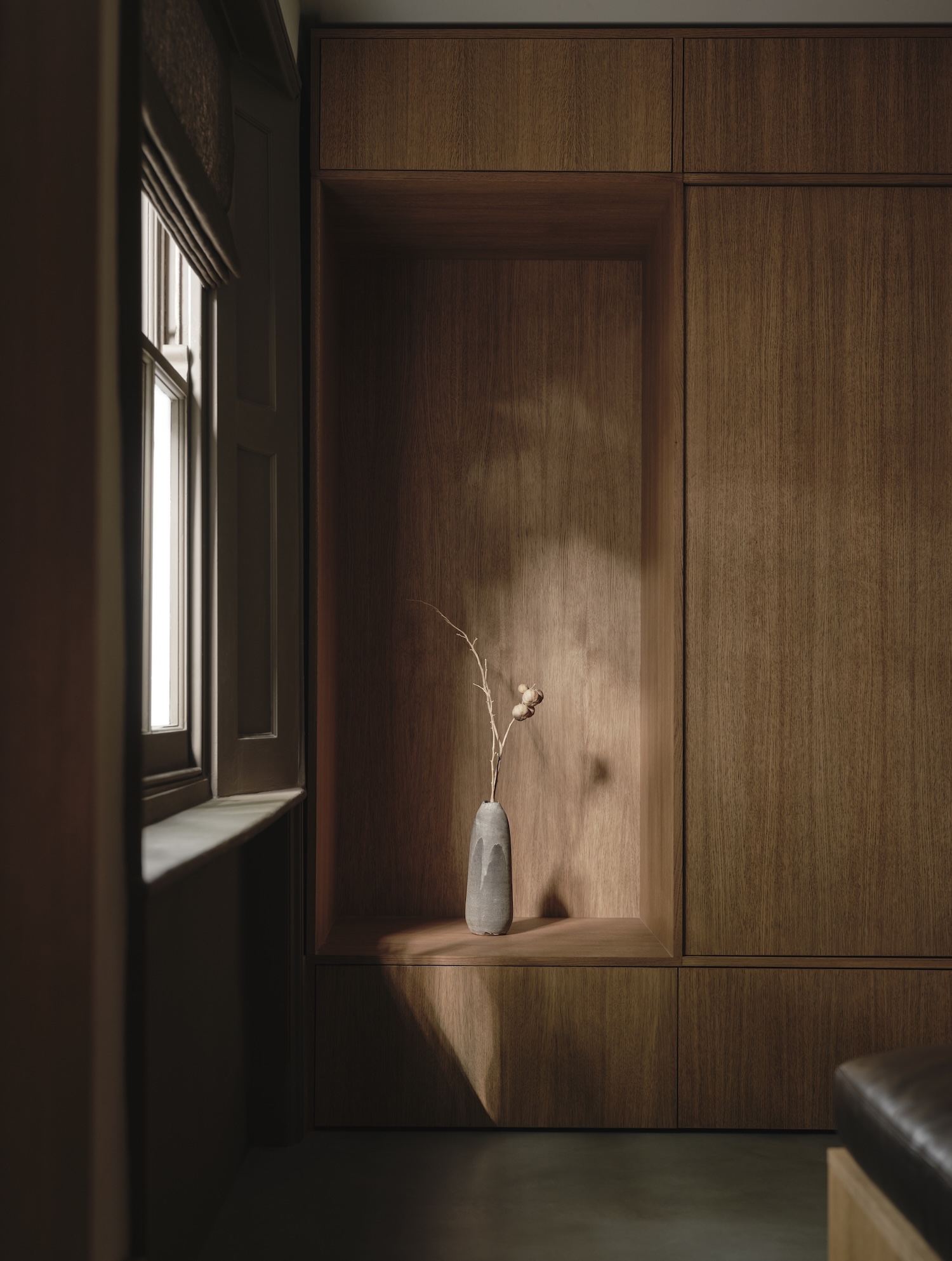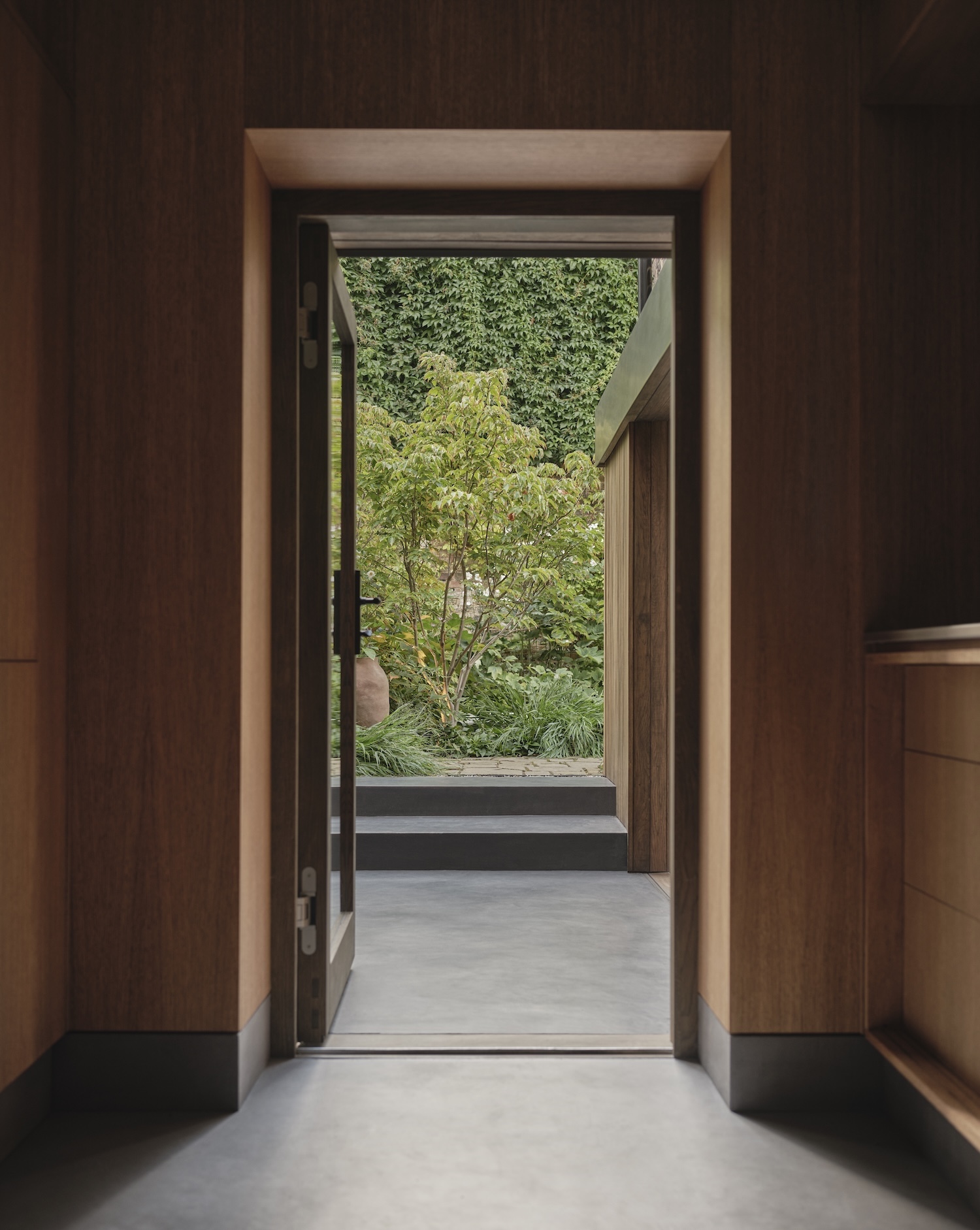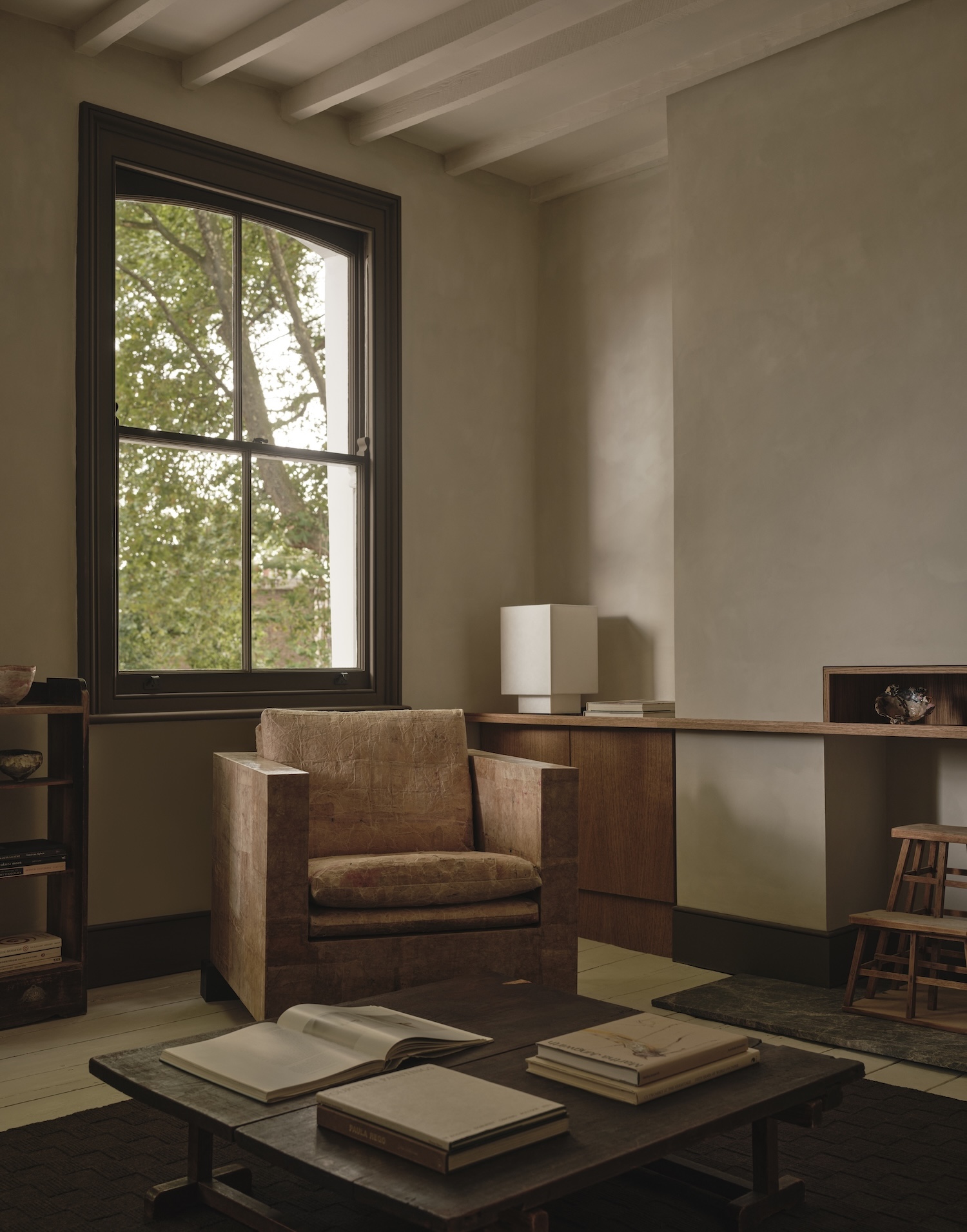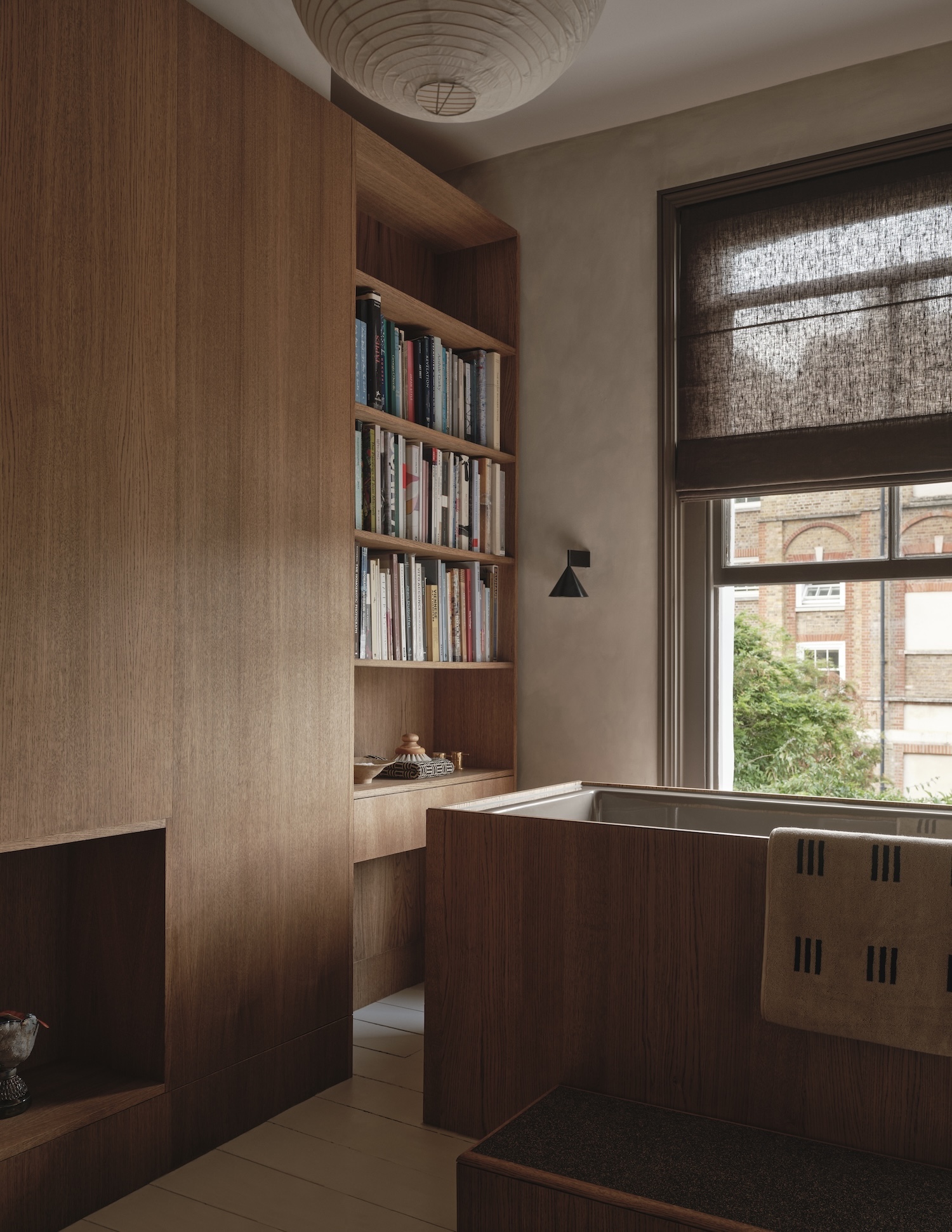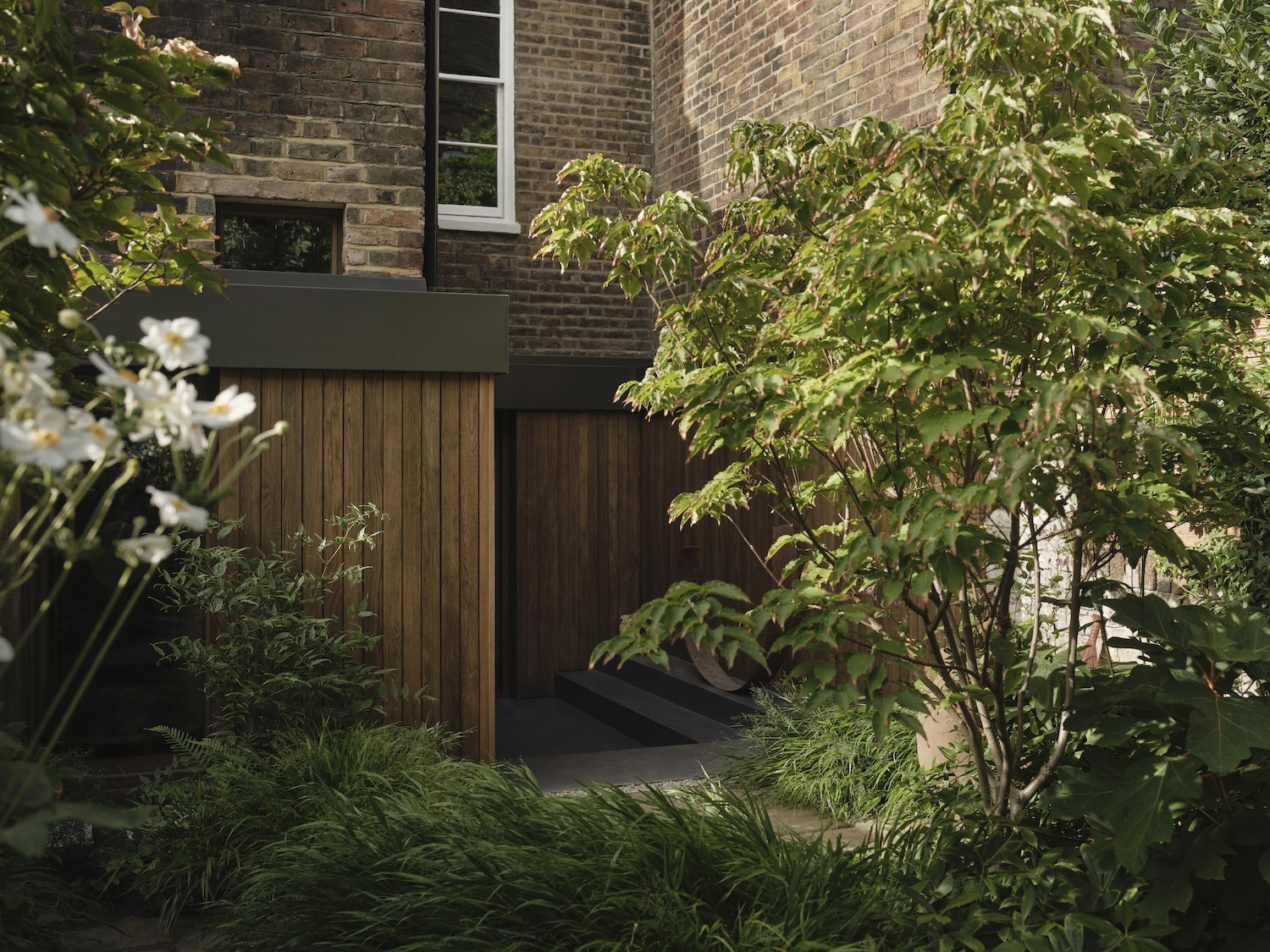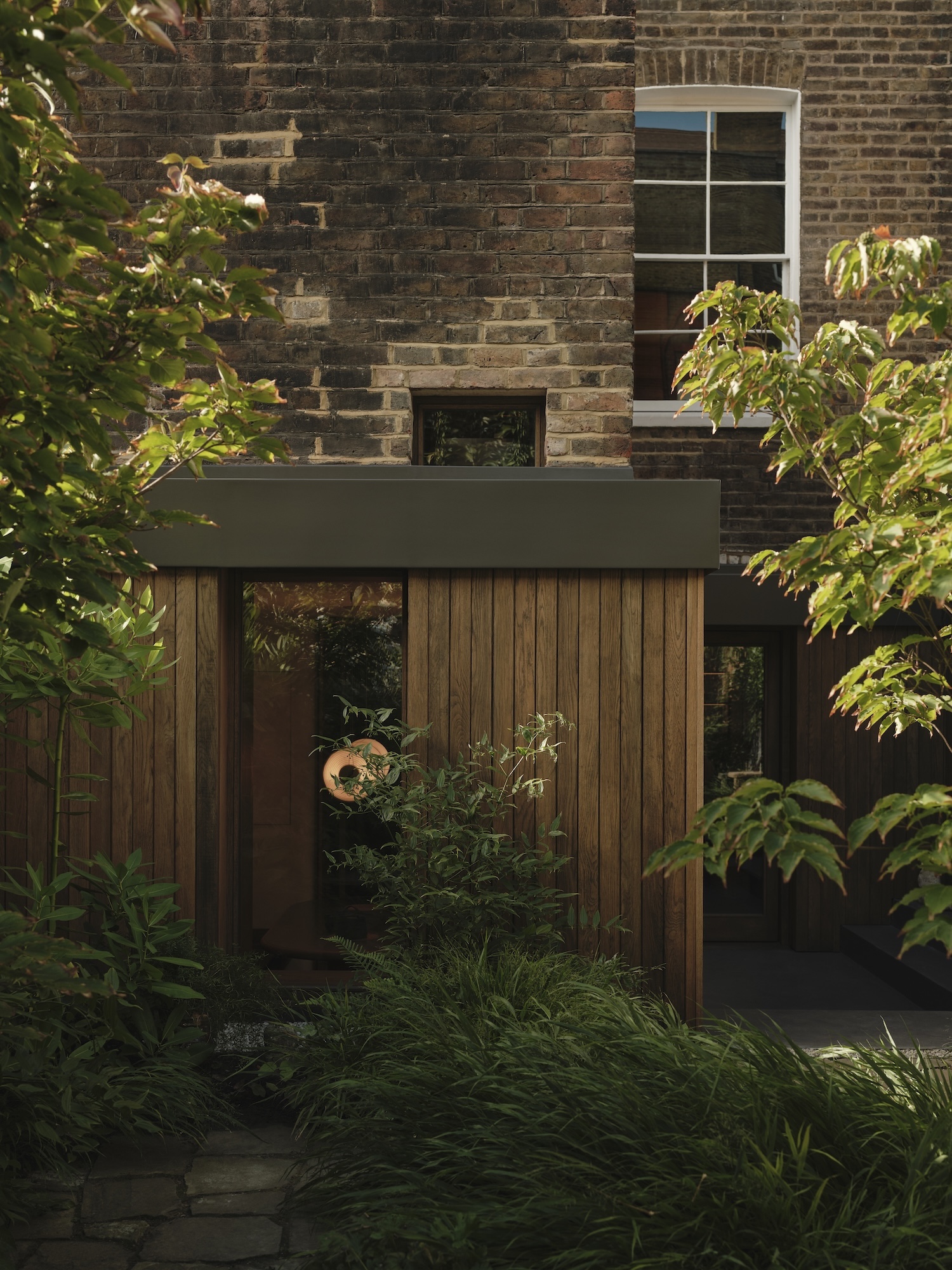
Heion House is a minimalist residence located in Islington, London, United Kingdom, designed by Studio Hagen Hall. Rather than extending the footprint of a Grade-II Listed Late-Georgian terrace, Studio Hagen Hall reconfigured it entirely. The brief called for a home shaped by Modernist restraint and Japanese spatial principles, yet the building’s listed status imposed strict limits on what could be altered or added. The response was to work with what existed and redistribute it: Studio Hagen Hall moved the primary bedroom to the ground floor, shifted the main living space to the top floor to claim southern light and views over the tree-lined square, and lowered the rear outrigger’s floor to create a sunken dining room level with the garden.
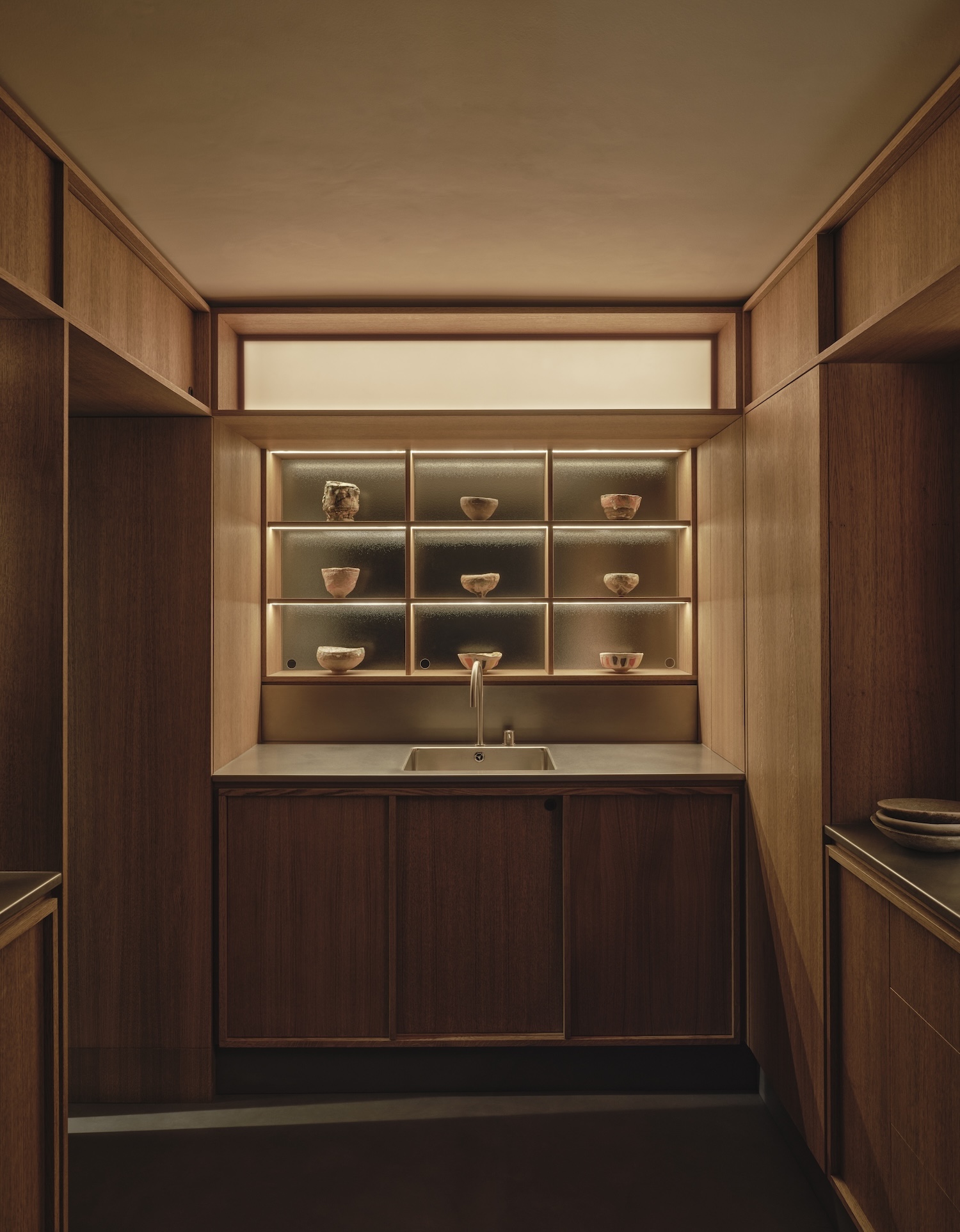
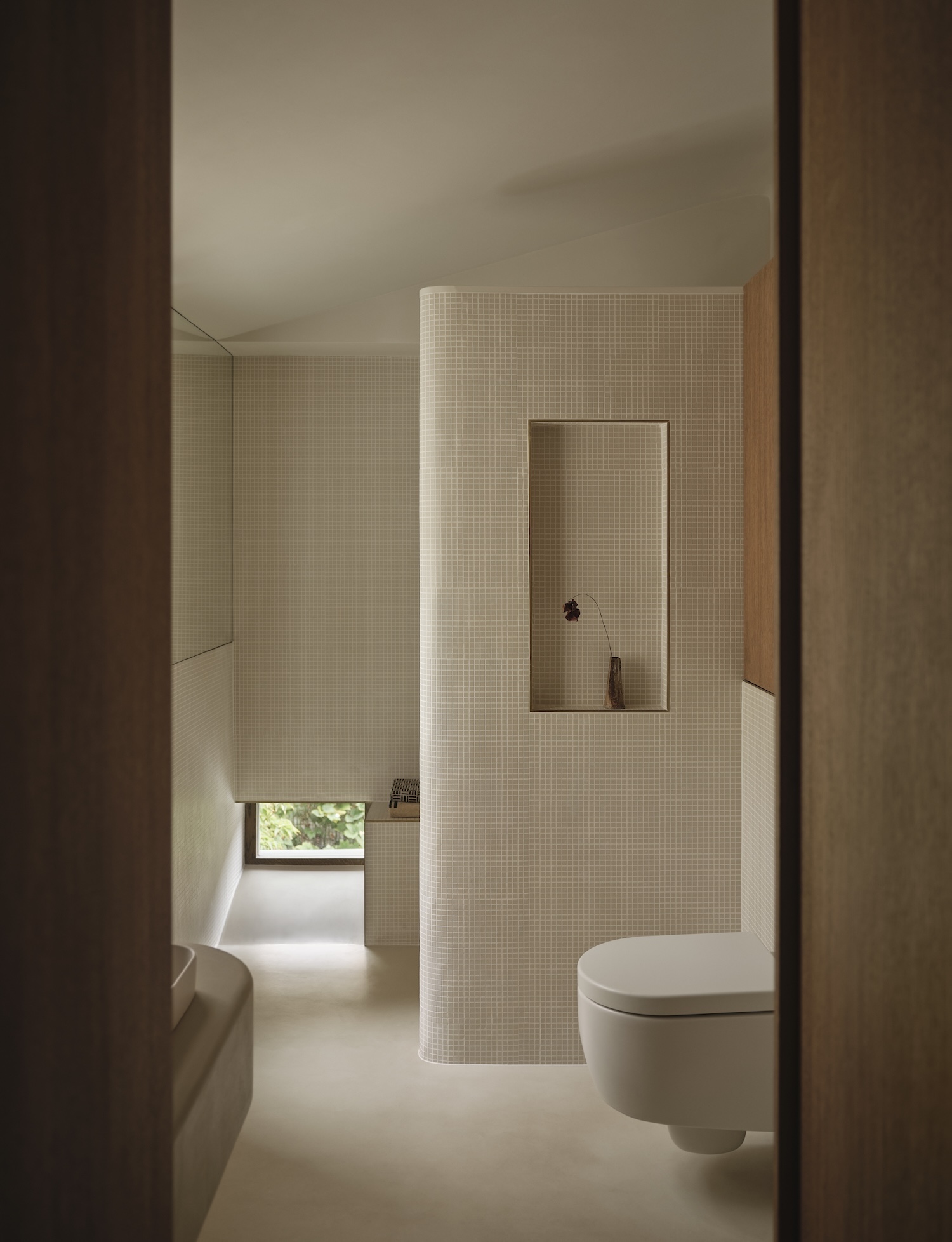
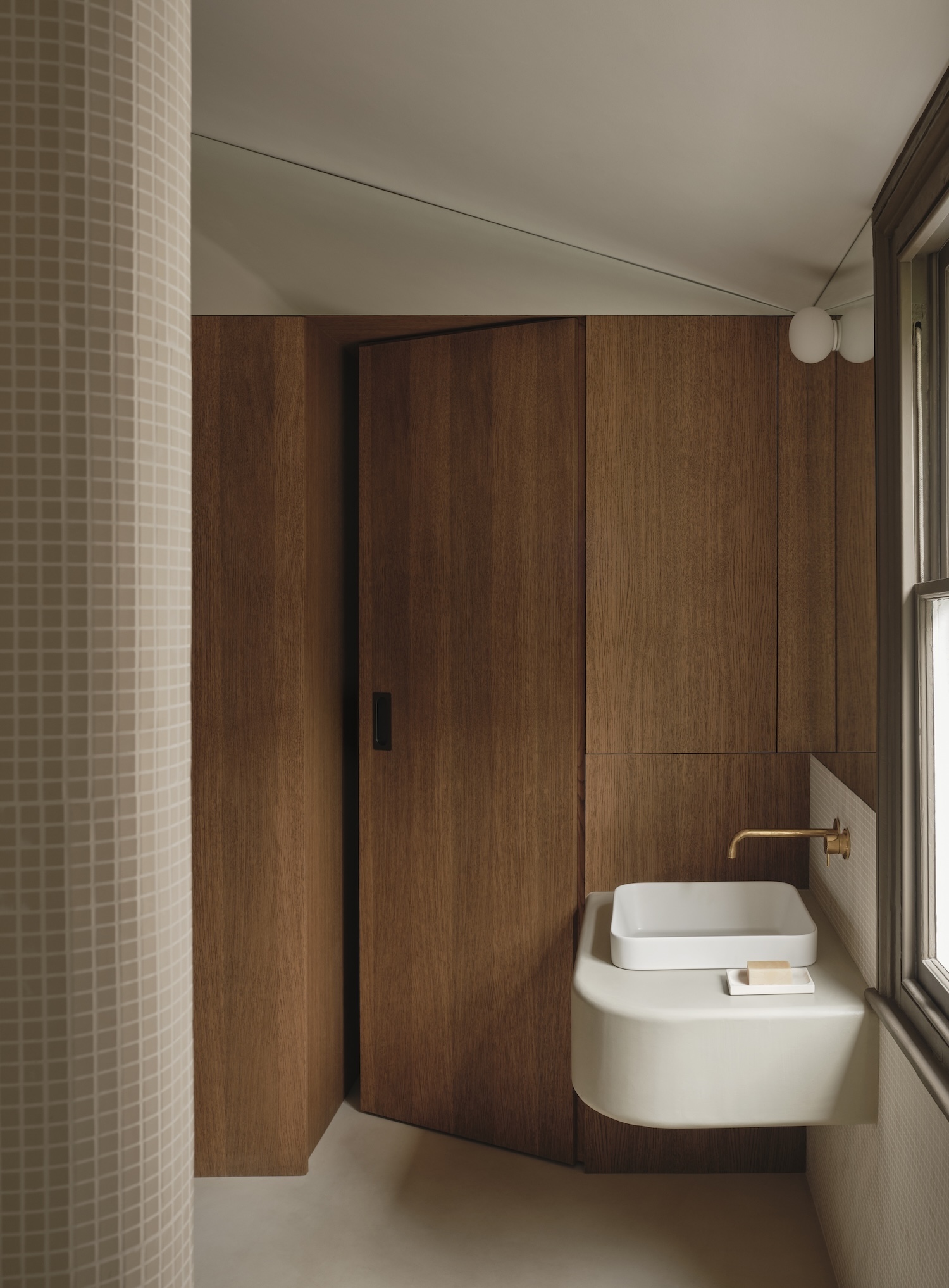
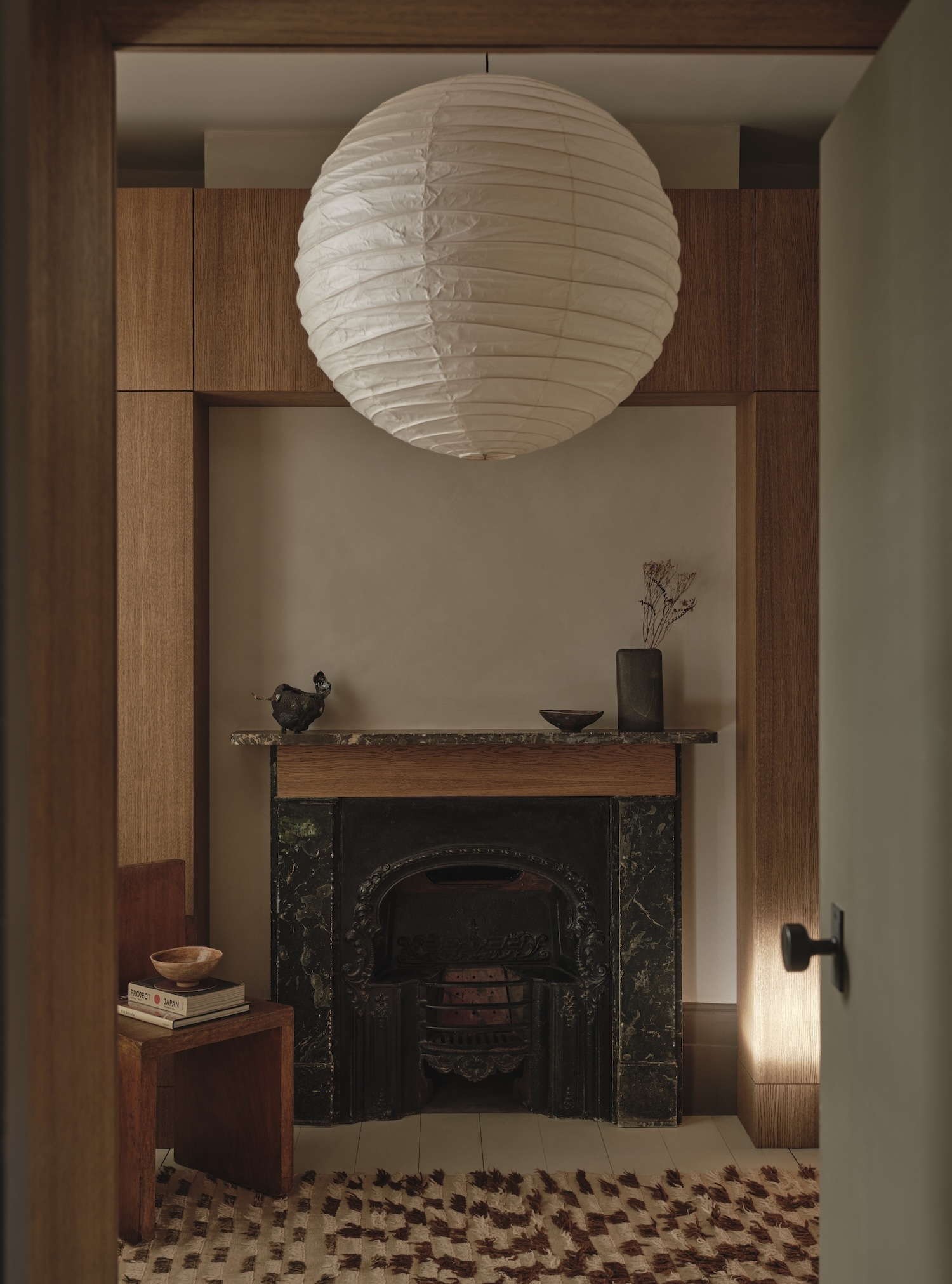
The material register is consistent throughout: smoked oak joinery fabricated by TG + Co., microcement floors that continue from the kitchen into the lowered courtyard, white mosaic tile, and unlacquered brass. Studio Hagen Hall treated these not as surfaces but as components that will develop their own character over time. The joinery, which envelops walls and ceilings across all three floors, is designed to be fully removable – fastened lightly enough within the Georgian structure that the original fabric would emerge intact if the interventions were ever removed.
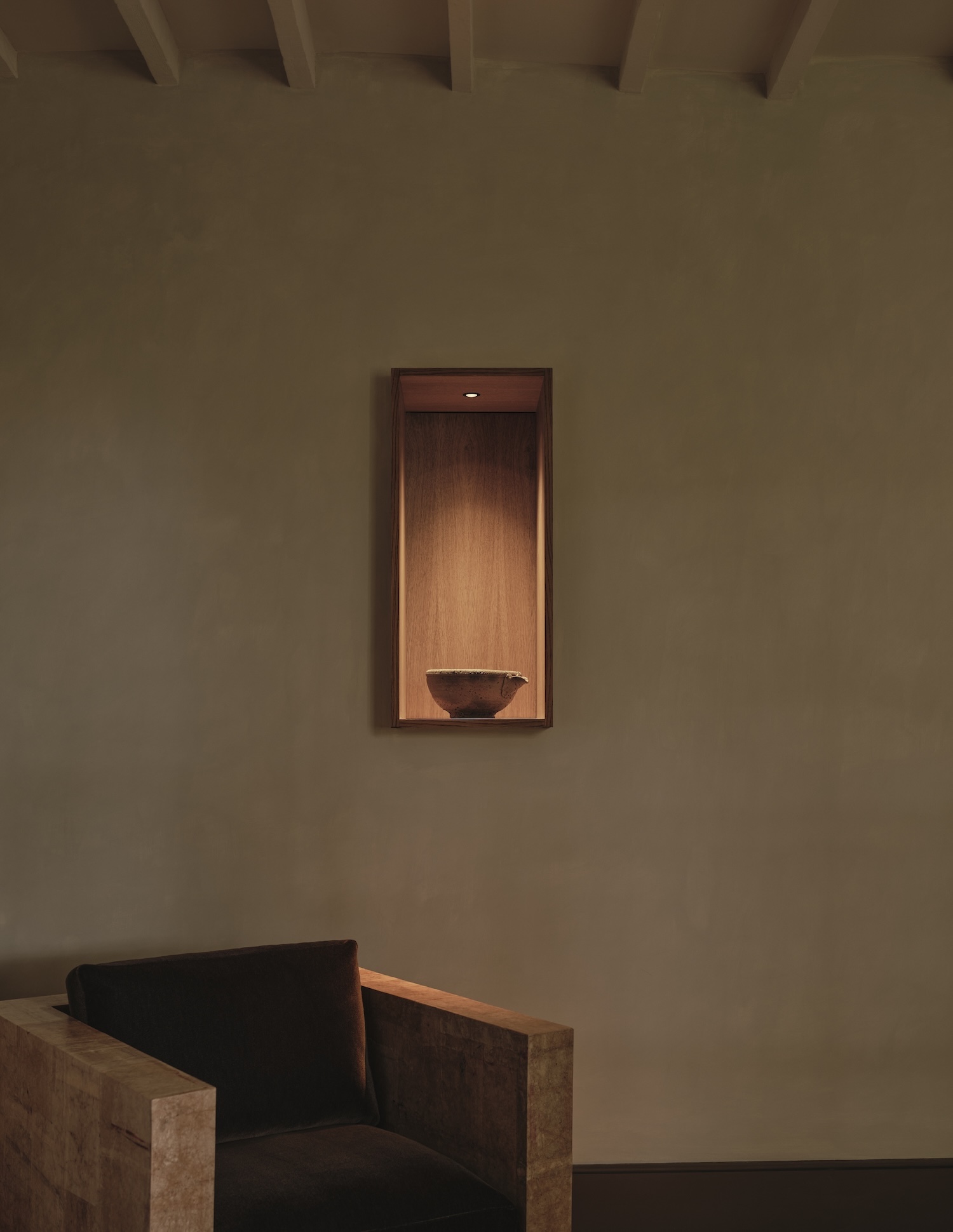
Japanese spatial concepts are applied at the threshold and the niche. A Genkan at the entrance – a stepped threshold for the removal of shoes – establishes the register immediately. In the lower-ground snug, a Tokonoma recess serves as a dedicated display niche for ceramics, while moveable textured glass panels divide the snug from the kitchen. Framed within a grid of shelving, the panels draw directly on Shoji screen conventions: filtering light, offering display space, and allowing rooms to communicate without fully opening to each other.
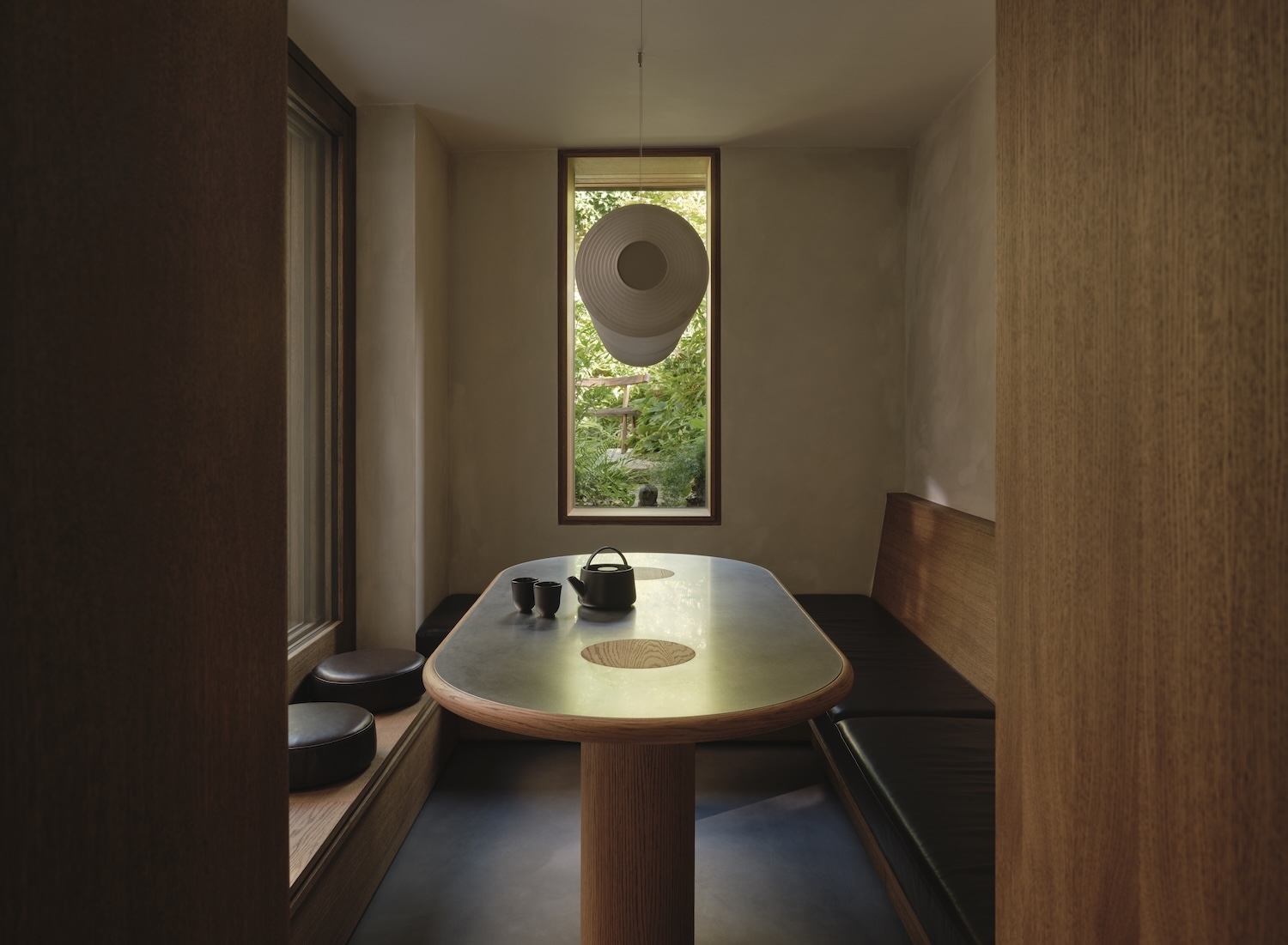
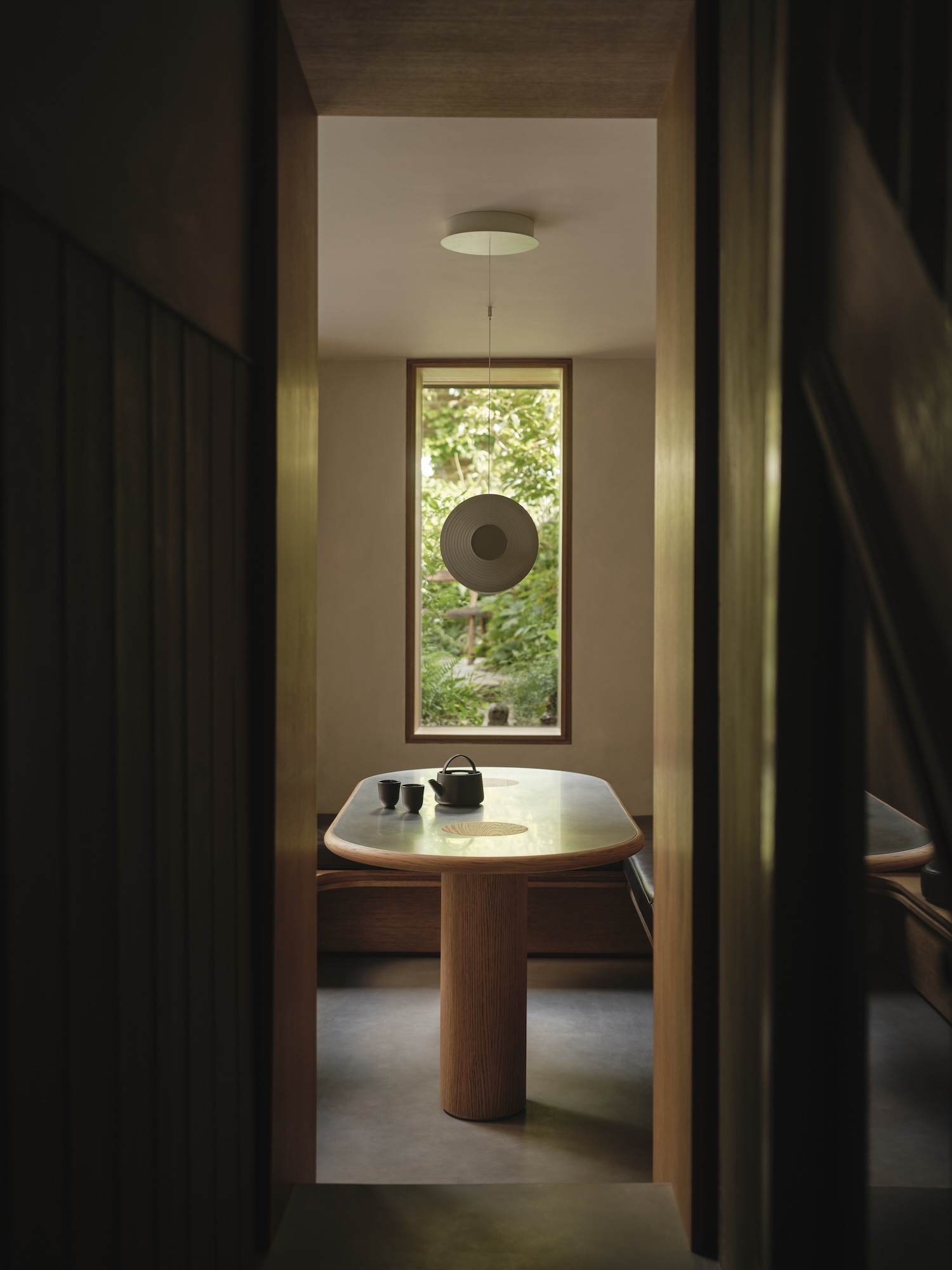
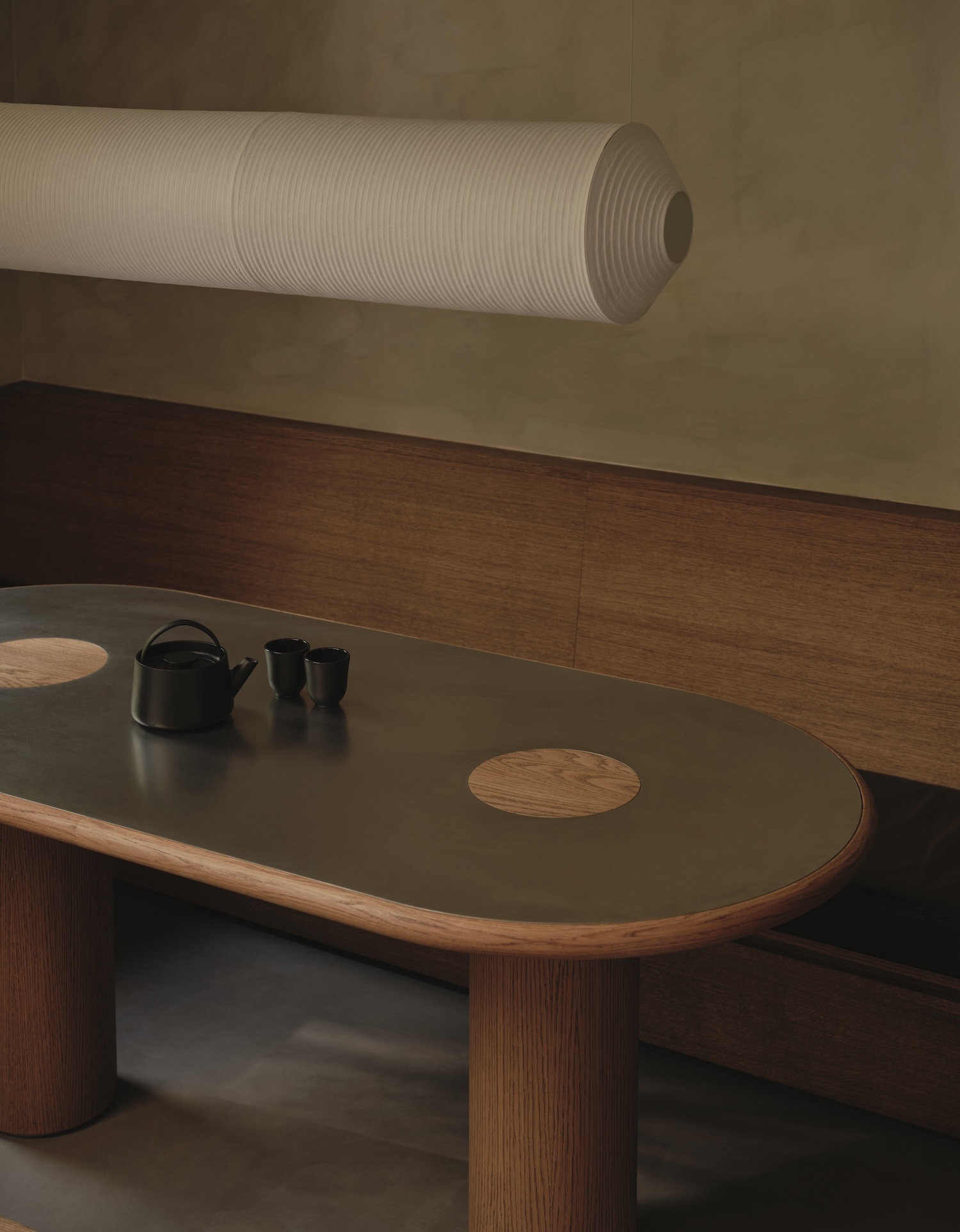
Studio Hagen Hall designated every kitchen surface for storage, preparation, or lit display for the clients’ ceramics collection. A custom glass cabinet set beneath the original Listed staircase offers additional display space on the route to the dining room. New openings spanning from integrated bench seating to ceiling frame the sunken dining area, placing diners within the garden’s canopy level. An oak dining table with a sanded stainless-steel top, one of the first pieces from a Studio Hagen Hall furniture collection launching in 2026, occupies the center.
Studio Hagen Hall retained the original skirting boards, architraves, and a previously concealed fireplace, conserving each lightly rather than fully restoring them – an acknowledgment of the building’s accumulated history rather than an attempt to erase it. Heion House holds its competing references – Georgian, Modernist, and Japanese – in a single coherent register through the consistency of its material choices and the discipline of having built nothing new.