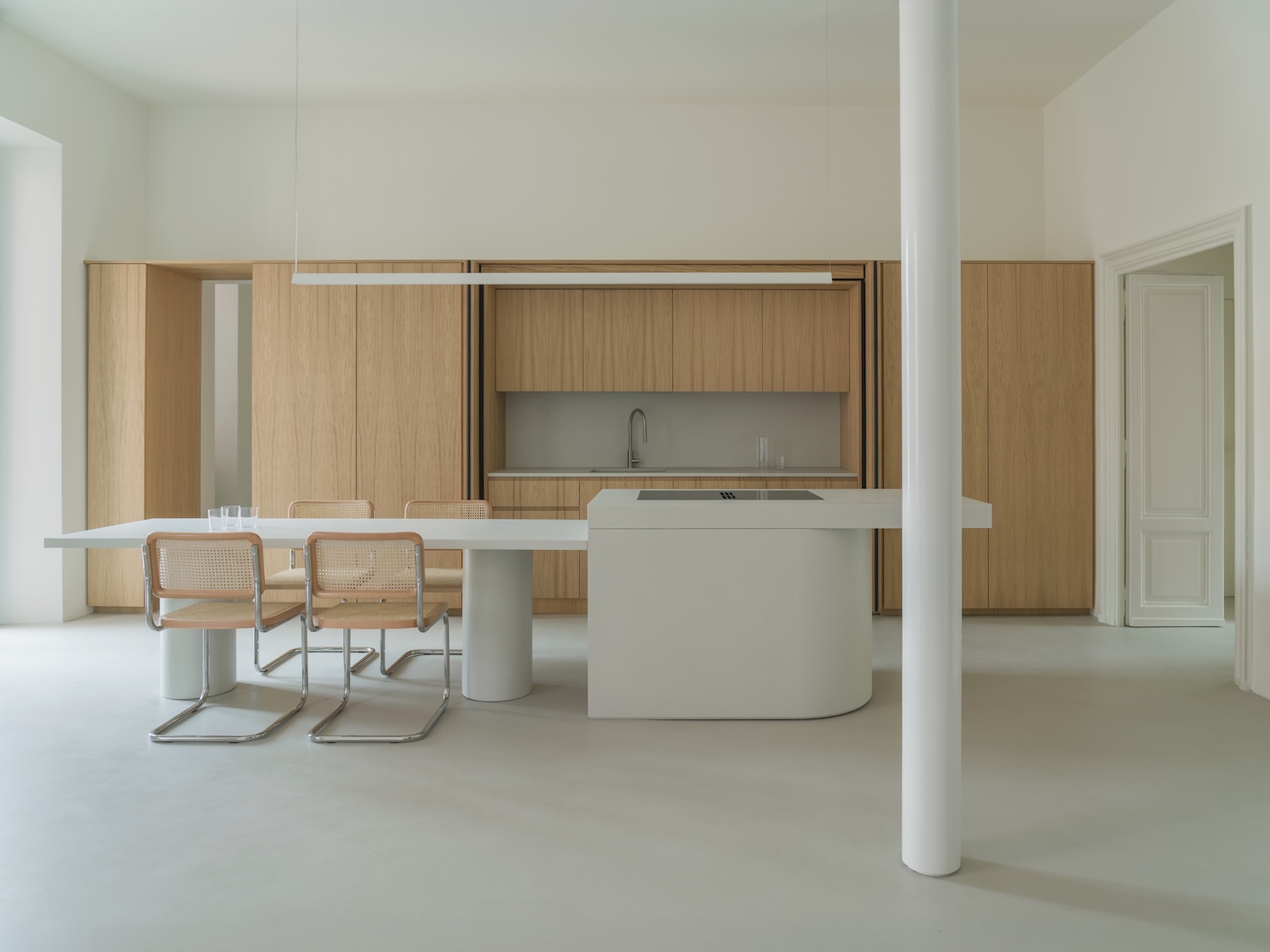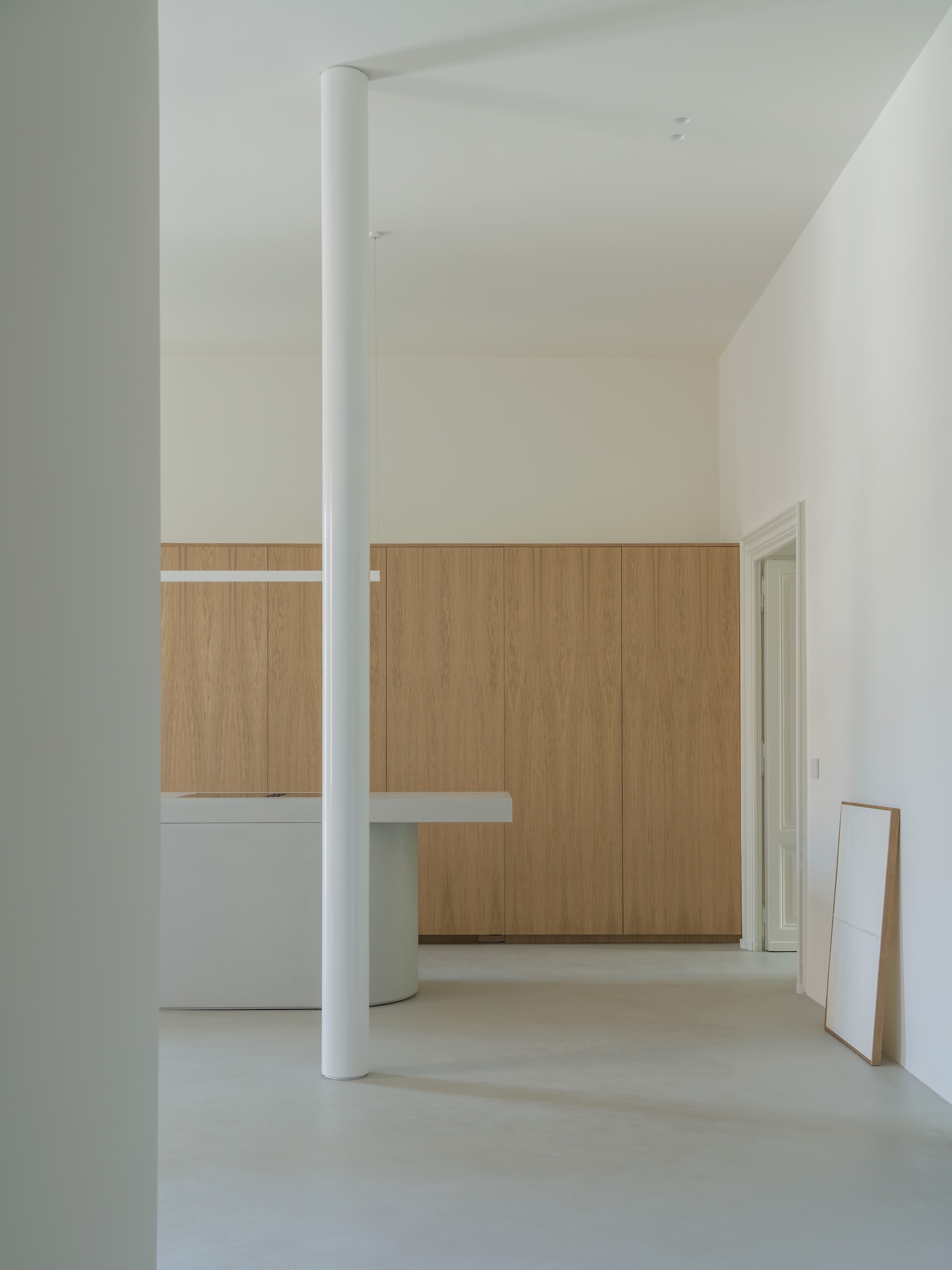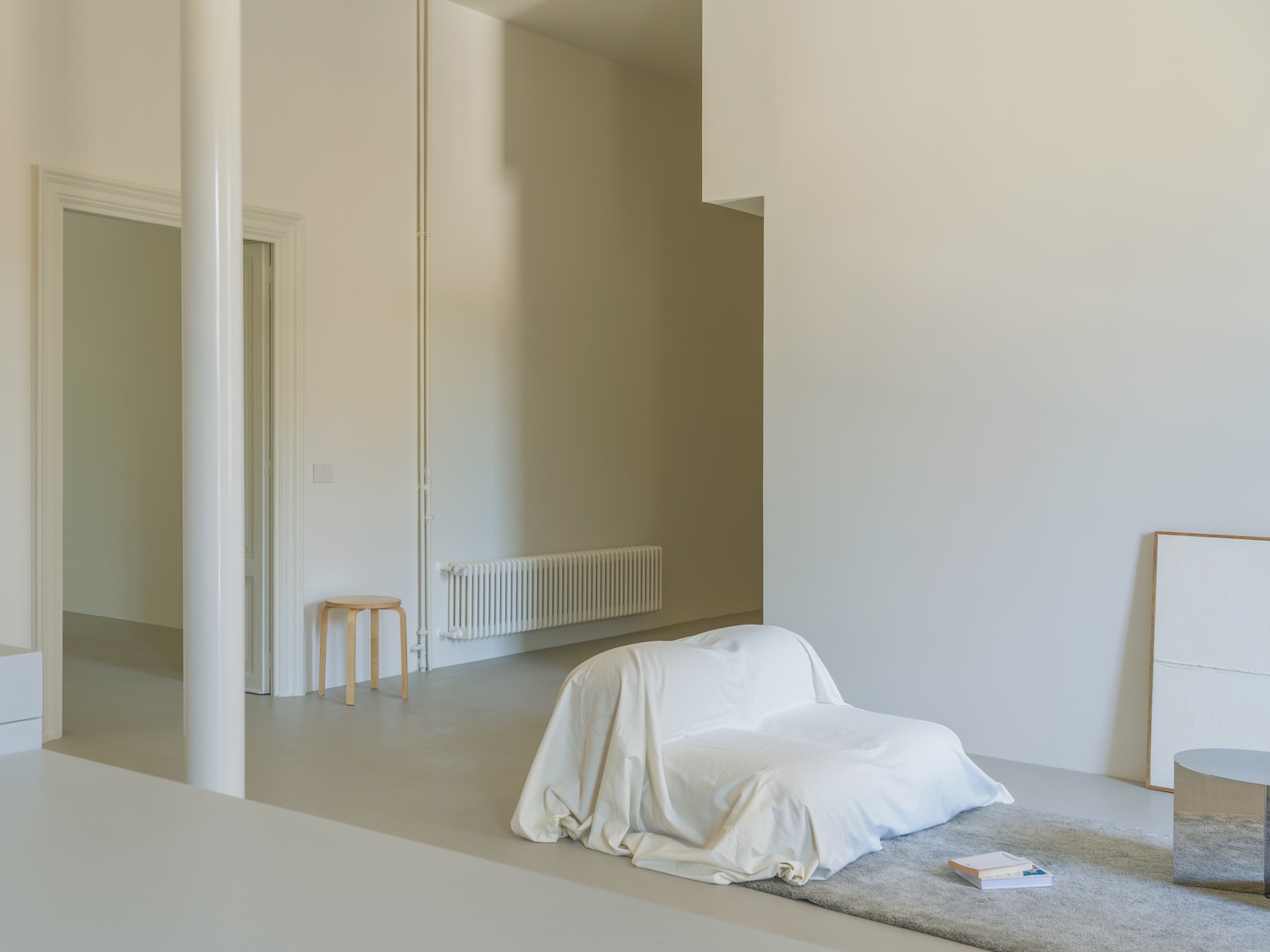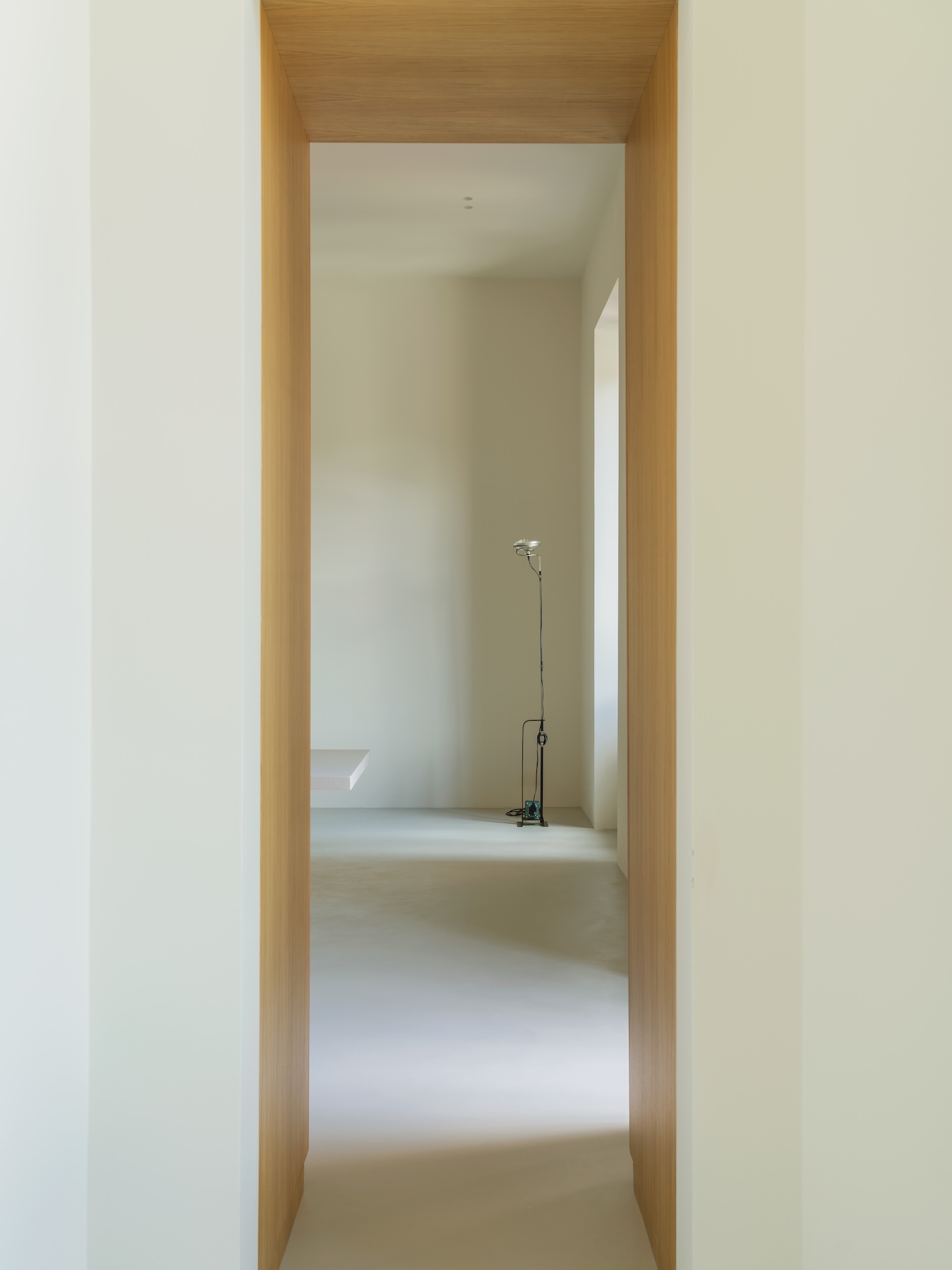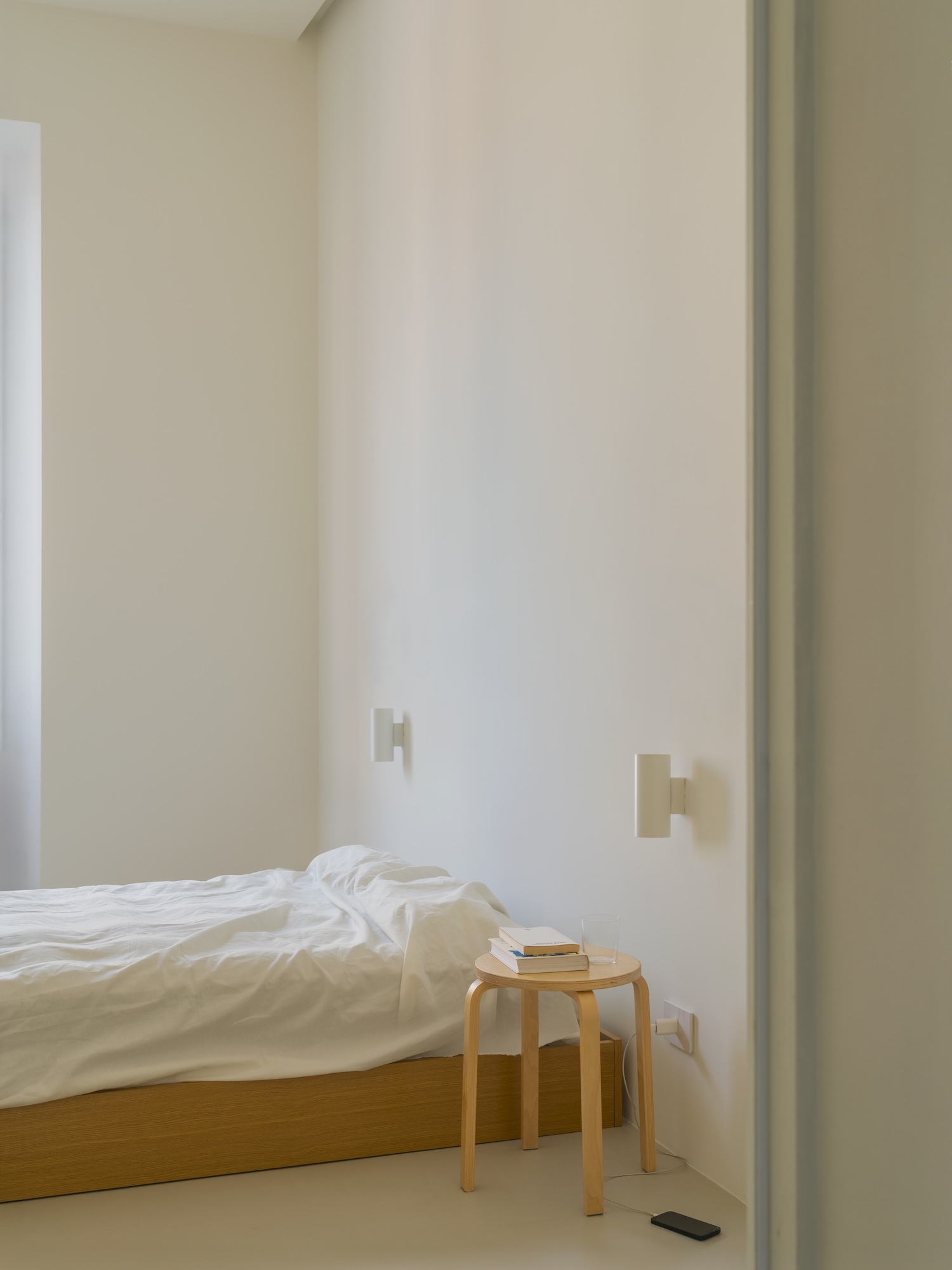
House with a White Column is a minimalist apartment located in Rome, Italy, designed by set architects. The project turns on a single act of discovery: during demolition, a heating system column emerged from the existing structure, and rather than concealing or working around it, the architects made it the organizing principle of the entire renovation. What began as a structural constraint became the apartment’s compositional anchor, the fixed point against which every other spatial decision is measured. This inversion of problem into premise reflects a particular sensibility in contemporary Roman practice, where the layered histories of existing buildings are treated as material to be revealed rather than erased.
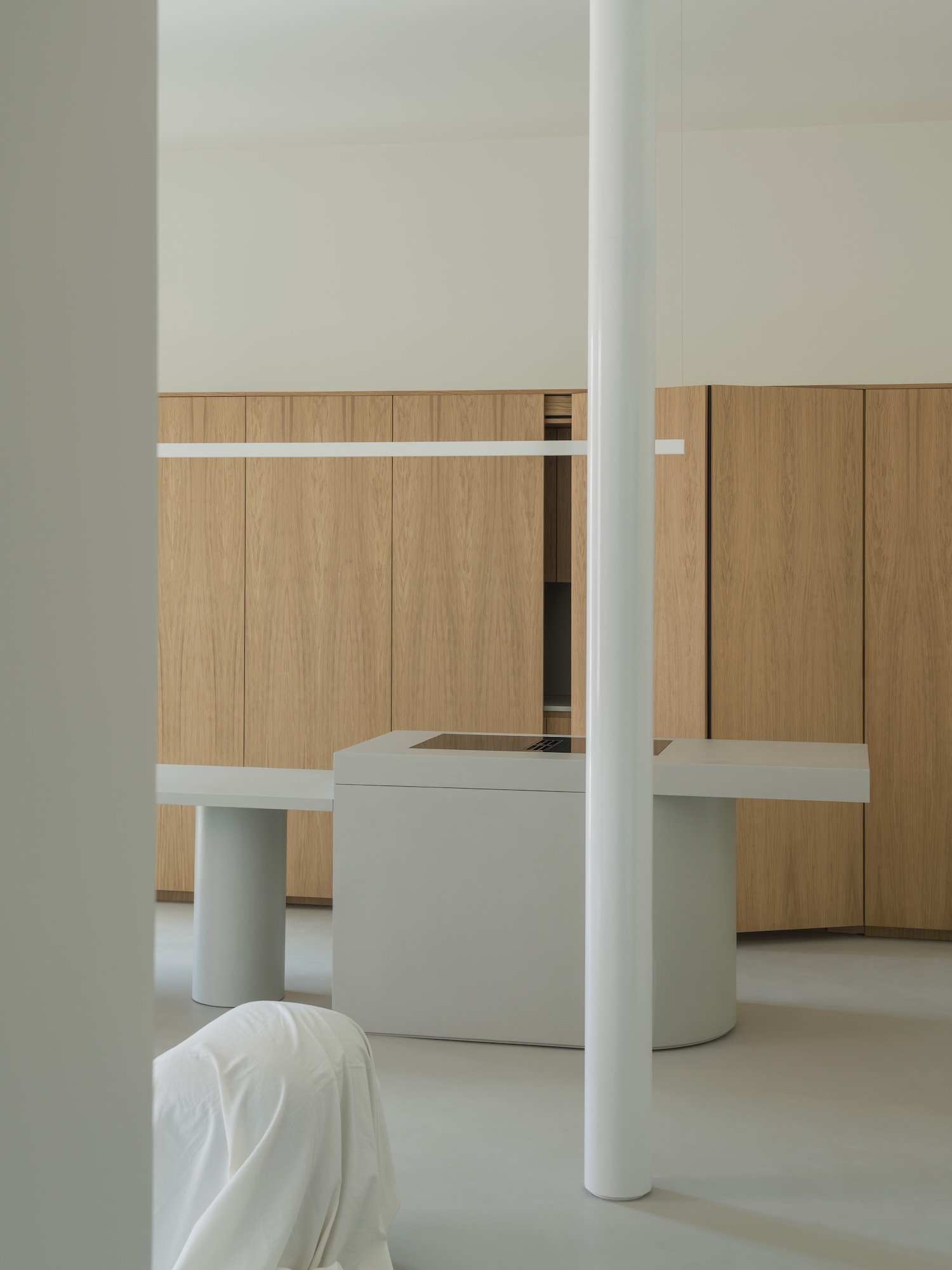
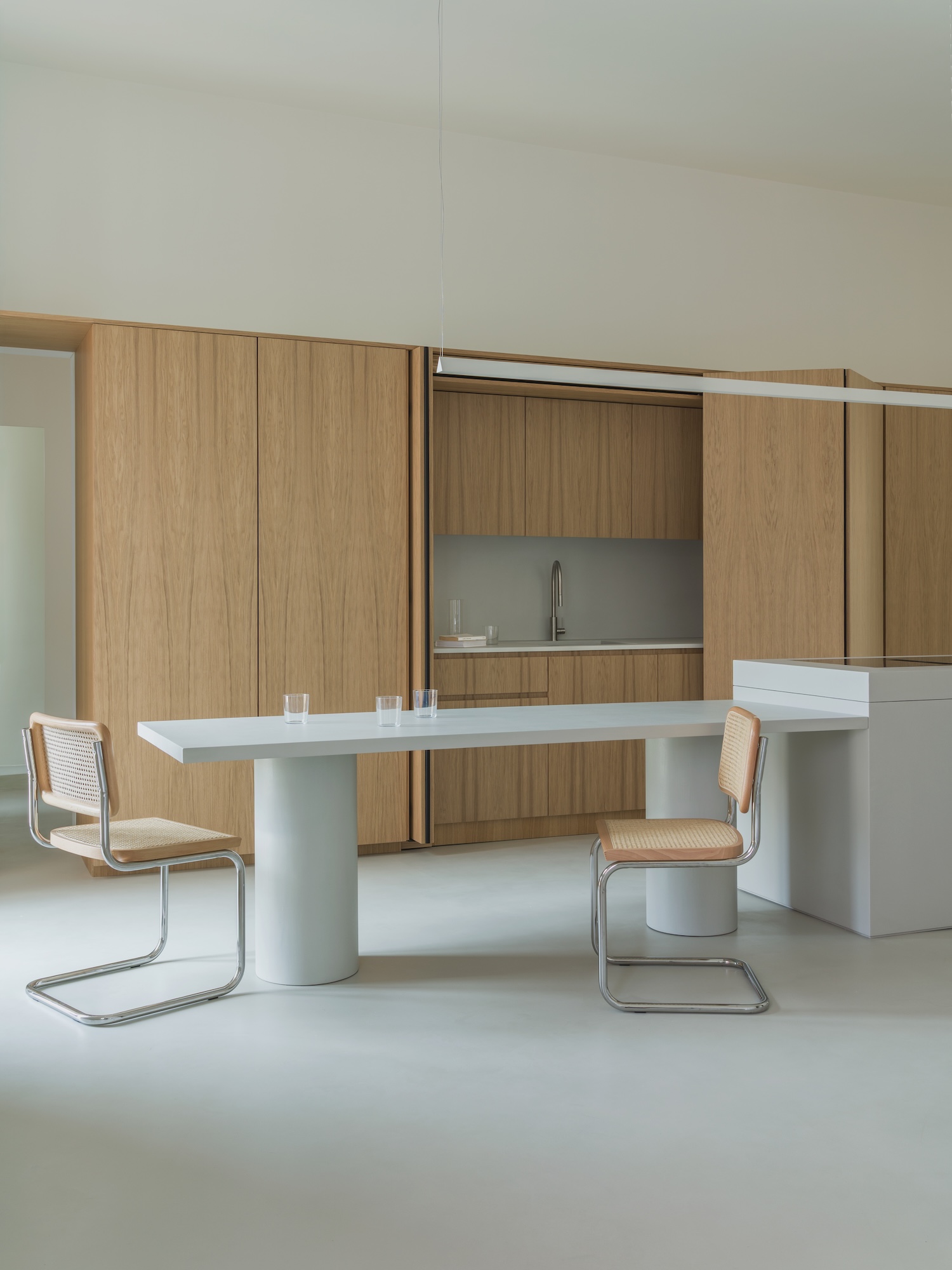
Conceived as a pied-à-terre near the Basilica of San Giovanni in Laterano, the apartment serves a family of international clients with a dual brief: a calm domestic retreat that can also accommodate temporary rental use. This flexibility shapes the plan at a fundamental level. The design consolidates the apartment’s permanent functions, the kitchen and the service core, into a defined zone, leaving the surrounding spaces open and adaptable. The kitchen itself, custom-made in natural oak, behaves less like a discrete room than a permeable infrastructure that threads through the apartment and provides access to the service areas. A system of concealed doors allows its working components to disappear entirely when not in use, so the kitchen recedes into the architecture and reads as quiet joinery rather than appliance.
At the center of the living area sits a monolithic microcement island with an integrated table, the gravitational center of daily life. The decision to merge preparation surface and dining surface into one continuous mass reinforces the project’s logic of essential elements doing multiple kinds of work. Nothing is added that could be absorbed into something already present.