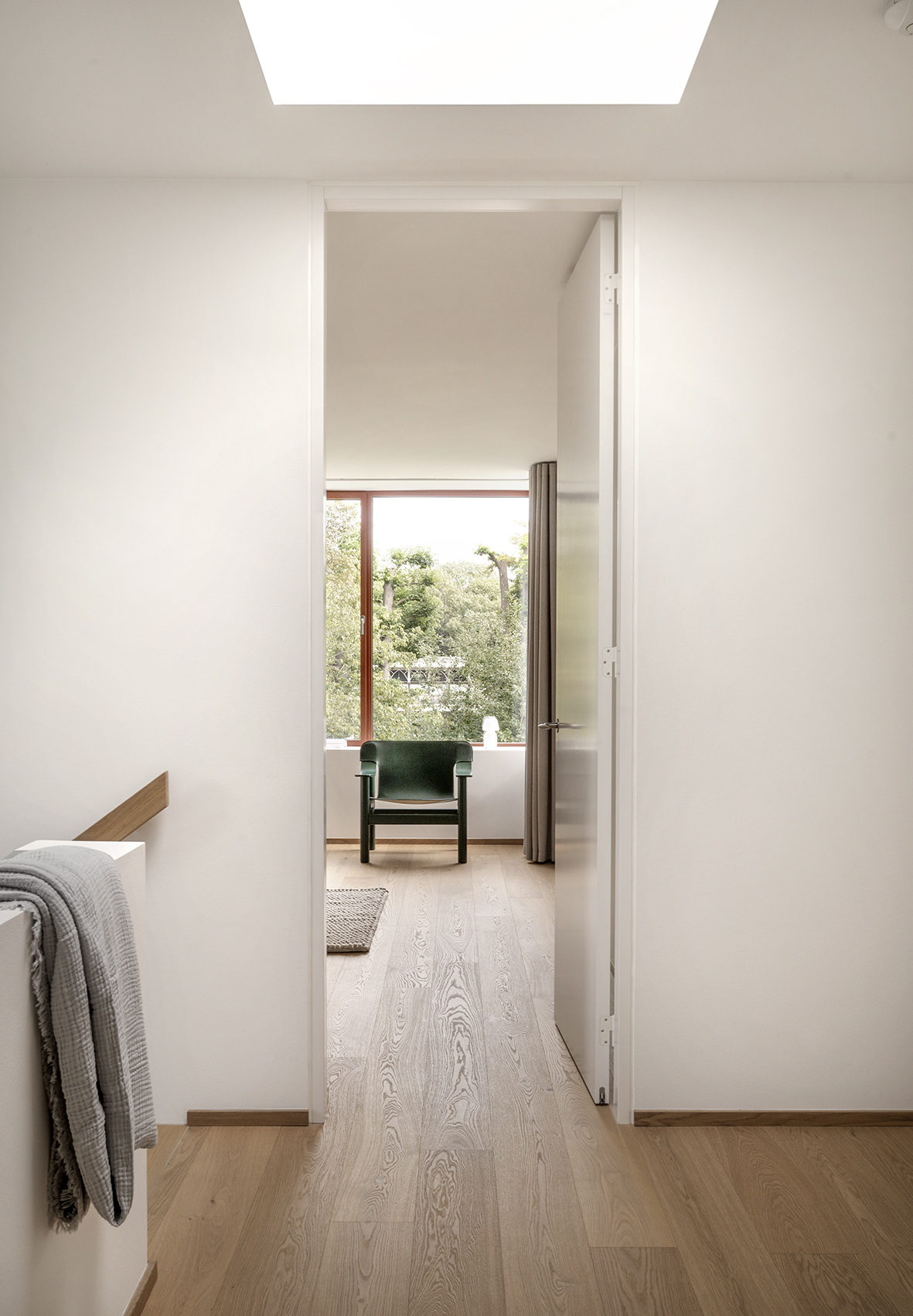
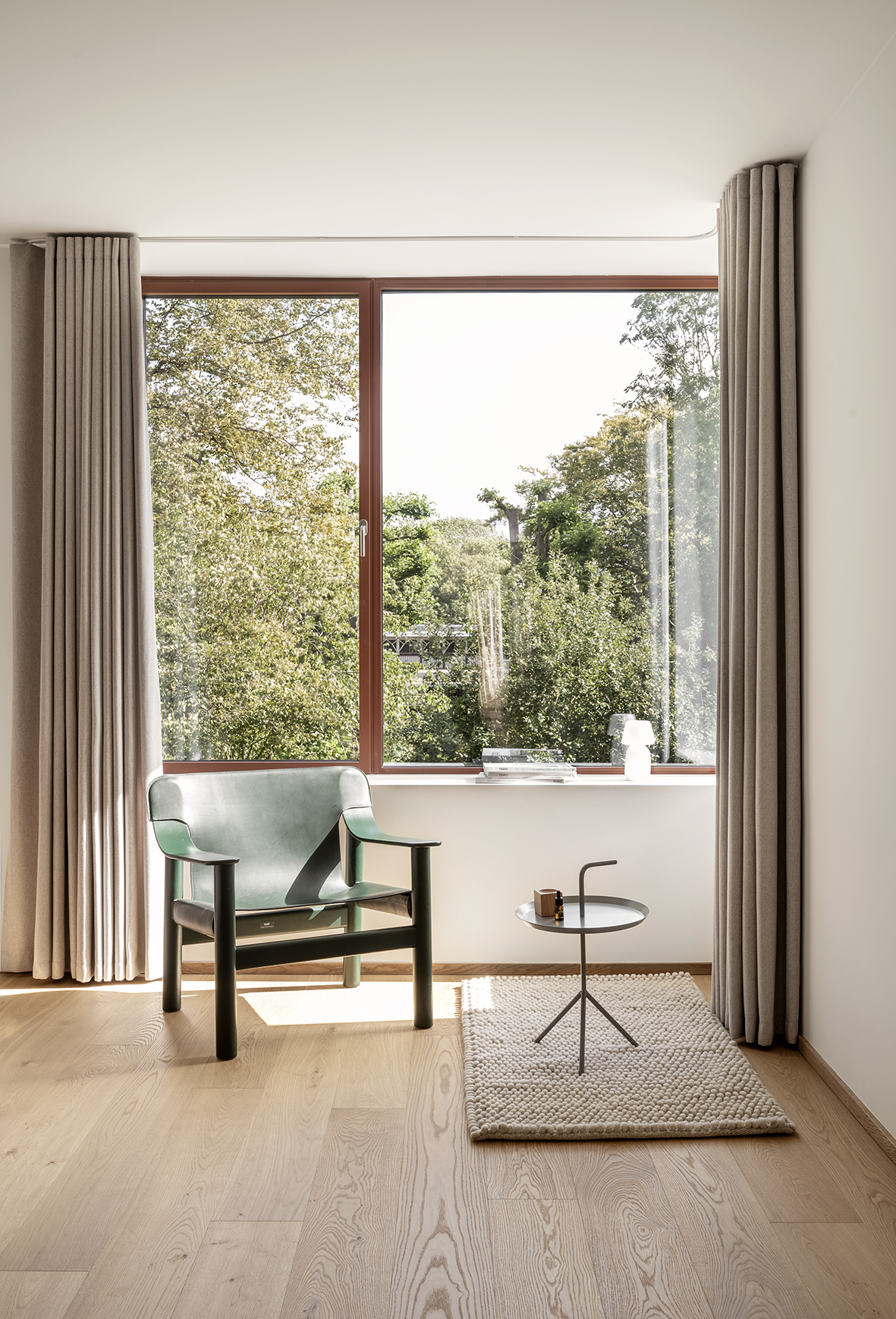
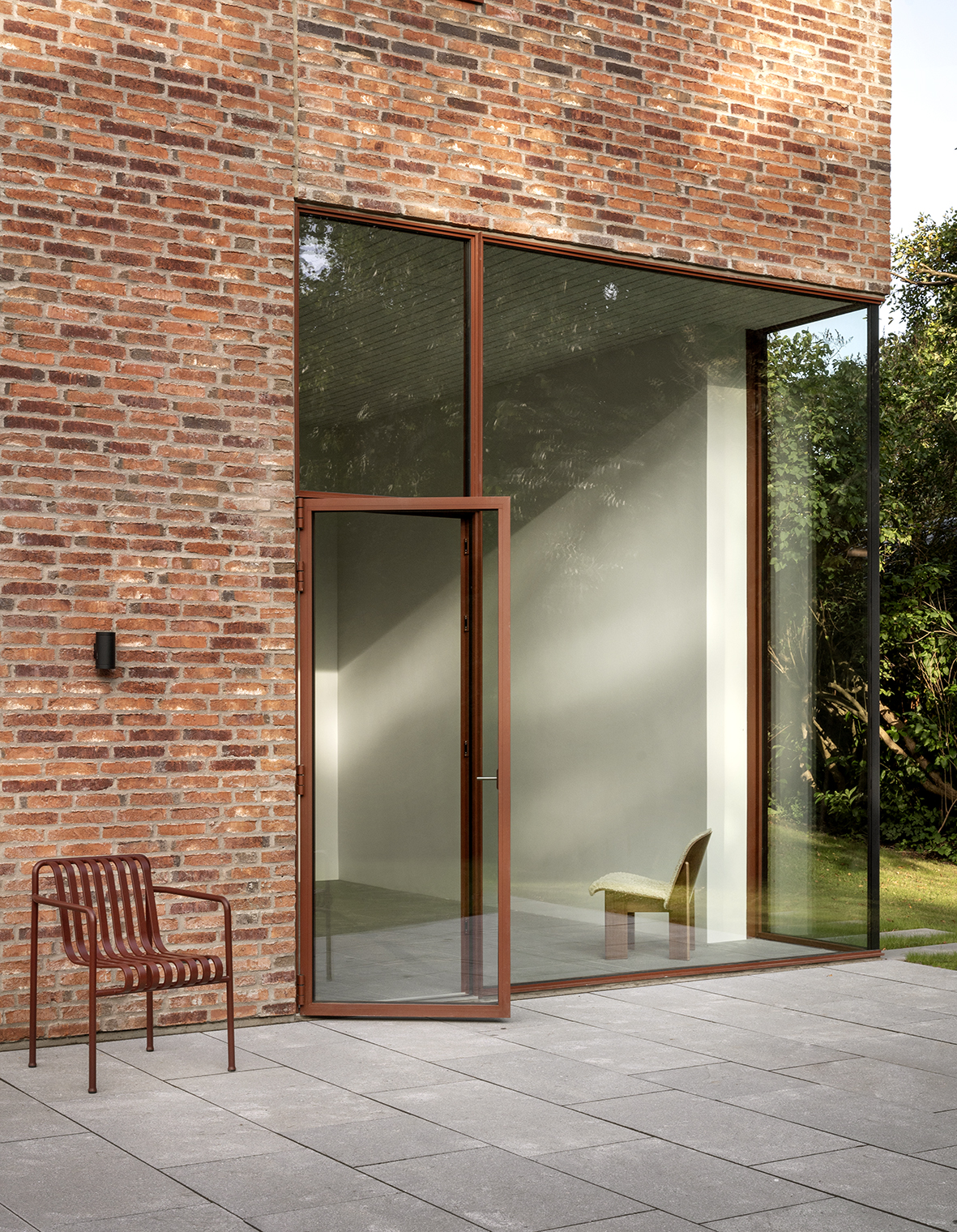
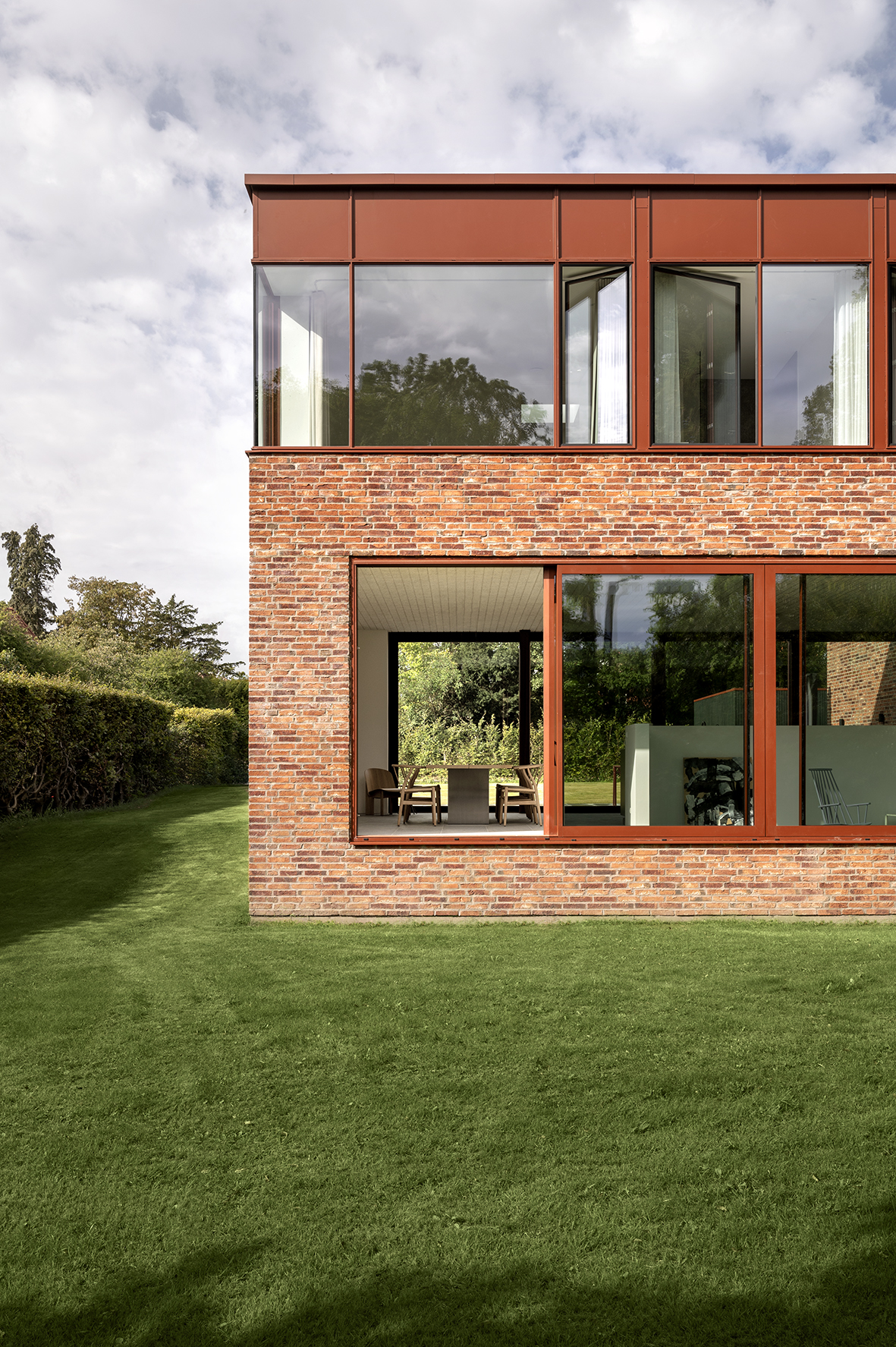
Kildeskovsvej is a minimalist residence located in Gentofte, Denmark, designed by Valbæk Brørup Arkitekter. This villa in a residential area characterized by large early-twentieth-century red brick two-story single-family houses demonstrates how hyper-modern architecture can reference historical context while establishing distinct contemporary identity. The sloping plot bordering a small park with Kildeskovshallen swimming pool to the north informs the design’s multi-level spatial organization and strategic window placement framing park views and old linden trees.
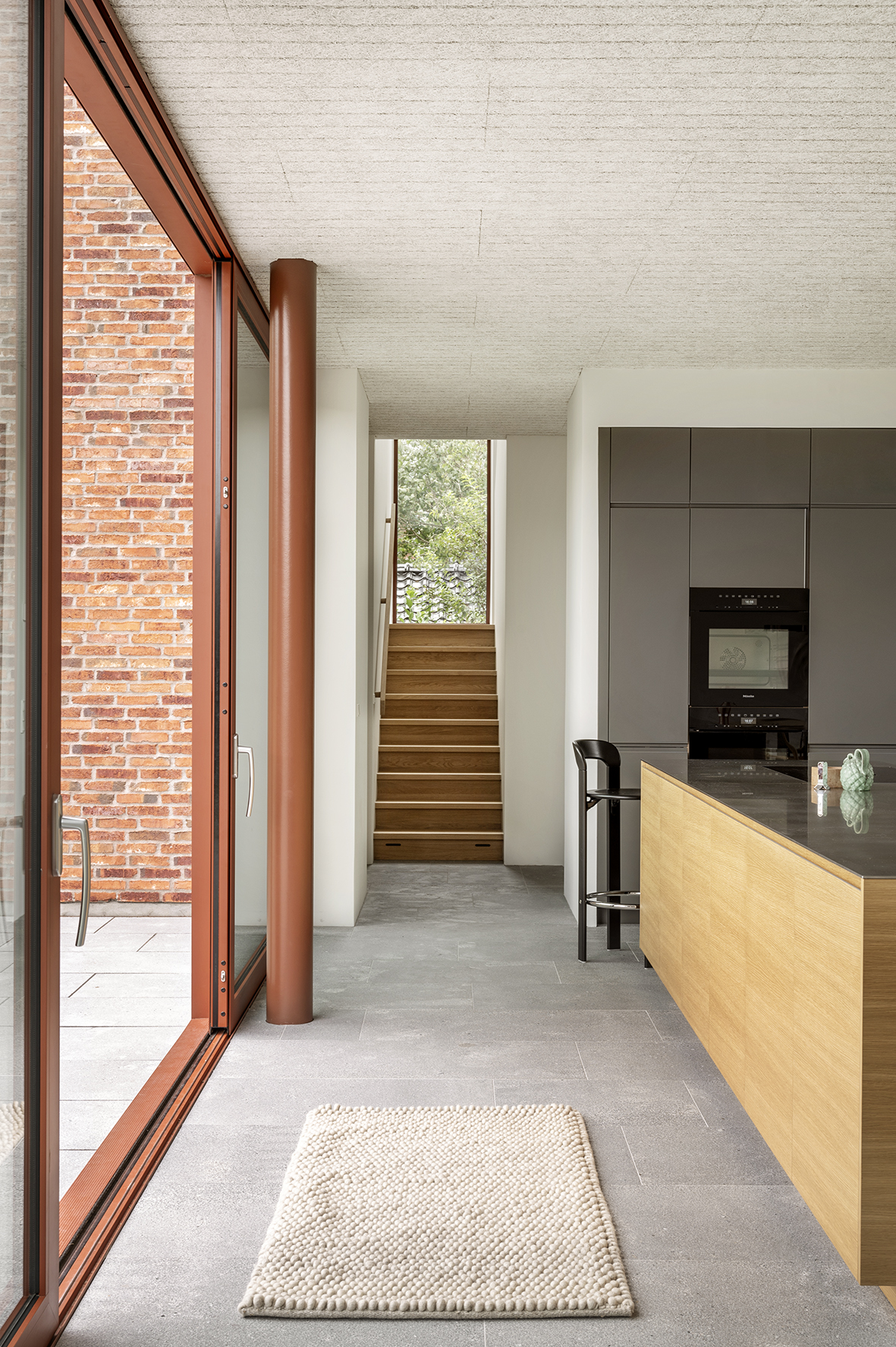
The different levels stemming from plot slope from road down to park create varied zones and spatial experiences articulating spatial narrative throughout the house. This sectional strategy demonstrates how topographic challenges can generate interior spatial variety rather than requiring extensive site leveling that would eliminate natural grade variations. The T-shaped plan positioned centrally divides garden into north-facing private area toward park and sunny south-facing area toward road with social functions on ground floor and private rooms on first floor.
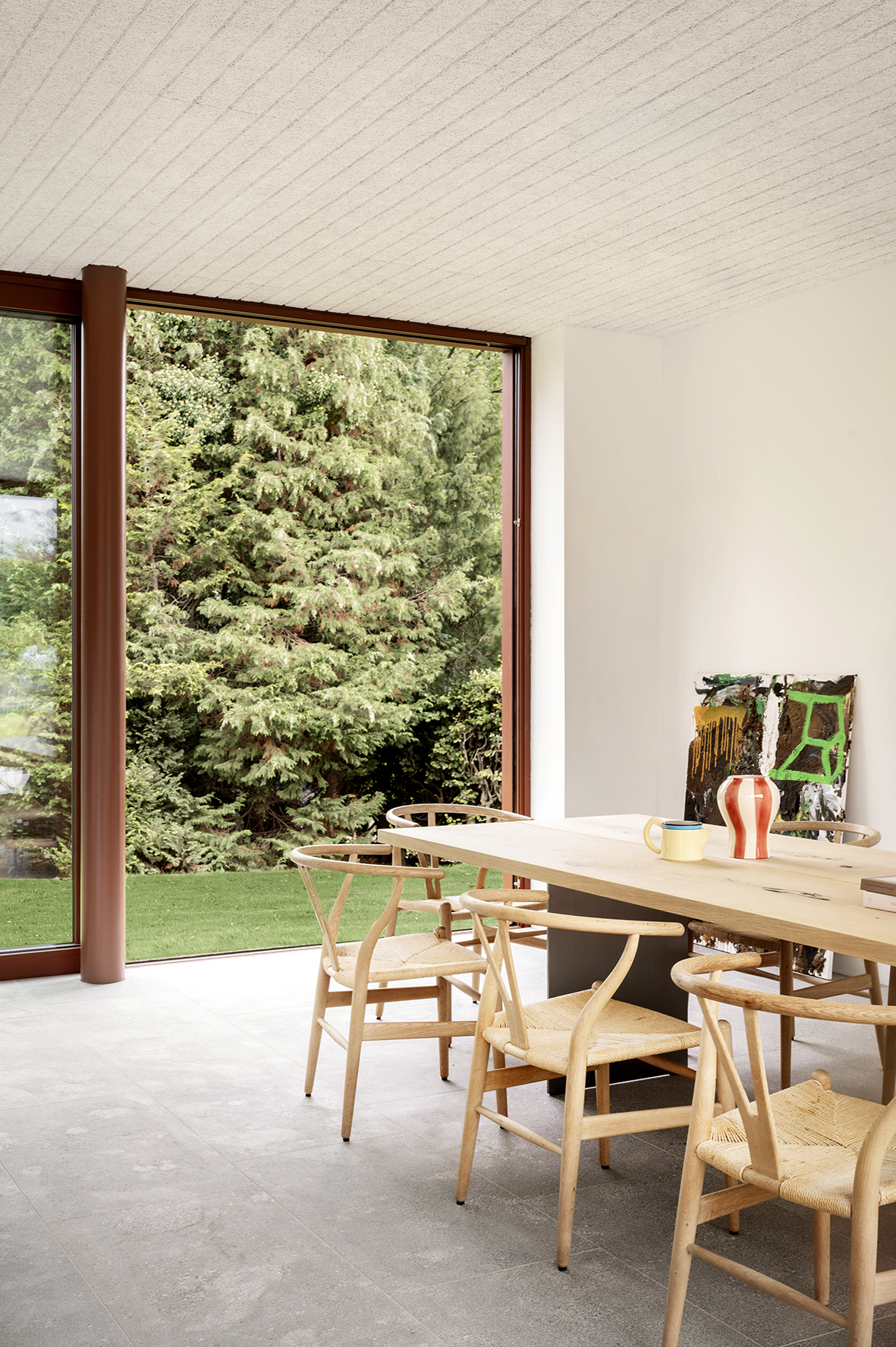
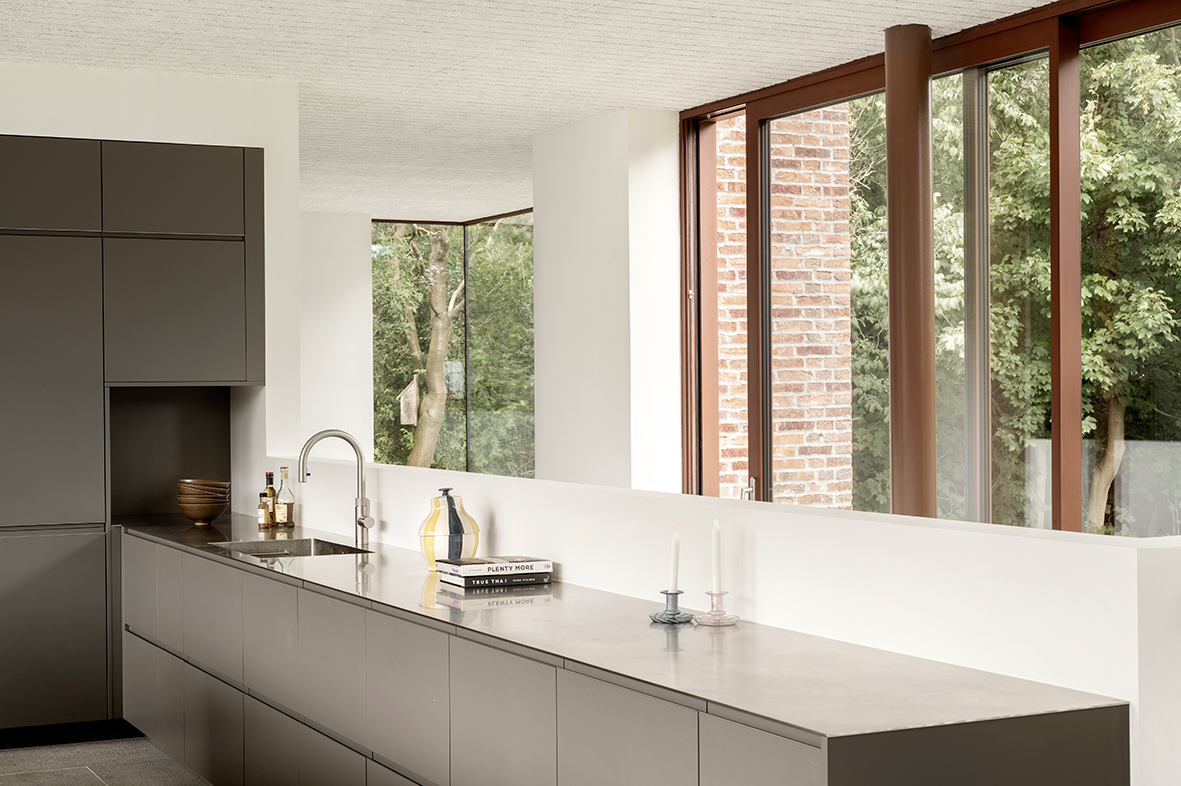
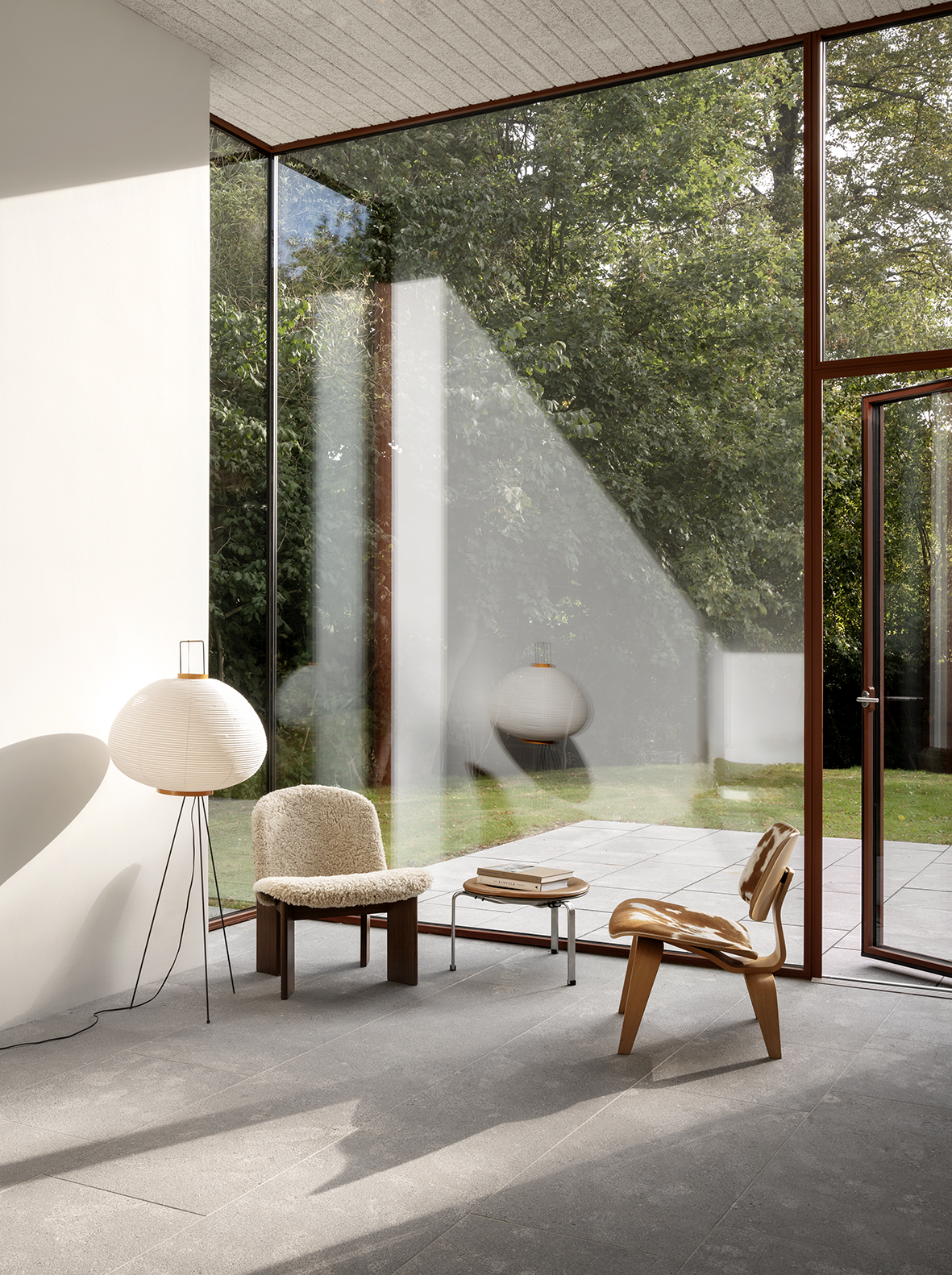
The transverse house length establishes central zone containing kitchen and dining room in large well-lit transparent space with views to both garden areas. The living room occupies more secluded private northwest corner position, square-shaped and lowered four steps providing high ceiling and special atmosphere with close garden and park contact. This spatial hierarchy demonstrates how floor level variations can create intimate scales within generous volumes while maintaining visual connections.
The circuit between social rooms starting from dining-kitchen through lowered narrow tea room with low balustrade creates spatial sequence where one can sit undisturbed gazing into garden. This circulation strategy treats movement as spatially contrasting narrative with different moods tailored to room functions and unique plot character, reflecting sophisticated understanding of how varied spatial conditions affect occupant experience and building use patterns.
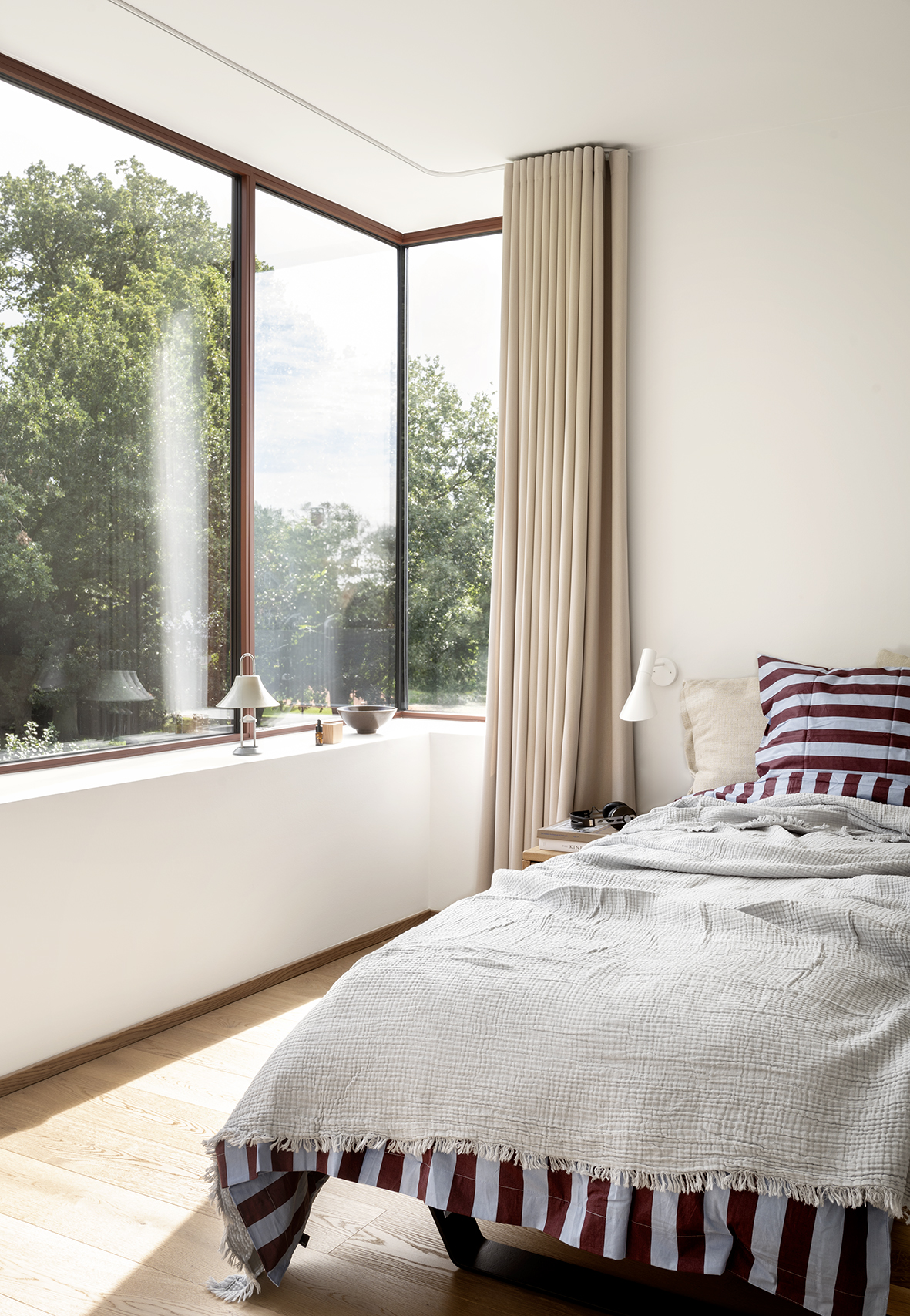
The dissolved corners and sky-oriented openings in the mass dissolve building’s massive volume creating distinct external sculptural form. Ceiling-height windows everywhere strengthen sky and landscape connections while corner windows dissolving uniform views create extra freedom sense and nature contact. This fenestration approach maximizes visual permeability while the terracotta-colored window frames matched to bricks become natural building volume components internally functioning as significant design elements connecting interior and exterior.