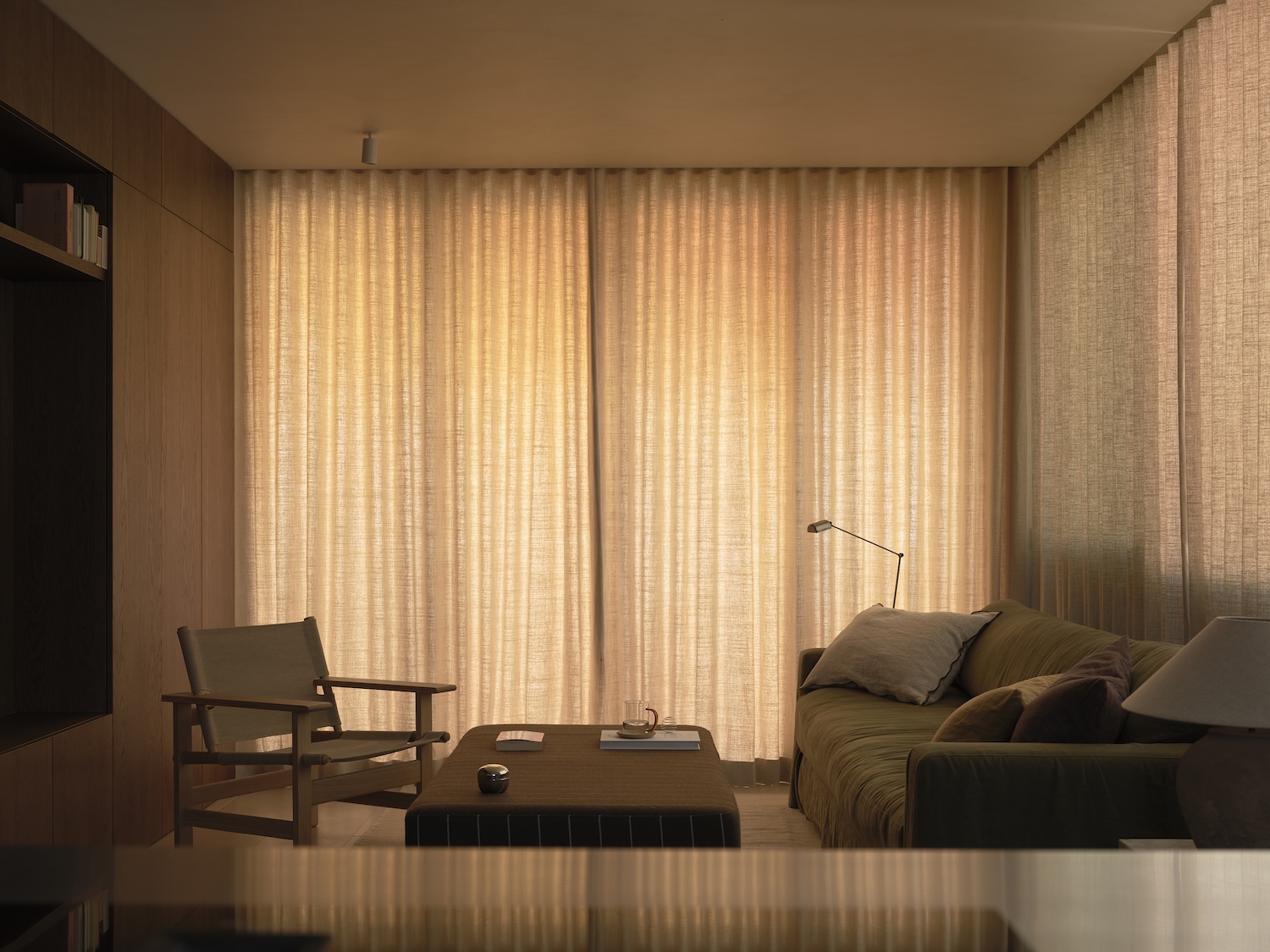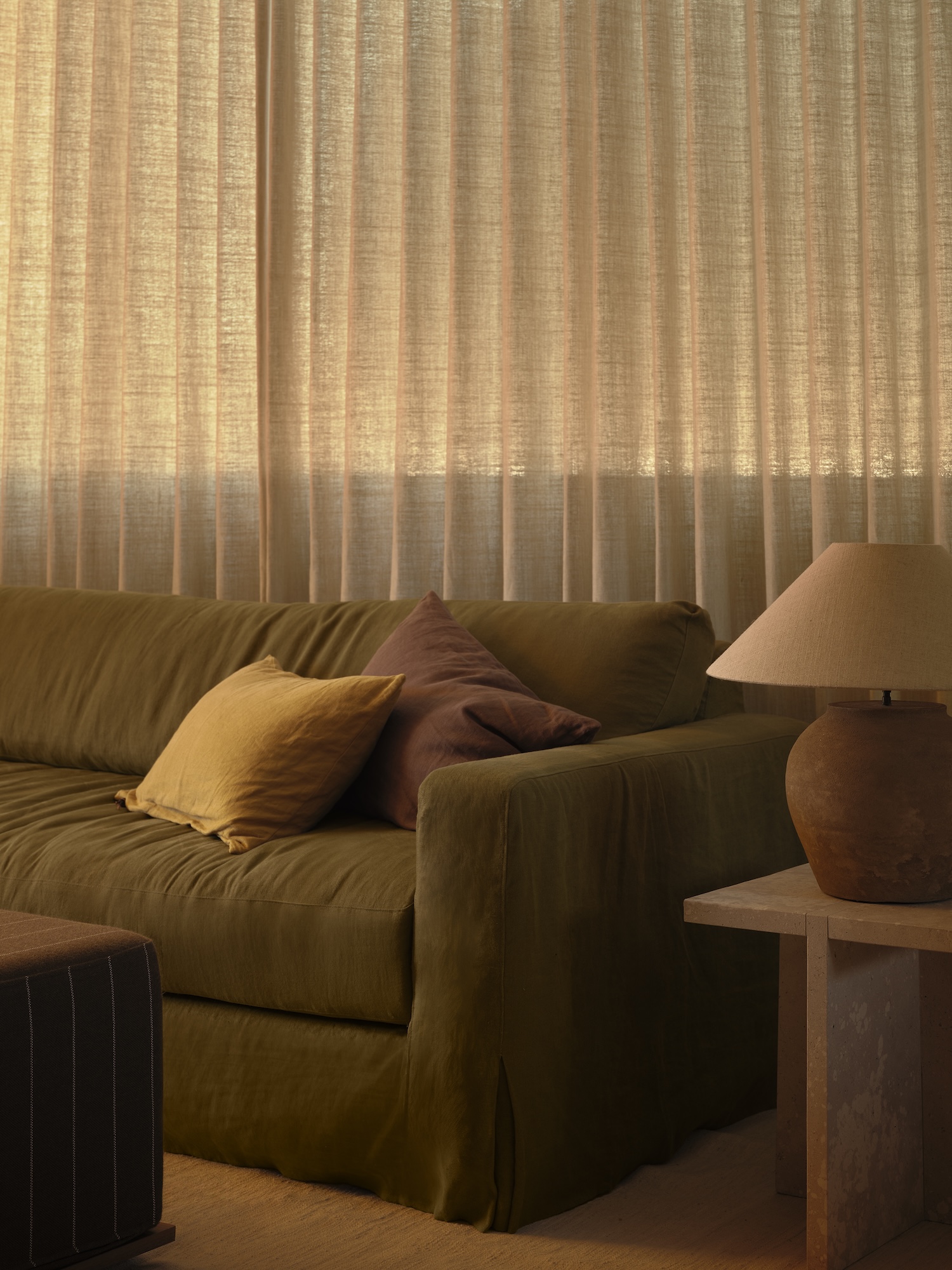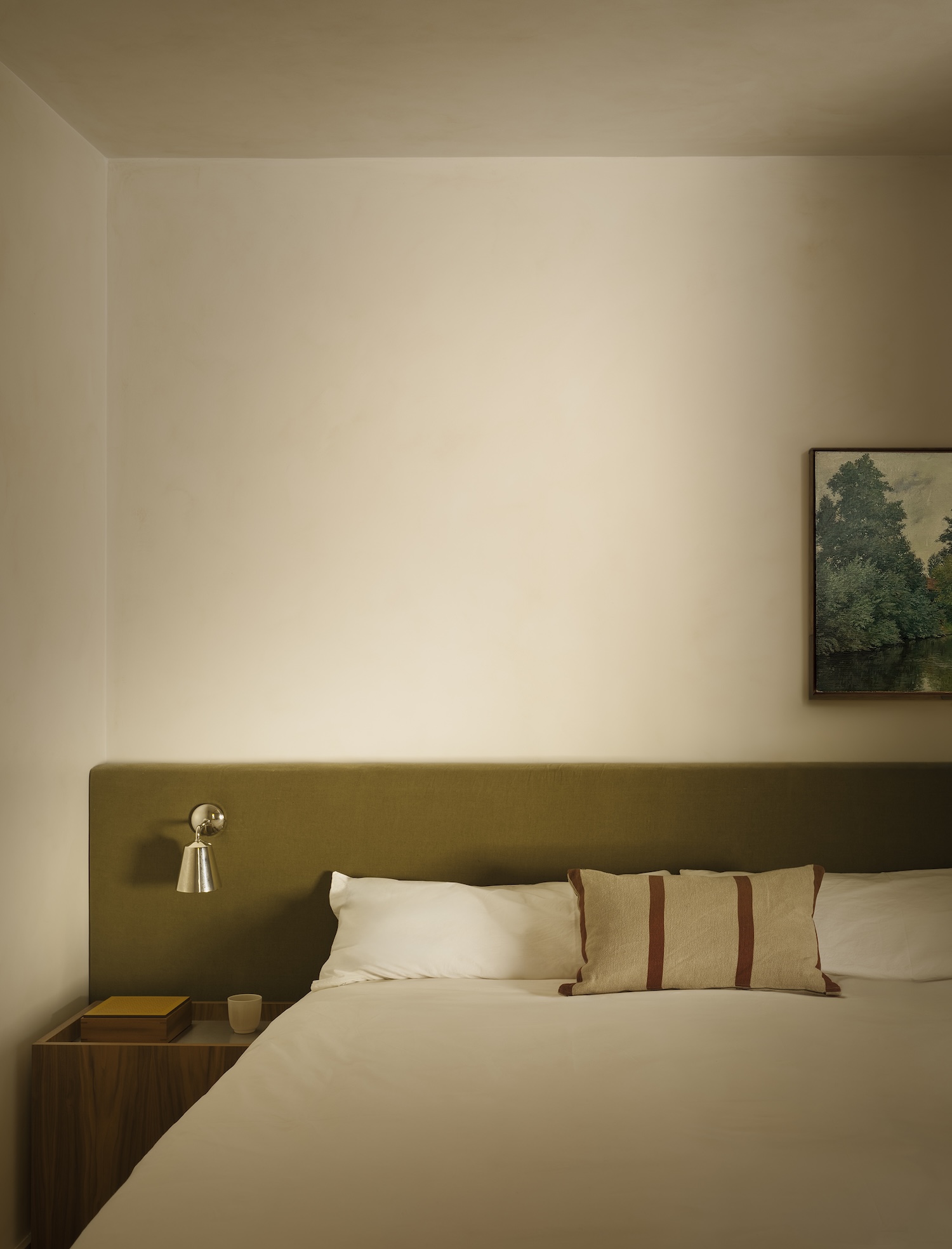
Marbella Apartment is a minimalist apartment located in Marbella, Spain, designed by Febrero Studio. The coastal interior has a well-worn vocabulary of white walls, pale woods, rattan and bleached linen, a language designed to evoke a fortnight in August rather than a Tuesday in February. Febrero Studio’s renovation of this apartment refuses that vocabulary entirely, replacing seasonal lightness with warmth, density and the material weight of a house meant to be lived in every month of the year.
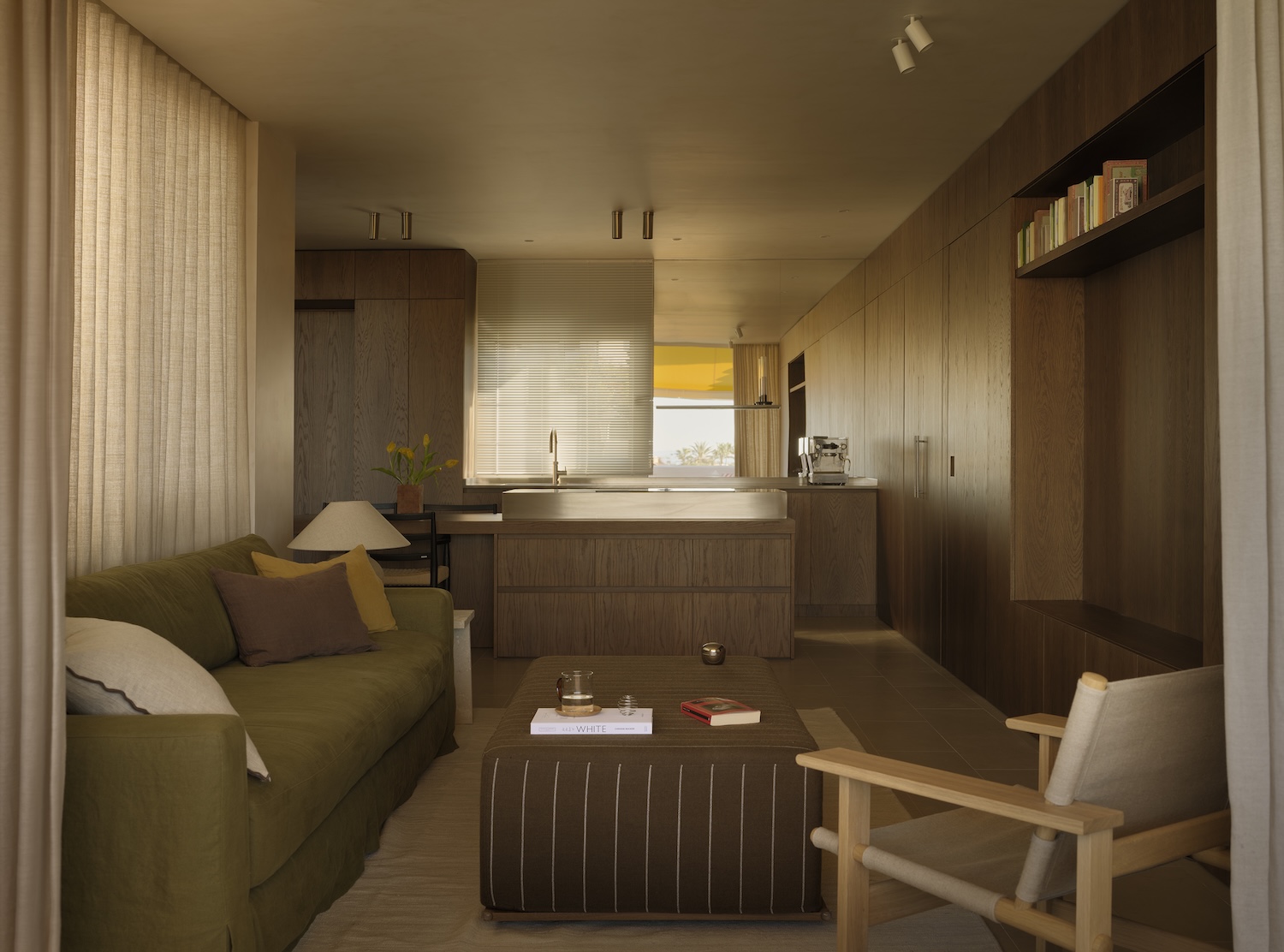
The plan was rebuilt around a young family and around the apartment’s dual orientation, which delivers cross-ventilation, light from two sides and views toward the sea. Kitchen, dining area, living room and terrace unfold as a continuous sequence, so that when the glazing slides open the interior does not so much connect to the outdoors as spill into it. This is a different proposition from the punched openings and framed vistas that dominate Andalusian resort architecture, where the sea tends to be treated as a picture rather than a condition.
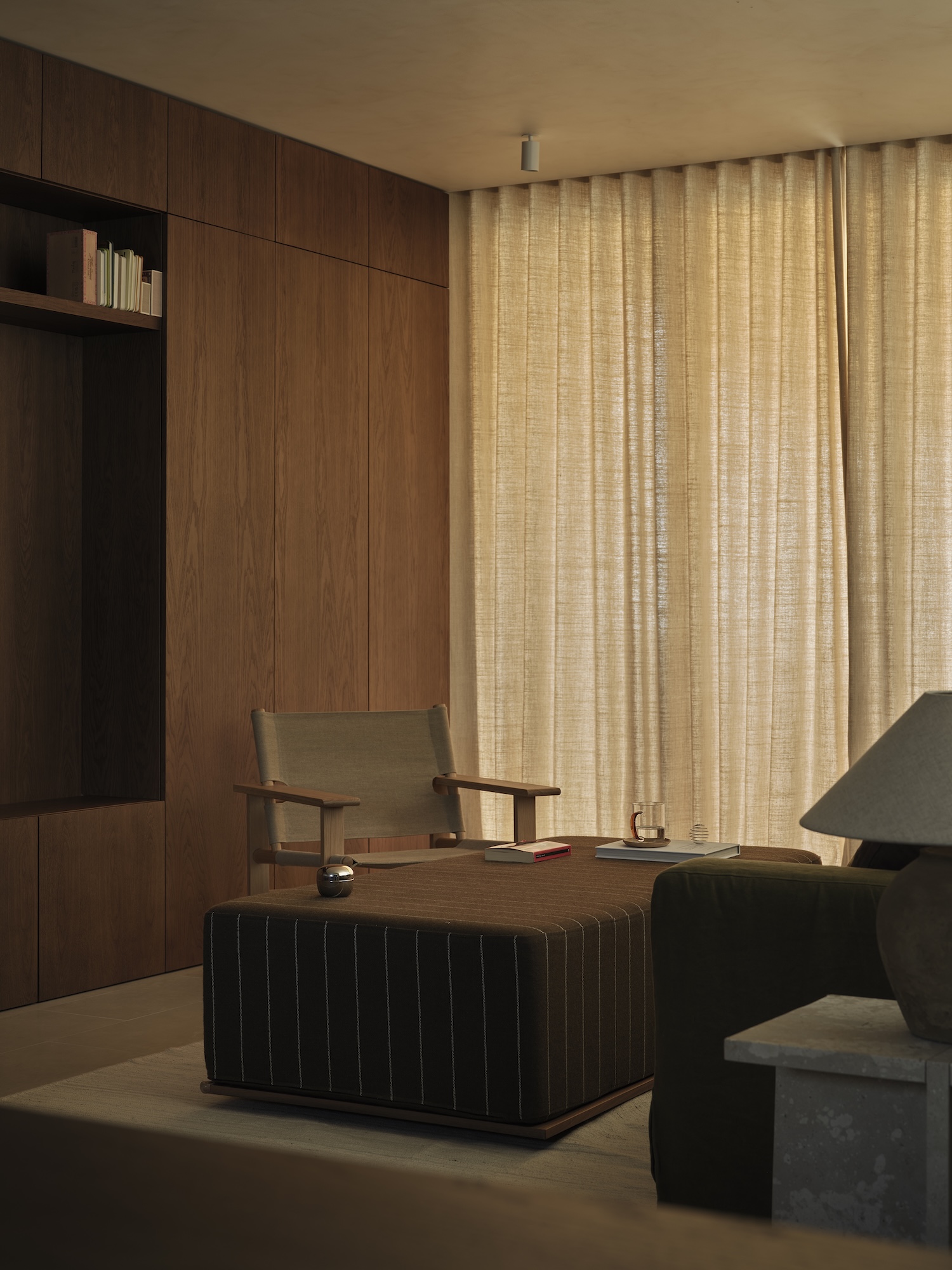
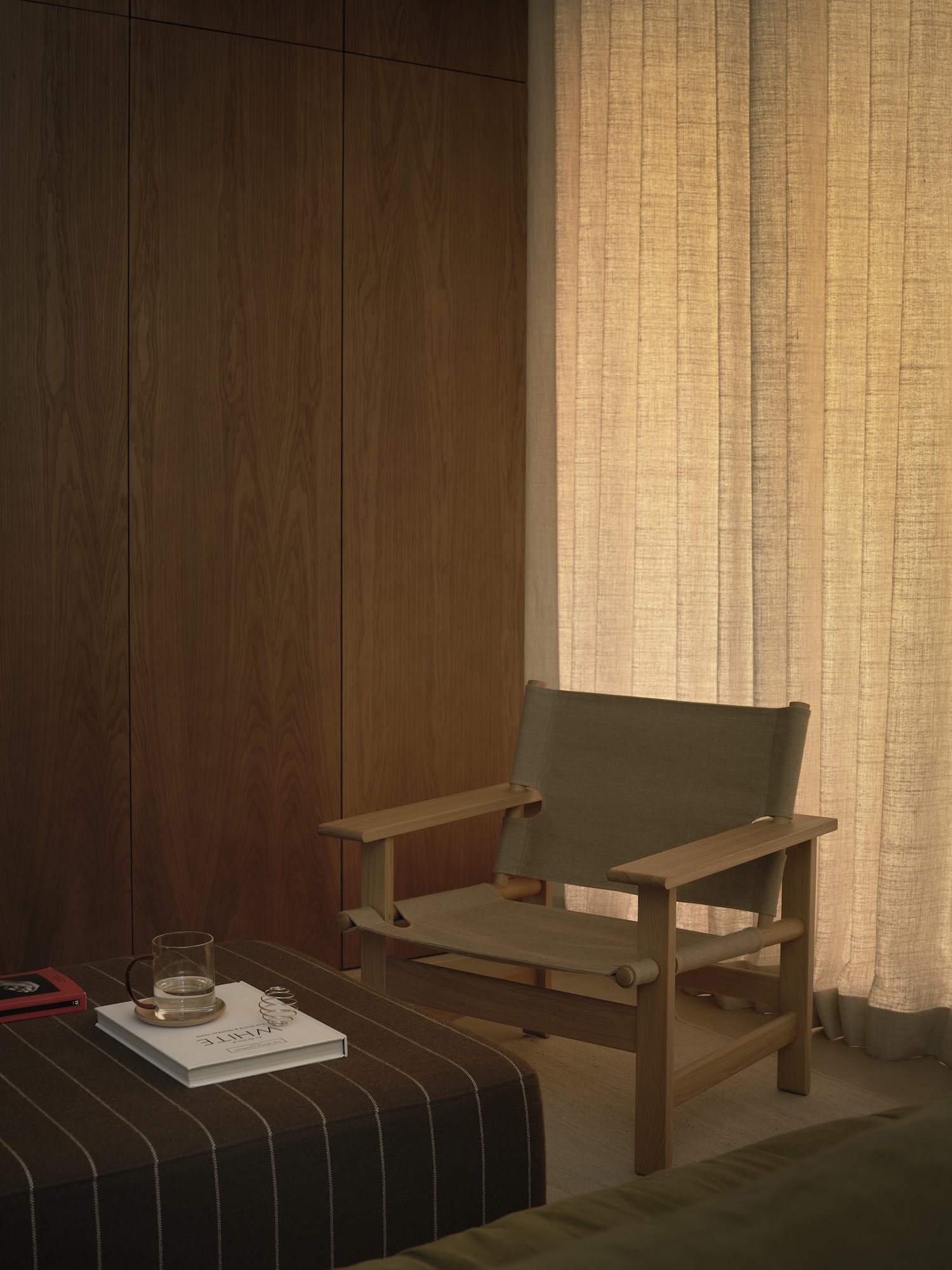
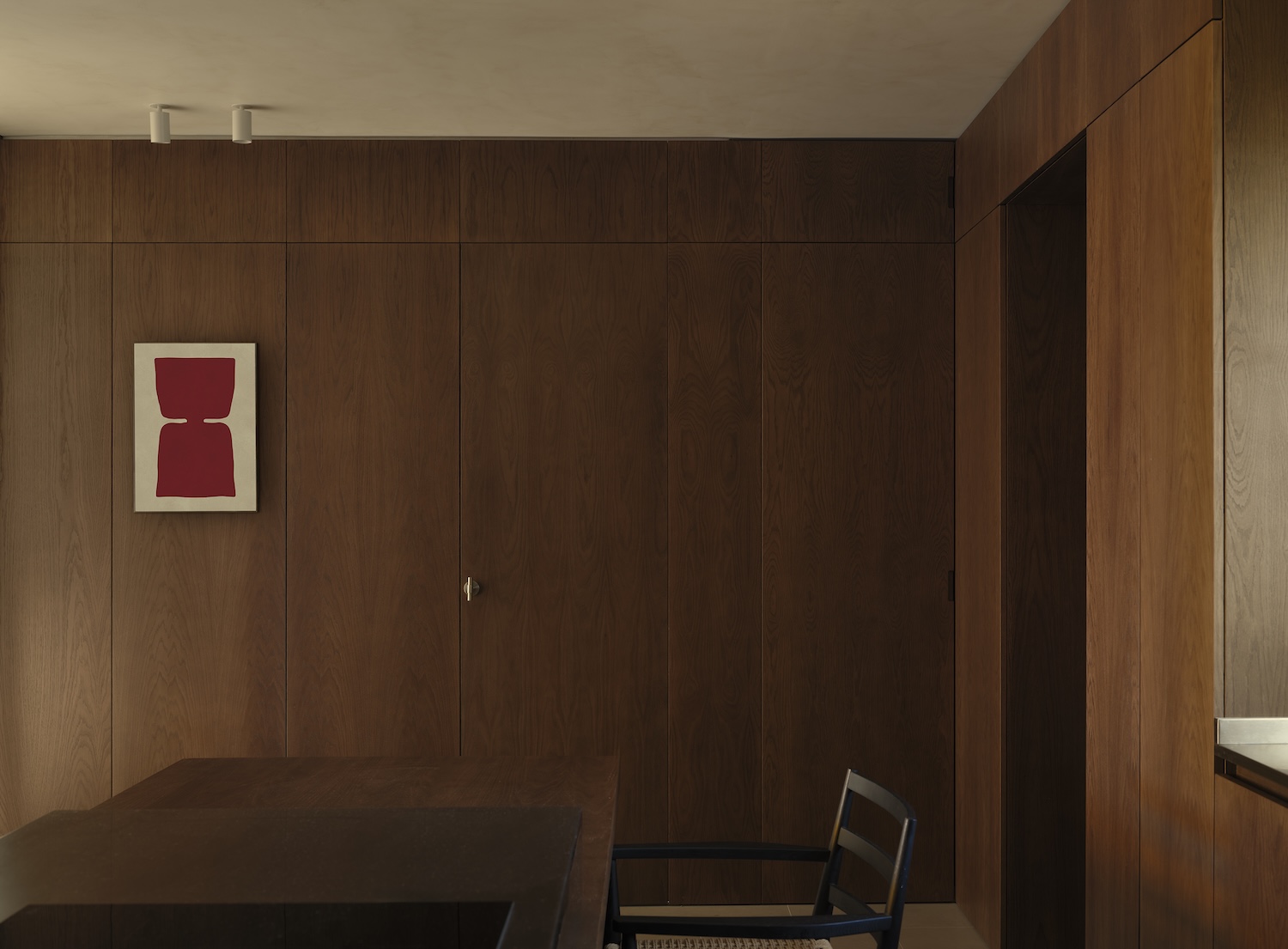
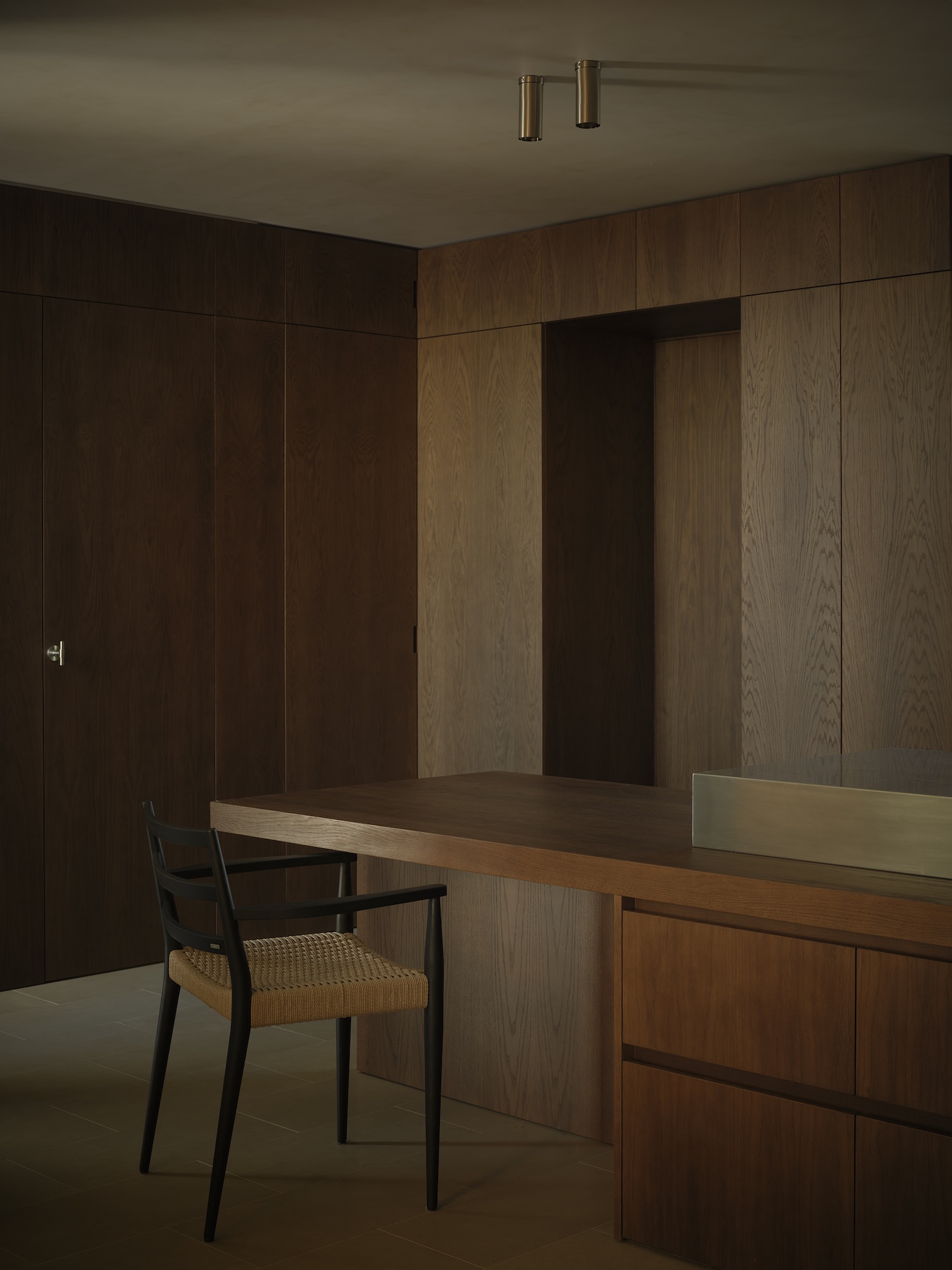
Holding the sequence together is a single timber envelope that runs the length of the living area, absorbing doors, wardrobes, appliances, storage and shelving into one continuous surface. Bespoke joinery of this scale does something structurally interesting to a room. It removes the distinction between architecture and furniture, so that what reads as wall is also cabinet, and what reads as cabinet is also threshold. The lineage runs back through Pierre Chareau and forward through Vincent Van Duysen, though the darkness of the wood here pushes the effect closer to the interiorised, almost nocturnal domesticity of postwar Milanese apartments than to anything on the Costa del Sol.
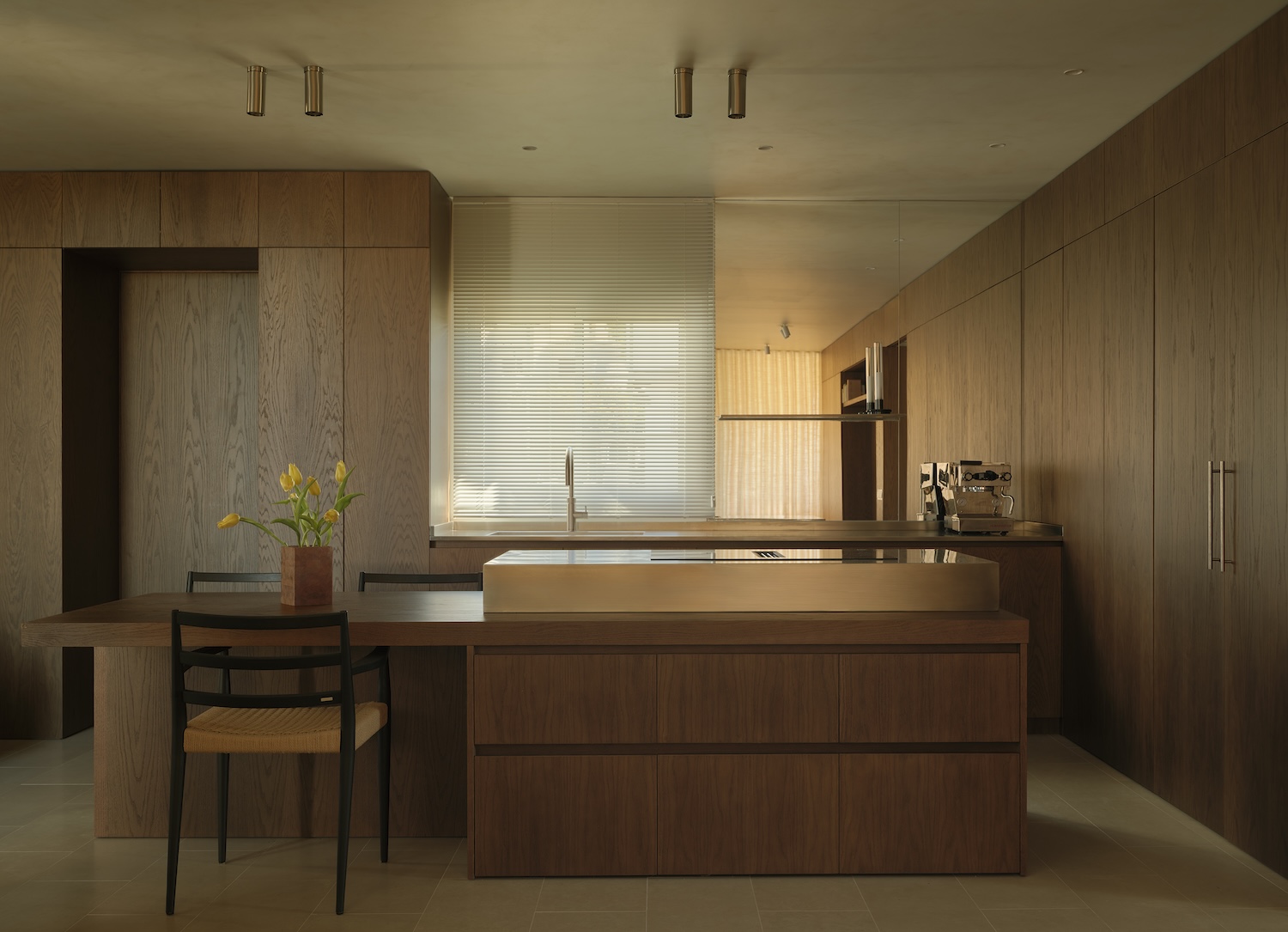
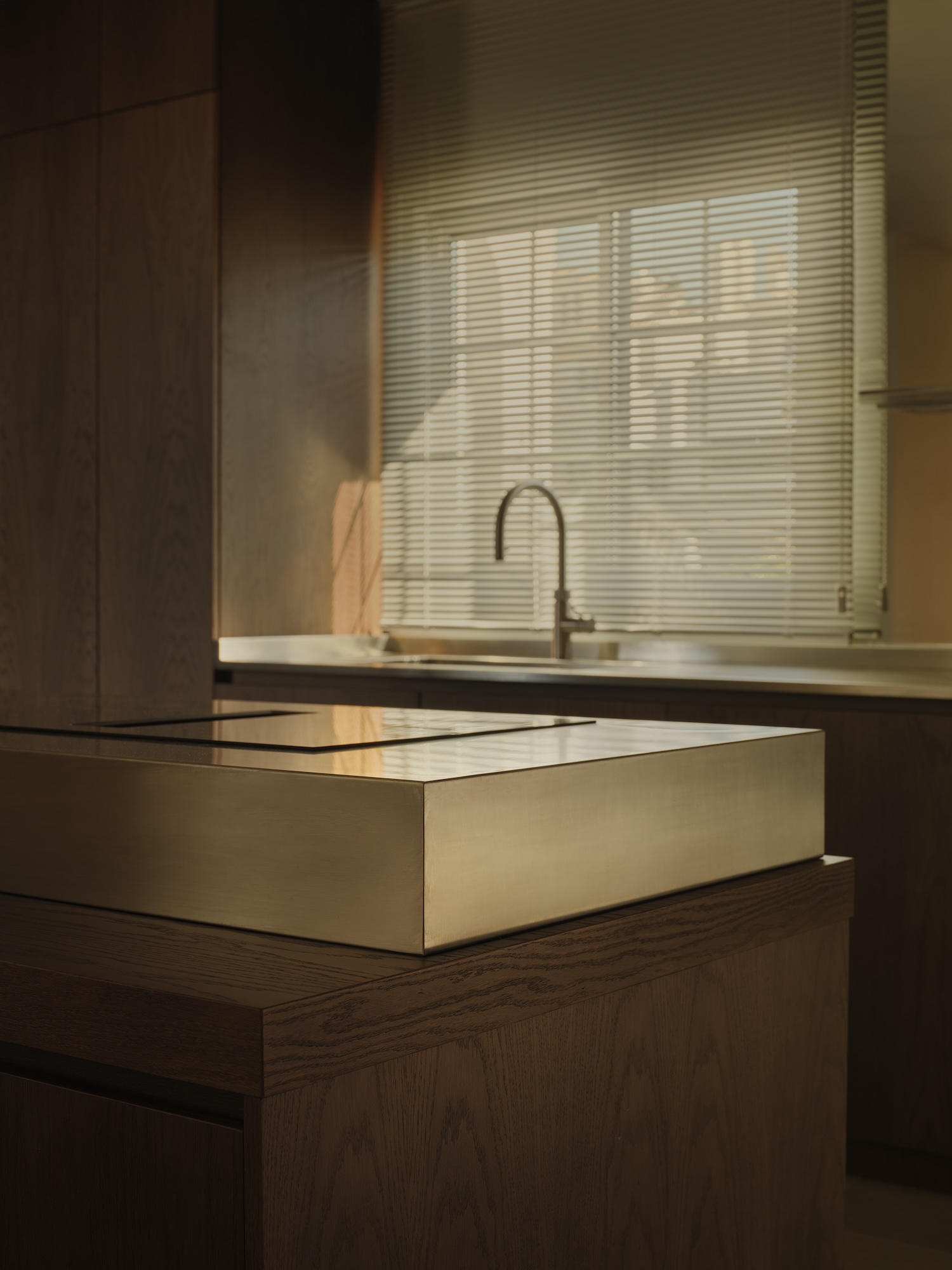
Dark timber meets stone flooring, metallic surfaces and mirrors. The combination should feel severe in a climate this bright, and it does not, because the reflectivity is doing the work that white paint usually does. In the kitchen at the centre of the home, a substantial timber element consolidates dining, worktop and storage into one gesture, while a stainless steel volume contains the cooking area. Steel here behaves as a light instrument, catching the southern sun and pushing indirect fragments of landscape deep into the plan. The mirrors extend the same logic, admitting the sea as a trace rather than a view.