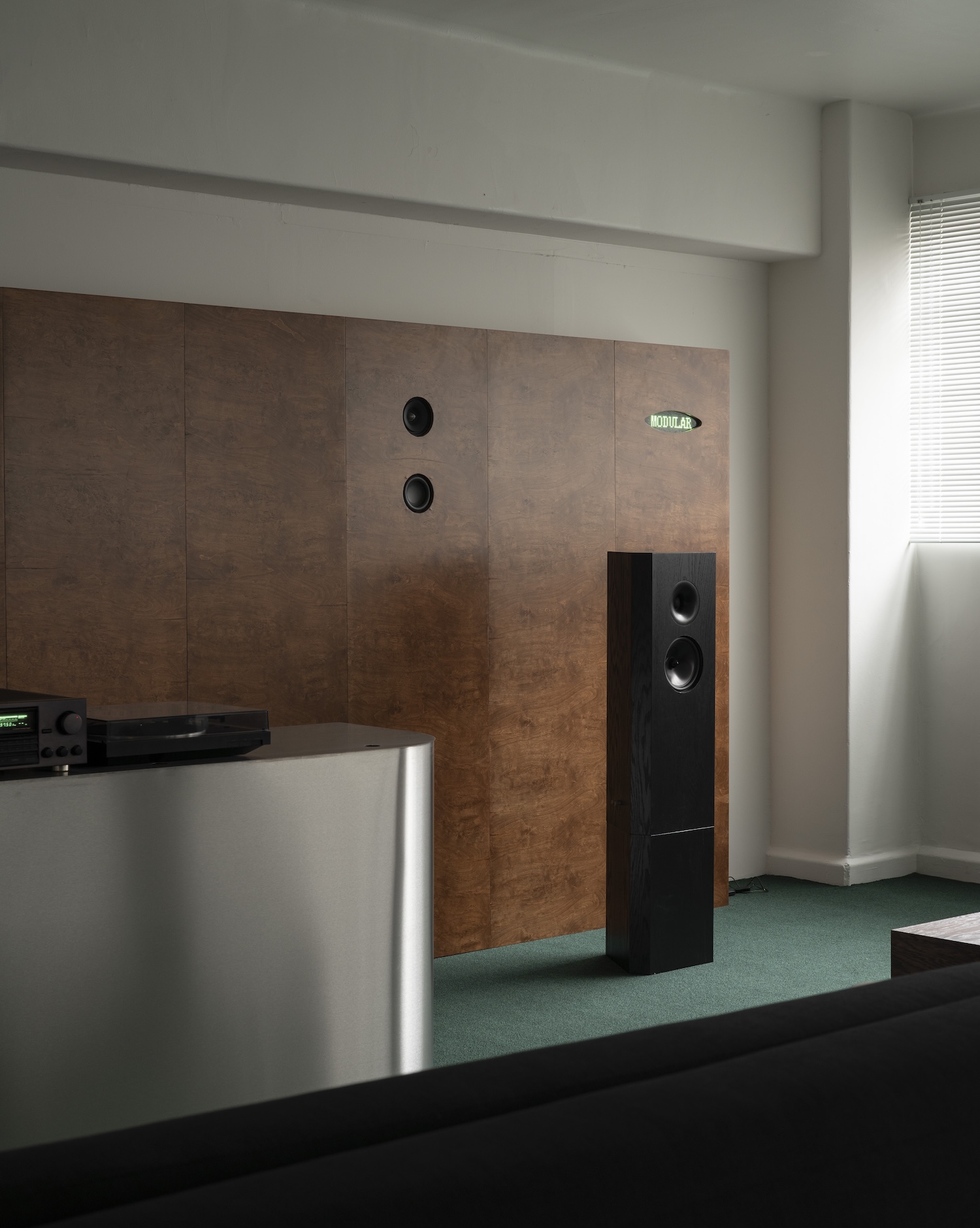
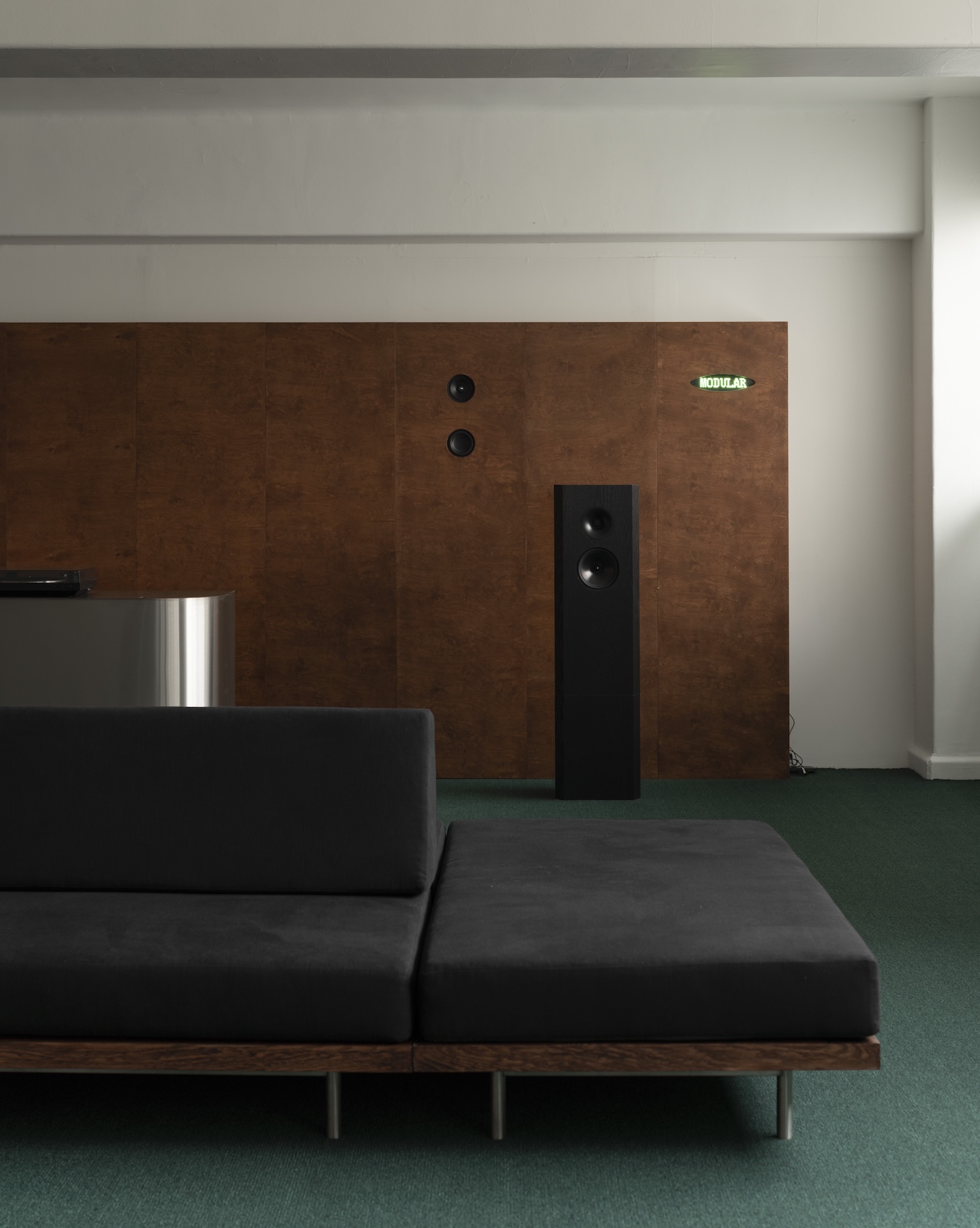
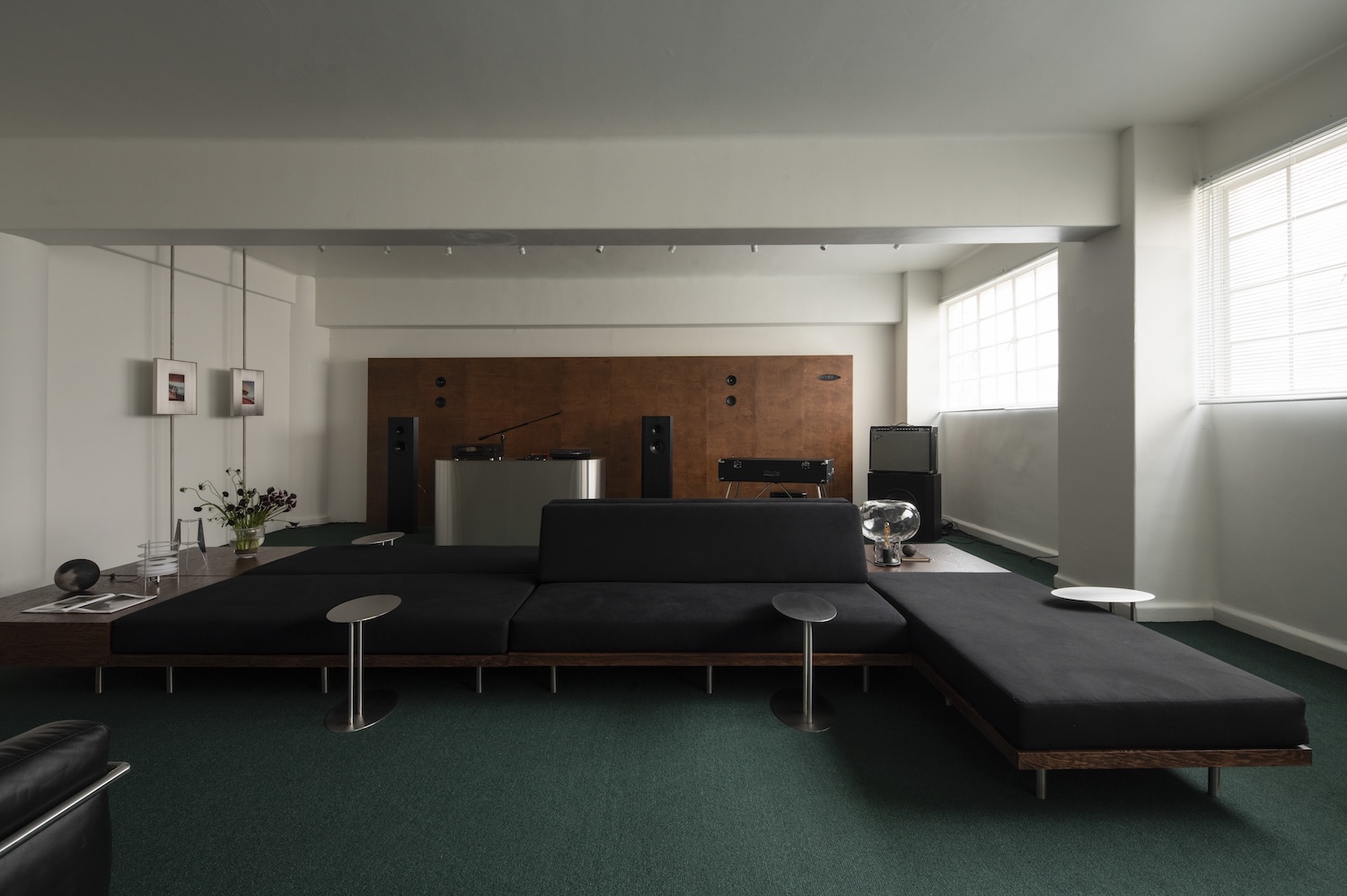
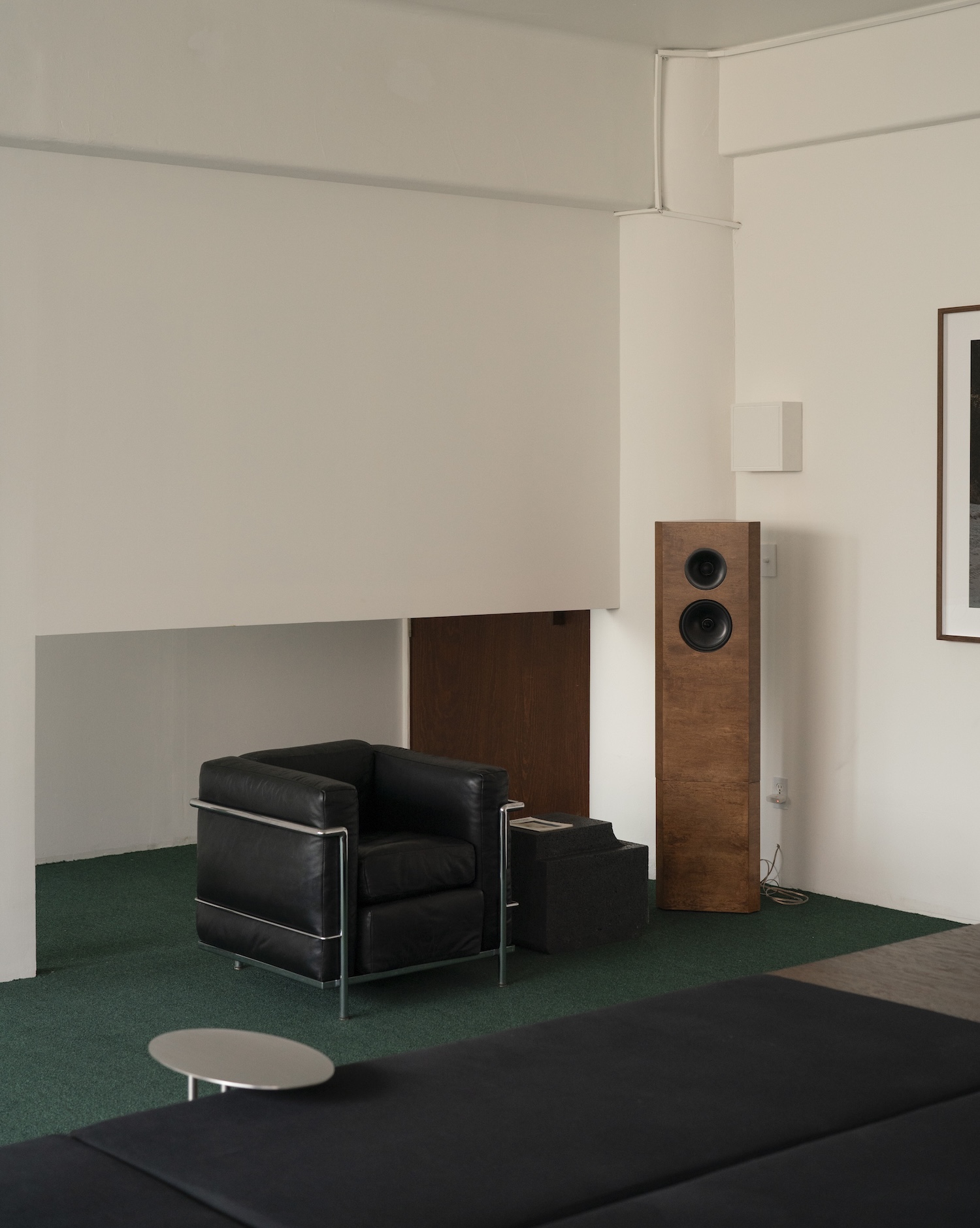
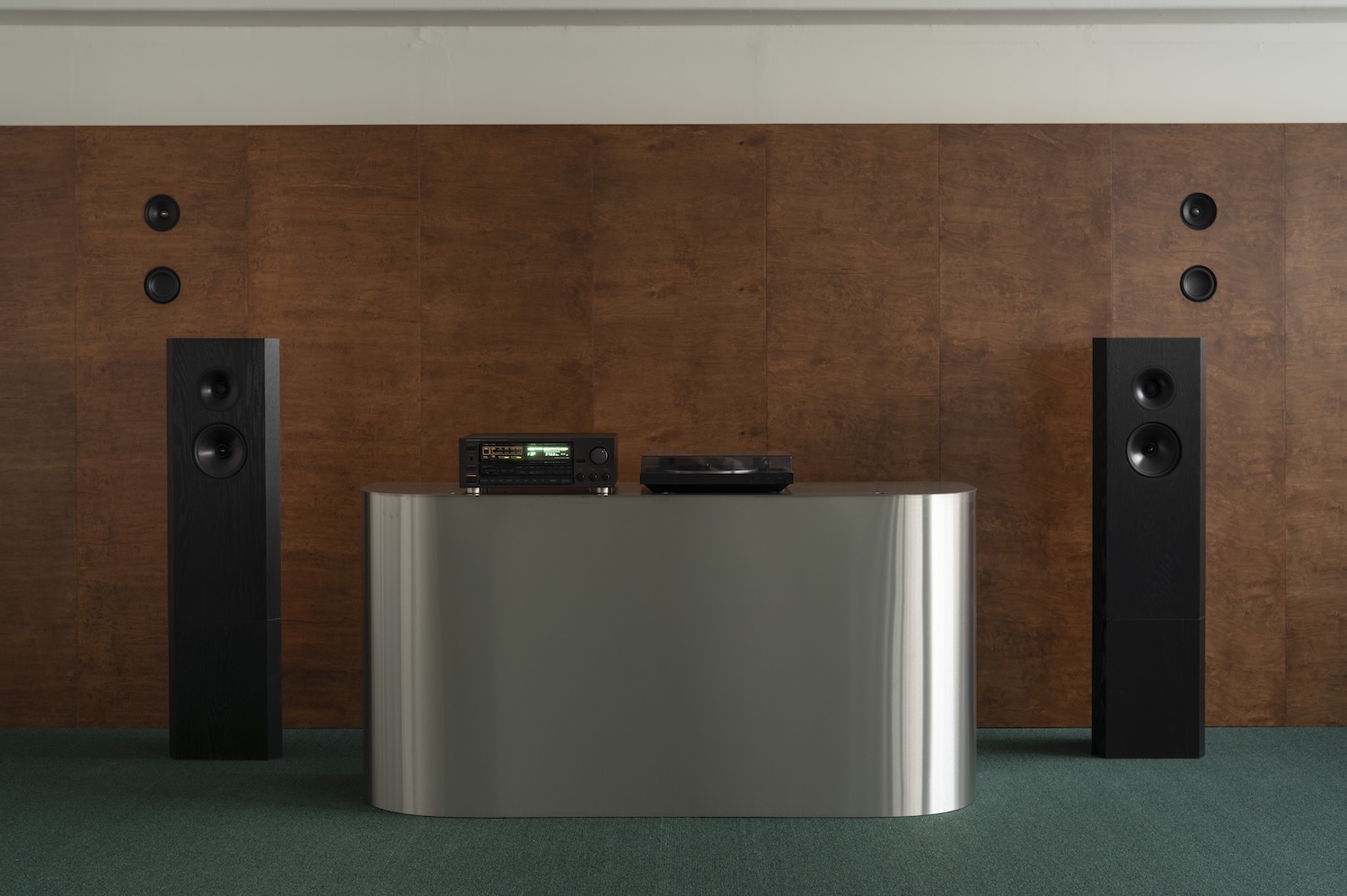
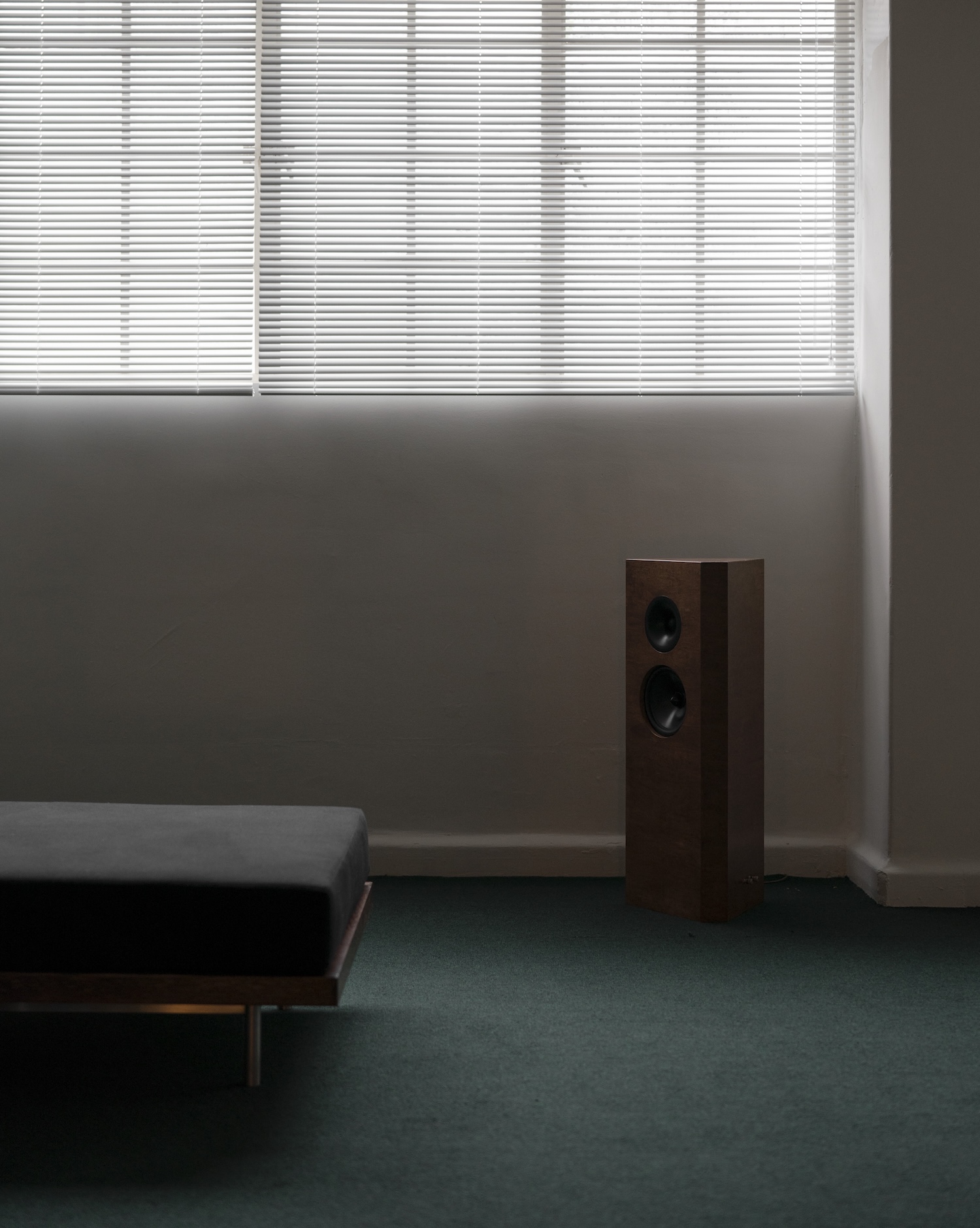
Modular is a minimalist cultural space located in Mexico City, Mexico, designed by FORMANT. The premise is deceptively simple: that sound, space, and image are not independent elements but a single integrated system, each one conditioning how the others are perceived. This underlying logic separates MODULAR from the typical gallery or listening lounge. Rather than treating audio as an add-on or decoration, the project positions acoustic experience as a spatial and material force – one that shapes how the room feels, how people gather, how time passes. The result is closer in spirit to Gesamtkunstwerk than to any conventional retail or exhibition typology.
FORMANT, the Mexico City studio founded by Vero Sojo and Alejandro Valencia, works throughout with a palette of high-contrast materials that suggest permanence and restraint. Steel-made furniture and objects occupy the space with a kind of industrial elegance, their cool reflectivity in deliberate conversation with the warmth of birch wood. This material pairing is a familiar one in contemporary minimalist interiors – birch has been the wood of choice for Nordic-influenced practice since the early Alvar Aalto years – but here it is deployed with purpose rather than habit. The birch anchors the central element: a custom sectional sofa whose dimensions and form are calibrated not simply for seating but for drawing people into proximity, enabling the kind of shared listening that the project is fundamentally about.
The graphic identity, developed by Miranda Orozco of Simple Moo, functions less as branding than as atmospheric worldbuilding. Orozco’s approach treats the visual language as an extension of the spatial concept – a total environment in which typography, color, and image cohere into something guests can inhabit rather than merely observe. This sensibility connects MODULAR to a broader tradition in Mexican cultural production that has long understood design as an act of staging consciousness.
The photography component, provided by Fabian Martinez from recent work documenting Oscar Niemeyer’s Museum of Contemporary Art in Niterói, introduces an additional resonance. Niemeyer’s MAM Niterói – a structural poem in reinforced concrete cantilevered over Guanabara Bay – is one of the definitive examples of architecture as pure sculptural gesture, form liberated from convention. Its inclusion here is not incidental: like MODULAR itself, Niemeyer’s building asks visitors to recalibrate their perceptions, to attend to space differently.