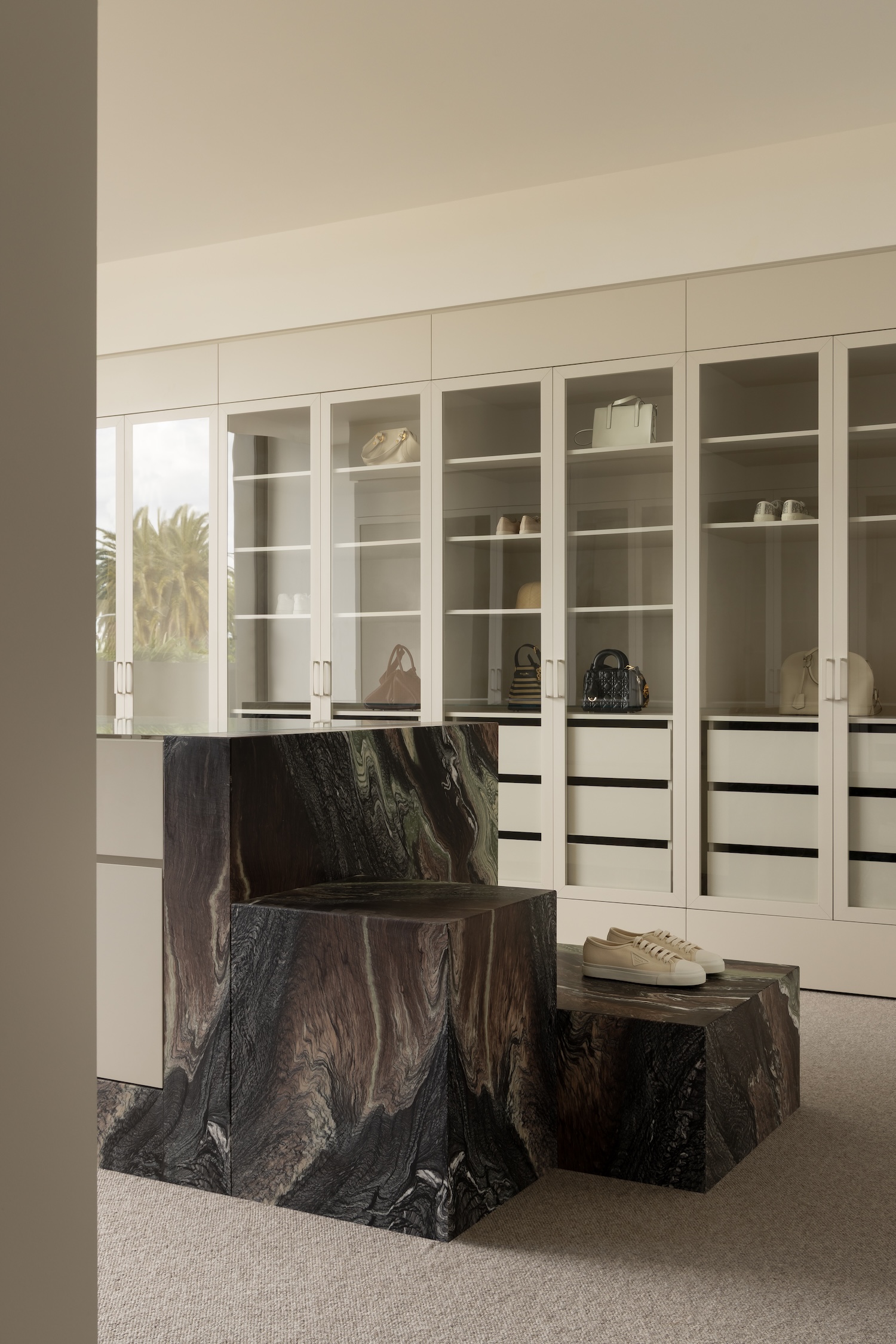
Penthouse Vivace is a minimalist penthouse located in Melbourne, Australia, designed by Telha Clarke. Downsizing rarely invites boldness – yet Penthouse Vivace reframes the concept entirely, treating reduction in scale as an opportunity for amplified intensity. Telha Clarke approached this Melbourne residence not as an exercise in restraint, but as a stage for material performance, where each room functions as a curated scene in a larger domestic theatre.
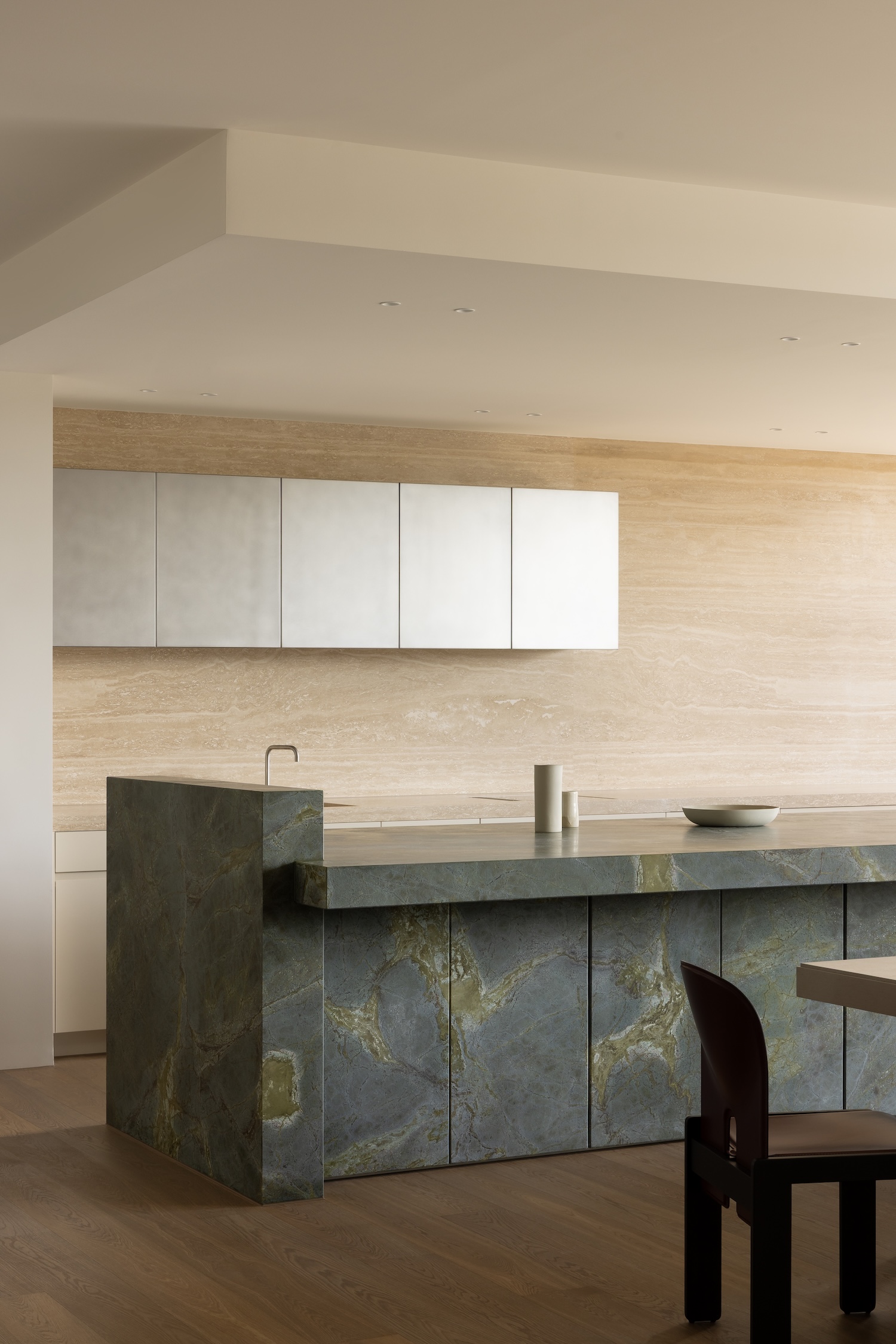
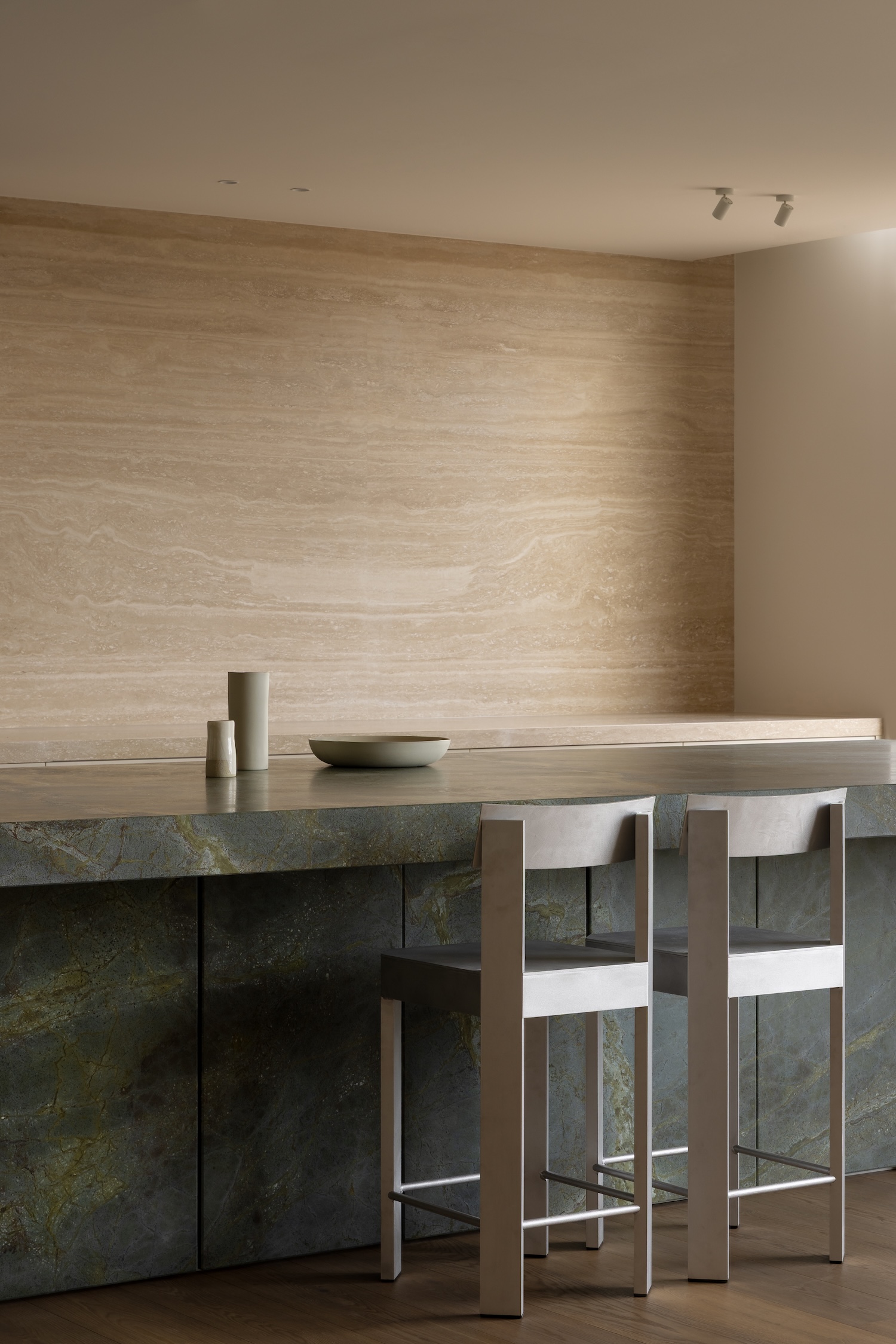
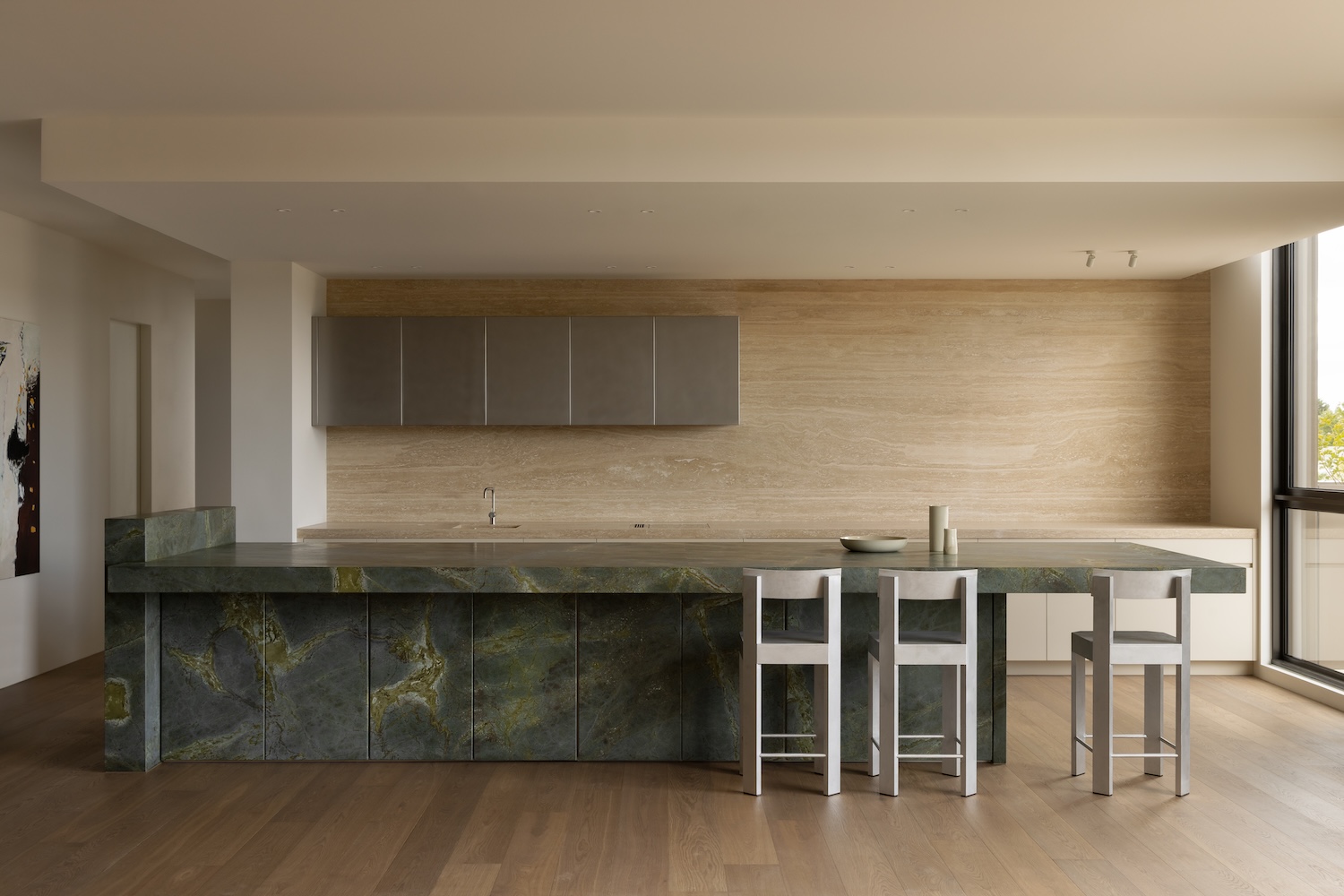
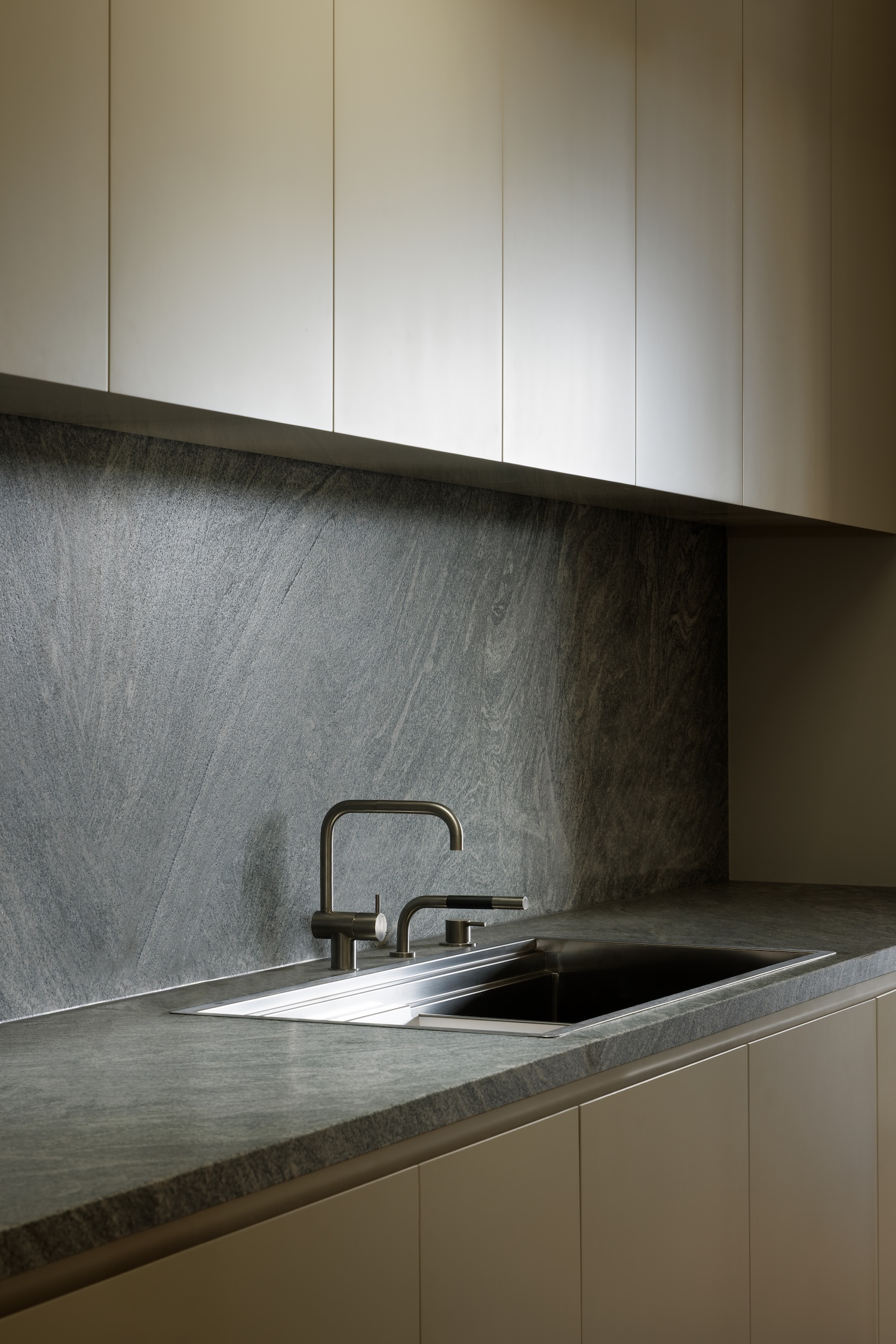
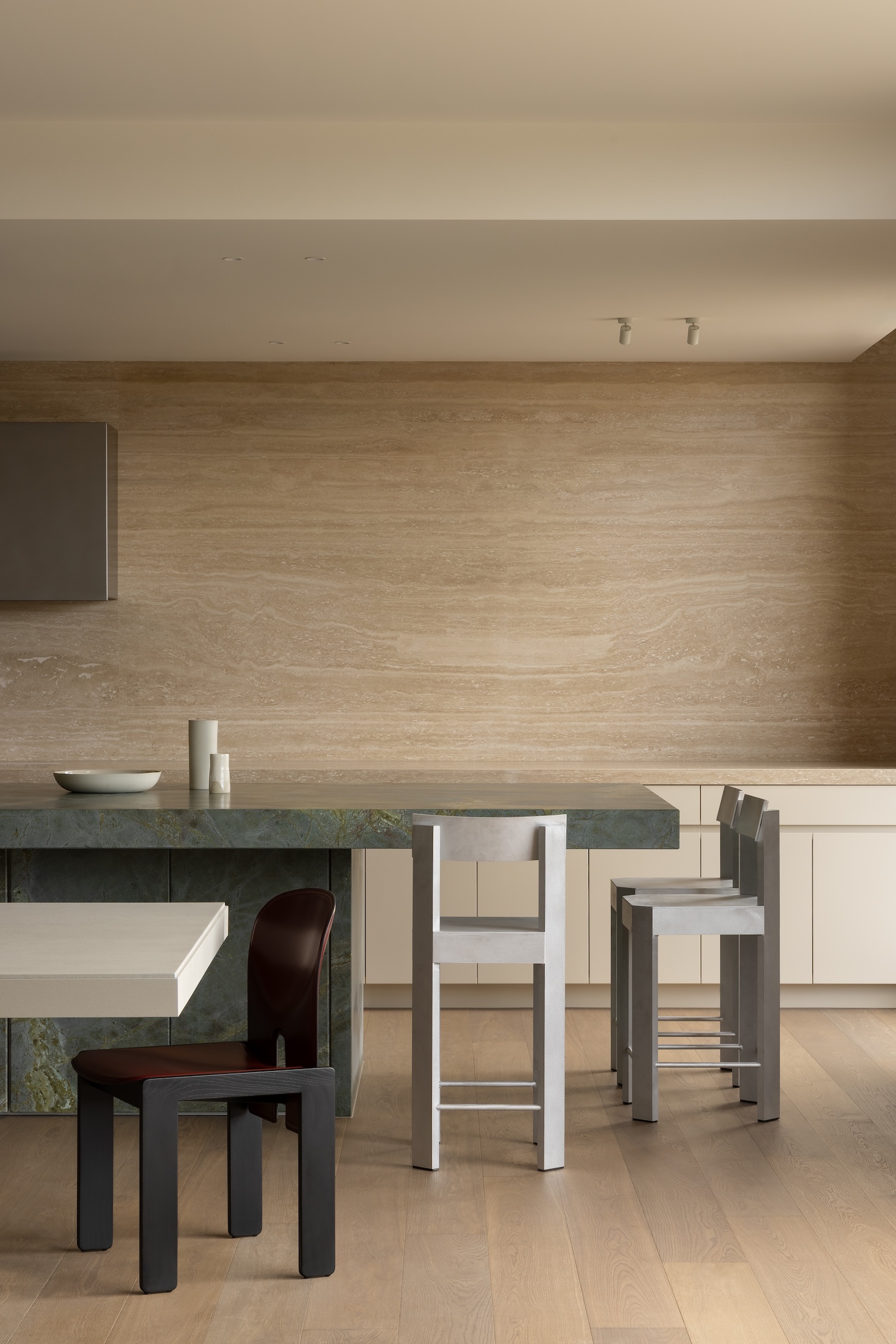
The entry sequence establishes this logic immediately. A sculptural Yucca Rostrata anchors arrival before the space opens to a wine and whiskey lounge where high-gloss joinery conceals richly coloured bars that reveal themselves as hidden panels. The gesture recalls the pleasure of the reveal in theatrical set design – the ordinary surface giving way to something charged and unexpected. From here, the narrative moves into the front-of-house kitchen, where a nearly five-metre island wrapped in leathered granite becomes the spatial centre of gravity. Cantilevered at its profile to invite casual seating, it is finished with custom metal stools that complete a material dialogue between surface texture and reflected light. Stainless steel joinery animates the north-facing room across the day, casting shifting shadows as sunlight migrates across the terrace – a dynamic that belongs more to kinetic art than conventional kitchen design.
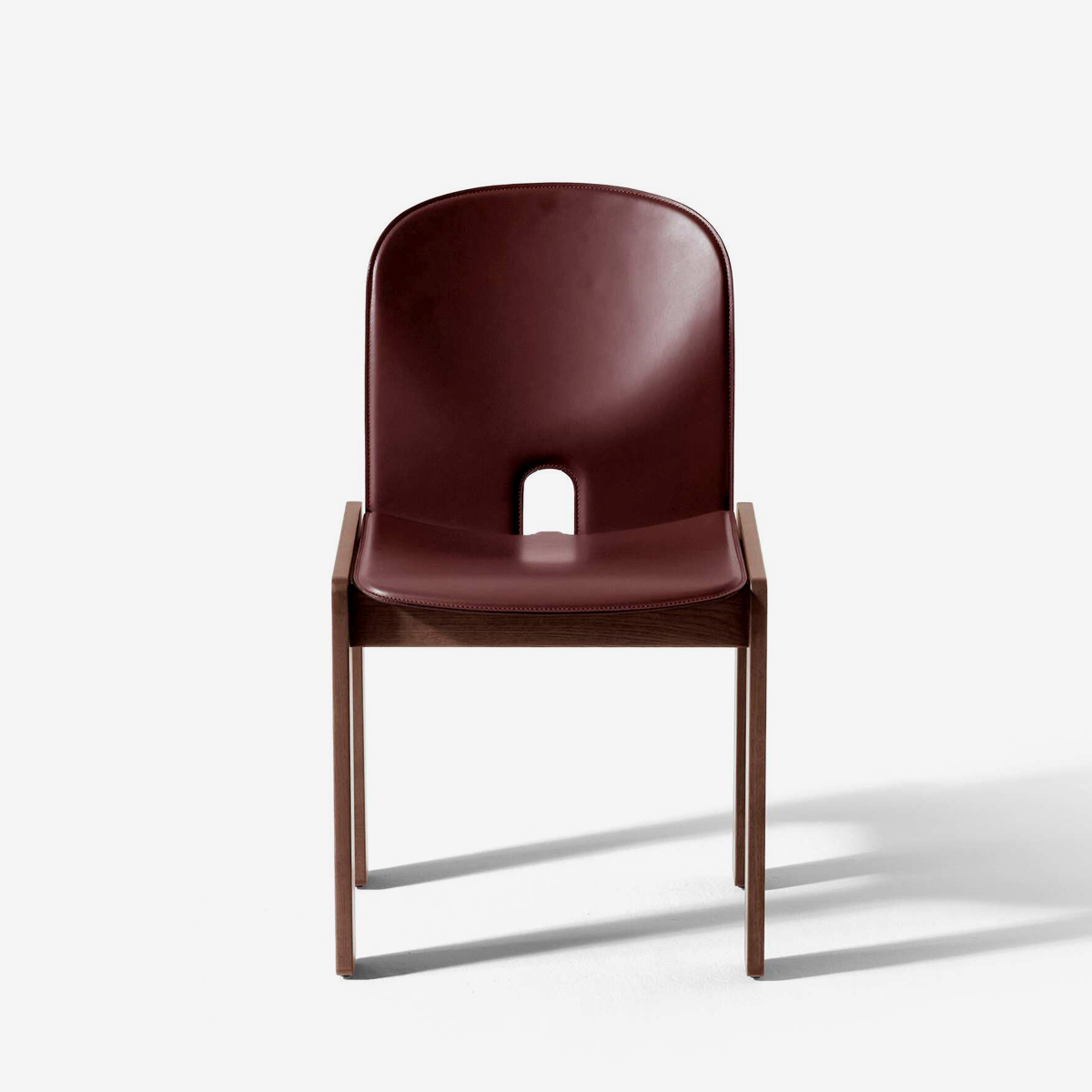
The dining room seats fourteen in Scarpa chairs, their curvature and saddle leather holding light in the way that distinguished Carlo Scarpa’s own obsession with material sensitivity. Custom stained timber at the table introduces warmth against this scale, grounding a space that might otherwise feel more ceremonial than habitable. Adjacent, a fully equipped working kitchen handles the practical demands of large-scale entertaining without encroaching on the front-of-house’s theatrical register – a dual-kitchen arrangement that reflects a sophisticated understanding of how hospitality actually functions.
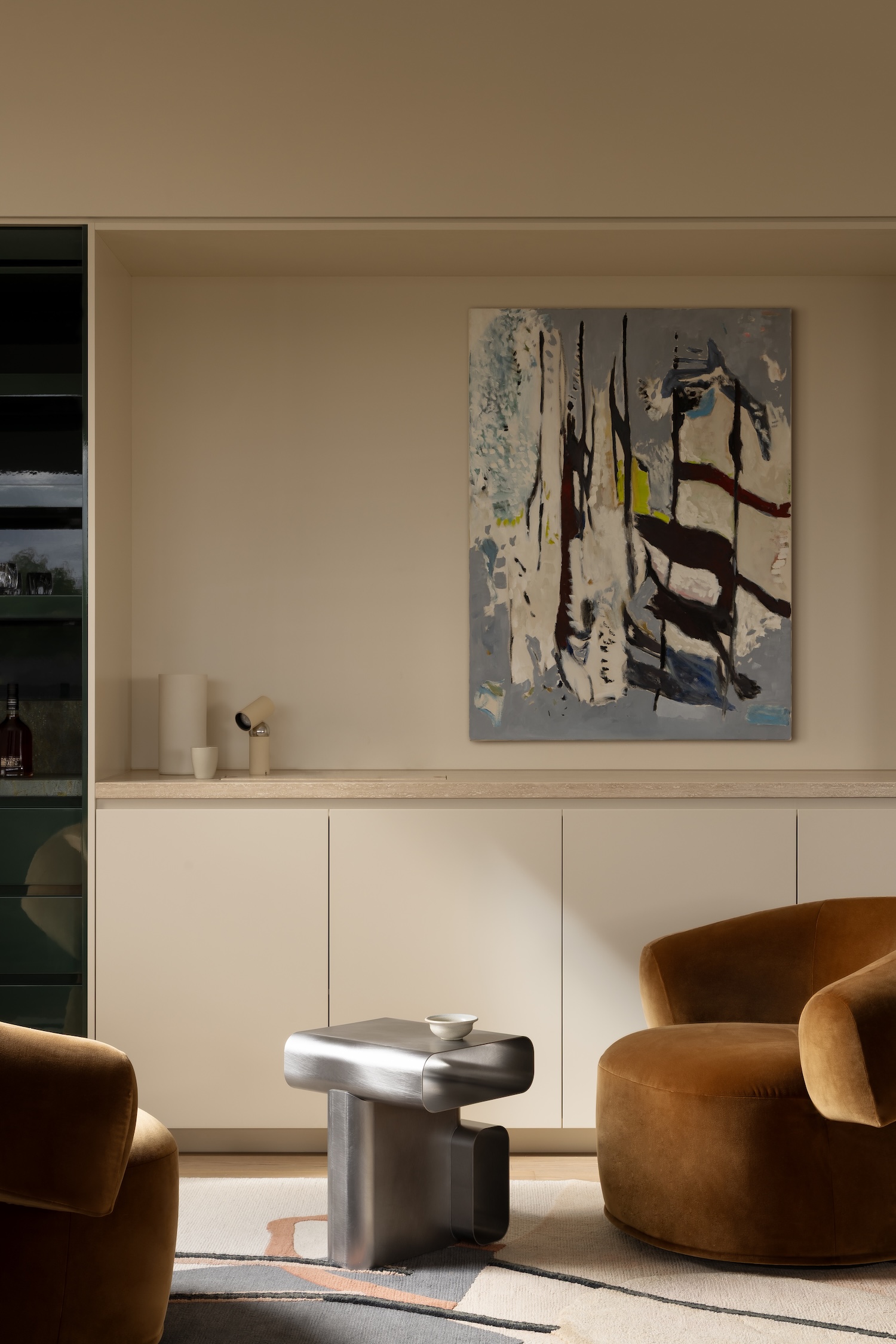
Wall-to-wall Cipollino natural stone joinery defines the living room, its veining providing continuous visual movement while concealing a television lift – a deliberate choice that subordinates technology to the primacy of the art on display. The metallic Codiceicona floor lamp introduces literal movement when in motion, weaving kinetic presence into an otherwise composed arrangement of patinated metals and curated furniture.
Artwork courtesy of Benjamin Barretto, Victoria Stolz, Chris Madden and Animal House Fine Arts.