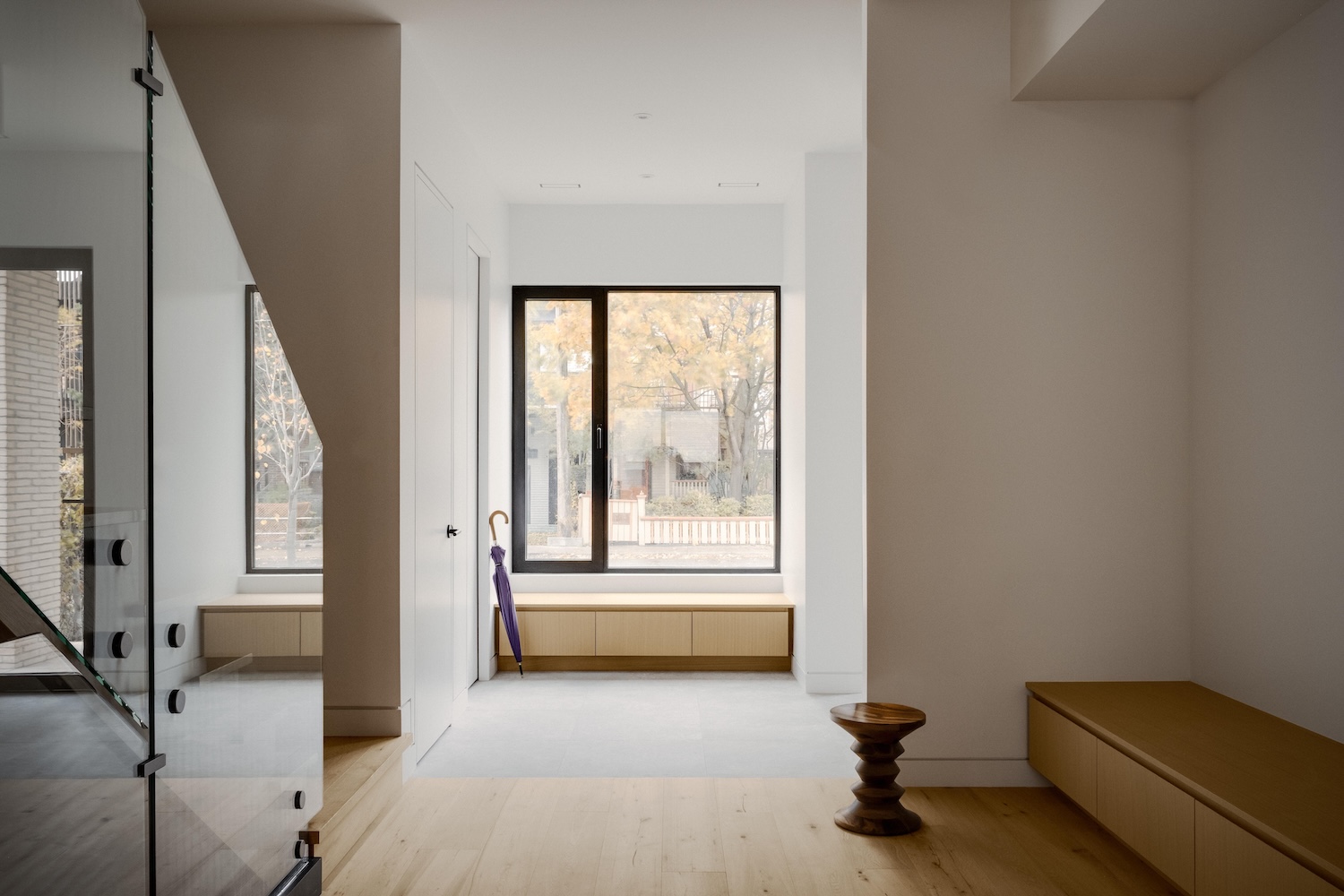
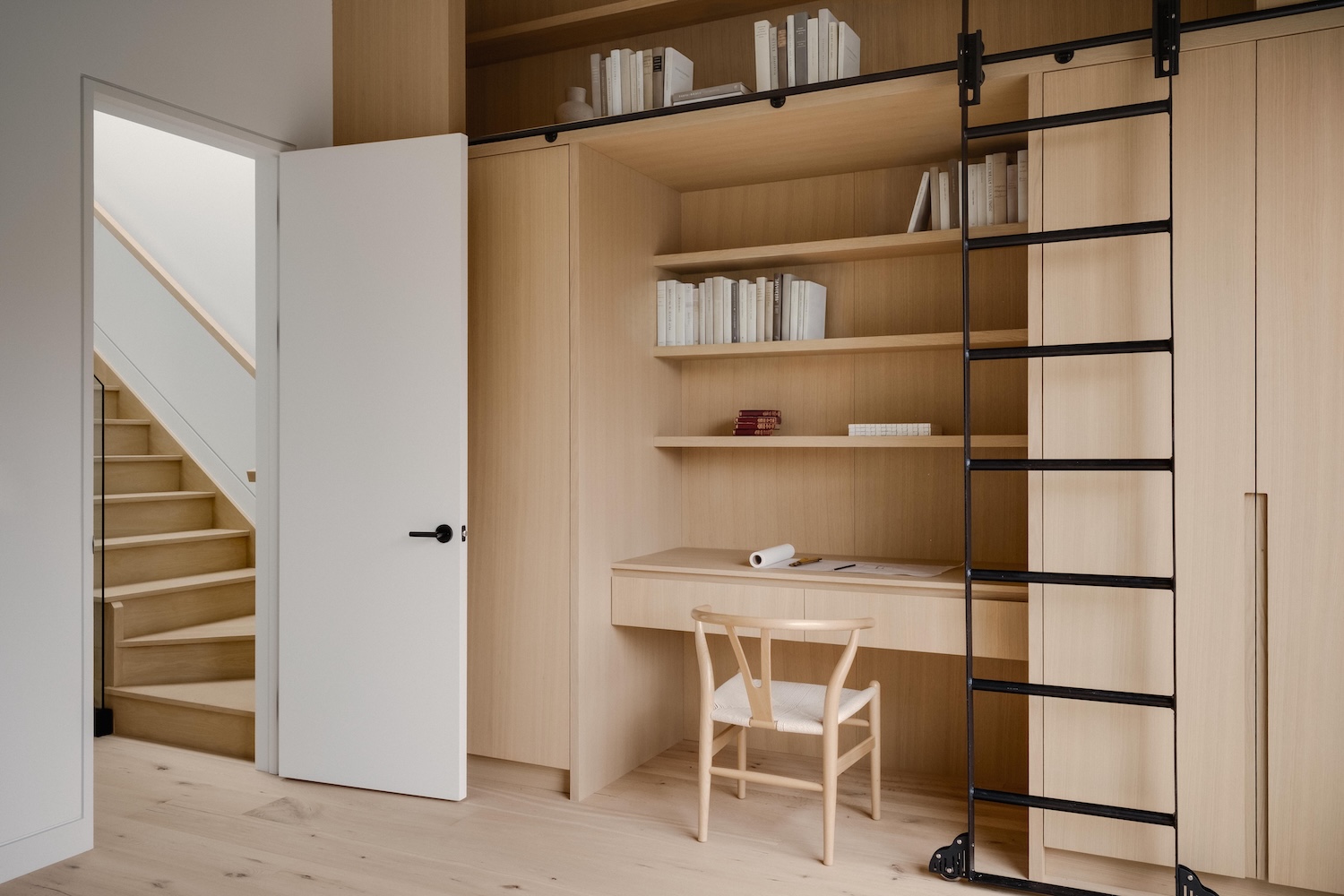
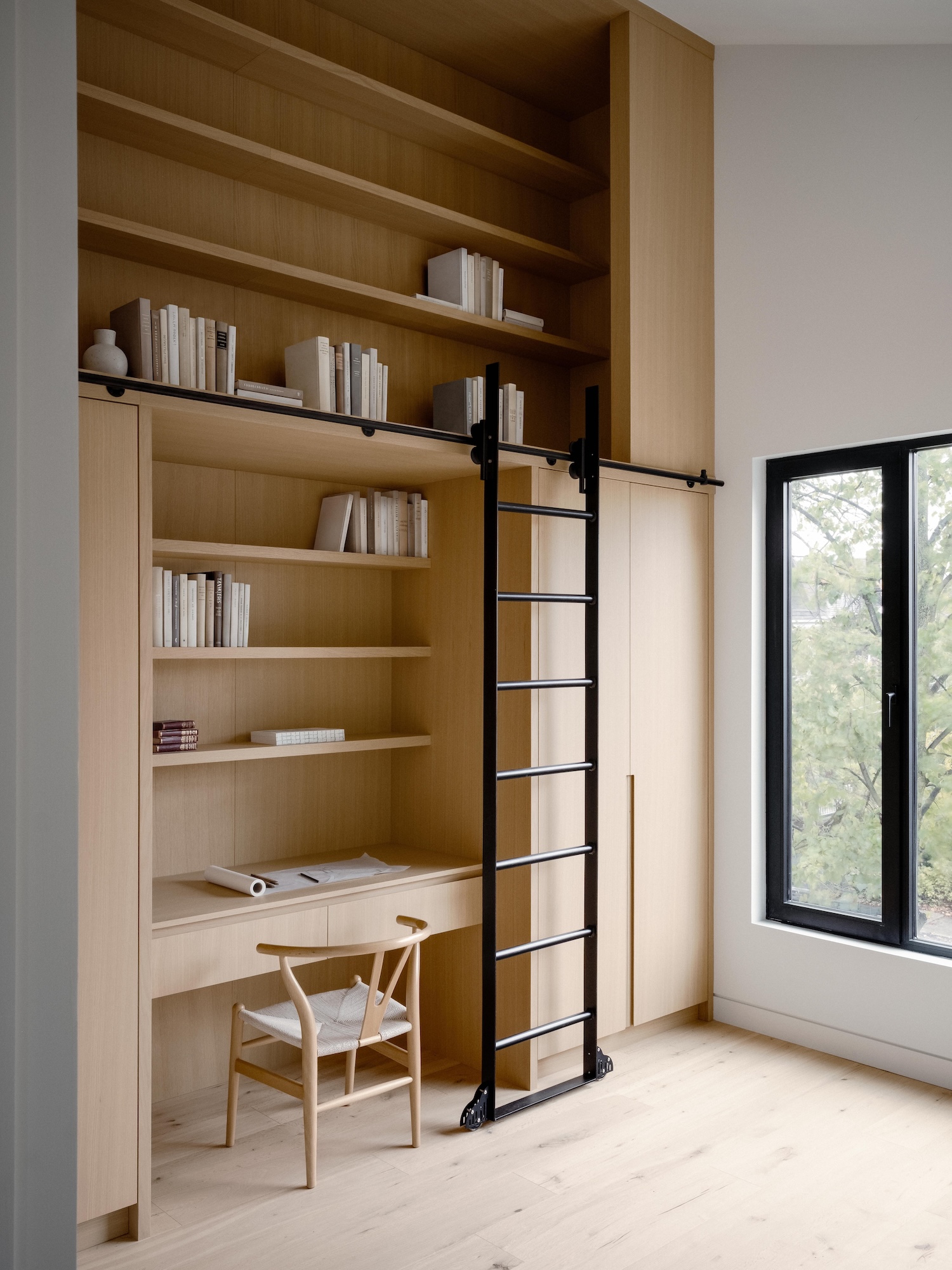
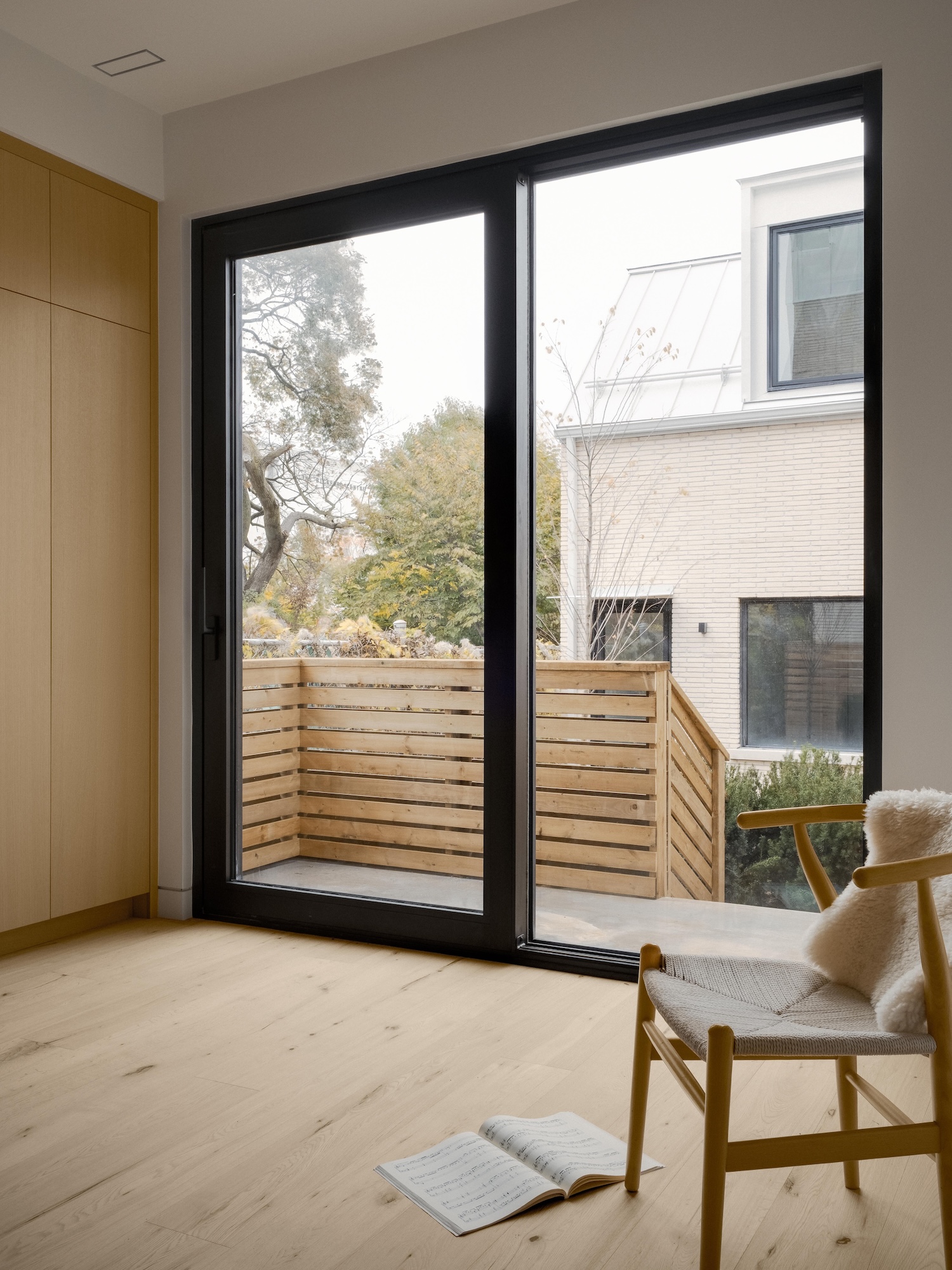
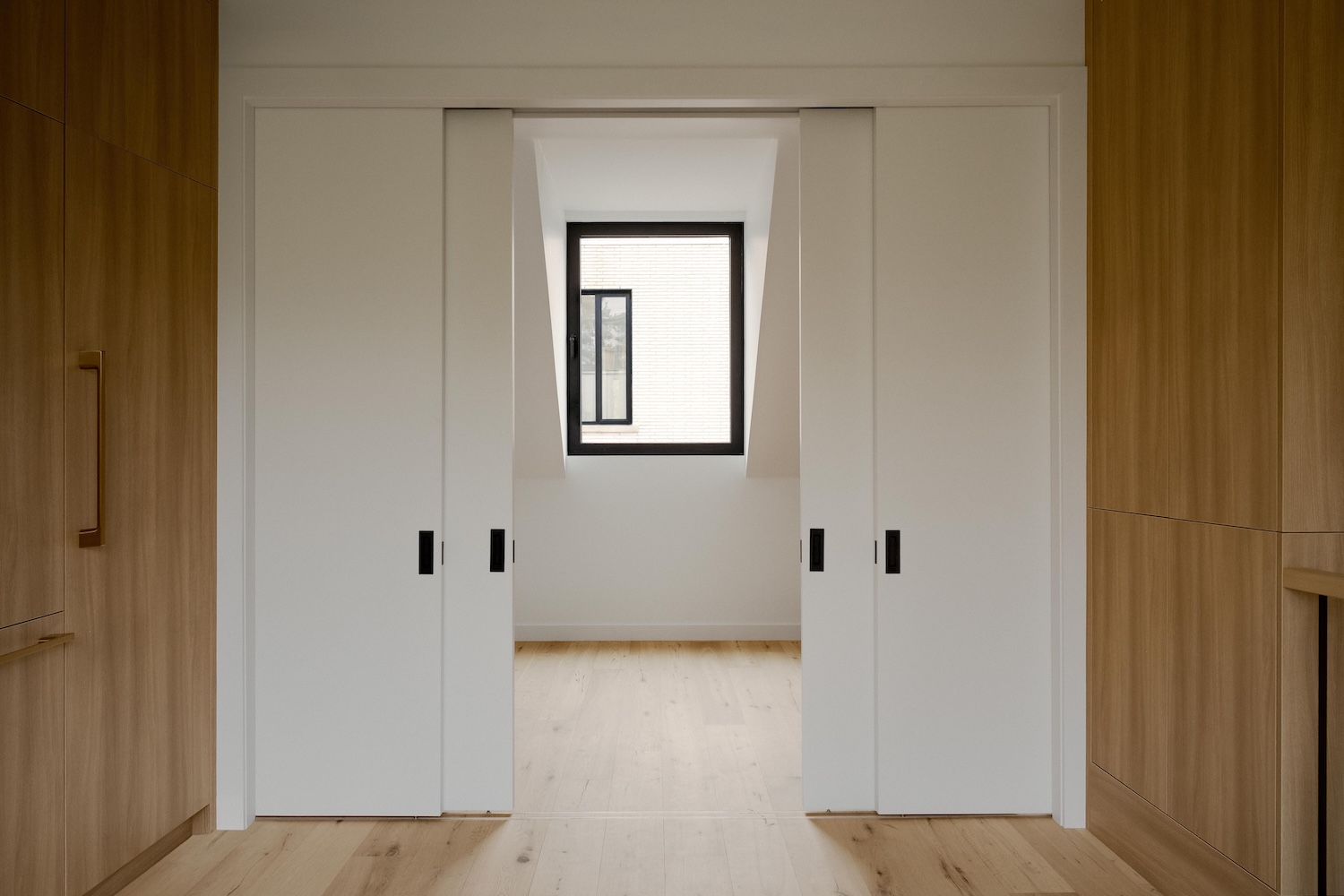
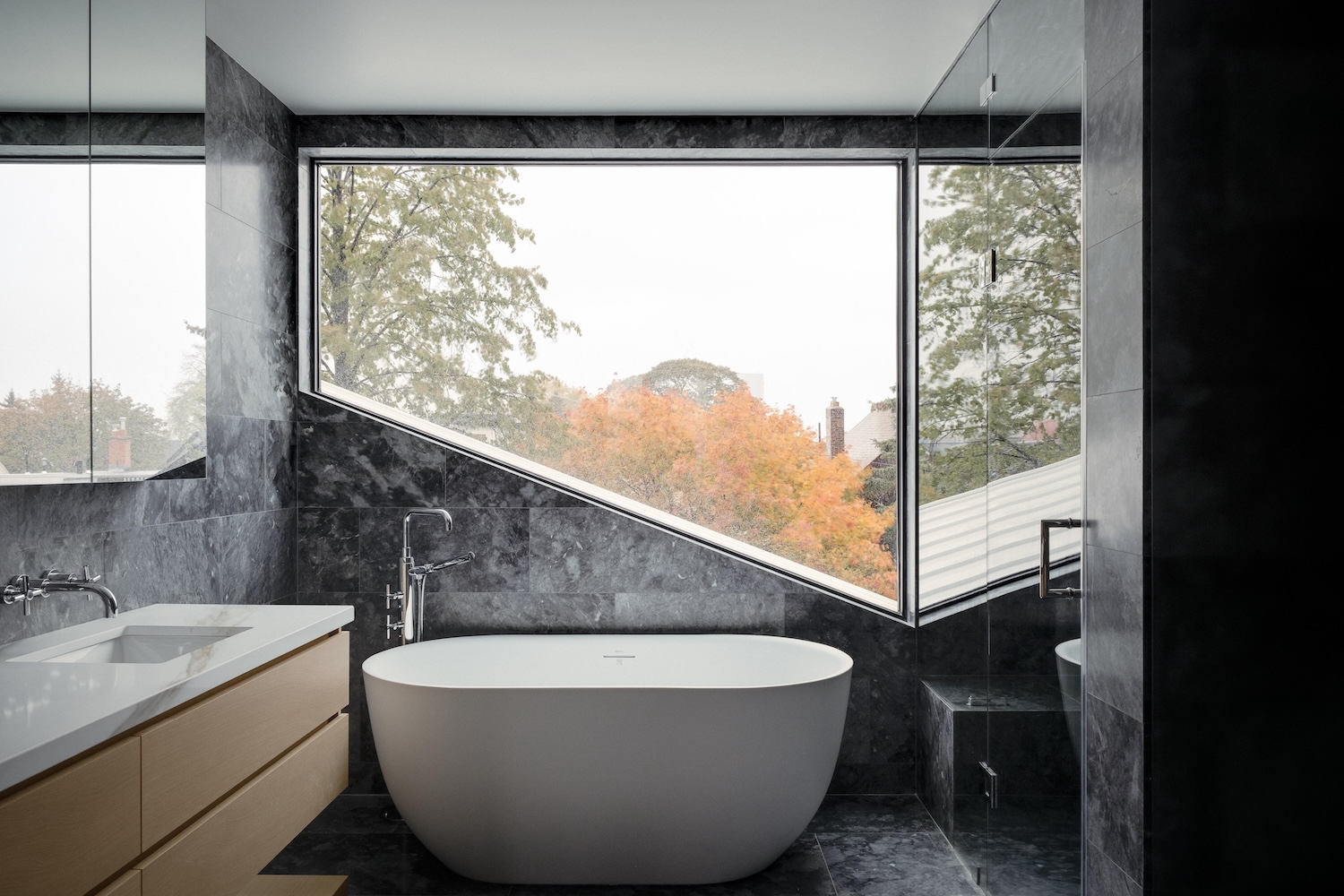
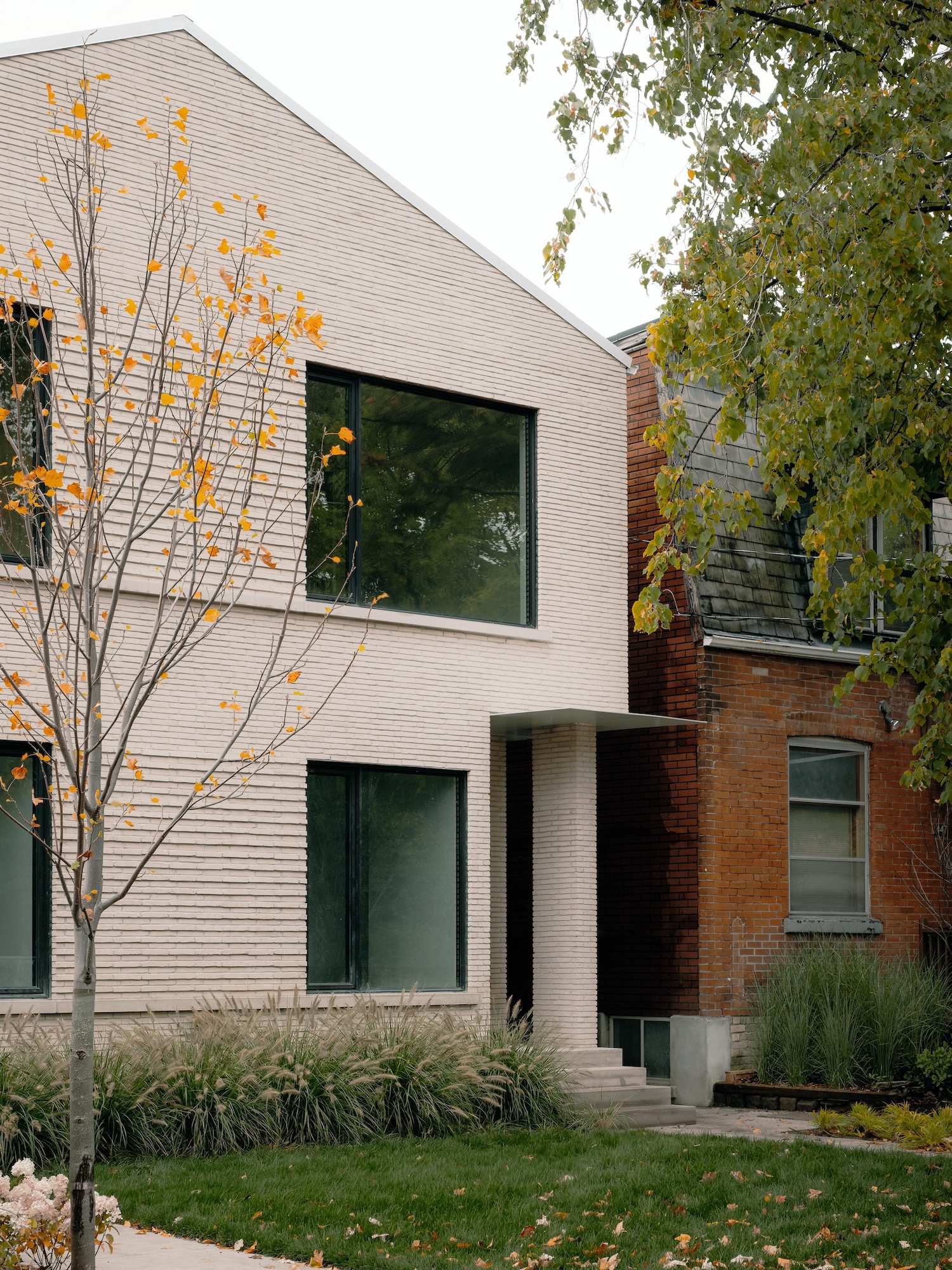
Montrose Sixplex is a minimalist residence located in Toronto, Canada, designed by Gabriel Fain Architects with interiors by Unison Group. The project arrives at a moment when Toronto’s zoning framework is undergoing its most significant recalibration in decades, as the city moves to permit multiplexes across neighbourhoods long dominated by single-family houses. Rather than treating this regulatory shift as a technical ceiling to be maximized, Gabriel Fain Architects reads it as an architectural opening, an invitation to consider what incremental density might actually look like when pursued with formal restraint and material conviction. The result is a six-unit ensemble that argues for gentle densification as a question of craft rather than volume.
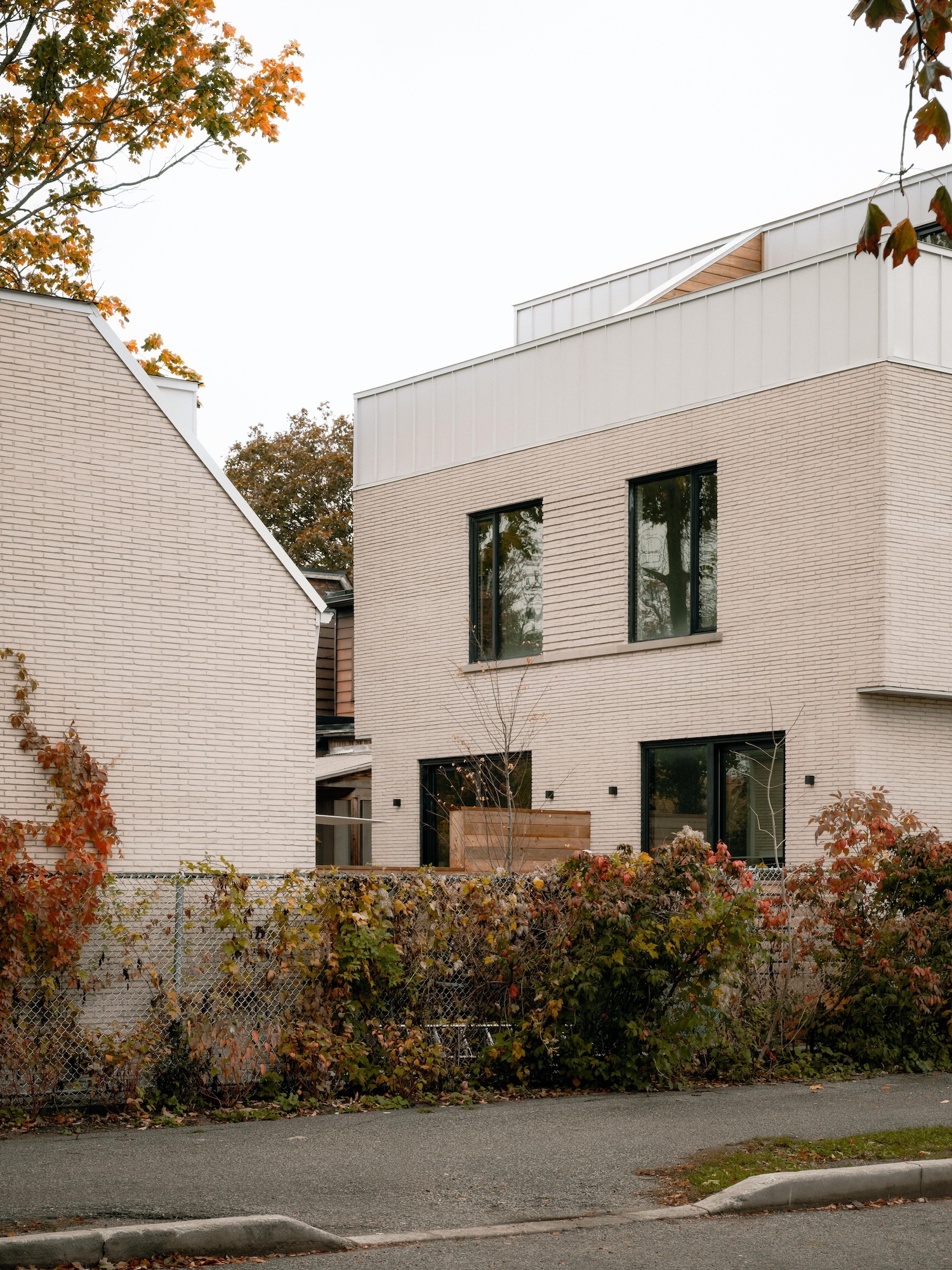
The street-facing building consolidates its programmatic complexity within a single gabled silhouette, a move that recalls the typological discipline of Adolf Loos’s Villa Müller or, closer to home, the quiet rigor of Shim-Sutcliffe’s Toronto work. The pitched roof operates as both regulatory device and compositional strategy, absorbing additional units within a profile that rhymes with the surrounding Edwardian stock. Belgian buff brick wraps the primary elevations in a tone that reads warmer than the standard Ontario red, its surface animated by patterned coursing between the openings. Limestone sills introduce a second material register, their precision emphasizing the deliberation behind each aperture. The brickwork’s subtle shifts in bond create shadow lines that change through the day, a detail that rewards prolonged looking rather than announcing itself at first glance.
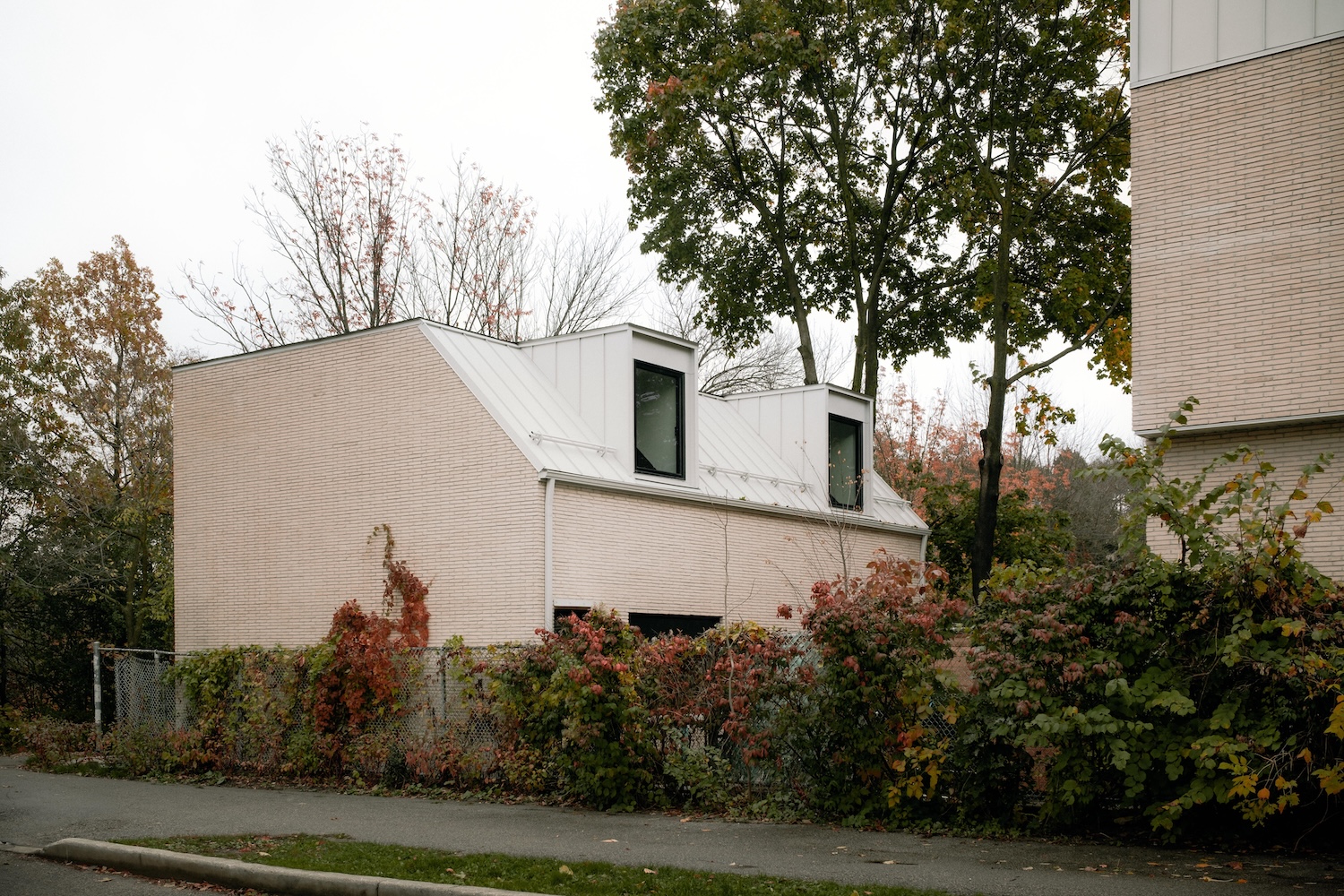
At the rear, two laneway houses complete the site strategy. Their massing mirrors the street building at reduced scale, producing a coherent ensemble reading rather than a primary-and-accessory hierarchy. More pointedly, their orientation toward Bickford Park recasts the laneway itself. What Toronto typically treats as a service corridor, the aesthetic residue of twentieth-century automobile planning, becomes instead a shared front-yard condition with the park serving as borrowed landscape. This recovery of the laneway as civic space follows a lineage of Melbourne and Vancouver precedents, though the Montrose project pushes the idea further by letting the rear buildings address the park with the same material seriousness as their street-facing counterpart.