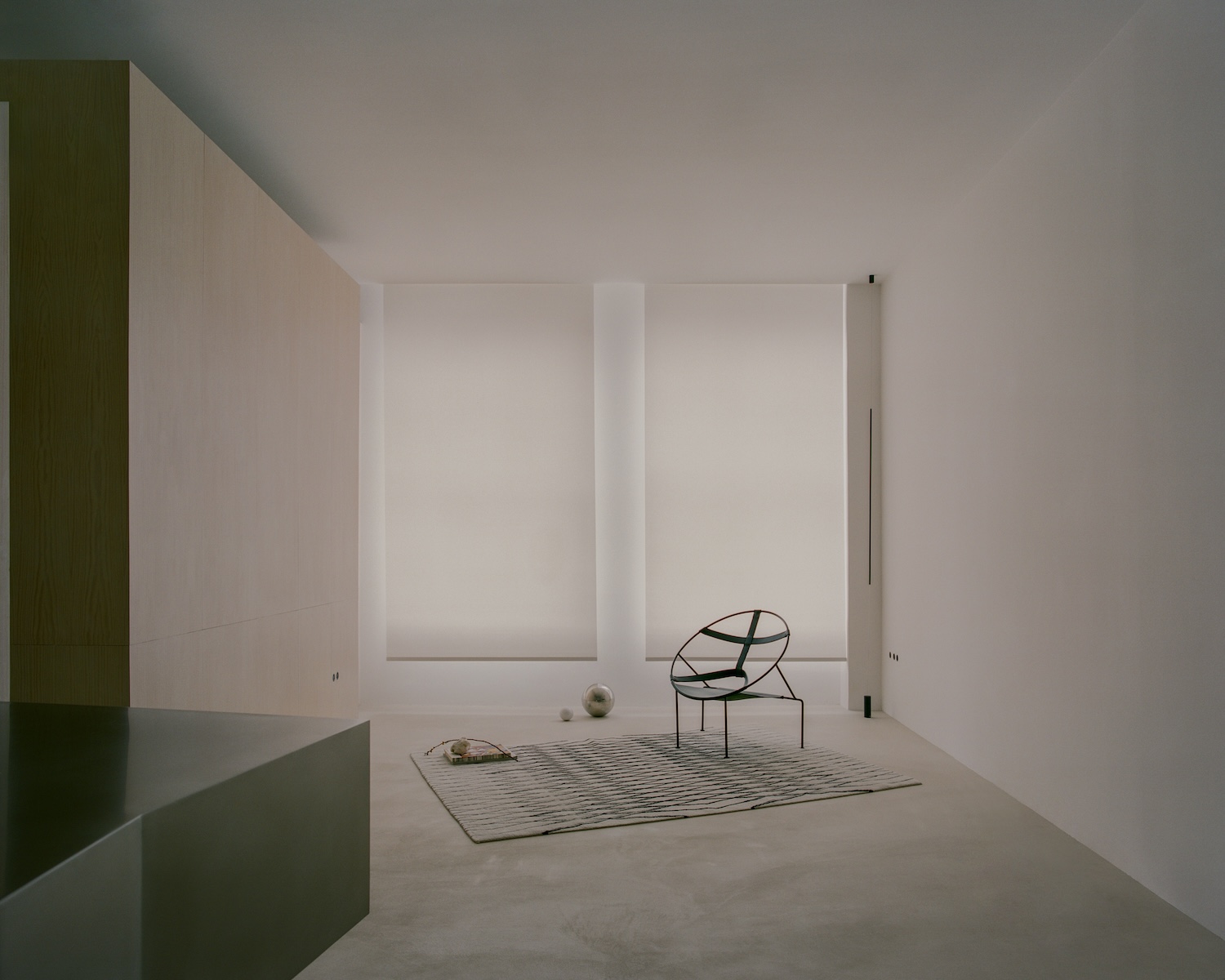
Studio Four is a minimalist residential interior located in London, United Kingdom designed by Paraforma. The 52-square-metre apartment in London Fields operates from a deceptively simple premise: that a domestic interior can function as a system of architectural objects rather than a sequence of enclosed rooms. Paraforma treats the floor plan not as a container to be subdivided, but as a field where elements are placed with enough autonomy to generate their own spatial logic. The approach echoes the open-plan thinking of Gio Ponti’s Via Dezza apartment – where furniture and built elements conspire to define territory without resorting to walls – while pressing toward something more deliberately infrastructural.
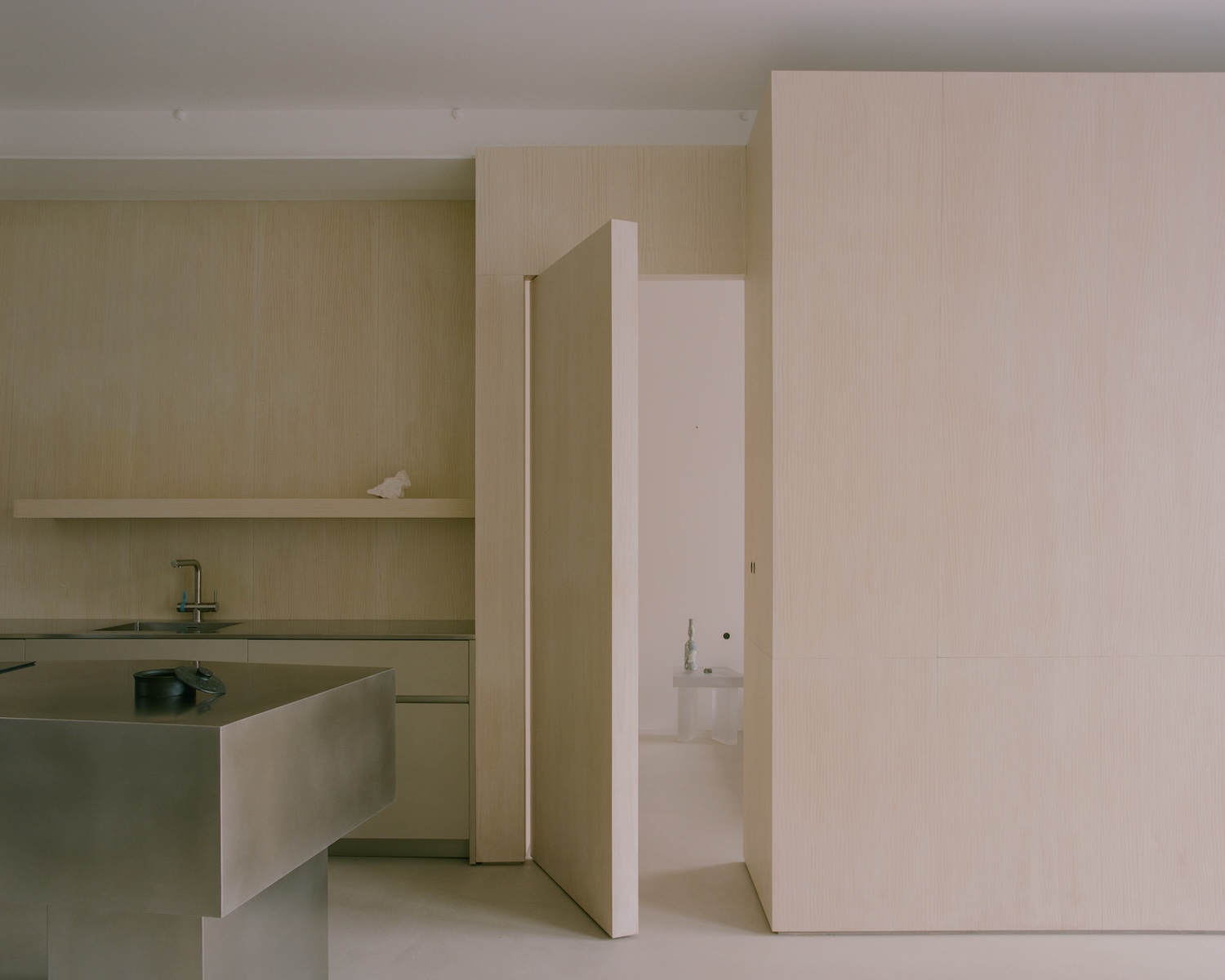
The project is structured around a full-height timber wall that runs through the plan as its organizational spine. Rather than functioning as a partition, it operates more like a service core: absorbing kitchen, storage, and utilities into a single inhabitable thickness. This distinction matters. The wall does not divide – it generates. Zones on either side are defined by proximity to it rather than containment within it, producing gradients of privacy that shift from collective to intimate without hard transitions.
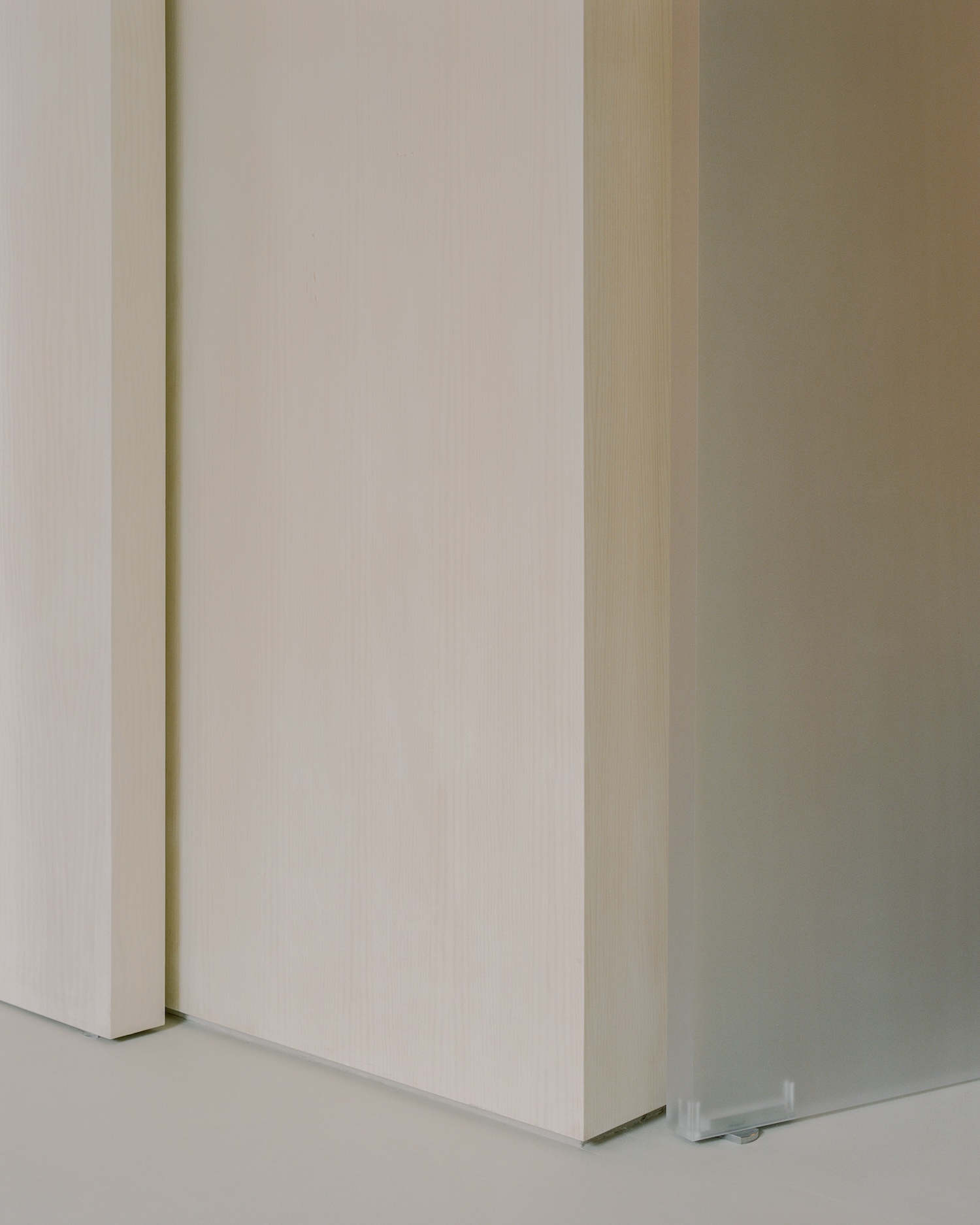
Mediating between bedroom and bathroom is a three-metre-high door cast in translucent resin. The choice of material is precise in its ambiguity. Resin at this scale absorbs and diffuses light rather than blocking or transmitting it cleanly, creating a threshold that signals a change in condition without announcing it. It registers as neither opaque nor transparent, occupying a sensory middle ground that serves the apartment’s broader interest in gradation over demarcation. The door functions atmospherically as much as architecturally – less a hinge between rooms than a membrane marking the shift from rest to care.
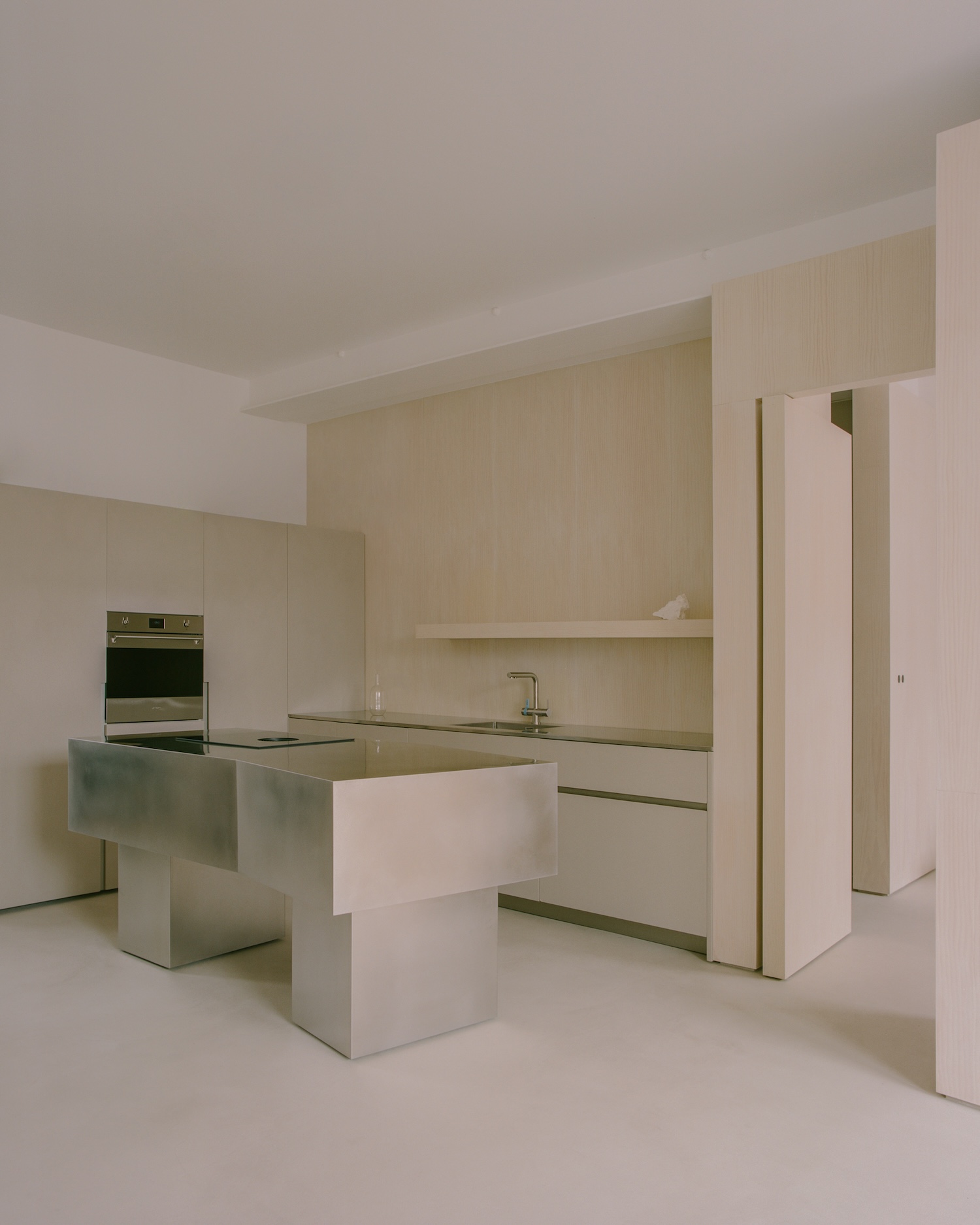
Material investigation extends into the kitchen island, developed in collaboration with Mingardo. Beginning as a solid prism, the object is progressively worked through cutting, shifting, and carving until its mass becomes articulate. The process belongs to a sculptural lineage – closer to Imi Knobel’s Raum 19 room-scaled timber constructions or the additive-subtractive logic of Constructivist object-making – than to conventional furniture design. The result occupies the border between architecture and object: overscaled enough to read as infrastructure, resolved enough to register as craft. Void is not incidental here; it is the product of deliberate removal, and the relationship between what remains and what has been taken away defines the island’s character.