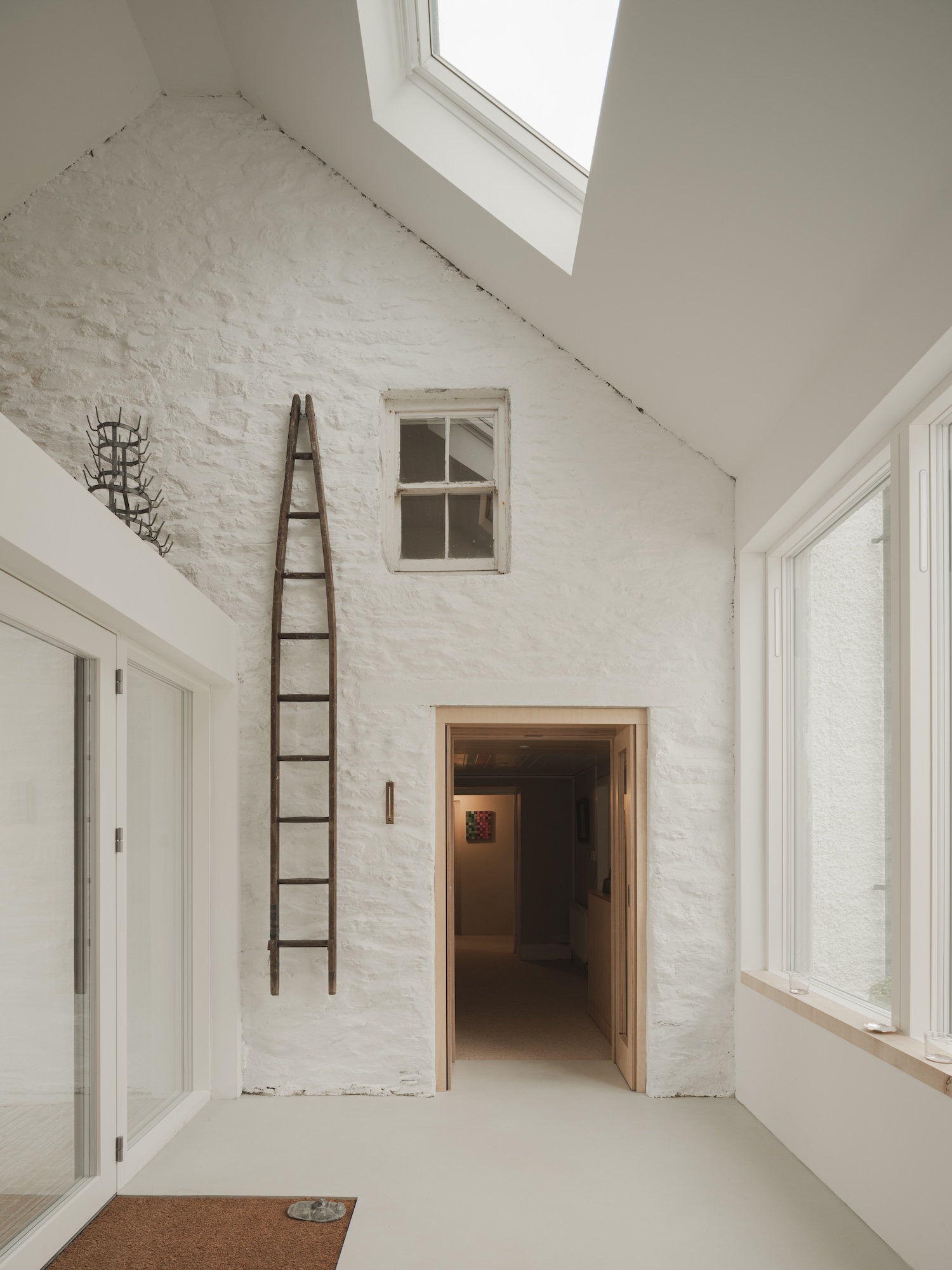
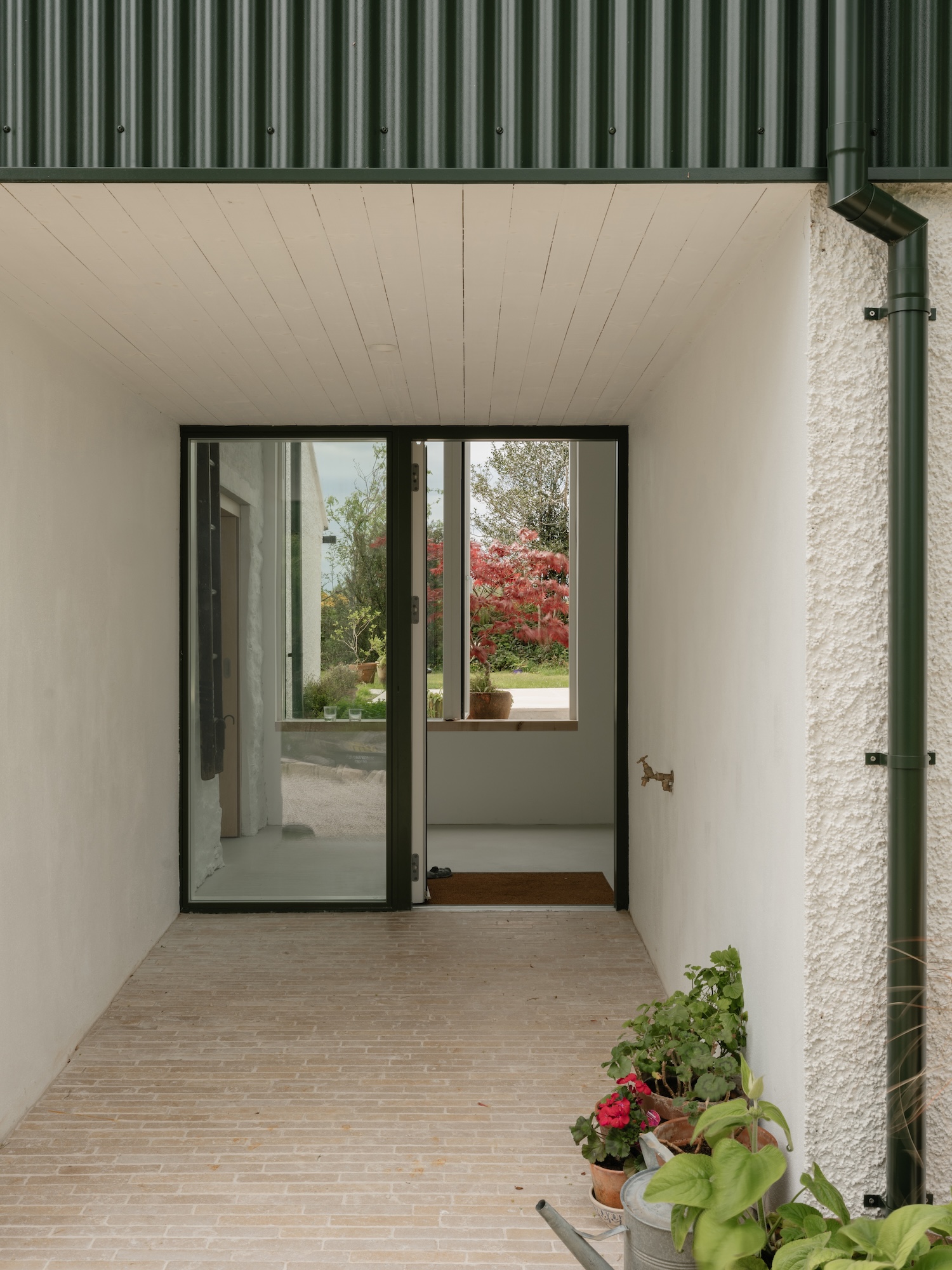
Moss is a minimalist home located in Glenties, Ireland, designed by Pasparakis Friel. At the end of a narrow bog road in County Donegal, this cluster of buildings was once the operational heart of a working farm, the house flanked by a byre on one side and outhouses on the other, with a south-facing yard serving as the central outdoor room. The architecture grows directly from that history of cohabitation, where humans and livestock once shared space and routine, and where the boundaries between living, making, and working were never cleanly drawn. Over thirty-five years, the structures absorbed new purposes: the byre folded into the domestic realm, the outhouses became the hub of a small-batch jam and chutney enterprise, and art accumulated in every available corner. The latest evolution formalizes what the site had already become, a place that functions as much as gallery and studio as it does a home.
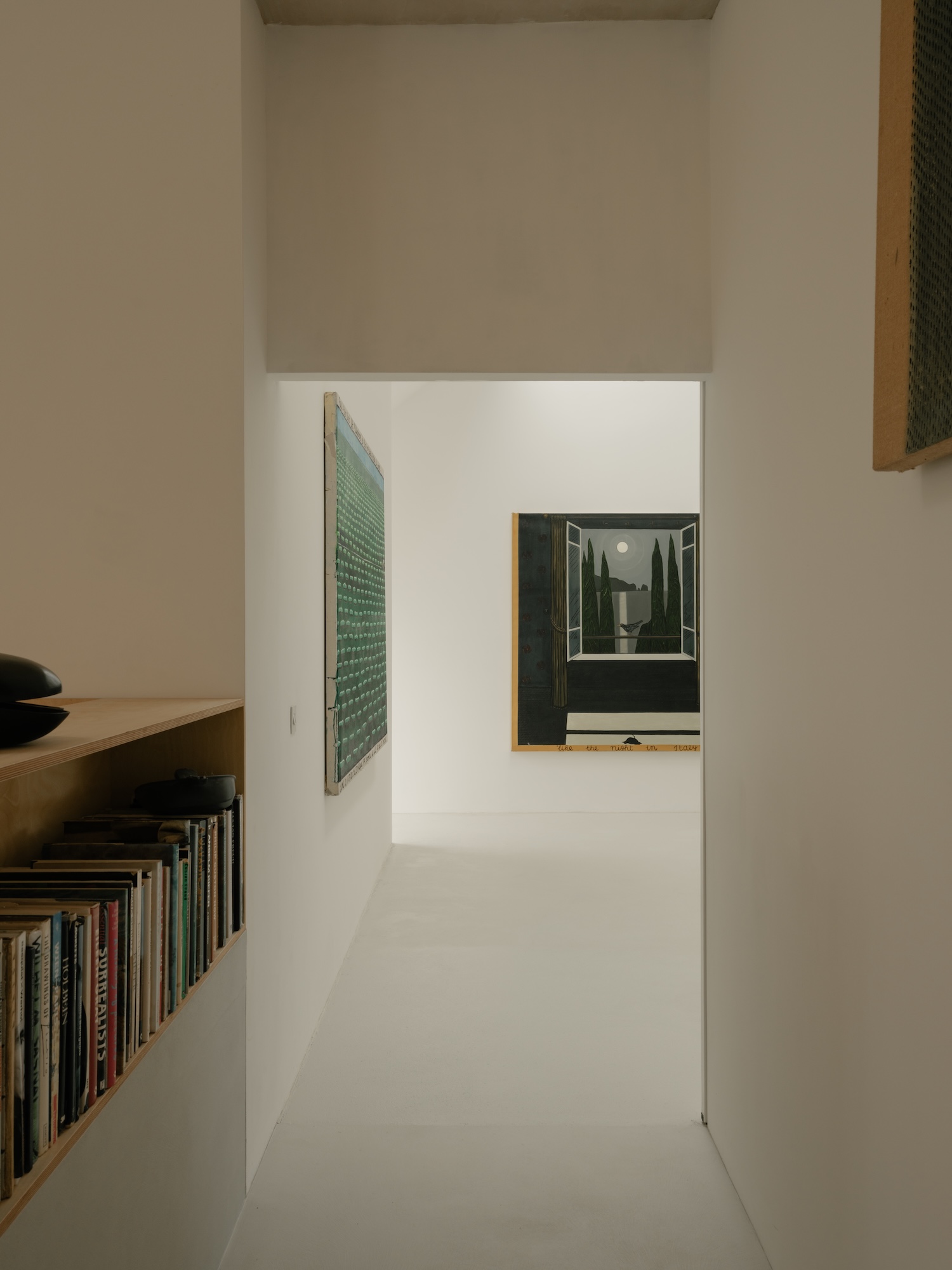
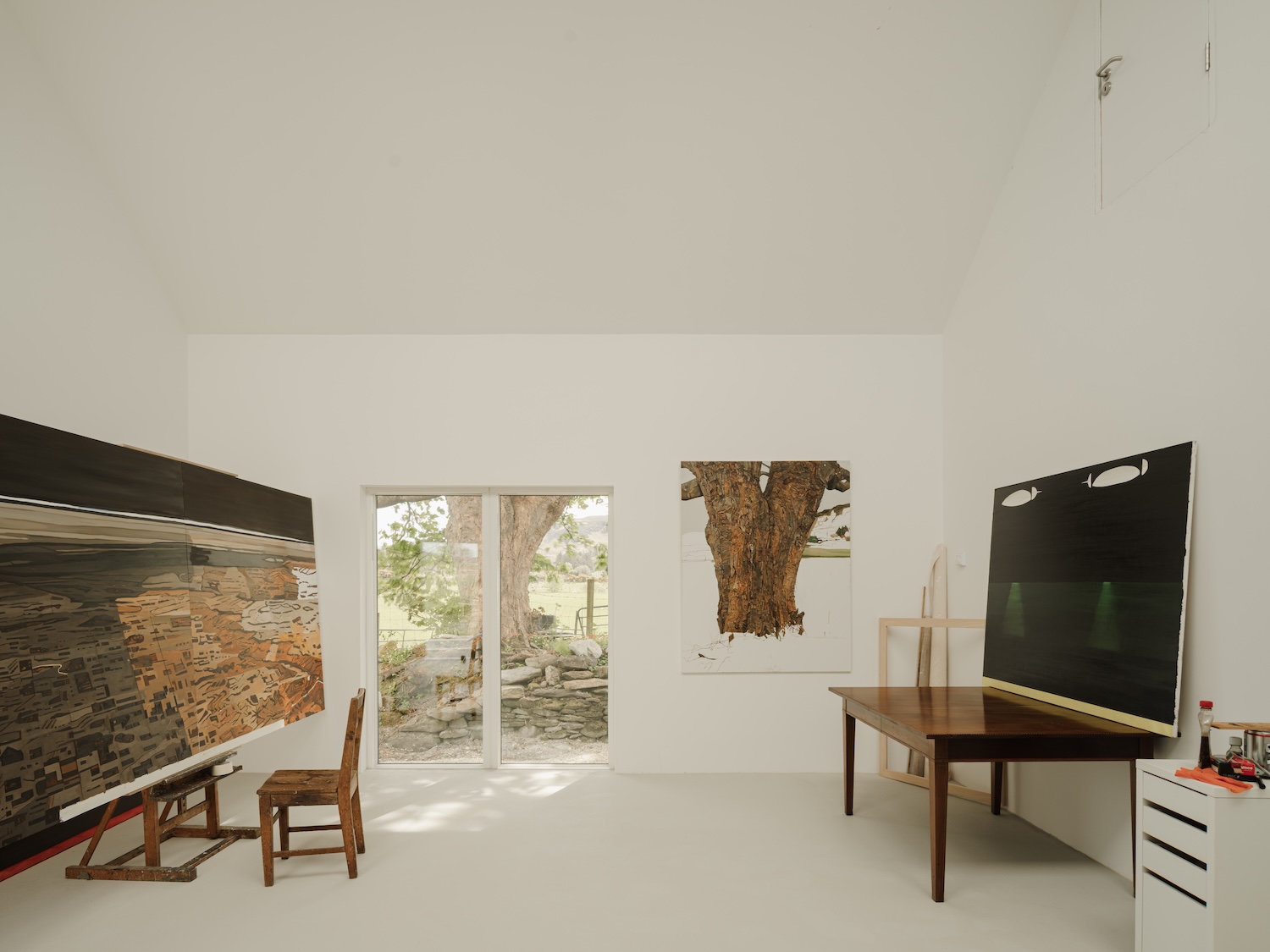
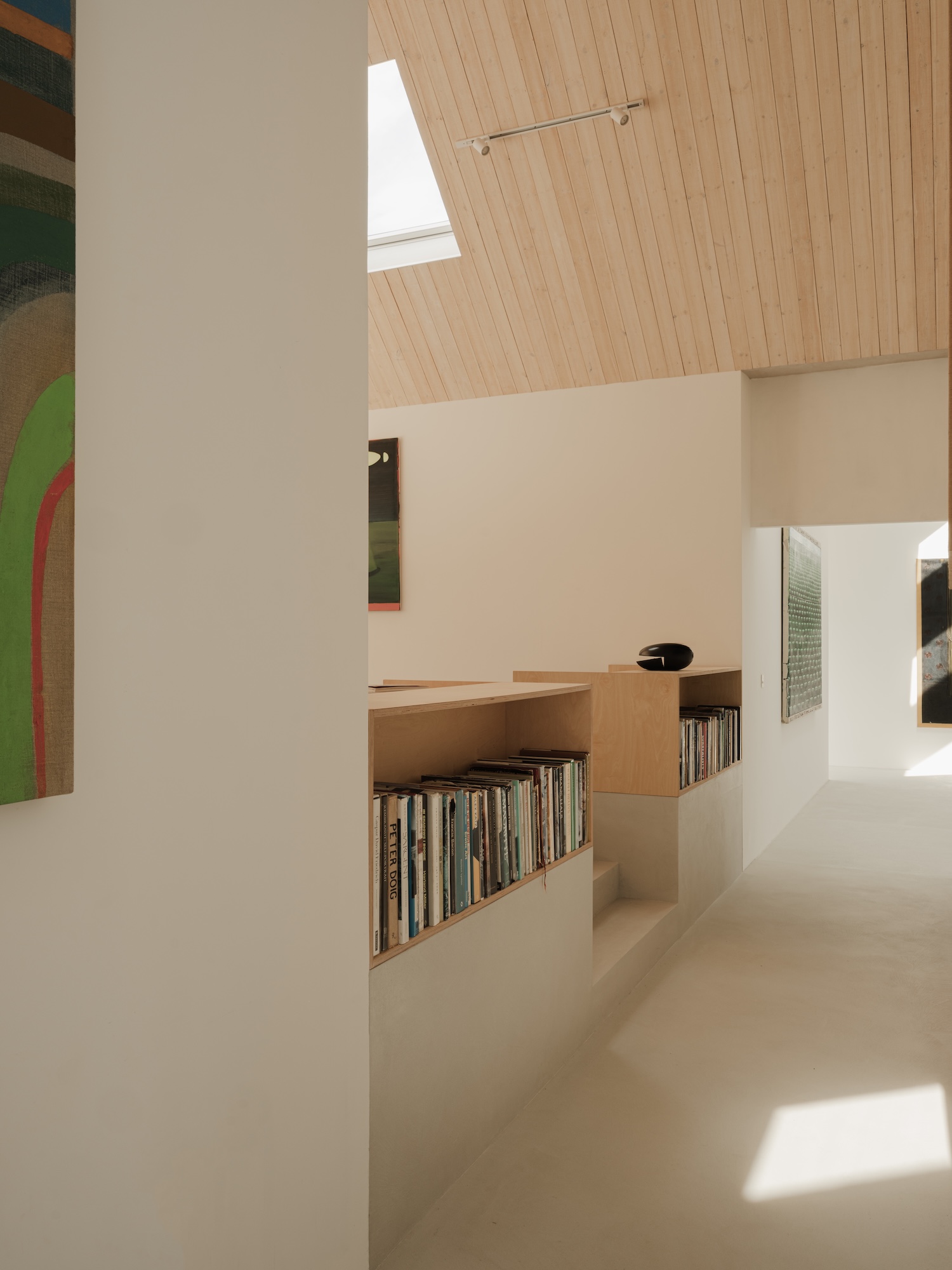
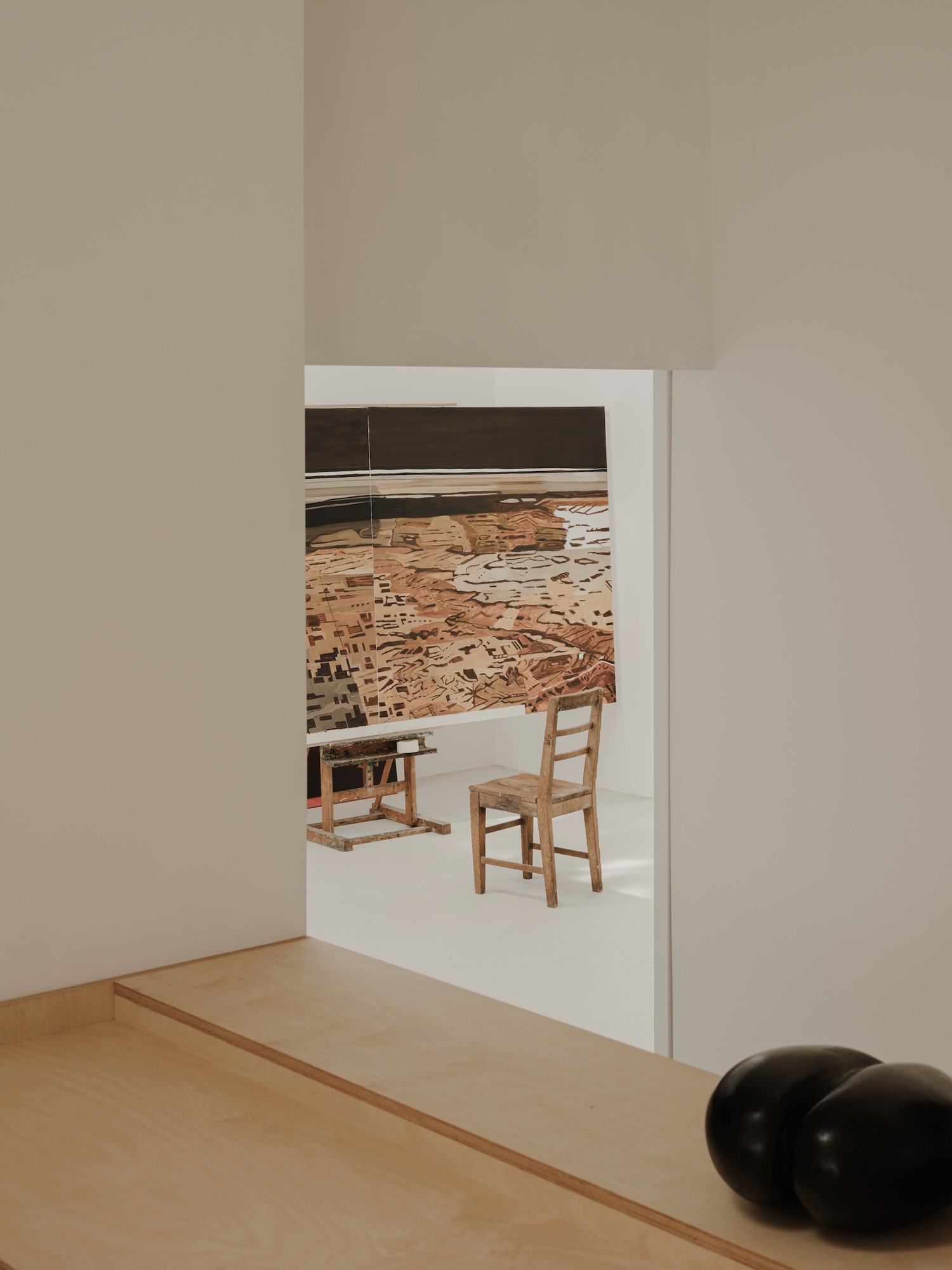
The extension responds to these overlapping roles through the discipline of how it handles light. North light feeds the painting studio with the cool, consistent illumination that artists have sought since the ateliers of nineteenth-century Paris, while borrowed light softens the transitions between rooms, drawn through from adjacent volumes rather than admitted directly. The result is a sequence calibrated to varying intensities, generous quiet walls held in reserve for the curation of work. Pasparakis Friel set the new volume back at the far edge of the house, leaving the original farmhouse discreetly positioned at the end of the lane. This restraint preserves the character of the existing yard and lets the addition belong to its rural setting rather than announce itself against it.
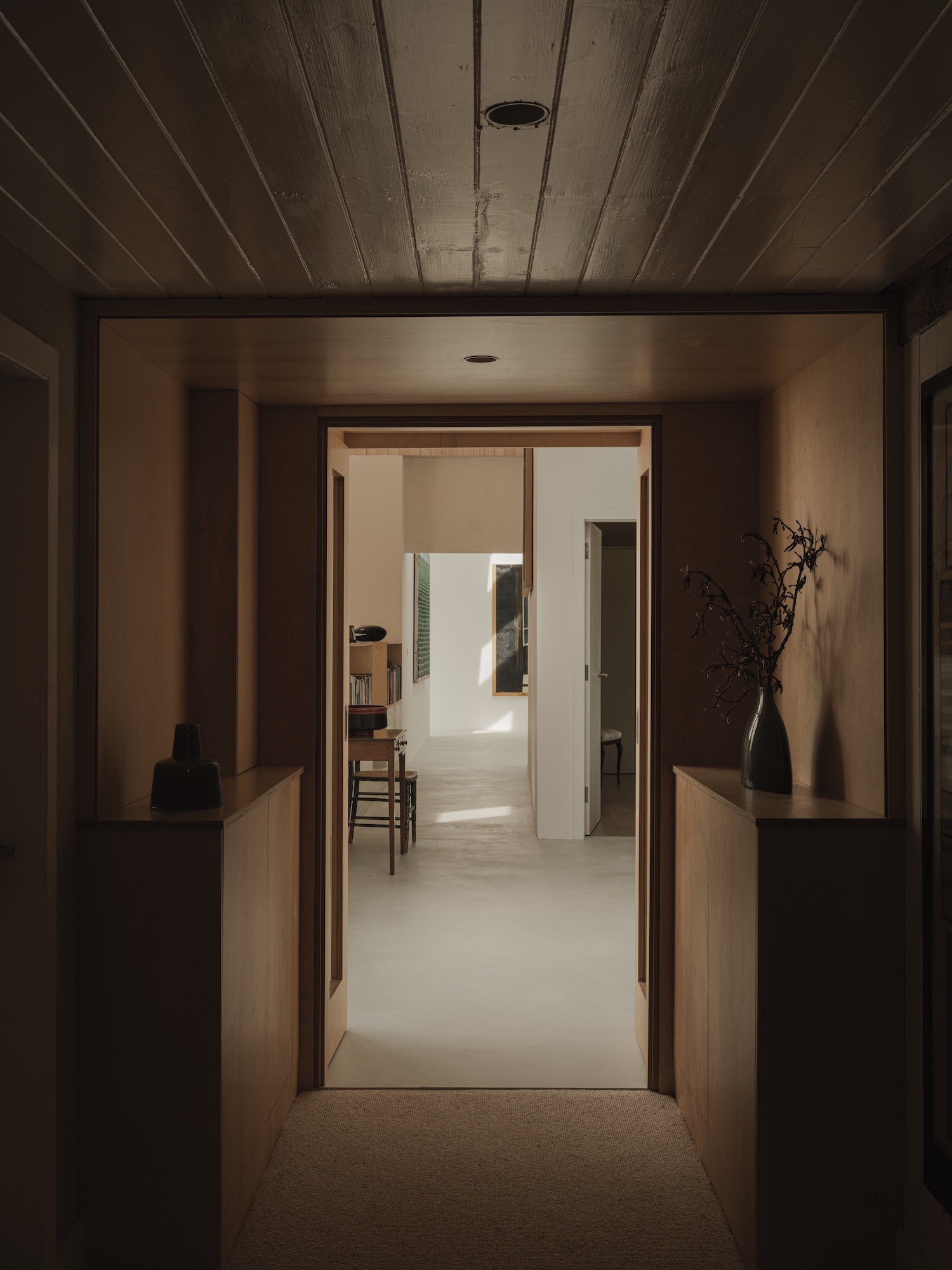
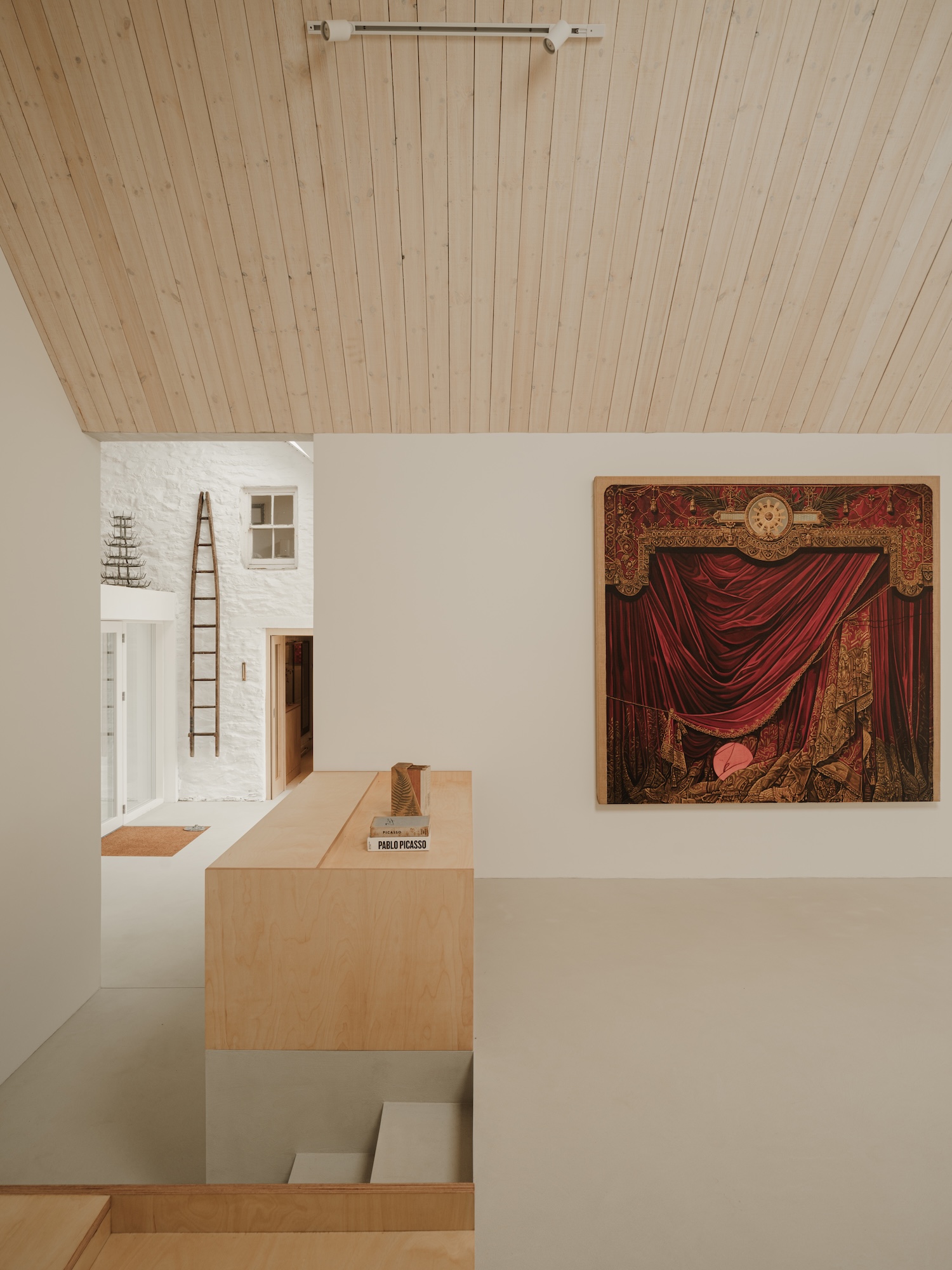
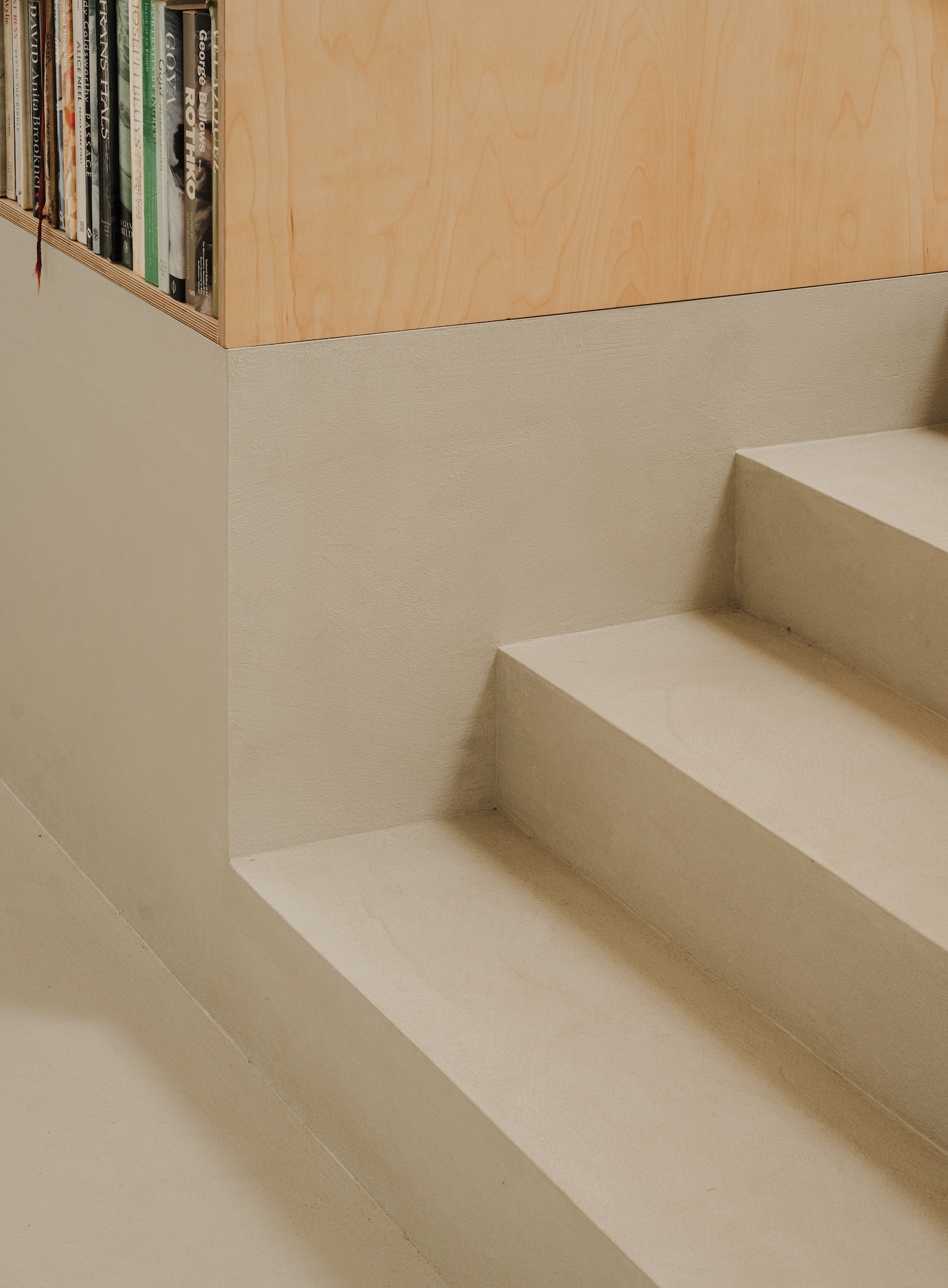
The interior palette is grounded in clay-toned microcement, applied as a continuous surface that reads like a monolithic floor plinth, set beneath raw timber ceilings of locally sourced mill-finished boards. Oiled plywood furniture and soft neutral walls keep the gallery spaces calm and tactile, a deliberately recessive backdrop that allows large-format paintings and the couple’s antique collection to define the experience. The contrast between old and new is felt in the body as much as the eye. Within the existing farmhouse, intimate warren-like rooms retain their characterful draughts, while the extension introduces volumes that are light-filled, warm, and open.