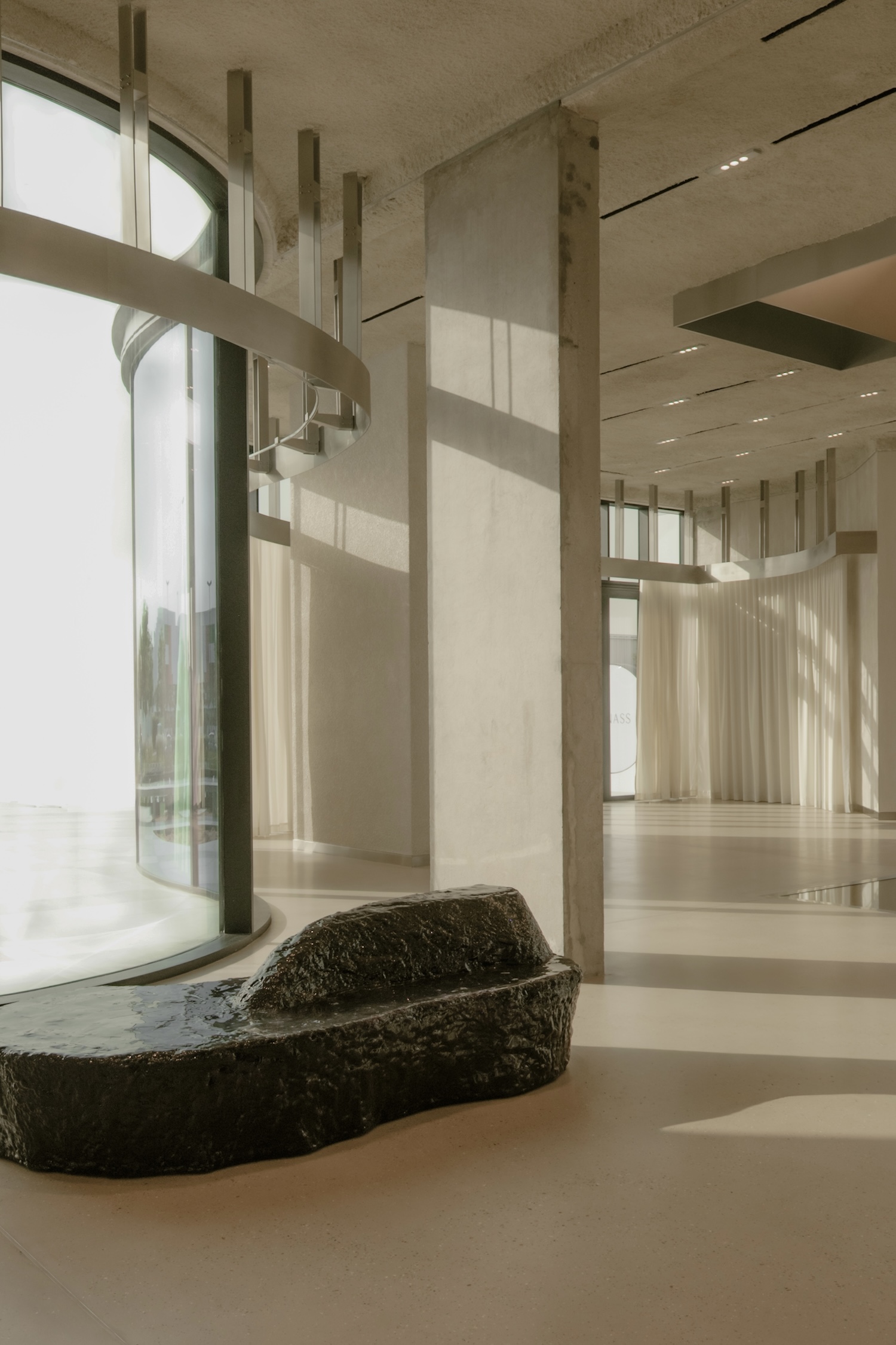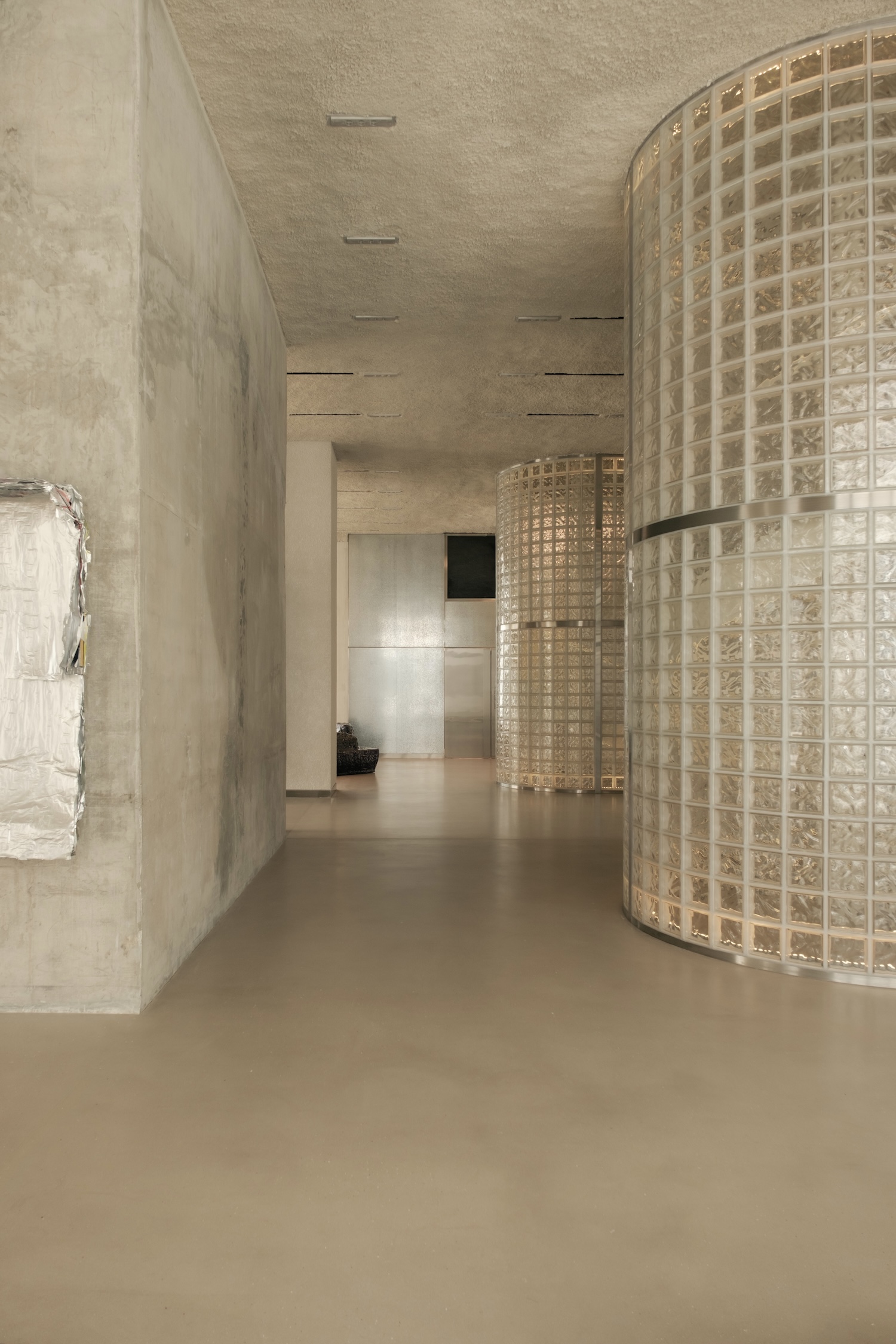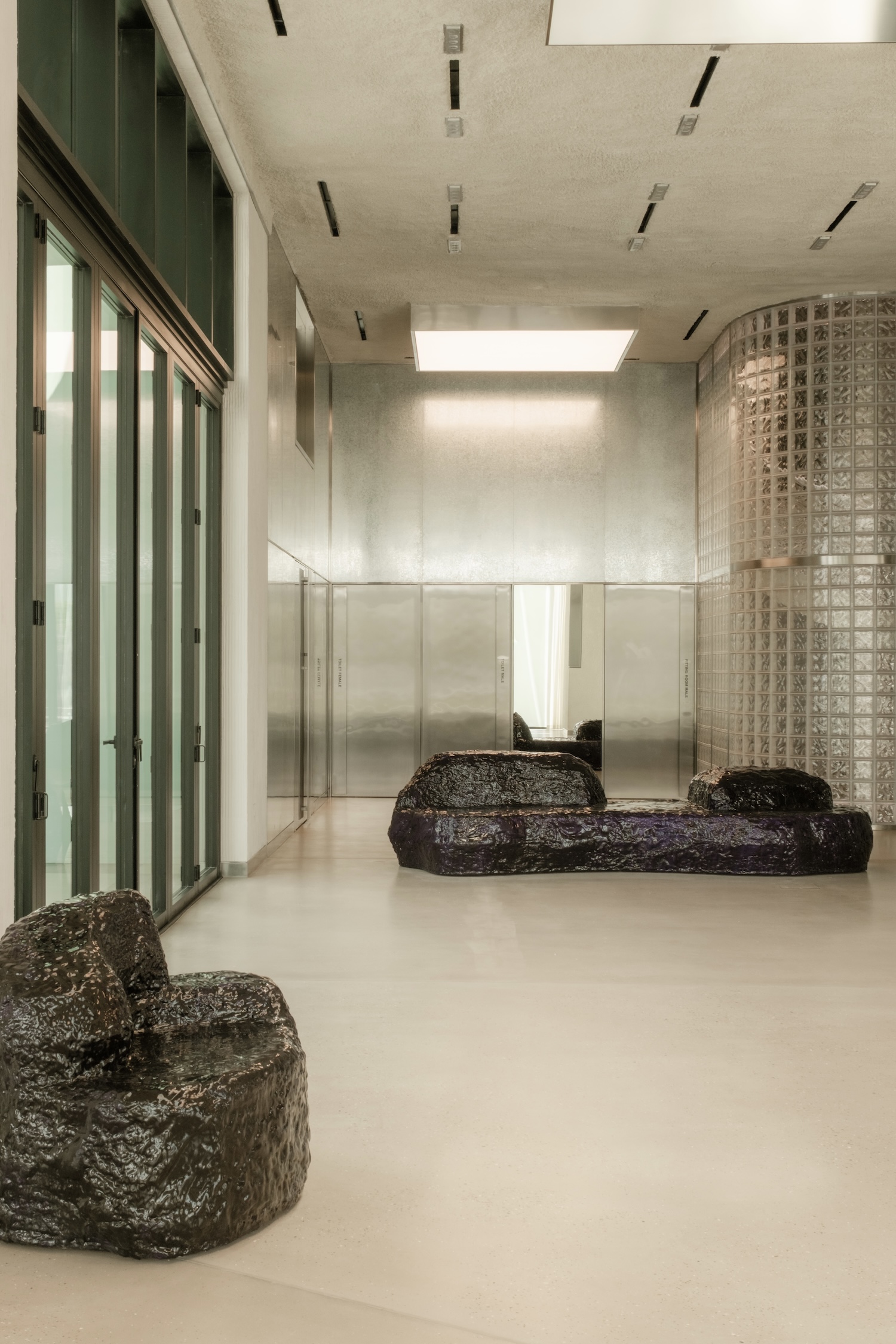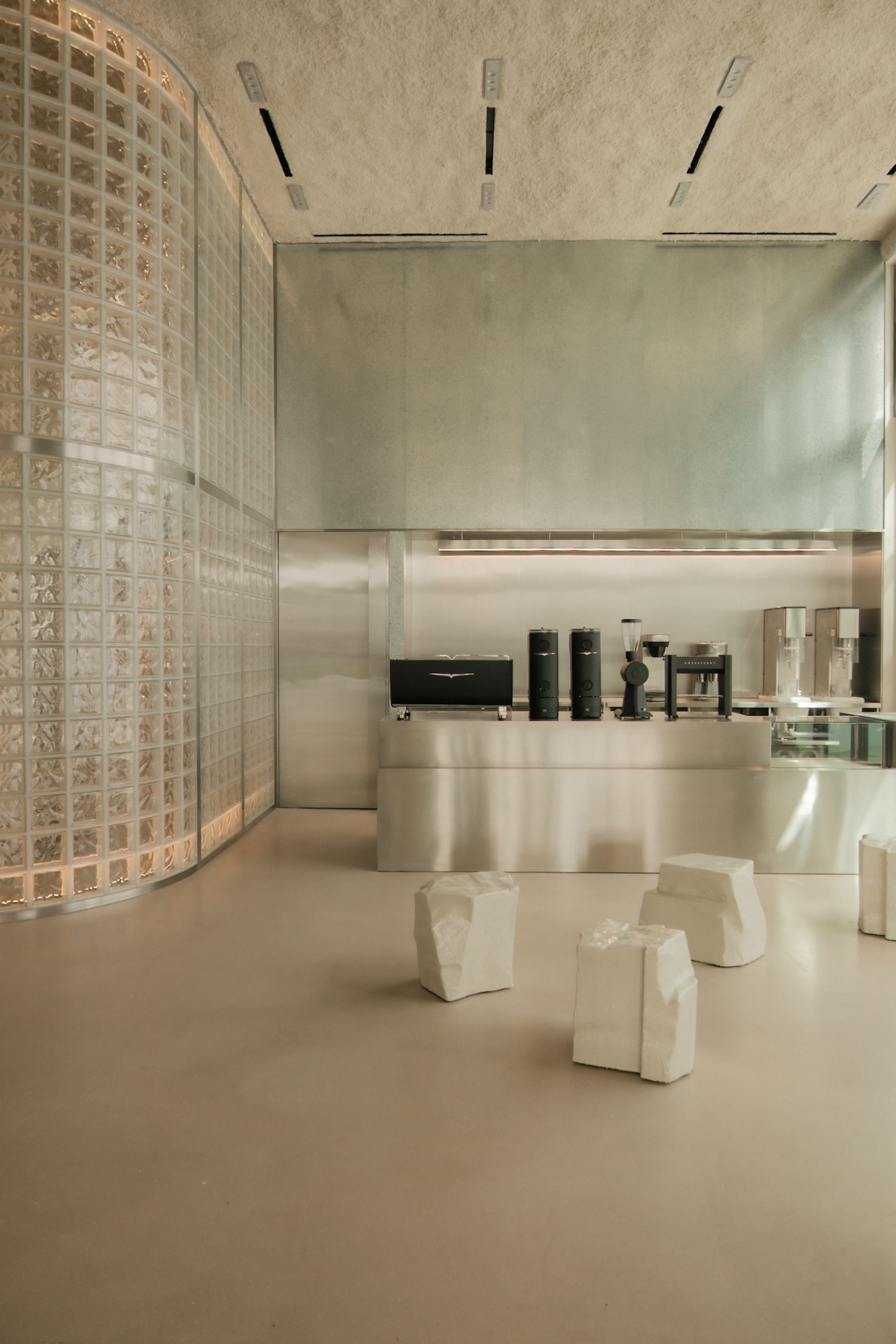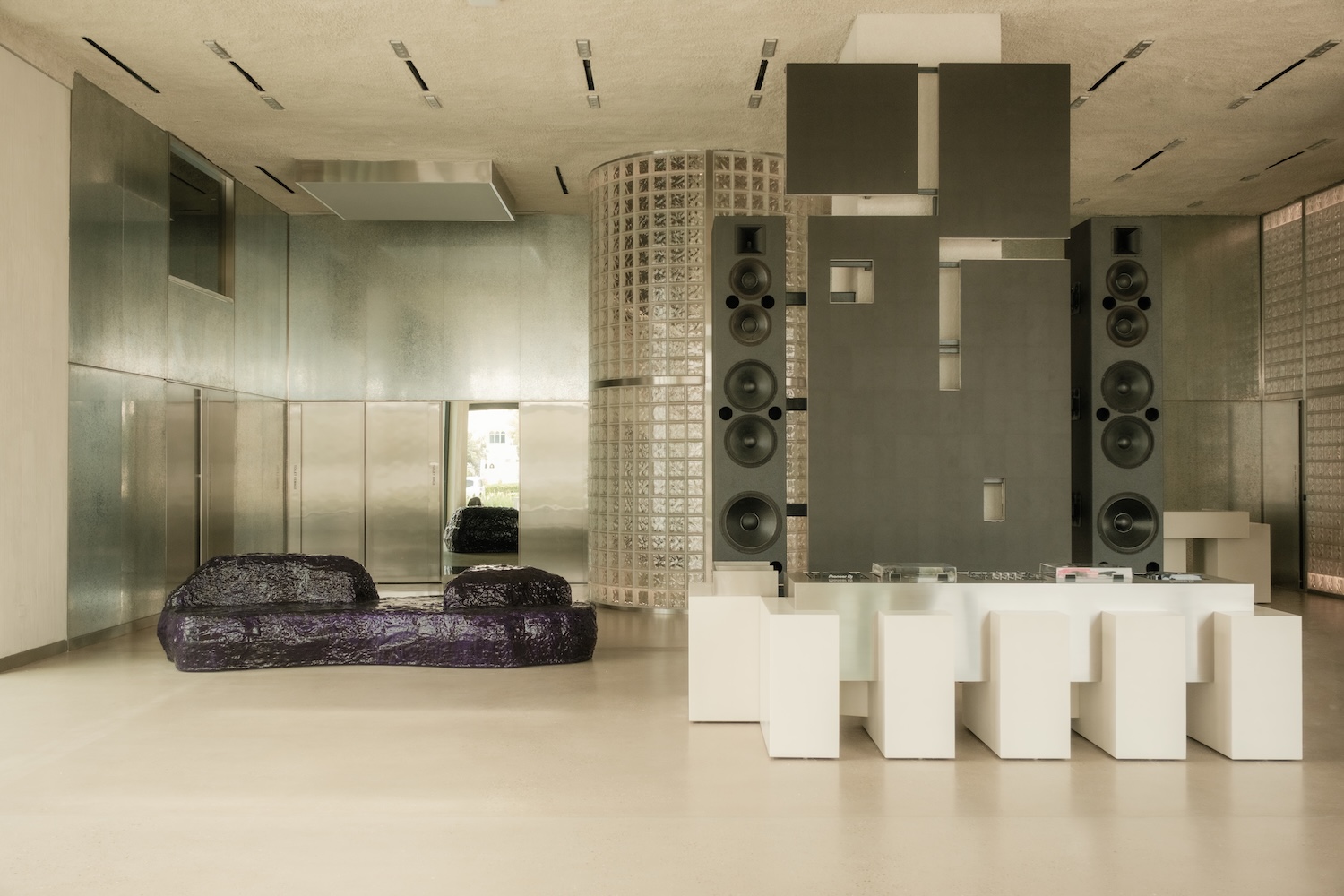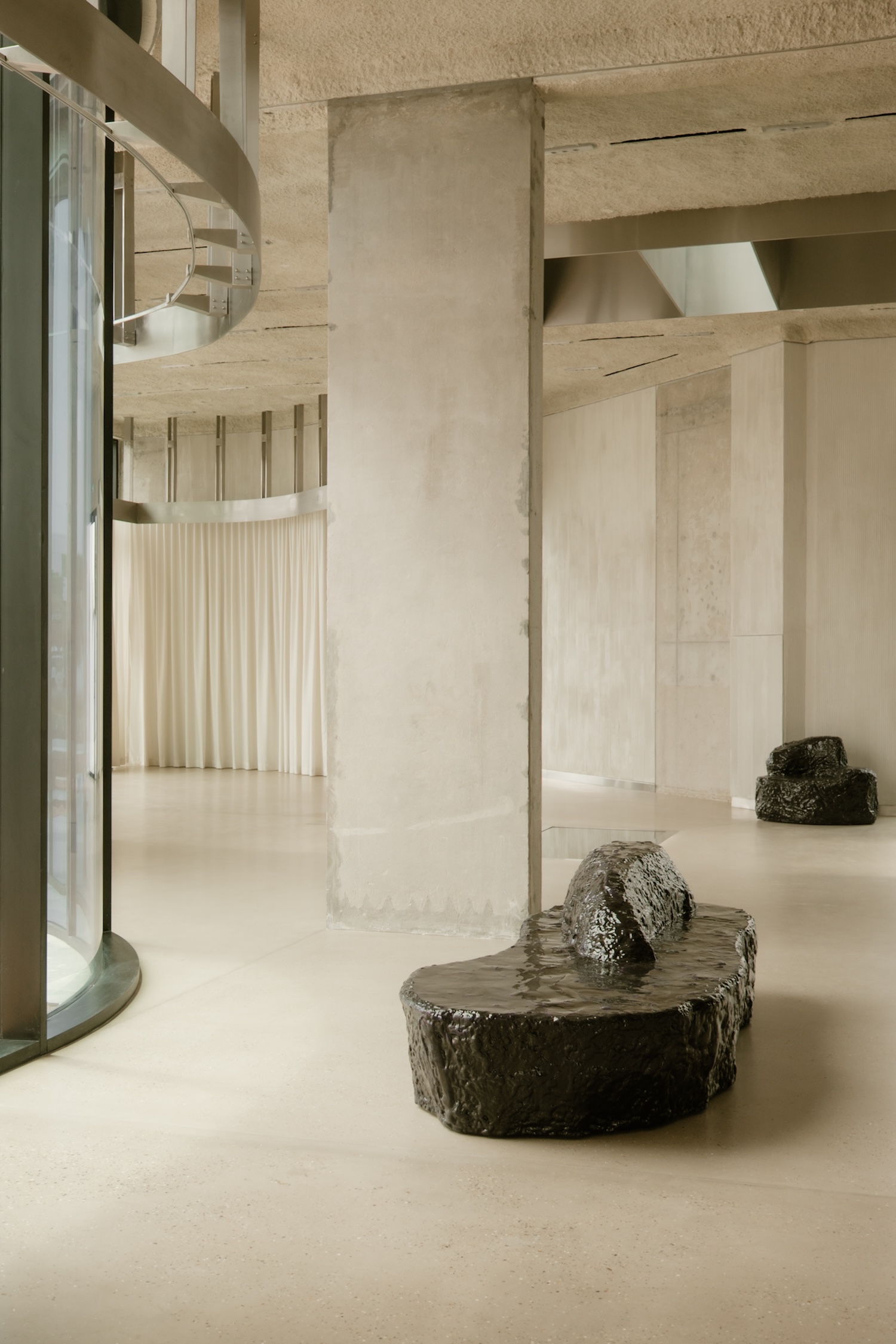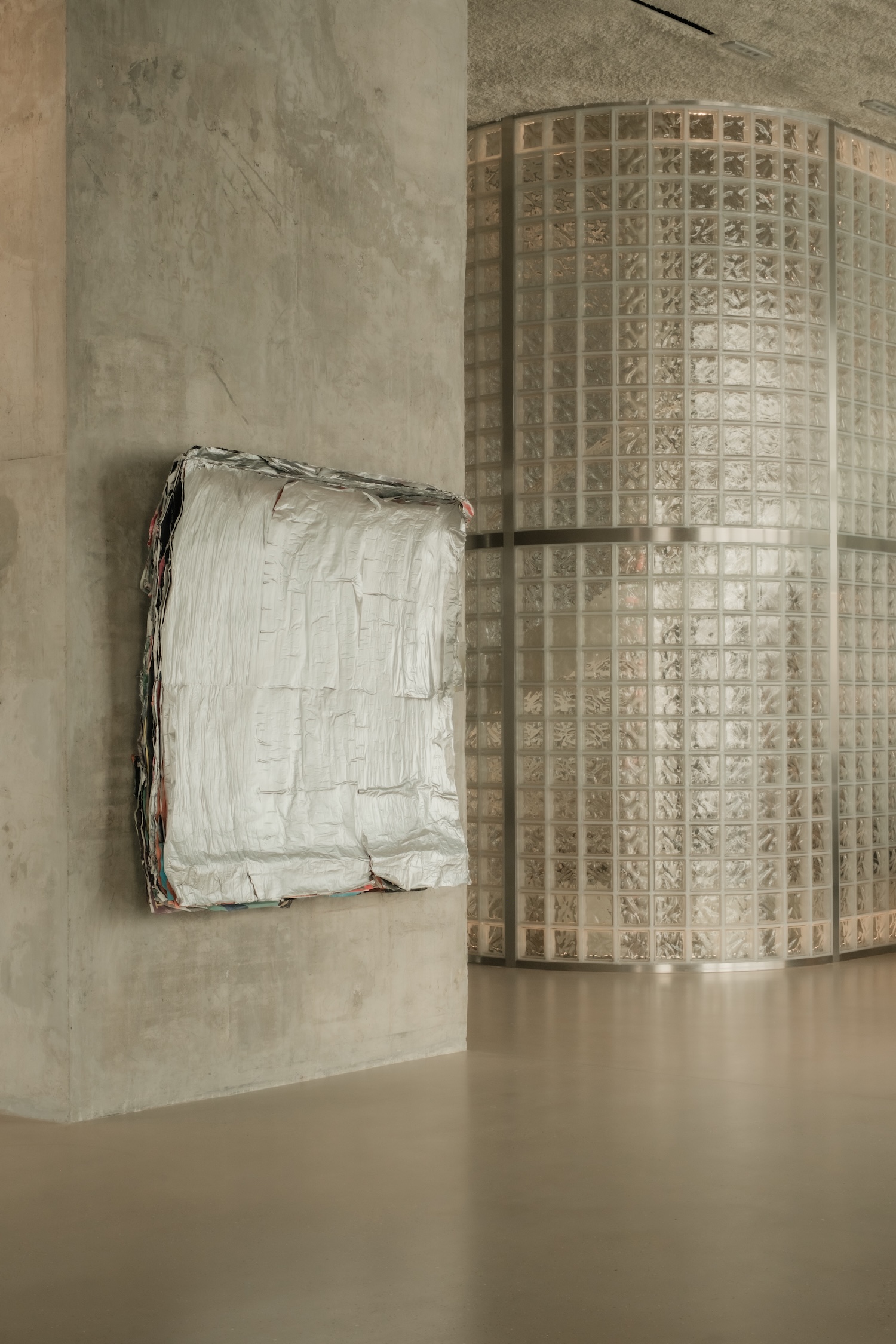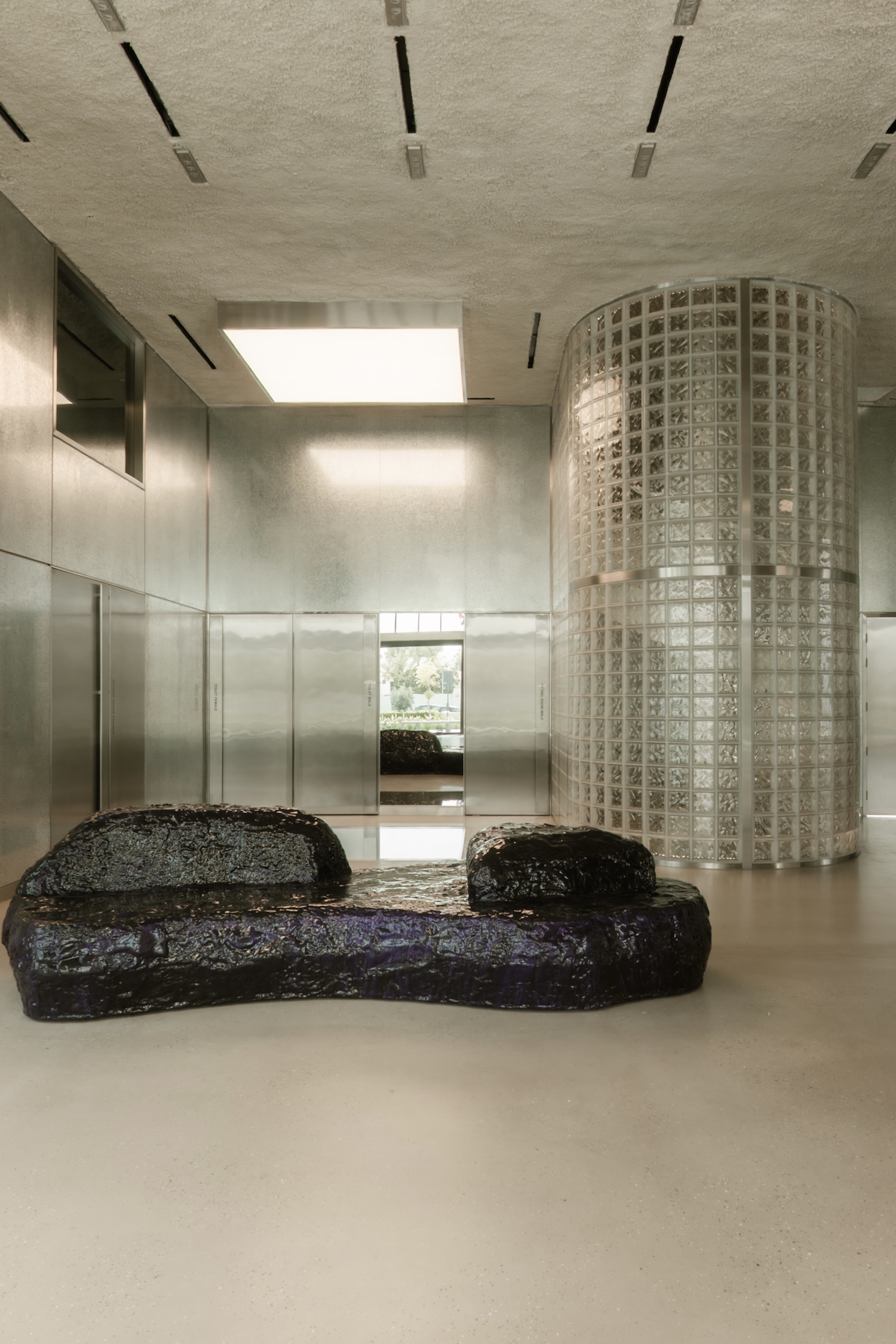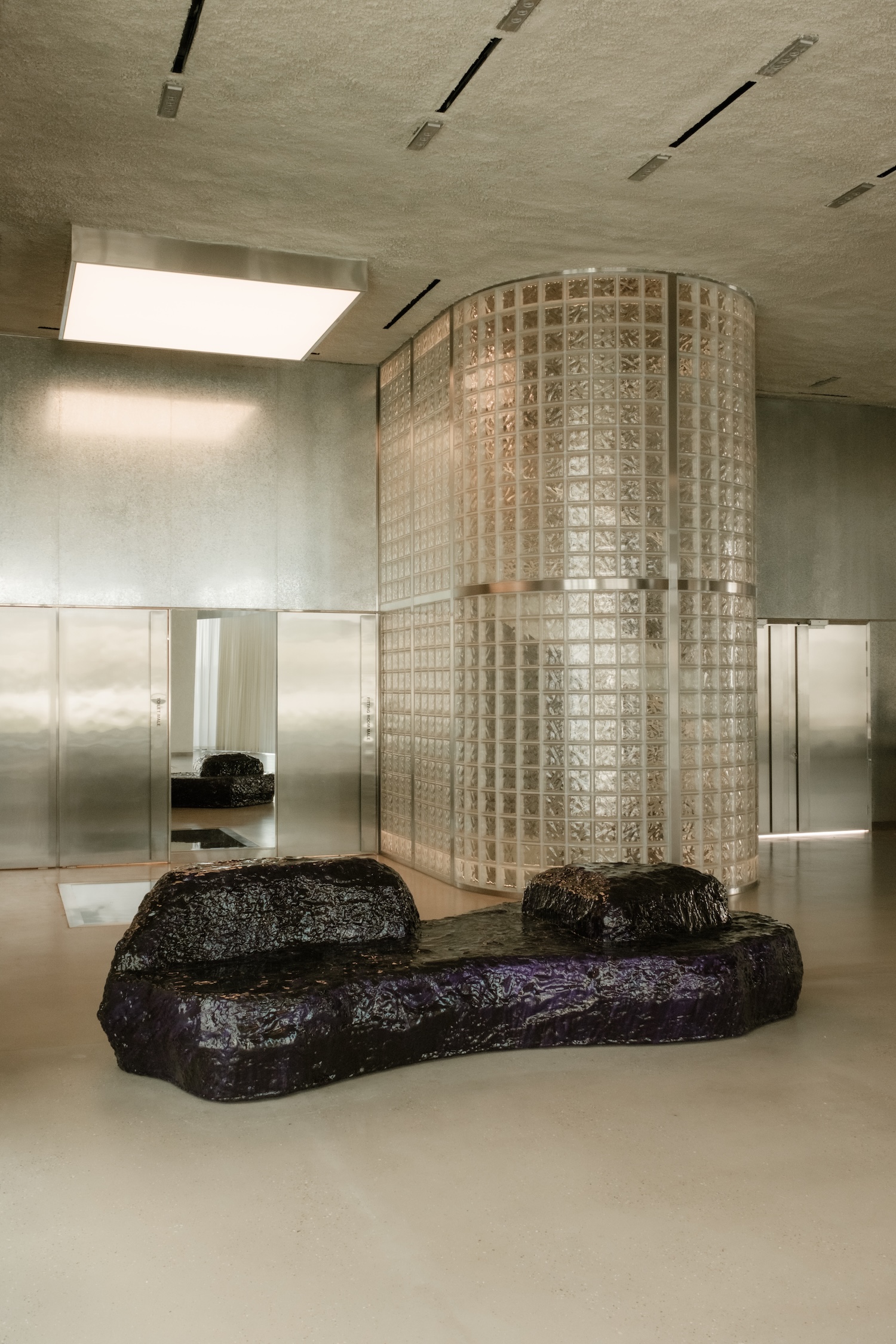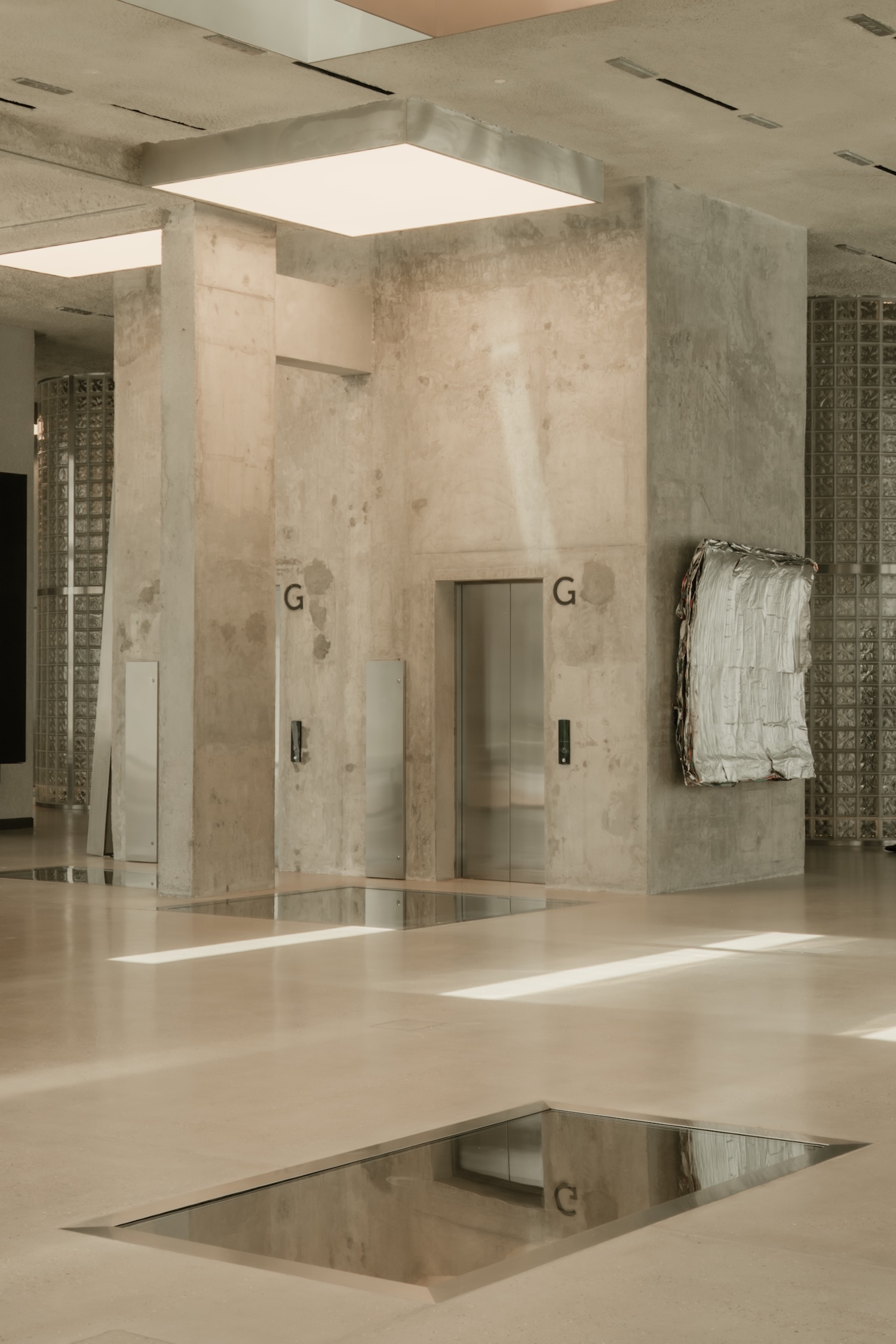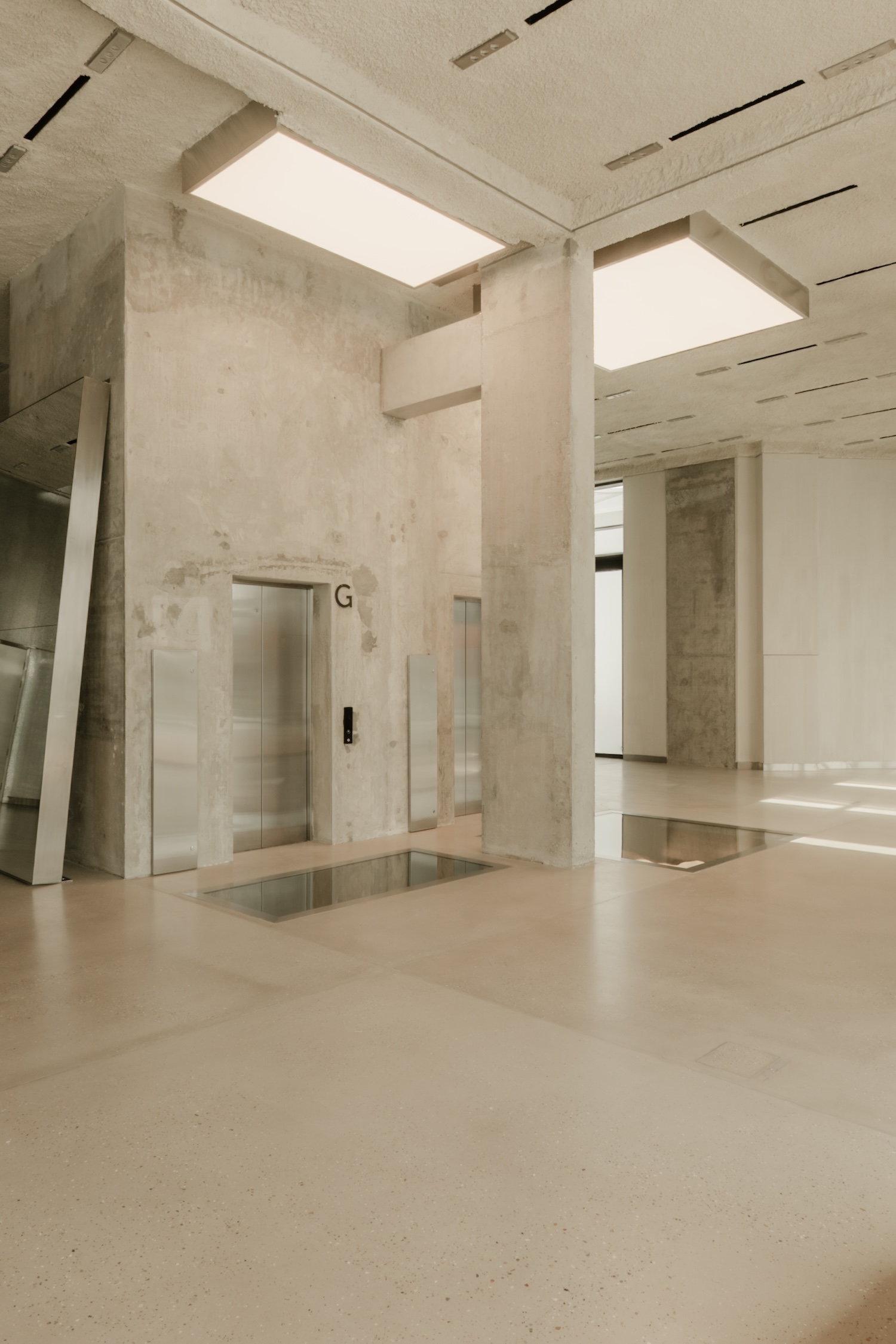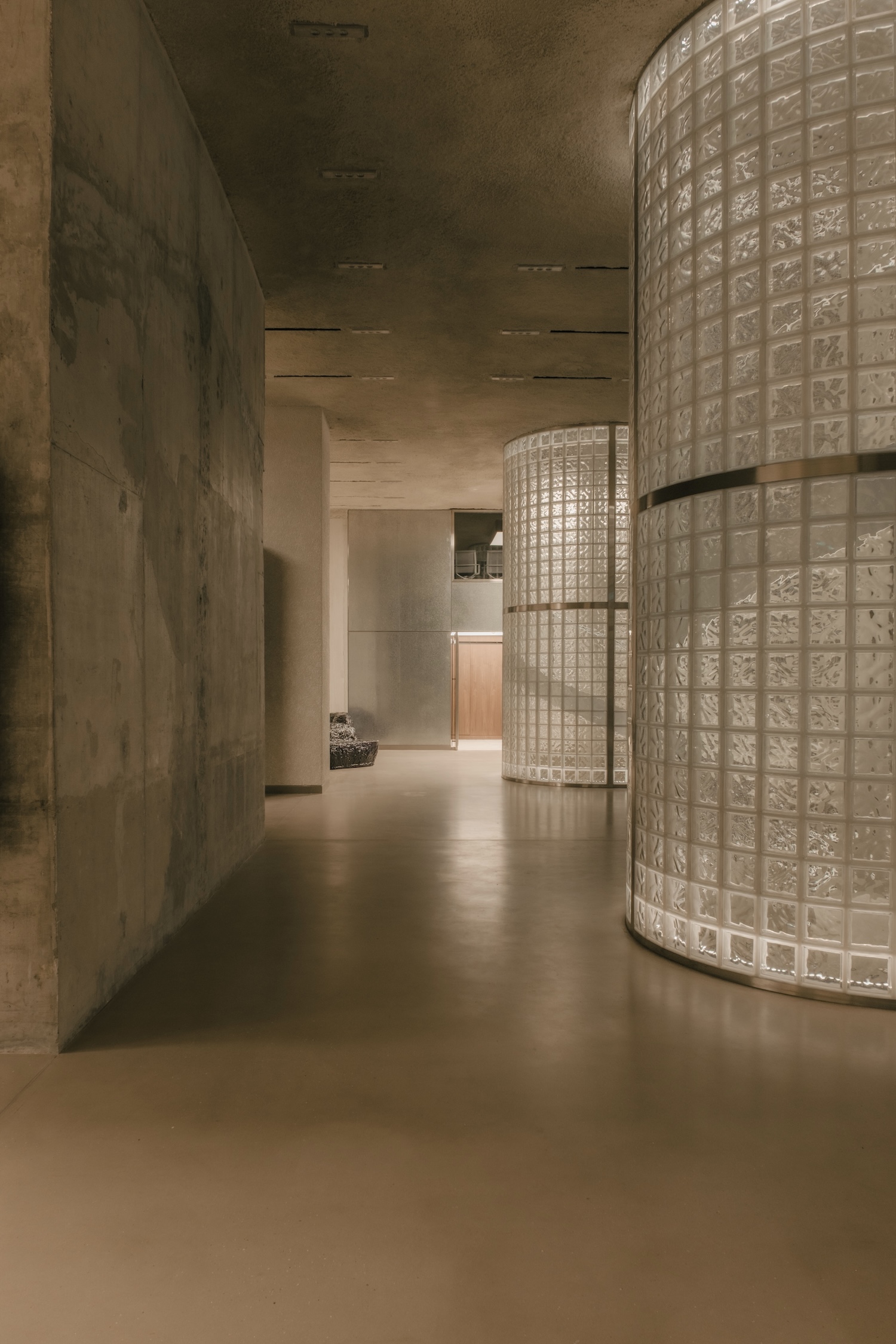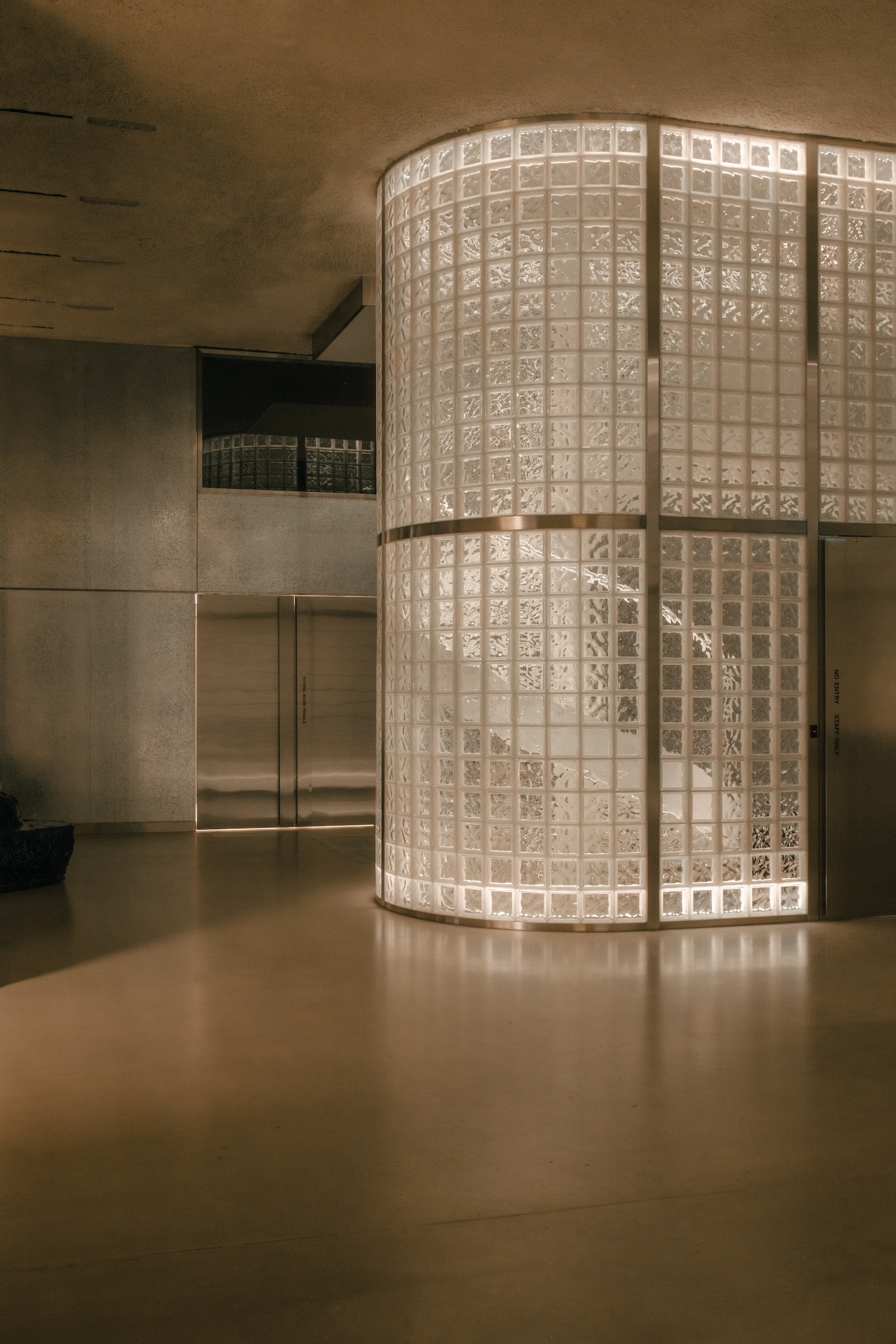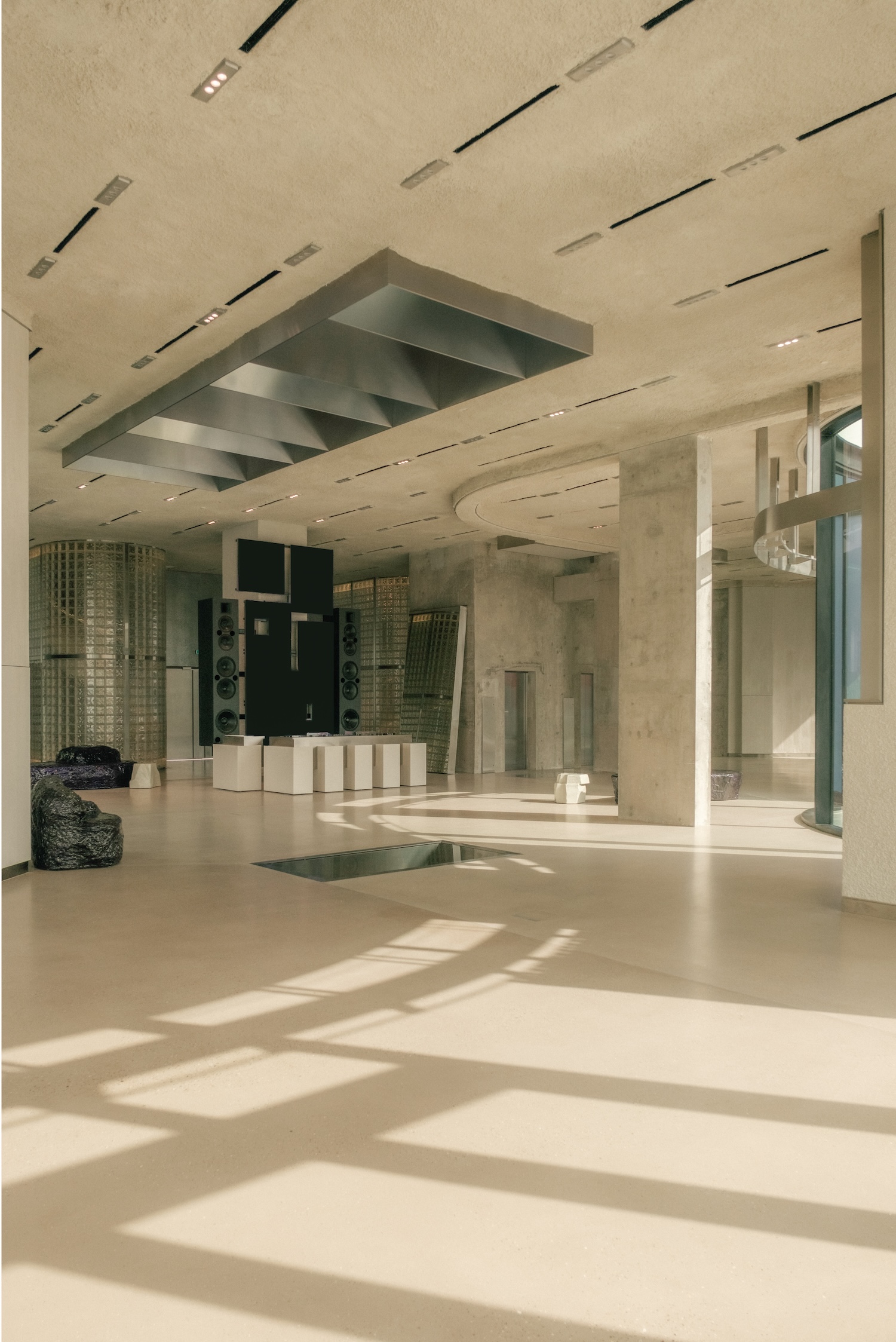
OUNASS STAGE is a minimalist retail installation located in Dubai, United Arab Emirates, designed by Berlin-based studio VAUST. The project raises a question that few retail commissions bother to ask: what happens when a brand platform refuses the neutrality of the white box? VAUST’s answer, developed for the luxury fashion platform Ounass, is an interior that reads less like a store and more like an inhabited geological specimen – a 700-square-meter space where the ground itself becomes a subject of architectural inquiry.
The conceptual premise, which VAUST describes as Alternate Abundance, rejects ornament as the primary register of luxury. Atmosphere carries the weight instead. The studio draws from Berlin’s post-industrial cultural spaces – the raw concrete and galvanized steel of repurposed warehouses that have come to define a certain strain of European institutional seriousness – and relocates that sensibility to Dubai’s precision-built retail landscape. The friction this creates is the point.
The most literal expression of that friction sits underfoot. Distributed throughout the interior, a series of sunken pits hold sand sourced from the Sharjah desert. Sealed beneath walkable glass, they function as compressed geology – visitors traverse the store while the landscape of the Emirates remains visible below the surface. The gesture draws on a lineage of floor-as-narrative in installation art, but here it anchors an otherwise industrial interior to a specific geographic identity. The sand is not decorative fill; it is a material argument about where this project belongs.
The broader material palette maintains that tension throughout. Galvanized steel dominates the rear wall, which VAUST developed as a self-contained architectural infrastructure – a monolithic volume absorbing kitchen, stockroom, staff workspace, changing rooms, conference room and a goods lift into a single continuous section. The economy of this move is notable: all servicing disappears behind one surface, leaving the main floor open to read as pure spatial experience. Emerging from this same wall, two staircases constructed from glass blocks introduce a deliberate counterpoint – translucency pressed against mass, lightness inserted into the heaviest element of the composition.