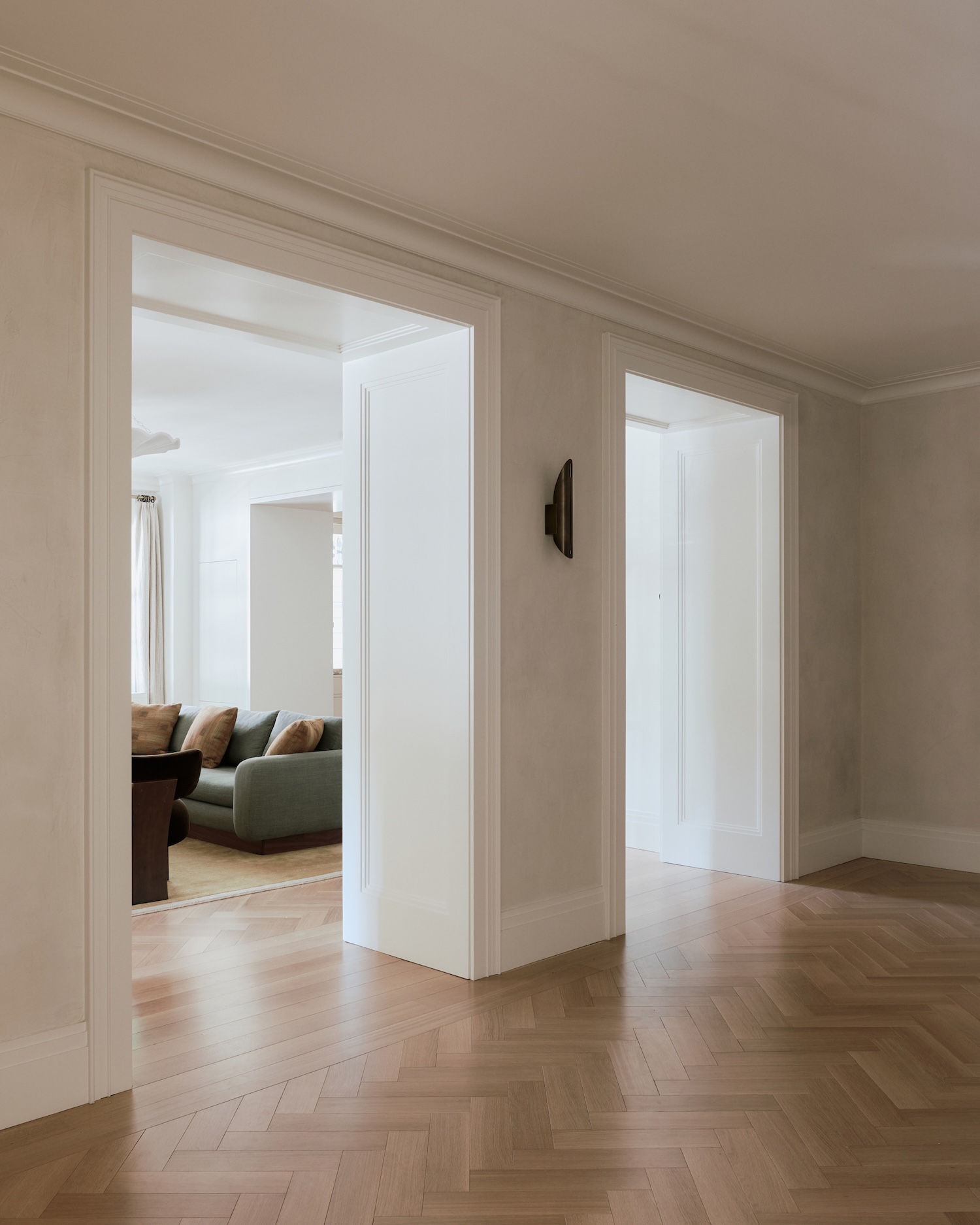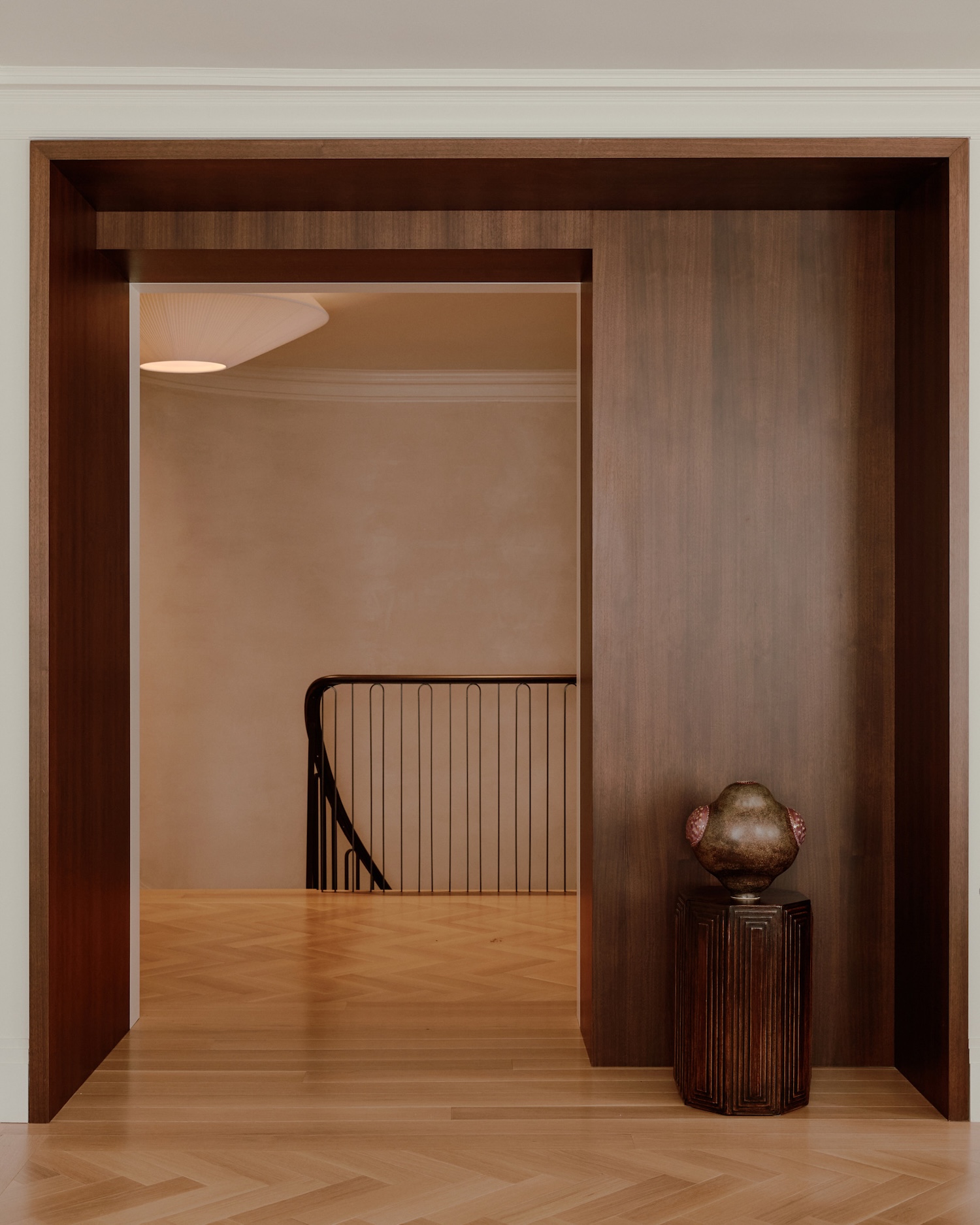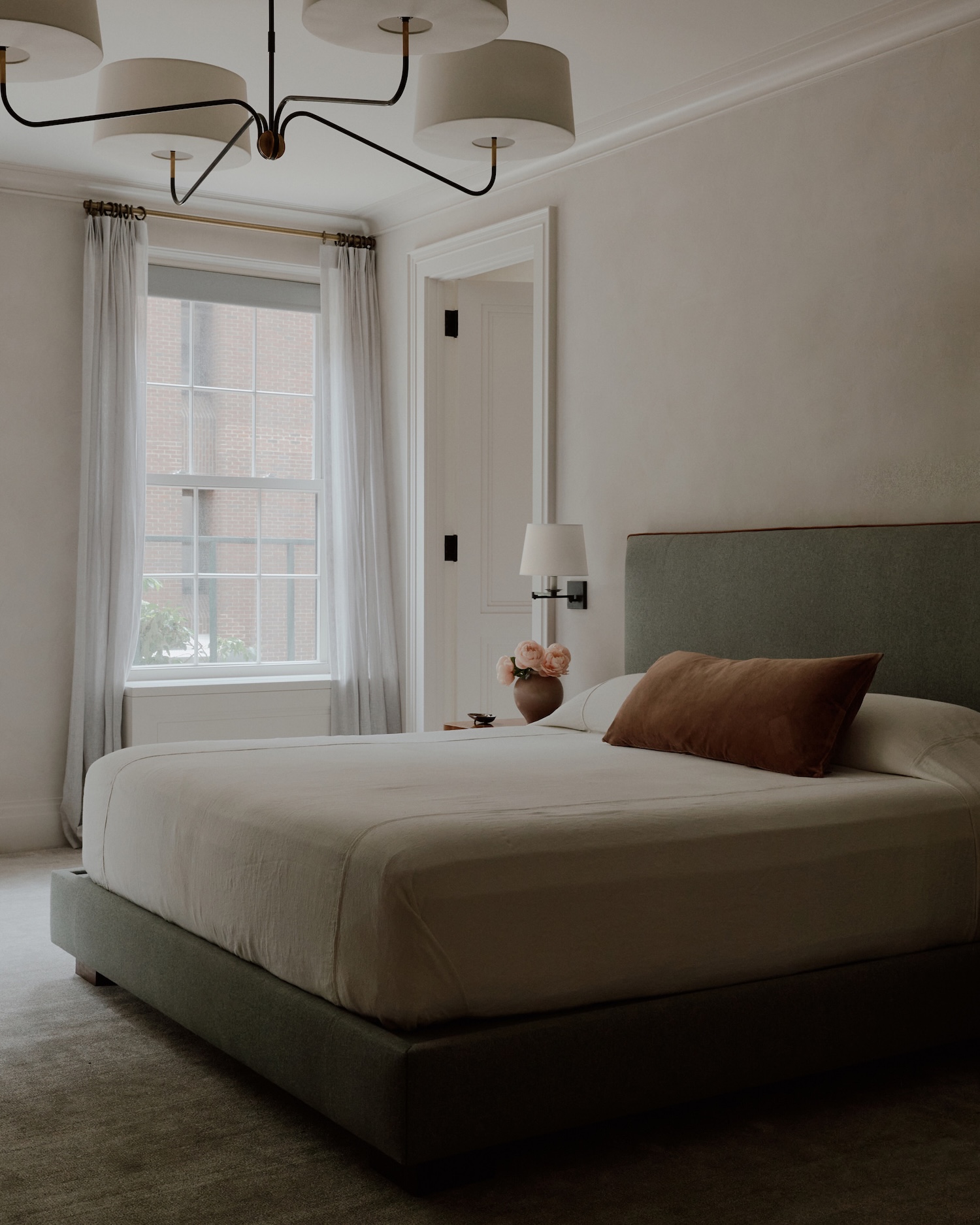
Park Avenue Maisonette is a minimal towhouse located on Park Avenue designed by Elmo Studios. Elmo Studios has orchestrated what might be called a material symphony, one that begins with the stunning figueroa-toned Portola Roman clay that envelops the foyer walls. This choice reveals a sophisticated understanding of how surface treatment can fundamentally alter spatial perception. Roman clay, with its ancient pedigree yet thoroughly contemporary application, embodies the project’s central tension between historical reverence and modern living.
The design team’s decision to preserve the home’s “gracious entrance halls and generous room sizing” while completely reimagining their material expression demonstrates a nuanced approach to renovation that goes far beyond mere restoration. This philosophy echoes the work of mid-century modernists like Joseph Eichler, who understood that domestic architecture must serve contemporary life while honoring its structural bones.
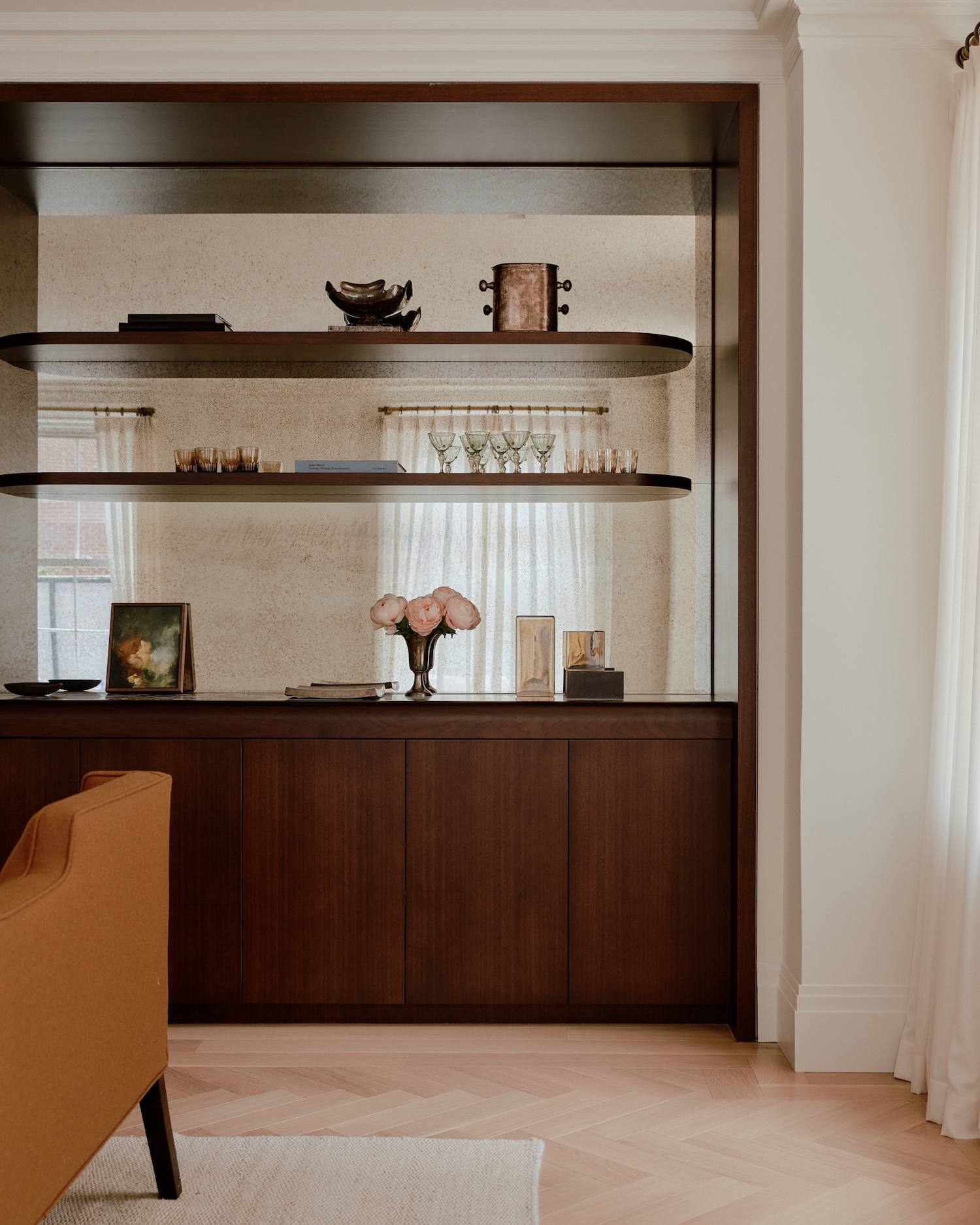
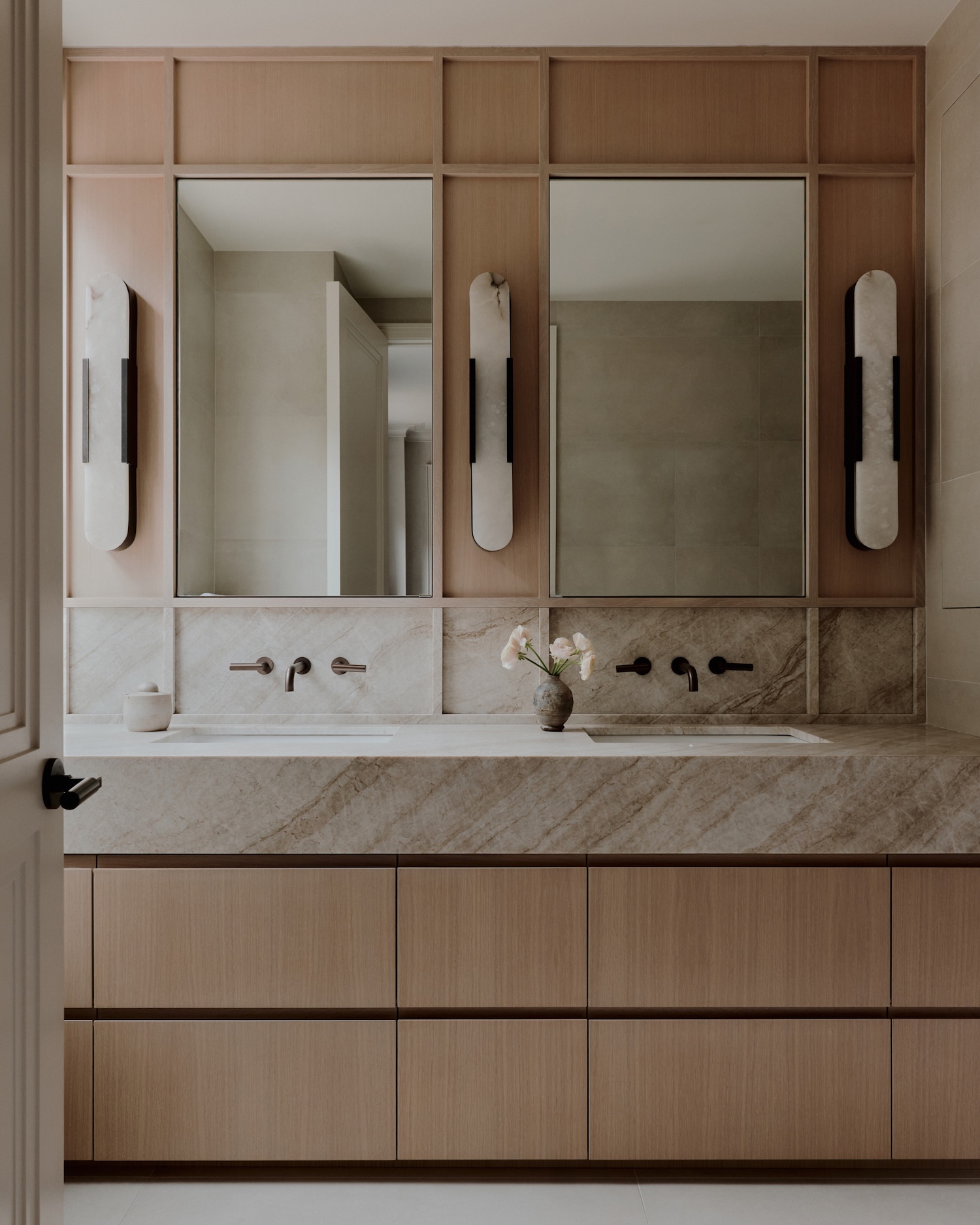
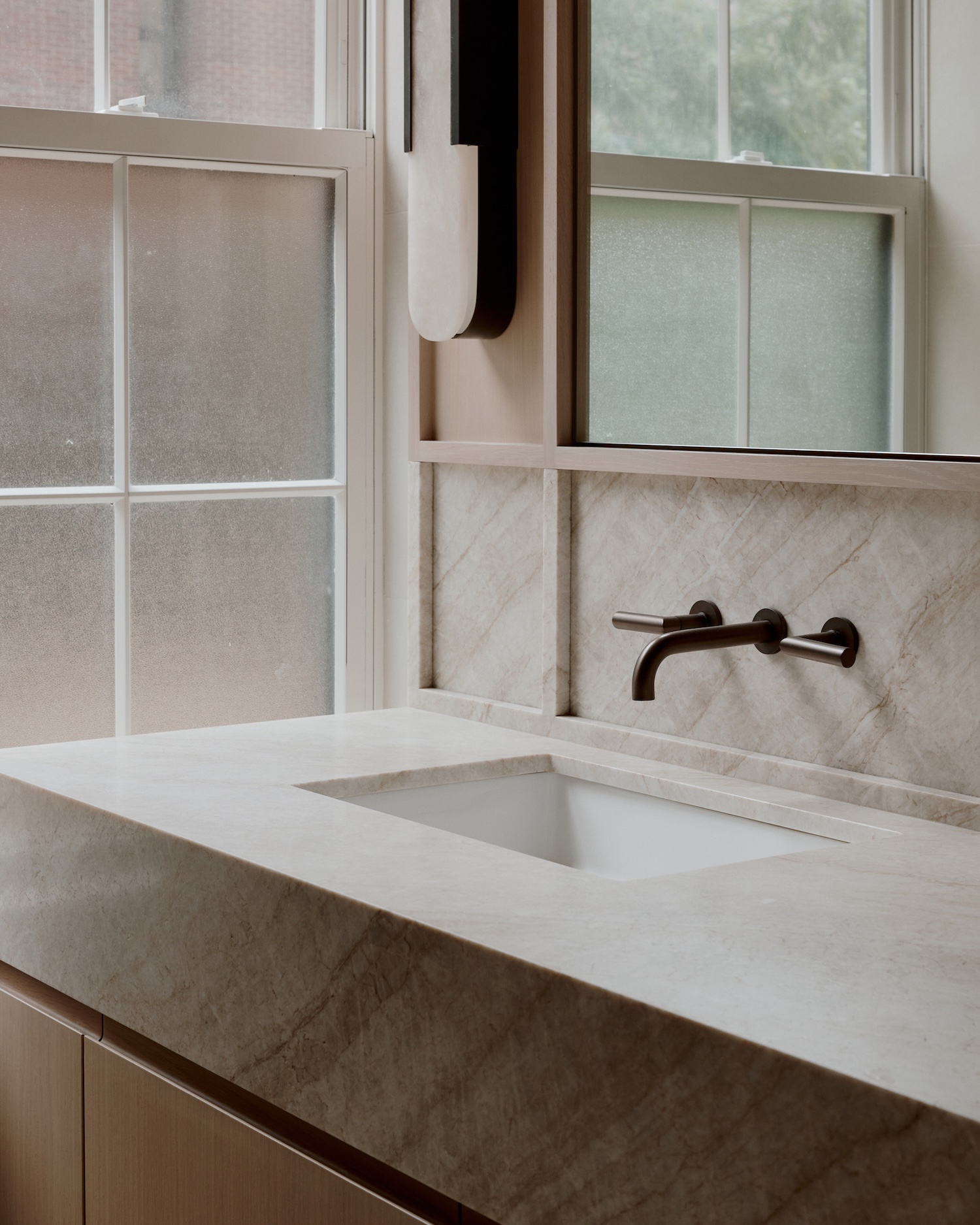
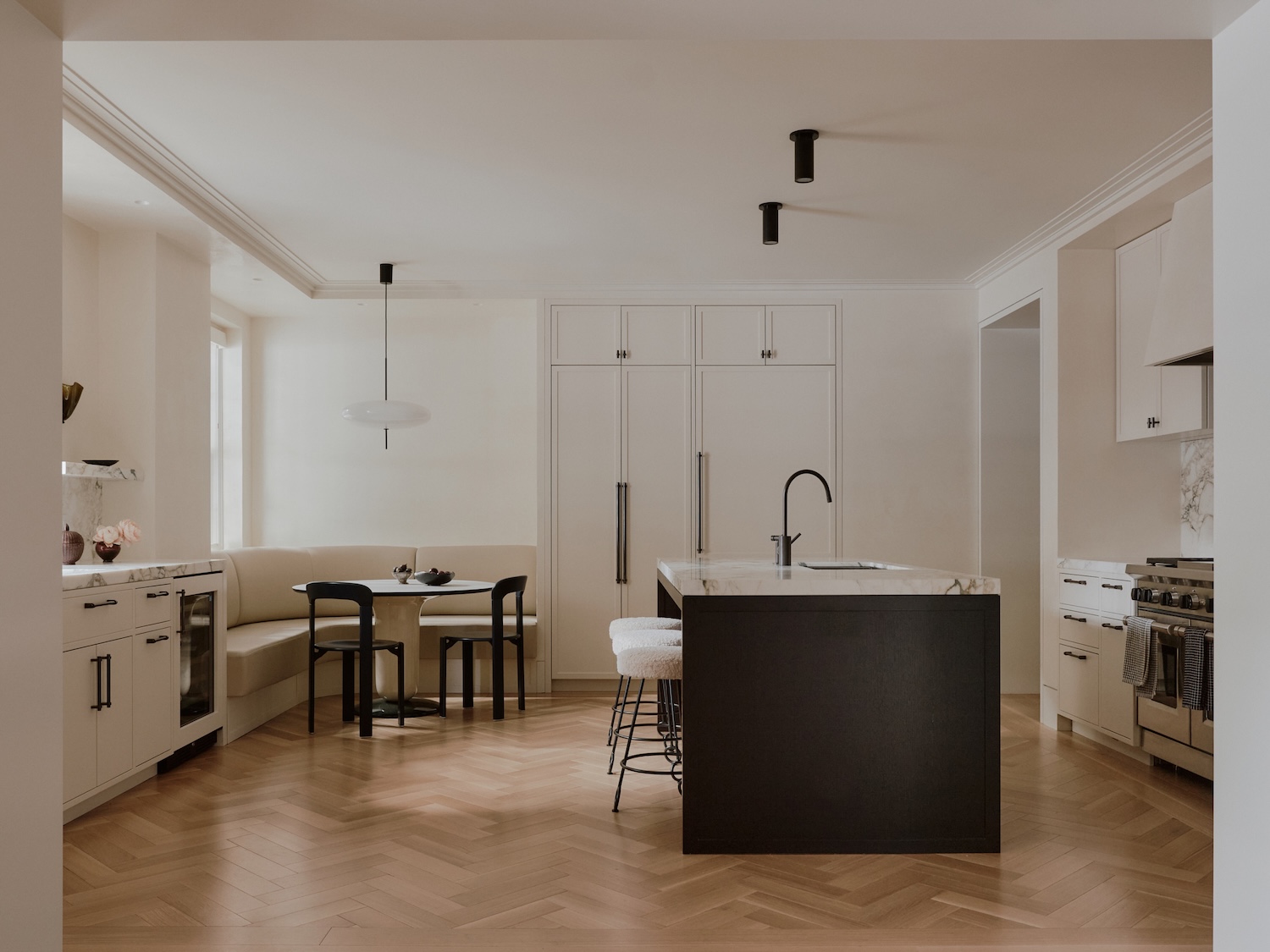
Throughout the residence, the interplay between custom millwork and carefully selected stone creates a dialogue between craft tradition and industrial precision. The kitchen’s espresso-stained oak island stands as a bold counterpoint to the Calacatta Monet stone slabs, while the floating marble shelves punctuating the windows suggest a weightless quality that defies the material’s inherent mass. This tension between gravity and lightness speaks to contemporary design’s ongoing negotiation with both digital aesthetics and material authenticity.
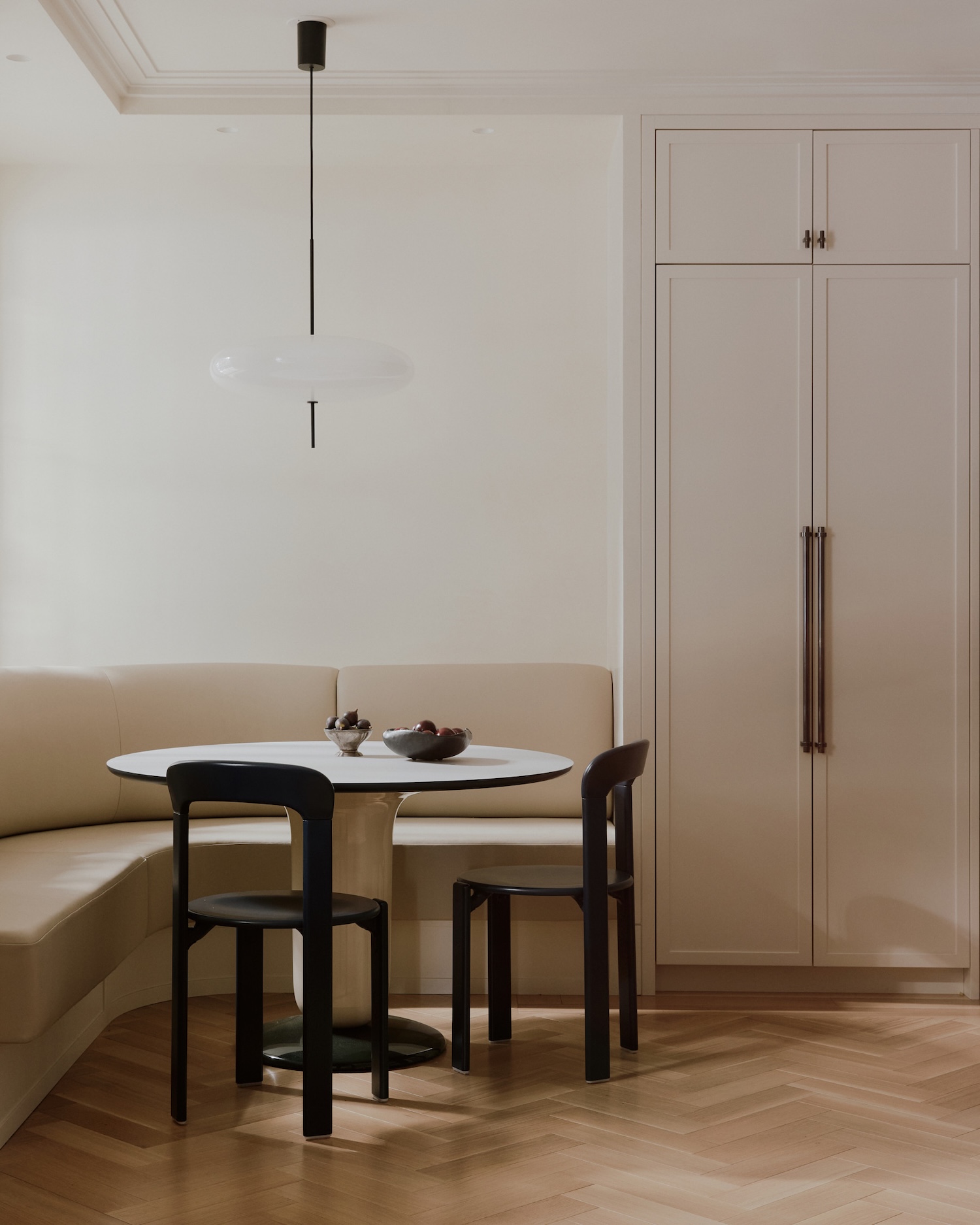
The custom banquette upholstered in Holland & Sherry leather introduces an element of British craftsmanship into this quintessentially American domestic landscape, while the oak herringbone parquet flooring – bleached to a pale, almost ethereal finish – reimagines a classical European pattern through a distinctly modern lens. Such cross-cultural material conversations reflect our increasingly globalized design vocabulary.
Perhaps most telling is the project’s approach to lighting, where Allied Maker sconces and Kelly Wearstler’s pill-shaped fixtures provide sculptural punctuation points throughout the narrative. These pieces function not merely as illumination but as material studies in their own right, exploring how contemporary lighting design can both honor and transform architectural space.