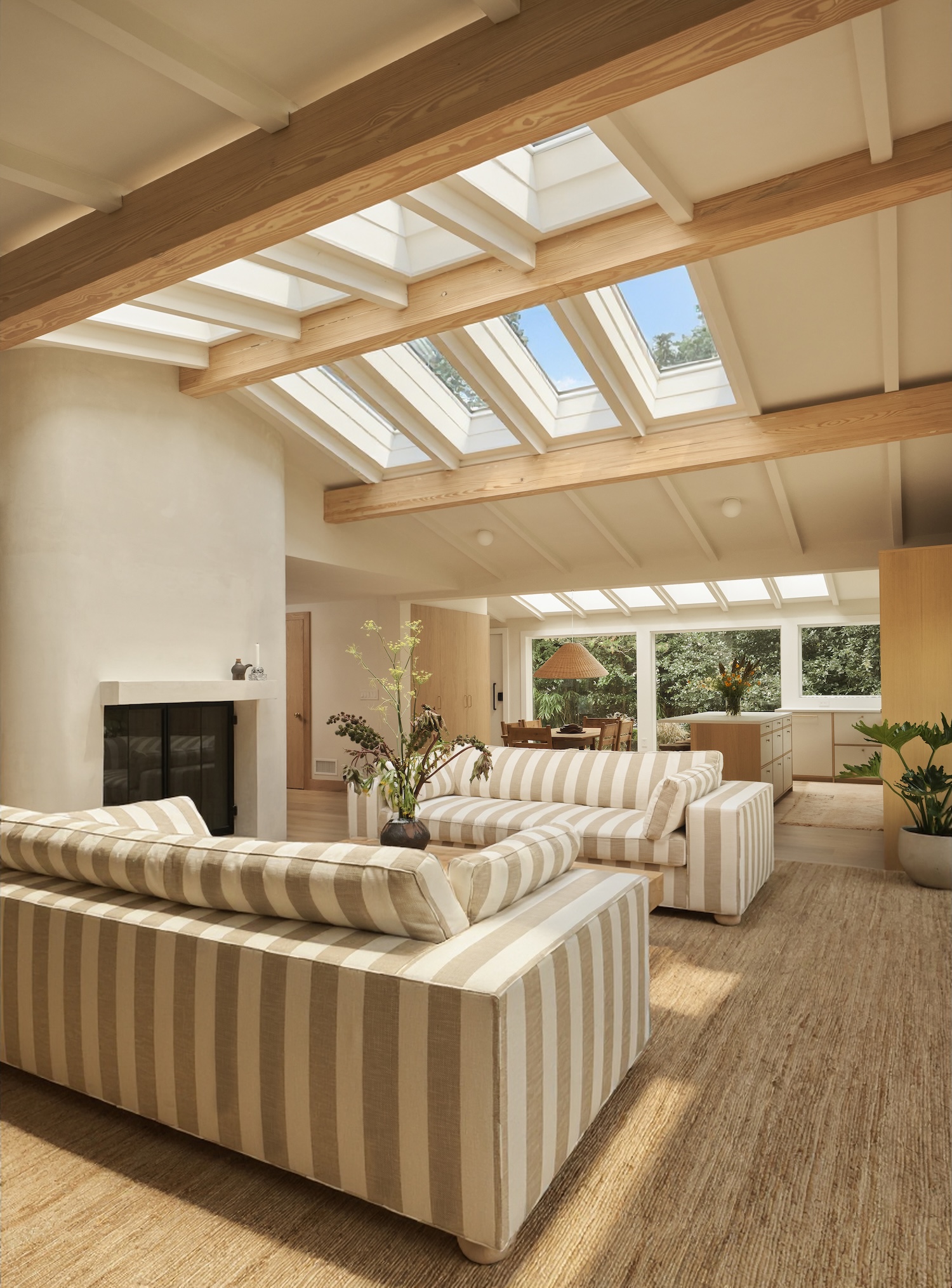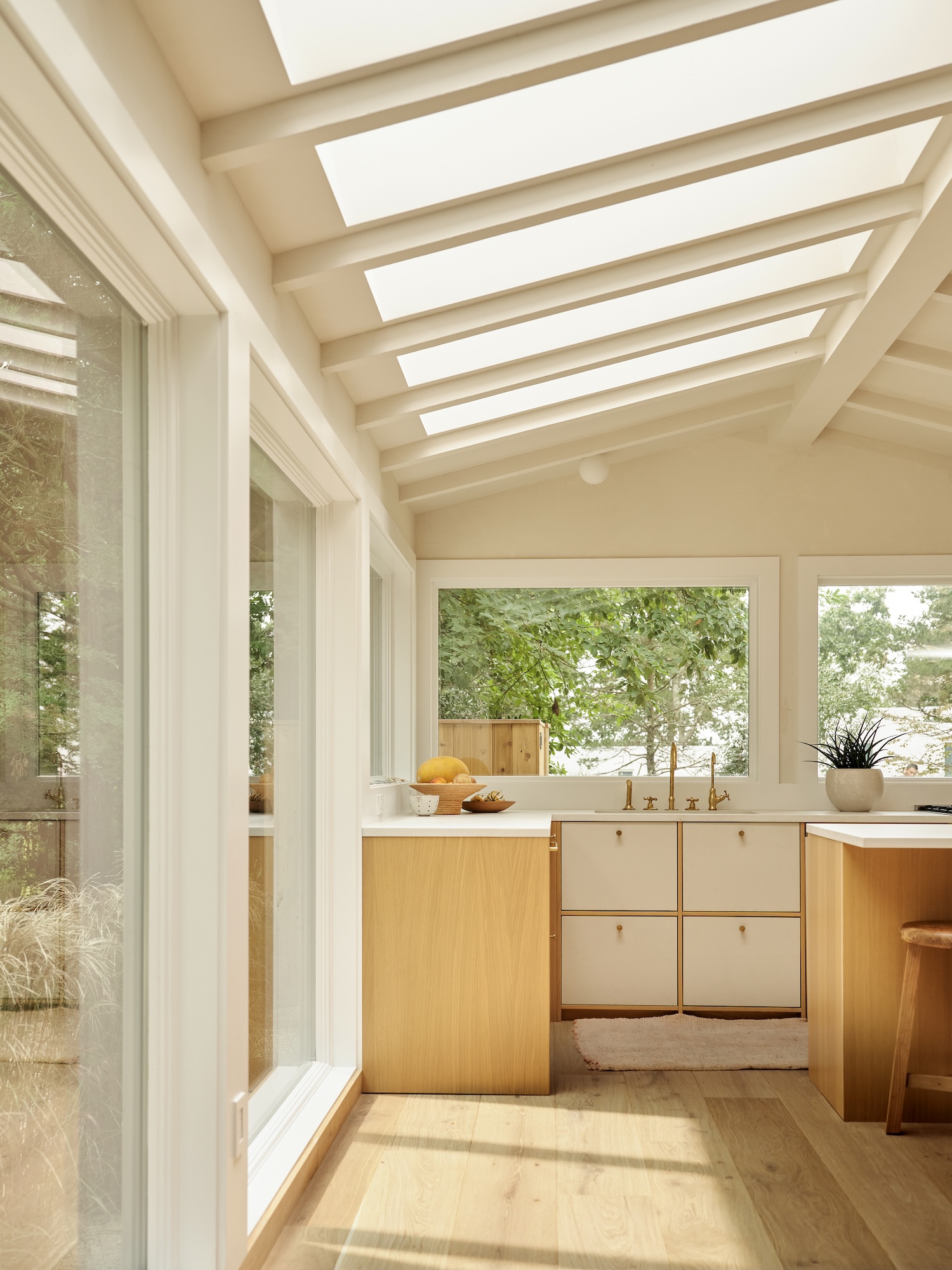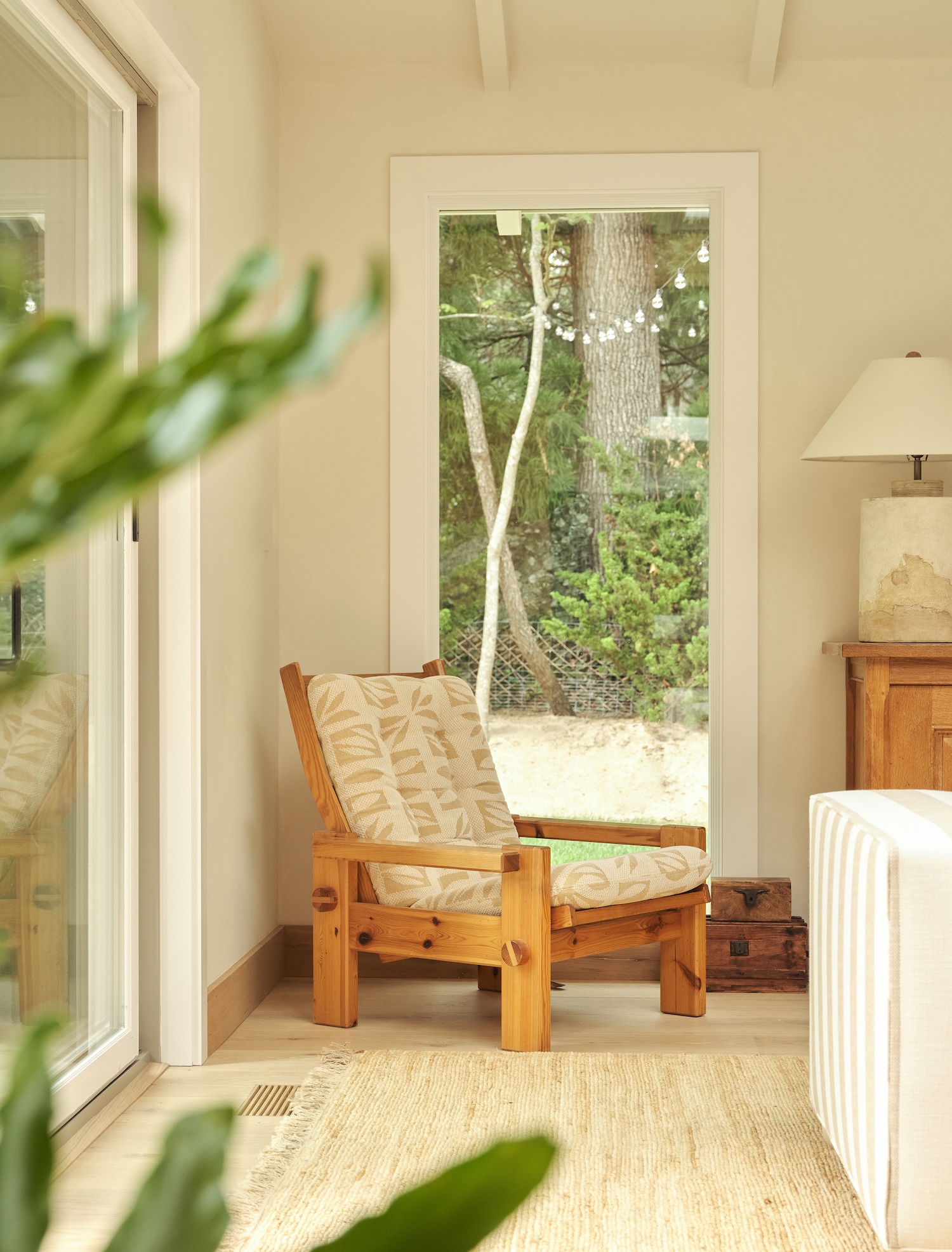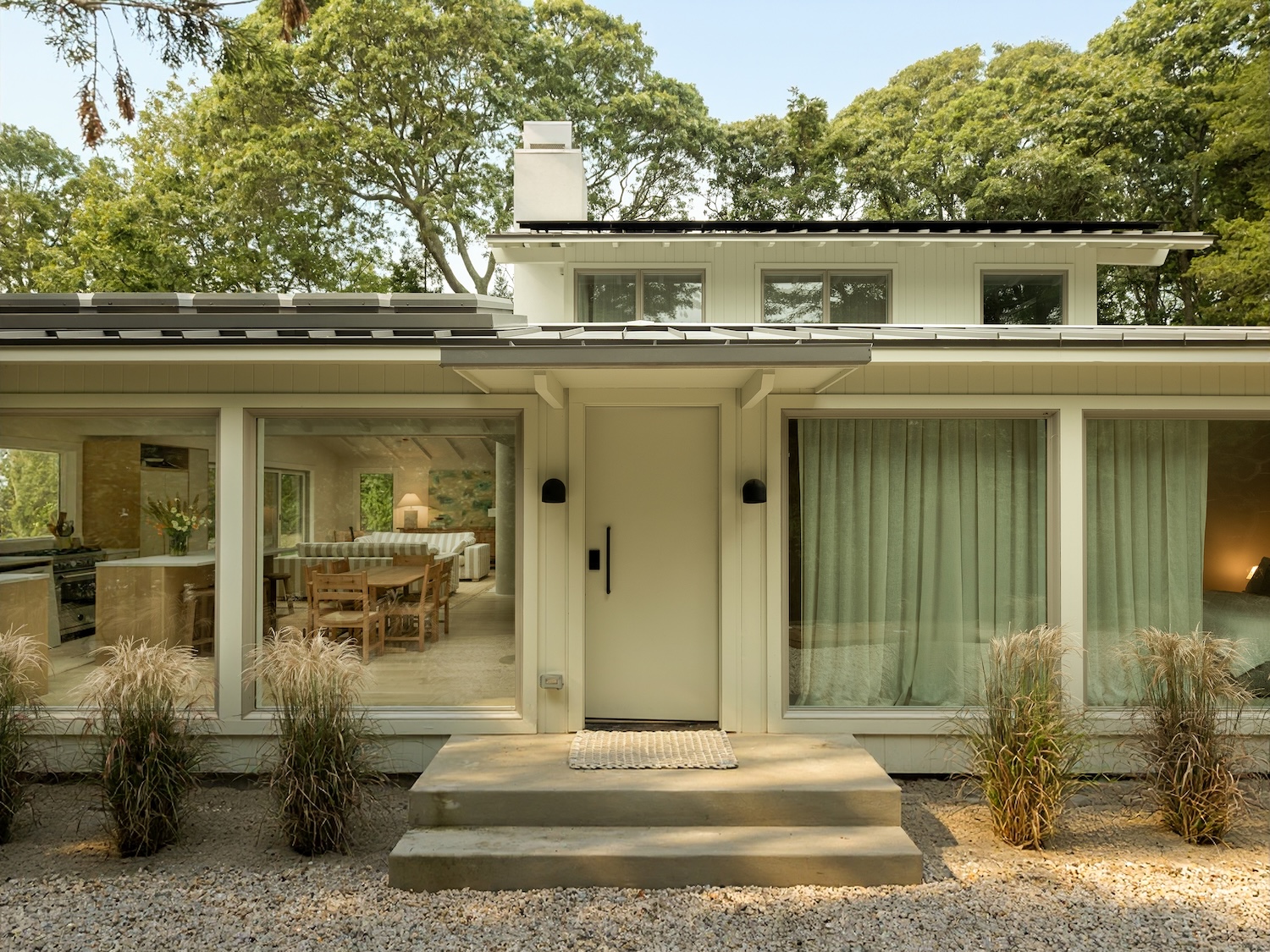
Springs Residence is a minimalist home located in East Hampton, New York, designed by Office of Tangible Space. The renovation began with a circulation problem rather than an aesthetic one. The existing house turned inward, away from the landscape it sat within, and the work of the studio was less about adding surface than about redirecting movement so that daily life would run alongside the site instead of against it. A 600-square-foot addition brought a new entry, mudroom, and sunroom, and in doing so it reordered the sequence of arrival. What had been a series of rooms became a passage through light.
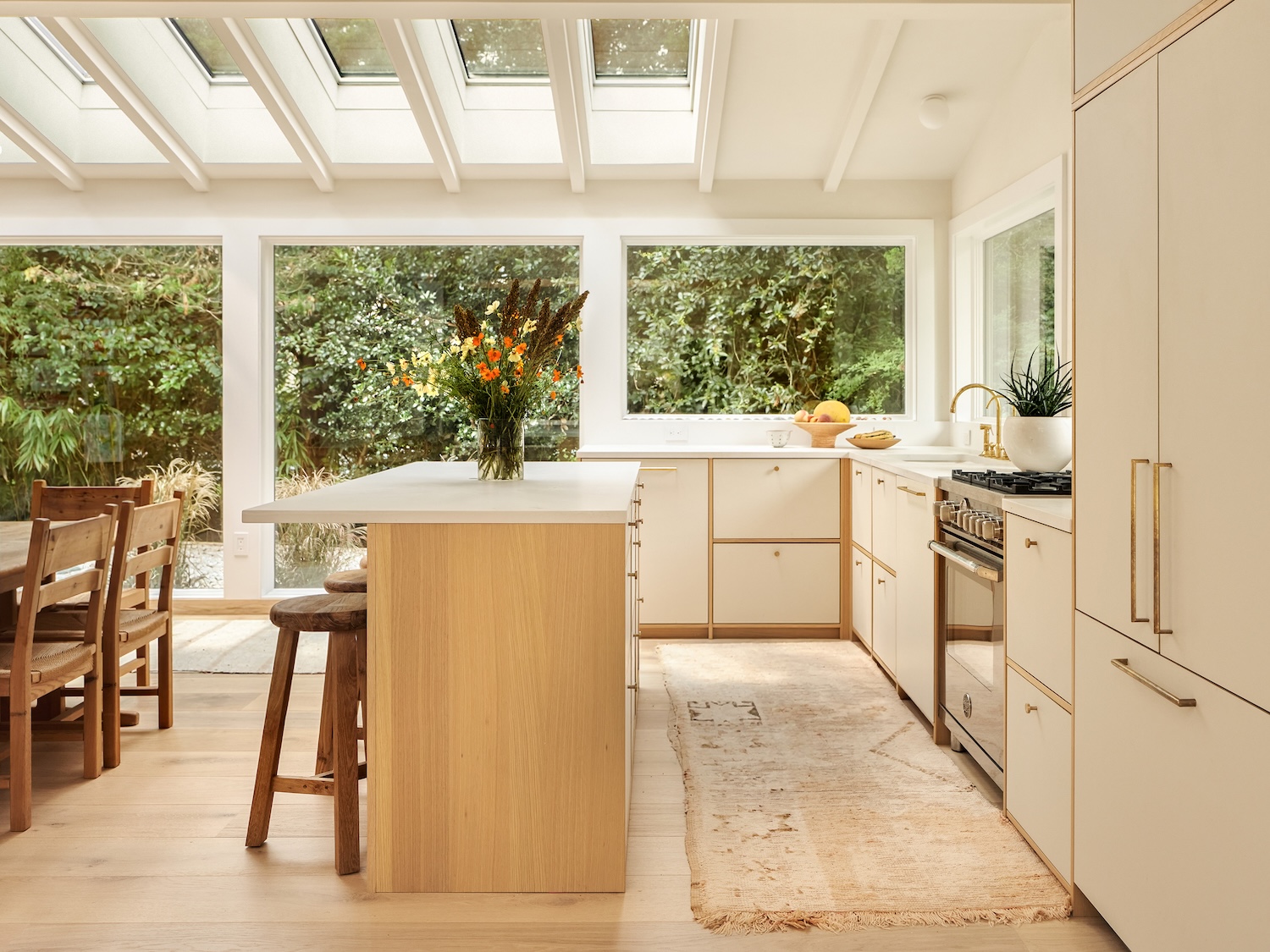
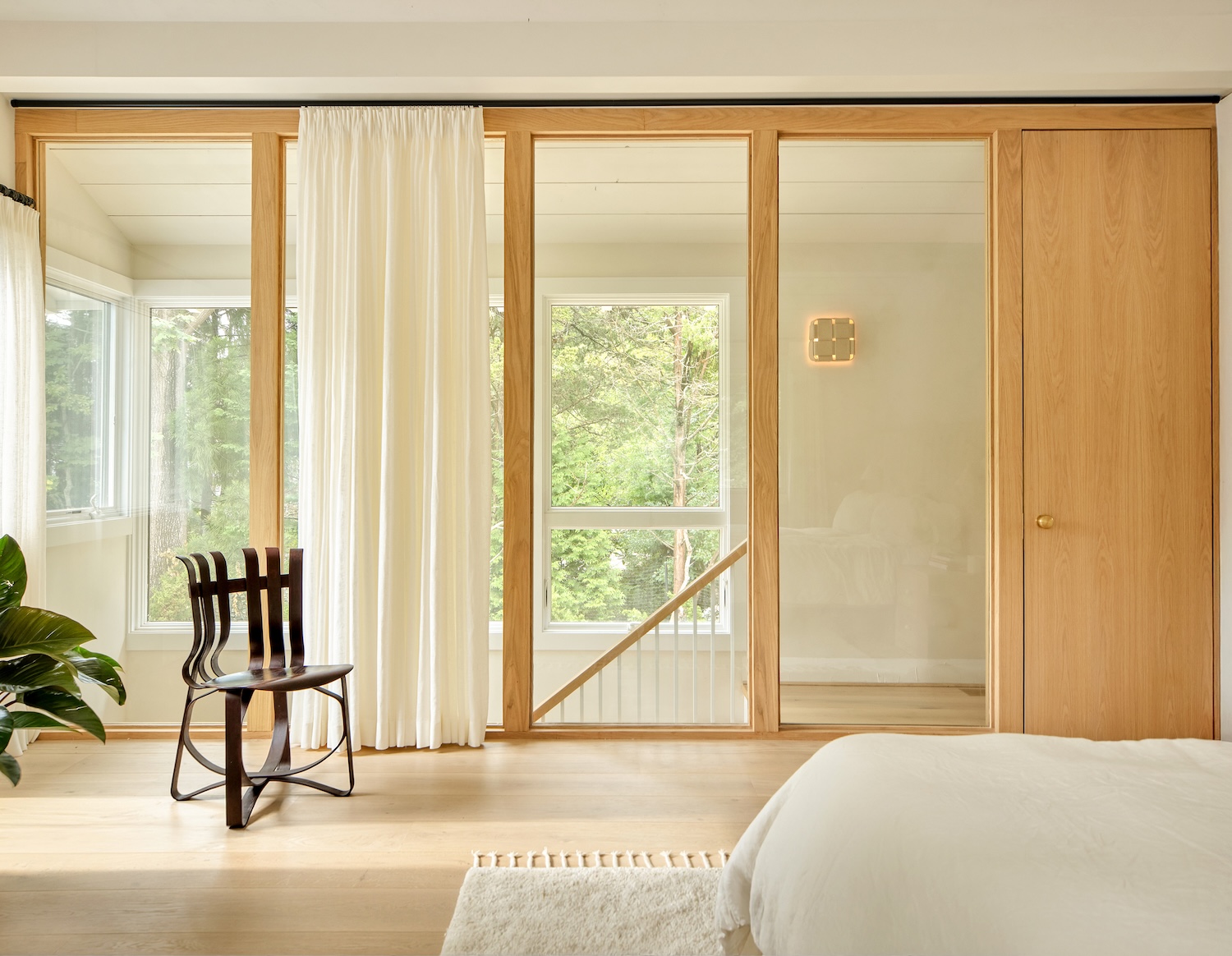
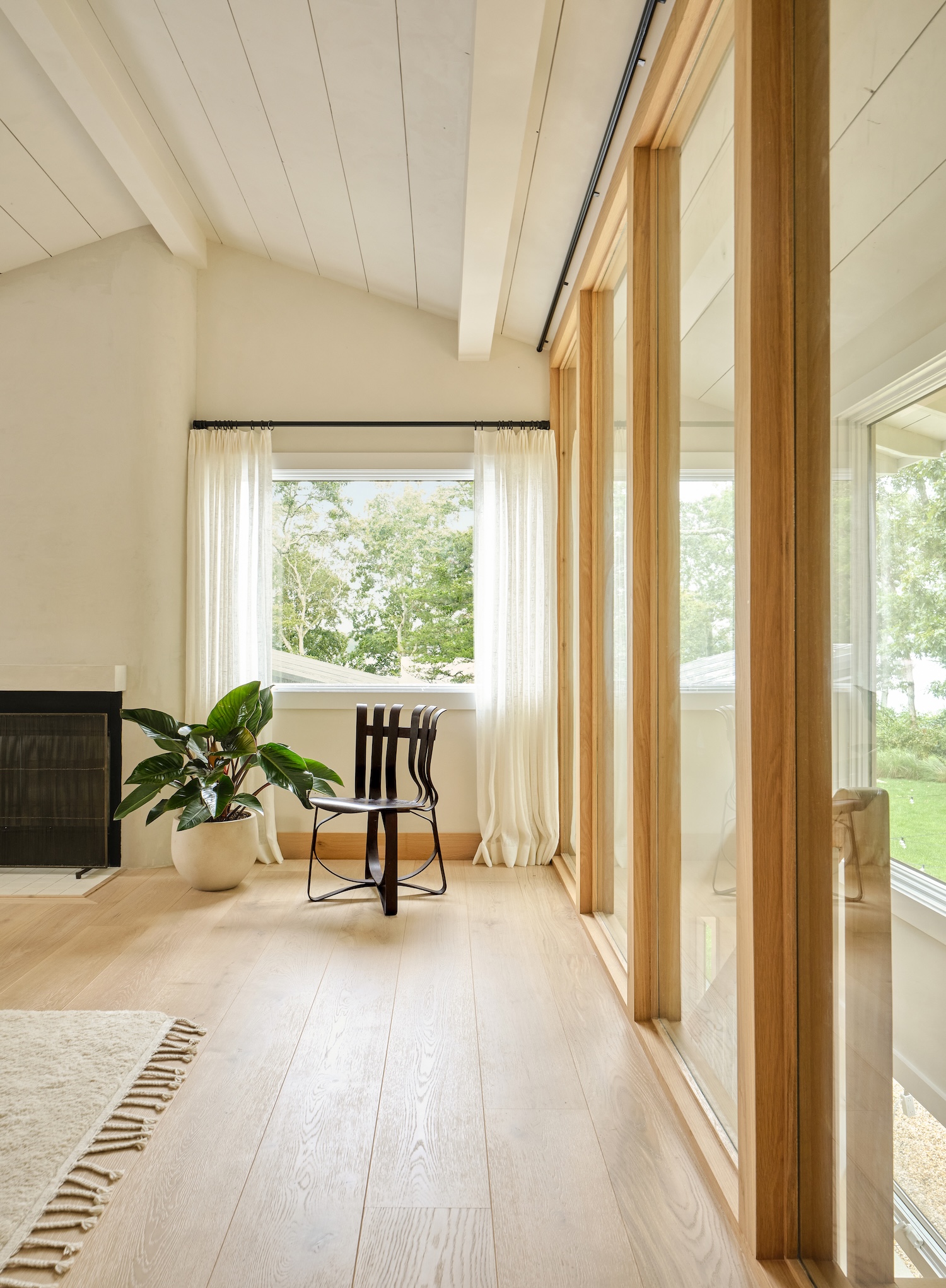
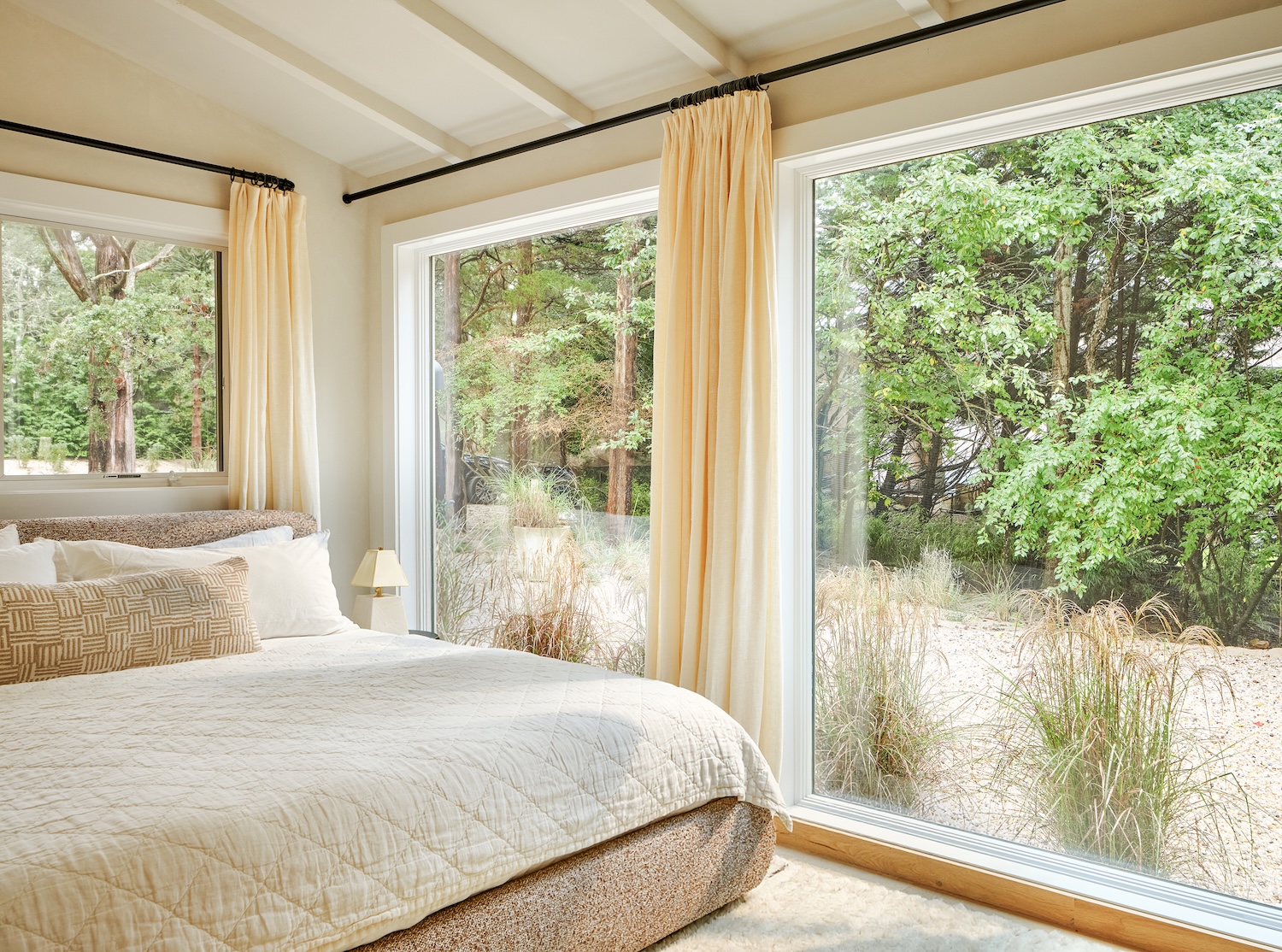
Floor-to-ceiling glass along the front facade does the structural work of that reorientation. The house now faces the pool and Three Mile Harbor, and the glazing is less a view-framing device than a way of extending the plan outward until the treeline reads as the far wall of the room. Opening the kitchen to the living and dining areas removes the last enclosure, and the result is a single continuous ground floor whose divisions are made by furniture, light, and ceiling height rather than by partition.
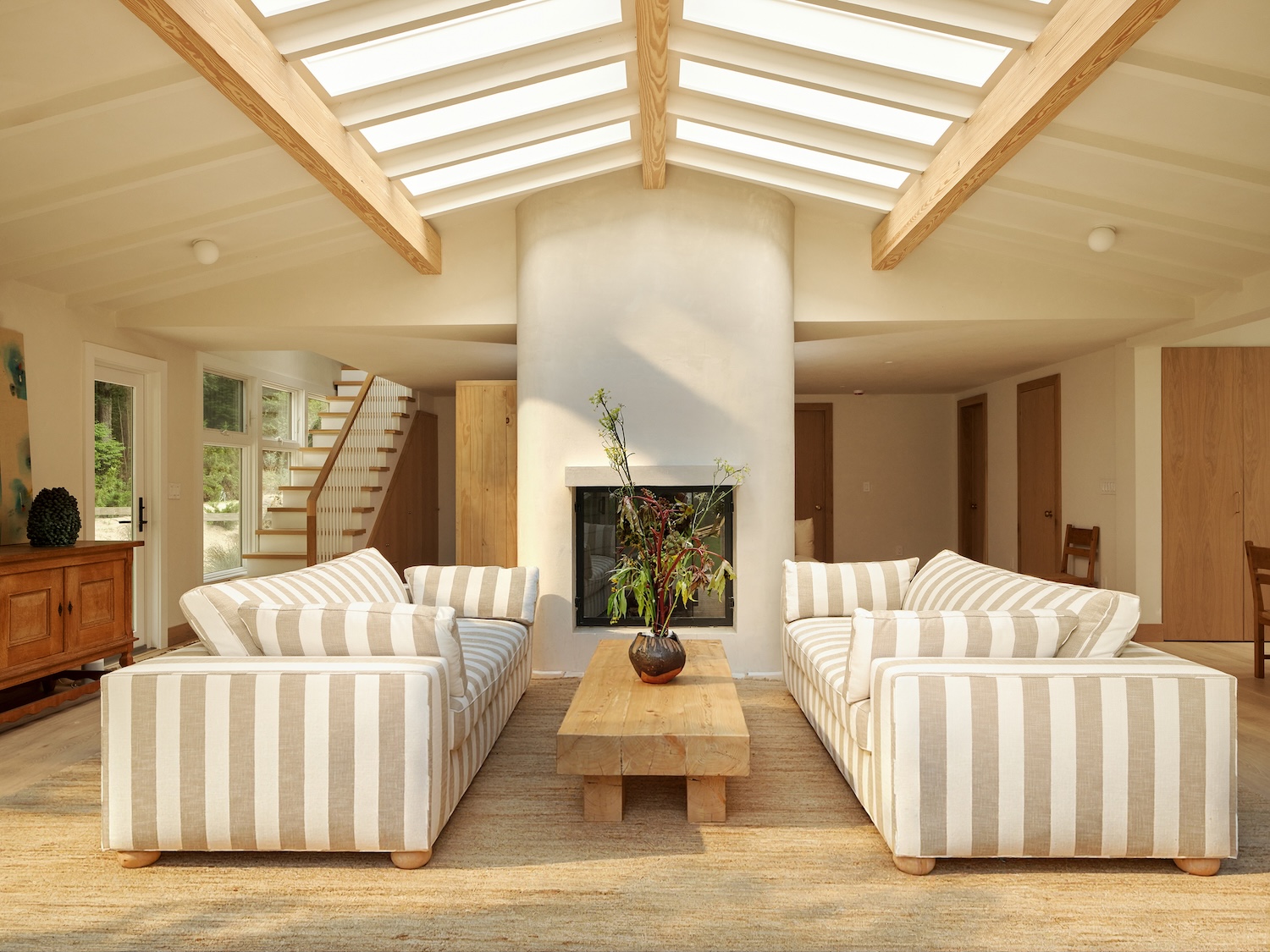
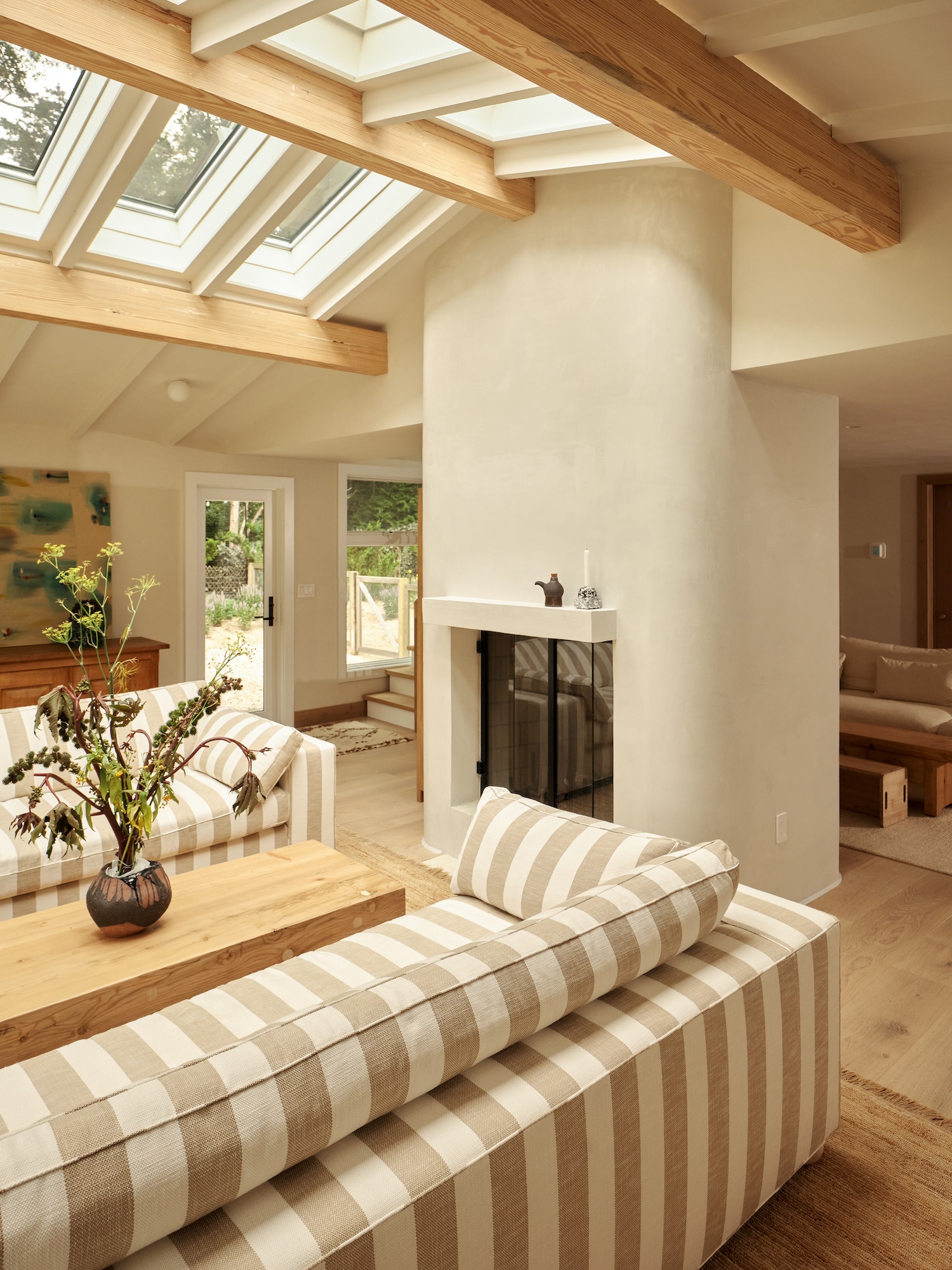
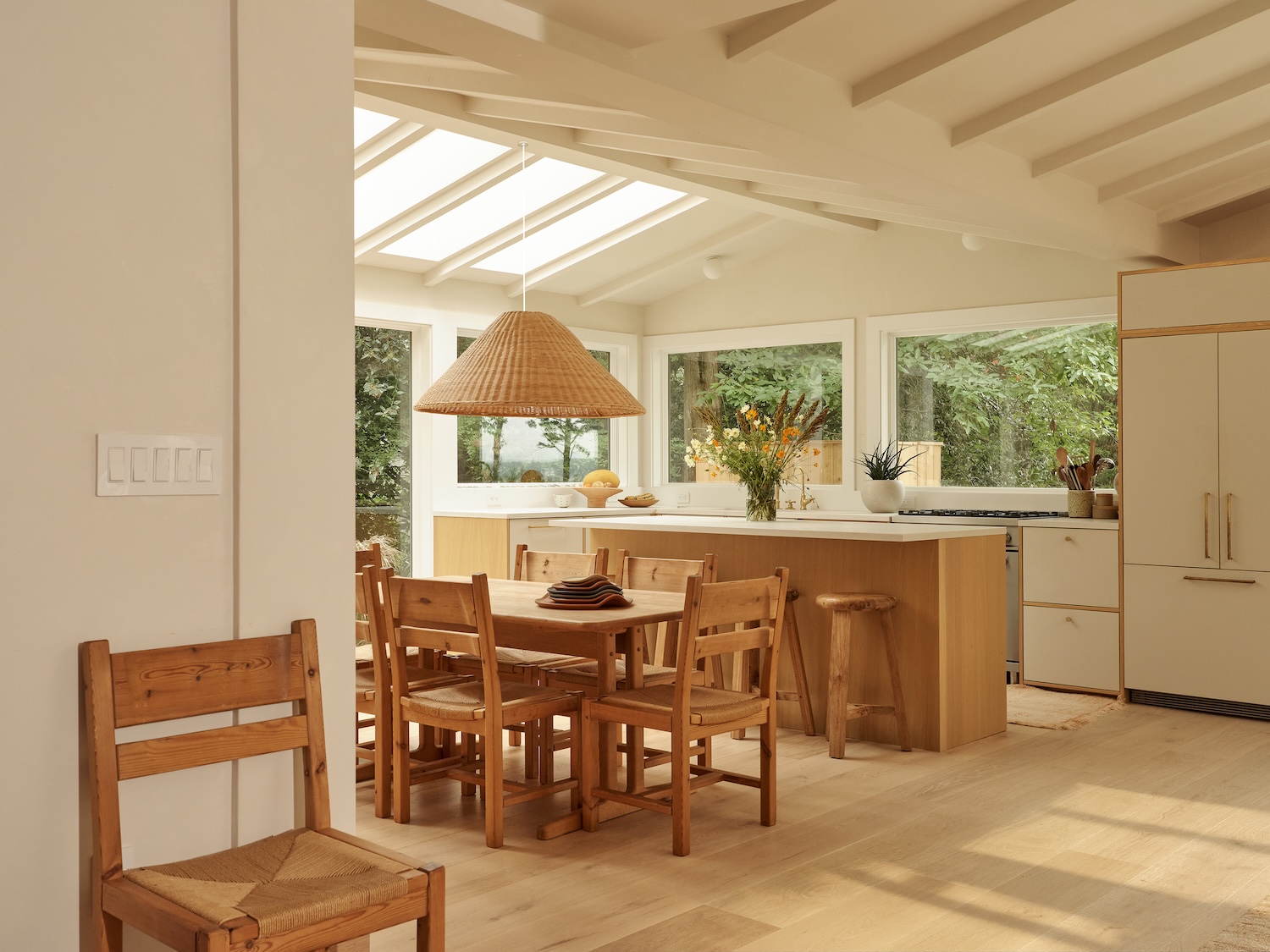
At the center, a curved plaster fireplace anchors the communal spaces. It is the one soft mass in a house otherwise composed of planes, and its curvature performs a specific function, pulling the eye upward into the cathedral ceiling and out through the skylights above. Plaster in this position recalls the hearth as gravitational center in Aalto and in the American shingle-style houses of the eastern seaboard, though here the form has been stripped of its historical ornament and reduced to a volume that catches and releases daylight across the course of a day.
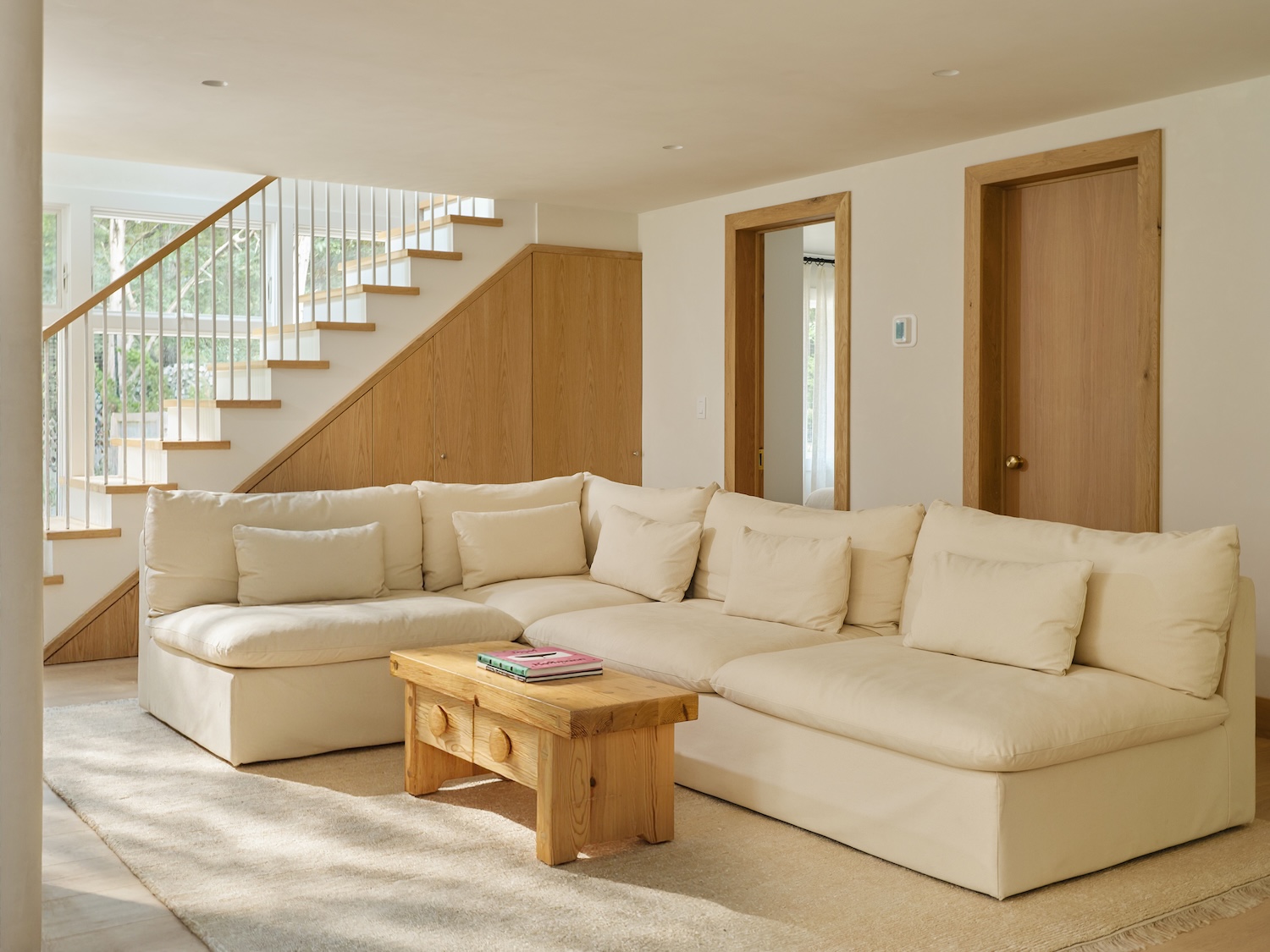
White oak floors and millwork run throughout, paired with limewashed walls whose mineral surface absorbs rather than reflects. Linoleum cabinetry is the more interesting choice. Linseed oil, pine resin, and wood flour pressed into jute, it is a nineteenth-century material that fell out of favor in the postwar decades and has returned through the work of studios interested in petroleum-free surfaces that age visibly. It takes a matte, slightly warm finish that reads closer to leather than to laminate. The unlacquered brass hardware follows the same logic. Left unsealed, it will darken unevenly with handling, and the pattern of that darkening will record which drawers the family opens most.