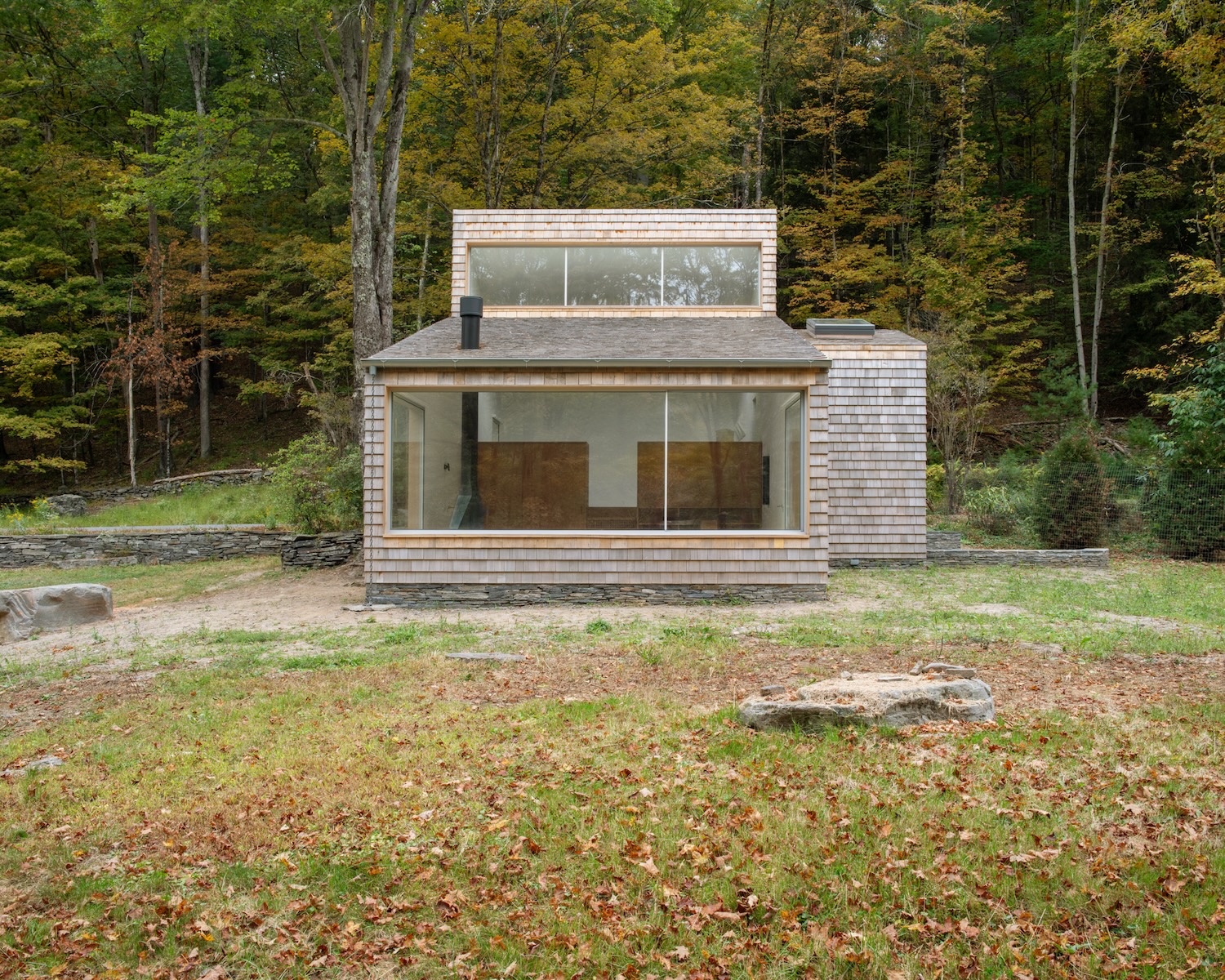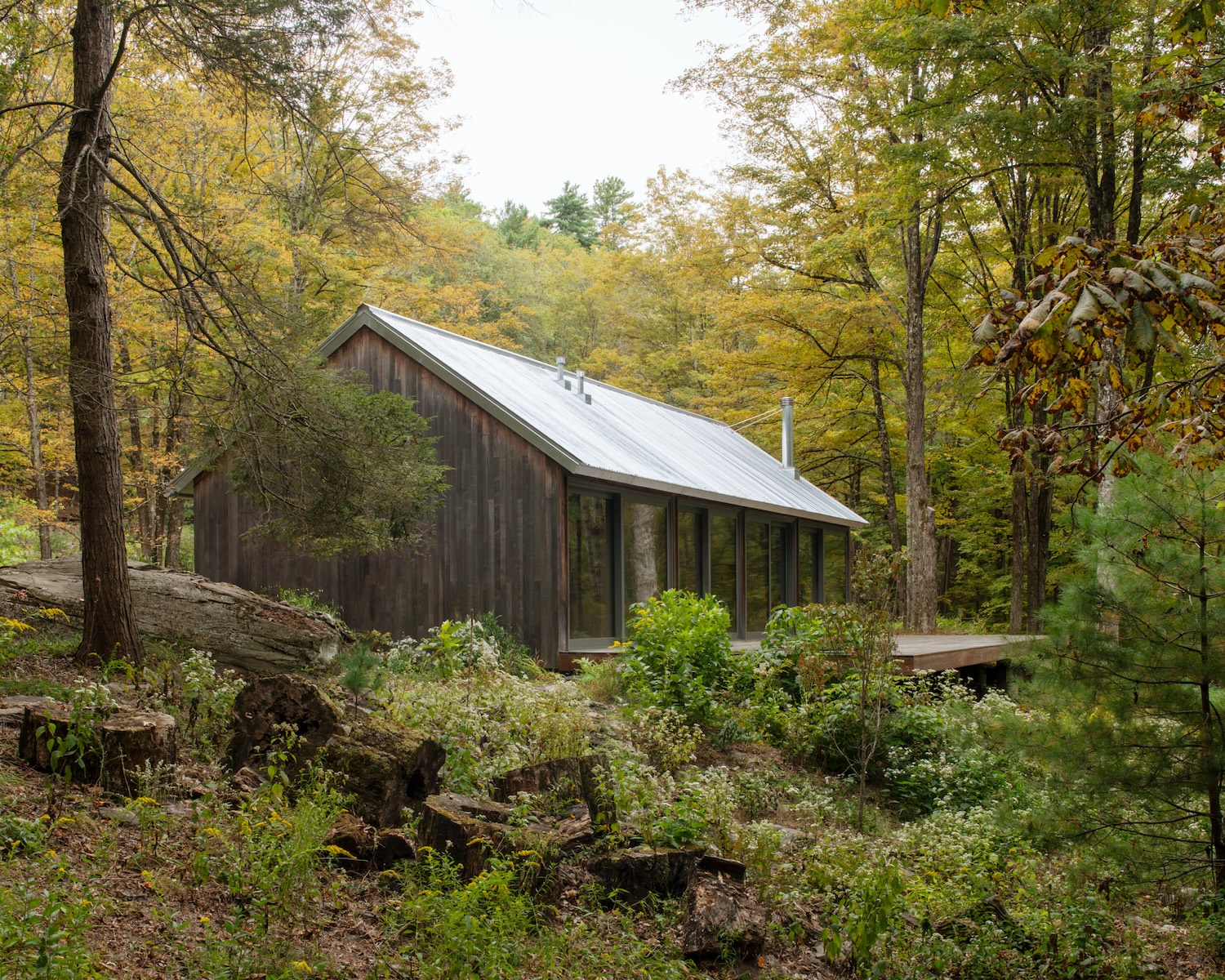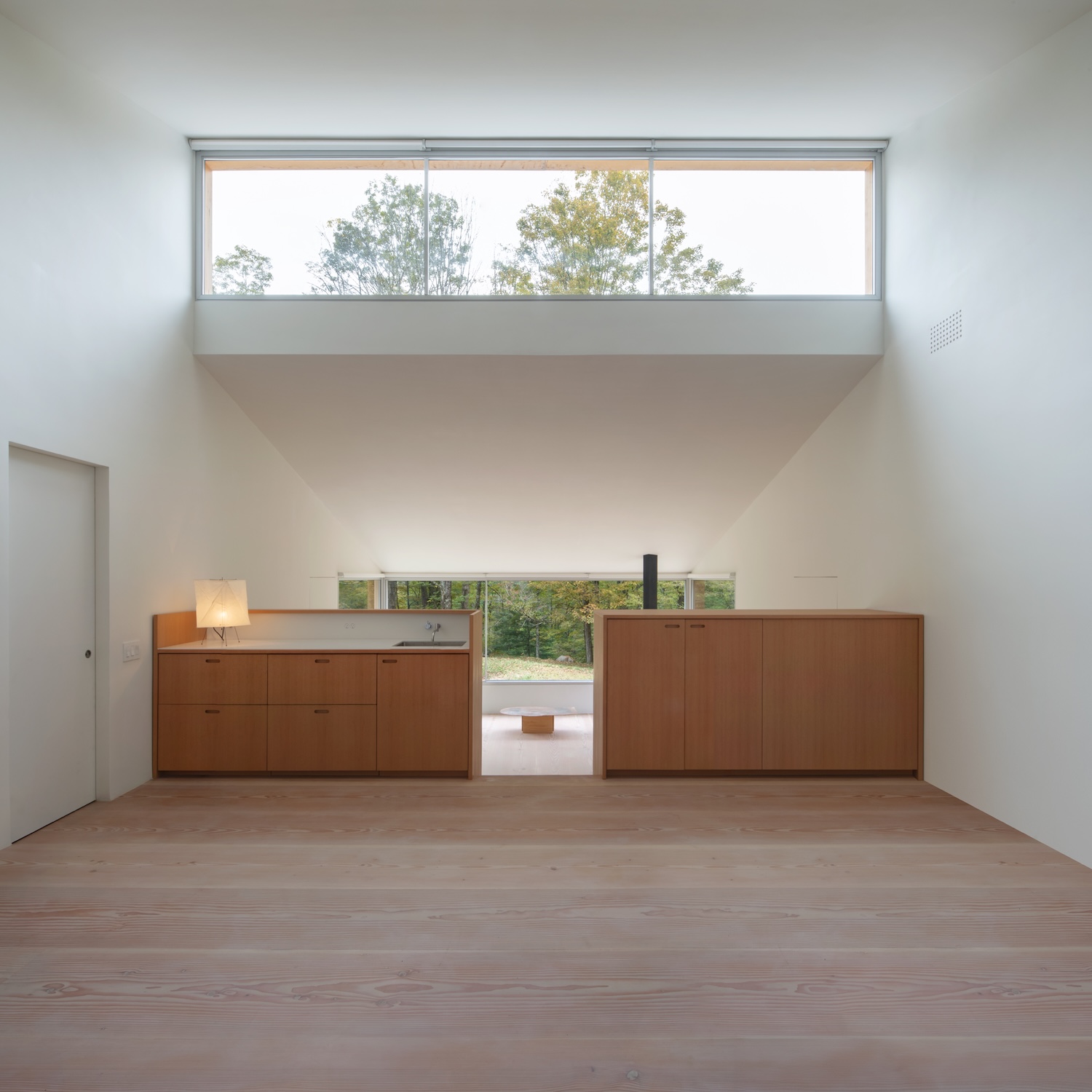
Studio & Guest House is a minimalist studio and guest house located in Accord, New York, designed by Neil Logan. Set within a wooded site roughly 100 miles northwest of New York City, the project takes an existing house and storage building and rebuilds both from their foundations up, retaining only the original footprints. It is a strategy of radical conservation – the buildings remain where they always stood, yet almost nothing of their previous lives survives except their relationship to the land.
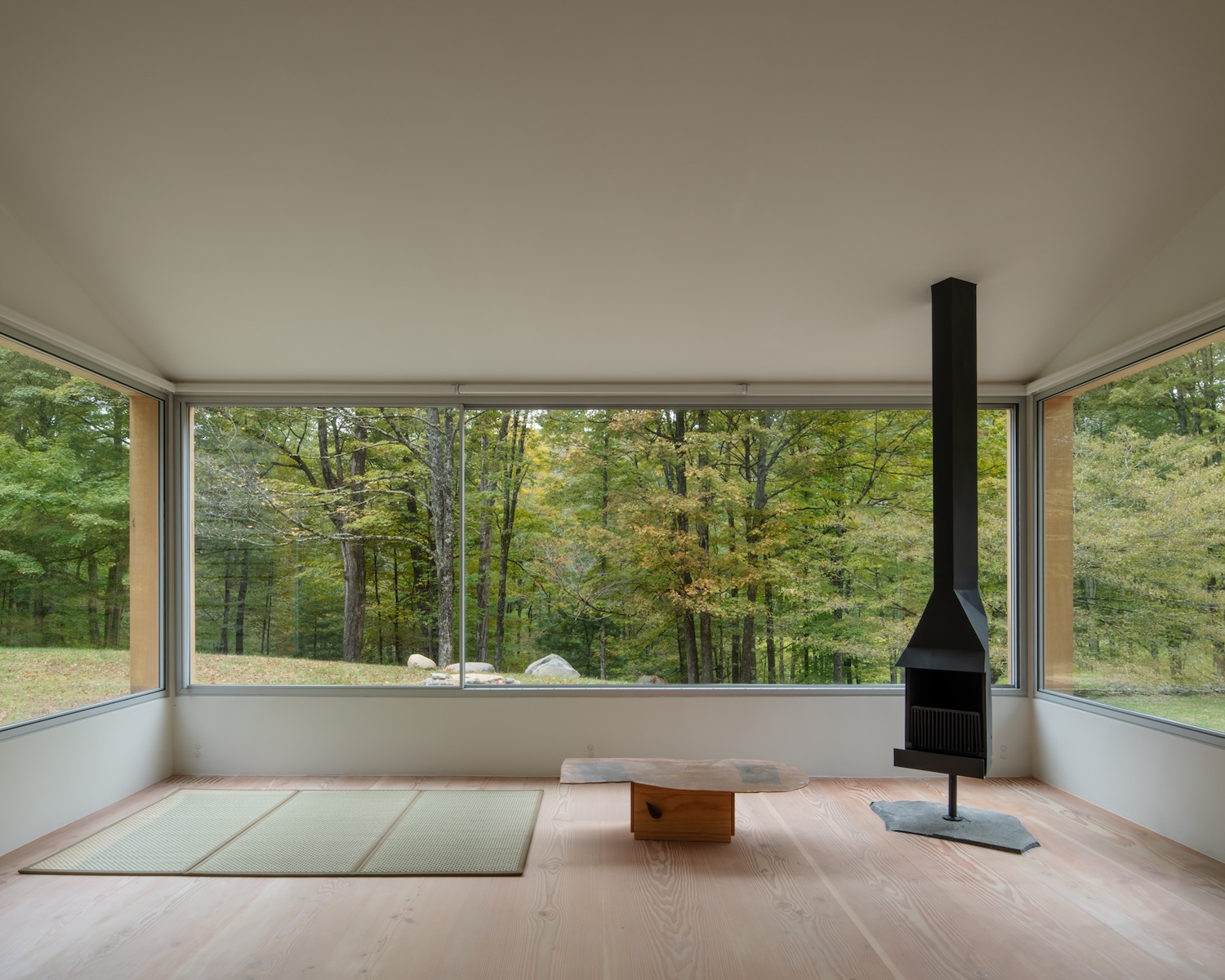
The decision to preserve the footprints rather than the structures themselves reflects a particular sensibility about rural intervention. Rather than imposing a new geometry on the clearing, Logan accepts the constraints of what came before, channeling the design effort into how the volumes perform rather than where they sit. The former house, positioned close to the road, was gutted entirely: interior partitions removed, the second floor eliminated, the plan opened into a single continuous space. What was once a compartmentalized dwelling becomes a tall, light-filled studio organized around the section rather than the plan.
That sectional thinking is most evident in the treatment of the roof. Existing dormers were replaced with clerestory windows, trading picturesque vernacular detail for an even wash of overhead light – a move that recalls the daylighting logic of New England mill buildings and the studio typologies of early modernism, where north light and high glazing took precedence over views. The views arrive instead through a single decisive gesture: a new panoramic window facing the forest, which frames the woodland as the room’s dominant surface. The interior reads as an instrument calibrated to two kinds of light, the ambient glow from above and the green reflected light of the trees.
Inside, the space is divided into two levels separated not by walls but by low fir cabinets, fabricated by Round Peg Millwork, which absorb the functions of coat closet, shelving, and pantry on the upper level. The millwork operates as furniture-scaled architecture, defining territory without enclosing it, in the tradition of storage walls that runs from George Nelson through the casework-as-partition strategies of contemporary Japanese practice. Fir, with its warm grain and modest associations, keeps the intervention quiet rather than precious.