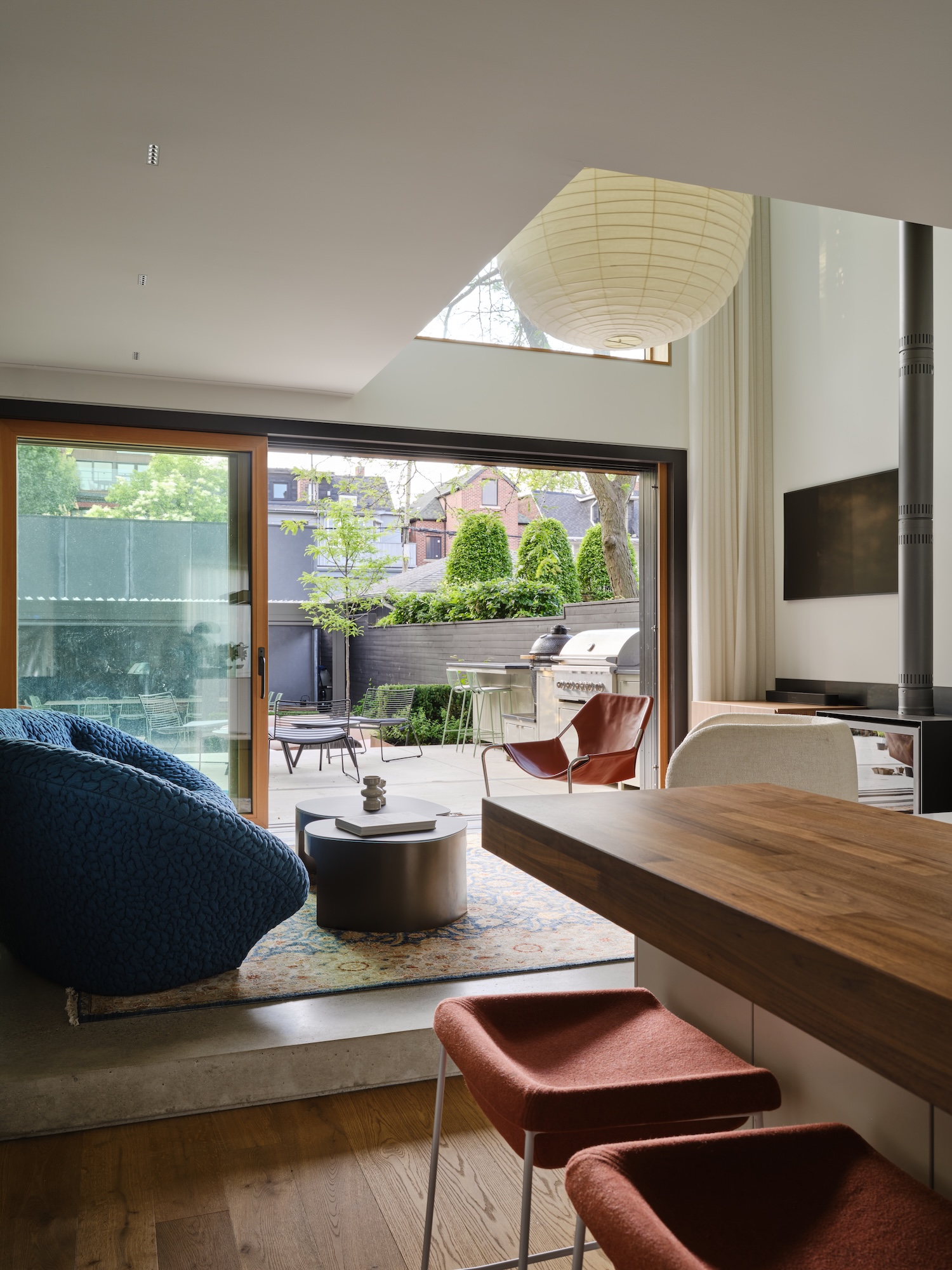
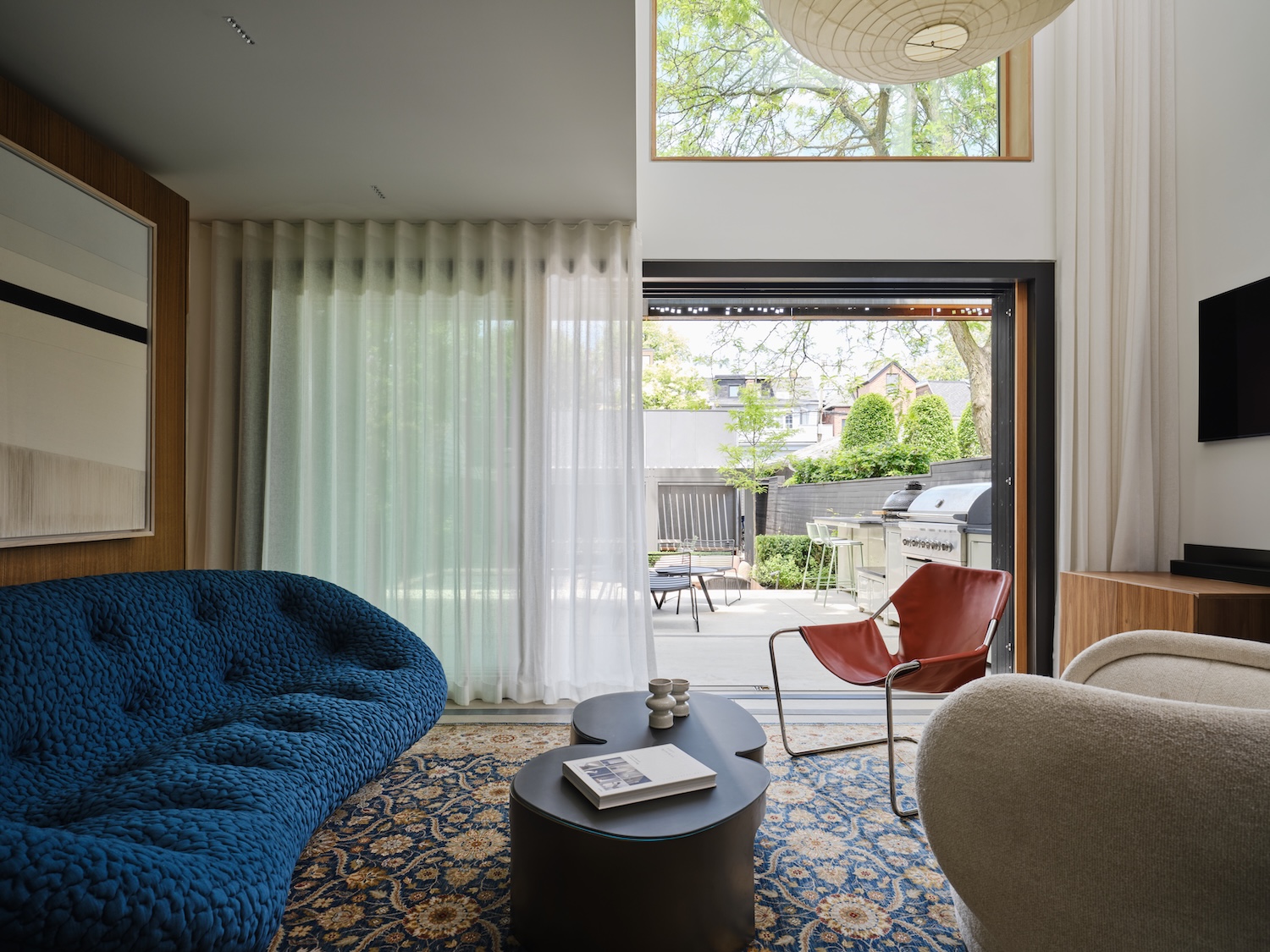
Summerhill Family Home is a minimalist home located in Toronto, Canada designed by Barbora Vokac Taylor Architect. The project addresses a familiar paradox in urban living – owning a house in a beloved neighborhood that cannot accommodate the life one wishes to lead. Here, the designer transforms a dark, compartmentalized property into a fluid environment where family routines and social gatherings overlap seamlessly, demonstrating how thoughtful spatial planning can reshape daily experience.
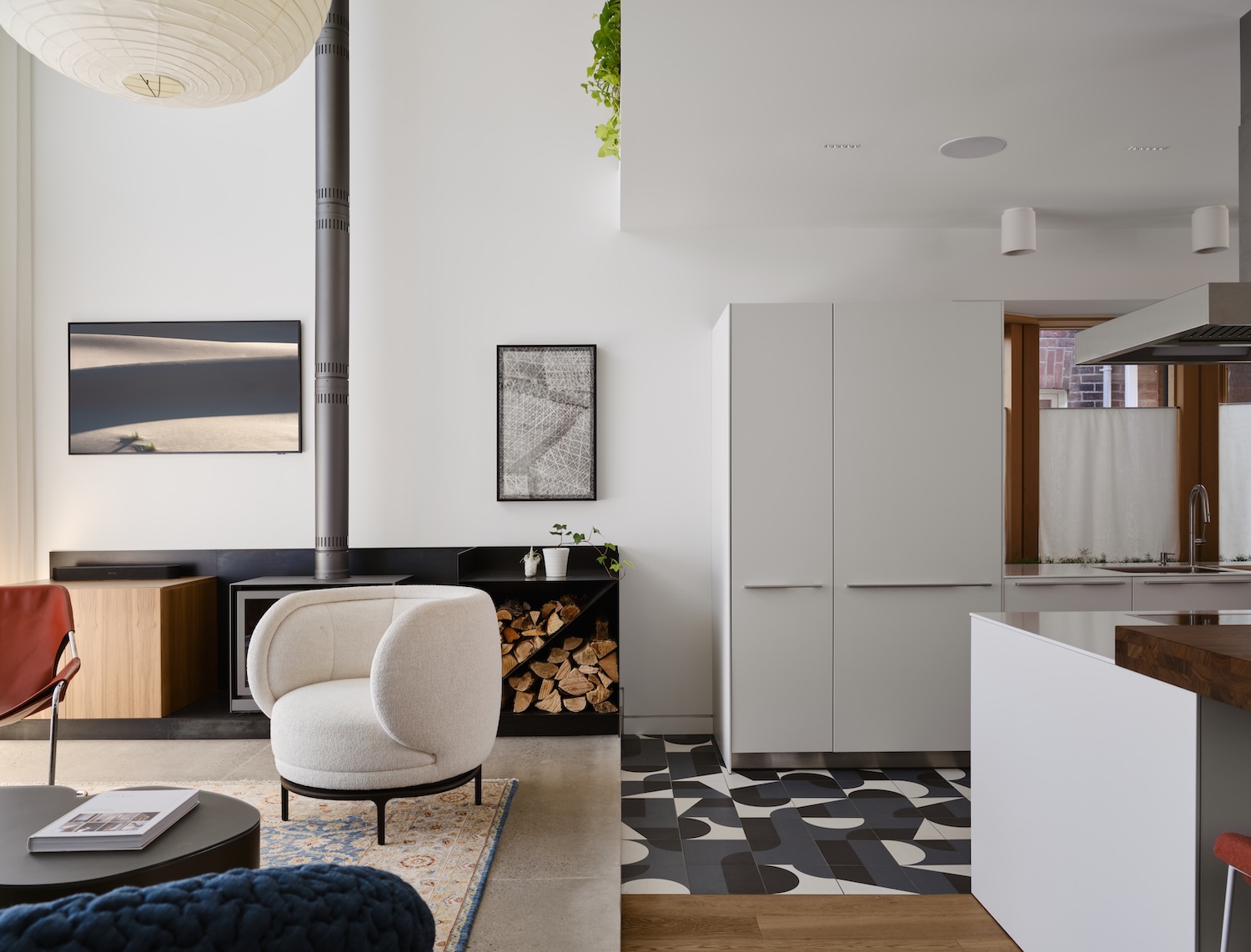
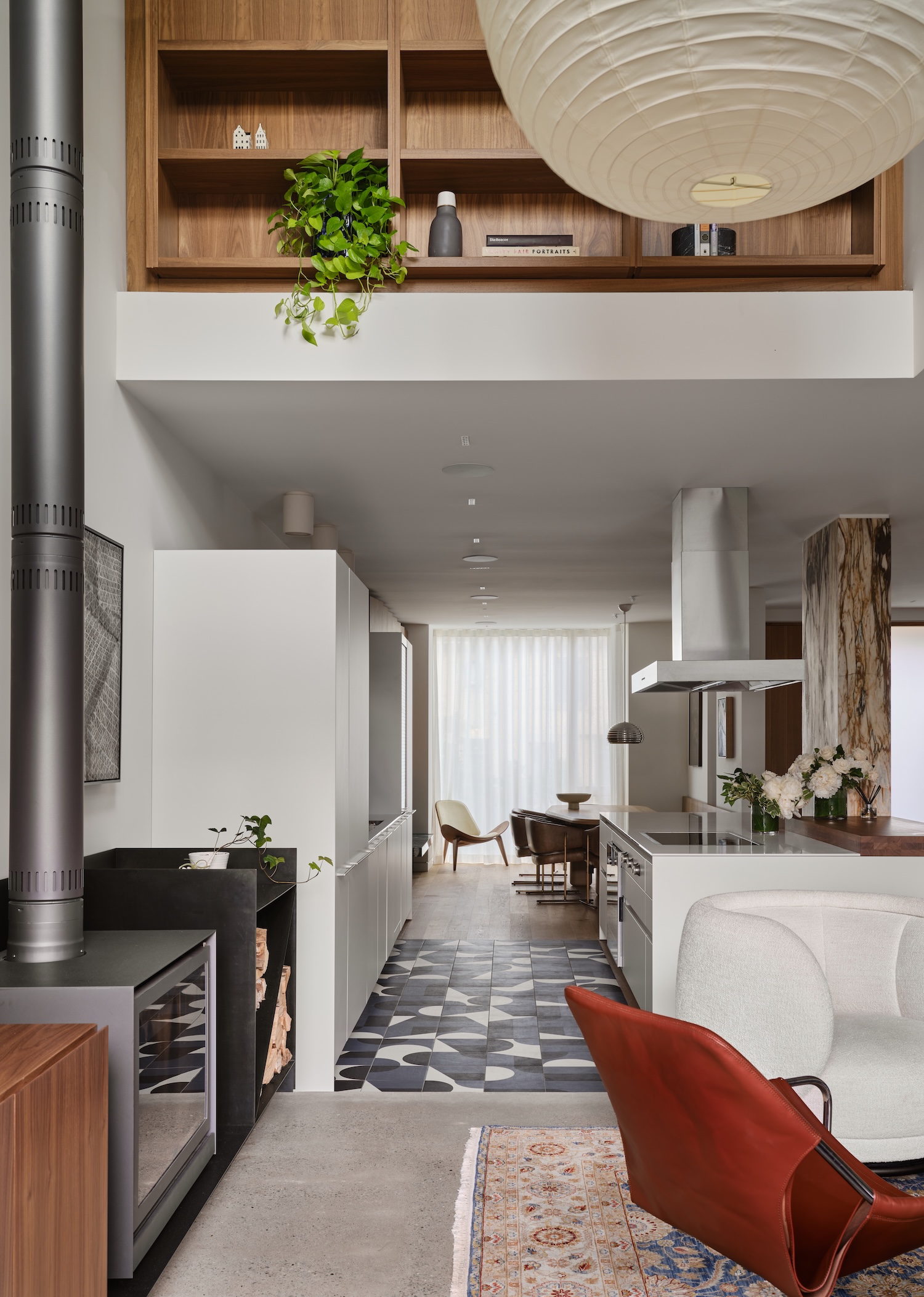
The renovation dismantles the rigid separations that defined the original layout. Where walls once isolated rooms, the ground floor now operates as a continuous field, with kitchen, living room, and outdoor terrace connected through large sliding doors. This openness is not merely aesthetic but functional – the heated flooring extends from interior to exterior, eliminating the threshold between inside and outside during gatherings. The decision to remove the existing pool, which consumed the entire rear garden, reflects a broader understanding that usable outdoor space holds more value than a single-purpose amenity for a family that prioritizes hosting.
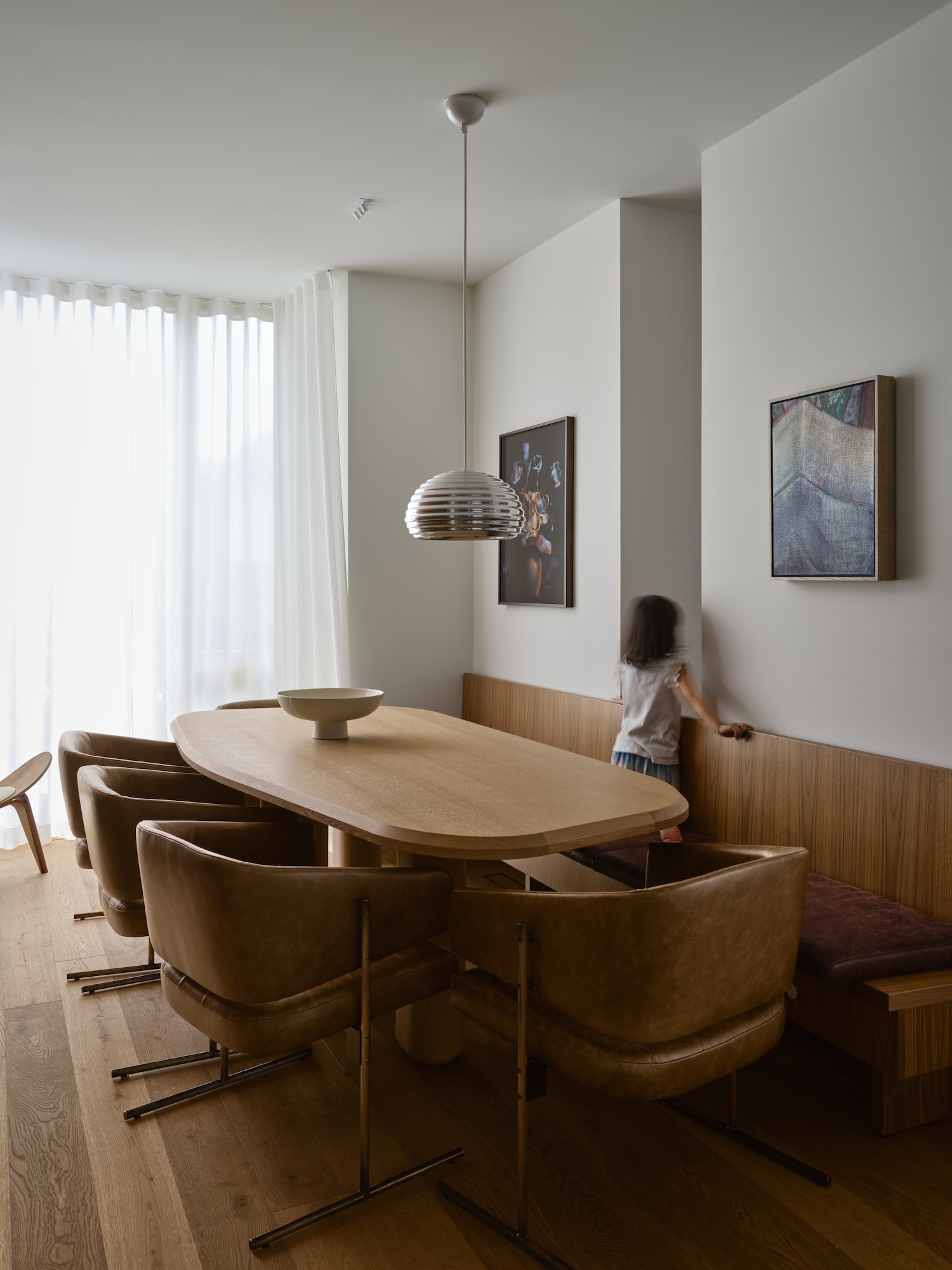
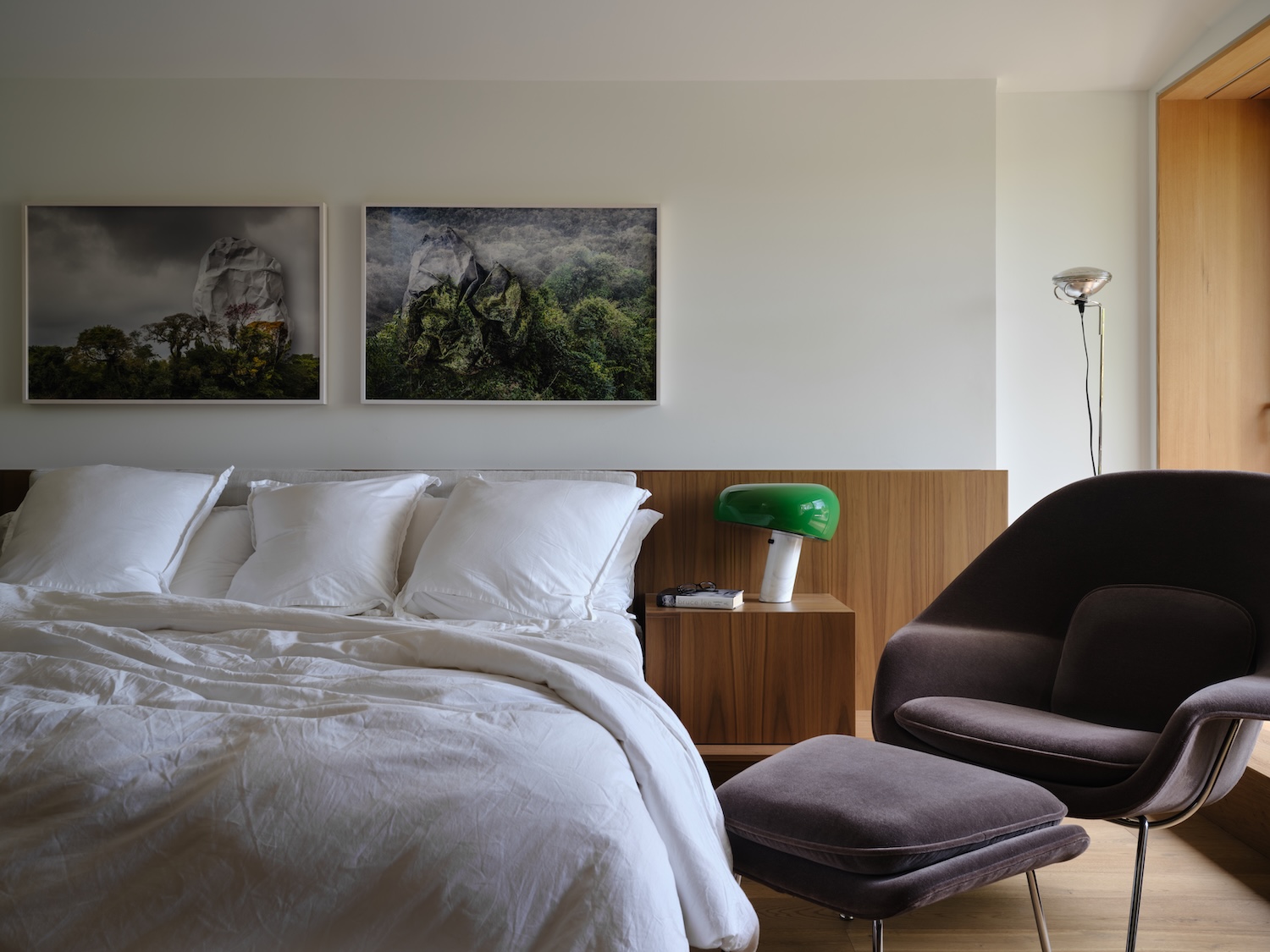
Custom millwork operates on two registers throughout the home. In some rooms, white oak cabinetry introduces textural warmth against muted backgrounds, creating spatial definition without enclosure. Elsewhere, the millwork recedes, becoming neutral infrastructure that supports the family’s art collection and contemporary furniture – objects that carry the vibrant energy the clients sought. This calibrated approach to detailing suggests restraint as an active choice rather than minimalism as a default mode.
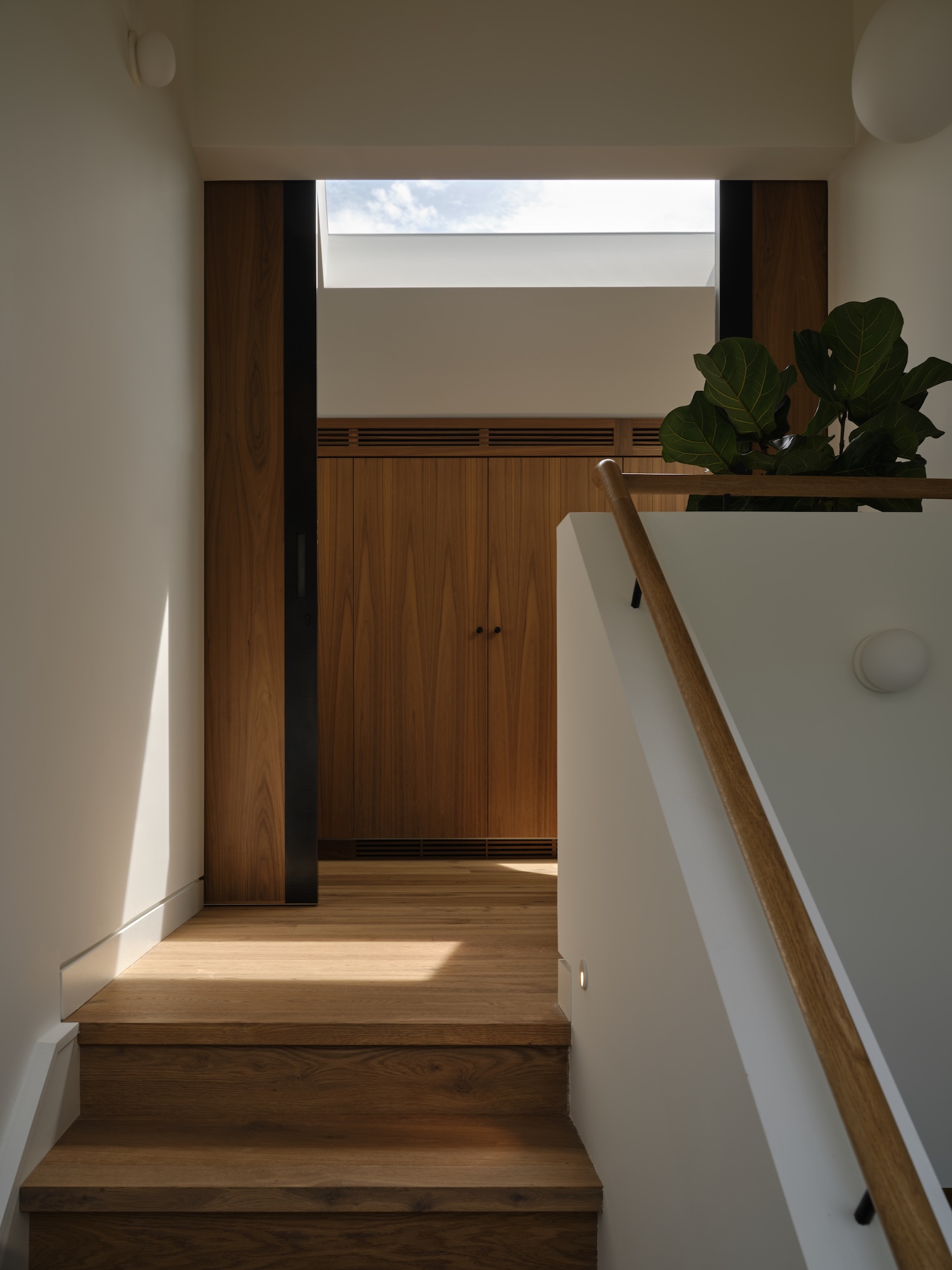
The circulation system reveals careful attention to environmental performance alongside spatial experience. A continuous white oak handrail guides movement from public to private floors, while a central skylight washes natural light deep into the narrow floor plate. The operable skylights function as part of a passive ventilation strategy, using the chimney effect to exhaust warm air during summer months. These interventions demonstrate how technical considerations can be integrated into the formal language of a home without announcing themselves.
The vertical organization creates pockets for simultaneous activities. The ground floor living room connects visually to the second floor lounge, allowing different generations to maintain proximity while occupying distinct zones. The basement consolidates wellness functions – sauna, cold shower, yoga space – alongside guest accommodations, illustrating how overlapping programmatic uses maximize spatial efficiency in an urban property. The third floor master suite, made possible by the rear addition, includes a terrace overlooking the garden and the garage’s green roof, extending the landscape vertically through the section.