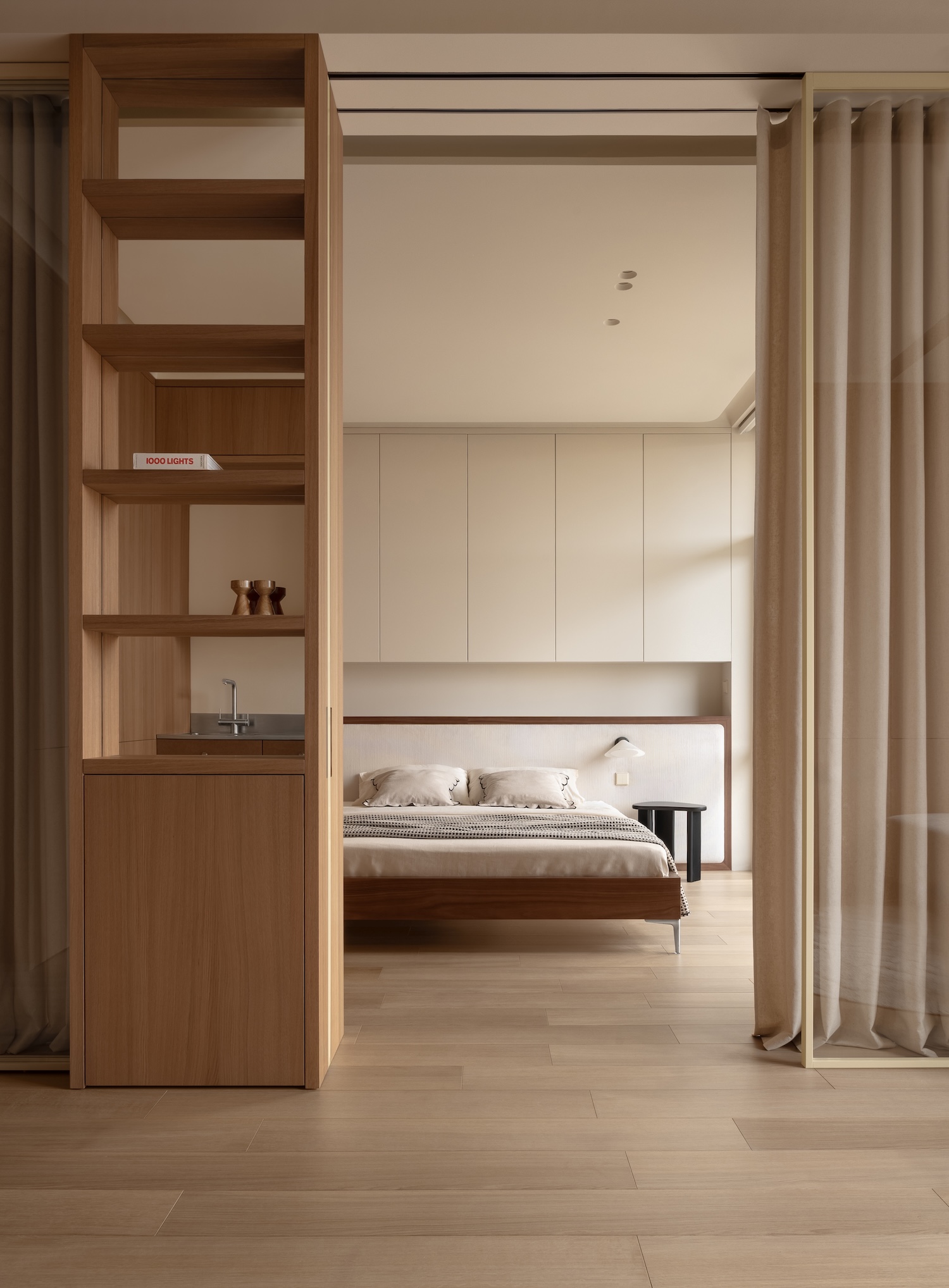
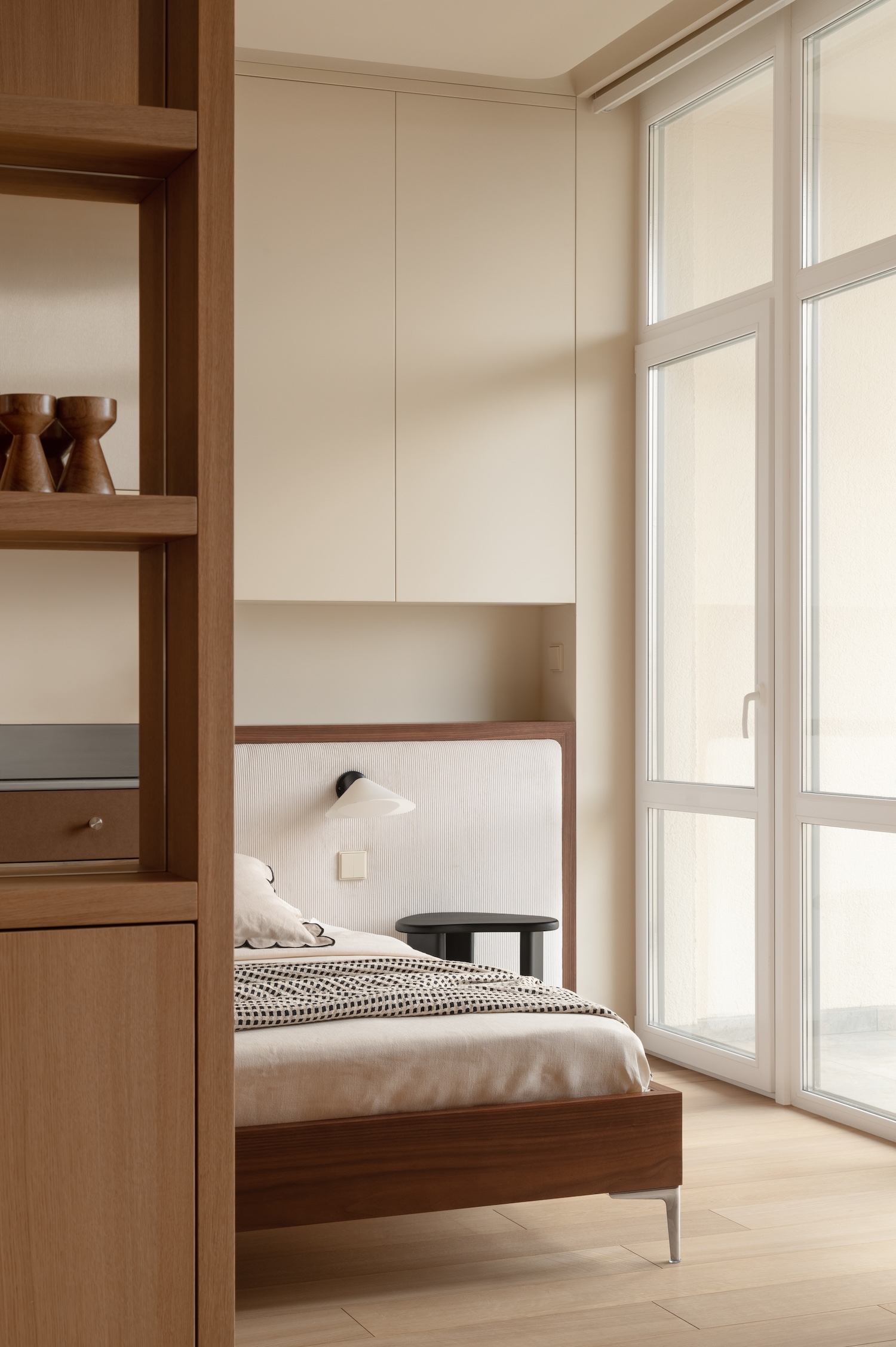
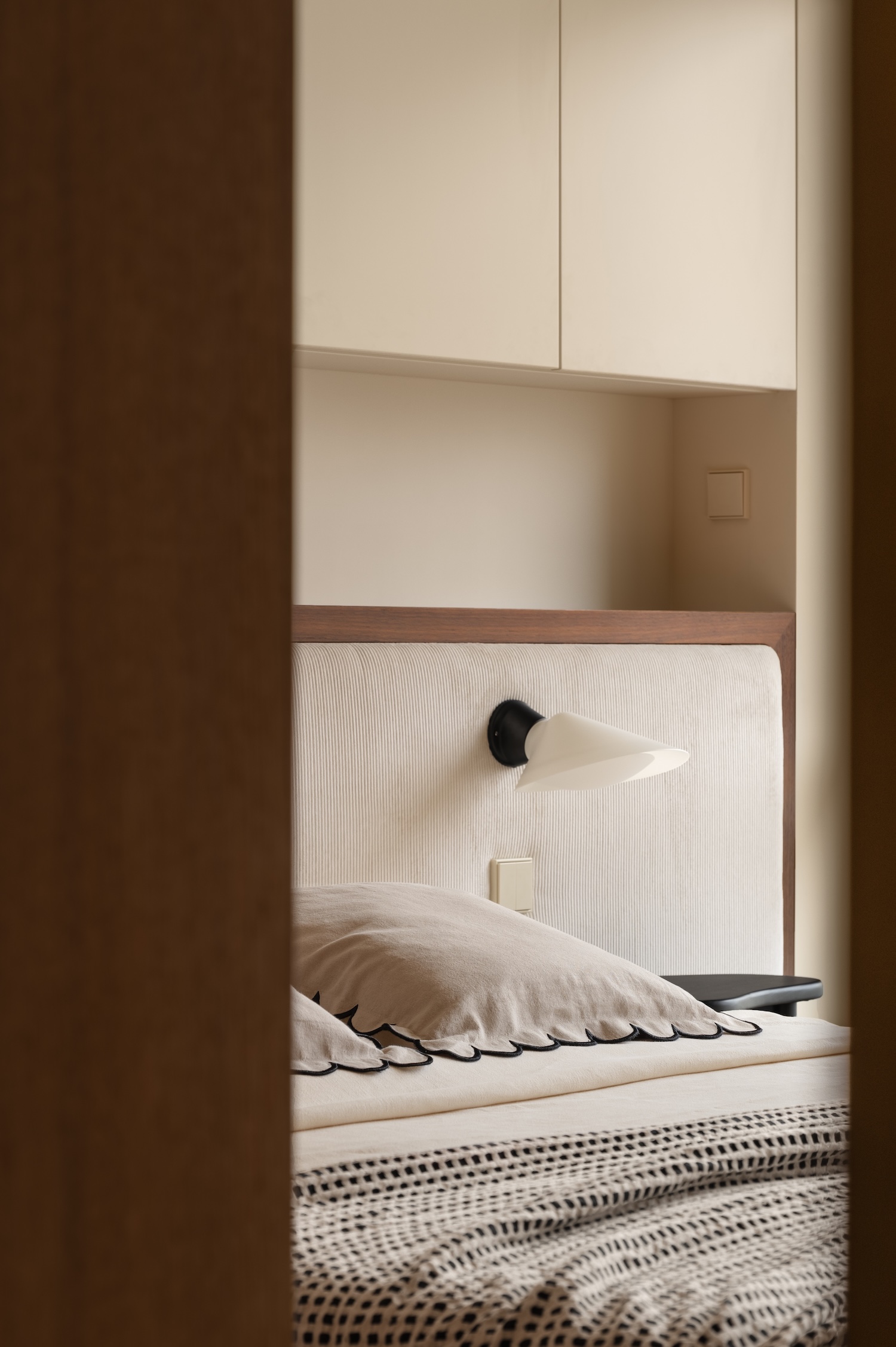
Teo Apartment is a minimalist apartment located in Kyiv, Ukraine, designed by ater.architects. Fifty square meters on the third floor of a new residential block on the city’s outskirts left little room for conventional rooms, so the studio demolished the internal walls and rebuilt the plan out of furniture. Only the bathroom and a compact walk-in closet survive as fixed volumes. Everything else is defined by joinery, a glass partition, and a run of sliding oak doors.
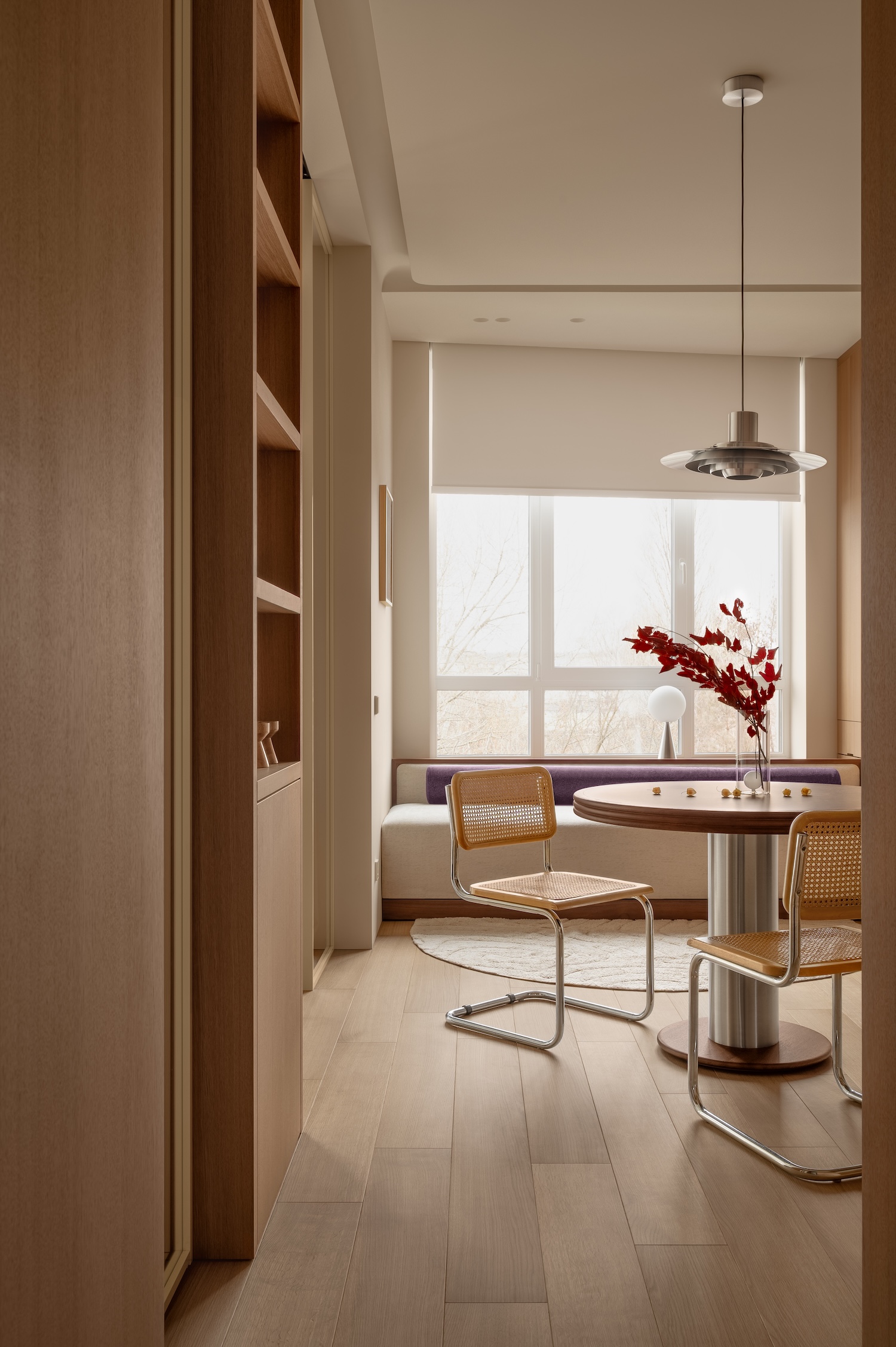
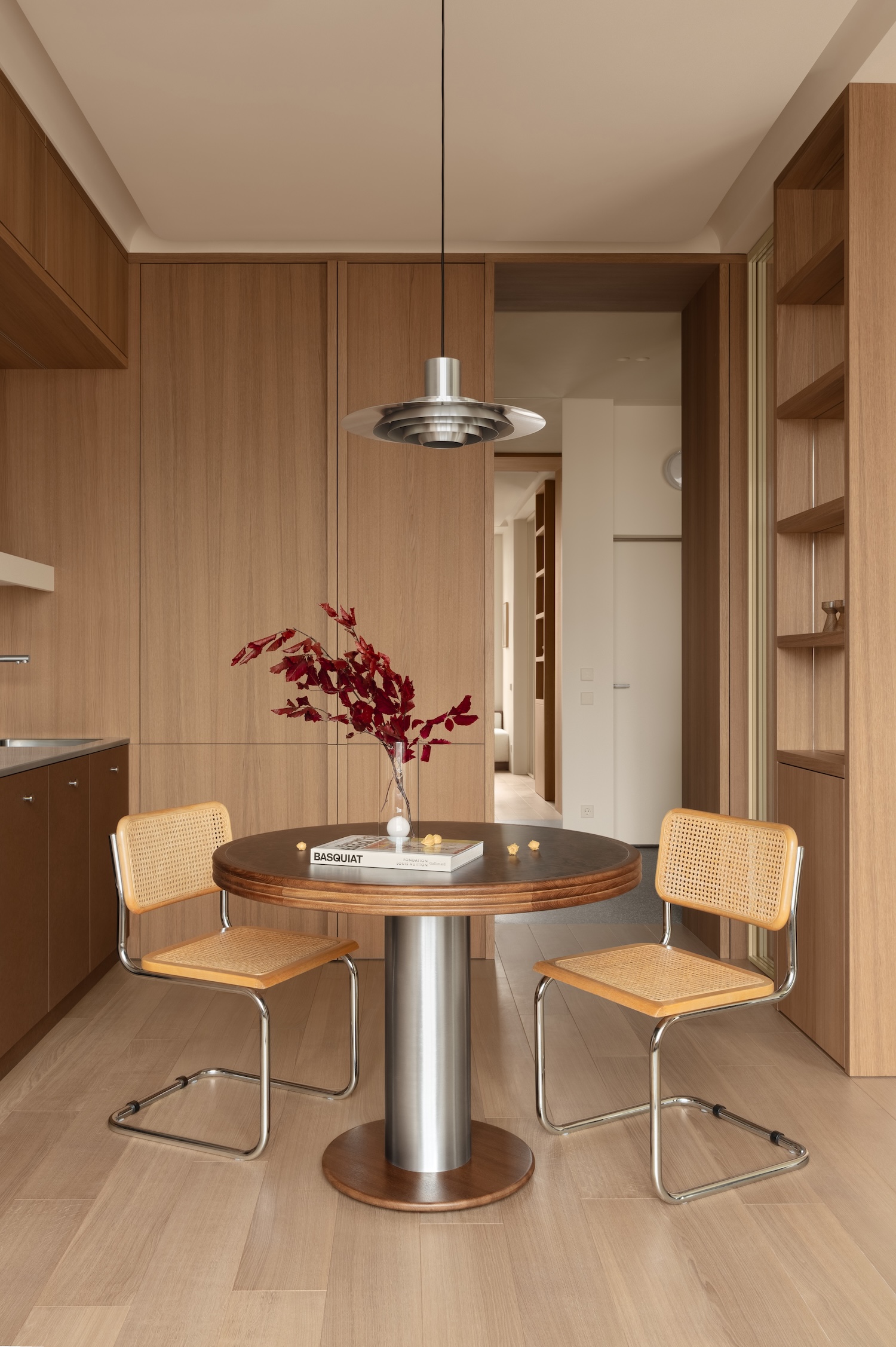
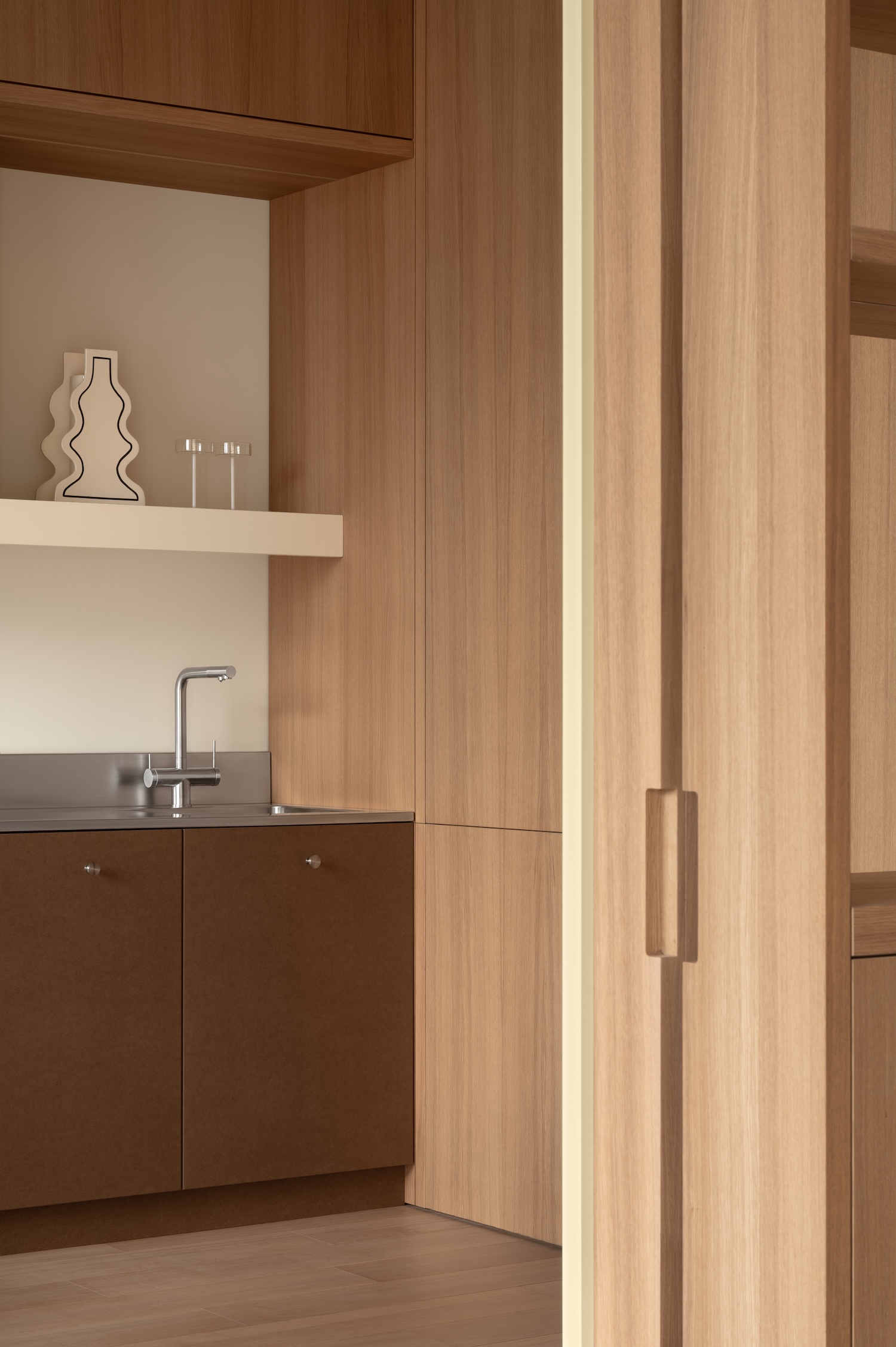
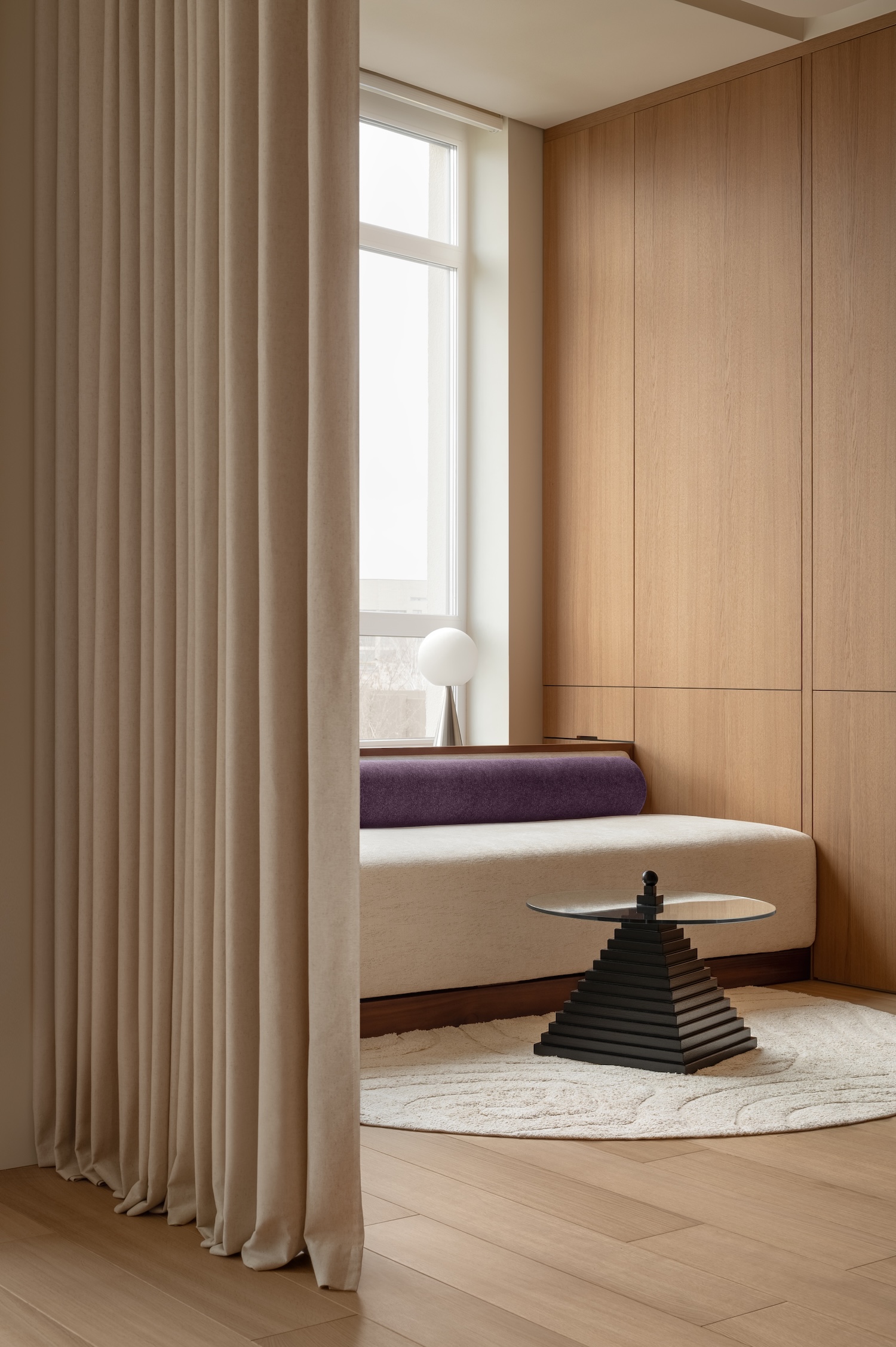
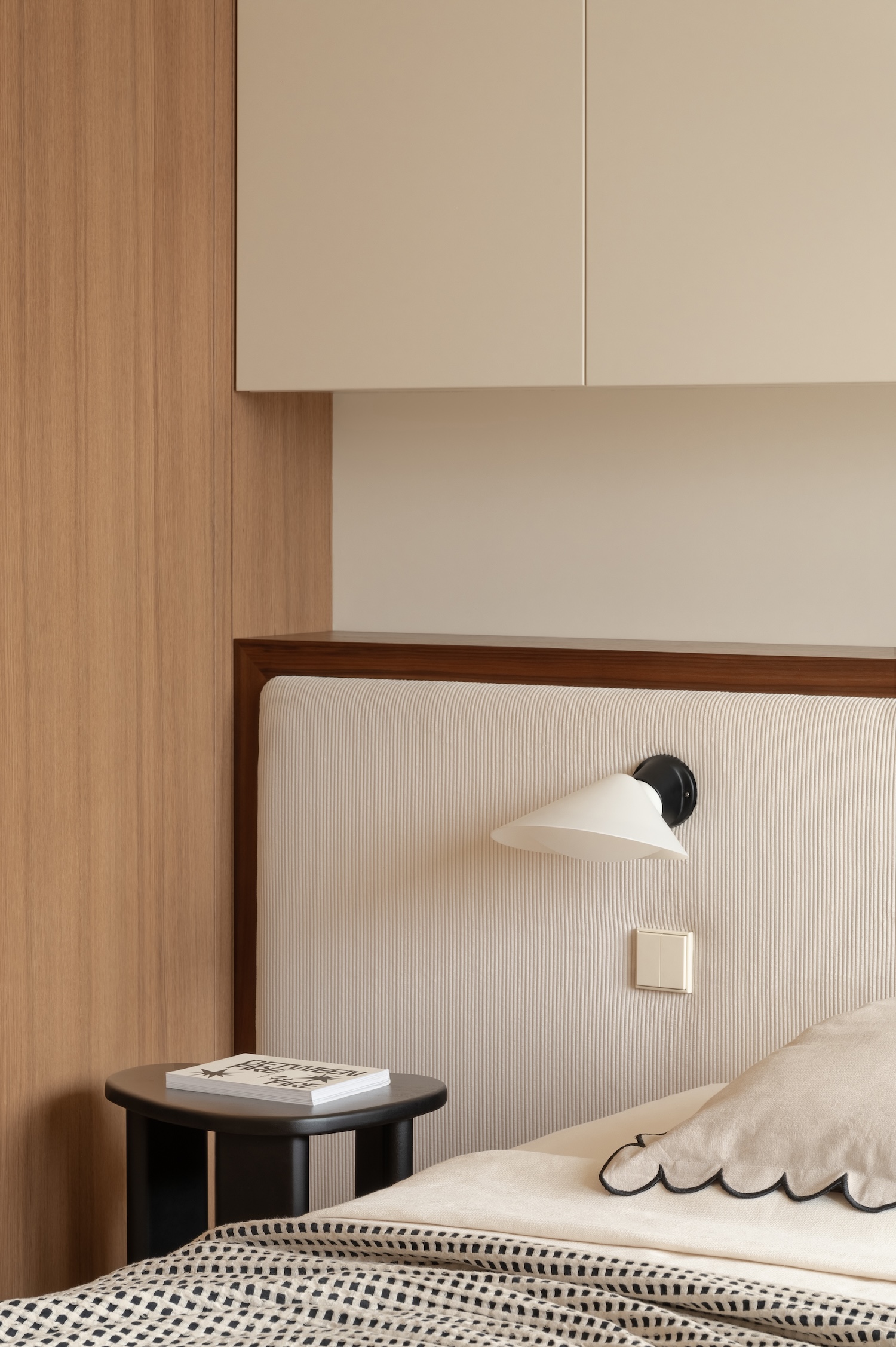
Oak veneer paneling wraps the perimeter continuously, absorbing storage into what reads as wall rather than cabinetry. The strategy descends from the casiers standard of Le Corbusier and Charlotte Perriand, storage understood as an architectural element rather than a piece of furniture pushed against a surface. Handleless fronts and continuous grain keep the eye traveling along the plane instead of counting doors, which is what makes 538 square feet feel unpressured. The owners work in creative fields, one designing custom furniture and commercial interiors, the other writing, and that fluency shows in the tolerance for detail the scheme demands.
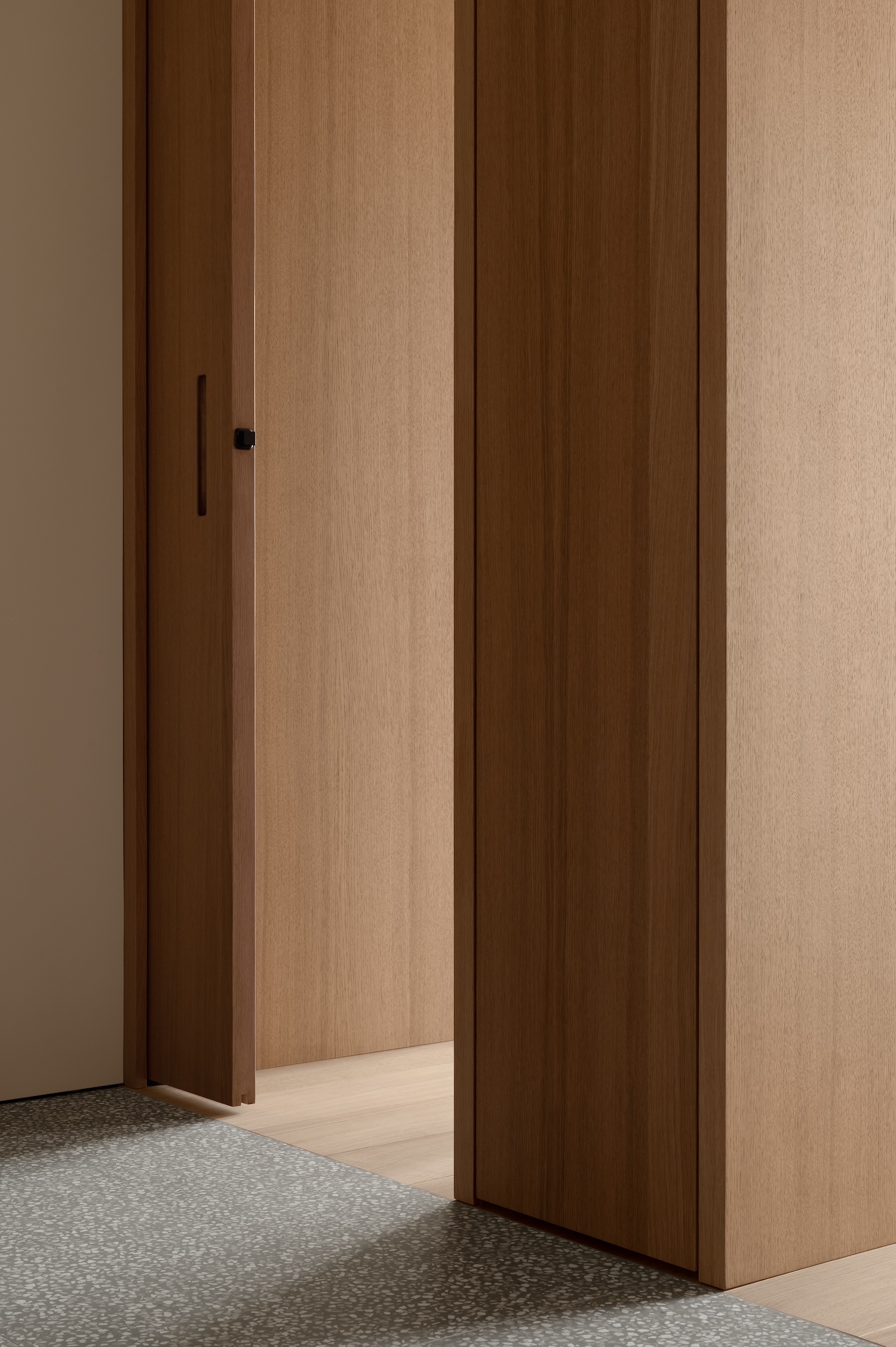
Wooden portals mark the shift from terrazzo in the entry corridor to oak parquet in the living zone, a threshold registered underfoot before it is registered visually. Terrazzo takes the traffic and the wet shoes, oak takes the domestic hours. Walls the color of butter warm the whole envelope, close enough in tone to the veneer that the paneling never reads as an inserted object.
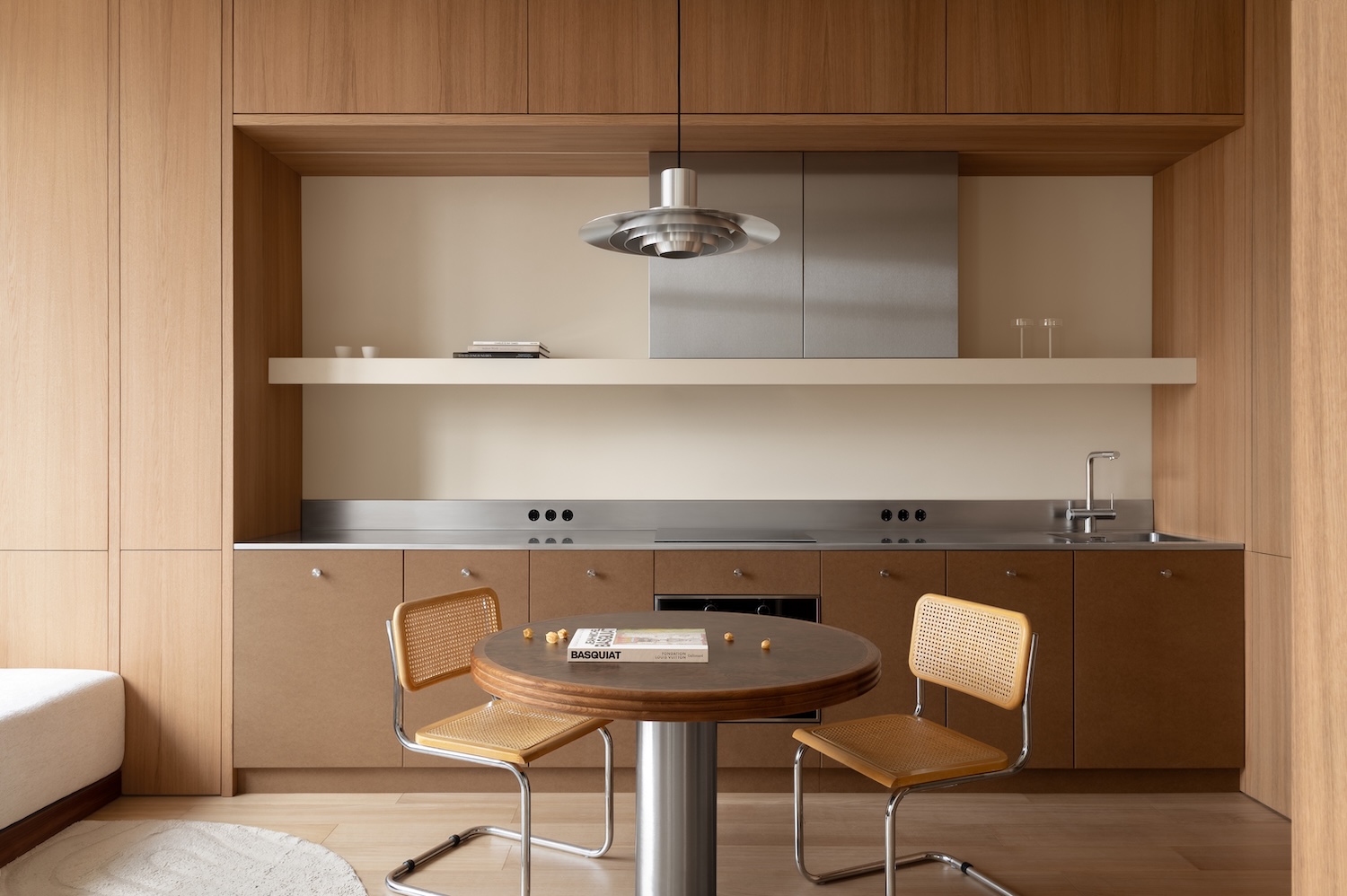
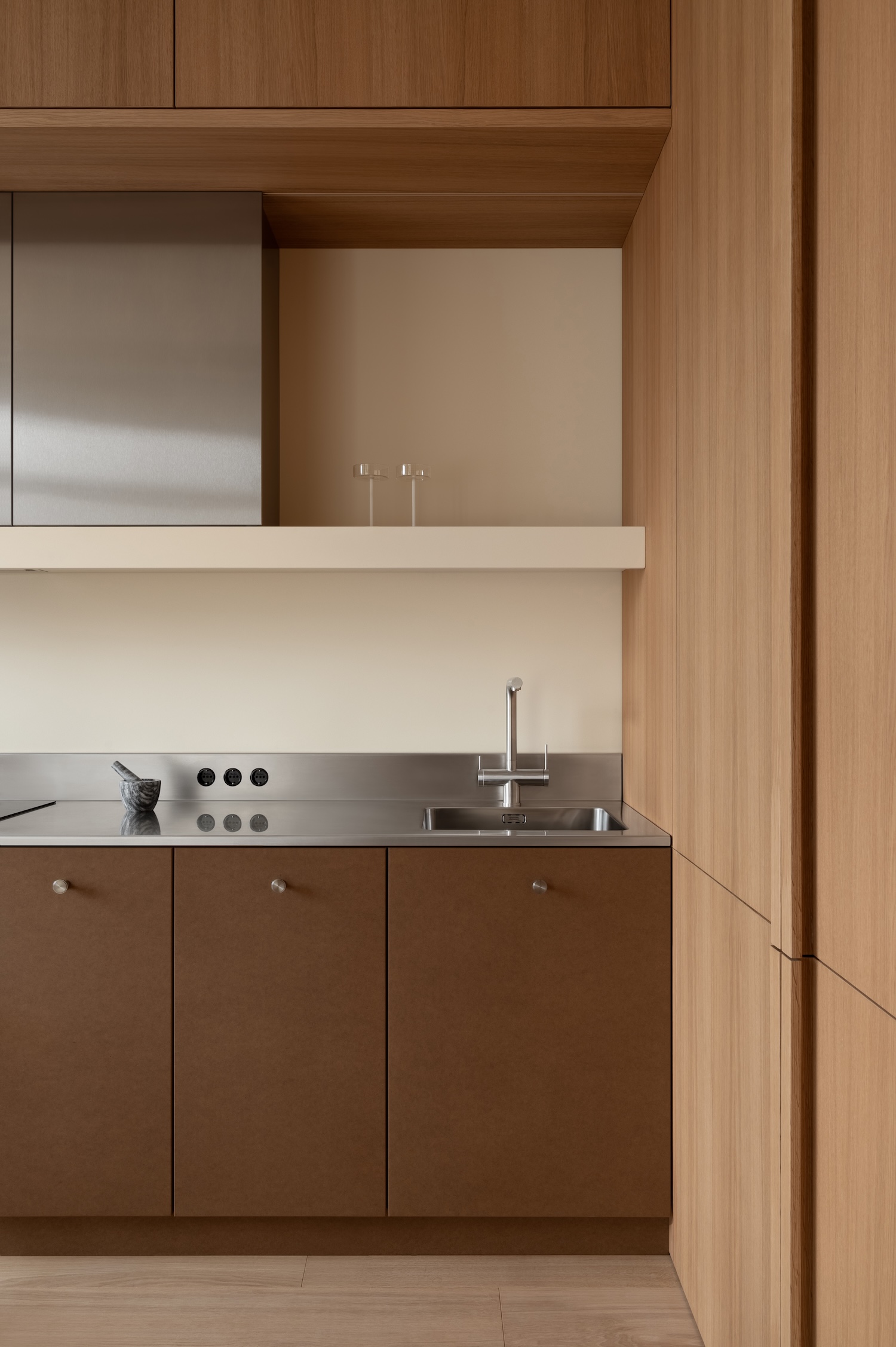
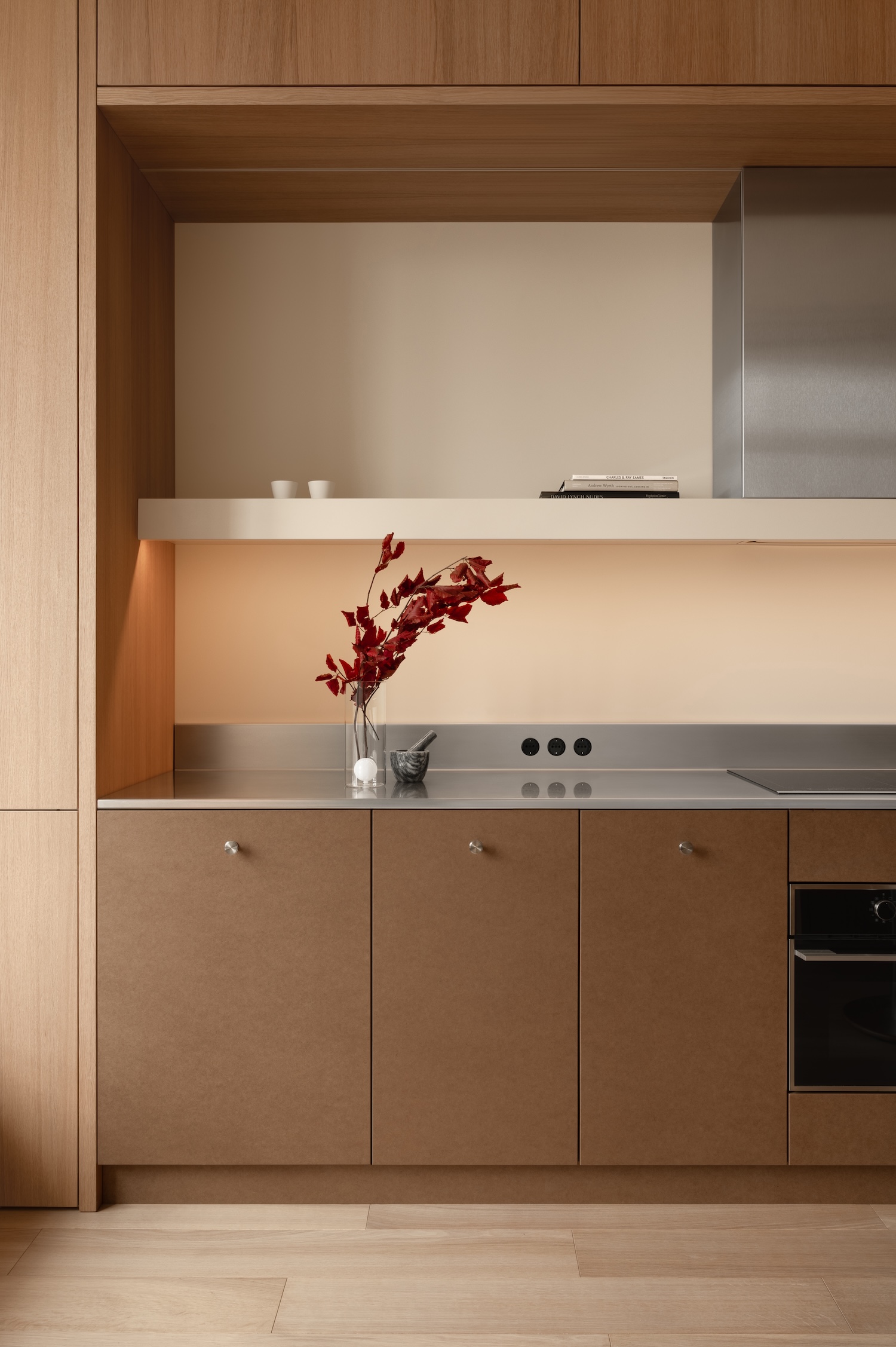
Stainless steel governs the kitchen, used for both worktops and upper fronts, where it does something more interesting than the professional-kitchen reference it initially suggests. Steel reflects the oak surrounding it, so the coldest material in the apartment spends most of the day carrying warm color. Lower fronts are unlaminated MDF under matte lacquer, a deliberately unglamorous choice that gives the eye somewhere matte to rest and lets the raw quality of the steel register as a texture rather than a finish. MDF left legible as MDF has a specific lineage in European furniture of the last two decades, and here it supplies the tactile depth that a fully lacquered kitchen would flatten.