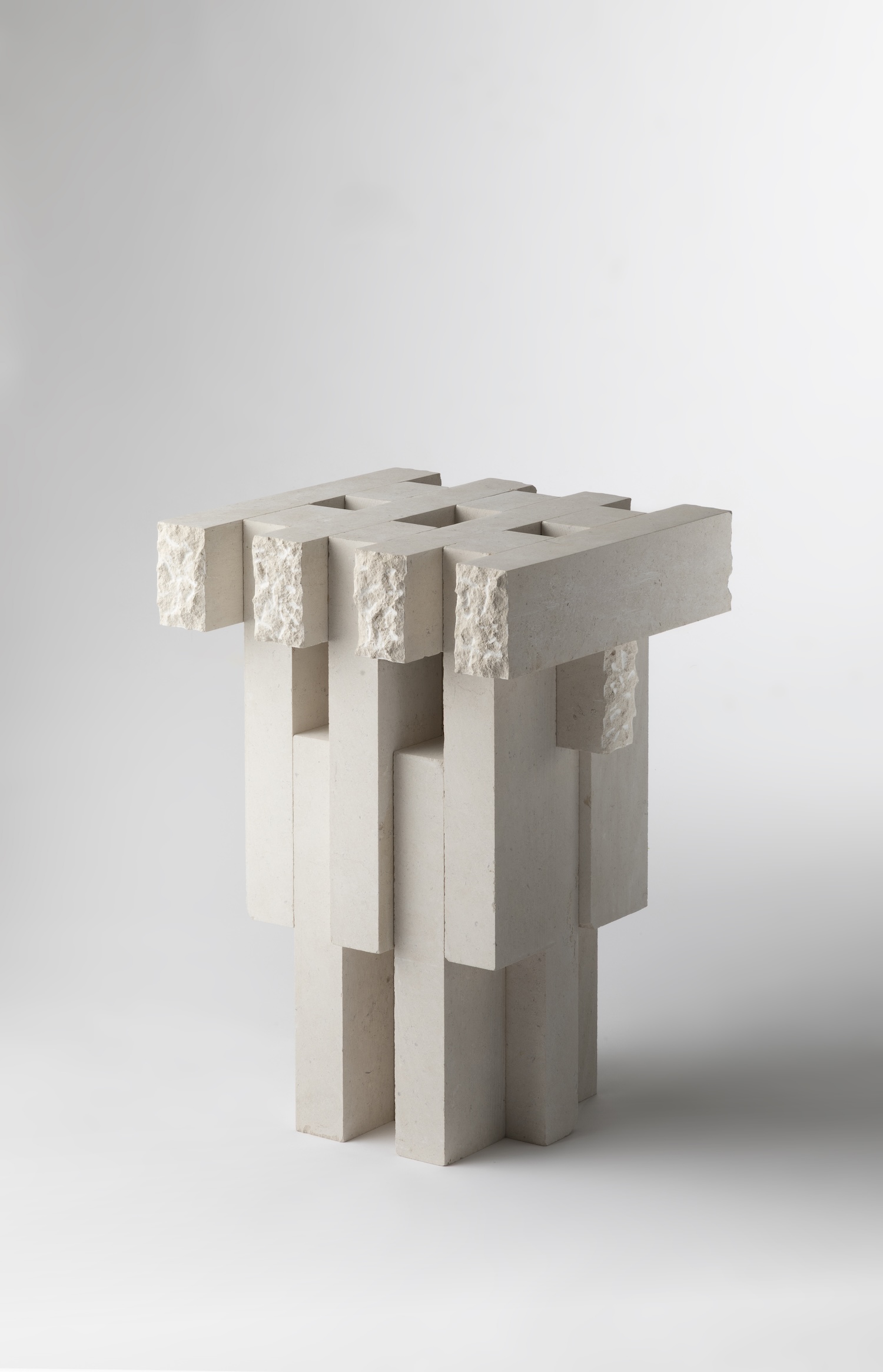
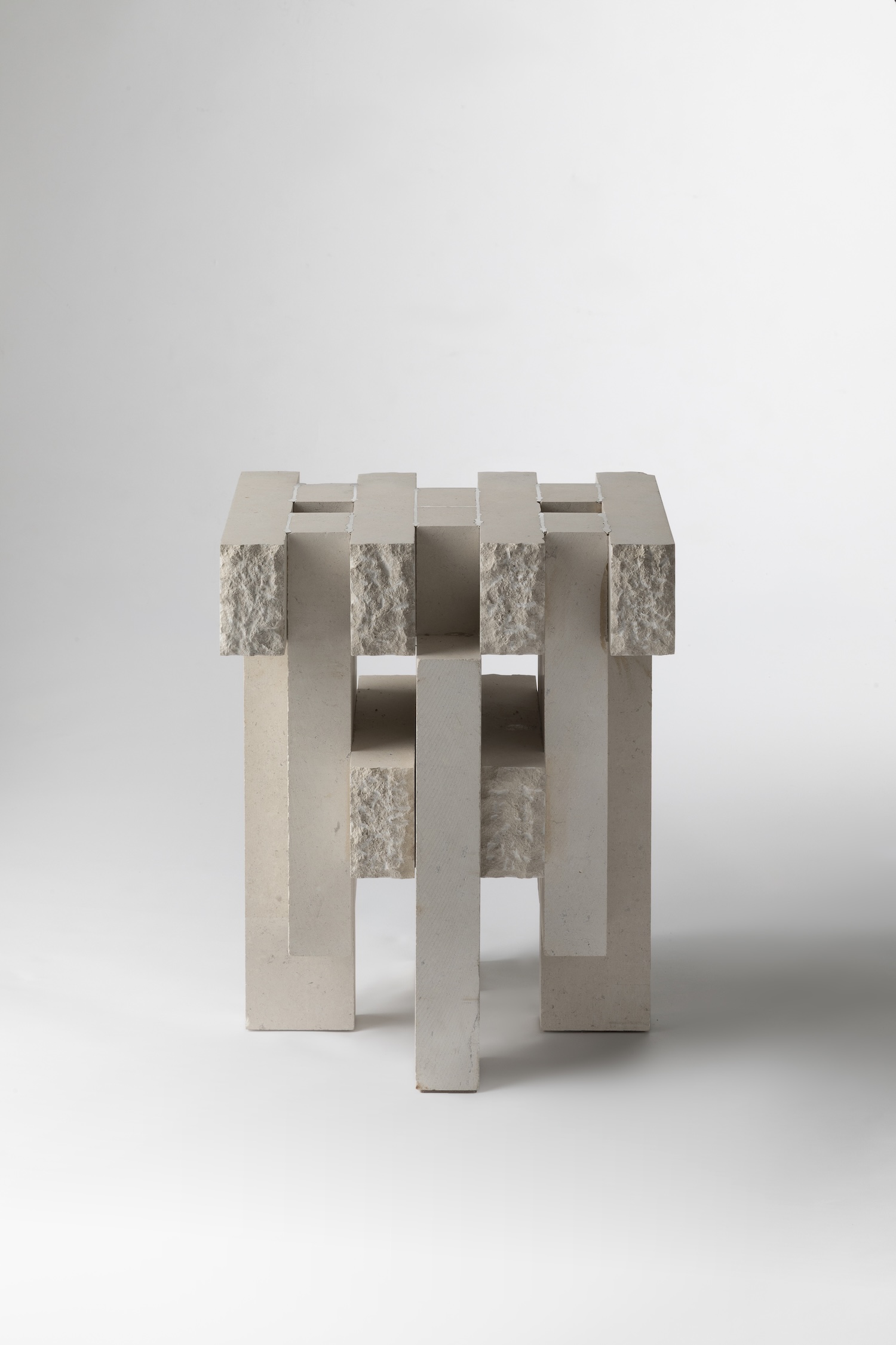
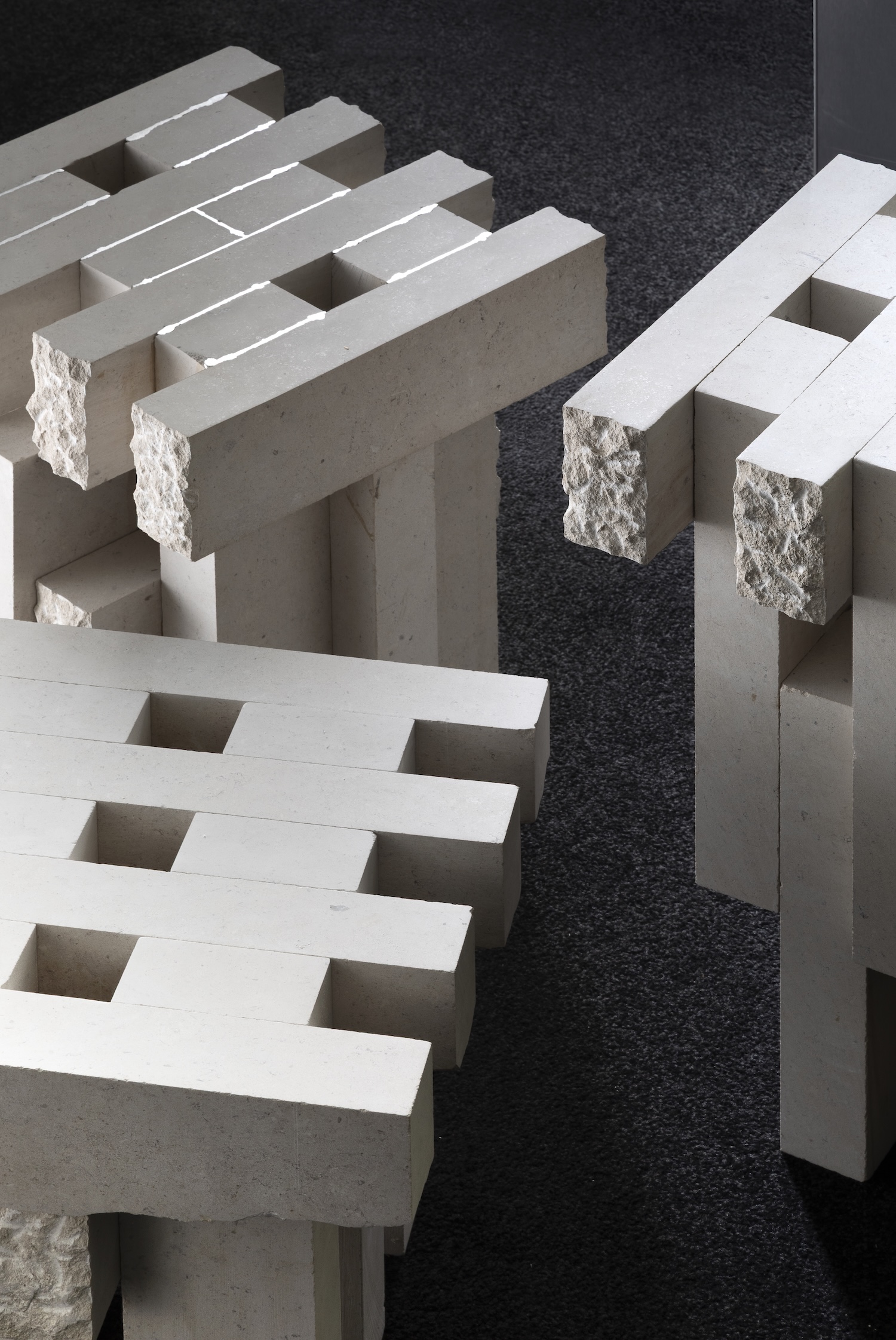
Waste to Wonder is a minimalist table series created by Paris-based studio MVE Collection in collaboration with Eco Outdoor, presented at the Eco Outdoor showroom in Melbourne, Australia for Melbourne Design Week. Three sculptural tables are built from solid limestone construction bricks, a material produced for architectural use and diverted here before it ever reached a wall.
Limestone brick is designed to disappear. Sized for coursing and bedding, it exists to be stacked, mortared, and covered, its individual qualities absorbed into a larger surface. Left exposed and assembled without concealment, the same unit reveals the porosity, tonal drift, and saw marks that construction detailing normally suppresses. Traces of the quarry and the cutting bed remain on every face, so the tables record the industrial process that made the blocks as clearly as the design that arranged them.
Assembly relies on mass and stacking rather than joinery, which places the work in a specific French lineage of load-bearing stone. Fernand Pouillon built housing in Marseille and Algiers from quarried blocks used structurally at a moment when reinforced concrete had made that approach seem obsolete, and Gilles Perraudin later revived massive limestone construction with his winery at Vauvert, arguing that raw quarried stone required a fraction of the energy consumed by concrete. MVE compresses that argument to the scale of a table, where the same logic of compression, weight, and dry assembly becomes legible at close range and can be understood by touch.
Restraint governs the detailing. Edges stay square, the assembly stays visible, and no polishing or sealing intervenes to smooth the material into something more precious than it is. Variation between blocks supplies the surface interest, with warmer and cooler tones sitting adjacent, so what a conventional specification would reject as inconsistency becomes the primary visual event.