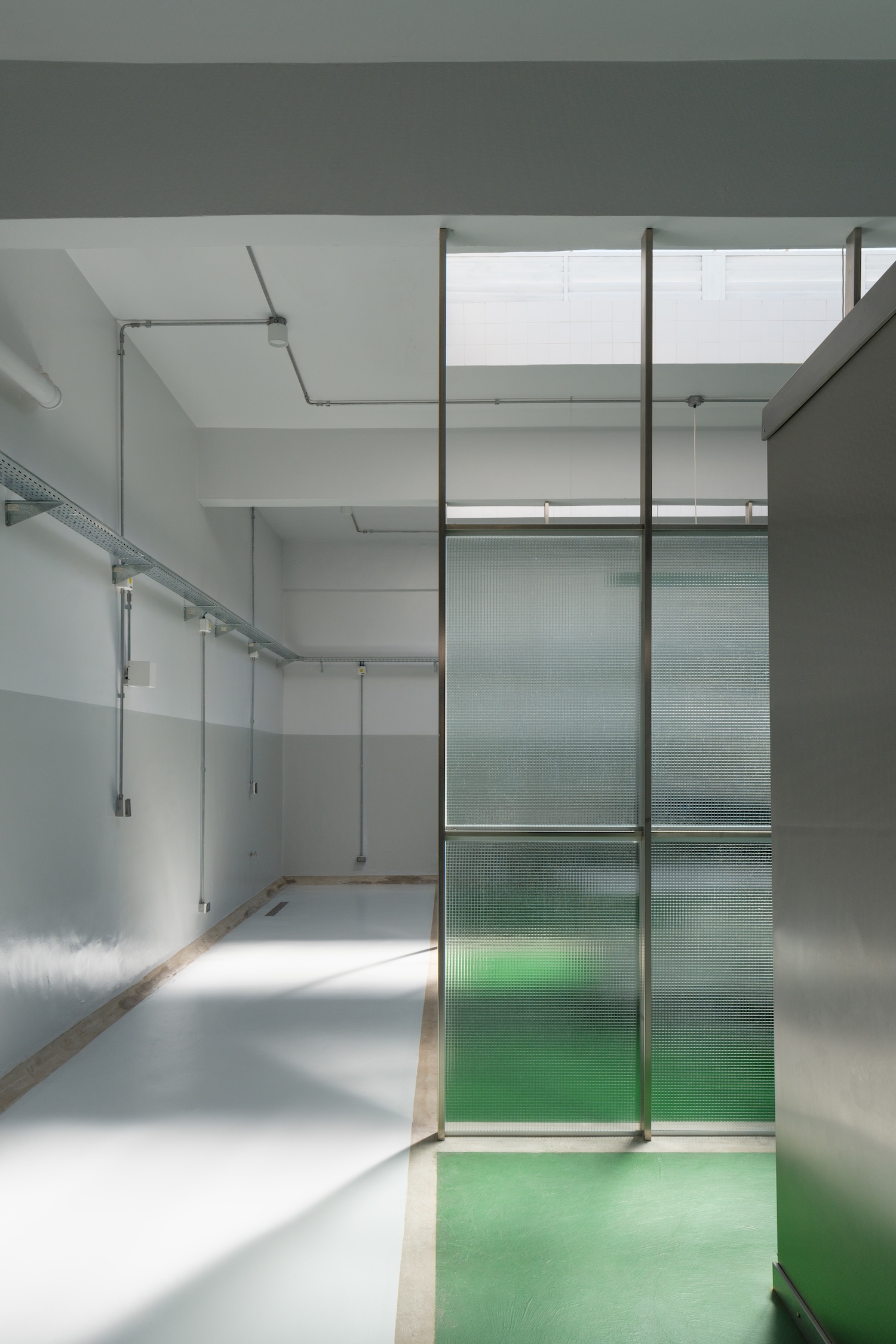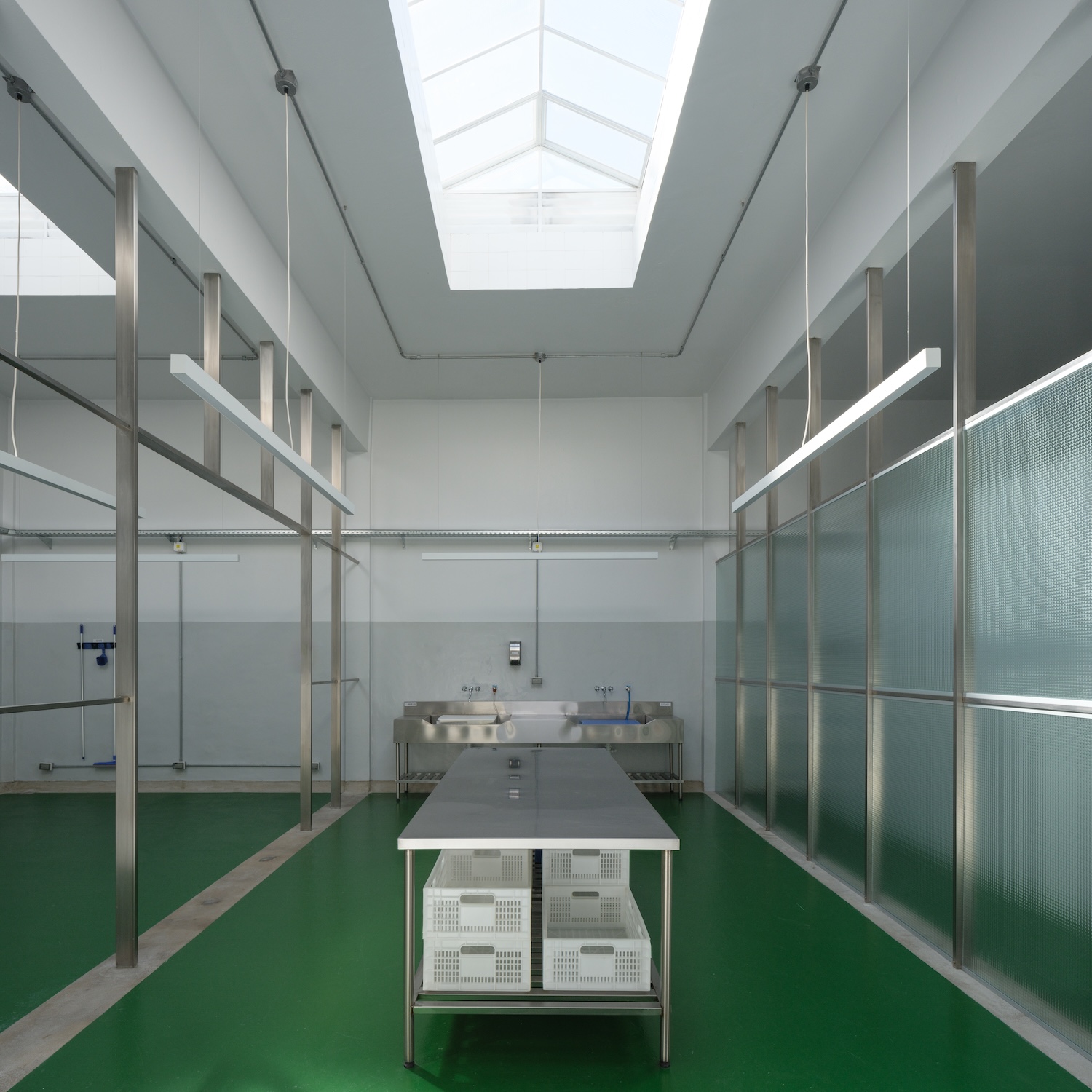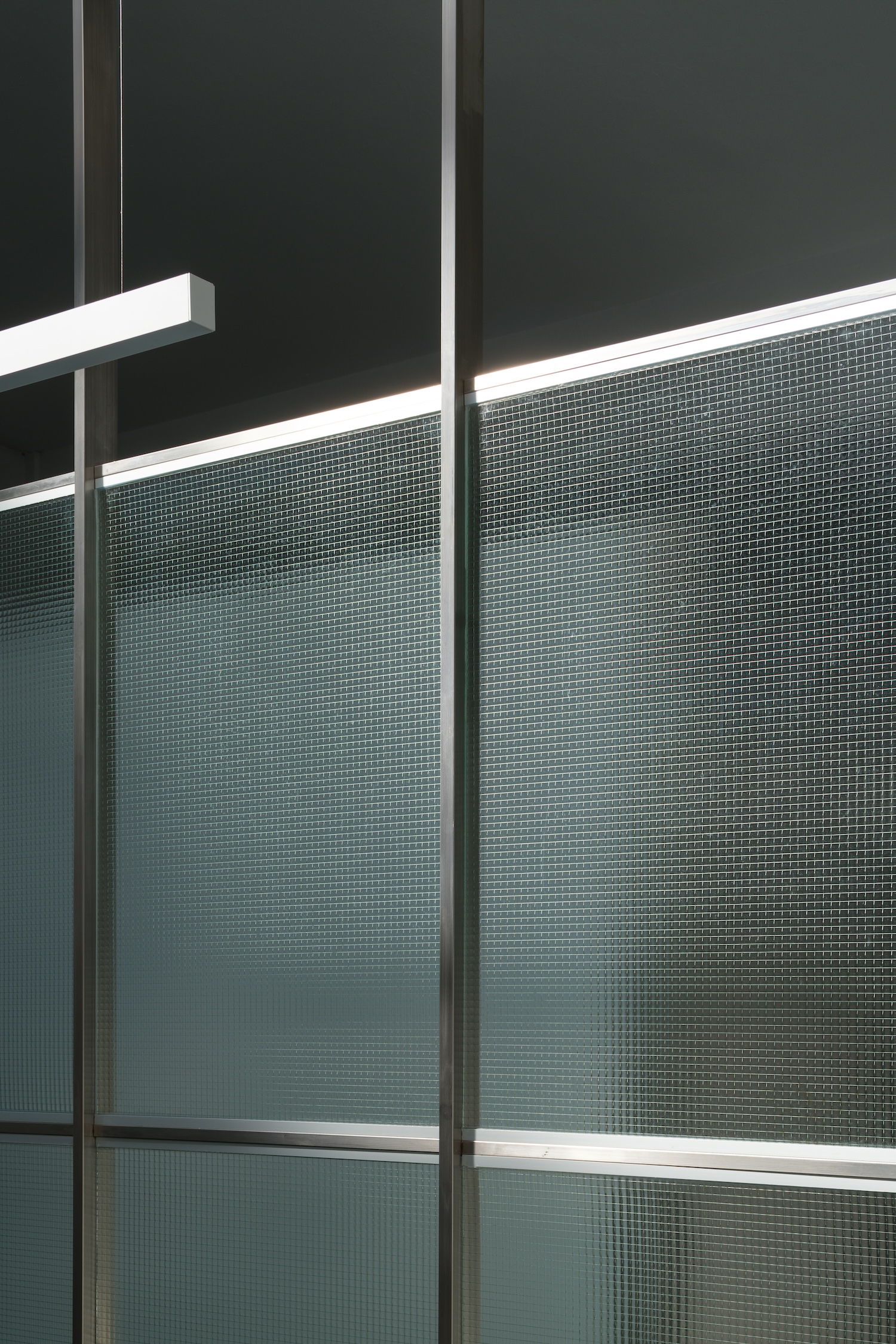
Nare Productos de Mar is a minimalist butchery located in Buenos Aires, Argentina, designed by designer Lara Reinke and architect Federico Araujo Lefosse of LISSE. The project’s genius lies in its material honesty. The butchery area speaks the language of hygiene through surgical-grade stainless steel fixtures and seamless epoxy floors, each surface designed to facilitate the daily ballet of cleaning, cutting, and presentation. These are not merely functional choices but philosophical statements about transparency in food preparation. The security wired glass partitions create what the architects describe as “controlled visibility” – allowing customers to witness the craft while maintaining the sterility essential to fish handling. This transparency echoes the reform movements of the early 20th century, when architects like Ernst May advocated for “honest” materials that revealed rather than concealed their purpose.
The spatial organization reveals a sophisticated understanding of workflow dynamics. The rigorous zoning system, complete with clear signposting, transforms the mundane logistics of fish retail into something approaching industrial choreography. The overhead skylights filter natural light softly, creating an atmosphere that balances the clinical requirements of food safety with the human need for connection to natural cycles – a consideration that recalls the great market halls of the 19th century, where iron and glass created soaring spaces that celebrated both commerce and craftsmanship.
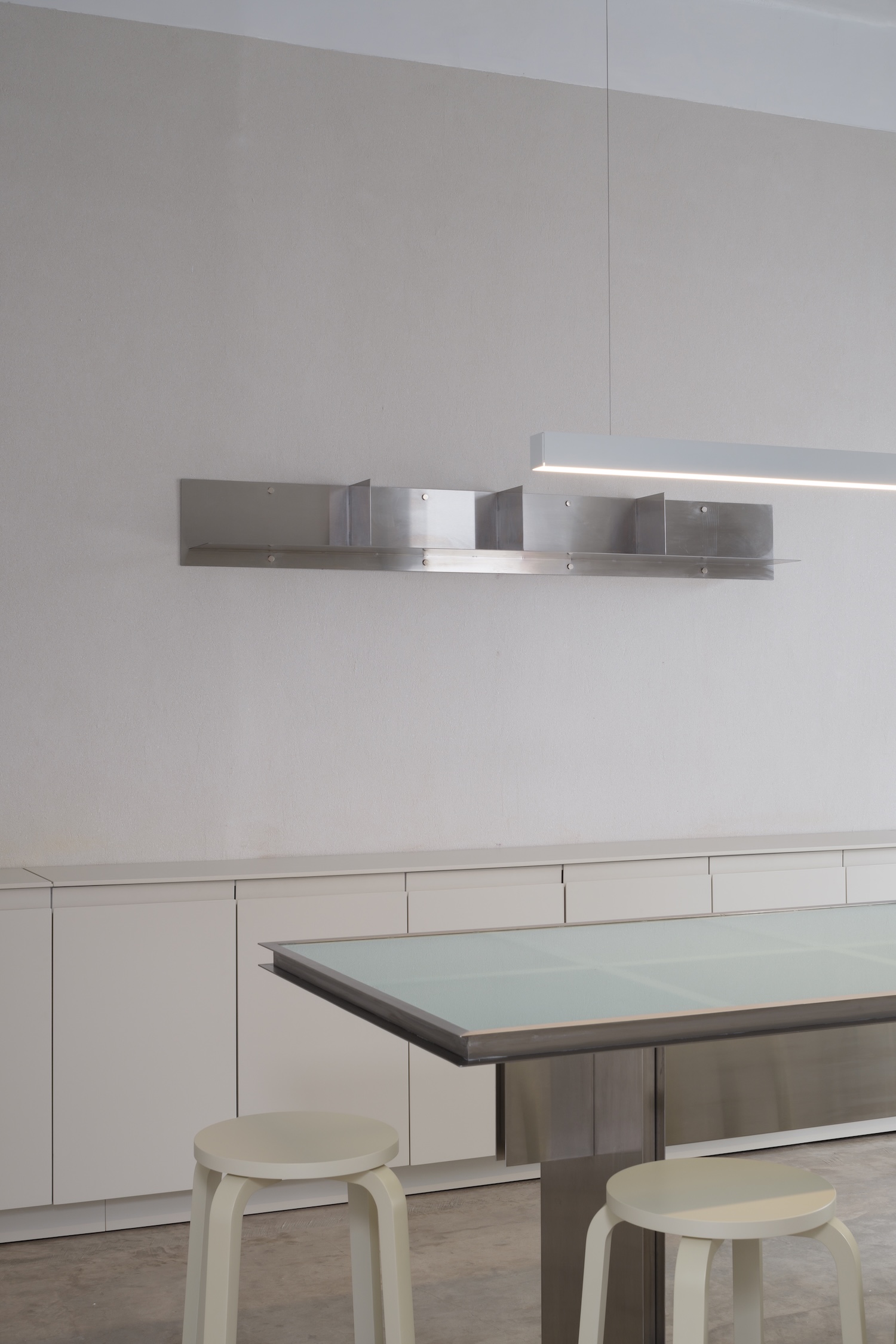
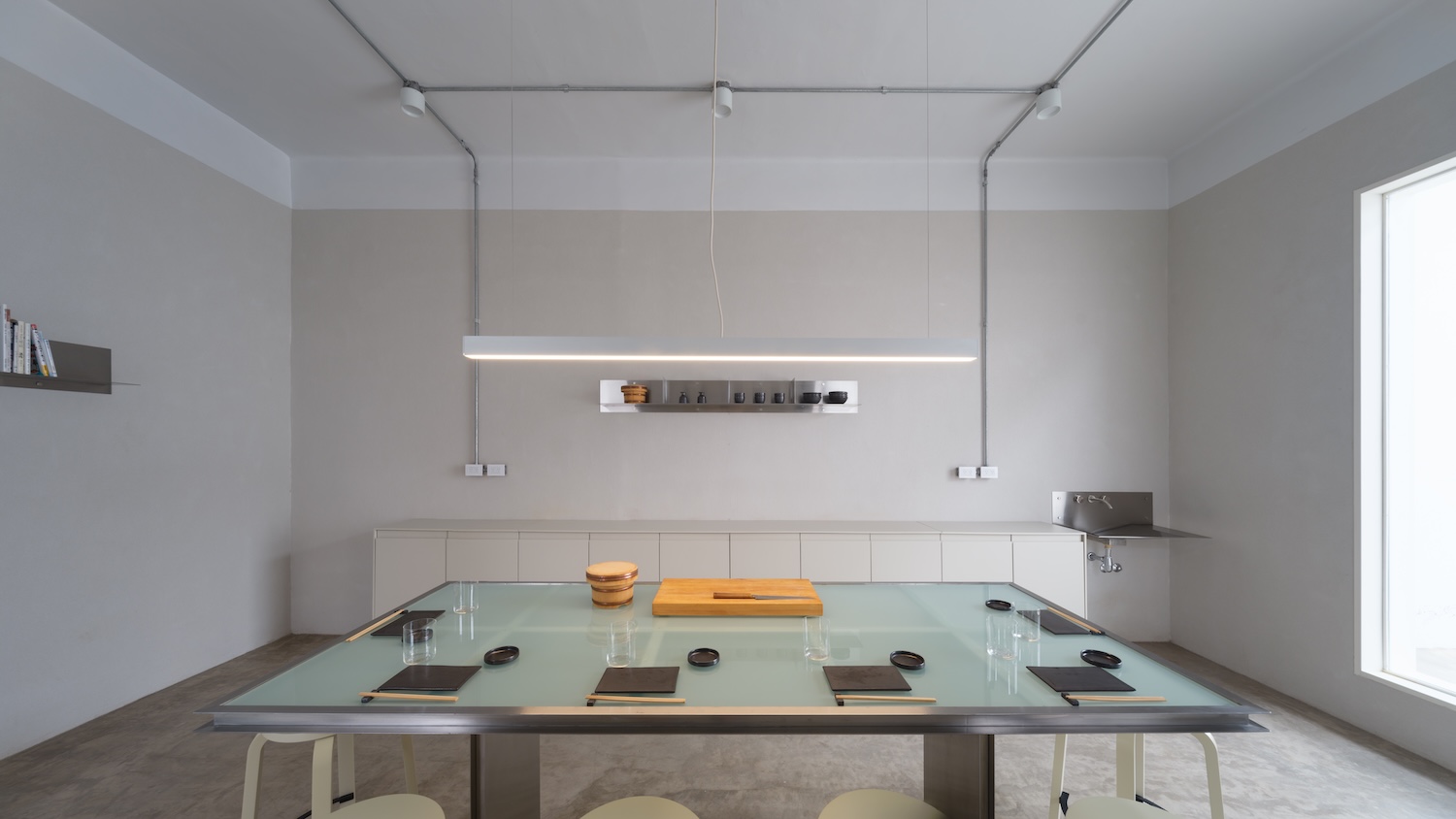
But it is in the exhibition room where the project’s cultural ambitions fully manifest. The custom glass table with brushed metal edges becomes a focal point for what the architects envision as “curated intimacy.” This is not merely furniture but a proposition about how we might reimagine the relationship between producer and consumer. The suspended linear luminaire above transforms the table into a stage, suggesting that the preparation and presentation of fish can be elevated to performance art.
The wall-mounted sink and modular shelving system speak to a different kind of precision – one that accommodates the unpredictable rhythms of small-batch preparation and experimentation. The presence of ceramics and specialized tools creates what one observer noted as “a space that oscillates between domesticity and ritual.” This duality reflects broader contemporary concerns about authenticity in food culture, where the industrial and the artisanal exist in productive tension.
The project’s material palette – stainless steel, glass, ceramic, and carefully selected metals – creates a vocabulary that is simultaneously industrial and monastic. This aesthetic restraint recalls the German Werkbund’s early 20th-century efforts to unite fine and applied arts, but here applied to the specific challenges of contemporary food retail. The architects have avoided the rustic nostalgia that often characterizes artisanal food spaces, instead proposing a future where craft and technology enhance rather than oppose each other.