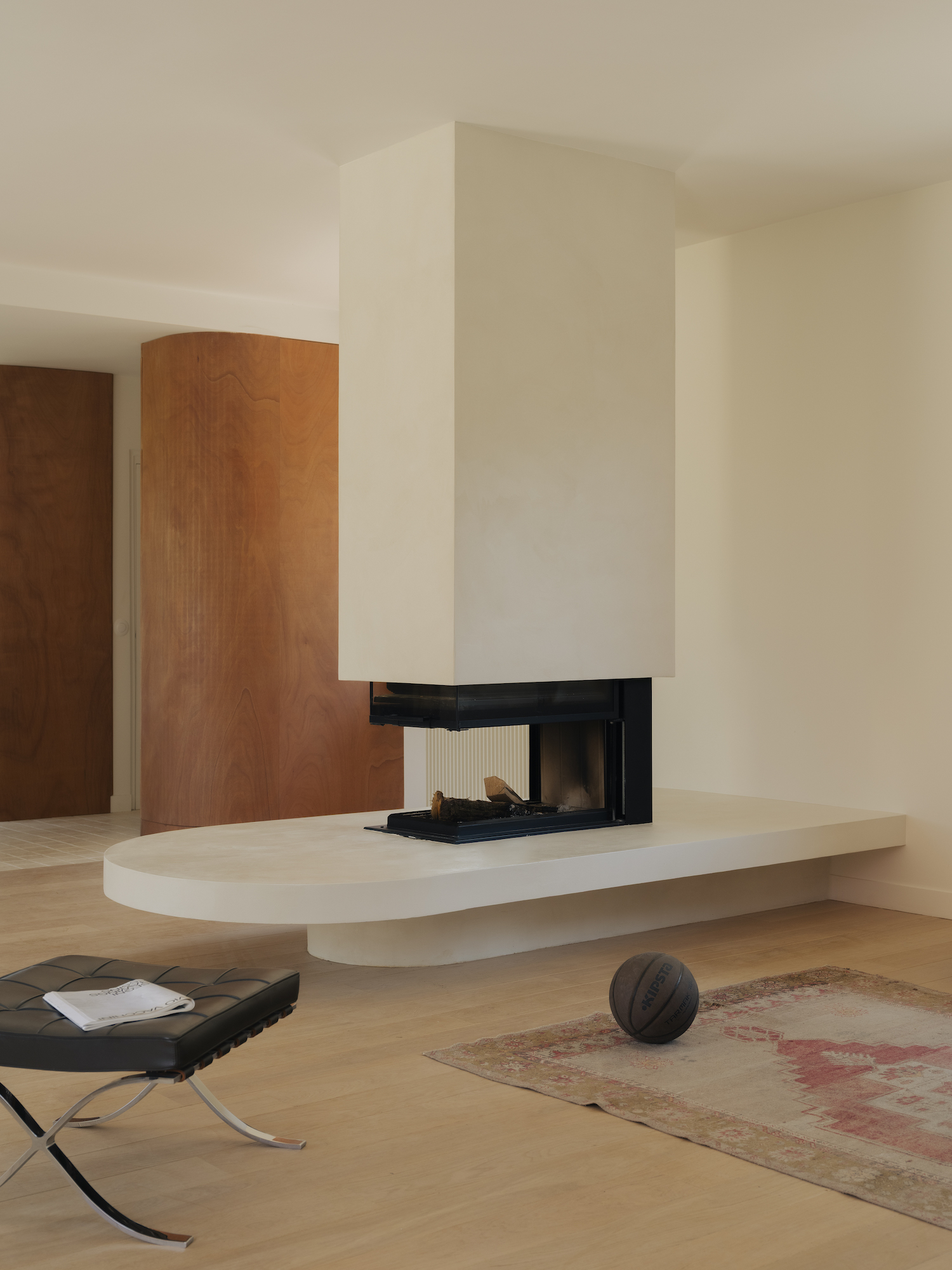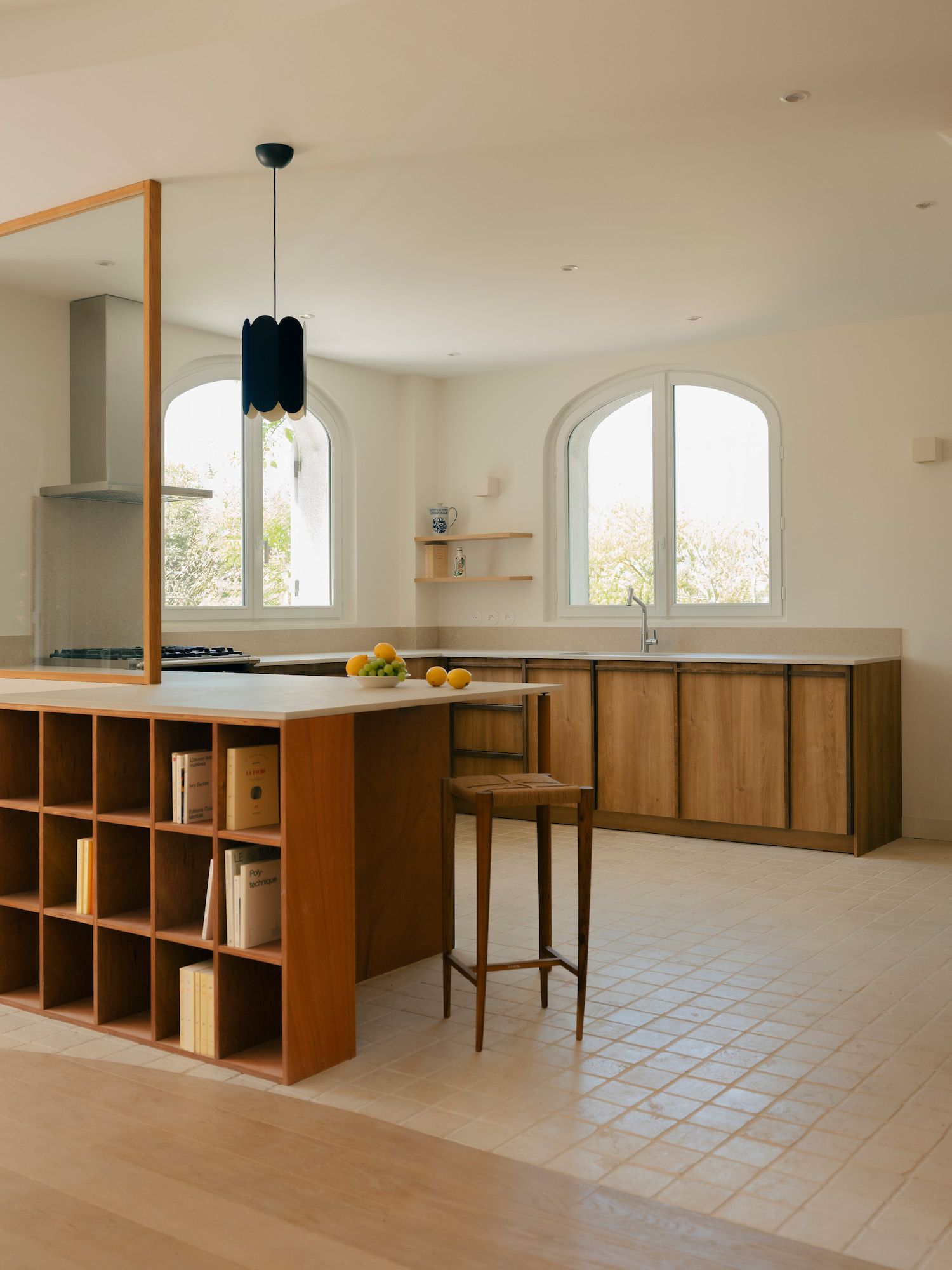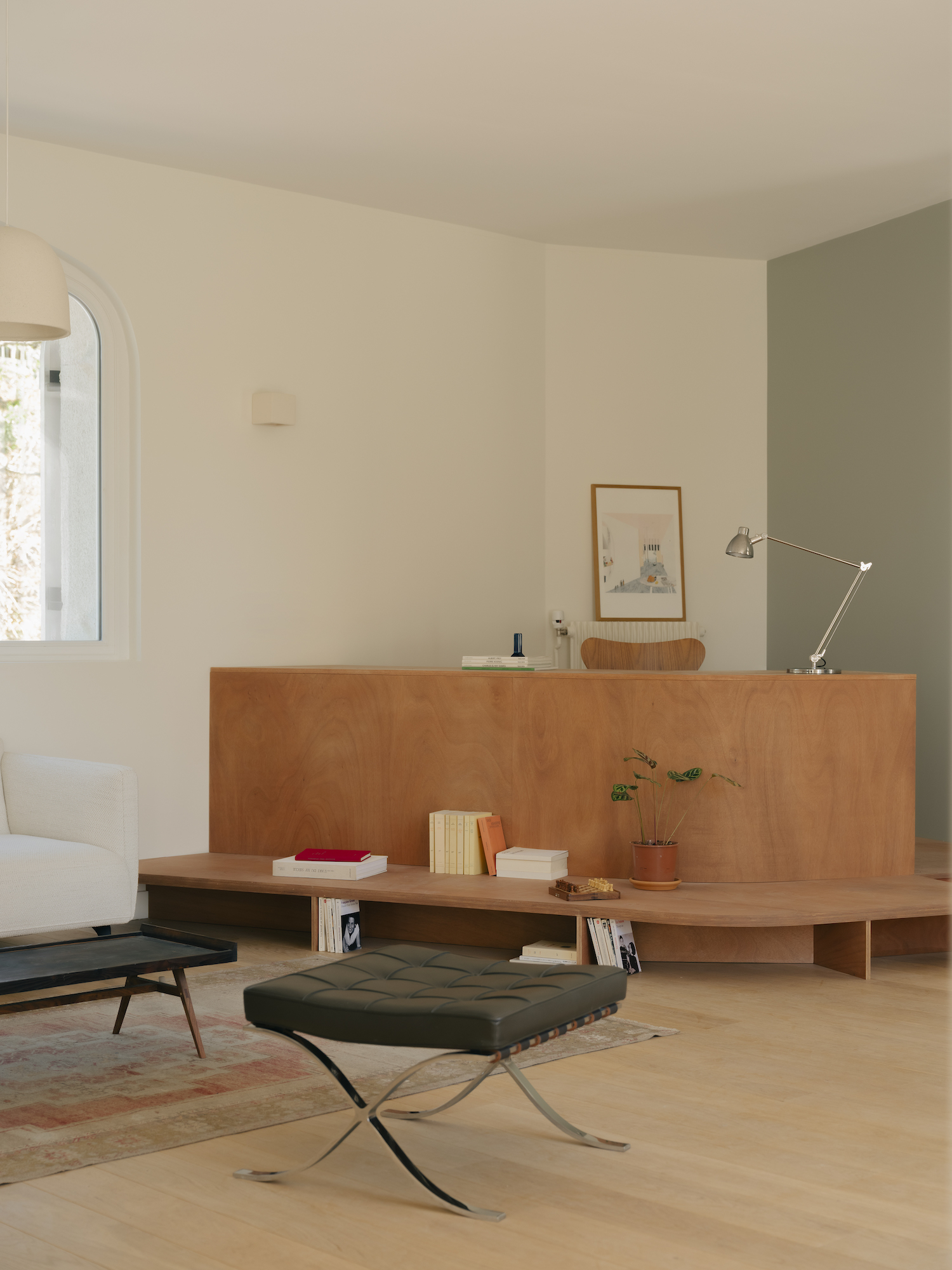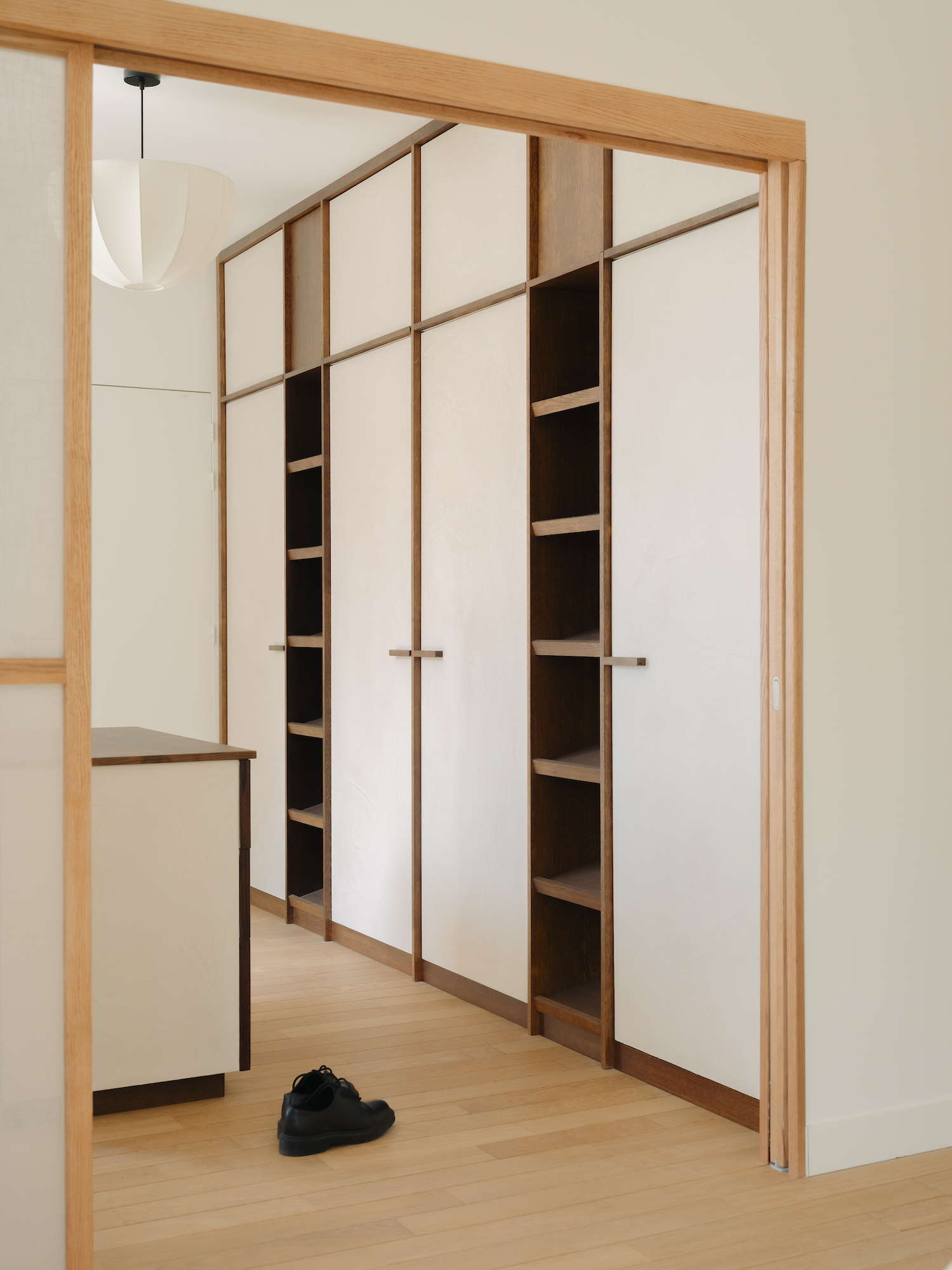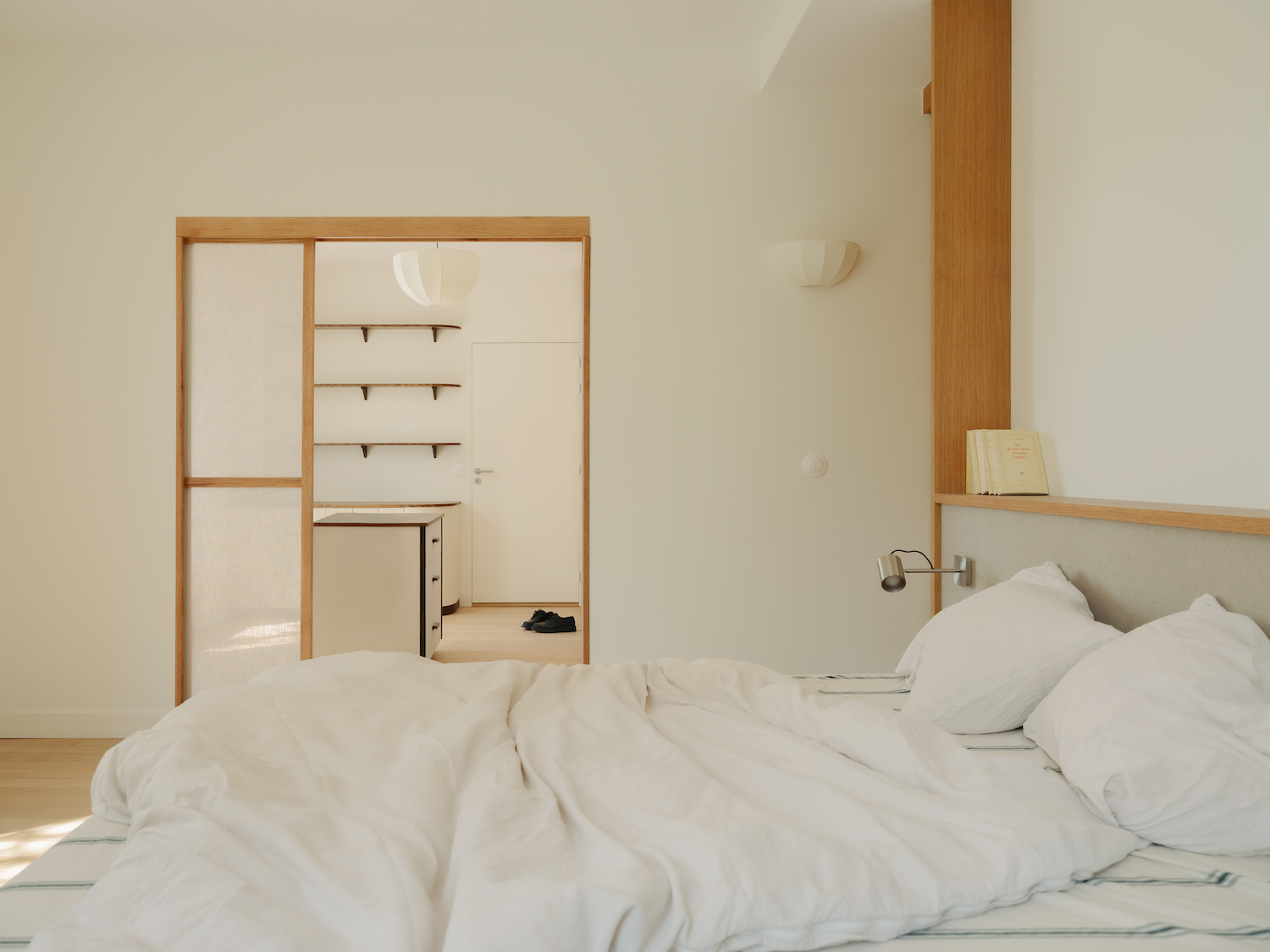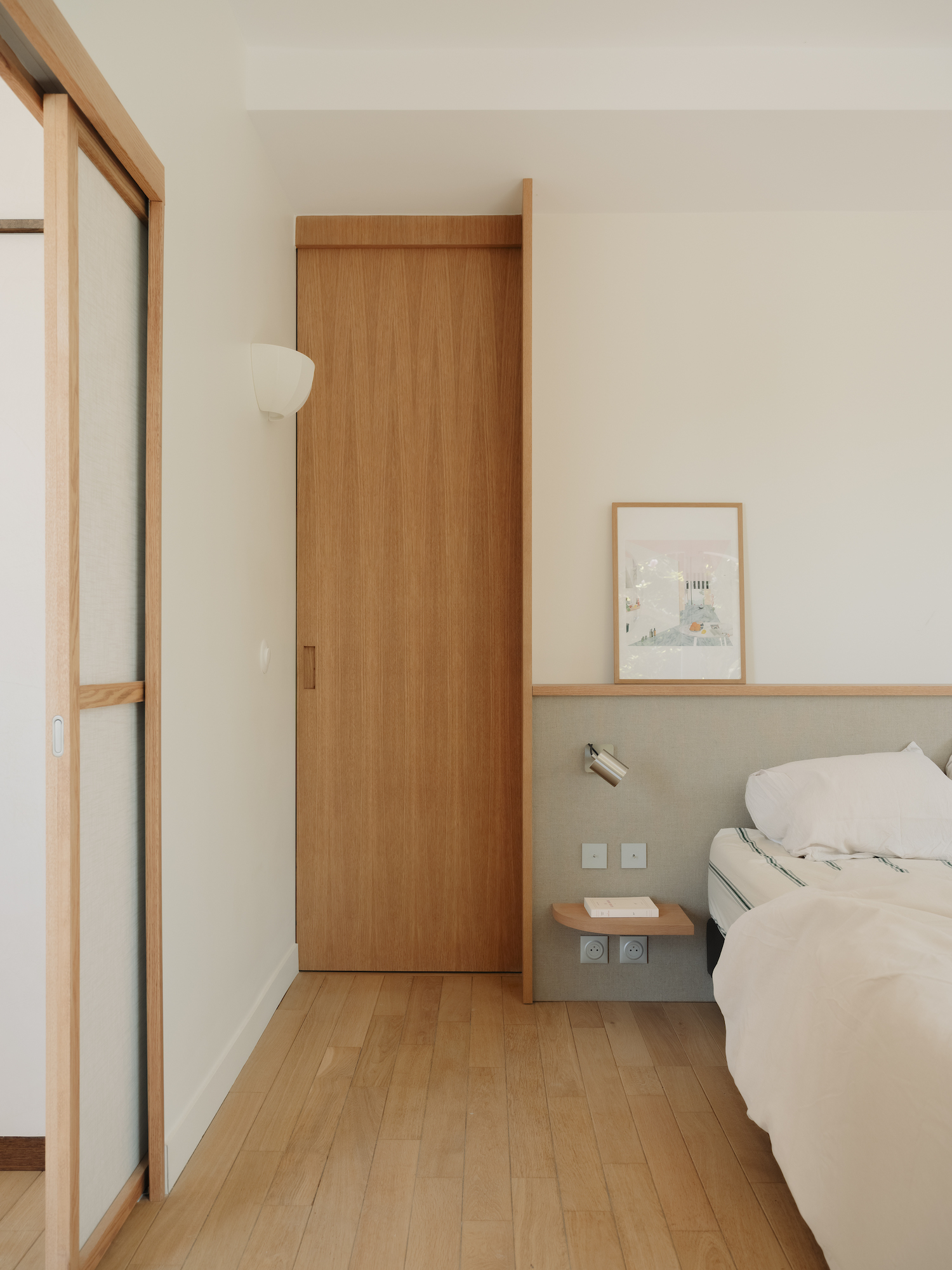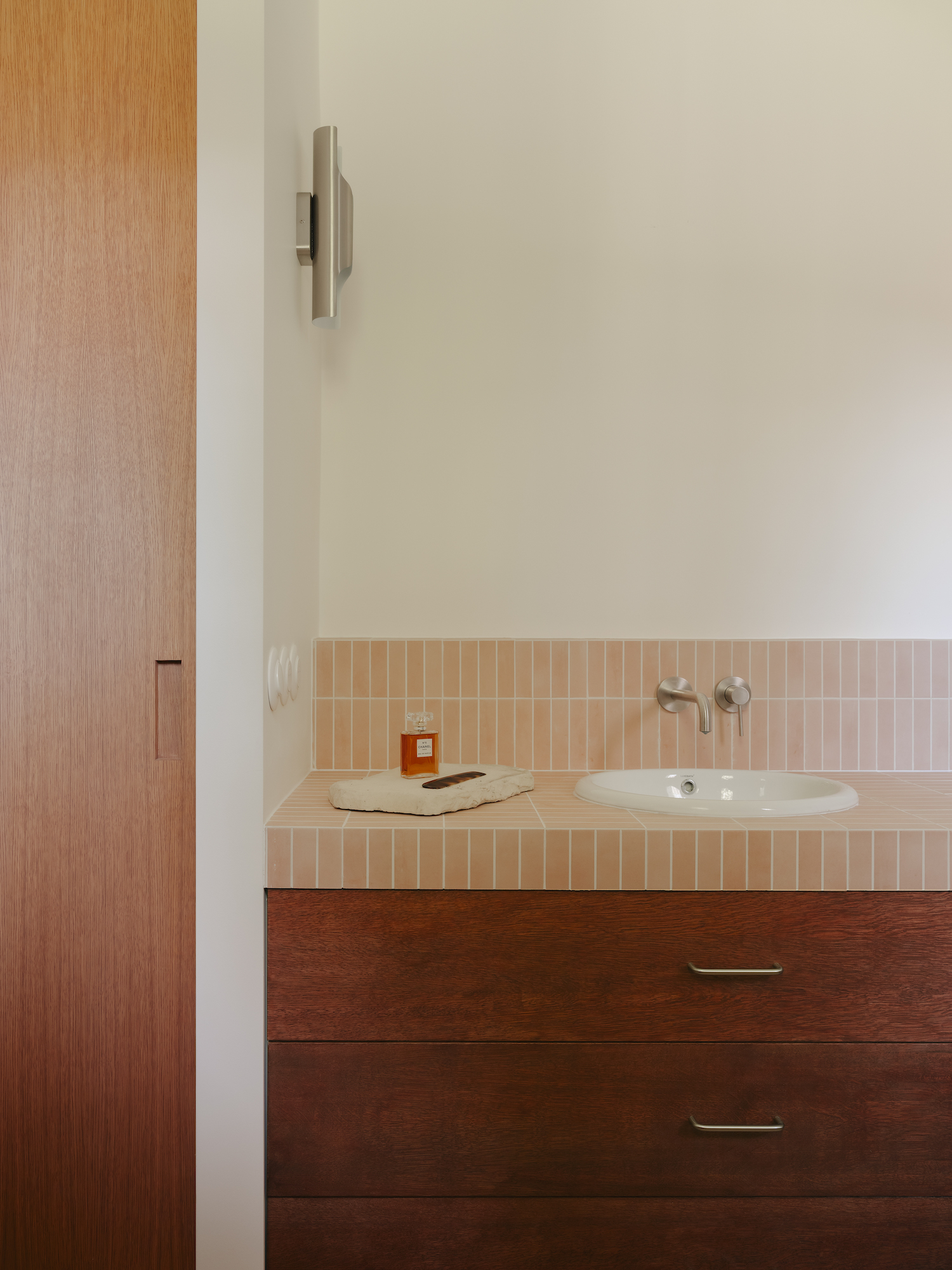
The Villa Rafales residence is a minimalist home by the Paris-based studio Tom Floquet Architecte. Located in the Yvelines in the north of France, the project reimagines a 1980s house through a careful renovation that preserves its original character while adapting it to contemporary needs for light and maximized space. By drawing from the home’s existing qualities, the design team was able to create a more fluid and expansive living environment.
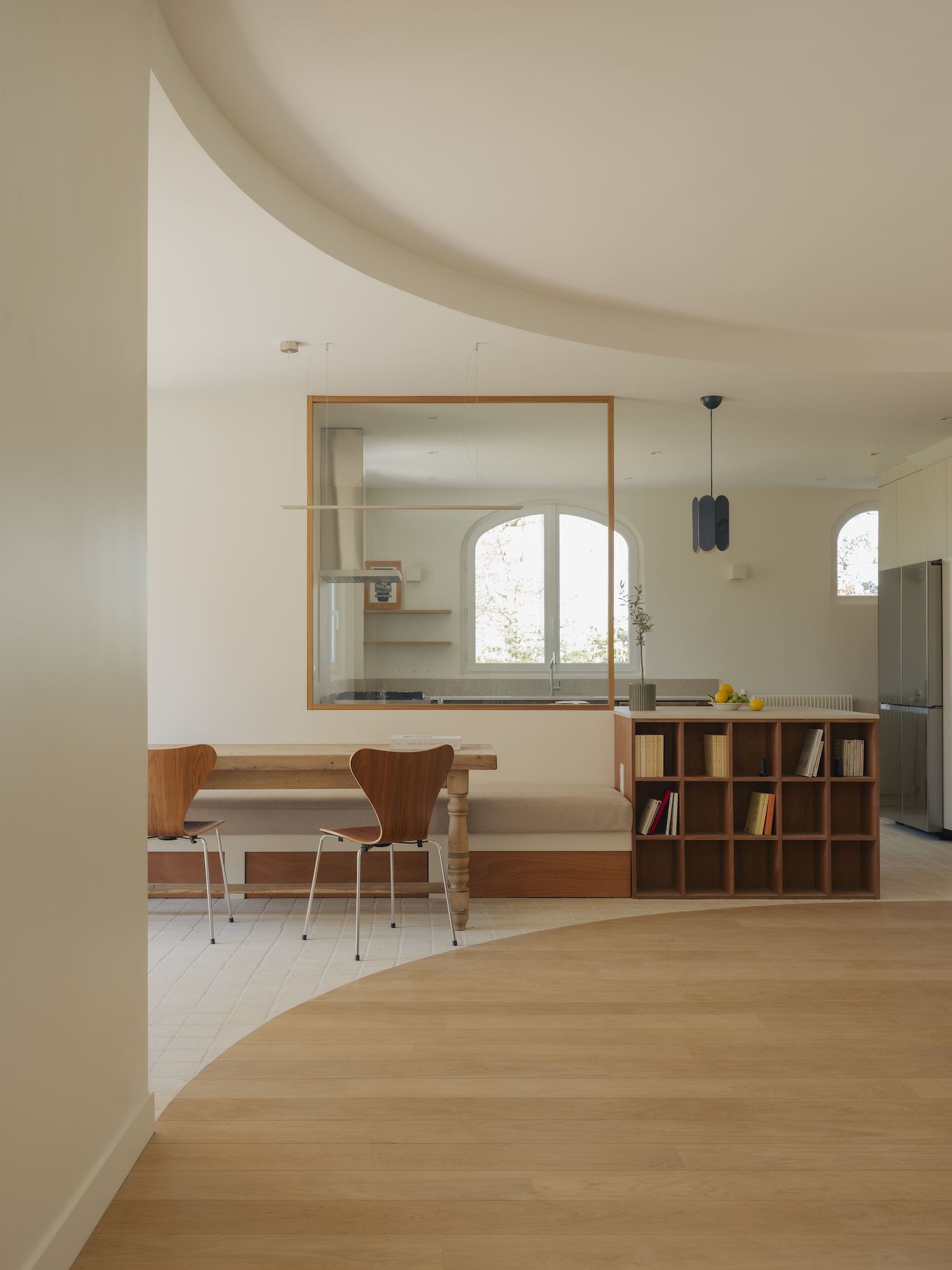
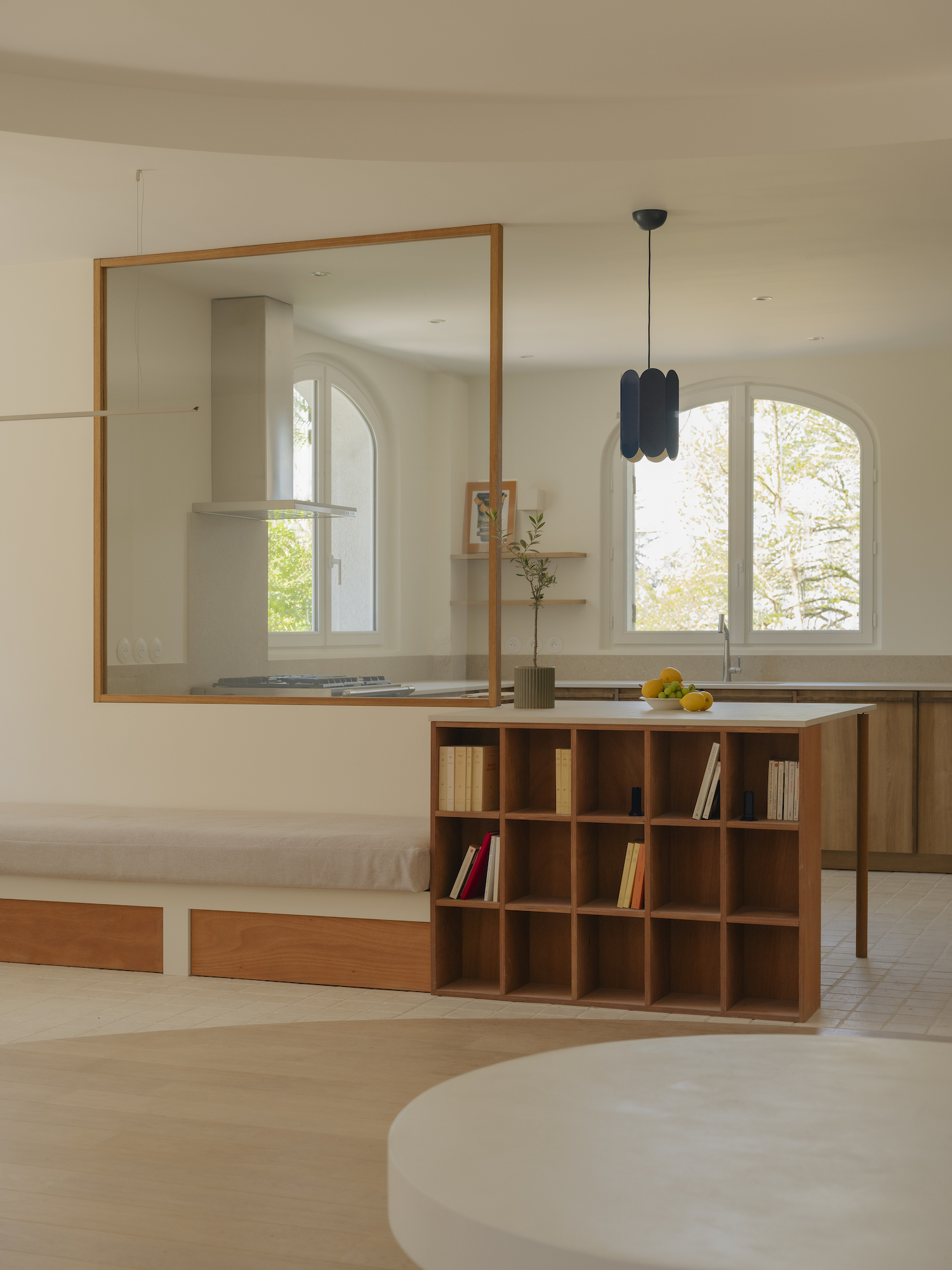
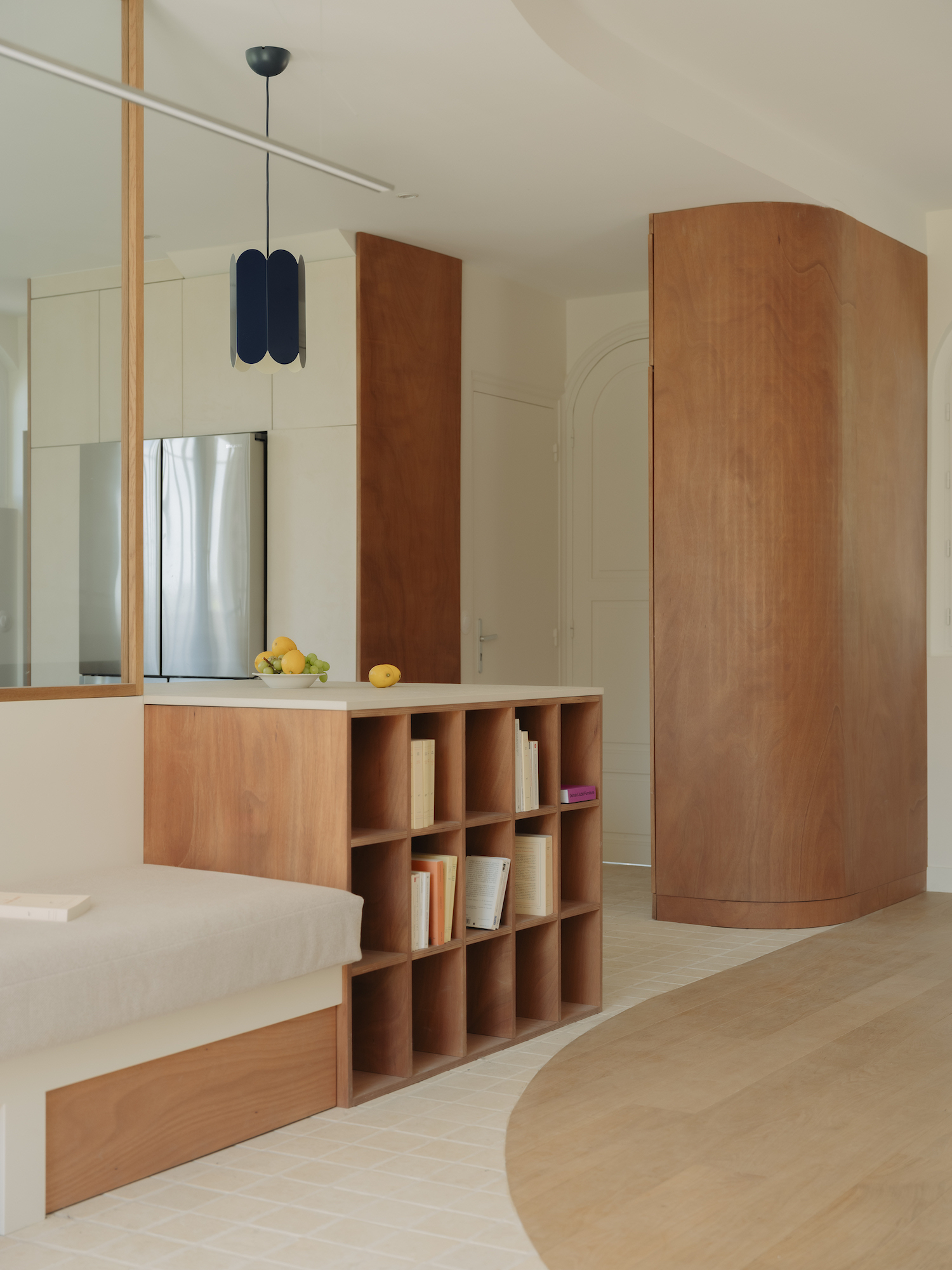
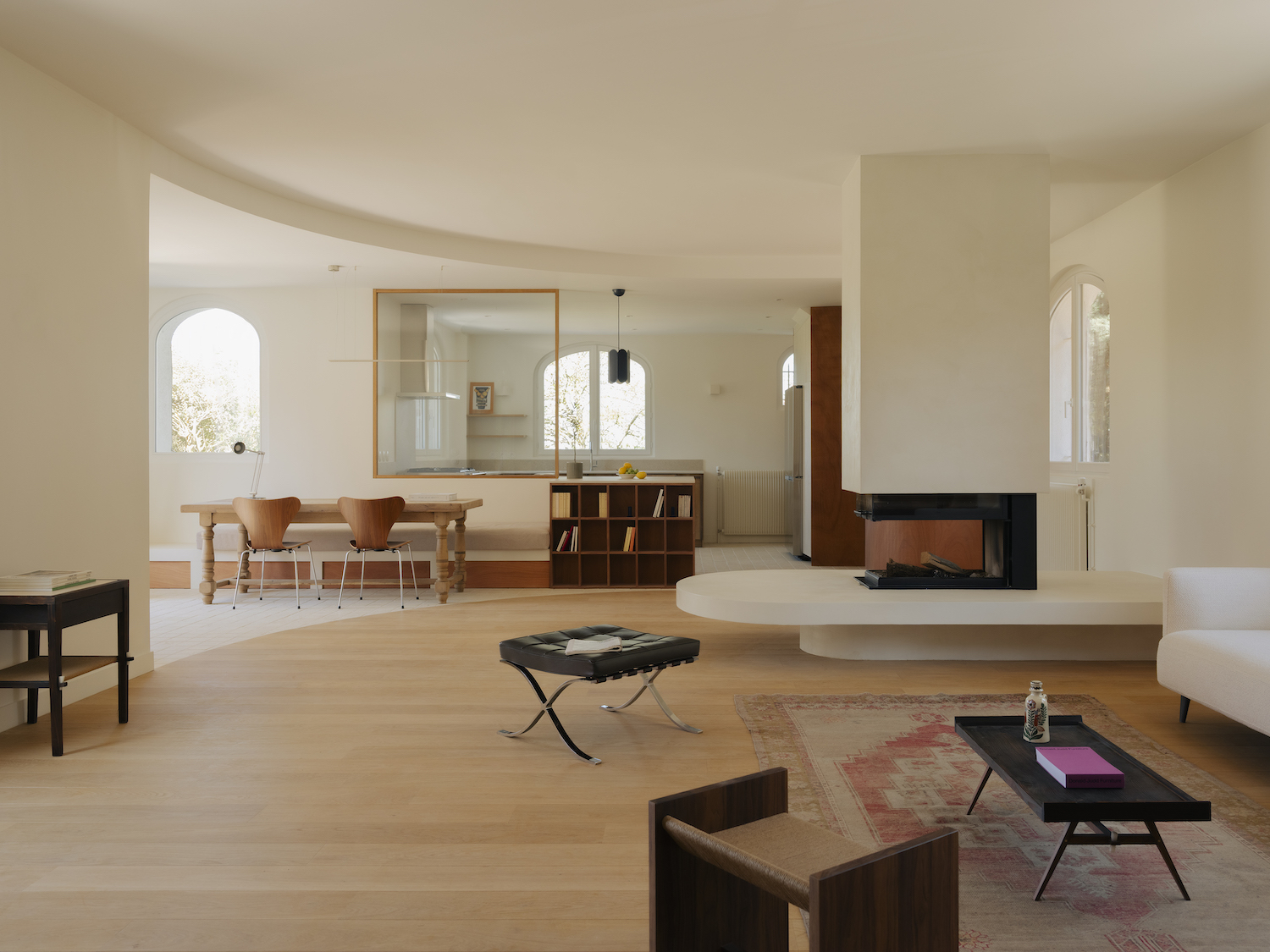
Central to the intervention is a reworking of the layout to open the main living spaces to natural light on three sides. The plan is subtly restructured to avoid enclosure, allowing different functions to emerge without the need for rigid partitions. Inspired by the curved geometry of the original bay windows, this language is carried throughout the house, introducing soft, continuous transitions between spaces and reinforcing a sense of visual cohesion.
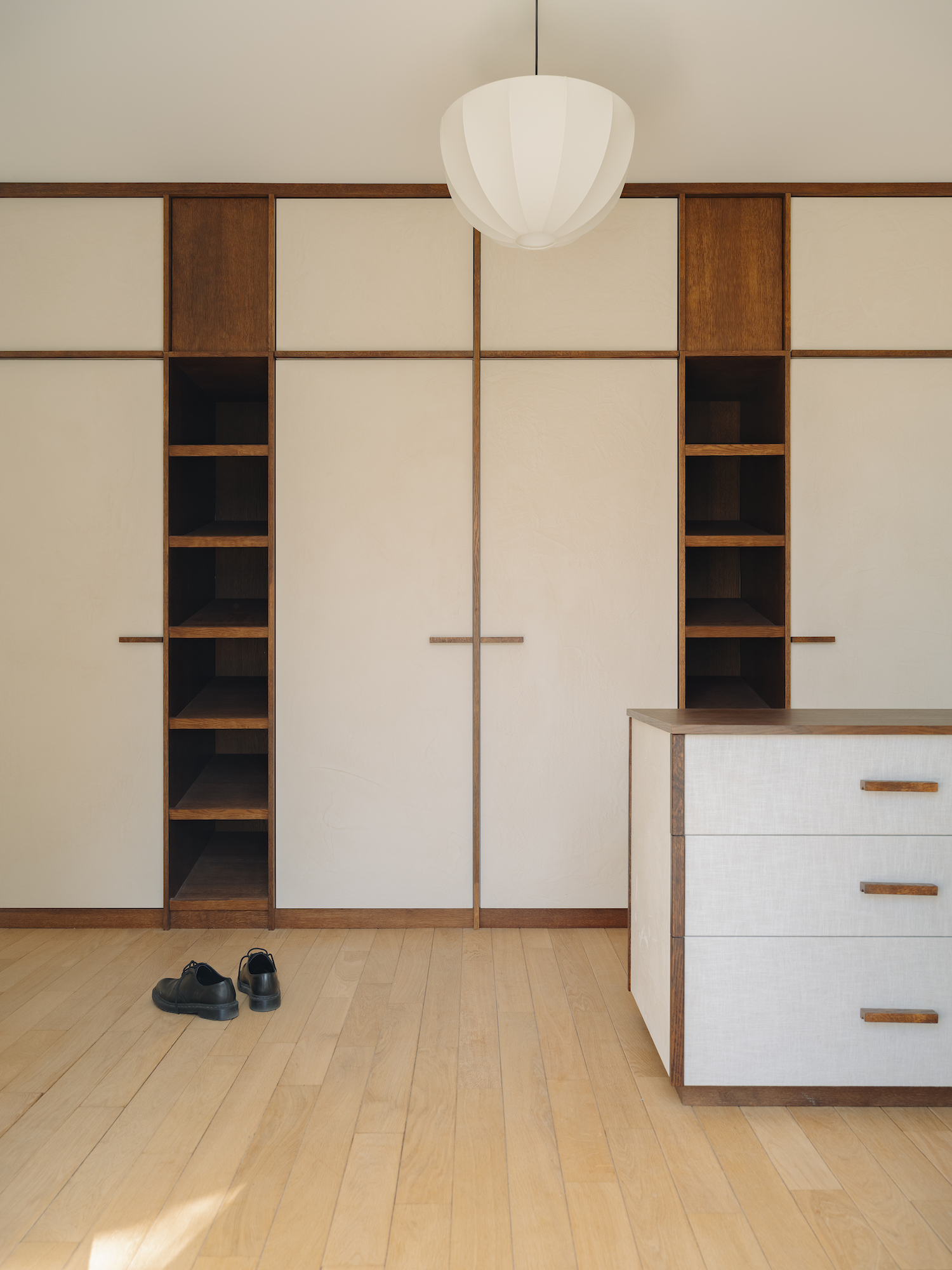
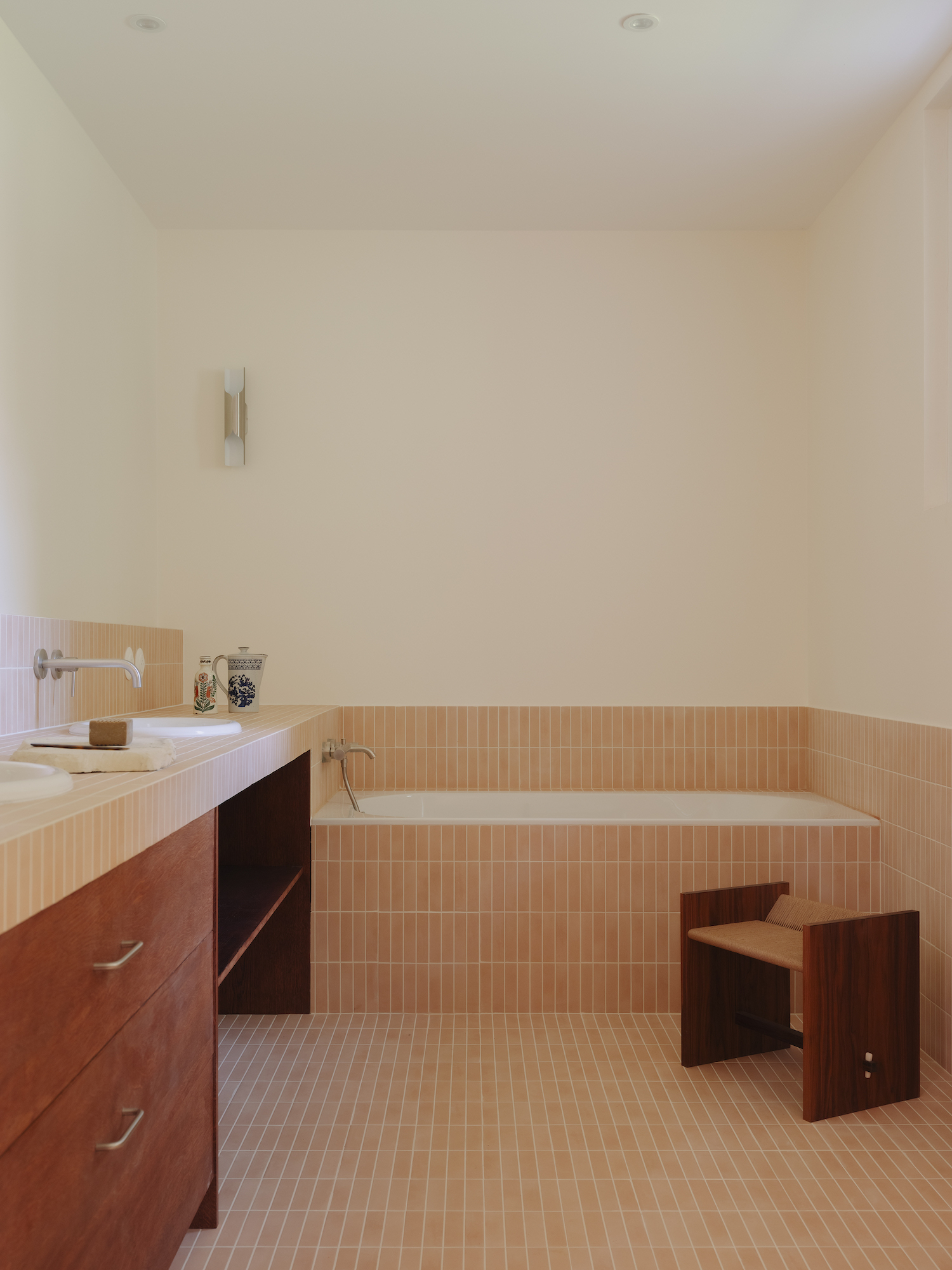
Material choices further define these shifts with wood flooring anchoring the living room, while stone distinguishes the kitchen, establishing a contrast that is echoed in a curved dropped ceiling overhead. This choice not only emphasizes the transition between zones but also allows for differentiated lighting conditions within each space. Meanwhile, the primary suite is designed as a dual environment, where the bedroom and dressing area are combined into a single, open volume, while the bathroom is discreetly positioned behind the headboard. Sliding elements introduce flexibility throughout, including a wood and linen panel that filters light between spaces and a full-height wooden door that leads into a bathroom entirely clad in ceramic. Here, tiled surfaces extend across walls, bathtub, and vanity, creating a unified, mineral-like interior that feels immersive and tactile.
Through a considered balance of preservation and transformation, Villa Rafales reflects Tom Floquet Architecte’s approach to working with existing structures, where spatial clarity and material nuance come together to create environments that are functional and personalized to the end user’s distinct needs.