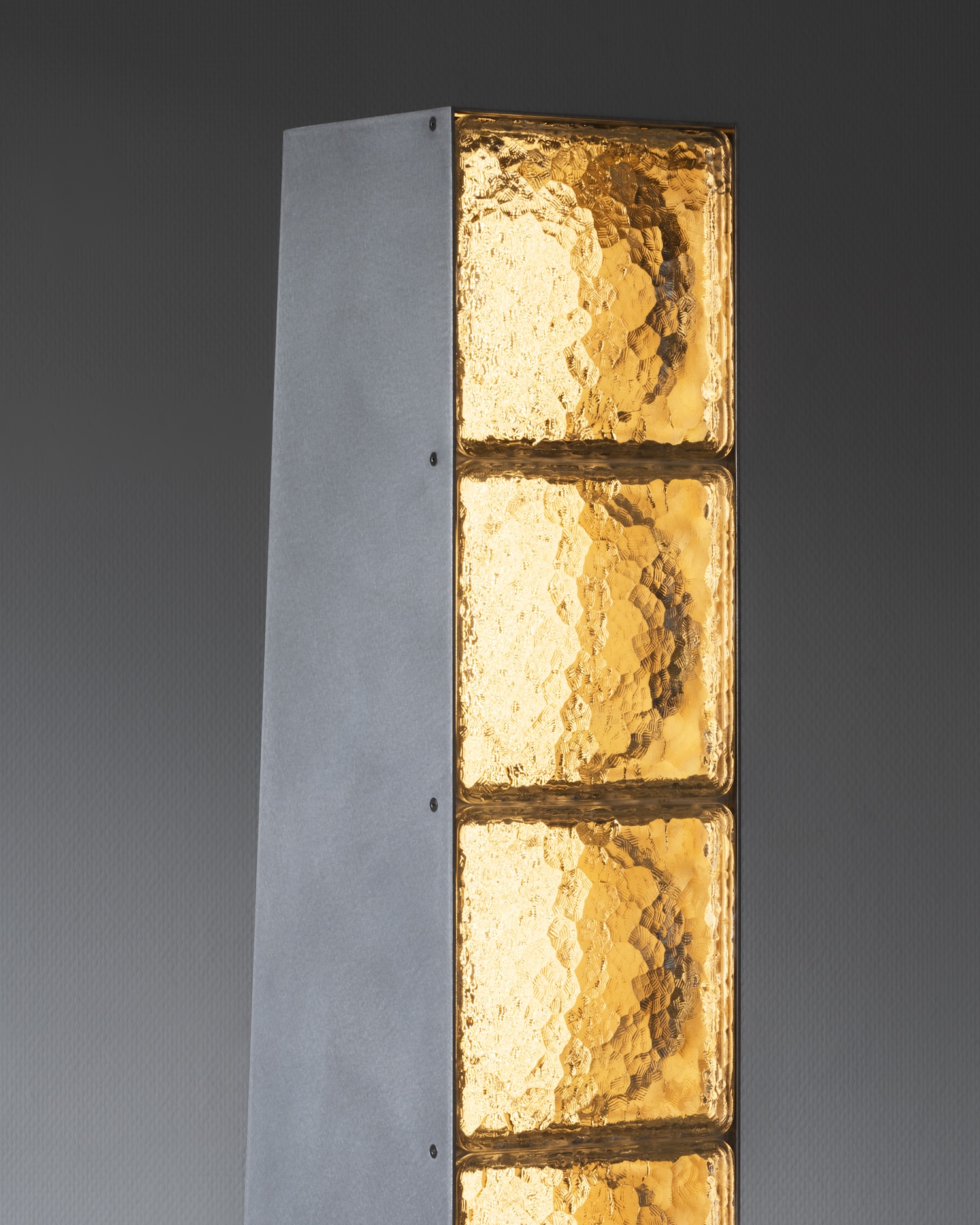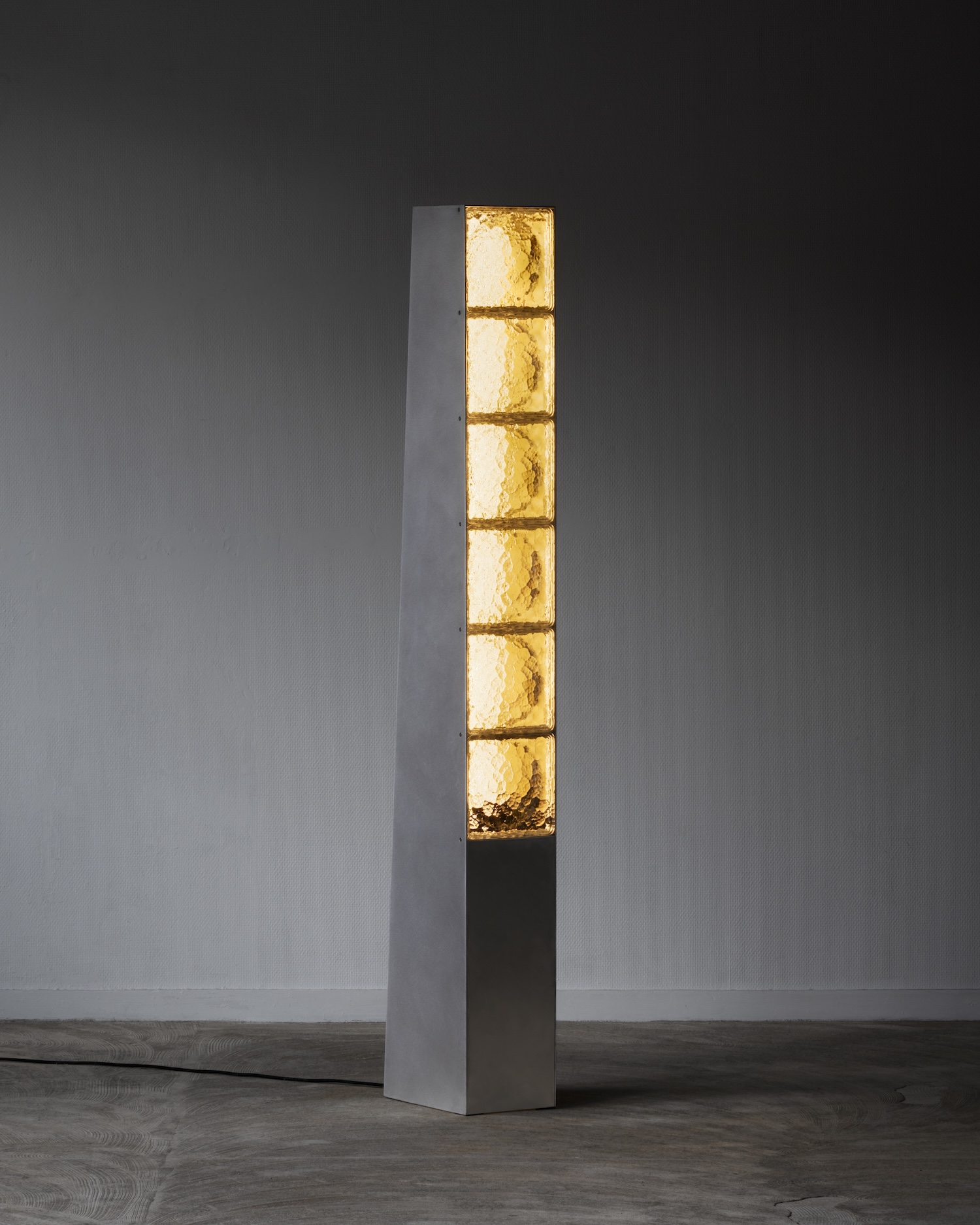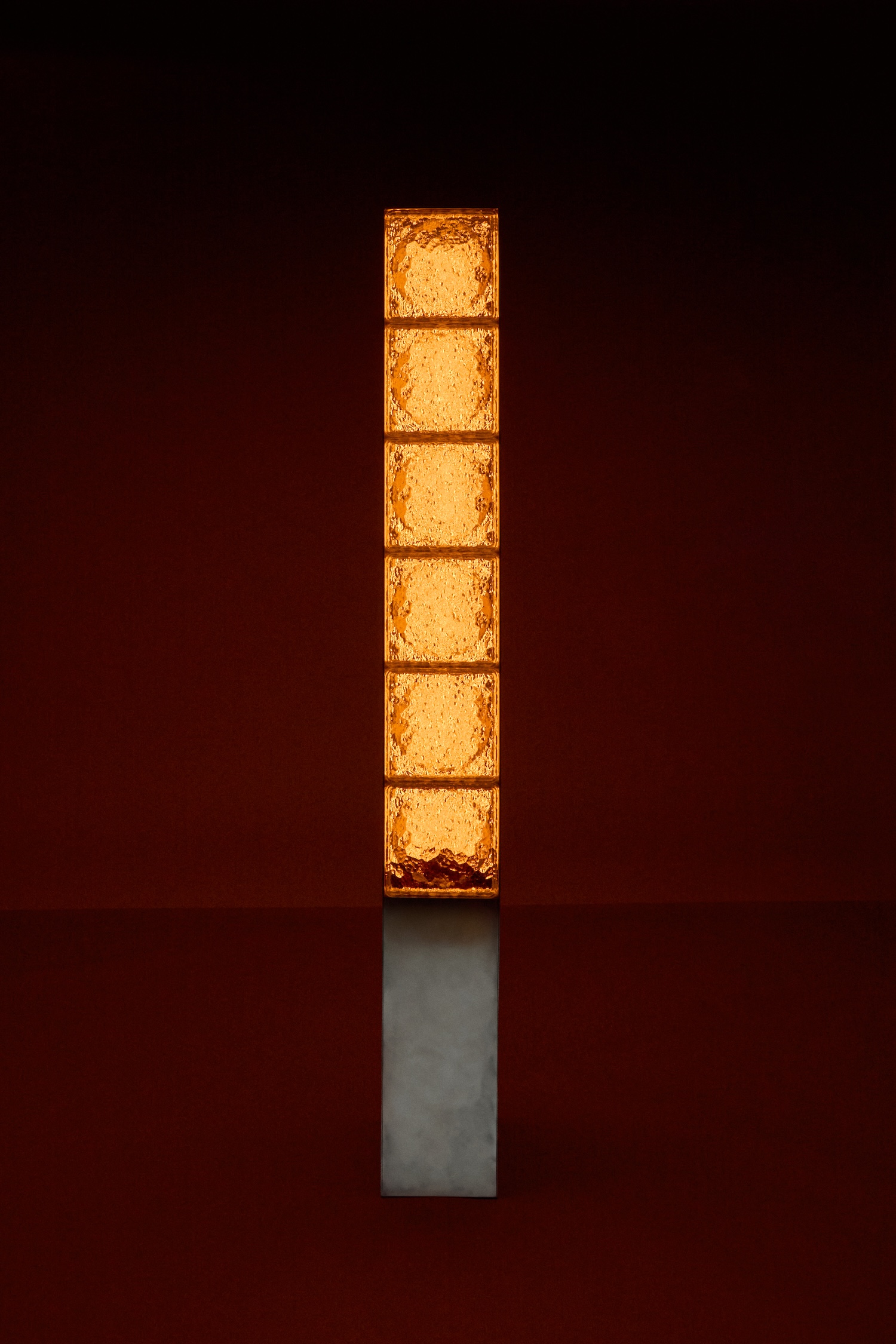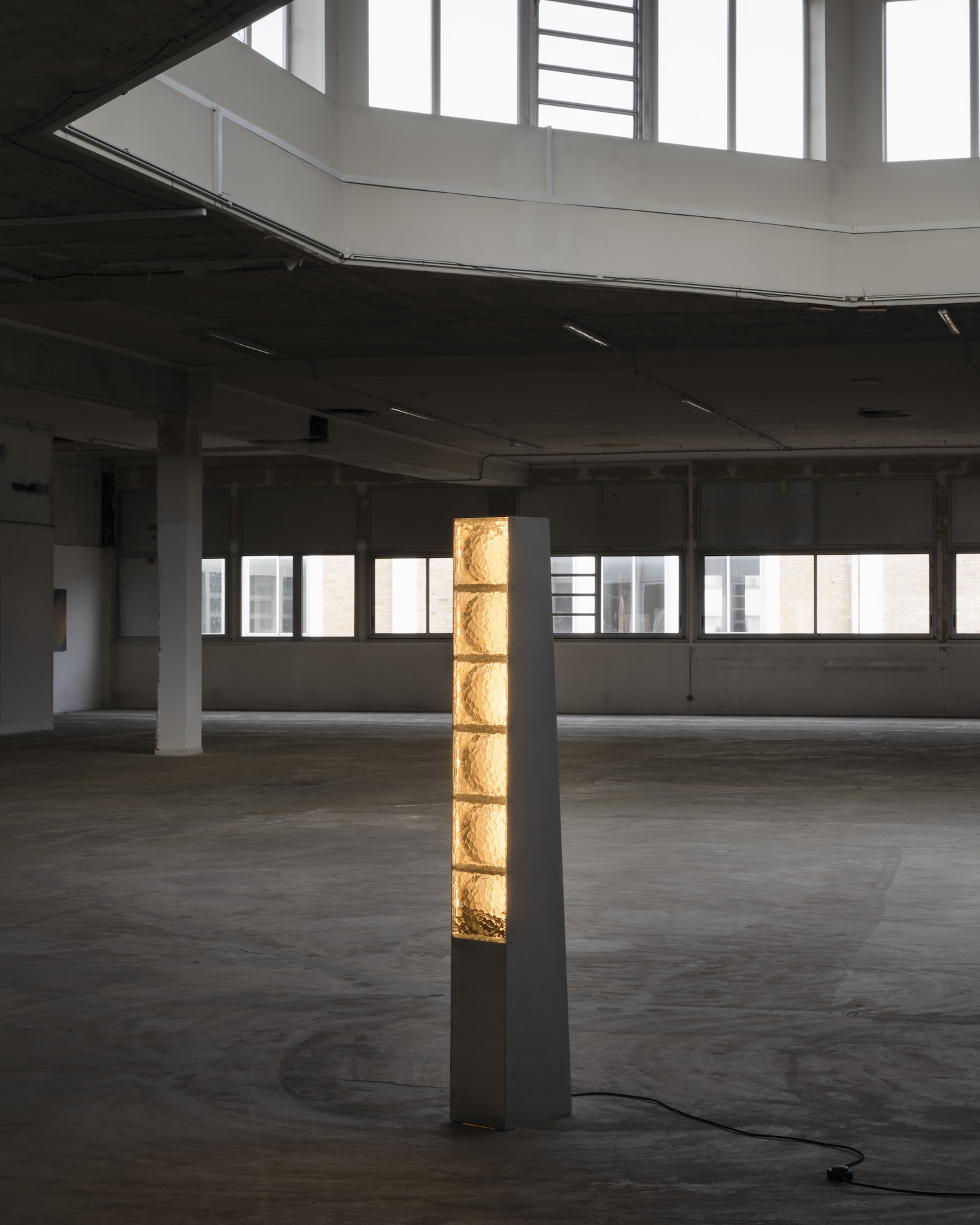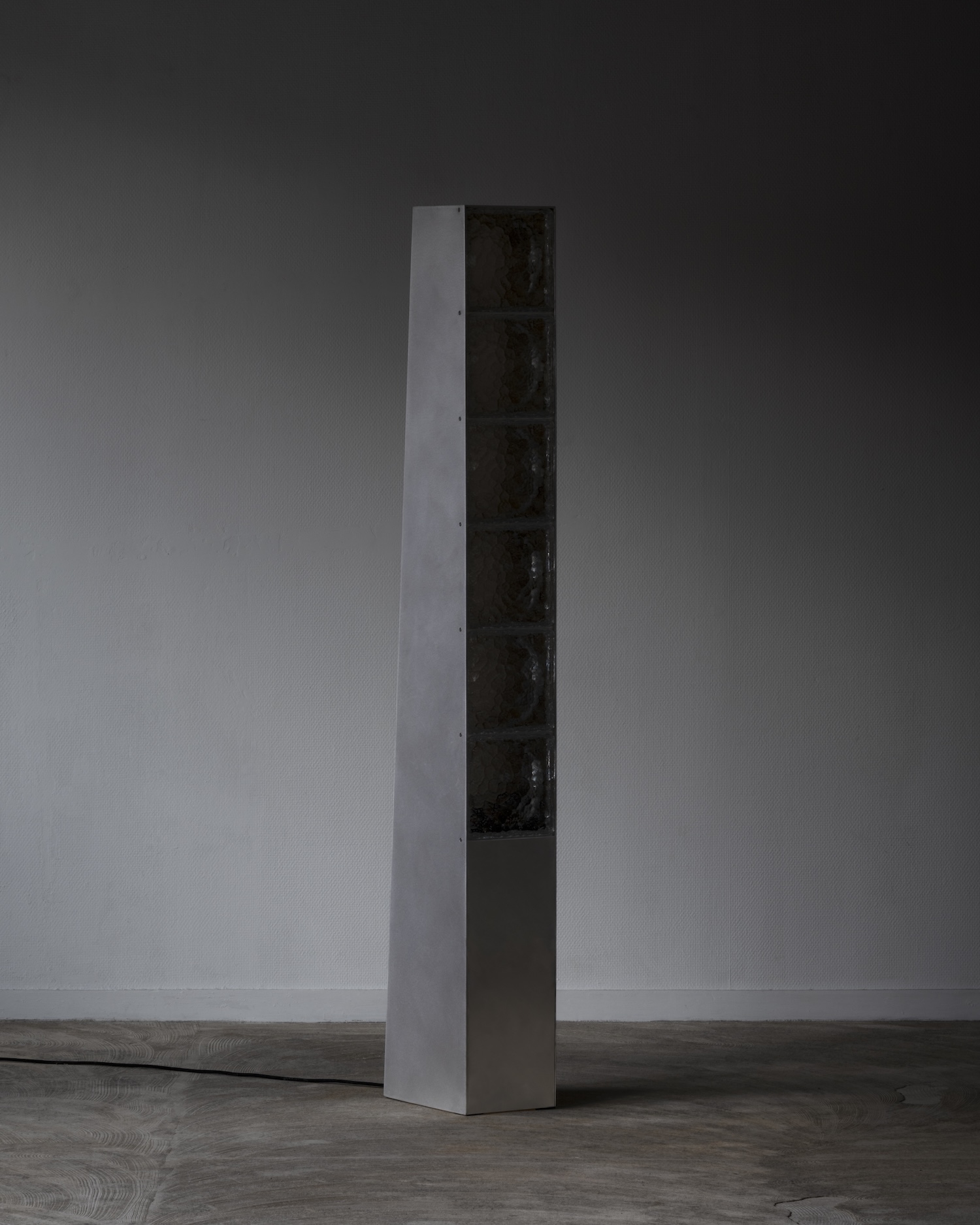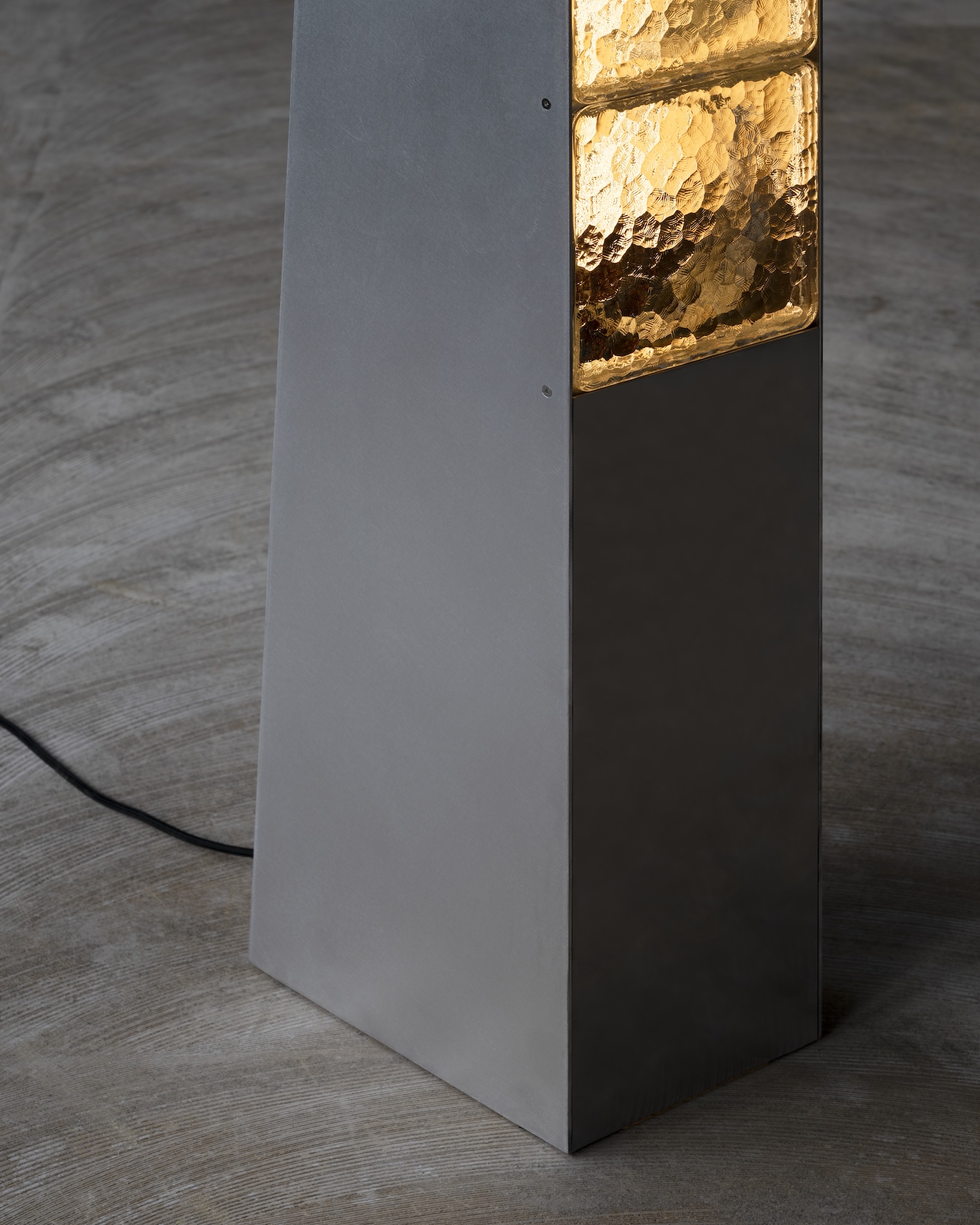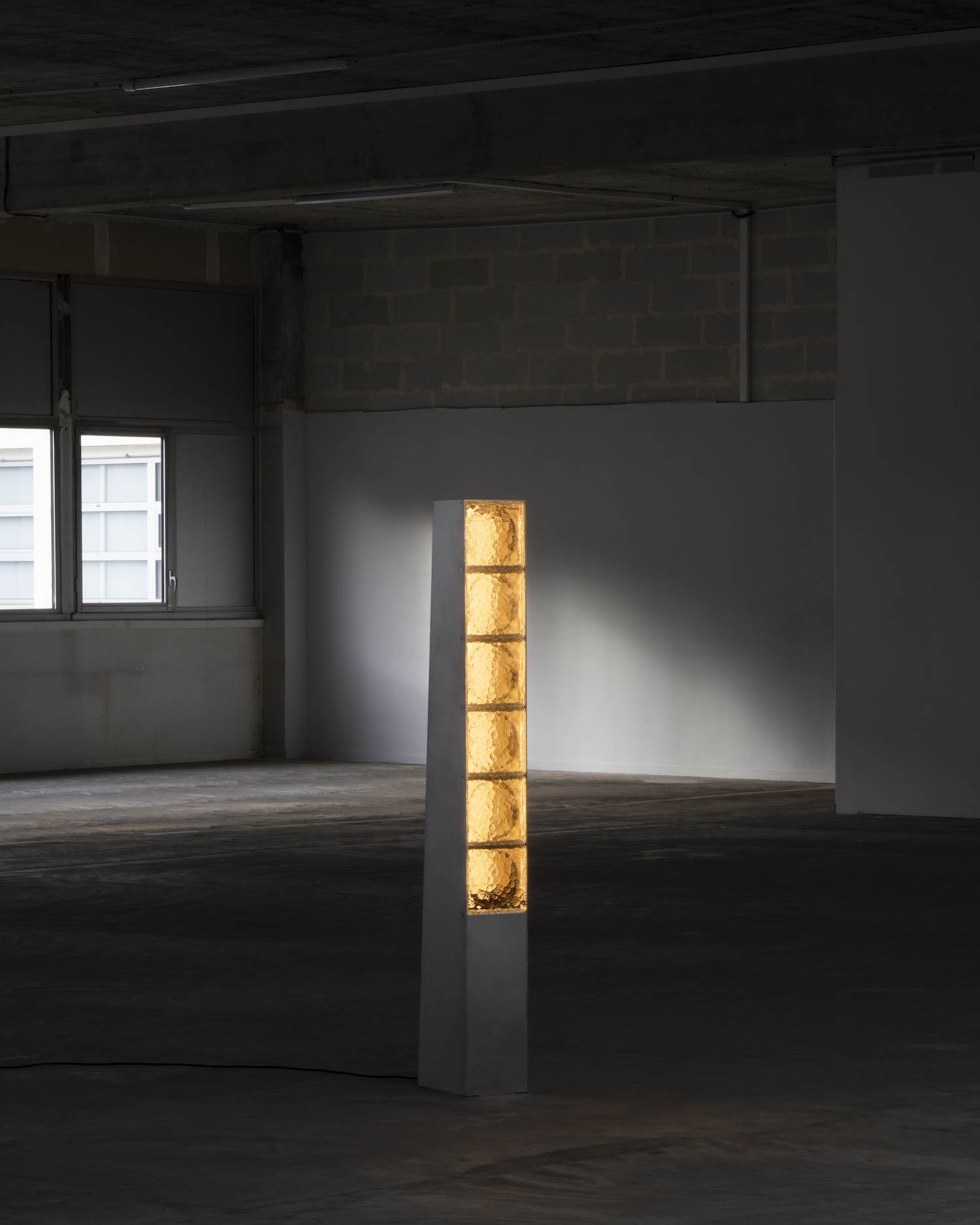
Henry Lamp minimalist lighting design created by Paris-based Clément Pasquier Studio. Le Corbusier specified glass brick across the south face of the Cité de Refuge because daylight was the point of the building – a Salvation Army shelter in the 13th arrondissement, completed in 1933, that argued light itself was a form of welfare owed to people living without it. The block was never decorative there. It was the delivery mechanism. Henry takes that same component, reissued by La Rochère, and removes it from the wall, so the thing that once brought light through a facade now generates it from within.
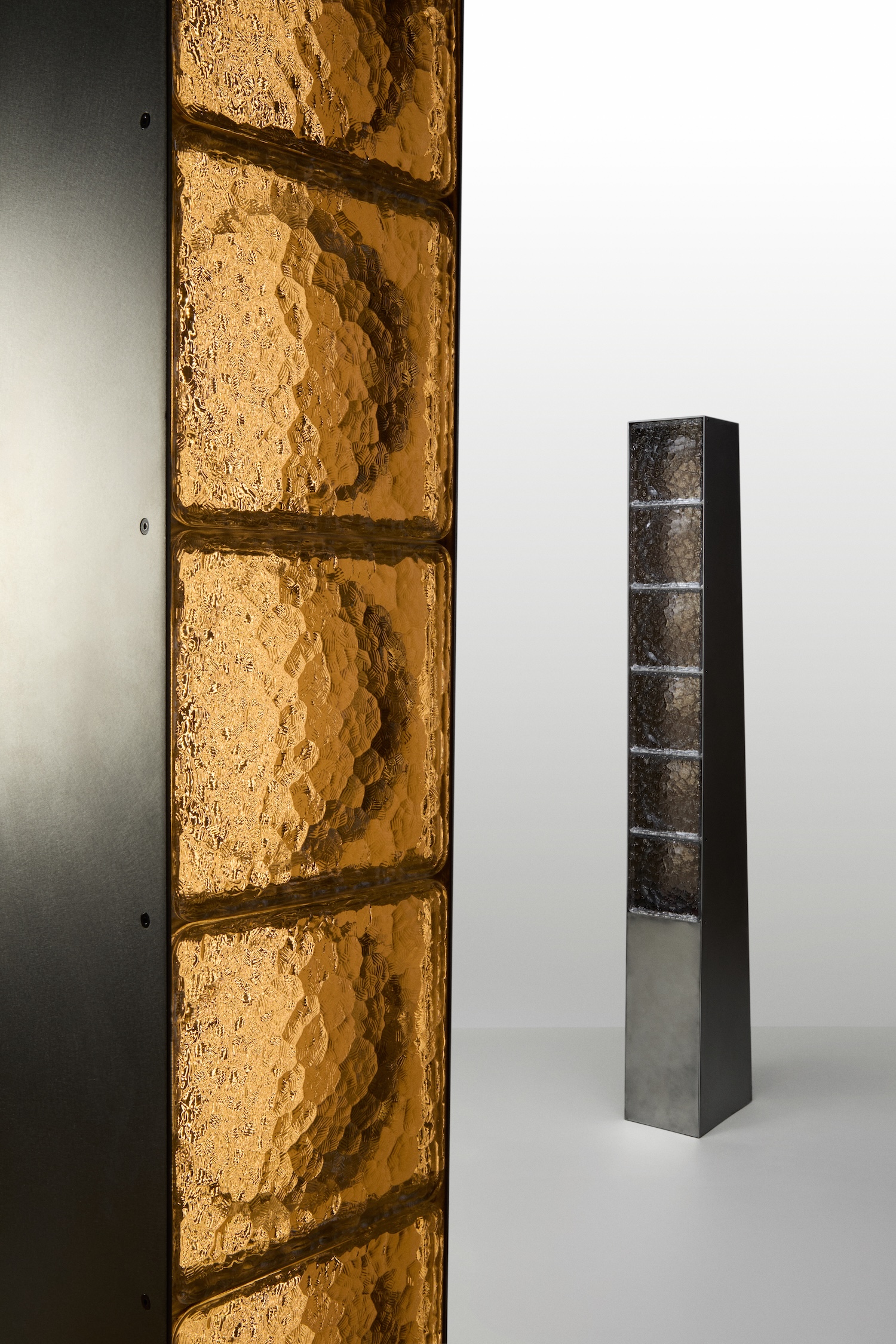
Glass block behaves unlike almost any other material in lighting because of how it is made. Two pressed half-shells are fused at high temperature and sealed with a partial vacuum trapped inside, which is what gives the block its thermal performance in architecture and, here, its optical strangeness. Light entering the outer face refracts at the molded texture, crosses the internal void, refracts again at the inner wall, and exits scattered across several angles at once. The result reads as depth rather than diffusion. A paper shade averages light into softness. This does the opposite, splitting a single source into a field of small competing brightnesses that shift as you move past it.
Pierre Chareau and Bernard Bijvoet had already pushed this material past utility at the Maison de Verre in the 7th arrondissement, glazing an entire townhouse in blocks that turned a private residence into a lantern. What separates Henry from most contemporary revivals of that language is that Clément Pasquier Studio does not imitate the effect at object scale. The lamp uses the actual industrial component, still pressed in France by a glassworks operating at Passavant-la-Rochère since the fifteenth century, and lets the manufacturing tolerances stay visible. Slight variation between blocks, faint mold seams, the greenish cast in thick sections – these read as evidence rather than flaw.