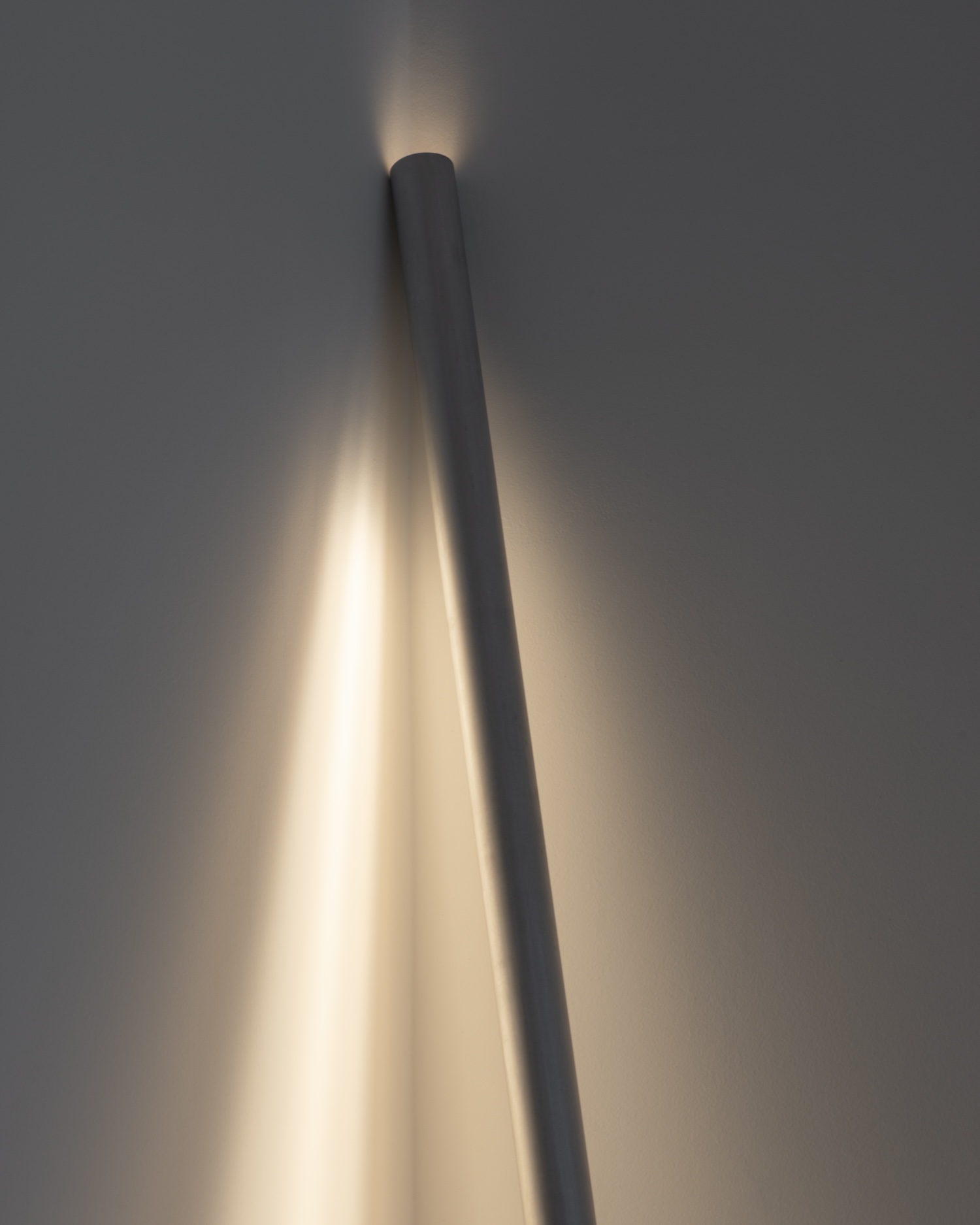
Marcelle is a light by Paris, France designer Clément Pasquier that has no base and no shade. It consists of a single polished aluminum tube with a slit running along its length, and the LEDs inside send their light out through that opening onto whatever surface sits nearest. Without a base, the tube cannot stand upright on its own, so it is propped in a corner, leaned against a wall, or laid flat on the floor.
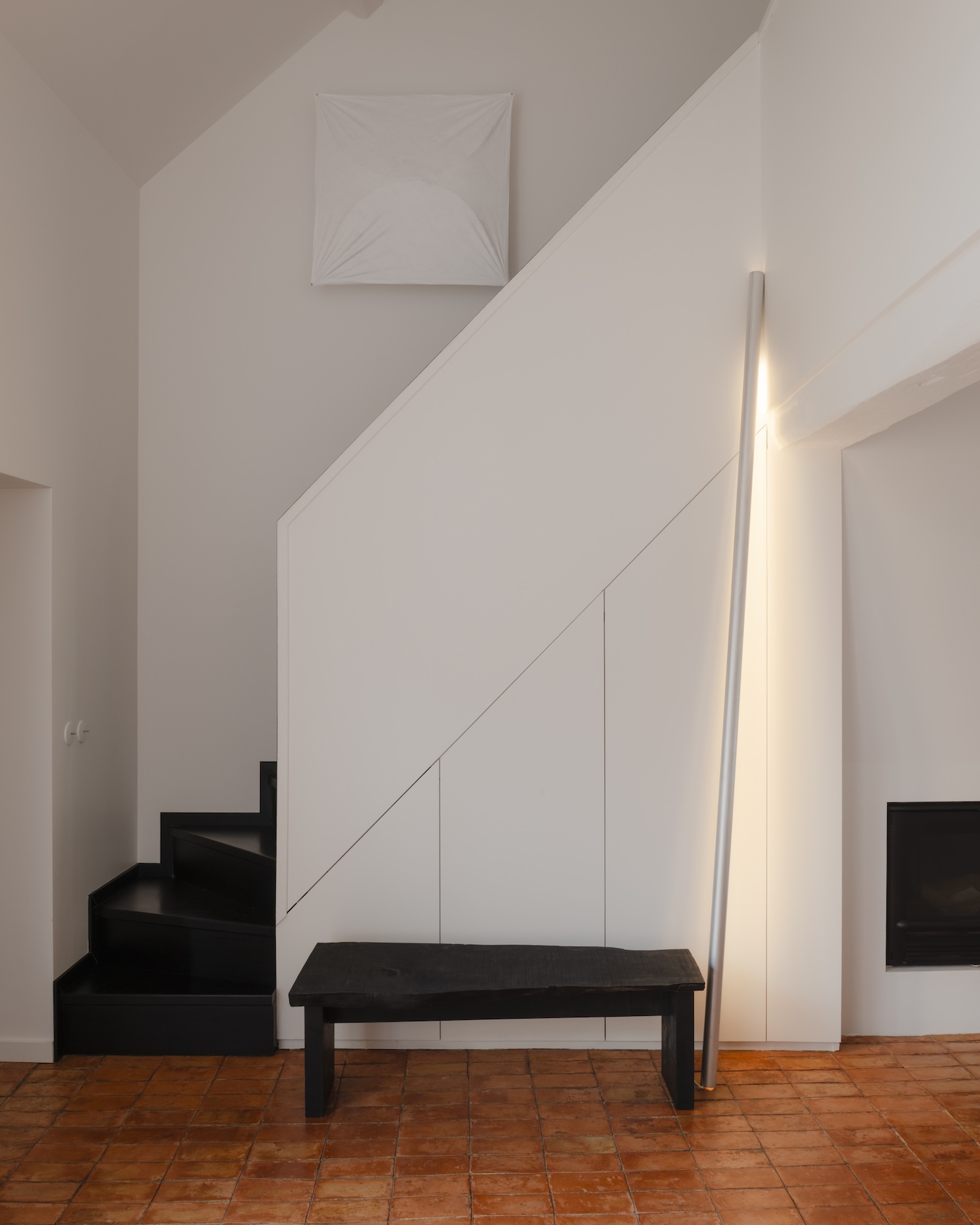
Each of those positions produces a different light. Leaned beside a staircase, as in the photographs, the slit faces the wall and throws a narrow vertical wash up the plaster while the tube itself stays mostly dark. Turning the tube on its axis moves the wash along the wall or widens it, and laying it on the floor turns it into a low band that runs across the tiles. The LEDs are dimmable, so intensity is set at the source while direction and spread are set by hand.
Most floor lamps fix the relationship between light source, shade, and stand at the factory and leave the user a switch. Marcelle hands that composition to whoever lives with it. The tube is adjustable in height, and aluminum keeps it light enough to carry from one room to another without tools or fixings. Pasquier, who came to object design through sociology and interior design, describes pieces like this as active objects, defined by how they are moved and handled.
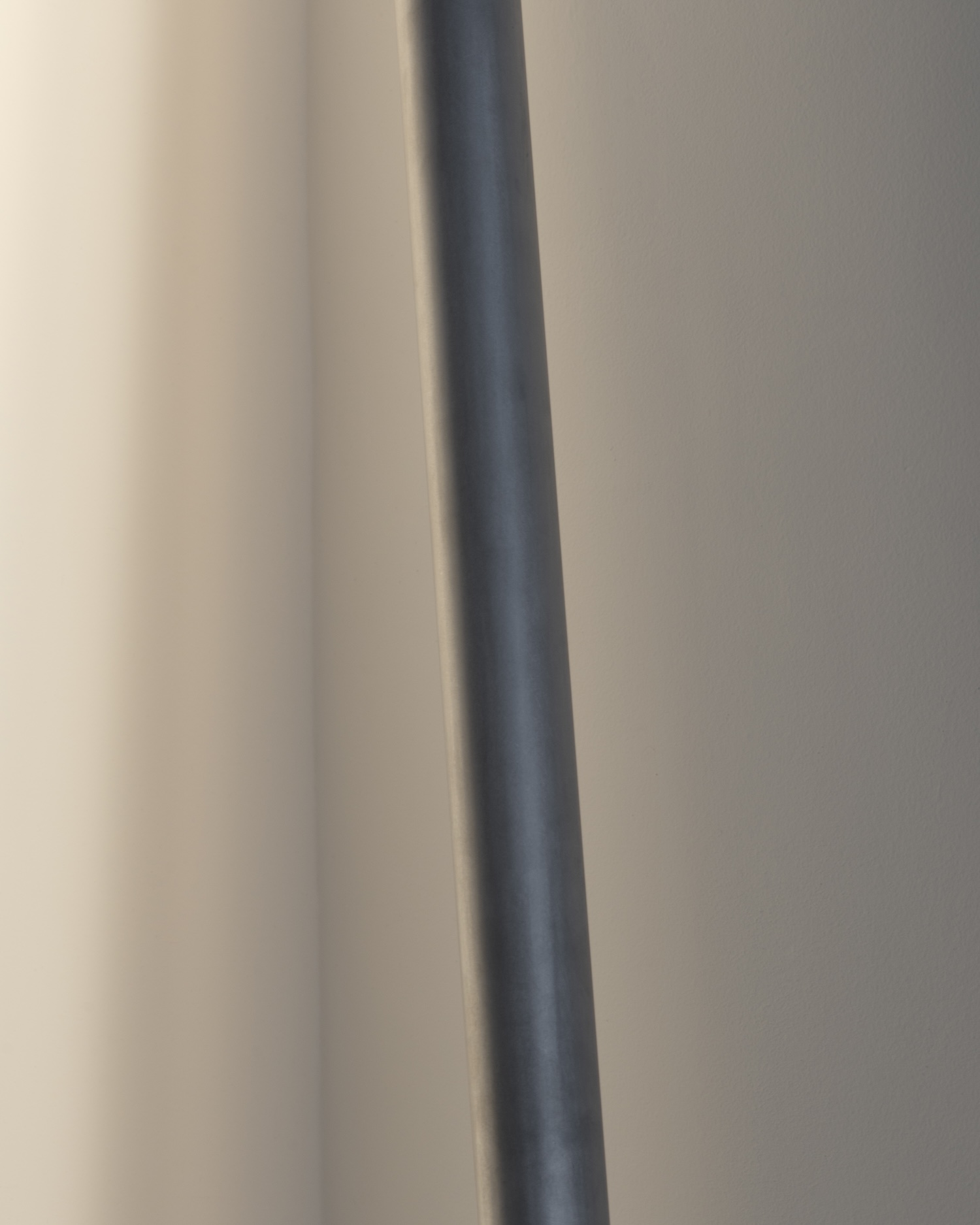
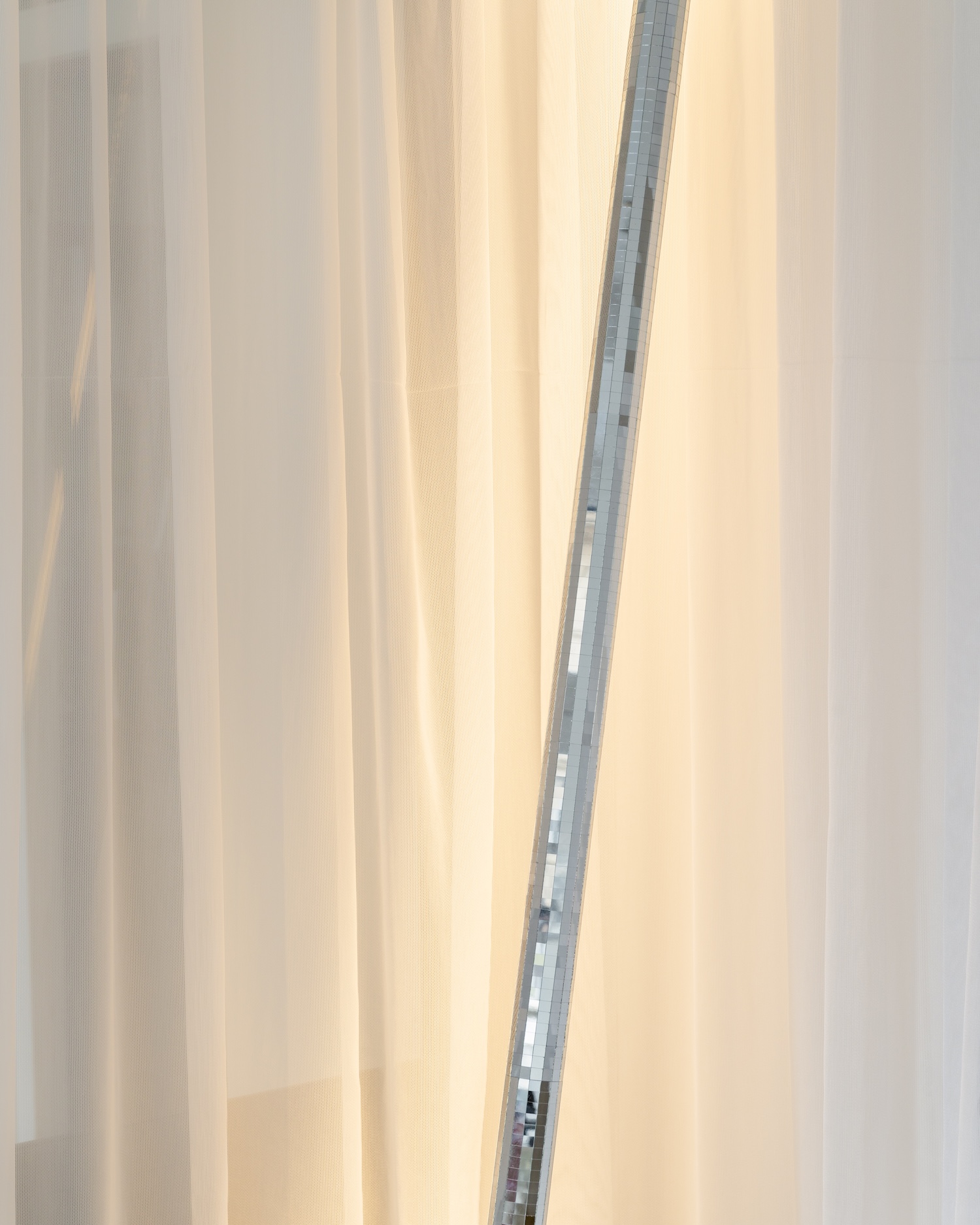
Because the light is indirect, the tube is mostly seen as a reflective line. Polished aluminum picks up the colors of the room around it, so against a white stairwell it reads as a pale gray stroke beside the dark timber of a bench. The brass edition swaps that cool reflection for a warmer one. A third, disco edition covers the same tube in mirrored glass facets, which catch the light leaving the slit and scatter small points of it across the surrounding walls. All three editions are made and assembled in France.