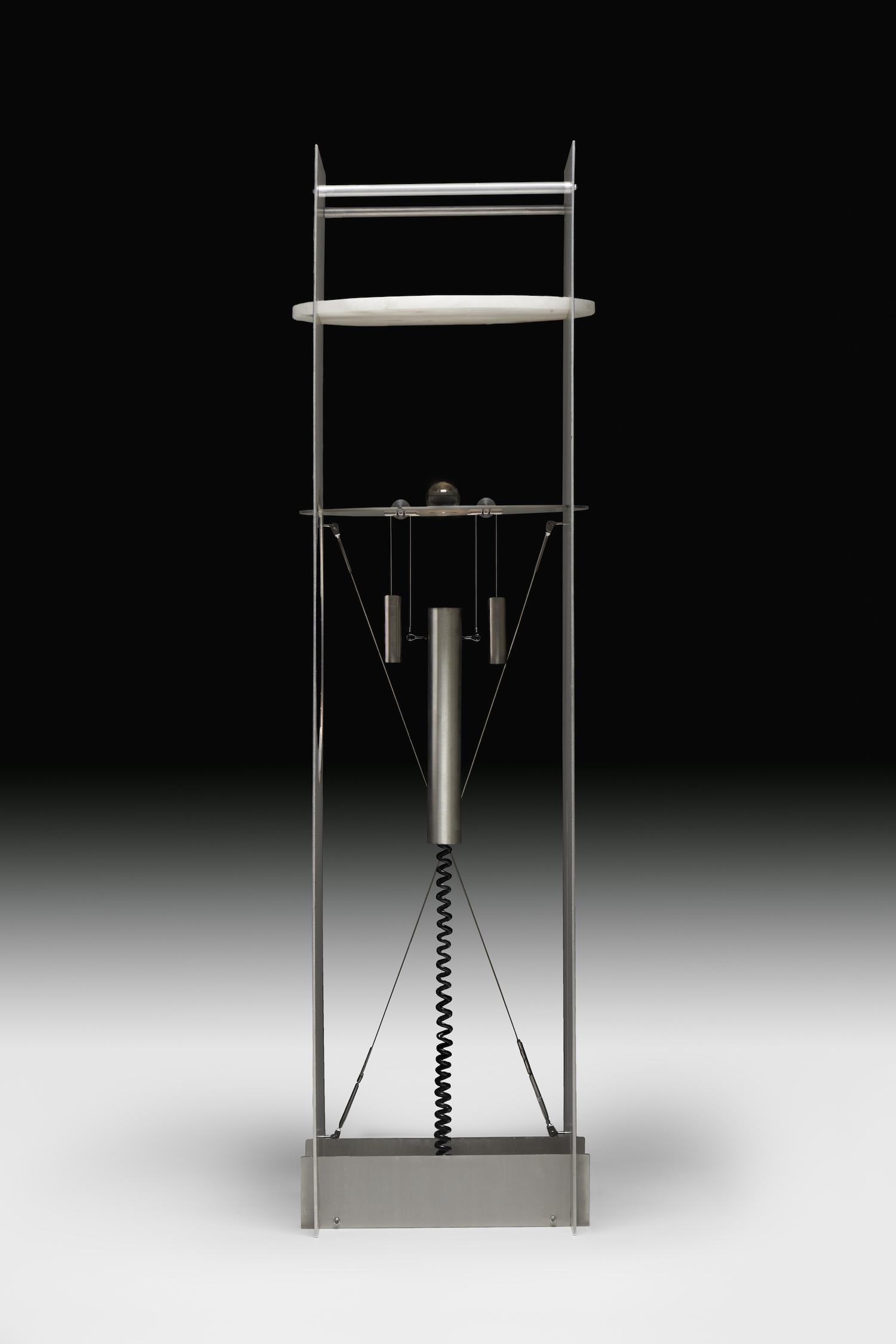
Totem de Luz is a minimalist light sculpture designed by Valencia-based practice kutarq studio. The piece belongs to a lineage of lighting design that treats illumination as atmosphere rather than utility – a tradition stretching from Isamu Noguchi’s Akari lanterns through Ingo Maurer’s poetic light objects. What distinguishes this work is its insistence on motion as a design element in its own right. The vertical travel of the cylindrical light source is not incidental; it is the central act around which the object’s entire logic is organized.
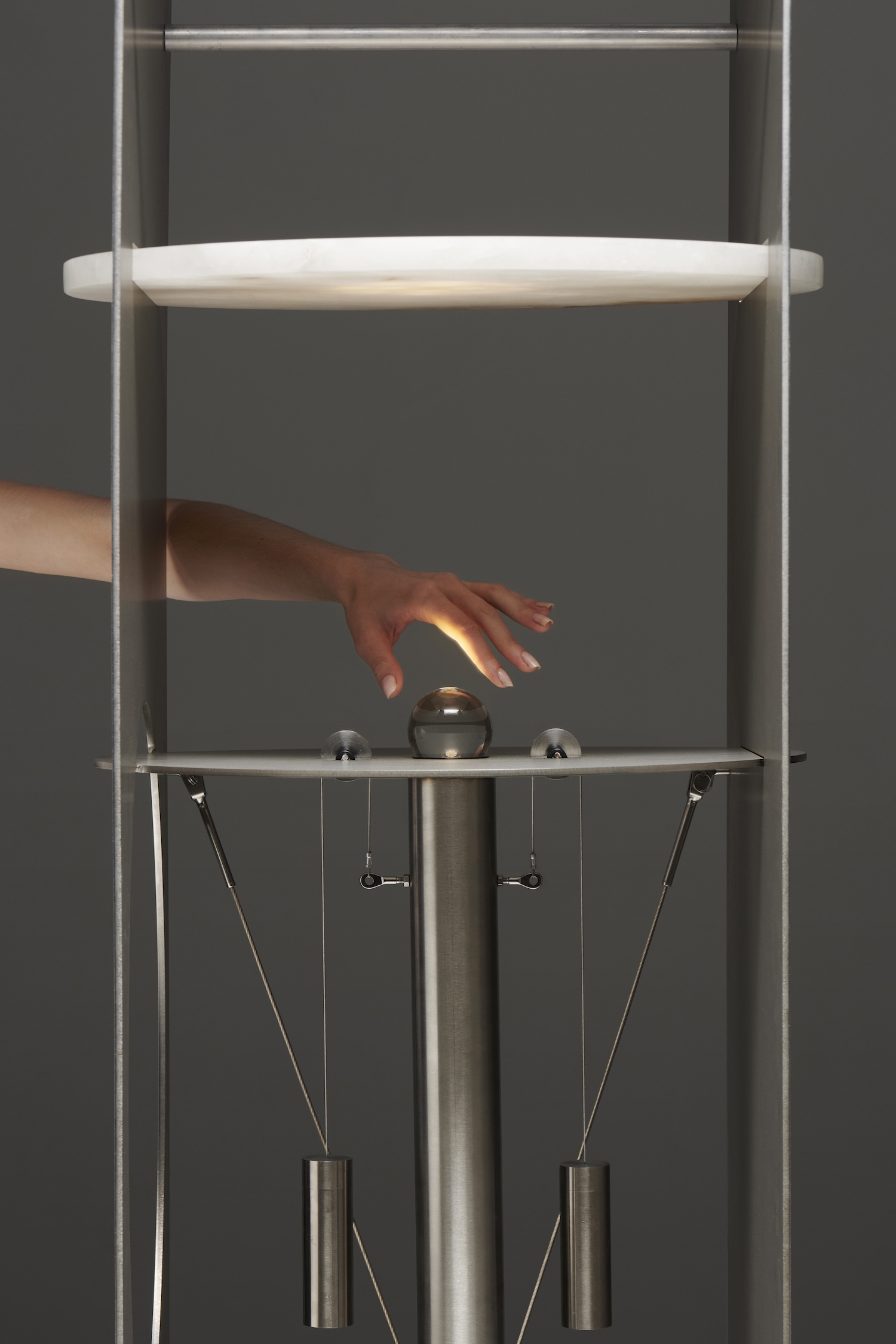
A double-pulley mechanism governs this movement, allowing the light to glide between two distinct operational modes without electronics or digital mediation. When the cylinder rises, the beam engages a translucent onyx diffuser positioned at the sculpture’s summit. Onyx, chosen here for its capacity to filter and soften rather than block, transforms direct light into a diffuse ambient glow that spreads across the ceiling. The material carries its own geological weight – onyx’s banded translucency has been valued in architecture since antiquity, and its use here connects the piece to a longer history of stone as a medium for modulating light rather than merely reflecting it. A glass sphere component further extends this play between containment and diffusion.
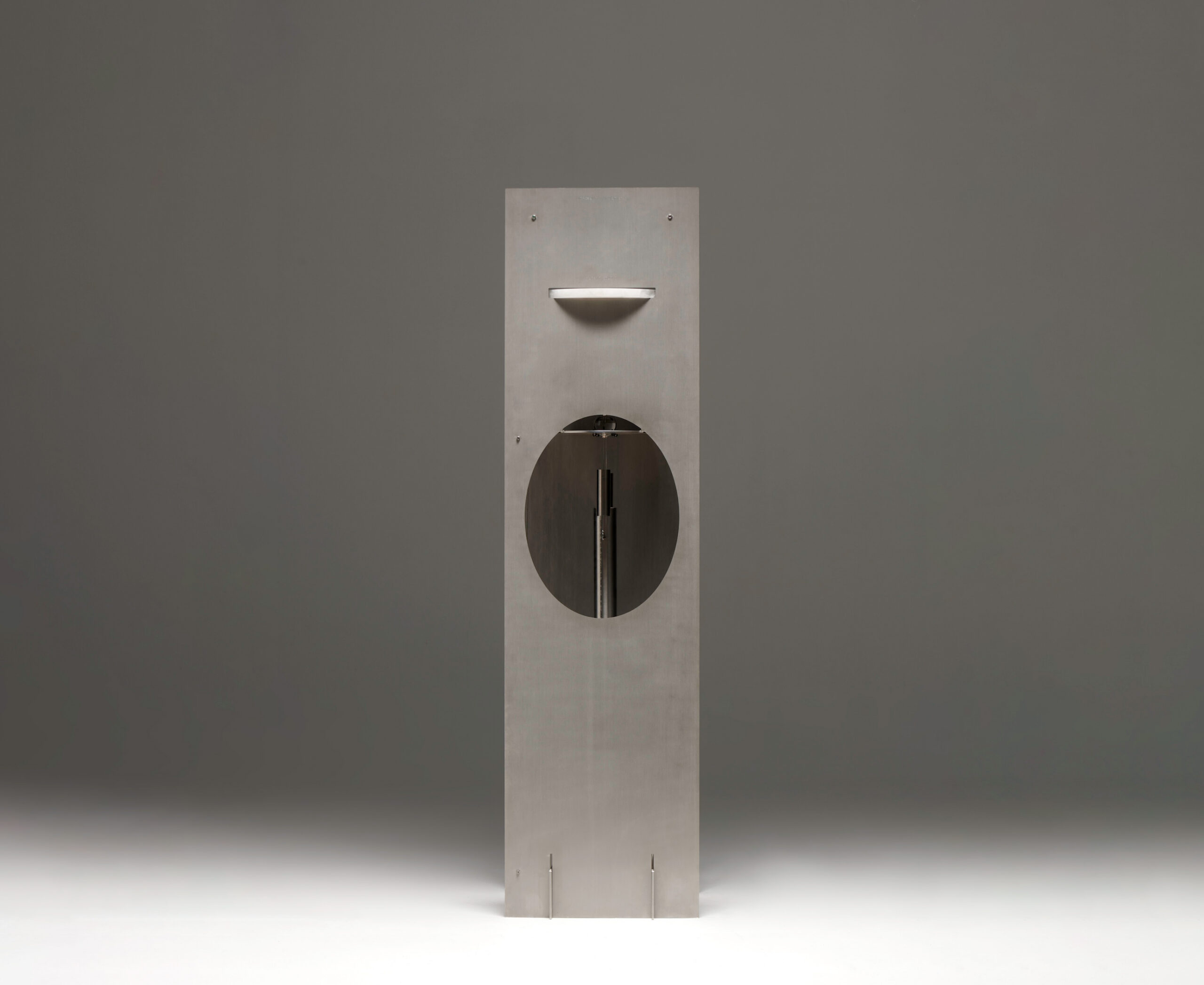
Lowering the cylinder shifts the function entirely. The beam aligns with a lateral oval aperture cut into the form, redirecting illumination outward as focused task light. The aperture’s oval geometry softens what might otherwise read as a utilitarian slot, maintaining formal coherence across both operational states. This single mechanical adjustment – raising or lowering – essentially produces two different objects within one form.
The absence of electronic dimming or programmable controls is a deliberate position. Analog adjustment mechanisms in contemporary product design have seen renewed critical attention, particularly as a counterpoint to the frictionless, screen-mediated interactions that characterize so much current domestic technology. Kutarq Studio frames the act of moving the pulley as a ritual moment – a physical engagement that slows the user’s relationship to light and, by extension, to the space around them. There is something in this that recalls the Japanese concept of ma, the meaningful pause or interval, here translated into the physical gesture of adjusting an object.