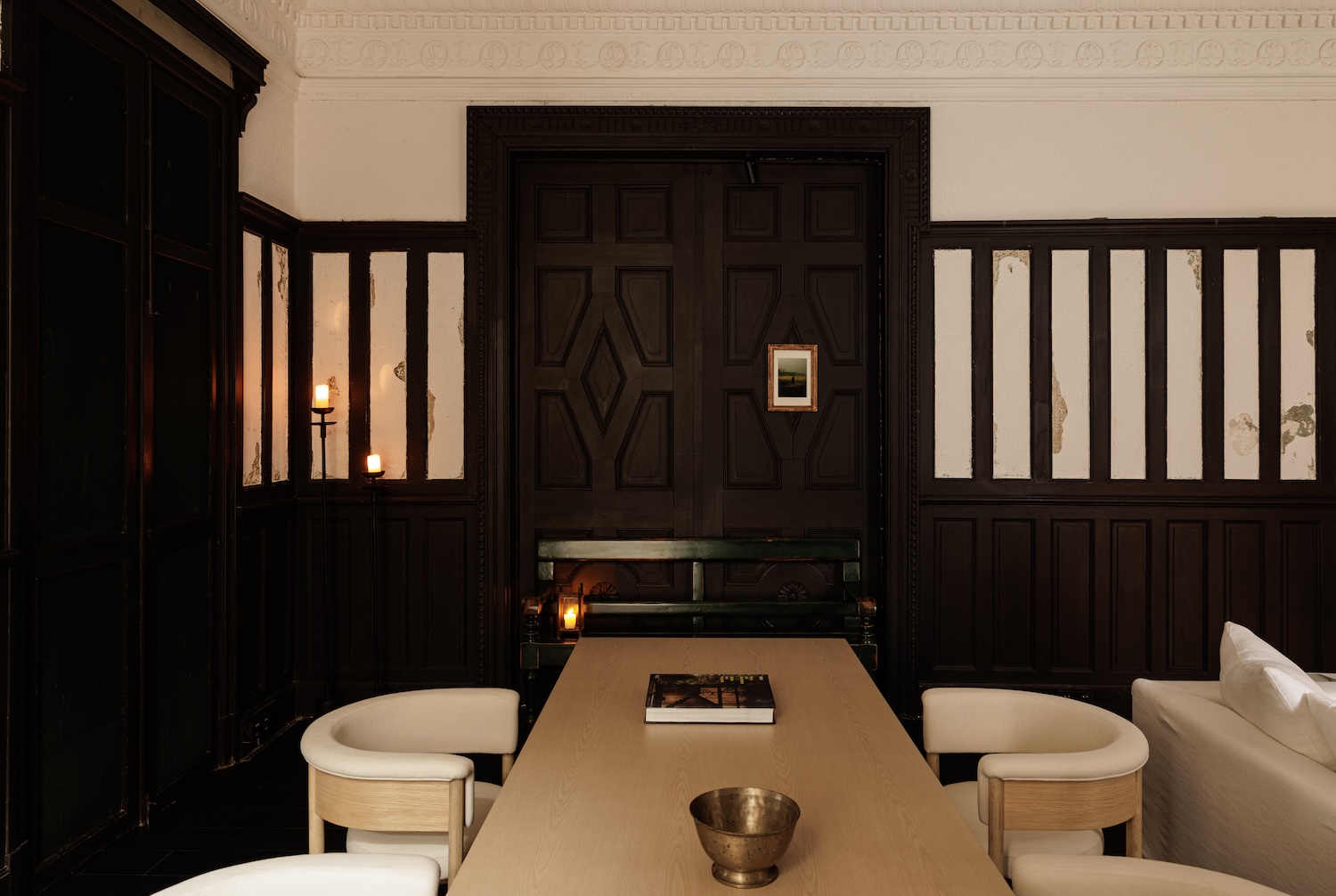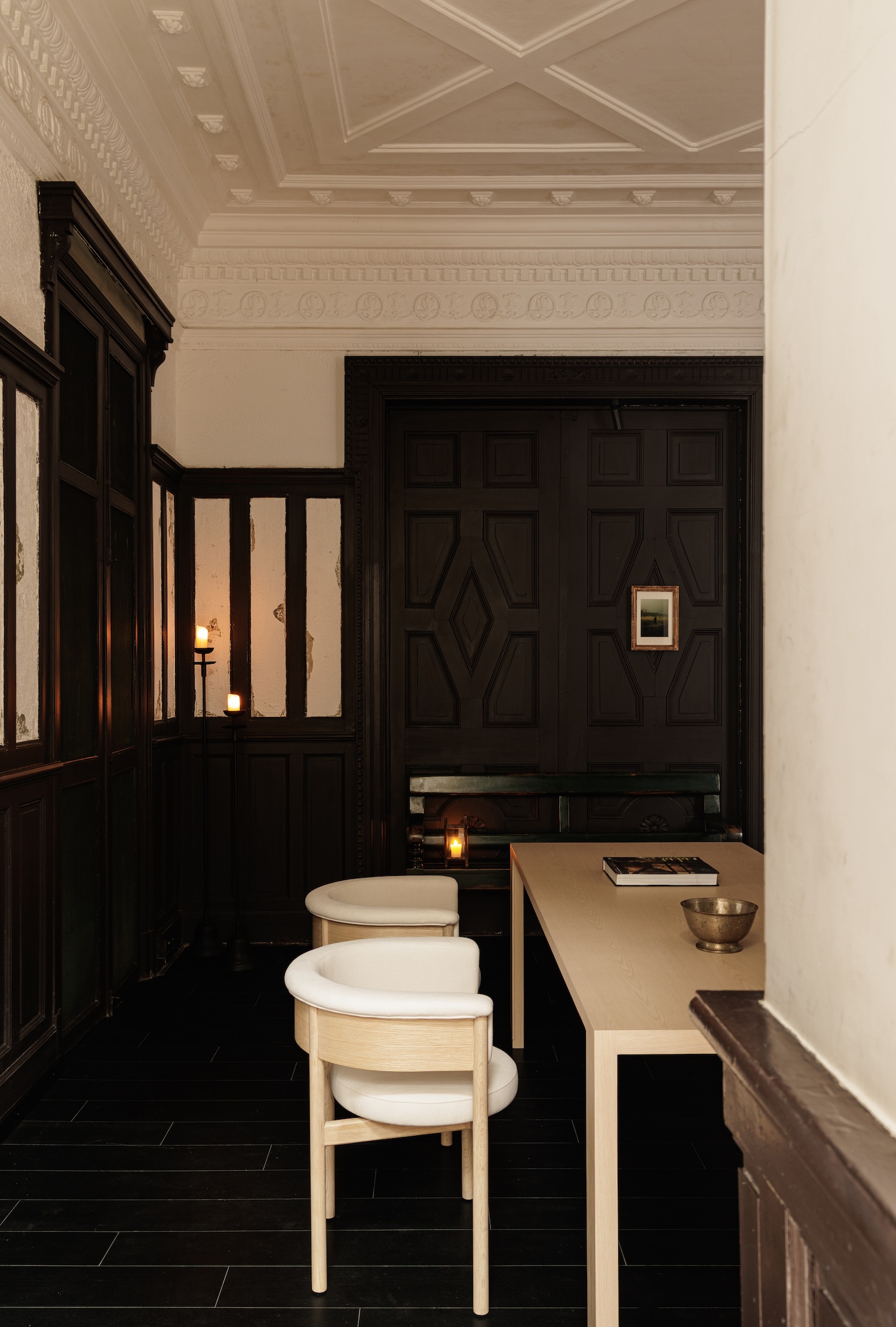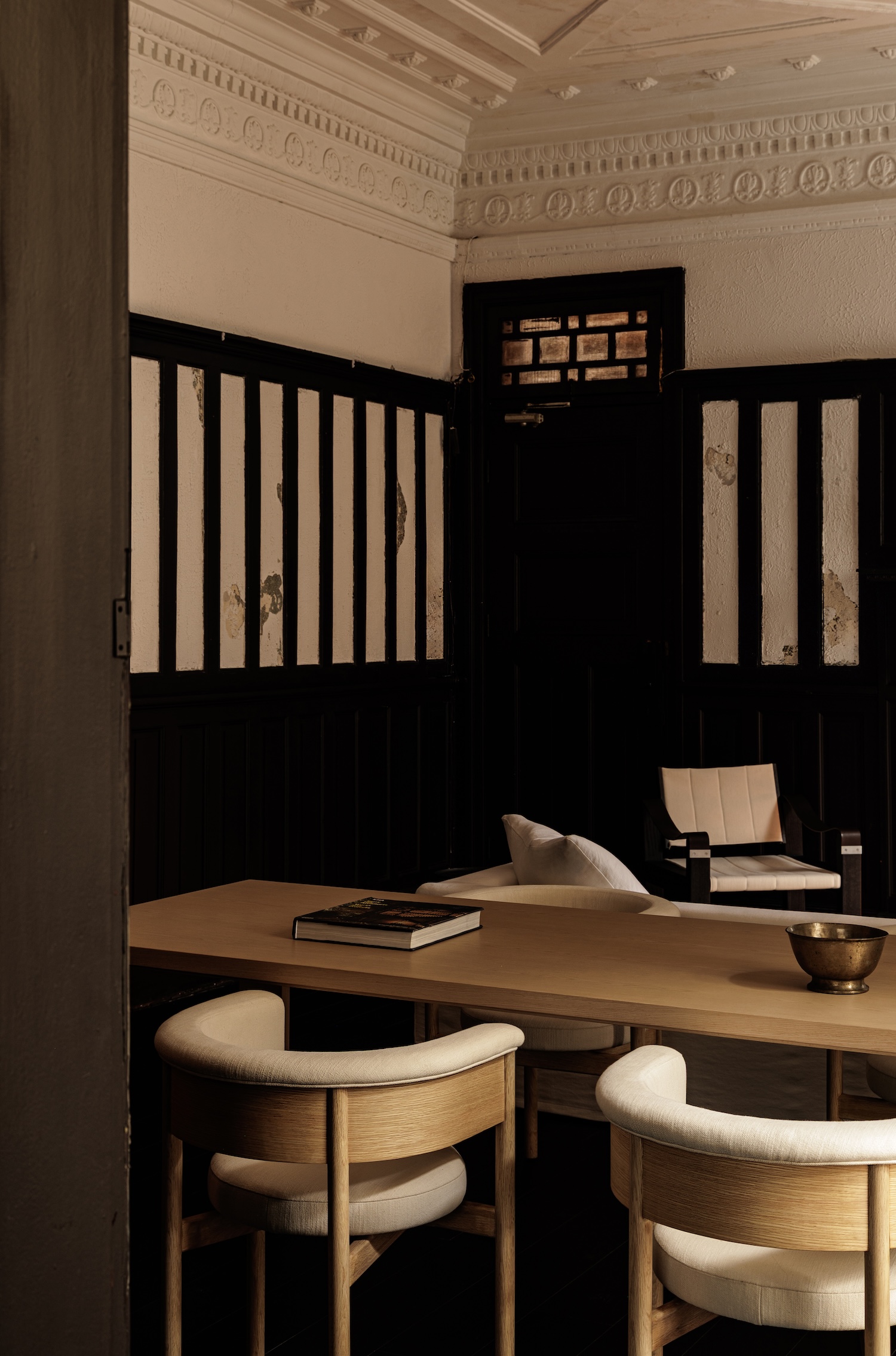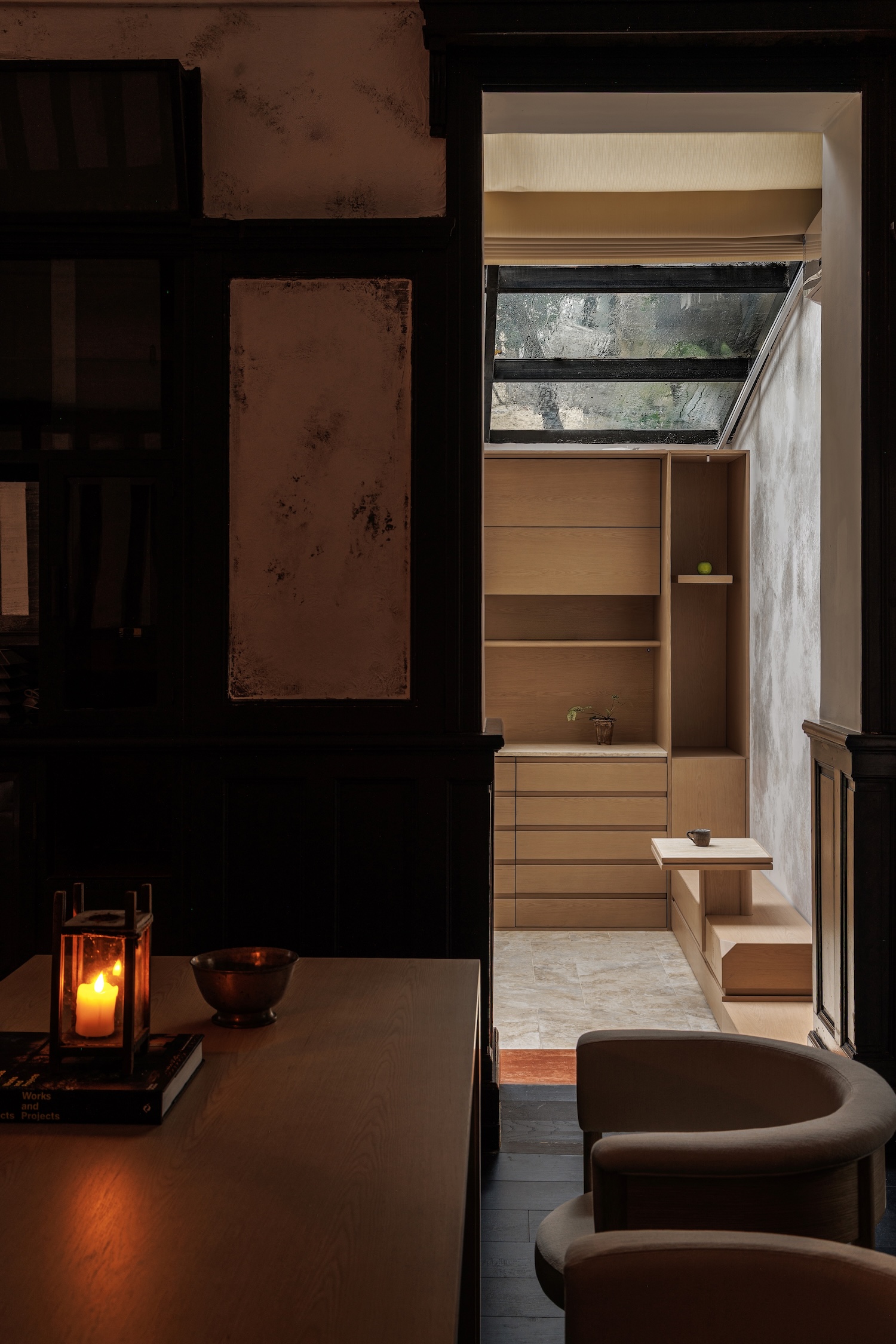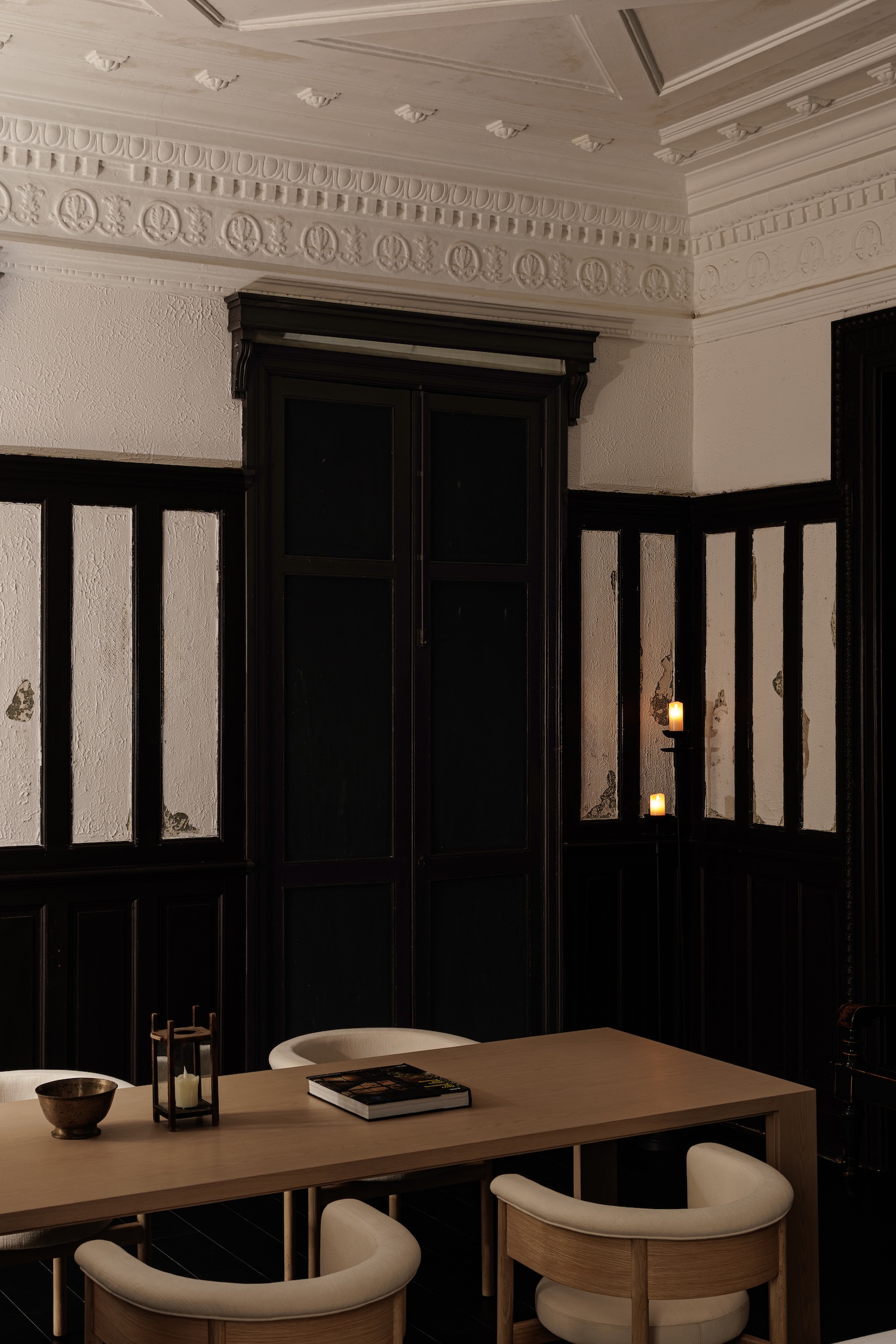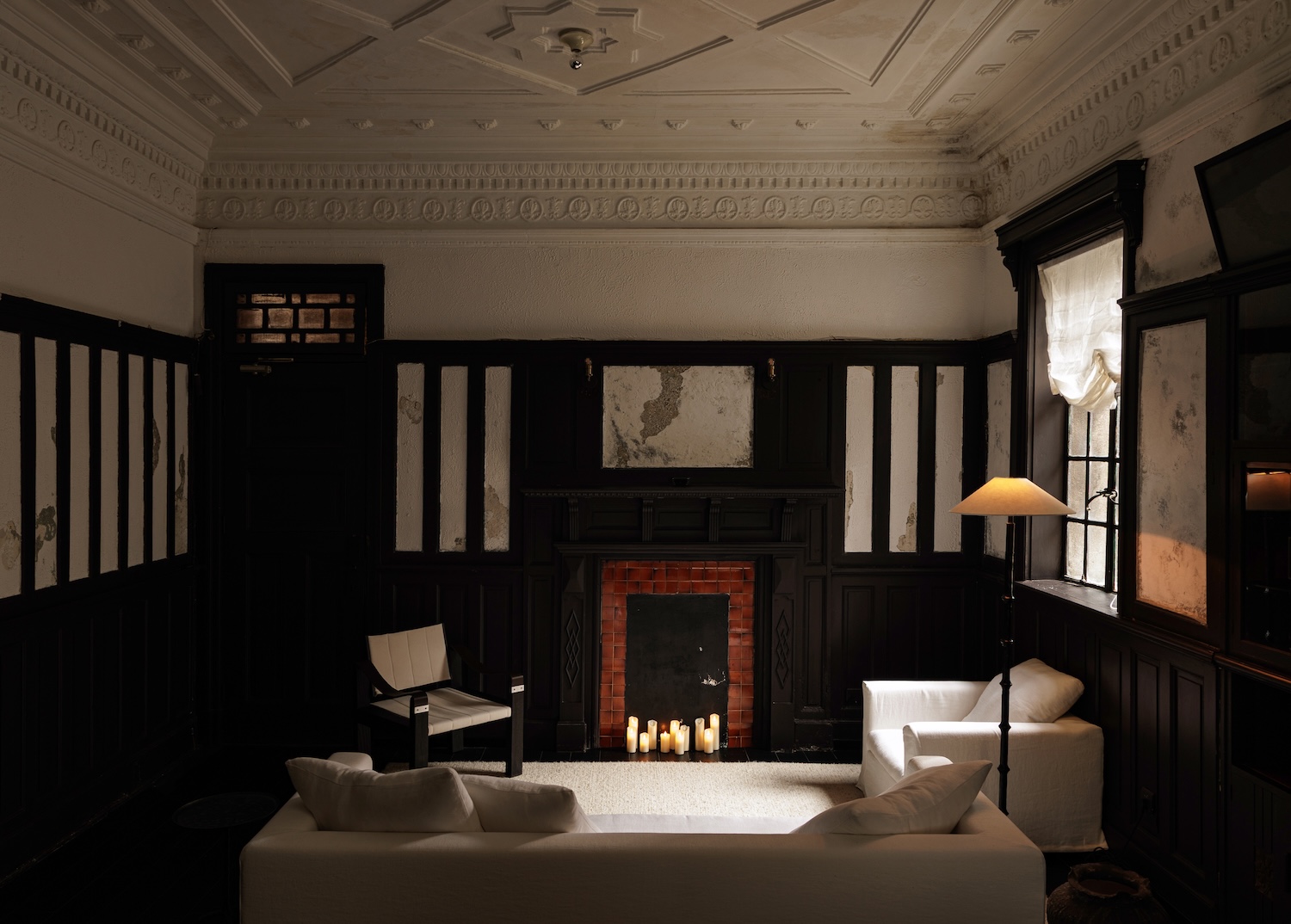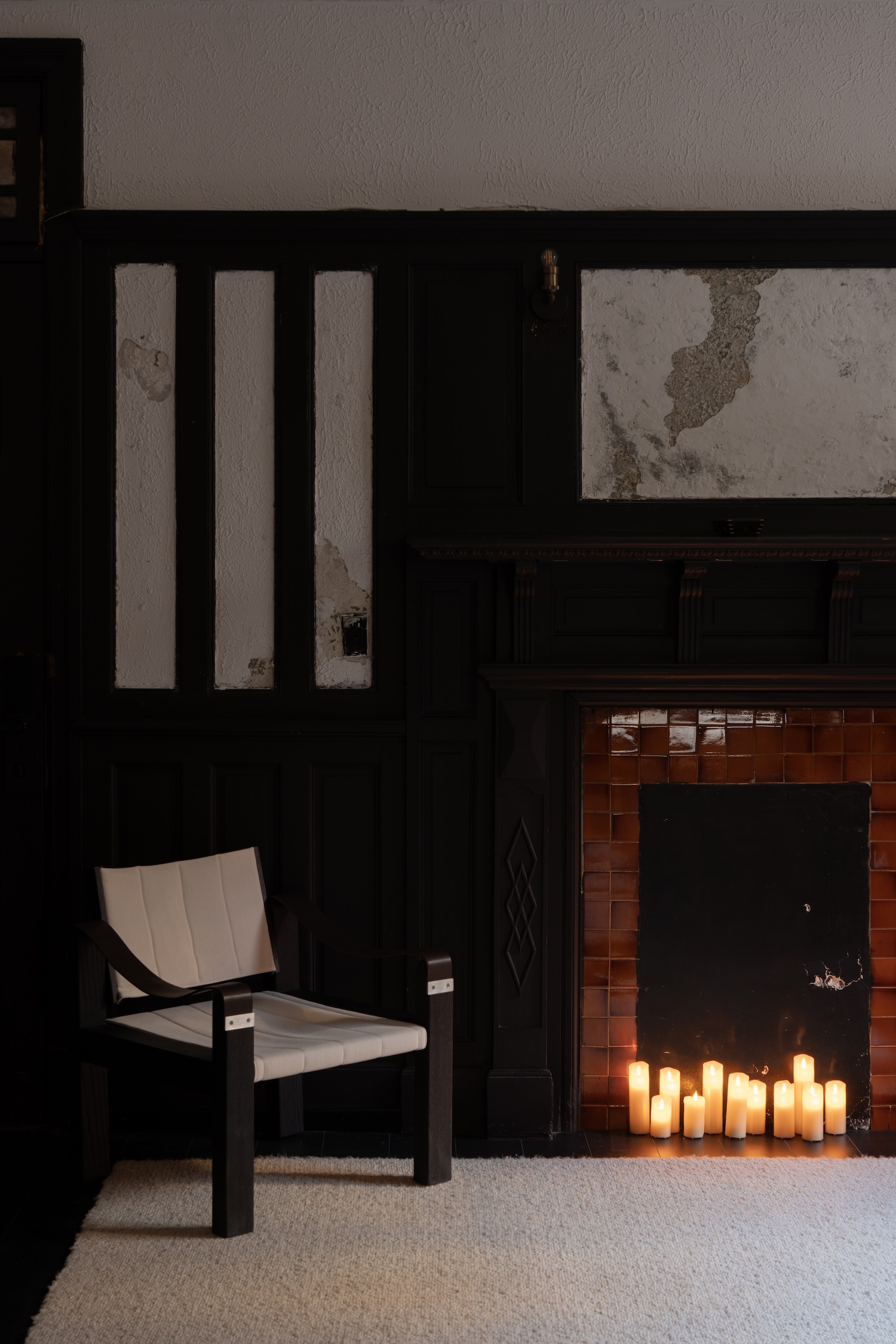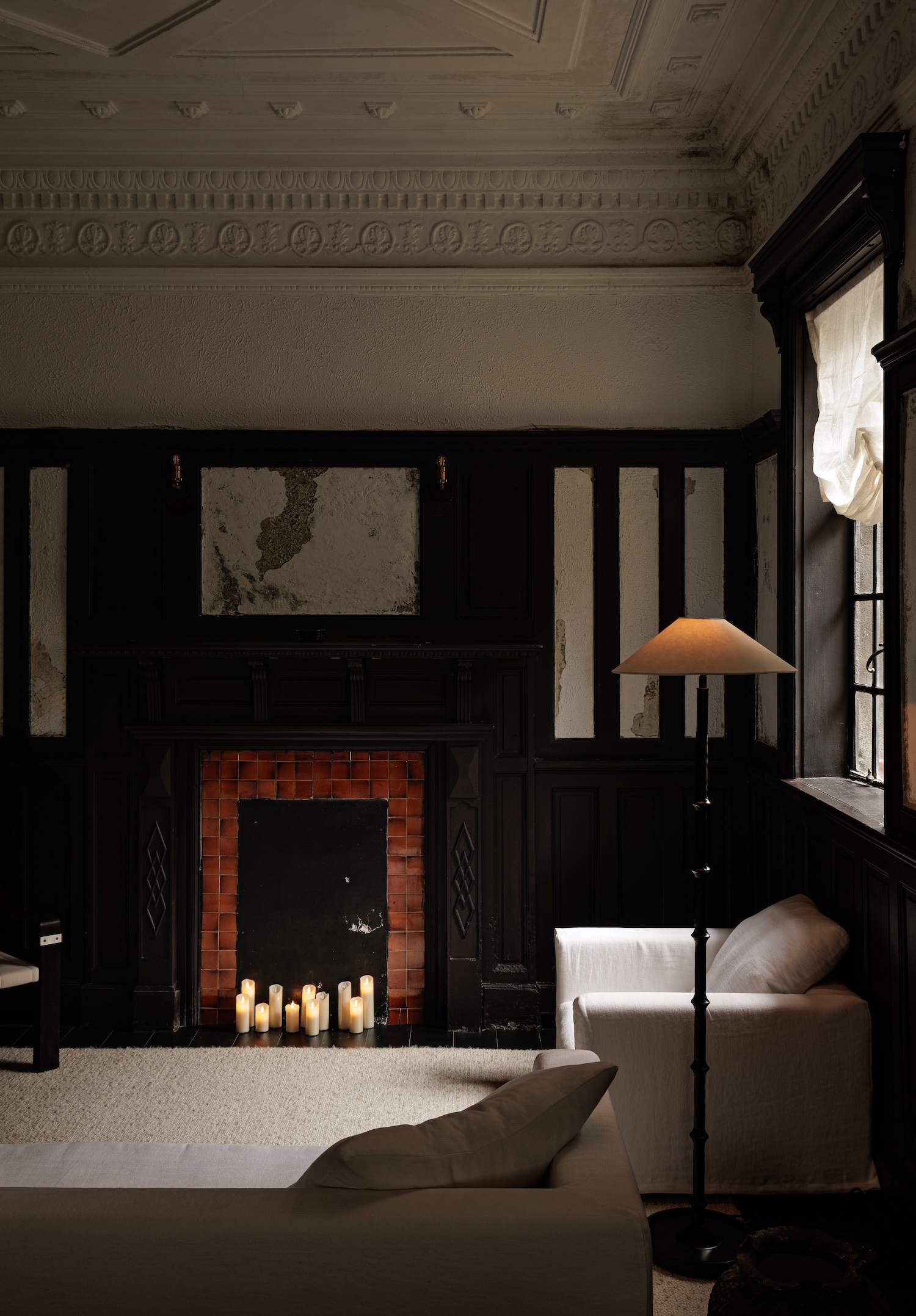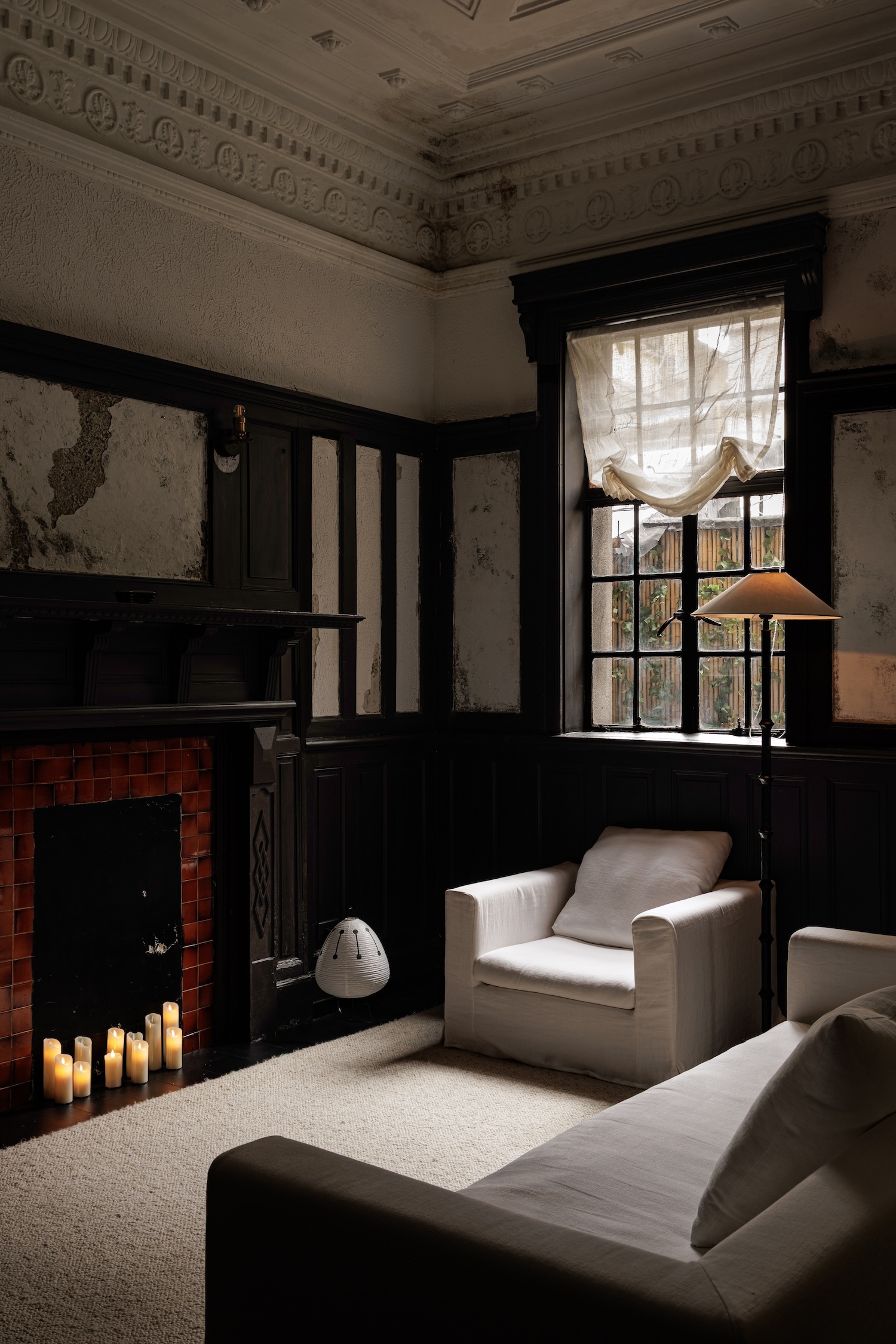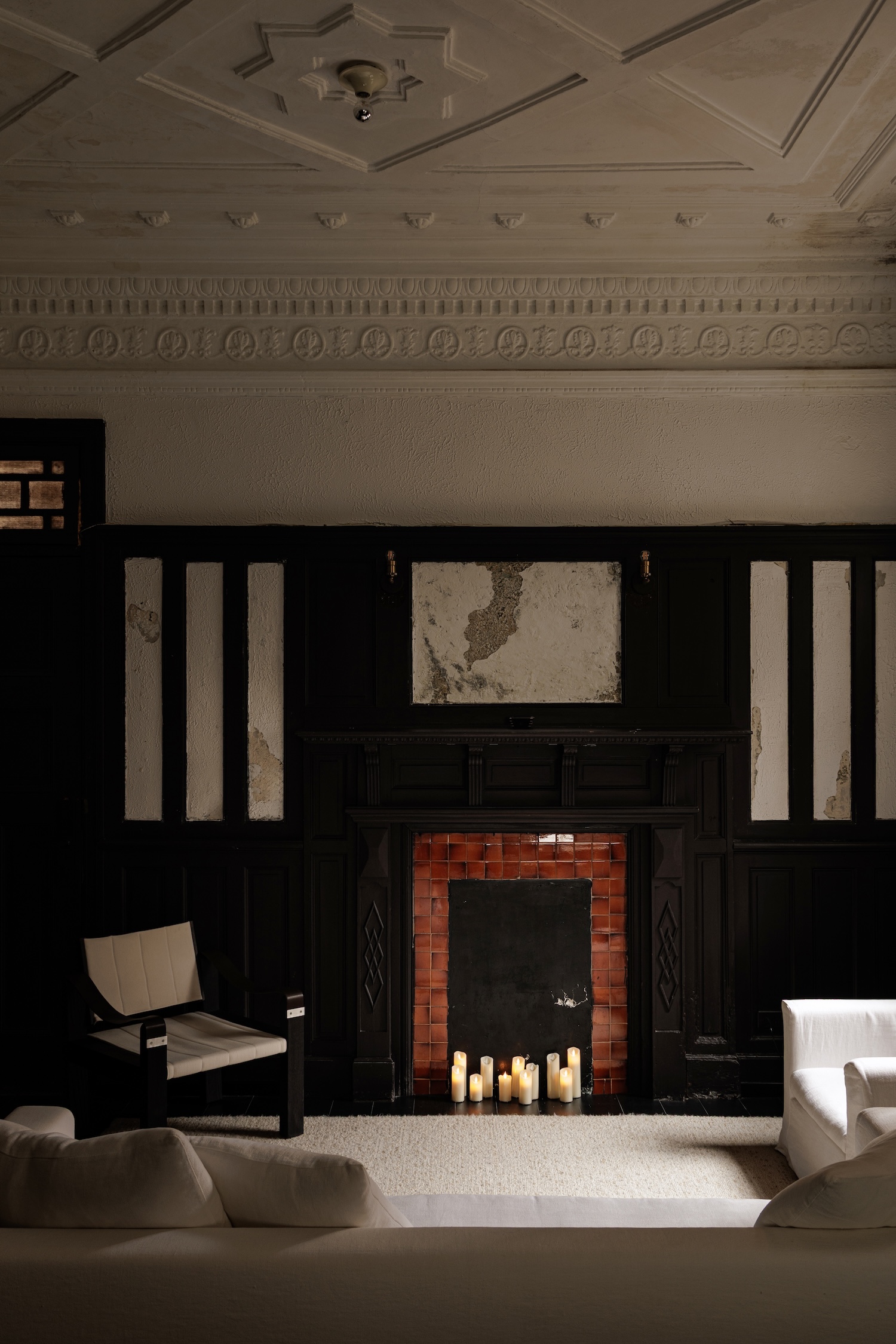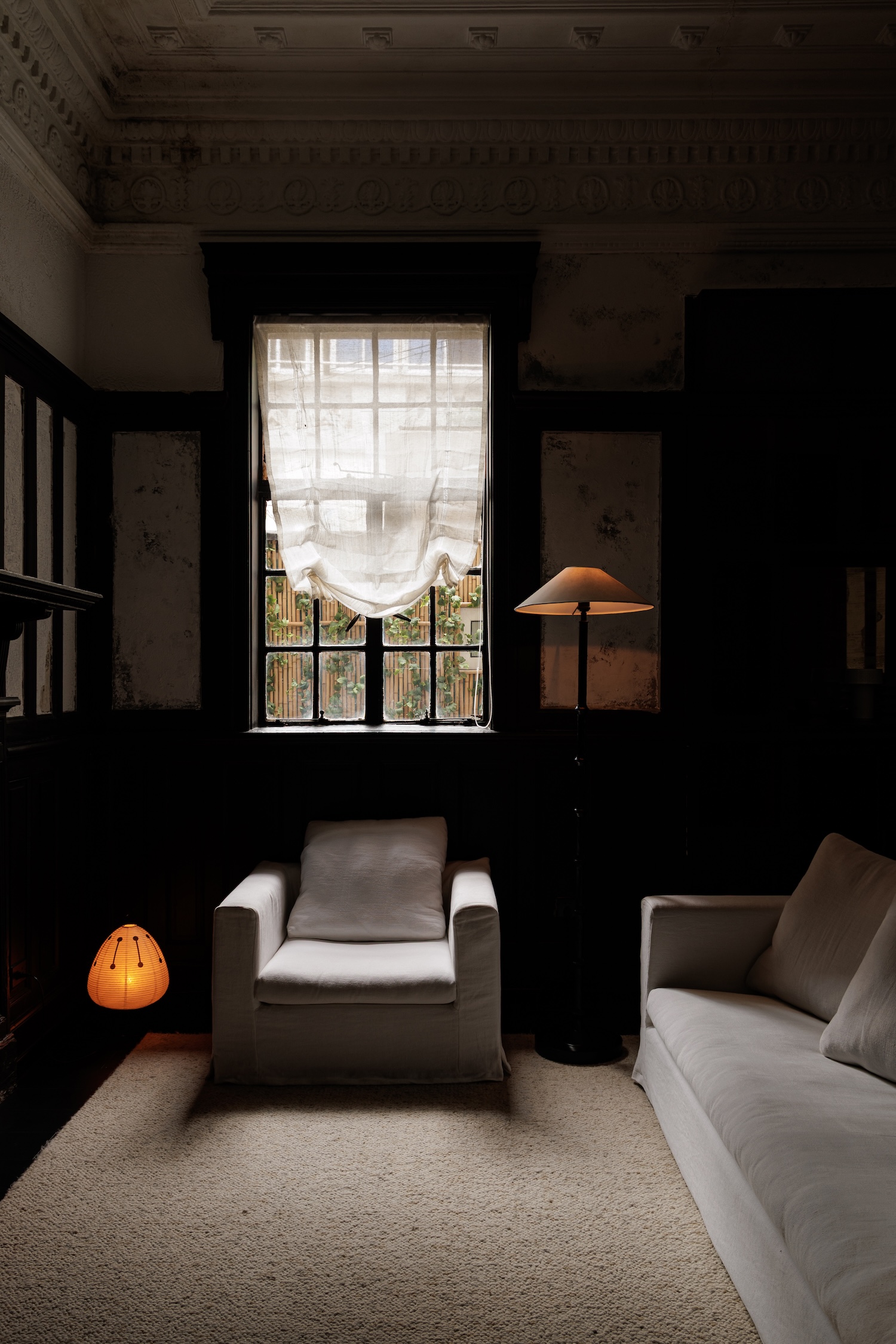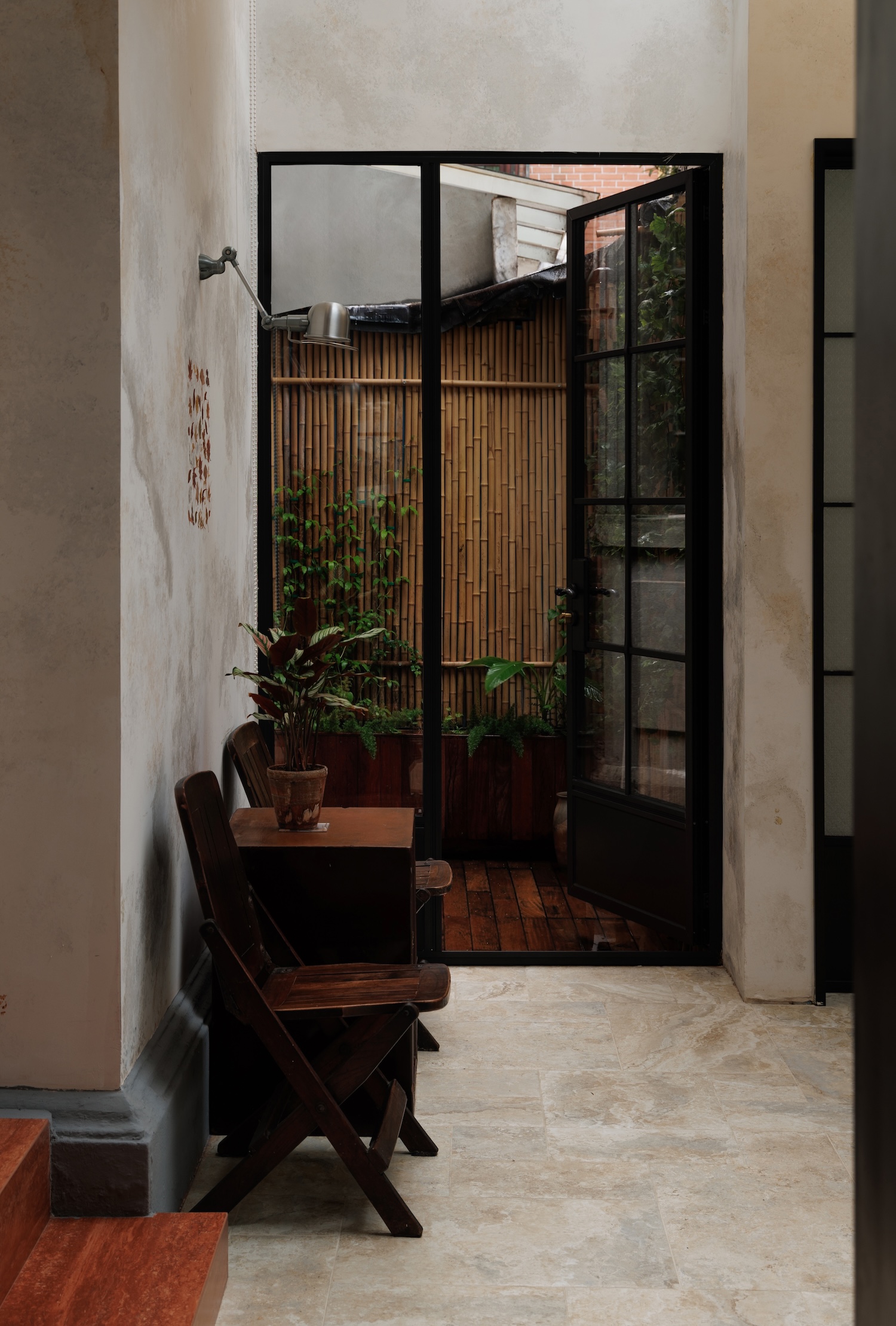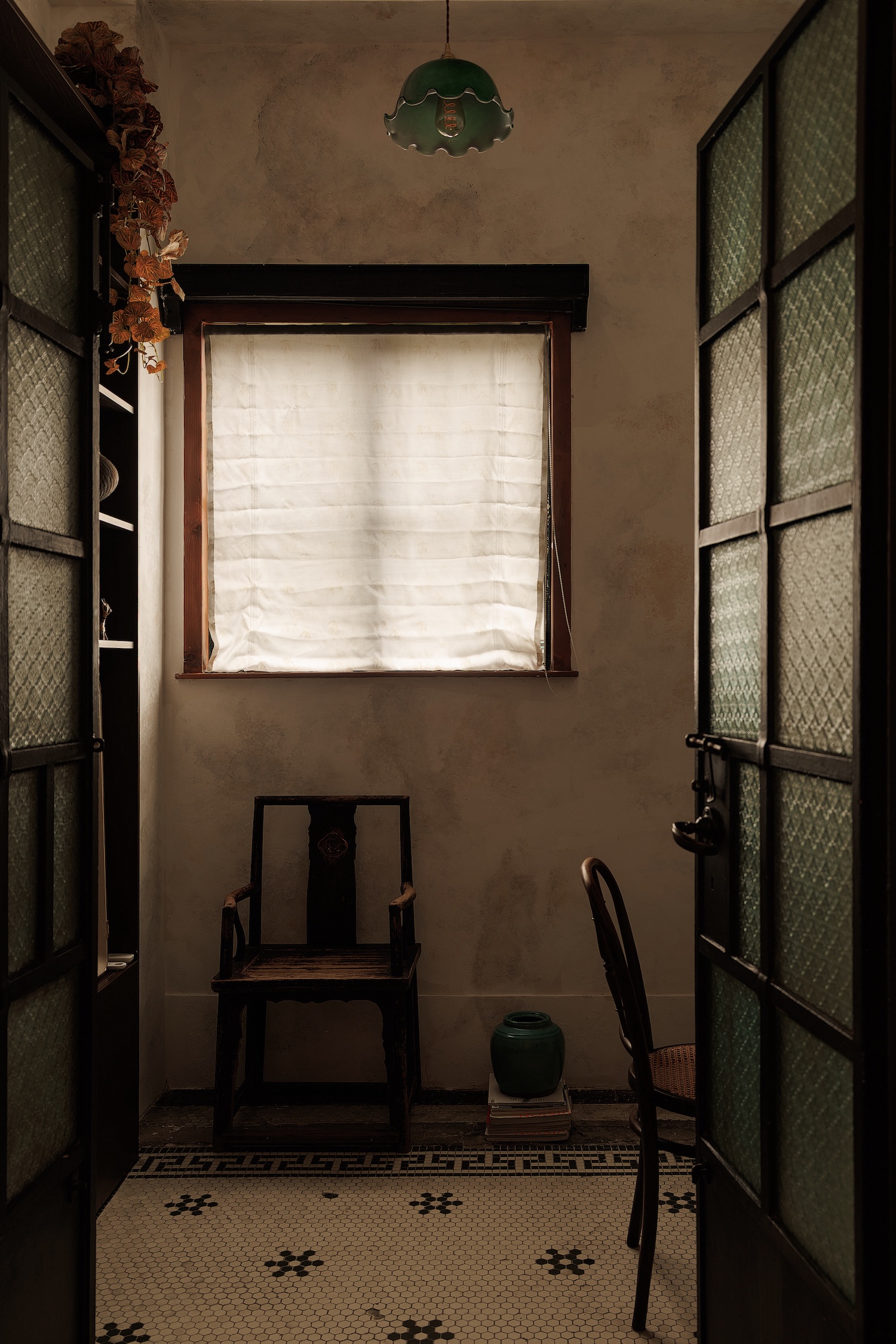
Twin Towers Old House is a minimalist interior design studio located in Shanghai, China, designed by SHEJIDESIGN STUDIO. The central challenge of this 110-square-meter renovation was one of diplomatic restraint: how to introduce a functioning contemporary workspace into a French Renaissance-style villa without erasing the quiet authority that a century of existence had accumulated. The design team’s answer was to treat the historic fabric not as a backdrop to overcome, but as the primary material of the project itself.
The entrance establishes this logic immediately. Original parquet flooring remains underfoot, its worn grain carrying the temporal depth that no new material could replicate. Above, intact plaster cornice mouldings frame the ceiling, their period detailing left deliberately unrestored to full pristineness – the slight imperfection reading as authenticity rather than neglect. Where walls have been touched, the approach favors low-saturation light tones applied with a matte, non-reflective finish, a surface quality that absorbs rather than bounces light and keeps the eye moving inward rather than catching on the walls themselves. This is the wabi-sabi sensibility translated into a professional context: incompleteness as atmosphere.
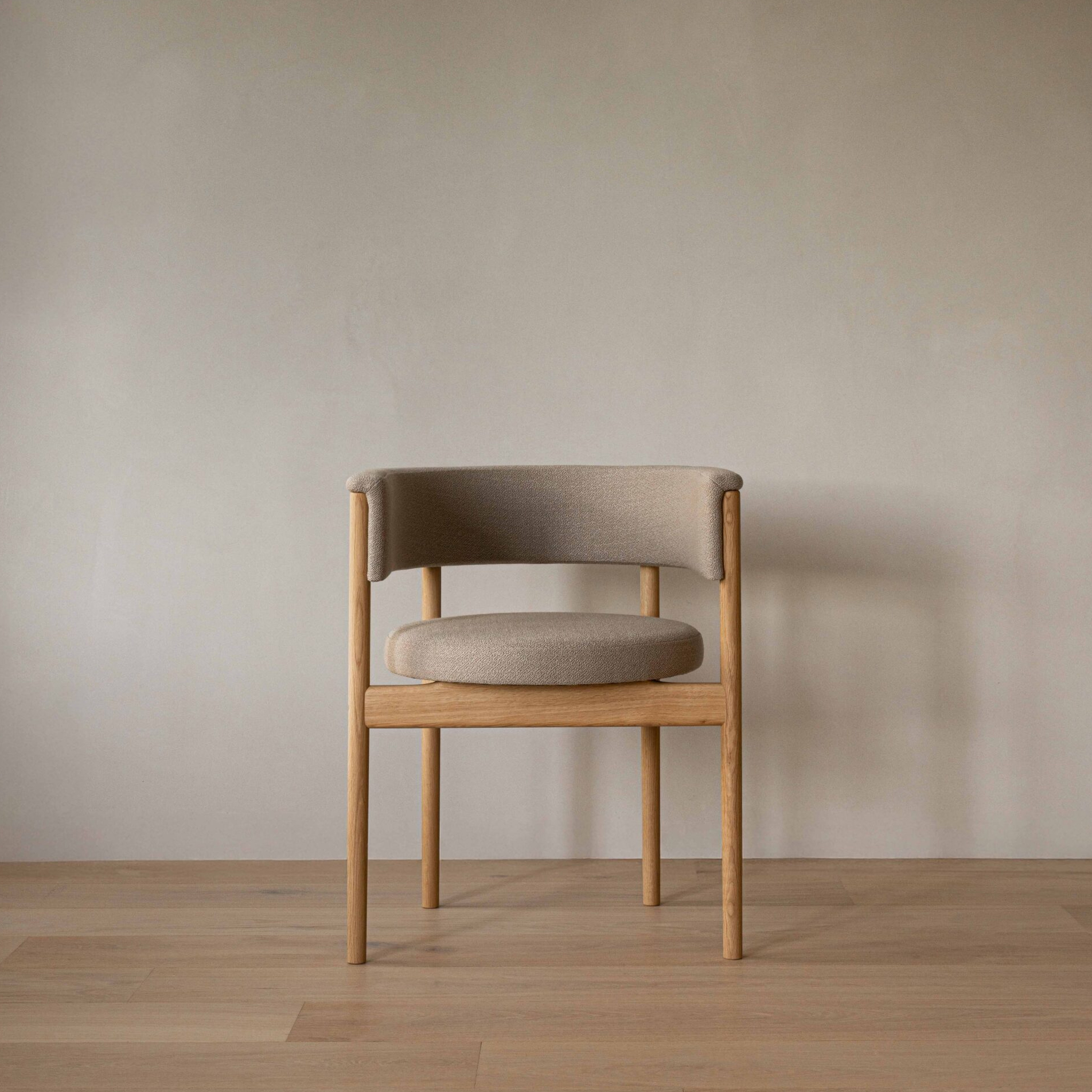
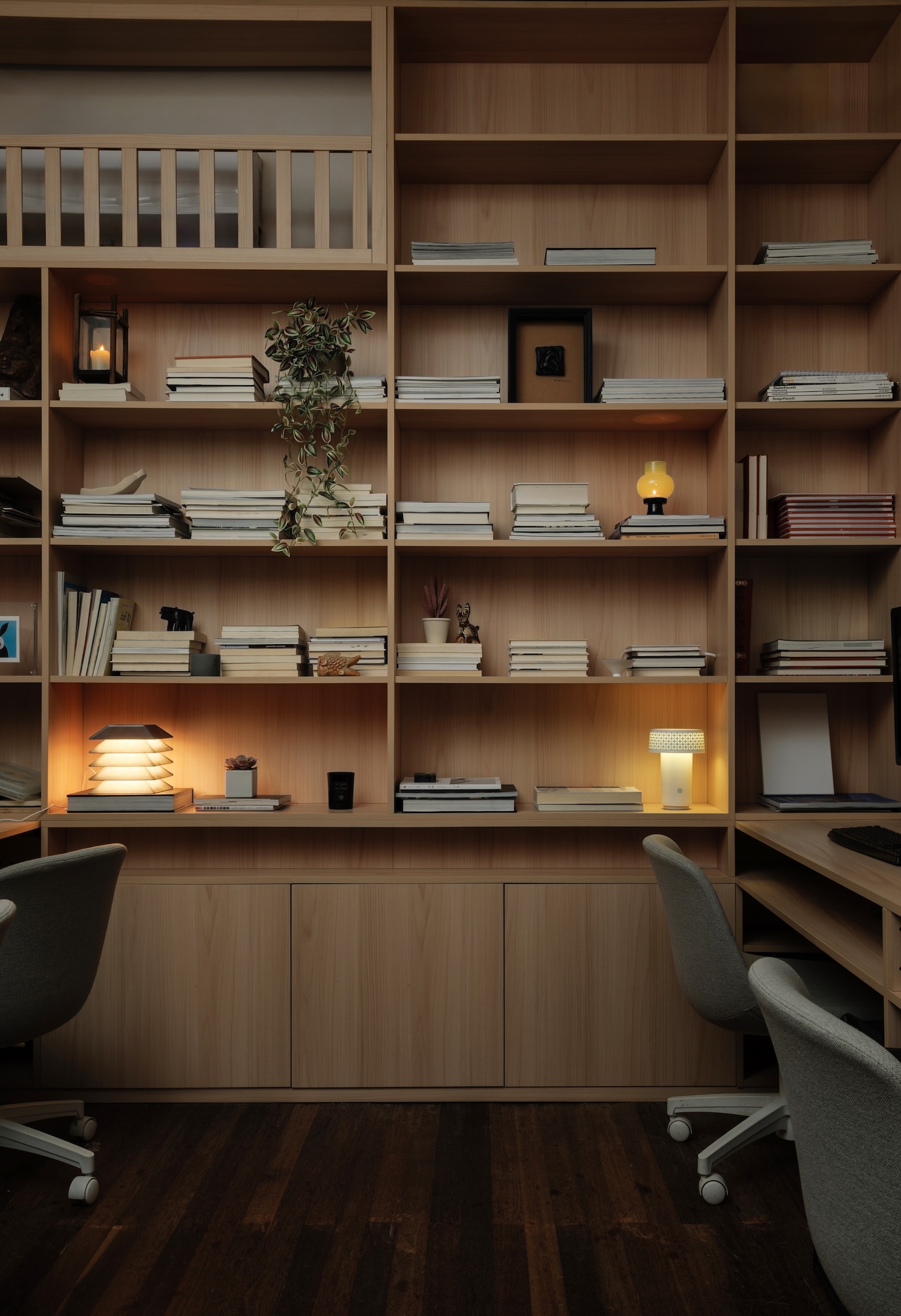
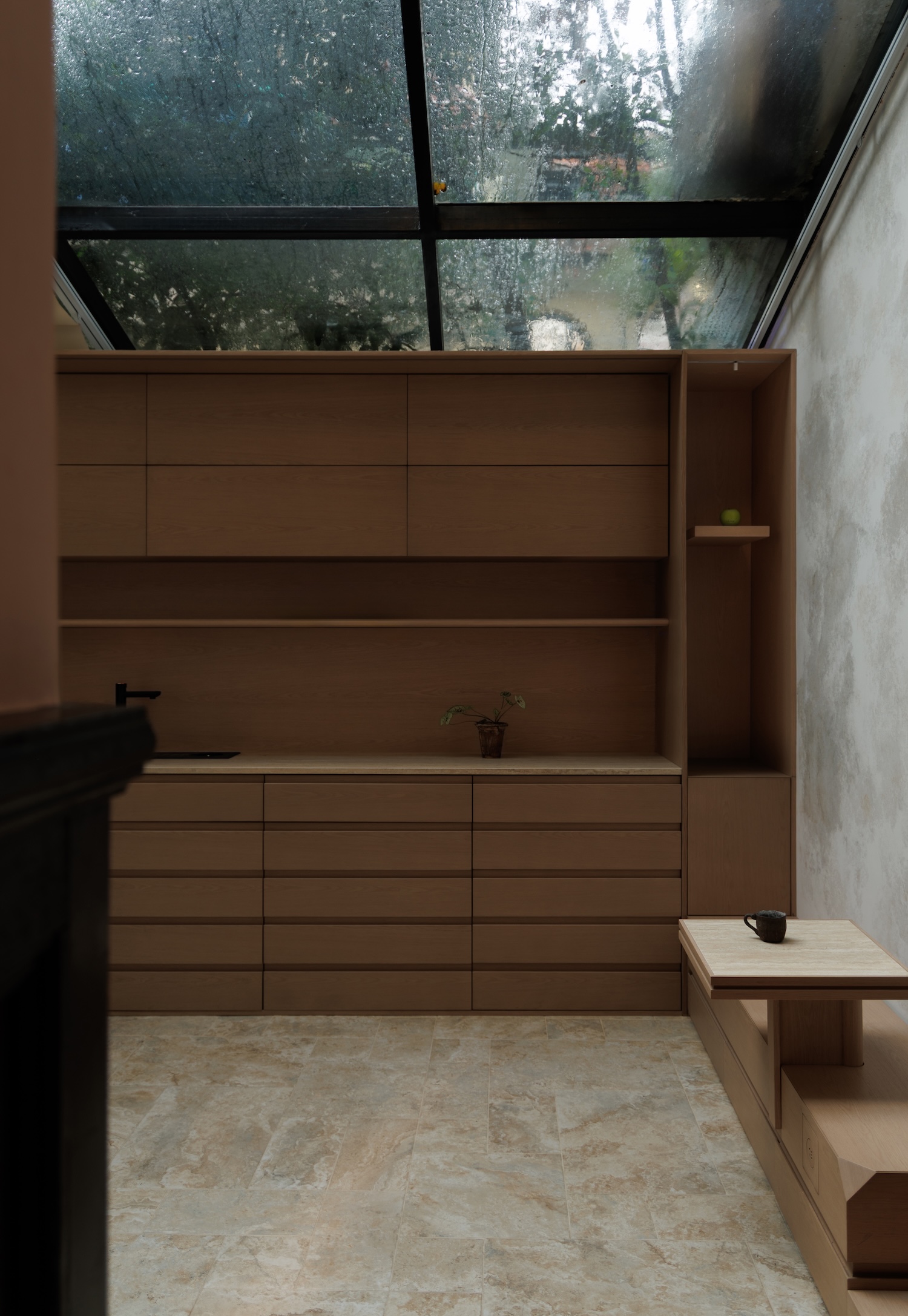
The main studio volume operates through the same logic of calibrated restraint. Wood cabinetry in warm, naturally grained tones runs along the walls with flat slab doors and no applied ornament – a vocabulary closer to mid-century Scandinavian functionalism than to the Shanghai Art Deco that defines much of the city’s preserved residential stock. The contrast is intentional. Where the building’s bones speak in one historical register, the inserted furniture speaks in another, and the dialogue between them generates the tension that keeps the space from feeling like a pastiche. Work surfaces are generous and uncluttered, sized to accommodate the analog processes of material sampling and drawing alongside digital tools, which reflects a studio culture that still values tactile decision-making over screen-only practice.