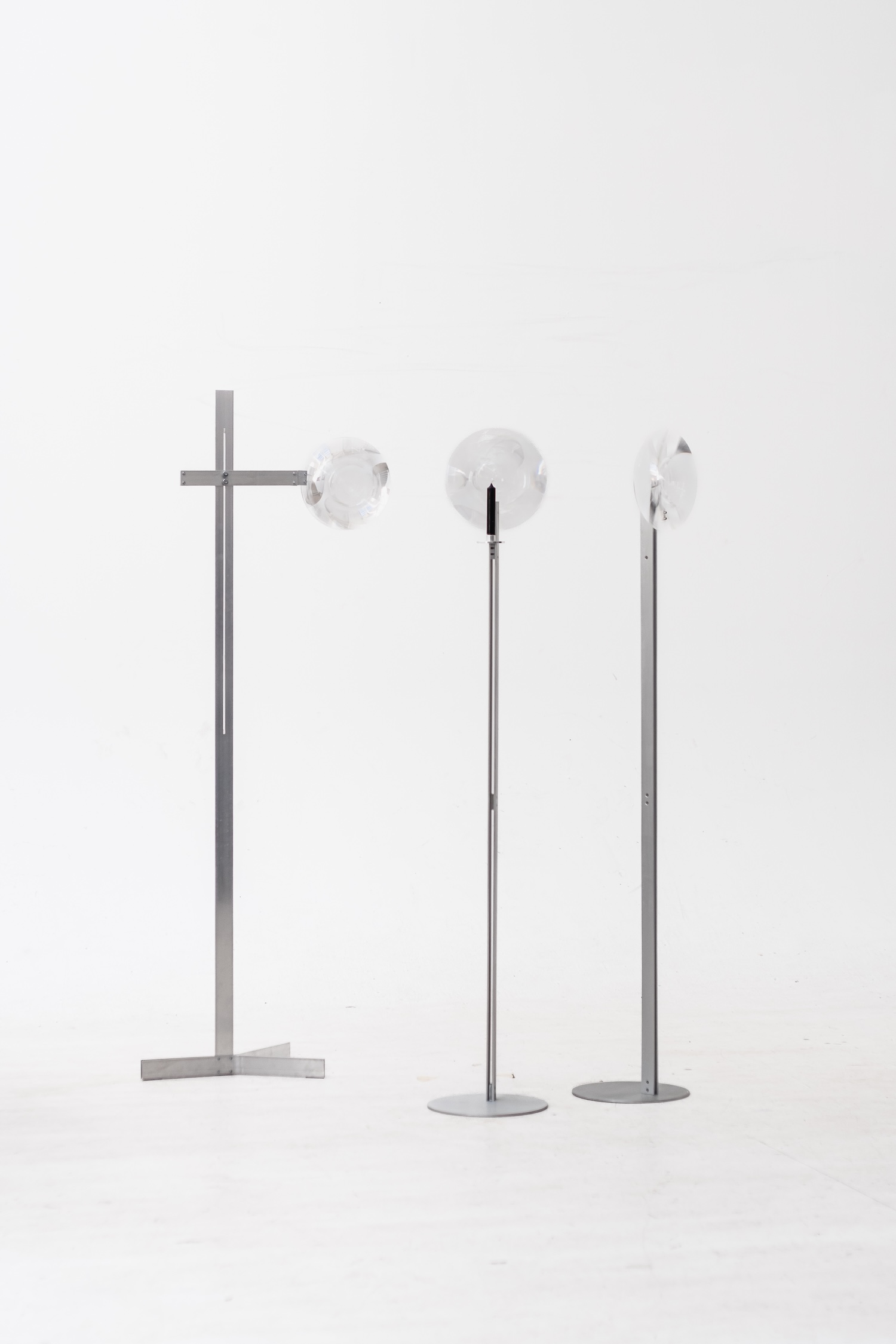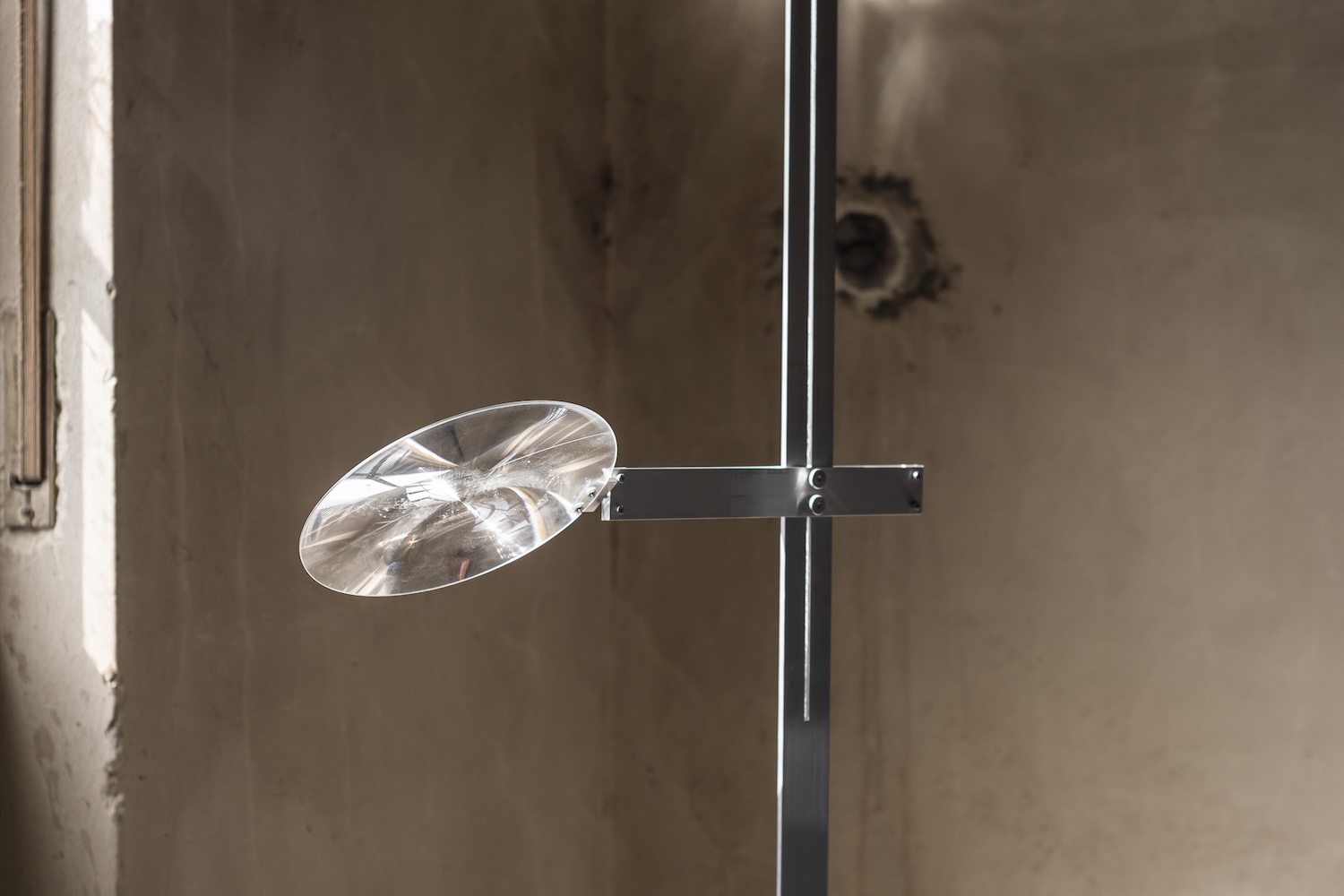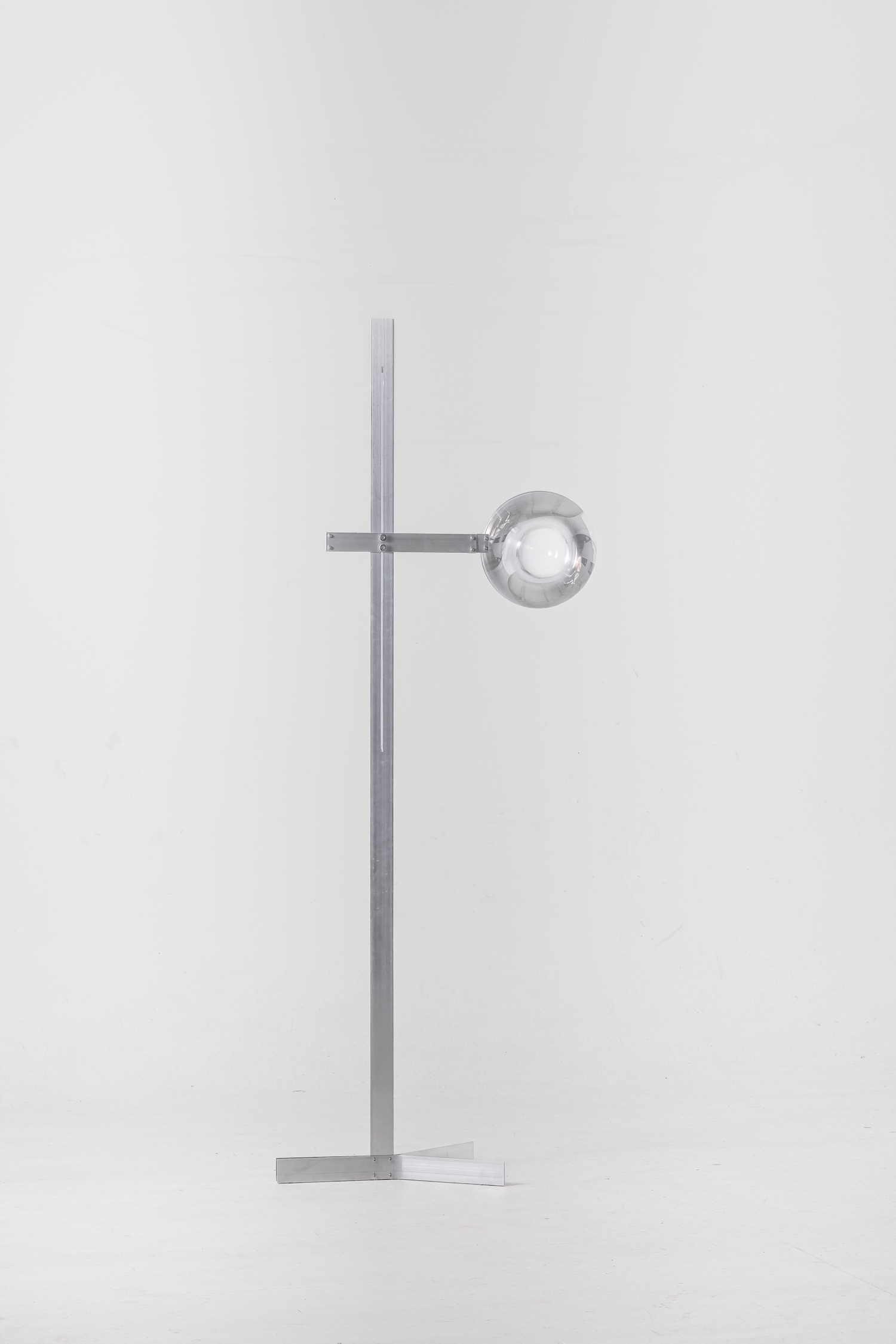
Curiosa swings a Fresnel lens on an articulated steel arm, turning a device built to project a beam of light for miles into a hand-guided mirror that bends whatever stands in front of it. The piece, designed by the Paris, France studio Douze Degrés as one of the first objects to come out of its practice, sits at the intersection of scenography and furniture.
The lens is the ridged, concentric type that lighthouses and stage lighting use to throw a parallel beam from a flat sheet of glass instead of a thick curved one. Douze Degrés removes that function from its usual housing and lets the same ridges work in reverse, fracturing and multiplying a reflection rather than focusing a beam. The stand is reduced to a single vertical rod on a flat triangular base, crossed by a horizontal arm that carries the lens at roughly eye height. Tilting that arm changes the angle of distortion, magnifying part of a room or splitting it into repeated, faceted slices.
Curiosa was conceived alongside the studio’s Flare collection, both grown from the same investigation into optics and perception. Flare addresses light directly, while Curiosa turns the same lens toward observation, closer in spirit to the viewing devices and cabinets of curiosity that shaped its articulated stand than to a household mirror. Framed as a research piece rather than a production object, it treats the Fresnel lens as a tool for looking rather than for projecting.
The piece debuted in April 2025 during Milan Design Week, shown at Good Selection in Varedo as part of What You Choose To See, an exhibition curated by Marine Mimouni for Revue Latérale.
Curiosa took shape inside the studio’s own workshop, where the materials, tools and fabrication techniques already on hand shaped the design as much as the concept behind it. That workshop-first method keeps the studio’s practice open-ended, intuition and hypothesis tested against whatever conditions the shop offers.